
Axone
Soybeans boiled soft and fermented in a leaf-lined basket by the hearth, then in many Naga households pounded, wrapped in leaves and fermented again into a dark, pungent seasoning paste.
 FermenteaWhere food goes to change
Modern method
番外編:手作り納豆のススメ | オランダ移住
This video account makes natto from soybeans using frozen retail natto as a starter and a yogurt maker. It reports one home batch but leaves the starter mass, soak-water temperature, cooling controls and storage after chilling unstated.
A contemporary preparation does not establish earliest attestation or origin.
Scaling: source batch only
Soy is an allergen. The source does not identify the retail natto pack or its mass.
The video does not state the bean-soak temperature, the starter pack identity or mass, cooling conditions before inoculation, how quickly the finished beans were chilled, or how long they were stored after chilling. Those details remain unknown; no shelf life is inferred.
BC Centre for Disease Control natto guidance identifies refrigerated soaking, commercial natto starter with a certificate of analysis, and timed cooling controls as food-safety points. The video does not report whether these controls were applied, and the guidance does not validate this particular home batch.
Captions do not establish batch location or food origin.
Soybeans boiled soft and fermented in a leaf-lined basket by the hearth, then in many Naga households pounded, wrapped in leaves and fermented again into a dark, pungent seasoning paste.
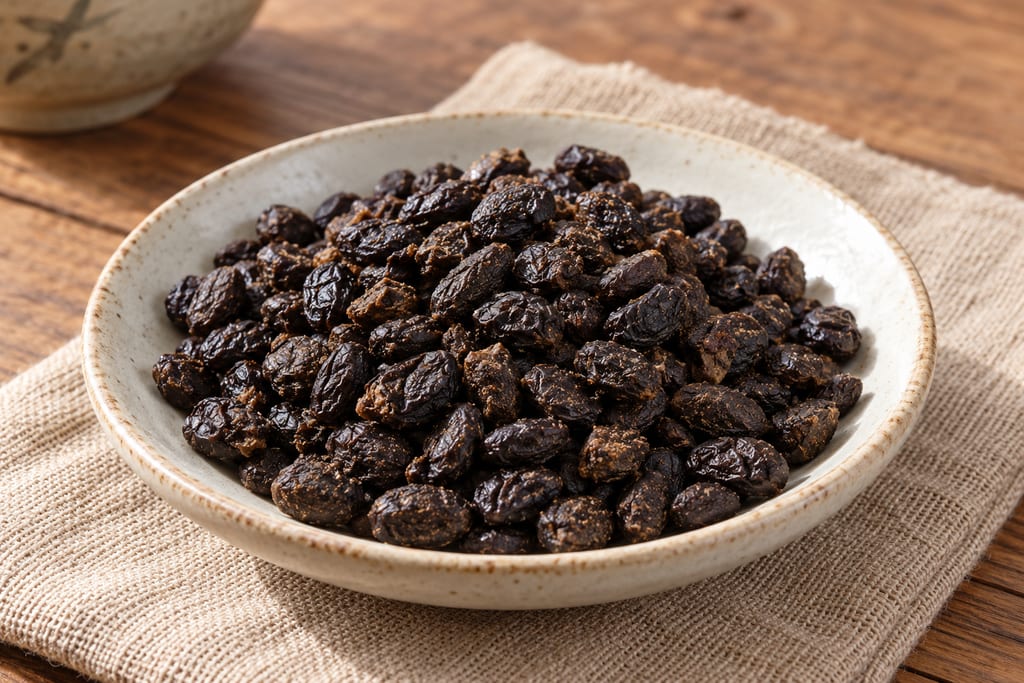
A Chinese fermented soybean condiment in which Bacillus-led bacteria, not moulds, drive the fermentation. Documented in Zunyi, Guizhou, and kept separate from mould-led douchi.
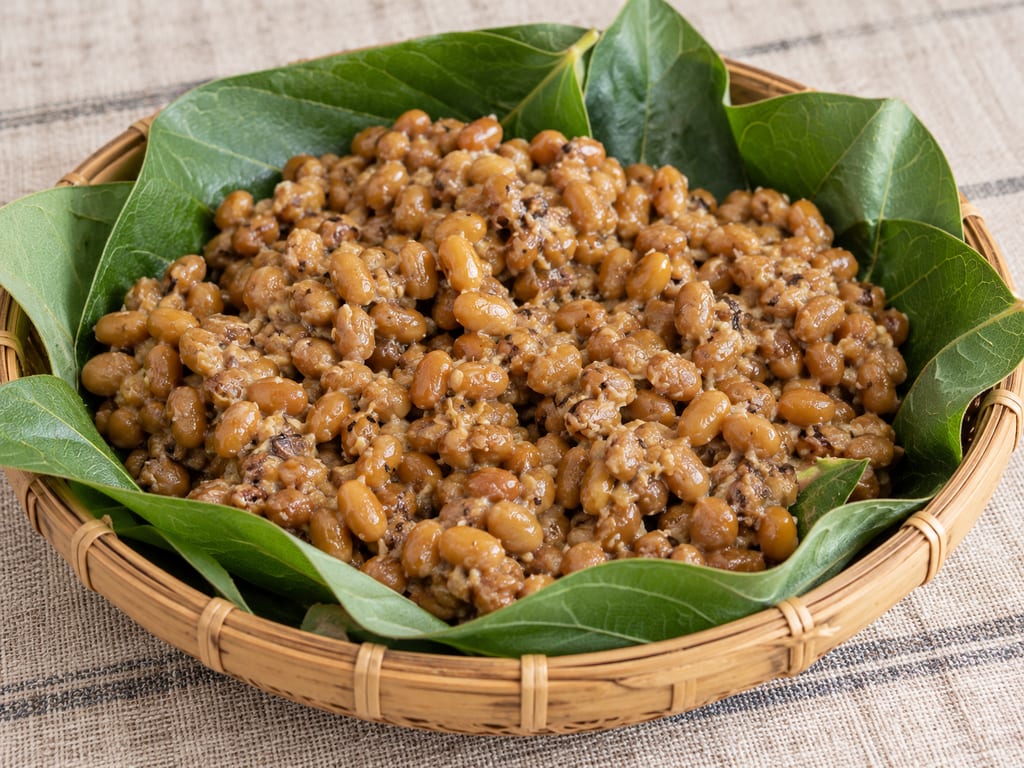
A Mizo alkaline soybean ferment made by holding cooked beans in leaf-lined containers, sometimes with wood ash, until they turn sticky, soft and pungent; eaten fresh or used as a seasoning.
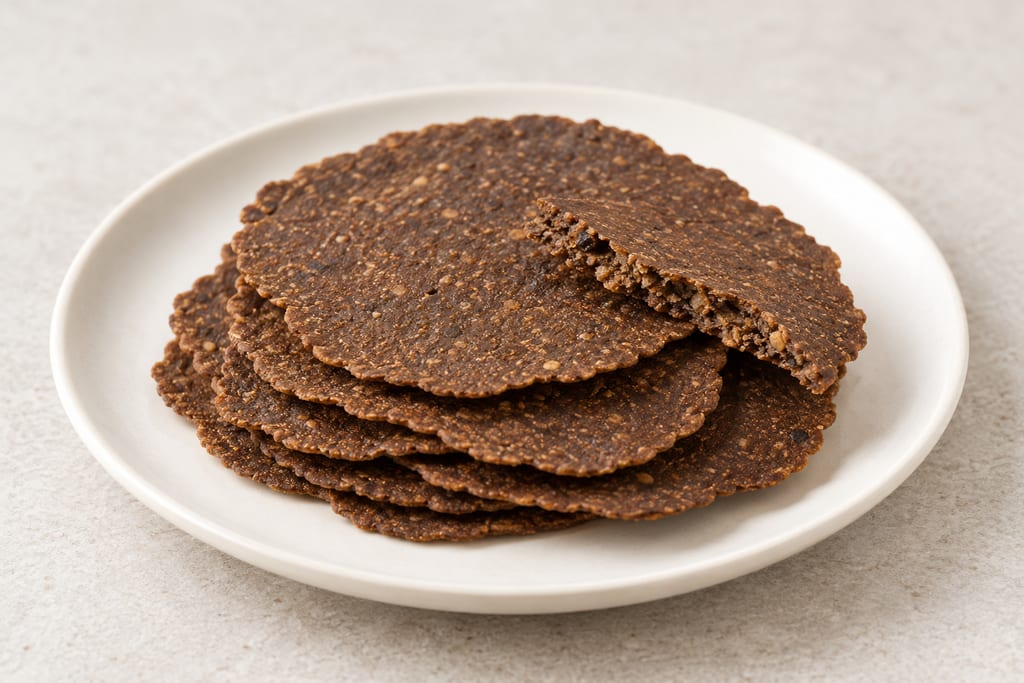
Black soybeans cooked, inoculated with a named Bacillus subtilis culture and fermented warm and humid into northern Thailand's thua nao, then optionally dried into thin discs.
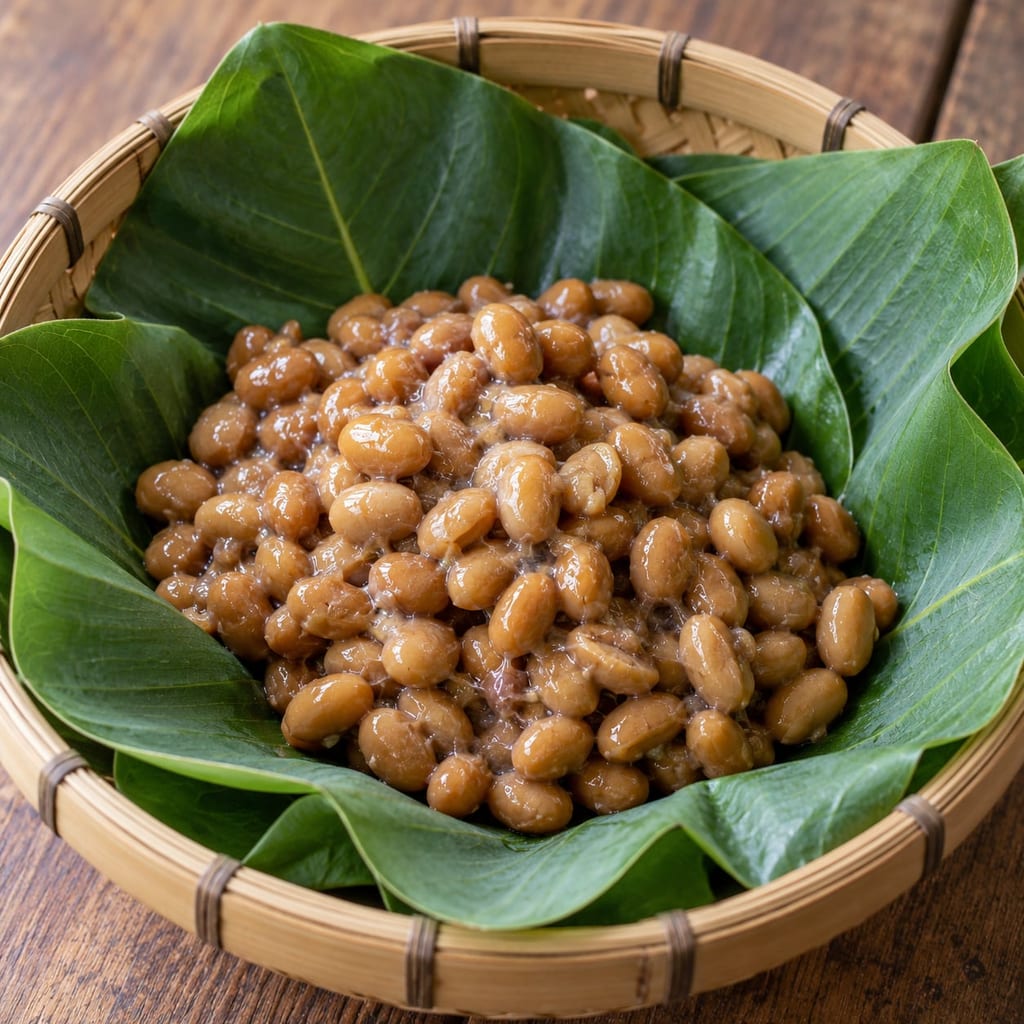
A sticky fermented soybean food of Manipur, made by packing cooked soybeans in leaf-lined bamboo baskets and keeping them warm, related to but distinct from Bekang and Akhone.
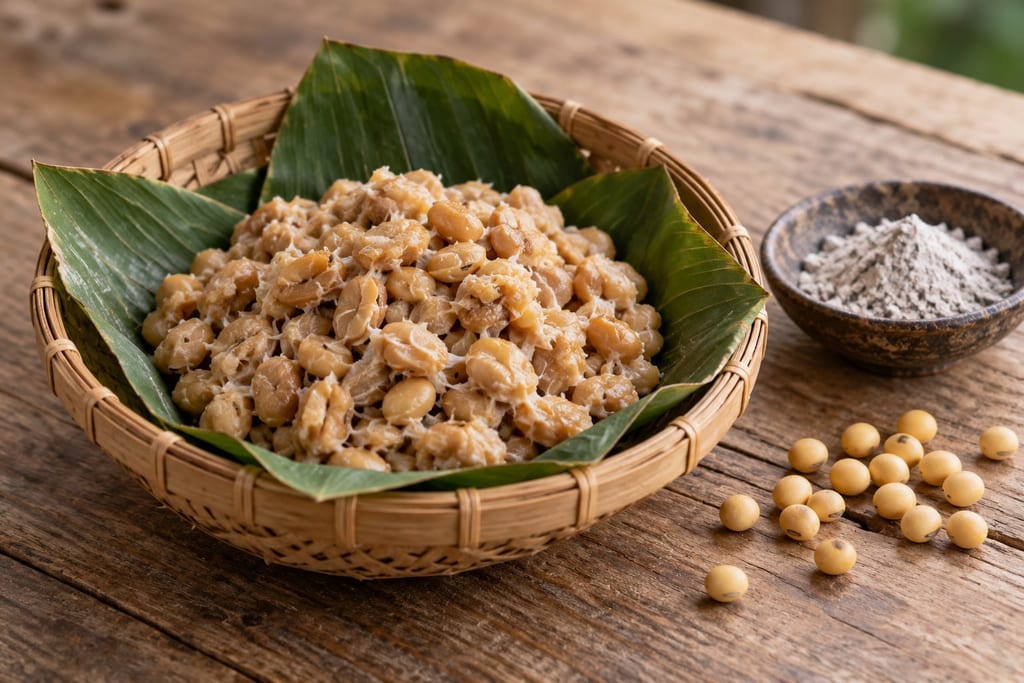
A sticky fermented soybean food of the eastern Himalaya, made here with a measured addition of firewood ash as an alkaline aid to the bacteria that drive it.
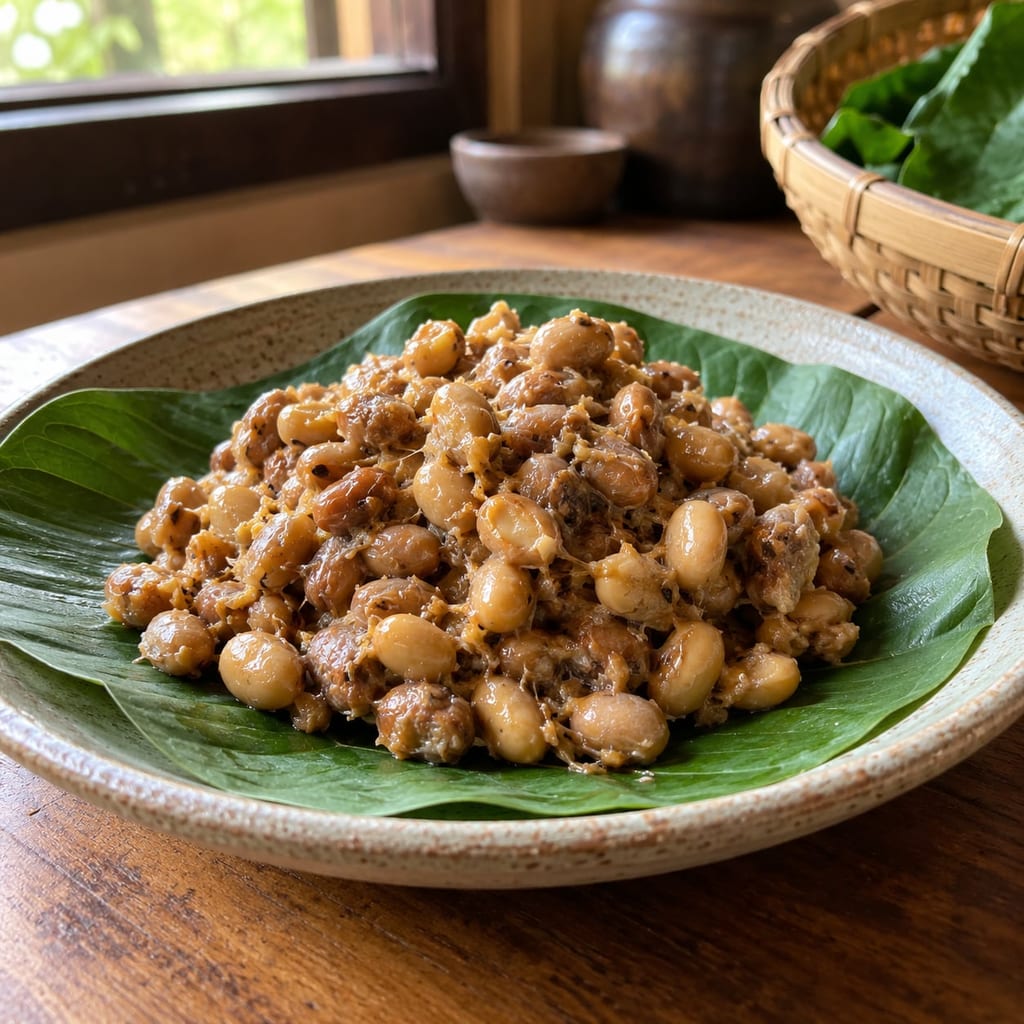
A home kinema made from overnight-soaked white soybeans, cooked, drained hot, wrapped in cloth and insulated to ferment for about a week.

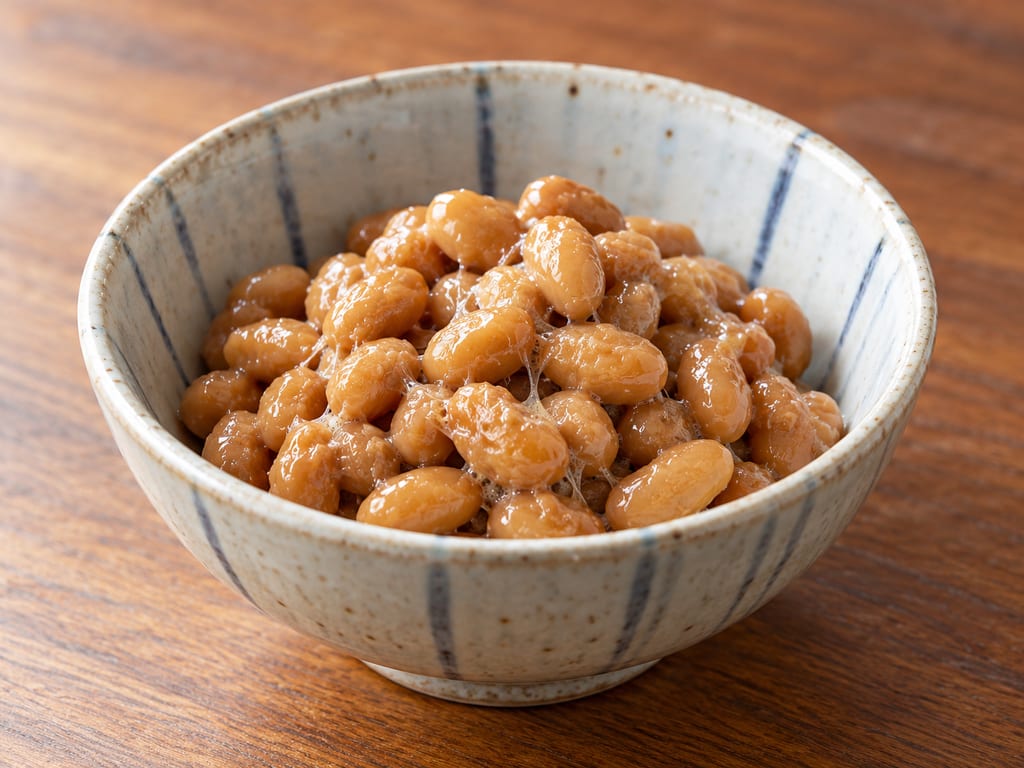
Natto is a Japanese fermented soybean food with a sticky coat and long strings, made by steaming soybeans and inoculating them with a natto Bacillus starter, then keeping them warm.
No community contributions have been published for this entry yet.
Sign in to contribute. Published comments and photos are free to read.
i-juuProcess · Ingredients · Identity · Equipment · Timing · Storage
番外編:手作り納豆のススメ | オランダ移住Archived ja caption JSON read to its final segment; caption review only, no audiovisual review. Published 2026-01-23.
400 g dry beans; soak about 12 h; boil 1 h 45 min; one-quarter frozen retail natto pack mixed with boiling water and stirred into hot beans; yogurt maker at 42°C for 24 h; wipe condensation; refrigerate 1.5–2 days; storage durations unstated.
BC Centre for Disease Control, Environmental Health ServicesSafety context
Section 3.8 NattoThe December 2024 natto guidance for food-safety evaluation and operators identifies soaking at 0–4°C, cooling controls before inoculation and after fermentation, and a commercial Bacillus subtilis natto starter culture with a certificate of analysis as control points.
The guidance is general production context and does not validate the specific video-derived yogurt-maker batch.