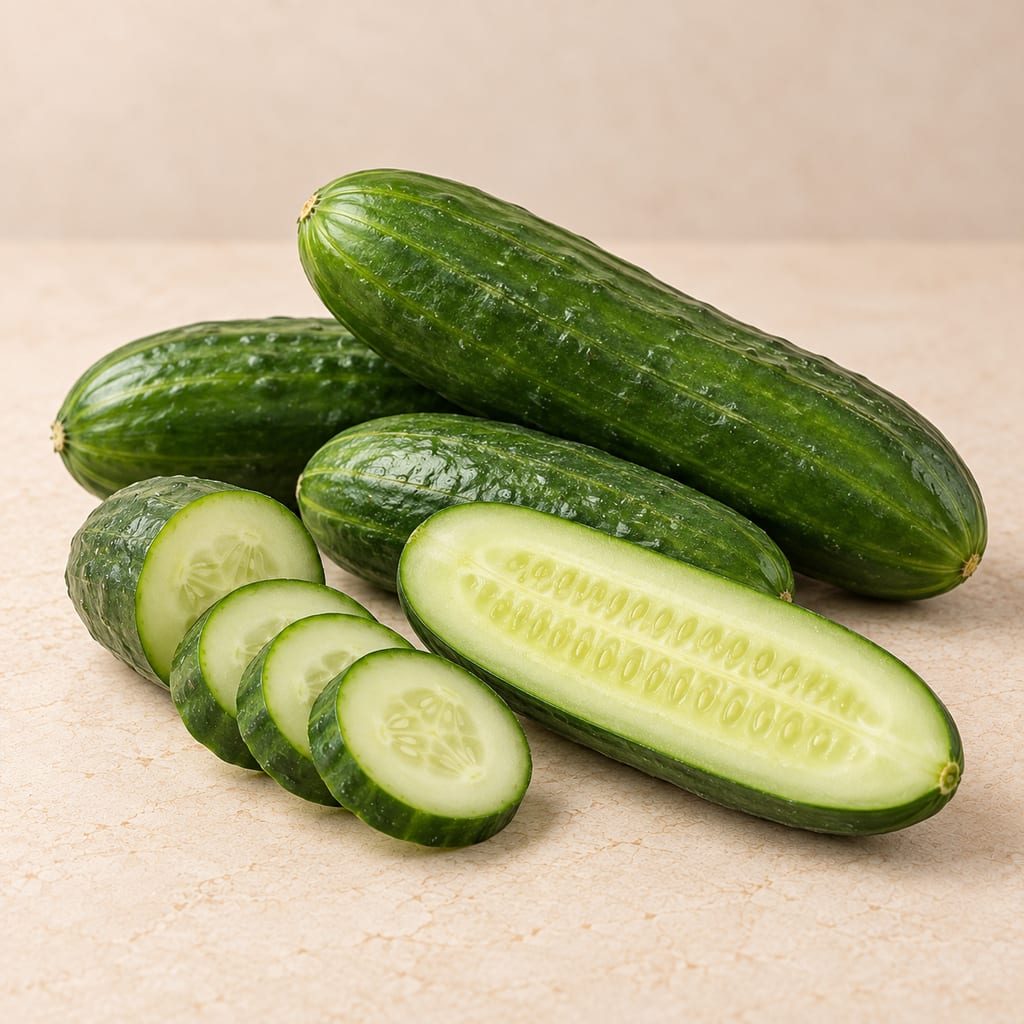
Cucumber
Cucumber is the watery fruit of Cucumis sativus, domesticated in India, and the classic raw material of brine pickles from New York dills to Nepali khalpi and Korean oi-sobagi.
 FermenteaWhere food goes to change
Substrates
Everniastrum cirrhatum, a tree-dwelling lichen of the Nepal Himalaya, gathered wild and used in soups, pickles and sausages by the Limbu and Rai communities of the north-east hills.
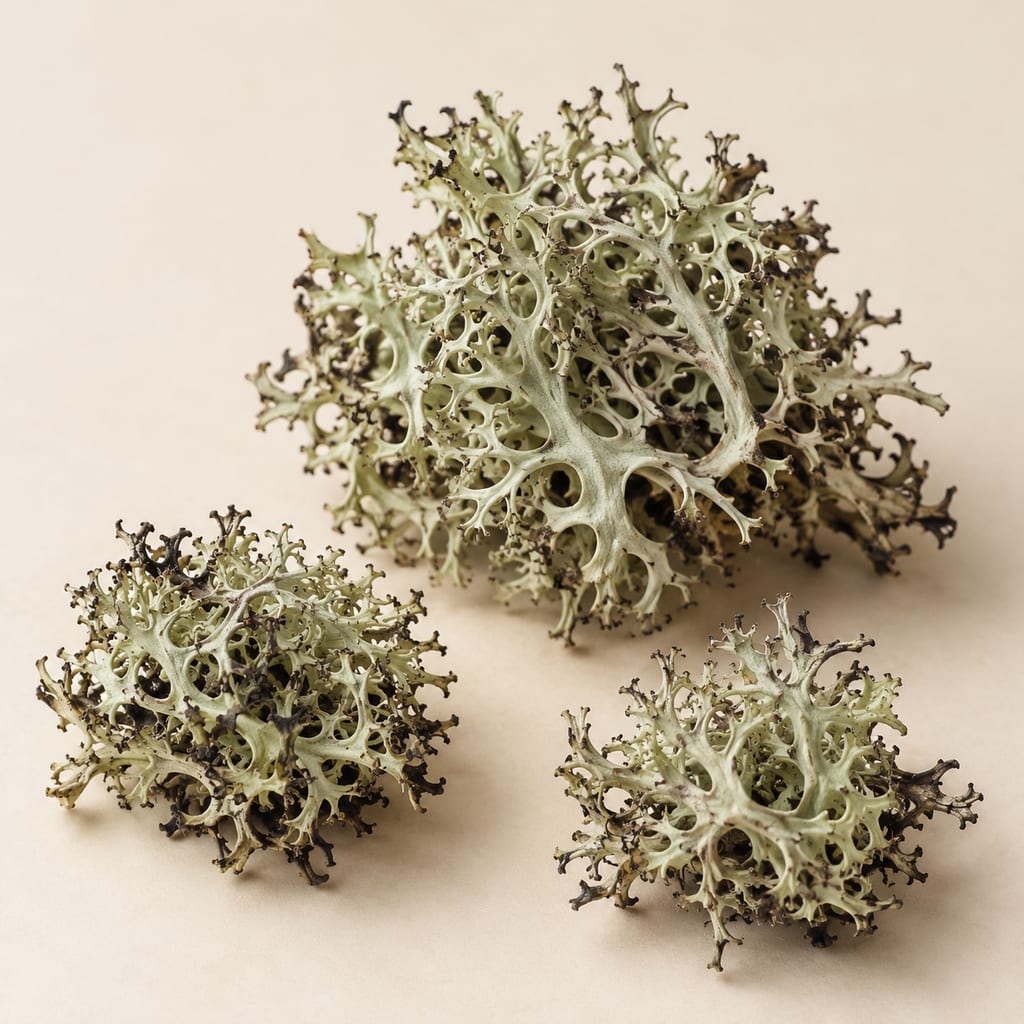
Jhyau is the common name the supplied catalogue gives to Everniastrum cirrhatum, a lichen. A lichen is not a single organism: it is a partnership of a fungus and a photosynthetic partner, usually an alga or a cyanobacterium, and in this case the fungal partner gives the thallus its form. Everniastrum cirrhatum grows on trees, and the catalogue records its ecology as tree-dwelling and its supply as wild.
The catalogue lists Hypotrachyna cirrhata as a search alias, because some more recent treatments place the species in that genus. The scientific name in this entry is the name used in the catalogue, and it is a research name that has not been checked against current taxonomy here. The same Himalayan food tradition also uses two other lichens, Everniastrum nepalense and Parmotrema cetratum, so a record for the lichens as a group must be checked species by species.
The lichen is part of a food tradition of the Limbu and Rai communities of eastern Nepal. Studies of lichen use in the Nepal Himalaya record it in soups, in pickles and as an ingredient in sausage. The Limbu call the lichen yangben, and the Kathmandu Post describes it as the community's signature wild delicacy. A blood sausage made by the Limbu, known as sargyangma, is made by adding the lichen to minced meat or innards.
A survey of lichen use in the region found that the lichens are valued mainly as food. Reports from the region also say that demand for edible lichens has risen over the last five to seven years, and that some of the demand comes from outside the community. That rise in demand is a reason to watch how the lichens are gathered, although the sources read for this entry do not measure the harvest.
The sources read for this entry name the dishes but give little method. One online account describes boiling the lichen with wood ash and then mixing the powder with flour to make bread or sausage. That account gives no clear source for the method, and the academic studies read for this entry do not confirm it, so this entry does not adopt it as a recipe. Quantities, cooking times and any treatment that removes bitter or unwanted compounds are not recorded in the sources read here.
The catalogue states that recorded local use does not validate all lichens or all preparations. The sources read for this entry give no toxicity data for Everniastrum cirrhatum and no safety assessment of the lichen as food, and they do not establish that every lichen sold under this name is the same species.
Lichens are hard to identify from a photograph or a dried sample, and several species look alike. This entry is not an identification guide and gives no verdict on whether any lichen is safe to eat. A specimen needs a qualified identification, and any preparation needs a source that describes it for that specimen.
Three questions stay open: how the species is identified in trade and in the Himalayan markets, how the lichen is prepared in each dish, and how far the harvest is sustainable as demand grows. The naming of the species in the literature also needs to be settled before the record is read as a single taxon.
Recorded food use by Limbu and Rai communities of eastern Nepal; the record does not extend to other lichen species or to other areas.
Cucumber is the watery fruit of Cucumis sativus, domesticated in India, and the classic raw material of brine pickles from New York dills to Nepali khalpi and Korean oi-sobagi.
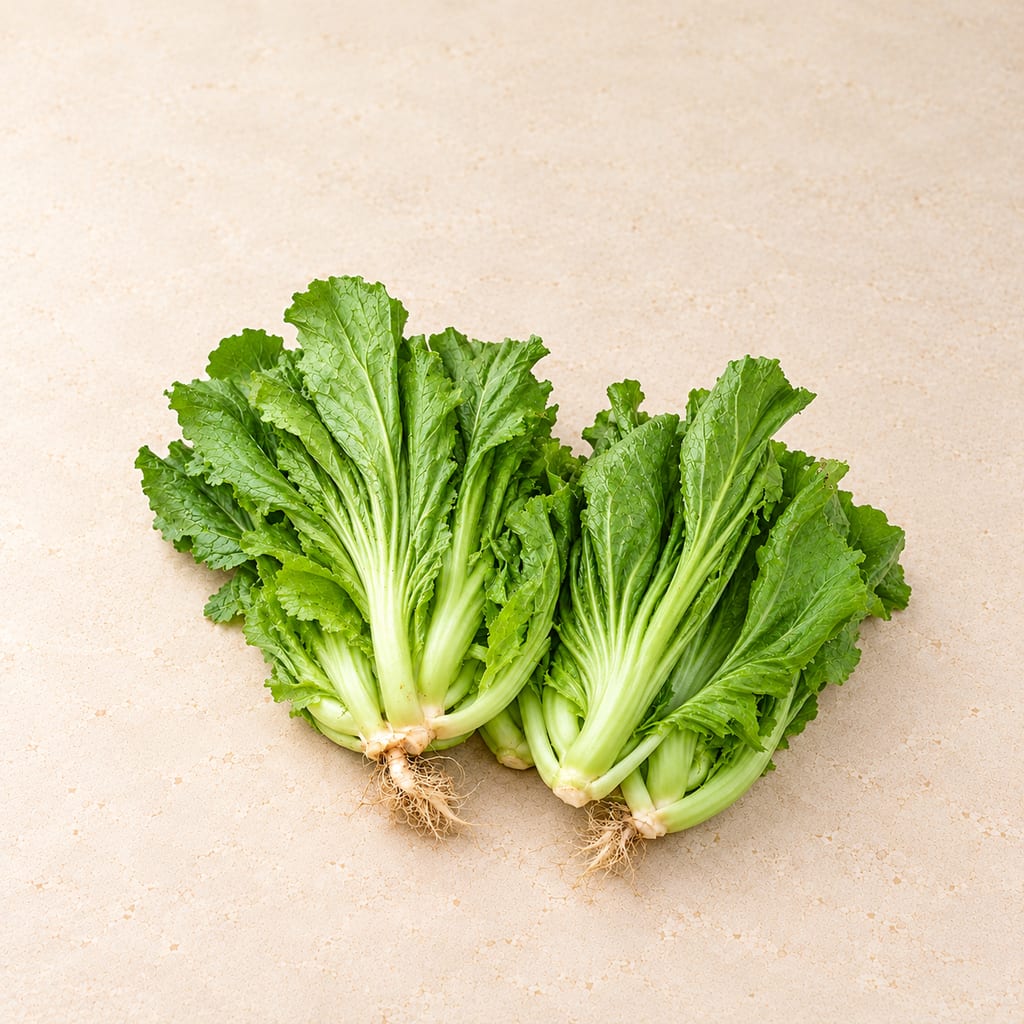
The leaves of Brassica juncea, a hardy cool-season crop with a sharp, sulfurous bite, eaten fresh and cooked and fermented across Asia as pickled greens, kimchi and gundruk.
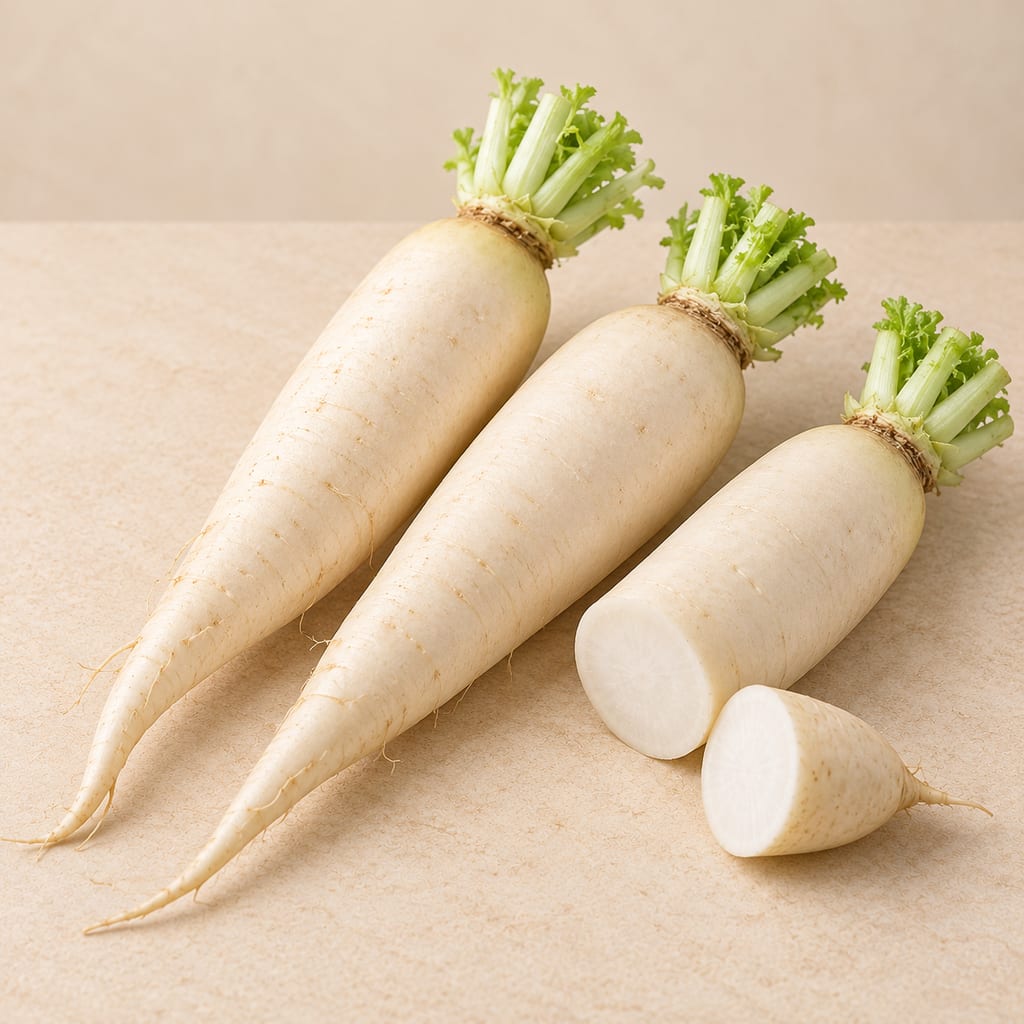
Radish and daikon are the crisp, peppery roots, leaves and seed pods of Raphanus sativus, fermented as kimchi, takuan and sinki and eaten raw across Asia and Europe.
No community contributions have been published for this entry yet.
Sign in to contribute. Published comments and photos are free to read.
PubMed Central (Journal of Ethnobiology and Ethnomedicine)Food · Identity
Indigenous knowledge and use of lichens by the lichenophilic communities of the Nepal HimalayaEverniastrum cirrhatum recorded as a wild food lichen used in soups, pickles and sausage by the Limbu and Rai
Several edible lichens used in the region, including Everniastrum nepalense and Parmotrema cetratum
Food is the main use reported in the survey
Kathmandu PostFood · Culture
Yangben: The wild delicacy of the LimbusThe Limbu name yangben; sargyangma blood sausage made with the lichen; rising demand