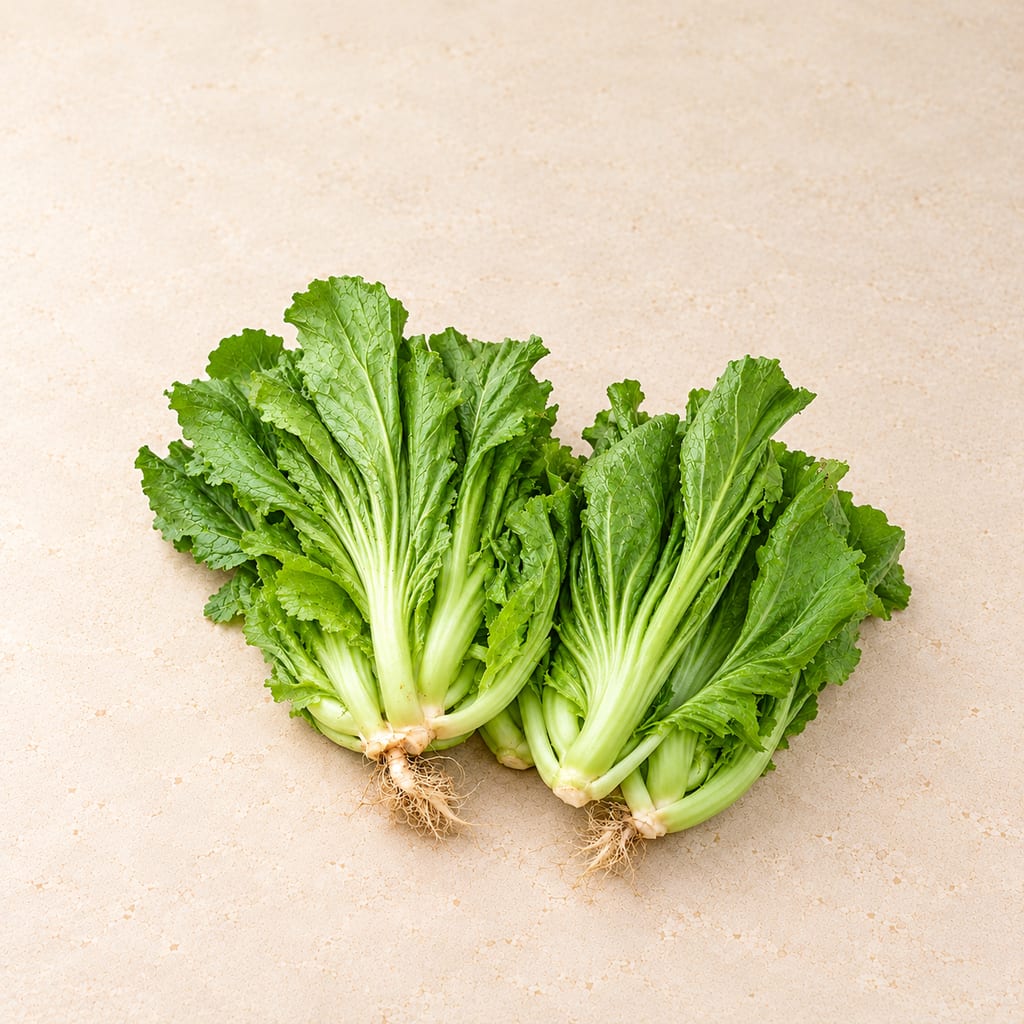
Mustard greens
The leaves of Brassica juncea, a hardy cool-season crop with a sharp, sulfurous bite, eaten fresh and cooked and fermented across Asia as pickled greens, kimchi and gundruk.
 FermenteaWhere food goes to change
Traditional method
Mustard greens
Indonesian salted mustard cabbage, wilted, rubbed with 2.5 to 5% salt by weight, and fermented covered in boiled-rice liquid.
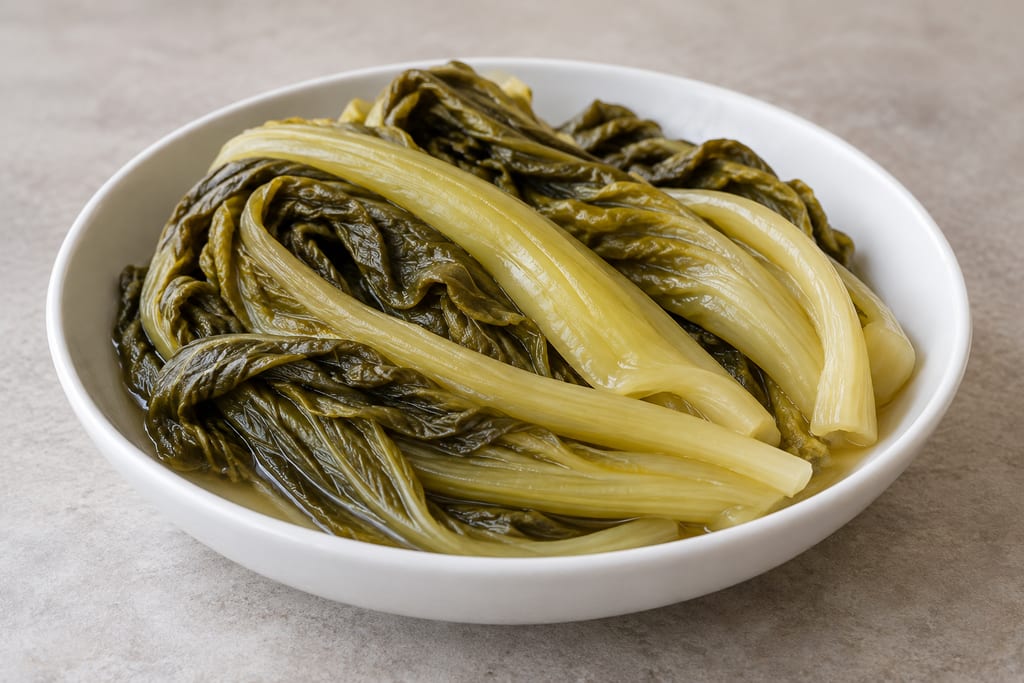
Sayur asin is an Indonesian fermented vegetable made principally from mustard greens.
The name literally means salted vegetable: sayur denotes vegetables and asin means salty. The closely related name sawi asin is also common, with sawi referring to mustard or mustard-like leafy vegetables.
The product is especially associated with Chinese-Indonesian cooking and is found in several parts of Indonesia, including East Java.
It consists of mustard greens that are wilted, salted and left to sour in a liquid traditionally containing rice-derived material.
The leaves become olive-green or yellow-green, while the stems retain a recognizable texture.
The flavor is sour, salty and distinctly vegetal.
It is commonly cooked into soups and stir-fries rather than always being eaten directly from the fermentation vessel.
The main plant is Brassica juncea, although the Indonesian term sawi also covers other cultivated brassicas.
In everyday shopping, it is important to distinguish sawi pahit, bitter mustard greens, from milder leafy vegetables such as caisim and pak choi.
The original site record for this entry could not be retrieved: it contains only a content-server failure, reference 76f8e2df.
For that reason, the quantities below are reconstructed from independently identifiable published recipes and scientific research, not from an unseen original recipe record.
Sayur asin is part of a broader Southeast Asian family of fermented mustard vegetables.
Related products appear in Chinese, Vietnamese, Thai and other regional cuisines.
Cultural connections between Chinese migrant communities and Indonesian foodways help explain the presence of mustard preserves in Indonesian cooking, but the sources do not establish a precise migration date for the particular preparation.
The first detailed modern microbiological study of sayur asin was published by Harry Puspito and Graham Fleet in 1985.
It examined the microbial succession that produces sourness in the mustard greens.
That research establishes that traditional sayur asin is a genuine fermentation process rather than merely vegetables soaked in vinegar.
Further research sampled products from traditional manufacturers in Tulungagung and Kediri, both in East Java.
The investigation confirmed that lactic acid bacteria were central to the fermentation, with differences between producers.
Household recipes published in Indonesian also demonstrate continuing practice.
Some include only salt and rice-washing water; others add sugar, coconut water or ginger.
The name remains recognizably Indonesian even when the individual household process differs.
The original 1985 technology description gives a traditional salt addition of 2.5–5%, together with liquid from boiled rice.
It does not establish one universal batch weight or volume of rice liquid.
A separate documented contemporary household recipe gives the following quantities.
Sawi pahit, bitter mustard greens — 1 kg
Salt — 90 g
Granulated sugar — 90 g
Water — 2 litres
That recipe describes preparing rice liquid, blanching the vegetables briefly and fermenting for 3–5 days.
It is important not to claim this is the same formulation as the original 2.5–5% salt process.
The household version uses a comparatively substantial quantity of salt and an additional sugar ingredient.
Both formulations belong to the same named food family but represent different recorded practices.
Mustard greens provide the plant tissue and intrinsic fermentable carbohydrates.
The leaves contain water, fiber, minerals and glucosinolates, which contribute to their pungent or bitter character.
Salt draws moisture from the vegetables and shapes microbial competition.
Rice-derived liquid provides additional carbohydrate material.
In the traditional scientific description, liquid from boiled rice supplies sugars and starch-derived compounds that can support fermentation.
This is not precisely equivalent to raw rice-washing water, whose carbohydrate concentration can be lower and more variable.
Sugar is included in some modern household versions but is not required by every historical description.
It provides immediately soluble fermentable carbohydrate and balances the vegetables' bitterness.
Water creates the liquid environment in which the vegetables ferment.
Some East Java production also uses coconut water.
This can supply soluble sugars and minerals, but the exact composition depends on coconut maturity and source.
The original study does not specify a universal ratio of coconut water to ordinary water.
Mustard greens — 1 kg
Salt — 90 g
Sugar — 90 g
Total liquid prepared — 2 litres
Fermentation — 3–5 days
Fermentation temperature — Room temperature
Yield — Not specified
The wider East Java research records 28–30°C during commercial sampling, but that temperature is not a validated target for this household recipe.
Use a washing bowl, a cooking pot, a strainer, clean food-grade fermentation vessel and a method of keeping the vegetables submerged.
A scale is needed to reproduce the measured salt and sugar additions.
The historical research does not establish a universal vessel type.
Glass and suitable food-grade plastics are used in contemporary households.
The container should not be sealed in a manner that allows dangerous gas pressure to build.
1. Select the mustard greens.
Use 1 kg bitter mustard greens for the documented household formulation.
Remove deteriorated leaves and damaged bases.
Prefer fresh, substantial stems rather than wilted produce already showing decay.
2. Prepare the rice liquid.
Strain the liquid from the rice.
The household source instructs topping up the strained liquid to a total of 2 litres.
This is a modern measured preparation, not a universal traditional rice-water specification.
3. Dissolve the seasonings.
Add 90 g salt and 90 g sugar to the prepared 2 litres rice liquid.
Stir until distributed.
The recorded method does not give a specified salt variety or the final concentration after vegetables are added.
4. Clean the vegetables.
Remove the tough base as required.
Wash the leaves thoroughly, paying attention to the folds around the thick stems.
The household recipe describes washing three times.
5. Briefly blanch.
Bring water to a boil and dip the mustard leaves in briefly, then move them immediately into cold water.
The purpose is to make the greens flexible.
The recorded method does not specify an exact number of seconds, so none is assigned here.
6. Drain and pack.
Drain the mustard leaves.
Arrange them in a clean, suitable food-grade container.
The goal is to retain recognizable stalks while allowing the liquid to reach the vegetables.
7. Add the rice brine.
Cover the mustard greens with the prepared rice liquid.
Remove large air pockets and keep the vegetables below the liquid surface.
If the published liquid quantity is insufficient for a differently shaped container, do not add an arbitrary unmeasured dilution and claim the original formulation is unchanged.
8. Ferment.
The documented household method gives 3–5 days at room temperature.
A numerical temperature is not provided for that recipe.
Because the formulation is spontaneous and has not been independently validated as a complete safe process, use acidity and temperature controls before relying on it for food preservation.
9. Assess before use.
The intended flavor is sour and salty.
The mustard leaves should remain recognizable, not dissolve into slimy material.
Time, color and taste are not sufficient to establish microbial safety.
10. Use in cooking.
Prepare the finished sayur asin as an ingredient in soup, stir-fry or another dish.
Refrigerate appropriately rather than assuming the ferment is shelf-stable.
Rice contains starch, a polymer of glucose.
Cooking gelatinizes starch, allowing some of it to enter the surrounding water.
The resulting liquid contains suspended and dissolved carbohydrate material.
Certain microorganisms can produce enzymes that hydrolyze larger carbohydrate molecules into smaller sugars.
Those sugars become available to lactic acid bacteria.
The process is more complex than simply adding sugar to vegetables.
The amount of available carbohydrate depends on the rice, cooking duration, water volume and organisms present.
The 1985 research identified metabolism of glucose generated from starch degradation and maltose breakdown.
It also identified several fermentation products, including lactic acid, acetic acid, succinic acid, ethanol and glycerol.
This demonstrates that sayur asin is a mixed biochemical transformation rather than pure production of one acid.
The 1985 study identified a sequence beginning with organisms including Leuconostoc mesenteroides and Lactobacillus confusus.
Later fermentation was associated particularly with Lactobacillus plantarum and Pediococcus pentosaceus.
The published trial also identified other bacteria and yeasts, including Candida sake and Candida guilliermondii under the taxonomy then in use.
The presence of yeasts does not make sayur asin primarily an alcoholic ferment.
Their metabolic activity can nonetheless influence aroma and minor chemical constituents.
Lactic acid production remains the principal desirable transformation.
The reported pH fell from 6.5 to 4.2 over eight days in the historical investigation.
Those values belong to that experimental fermentation.
They should not be transferred as guaranteed endpoints of the modern three-to-five-day household recipe.
Research published in 2017 analyzed four traditional-manufacturer samples from Tulungagung and Kediri.
The measured salinity of the fermentation liquids ranged from 3.60% to 5.67% weight/volume.
The measured pH ranged from 3.50 to 4.57.
The samples were collected after 3–7 days of fermentation.
These findings demonstrate variation even among products carrying the same name.
A total of 172 lactic acid bacterial isolates were identified.
Among the organisms were Lactobacillus plantarum, L. farciminis, L. fermentum, L. namurensis and L. parafarraginis under the study's naming system.
The investigators found L. plantarum especially prominent in their samples.
Of the isolates identified, 118 were assigned to that species.
The exact microbial population differed between the two production locations.
This supports the idea that local environment, ingredients and household practice shape spontaneous fermentation.
Fresh mustard greens contain pungent compounds associated with glucosinolates.
Wilting, heating and salt treatment alter the structure of the leaves.
During fermentation, microbial metabolism generates acids and other compounds.
As the acidity increases, the bitter-mustard flavor becomes integrated with a sour, salty character.
The vegetable pigments also change.
Fresh green chlorophyll can shift toward less vivid olive-green tones during acidification.
That explains the typical appearance of the fermented leaves.
Texture can become softer while substantial stalks retain some firmness.
These changes are characteristic, but color is not a reliable safety indicator.
East Java is particularly well documented in the microbiological literature.
However, sayur asin is not restricted to that region.
Indonesian household recipes include substantial variation.
Some cooks wilt the mustard in sunlight. Others briefly dip the leaves in hot water.
Some use rice-washing water, while others use liquid from boiled rice.
Coconut water appears in certain preparations.
Some recipes add sugar, ginger or other aromatic ingredients.
These differences are worth preserving because they alter the available fermentable substrate and the sensory result.
The closest international relatives include Chinese haam choy, Vietnamese Dưa cải chua and Thai pak-kaat-dorng.
They should not be merged into one recipe merely because all can be translated as sour mustard greens.
Sayur asin is used in soups and stir-fries.
A common preparation combines chopped preserved greens with garlic, chili and other aromatic ingredients.
The sourness adds contrast to rice and richer cooked foods.
Another preparation combines sayur asin with boiled quail eggs and vegetables.
The greens can be used in chicken soup or cooked with minced meat.
Some households prepare a simple spicy stir-fry with anchovies.
Because the preserved vegetable is salty, additional seasoning should be adjusted carefully.
Rinsing can moderate saltiness, but it also removes some of the acids and flavor compounds developed during fermentation.
The desired food is sour, salty and recognizably mustard-like.
The leaves become more olive-green or yellow-green.
The stems should retain enough structure for chopping and cooking.
The liquid may become cloudy due to suspended vegetable material and microbial activity.
However, cloudiness is not proof of correct fermentation.
A batch may acidify inadequately even if it looks similar to a normal batch.
Visible mold, decay odors, contamination or unexplained heavy slime are reasons for rejection.
The product requires acidity monitoring when the fermentation itself is being relied upon for preservation.
The different source formulations cannot be treated as interchangeable safety protocols.
The salt level in the documented household recipe differs from that in the original 2.5–5% method.
Commercial East Java samples also had different salinity and pH values.
General produce-fermentation guidance identifies a pH of 4.60 or below as important for food-safety control.
That does not mean every traditional batch has been validated simply because its recipe gives several days of fermentation.
The recorded method studies do not establish a universal shelf life for all sayur asin.
The finished product should be stored under suitable refrigerated conditions unless a separate process establishes shelf stability.
Indonesian process sketch.
Scaling: source batch only
Poor brine coverage or inadequate acidity monitoring can allow spoilage; recipe-specific validated limits are not established.
Hazard sourceUse clean food-grade equipment, keep produce submerged and monitor acidity; no universal endpoint is supplied for this recipe.
Control sourceThe source supports this broad area and no precise location.
The leaves of Brassica juncea, a hardy cool-season crop with a sharp, sulfurous bite, eaten fresh and cooked and fermented across Asia as pickled greens, kimchi and gundruk.
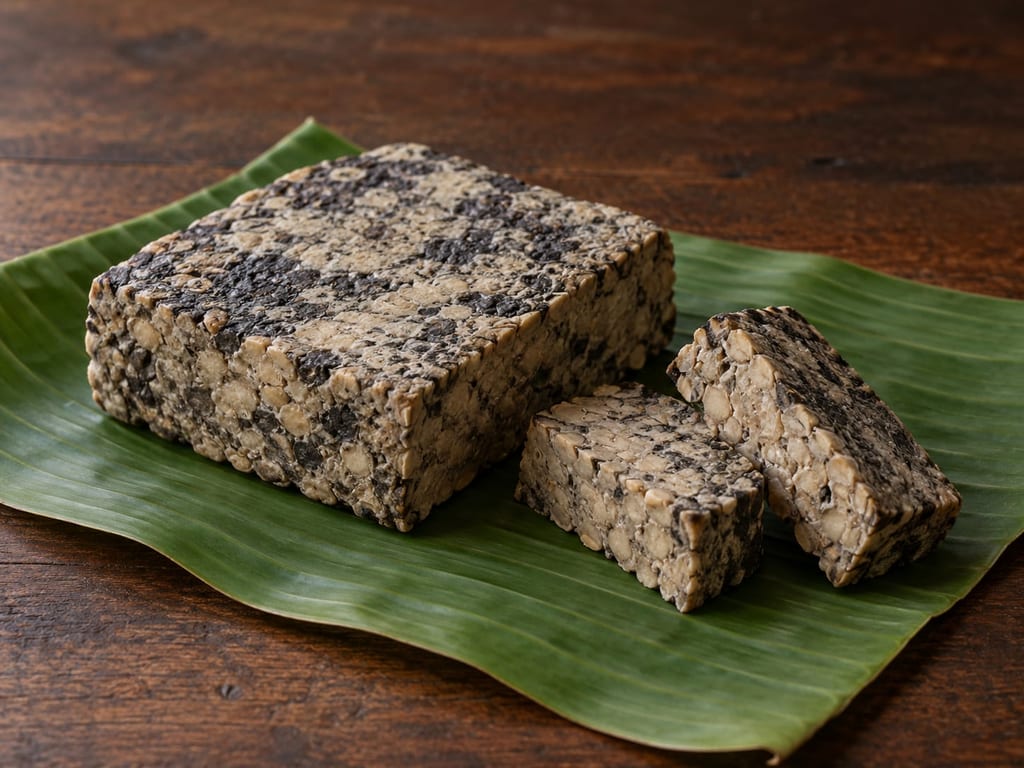
Black oncom is a mould-fermented cake made from defatted peanut cake, pressed to about 2 cm, steamed and then incubated for a day at ambient temperature.
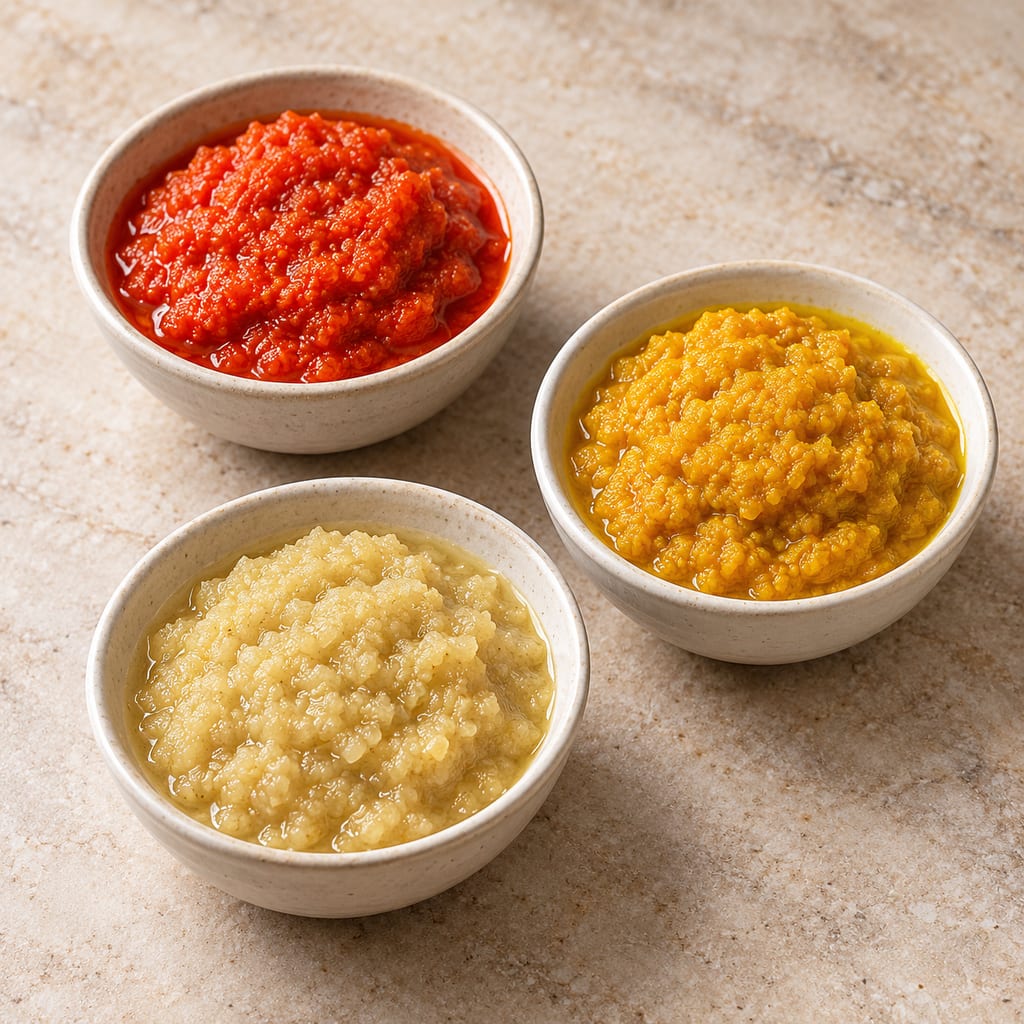
Bumbu dasar are the ground spice bases of Indonesian cooking: a white paste of shallot, garlic and salt, with chile added for red and turmeric for yellow, cooked into dishes.
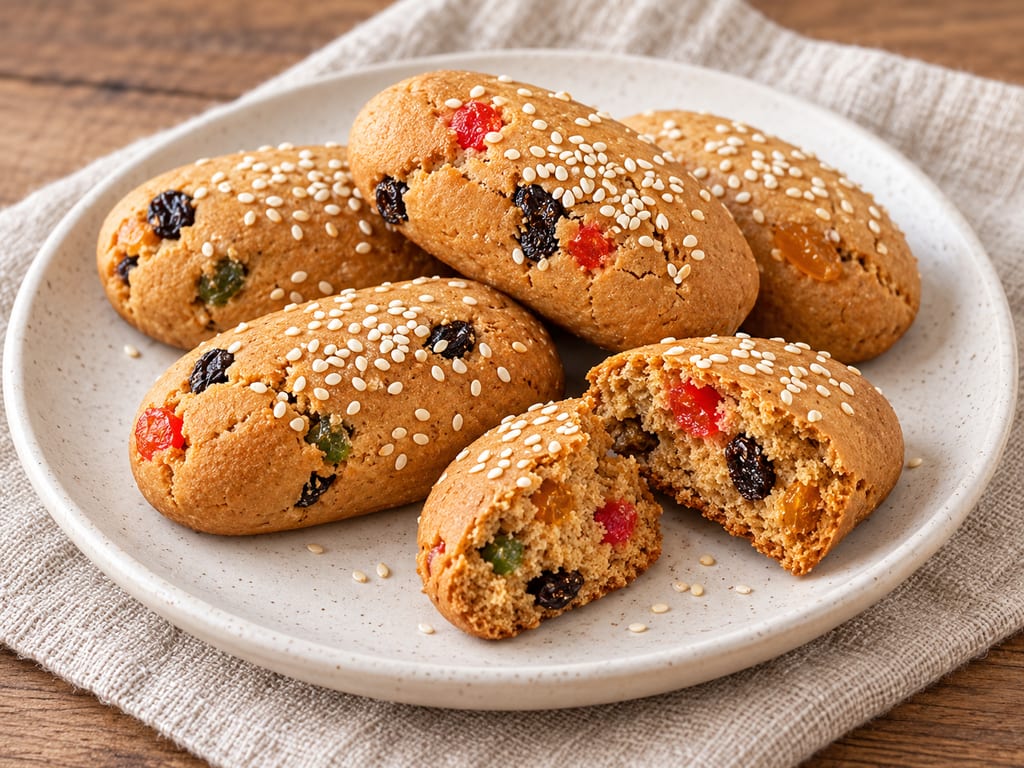
An Indonesian palm-sugar and cinnamon quick bread with dried fruit and sesame.
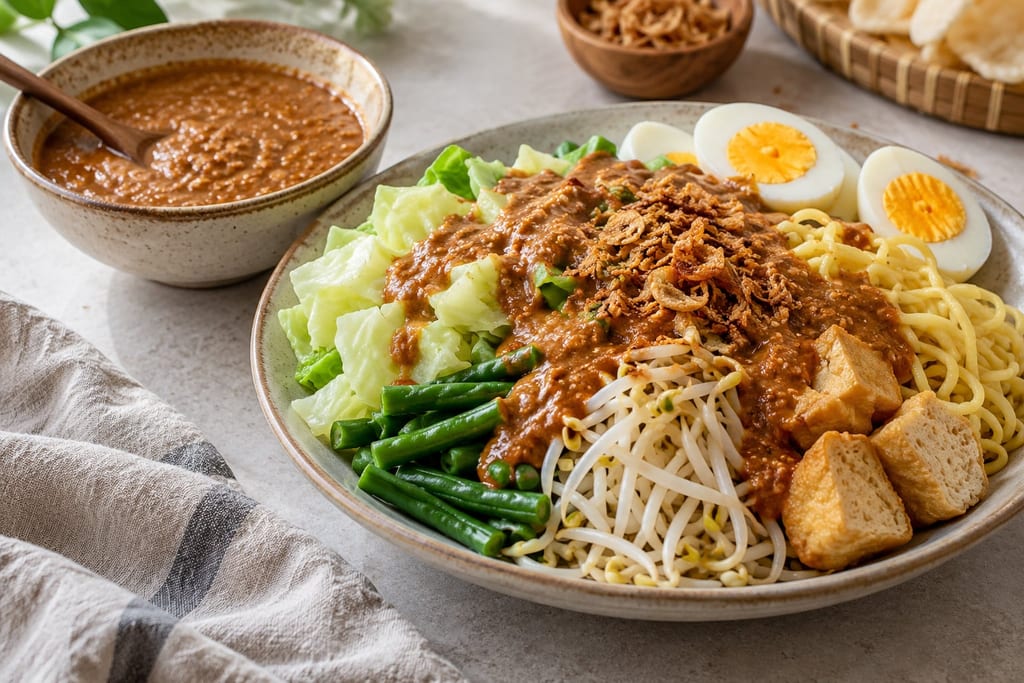
A cooked peanut sauce of ground roasted peanuts, aromatics, shrimp paste and coconut cream, as made for gado-gado; pecel and Malaysian satay sauces are close relatives with different formulas.
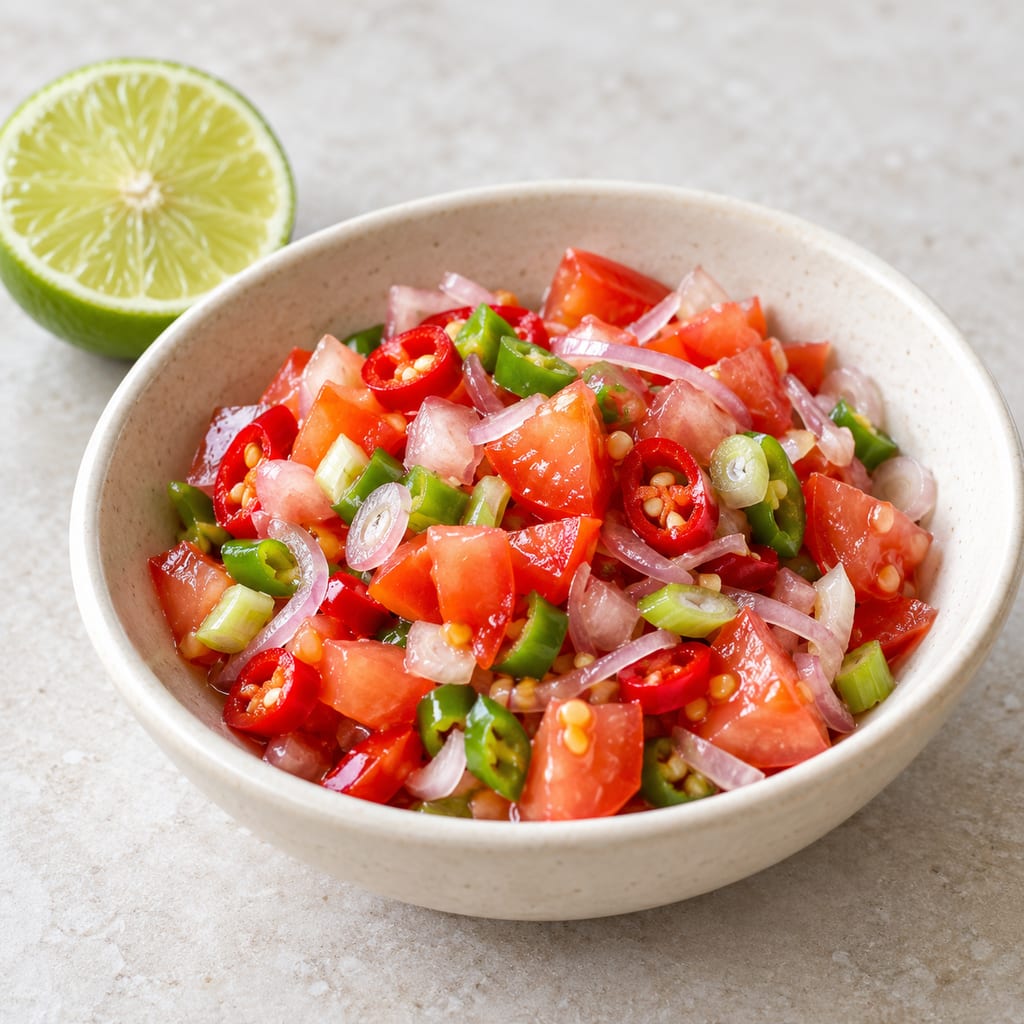
Dabu-dabu is a raw North Sulawesi relish of chopped chillies, shallot, scallion and tomato, dressed with salt and lime juice or coconut oil.
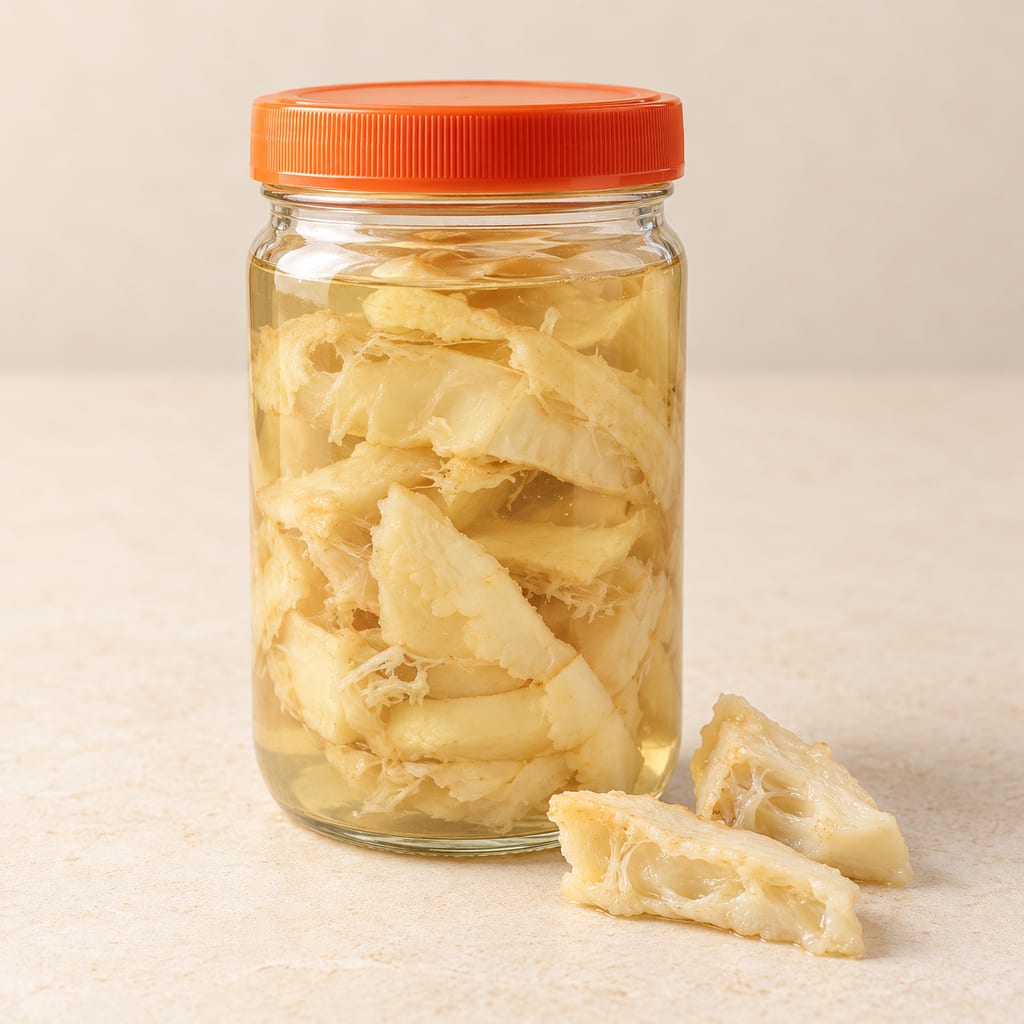
Cempedak inner rind is cut, salted and submerged in water for a short spontaneous fermentation used in Kalimantan home cooking.

Martabak manis is a thick Indonesian griddle pancake with a porous, honeycomb crumb, cooked under a lid and finished with butter and sweet toppings.
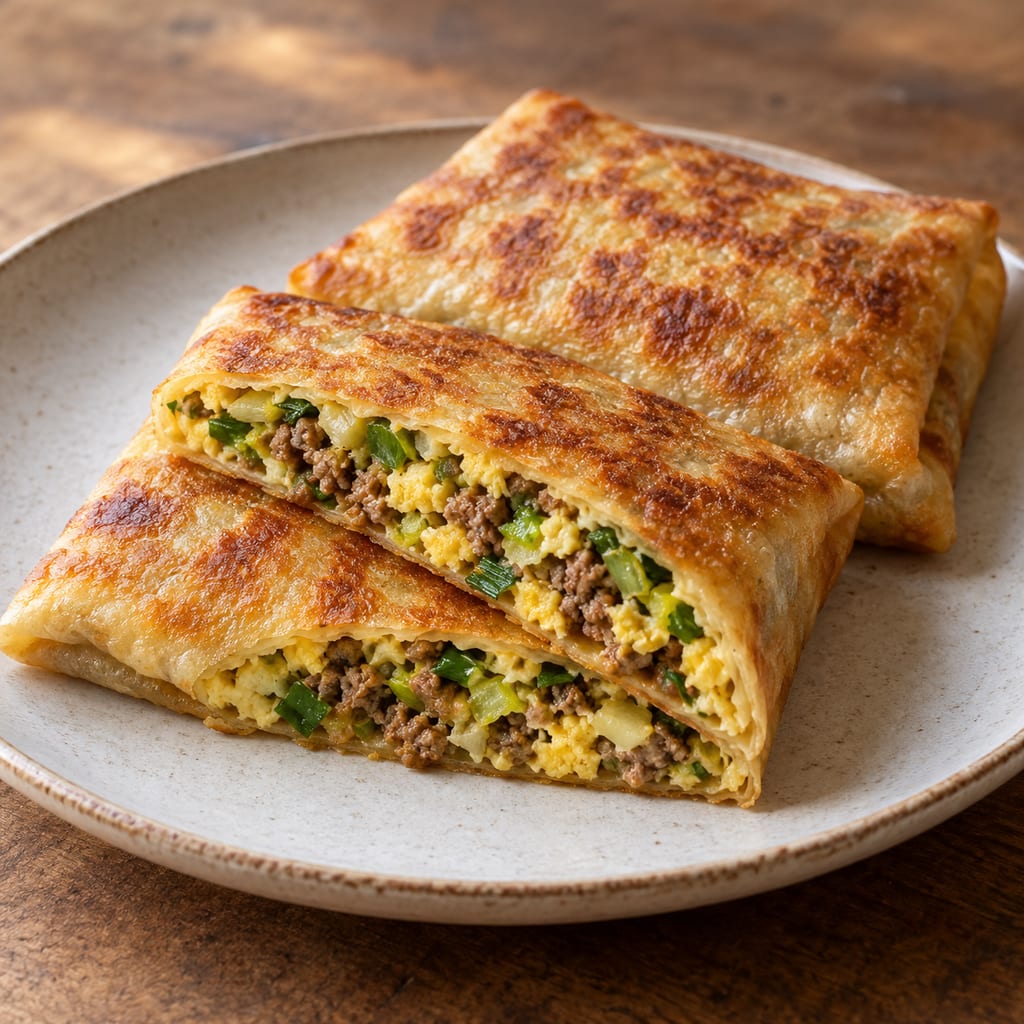
A Javanese-style Indonesian savoury parcel of thin rested wheat dough folded around curry-seasoned beef and egg, then cooked in an oiled skillet.
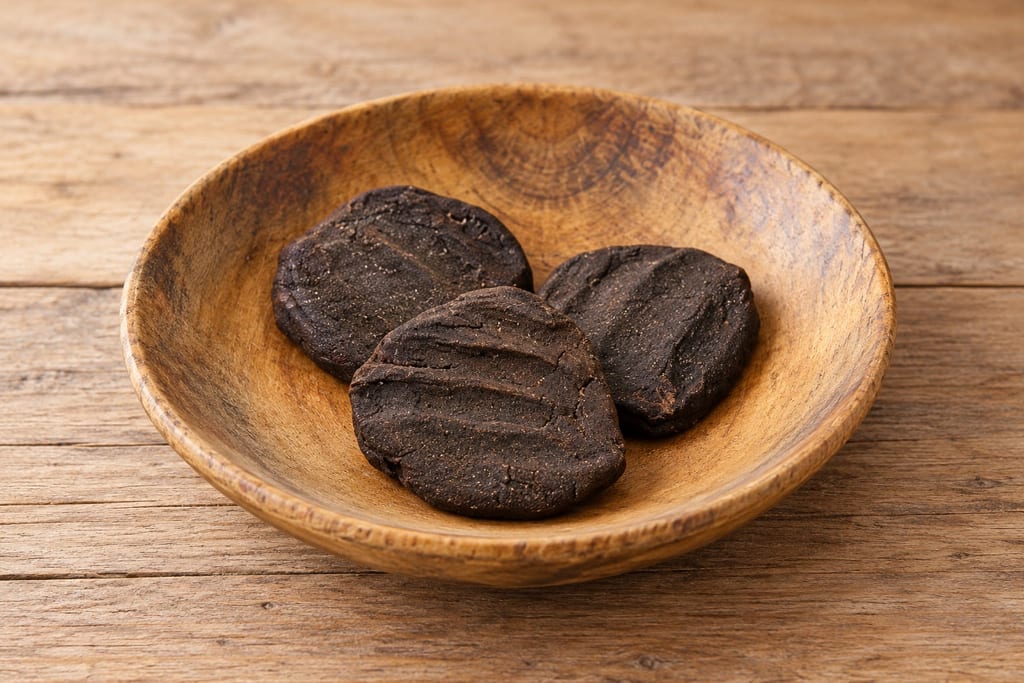
Dried cakes of pounded taro leaves from the Ao Naga in Nagaland, yellowed in a bag, then dried by hot ash or sun and used to flavour meat dishes.
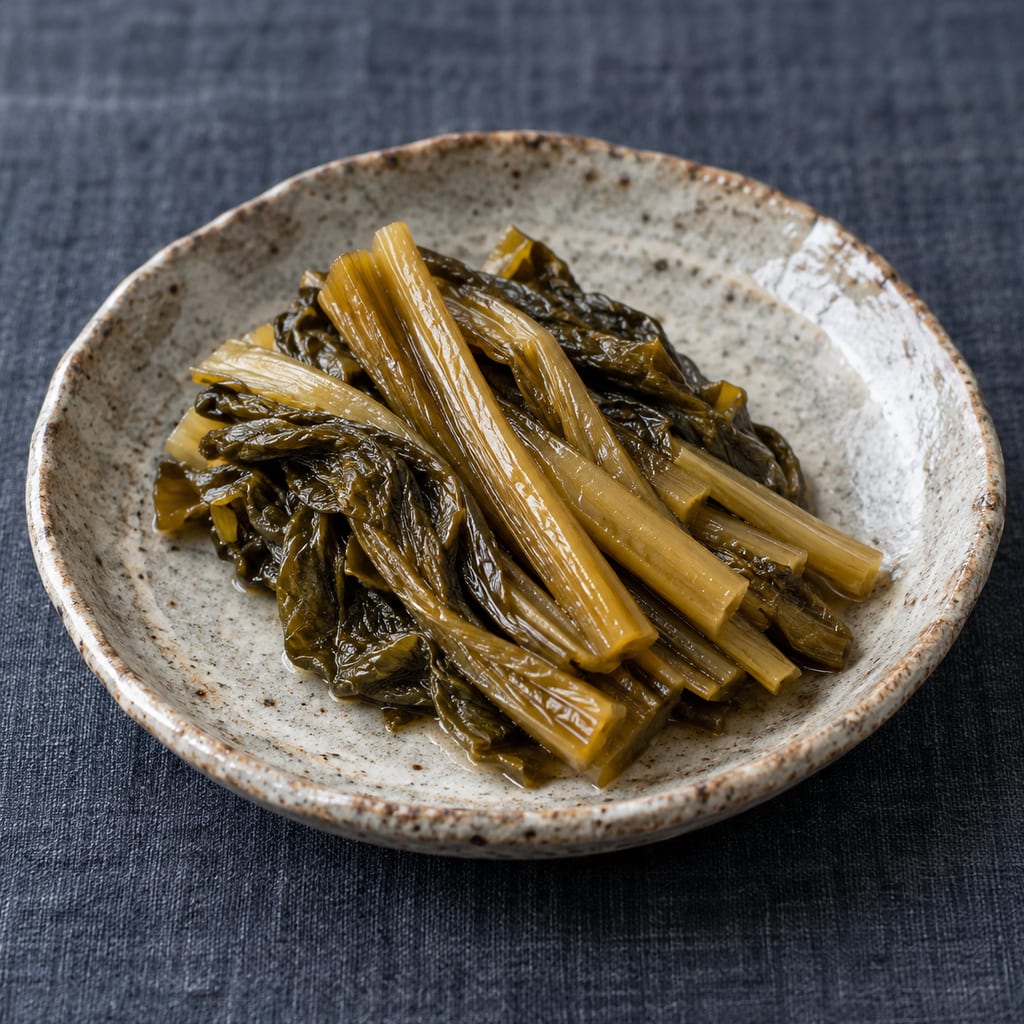
Takana mustard greens from Aso in Kumamoto are salted and pressed into a fresh spring pickle, or aged into a sour furuzuke that is fried and mixed into takana rice.
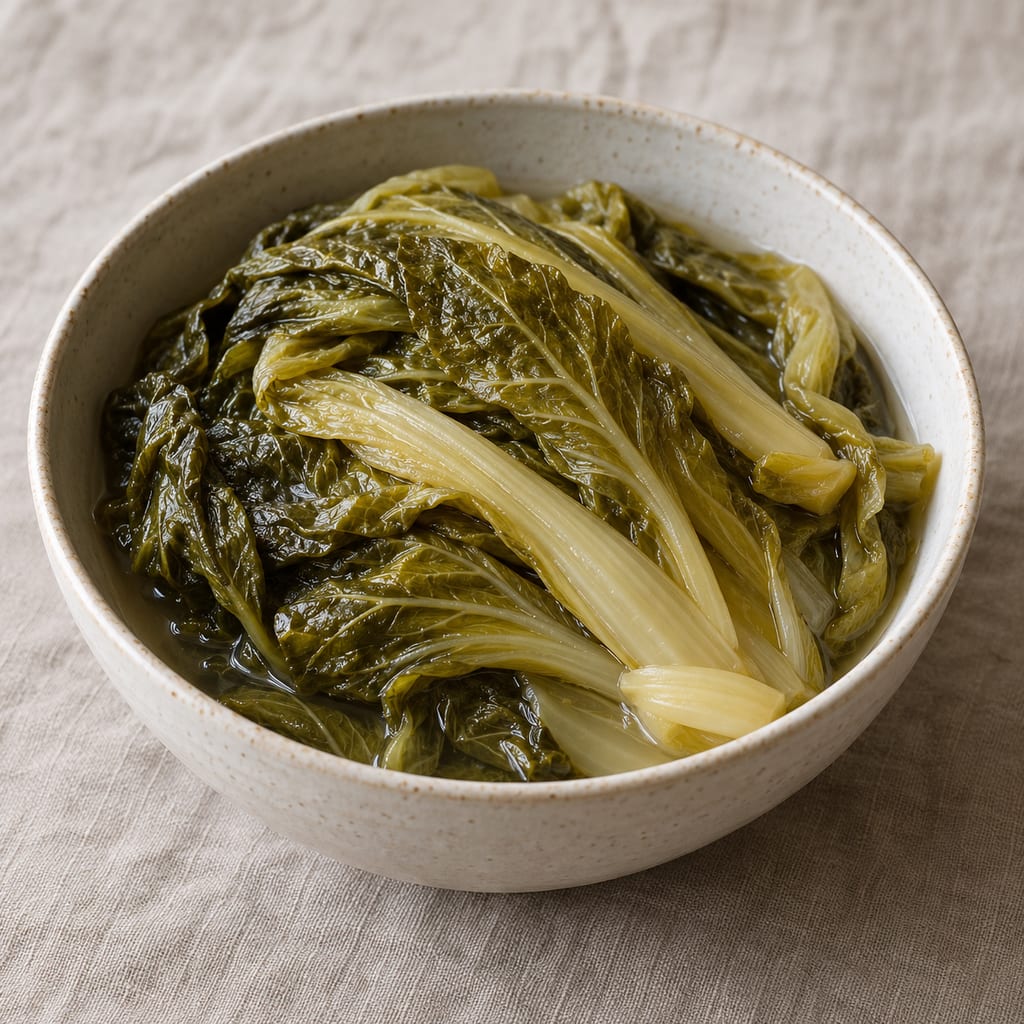
Wilted flat mustard leaves ferment with rice water and salt as a Filipino appetizer and cooking ingredient.
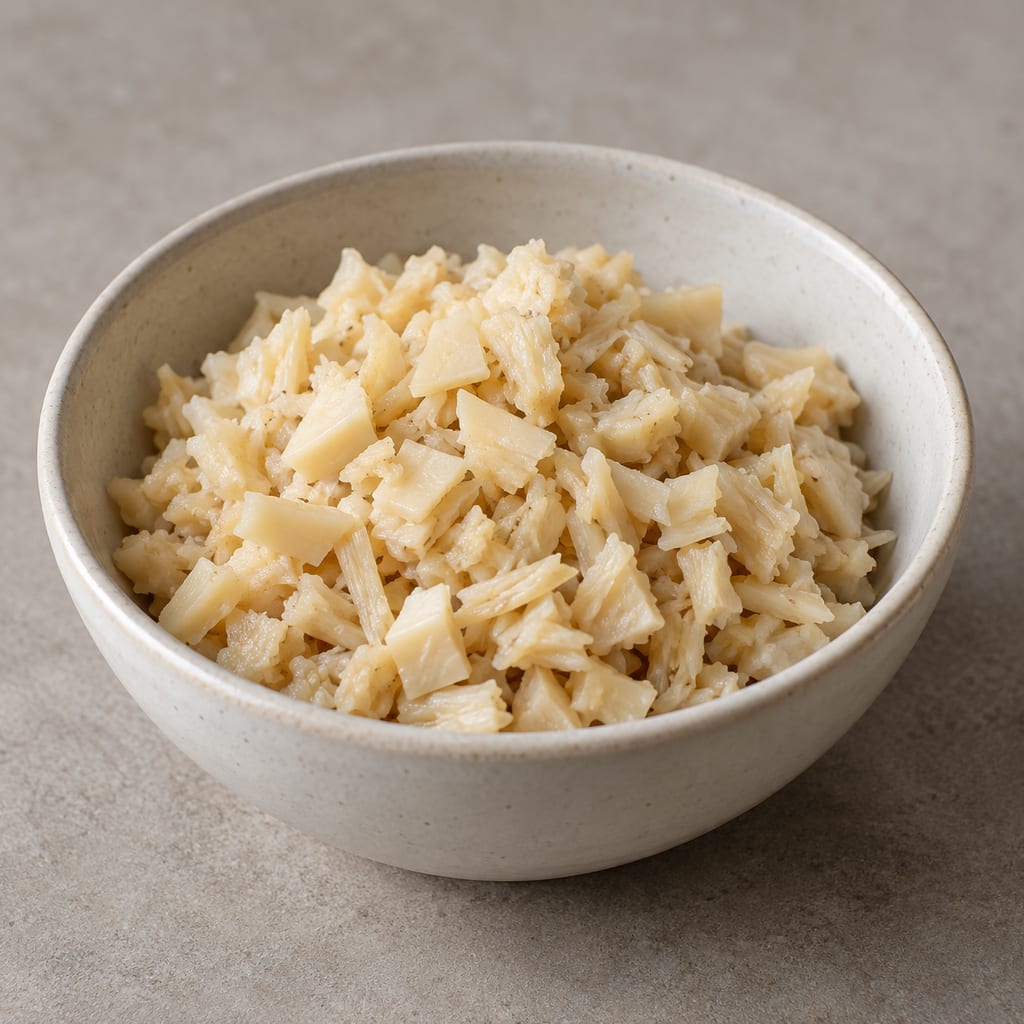
Finely chopped young bamboo shoots packed in leaf-lined baskets, sealed in a forest pit and weighted for one to three months, from Arunachal Pradesh.

Pit-fermented bamboo shoots from Arunachal Pradesh, cut smaller and sun-dried for five to ten days, used in curries.
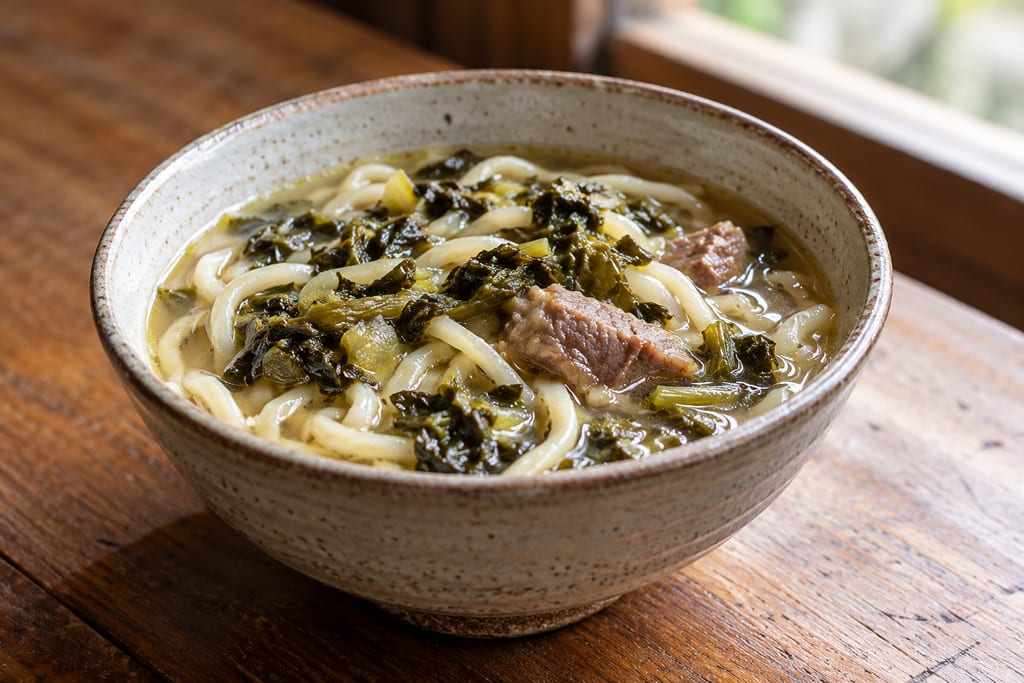
Goyang is a Sherpa fermented wild leafy food of the Darjeeling hills and Sikkim. Rainy-season magane-saag leaves are packed in a bamboo basket, held at room temperature for about a month, then eaten fresh or dried and used in soup.
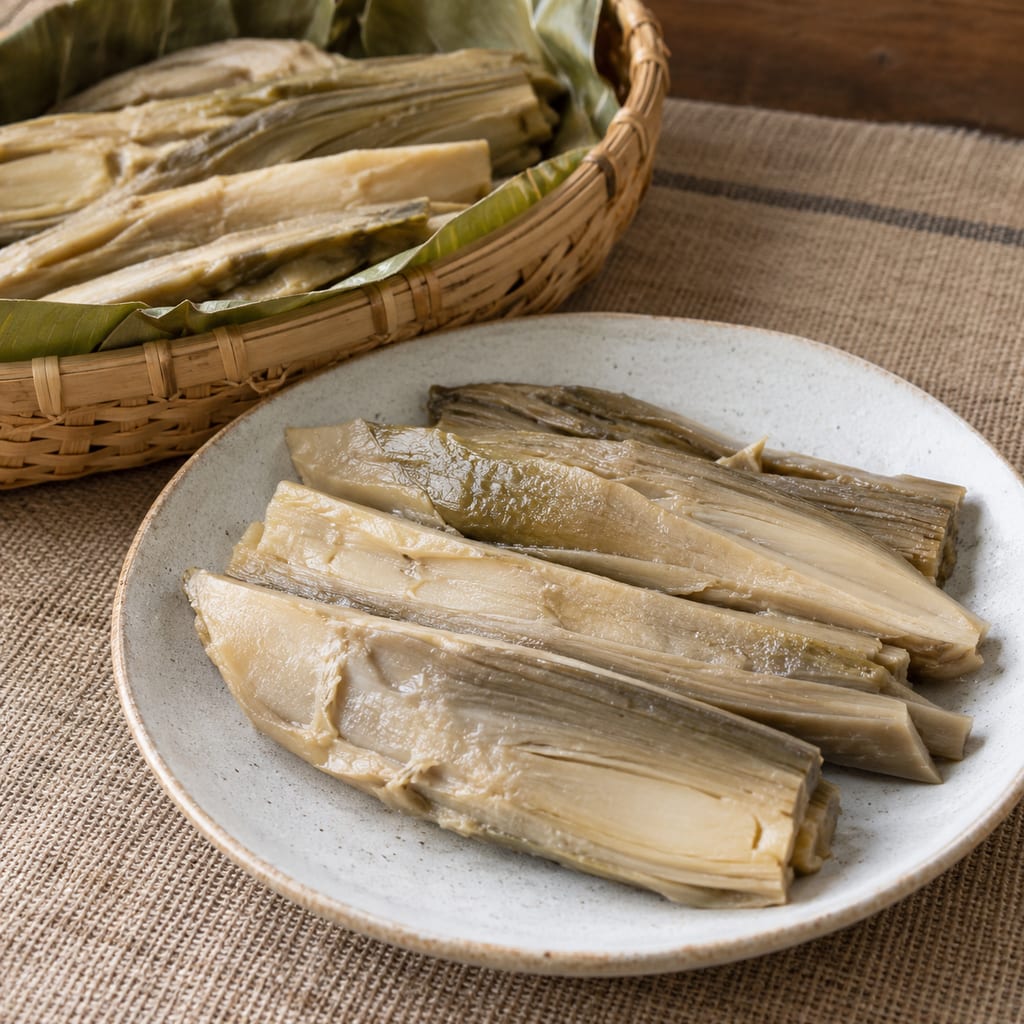
Upper tender bamboo-shoot tips, split or flattened, pit-fermented one to three months in Arunachal Pradesh and eaten in curries.
The original Polish barszcz: young hogweed leaves soured in warm water for a few days, then boiled into soup with egg, butter, cream or millet. Recorded from 1595, with warnings about the sap and lookalikes.
No community contributions have been published for this entry yet.
Sign in to contribute. Published comments and photos are free to read.
Academic volumeInspiration
Plant-Based Fermented Foods and Beverages of AsiaThai/Indonesian products and processes
Cited in: Indonesia's sour-salted mustard greens; Two important formulation records; Ingredients and their functions; Recipe overview: Documented household method; Equipment; Method; How the rice liquid supports fermentation; Modern measurements in East Java; Regional and household variation; How to eat sayur asin; Safety and storage
University of Minnesota ExtensionSafety
Preserving food at home: FermentationProduce fermentation equipment, acidity monitoring and submersion controls.
Cited in: Ingredients and their functions; Recipe overview: Documented household method; Equipment; Method; Regional and household variation; Recognizing a good ferment; Safety and storage
researchgate.netReference
Microbiology of Sayur Asin FermentationPuspito and Fleet (1985).. Applied Microbiology and Biotechnology, 22, 442–445. ResearchGate
Cited in: Why the flavor changes
pmc.ncbi.nlm.nih.govReference
Diversity and Distribution of Culturable Lactic Acid Bacterial Species in Indonesian Sayur AsinOriginal East Java study. PubMed Central (PMC)
Cited in: Historical and regional context; The original microbial succession; Why the flavor changes
pmc.ncbi.nlm.nih.govReference
Fermented Fruits and Vegetables of AsiaComparative preservation review. PMC
Cited in: Ingredients and their functions; Recipe overview: Documented household method; Equipment; Method; Regional and household variation; Safety and storage
Sayur Asin HomemadeReference
Sayur Asin Homemade — Wedang UwuhDocumented household formulation. Cookpad
Cited in: Ingredients and their functions; Recipe overview: Documented household method; Equipment; Method; Regional and household variation; Safety and storage
Sayur AsinReference
Sayur Asin — Juliawati BahrianAlternate household preparation
Cited in: Ingredients and their functions; Recipe overview: Documented household method; Equipment; Method; Regional and household variation; Safety and storage