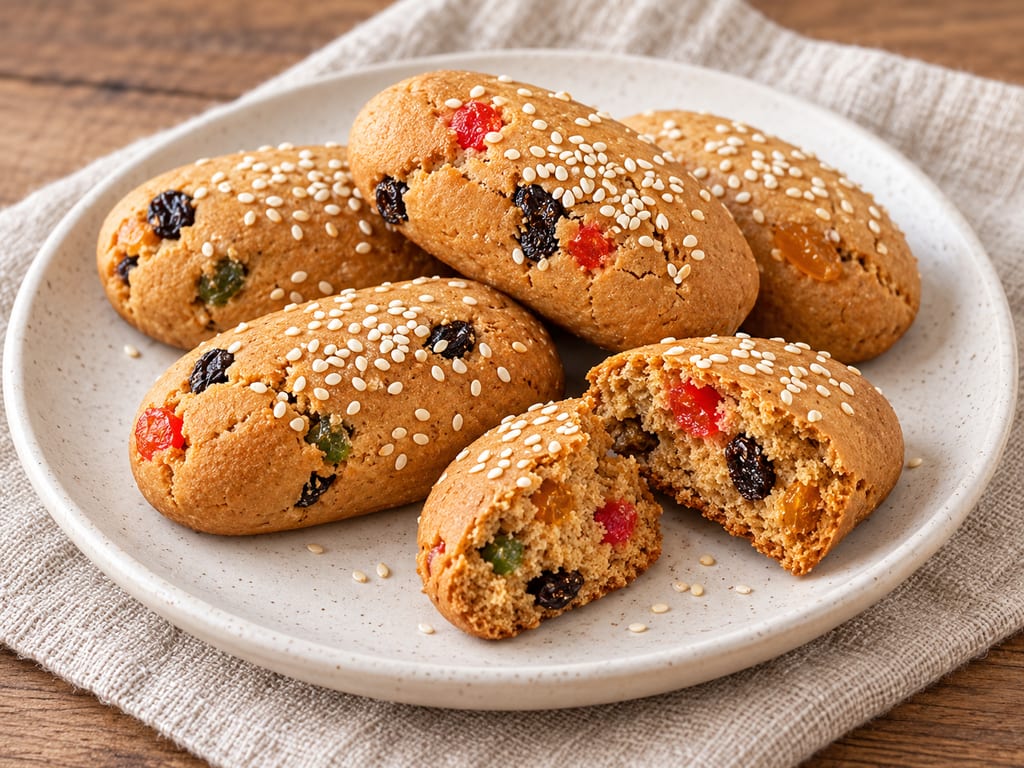
Fruit roti gambang
An Indonesian palm-sugar and cinnamon quick bread with dried fruit and sesame.
 FermenteaWhere food goes to change
Modern adaptation
Terang bulan
Martabak manis is a thick Indonesian griddle pancake with a porous, honeycomb crumb, cooked under a lid and finished with butter and sweet toppings.
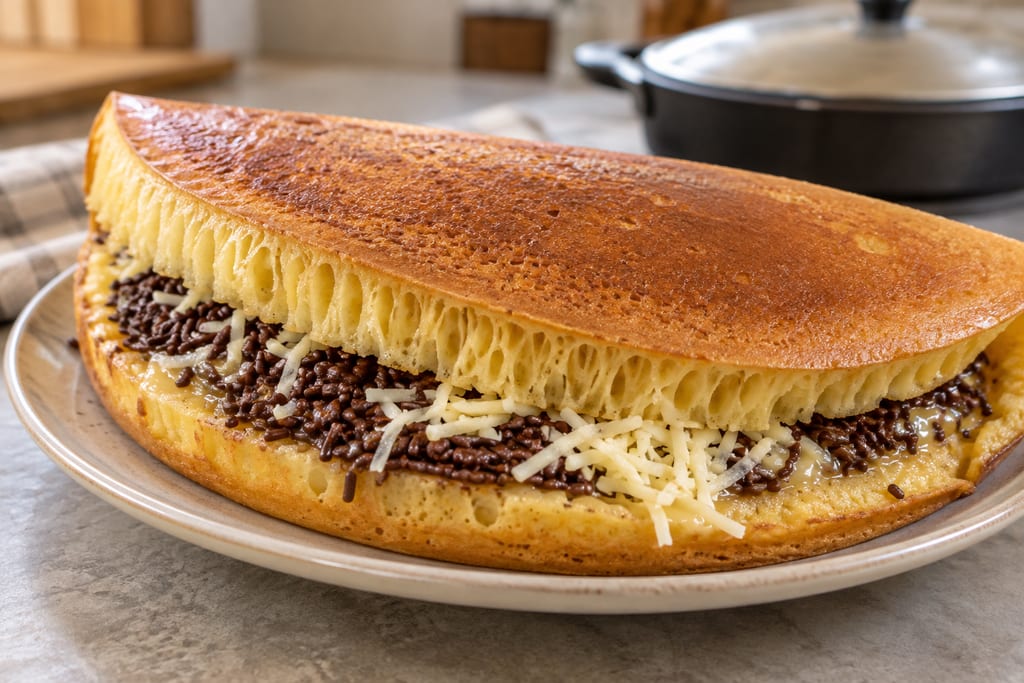
Interflour Indonesia describes martabak manis, also called terang bulan in some regions, as a thick pancake sold by street vendors across Indonesia. Its measured home recipe uses a wheat batter raised with baking soda. A covered pan helps the batter cook into a porous surface before it is topped and folded.
This record follows that sweet pancake method. It is separate from savoury murtabak or martabak telur, which encloses an egg or savoury filling in a thin dough parcel. The names are similar, but the batter, shape and cooking method differ.
Topping preferences vary. Interflour names butter, chocolate sprinkles, grated cheese and sweetened condensed milk but gives no topping weights; they are therefore optional and left unmeasured here. The source likewise gives no rest temperature beyond room conditions or flame setting beyond low heat.
Martabak manis is the sweet, no-yeast cousin of the savoury martabak telor. Its wider family of names includes apam balik, terang bulan, min jiang kueh and ban jian kuih, used across Indonesia, Malaysia and Singapore. A 2021 Singapore government heritage article groups these names as regional names and variations, and records contemporary hawker training in the form. The sources do not show that every name denotes the same formula or a shared origin, and no dated first attestation is given.
The recipe author separates Indonesian toppings, such as chocolate and cheese, from the Singapore-style peanut and sugar filling of min jiang kueh. The author describes the pancake as a night snack from memory, not as a documented origin.
The batter is chemically leavened, not yeast-raised. Baking powder is in the batter, and a baking-soda solution is added just before cooking. The one-hour rest that the recipe calls for relaxes the batter but is not fermentation. The recipe therefore depends on the timing of the soda addition and on keeping the pan covered so the top sets, which together give the honeycomb crumb.
The cooking is done in a thick pan with a lid, starting at medium heat and moving to low. The source gives its own troubleshooting: the pan size and the freshness of the raising agent both change the crumb. It yields four wedges from a 10-inch pan and has not been tested at other scales.
The batter contains egg and milk, and the sources give no storage time and no validated safety endpoint for the finished pancake. Visible bubbles and a set top are cooking cues, not measures of safety.
Interflour Indonesia describes terang bulan as a name used for martabak manis in some areas and says the sweet pancake is sold as street food across Indonesia. The page does not date the dish's first appearance or establish a precise place of origin.
Yield 1 22 cm pancake · Scaling: source batch only
Uncooked flour and raw eggs can carry harmful germs; tasting the rested batter before cooking is unsafe.
Hazard sourceThis thick pancake contains 100 g of egg and can remain undercooked if the centre is not fully set.
Hazard sourceDo not taste raw batter. Cook the egg-containing pancake to at least 71.1°C (160°F) at the centre, measured with a clean food thermometer. Wash hands, bowls, utensils and surfaces after handling raw flour or egg.
Control sourceDo not taste the uncooked batter. Cook the centre fully; the browned underside and honeycomb surface alone do not confirm a safe internal temperature.
The page describes the sweet pancake as a street snack found throughout Indonesia and notes that terang bulan is used in some areas; it does not give a more precise origin.
An Indonesian palm-sugar and cinnamon quick bread with dried fruit and sesame.
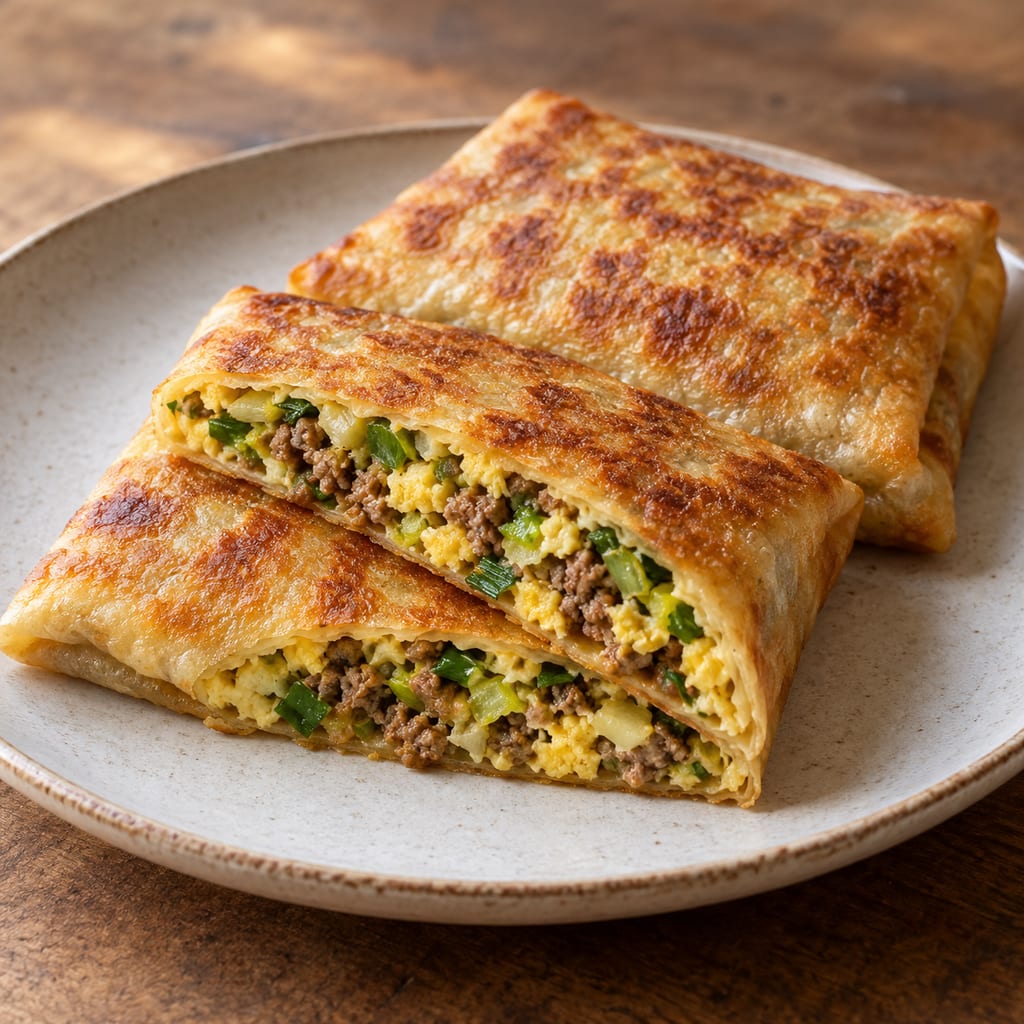
A Javanese-style Indonesian savoury parcel of thin rested wheat dough folded around curry-seasoned beef and egg, then cooked in an oiled skillet.
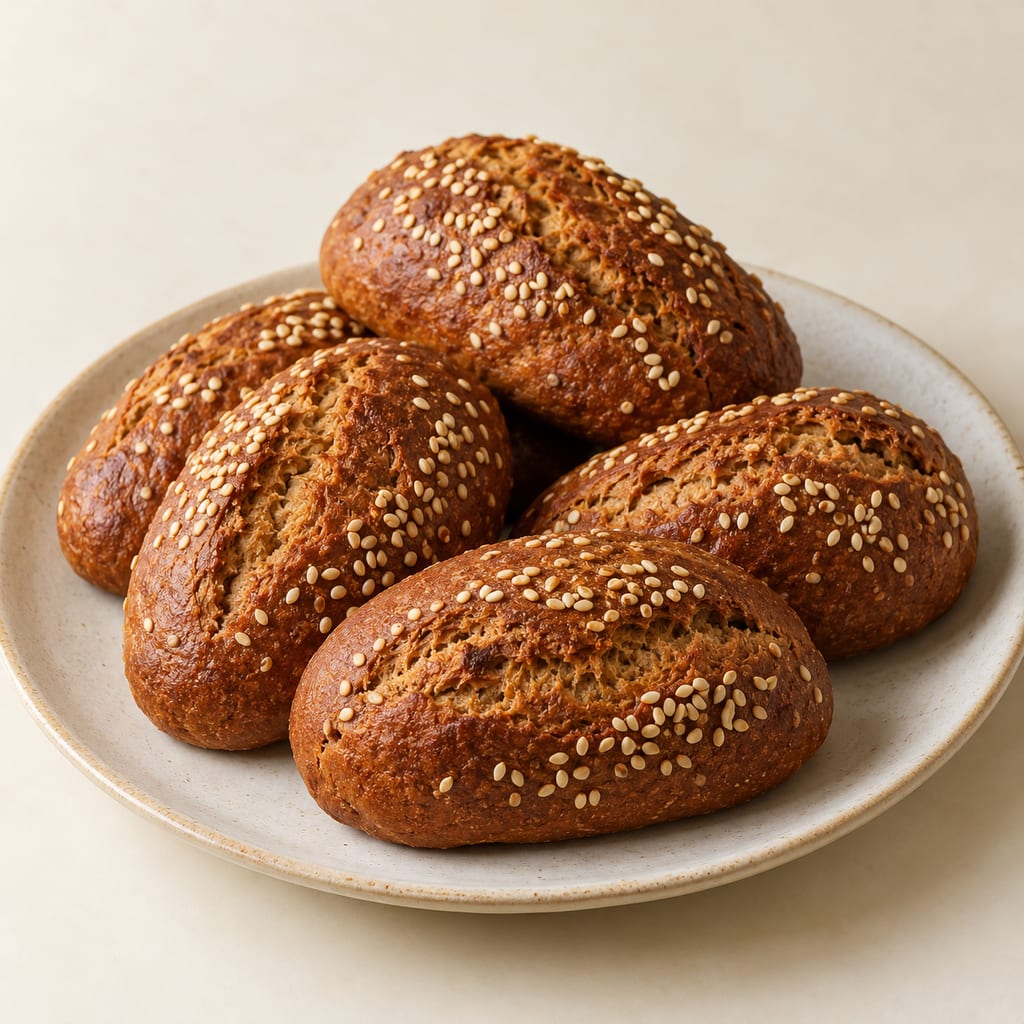
A spiced, breadcrumb-enriched Indonesian loaf raised with baking soda and baking powder, shaped into ovals and baked with sesame seeds.
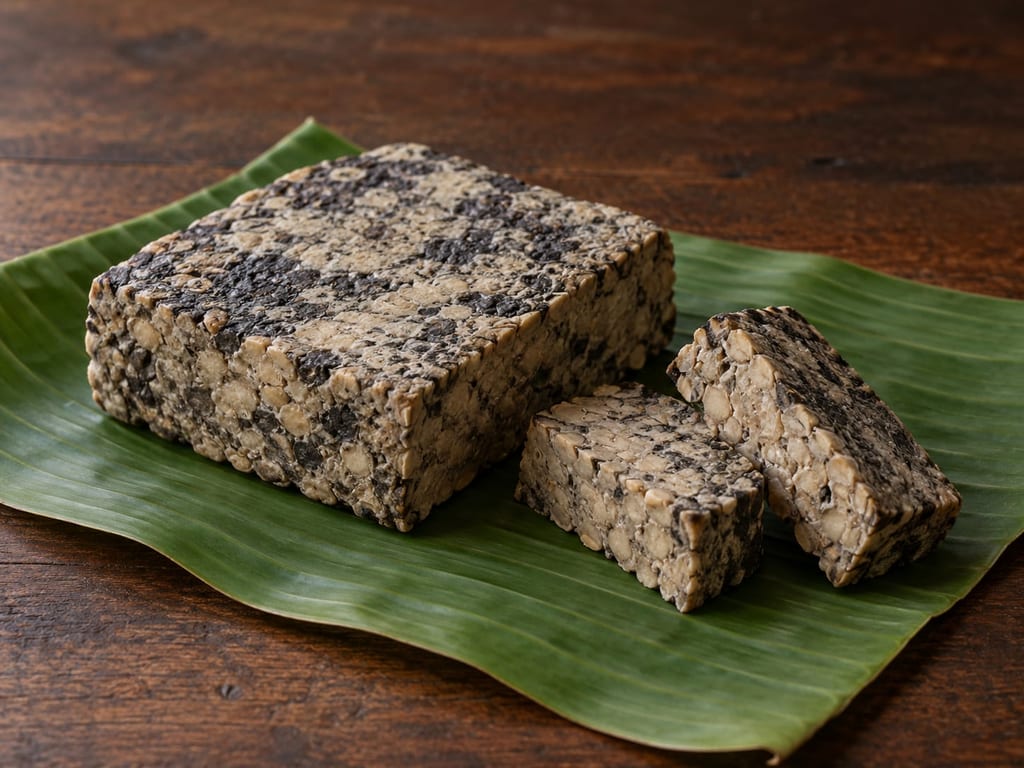
Black oncom is a mould-fermented cake made from defatted peanut cake, pressed to about 2 cm, steamed and then incubated for a day at ambient temperature.
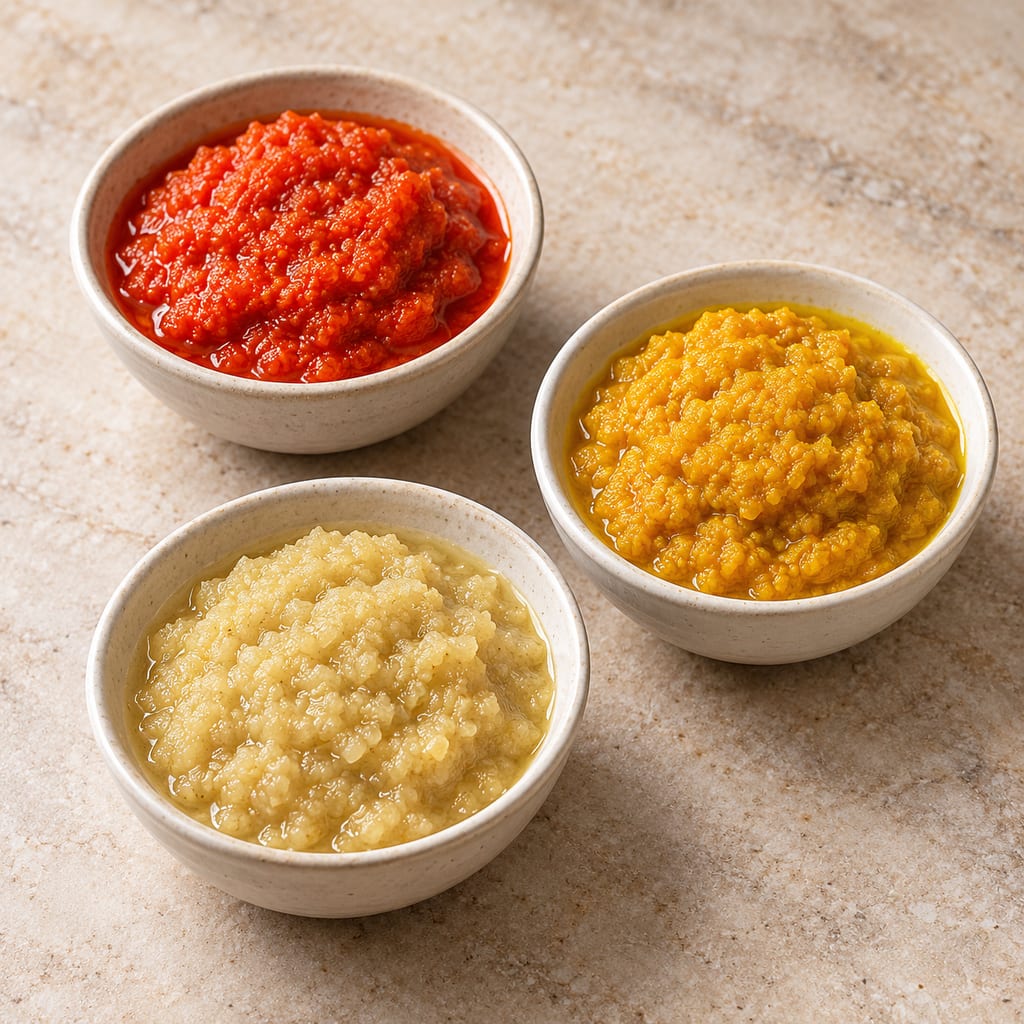
Bumbu dasar are the ground spice bases of Indonesian cooking: a white paste of shallot, garlic and salt, with chile added for red and turmeric for yellow, cooked into dishes.
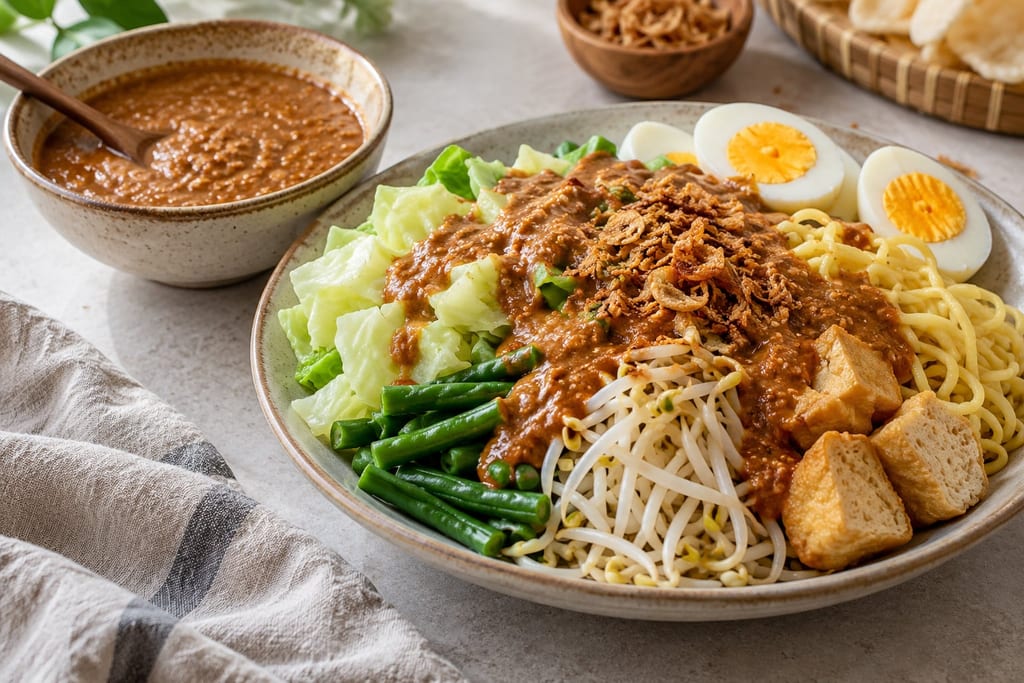
A cooked peanut sauce of ground roasted peanuts, aromatics, shrimp paste and coconut cream, as made for gado-gado; pecel and Malaysian satay sauces are close relatives with different formulas.
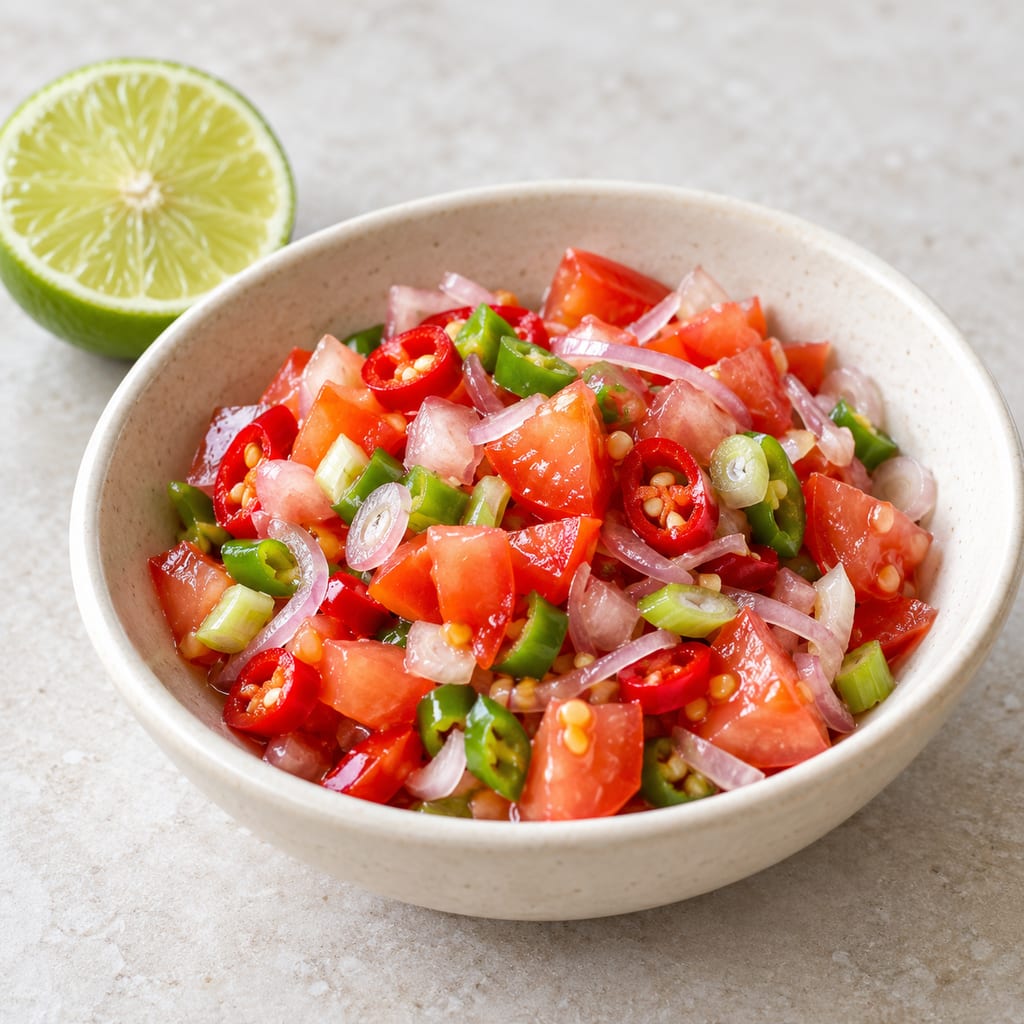
Dabu-dabu is a raw North Sulawesi relish of chopped chillies, shallot, scallion and tomato, dressed with salt and lime juice or coconut oil.
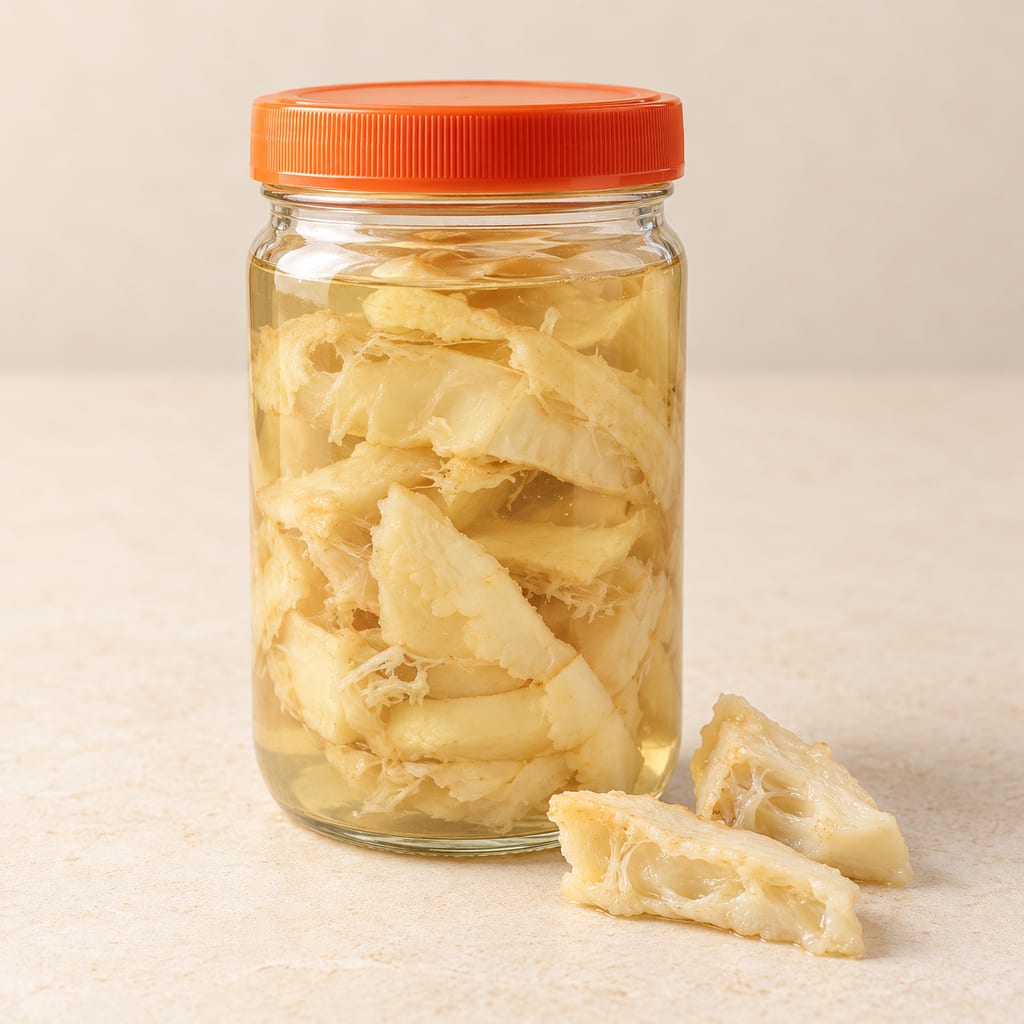
Cempedak inner rind is cut, salted and submerged in water for a short spontaneous fermentation used in Kalimantan home cooking.
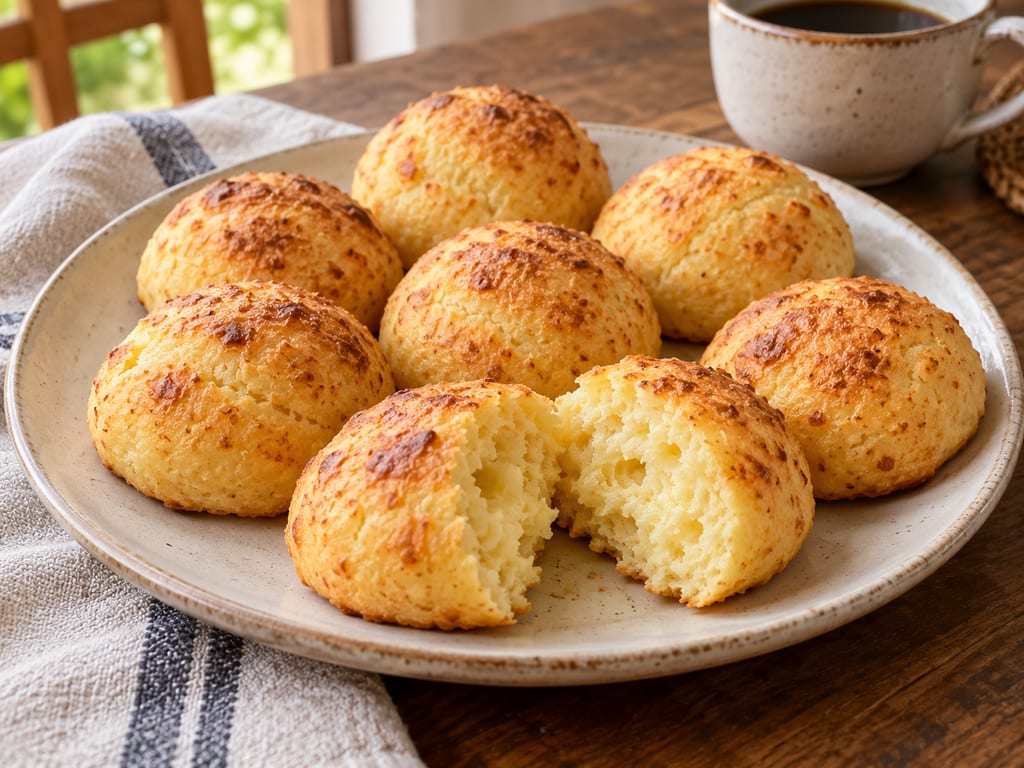
Small Colombian cheese breads made with precooked corn flour, queso fresco, mozzarella, eggs, milk and baking powder. This documented home version makes eight breads and is served warm.
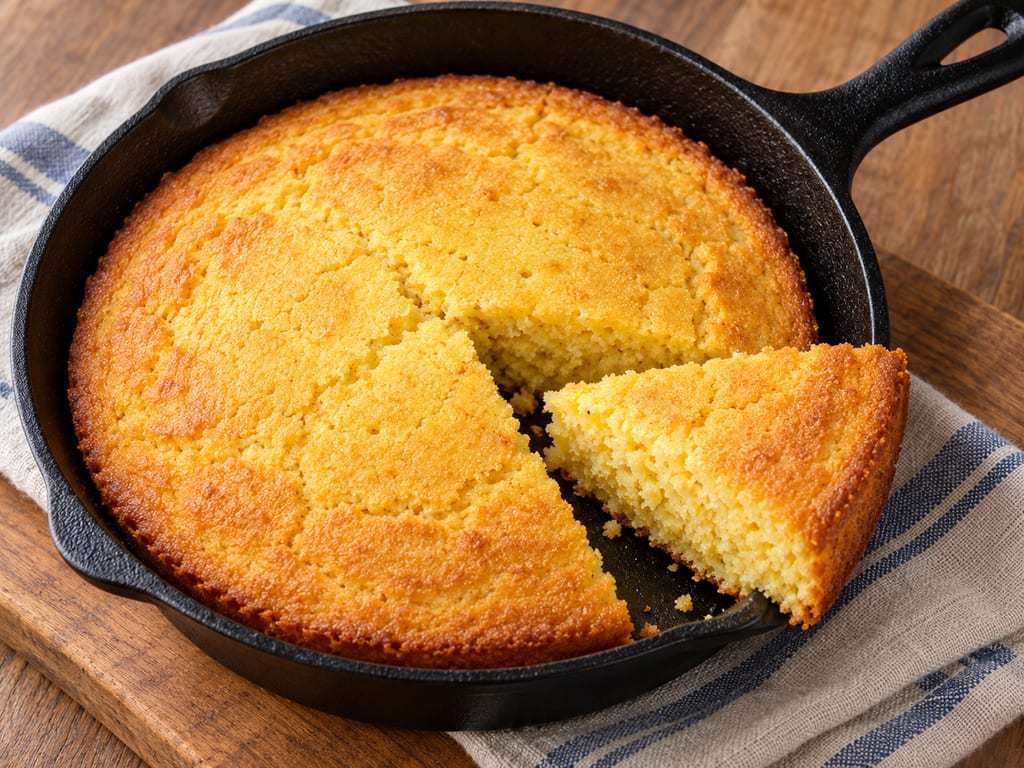
A modern cornmeal-and-wheat cornbread that King Arthur Baking describes as a compromise between Northern and Southern styles. The batter is baked in a pan or as muffins and served warm.
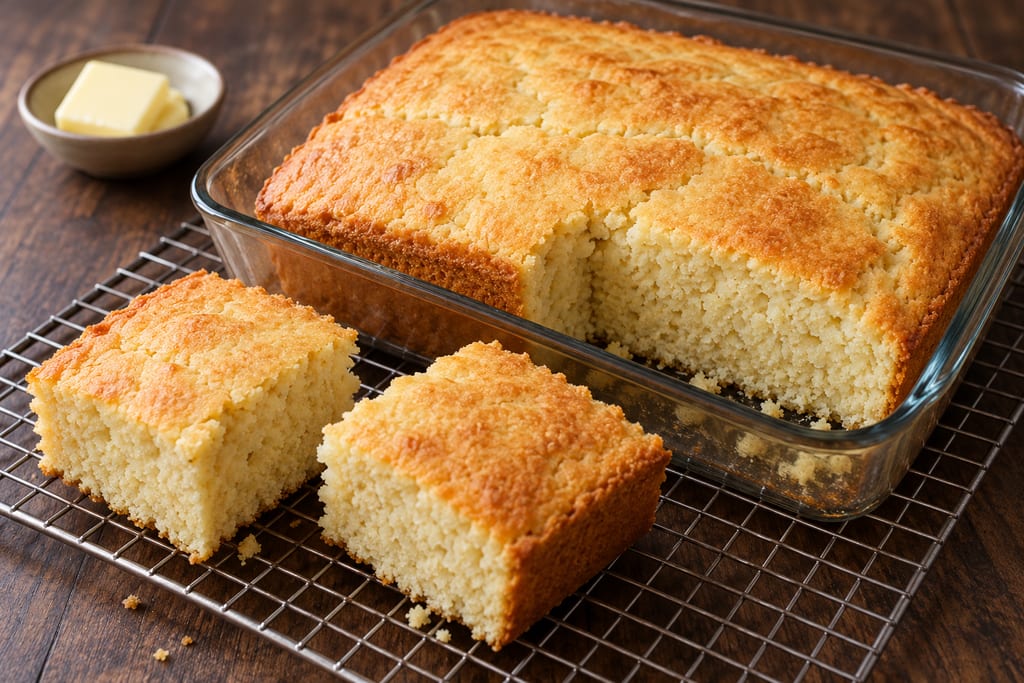
A soft, butter-rich Bahamian-style baked johnnycake made from flour, baking powder, sugar, butter and milk. The dough rests briefly in a square pan before baking.
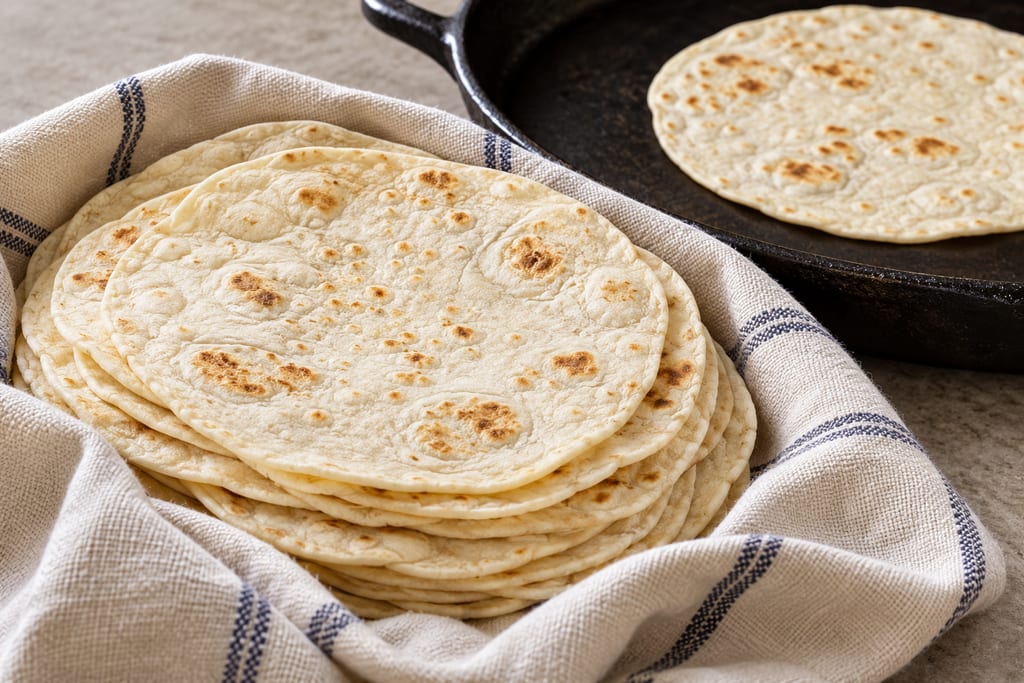
Soft wheat-flour rounds from an INCAP Honduran baleada recipe are rolled thin and cooked on a dry skillet; this record covers tortillas, not the filled dish.
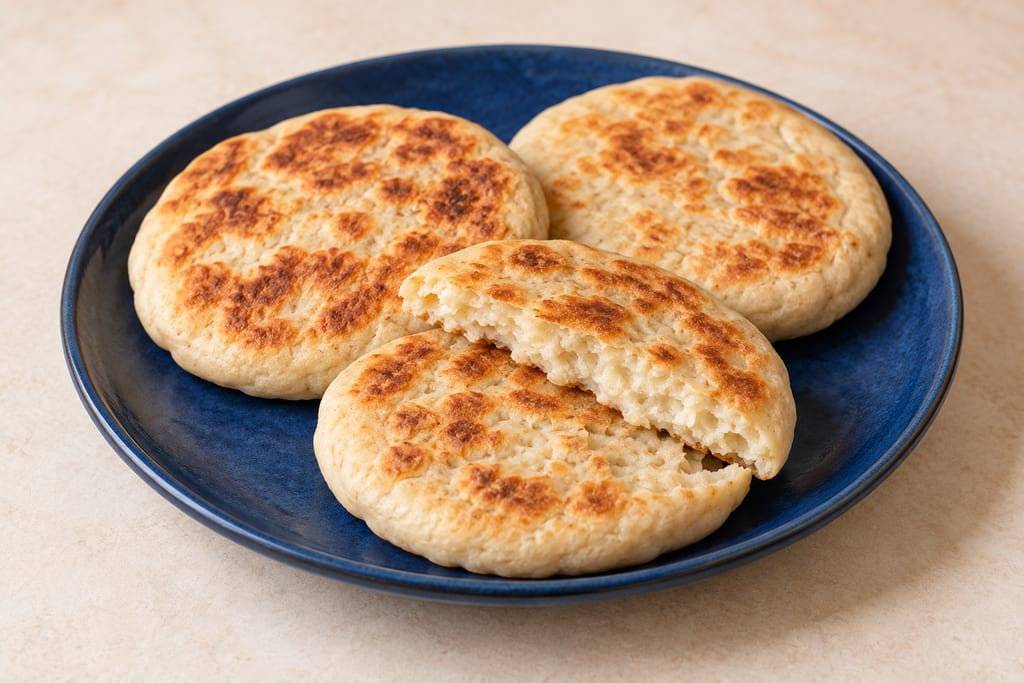
A Central Tibetan style pan bread made from flour, water and baking powder. Four dough balls are rested, rolled into rounds and cooked covered in a skillet, turning them several times.
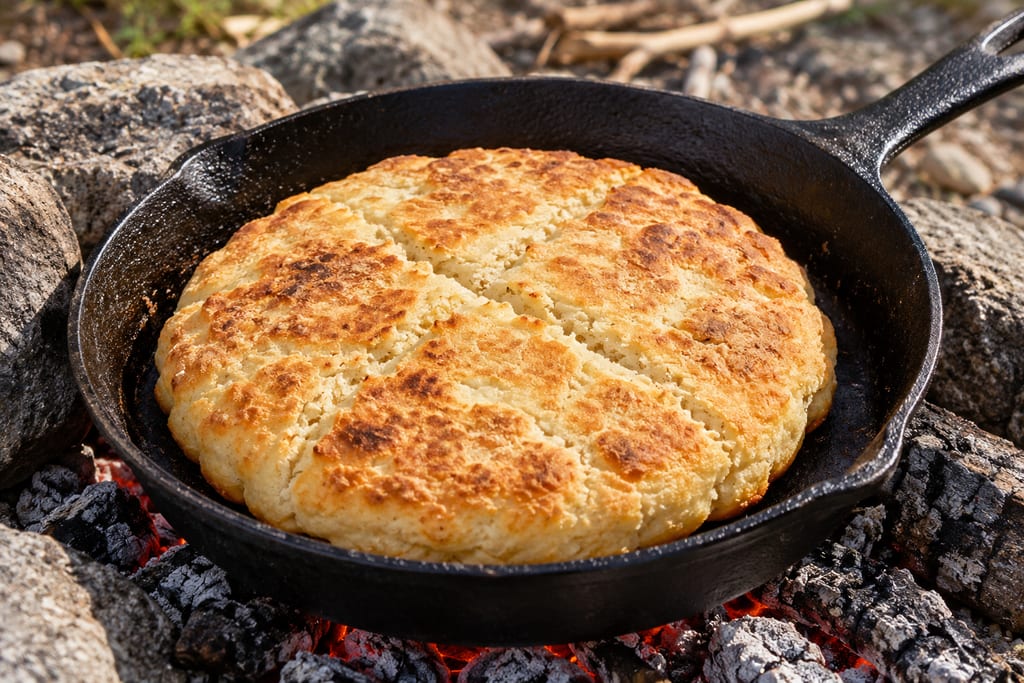
This flour, baking-powder and oil dough is Parks Canada’s contemporary Métis-interpreter version prepared at Rocky Mountain House; its specific recipe origin is unknown.
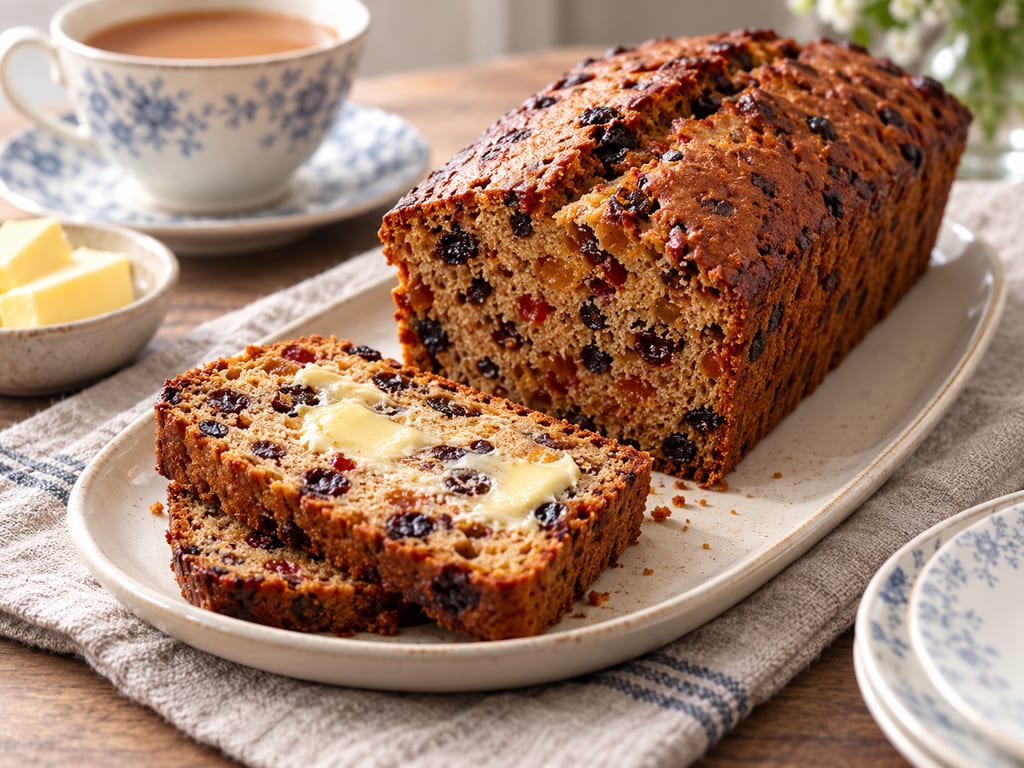
Bara brith is Wales’s speckled fruit loaf, made in both yeasted bread forms and the widely served modern tea-loaf style. This version soaks dried fruit in strong tea before mixing it with self-raising flour, spice, sugar and egg.
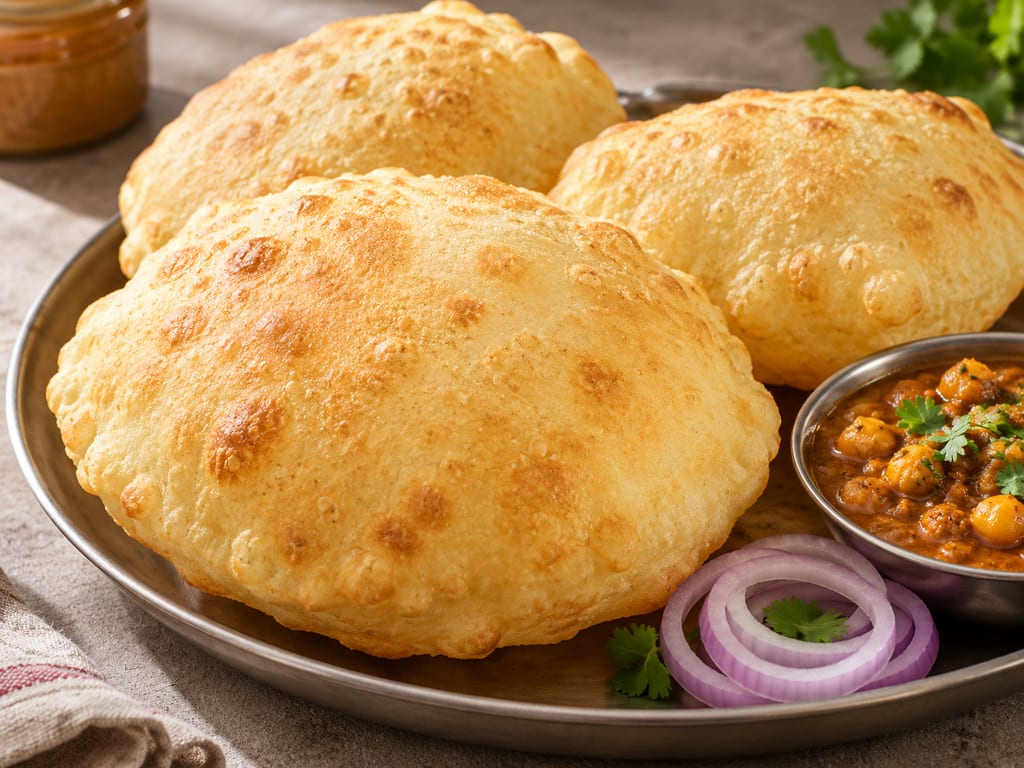
A North Indian fried bread made with yogurt, wheat flour and chemical leaveners. This source batch makes eight.
No community contributions have been published for this entry yet.
Sign in to contribute. Published comments and photos are free to read.
Interflour IndonesiaMethod · Geography
Resep Martabak Manis, Bersarang & Anti GagalThe page identifies terang bulan as a name for martabak manis in some regions and describes it as a street snack found throughout Indonesia.
The measured batter contains 200 g wheat flour, 35 g sugar, 200 ml water, 1/4 tsp salt, 1 tsp vanilla powder, 100 g egg and 6 g baking soda.
The method rests the first ingredients for about 2 hours, adds egg and soda, cooks in a 22 cm pan over low heat until dry and porous, covers after sprinkling sugar, then adds butter and toppings and folds.
Cited in: A thick Indonesian sweet pancake; Names and regional variants
Centers for Disease Control and PreventionSafety
Raw Flour and DoughRaw flour and raw eggs can contain germs; do not taste raw dough or batter, and wash hands, bowls, utensils and surfaces after handling them.
Cited in: A thick Indonesian sweet pancake; Cooking and limits
USDA Food Safety and Inspection ServiceSafety
By what methods can you cook eggs safely?Egg-containing dishes should reach 160°F (71.1°C), checked with a food thermometer.
Cited in: A thick Indonesian sweet pancake
Singapore Government (SG101)History · Context
Heritage: Min Jiang KuehNames and regional variations of apam balik, terang bulan and martabak manis
Contemporary hawker training
Cited in: Names and regional variants
What To Cook TodayMethod
Martabak Manis / Apam Balik (no yeast)Batter rest of one hour, baking powder and soda solution added before cooking
Troubleshooting for crumb
Cited in: Why the batter rises; Cooking and limits