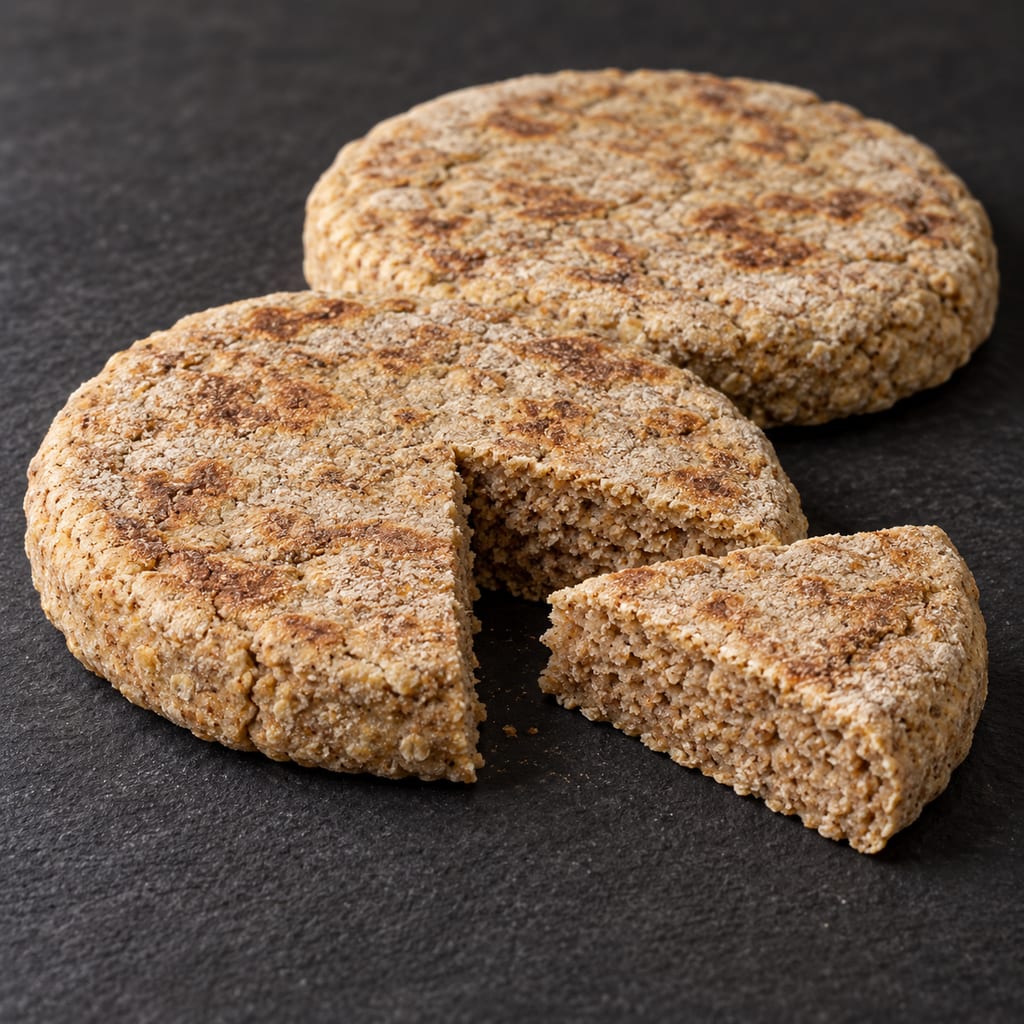
Orkney barley or oat bannocks
Two round, chemically raised bannocks made with equal weights of white flour and beremeal, barley flour or oat flour, following Anne Johnson's Orkney formula.
 FermenteaWhere food goes to change
speckled bread · Welsh tea loaf
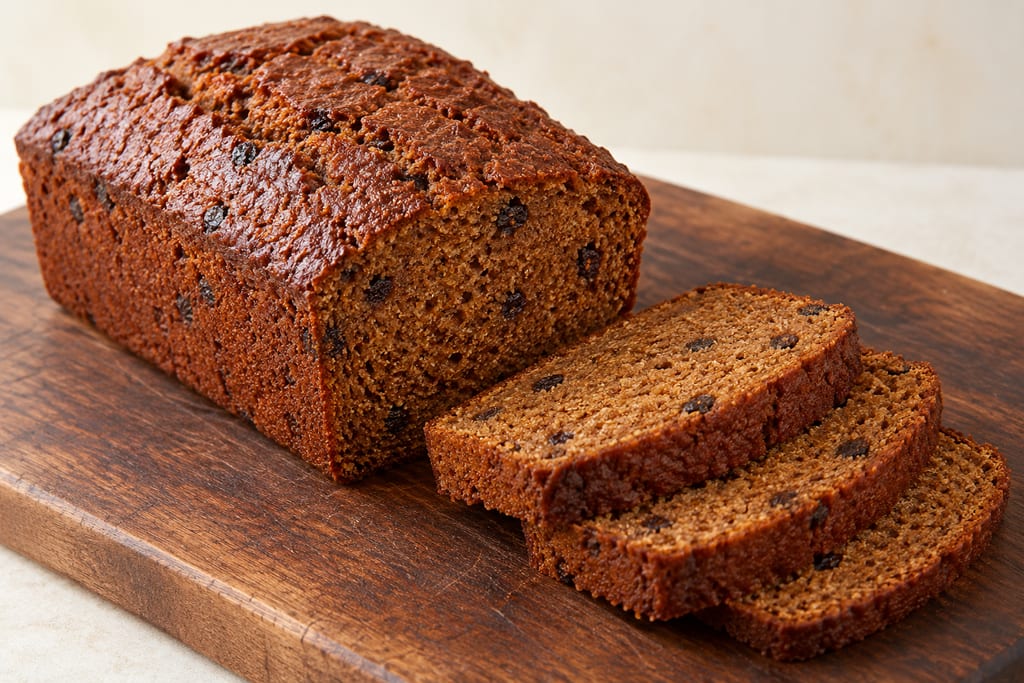
Bara brith is Wales’s speckled fruit loaf, made in both yeasted bread forms and the widely served modern tea-loaf style. This version soaks dried fruit in strong tea before mixing it with self-raising flour, spice, sugar and egg.
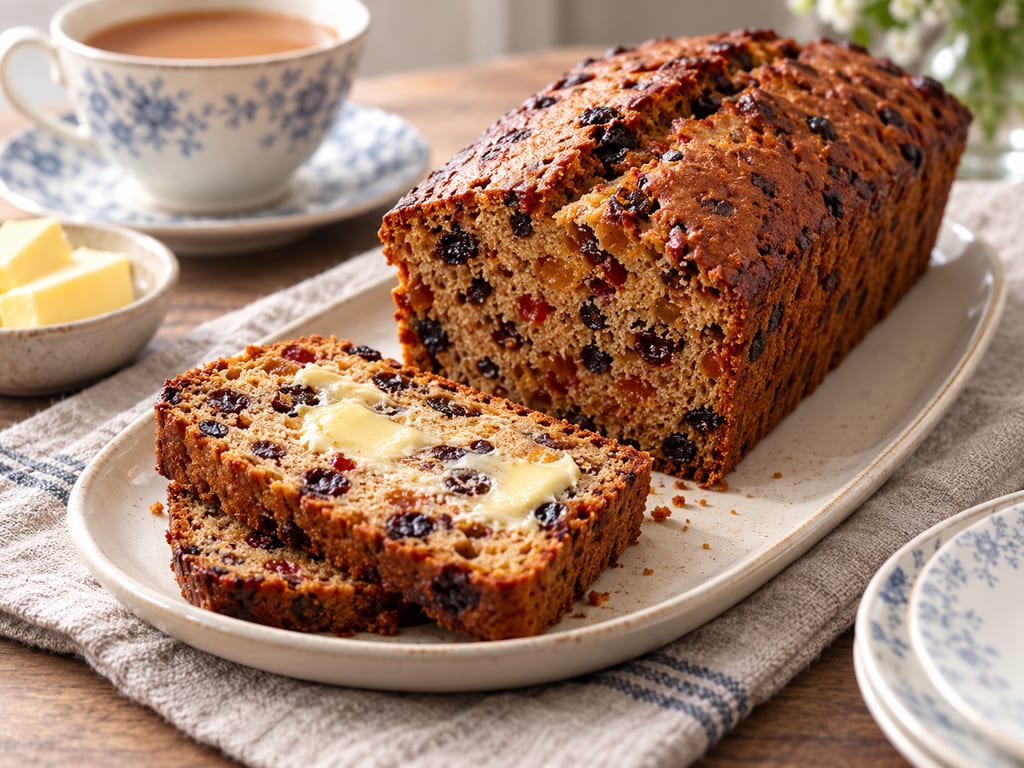
Bara brith translates as “speckled bread,” a name that fits the raisins and other dried fruit scattered through its crumb. The loaf sits at the edge of bread and cake: it is baked in a loaf tin and sliced, yet the fruit, sweetness and usual serving with butter make it feel like a tea-time bake. The modern recipe here is moist and compact, with dark fruit visible against a brown, gently spiced crumb. It is a particular recipe form, not a claim that every Welsh bara brith has the same texture or ingredients.
The word “bara” means bread and “brith” means speckled. Recipes collected in Wales show why a single definition cannot stand in for the food’s whole history. A Cardigan account uses a soft yeast dough enriched with butter, milk and egg; Bala adds candied peel and black treacle; a modern Food and Drink Wales recipe instead uses tea-soaked fruit and self-raising flour. These are related Welsh fruit loaves, but they are not interchangeable steps in one universal formula.
Because both forms can be baked in a tin and cut into slices, a photograph alone may not reveal whether a loaf was raised with yeast or self-raising flour. The recipe’s ingredient list and sequence matter: a dough that is kneaded and proved belongs to the yeasted form; a fruit-and-tea mixture stirred with self-raising flour belongs to the tea loaf. Naming the method prevents the present recipe from implying that its short mixing process can produce every crumb or flavor associated with Welsh currant bread.
Bara brith is often presented as an old Welsh staple, but the surviving evidence needs more careful wording. The Royal Commission on the Ancient and Historical Monuments of Wales relays the Welsh dictionary’s first citation for bara brith “as we know it” in 1888. The same account points out that an eighteenth-century use may have meant bread made from mixed grains. A first written citation dates the wording in the surviving record; it does not show the first time somebody baked a fruit loaf or establish a single birthplace.
Amgueddfa Cymru’s Welsh Foods archive adds a different kind of evidence. Museum researcher Minwel Tibbott began collecting food memories in 1969, interviewing older women whose recollections reached back to the late nineteenth century. That is valuable oral-history context, but remembered household practice is not a dated written recipe. The archive’s editorial introduction also describes a Welsh rural food economy shaped by local growing conditions: oats and barley were more dependable than wheat in many upland areas, while households relied on what their land and surroundings supplied. This helps explain why recipes and grains varied, but it should not be mistaken for proof that one flour or recipe was used everywhere.
The museum’s regional entries make variation concrete. In Cardigan, Ceredigion, one bara brith is a soft dough of plain flour, butter, sugar, salt, mixed fruit, dried yeast, milk, beaten egg and nutmeg. The dough rises until doubled, is lightly kneaded, rises again in tins and then bakes. The method depends on yeast raising a dough over time. It is not the same as pouring a tea-loaf batter into a tin after an overnight fruit soak.
The Bala, Gwynedd, formula is richer and more heavily specified: butter rubbed into plain flour, brown sugar, currants, sultanas, raisins, candied peel, nutmeg or mixed spice, salt, eggs, yeast and black treacle, with warm milk and water to bring the dough together. Its first rise is followed by dividing and tinning, then a longer bake. At Rhyd Lewis in Ceredigion, the archive describes a wholemeal currant loaf made for Christmas, New Year and Harvest Home suppers. These records show local combinations and uses, rather than a standard national ingredient list.
The different formulas answer different household choices. Fruit type, flour, fat and liquid vary; one record includes treacle and peel, another uses milk and butter, while the wholemeal loaf is tied to particular suppers. The common idea is a bread marked by dried fruit, but texture, sweetness, richness and the work of raising the dough change with the method. Calling all of them “the traditional recipe” erases the very regional evidence that makes the food interesting.
The museum’s broader recipe archive is a collection of household testimony and manuscripts, not a national census of what every family baked. A paper recipe grouping from Mrs Margaret Morgan of Pontyclun, Glamorgan, was collected in 1972 and includes bara brith alongside potato cakes and Welsh cakes. Its later collection date is evidence of a continuing named household recipe, while the recorded Cardigan, Bala and Rhyd Lewis formulas show other regional methods. Together they demonstrate persistence and variation, not an uninterrupted recipe fixed in one form.
The Rhyd Lewis formula is notable for using seven pounds of wholemeal flour, a pound of currants, dried yeast, salt and a mixture of warm water and milk. Its method softens the yeast, distributes currants through the flour, lets the dough rise, shapes loaves and bakes them in a hot oven. The archive links it to special suppers rather than ordinary daily bread. That evidence connects ingredients to the scale and occasion of a bake, but the quantities belong to that source and should not be scaled into the modern tea loaf by borrowing its liquid or rising schedule.
In the modern version, strong tea first softens the dried fruit and supplies the liquid for the batter. The Food and Drink Wales instructions add sugar to the hot tea and leave the fruit to soak for at least six hours or overnight. The fruit absorbs liquid and becomes plumper; the tea also brings its own brewed flavor. The recipe says to keep the tea in the bowl, so the baker adds flour directly to the soaked mixture rather than draining it and guessing how much liquid to replace.
Self-raising flour marks the key method difference. The University of Illinois Extension explains generally that self-rising flour has baking soda and salt added, and that chemical leaveners create carbon dioxide bubbles that help quick breads rise. In this loaf, the source calls for no separate yeast or proof. That does not make the old yeast breads wrong or obsolete; it describes how this particular contemporary tea-loaf version gets its lift. The loaf’s final shape and crumb result from the measured batter, leavener and oven heat, not from a long yeast fermentation.
The beaten egg is stirred into the soaked fruit and flour mixture before baking. The flour gives the batter structure, the egg contributes moisture and helps bind the mixture, and the sugar sweetens it while dissolving into the tea. Those ingredient roles are general baking explanations; the cited recipe gives the quantities and order but does not measure their separate effects. The amount of spice is deliberately modest in this version—one teaspoon—while historical recipes differ, so a baker should not silently combine the tea-loaf formula with a yeasted one.
The listed 400 grams of mixed fruit are an example blend rather than a fixed ratio of varieties: the Welsh government sheet names sultanas, raisins and currants as examples. Its 300 millilitres of strong hot tea soak that fruit with 100 grams of dark brown muscovado sugar. The recipe then uses 250 grams of self-raising flour, one teaspoon of mixed spice and one beaten egg. Because the method retains all of the tea, changing the soaking liquid or draining the fruit would change the batter’s liquid balance; this edition keeps the source’s original sequence intact.
Honey is a finishing option, not part of the batter. The source warms a little and drizzles it over the warm loaf for a glaze. Butter is a serving accompaniment, not an ingredient required to bake the loaf. Keeping those distinctions visible helps a reader follow the source without assuming that every photographed garnish belongs in the mixture.
The recipe’s hands-on work is short, but the soak makes it a planned bake. Fruit goes into the tea with sugar first; once it has softened, sifted flour and spice are folded in, followed by the beaten egg. The mixture goes into a lined 900-gram loaf tin and bakes at 180°C, or Gas Mark 4, for about an hour. The sheet describes the target as risen and cooked through but does not give a temperature probe reading, a particular skewer test or a universal time for every oven, so this page does not invent one.
After baking, the loaf cools on a rack. The Welsh government recipe recommends leaving it for two days before eating and says the mixture can be doubled for two loaves. It also says it will keep up to seven days, but gives no storage temperature or handling protocol. That sentence is a source’s recipe note, not a validated shelf-life assurance; the structured method therefore records only the cooling and serving sequence and does not prescribe a storage guarantee.
The current tea-loaf recipe is served sliced with butter. Its straightforward tin shape and ready-to-slice crumb suit an afternoon tea table, while the museum’s Rhyd Lewis record preserves a more specific connection with Christmas, New Year and Harvest Home suppers. The Food and Drink Wales sheet presents the contemporary version for St David’s Day, a modern Welsh celebration context for a recipe that is now widely served. Those occasions are evidence of ways people use particular forms; they do not define every household’s practice.
The tea-loaf form is convenient for a home baker because it replaces dough kneading and proofing with soaking and mixing. Its long soak moves much of the work to the day before baking, and the optional honey glaze offers a glossy finish. A yeasted bara brith takes a different route: yeast needs time to raise the dough, and its handling includes kneading and at least one rise. The forms share a name and dried fruit, but each has its own proportions and sequence.
When comparing recipes, check the leavener and liquid first. A formula with dried yeast, warm milk and dough rises belongs to a different family of technique from this tea-soaked self-raising-flour loaf. Then compare fruit and enrichment: wholemeal flour, butter, candied peel, black treacle, nutmeg and mixed spice appear in documented versions, but not all together in every recipe. The Royal Commission also notes variants using cinnamon, ginger, grated apple, citrus or marmalade in the broader recipe tradition. These are documented directions for variation, not authorized additions to the exact modern method above.
Bara brith is therefore best understood as a Welsh name and family of speckled fruit loaves whose documented forms change across household and regional recipes. The tea loaf is one recognizable contemporary expression: fruit softened in tea, a chemically raised batter, a loaf tin, and slices served with butter. Its appeal lies partly in that contrast between a simple mixing method and a long, fruit-rich history whose exact beginning remains uncertain.
The Royal Commission on the Ancient and Historical Monuments of Wales reports 1888 as the first dictionary citation for bara brith as understood today, while noting that the eighteenth-century phrase may have described a mixed-grain loaf. This is an attestation of the name, not a proven origin date.
Yield 8–10 slices · Scaling: the source says this mixture may be doubled to make two loaves.
Country-level source identifies a widely served Welsh tea-loaf form; no smaller origin is claimed.
Museum Wales records one yeasted currant-bread recipe associated with Cardigan.
Museum Wales records a separate enriched yeasted recipe associated with Bala.
Museum Wales records a wholemeal currant-loaf preparation and its special-occasion use.
Two round, chemically raised bannocks made with equal weights of white flour and beremeal, barley flour or oat flour, following Anne Johnson's Orkney formula.
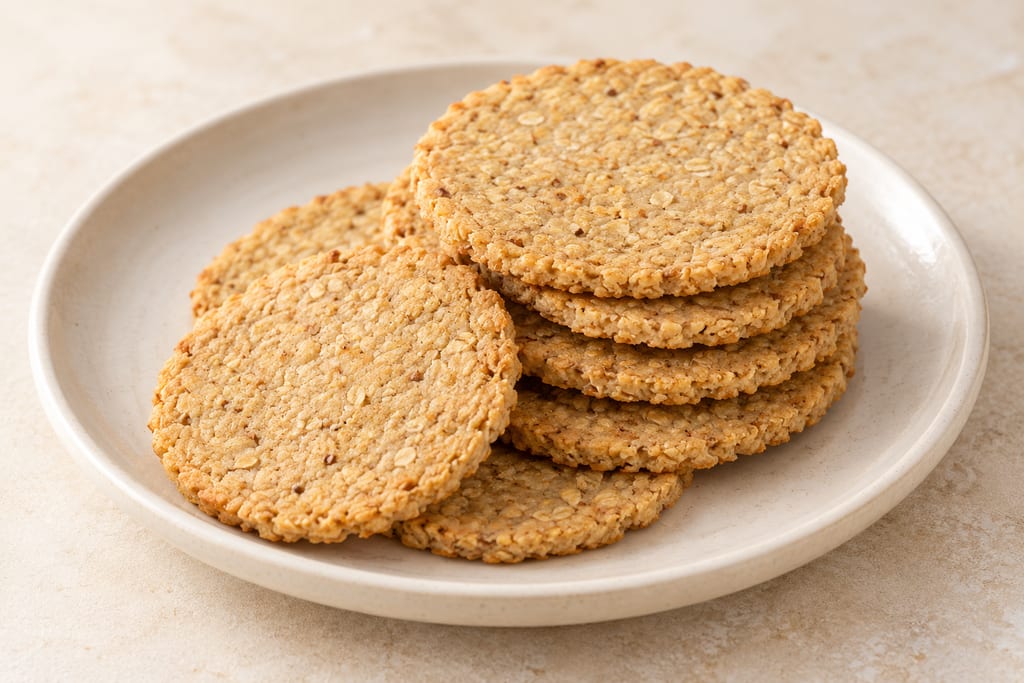
A thin Scottish oatcake of medium oatmeal, butter, salt, bicarbonate of soda and boiling water. This measured oven adaptation differs from older girdle methods and soft, yeasted Staffordshire oatcakes.
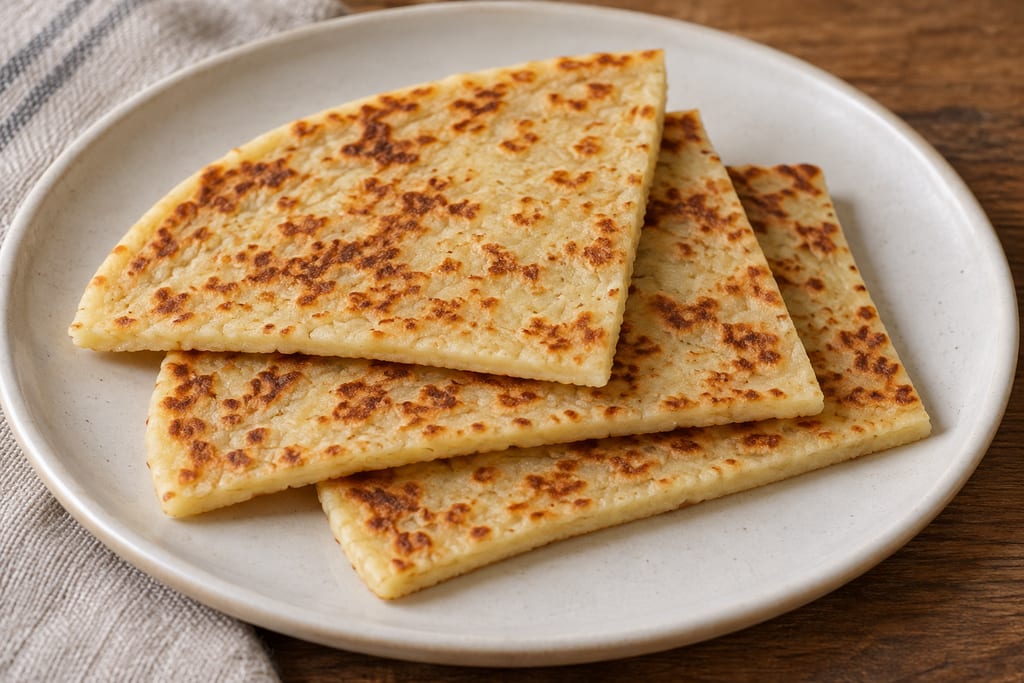
Scottish Scran’s batch combines boiled potatoes, butter and flour, then cooks three thin rounds on a dry pan.
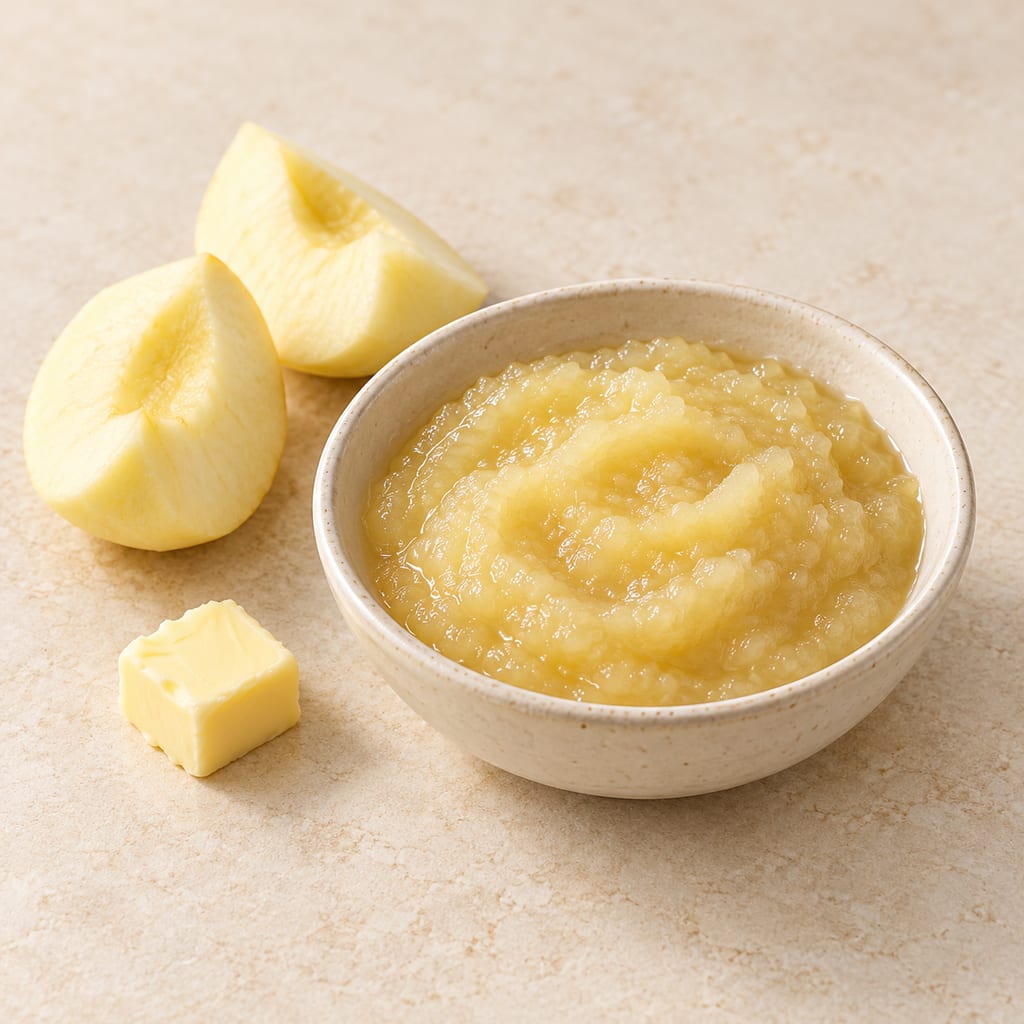
Apple sauce for goose and pork is a plain English accompaniment: cooked apples pulped with water, then sweetened with sugar and finished with a little butter.
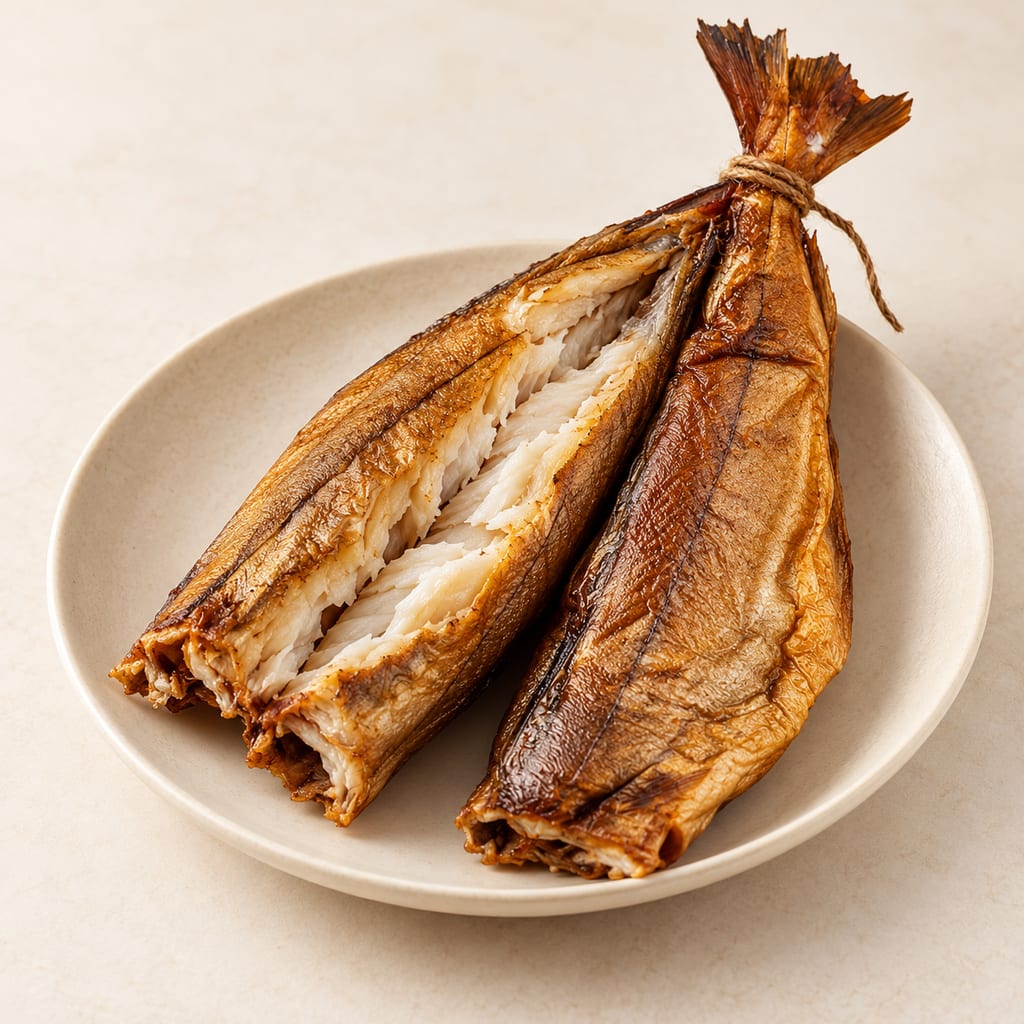
Arbroath smokies are whole haddock dry-salted, paired by the tail and hot-smoked in a protected coastal area. Their recorded history links Auchmithie and Arbroath, though the exact origin is unsettled.
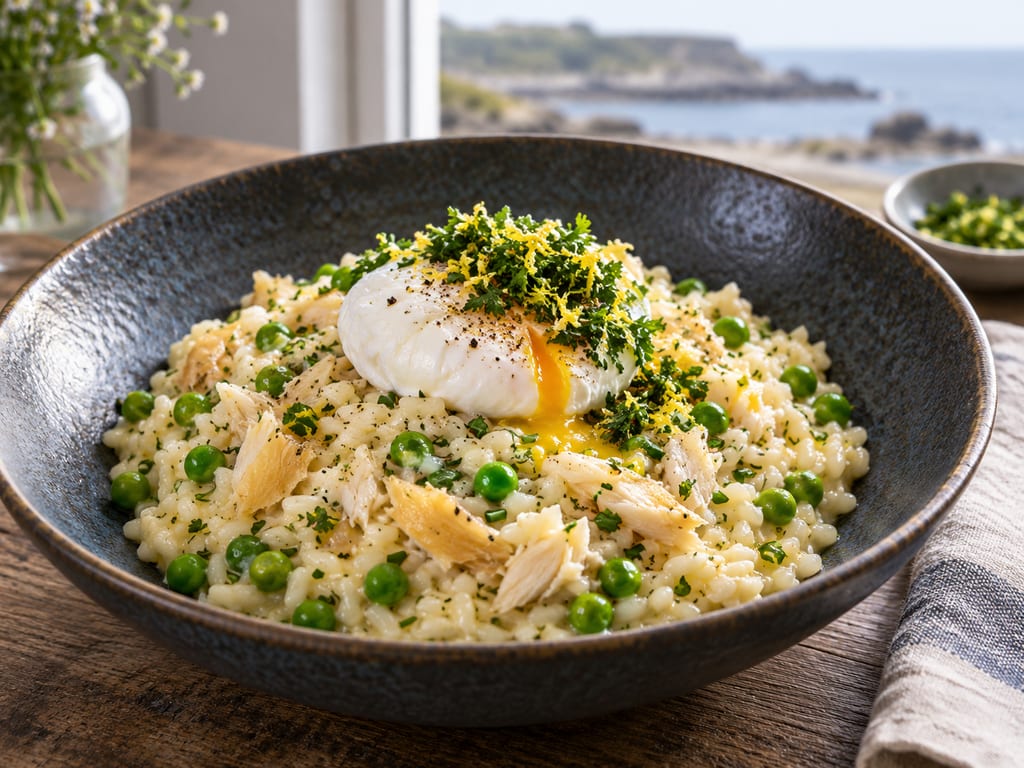
A four-serving risotto published in the 2014 Arbroath Smokie Trail booklet and credited to Hayley Wilkes. It cooks with finished Arbroath smokies; it does not describe smoking fish.
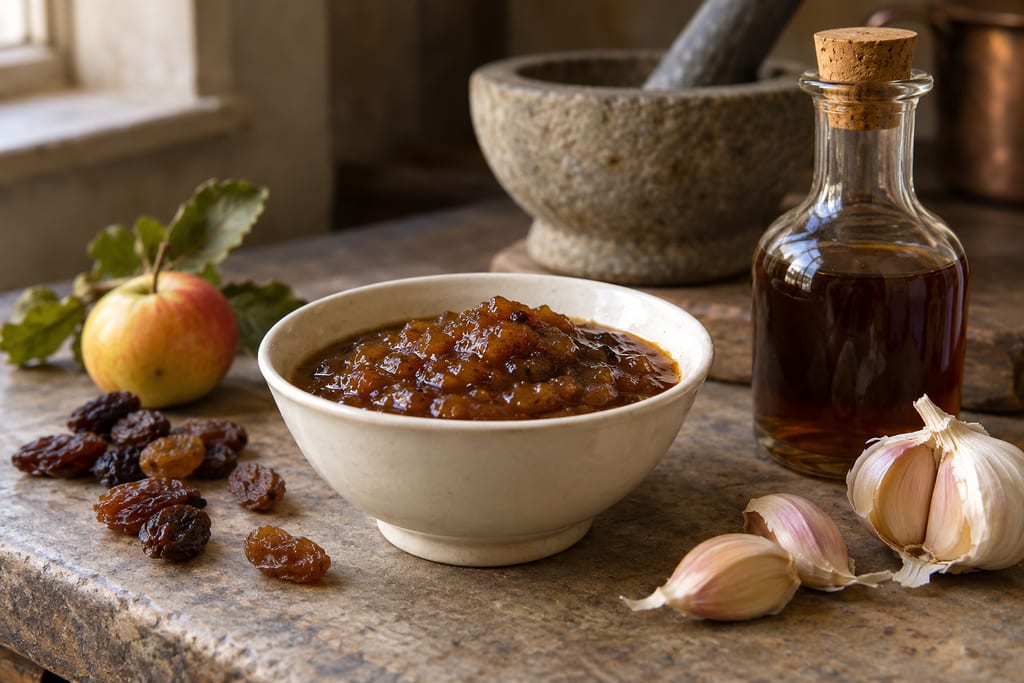
Eliza Acton's Bengal receipt for chetney sauce: stoned raisins and a hard acid fruit pounded with brown sugar, ginger, salt, cayenne and garlic, then thinned with vinegar to the consistence of thick cream.
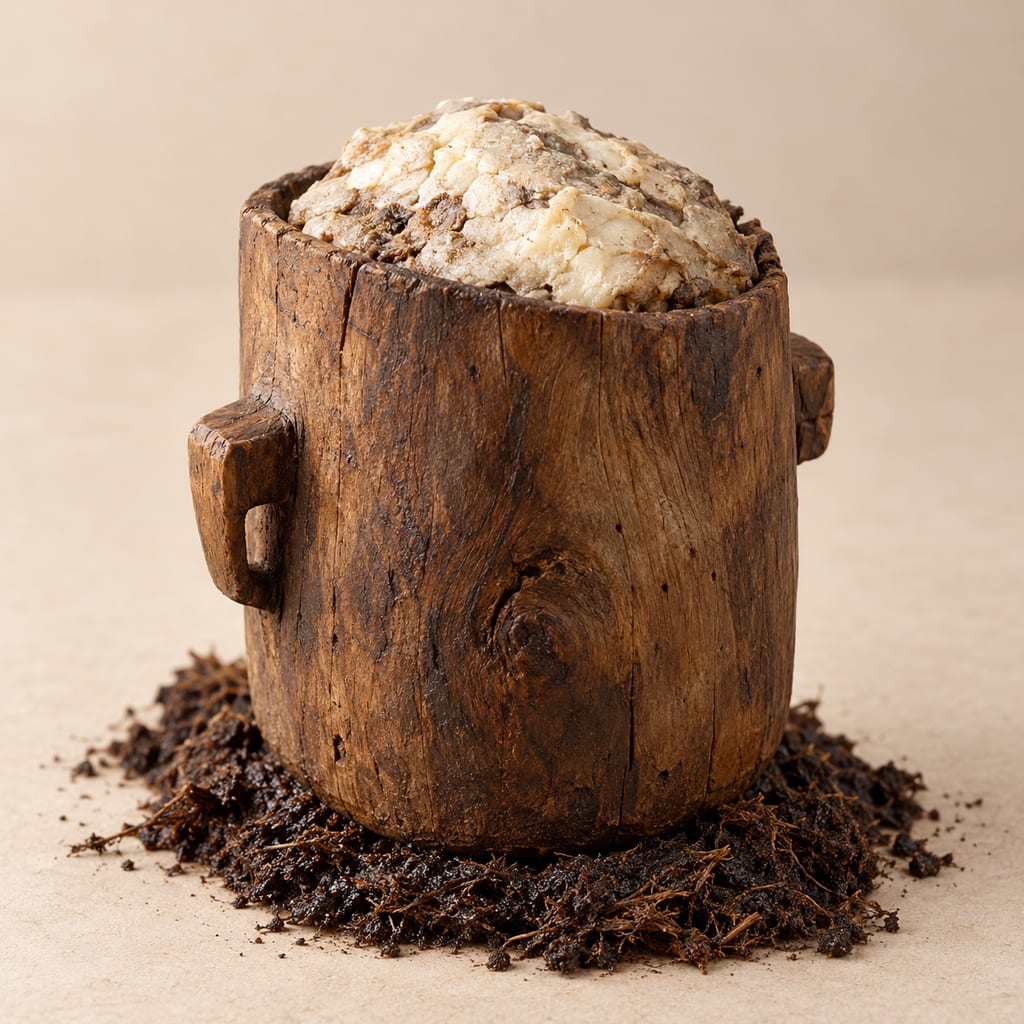
Butter packed into wooden containers and buried in cool, wet peat in Ireland and Scotland, a practice known from finds that may reflect storage, concealment or ritual.
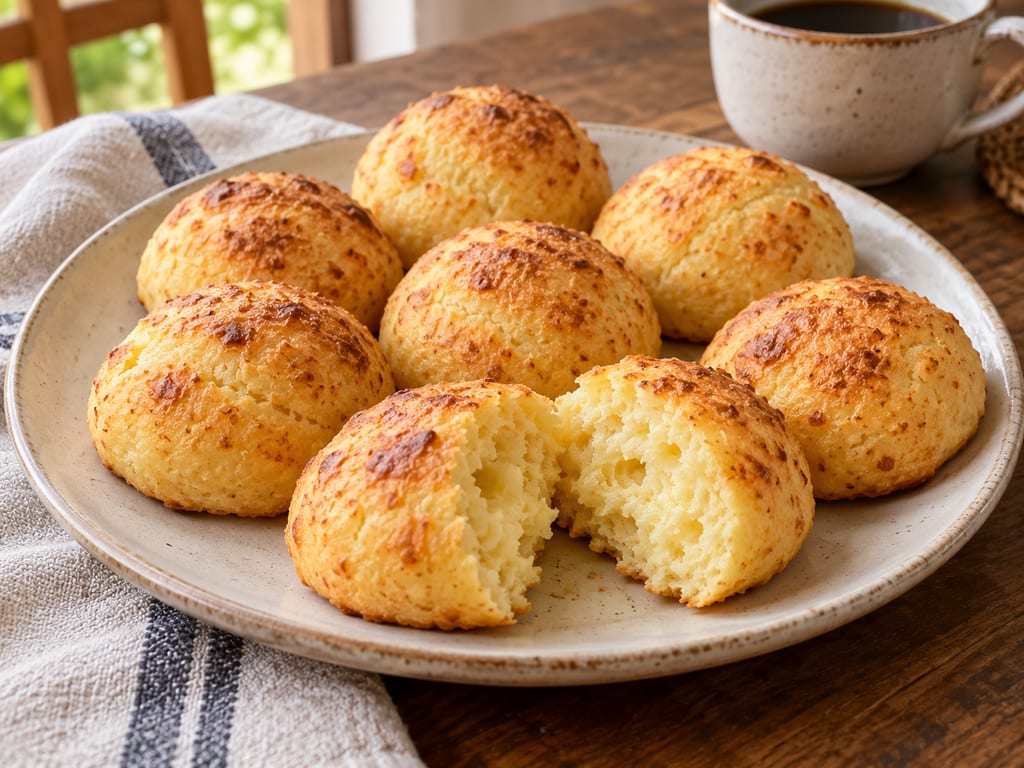
Small Colombian cheese breads made with precooked corn flour, queso fresco, mozzarella, eggs, milk and baking powder. This documented home version makes eight breads and is served warm.
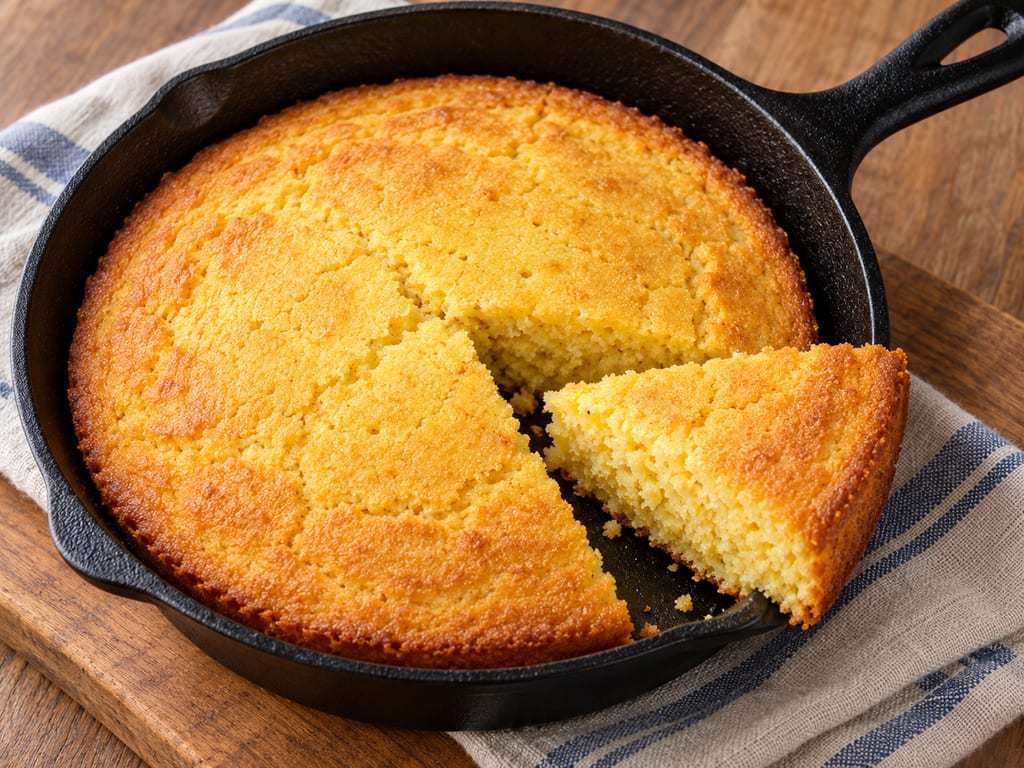
A modern cornmeal-and-wheat cornbread that King Arthur Baking describes as a compromise between Northern and Southern styles. The batter is baked in a pan or as muffins and served warm.
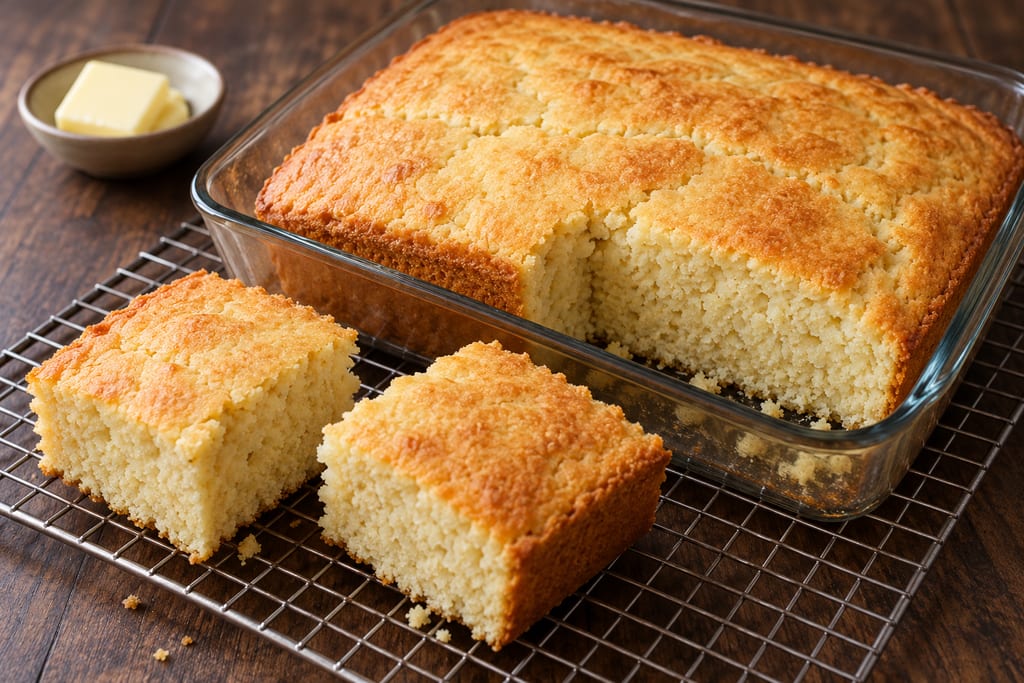
A soft, butter-rich Bahamian-style baked johnnycake made from flour, baking powder, sugar, butter and milk. The dough rests briefly in a square pan before baking.
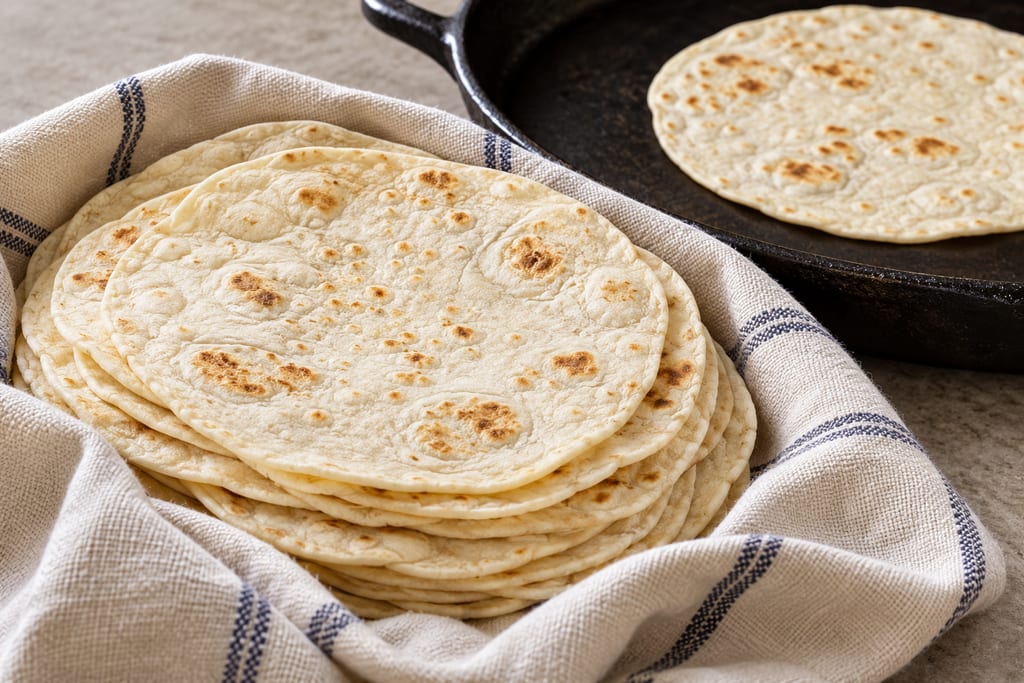
Soft wheat-flour rounds from an INCAP Honduran baleada recipe are rolled thin and cooked on a dry skillet; this record covers tortillas, not the filled dish.
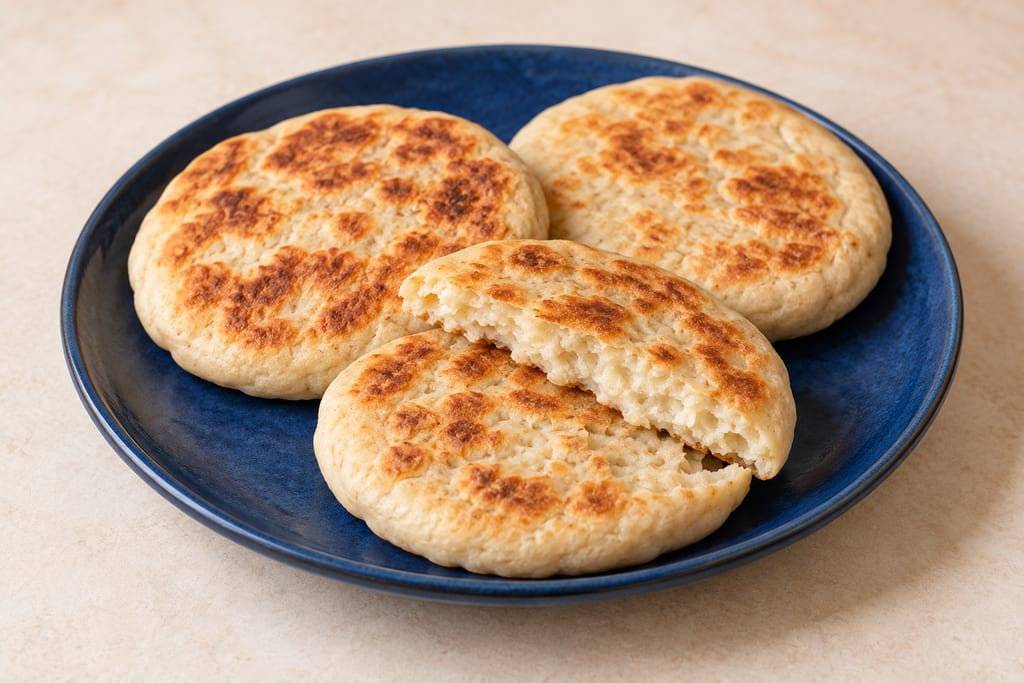
A Central Tibetan style pan bread made from flour, water and baking powder. Four dough balls are rested, rolled into rounds and cooked covered in a skillet, turning them several times.
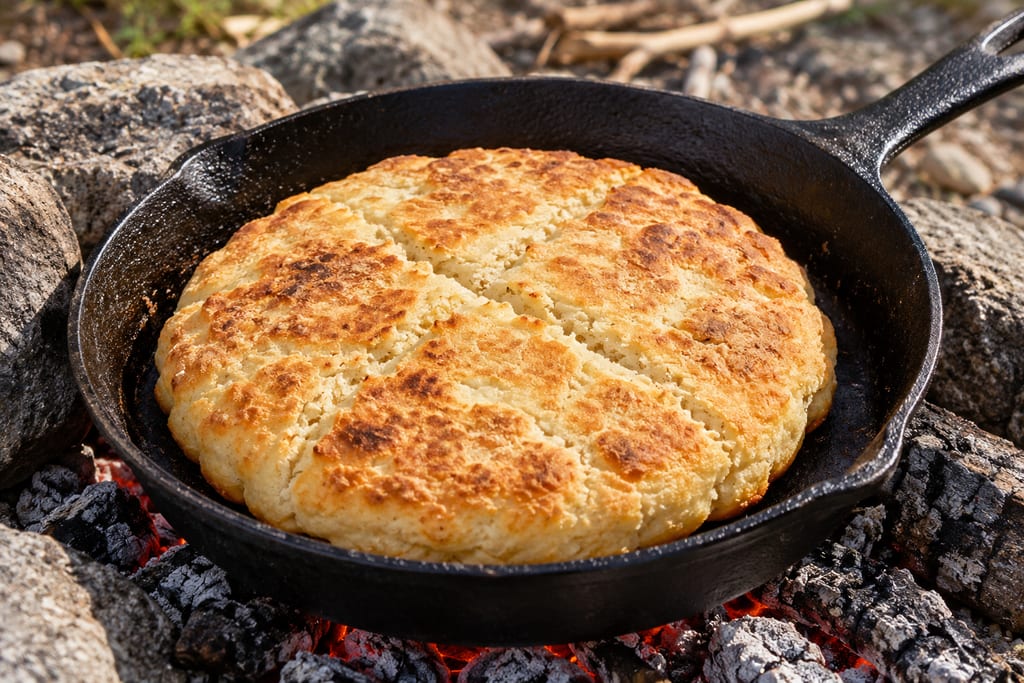
This flour, baking-powder and oil dough is Parks Canada’s contemporary Métis-interpreter version prepared at Rocky Mountain House; its specific recipe origin is unknown.
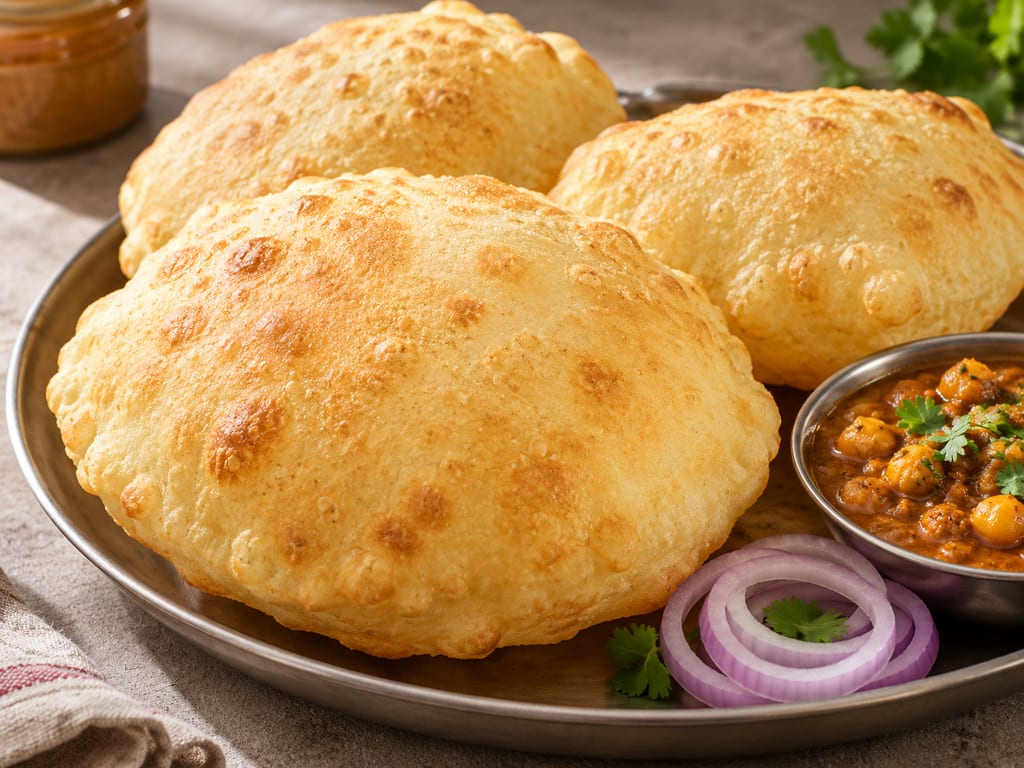
A North Indian fried bread made with yogurt, wheat flour and chemical leaveners. This source batch makes eight.
A molasses-sweetened rye, wheat and cornmeal batter that can be steamed on the stovetop or baked in a covered pan.

A Cap-Pelé boucanière is an Acadian herring-smoking building. The documented Willie Niles example is a one-storey wood-frame structure with a ridge smoke vent and interior bays for hanging fish-bearing cannes.

Achcharu is a family of Sri Lankan vinegar pickles made with mixed vegetables or seasonal fruit and a piquant spice dressing. This version is a quick, refrigerated, non-fermented mixed-vegetable pickle.

The acocote is a long, hollowed and dried gourd used to draw aguamiel from a mature maguey. It is a harvesting tool: the sap is transferred to a separate vessel before it ferments into pulque.

Adrak murabba preserves young ginger in sugar syrup, a sweet South Asian preparation recorded in Indian cookery and food-processing sources.

Parkia biglobosa seeds are fermented into regional West African seasonings, including nététou, iru, dawadawa and soumbala. The yellow fruit pulp is a separate food, and names and methods vary by place.

Japanese reddish-brown vinegar from sake lees matured about three years, turned to vinegar by acetic bacteria; the vinegar of Handa and Edomae sushi rice.

A refined common-wheat flour blended for a broad range of baking; its protein and behavior vary with wheat, milling and market.

The almond mushroom, Agaricus subrufescens, was cultivated in eastern North America in the 1800s, lost its market, and returned as a cultivated mushroom from Brazil, where it is grown under several names.
No community contributions have been published for this entry yet.
Sign in to contribute. Published comments and photos are free to read.
Food and Drink Wales, Welsh GovernmentMethod · Modern adaptation · Serving
Bara brithModern tea-loaf ingredients and quantities, soak, oven setting, loaf tin, bake, cooling, serving and optional honey glaze.
Cited in: A speckled loaf with more than one method; The modern tea-loaf method; Reading the ingredients and preserving the source’s proportions; From soak to slice; At the Welsh tea table; How to compare versions
Amgueddfa Cymru – Museum WalesHistory · Regional variation · Method
Bara Brith – Currant Bread: Cardigan, CeredigionA documented yeasted Cardigan formula with flour, butter, sugar, salt, mixed fruit, dried yeast, milk, egg and nutmeg; dough rises twice and is baked in tins.
Cited in: A speckled loaf with more than one method; Regional loaves and household occasions; How to compare versions
Amgueddfa Cymru – Museum WalesRegional variation · Method
Bara Brith – Currant Bread: Bala, GwyneddBala formula with butter, currants, sultanas, raisins, peel, spice, treacle and eggs; yeast dough rises before baking.
Cited in: A speckled loaf with more than one method; Regional loaves and household occasions; How to compare versions
Amgueddfa Cymru – Museum WalesHistory · Regional variation · Uses
Bara Brith – Currant Bread: Rhyd Lewis, CeredigionRhyd Lewis wholemeal currant bread; source says it was baked for Christmas, New Year and Harvest Home suppers.
Cited in: Regional loaves and household occasions; At the Welsh tea table; How to compare versions
Amgueddfa Cymru – Museum WalesHistory · Geography
Welsh FoodsMuseum describes Minwel Tibbott's oral-history work beginning in 1969 and explains that memories recalled the end of the nineteenth century; context on rural Welsh food and grain availability.
Cited in: What the historical record can and cannot date; Regional loaves and household occasions
Royal Commission on the Ancient and Historical Monuments of WalesHistory · Regional variation · Method
Bara Brith: a recipe for ‘lock-down’Reports that Geiriadur Prifysgol Cymru's first citation for bara brith as known today is 1888, while earlier eighteenth-century use may refer to mixed-grain bread; emphasizes uncertainty and variation.
Cited in: What the historical record can and cannot date; At the Welsh tea table; How to compare versions
University of Illinois ExtensionTechnique · Food science
4-H Cooking 201: Quick BreadsGeneral explanation that quick breads use chemical leaveners which release carbon dioxide and provide lift; science is general background, not a measured test of this loaf.
Cited in: The modern tea-loaf method
University of Illinois ExtensionIngredients · Technique
Choose the Right Flour for the JobGeneral description of self-rising flour as wheat flour with baking soda and salt added; not a formula for substituting another flour.
Cited in: What the historical record can and cannot date; The modern tea-loaf method; Reading the ingredients and preserving the source’s proportions
Amgueddfa Cymru – Museum WalesHistorical attestation · Regional variation
Recipes for ‘Bara Brith’, ‘Tato Rost’ and ‘Picau Bach’ from Mrs Margaret MorganA paper recipe grouping for Bara Brith and two other foods was collected in 1972 from Mrs Margaret Morgan of Pontyclun, Glamorgan.
Cited in: Regional loaves and household occasions