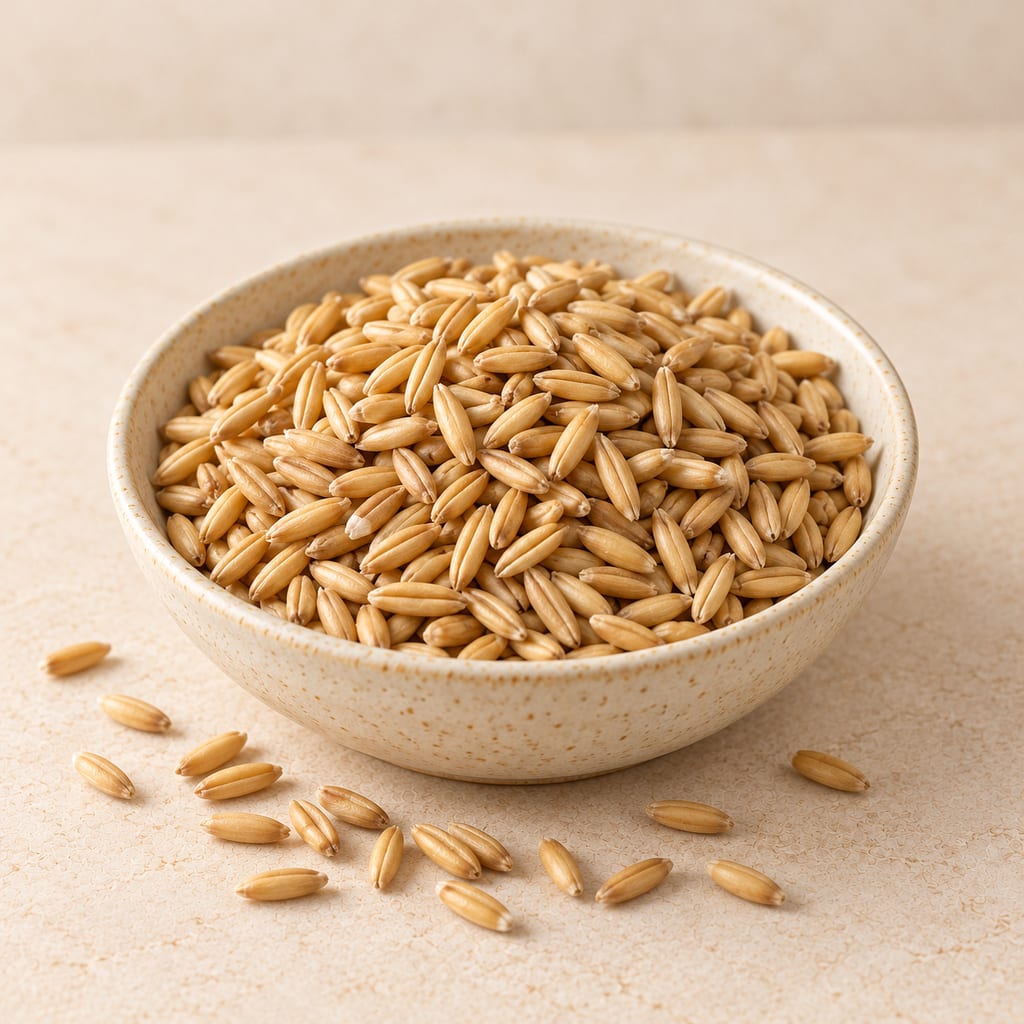
Oats
A cereal grain sold as groats, cut pieces, flakes, flour and malt. Oats shape porridge, bread and brewing differently as processing changes hydration, texture, starch, beta-glucan, protein and oil.
 FermenteaWhere food goes to change
Oatcakes · oatcakes
A thin Scottish oatcake of medium oatmeal, butter, salt, bicarbonate of soda and boiling water. This measured oven adaptation differs from older girdle methods and soft, yeasted Staffordshire oatcakes.
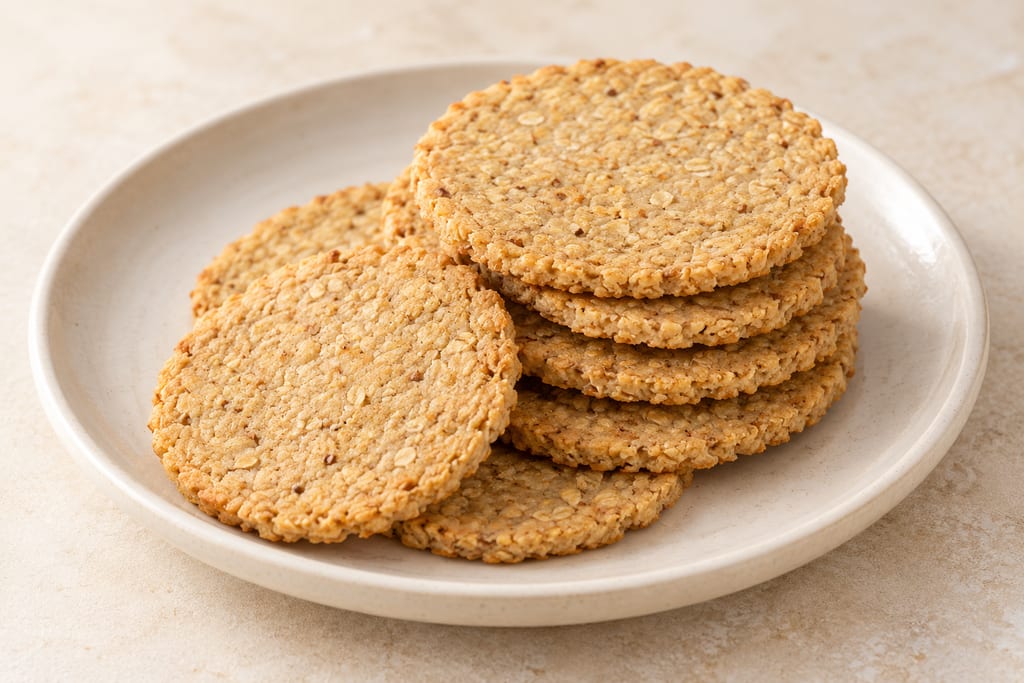
Scottish oatcakes are thin cakes of oatmeal, traditionally cooked on a girdle and often finished by toasting near the fire. Their everyday form is savoury and crisp, closer to a bread or biscuit than a sweet cake. This is a family of foods rather than one fixed national formula: meal grind, thickness, shape, fat, raising agent and cooking surface change between recipes and places.
National Trust for Scotland research on Edinburgh’s food history describes oats as a hardy, economical grain in a country where wheat was difficult to grow in many districts and often beyond the means of ordinary households. From the seventeenth through twentieth centuries, oatcakes and bannocks sat among the filling foods eaten with porridge, vegetables and other staples. When money or harvests were tight, cooks could stretch cereal meals with dried pea meal; the resulting bannock was related but not identical to a pure-oat cake. These are broad historical patterns, not claims that every Scottish household ate the same food.
The equipment helps explain the cake’s shape. Before ovens were common in urban homes, flat pieces could cook on both sides over a hearth on a heated stone or iron girdle. The National Trust notes that iron girdles were found in Scottish kitchens by the sixteenth and seventeenth centuries. A flat cake needed less enclosed heat than a thick loaf and could be made with modest equipment. Oatcakes also travelled and stored more easily than soft porridge or thick bannocks, making them useful beyond the immediate meal.
This version follows a measured adaptation published by the National Trust for Scotland from an older Inverewe cookbook formula. The original wording used handfuls of oatmeal and a quart of hot water, quantities the author found did not translate sensibly to a home dough. Her adapted recipe uses medium oatmeal, butter, a pinch of salt and bicarbonate of soda, and a small amount of boiling water. She baked the cakes on a pizza stone as a modern stand-in for the older girdle and toasting stone. This page preserves that adaptation as one practical route, not as the single authentic recipe.
The long history of oats in Scotland reaches further back than surviving recipes for a particular oatcake. The National Trust for Scotland’s account says oats were eaten in Scotland from at least the Iron Age; their cultivation expanded in the eighteenth century. That is evidence for the grain’s place in Scottish foodways, not proof that the present thin, crisp biscuit existed unchanged in every period. Recipe names and shapes overlap, and a broad oat-based food history should not be mistaken for a continuous record of one fixed formula.
Geography shaped the grain choices and the cooking economy. Oats, barley, rye and pulses could grow in difficult conditions where wheat was less dependable or affordable. The NTS account describes oat dishes across Scotland, from islands and coastal settlements to Edinburgh. The household pantry was not uniform: what was grown, bought, milled or saved depended on locality and means. A recipe labelled Scottish therefore points to a regional tradition and association, while leaving room for local practice and neighboring food cultures.
The social history matters as much as the ingredients. In accounts of Edinburgh from the seventeenth century onward, inexpensive grains and pulses helped feed people who could not regularly afford meat or fine wheat bread. Oatcakes, bannocks and other coarse grain preparations were filling foods within this economy; they were not simply nostalgic treats. Oatmeal could also be stretched with dried pea meal when cash or other crops were short. The source distinguishes these blended bannocks from pure oat preparations, so peasemeal is a documented option in the wider pantry rather than an ingredient in this recipe.
Oatmeal behaves differently from wheat flour. It has no gluten network to stretch and hold the dough, so the mixture is short and can crack when rolled. The grain’s grind changes the result: finer meal makes a more compact cake, while coarse pinhead oatmeal gives a rougher bite and can be fragile in a thin sheet. In her account, the National Trust’s recipe author first tried pinhead meal, found it too crumbly to hold together and switched to medium oatmeal. That observation belongs to her batch, but it is a useful practical clue about how grind affects handling.
Hot water wets the meal quickly, and melted butter contributes richness and helps the dough cohere. The small pinch of bicarbonate appears in this measured modern formula; other recipes omit it or use a larger amount. Do not assume that all Scottish oatcakes rise like wheat bread. The mixture is not fermented, and the bicarbonate is not a substitute for yeast. Keep the short kneading brief: work only until the dough gathers and the ingredients are evenly distributed.
Roll gently on a meal-dusted surface. The dough is warm and somewhat delicate, so press small cracks together rather than adding extra liquid or flour by guesswork. Cut rounds or wedges and move them with a thin spatula. A stone gives a strong, even base heat; a tray works as a simpler modern alternative, although the underside may colour differently. The 25-minute baking time belongs to the cited recipe and equipment; thickness and oven behaviour can affect the finish.
Let the cakes cool before deciding whether they are crisp. They lose more moisture and firm as they stand. Warm oatcakes may feel soft in the middle, especially if thick, while fully cooled cakes should be dry and break cleanly. If they are still pliable, the source-supported adjustment is to continue drying them gently until the texture suits the intended use.
The cooking surface reflects changes in domestic equipment. A flat girdle or hot stone could cook a thin cake over a hearth and could be turned so both faces met the heat. The NTS history notes that ovens were uncommon in many urban homes before ranges and stoves became more widespread during the nineteenth century; people could buy baked goods from professional bakers, while home cooks used pans, stones and bannock turners. This is a practical explanation for flat breads, not a claim that every household used the same device or that all oatcakes were home-made.
The sourced modern method keeps the process simple but does require gentle handling. Boiling water hydrates the meal quickly; the mixture is stirred until damp and gathered, then kneaded only briefly. Oats do not develop wheat-like gluten, so this dough can crack and is not expected to stretch. Dusting the board with meal helps with rolling, while pressing a crack closed is less disruptive than adding unmeasured water. A preheated pizza stone gives a firm hot surface in an oven, but a tray is a convenient alternative and may brown the underside differently. The recipe’s time and temperature belong to the cited adaptation; thickness and an individual oven influence the result.
Oatcakes serve as a plain base for butter, cheese, soup or smoked fish. The Rowett Institute’s recipe describes butter and cheese as familiar toppings, while the Scottish Food Guide notes that modern oatcakes carry both savoury and sweet accompaniments. Their mild toasted flavour lets stronger foods sit on top without competing. They are equally at home as a meal accompaniment or as a small snack.
Scottish oatcakes are different from Staffordshire oatcakes in England’s Midlands. Staffordshire oatcakes are soft, yeast-raised pancakes made from oatmeal and wheat flour in a pourable batter, then cooked on a pan; they wrap fillings instead of snapping into crisp pieces. Scottish bannocks also overlap in everyday language, but can be thicker and may use barley, wheat or combinations of meals. Names travel and shift, so the shape and method matter as much as the word on a menu.
Alan Davidson’s Oxford Companion to Food notes that oatcakes also belonged to food traditions in parts of northern England, Wales and Ireland. Scotland is strongly associated with oatcakes today, but oats and flat oat breads cross modern borders. Within Scotland, recipes differ too: some use fat, some are leaner, some include soda, and the meal can be fine or coarse. The regional association therefore identifies a deep Scottish food tradition without claiming exclusive ownership or one single inventor.
Scotland’s oatcake association is strong, but it is not an exclusive boundary. The Oxford Companion to Food records related oatcake traditions in parts of northern England, Wales and Ireland as well as Scottish upland districts. Those broad comparisons do not make every regional cake the same: names, thickness, meal, fat and cooking surface vary. A Scottish oatcake in this recipe means the thin baked or dried oat biscuit represented by the cited Scottish sources. It does not mean the soft, yeasted Staffordshire oatcake, which is cooked as a batter pancake and folded around fillings.
Within Scotland, there is no single national specification. Some recipes are lean, some add butter or dripping, and soda may be absent or used sparingly. Meal may be fine, medium or pinhead; one National Trust account describes reducing a soda quantity after a bitter result and changing pinhead meal to medium because the first dough crumbled. A separate Scottish Food Guide formula uses pinhead meal, butter, salt and boiling water, with a resting period before rolling. These are useful documented contrasts, not instructions to combine proportions. In oat dough, small changes in grind and water affect whether a thin sheet can be moved intact.
Shape and finish also depend on household practice. The National Trust adaptation cuts eight wedges, while the older Inverewe wording asks for a circle sized to the girdle; the Scottish Food Guide leaves the cutter choice open. Wedges need no scraps to gather, whereas rounds produce a more regular edge. The choice is practical rather than a marker of authenticity. Let the cakes cool before judging their crispness: the measured source recipe describes a somewhat fragile result, and warm cakes can feel softer than they will after standing.
The older girdle method and this oven adaptation produce related but distinct surfaces. A cake cooked on iron develops contact colour as it is turned; some traditional methods then dry or toast it near the fire. A home oven warms the whole cake more evenly and needs less attention, while a preheated stone gives a firmer base. The National Trust’s pizza-stone method is a modern approximation of the girdle-and-stone sequence, not a piece of historic equipment.
Meal choice is the easiest variation to understand. Medium oatmeal is the balance used here; finer meal will give a smoother cake, and coarser meal a more open, fragile texture. The Scottish Food Guide offers a pinhead-oatmeal version with boiling water, butter and salt, while the Rowett Institute’s measured formula uses a little more meal and more water and reports a different yield. Keep one formula’s proportions together rather than combining quantities from separate recipes.
Other changes—using lard instead of butter, leaving out the soda, cutting wedges rather than rounds, or adding cheese or herbs—belong to particular recipes and households. They can be explored as named variations, but they should not be presented as if every oatcake traditionally included them. Cool completely before storing in a closed container; this protects crispness, not shelf stability. No preservation claim is attached to the recipe.
Oatcakes were useful at more than one meal. The NTS history places oat-based foods among breakfasts and suppers and describes cereals and pulses as everyday, sustaining pantry foods. That context helps explain why a dry, portable cake could accompany a meal as well as stand alone. Today the Rowett Institute suggests butter or cheese as toppings, and the National Trust adaptation was tasted with Scottish cheddar. A plain cake also works beside soup or with smoked fish, but those are serving suggestions, not claims that one accompaniment is traditional everywhere.
Storage should be described modestly. The Rowett recipe says to cool the oatcakes and keep them airtight, and the Scottish Food Guide gives the same kind of tin-storage advice. This preserves a crisp texture over ordinary short-term kitchen storage; it does not establish a validated shelf life or make the recipe a preservation process. Cool fully so residual steam does not soften the cakes in a closed container. If they lose their snap, gentle further drying may restore texture, but do not interpret dryness as proof of safe long-term keeping.
Oatcakes and related oat breads have a long place in Scottish food history, but this exact measured dough is a modern home adaptation, not a universal historic formula.
Yield 8 oatcakes · Scaling: source batch only
This is an ordinary baked oatcake, not a preservation process.
Scottish association and household tradition; sources also document oatcakes in neighbouring regions and do not identify one origin.
A cereal grain sold as groats, cut pieces, flakes, flour and malt. Oats shape porridge, bread and brewing differently as processing changes hydration, texture, starch, beta-glucan, protein and oil.
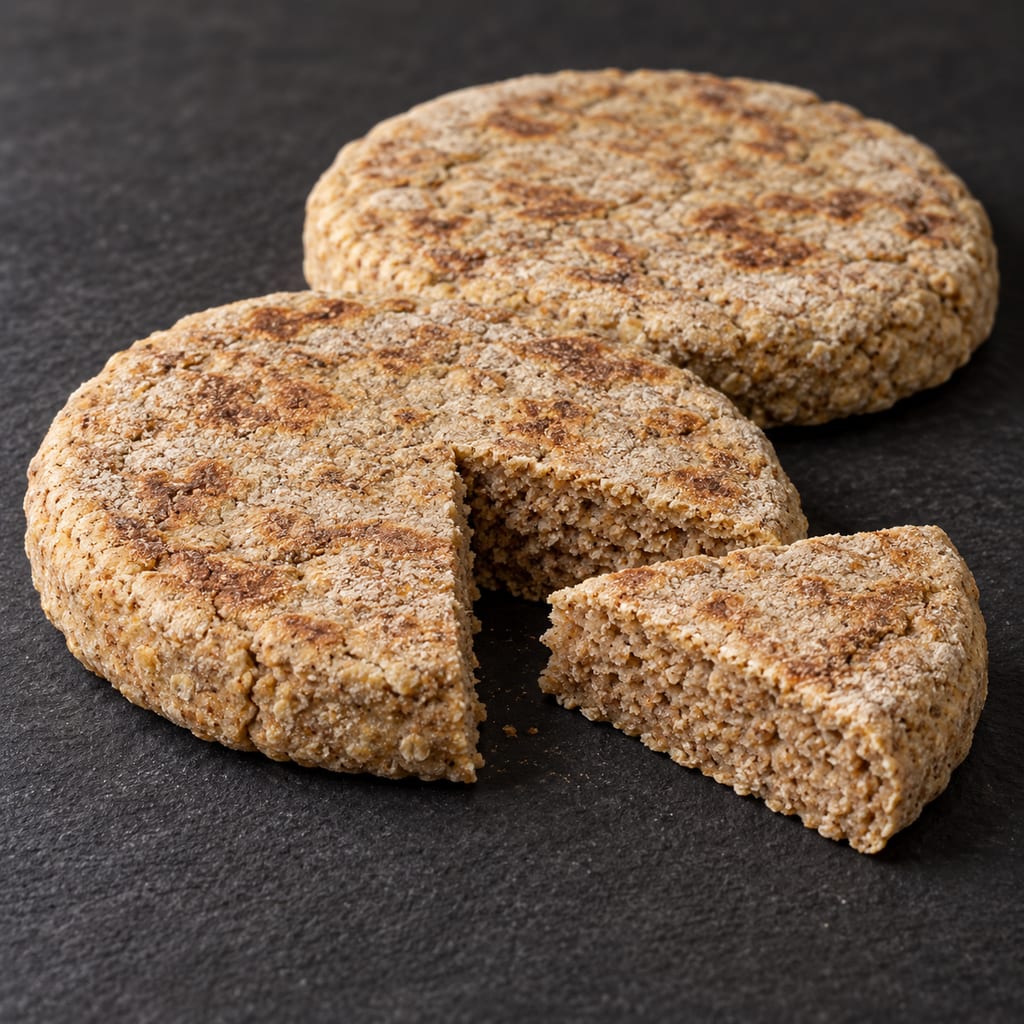
Two round, chemically raised bannocks made with equal weights of white flour and beremeal, barley flour or oat flour, following Anne Johnson's Orkney formula.
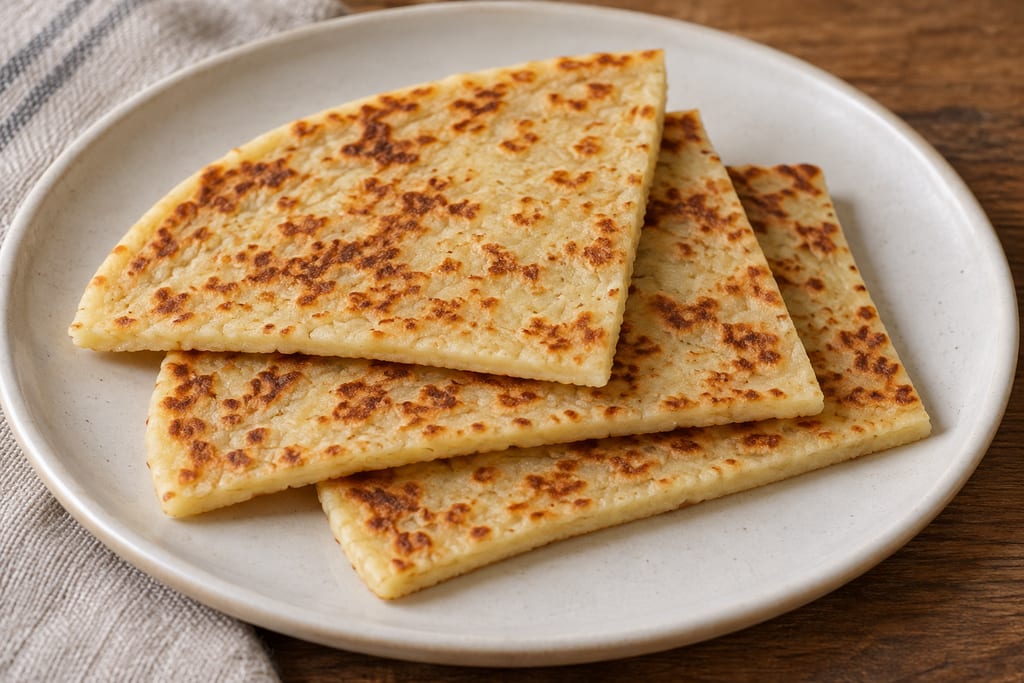
Scottish Scran’s batch combines boiled potatoes, butter and flour, then cooks three thin rounds on a dry pan.
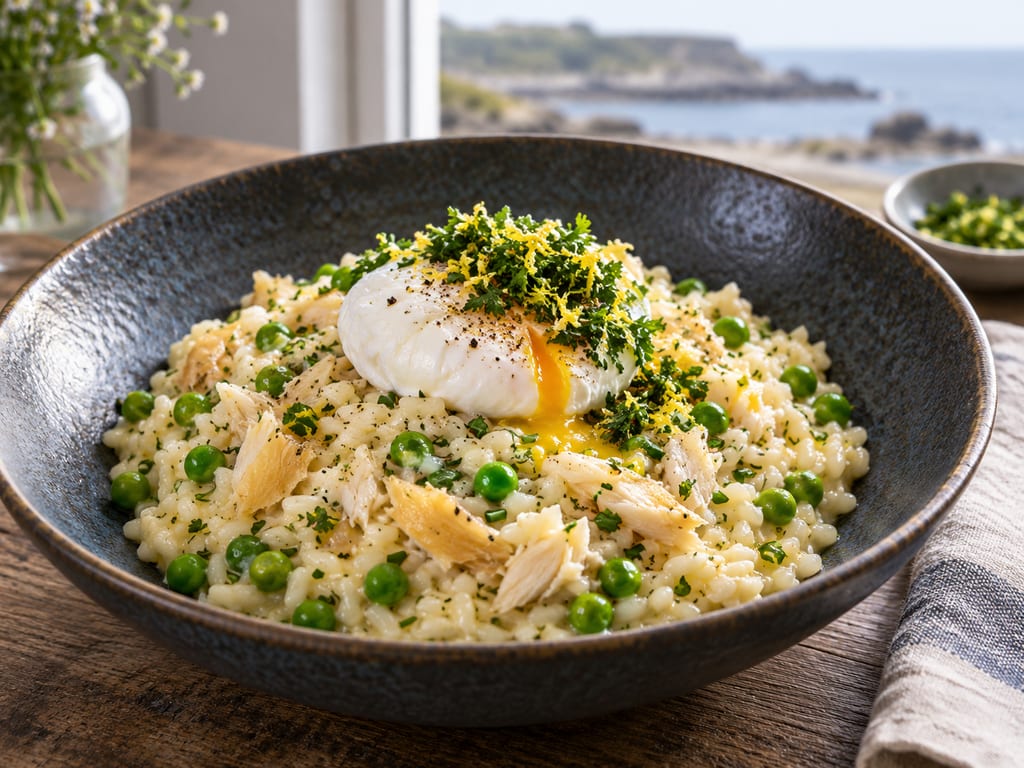
A four-serving risotto published in the 2014 Arbroath Smokie Trail booklet and credited to Hayley Wilkes. It cooks with finished Arbroath smokies; it does not describe smoking fish.
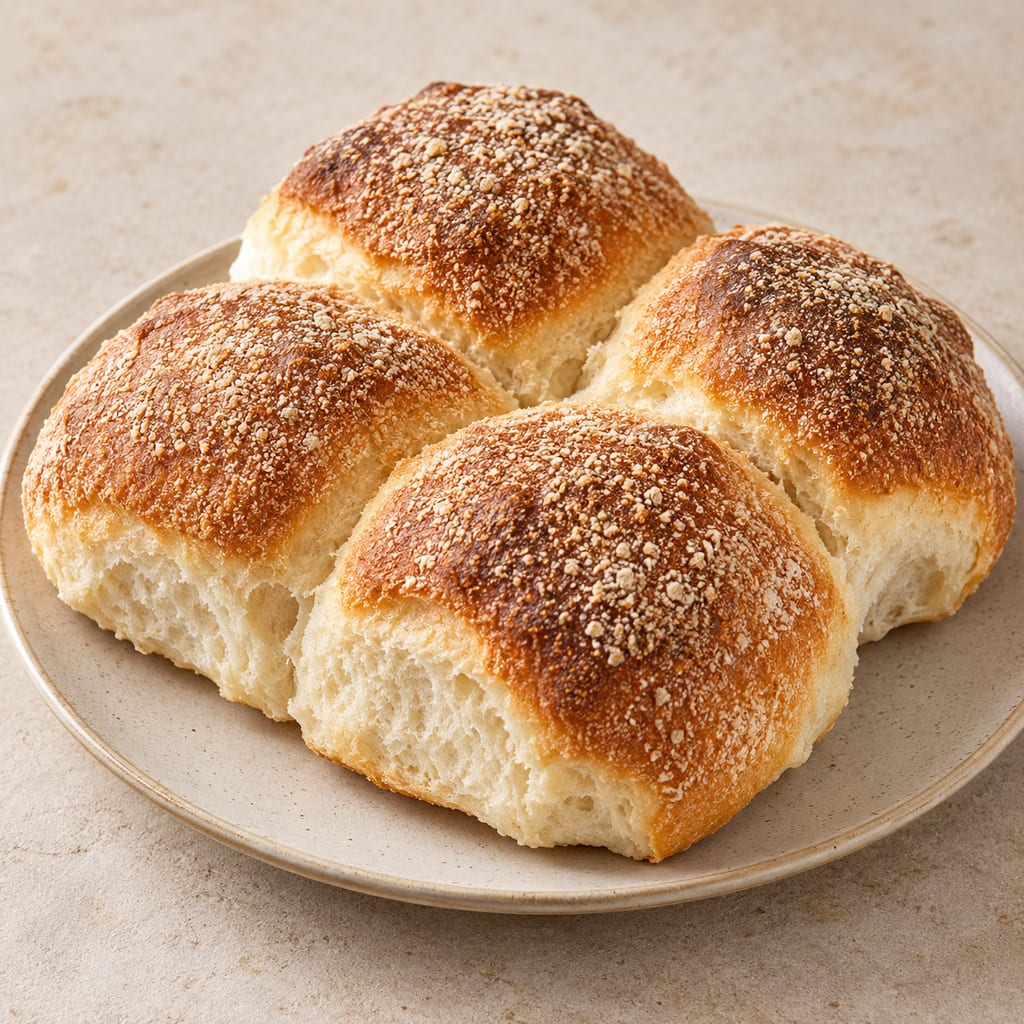
A wet, cold-fermented wheat dough is coated in rice flour and baked close together at high heat for Glasgow-style rolls with a crisp, dark crust and light interior.
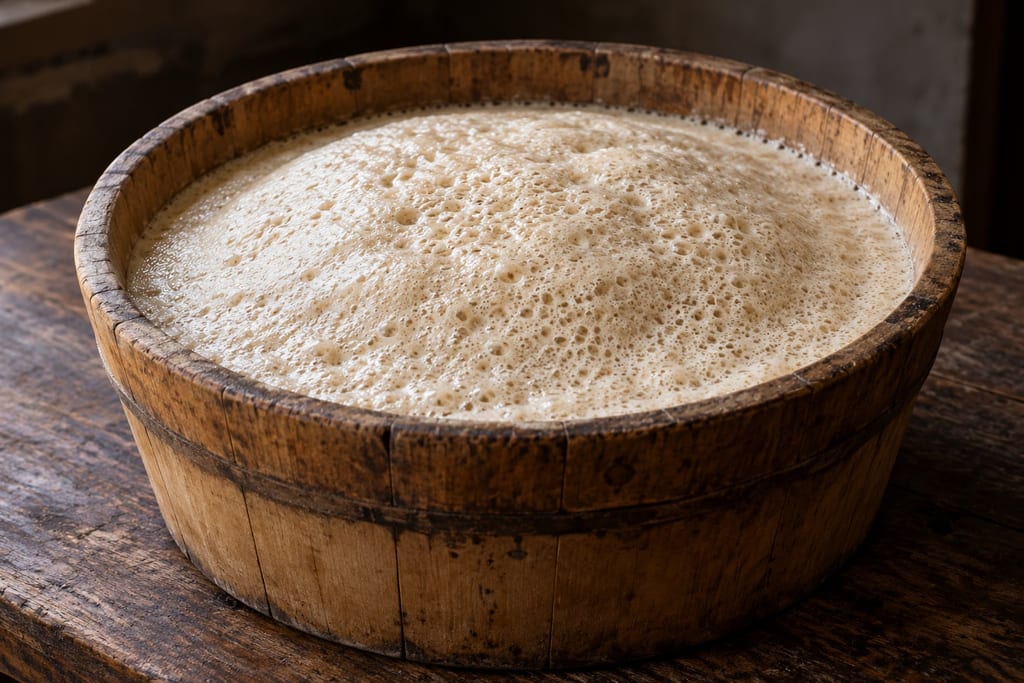
Scotch barm is a Scottish bakery ferment grown in a malt-and-scalded-flour medium and renewed with mature barm from the last batch to leaven successive bread sponges.
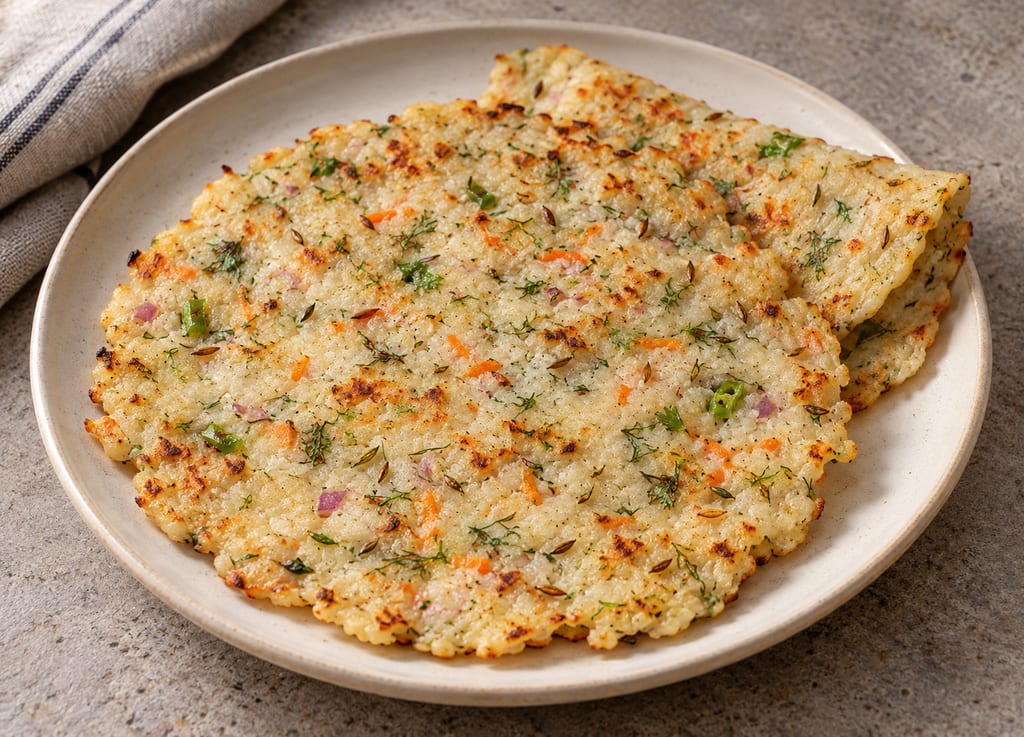
This Karnataka-style akki rotti mixes fine rice flour with vegetables, coconut, herbs and spices, then hand-pats and griddle-cooks the dough.
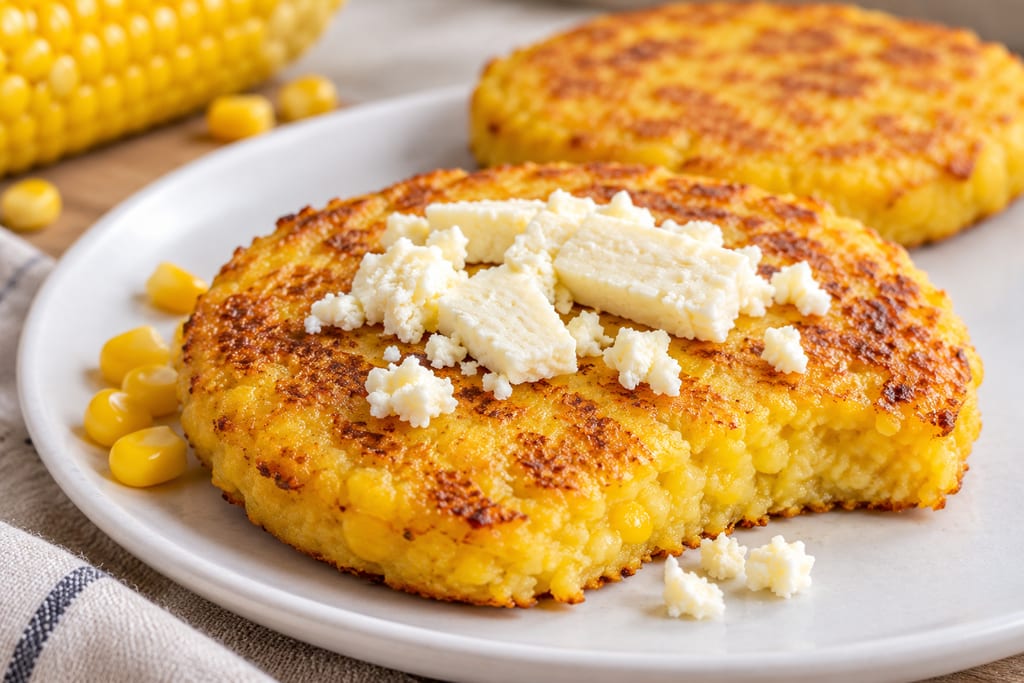
A Colombian Andean griddle cake made from fresh sweet-corn batter, cooked in butter and served with white cheese.
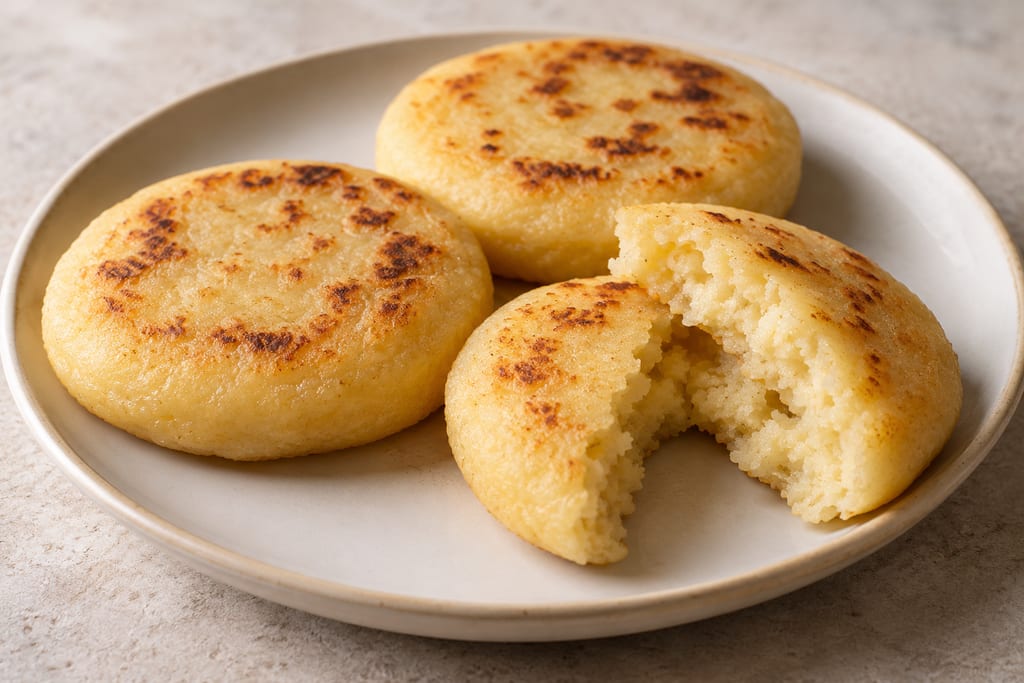
This household version combines precooked corn flour, warm water and salt, then cooks thick rounds on a lightly oiled skillet or griddle. It is one source-specific arepa method, not a universal Colombian or Venezuelan formula.
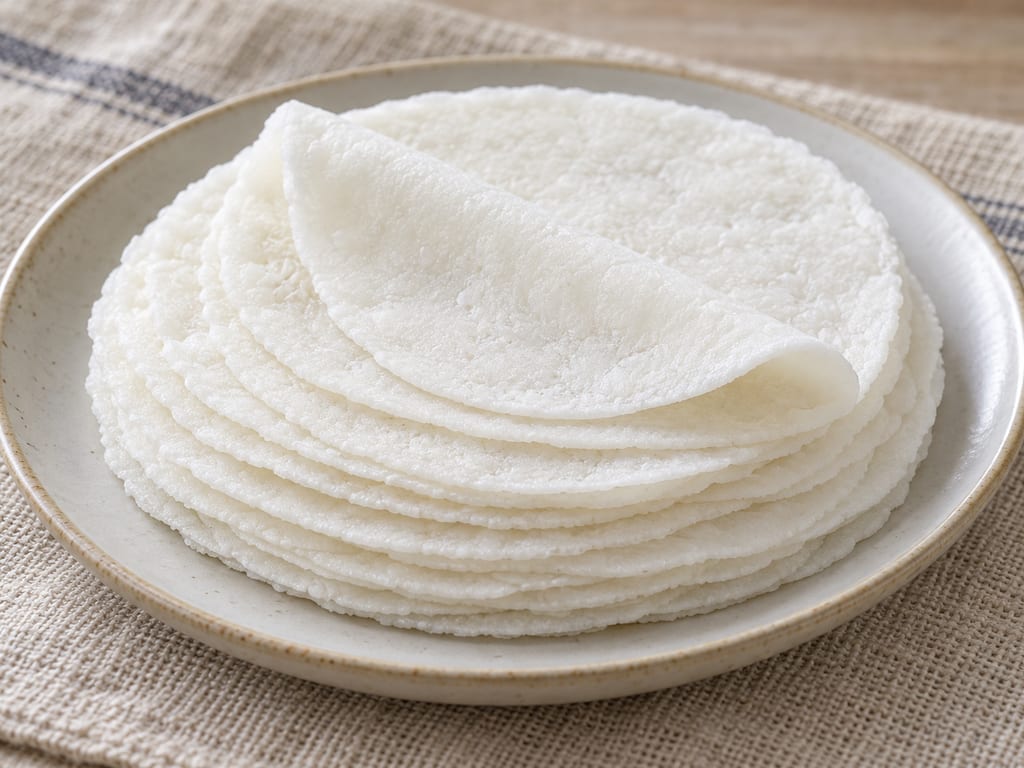
Thin Malabar rice-flour rounds made from roasted rice flour cooked into salted boiling water, kneaded after cooling, and rolled to about 1 mm. They cook on a hot griddle without taking on colour.
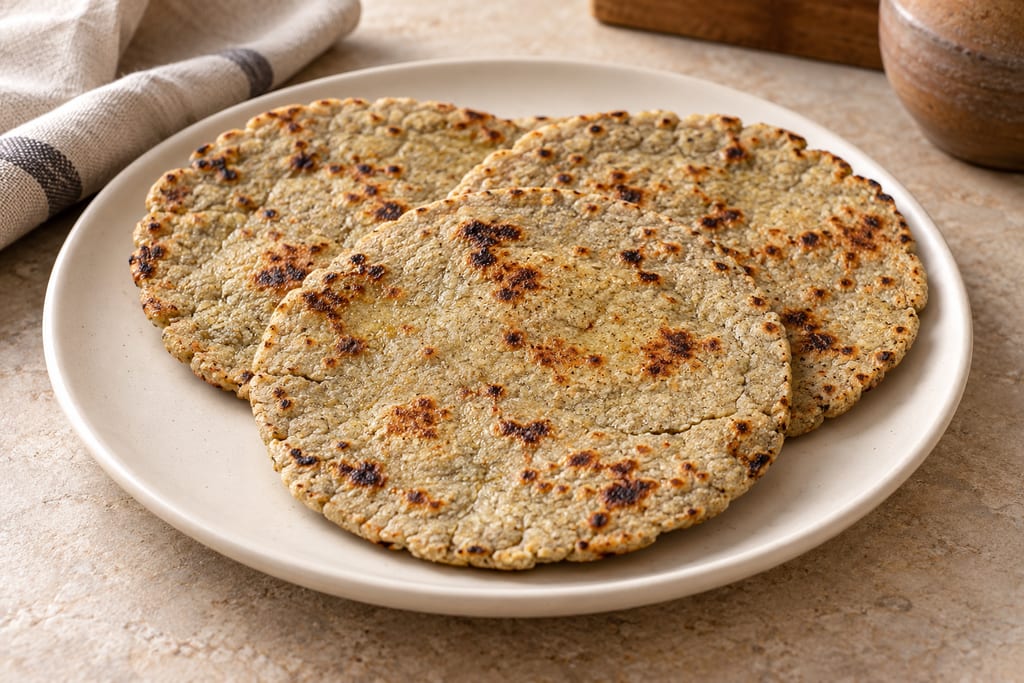
A pearl-millet flatbread shaped between sheets and cooked on a hot tawa. This home batch makes eight.
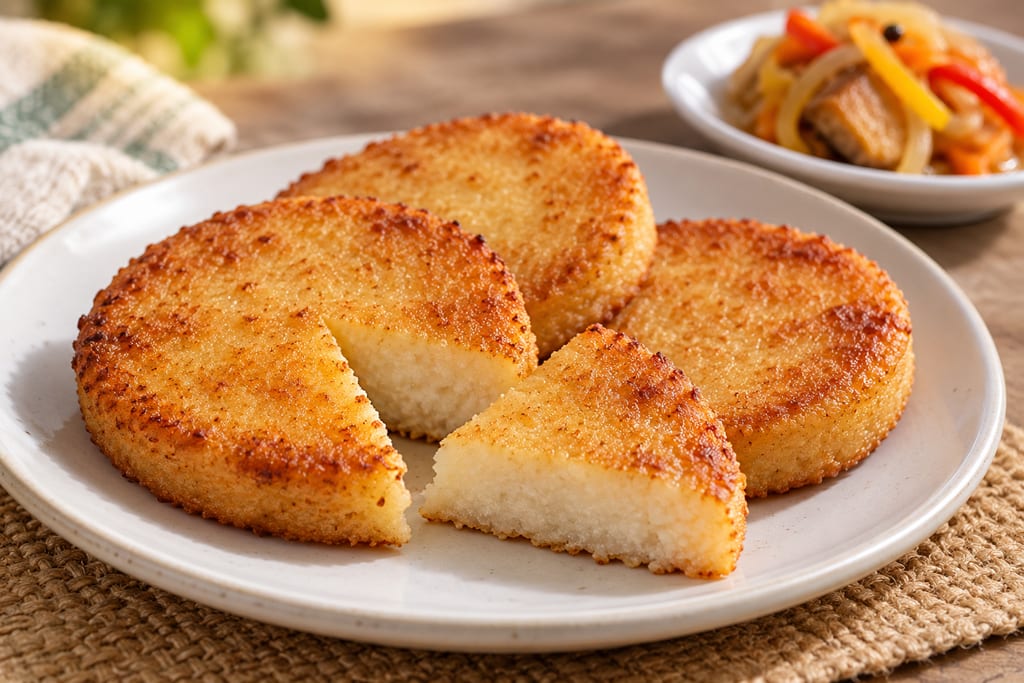
A serving method for approved, prepared bammy rounds: soak them in coconut milk and refry until golden. It does not process raw cassava.
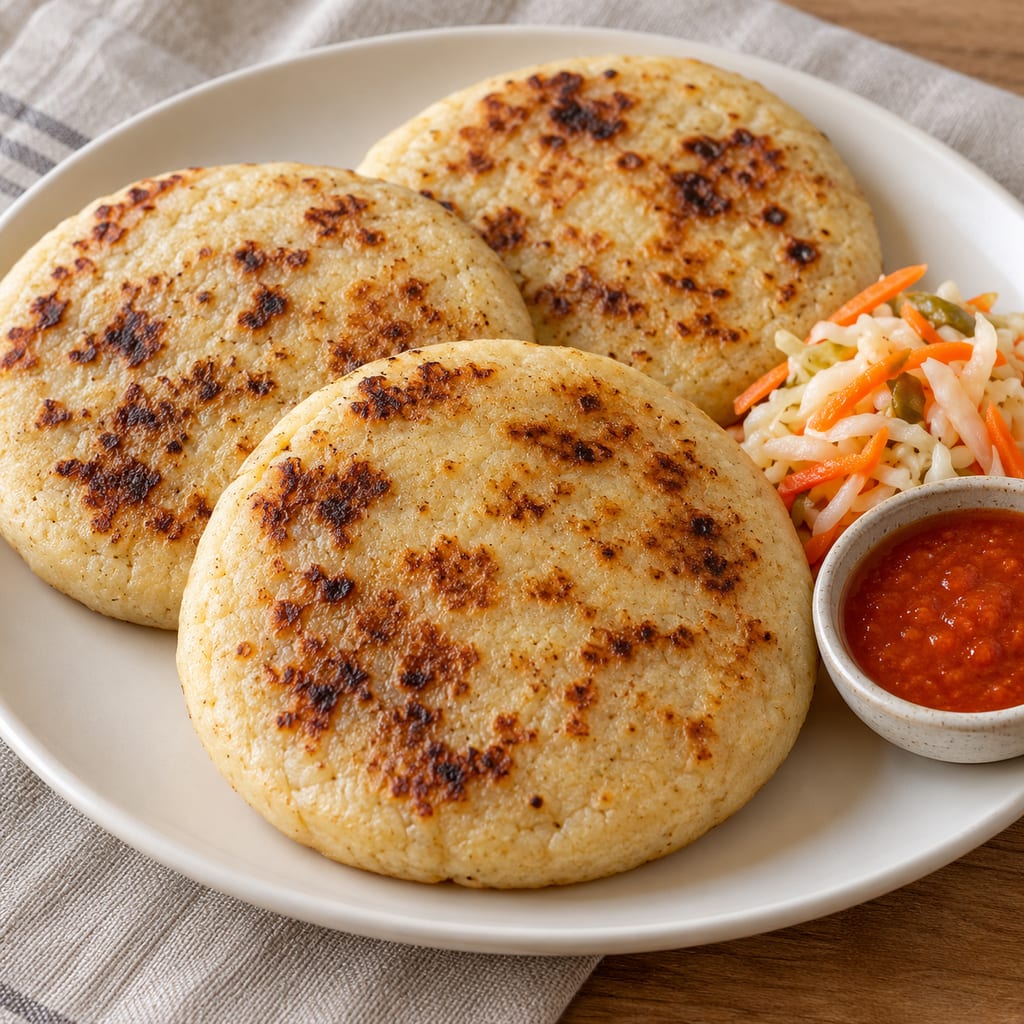
Salvadoran-style masa harina cakes filled with refried beans and cheese, sealed and cooked on an oiled skillet.
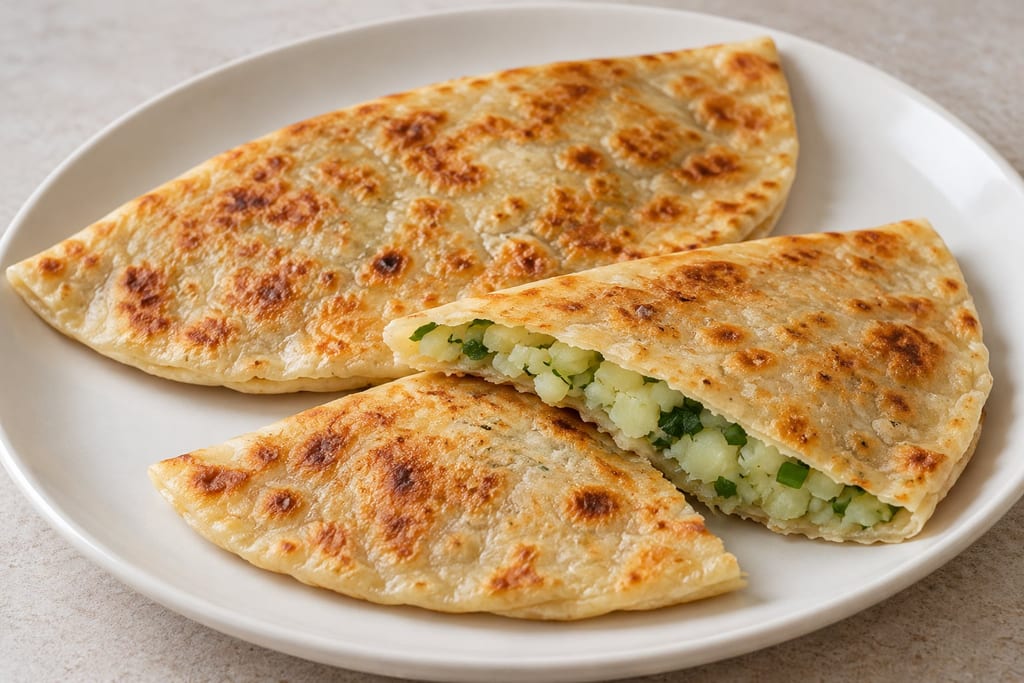
A thin, unleavened Afghan flatbread filled with mashed potato, scallion and cilantro, folded and pan-browned. This version uses a dough made from scratch.
No community contributions have been published for this entry yet.
Sign in to contribute. Published comments and photos are free to read.
University of Aberdeen, Rowett InstituteMethod · Ingredients · Yield · Uses
OatcakesGives a plain oatcake formula with 165 g oatmeal, 15 g butter, bicarbonate of soda, salt and hot water; 30 g meal is reserved for the board.
Directs cooks to bake at 180°C for about 25 minutes, cool, and keep airtight; reports a yield of 15.
Cited in: Oatmeal in the Scottish pantry; Meal grade and dough handling; At the table and among neighbouring breads; Girdle, fire and oven variations
National Trust for ScotlandMethod · Regional technique · Variation
Mairi Sawyer’s oatcakesExplains that the older recipe uses vague handful and quart measures, then documents one measured home adaptation with 150 g medium oatmeal, melted butter, salt, a pinch of bicarbonate and two tablespoons of boiling water.
Describes a traditional girdle-and-toasting-stone route and an oven-and-pizza-stone adaptation; the author found medium oatmeal held together better than pinhead meal.
Cited in: Oatmeal in the Scottish pantry; Meal grade and dough handling; Girdle, fire and oven variations
National Trust for ScotlandHistory · Geography · Uses · Technique
Edinburgh’s Pantry: porridge and peasemealExplains that oatcakes, bannocks and related grain foods were part of Scottish meals from the seventeenth through twentieth centuries, with local variation and occasional peasemeal additions.
Describes hearth cooking, iron girdles and the practicality of flat cakes in homes without ovens.
Cited in: Oatmeal in the Scottish pantry; At the table and among neighbouring breads; Girdle, fire and oven variations
Oxford Companion to FoodHistory · Regional variation · Uses
OatcakesDescribes oatcakes as a long-standing staple in Scottish upland regions and notes related uses in parts of England, Wales and Ireland.
Records variations in fat and raising agents, griddle and fire methods, farl shapes, and festive use; these are not universal attributes of every oatcake.
Cited in: Oatmeal in the Scottish pantry; At the table and among neighbouring breads
Scottish Food GuideMethod comparison · Variation · Uses
OatcakesA contemporary oatcake formula uses pinhead oatmeal, butter, salt and boiling water, showing another texture and hydration choice.
Notes that yield depends on the size of the cut cakes and offers a separate modern oven method.
Cited in: Meal grade and dough handling; At the table and among neighbouring breads; Girdle, fire and oven variations