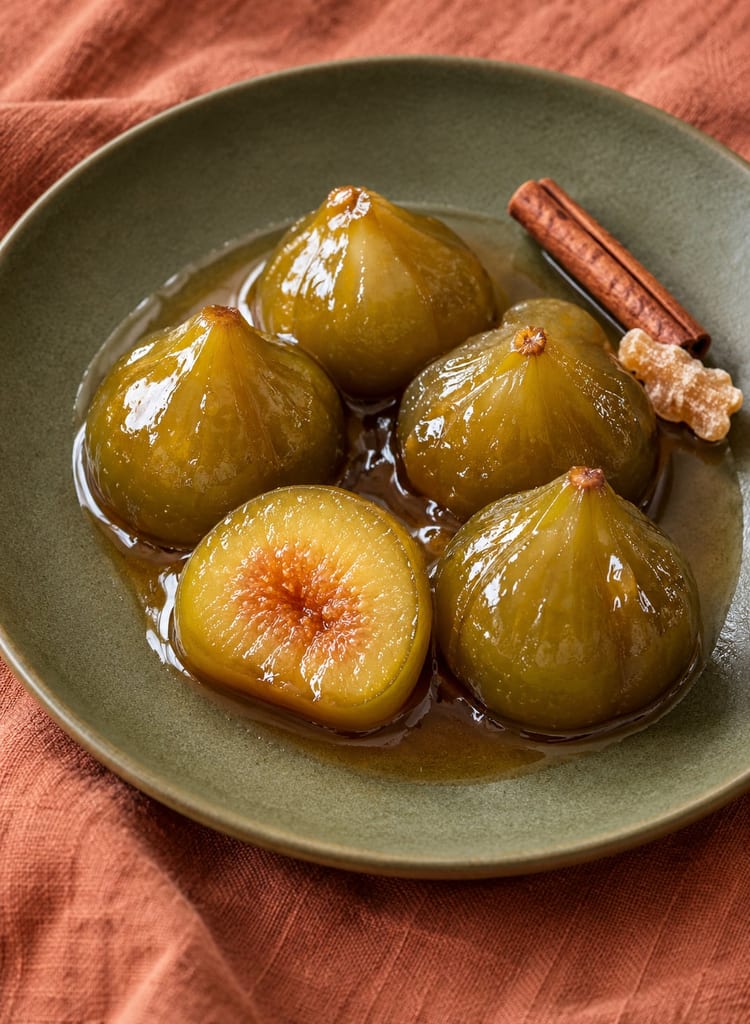
Green-fig konfyt
Whole unripe figs are softened and cooked in cinnamon and ginger syrup as a refrigerator-only South African konfyt; this method does not provide a shelf-stable canning process.
 FermenteaWhere food goes to change
Processing aids
Sodium bicarbonate is a mildly alkaline kitchen powder used for leavening and, in two published South African green-fig konfyt methods, in the preliminary boil.
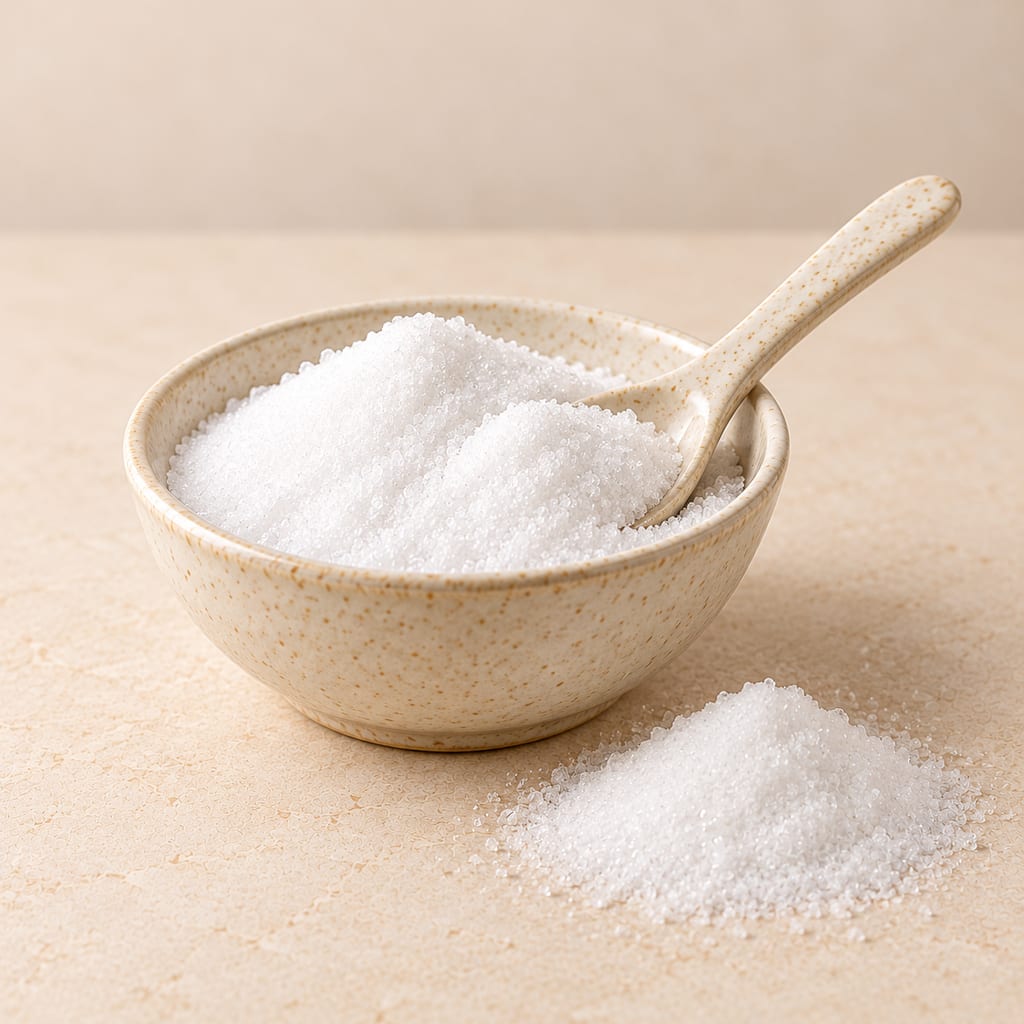
Sodium bicarbonate is the fine white powder commonly called baking soda or bicarbonate of soda. It dissolves in water to make a mildly alkaline solution and has a slightly bitter, alkaline taste. In two published South African green-fig konfyt recipes it appears in the preliminary boil, before the figs meet their syrup. One recipe measures it; the other makes it optional. Neither book says what the powder is meant to do to the fruit.
The chemical name is sodium hydrogen carbonate, NaHCO₃. Sodium bicarbonate, bicarbonate of soda, and baking soda are familiar names for this same compound. It is distinct from sodium carbonate, Na₂CO₃, also called soda ash and, in some older English-language kitchen writing, carbonate of soda. Both are sodium salts associated with carbonate chemistry, but they are not the same ingredient and should not be exchanged by name alone.
This distinction matters in older recipes. Hildagonda J. Duckitt’s cookbook gives a green-fig preserve “From a Very Old Cape Recipe Book. Dutch.” Its cooking water contains one teaspoonful of “carbonate of soda” along with salt. The printed wording does not identify a brand, grade or modern synonym, so the phrase cannot be read with certainty as sodium bicarbonate. In contrast, later sources name their ingredient directly: Cass Abrahams’s recipe uses “bicarbonate of soda,” while J. de V. Lötter’s book says “baking soda.”
In dry form, food-grade sodium bicarbonate is a white, odorless crystalline powder. It dissolves in water, although the character of the solution changes with the water and the conditions around it. It is not baking powder. Baking powder is a prepared leavening mixture that combines bicarbonate with an acid or acid salts. Plain bicarbonate reacts with available acid to release carbon dioxide. That reaction is useful in baking, but it is not the role described in the fig-preserve instructions: there is no batter or dough to hold gas, and the bicarbonate is used in a separate cooking-water stage.
Several properties make the powder useful in a kitchen. The US Food and Drug Administration’s list of substances added to food names bicarbonate of soda among them and records its technical effects as leavening agent and pH control agent, among others. PubChem describes the compound as odorless white crystals or lumps with a slightly alkaline taste, and notes that heat decomposes it; the American Chemical Society’s account of baking soda makes the same point in kitchen terms, that carbon dioxide can come from the powder on heating even without an acid, while an acid releases it far more readily at room temperature. The Australian Drinking Water Guidelines also list sodium bicarbonate among treatment chemicals and give the pH of a 10 g/L solution as 8.4.
The story of sodium bicarbonate sits beside the older industrial history of soda ash, sodium carbonate. Before chemical manufacture expanded, soda-rich plant and seaweed ashes supplied alkali for soap, glass, bleaching and paper. Demand grew faster than those sources could reliably provide. In late eighteenth-century France, Nicolas Leblanc developed a process for making sodium carbonate from common salt. It helped turn alkali production into a large chemical industry, but soda ash was not the same product as bicarbonate.
The Solvay process, important at industrial scale from the 1860s, linked the two compounds more directly in manufacture. Even so, “baking soda” and “soda ash” are not interchangeable: they have different formulas and distinct culinary identities.
Bicarbonate also occurs as the mineral nahcolite, but common household supplies are products of industrial processing. The distinction between mined and manufactured material belongs to its supply history; it does not tell a cook which grade to use in a recipe. A modern packet labelled baking soda or sodium bicarbonate is distinct from baking powder, washing soda or a product labelled only with a historical term such as “carbonate of soda.”
In the nineteenth century, bakers put bicarbonate into dough with sour milk. Its acid reacted with the powder to release carbon dioxide, and bubbles held in the dough lightened cakes and biscuits. Sour milk varied in acidity, so the rise was hard to predict. Cream of tartar later provided a more uniform acid partner and helped make baking more regular. That history explains the modern shelf distinction. Bicarbonate releases carbon dioxide fastest when it meets an acid in the mixture, although heating alone also drives off some gas as the powder decomposes; prepared baking powder carries its own acid so that the reaction does not depend on whatever else is in the bowl.
In water, bicarbonate contributes alkalinity: it can accept hydrogen ions, and when it encounters acid, hydrogen carbonate can form carbon dioxide and water. A freshly prepared 10 g/L solution has a pH around 8.4 in the Australian Drinking Water Guidelines. That is mildly alkaline. A cooking pot does not have a fixed pH simply because a spoon of powder was added: dilution, water minerals, food acids, air exposure, heating and time all matter. The two preserve recipes provide no pH measurement.
Plant tissues respond to their cooking environment. Pectins occur in and between cell walls and help hold plant cells together. Food-science accounts describe alkaline cooking conditions as capable of softening plant tissue, while alkaline water may also slow the acid-driven colour shift that turns green chlorophyll toward olive pheophytin. The vivid green appearance can come with soft or mushy texture. Controlled work on vegetables shows why simple rules fail. In one study of snap beans and carrots, tissue soaked cold at pH 12.5 before cooking softened more slowly afterwards, while high pH or added salt during the cooking itself had little effect on softening in the tissues tested; pretreatment and alkaline cooking are different treatments.
These findings offer general context, not a proven fig mechanism. The food-science work discussed here does not examine sodium bicarbonate in Ficus carica, so it would be too confident to say that the soda “locks in” fig firmness or colour. The recipe texts establish placement and, in one case, an effect on cooking time; they do not quantify changes to pectin, bitterness, skin, aroma or fruit shape.
Wines of South Africa publishes Cass Abrahams’s “Green Fig Konfyt,” credited to Cass Abrahams Cooks Cape Malay: Food from Africa. For 500 g green figs, it lists water to cover, 75 ml slaked lime and 5 ml bicarbonate of soda. The figs are peeled by grating away the skin, scored with a cross at the blossom end and soaked overnight in water and lime. The cook washes them thoroughly, then boils them in water and bicarbonate until tender and drains them. The cooking-water volume is left to the cook, and the recipe offers no reason for the bicarbonate.
That treatment belongs to the first boil. Abrahams’s figs meet the syrup only after draining. The recipe’s basic syrup for each 500 g fruit uses 500 g sugar, 750 ml water and 30 ml lemon juice, dissolved over low heat without boiling; cinnamon and dried ginger are added with the fruit, which cooks slowly until the syrup is thick and the figs shiny. Since lemon enters later, the printed sequence does not show the lemon and bicarbonate reacting together. The recipe gives no basis for treating bicarbonate as the syrup’s acid balancer or as a storage safeguard.
Lötter’s “Whole green fig preserve,” in The Fig in South Africa, begins with a different condition and sequence. It specifies 1.5 kg hard green figs of similar size, a small cross at the blossom end and a 10–20-minute preliminary boil in salted water. A pinch of baking soda is optional; the book says it may shorten the cooking. The figs should remain slightly firm, not collapse, yet allow a match to pierce the skin easily. The cook then drains them into a separate syrup. The pinch, salt and boiling water are not quantified. Lime is not part of the default hard-fruit treatment; Lötter mentions an overnight lime-water soak only as an option for large fruit that has begun to soften.
These methods share a place for bicarbonate in the early water boil, but their quantities cannot be compared. Abrahams gives 5 ml for 500 g fruit, with no volume for that cooking water; Lötter offers an unmeasured pinch for 1.5 kg figs and links it to a shorter boil. The formulas differ in fruit preparation, lime treatment and syrup seasoning as well. One is not a conversion of the other. Their authors preserve distinct decisions for particular batches, not a universal dose or a complete scientific explanation.
Reading the two methods side by side shows how much a short instruction leaves to the cook. Neither author gives the volume of the boiling water for the soda, the fig size beyond “similar” and “hard,” or the minutes beyond a range, so the cues are the ones the fruit supplies: skin that a match or fork pierces easily, flesh that is tender but still holds its shape. Duckitt’s older Cape recipe adds one more variation on the same pattern. Its cooking water holds one teaspoonful of “carbonate of soda” and one tablespoonful of salt in about three quarts of water, the pan is left open, and the figs are boiled until soft enough to pierce before they are drained and cooked in syrup. Three authors writing over more than a century thus place an alkaline salt in the water of a green fig’s first boil, and the stage that follows it is the same in all three: draining, then a long slow cook in sugar.
Baking remains the best-known kitchen use. In a formula containing an acid such as sour milk, yogurt, lemon juice, vinegar or cream of tartar, bicarbonate releases carbon dioxide. The gas expands as the mixture heats, leaving small pockets in a baked food. Baking powder combines a bicarbonate with acid components so that leavening does not rely only on the acidity of another ingredient. The distinction is practical: when a recipe names bicarbonate, it expects an acid source or another function; it is not automatically interchangeable with baking powder.
A separate food example makes the tissue effect easier to see. In a study of Canadian Wonder common beans, fresh and aged beans cooked faster in a 0.1 M sodium bicarbonate solution than in demineralised water. The authors attribute the progressive loss of texture mainly to the dissolving of middle-lamella pectin and the separation of cells; starch had gelatinised before complete cell separation, so starch swelling alone could not explain the softening. The experiment belongs to those beans and that solution; a fig skin and the unmeasured water in a Cape preserve are different materials. It shows how an alkali can alter the bite of a plant food without prescribing an addition to a different recipe.
In a preserve, this powder enters water before the fruit meets its syrup. Washing after a lime soak, boiling in the separate bicarbonate water, and draining keep Abrahams’s early treatment distinct from the lemon-scented syrup. Lötter’s fruit also moves from a preliminary pot to syrup, although his bicarbonate is only an option. The cook follows changes in the fruit—tenderness at the boil, then a shiny syrup coating—rather than looking for the trapped gas that matters in a cake. The two dishes share an ingredient but give it different measures and different cues.
A modern packet for these recipes should identify sodium bicarbonate or bicarbonate of soda. Baking powder includes additional components; washing soda and soda ash are different substances. Old recipes that call for “carbonate of soda” use a name that can mean sodium carbonate as well as bicarbonate, so the printed wording is best read as the author wrote it.
Sodium bicarbonate can absorb moisture. The USDA technical report recommends keeping it dry and airtight. That is a storage-quality recommendation, not a use-by period. How long an opened packet stays effective depends on the product, so follow the package’s own storage and date guidance. The chemical identity of the powder also says nothing about how much to use in a particular fig batch; that remains recipe-specific.
The bicarbonate does not acidify the fruit. Neither recipe’s soda amount establishes a shelf life or a tested room-temperature process; those questions belong to the complete recipe and jar treatment rather than to this single ingredient.
Documented recipe association; not a claim of the ingredient's origin.
Whole unripe figs are softened and cooked in cinnamon and ginger syrup as a refrigerator-only South African konfyt; this method does not provide a shelf-stable canning process.
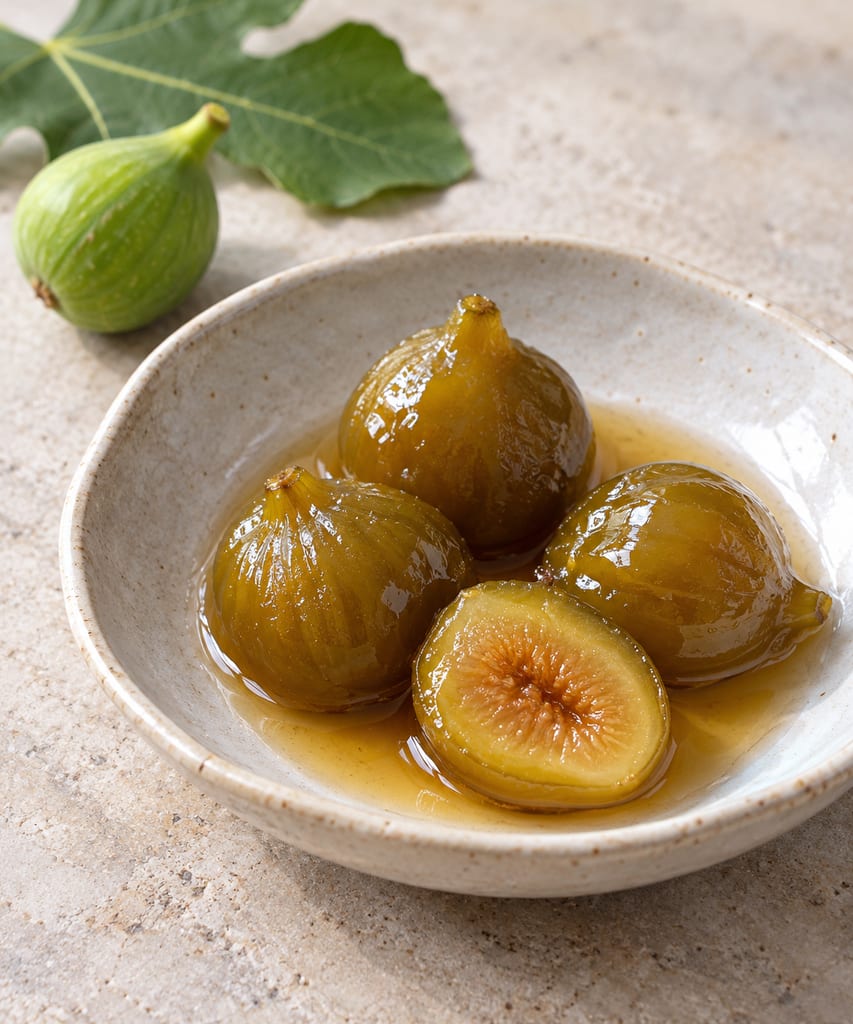
Hard green figs are parboiled and cooked whole in a lemon-sharpened sugar syrup as a refrigerator-only South African konfyt; the method does not establish shelf-stable canning.
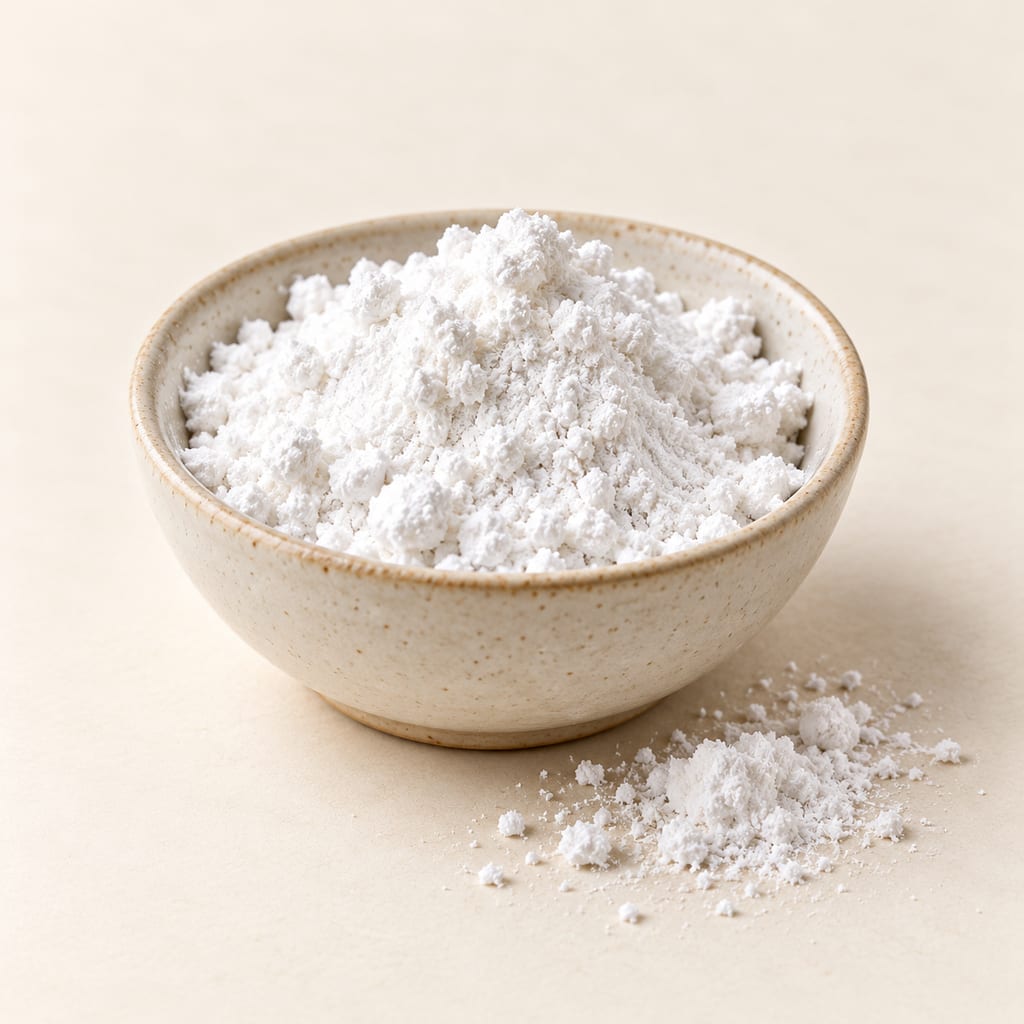
Cream of tartar is a grape-derived potassium tartrate salt used as a dry baking acid, foam aid and measured syrup ingredient.
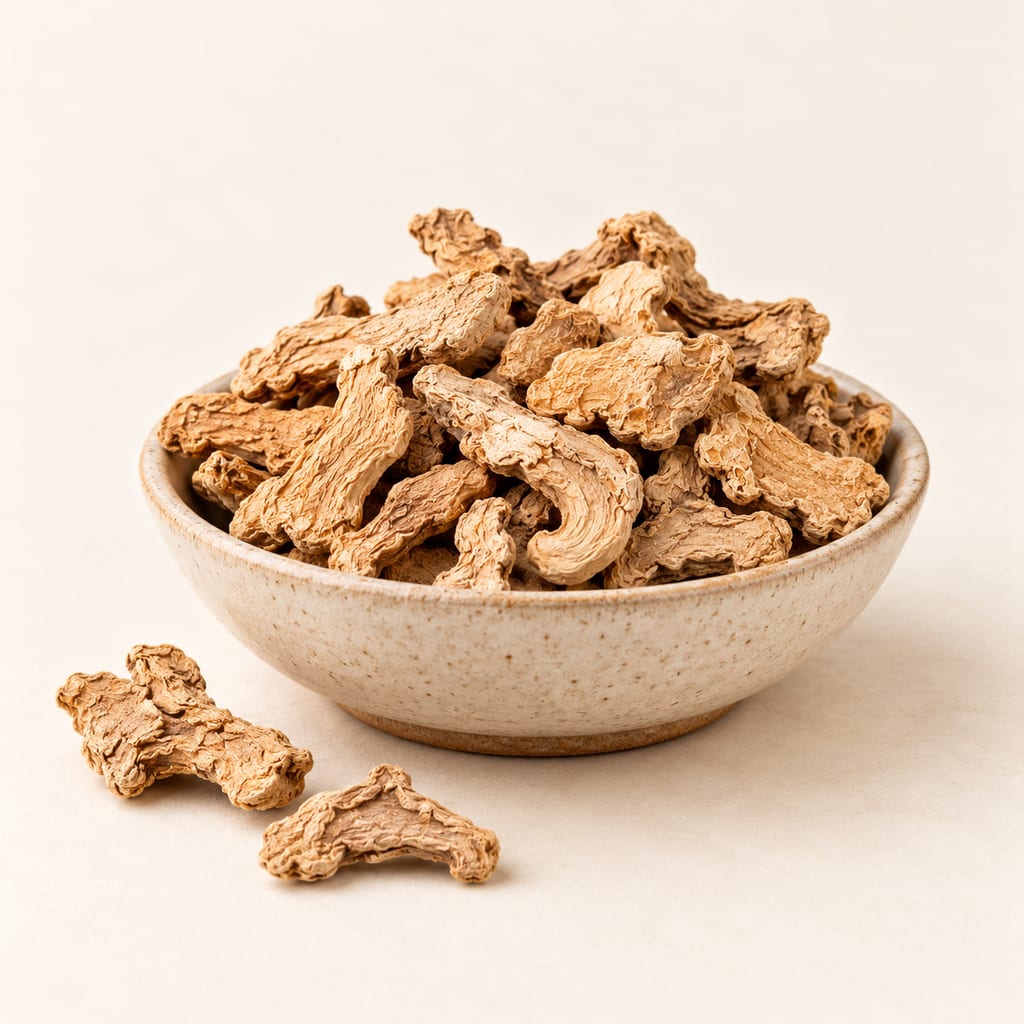
Dried ginger is the mature, dried rhizome of Zingiber officinale; its warm flavor and whole, sliced or ground forms serve different kinds of cooking.
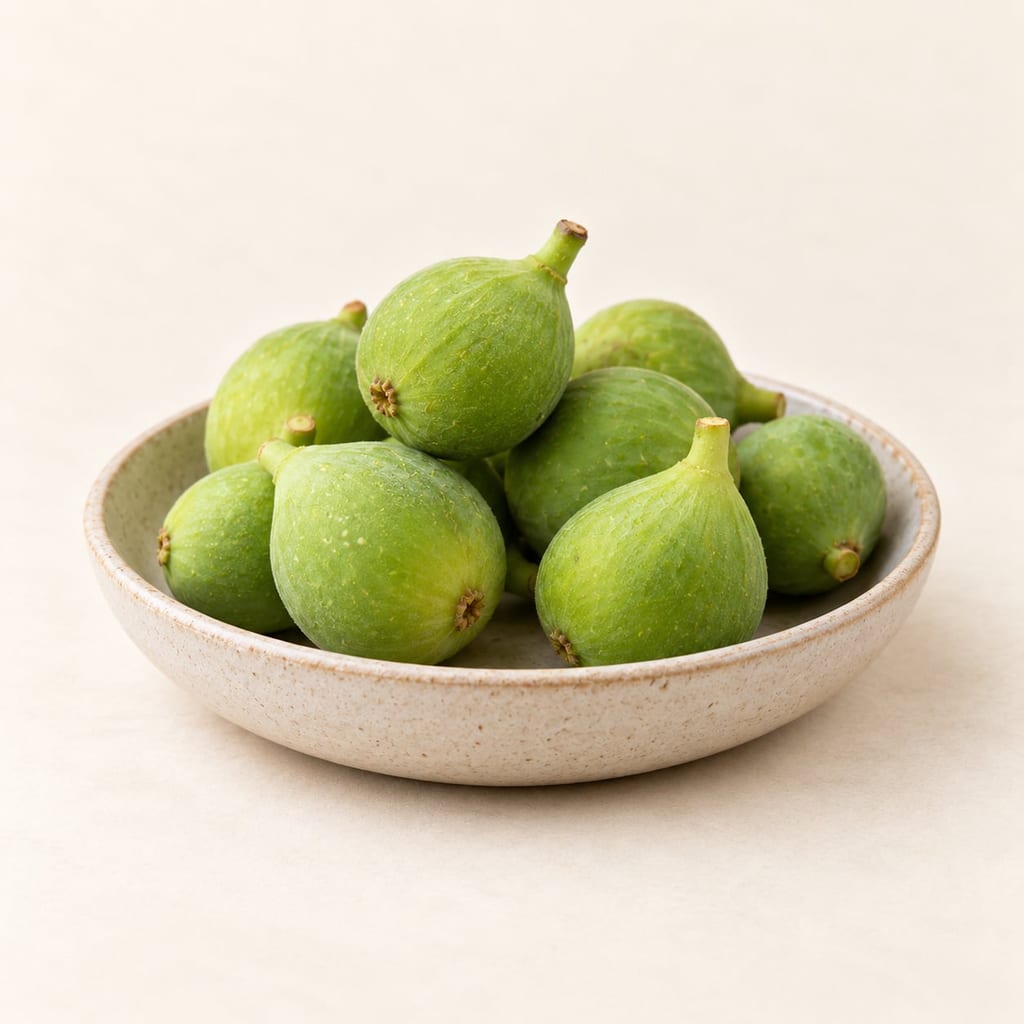
Firm green figs are the unripe fruit of the fig tree selected for preserves that keep the fruit whole and let it absorb syrup.
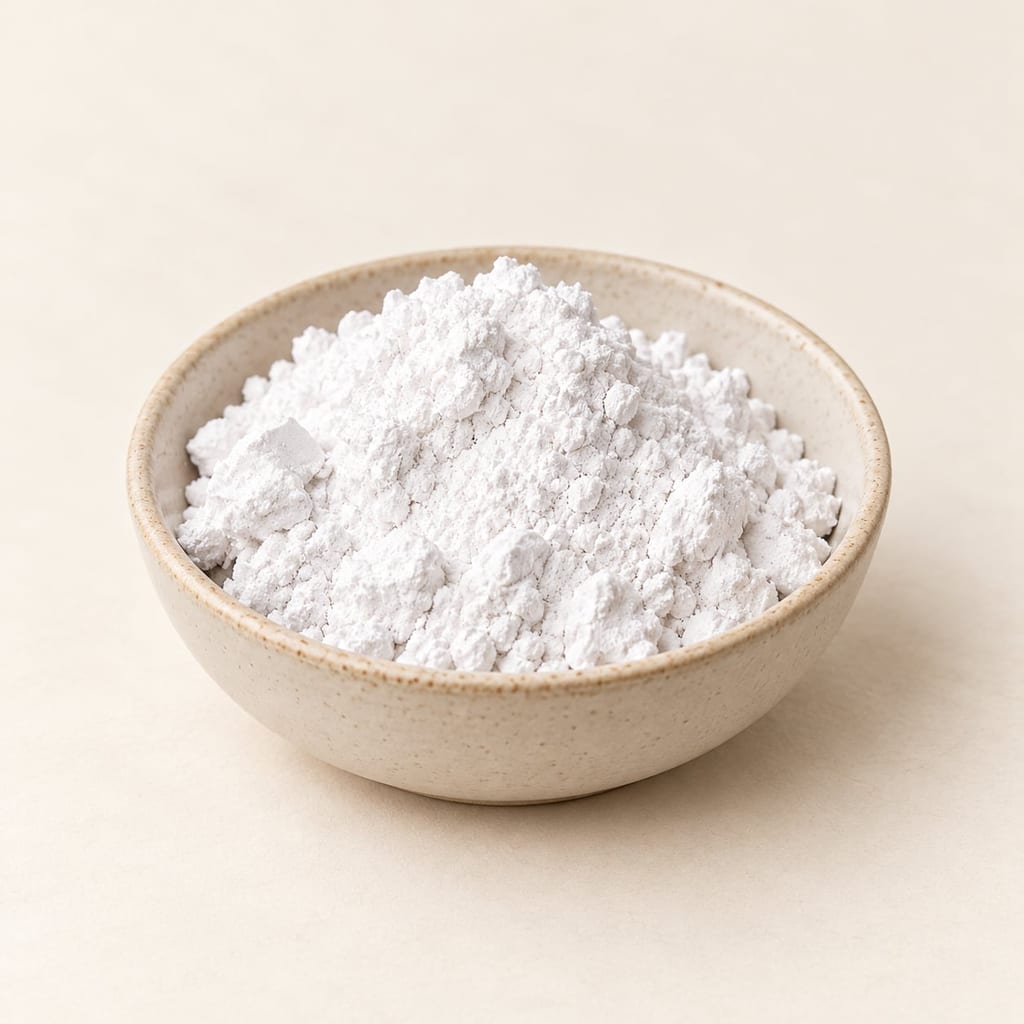
Food-grade slaked lime is calcium hydroxide, an alkaline processing aid used in distinct food treatments including green-fig soaking and maize nixtamalization.
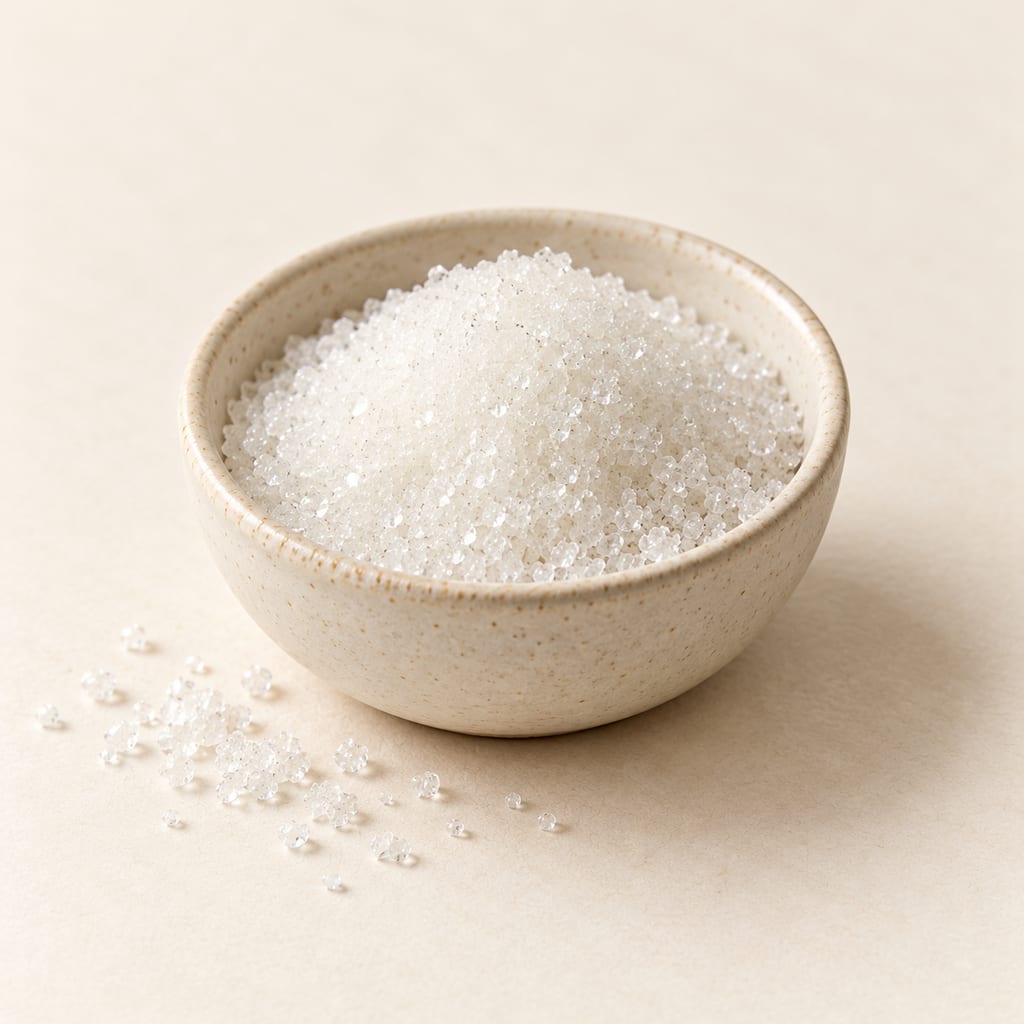
Tartaric acid is a crystalline food acid associated with grapes and wine; it gives sourness and is distinct from its potassium salt, cream of tartar.
No community contributions have been published for this entry yet.
Sign in to contribute. Published comments and photos are free to read.
Alice Graves and Kate Qualmann, American Chemical Society Publications Chemistry BlogEditorial
The Science of Baking SodaArticle summarizes Leblanc's isolation/manufacturing context in the 1790s and the industrial-scale importance of the Solvay process from the 1860s.
Sodium bicarbonate also occurs as mineral nahcolite, distinguishing natural occurrence from common industrial production.
Cited in: Soda ash, factories and the kitchen tin
Australian Drinking Water Guidelines, National Health and Medical Research CouncilEditorial
Sodium bicarbonateA 10 g/L sodium bicarbonate solution has a pH of 8.4.
It is soluble in water and reacts with acid to release carbon dioxide.
Cited in: What alkalinity does in food
J. P. Van Buren and L. A. Pitifer, Journal of Food Science 57(4), Institute of Food TechnologistsEditorial
Retarding Vegetable Softening by Cold Alkaline Pectin Deesterification Before CookingSnap beans and carrots pretreated cold at pH 12.5 softened more slowly in later cooking; high pH or sodium chloride during cooking alone had little effect on softening in the tested tissues.
The authors distinguish alkaline pretreatment before cooking from alkaline cooking.
Cited in: What alkalinity does in food; Where bicarbonate appears beyond konfyt
PubChem, National Center for Biotechnology Information, U.S. National Library of MedicineEditorial
Sodium Bicarbonate | NaHCO3 | CID 516892Formula NaHCO3 and synonyms sodium hydrogen carbonate, baking soda and sodium bicarbonate.
White crystalline powder or lumps, odorless, slightly alkaline taste; pH about 8.3 for freshly prepared 0.1 molar aqueous solution at 25 C.
Aqueous solution and heat-related decomposition summaries; treated as reference data, not a cooking instruction.
Cited in: One ingredient, several names; What alkalinity does in food
Hildagonda J. Duckitt; Chapman and HallEditorial
Hilda’s ‘Where Is It?’ of RecipesUnripe-fig entry specifies a lime-water soak, then about three quarts clean water with one teaspoonful ‘carbonate of soda’ and one tablespoonful salt; boil with pan open until figs soft enough to pierce, drain and later cook in syrup.
The book's printing date is secure; its label ‘very old’ is not independently verified as the manuscript's age.
Terminology says carbonate of soda, not bicarbonate of soda.
Cited in: One ingredient, several names; Two published fig methods
Wines of South Africa (WOSA); recipe credited to Cass Abrahams, Cass Abrahams Cooks Cape Malay: Food from AfricaEditorial
GREEN FIG KONFYTRecipe lists 500 g green figs, water to cover, 75 ml slaked lime and 5 ml bicarbonate of soda.
Method soaks prepared figs overnight in lime water, washes them, then boils them in water and bicarbonate until tender and drains them before adding to spiced syrup.
Basic syrup per 500 g fruit: 500 g sugar, 750 ml water and 30 ml lemon juice; dissolve over low heat without boiling; cook fruit slowly until syrup is thick and figs shiny.
Bicarbonate cooking-water volume and rationale are not specified.
Cited in: One ingredient, several names; Two published fig methods
American Chemical Society, National Historic Chemical LandmarkEditorial
Development of Baking PowderThe page describes nineteenth-century use of bicarbonate with sour milk; acid reaction releases carbon dioxide that lightens dough.
Cream of tartar provided a more uniform acid partner and helped regularize baking compared with variable sour milk.
Cited in: Soda ash, factories and the kitchen tin; Where bicarbonate appears beyond konfyt
Organic Materials Review Institute, compiled for USDA National Organic ProgramEditorial
Sodium Bicarbonate Handling/Processing Technical ReportReport notes moisture absorption/decomposition and recommends dry airtight storage.
Cited in: One ingredient, several names; Soda ash, factories and the kitchen tin; What alkalinity does in food; Buying and keeping it dry
Western Cape Department of Agriculture; recipe by J. de V. LötterEditorial
The Fig in South AfricaLötter's hard-green-fig method includes an optional pinch of baking soda during the initial salted-water boil and says it shortens that boil.
Method specifies 1.5 kg figs and 10–20 minutes for preliminary boil; they should remain slightly firm and allow a match to pierce the skin easily, then are drained into syrup; soda and salt are not quantified.
Lime soak is an option for large figs that have begun to soften, not a default step for the hard-green-fig method.
Cited in: One ingredient, several names; Two published fig methods
Food and Agriculture Organization of the United NationsEditorial
Fruit and vegetable processing, Chapter 2: General properties of fruit and vegetables; chemical composition and nutritional aspects; structural features (continued)Pectins occur in and between plant cell walls and help hold cells together.
The chapter states that alkaline cooking conditions can soften plant tissue and that alkaline water slows chlorophyll-to-pheophytin colour change in green vegetables; texture and vitamin trade-offs limit the use of alkali.
Used as general produce science only, not direct fig evidence.
Cited in: What alkalinity does in food; Where bicarbonate appears beyond konfyt
U.S. Food and Drug AdministrationEditorial
Substances Added to Food (formerly EAFUS): Sodium BicarbonateNames include bicarbonate of soda, sodium hydrogen carbonate and baking soda.
Listed technical effects include leavening agent and pH control agent, among others.
Cited in: One ingredient, several names; Where bicarbonate appears beyond konfyt; Buying and keeping it dry
Christy Martin and Brigitte Van Tiggelen, Science History Institute, DistillationsEditorial
Making the ProcessEighteenth-century demand for sodium carbonate in soap, glass, bleaching and paper outgrew supply from plant/seaweed ash.
Leblanc's process made sodium carbonate from common salt and was developed in late eighteenth-century France.
Cited in: Soda ash, factories and the kitchen tin
Food Research International 106 (2018), 522–531; abstract indexed by PubMedEditorial
Mechanistic insight into softening of Canadian wonder common beans (Phaseolus vulgaris) during cookingFresh and aged Canadian Wonder beans cooked faster in the tested 0.1 M sodium bicarbonate solution than in demineralised water.
The authors attribute progressive texture loss mainly to middle-lamella pectin solubilization and cell separation; starch gelatinized before complete separation.
This is evidence about the tested common beans, not figs or a recommended home dose.
Cited in: Where bicarbonate appears beyond konfyt