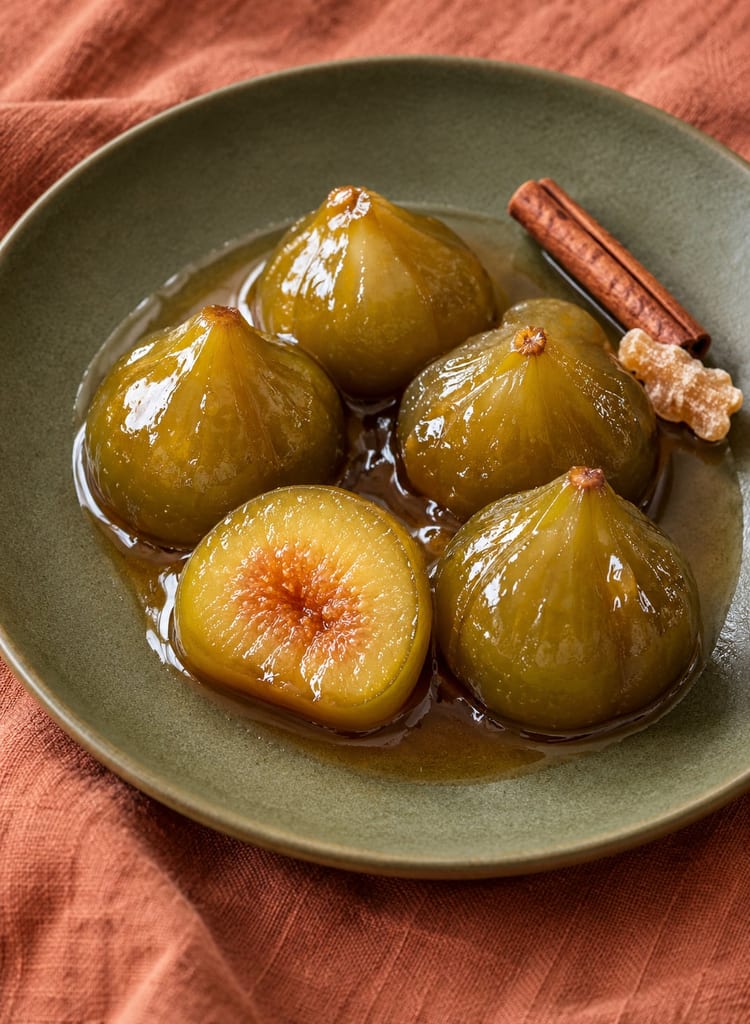
Green-fig konfyt
Whole unripe figs are softened and cooked in cinnamon and ginger syrup as a refrigerator-only South African konfyt; this method does not provide a shelf-stable canning process.
 FermenteaWhere food goes to change
Substrates
Firm green figs are the unripe fruit of the fig tree selected for preserves that keep the fruit whole and let it absorb syrup.
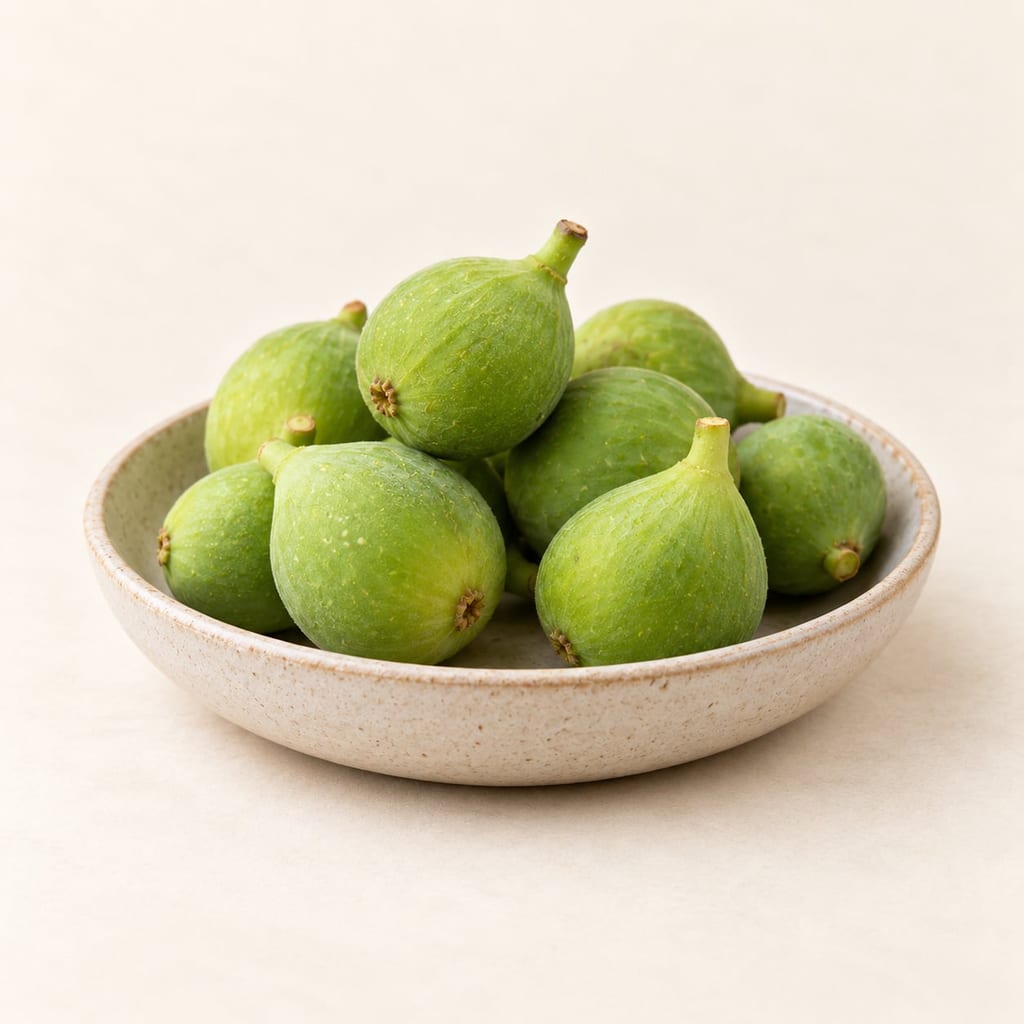
The common fig, Ficus carica L., belongs to the mulberry family, Moraceae. What looks like a pear-shaped fruit is botanically an inflorescence, a cluster of flowers arranged inside a fleshy hollow receptacle. This enclosed structure is called a syconium. Hundreds of tiny flowers line its inner surface; the ripe interior is a mosaic of softened receptacle and tiny flower-derived structures. A small opening, the ostiole, sits opposite the stalk. In fig types that depend on pollinators, a specialised fig wasp can enter through it and carry pollen between syconia.
Fig cultivars differ in how they set crops. Common figs can develop fruit without pollination. Smyrna types need pollination for their main crop; San Pedro sits between these patterns, with an early crop that can set without pollination and a later crop that needs it. Caprifigs are the male pollinator trees. This distinction shapes which varieties can fruit in a region.
The fruit changes visibly as it develops, but green is not a universal synonym for unripe. Many cultivars begin green and remain green or yellow-green when mature; others darken toward purple or brown. “Green fig” may therefore mean firm, unripe fruit or simply a green-skinned cultivar. In South African green-fig konfyt, the term often points to small fruit gathered for preserving, especially the early breba crop. The recipe’s description and the fruit’s firmness matter more than colour alone.
Figs belong to a long story of tree tending around western Asia and the eastern Mediterranean. At Gilgal I in the Lower Jordan Valley, nine carbonised figs and hundreds of small fig remains were found in an early Neolithic village, dated to 11,400–11,200 years ago. Their presence places fig use among the very old food histories of the region. The excavators proposed that people had gathered them from trees grown from deliberately planted branches. That is a striking possibility, because a cutting could preserve the desirable fruit of a particular tree without waiting for a seedling to reveal its character. The archaeological finding establishes the fruit's presence at Gilgal I; the planting account is the authors' interpretation of how it arrived there. Neither identifies the ripeness of figs later used for Cape preserves.
Gardeners can propagate fig trees from cuttings, carrying favoured cultivars between places and generations.
The enclosed flowers shaped fig cultivation. In Smyrna orchards, the pollinating relationship between caprifigs and the fig wasp had to be understood and managed for a crop to set. Other cultivars avoided that requirement. A common fig can bear fruit even where its specialist pollinator is absent, which helps explain its usefulness far from the wasp's range. Across generations, gardeners selected trees for colour, size, season, ability to ripen in local climates and usefulness fresh or dried. The result is not one standard fig but a species of regionally adapted cultivars and crop habits.
Some fig trees bear two crops. Breba forms on last season’s shoots and matures earlier; the main crop forms on growth made during the current season and ripens later. In South Africa, the breba harvest arrives in early summer. The South African breba harvest runs from November into mid-December; main-crop varieties follow from January onward.
Breba and main crop are horticultural terms, not ripeness grades. A breba can mature and be eaten ripe. South African growers direct particular early figs toward processing. Cape Brown is a popular breba for green-fig preserve, while Bonnievale supplies green figs for processing. Evita, also called Great Parisian, has a niche market as a small fresh fig. Common, San Pedro and Smyrna name pollination patterns; Cape Brown, Evita and White Genoa name cultivars. These labels answer different questions. A cultivar may be chosen for the season it crops, the region where it ripens or whether it is sold fresh, dried or preserved. The name on the fruit can therefore help a cook understand its intended use, while the crop stage still determines whether it is firm enough for whole-fruit konfyt.
For the cook, the crop calendar helps explain why particular figs reach a preserve pot. Cape Brown is linked with green-fig preserve, while Adam and White Genoa have been associated with drying. Historical recipes also separated fruit by stage. Duckitt’s 1891 ‘Old Cape Recipe’ calls for nearly ripe white figs kept whole; another, labelled ‘From a Very Old Cape Recipe Book. Dutch,’ expressly begins with unripe fruit. That second recipe peels or scrapes the figs, cuts a slit, soaks them overnight in lime water, then boils them in water with carbonate of soda and salt before syrup. Those instructions describe a distinct preparation rather than a correction to the near-ripe method. South African commercial production grew around dried figs and processing; the fresh-eating export market expanded in the early 2000s. The preserve recipes show how cooks had already made a use for fruit before that newer market became prominent.
A ripe fresh fig is soft, fragrant and easily bruised. As it matures, its receptacle expands, its colour may change, sugars and soluble solids rise, and structural tissues soften. During ripening, pectin polymers in the fig wall become more soluble and break into smaller molecules. Pectin helps bind cells and contributes to tissue firmness; changes in pectin and other wall polysaccharides are part of why ripe figs yield so easily under the fingers.
A fig combines distinct tissue layers. In one ripening study, pectic polymers in both the outer receptacle and the inner pulpy drupelets became more soluble and broke into smaller molecules. Some changes were stronger in the drupelets than the receptacle. Tenderness therefore develops across tissues with different structures rather than as one uniform shift through the fruit. A whole-fruit preparation keeps those layers together, letting the cook feel a softening outer wall and a centre that must also become pleasant to eat. Jam breaks the layers apart and cooks them into one spoonable mixture.
As figs ripen, water-soluble and alkali-soluble pectin fractions decline while total solids, sugars and pH rise. In jam made with commercial pectin, gel strength stayed similar across ripeness stages; in preserve made without added pectin, it weakened as fruit grew riper.
A jam begins by surrendering the fruit outline: chopped figs expose their flesh, soften and merge into a spoonable mass. Konfyt asks the cook to preserve another experience. The skin, thick receptacle and flower-lined center remain legible as one fig, softened by heat and surrounded by syrup. The cook is balancing tenderness with shape: fruit already soft may break before the peel and center settle into a similar texture, while firm fruit can be peeled, slit, soaked and simmered before it loses its body. A cut at the blossom end opens the narrow ostiole and the inner cavity. That cooking liquid can pass into the flower-lined interior is a practical inference from the opening and the fig anatomy. The pleasure comes from the contrast between a yielding whole fig, its thin skin and the syrup that clings to it.
For fresh eating, figs are commonly left on the tree until fully coloured, soft and drooping; they detach easily when lifted and bent back toward the branch. Figs for canning may be harvested fully coloured but still firm. For drying, growers let fruit ripen and partially dry on the tree. These are different harvest aims. A recipe that calls for small green figs is not asking for a fully ripe fresh-market fig, and ripe figs cannot be made immature again by peeling or soaking.
Green fruit intended for preserving should be intact and firm, following the recipe’s stated stage. Immature figs are small and upright; as they ripen, they grow, droop and soften. A green-skinned cultivar may still be fully mature, so the word ‘green’ on its own cannot decide whether a fig fits an unripe-fruit method. Size, firmness and the way the fruit holds on the tree give better clues. An under-ripe fig also lacks the full sweetness of a tree-ripened one; syrup later changes that eating experience without reversing the stage at which it was picked.
Fresh figs are delicate, with thin skins that bruise or crack. Skin colour and flesh firmness signal quality and maturity; overripe fruit can develop fermentation-associated aromas. Fresh fruit moves quickly from tree to table, so commercial handling cools it promptly. Handle ripe figs gently and use them soon; choose firm fruit for whole-fruit preserving.
The cut stem of an unripe fig can release milky latex. Sap from fig leaves and unripe fruit can irritate skin and react to sunlight; harvest and trim carefully, particularly in strong sun.
Fig sap calls for a separate kind of care from eating the fruit. Contact with milky sap and then sunlight can cause a phototoxic skin reaction; that is not an allergy to the edible fig. A published case documented anaphylaxis shortly after a person ate a fresh fig, with IgE evidence to fig extract. Research on Ficus and natural-rubber latex found cross-reacting antibodies in some tested patients. These reports establish that food allergy can occur and cross-reaction is possible; they do not establish its frequency or imply that everyone with latex allergy will react to figs.
In South African food culture, green-fig konfyt is a syrup preserve built around individual fruit rather than a spread. Its glossy figs can be lifted from the jar, plated with some syrup and offered as a small sweet. The syrup makes a firm early harvest into something tender enough to eat whole, and each fig keeps a visible outline. A spoon can divide one piece, exposing the softened interior while syrup gathers around it. That service gives the preserve a different role from fruit eaten at harvest or fruit cooked down into jam.
Claassens records green-fig konfyt at engagement teas and birthday celebrations in the early Cape; that is a historical setting, not evidence that every present-day Cape gathering serves it. A current producer suggests biscuits and tea, pork belly or lamb. In either setting, the presentation can show the fruit as a whole piece, with syrup alongside it. That visible shape is part of the pleasure: the skin, softened centre and stem end remain recognizable, while the sweet liquid ties the bite together.
The Cape recipes published by 1891 show two different starting fruits: nearly ripe white figs in one preserve and expressly unripe figs in another. The modern green-fig konfyt formula credited to Cass Abrahams uses its own lemon-scented syrup with cinnamon and dried ginger. The old and modern texts do not supply one interchangeable method. Their choices of fruit stage, early treatment and seasonings show a living family of preserves rather than a single fixed formula; a cook following one of them should keep its sequence and fruit stage together.
A whole preserve carries the harvest forward without losing the fruit's outline. Firmness at picking gives the cook room to peel, slit and simmer a small fig; heat and syrup then change its texture and taste. At service, the resulting fruit can be shared one piece at a time. The form makes a pantry sweet out of a brief crop and keeps the plant's unusual hollow, flower-lined structure visible on the plate.
fig (reported food allergy)
This is the recipe's documented place, not a claim about fig domestication.
Whole unripe figs are softened and cooked in cinnamon and ginger syrup as a refrigerator-only South African konfyt; this method does not provide a shelf-stable canning process.
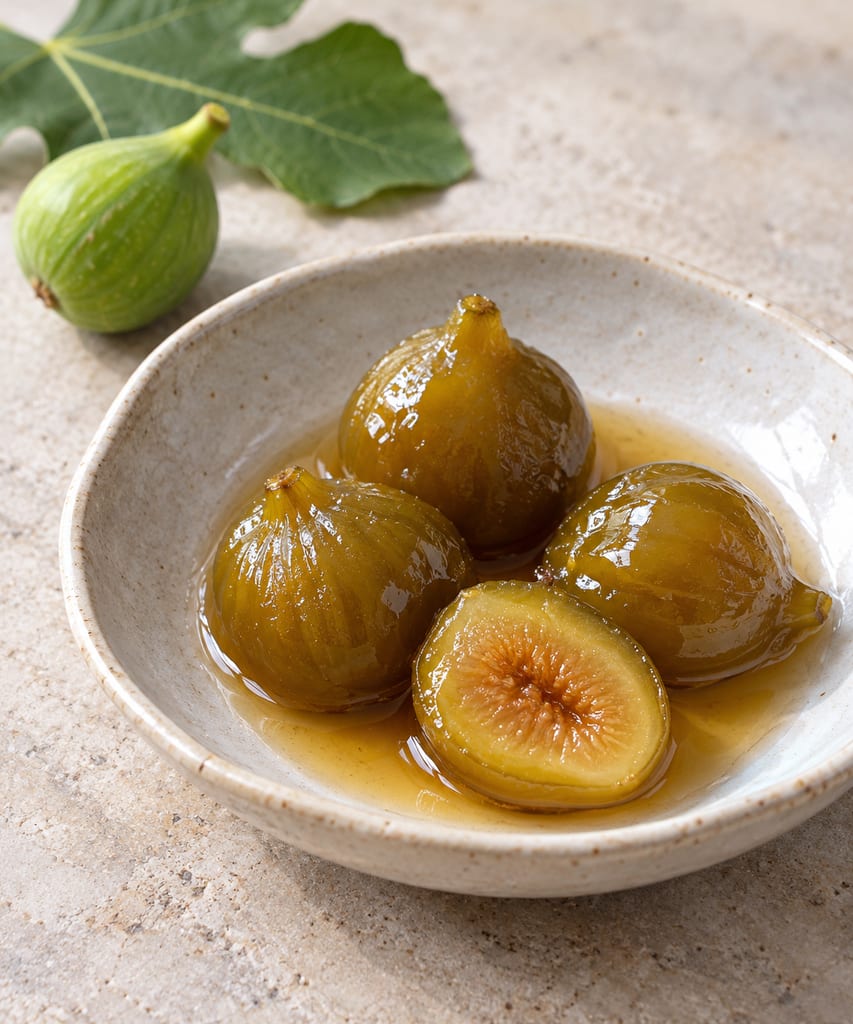
Hard green figs are parboiled and cooked whole in a lemon-sharpened sugar syrup as a refrigerator-only South African konfyt; the method does not establish shelf-stable canning.
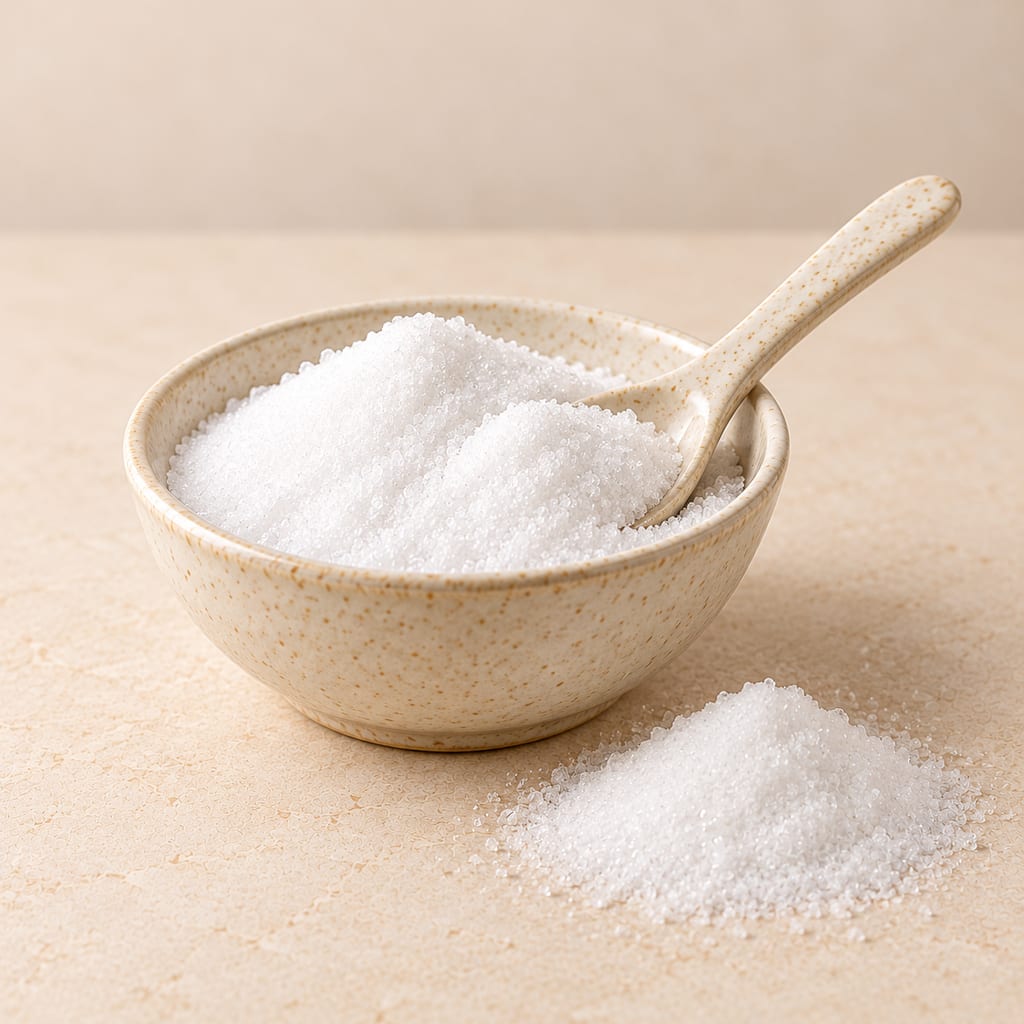
Sodium bicarbonate is a mildly alkaline kitchen powder used for leavening and, in two published South African green-fig konfyt methods, in the preliminary boil.
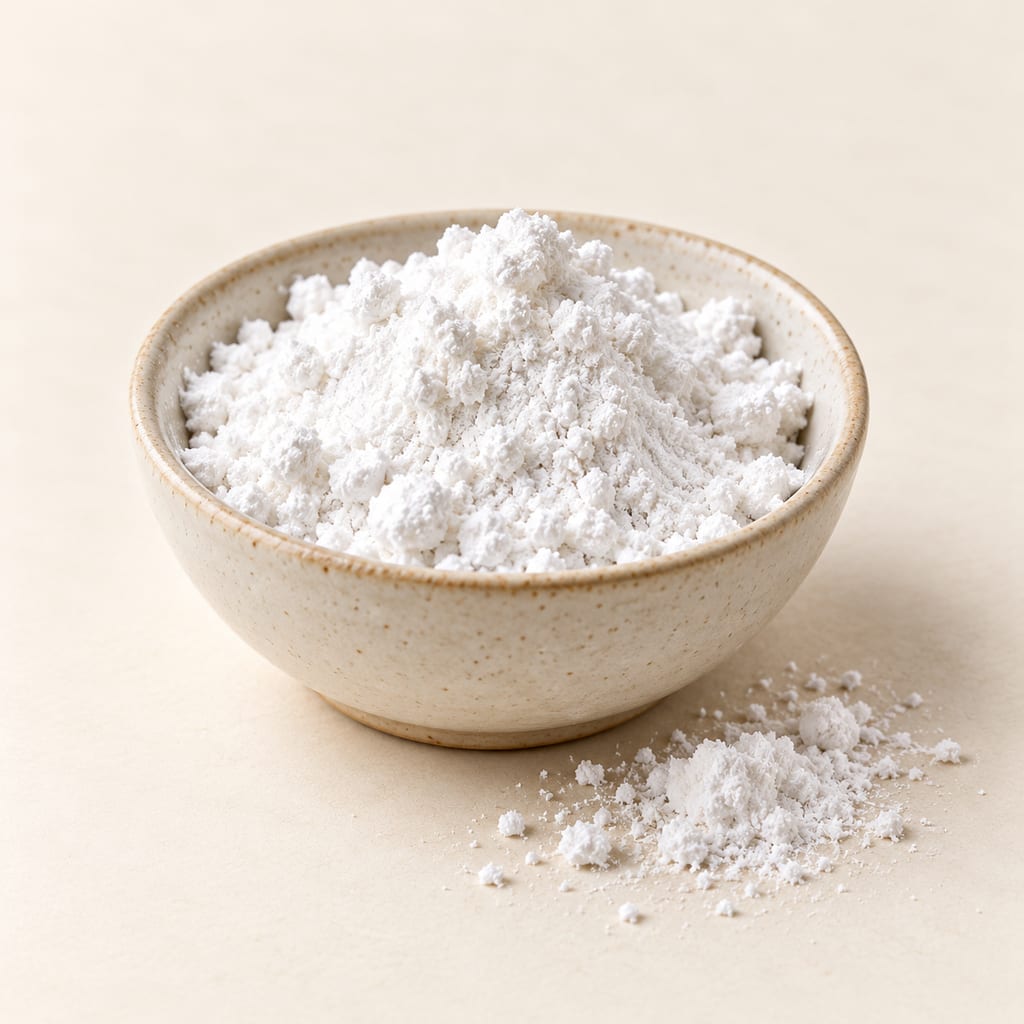
Cream of tartar is a grape-derived potassium tartrate salt used as a dry baking acid, foam aid and measured syrup ingredient.
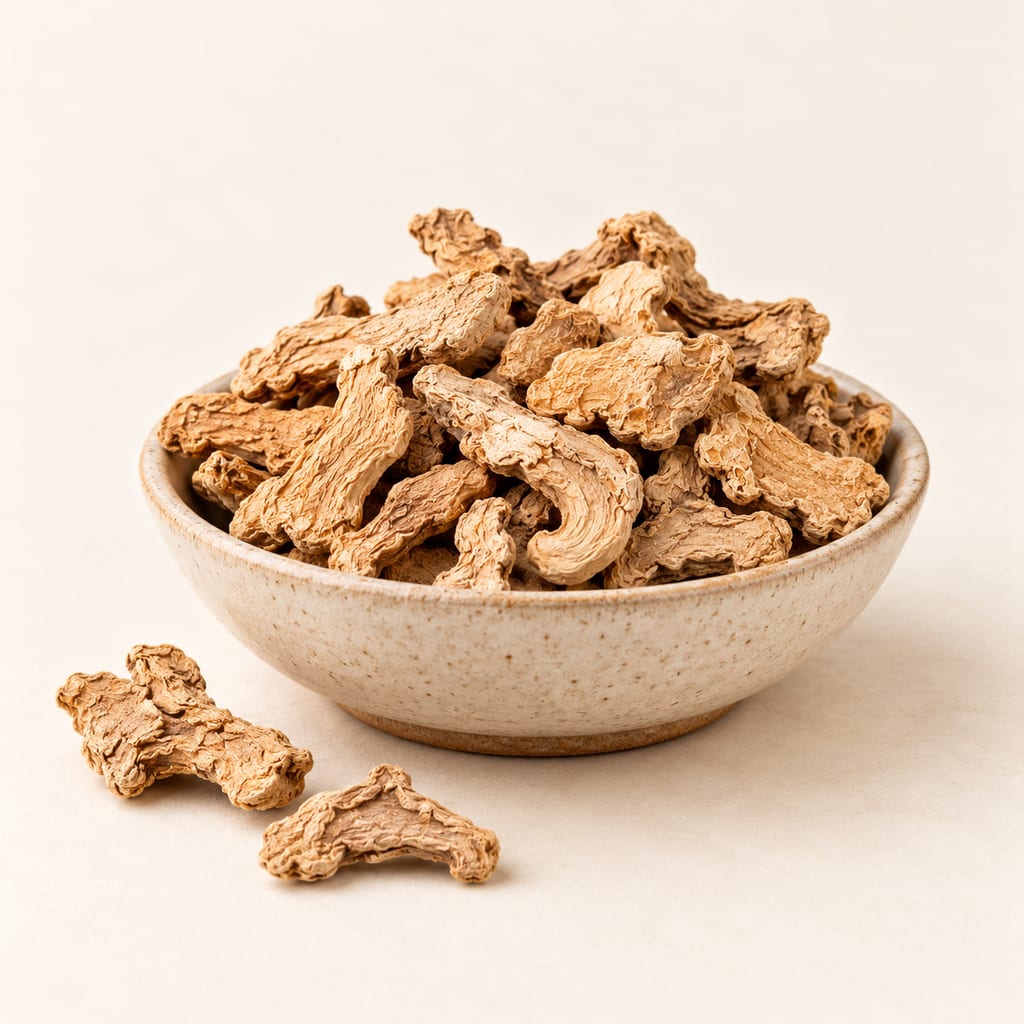
Dried ginger is the mature, dried rhizome of Zingiber officinale; its warm flavor and whole, sliced or ground forms serve different kinds of cooking.
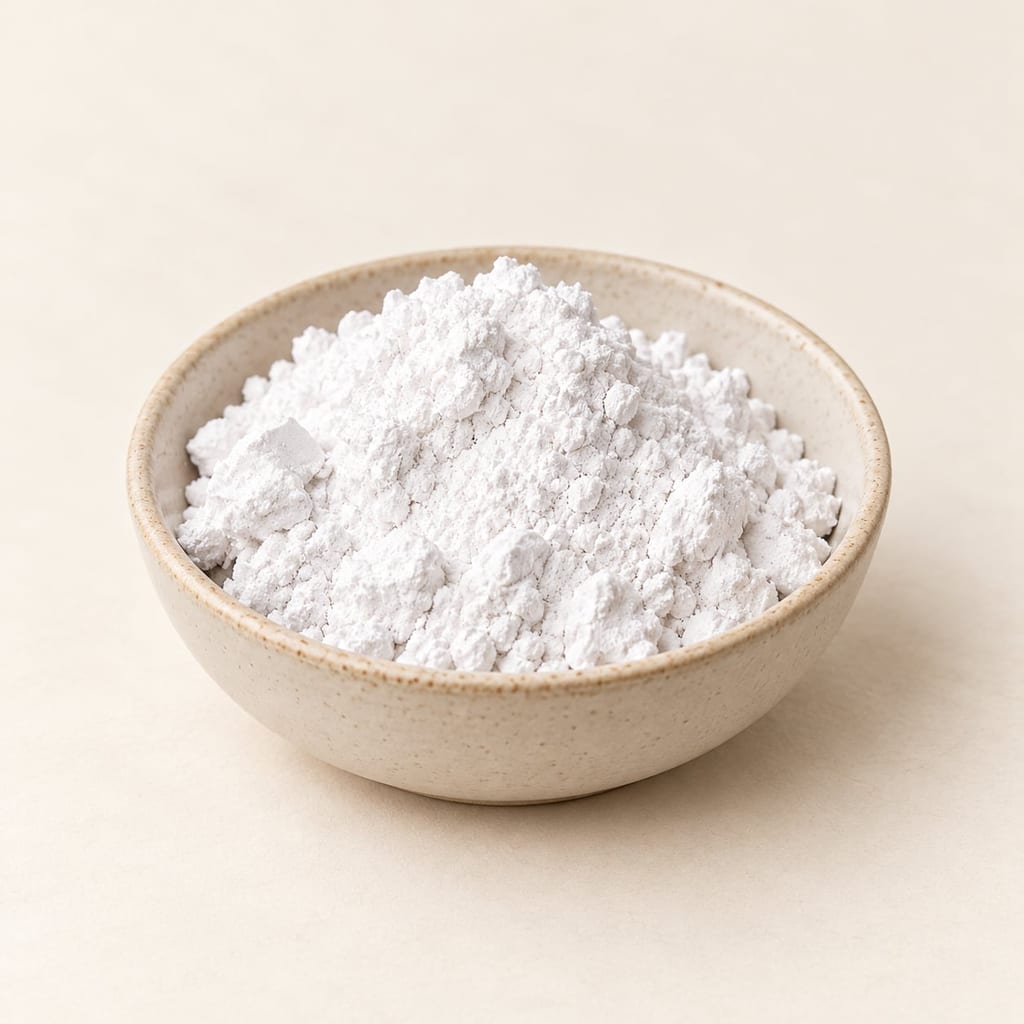
Food-grade slaked lime is calcium hydroxide, an alkaline processing aid used in distinct food treatments including green-fig soaking and maize nixtamalization.
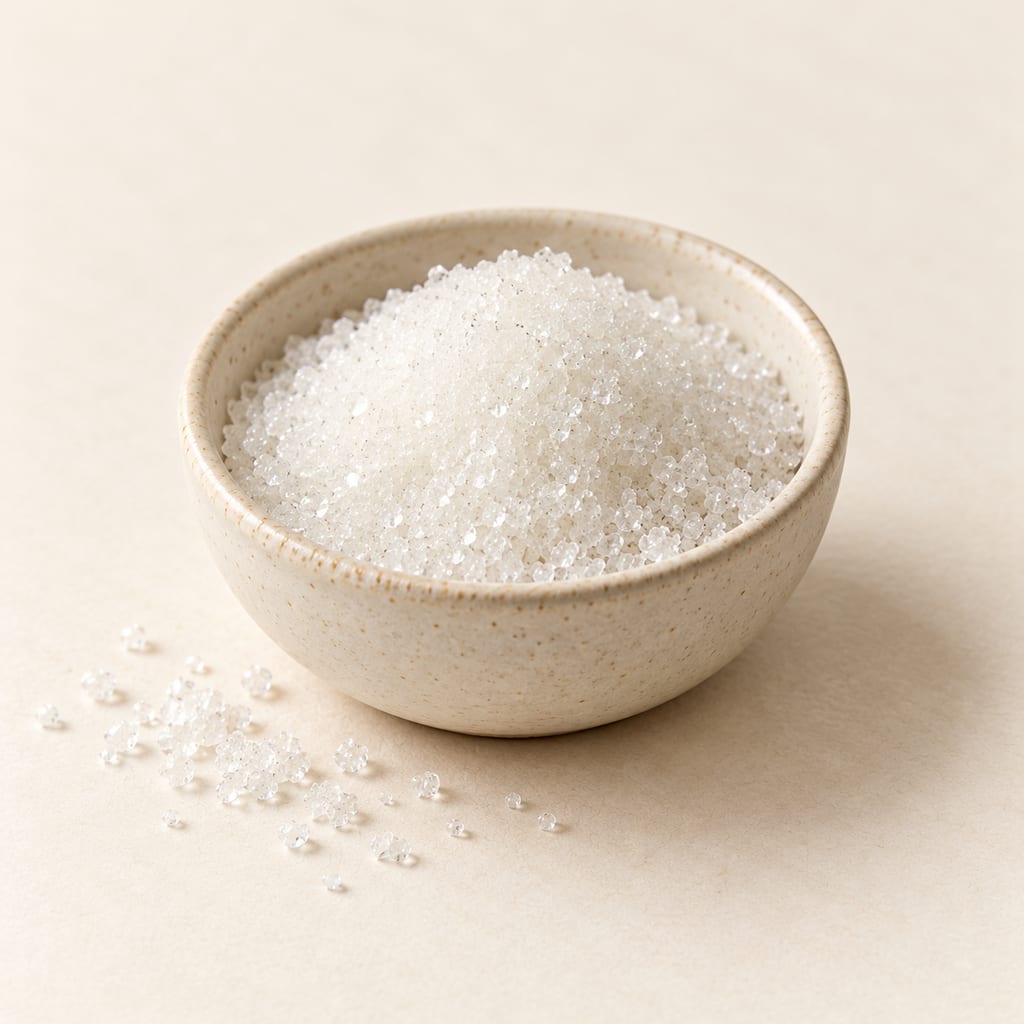
Tartaric acid is a crystalline food acid associated with grapes and wine; it gives sourness and is distinct from its potassium salt, cream of tartar.

A Cap-Pelé boucanière is an Acadian herring-smoking building. The documented Willie Niles example is a one-storey wood-frame structure with a ridge smoke vent and interior bays for hanging fish-bearing cannes.

Achcharu is a family of Sri Lankan vinegar pickles made with mixed vegetables or seasonal fruit and a piquant spice dressing. This version is a quick, refrigerated, non-fermented mixed-vegetable pickle.

The acocote is a long, hollowed and dried gourd used to draw aguamiel from a mature maguey. It is a harvesting tool: the sap is transferred to a separate vessel before it ferments into pulque.

Adrak murabba preserves young ginger in sugar syrup, a sweet South Asian preparation recorded in Indian cookery and food-processing sources.

Parkia biglobosa seeds are fermented into regional West African seasonings, including nététou, iru, dawadawa and soumbala. The yellow fruit pulp is a separate food, and names and methods vary by place.

Japanese reddish-brown vinegar from sake lees matured about three years, turned to vinegar by acetic bacteria; the vinegar of Handa and Edomae sushi rice.

A refined common-wheat flour blended for a broad range of baking; its protein and behavior vary with wheat, milling and market.

The almond mushroom, Agaricus subrufescens, was cultivated in eastern North America in the 1800s, lost its market, and returned as a cultivated mushroom from Brazil, where it is grown under several names.
No community contributions have been published for this entry yet.
Sign in to contribute. Published comments and photos are free to read.
Kew Science, Royal Botanic Gardens, KewTaxonomy · Range
Ficus carica L.Accepted taxon Ficus carica L., family Moraceae
Native range recorded as eastern Mediterranean to Central Asia and western Himalaya
Cited in: A flower turned inward
Science Museums, Aarhus UniversityMorphology · Uses
Common figFig is a syconium containing hundreds of small flowers
Describes fig-wasp mutualism
Dried figs as snack and spread
Cited in: A flower turned inward; From the tree to the table
UC Master Gardeners of San Luis Obispo County, University of California Agriculture and Natural ResourcesMorphology · Pollination
FigsFig structure encloses flowers
Cultivated crop types and pollination patterns
Cited in: A flower turned inward
University of Kentucky Cooperative ExtensionPollination · Crop types · Cultivation
Figs: Center for Crop Diversification Crop Profile CCD-CP-135Common, Smyrna and San Pedro crop and pollination distinctions
Broad native range and cultivation context
Cited in: A flower turned inward; An ancient fruit tree
PubMed, National Library of Medicine; article in ScienceArchaeology · History
Early domesticated fig in the Jordan ValleyNine carbonised fruits and hundreds of fig remains at Gilgal I
Site dated 11,400 to 11,200 years ago
Intentional planting is the authors' proposal
Cited in: An ancient fruit tree
Proceedings of the Royal Society B; full text in PubMed CentralArchaeology · Historical interpretation
Between domestication and civilization: the role of agriculture and arboriculture in the emergence of the first urban societiesReview discusses uncertainty in fig domestication inference and wild parthenocarpy
Cited in: An ancient fruit tree
Marinda Louw, SouthAfrica.co.zaSouth African production · Cultivars · Uses
Fig ProductionCape Brown associated with green-fig preserve
Bonnievale green-fig processing
South African breba/main season
Secondary trade account of dried and preserved fig history
Cited in: Two crops on one tree; From the tree to the table
Hildagonda J. Duckitt; Chapman and Hall, 1891Historical variants · Cape food history
Hilda's "Where Is It?" of Recipes1891 book records separate near-ripe white-fig and explicitly unripe-fig preserve recipes
Unripe version includes lime soak and cooking water with soda and salt
Cited in: Two crops on one tree; From the tree to the table
Wines of South AfricaModern Cape recipe variant
Green Fig KonfytCurrent green-fig konfyt method and ingredient profile; not evidence for every Cape variant
Cited in: Two crops on one tree; From the tree to the table
Postharvest Biology and Technology 32(1), 67–77; ElsevierRipening · Cell wall science
Alterations in cell wall polysaccharides during ripening in distinct anatomical tissue regions of the fig (Ficus carica L.) fruitReceptacle and drupelet cell-wall polysaccharides changed during sequential fig ripening.
Pectic polymers in both tissues became more soluble and depolymerised, with tissue-specific differences.
Cited in: Why maturity changes the fruit
PubMed, National Library of MedicineRipening · Pollination · Cell wall science
Relationship between pollination and cell wall properties in common fig fruitRipe fig softening and loss of firmness/cohesion; proposed enzyme involvement is tentative
Cited in: Why maturity changes the fruit
PubMed, National Library of Medicine; Journal of Food ScienceRipeness · Pectin · Jam and preserve comparison
Gel strength and sensory attributes of fig (Ficus carica) jams and preserves as influenced by ripenessWater and alkali soluble pectin fractions decline with ripening
Jam gel strength remained similar; preserve gel strength declined as fruit ripened
Experimental products differ from whole-fruit Cape konfyt
Cited in: Why maturity changes the fruit
UC Statewide Integrated Pest Management Program, University of California Agriculture and Natural ResourcesHarvest · Maturity · Drying
Harvesting and Storing FigsRipe fruit droops and softens
Canning fruit fully coloured but firm
Latex at cut stem indicates not fully ripe
Fruit for drying partly dries on tree
Cited in: Harvesting and choosing
Clemson Cooperative ExtensionMaturity · Selection
Figs are RipeningUnripe figs small, upright and firm; ripe figs soften, droop and become sweeter
Cited in: Harvesting and choosing
UC Davis Postharvest Research and Extension CenterPostharvest quality · Handling
FigSkin colour and flesh firmness as quality cues
Perishability and commercial cooling guidance
Cited in: Harvesting and choosing
DermNetNames · Skin handling
FigMilky sap can irritate skin; fig contact and sunlight may cause phototoxicity, distinct from food allergy.
The clinical summary notes reported anaphylaxis after eating figs and possible Ficus/natural-rubber-latex cross-reaction.
Cited in: Harvesting and choosing
Het Vlock CasteelCurrent serving uses
Green Fig Preserve 500gProducer serving suggestions with tea/biscuits, pork belly and lamb
Cited in: From the tree to the table
H. Claassens, DPhil thesis, University of PretoriaCape social food history
Die geskiedenis van Boerekos 1652-1806Claassens, printed p. 510, places green-fig konfyt at engagement teas and birthday celebrations in an early Cape historical setting.
Cited in: From the tree to the table
C. Dechamp and colleagues, Allergy 50(6), 1995Food allergy primary evidence
First report of anaphylactic reaction after fig (Ficus carica) ingestionCase report of anaphylaxis shortly after fresh fig ingestion, with positive prick test and specific IgE to fig extract.
Cited in: Harvesting and choosing
R. Brehler and colleagues, Allergy 53(4), 1998Food allergy primary evidence
Cross-reactivity between Ficus benjamina (weeping fig) and natural rubber latexStudy found cross-reacting IgE antibodies recognizing natural-rubber-latex and Ficus allergens in tested patient sera; it does not establish that every latex-allergic person reacts to edible figs.
Cited in: Harvesting and choosing