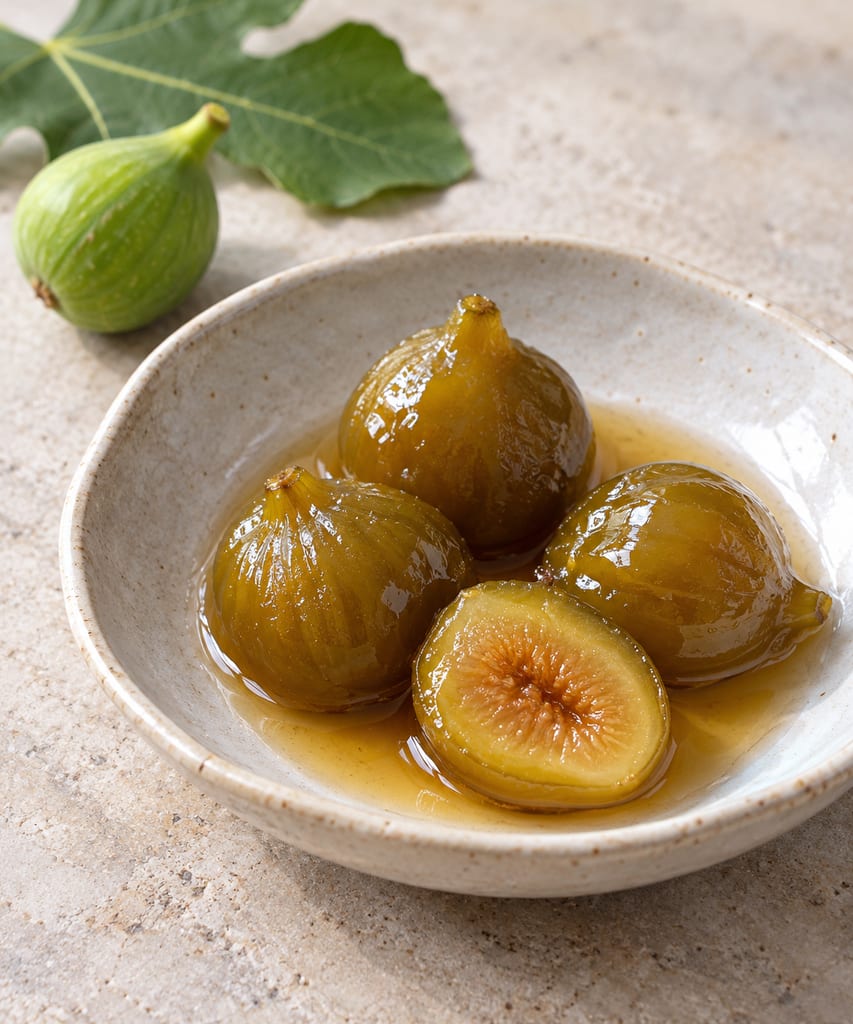
Green-fig konfyt without lime soak
Hard green figs are parboiled and cooked whole in a lemon-sharpened sugar syrup as a refrigerator-only South African konfyt; the method does not establish shelf-stable canning.
 FermenteaWhere food goes to change
Acids
Tartaric acid is a crystalline food acid associated with grapes and wine; it gives sourness and is distinct from its potassium salt, cream of tartar.
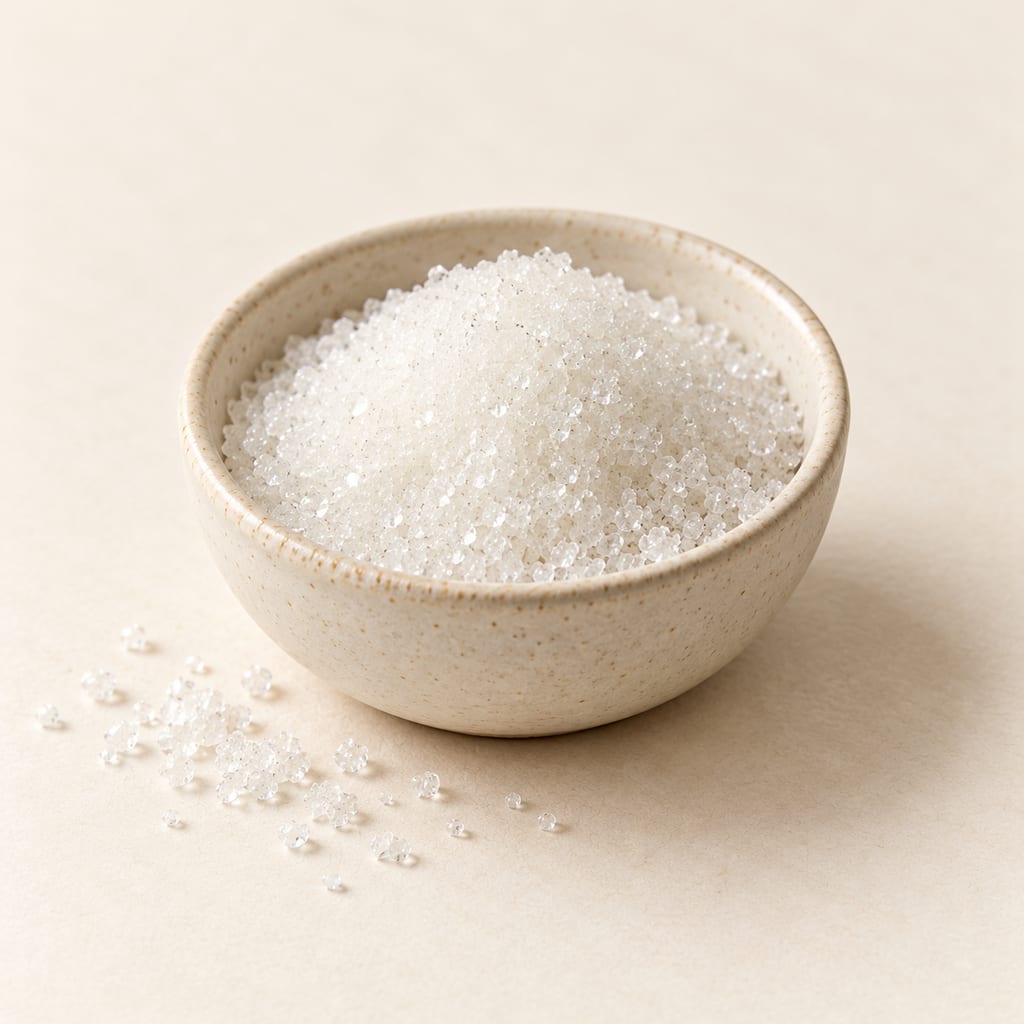
Tartaric acid is one of the defining acids of grapes and wine, but it has a life far beyond the vineyard. In the kitchen it appears as a white crystalline powder with a clean, direct sourness. A small amount can sharpen a drink, candy or fruit syrup without adding lemon’s perfume. In baking, it can react with bicarbonate of soda and help release the gas that lifts a batter. Its story joins plant chemistry, the slow settling of wine crystals and the practical ingenuity of cooks who learned to make use of them.
The name also invites a common mix-up. Tartaric acid is not the same ingredient as cream of tartar. Cream of tartar is a potassium salt of tartaric acid, formed in grape juice and familiar to bakers as a dry acid ingredient. The two share a chemical family and a culinary history, but they are different materials with different solubility and behavior. Understanding that distinction makes the wine crystals, baking powder and a South African green-fig preserve recipe fit into one story without treating them as interchangeable.
The food acid most associated with grapes is L-(+)-tartaric acid. Its formula is C₄H₆O₆, and each molecule has two central carbon atoms attached to four different groups. That arrangement gives the molecule a three-dimensional handedness, much as a left and right hand are mirror images that cannot be laid exactly on top of each other. The grape form is also written (2R,3R)-2,3-dihydroxybutanedioic acid. Its mirror image is D-(−)-tartaric acid, with the opposite arrangement at both centres. There is also a meso form, which has one centre in each arrangement and is achiral because the molecule has an internal plane of symmetry.
The letters and signs in these names answer different questions. L and D distinguish stereochemical forms by convention; plus and minus describe the direction in which a sample rotates plane-polarized light under specified conditions. “L” does not mean that a substance turns light to the left. In everyday food writing, L-(+)-tartaric acid is the useful precise name for the grape form, while “tartaric acid” is usually enough when the context is a food ingredient.
Pure tartaric acid is a white crystalline powder or solid. Its taste is sharply sour, but sourness alone does not tell a cook how much to use. Lemon juice brings water, variable acidity and citrus aroma; citric acid is another molecule; vinegar carries acetic acid and its own aroma. A recipe balanced with one cannot automatically be converted to another by matching spoonfuls. Tartaric acid’s appeal is that it brings acid without a strong fruit perfume, so it can sharpen a flavor while leaving the main ingredient in front.
The wider word tartrate refers to salts and esters of tartaric acid. Potassium hydrogen tartrate, also called potassium bitartrate, has one of tartaric acid’s two acidic hydrogens replaced by potassium. It forms pale crystals and dissolves only sparingly in water. Purified potassium hydrogen tartrate is sold as cream of tartar. Sodium tartrate, potassium tartrate and Rochelle salt, a potassium-sodium tartrate, are other related compounds. They should be named for what they are rather than folded into tartaric acid as if all tartrates were one powder.
Grapes contain tartaric acid alongside other acids, and potassium is present in grape juice as well. As fermentation turns juice into wine, its alcohol concentration rises. Potassium hydrogen tartrate becomes less soluble in this mixture than it was in the juice, so some can separate as crystals. They may form on the inside of a vessel or settle in a bottle. Wine drinkers sometimes call them wine diamonds. They are a natural result of crystallization, not shards of glass, and their presence by itself does not mean the wine has spoiled.
Winemakers can manage these crystals by encouraging them to form before bottling, then separating them from the wine. Chilling wine is one established route: lower temperature reduces the salt’s solubility, allowing more crystals to appear where the winemaker can remove them. The process is physical separation. It does not create tartaric acid, and the crystals are not the same as yeast sediment, even though both may settle in wine.
Before chemists isolated the acid, cellar workers and merchants already knew the crusts and deposits left by wine. Historical accounts use names such as tartar and argol for these crude deposits, which could be processed into useful salts. In the late eighteenth century, Swedish chemist Carl Wilhelm Scheele is credited with isolating tartaric acid from cream of tartar in 1769. The distinction matters: the old cellar material was a mixture or salt, while chemical isolation revealed the acid itself. Later work on tartaric acid’s optical forms belongs to a separate chapter in chemistry, not the same discovery.
The name preserves this cellar history, but the useful material is now made in several ways. A widely described industrial route begins with winemaking residues: tartar, lees and grape pomace. Processors recover tartrate from these solids and convert it into calcium tartrate. Treatment with sulfuric acid releases tartaric acid, which is then purified through concentration and crystallization. The grape’s acid has not simply been filtered out as a ready-made powder; it has travelled through salts, separation and refining. Some manufacturing processes use microbial conversion, too, but a food-grade label alone does not tell a shopper which route supplied a particular package.
These side streams explain why wine history and food manufacturing remain connected. As grapes ferment, part of their tartrate can end up in lees, sediment and press residues. Those materials can be a resource rather than waste. The modern ingredient may therefore have a cellar origin even when it is sold far from wine country, but the route and feedstock depend on the producer.
In a drink or fruit preparation, tartaric acid contributes sourness and lowers pH. How far the pH moves depends on the food around it. Water, sugars, minerals and proteins can all affect how strongly a food resists a change in acidity. This resistance is called buffering. A pH reading and titratable acidity are related but different measurements: pH describes the activity of hydrogen ions, while titratable acidity estimates how much base is needed to neutralize the acids to a chosen endpoint. Two foods can share a pH but taste differently sour, and equal spoonfuls of acid in two recipes need not produce the same pH.
That balance is useful where a cook wants a crisp acid note without adding a new aroma. Tart sweets and some syrups can use it to counter sweetness. Beverage makers can use it as one component of an acid profile. Fruit preparations can benefit from an acid accent that does not taste distinctly of lemon. The desired amount depends on the full recipe and the flavor the maker wants; there is no universal measure that works across juices, candies, preserves and wines.
In winemaking, tartaric acid is both a natural part of grape juice and an ingredient that may be used under oenological rules to adjust acidity. The choice affects taste and the wider chemistry of must or wine. That is distinct from removing potassium hydrogen tartrate crystals: adding acid changes the mixture, while cold stabilization encourages a salt to precipitate. Wine regulations vary by place and practice, so cellar additions follow applicable standards rather than a kitchen rule of thumb.
Baking gives tartaric acid another role. Bicarbonate of soda releases carbon dioxide when it reacts with an acid. In a batter, bubbles of this gas can expand and help raise the mixture. The timing of the reaction matters. If it occurs too early, before the dough or batter can hold the gas, some lift is lost. Dry baking mixtures are designed around the acid’s strength, how quickly it dissolves and reacts, and how the other ingredients behave.
Cream of tartar has been used as a dry leavening acid with bicarbonate, but it is not just a dry form of tartaric acid. It is a potassium salt, with a different formula and solubility. Modern baking powders may use acids selected for particular reaction timing, so replacing a commercial powder with tartaric acid alone will not recreate its balance. For home baking, use the ingredient named in the tested recipe unless a reliable formulation gives a measured substitution.
J. de V. Lötter’s The Fig in South Africa, published by the Western Cape Department of Agriculture, offers a particularly vivid kitchen example. In its whole green-fig preserve recipe, the syrup for 1.5 kilograms of hard green figs uses 2.5 to 3 kilograms of sugar and 6 litres of water. The acid line gives a choice: 30 to 50 millilitres of lemon juice, or 5 millilitres of citric acid, tartaric acid or cream of tartar. Cinnamon and dried ginger can flavor the syrup.
The acid arrives late in a story dominated by fruit and sugar. It offers a sharp counterpoint to a sweet syrup without bringing lemon’s citrus aroma. The fig remains the main flavor, with any added spices carrying through the surrounding liquid. Lötter does not isolate what the acid changes in the finished preserve, so its clearest documented role is as a measured ingredient choice for the syrup.
The alternatives in the recipe are useful evidence of practical flexibility, but not proof that the ingredients are identical. Lemon juice is a liquid with variable acid strength and citrus aroma. Citric acid and tartaric acid are distinct acids. Cream of tartar is potassium hydrogen tartrate, a salt, and its low solubility differs from the free acid. Lötter presents alternatives for this particular preserve; the list does not establish a general one-to-one conversion for other foods.
The name konfyt points to the South African practice of keeping fruit recognizable in syrup. Whole green figs retain their shape and take up sweetness while remaining distinct pieces, unlike jam that spreads as a mixed fruit mass. A serving can present the fruit with some of its syrup, letting the contrast between tender flesh and concentrated sweetness remain visible. That form is part of the pleasure of a whole-fruit preserve and part of why the balance of the syrup matters.
Acidity has an important place in food preservation, but the presence of tartaric acid in a recipe does not by itself establish shelf stability. The result also depends on the finished food’s pH throughout, sugar and water balance, heating, container and closure, and the process used. A recipe’s sour note cannot substitute for a tested preservation method. Lötter’s acid choice is useful culinary guidance for flavor in that recipe; it should not be read as a measured pH target or a universal canning instruction.
This distinction helps keep the ingredient in proportion. Tartaric acid can make a sweet food taste livelier, contribute to a beverage’s acid balance, or react with bicarbonate in a batter. In wine, the grape acid and its potassium salt explain familiar cellar crystals. In the pantry, it sits beside cream of tartar with a shared origin but a different identity. Its history is not a tale of one mysterious powder doing everything. It is a more specific story: grapes supply an unusual food acid, wine reveals it in crystals, makers recover and refine it, and cooks use its clean sourness where a little sharpness is exactly what the rest of the dish needs.
Documented use in this place; not a claim of origin.
Hard green figs are parboiled and cooked whole in a lemon-sharpened sugar syrup as a refrigerator-only South African konfyt; the method does not establish shelf-stable canning.
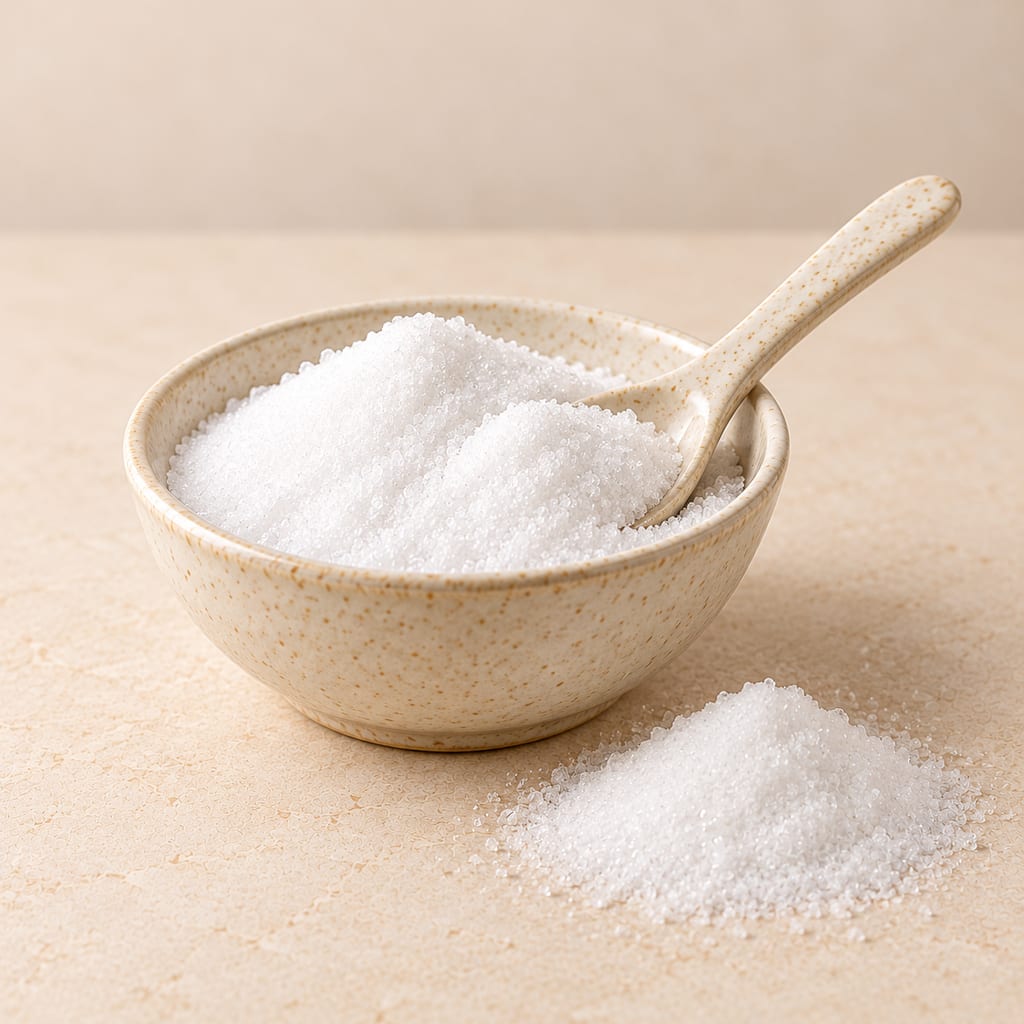
Sodium bicarbonate is a mildly alkaline kitchen powder used for leavening and, in two published South African green-fig konfyt methods, in the preliminary boil.
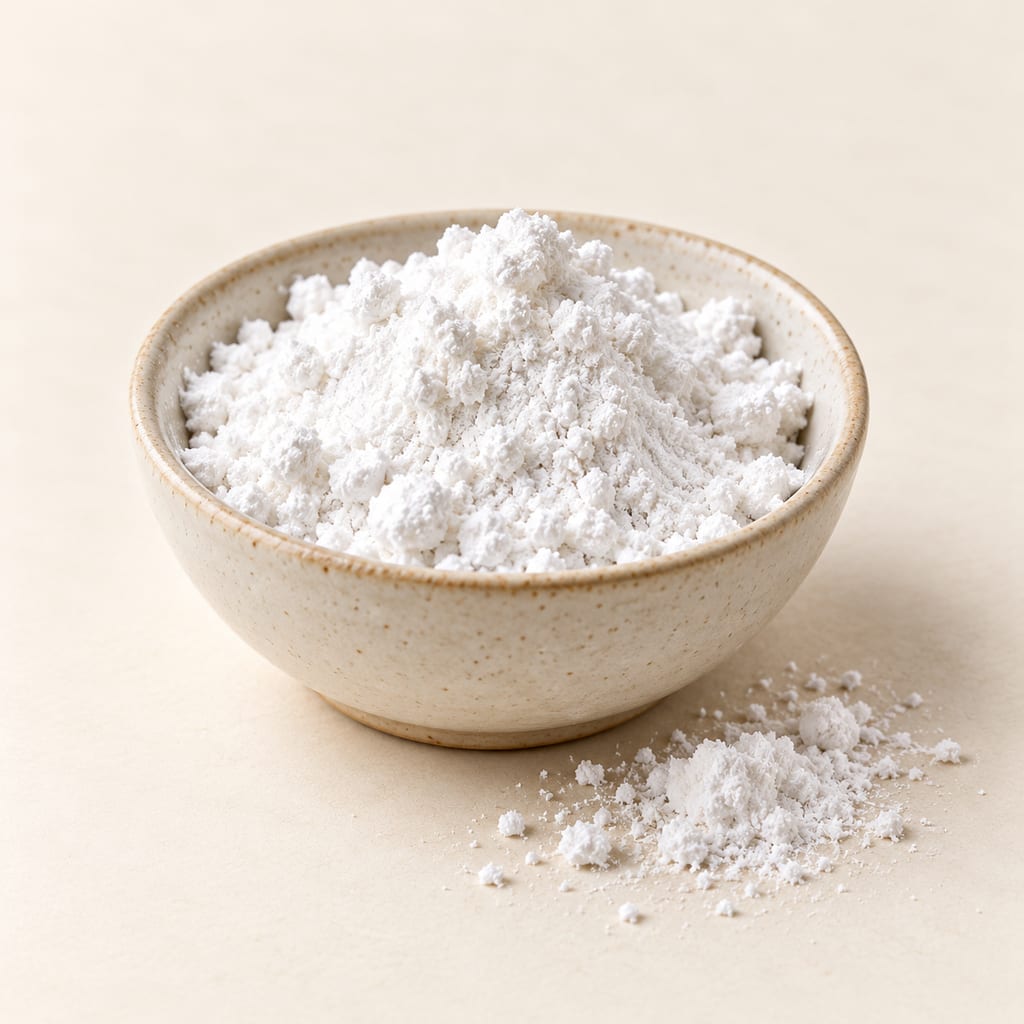
Cream of tartar is a grape-derived potassium tartrate salt used as a dry baking acid, foam aid and measured syrup ingredient.
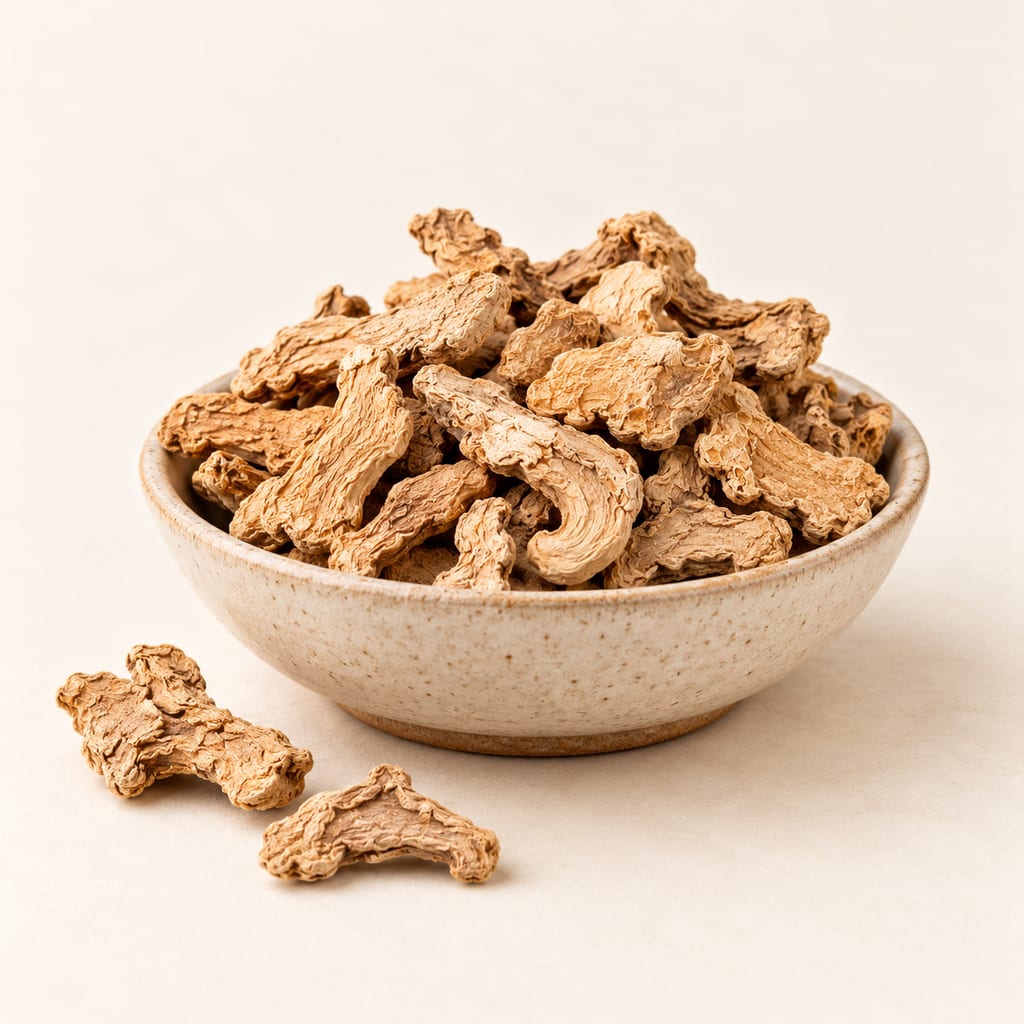
Dried ginger is the mature, dried rhizome of Zingiber officinale; its warm flavor and whole, sliced or ground forms serve different kinds of cooking.
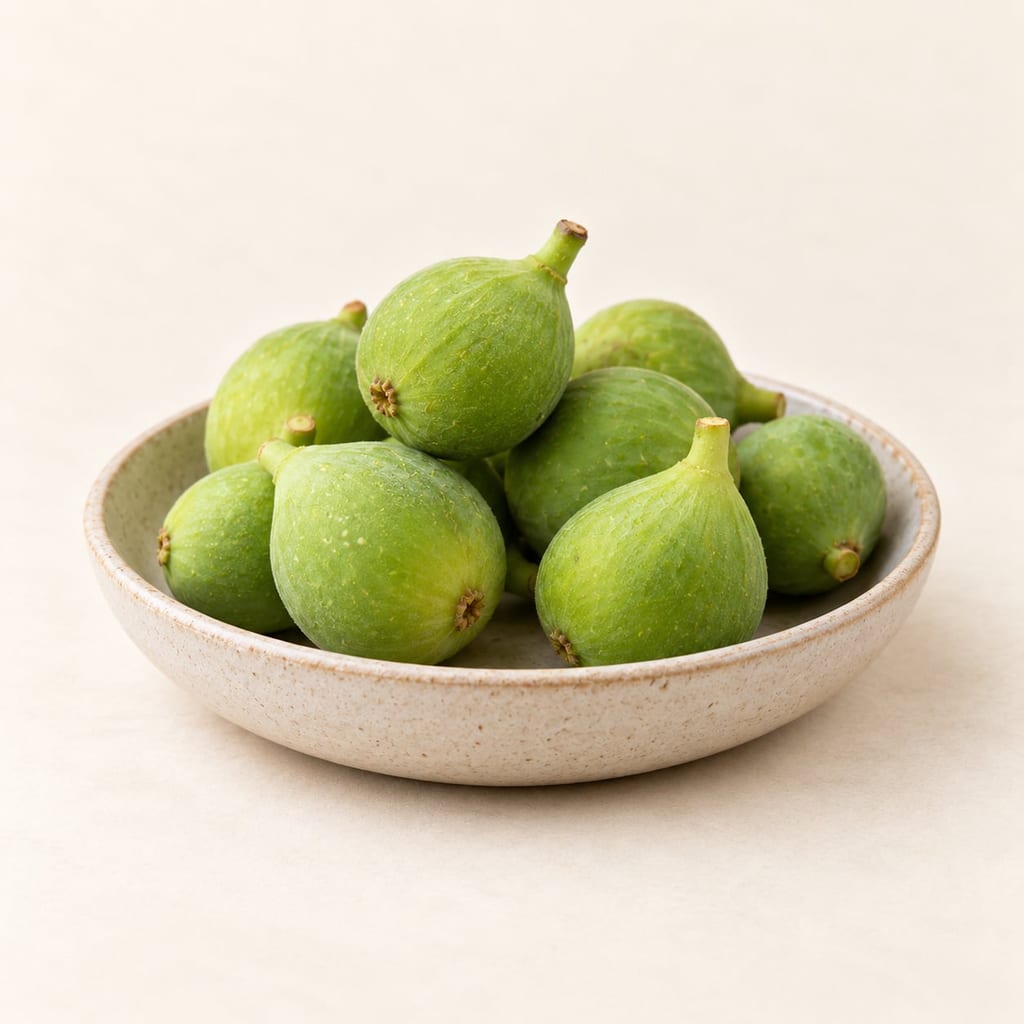
Firm green figs are the unripe fruit of the fig tree selected for preserves that keep the fruit whole and let it absorb syrup.
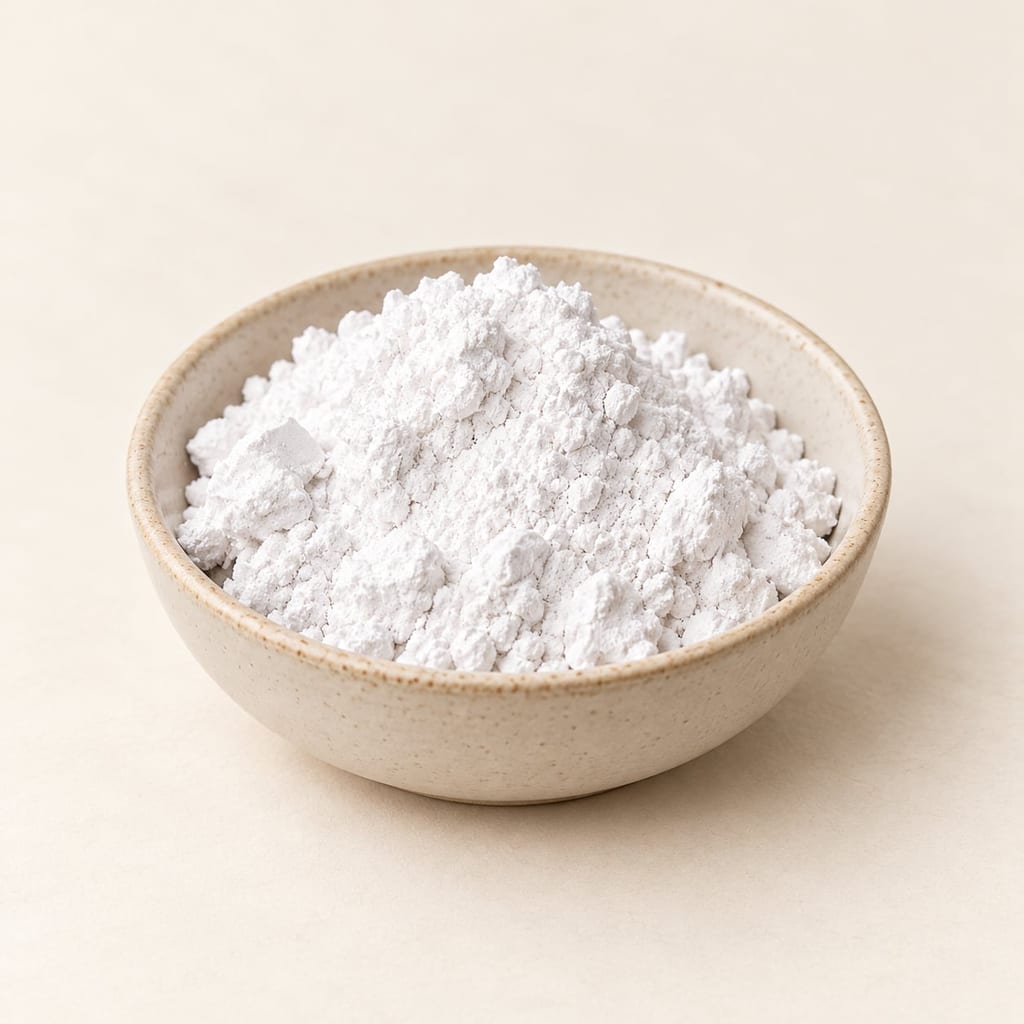
Food-grade slaked lime is calcium hydroxide, an alkaline processing aid used in distinct food treatments including green-fig soaking and maize nixtamalization.
No community contributions have been published for this entry yet.
Sign in to contribute. Published comments and photos are free to read.
Pierre Gélinas, International Journal of Food Science and Technology 57(10), 6350–6367Editorial
Inventions on phosphate-free chemical leaveningAcid-bicarbonate carbon dioxide release in chemical leavening
Historical use of tartaric acid and cream of tartar in baking formulations
Importance of reaction rate
Cited in: A useful sourness from the wine cellar; What tartaric acid contributes to food
EFSA Panel on Food Additives and Flavourings, EFSA Journal 18(3):6030Editorial
Re-evaluation of l(+)-tartaric acid (E 334), sodium tartrates (E 335), potassium tartrates (E 336), potassium sodium tartrate (E 337) and calcium tartrate (E 354) as food additivesFood-additive identity and category distinctions
Winery-residue recovery and microbial manufacture context
EFSA group ADI, if needed in later copy
Cited in: A useful sourness from the wine cellar; The grape form and its mirror images; Why crystals appear in wine; What tartaric acid contributes to food
Encyclopaedia Britannica; digitized at WikisourceEditorial
Tartaric Acid, Encyclopaedia Britannica, Ninth EditionWine-vessel deposits and argol
Historical distinction between tartrate deposits and isolated acid
Scheele attribution and 1769 date
Cited in: Why crystals appear in wine
Penn State ExtensionEditorial
Use Validated Recipes to Preserve FoodsTested preservation processes depend on formulation and heat delivery
Acid presence alone is not a substitute for a validated canning process
Cited in: A kitchen acid, not a promise in a jar
PubChem, National Center for Biotechnology InformationEditorial
L-Tartaric acid, CID 444305Formula C4H6O6
Molar mass 150.09 g/mol
IUPAC name and (2R,3R) configuration
L-enantiomer identification
Cited in: The grape form and its mirror images
PubChem, National Center for Biotechnology InformationEditorial
D-Tartaric acid, CID 439655D-(−) mirror-image enantiomer terminology
Cited in: The grape form and its mirror images
Wines of South Africa; recipe credited to Cass Abrahams, Cass Abrahams Cooks Cape Malay: Food from AfricaEditorial
Green Fig KonfytRegional green-fig konfyt culinary context and a distinct formulation using lemon juice
Cited in: A small measure in green-fig konfyt
USDA Agricultural Marketing Service, National Organic Standards Board Crops SubcommitteeEditorial
Potassium Acid Tartrate Technical Evaluation Report—Handling/ProcessingRecovery of potassium hydrogen tartrate from wine press cake, lees and sediment
Study-specific must and wine tartrate ranges and partitioning
Cited in: Why crystals appear in wine
J. de V. Lötter, Western Cape Department of AgricultureEditorial
The Fig in South AfricaWhole green-fig preserve recipe ratios
Tartaric acid, citric acid, cream of tartar and lemon juice listed as alternatives
Cinnamon and dried ginger options
Cited in: A small measure in green-fig konfyt; A kitchen acid, not a promise in a jar
FAO/WHO Codex Alimentarius, GSFA OnlineEditorial
Food Additive Group Details for TARTRATESE334 and L(+)-tartaric acid designation
Food-category-specific regulatory permissions
Cited in: What tartaric acid contributes to food
International Organisation of Vine and Wine, Compendium of International Methods of Wine and Must AnalysisEditorial
OIV-MA-AS313-01 Total acidity, Type-I methodTitratable/total acidity measured to pH 7
Distinction between total acidity and pH as separate wine analytical parameters
Cited in: What tartaric acid contributes to food