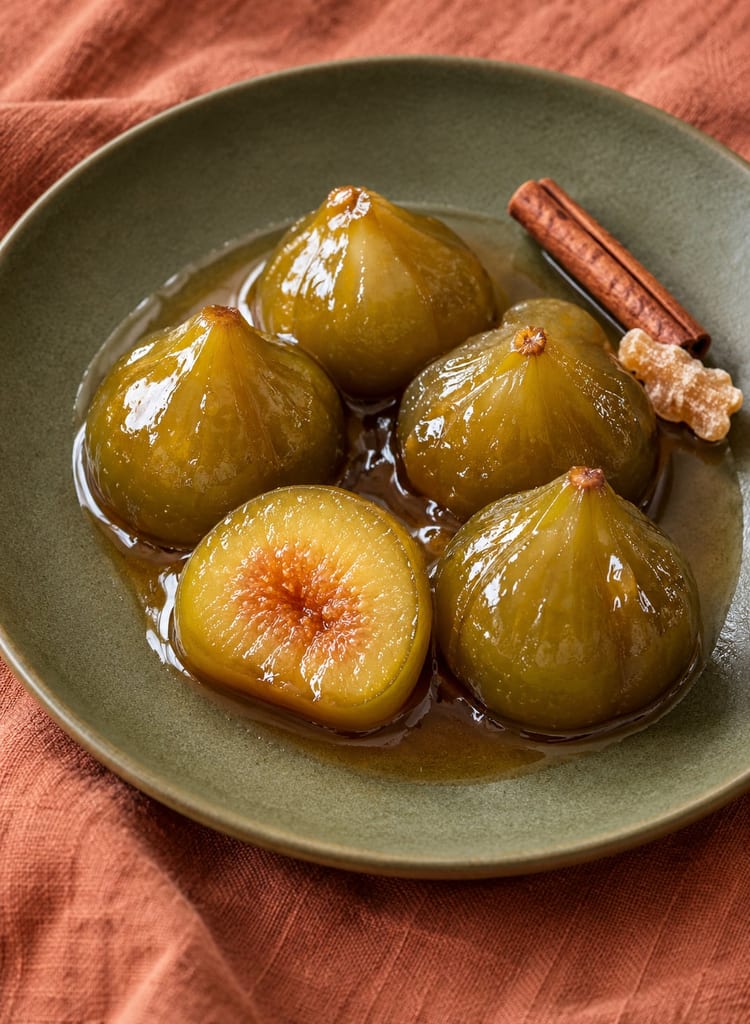
Green-fig konfyt
Whole unripe figs are softened and cooked in cinnamon and ginger syrup as a refrigerator-only South African konfyt; this method does not provide a shelf-stable canning process.
 FermenteaWhere food goes to change
Processing aids
Food-grade slaked lime is calcium hydroxide, an alkaline processing aid used in distinct food treatments including green-fig soaking and maize nixtamalization.
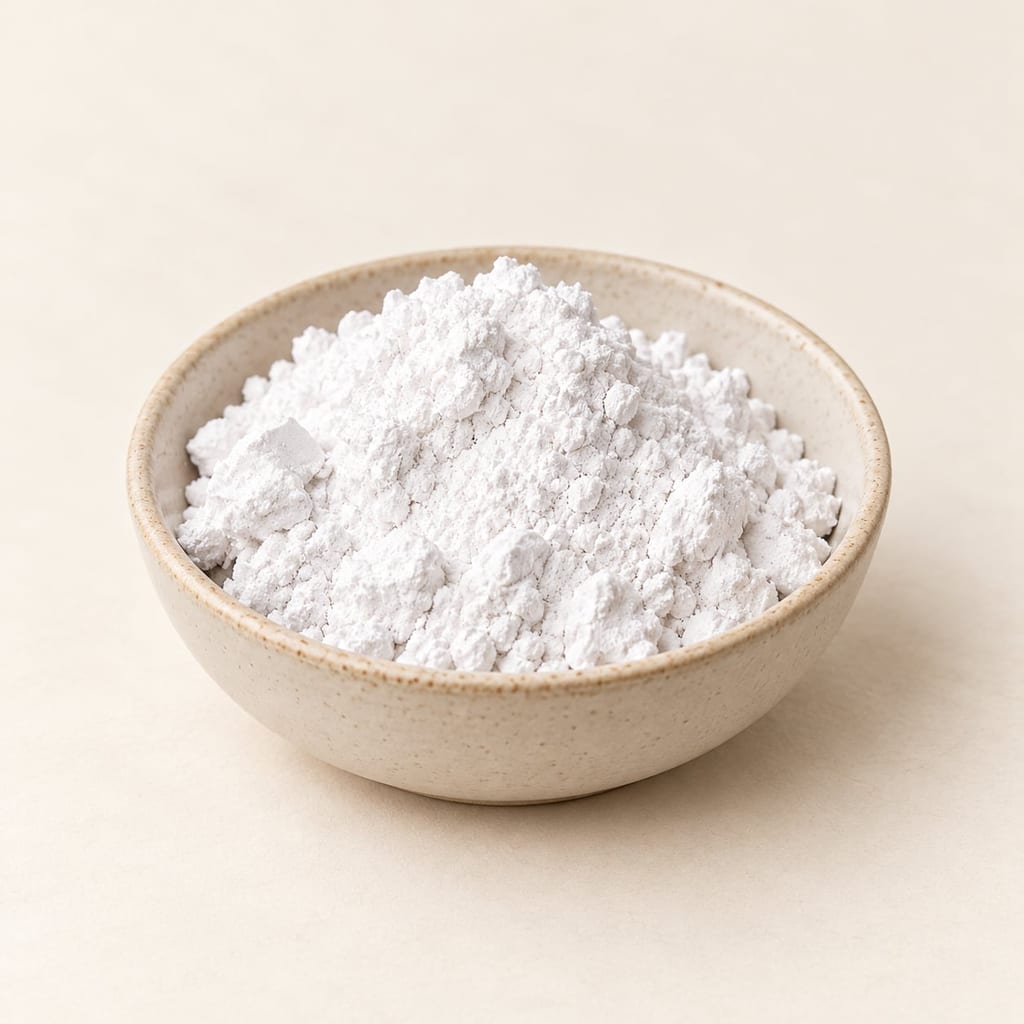
Ask for lime in a kitchen and the answer might be a green citrus fruit, a pale mineral powder, or a bag of building material. They share a name, but not a role. The lime squeezed over food is a fruit. Slaked lime is calcium hydroxide, Ca(OH)₂, a white alkaline mineral used in particular food processes. Chalk and limestone are chiefly calcium carbonate, CaCO₃; quicklime is calcium oxide, CaO. They belong to related chemical stories, but they are not interchangeable ingredients.
Slaked lime is also called hydrated lime or calcium hydrate. In food, it is generally put to work in water, where a small portion dissolves and the rest may remain as a fine suspension. The result is strongly alkaline. The powder has no citrus perfume or flavor, and it is not a seasoning in the ordinary sense. Its presence matters because it changes the conditions around food: hydroxide ions alter plant tissues, while calcium ions can take part in a different set of interactions with pectin and other food components.
That double action is why the ingredient appears in more than one culinary tradition. A lime treatment may loosen an outer layer, alter starch behavior, contribute calcium, or help a plant tissue hold together. Which effect dominates depends on the food, its structure, the strength and duration of treatment, heat, and what happens afterward. There is no single “lime effect” that explains every dish.
The mineral starts as limestone, a rock made mostly of calcium carbonate, though its precise composition varies. In industrial lime production the stone is crushed and heated in a kiln. Heating drives off carbon dioxide and leaves calcium oxide, the material called quicklime. When water is added under controlled manufacturing conditions, quicklime reacts to form calcium hydroxide and releases heat. The transformations can be written simply: CaCO₃ becomes CaO plus CO₂; CaO reacts with H₂O to become Ca(OH)₂.
This is not a home preparation. Quicklime and slaked lime are different substances, and the former reacts vigorously with water. The controlled industrial sequence also does not mean every product sold under a familiar lime-related name is suitable for food. Agricultural lime, garden lime, hydrated construction lime, and food-grade pickling lime may all be mineral products, but their specifications, intended uses, and purity controls differ. The word “lime” on a sack is not a food designation.
Once made, calcium hydroxide is a white, odorless powder. It absorbs carbon dioxide from air and can gradually form calcium carbonate at its surface. In water it dissolves sparingly, so a prepared lime-water mixture can contain both dissolved alkaline material and undissolved particles. For a cook, this matters less as a laboratory curiosity than as a reminder that a measured spoonful is not a guarantee of an identical chemical environment: product grade, water, settling, mixing, and process all affect what contacts the food.
One of the most evocative appearances of slaked lime in a South African kitchen is green-fig konfyt, a whole-fruit preserve cooked in spiced syrup. Wines of South Africa publishes a recipe credited to Cass Abrahams and her book Cass Abrahams Cooks Cape Malay: Food from Africa. It places slaked lime in an overnight water soak for peeled green figs. The figs are then washed thoroughly, cooked separately in fresh water with bicarbonate of soda until tender, and finished in a syrup scented with cinnamon and dried ginger. The result is glossy fruit held in thick, fragrant syrup, served in small amounts as a sweet preserve.
That sequence gives the lime a defined place. It is used before the cooking water and syrup, then washed away. The lime soak is not a ferment, a syrup ingredient, or a preserving liquid. The later bicarbonate boil is a separate alkaline stage, while cinnamon, ginger, sugar, and lemon juice belong to the syrup. Keeping the stages distinct makes the recipe easier to understand: the fruit receives a preliminary mineral treatment, is rinsed, is cooked separately, and only then is it glazed in spiced syrup.
Konfyt names a style of preserve in South Africa, and green figs are a familiar Cape Malay preparation. The WOSA page is evidence for this particular recipe and its attribution, rather than a record of every household’s method or the preserve’s first appearance. It does not explain why Abrahams chose lime, how concentrated the soaking liquid should be, or how the treatment changes this exact fig’s texture. Calcium’s relationship with plant pectin offers a plausible explanation for using a mineral soak when a cook wants whole fruit to keep its shape, but that is an interpretation from food chemistry, not a stated explanation from the recipe author.
The recipe also shows why lime should not be treated as a magic crisping powder. The figs are eventually boiled until tender, then simmered in sugar syrup. Firmness in the final preserve depends on the fruit’s maturity and condition, the peel removal and cut, the alkaline soak, the later cooking, and the syrup stage. It would be too simple to credit the finished texture to lime alone.
Pectin is part of the material that helps neighboring plant cells stay attached. It is abundant in the middle lamella, the region between cells, and in primary cell walls. Some pectin chains contain stretches of galacturonic acid units whose carboxyl groups can interact with calcium ions. Under suitable conditions, calcium can bridge adjacent chains and help form a more cohesive network. Food scientists often use an “egg-box” picture to explain how ions sit between aligned chains, though the model is a useful simplification rather than a complete description of the many structures in living plant tissues.
This helps explain the traditional use of calcium-bearing ingredients to firm some foods. In cucumber pickling, extension publications describe calcium from food-grade lime as contributing to a firmer pickle. Calcium does not simply coat the vegetable and make it crunchy. Its interaction with pectin can support cell-wall cohesion, while the cucumber’s starting condition, cutting, enzymes, heating, acidity, and handling affect whether the finished pickle stays crisp.
Alkalinity is a separate part of the story. Calcium hydroxide makes water alkaline. Hydroxide can alter plant cell-wall components and, depending on the process, loosen tissues rather than firm them. This is central to the way alkaline cooking affects maize. It may also influence the surface and structure of fruit, but the exact outcome depends on the fruit and treatment. A lime soak does not promise firmness, and a longer or stronger exposure is not automatically better. Calcium activity and alkaline action travel together in calcium hydroxide, yet they are not the same mechanism.
Heat adds another layer. Cooking softens plant tissues as cell walls and pectin change; sugar syrup draws water from fruit and gradually becomes more concentrated as it cooks. Acidity also affects pectin behavior. In a preserve, texture comes from this combination of fruit structure, treatment, heat, sugar concentration, and time. The balance of whole fruit that yields under a spoon while holding its outline comes from the whole method, not one ingredient in isolation.
In Mexican and Central American food traditions, alkaline cooking of maize is known as nixtamalization. Dried kernels are cooked and steeped in alkaline liquid, traditionally made with lime or another alkaline material; calcium hydroxide is widely used. The kernels are then washed and ground into masa, the dough used for tortillas and other foods. This is a foundational grain process with a long Mesoamerican history; the sources here do not establish one origin date or inventor.
Nixtamalization is not simply a soak to soften grain. Research describes changes in the pericarp, the kernel’s outer covering, and the endosperm beneath it. Alkaline conditions help hydrolyze and solubilize some cell-wall components, including hemicellulose, making the outer layer more permeable and easier to loosen. Heat and steeping also change starch behavior, while calcium interacts with the kernel during processing. The cooking liquid is drained and the grain washed; dissolved material carried away is part of the process, not an ingredient in the masa.
The result matters at the table as much as in the pot. Nixtamalized maize has different handling and dough properties from untreated dry corn. Masa can be shaped and cooked into tortillas, eaten with fillings, sauces, beans, and stews, or used in many regional dishes. The transformation is practical and cultural: it turns a hard dry grain into a workable staple with characteristic taste and texture. It should not be explained as the same operation as soaking figs or cucumbers in lime-water; maize is cooked, steeped, washed, and milled, with a distinct role for each stage.
Some American home-pickling recipes use food-grade pickling lime to soak cucumber slices before pickling. Extension guidance describes the purpose as helping firmness, while stressing that excess lime absorbed by cucumbers must be removed. The soak is followed by draining, thorough rinsing, and repeated fresh-water soaks before the cucumbers go into a tested pickling recipe.
This washing is not a cosmetic rinse to remove a chalky look. Calcium hydroxide is strongly alkaline. If excess remains, it can raise food pH and interfere with the acidity expected in a pickled product. Acidified foods rely on a tested balance of ingredients and process; changing that balance can undermine safety. For cucumber pickles, extension sources describe a particular soak and rinse sequence, but those instructions should not be transferred to green figs, maize, or another food. Each food and preservation process needs its own reliable directions.
The contrast with calcium chloride is instructive. Some food-grade calcium chloride products are used to firm pickles without the hydroxide component of calcium hydroxide. They therefore do not create the same highly alkaline treatment and are used according to their product and recipe directions. That does not make the two compounds interchangeable unless a tested method says so.
Japan offers another example of calcium hydroxide in food manufacture. Konnyaku, also written konjac, is processed from the corm of a yam-like plant. It is known for a springy, chewy texture and appears in stews, stir-fries, sheets, balls, and noodle-like forms. A Japanese food glossary identifies calcium hydroxide as part of its manufacture and notes the finished food’s alkaline character.
Konnyaku shows how the same mineral can serve a different food material. The goal is neither a cucumber’s crispness nor the loosening of maize’s outer layer. Konjac flour is prepared into a distinctive gel, and the alkaline setting environment helps create its characteristic firm, elastic result. Its mild flavor carries broth and sauce, while the texture itself is central to how it is eaten. This is a different method and ingredient matrix from fruit soaking; it should not be folded into a universal lime recipe.
Calcium hydroxide has regulated uses in food, but legal permission depends on jurisdiction, food category, product specification, and conditions of good manufacturing practice. U.S. regulations identify it as slaked lime or calcium hydrate and provide for food use under current good manufacturing practice. Codex lists it as an acidity regulator and firming agent, with provisions by food category. In the UK it is listed as authorised food additive E526, with its permitted conditions set out in applicable regulations. None of these statements supplies a household dose for every recipe.
The solid powder and concentrated slurry can irritate or burn eyes and skin. NIOSH lists inhalation, ingestion, skin contact, and eye contact as exposure routes, and notes irritation, burns, and respiratory effects among possible harms. Keep dust out of eyes and lungs and avoid skin contact with concentrated material. Follow the relevant product directions and local food rules. A food-grade designation means the product meets a food-use specification; it does not mean any amount is safe or that construction or garden lime becomes edible when mixed with water.
Quicklime deserves particular care in the naming. It is calcium oxide, not calcium hydroxide. Its reaction with water releases heat, which is why lime manufacture controls hydration. A cook should buy the form required by a food recipe, labelled for food use, rather than attempting to prepare it from quicklime or substituting a bag of agricultural or building lime.
Slaked lime has no place in every kitchen, and most cooks encounter it through a traditional or tested recipe rather than use it casually. Its story connects quarry stone, kiln heat, chemistry, plant structure, and household technique. In green-fig konfyt, the white mineral enters briefly in the soaking stage before figs are washed and cooked. In nixtamalization, alkaline cooking and steeping transform maize into masa. In cucumber pickles, carefully rinsed food-grade lime can support firmness. In konnyaku, an alkaline setting step helps produce a springy gel.
These foods show the difference between a substance and its uses. Calcium hydroxide is the same compound in each case, but the food, process, and desired texture differ. Reading the recipe closely is part of understanding the ingredient: notice whether it is used to soak, cook, or set; whether the food is rinsed; and what happens after the alkaline stage. Those details are not incidental. They are the method.
For Cape Malay fig preserve, the lime is one quiet preliminary treatment within the larger craft of preserving whole fruit. The figs are prepared, soaked, washed, cooked, and finally surrounded by spiced syrup. Their shape and sheen invite the eye; the bite offers yielding fruit against concentrated sweetness. The mineral disappears from the finished story, but knowing its route through the method helps explain why a white powder, used briefly and carefully, belongs in a recipe for glossy green figs.
Documented use in this place; not a claim of origin.
Whole unripe figs are softened and cooked in cinnamon and ginger syrup as a refrigerator-only South African konfyt; this method does not provide a shelf-stable canning process.
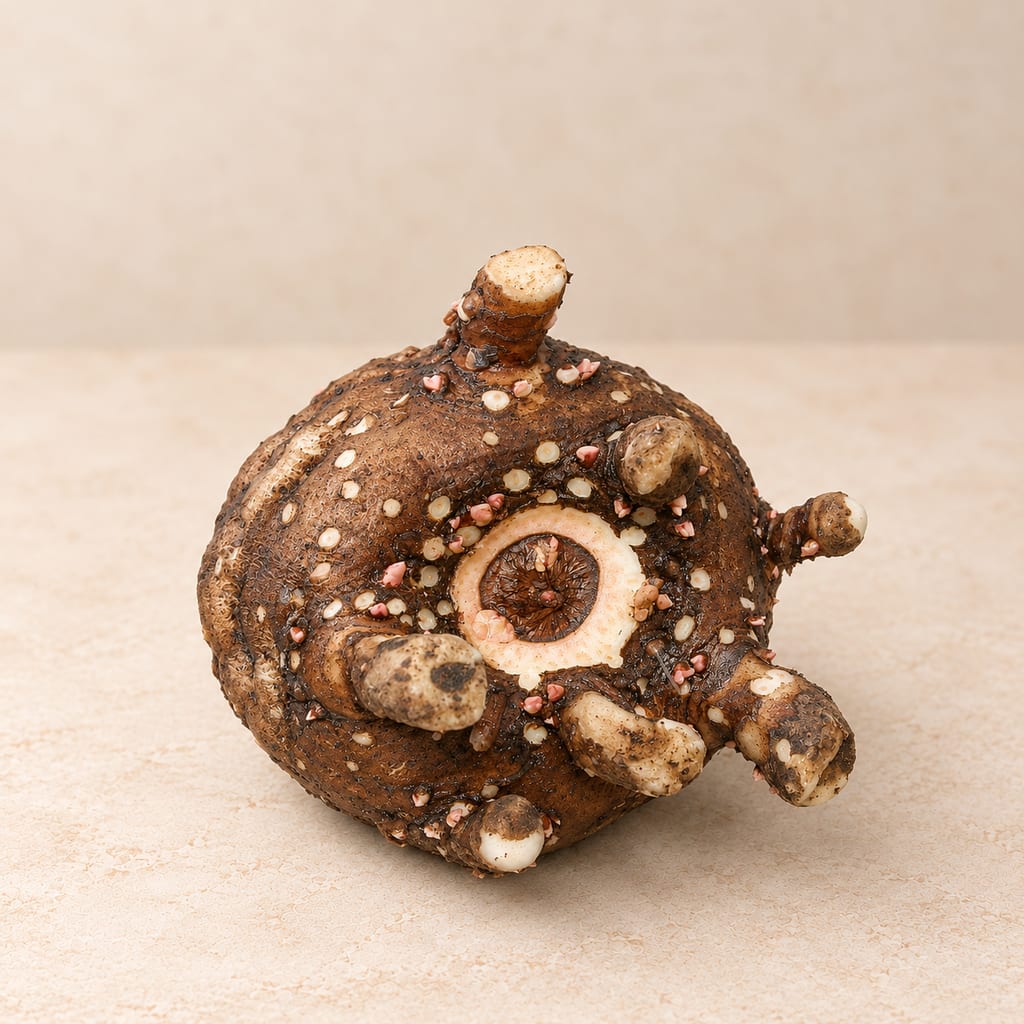
The toxic corm of Amorphophallus konjac and the glucomannan flour milled from it, which sets into a firm, heat-stable konnyaku gel when cooked with limewater.
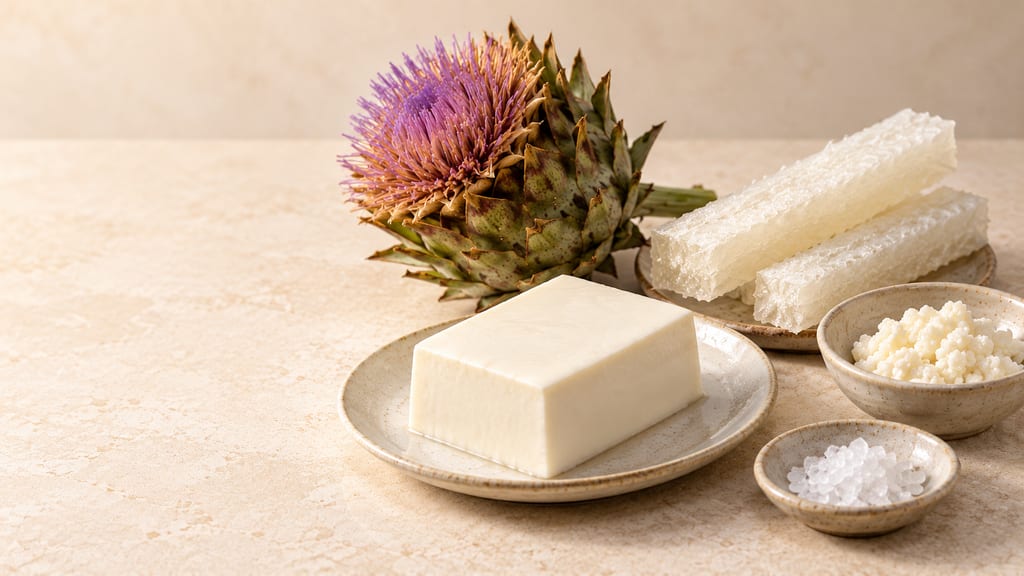
Cheese, tofu, agar, nixtamal and cured ham all begin with a liquid or soft food made to set, sour or keep. Rennet is one branch of that history, beside plant enzymes, acids, minerals, alkalis, gels, finings and curing salts.
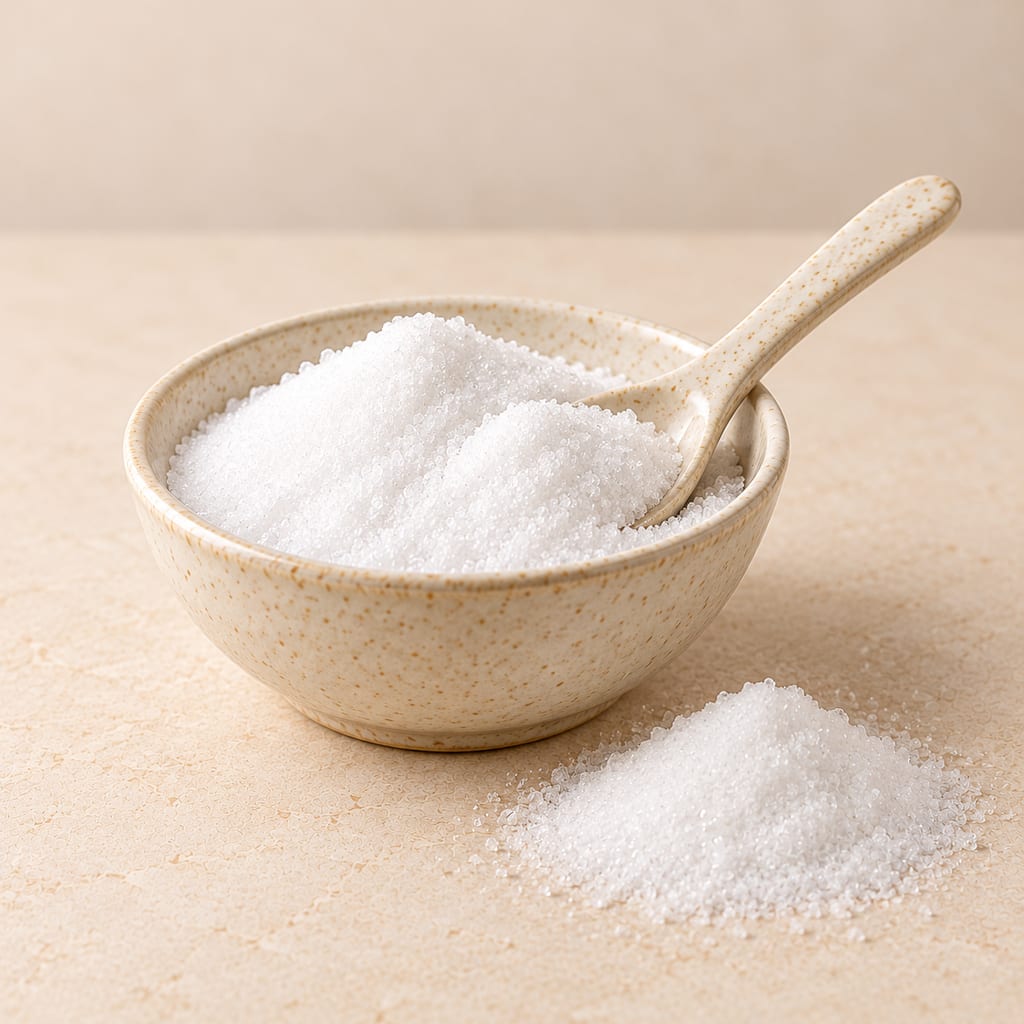
Sodium bicarbonate is a mildly alkaline kitchen powder used for leavening and, in two published South African green-fig konfyt methods, in the preliminary boil.
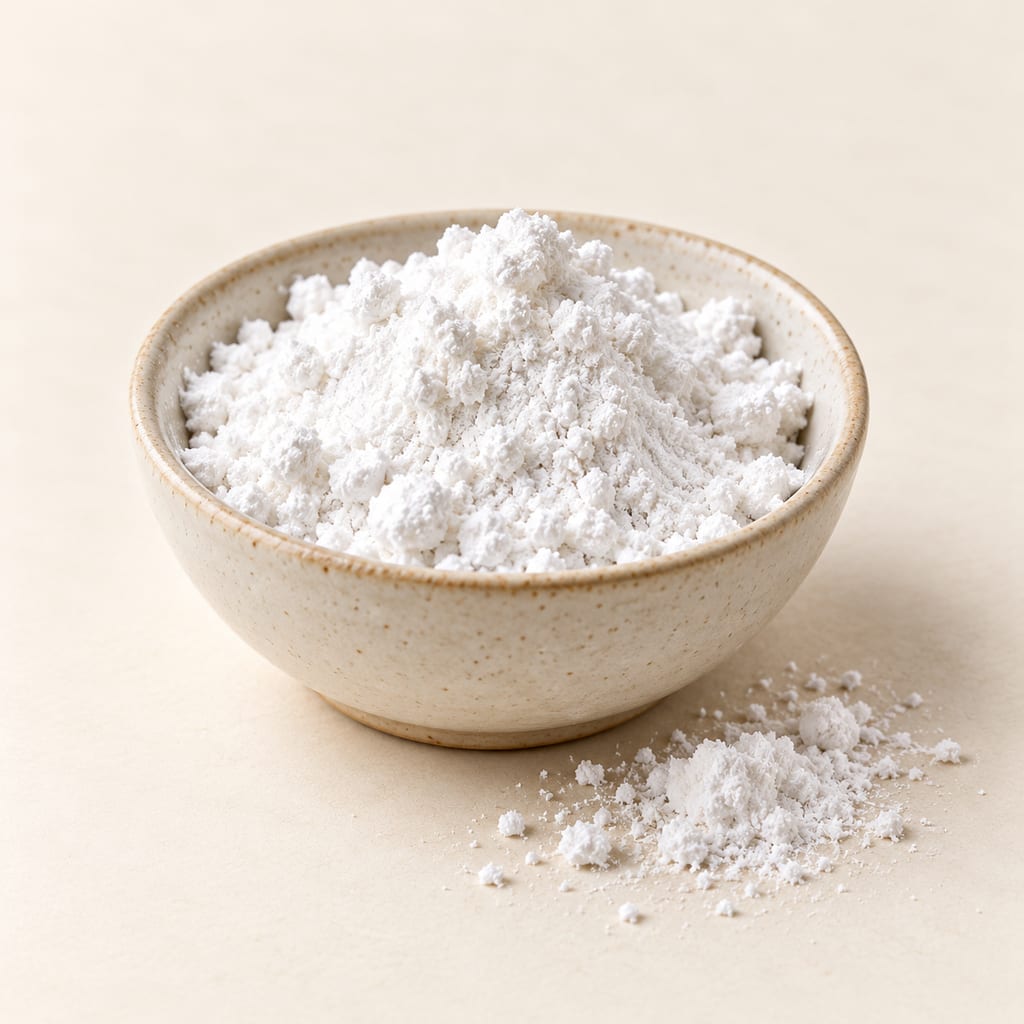
Cream of tartar is a grape-derived potassium tartrate salt used as a dry baking acid, foam aid and measured syrup ingredient.
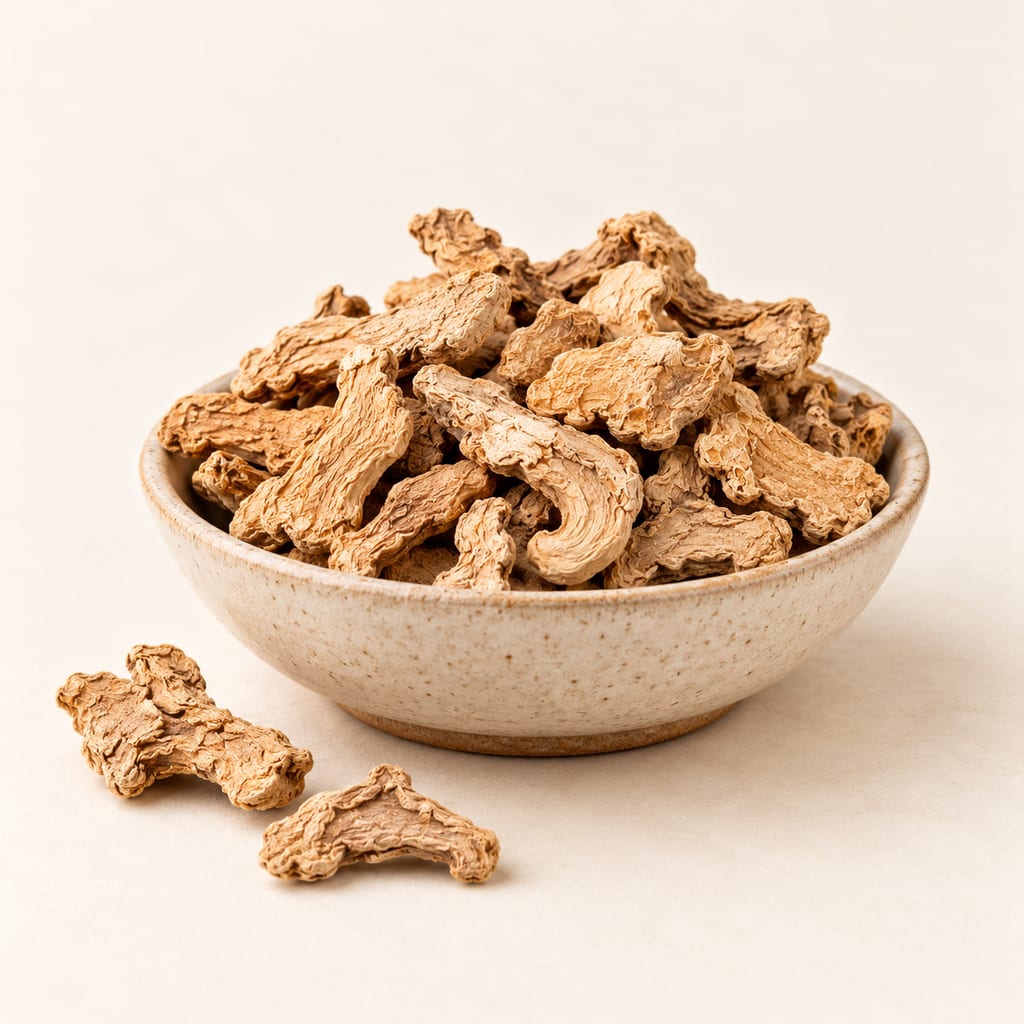
Dried ginger is the mature, dried rhizome of Zingiber officinale; its warm flavor and whole, sliced or ground forms serve different kinds of cooking.
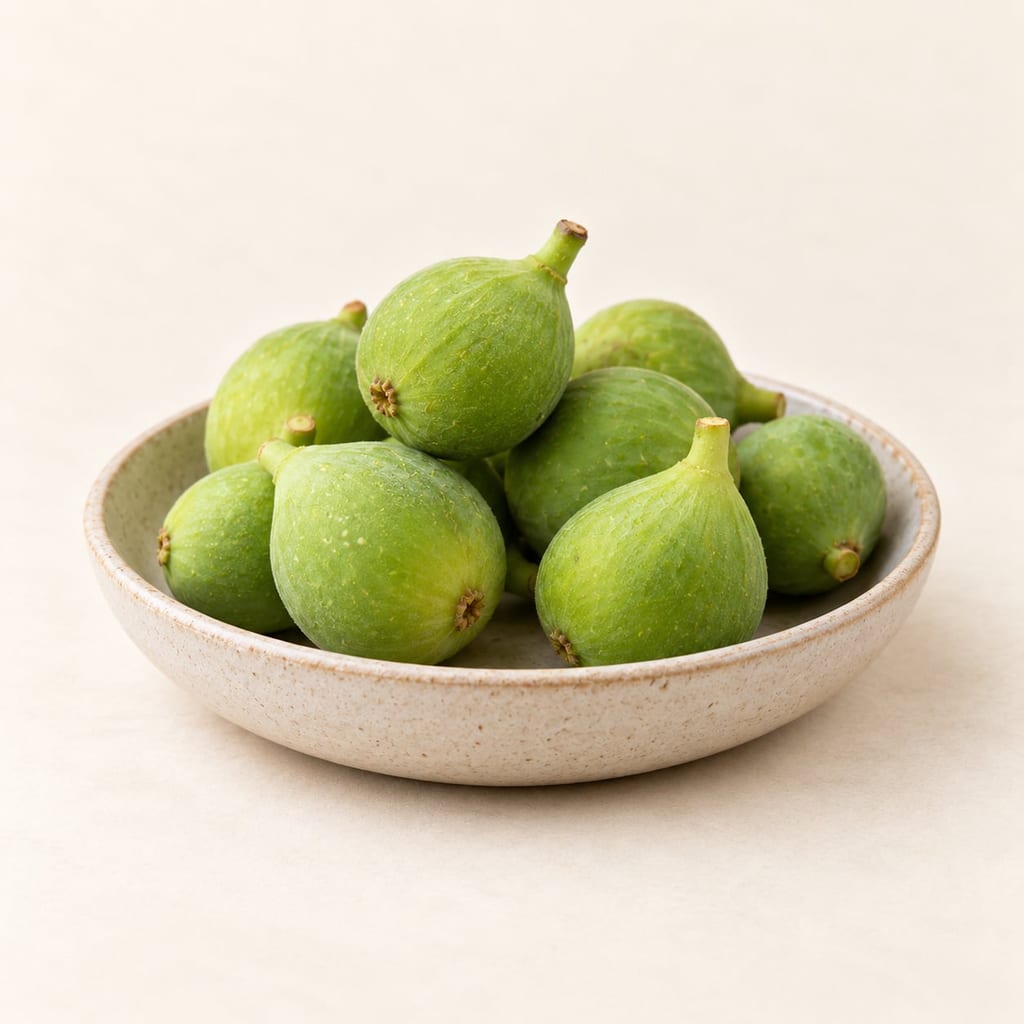
Firm green figs are the unripe fruit of the fig tree selected for preserves that keep the fruit whole and let it absorb syrup.
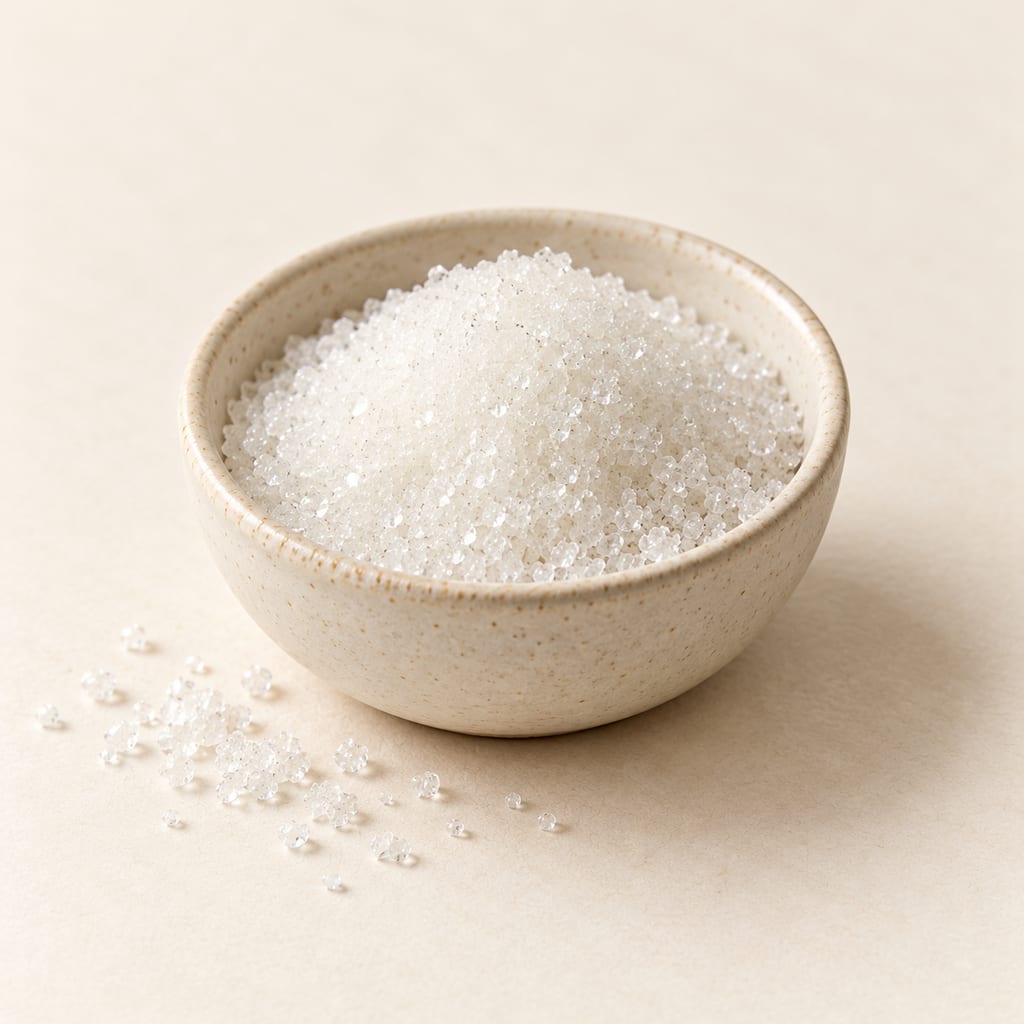
Tartaric acid is a crystalline food acid associated with grapes and wine; it gives sourness and is distinct from its potassium salt, cream of tartar.
No community contributions have been published for this entry yet.
Sign in to contribute. Published comments and photos are free to read.
UK Food Standards Agency, Regulated ProductsEditorial
E-526 Calcium hydroxideauthorised E526 status in England, Scotland and Wales
links to applicable assimilated regulations
Cited in: Food grade is a specification, not a promise of harmlessness
Journal of Cereal ScienceEditorial
Physical and chemical changes undergone by pericarp and endosperm during corn nixtamalization—A reviewalkaline action and structural changes to pericarp
starch and calcium interactions
distinction between chemical and physical changes
cooking and steeping stages
alkaline agents
pericarp hydrolysis and solubilization
starch gelatinization and calcium interactions
nixtamalization overview
Cited in: Pectin, calcium and the texture of plants; A different transformation: nixtamalized maize; At the table: a small ingredient with a long route
University of Illinois ExtensionEditorial
Pickling FAQfood-grade lime's use to improve cucumber pickle firmness
food-grade lime soak for cucumber firmness
draining, rinsing and repeated fresh-water soaking
excess lime removal
cucumber pickling use and rinse requirement
Cited in: Pectin, calcium and the texture of plants; Pickling lime and the cautious cucumber; At the table: a small ingredient with a long route
Oregon State University Extension ServiceEditorial
Pickling Fact Sheet (SP 50-466)food-grade product requirement
excess lime removal
warning against garden-center and lumberyard lime
Cited in: Pickling lime and the cautious cucumber
Frontiers in Plant ScienceEditorial
Fruit Calcium: Transport and Physiologycalcium and pectin interactions in plant cell walls
caution about extrapolating simplified models to intact tissue
Cited in: Pectin, calcium and the texture of plants
BiomacromoleculesEditorial
Molecular basis of C(2+)-induced gelation in alginates and pectins: the egg-box model revisitedcalcium interactions and pectin junctions
limits of a simple egg-box explanation
Cited in: Pectin, calcium and the texture of plants
Journal of Agricultural and Food ChemistryEditorial
Physicochemical changes in the hull of corn grains during their alkaline cookinghemicellulose and lignin removal during alkaline cooking
increased hull permeability
authors' report of prehispanic tradition in Mexico and Guatemala
Cited in: A different transformation: nixtamalized maize
U.S. Geological Survey, Mineral Commodity Summaries 2026Editorial
Limehydrated lime is calcium hydroxide made by reaction of quicklime with controlled water
Cited in: From limestone to the kitchen jar
Wines of South AfricaEditorial
Green Fig Konfytrecipe attribution
slaked lime overnight soak
wash thoroughly
separate bicarbonate cooking stage
spiced syrup finish
green-fig konfyt ingredient and process context
Cited in: Cass Abrahams’s green-fig konfyt; At the table: a small ingredient with a long route
NIOSH Pocket Guide to Chemical HazardsEditorial
Calcium hydroxideformula Ca(OH)2
synonyms slaked lime, hydrated lime and calcium hydrate
white, odorless powder
powder absorbs carbon dioxide to form calcium carbonate
low water solubility
exposure routes
eye, skin and respiratory irritation and burn hazards
Cited in: A name that leads in three directions; From limestone to the kitchen jar; Food grade is a specification, not a promise of harmlessness
Electronic Code of Federal Regulations, U.S. Government Publishing OfficeEditorial
21 CFR § 184.1205 Calcium hydroxidechemical name and synonyms
food specification reference
U.S. food use under current good manufacturing practice
Cited in: Food grade is a specification, not a promise of harmlessness
U.S. Environmental Protection AgencyEditorial
AP-42 Background Document: Lime Manufacturing, section 11.17limestone quarrying and crushing
calcination produces quicklime
hydration process
Cited in: From limestone to the kitchen jar
FAO/WHO Codex Alimentarius, GSFA OnlineEditorial
Food Additive Details for Calcium hydroxide (526)INS 526
functional classes acidity regulator and firming agent
category-specific provisions
Cited in: Food grade is a specification, not a promise of harmlessness
Kikkoman Corporation, GlossaryEditorial
Konnyaku / Konjackonnyaku as processed yam food
uses and texture
calcium hydroxide in manufacture
konnyaku's food context and calcium hydroxide use
Cited in: Konnyaku and the texture of konjac; At the table: a small ingredient with a long route
U.S. Geological SurveyEditorial
Mineral Resource of the Month: Limelime names manufactured mineral products
limestone feedstock distinction
Cited in: A name that leads in three directions