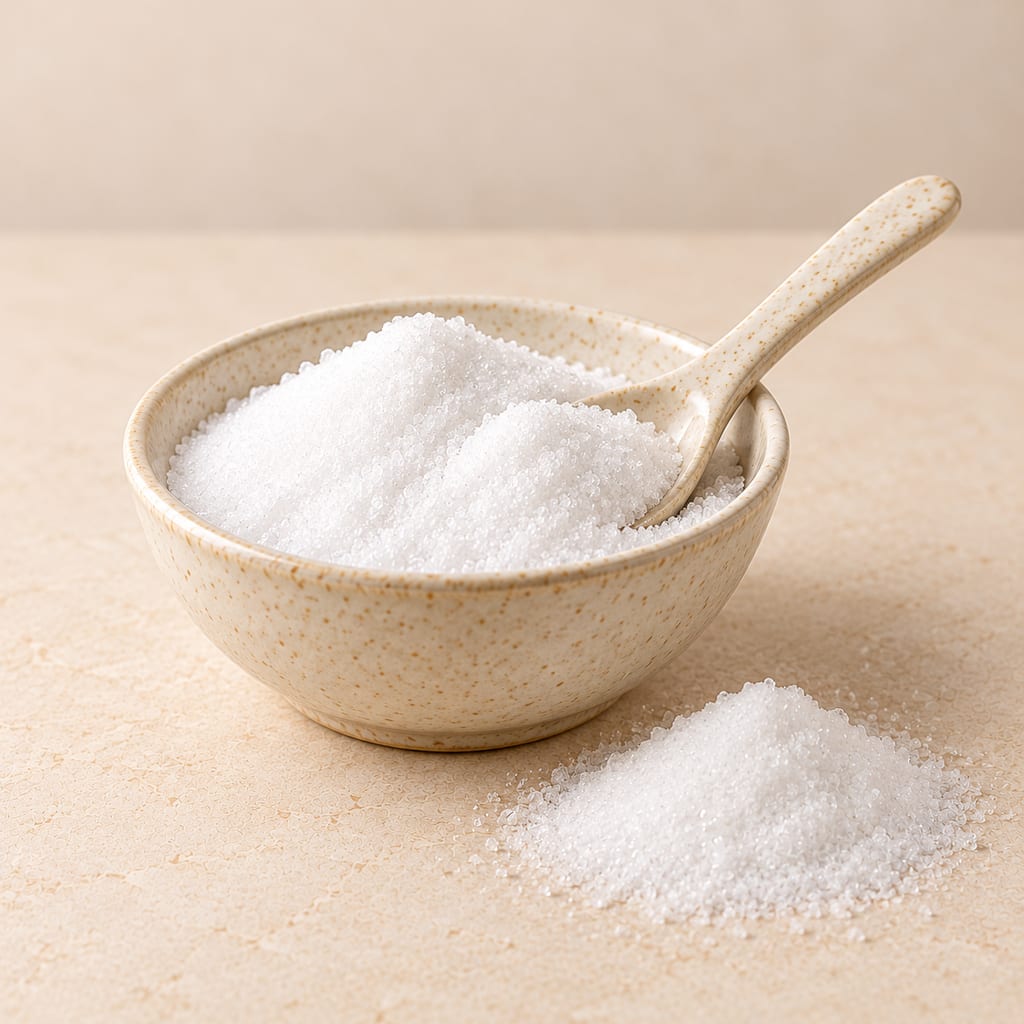
Bicarbonate of soda
Sodium bicarbonate is a mildly alkaline kitchen powder used for leavening and, in two published South African green-fig konfyt methods, in the preliminary boil.
 FermenteaWhere food goes to change
Modern method
Whole green fig preserve · Green fig preserve
Hard green figs are parboiled and cooked whole in a lemon-sharpened sugar syrup as a refrigerator-only South African konfyt; the method does not establish shelf-stable canning.
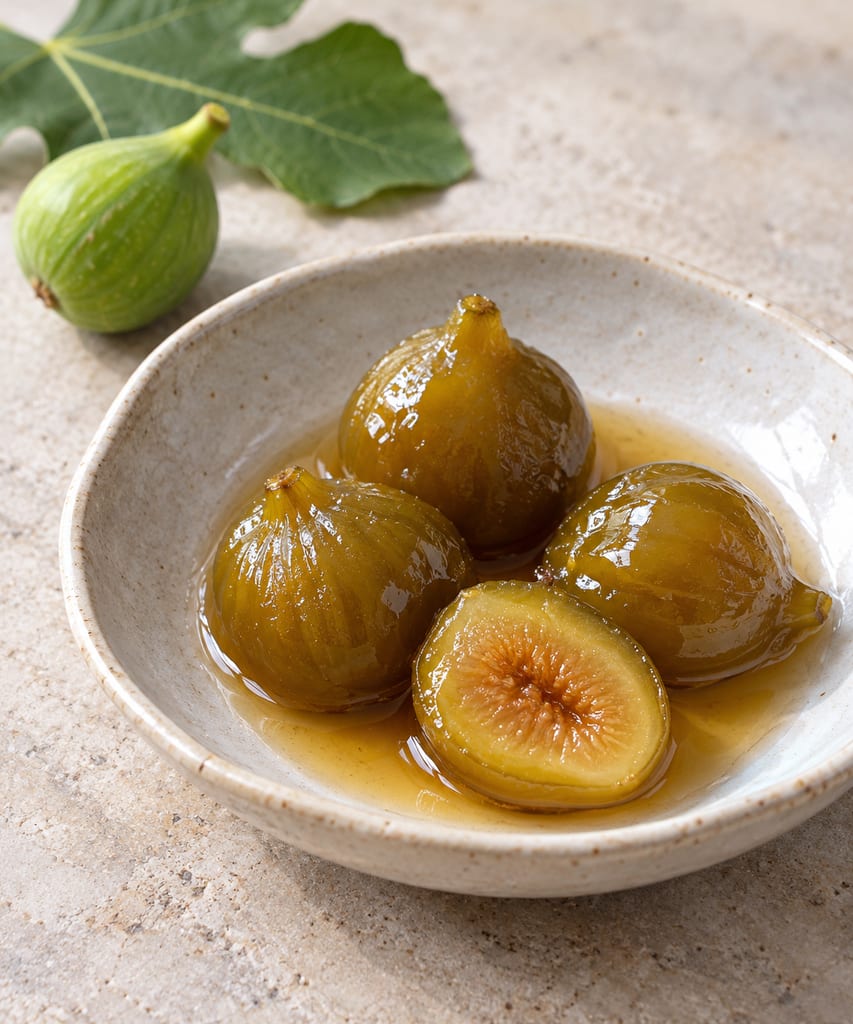
Konfyt names a preserve in which fruit remains whole or in large pieces and sits in its own syrup. That shape is the point: a jar is not a purée to spread thinly, but a small collection of intact fruit with syrup around it. The Dictionary of South African English records the word as coming through Afrikaans from Dutch and defines it by the fruit and syrup together. It quotes green-fig konfyt in 1968, while its wider examples place konfyt at tea tables and in accounts of South African domestic cooking. The name describes a family of preserves, not one fixed formula.
This version follows J. de V. Lötter’s 2014 South African fig book. It begins with hard green figs, trims and scores them, boils them briefly in salted water, then transfers them hot to a lemon-sharpened sugar syrup. The figs cook whole until the syrup is clear and glossy. The result is different from green-fig jam, which breaks or crushes fruit, and from a quick pickle, where vinegar supplies the main sourness. It is also not a fermented food: there is no starter culture, brine fermentation, or intended microbial acidification in the recorded method.
“Without lime soak” is a useful part of this recipe’s identity. A second Cape-published recipe, credited to Cass Abrahams, soaks figs overnight in water and slaked lime, then uses bicarbonate, cinnamon and dried ginger. Lötter’s hard-fruit version does not use that treatment. These are related preparations, not interchangeable directions to combine. Their shared name and ingredient do not make their soak, flavourings, quantities or texture identical.
The word’s route is clearer than the recipe’s first appearance. The dictionary traces Afrikaans konfyt to Dutch konfijt and documents nineteenth-century Cape references to fruit preserves; it includes an 1862 reference to Cape confyt and later quotations for green-fig konfyt. These citations establish that the practice and name were being written about by those dates. They do not identify the first cook, the first recipe, or a single place where preserving green figs began.
Marie Viljoen’s Gardenista account brings together cookbook research and a Cape Town grower’s explanation of local fig crops. It describes unripe green figs as a familiar preserve sold at roadside farm stalls and in small-town shops. The article connects Cape cooking to Dutch colonial settlement, the Dutch East India Company’s trade routes, and the cooking of enslaved Southeast Asian people at the Cape. That context is important, but it is a layered account of exchange and unequal colonial history, not proof that one community invented konfyt or that every later recipe came from the same lineage.
Lötter’s book gives a printed method and locates its subject within South African fig cookery; it does not say when that exact no-lime method arose. The responsible historical statement is therefore modest: konfyt has a documented South African record reaching into the nineteenth century, green-fig versions are recorded in the twentieth century, and this specific method is printed in a 2014 source. A recipe date is not an origin date. Claims older than the evidence, including stories that assign the whole practice to one nation or ethnic group, would turn a complex food history into a certainty the sources do not support.
The recipe calls for hard green figs of similar size. That selection is functional: whole fruit must withstand handling, a preliminary boil and a much longer cook in syrup without collapsing into a spoonable mass. Lötter says to trim the woody stalk end, score the ostiole—the small opening at the blossom end—and weigh the fruit. The score gives the syrup a route into the fruit; similar size helps pieces reach a comparable tenderness. These are practical effects of the specified preparation, not a promise that every cultivar or maturity stage behaves identically.
Viljoen describes a Cape distinction between the first breba crop, called voorvye in the grower’s account she reports, and a later crop called eetvye, which is eaten ripe. She says the early crop is traditionally selected for preserves. This is useful seasonal context, but it is a reported local distinction rather than a universal botanical rule for all fig trees or all South African households. Green fruit here means immature fruit selected while firm, not a ripe green-skinned cultivar.
Fig texture changes as fruit matures. A study of common fig fruit reports marked softening and loss of firmness and cell-wall cohesion as figs ripen, with cell-wall polymers including pectins. That research explains why maturity can matter to a whole-fruit preserve, but it did not test Lötter’s recipe or measure its syrup uptake. Choose the hard fruit the recipe specifies and do not substitute ripe figs on the assumption that colour alone tells you they are equivalent. Ripe fruit has a different structure and is used by other fig-preserve recipes.
The book gives 2.5–3 kg sugar and 6 litres water for 1.5 kg figs. It says to dissolve the sugar gently, add one of the stated acid choices, then add the hot fruit and cook rapidly until the syrup looks clear and glossy and falls slowly from a spoon. This unusually generous syrup is part of the documented formula, not a measured endpoint that should be adjusted at will. The book does not report a final soluble-solids reading, pH, finished yield, or water activity, so none should be inferred from the amount of sugar alone.
In general fruit preserves, dissolved sugar sweetens and changes the texture of the fruit and its surrounding liquid. Sugar also affects water activity—the portion of water available for microbial growth—but the effect depends on the finished food, its composition and its processing. Utah State Extension specifically warns that syrup for canned whole fruit changes flavour and texture but does not provide the canning safety process. Its guidance distinguishes fruit in syrup from jams and jellies, where sugar has a different role in the set. This recipe keeps whole figs in syrup; it is not a pectin gel.
Acid contributes a bright counterpoint to the sweetness, but the source does not assign a measured pH or explain a technical preservation role for the lemon or alternative acids here. The alternatives in the recipe are lemon juice, citric acid, tartaric acid, or cream of tartar in the stated amounts; treat them as the source’s choice set, not as a license to omit acid, combine all four, or improvise ratios. The result is cooked, syrup-preserved fruit, not a validated shelf-stable product simply because it is sweet, sour, or glossy.
Hard green figs supply the fruit’s shape, flavour and texture. This method does not cut them into pieces or crush them, so the cook watches for the moment when a fig is still slightly firm yet can be pierced through the skin. The amount of natural pectin varies among fruit and with maturity, and general fruit-spread guidance explains that pectin structures can form gels under suitable conditions. But the Lötter method is not a jam recipe, and the book does not say that the syrup should set as a pectin gel. A thick syrup and an intact fig are its defining form.
Granulated sugar forms the bulk of the syrup and gives it sweetness and body as water evaporates during cooking. Water dissolves that sugar and carries the syrup around the figs; the source measures this syrup water but does not give a volume for the preliminary boil. Lemon juice or one of three measured acid alternatives supplies the sharper edge that balances the sweetness. Because no one alternative is described as chemically identical in flavour or strength, follow the source’s stated choice rather than treating unspecified amounts as equivalent.
Salt appears in the first boiling water, but the book gives no quantity. It cannot therefore be faithfully reconstructed as a percentage brine. A pinch of baking soda is optional and also unmeasured; it is not required by the source. Flavourings are added to taste, so the printed formula does not prescribe cinnamon, ginger or another spice. That omission keeps this recipe’s flavour open and separates it from the spice-led Abrahams version. The source calls for gloves because fig latex may irritate skin; this is a handling note tied to fresh figs, not a sign that the finished preserve is hazardous.
Begin by sorting for hard, similarly sized fruit. Trim the woody stalk and score each ostiole as instructed. The source recommends gloves during fig handling because latex can irritate skin. The preliminary boil is in rapidly boiling salted water for 10–20 minutes, with a pinch of baking soda optional. The amount of salt and water is not specified. The purpose the book states is practical: continue until the fruit is slightly firm but can be pierced through its skin. The time is a range, so test the fruit rather than assuming every fig reaches that point together.
While the fruit is cooking, dissolve the sugar gently in the measured syrup water, then add one of the specified acids and any chosen flavouring. The book advises against rapid boiling during this dissolving stage. Once the figs are ready, drain them and transfer them hot into simmering syrup. This transition keeps the fruit whole while the syrup surrounds it. The long syrup cook—about two hours—is the method’s main transformation: water evaporates from the pan, the syrup becomes more concentrated, and the fruit grows glossy and takes on syrup.
The book describes removing the pan from heat, letting the foam settle and bottling the fruit with its syrup. It gives no jar size, headspace, finished yield or post-fill heat process. This page does not follow the source's bottling direction: move the figs and syrup into clean, shallow, refrigerator-safe containers and refrigerate promptly within two hours at 4 °C or below. Do not seal for room-temperature storage; no validated storage duration is available.
The related Cass Abrahams recipe published by Wines of South Africa uses 500 g green figs, an overnight soak in water and slaked lime, then boiling water with bicarbonate of soda. It flavours the syrup with cinnamon and dried ginger and uses a separately specified syrup basis per 500 g fruit. The source does not give the amount of soak water or the lime concentration, so its 75 ml lime cannot be translated into a reliable concentration without information not supplied. The no-lime Lötter recipe instead starts from hard figs and uses salted-water parboiling. Keep these ingredient and process systems separate.
Gardenista documents another household approach based on earlier cookbooks, including Hilda Gerber’s Traditional Cookery of the Cape Malays, Mary Higham’s 1923 book, and later collections. The author says her version most closely follows a 1975 recipe but uses less sugar. That is useful evidence that cooks adapt the preserve and that the printed recipes have distinct proportions. It is not a basis for reducing this recipe’s sugar while expecting the same texture or keeping quality.
Across the broader category, the preserved fruit may be whole or in large pieces, more translucent or more opaque, plain or aromatic, and served in a generous pool of syrup or with the syrup reduced more heavily. These are descriptions of variation, not instructions to merge methods. Lötter’s exact source gives no spice formula and calls for hard green figs; Abrahams’s version adds a lime soak and spices; Gardenista reports a third author’s adaptation. Naming these differences helps a reader choose a related record instead of blending every ingredient list into a fictitious universal recipe.
Konfyt is suited to small portions because the fruit is sweet and syrup-rich. Viljoen describes it on toast, with tea or coffee as an afternoon spoon sweet, with cheese, and in a shaved fennel salad with lemon and pepper. These are her documented serving ideas, not a claim that there is only one customary way to eat it. The dictionary’s historical quotations also place konfyt with coffee, cakes and tea, and note whole or large fruit pieces rather than jam-like purée.
At the table, a whole fig can be lifted with a fork and cut into pieces, allowing the syrup to gloss bread, cheese or another accompaniment. The fruit’s firmness contrasts with its soft cooked interior, while syrup supplies the concentrated sweetness. A little portion can accompany a plain, unsweetened food; a spoonful of syrup can also be used sparingly as a sweet condiment. These are culinary suggestions based on the preserve’s form, not an alternative storage method.
Green-fig konfyt also has a different role from ripe fresh figs. The Gardenista account describes hard unripe figs as the selected preserve fruit and the later crop as better eaten ripe. The contrast captures why this preparation exists: it turns firm seasonal fruit into something to serve in small, sweet portions, while mature figs remain a distinct fresh fruit experience. The preserve can be presented as one element on a tea table or cheese plate rather than as a spread that hides the fruit’s identity.
Lötter’s book ends by bottling the figs and syrup, but it does not include a tested jar preparation or a post-fill process for shelf-stable storage. The National Center for Home Food Preservation cautions against open-kettle bottling as a canning method. This public version is explicitly refrigerator-only: use clean, shallow, refrigerator-safe containers and refrigerate promptly within two hours at 4 °C or below, following general FoodSafety.gov cooling guidance. Do not seal jars for room-temperature storage.
The Lötter source does not state an after-opening storage period or shelf life, so this account assigns none. Do not use appearance, smell, taste, or a lid seal alone to infer safety. The food-safety guidance cited here supports prompt refrigeration and cooling in shallow containers; it does not validate a canning process or a recipe-specific storage duration. If shelf stability is the goal, choose a tested recipe with its own fruit preparation, acid instructions, jar size, headspace and heat process.
The Lötter source does not state an after-opening storage period or shelf life, so this account assigns none. Do not use appearance, smell, taste, or a lid seal alone to infer safety. For a preserve made according to the book without a tested process, follow current food-safety guidance rather than assuming it is shelf stable. The useful distinction is between the traditional cooking instructions, which describe how the figs are prepared and how their syrup looks, and a validated preservation protocol, which the source does not supply.
The source’s cues are specific but qualitative. The fig should remain slightly firm while a skewer or similar point can pass through the skin. The syrup should become clear and glossy and fall slowly from a spoon after the long cook. The source does not provide a refractometer value, pH, or final weight. A cook can use the stated sensory cues to reproduce the book’s intended texture, but should not mistake them for a measurement of water activity or a safety test.
If the fruit is much softer before cooking, it is not the hard green fruit the recipe names and may not remain whole through the same sequence. If the figs differ greatly in size, they may reach tenderness at different times; the instruction to choose similar sizes addresses that practical problem. If syrup thickens before the fruit is ready, changing the formula or adding water ad hoc would produce a different method. The book does not provide troubleshooting rules for those cases, so the safest faithful choice is to begin with the specified hard, uniform fruit and follow the stated stages.
Likewise, cloudiness, crystallization, colour shifts, or a particular texture should not be assigned a cause unless a source establishes it for this exact batch. General fruit-spread science can explain why pectin, acid and sugar matter in some products, but these whole figs are not a gelled jam and this recipe gives no analytical targets. The record preserves the source’s quantities, alternatives and unknowns so the reader can distinguish what is documented from what would require a new, tested formulation.
Konfyt is a South African whole-fruit preserve in syrup, named from Afrikaans and Dutch. South African writing records the term in the nineteenth century and names green-fig konfyt in a 1968 quotation. J. de V. Lötter's 2014 English fig book gives this method for hard green figs: a salted-water parboil followed by syrup cooking, without the lime soak used for fruit that has started to soften. The book records the method but does not identify its first maker or birthplace.
Scaling: source batch only
The fig book advises gloves because fig latex can irritate skin.
Hazard sourceThe source ends by bottling the fruit but gives no tested post-fill process. Open-kettle bottling does not prevent all spoilage risks, so this version is explicitly refrigerated only.
Hazard sourceTreat this as a refrigerator-only preserve. Transfer the hot preserve into clean, shallow, refrigerator-safe containers and refrigerate promptly within 2 hours; keep the refrigerator at 4 °C or below. This general chilled-leftover guidance does not establish shelf stability or a recipe-specific storage duration.
Control sourceDo not seal for room-temperature storage. For shelf-stable canning, use a tested recipe with its specified jar preparation and heat process rather than the source's bottling direction.
Control sourceRefrigerator-only preparation: refrigerate promptly within 2 hours and keep at 4 °C or below.
Do not treat bottling hot figs and syrup as a shelf-stable canning process. This page provides no validated storage duration.
For shelf-stable canning, use a tested recipe and its specified post-fill process.
The method appears in a book about figs in South Africa; it does not name a specific preparation locality or origin.
Sodium bicarbonate is a mildly alkaline kitchen powder used for leavening and, in two published South African green-fig konfyt methods, in the preliminary boil.
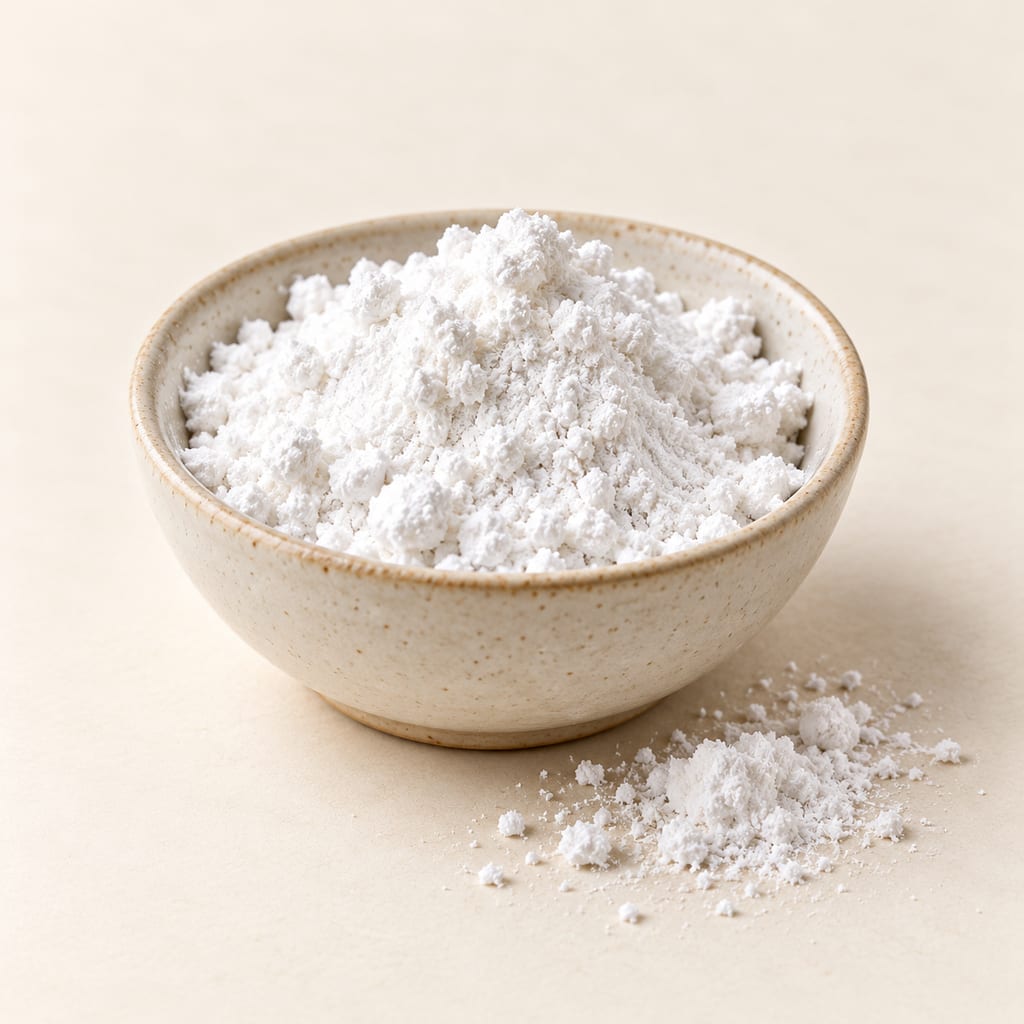
Cream of tartar is a grape-derived potassium tartrate salt used as a dry baking acid, foam aid and measured syrup ingredient.
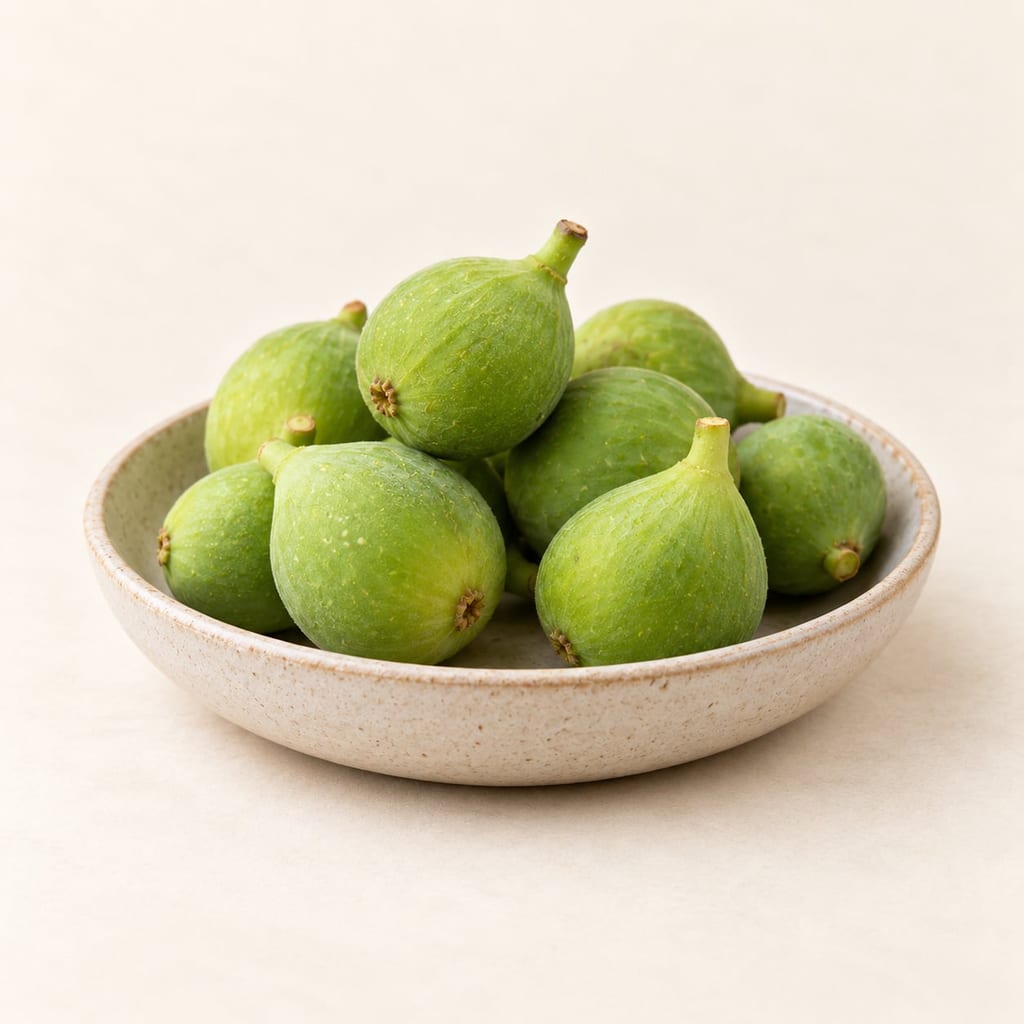
Firm green figs are the unripe fruit of the fig tree selected for preserves that keep the fruit whole and let it absorb syrup.
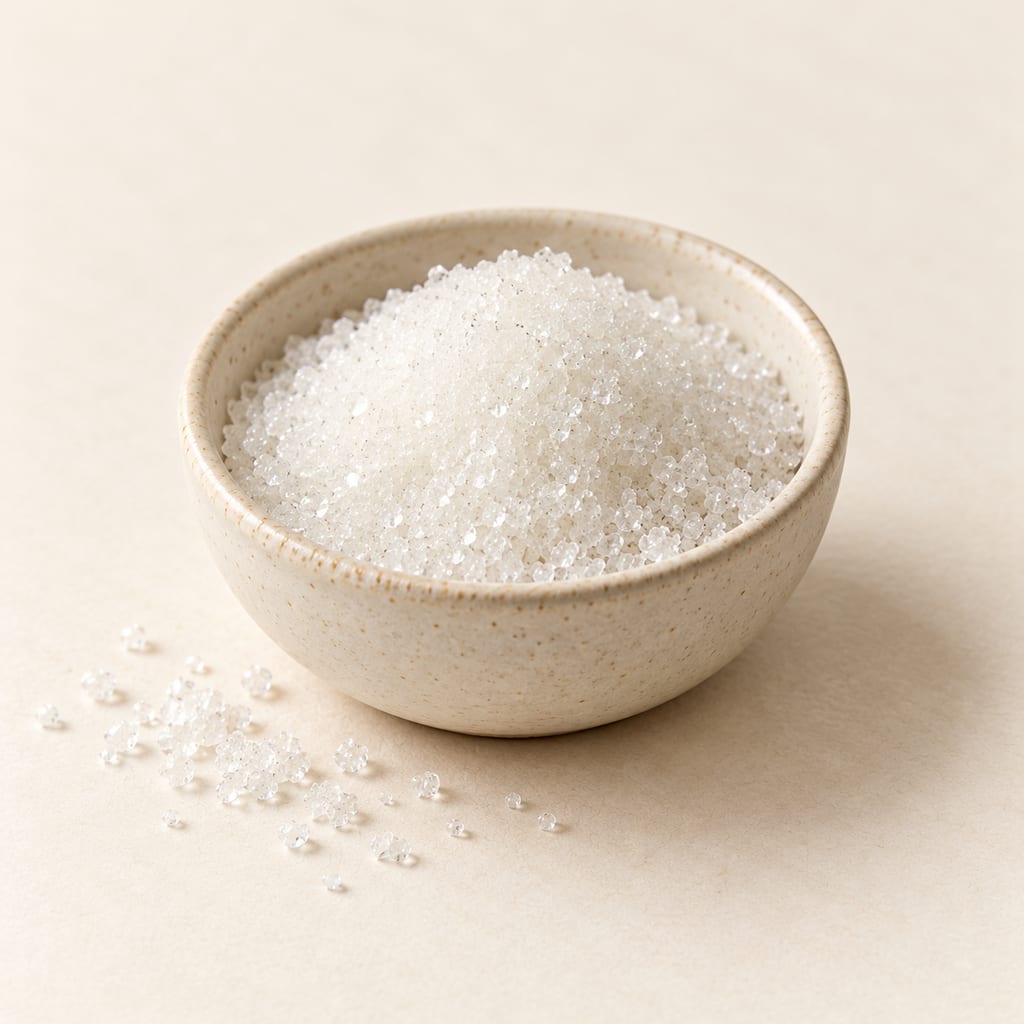
Tartaric acid is a crystalline food acid associated with grapes and wine; it gives sourness and is distinct from its potassium salt, cream of tartar.
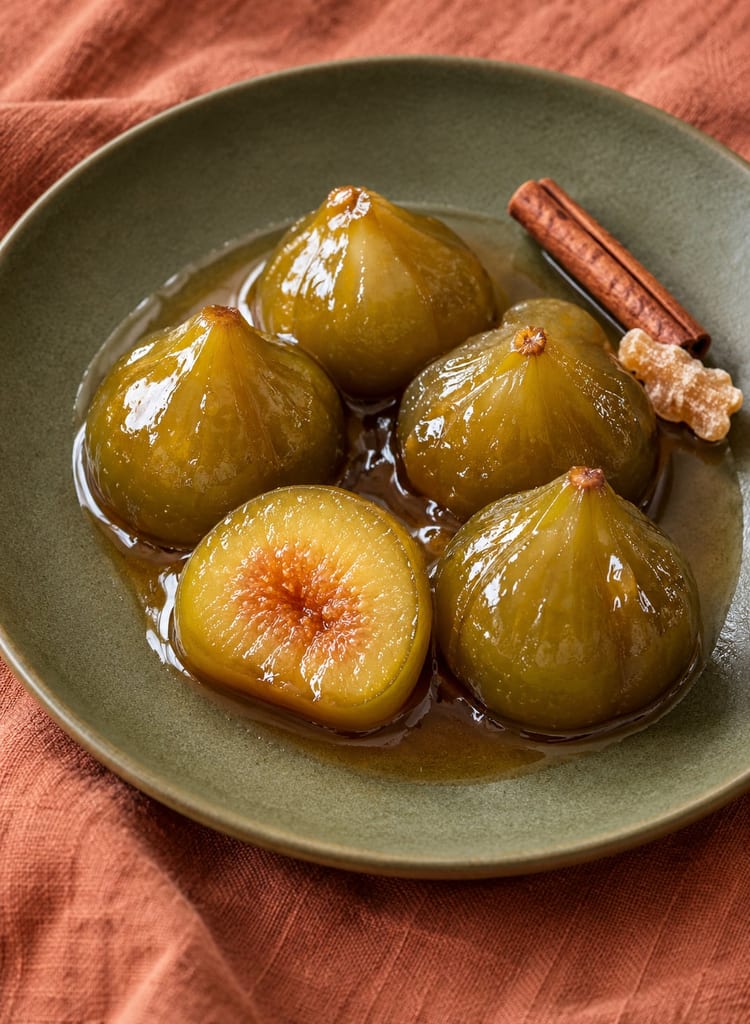
Whole unripe figs are softened and cooked in cinnamon and ginger syrup as a refrigerator-only South African konfyt; this method does not provide a shelf-stable canning process.
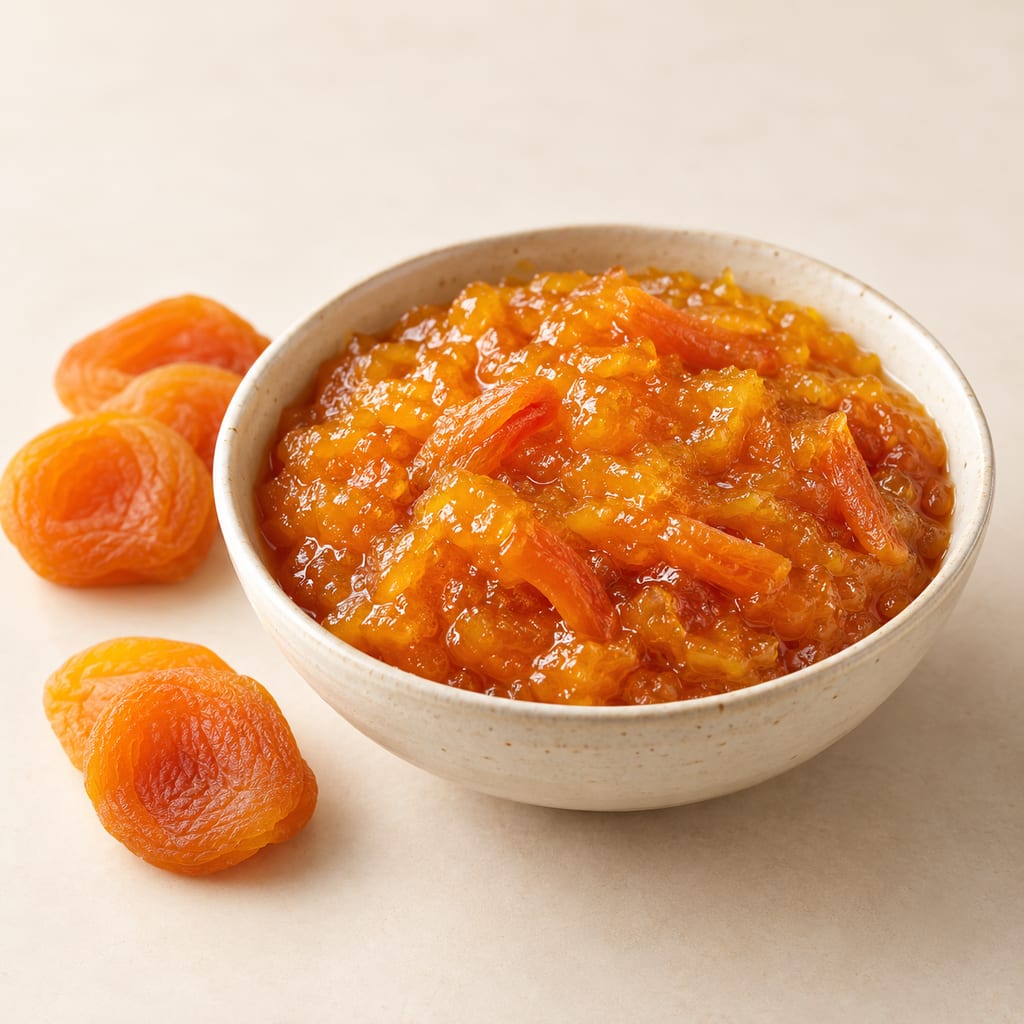
Pumpkin and dried-apricot jam: Freeze for winter; small fresh portion refrigerated up to 48 hours.
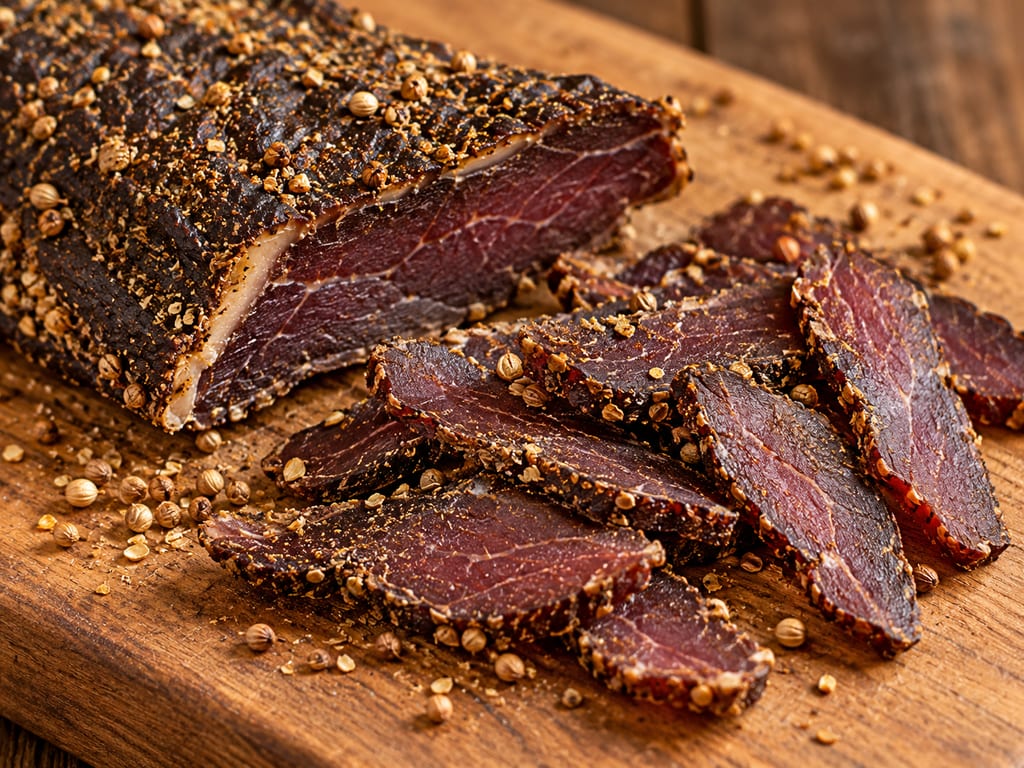
Strips of whole-muscle beef or game seasoned with salt, vinegar, roasted coriander and pepper and air-dried without cooking, sold anywhere from soft and moist to hard and very salty.
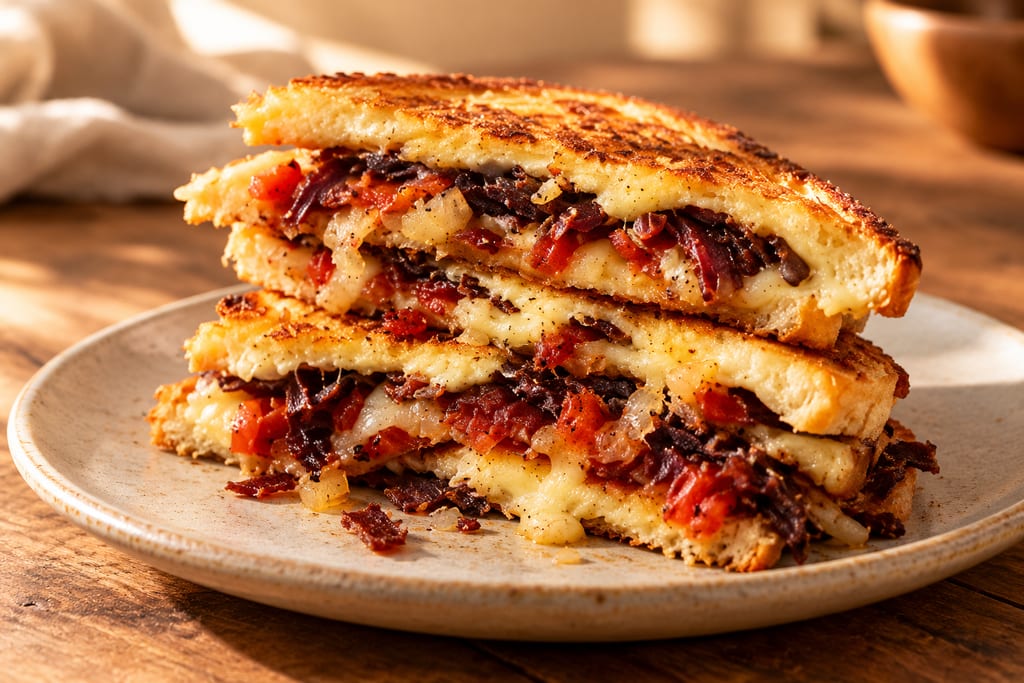
Chopped biltong, sweet onion, cream cheese and Cheddar fill bread toasted in a hinged grid over gentle coals, then finished with biltong dust.
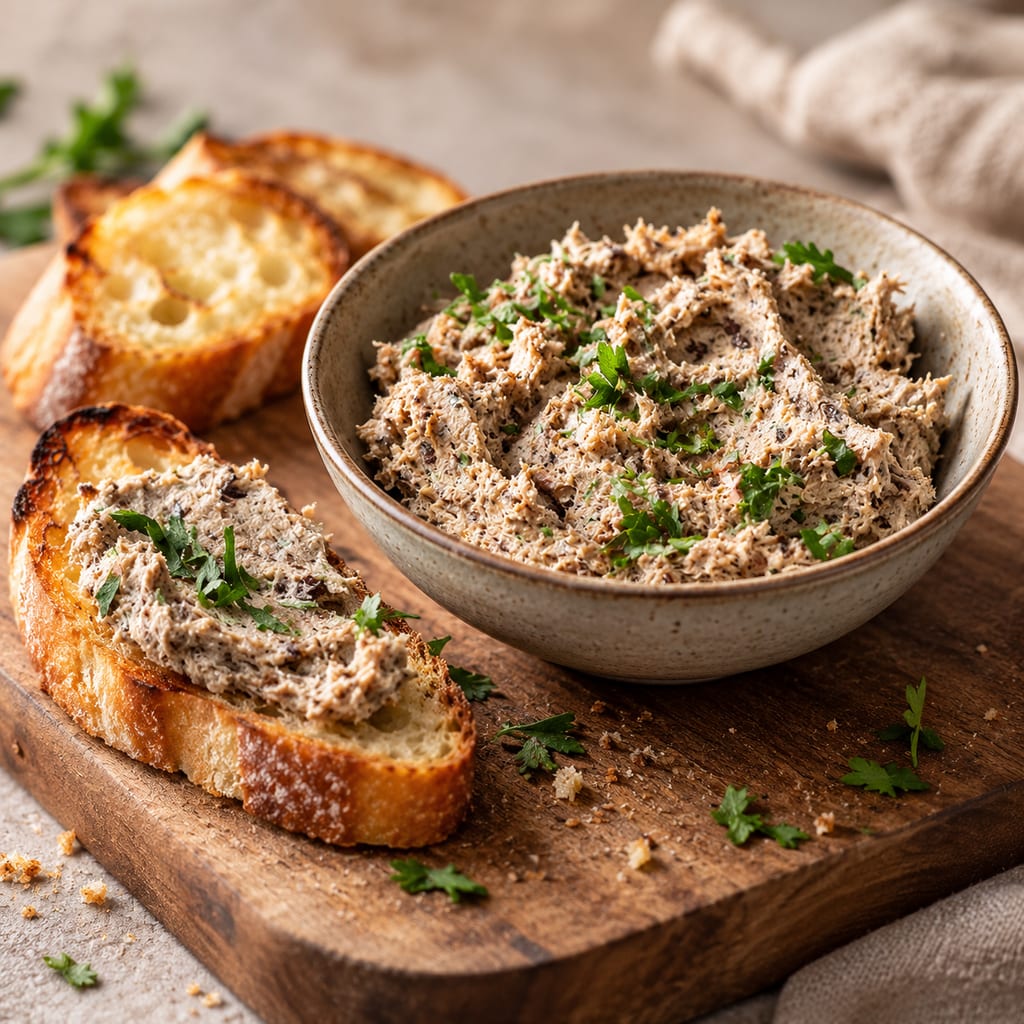
A cold biltong spread with sour cream, mayonnaise, mustard, lemon and herbs; serve it with crackers, crostini or bread.
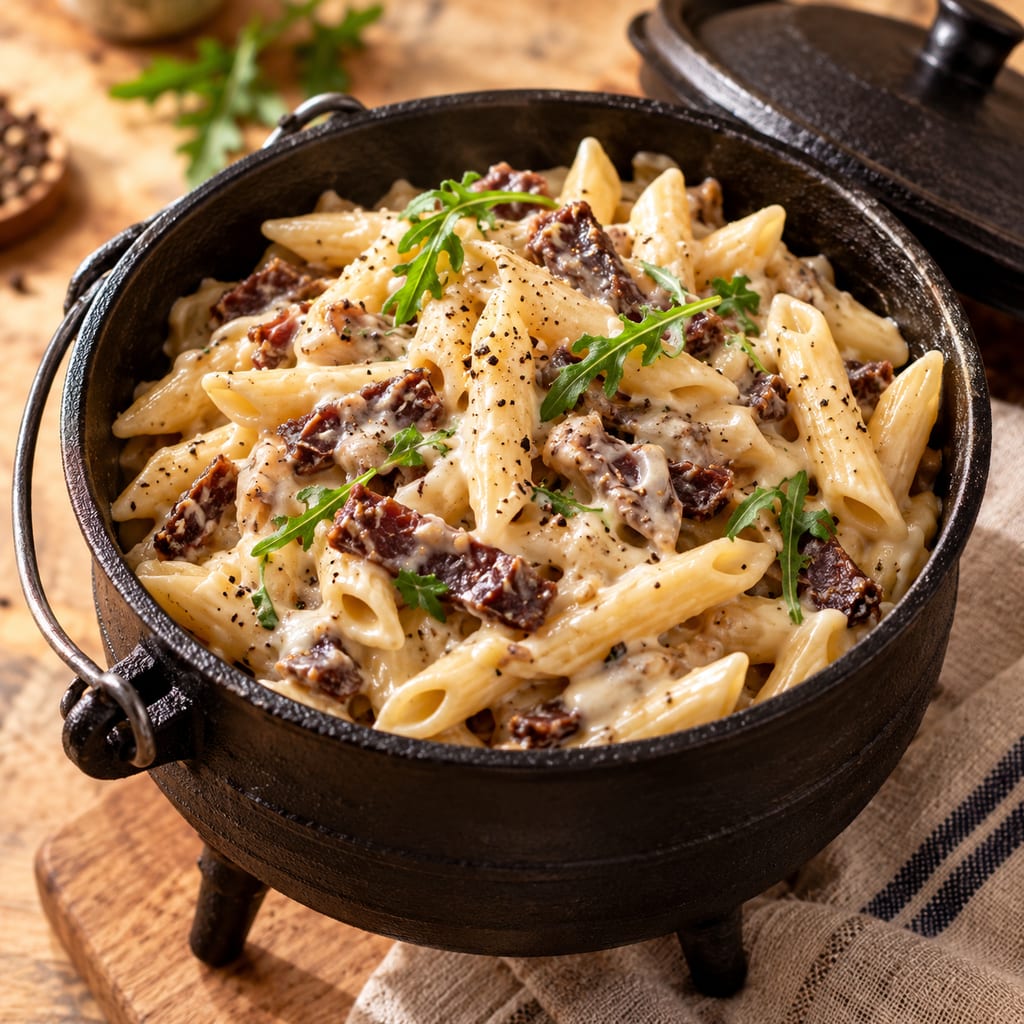
Biltong, bacon and vegetables simmer in tomato-herb stock, then join cooked pasta, milk, cream and Cheddar in this outdoor potjie.
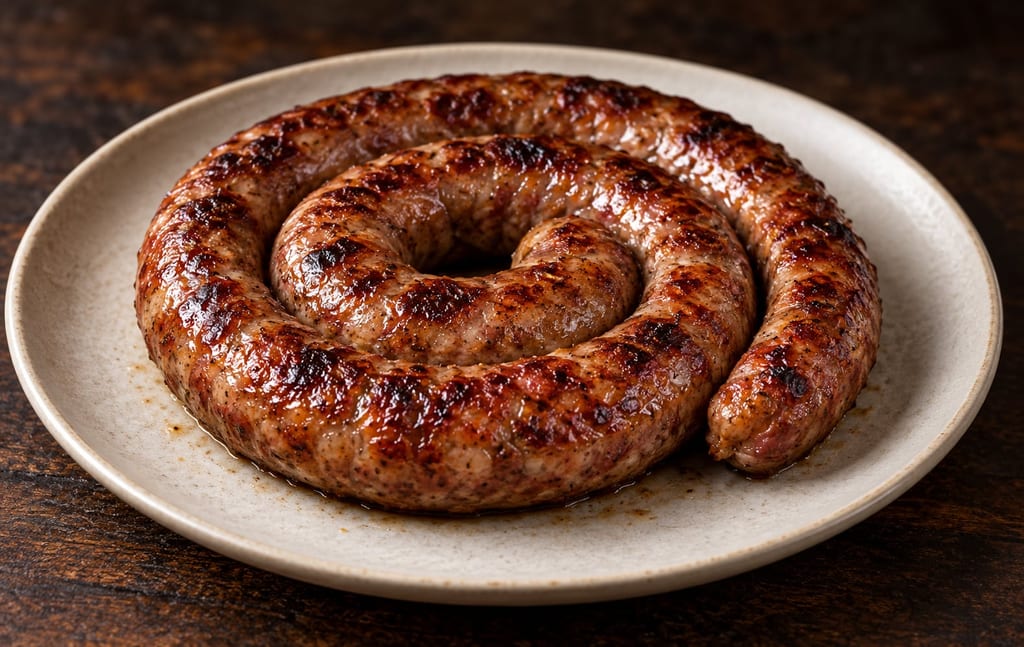
A coarse South African farmhouse sausage of beef with pork or mutton fat, defined by its coriander seasoning and cooked fresh over coals rather than preserved.
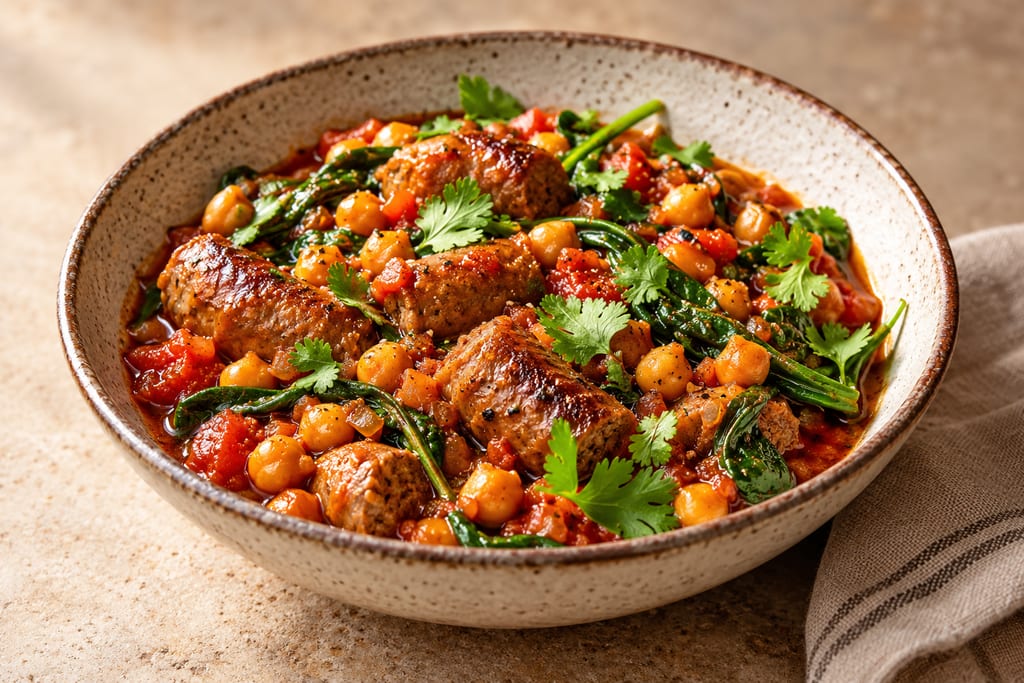
Lesego Semenya’s contemporary South African stew combines browned boerewors, chickpeas, tomato, spinach and warm spices.
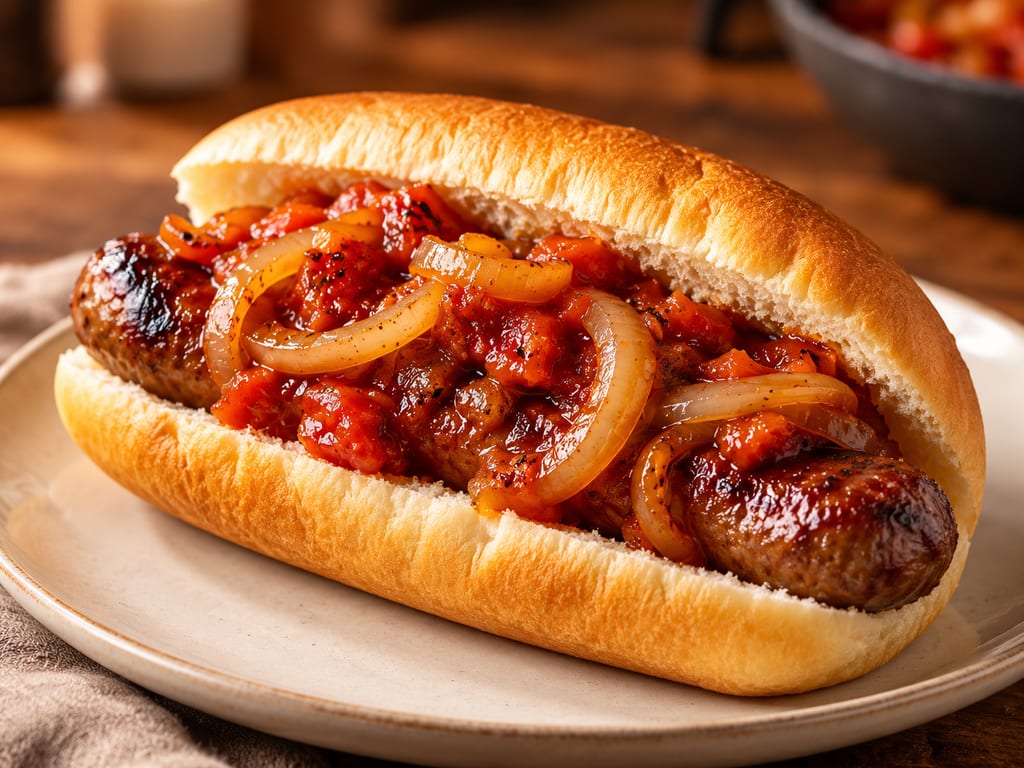
A South African boerie roll puts fully cooked boerewors in a soft bread roll and tops it with warm tomato-and-onion smoor.

Adrak murabba preserves young ginger in sugar syrup, a sweet South Asian preparation recorded in Indian cookery and food-processing sources.
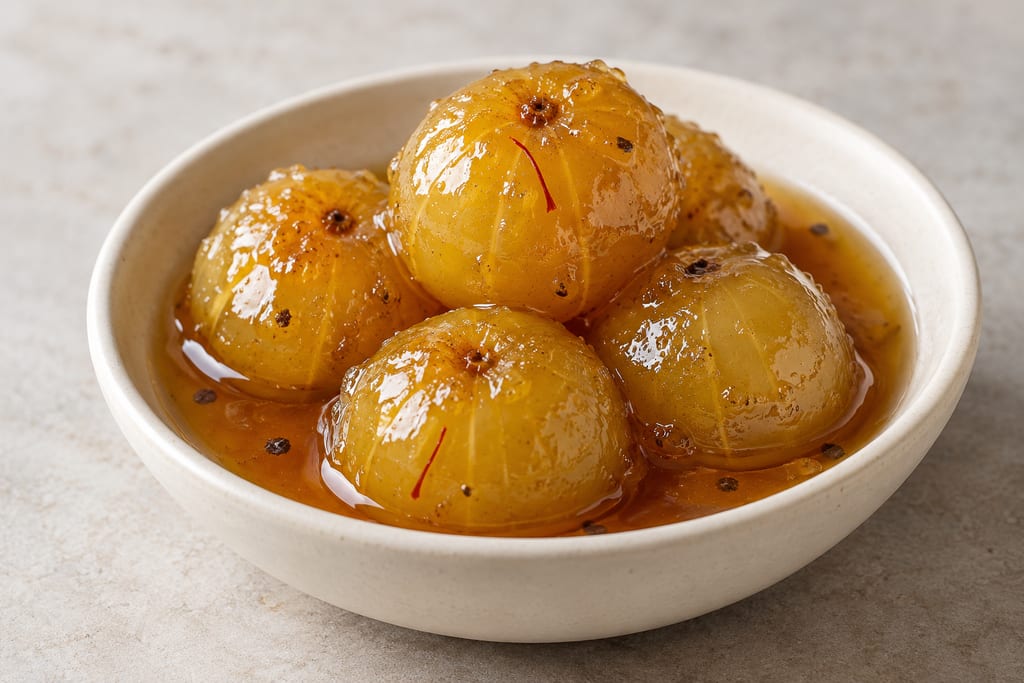
Amla murabba preserves whole Indian gooseberries in a heavy sugar syrup scented with cardamom and sharpened with pepper and black salt. This household method soaks the fruit before cooking.
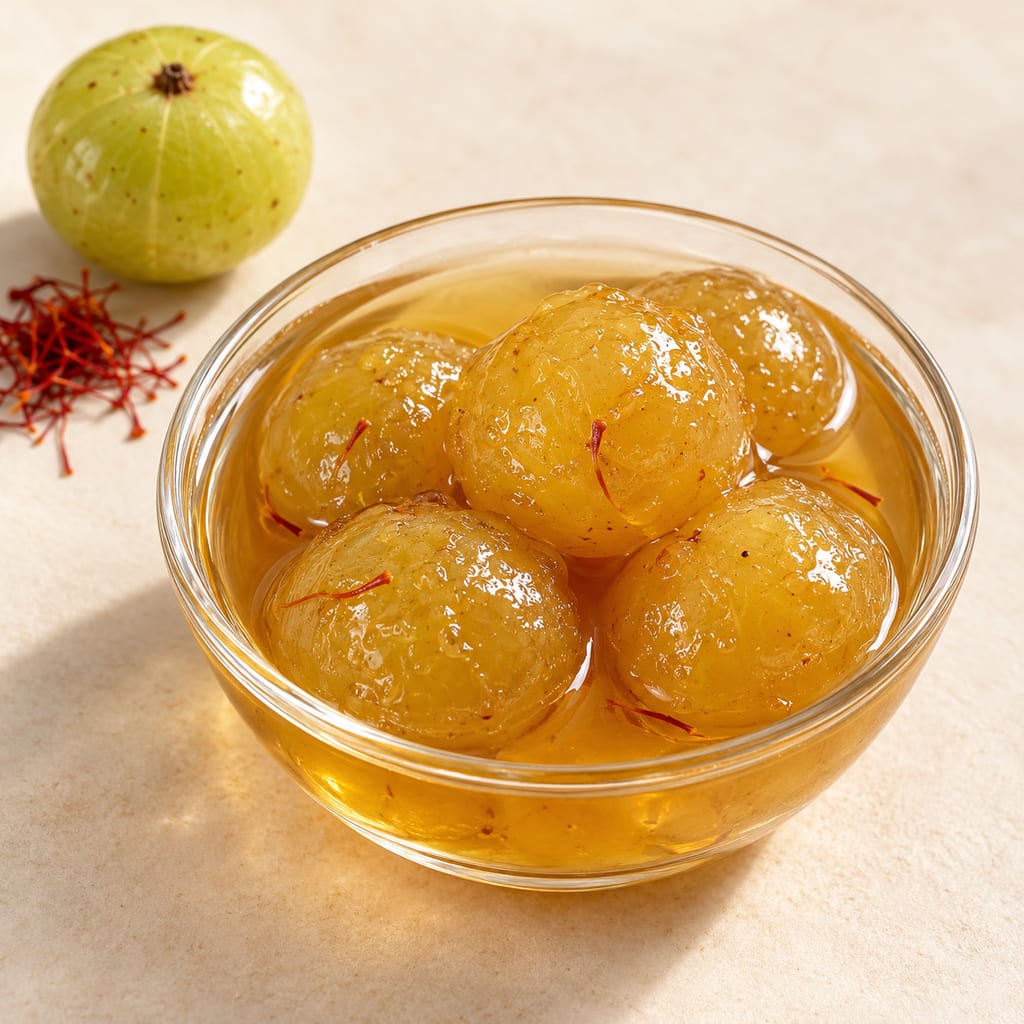
Whole amla simmer in sugar syrup with saffron, black cardamom and pepper in this chef's version of the Indian fruit preserve. The fruit is soaked overnight before cooking.
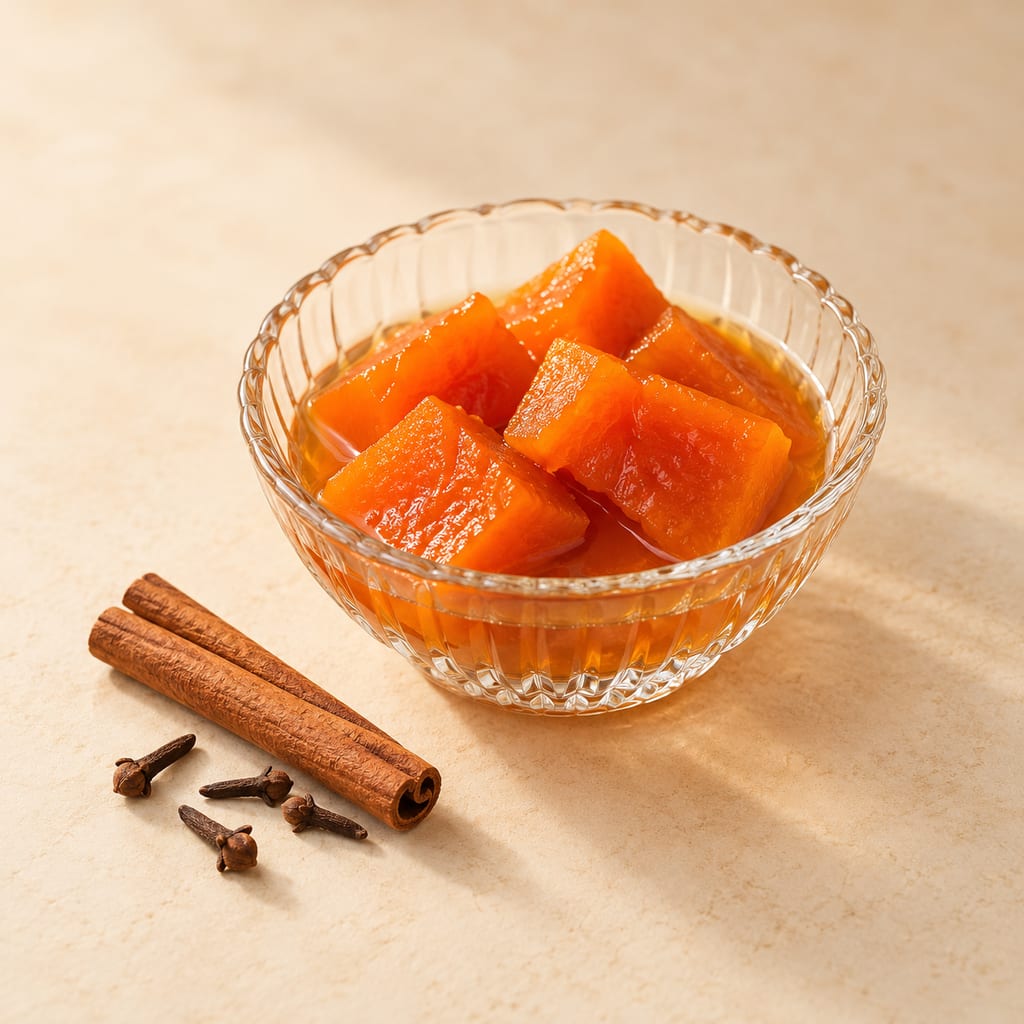
Brazilian doce de abóbora: Freeze for winter; small fresh portion refrigerated up to 48 hours.
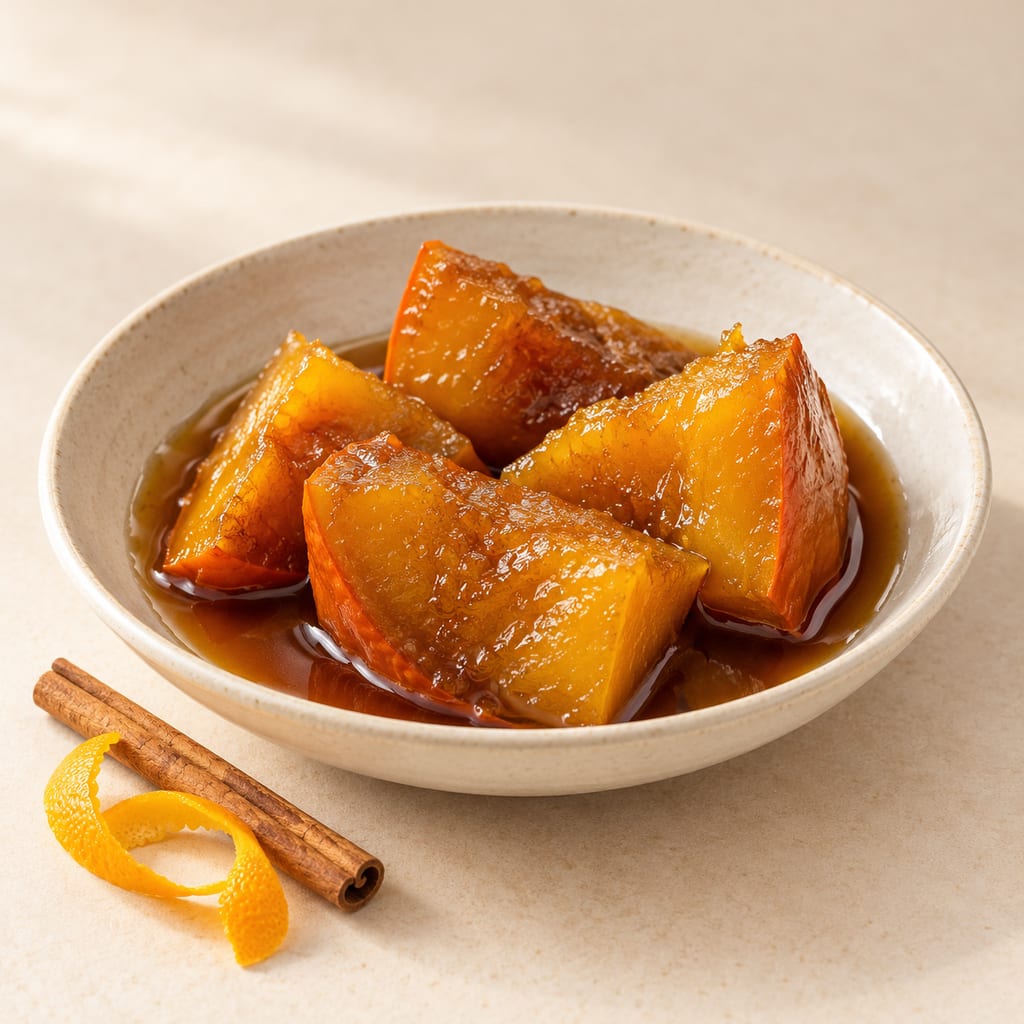
Rind-on pumpkin simmered with piloncillo, orange and cinnamon until glazed. This Mexican sweet keeps refrigerated for up to one week.
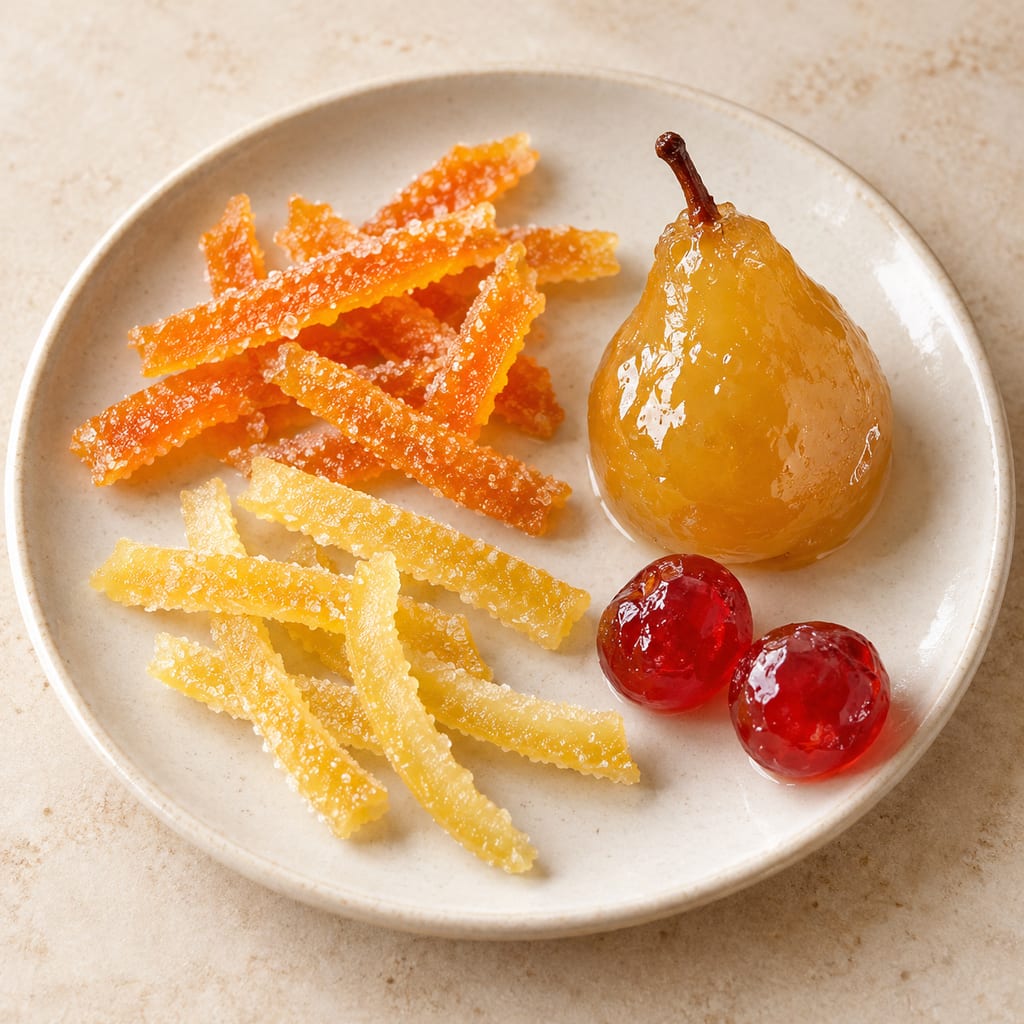
Candied fruit is fruit that has been repeatedly steeped in concentrated sugar syrup, which replaces part of its water with sugar, often followed by drying. It differs from fruit served in a thin syrup.
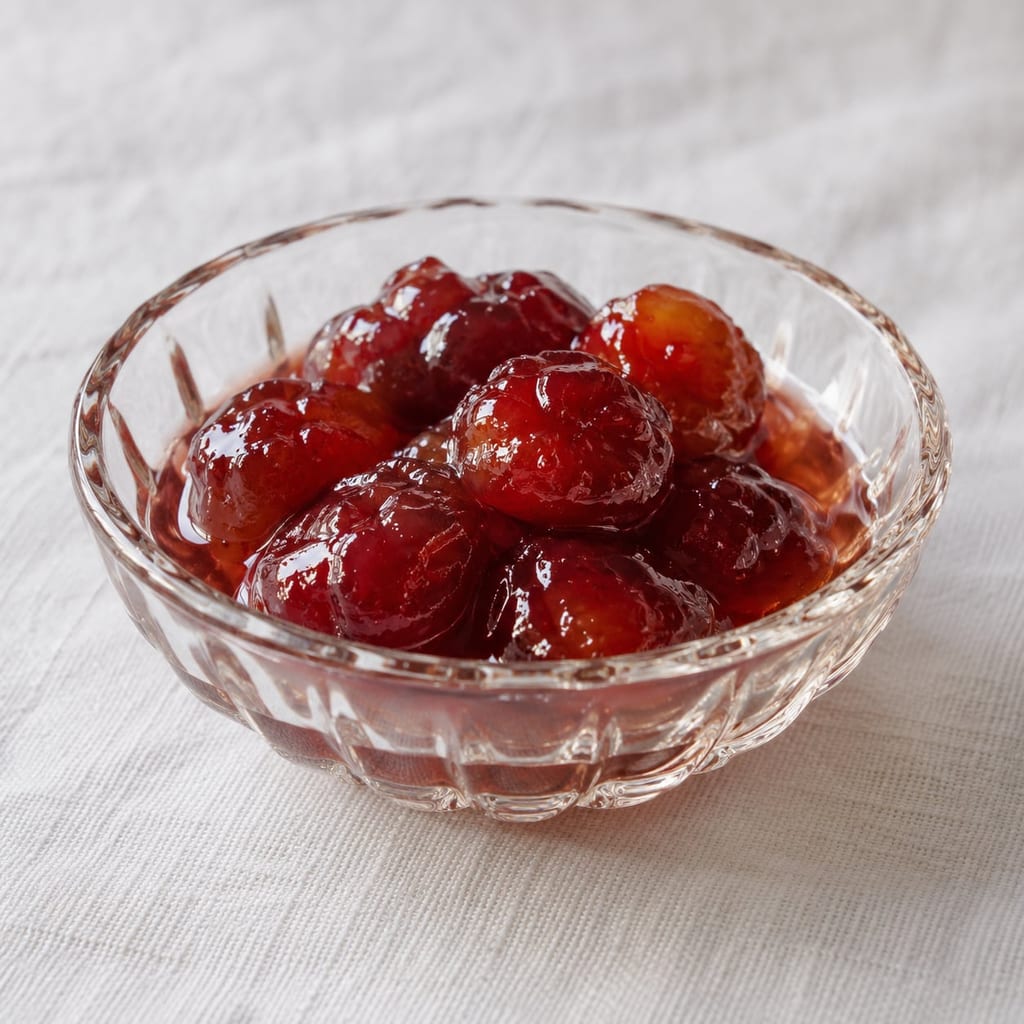
Cypriot cherry glyka made by layering firm pitted cherries with sugar, briefly boiling them, chilling overnight, and boiling again to concentrate the syrup. This version is refrigerated and has no shelf-stable canning process.
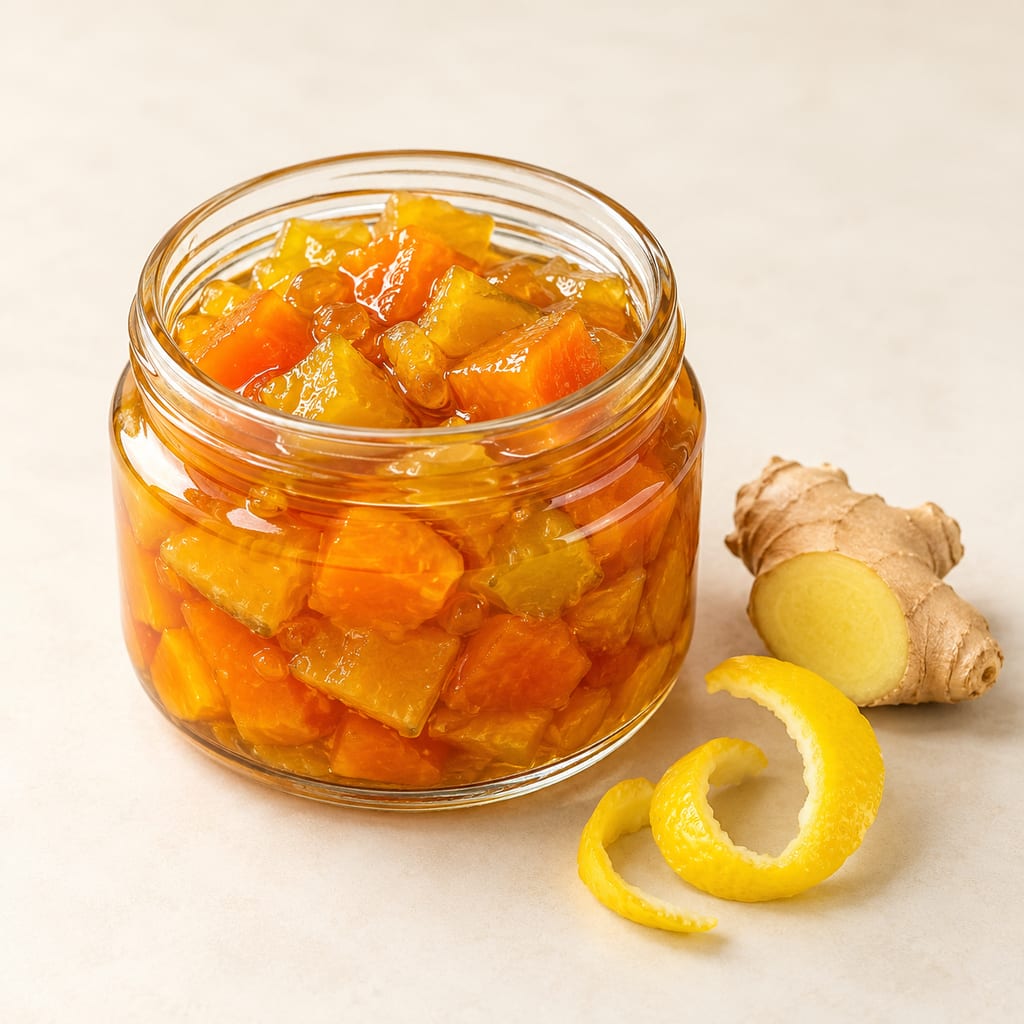
English lemon-and-ginger preserved pumpkin, after an 1861 recipe: Freeze for winter; small fresh portion refrigerated up to 48 hours.
No community contributions have been published for this entry yet.
Sign in to contribute. Published comments and photos are free to read.
Western Cape Department of AgricultureProcess
The Fig in South AfricaWhole green fig preserve and general bottling notes (printed pp. 160–161; PDF pp. 168–169); recipe published in a 2014 English edition of J. de V. Lötter's book.
Cited in: A whole-fruit preserve, not a fig jam; The Cape record and the limits of origin stories; Why hard, green fruit is chosen; Sugar syrup changes the fruit, but does not prove safety; What each ingredient contributes; The stages and their sensory cues; Two distinct approaches to green-fig konfyt; Bottling, storage, and the important safety boundary; Reading the result without rewriting the recipe
Dictionary of South African EnglishHistory · Terminology
konfytKonfyt means whole or large pieces of fruit in syrup; historical quotations include a 1968 mention of green-fig konfyt.
Cited in: A whole-fruit preserve, not a fig jam; The Cape record and the limits of origin stories; Serving and using the finished fruit
National Center for Home Food PreservationSafety
Equipment and Methods Not RecommendedHot filling and sealing without a tested post-fill process is not recommended for home canning.
Cited in: Bottling, storage, and the important safety boundary
University of Minnesota ExtensionFood science · Preservation
Preserving food at home: Fruit spreadsDefines preserves as whole fruit or small pieces in thick syrup; distinguishes preserves from jams and jellies.
Explains general roles of sugar, acid and pectin in fruit spreads; these are general principles, not measurements for this fig method.
Cited in: Sugar syrup changes the fruit, but does not prove safety; What each ingredient contributes; Reading the result without rewriting the recipe
Oregon State University Extension ServiceFood science · Safety · Comparison
Preserving figsFigs are low-acid fruit; tested canning recipes use specified acid additions and process times.
Describes a distinct tested canning method for ripe figs; this is not the hard green-fig konfyt recipe and must not be merged into it.
Cited in: Bottling, storage, and the important safety boundary
Utah State University ExtensionFood science · Sugar
Reduced Sugar and Sugar-free Food PreservationSugar syrup alters fruit flavor and texture; in canned whole fruit it does not by itself establish safety.
Sugar concentration can lower water activity; the source distinguishes this effect in fruit preserves from jam and jelly structure.
Cited in: Sugar syrup changes the fruit, but does not prove safety; Bottling, storage, and the important safety boundary
Wines of South AfricaVariation · Comparison
Green Fig KonfytCass Abrahams's Cape Malay cookbook version uses an overnight water-and-slaked-lime soak, bicarbonate parboil, and syrup with cinnamon and dried ginger.
The page specifies a 500 g fruit syrup basis; the soaking-water volume and lime concentration are not given, so it is not merged into the present no-lime recipe.
Cited in: Two distinct approaches to green-fig konfyt
Gardenista; Marie ViljoenHistory · Season · Regional use · Serving · Variation
Green Fig Preserve Recipe: A Taste of South AfricaThe author reports South African green fig preserve as a sought-after seasonal preserve and describes a local distinction between first breba crop (voorvye) used for konfyt and second crop (eetvye) eaten ripe, based on a Cape Town grower's account.
The article situates Cape konfyt in a complex colonial and Cape Malay culinary context, explicitly describing a likely Dutch colonial introduction rather than proving a single origin.
The author describes serving it with toast, tea or coffee, cheese, and fennel salad; her formula differs from the recipe here.
Cited in: The Cape record and the limits of origin stories; Why hard, green fruit is chosen; Two distinct approaches to green-fig konfyt; Serving and using the finished fruit
National Center for Home Food Preservation; University of Georgia Cooperative ExtensionTested comparison · Safety
Fig PreservesProvides a separate tested U.S. whole fig-preserve method with a measured syrup, jar headspace, and boiling-water processing times by altitude; it is not the South African hard-green-fig method on this page.
Shows why boiling-water processing is a defined preservation step, rather than something implied by hot filling.
Cited in: Bottling, storage, and the important safety boundary
PubMed; Postharvest Biology and TechnologyFig biology · Texture
Relationship between pollination and cell wall properties in common fig fruitReports softening and loss of firmness and cell-wall cohesion as common figs ripen, and describes pectins among fig cell-wall polymers.
Does not test the Lötter konfyt recipe or measure syrup uptake.
Cited in: Why hard, green fruit is chosen
FoodSafety.gov (U.S. Department of Health and Human Services)Safety
4 Steps to Food SafetyGeneral leftover guidance says to refrigerate perishable food within two hours, keep the refrigerator at 40 °F (4 °C) or below, and use shallow containers for rapid cooling. This supports refrigerator-only handling here; it does not validate a canning process or recipe-specific storage duration.