Storage for this version: Cool in small portions and refrigerate within one to two hours at 5°C or below (aim for 4°C). Use the fresh chilled portion within 48 hours; freeze the winter portions promptly at about −18°C in freezer-rated containers with expansion space. Thaw in the refrigerator and use within 24 hours of complete defrosting. This is the collection's conservative handling policy, not a laboratory shelf-life result for this preserve.
Jan Hendrik's own publication presents pumpkin-and-dried-apricot jam in a discussion of French pumpkin cookery, while noting pumpkin preserves in South African farm-stall and home-industry traditions. This supports a precise attribution: it is a documented French-style preparation from a South African chef's publication. It does not prove that this exact formula is a centuries-old national South African recipe.
There is independent evidence that pumpkin konfyt is made in South Africa. Wickedfood Earth, a South African producer and cooking school, sells pumpkin pieces in ginger syrup, with orange and optional chilli or spices. That confirms a present-day local preserving practice, though it does not provide the producer's formula or a home-bottling validation.
This is a quarter-scale version of the chef's published proportions. Yield: one substantial batch; weigh after cooking. Time: refrigerated soaking overnight, followed by approximately 90 minutes cooking. Equipment: covered bowl, heavy saucepan, sieve or masher and freezer containers.
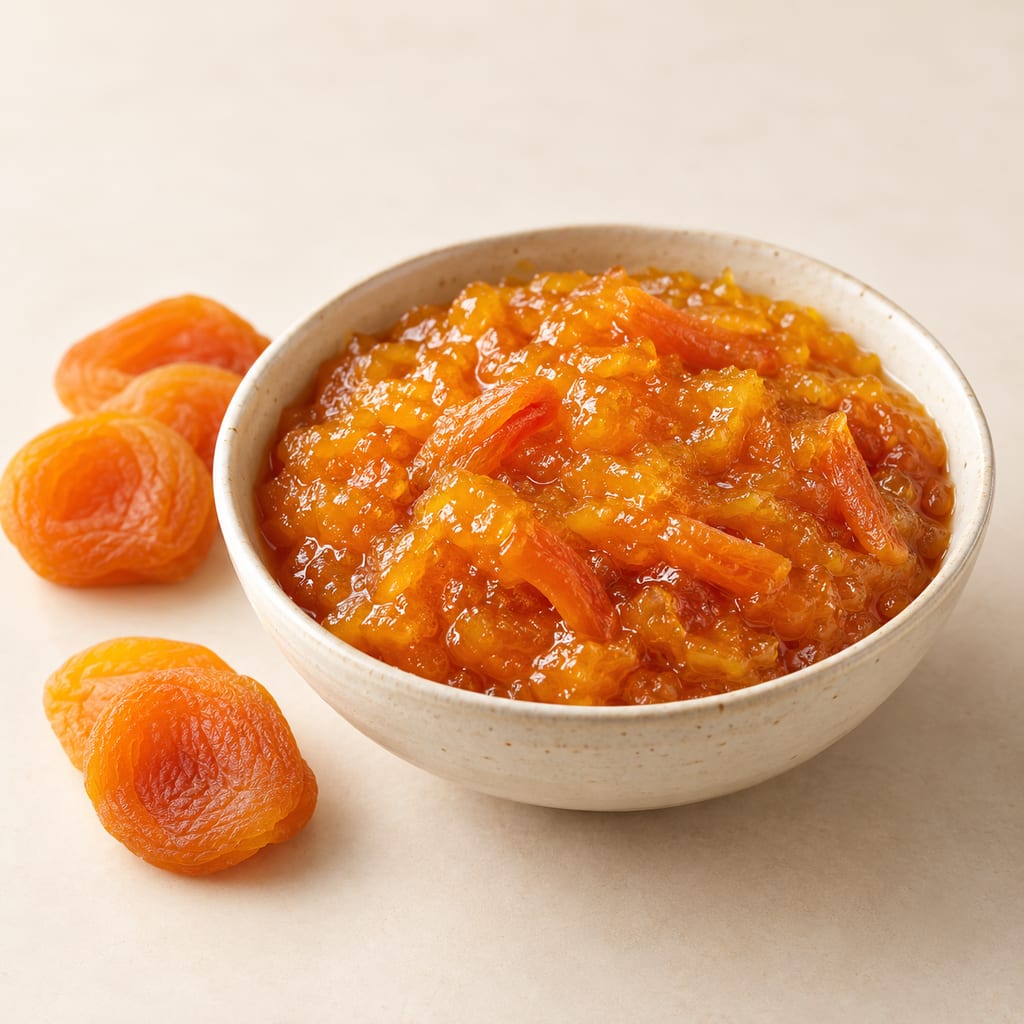
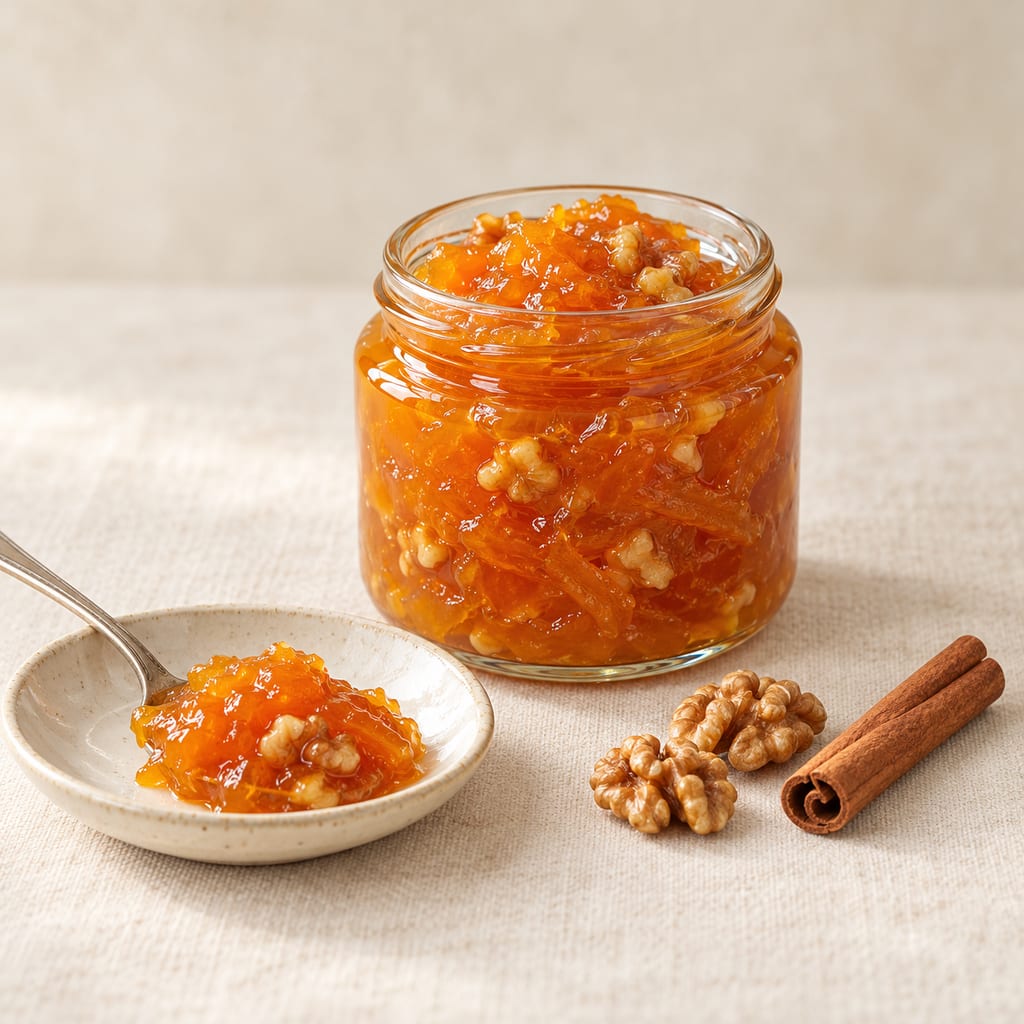
This preparation offers a different way to direct a large pumpkin into a storable ingredient. Rather than buying another fresh fruit at the same seasonal peak, it draws on dried apricots already in the cupboard. The apricot pieces also remain visible against the smoother pumpkin base, so the result is different from a homogeneous pumpkin butter.
For a home batch, decide whether you prefer coarse strips or finely cut apricots before soaking. That is a texture choice for a frozen preserve. Do not assume that adding an acidic fruit automatically converts an untested pumpkin formula into a water-bath-canning recipe. This particular mixture has no validated home-canning process in the material reviewed.
The source finishes by filling jars. This version replaces that endpoint with the collection's short chilled handling and freezer storage. It also refrigerates the apricot soak, rather than leaving wet fruit at room temperature for a full day. These are explicit adaptations, so the recipe should not be reproduced as a verbatim historic method.
A wide saucepan speeds evaporation, but a thick paste can catch on the base. Stir more frequently towards the end and keep the heat gentle. If you want less sweetness, choose a different freezer formula rather than pretending a reduced-sugar variant is the same preserve. The published ratio is retained here to document the source faithfully.
Cool in small portions and refrigerate within one to two hours at 5°C or below, aiming for 4°C. Use the fresh chilled portion within 48 hours. Freeze winter portions promptly at about −18°C in freezer-rated containers with expansion space. Thaw in the refrigerator and use within 24 hours of complete defrosting. These are conservative handling instructions, not a measured shelf life for this particular preserve. Sugar concentration, a jam-like set and a sealed lid do not establish a home-canning process.
Storage for this version: Cool in small portions and refrigerate within one to two hours at 5°C or below (aim for 4°C). Use the fresh chilled portion within 48 hours; freeze the winter portions promptly at about −18°C in freezer-rated containers with expansion space. Thaw in the refrigerator and use within 24 hours of complete defrosting. This is the collection's conservative handling policy, not a laboratory shelf-life result for this preserve.
Freezer for winter; conservative 48-hour refrigerated handling
Hazard source
Freezer for winter; conservative 48-hour refrigerated handling
Control source
Freezer for winter; conservative 48-hour refrigerated handling
Do not transfer a canning schedule from a different pumpkin preparation.
Cut the apricots into strips and soak them in the measured water for about 24 hours in the refrigerator. Drain, saving the liquid.
Cut pumpkin into small pieces. Simmer it in the saved liquid until soft, checking at around 30 minutes. Mash or press through a sieve.
Stir in the sugar and cook gently for about 30 minutes, stirring to prevent sticking.
Add the soaked apricots. Continue for approximately another 30 minutes, stopping when the preserve has the desired consistency. Remove from the heat and portion promptly for chilled or frozen storage.
Cool in small portions and refrigerate within one to two hours at 5°C or below. Use the fresh chilled portion within 48 hours. Freeze winter portions promptly at about −18°C in freezer-rated containers with expansion space. Thaw in the fridge and use within 24 hours of complete defrosting. This is a conservative handling policy, not a measured shelf life for the recipe.
Conditions
Temperature controlRefrigerated
Places
France
Documented preparation · Country evidence
French-style preparation published by South African chef Jan Hendrik van der Westhuizen.
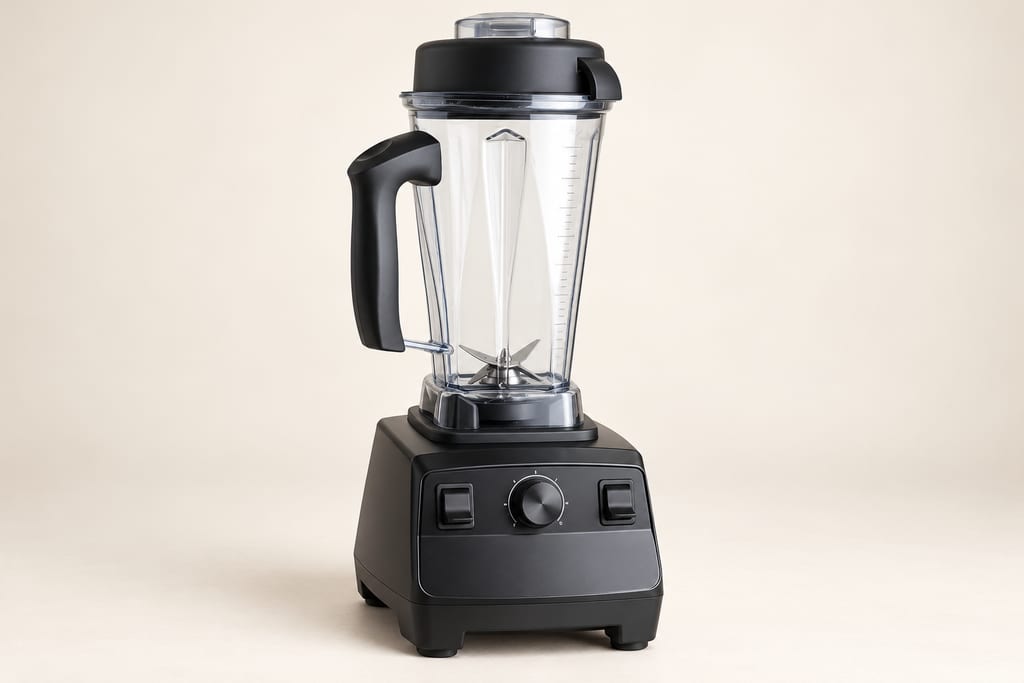
A food blender uses motor-driven blades to purée, emulsify, grind or disperse ingredients in a jar or directly in a pot. Countertop, personal and immersion forms differ in vessel and limits; food processors remain a separate tool family.
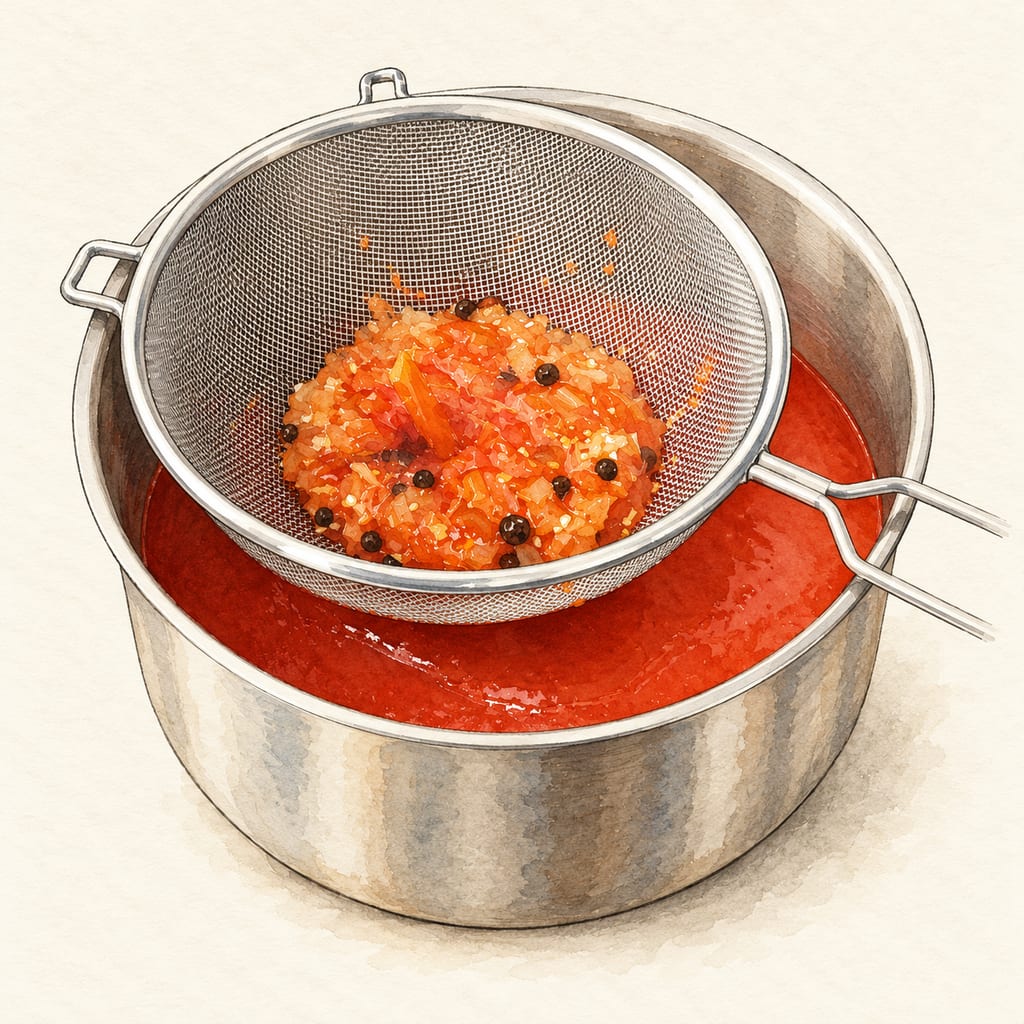
A fine-mesh kitchen sieve separates small solid particles from a sauce or paste. It can smooth tomato ketchup or mustard, but each use retains some pulp or seed material instead of letting it pass through.
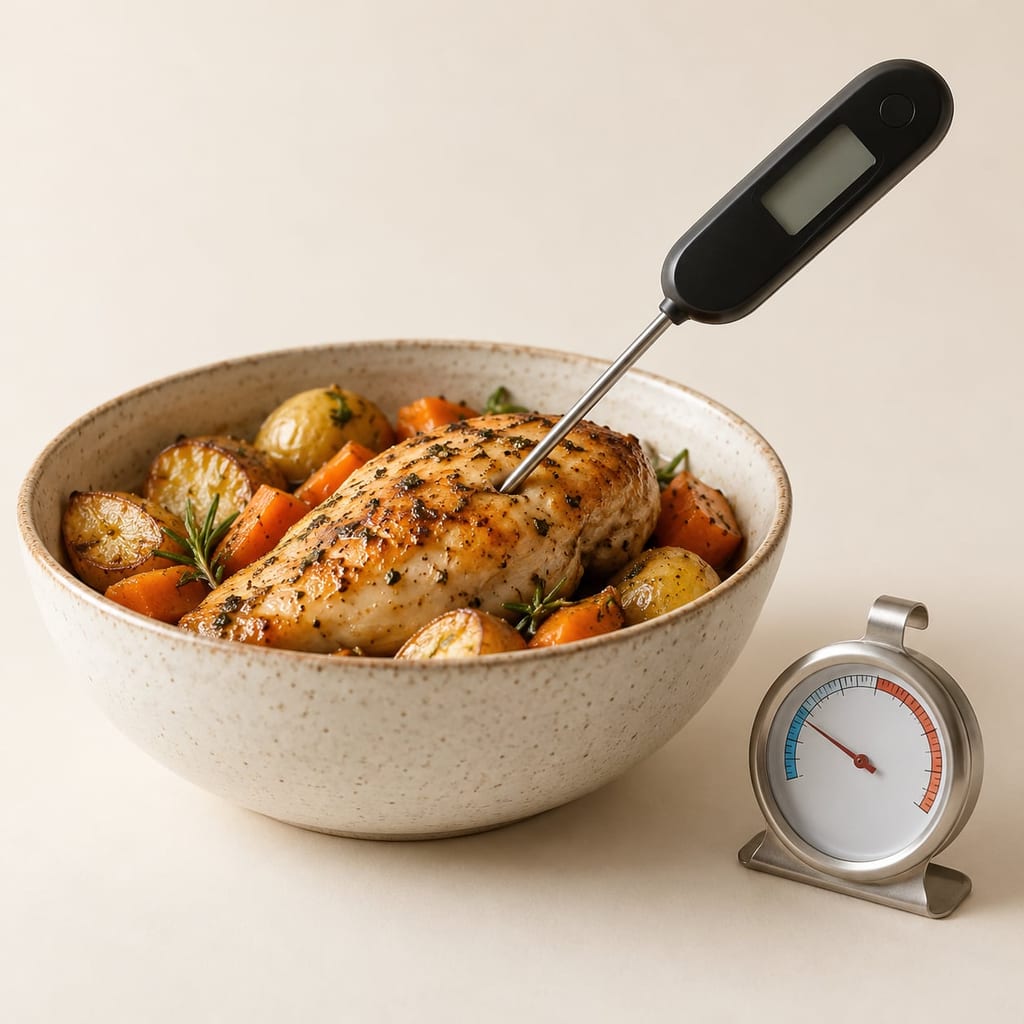
A food probe measures the temperature inside food at the probe tip; a refrigerator thermometer measures the cold storage environment. They answer different questions and cannot establish acidity or validate a preservation process.
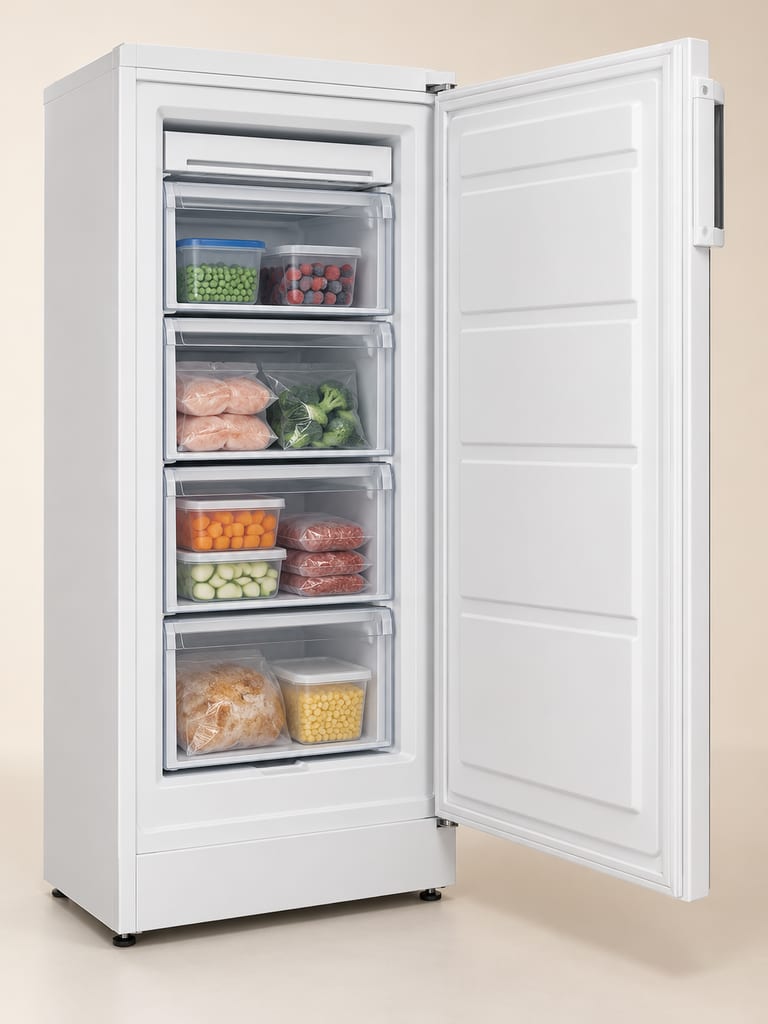
A household freezer holds food in a frozen state for storage and selected texture or separation work; its batch-storage role differs from industrial equipment that freezes individual pieces separately.
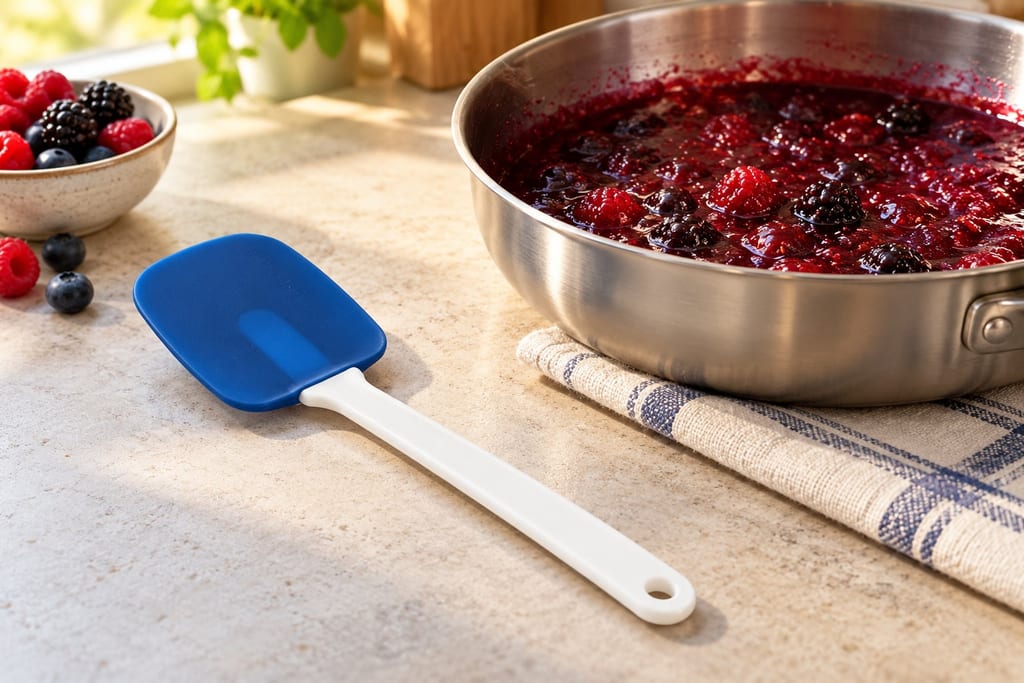
A hand utensil for stirring and scraping a pan of hot preserves. The supplied atlas lists a heatproof spatula for small trials but gives no blade material, dimensions, temperature rating or specific construction.
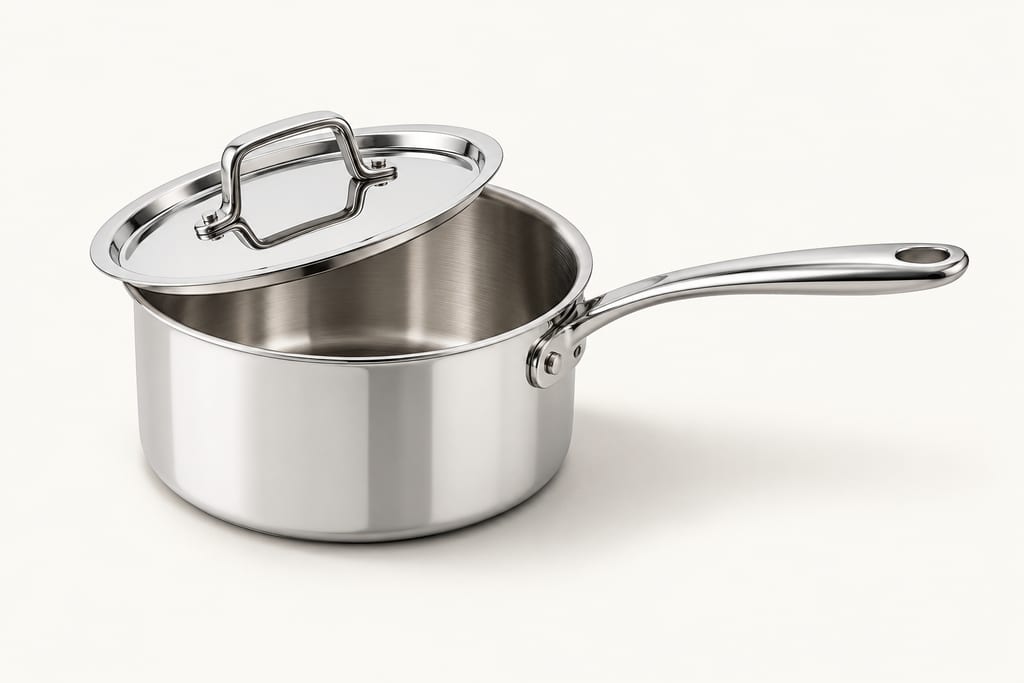
A modern, portable stovetop pan with a stainless-steel cooking surface for sauces and other small simmering jobs. Size, cladding, lid, compatibility and care vary by model.
An ordinary household refrigerator used to store selected fresh produce in vented crates or drawers, at low temperature and at a humidity chosen by the drawer. Not every crop benefits from cold.
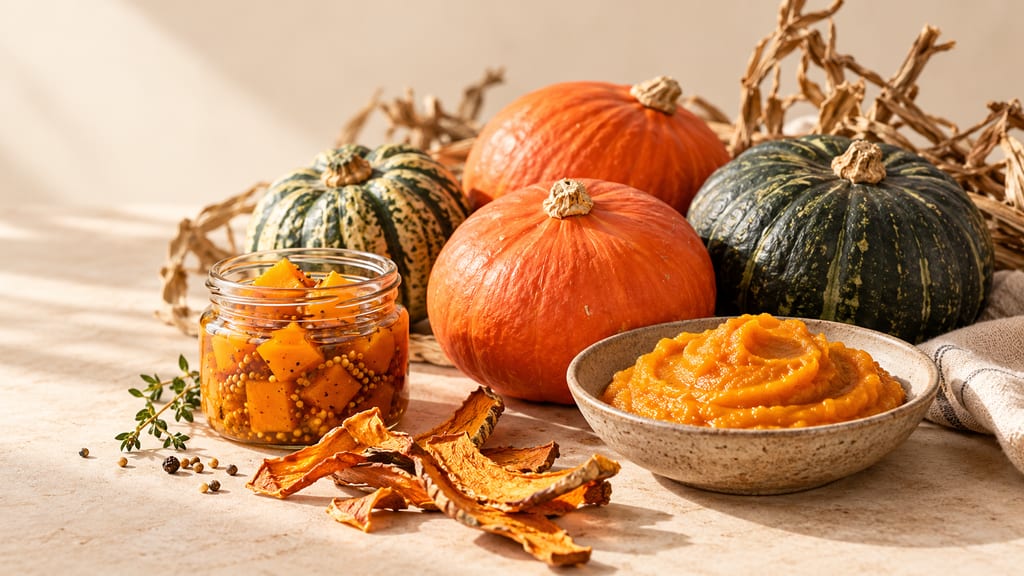
A full harvest-to-pantry guide to keeping pumpkins whole, drying and freezing them, and making pickles and sweet preserves around the world—with the exact distinction between tested canning and cold storage.
Bechamel is a white sauce of milk thickened with a butter and flour roux, one of the French mother sauces, and the base from which Mornay and other cheese and cream sauces are made.
Beurre blanc is a warm emulsion of cold butter whisked into a reduction of white wine, vinegar or lemon juice and shallot, a sauce from the Loire Valley and its red-wine version, beurre rouge.
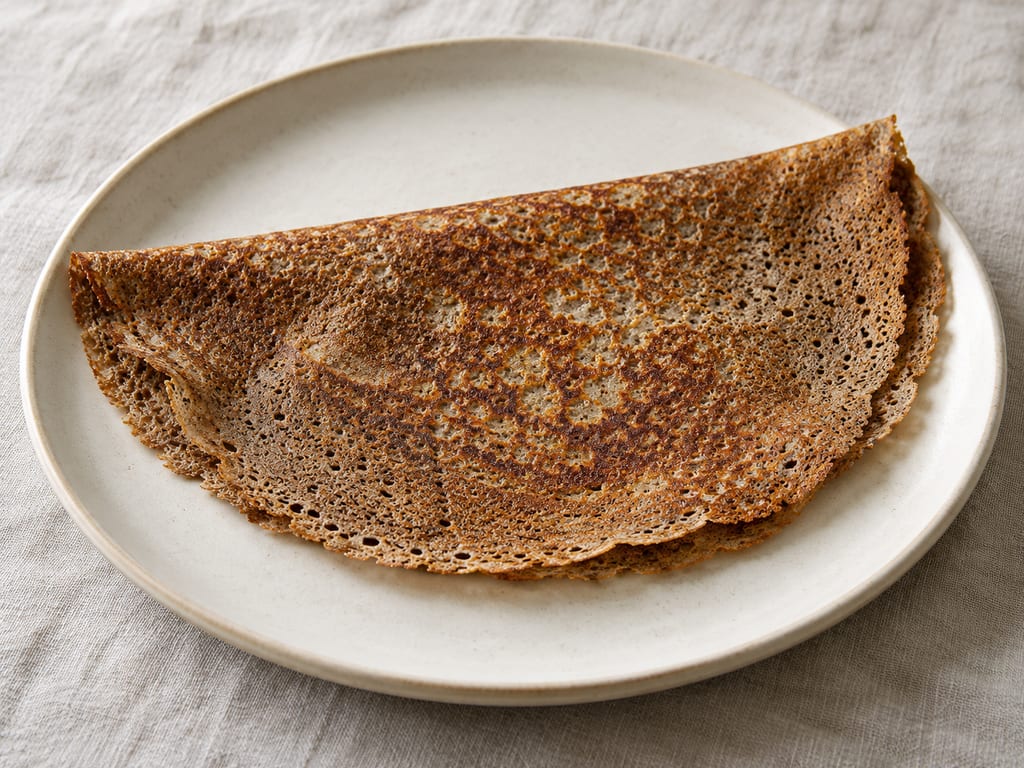
A thin Brittany galette made from buckwheat flour, water and Guérande salt. This Atelier de la Crêpe method rests the batter in a refrigerator before cooking it on a hot crêpière.
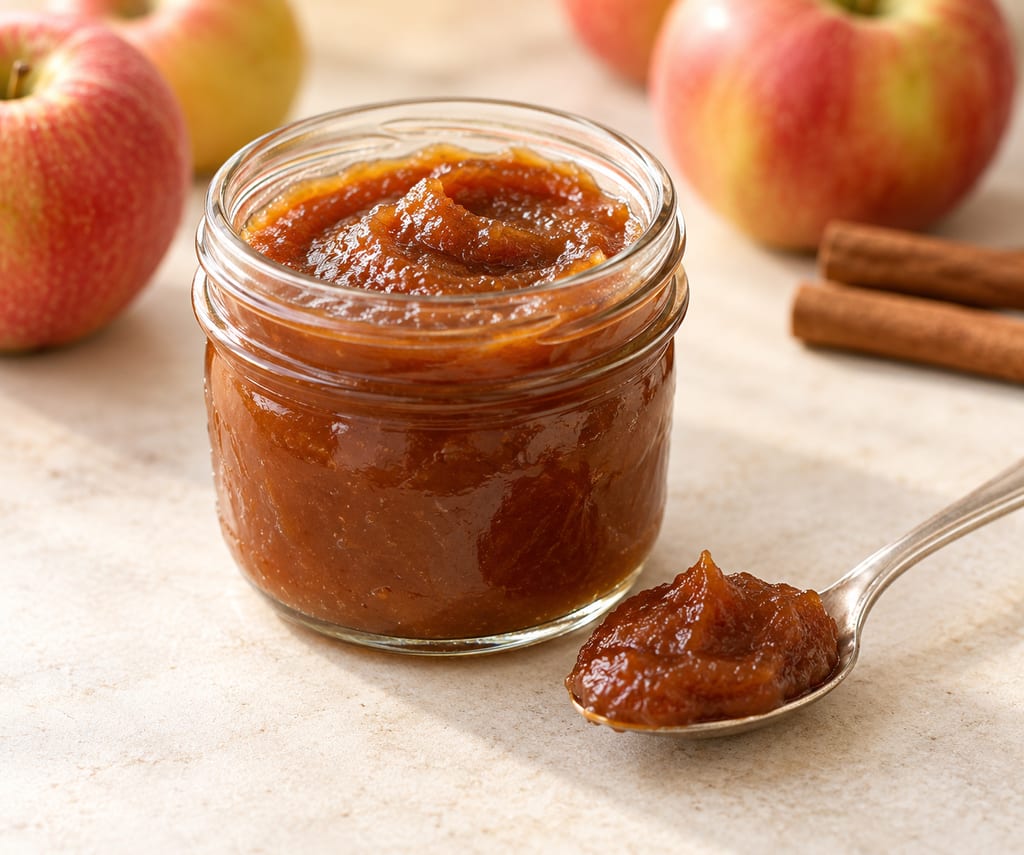
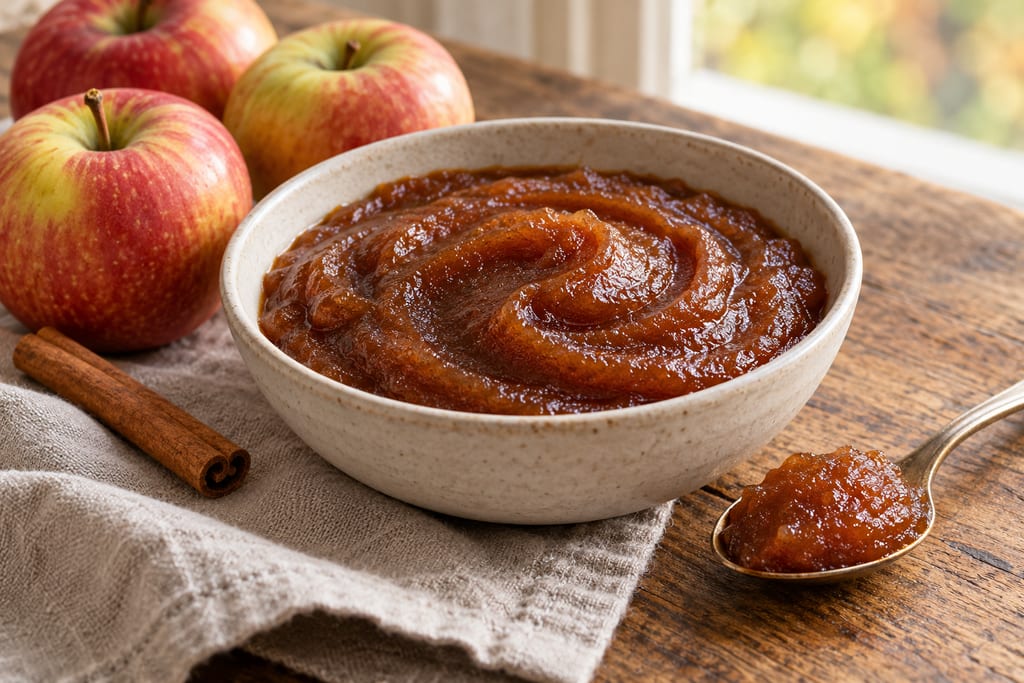
Apple butter is a smooth, concentrated apple preserve cooked with cider, vinegar, two sugars and spices, then hot-filled and processed in a boiling-water canner using the published jar-size and elevation schedule.
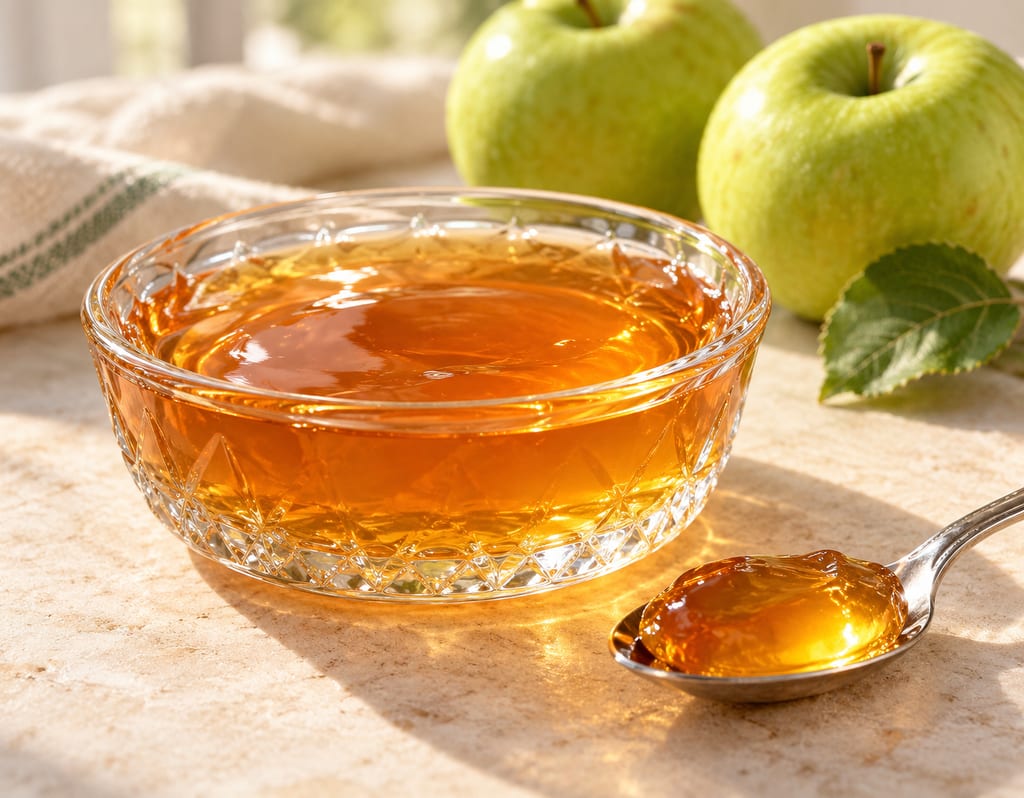
A clear jelly made from tart-apple juice, sugar and optional strained lemon juice. This batch uses a stated fruit-to-water preparation, gel endpoint, hot fill and altitude-adjusted boiling-water process.
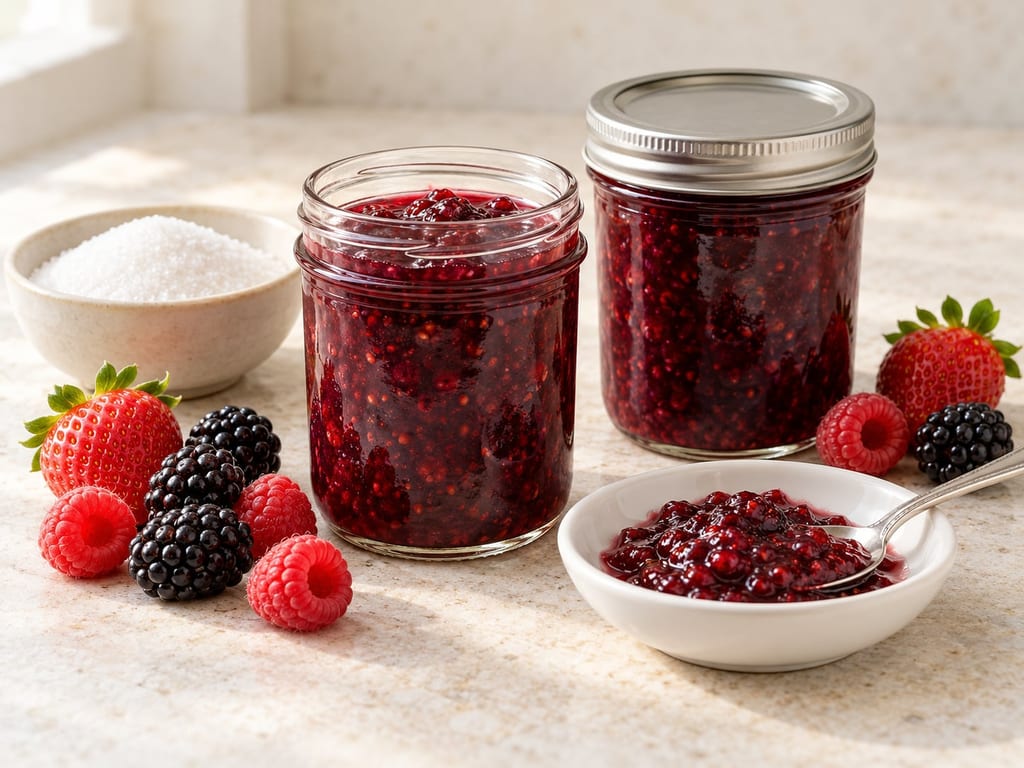
A NCHFP berry jam made without added pectin: crushed berries and sugar are cooked to the desired gel point, hot-filled into sterile half-pint or pint jars, and processed in a boiling-water canner.
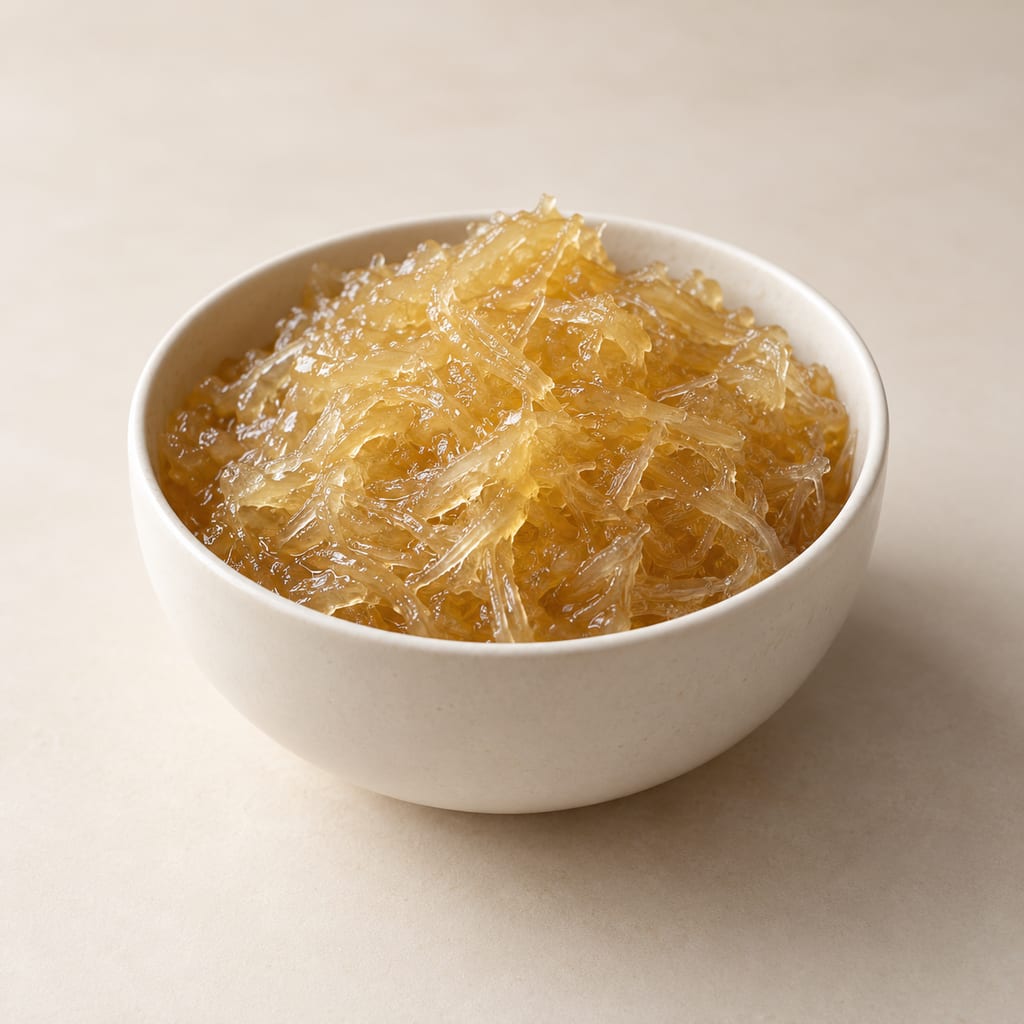
Fine strands of Cucurbita ficifolia cooked in an equal weight of sugar, then portioned for refrigerator or freezer storage. Ordinary orange pumpkin does not give the same fibres.
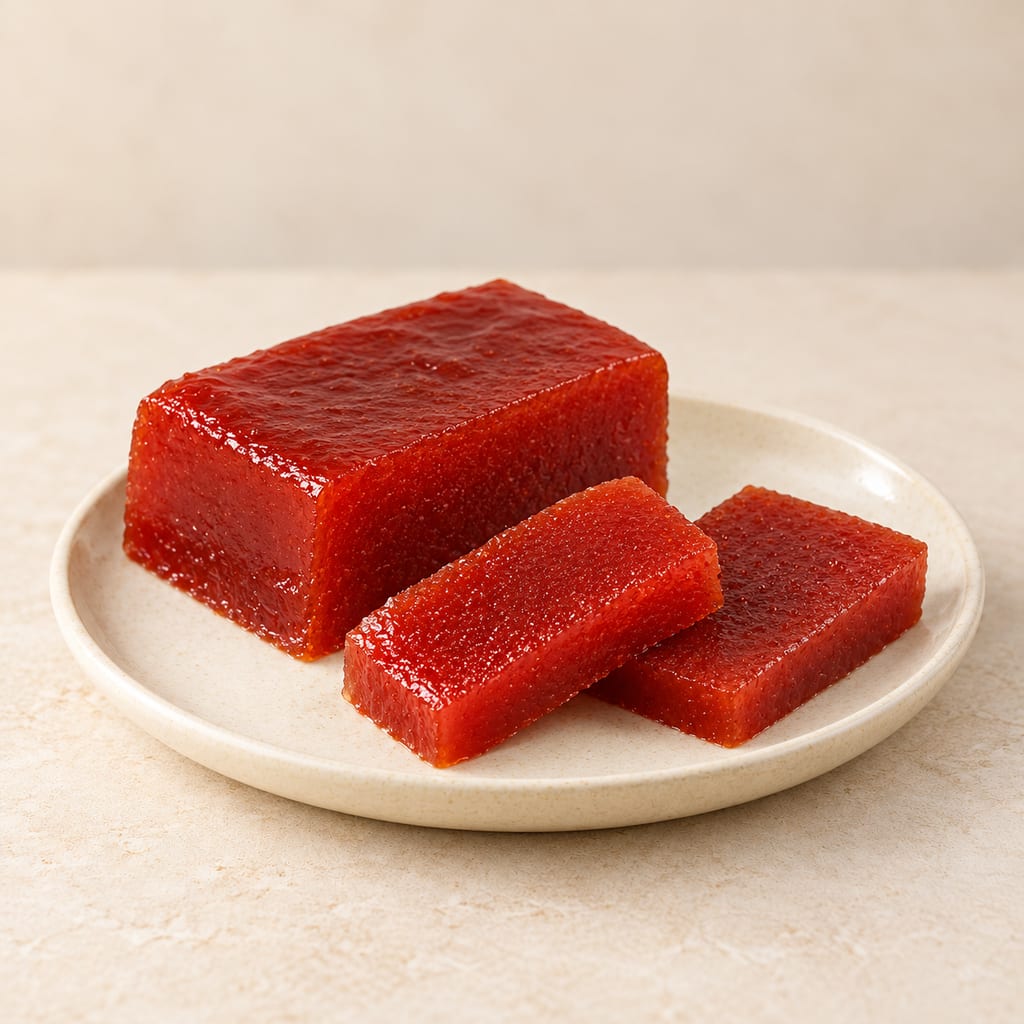
Dulce de membrillo is quince cooked with sugar into a firm paste for slicing. This family method softens the fruit in a pressure cooker, then blends it and leaves it to set.
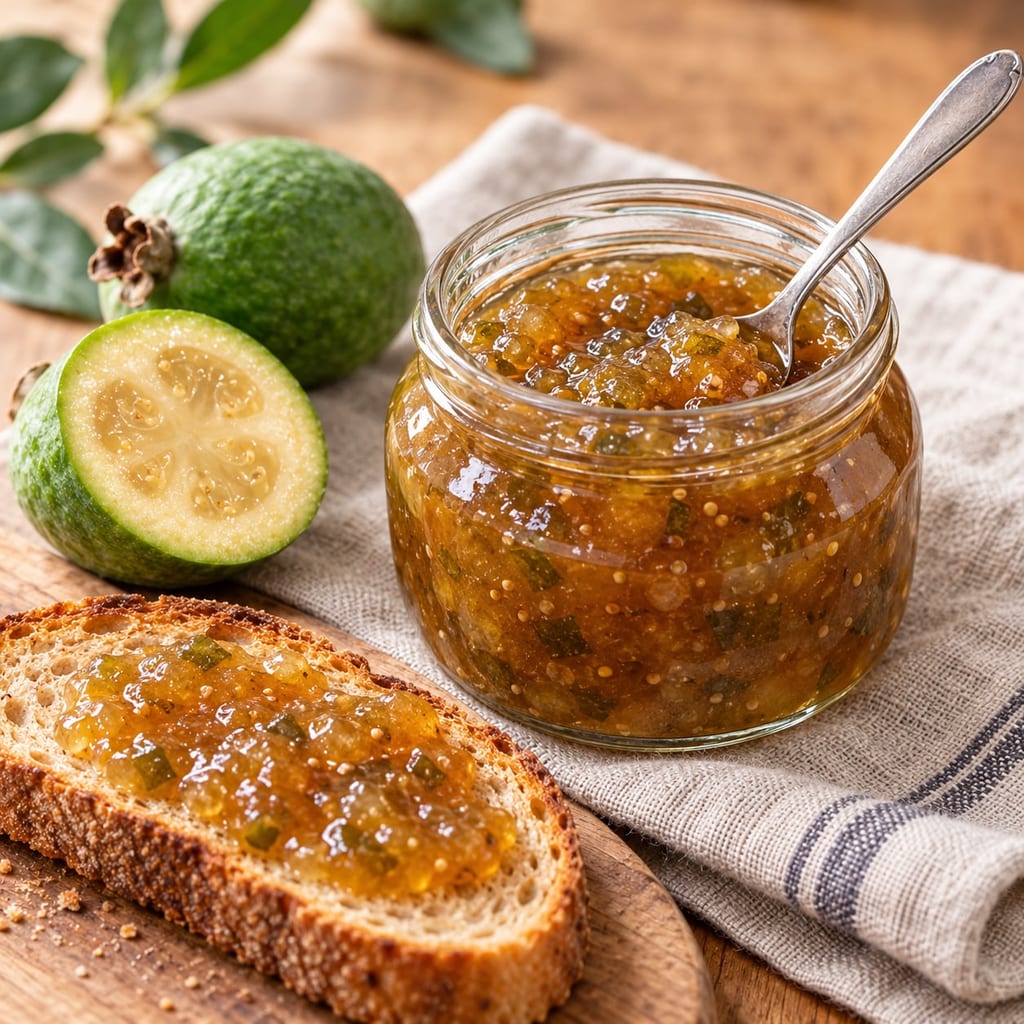
Blended whole feijoas simmer into a skin-on jam with lemon, sugar and vanilla. The skins remain for a more textured finish; keep this batch refrigerated or frozen because its method has no validated shelf-stable canning process.
A smooth fruit pulp cooked down with sugar and spice until it holds its shape on a spoon, made by three documented routes in a slow cooker, a microwave or an electric multicooker.
Community
No community contributions have been published for this entry yet.
Share what you made
Sign in to contribute. Published comments and photos are free to read.