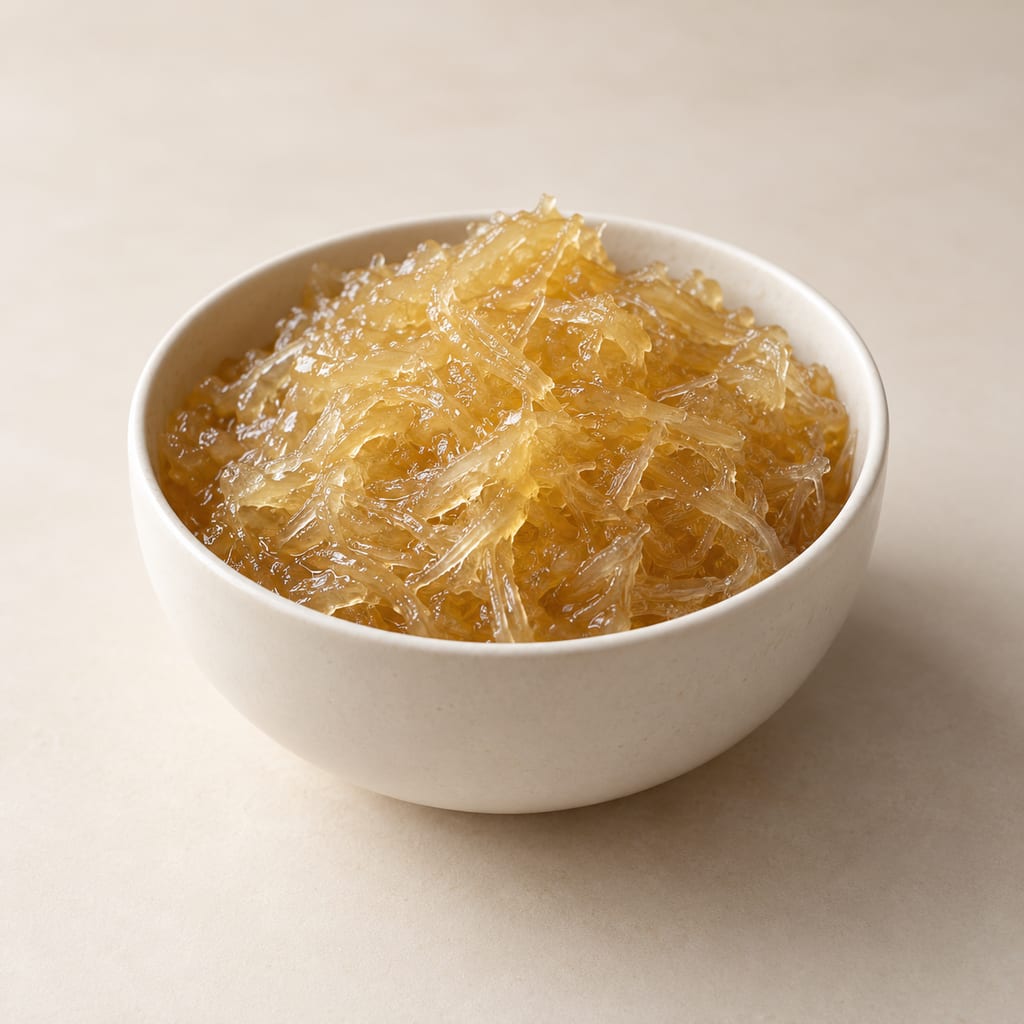
Cabello de ángel (figleaf-squash freezer preserve)
Fine strands of Cucurbita ficifolia cooked in an equal weight of sugar, then portioned for refrigerator or freezer storage. Ordinary orange pumpkin does not give the same fibres.
 FermenteaWhere food goes to change
Equipment · Strainers, moulds and hoops
fine-mesh strainer · fine mesh sieve
A fine-mesh kitchen sieve separates small solid particles from a sauce or paste. It can smooth tomato ketchup or mustard, but each use retains some pulp or seed material instead of letting it pass through.
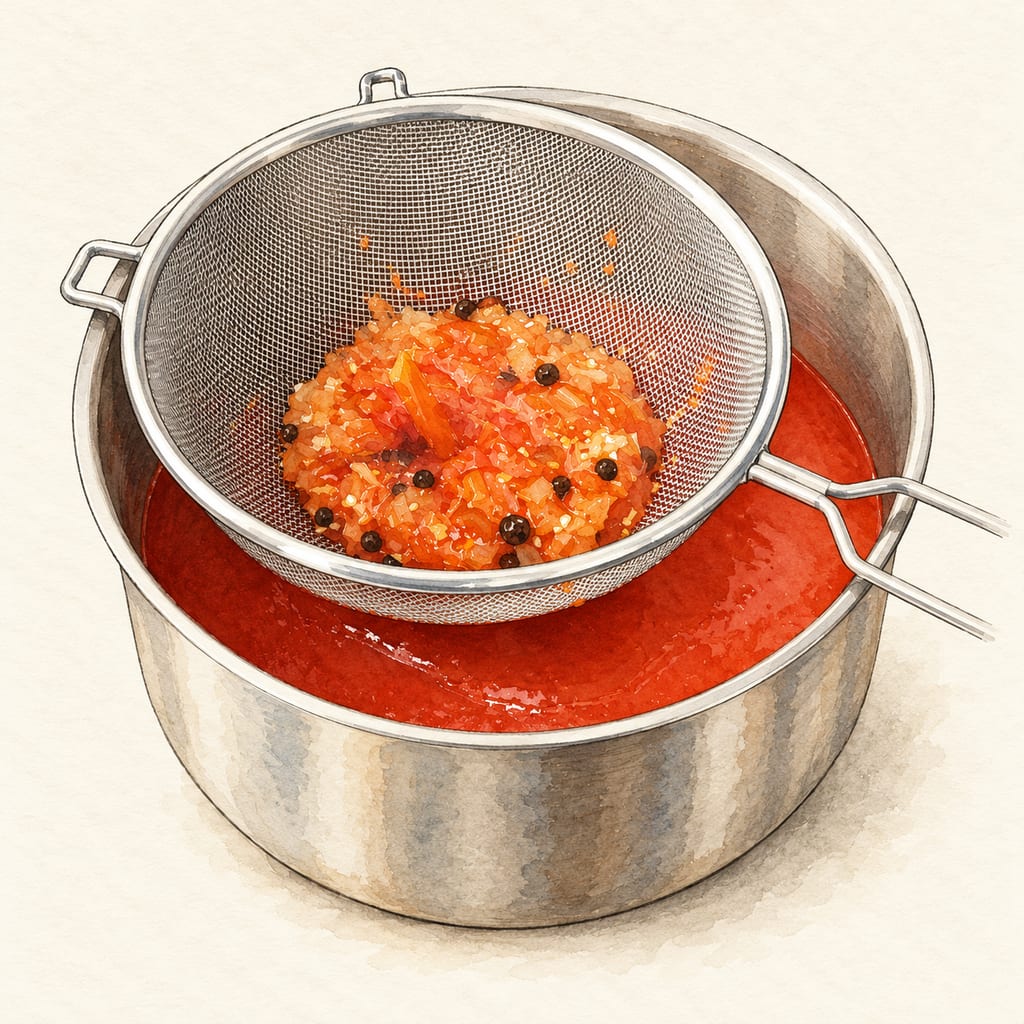
A fine sieve is a shallow mesh filter set over a pot or bowl. Liquid and smaller particles pass through while larger solids stay in the basket. In home ketchup making, it can separate cooked tomato juice and pulp during the effort to produce a smooth sauce. In mustard making, a fine-mesh strainer removes ground seed husks; leaving those husks in gives a coarser, whole-grain texture instead.
The sieve's mesh matters because it determines which particles pass through. A smoother result comes with material left behind, so the amount retained affects finished yield. The cited recipes do not specify one universal mesh opening, sieve diameter, or quantity of solids to discard.
One Colorado home-ketchup account shows a metal sieve catching tomato pulp as red liquid drains into a vessel below. The recipe separates the cooked juice from solids and processes tomato material for a thicker sauce. A separate Dijon-style mustard recipe uses a fine-mesh strainer to remove seed husks from coarsely ground mustard; its whole-grain alternative keeps them.
These examples show why 'sieve' is not one fixed recipe step. Depending on the mixture and desired texture, the utensil can separate watery juice from pulp or sift fibrous husks from a paste. It is distinct from a cheesecloth-lined strainer used to hold soft dairy curd while whey drains away.
The sources support a contemporary kitchen utensil and its use in two smooth-condiment preparations. They do not establish this sieve's historical origin, a traditional regional form, a standard mesh size, or a universal yield. The Colorado location describes one recipe author's context, not where fine sieves were invented or where they are exclusively used.
The sieve has no powered or fuelled mechanism, but the ketchup example filters cooked tomato mixture. Seat it securely across a receiving pot and avoid loading it beyond its support; the sources give no alloy, temperature rating or load rating for a particular model.
A Colorado home-ketchup account photographs cooked tomato mixture being strained through a fine mesh sieve. This documents one contemporary use context, not the tool's origin or prevalence.
Fine strands of Cucurbita ficifolia cooked in an equal weight of sugar, then portioned for refrigerator or freezer storage. Ordinary orange pumpkin does not give the same fibres.
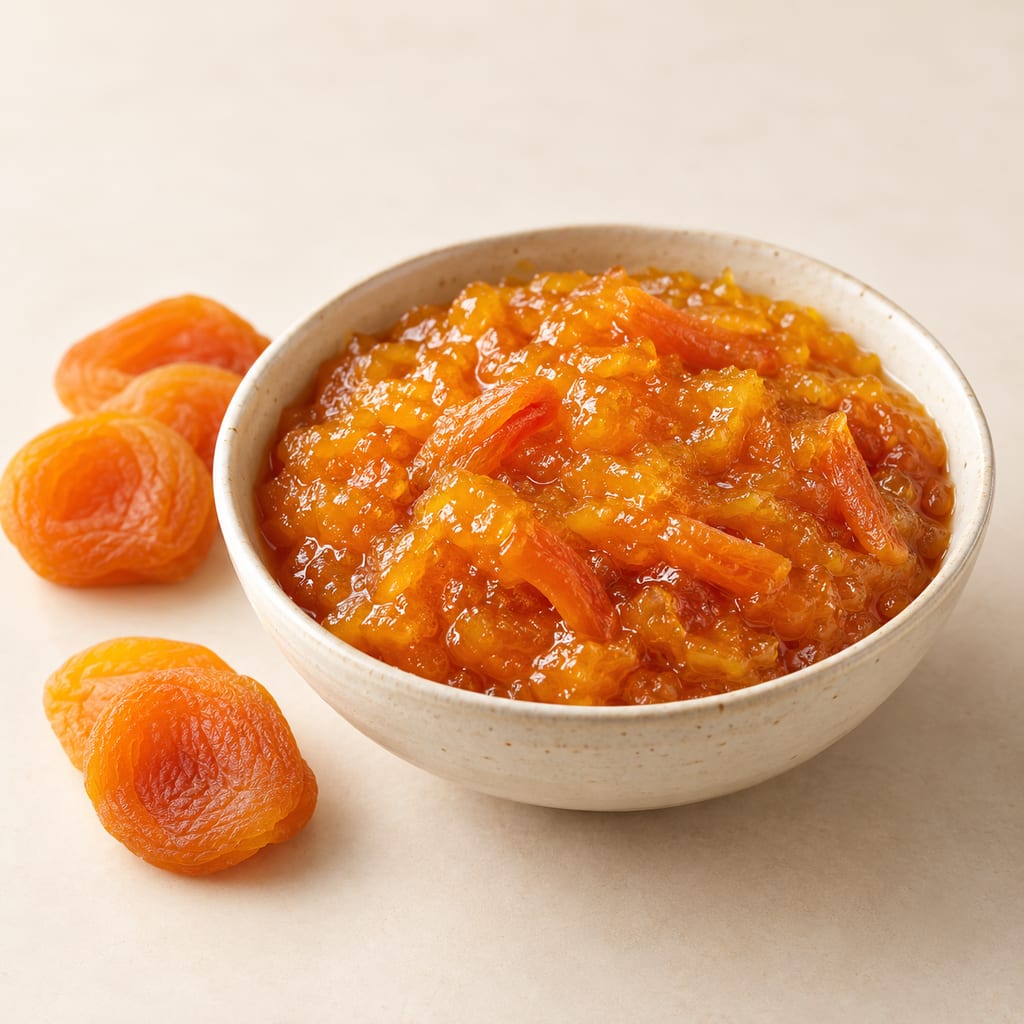
Pumpkin and dried-apricot jam: Freeze for winter; small fresh portion refrigerated up to 48 hours.
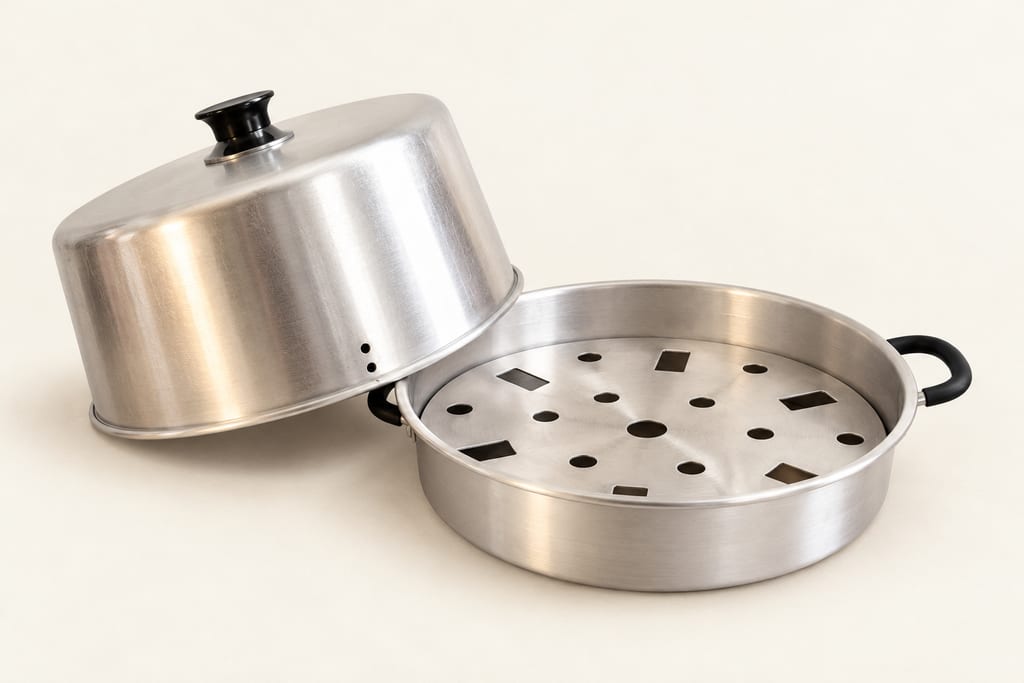
A shallow rack base and tall vented cover process jars in atmospheric steam. NCHFP limits the method to tested high-acid or acidified recipes requiring no more than 45 minutes, including altitude adjustment; this is not pressure canning.
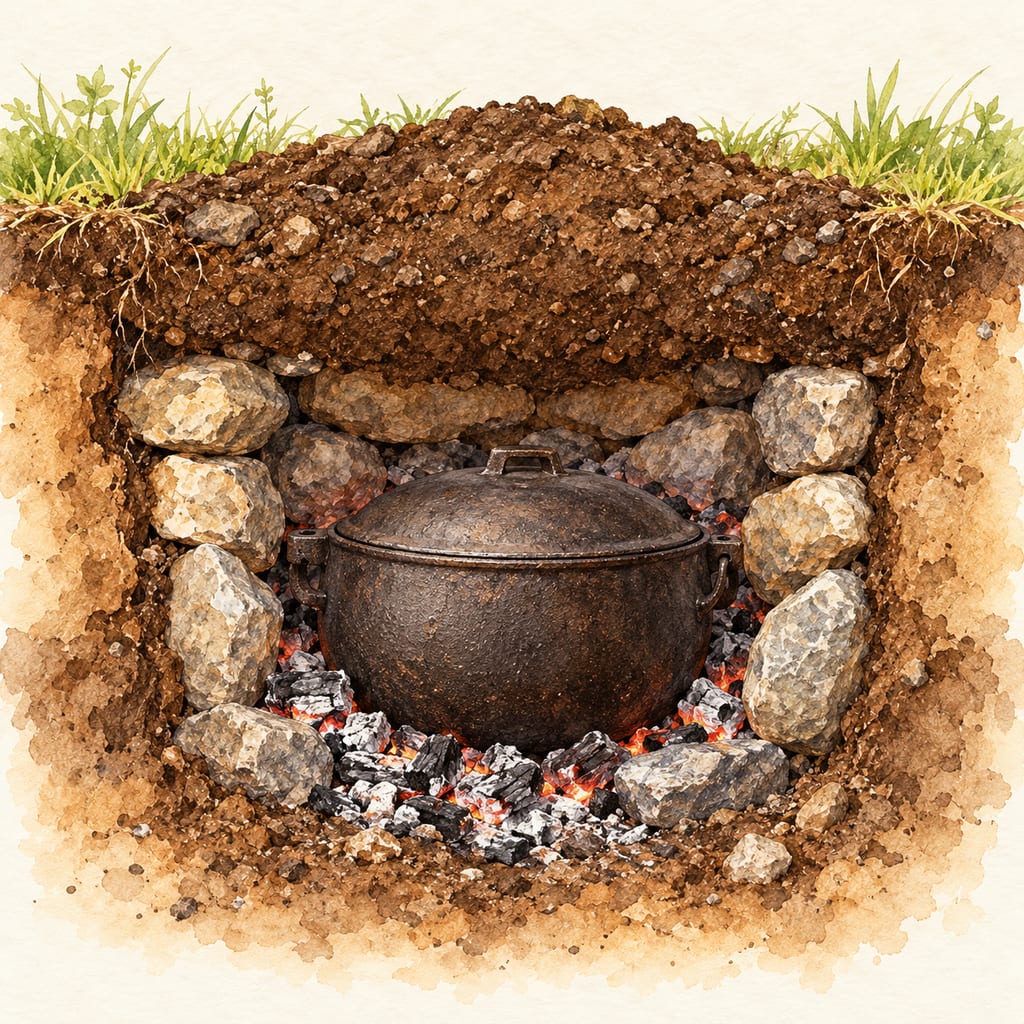
A covered iron vessel used in Maine bean-hole cooking, set into a preheated stone-lined pit and buried for a slow cook.
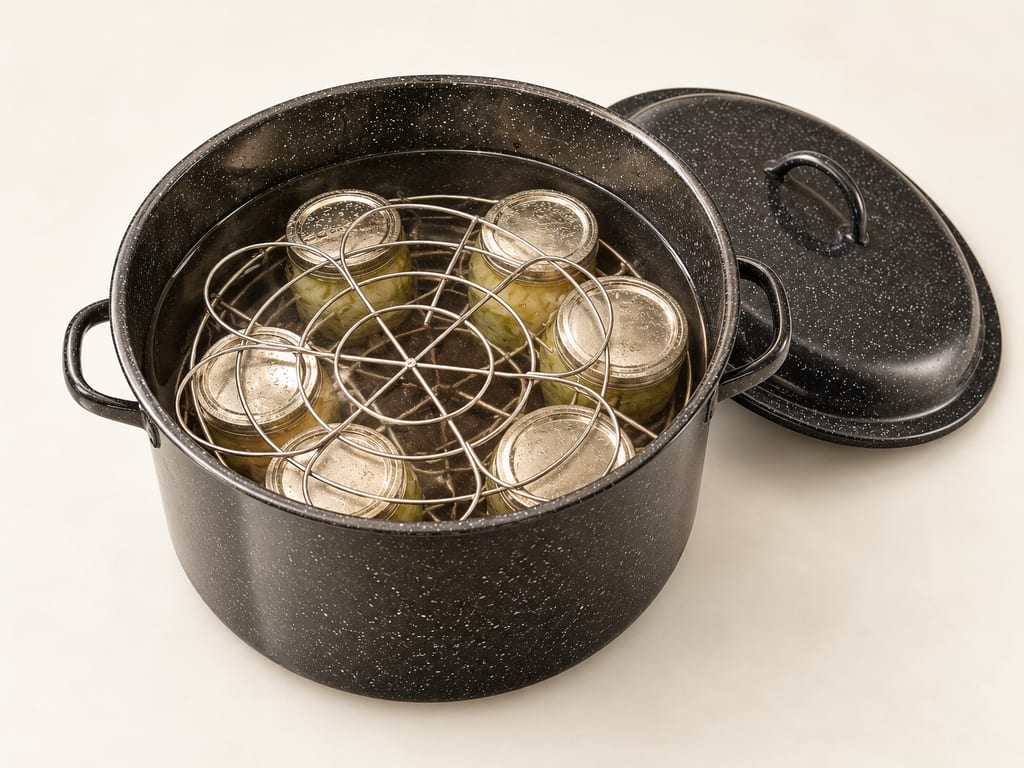
A deep, lidded pot with a removable rack processes jars beneath boiling water. It is intended for foods with tested boiling-water processes; low-acid foods require pressure canning.
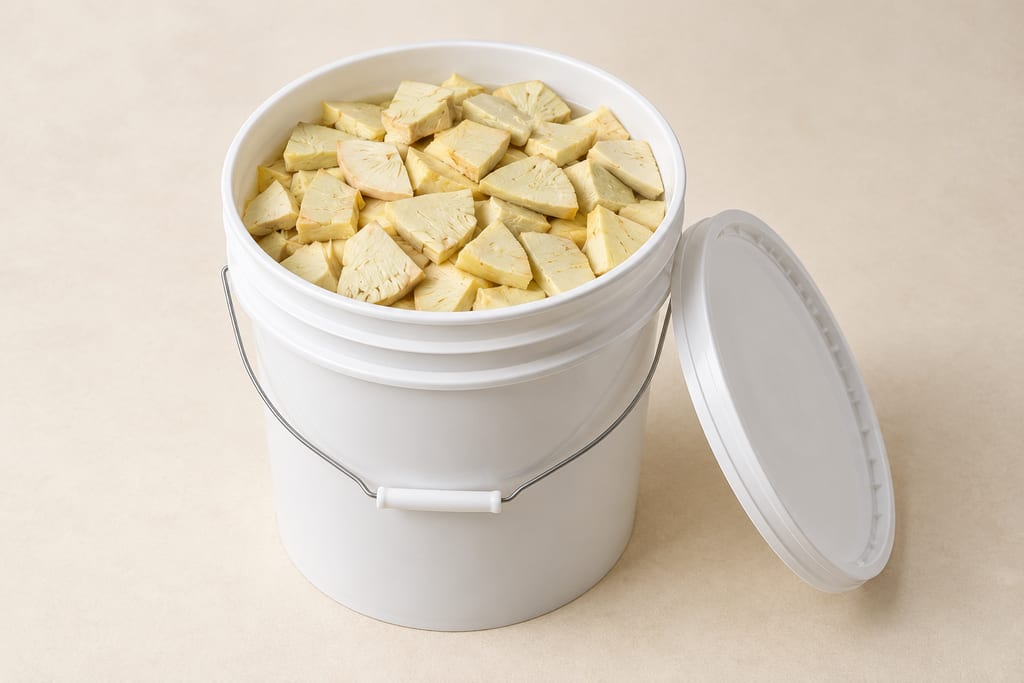
A contemporary household enclosure for preparing mā, fermented breadfruit, documented in Hawai‘i using food-safe buckets, coolers or large sealable bags in place of a pit.
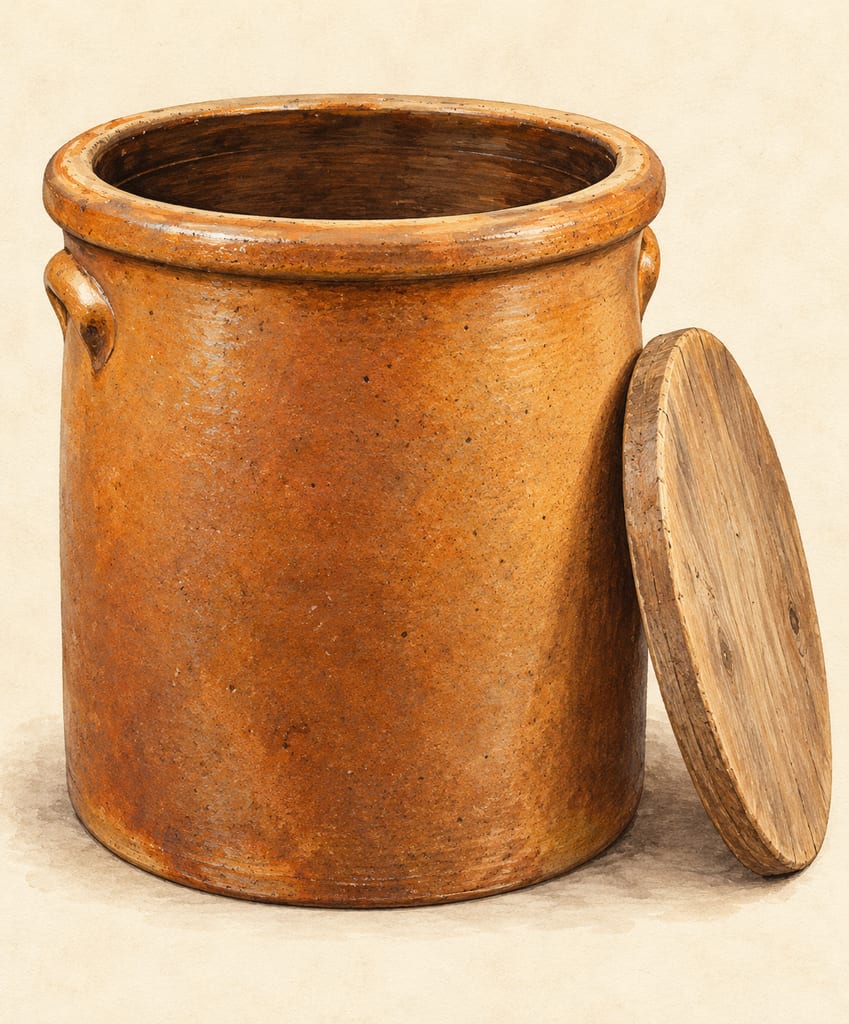
Containers for salt-curing fish and meat range from broad-mouthed stoneware crocks to tubs, cut-down barrels and chests. Their material, depth, cover and ability to retain or drain liquid shape how the food sits in salt or brine.
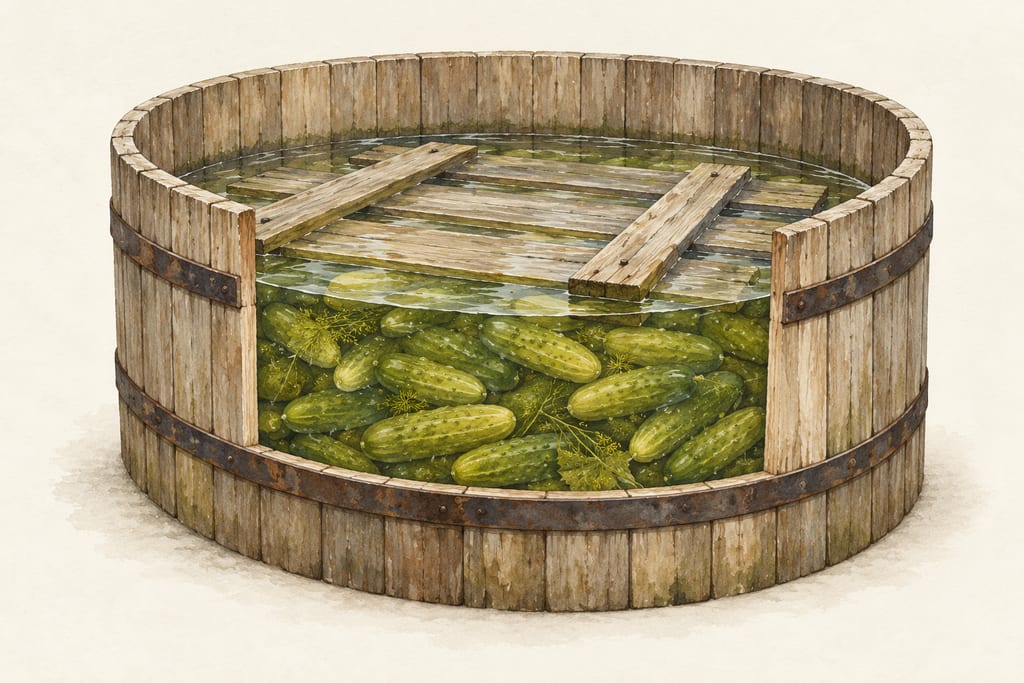
A bulk brining vat holds cucumbers and other vegetables under cover brine for fermentation and storage. North Carolina sources document a mid-century wooden tank yard and later outdoor fiberglass systems.
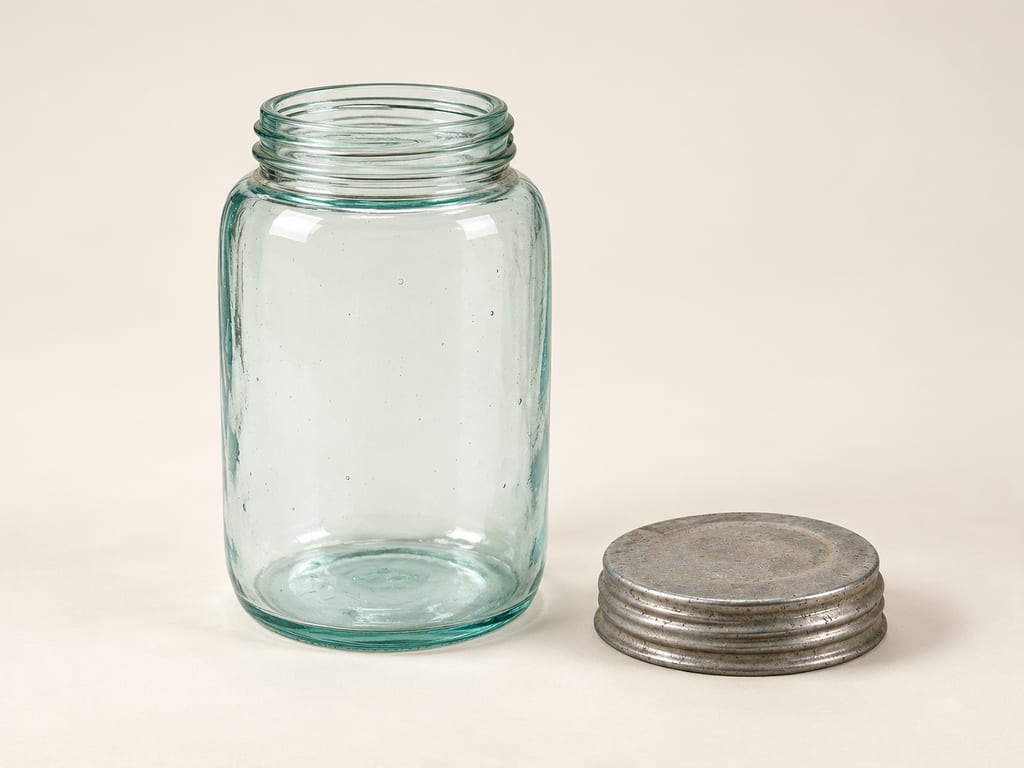
Threaded, heat-processing jars hold food and a fitted lid during a tested canning process; jar size and process belong to the specific recipe.
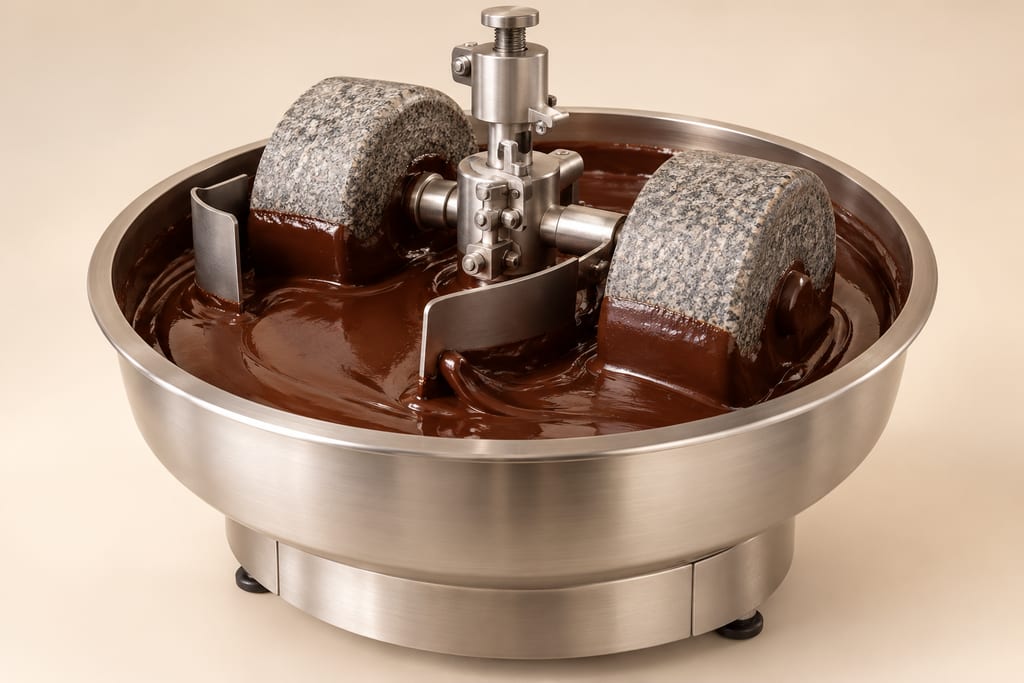
A chocolate refiner or melanger uses powered rotation and stone rollers to refine cocoa mass. Some models also process nut and seed pastes; design, material and operating limits vary.
No community contributions have been published for this entry yet.
Sign in to contribute. Published comments and photos are free to read.
use real butterDocumented use · Form · Geography · Image
Recipe: Homemade KetchupA Colorado home-ketchup post shows cooked tomato mixture being strained through a fine mesh sieve.
The recipe separates tomato juice from solids and processes the remaining tomato solids separately.
The page states all rights reserved and names Jennifer Yu as copyright holder.
Cited in: A fine filter for sauces and pastes; Two different condiment tasks; Scope and evidence
SaveurContemporary method · Form
Homemade Dijon Mustard RecipeThe recipe passes coarse ground mustard seeds through a fine-mesh strainer to remove husks for a smooth mustard.
It contrasts this with retaining husks for whole-grain mustard.
Cited in: A fine filter for sauces and pastes; Two different condiment tasks; Scope and evidence