Sugar
Sugar is a family of sweeteners with different forms and food roles; refined white sucrose may come from cane or beet, while less refined forms add other flavours and moisture.
 FermenteaWhere food goes to change
Berry Jams without Pectin
A NCHFP berry jam made without added pectin: crushed berries and sugar are cooked to the desired gel point, hot-filled into sterile half-pint or pint jars, and processed in a boiling-water canner.
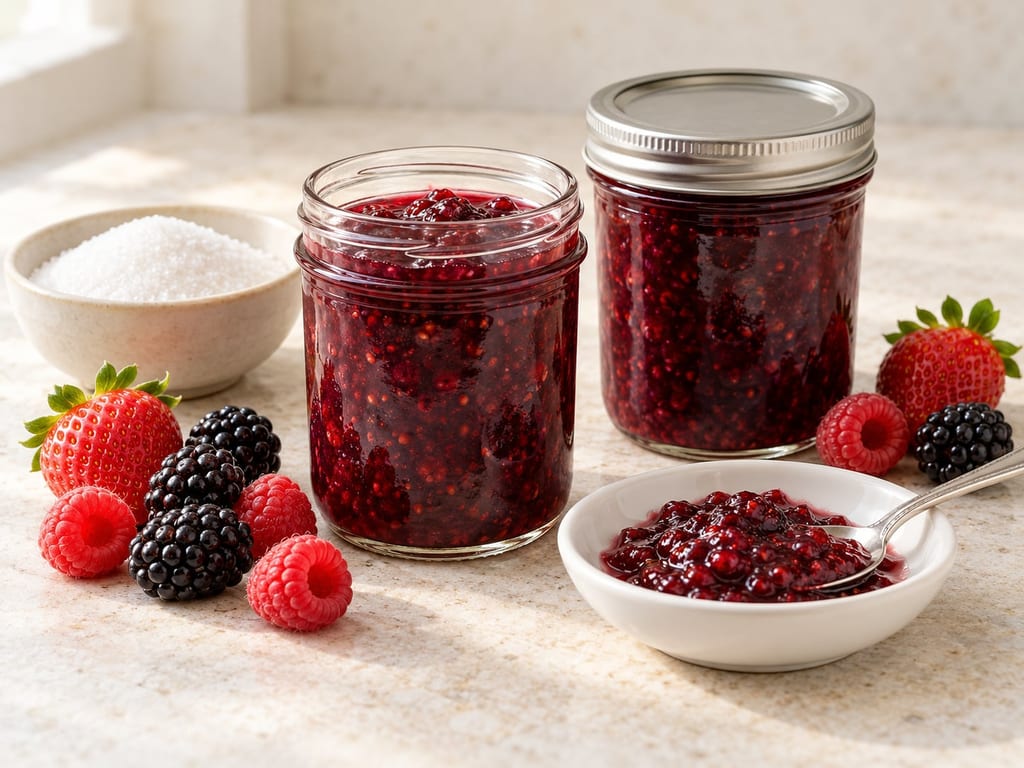
Berry jam made without added pectin relies on the fruit itself to set. Berries are cooked with sugar until the mixture reaches the jelly point, the stage where it thickens and holds its shape when cooled. The home-canning guidance that this record follows gives the cook a choice of firmer or softer endpoints rather than a single temperature.
The method is a tested home-canning recipe from the National Center for Home Food Preservation at the University of Georgia. It is written for a specific berry batch, nine cups of crushed berries to six cups of sugar, which yields about seven or eight half-pint jars.
The berries are optionally pressed through a sieve or food mill after heating until soft, which gives a seedless jam. The sugar is dissolved slowly at a boil, and the mixture is then cooked rapidly to or near the jelly point. The jam is filled hot into hot, sterile half-pint or pint jars with about a quarter inch of headspace and two-piece metal lids.
Processing times depend on altitude: 5 minutes at 0 to 1,000 feet, 10 minutes at 1,001 to 6,000 feet and 15 minutes above 6,000 feet, in a boiling-water canner. The canner guidance requires at least an inch of boiling water over the jar tops and a complete boil throughout, and the full time restarts if the boil stops.
The general NCHFP page on jam without added pectin lists four cups of crushed berries to four cups of sugar, a different formulation. This record follows the berry-specific page and does not combine the two batches or treat the general table as validating the nine-to-six batch.
The source does not name the berry species, give a numeric jelly temperature, or offer a scale-up rule. Its method is the tested source batch, and this record does not validate substitutions. Nothing here establishes a historical origin or a wider regional tradition for the preparation.
The recipe page identifies its adaptation as coming from So Easy to Preserve, 6th edition (2014). This supports a date for the documented recipe source, not for the broader food tradition.
Scaling: source batch only
This shelf-stable preparation depends on completing the boiling-water process for the correct altitude and jar size.
Hazard sourceKeep at least 1 inch of boiling water over the jar tops throughout processing.
Control sourceUse the source's hot-pack process in half-pint or pint jars and select the time for the canning location's elevation.
Control sourceKeep the water at a complete boil for the full process time; if boiling stops, restore a vigorous boil and restart the full time.
Control sourceUse this process with the stated batch and jar sizes; the sources give no canning schedule for substitutions or scaled batches.
Association with a U.S. home-canning preparation published by NCHFP; not a claim about the origin of berry jam.
Sugar is a family of sweeteners with different forms and food roles; refined white sucrose may come from cane or beet, while less refined forms add other flavours and moisture.

Jam is fruit cooked with enough sugar and concentration to reduce the water available to microbes. Jelly uses clarified juice and firmer fruit pastes lose still more moisture.
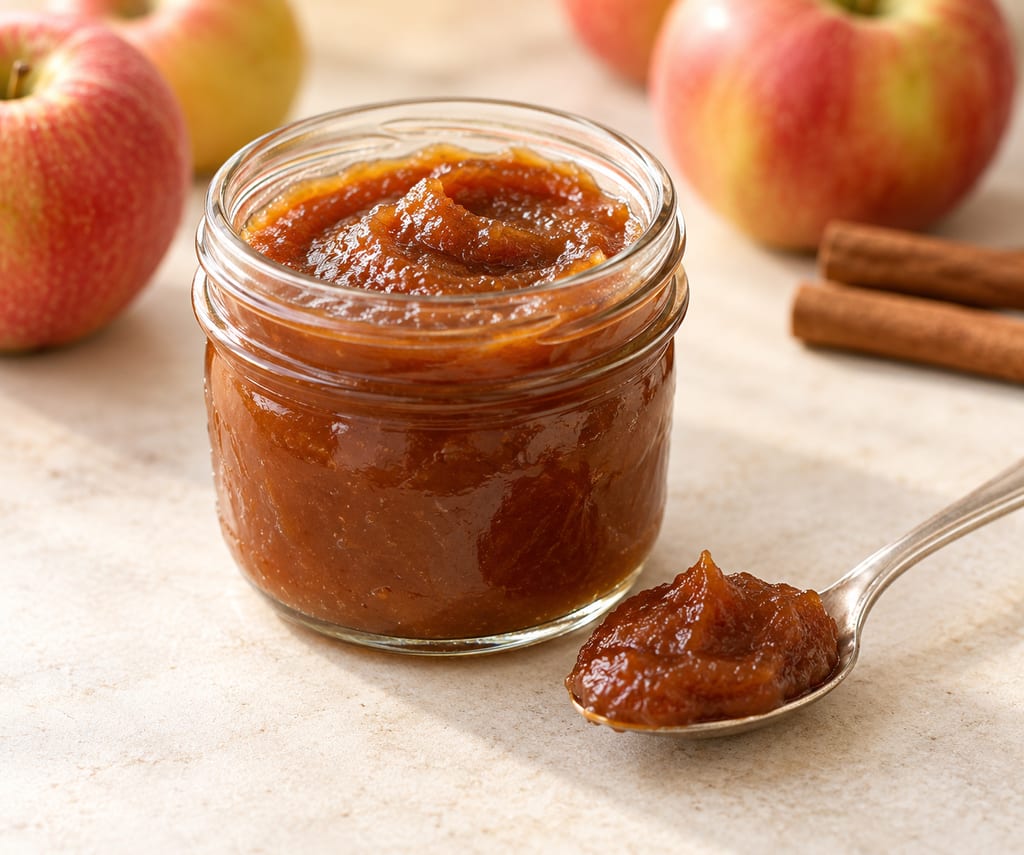
Apple butter is a smooth, concentrated apple preserve cooked with cider, vinegar, two sugars and spices, then hot-filled and processed in a boiling-water canner using the published jar-size and elevation schedule.
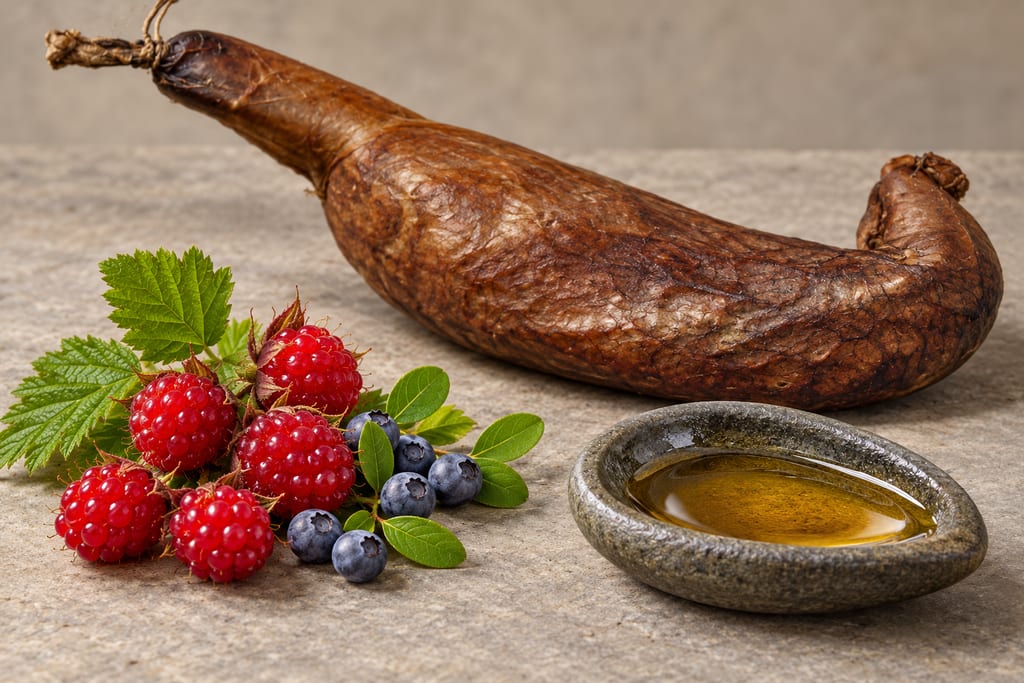
Berries, greens and fish eggs were kept in seal oil by Indigenous Alaskan communities. The oil seals the food from air, and the result depends on preparation and the surrounding conditions.
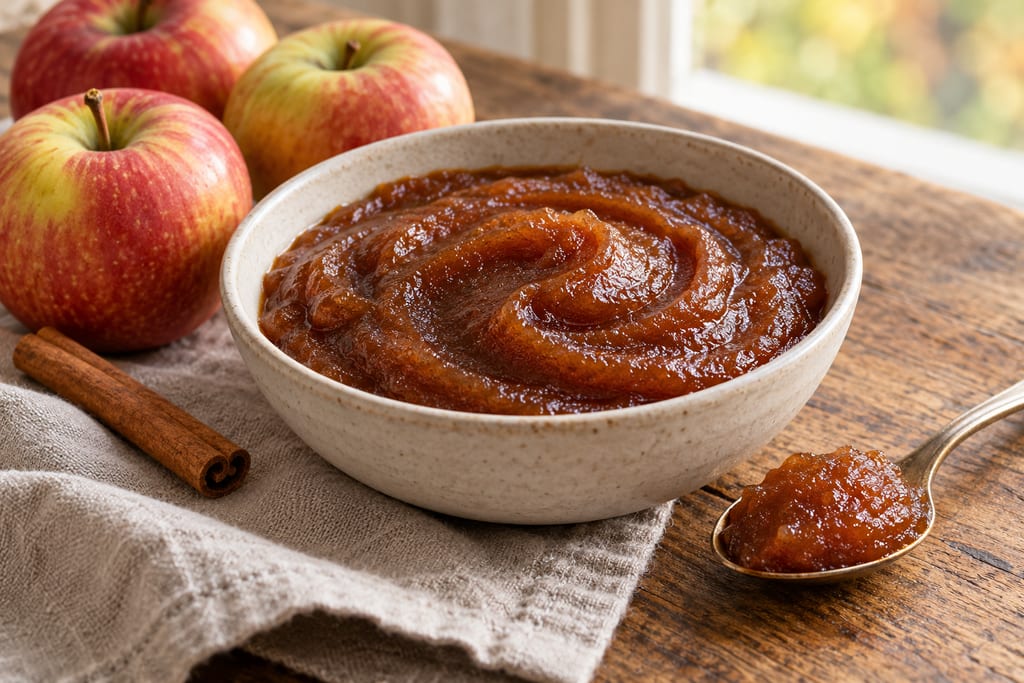
A smooth fruit pulp cooked down with sugar and spice until it holds its shape on a spoon, made by three documented routes in a slow cooker, a microwave or an electric multicooker.
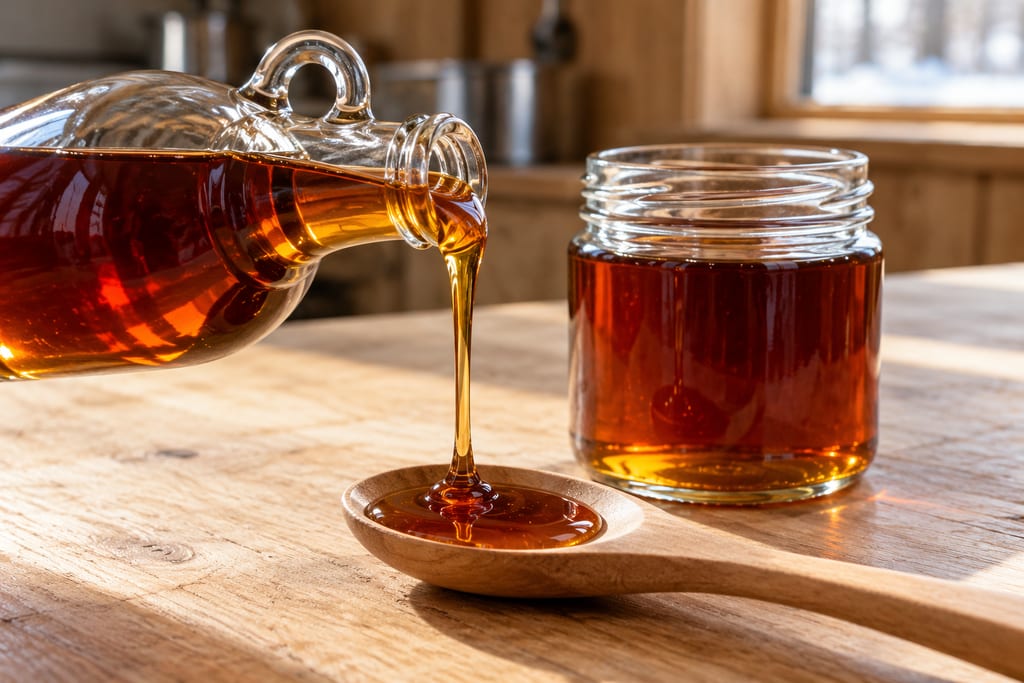
Maple sap of about two percent sugar boiled down in a shallow pan until it reaches syrup density, the sugar concentration the standard defines, then filtered hot and packed hot.
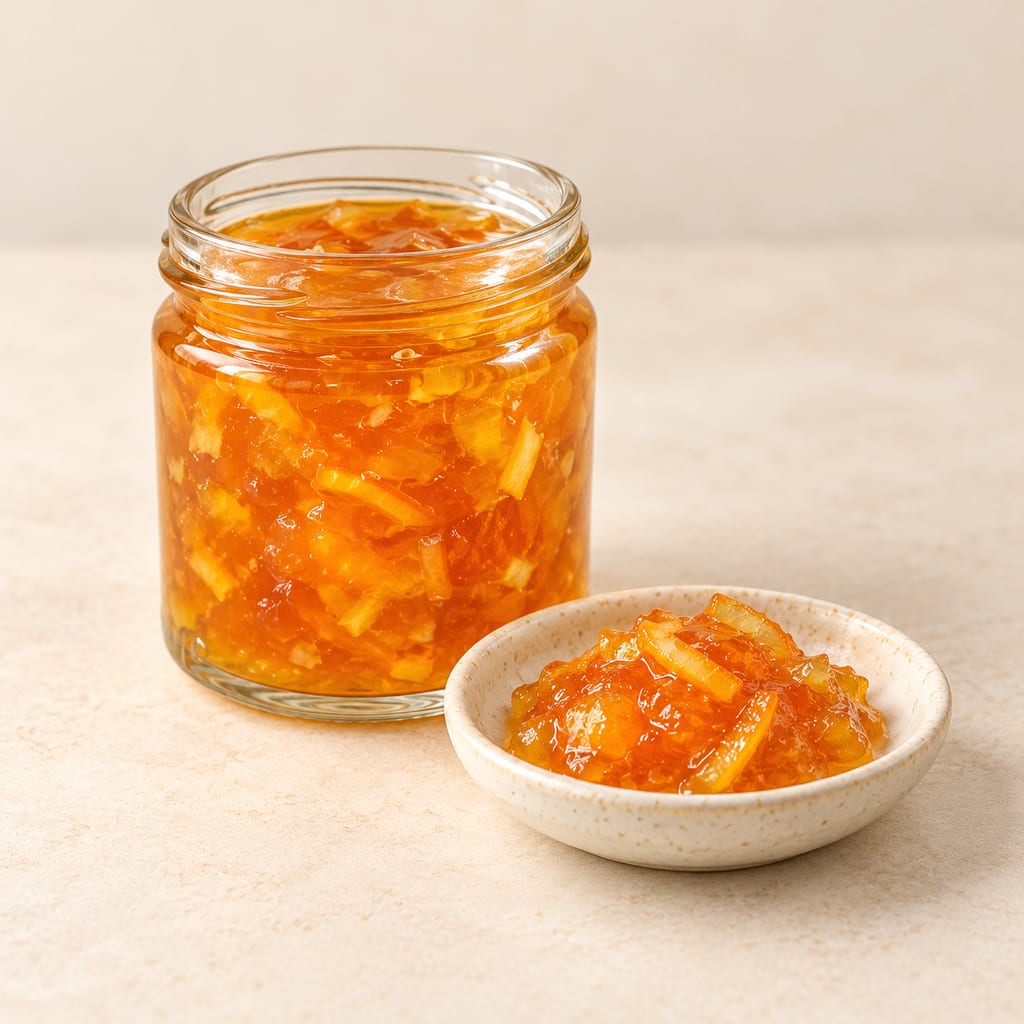
Orange marmalade suspends thin strips of citrus peel in a sweet gel. This navel-orange batch includes pulp and lemon and is preserved in a boiling-water canner.
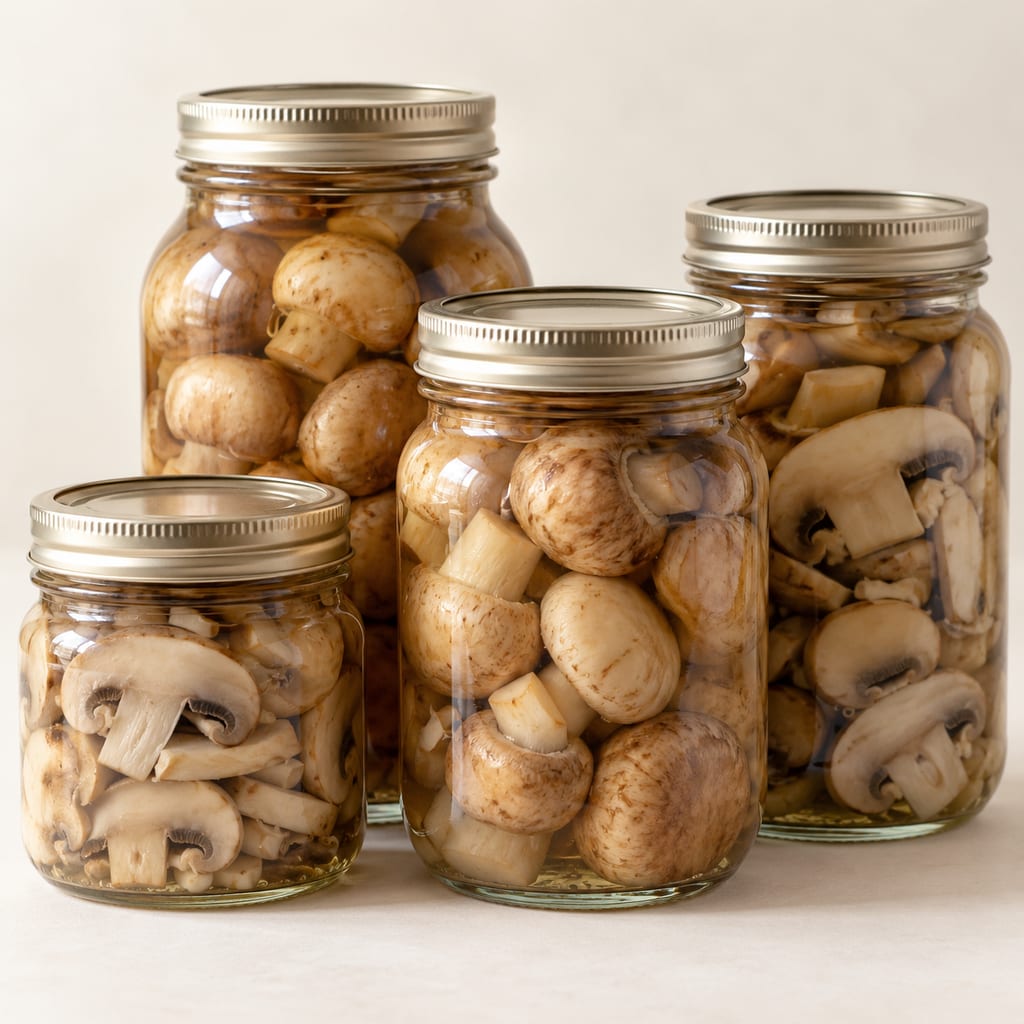
Whole or sliced domestic mushrooms packed hot in jars with fresh water and processed in a pressure canner, the tested home method for a low-acid vegetable.
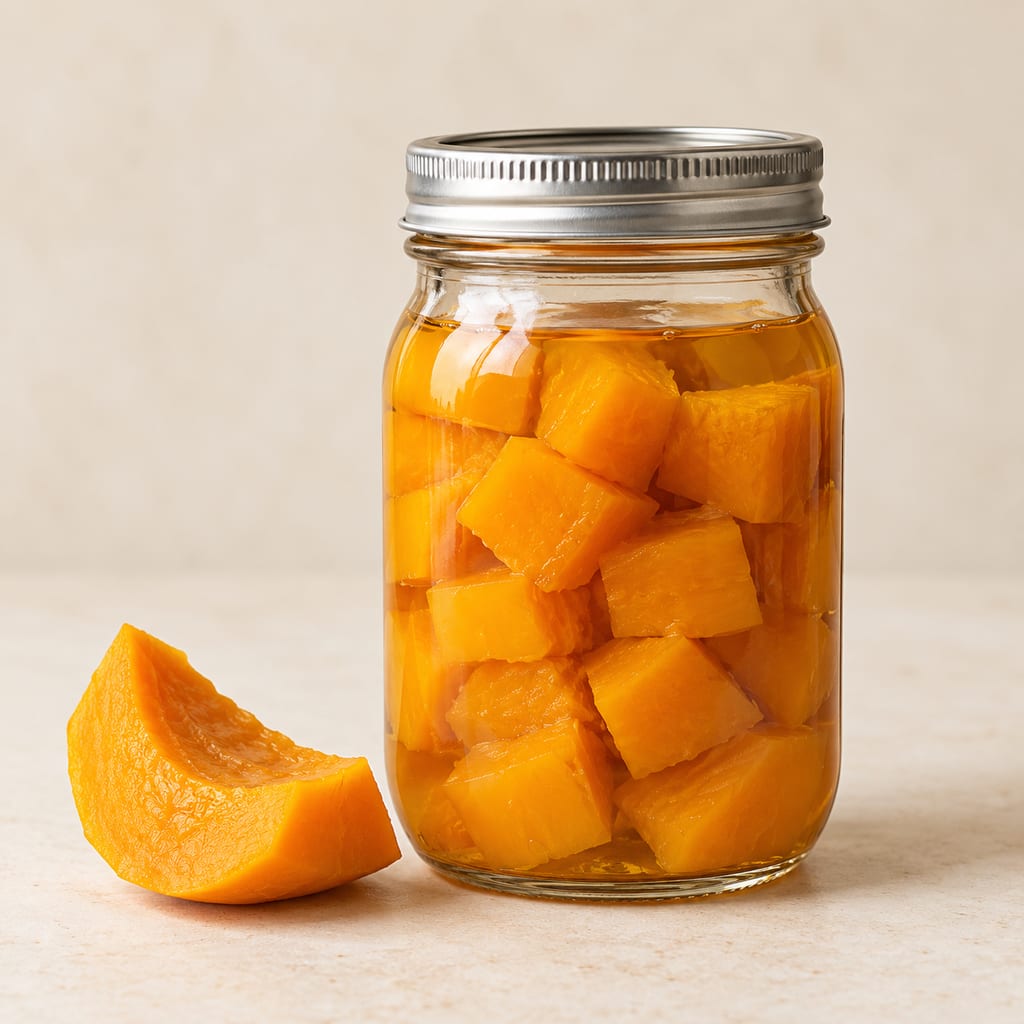
Plain pumpkin cubes hot-packed in water and pressure-canned for later cooking. The pieces stay intact during canning; mash them only after opening.
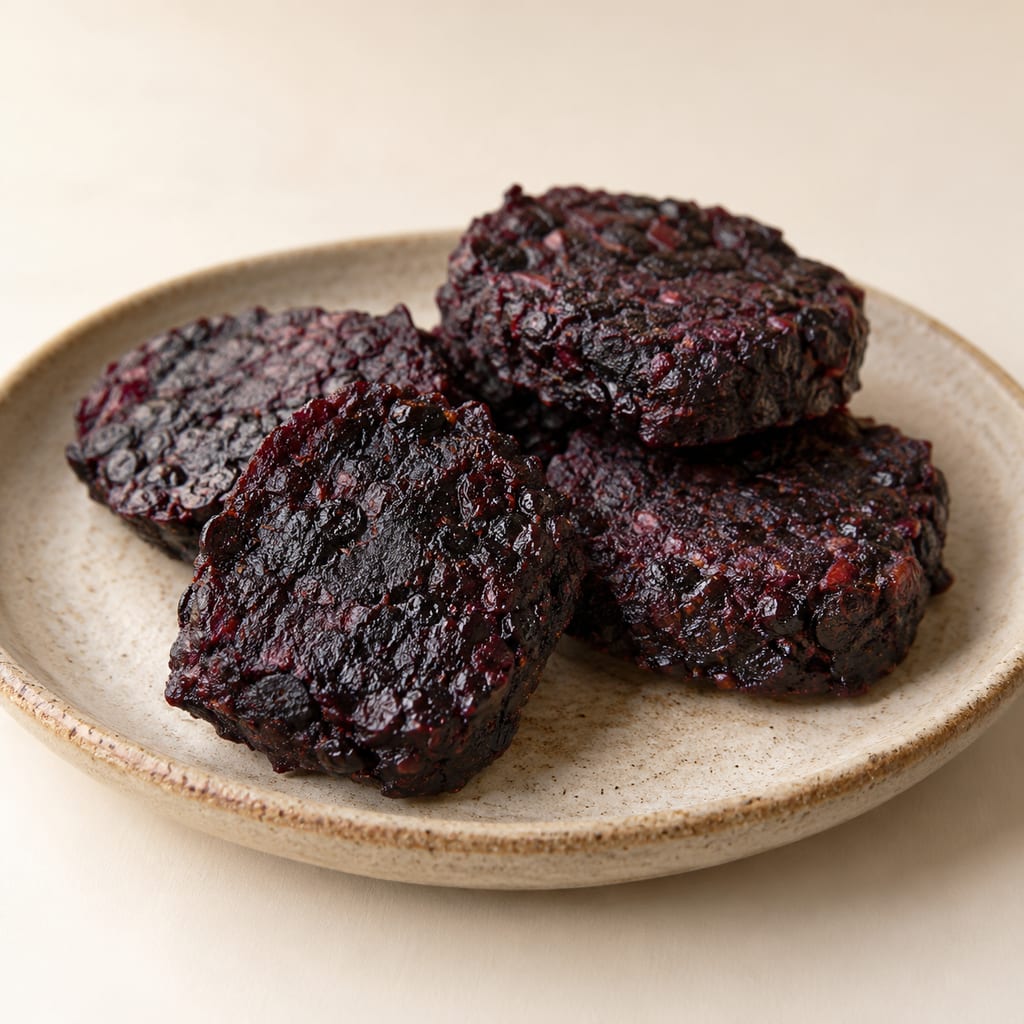
Salal berries pulped, formed into cakes and dried, a compact berry reserve of the northwestern American coast.
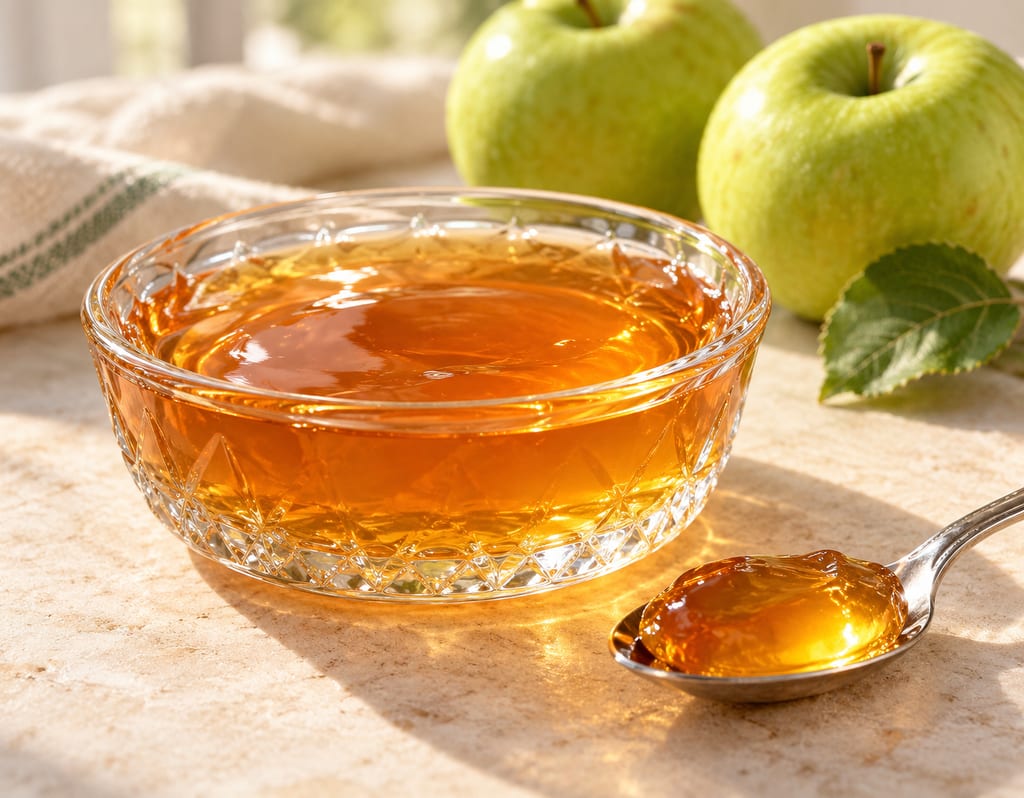
A clear jelly made from tart-apple juice, sugar and optional strained lemon juice. This batch uses a stated fruit-to-water preparation, gel endpoint, hot fill and altitude-adjusted boiling-water process.
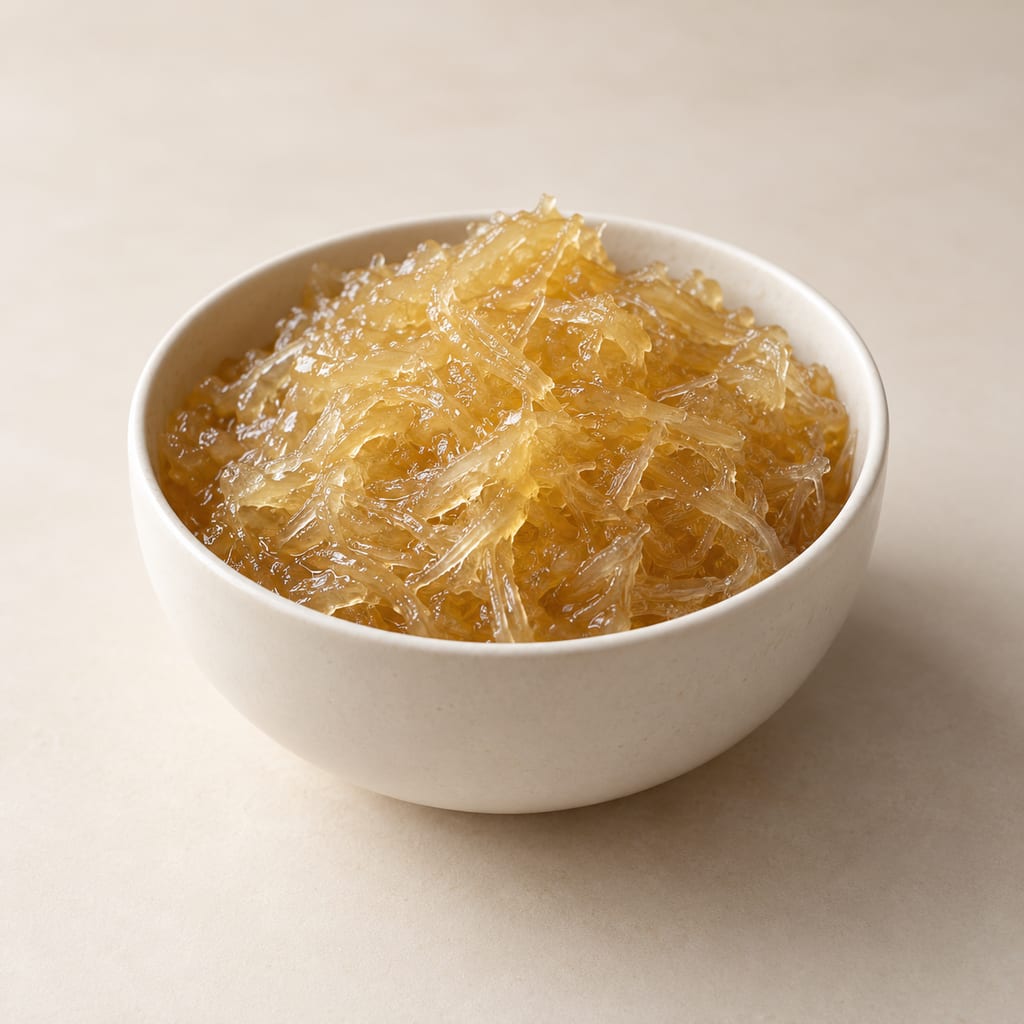
Fine strands of Cucurbita ficifolia cooked in an equal weight of sugar, then portioned for refrigerator or freezer storage. Ordinary orange pumpkin does not give the same fibres.
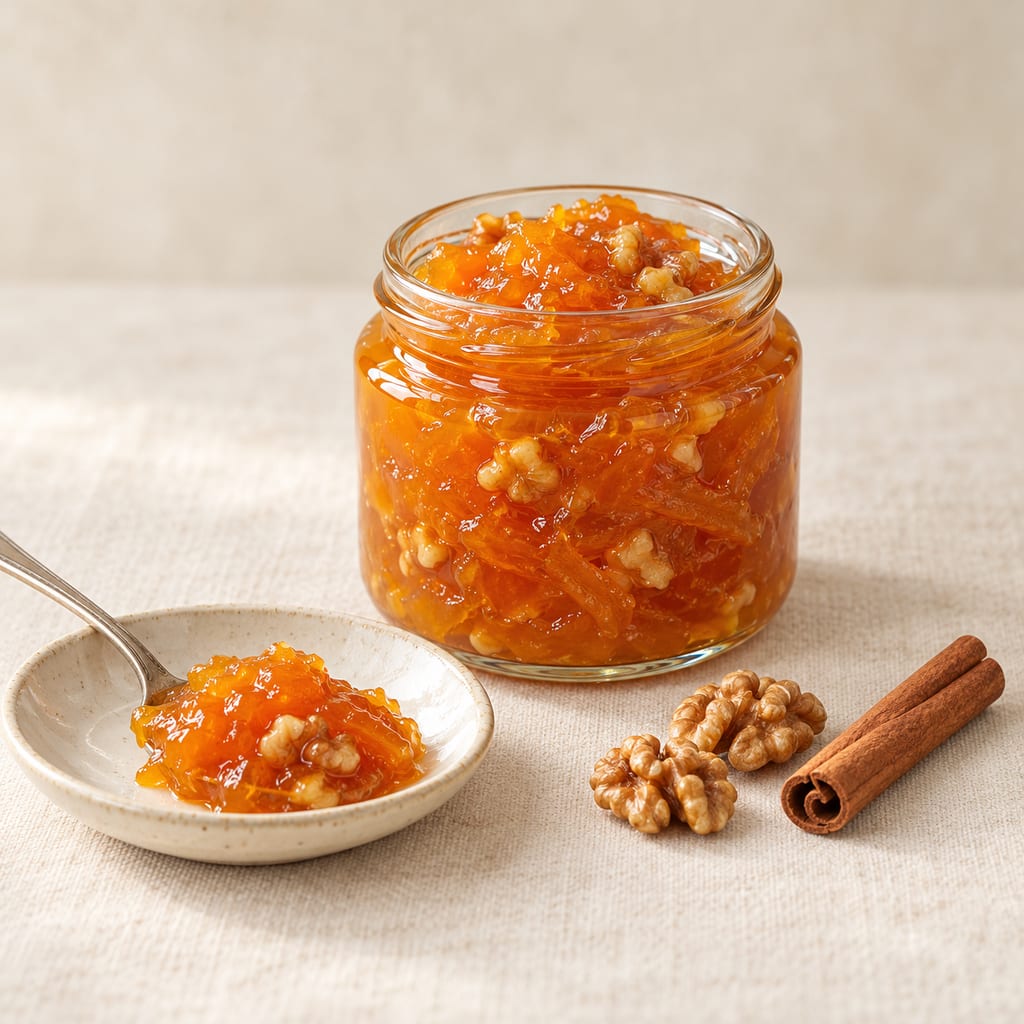
Portuguese pumpkin jam cooked with cinnamon and optional walnuts. A sweet spread to refrigerate or freeze, rather than a home-canned preserve.
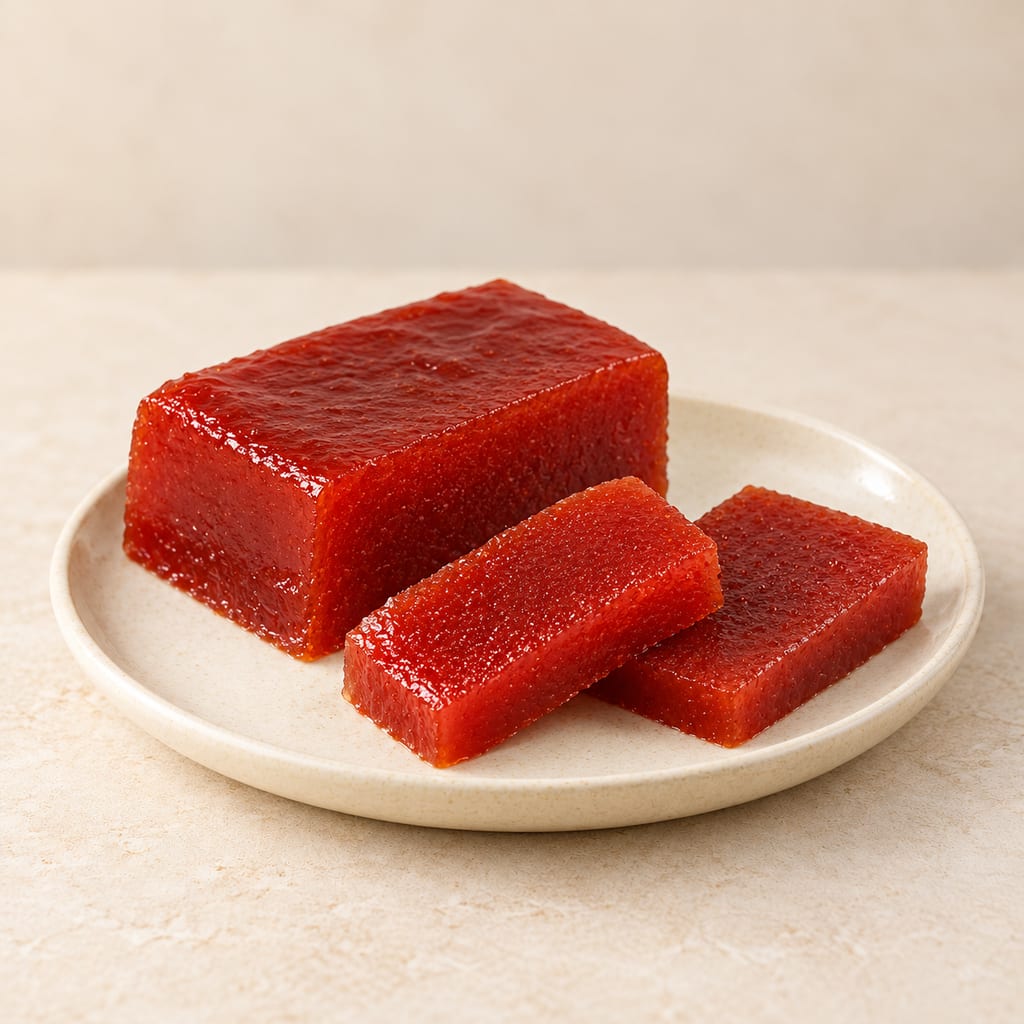
Dulce de membrillo is quince cooked with sugar into a firm paste for slicing. This family method softens the fruit in a pressure cooker, then blends it and leaves it to set.
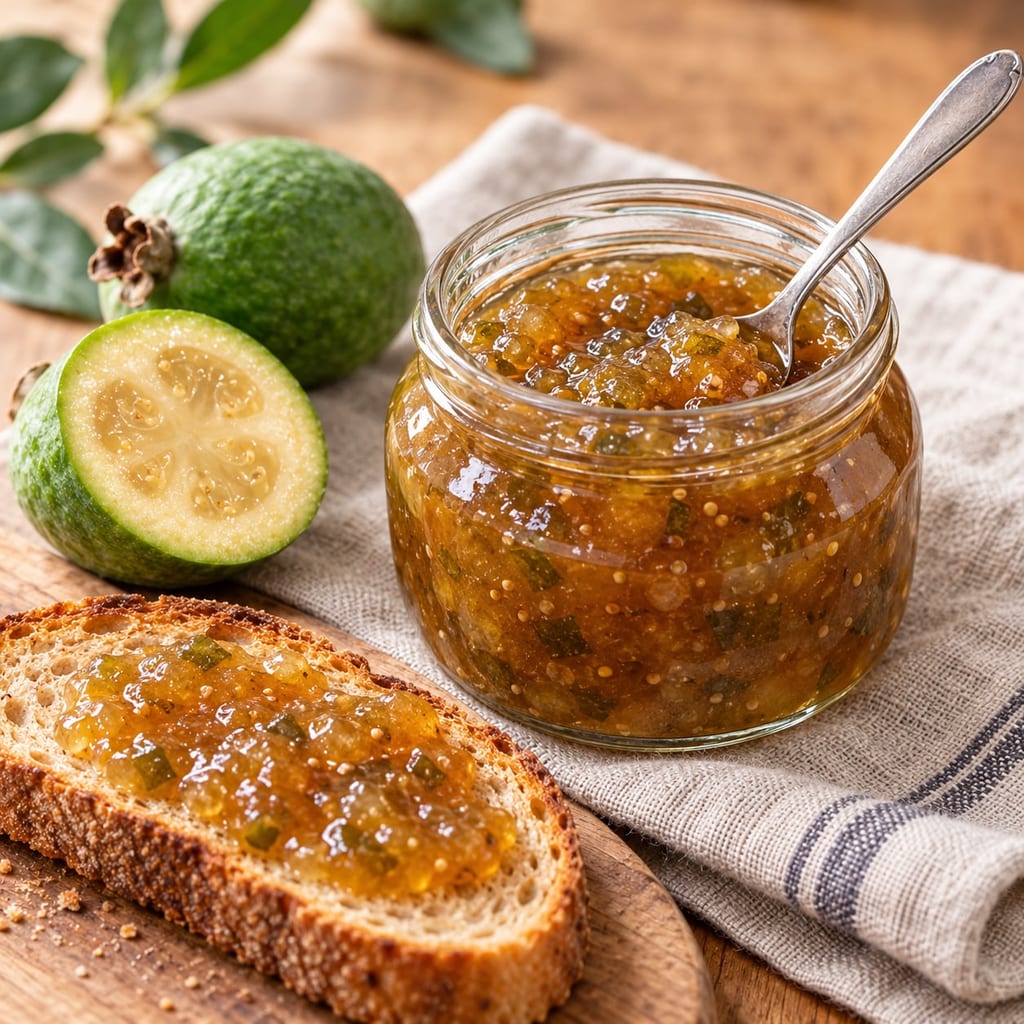
Blended whole feijoas simmer into a skin-on jam with lemon, sugar and vanilla. The skins remain for a more textured finish; keep this batch refrigerated or frozen because its method has no validated shelf-stable canning process.
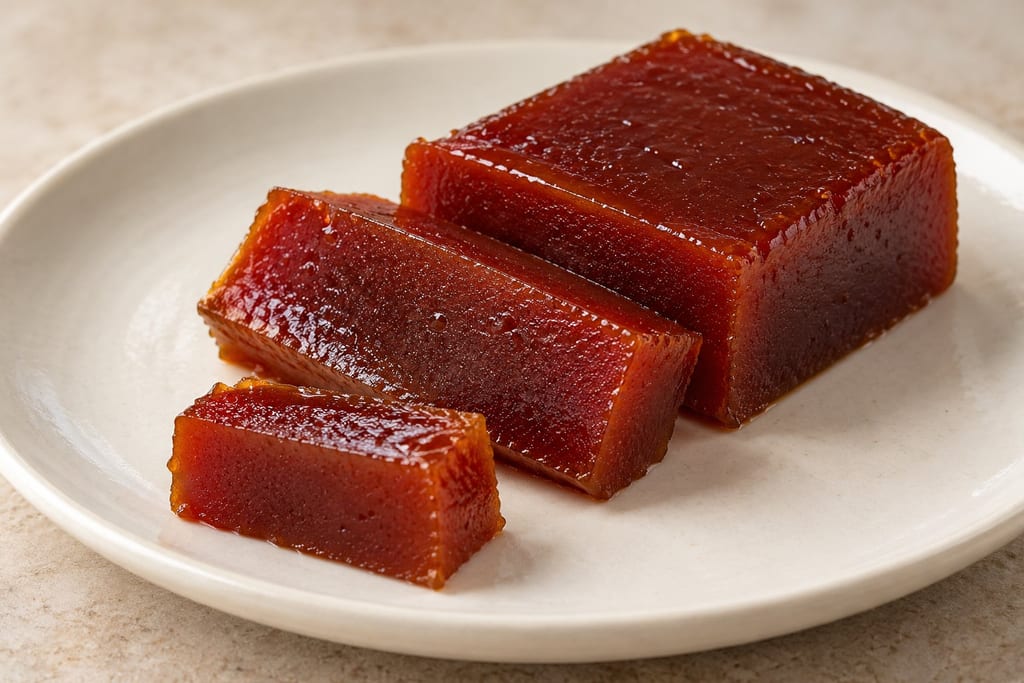
Cooked, sieved guava pulp is reduced with sugar and lime juice to a sliceable paste, then refrigerated. This adapted trial begins with prepared pulp and has no validated canning process or storage duration.
Portuguese pumpkin jam: Freeze for winter; small fresh portion refrigerated up to 48 hours.
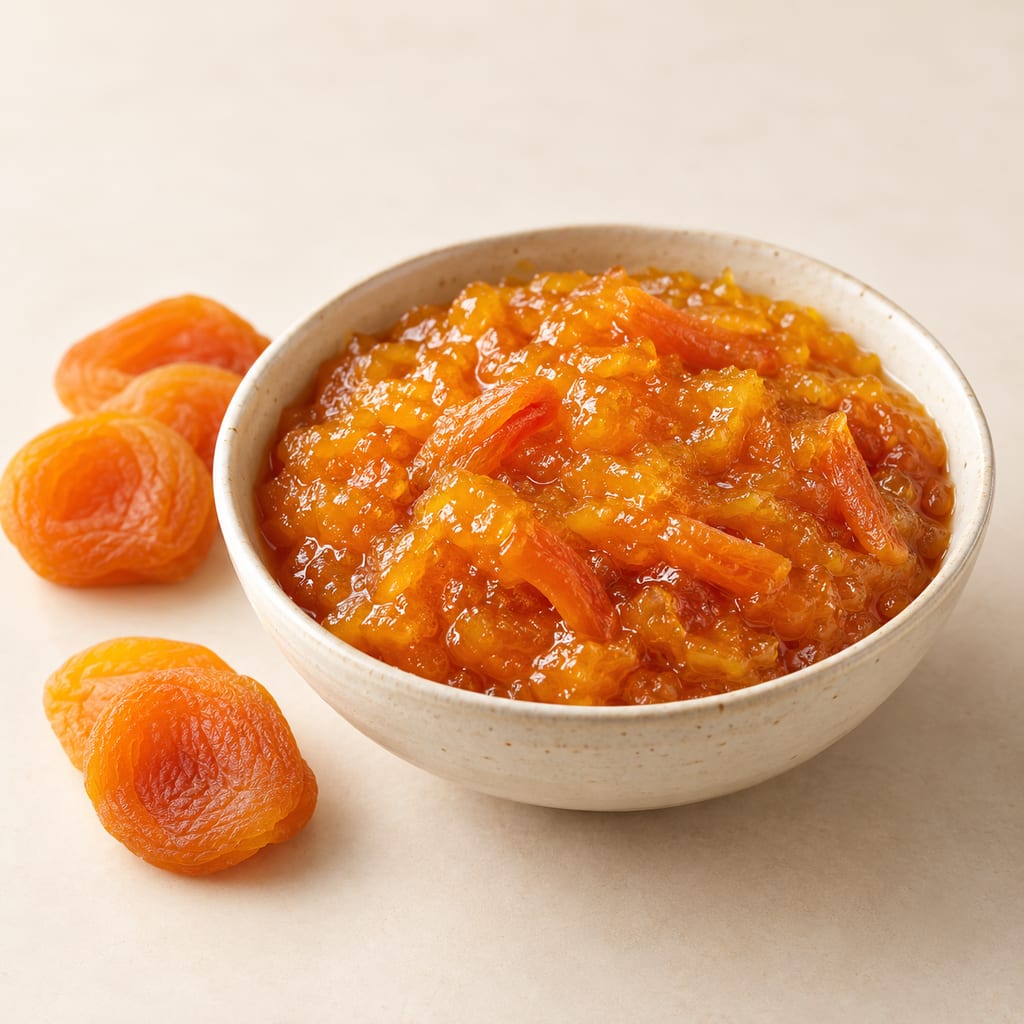
Pumpkin and dried-apricot jam: Freeze for winter; small fresh portion refrigerated up to 48 hours.

Soft, spreadable Calabrian pork sausage made with a great deal of red chilli and fatty pork, stuffed into natural casings, sometimes smoked and matured while staying soft.

A way to add independent temperature logging to an existing food dehydrator without changing its built-in controls or protections. It is a monitoring method, not a rewiring plan.

Pleurotus cystidiosus is the abalone mushroom, a cultivated oyster-type fungus with dark brown caps that grows more slowly and is more demanding than other Pleurotus species.

A dark, balanced vinegar from Emilia-Romagna made by combining cooked or concentrated grape must with wine vinegar, then acetifying and refining it in wood under a protected specification.

A living dairy inoculum that starts controlled cream fermentation, developing acidity and aroma before sour cream or cultured butter is finished.

A small electric incubator holds jars at a selected temperature for yogurt and other documented warm food preparations. Controls, capacity and vessel arrangement vary by model.

Adygean salt is a seasoned table salt associated with Adygea and the wider North Caucasian culinary tradition. Salt is blended with garlic and a variable selection of herbs and spices; the exact mix depends on the named style and maker.

The African Caesar-group mushroom, Amanita masasiensis, is a wild ectomycorrhizal species of central and southern African woodlands, eaten locally. The genus contains deadly poisonous species, so identification needs care.
No community contributions have been published for this entry yet.
Sign in to contribute. Published comments and photos are free to read.
National Center for Home Food PreservationMethod · Safety
Berry Jams without Pectin9 cups crushed berries and 6 cups sugar; yield about 7 or 8 half-pint jars.
Wash berries before crushing; dissolve sugar slowly at a boil, then cook rapidly to or almost to the jellying point.
Optional seedless method: heat berries until soft and press through a sieve or food mill.
Hot-fill sterile half-pint or pint jars with 1/4-inch headspace; wipe rims and adjust two-piece metal lids.
Boiling-water process times: 5 minutes at 0–1,000 ft, 10 minutes at 1,001–6,000 ft, 15 minutes above 6,000 ft.
Adapted from So Easy to Preserve, 6th ed. 2014.
Cited in: What this jam is; Method and preservation; Formulation difference and limits
University of Georgia Cooperative ExtensionSafety · Method
Using Boiling Water CannersMaintain at least 1 inch of boiling water over jar tops during processing.
Begin timing after water returns to a vigorous boil; maintain a complete boil for the full processing time.
If boiling stops, restore the boil and restart the full process time.
Keep at least 1 inch of boiling water over jar tops during the process.
National Center for Home Food Preservation, University of GeorgiaProcess
Using Boiling Water CannersBoiling-water canner requirements: at least one inch of water over jar tops, complete boil, restart full time if the boil stops
Cited in: Method and preservation
National Center for Home Food Preservation, University of GeorgiaComparison
Making Jam without added PectinGeneral formulation table that differs from the berry-specific batch
Cited in: Formulation difference and limits