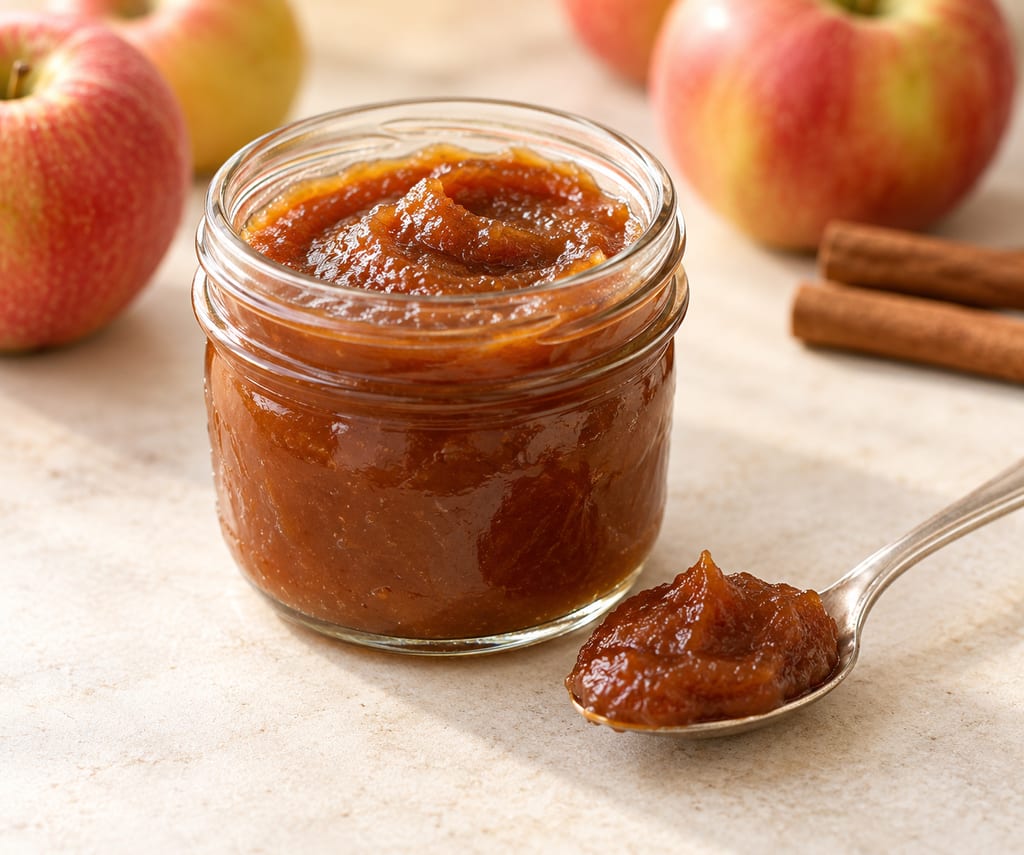
Apple butter, tested canning method
Apple butter is a smooth, concentrated apple preserve cooked with cider, vinegar, two sugars and spices, then hot-filled and processed in a boiling-water canner using the published jar-size and elevation schedule.
 FermenteaWhere food goes to change
salal cakes · salal berry cake
Salal berries pulped, formed into cakes and dried, a compact berry reserve of the northwestern American coast.
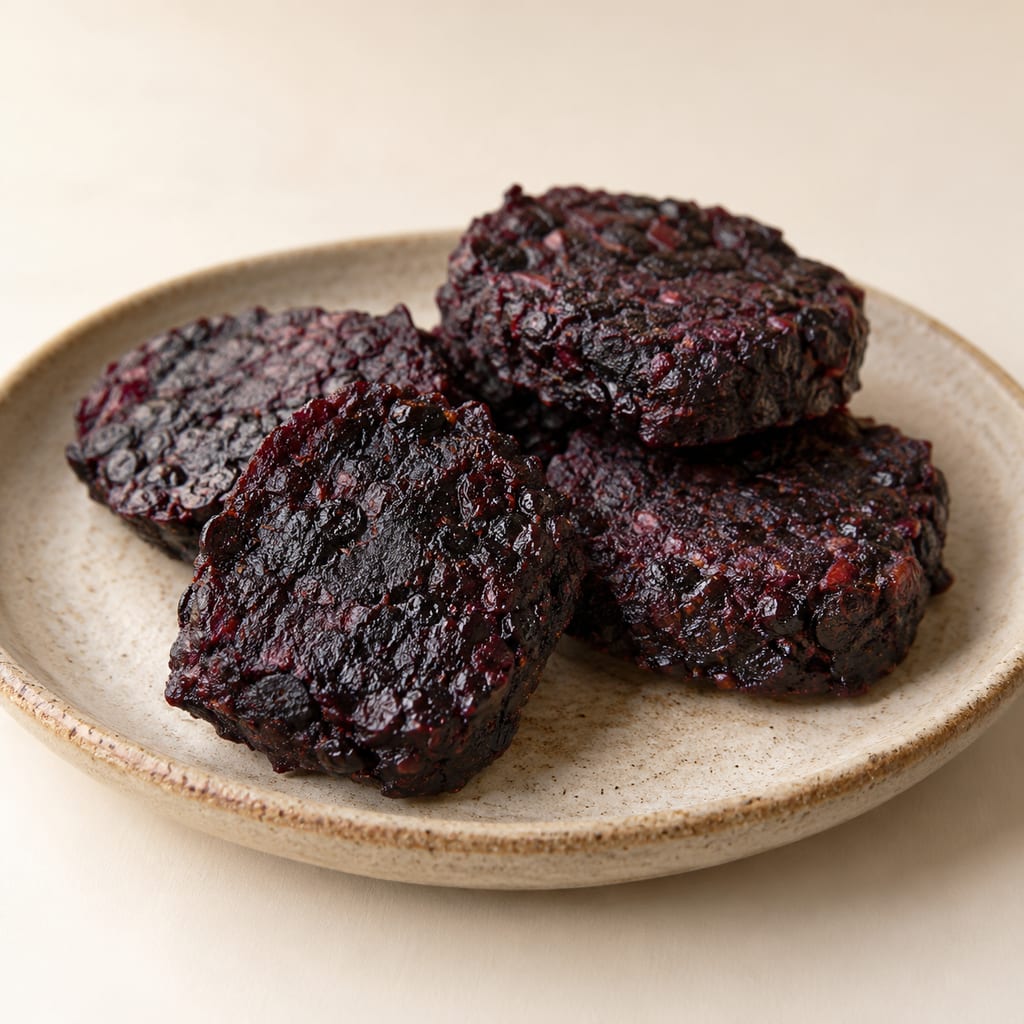
Salal is a shrub of the northwestern American coast, and its dark berries were dried into cakes for storage. The cake form packs the fruit tightly and makes it easy to carry and keep.
The catalogue lists salal cakes beside fruit leathers from another region. Both show the same logic: pulp is dried so that a seasonal fruit lasts beyond its season.
The berries are pulped and formed into cakes before drying. The shape is the same mechanism as a leather sheet, with the pulp held in a compact mass rather than spread thin.
The catalogue gives no pulp ratios, forming method or drying time, so none is stated here.
A dry berry cake keeps much longer than the fresh fruit, but the sources do not establish a shelf life. Storage should keep the cakes dry, since moisture is what lets dried fruit spoil.
Use in the sources is as a stored food for later in the year rather than as a fresh fruit.
The catalogue does not name the Indigenous nations or communities that made the cakes, and it gives no dates. A validated home drying method is not supplied.
Salal cakes are one of the Indigenous North American forms of dried berry reserve. They sit beside Persian-style fruit leathers as ways of keeping fruit without a large addition of sugar.
Scaling: source batch only
The catalogue cites northwestern American salal cakes; it gives no narrower locality.
Apple butter is a smooth, concentrated apple preserve cooked with cider, vinegar, two sugars and spices, then hot-filled and processed in a boiling-water canner using the published jar-size and elevation schedule.
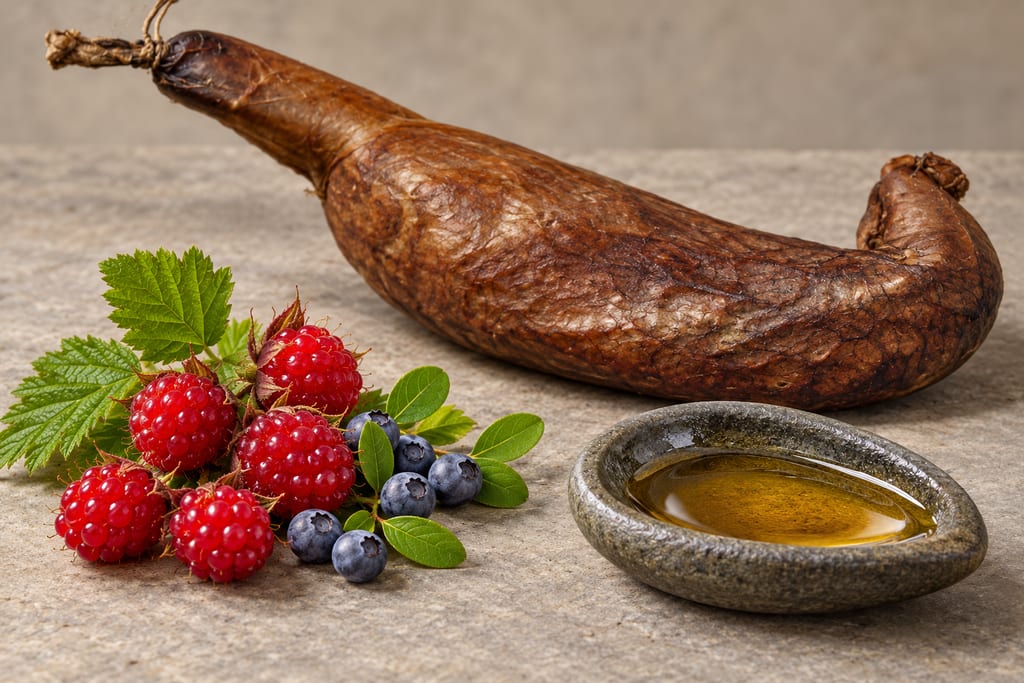
Berries, greens and fish eggs were kept in seal oil by Indigenous Alaskan communities. The oil seals the food from air, and the result depends on preparation and the surrounding conditions.
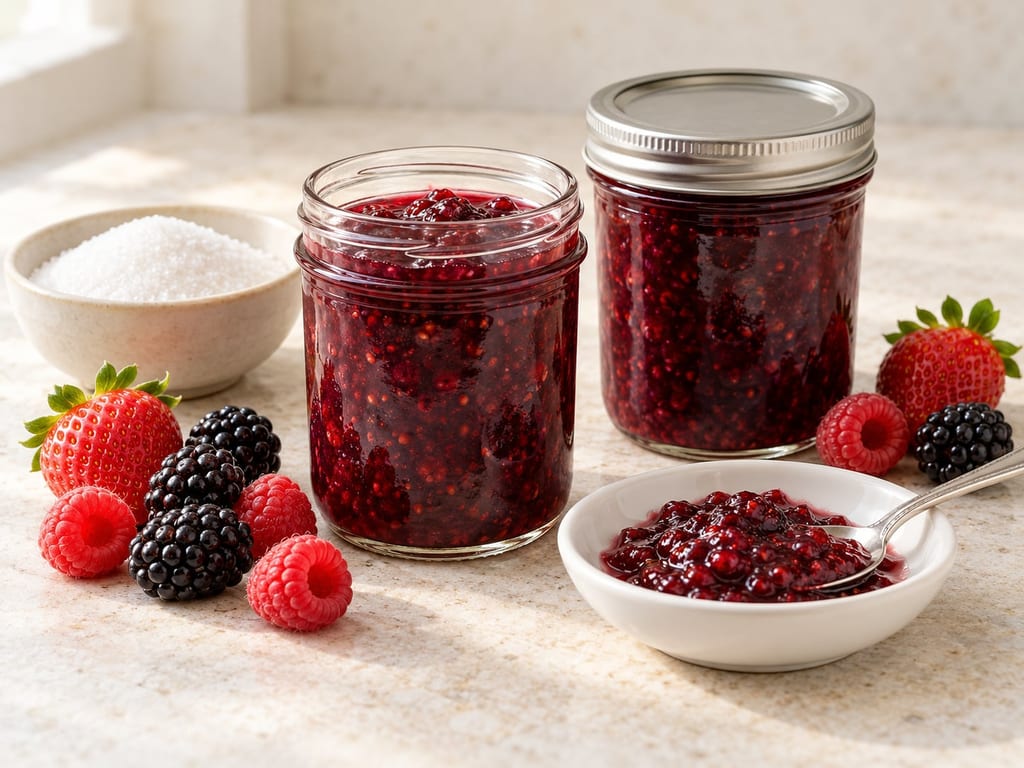
A NCHFP berry jam made without added pectin: crushed berries and sugar are cooked to the desired gel point, hot-filled into sterile half-pint or pint jars, and processed in a boiling-water canner.
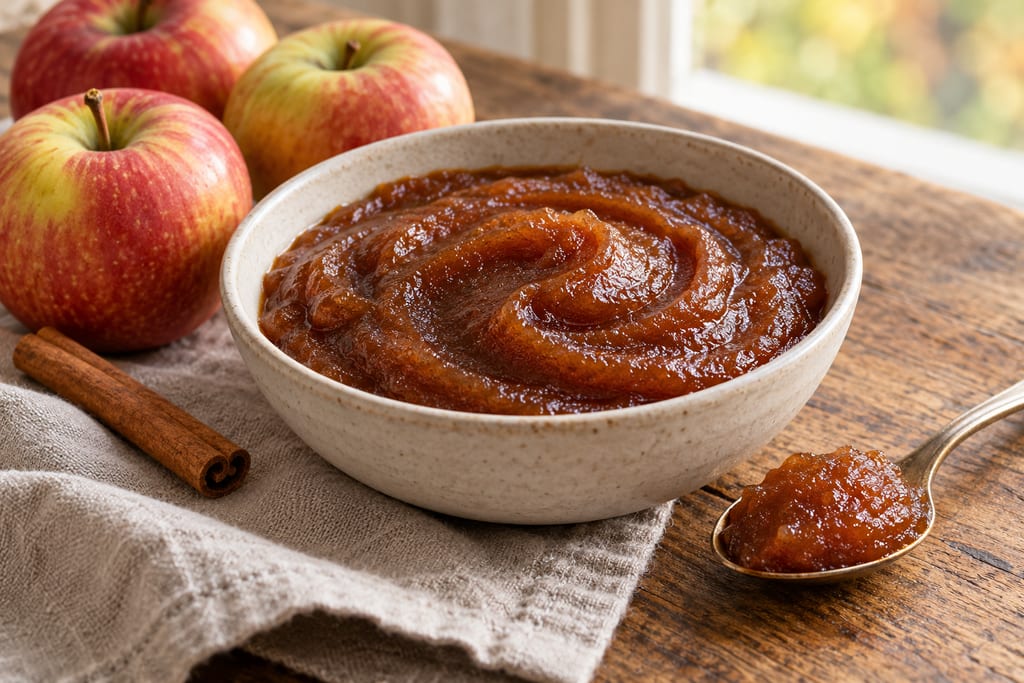
A smooth fruit pulp cooked down with sugar and spice until it holds its shape on a spoon, made by three documented routes in a slow cooker, a microwave or an electric multicooker.
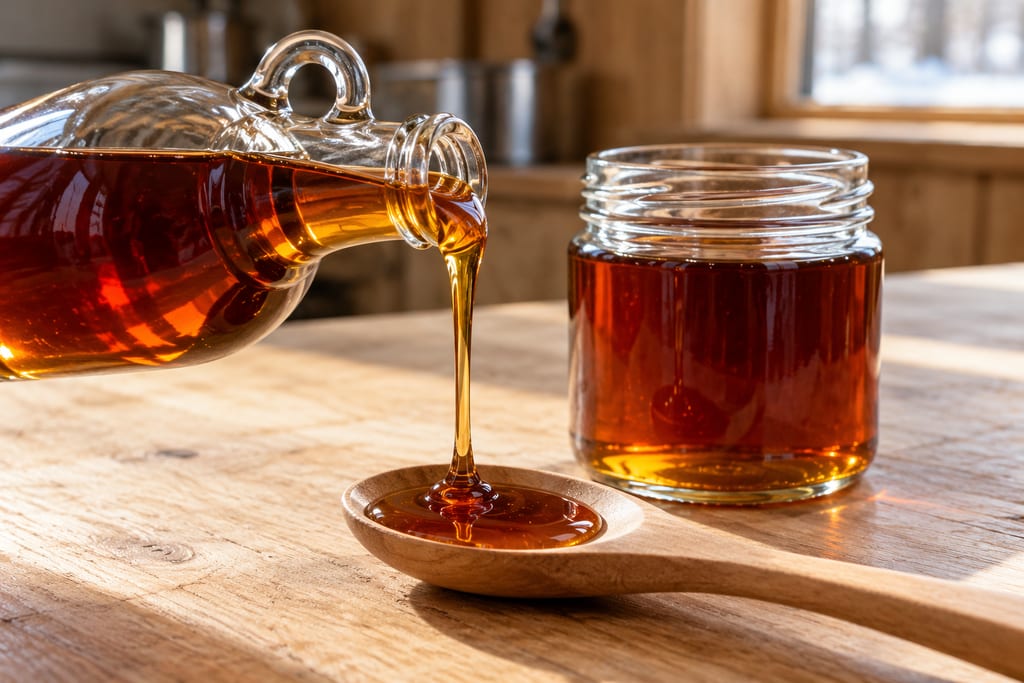
Maple sap of about two percent sugar boiled down in a shallow pan until it reaches syrup density, the sugar concentration the standard defines, then filtered hot and packed hot.
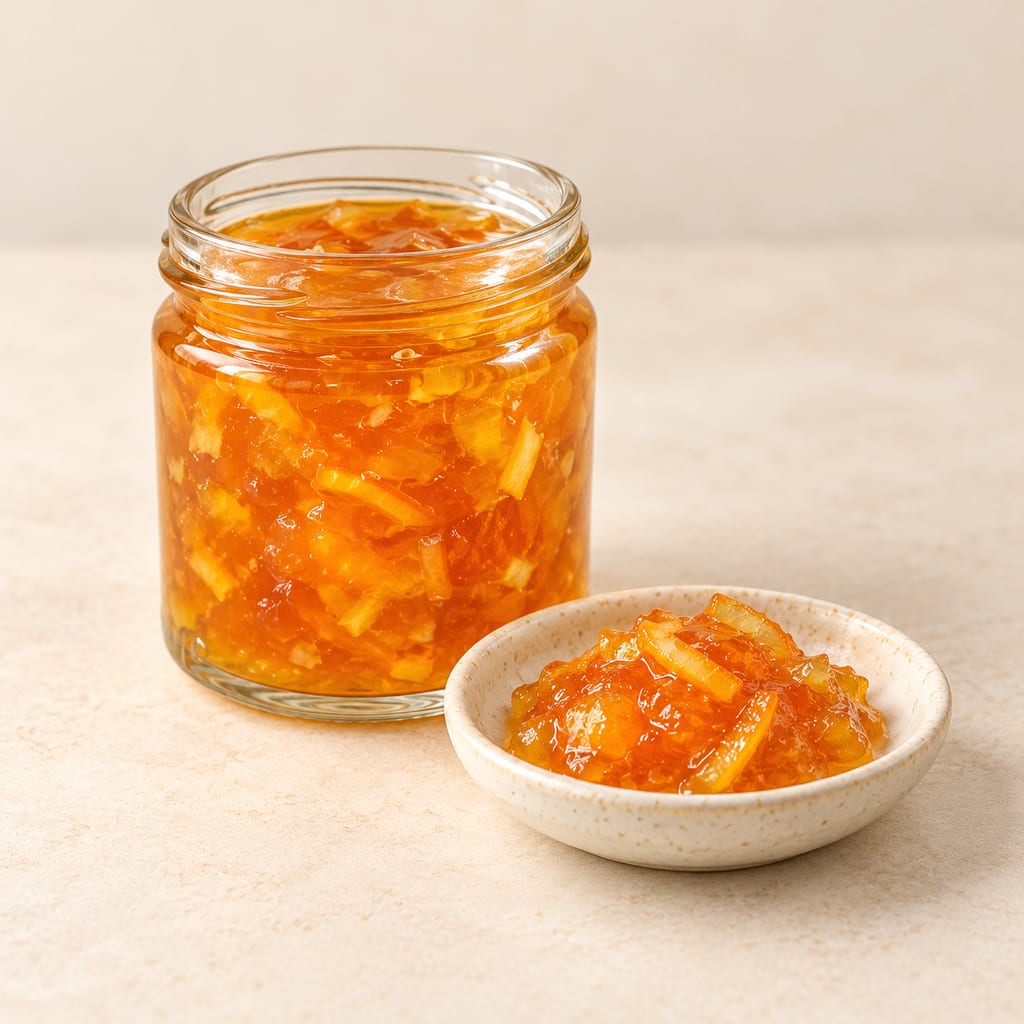
Orange marmalade suspends thin strips of citrus peel in a sweet gel. This navel-orange batch includes pulp and lemon and is preserved in a boiling-water canner.
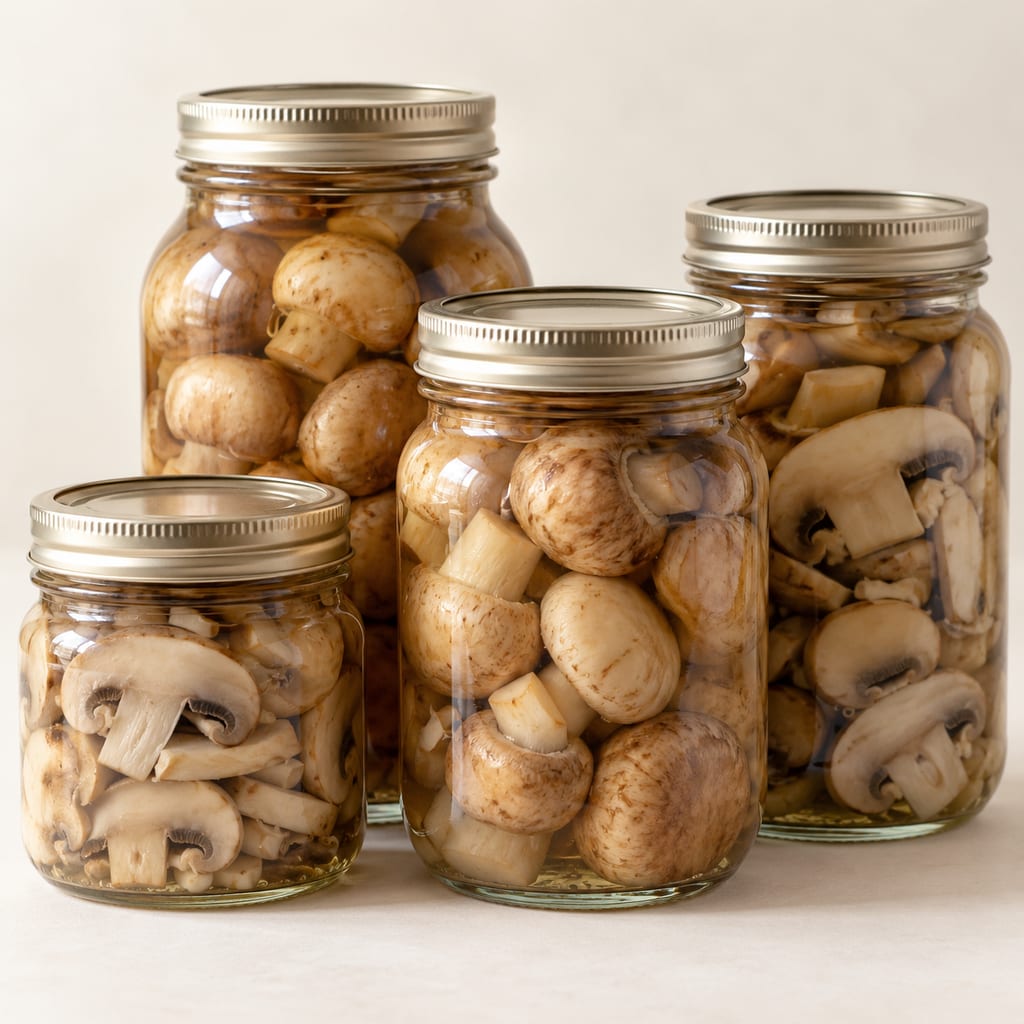
Whole or sliced domestic mushrooms packed hot in jars with fresh water and processed in a pressure canner, the tested home method for a low-acid vegetable.
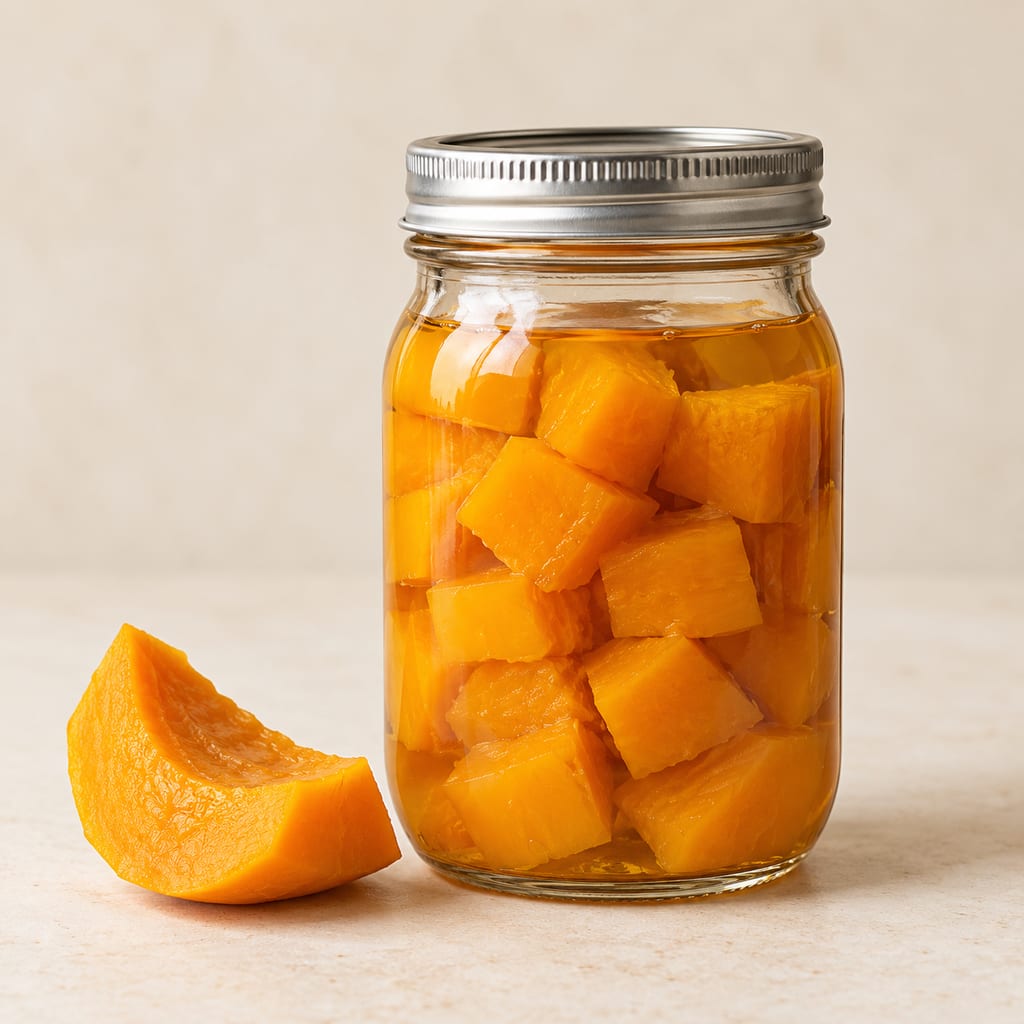
Plain pumpkin cubes hot-packed in water and pressure-canned for later cooking. The pieces stay intact during canning; mash them only after opening.
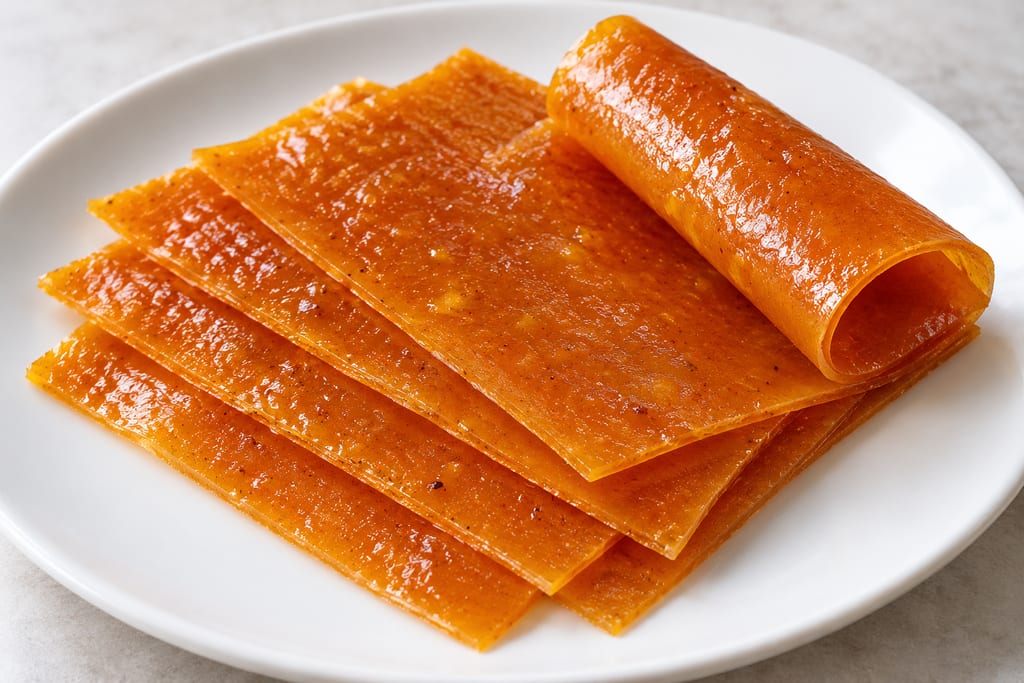
Ripe mango pulp spread thin and dried as a chewy fruit leather. This entry records one controlled unsweetened experiment and distinguishes it from Bengali sun-dried aamshotto and sweetened or spiced variants.
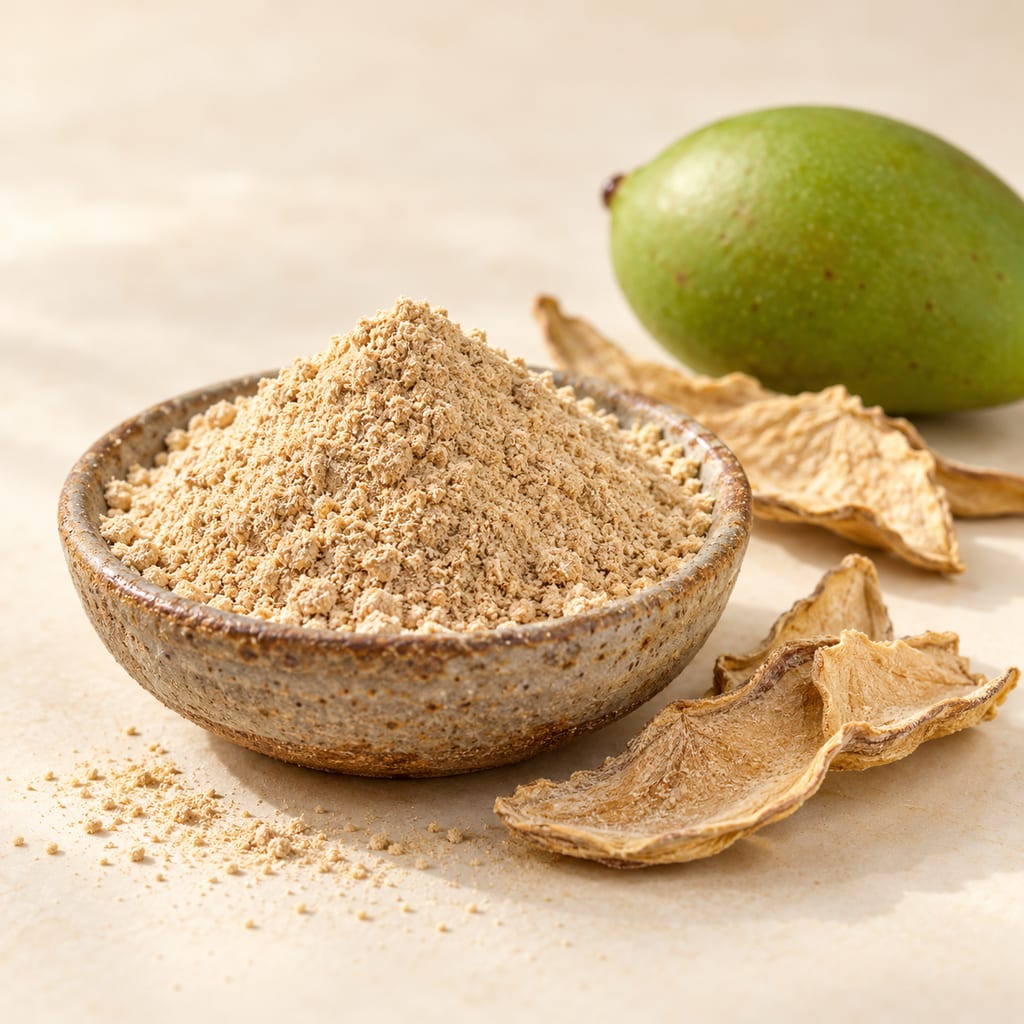
Thin slices of sour unripe mango are sun-dried over four days and ground into a tangy powder, following a five-fruit account published with an Indian mango study.
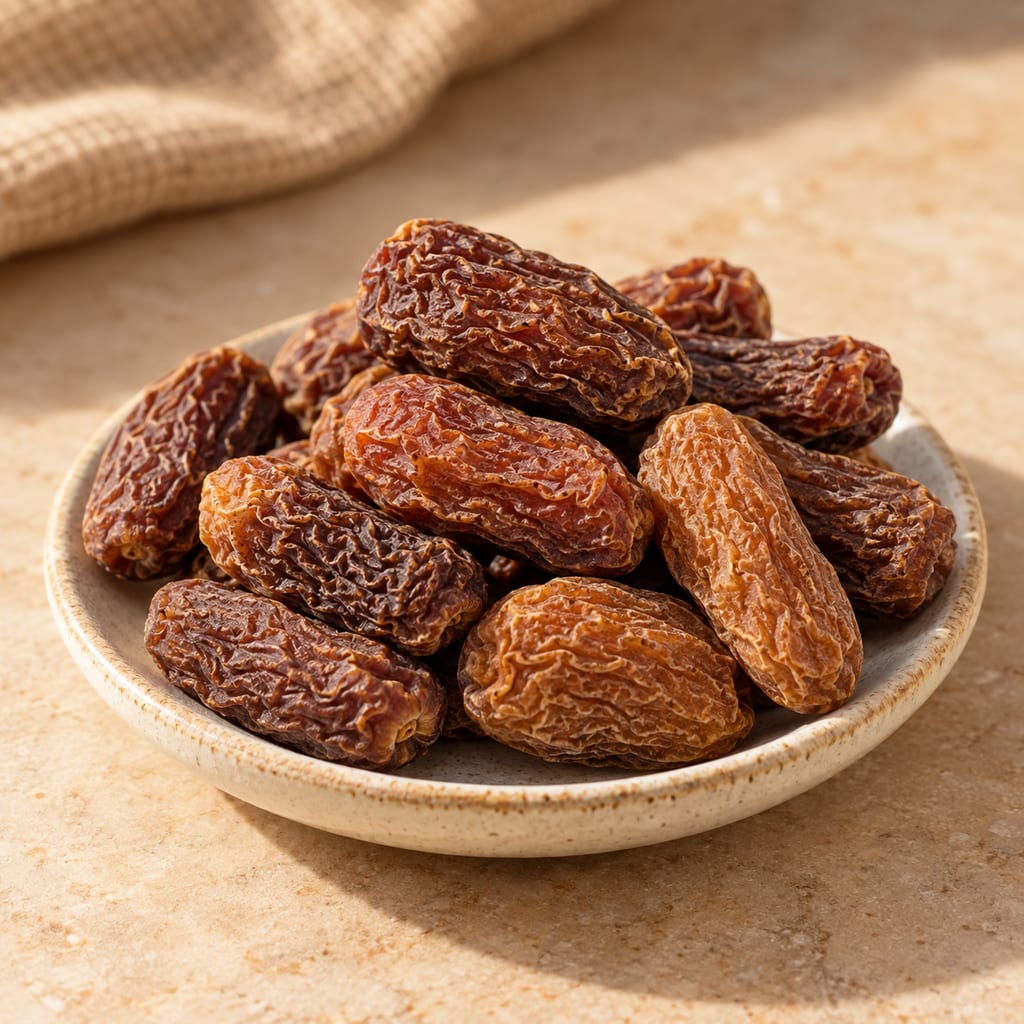
Chuhara is a processed dried-date product named in Pakistani date-production studies, distinct from other dried dates. Its household method is not established.
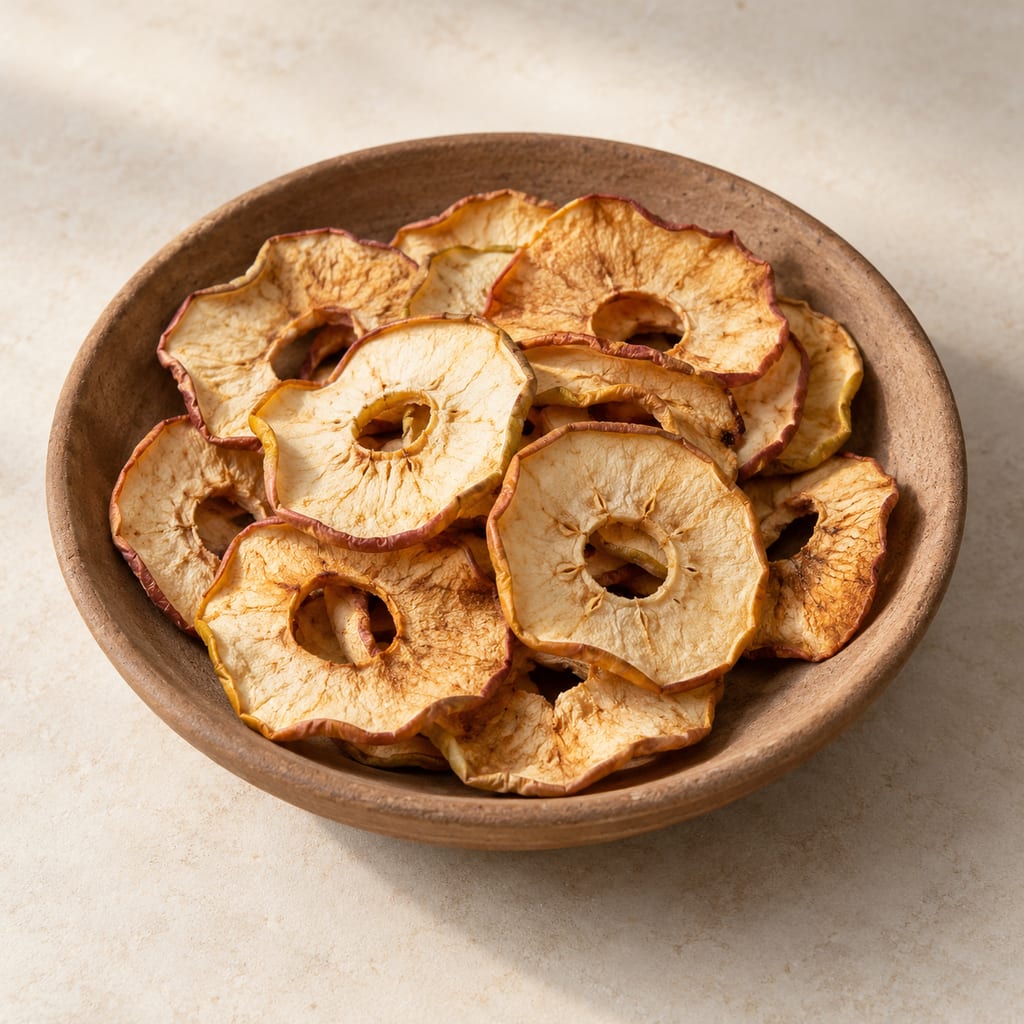
Apple slices dried until most of their water has gone, shrinking and concentrating into leathery or crisp rings, with the modern controls that a plausible old technique turns out to need.
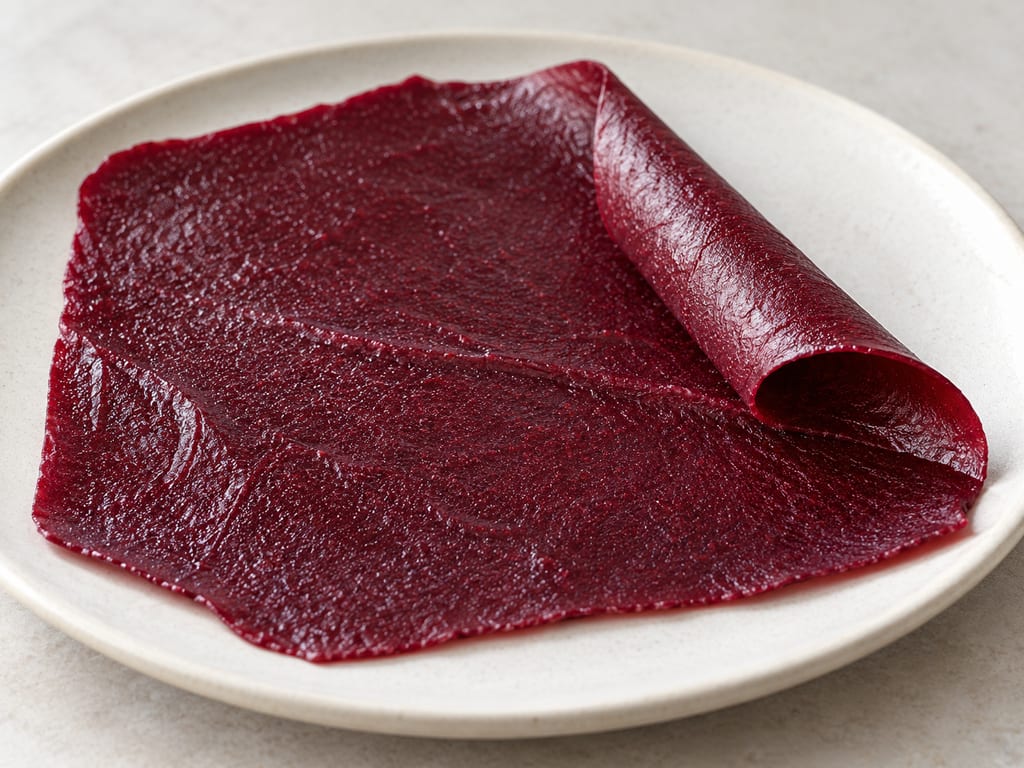
Fruit pulp spread into thin sheets or shaped into cakes and dried, a compact, portable way of keeping fruit in western and central Asia and among Indigenous North Americans.
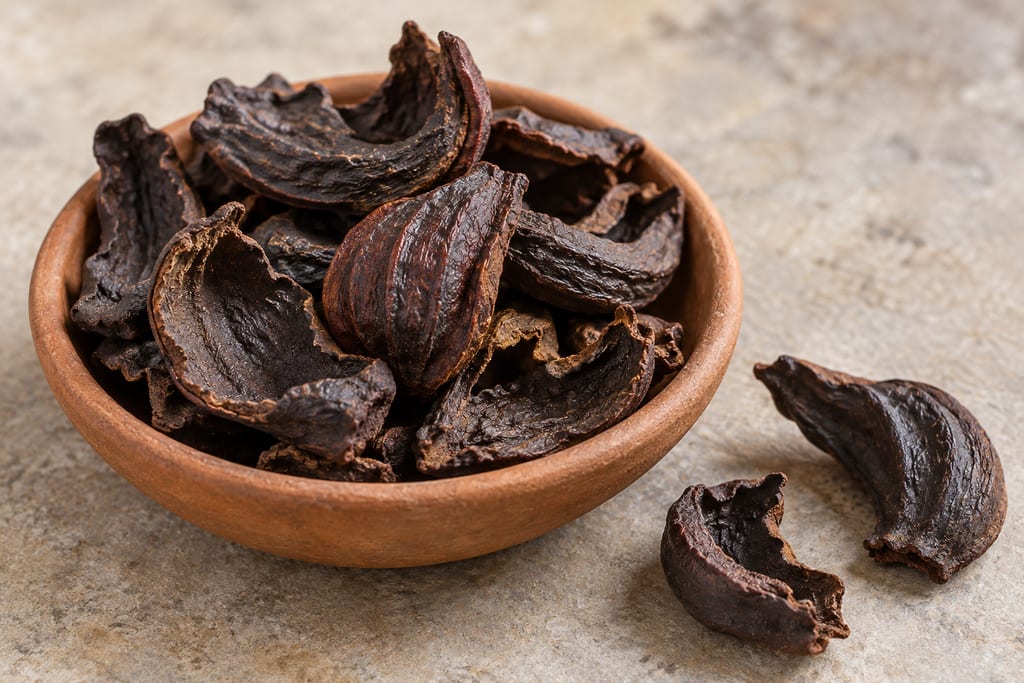
Goraka is the dried rind of Garcinia quaesita, a souring ingredient for Sri Lankan curries. Its drying is documented, but no complete household method is.
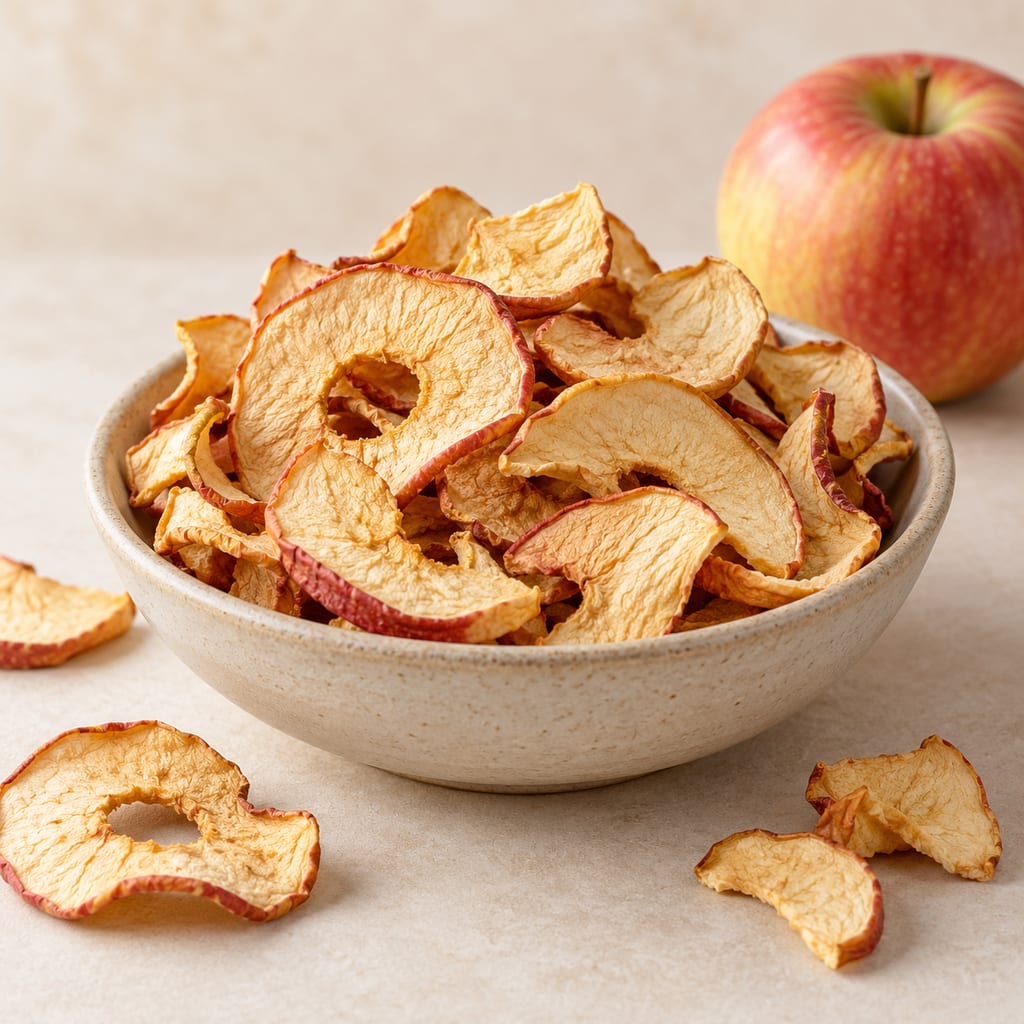
Křížaly are Czech dried apple or pear pieces. The name has regional meanings beyond apple slices, and drying practice varies by place and dryer.
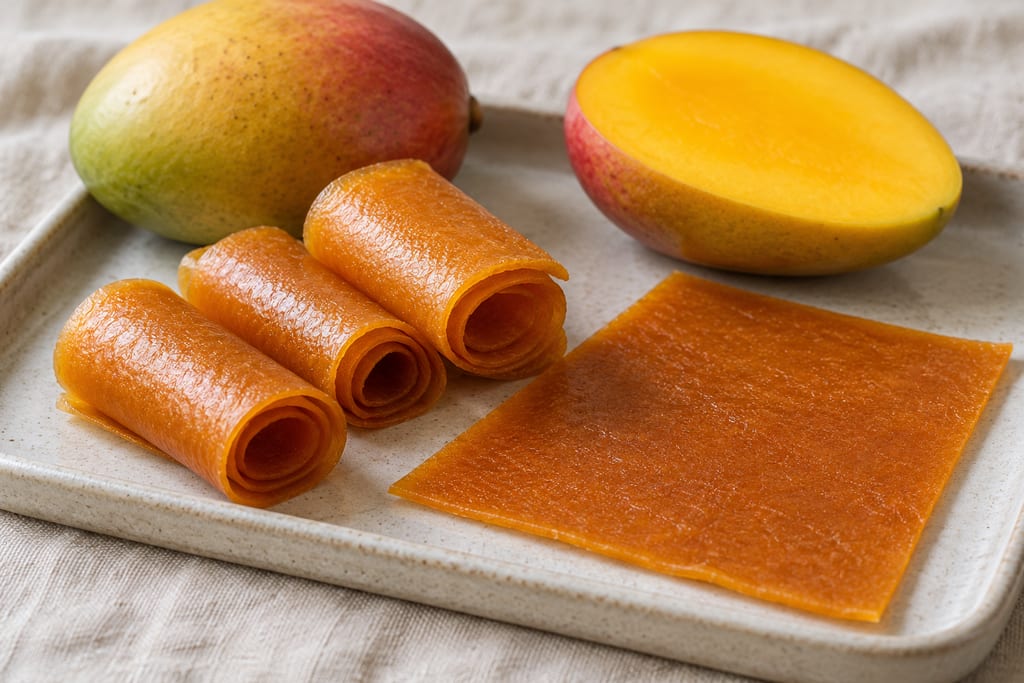
Sieved mango purée with honey and warm spices, spread a quarter inch thick and dried at 140 °F (60 °C) for about 10 hours into a flexible fruit sheet.
No community contributions have been published for this entry yet.
Sign in to contribute. Published comments and photos are free to read.
Burke MuseumHistory · Method
Storage (Burke Museum)Northwestern American salal cakes
Cited in: A berry reserve from the coast; Keeping and use; What the record does not settle
Food and Agriculture Organization of the United NationsMethod
FAO fruit and berry processing (V5030E0j)Dried berry cakes as a fruit preservation form
Cited in: A berry reserve from the coast; Pulp, shape and dry