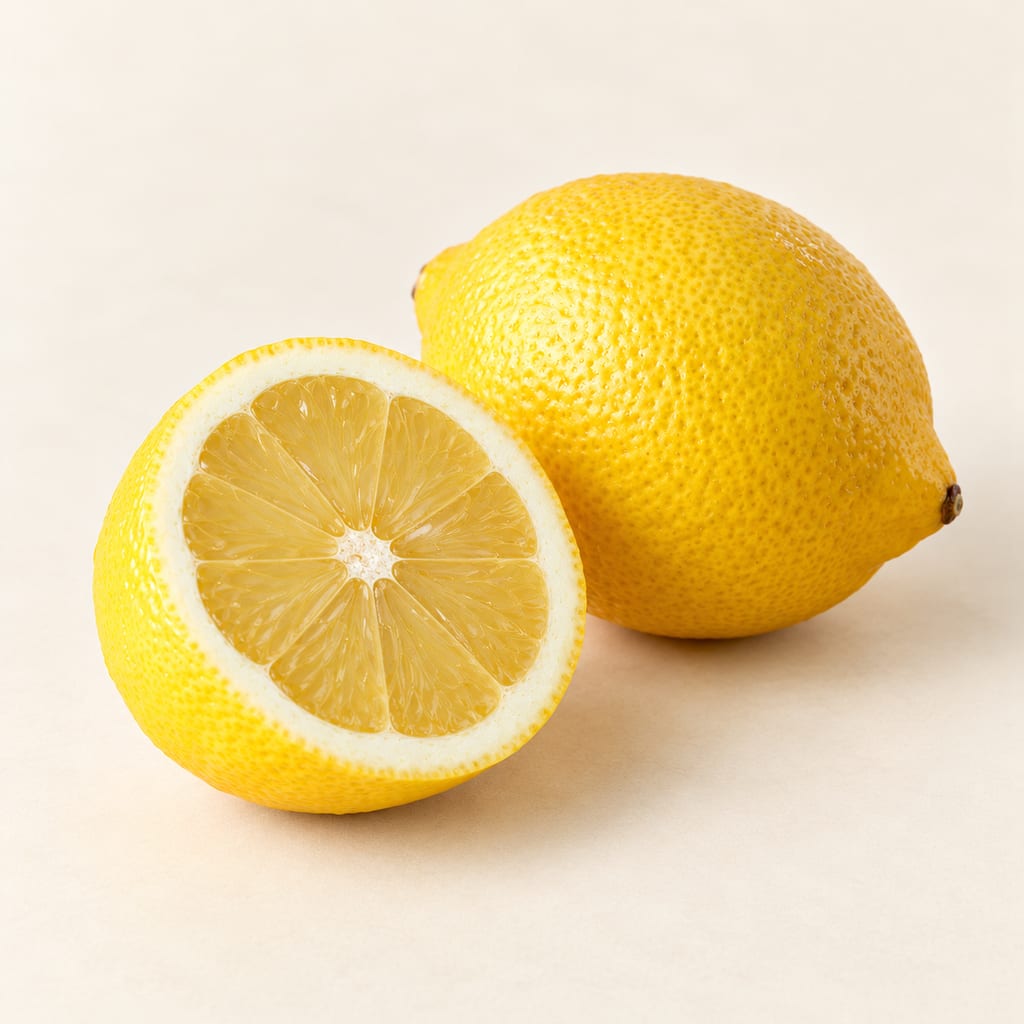
Lemons
Lemons are aromatic, acidic citrus fruits whose peel, pith and juice serve different jobs in food and drink. The fruit is a hybrid with a complex history.
 FermenteaWhere food goes to change
Modern method
Orange Marmalade
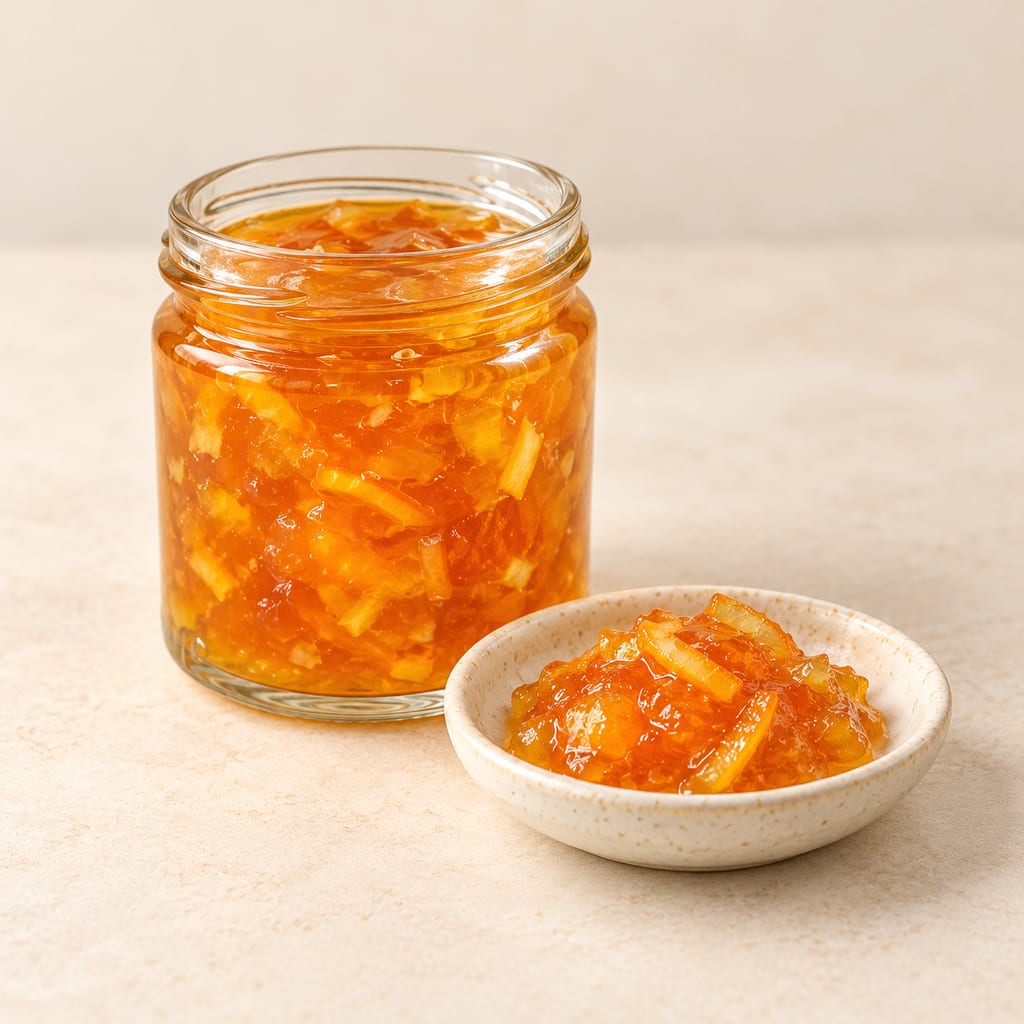
Orange marmalade suspends thin strips of citrus peel in a sweet gel. This navel-orange batch includes pulp and lemon and is preserved in a boiling-water canner.
Marmalade has a longer history than the orange preserve now most familiar in Britain. The word traces through Portuguese marmelo, quince, and earlier marmalades were firm fruit confections made by boiling fruit with sugar until they could be cut. The old names preserve that older relationship between marmalade and quince; they do not mean every modern marmalade contains it. In Britain, the word was in use by the late fifteenth century, and recipes for orange marmalade appeared in print well before Dundee became strongly associated with the food.
Printed recipes help separate the record from the story told about Janet Keiller. Gervase Markham’s 1661 edition includes an orange marmalade, and an earlier recipe attributed to Hugh Plat describes preserving oranges in the Portuguese manner. These were not necessarily the clear, soft, peel-flecked spread found in a modern jar. Early orange marmalades could be dense, sticky confections packed in boxes and sliced at table. That difference matters: the Keiller family did not invent either marmalade as a category or orange marmalade itself.
The Keillers’ contribution was commercial and stylistic. In Dundee, their business helped popularize a lighter orange preserve with visible strips of peel, a form that could be spread at breakfast. Abertay Historical Society’s study cautions against repeating the later claim that the family invented orange marmalade; Scottish recipes for Seville-orange marmalade predate their commercial activity. The family’s achievement was to make a particular kind of orange marmalade a successful article of commerce and, through that success, help redefine what many people meant by the word.
The storm-driven Spanish ship and its overripe oranges belong to a famous origin story, but they are not necessary to explain the documented history and should not be treated as proof. The record shows several earlier orange preserves and a later commercial rise in Dundee. The modern University of Georgia formula here is another, much later chapter: it is a tested home-canning recipe using navel oranges and lemon, not a reconstruction of a seventeenth-century or Keiller recipe.
Marmalade is a soft fruit jelly in which pieces of fruit or citrus peel remain suspended. That combination gives it a different feel from a clear jelly, where the fruit solids are strained away, and from a fruit preserve built around larger intact pieces. This recipe makes a bright orange preserve with narrow strips of rind held in a gel. The navel-orange pulp contributes the juicy fruit body, while a measured amount of peel, including the white layer beneath the coloured skin, stays in the finished jar.
The NCHFP formula is deliberately specific. It calls for four cups of sliced orange peel, four cups of prepared orange pulp, one cup of thinly sliced lemon, six cups of water and six cups of sugar. The peel is cut into narrow strips and measured with its white pith still attached. The pulp is measured separately after seeds and membranes are removed. Those measurements define the tested proportions; a reader should not swap in a different orange, remove the pith, change the lemon quantity or scale the batch by intuition and assume the same texture or canning result.
The recipe’s history and its formula need to be read on separate tracks. Orange marmalade has a long history, while this exact version belongs to modern home-preserving guidance. The National Center for Home Food Preservation identifies navel oranges for this batch and gives a specific boiling-water canning schedule for half-pint jars. Other marmalades may use Seville oranges, different peel cuts, or different ratios. Those are real variations in the broader food, but they are not interchangeable with this tested formula.
The finished gel should be firm enough to hold soft ribbons of peel in place while remaining spreadable. A cool spoon tests the jellying point: two drops should merge and fall together as a sheet. This is a practical cue for texture, not a test of whether a sealed jar is safe. A good set is a result of fruit composition, acidity, sugar, concentration and heating working together.
The gel is not produced by fermentation. Marmalade thickens as heat extracts and concentrates fruit materials, and as pectin, acid and sugar reach the conditions that let a pectin network hold water. Pectin is a structural carbohydrate in plant cell walls. Citrus peel and pith are useful sources of it, which is one reason this method keeps the white albedo attached rather than trimming the rind down to its coloured zest alone. The fruit also supplies water, flavour and natural acidity.
In traditional high-sugar preserves, pectin molecules can form a network when enough acid and sugar are present. Acid changes the conditions around the pectin so molecules can associate; sugar reduces free water and helps the pectin network form. Too little acidity or sugar can leave a loose set, while excessive acidity can make a gel contract and release liquid. These principles explain why an established marmalade recipe has fixed proportions. They do not provide a licence to adjust ingredients in a canning formula or infer that another fruit will behave the same way.
The lemon serves more than a flavour role. It contributes acid to a mixture of orange pulp, peel and water, and its measured amount is part of the recipe’s balance. Sugar sweetens the preserve and binds some water, lowering water activity—the portion of water available for microbial growth. That effect contributes to preservation, but sugar by itself is not the only control in a home-canned jar. The recipe pairs the exact formula with hot filling and a boiling-water process appropriate to the jar size and elevation.
Cooking has two related but distinct jobs. The first simmer softens the peel and allows the fruit to cook in water before sugar is added. The later rapid boil concentrates the sweetened mixture toward its jellying point. Heat also changes pectin’s behaviour; too much cooking can break down pectin and weaken the set. The set test helps judge texture, but canning safety is established by the tested recipe and processing steps, not by a sheet from a spoon, colour, smell or taste.
Preparation begins with clean citrus and careful measuring. Thin strips make the rind easy to distribute through a spoonful of spread; removing seeds and membranes from the orange pulp keeps them out of the preserve. Keeping the pith on the peel maintains the form specified by the recipe and preserves a source of natural pectin. The prepared orange and lemon pieces are cooked with the measured water in a large pot. The first boil is followed by about an hour at medium heat, until the peel is tender. This softening stage is longer than the final boil because the rind must become pleasant to eat, not merely hot.
Sugar goes in only after this first cook. The mixture is brought slowly back to a boil while stirring until the sugar dissolves. Then it is boiled rapidly for about forty-five minutes, with occasional stirring, until it reaches the jellying point. A broad pot and attentive stirring help manage the foaming and spattering that can accompany a concentrated sugar mixture. The source’s spoon test uses a cool metal spoon lifted out of the steam; it looks for the drops to join and fall in a sheet. That test is a texture cue. It does not replace the recipe’s proportions, nor does it guarantee a particular set if ingredients or batch size have been changed.
Hot marmalade is transferred to hot half-pint jars with one-quarter inch of headspace. The rim is wiped clean before the prepared lid is applied. The jars are lowered upright onto the canner rack, covered by at least an inch of water, and processed at a vigorous boil. For the hot-washed-jar schedule used here, the time is ten minutes at elevations up to 1,000 feet, fifteen minutes from 1,001 to 6,000 feet, and twenty minutes above 6,000 feet. If boiling stops, the NCHFP canner guidance says to restore a vigorous boil and restart the full processing time.
After processing, the heat is turned off and the covered canner stands for five minutes before jars are removed upright. They cool undisturbed, spaced apart, for twelve to twenty-four hours. Do not press the lids or tighten bands while the jars cool. Afterward, check the seals; refrigerate any jar that did not seal, and refrigerate partial or opened jars. The recipe does not specify a storage duration, so this account does not invent one.
Orange choice is one of the most visible differences among marmalades. The NCHFP’s tested preparation uses navel oranges, with lemon added in a defined quantity. Historical British and Dundee accounts often discuss bitter Seville oranges, whose sharper flavour and aromatic peel have become closely associated with traditional orange marmalade. These differences affect the preserve’s flavour and the way a recipe balances fruit and sugar. A Seville-orange formula should be followed as its own recipe rather than quietly substituted into the navel-orange canning directions.
Peel also changes the eating experience. The strips in a Dundee-style marmalade became a recognizable feature of the spreadable product and helped distinguish it from older, box-set confections. A finely cut peel gives a more even distribution through each spoonful; larger pieces make the rind more pronounced. The historical account describes these developments without claiming one universal recipe. The NCHFP formula specifies one cut and one batch size; preserving those details keeps the procedure tied to the tested source.
Some marmalades are made as soft jellies with citrus peel, while others include more pulp or use a different citrus mix. A sweet orange can make a milder preserve than the bitter orange traditionally favoured in many British recipes. A lemon addition can brighten a sweet orange base, but the quantity in this recipe is part of its balance rather than an optional adjustment. These differences are best understood as separate formulations with their own proportions and preservation guidance.
Commercial marmalade has a history distinct from household practice. Keiller’s development of a successful Dundee product, later factories and the spread of branded jars made orange marmalade a widely recognized breakfast preserve. Those changes altered production and distribution; they do not show that every household method was identical or that the present water-bath recipe descends unchanged from a historical formula.
The spreadable texture of orange marmalade is part of its cultural history. The historical account describes the shift from dense preserves that could be sliced to lighter orange marmalades associated with breakfast. In that setting, peel is not an imperfection to strain away; it is both a texture and a defining visual feature. A thin smear carries the gel and rind together, while thicker servings make the bittersweet peel more noticeable.
This recipe’s navel-orange batch is built to be eaten as a preserve from a jar. Its citrus flavour and peel make it suitable for the familiar breakfast use on bread or toast, while its sweetness and acidity also pair naturally with plain foods that can carry a spread. The source does not prescribe a serving menu, so broader pairings should be treated as household choices rather than defining traditions of this exact formula.
Historical marmalade’s shift in form also explains why comparisons can be confusing. A boxed quince marmalade cut into slices shares a name and a family of fruit-and-sugar techniques with a peel-studded breakfast spread, but it is not the same texture or serving form. A clear orange jelly with peel removed also differs from this recipe, because the strips remain suspended in the gel. Names, ingredients and uses overlap; the finished structure helps distinguish the styles.
Commercial Dundee marmalade gave the breakfast spread a particular regional story, but it did not erase other citrus-preserve traditions. The current formula is best read as one reliable home-canning preparation within that larger family: a defined navel-orange batch, a stated peel cut, a measured lemon contribution and a separate preservation step.
A marmalade that remains loose may reflect the balance of fruit, acid, sugar and pectin, the condition of the fruit, or how the mixture was cooked. Pectin and acidity affect gel formation, and overcooking can break down pectin. They do not make appearance a diagnostic test for canning safety. A soft set is a texture outcome, not proof that processing was inadequate, and a firm set is not proof that a jar was processed correctly.
Follow the formula as written, make one batch at a time, and use the jar size and elevation schedule specified by the source. Scaling up can change how quickly the mixture heats and how the pectin responds; the NCHFP formula does not supply a scaling method. Replacing sugar or changing fruit proportions can alter both gel formation and water activity. For a lower-sugar preserve or different citrus, use a tested recipe designed for that formulation rather than adapting this one.
During boiling and filling, hot sugar syrup can spit and burn. Use the stated headspace and keep jar rims clean so the lids can seal. Keep jars upright and maintain the canner’s water level and boil throughout processing. After cooling, an unsealed jar belongs in the refrigerator and should be used first; opened jars and partial jars are refrigerated as well. This recipe provides no storage-life figure, so no shelf-life promise belongs alongside it.
The most important distinction is between quality cues and safety controls. Tender peel and a spoon-sheet are useful cues for the cooked preserve; they cannot identify pathogens, validate a seal or certify an improvised process. The preservation directions are tied to the exact navel-orange formula and its processing schedule. Historical variants are worth understanding, but their differences should lead to their own tested methods, not to a hybrid procedure.
Orange marmalade developed from fruit-and-sugar preserves that included firm quince marmalades. Early orange versions could be packed into boxes and cut into slices; lighter preserves with strips of peel later became familiar at the breakfast table. The Keiller family of Dundee helped establish that spreadable style commercially. This navel-orange preparation uses peel and pulp with lemon, retaining white pith for its pectin. The University of Georgia developed this particular canning formula in Athens and released it in April 2018.
Scaling: source batch only
Boiling marmalade spatters and can burn.
Hazard sourceInterrupted boiling reduces the intended heat process; tilted jars can spill food into the sealing area and fail to seal.
Hazard sourceUse stated formula, half-pints, headspace and the hot-washed-jar elevation schedule.
Control sourceKeep water over jar tops and maintain boiling; restart the full processing time if boiling stops.
Control sourceHot marmalade can spatter and burn; take care while stirring and skimming.
Keep jars upright to protect the sealing area. If the canner stops boiling, return it to a vigorous boil and restart the full processing time. Refrigerate unsealed jars and use them first.
Recipe development, not food origin.
Lemons are aromatic, acidic citrus fruits whose peel, pith and juice serve different jobs in food and drink. The fruit is a hybrid with a complex history.
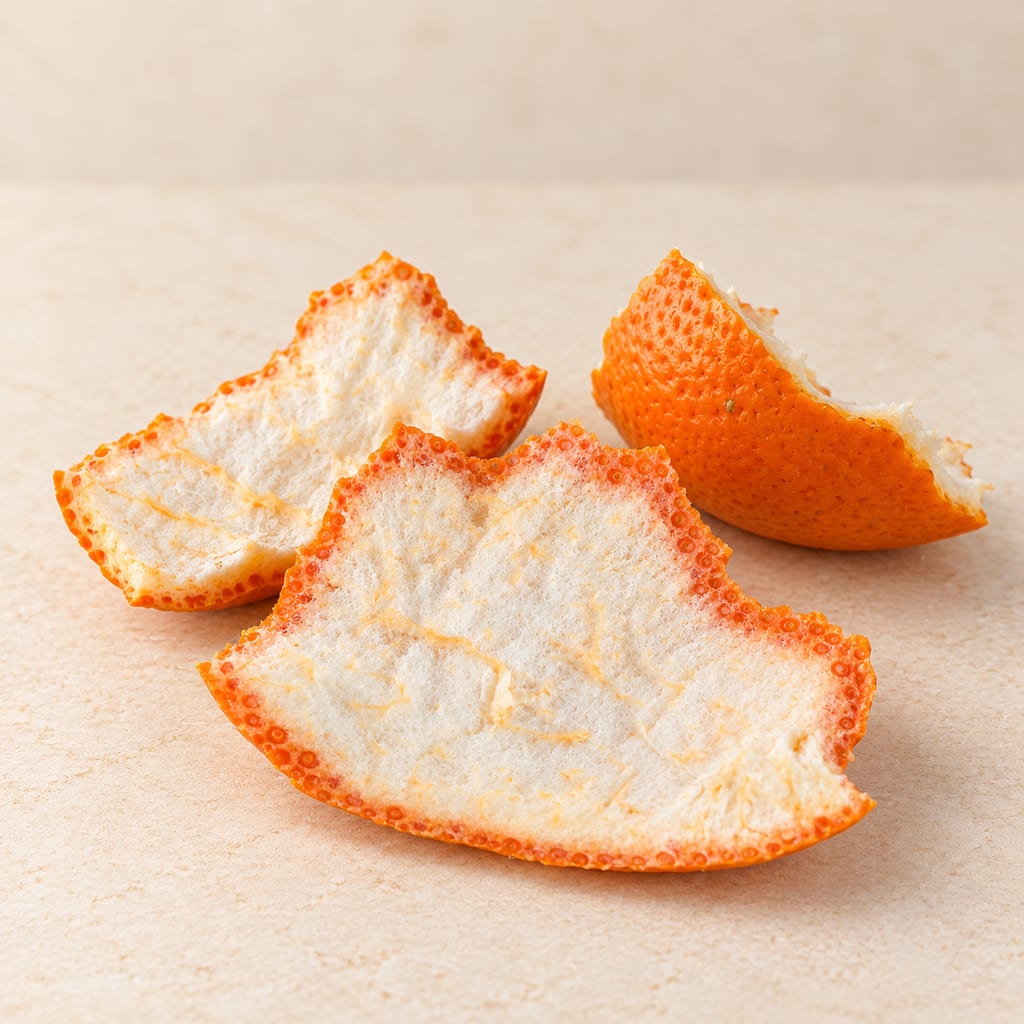
Orange rind retaining its white inner pith, combining aromatic outer peel with the body and pectin used in marmalade and other citrus preparations.
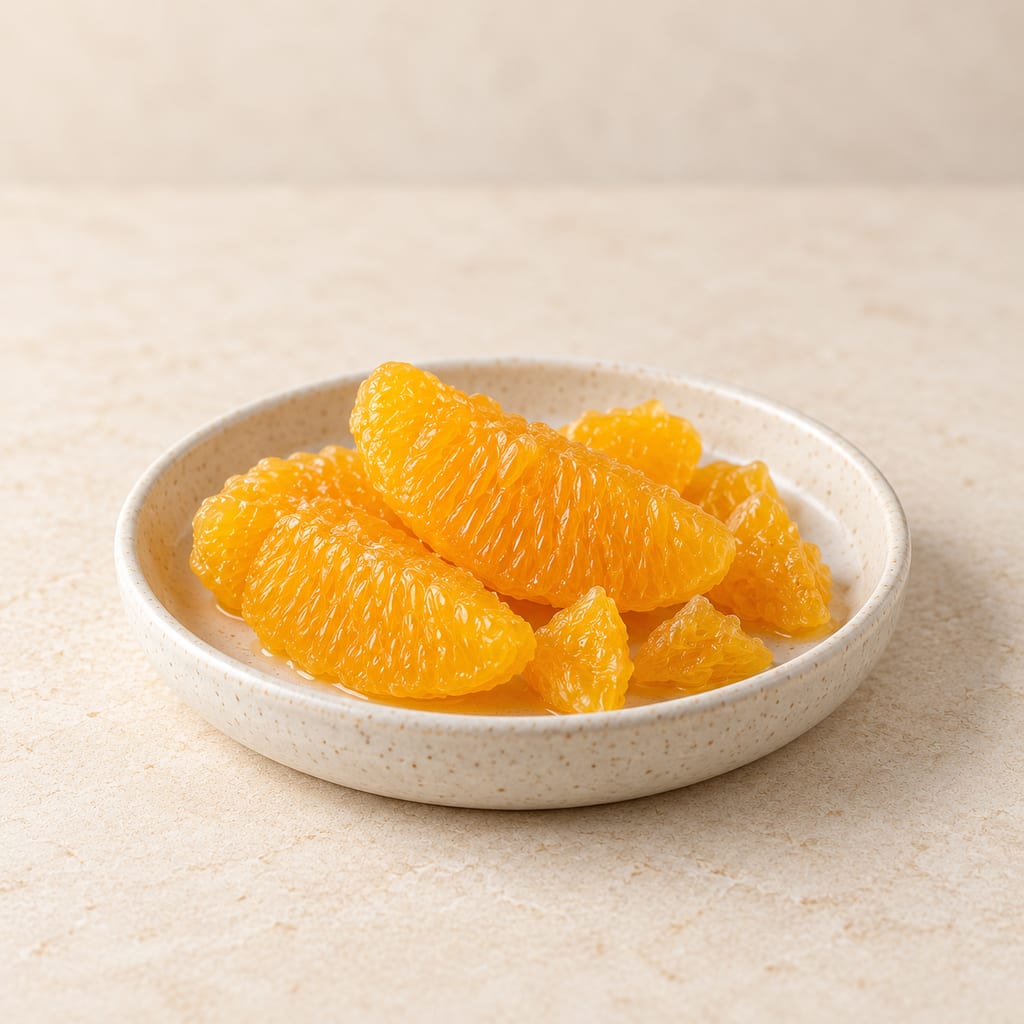
Fresh orange segment flesh, prepared separately from rind and membranes, bringing juicy tissue, sweetness, acidity and aroma to marmalade and other foods.
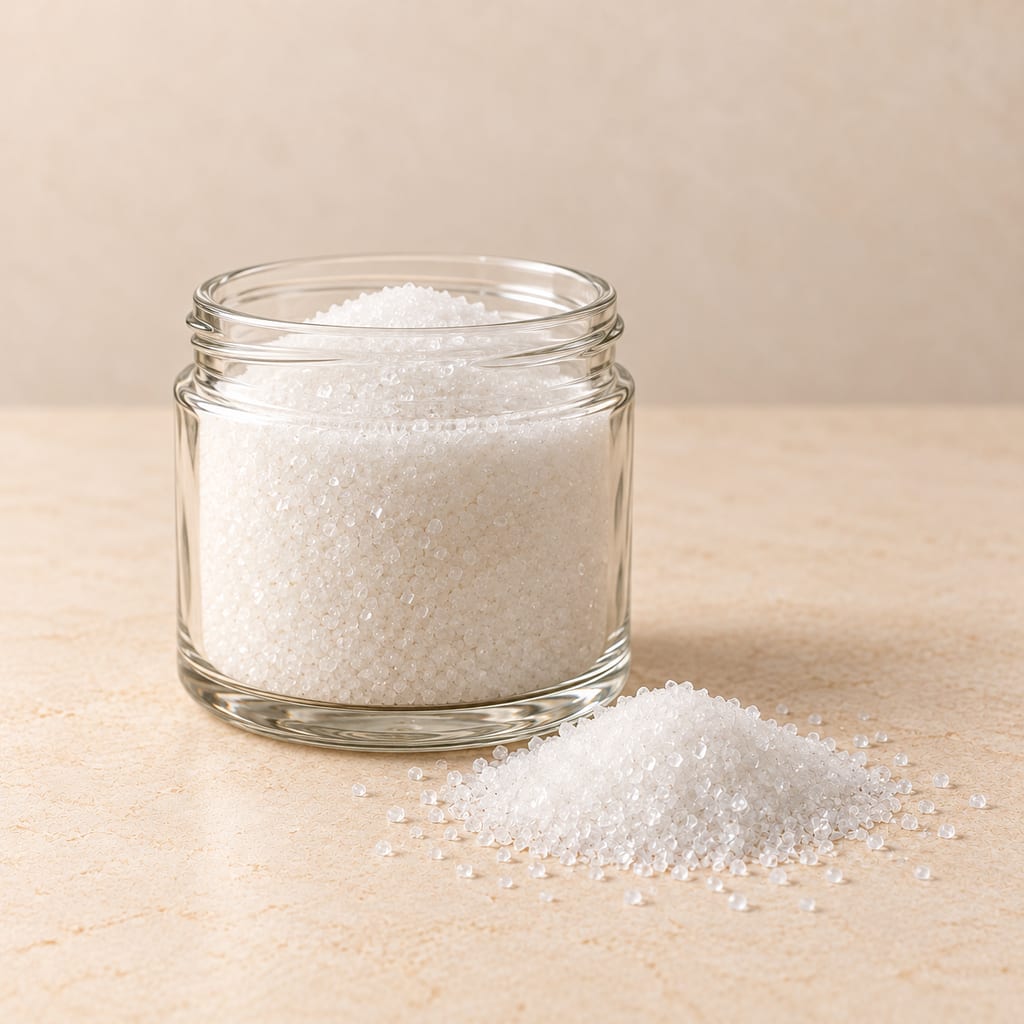
Sugar is a family of sweeteners with different forms and food roles; refined white sucrose may come from cane or beet, while less refined forms add other flavours and moisture.
Water carries dissolved ingredients, transfers heat and forms the liquid environment of many ferments; its minerals and treatment influence how it behaves.
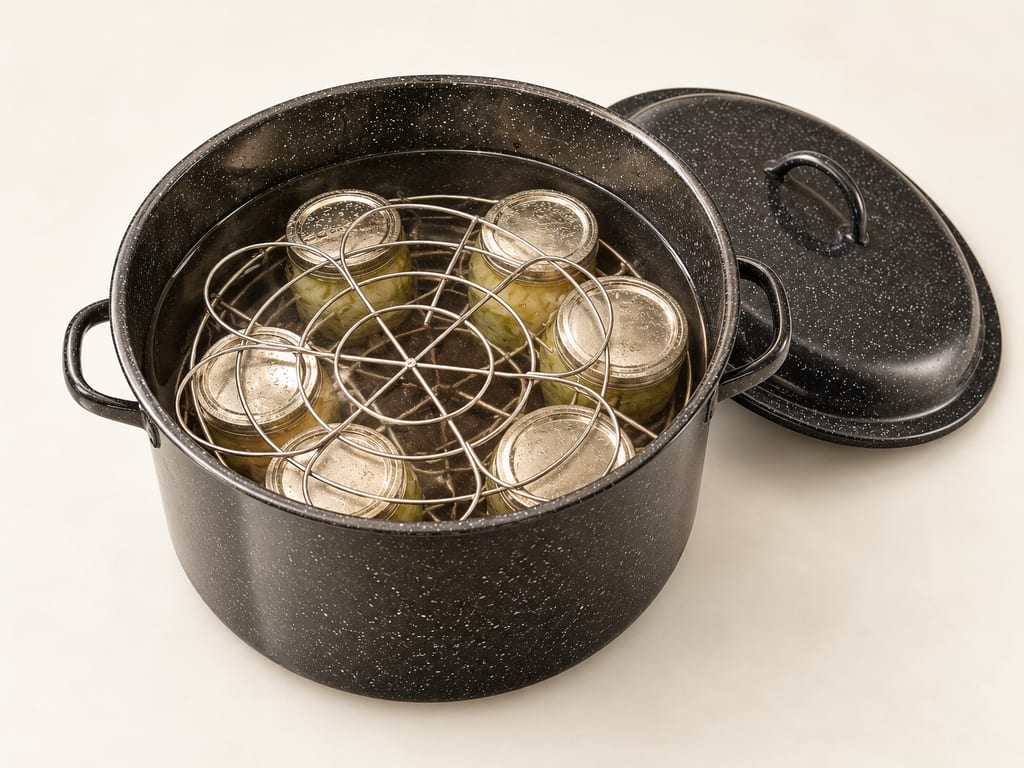
A deep, lidded pot with a removable rack processes jars beneath boiling water. It is intended for foods with tested boiling-water processes; low-acid foods require pressure canning.
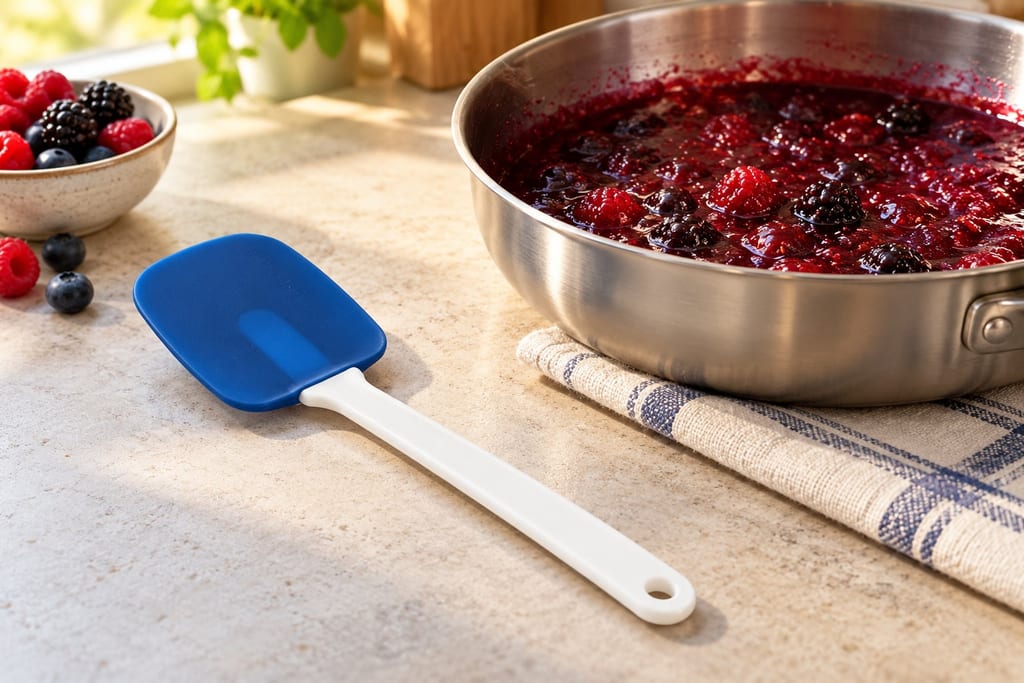
A hand utensil for stirring and scraping a pan of hot preserves. The supplied atlas lists a heatproof spatula for small trials but gives no blade material, dimensions, temperature rating or specific construction.
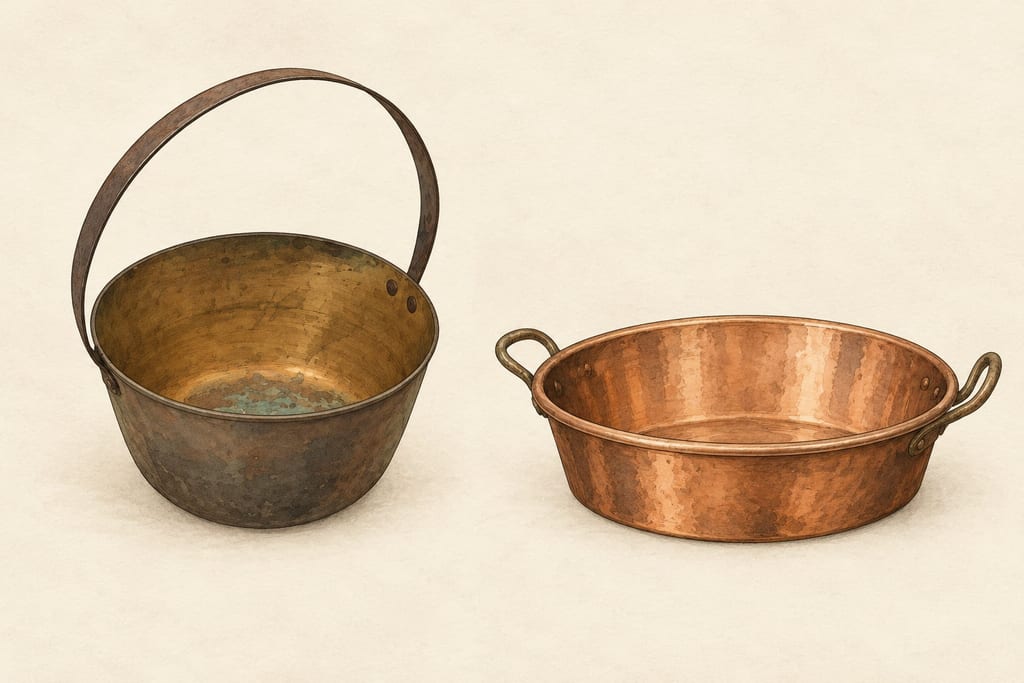
Open, heated pans cooked fruit into preserves before transfer to jars. Historical records document copper and enamelled cast-iron forms, while museum objects show variation in material and shape.
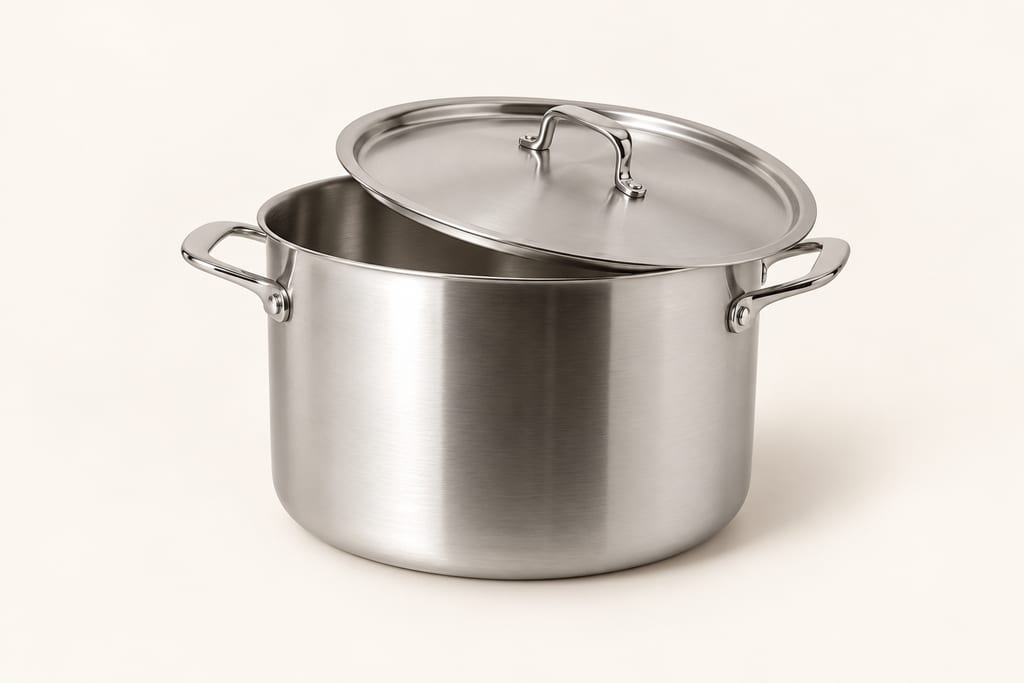
A deep, flat-bottomed household pot gives jam and jelly more room to foam than a shallow preserving pan; capacity, material and heat response vary by model.
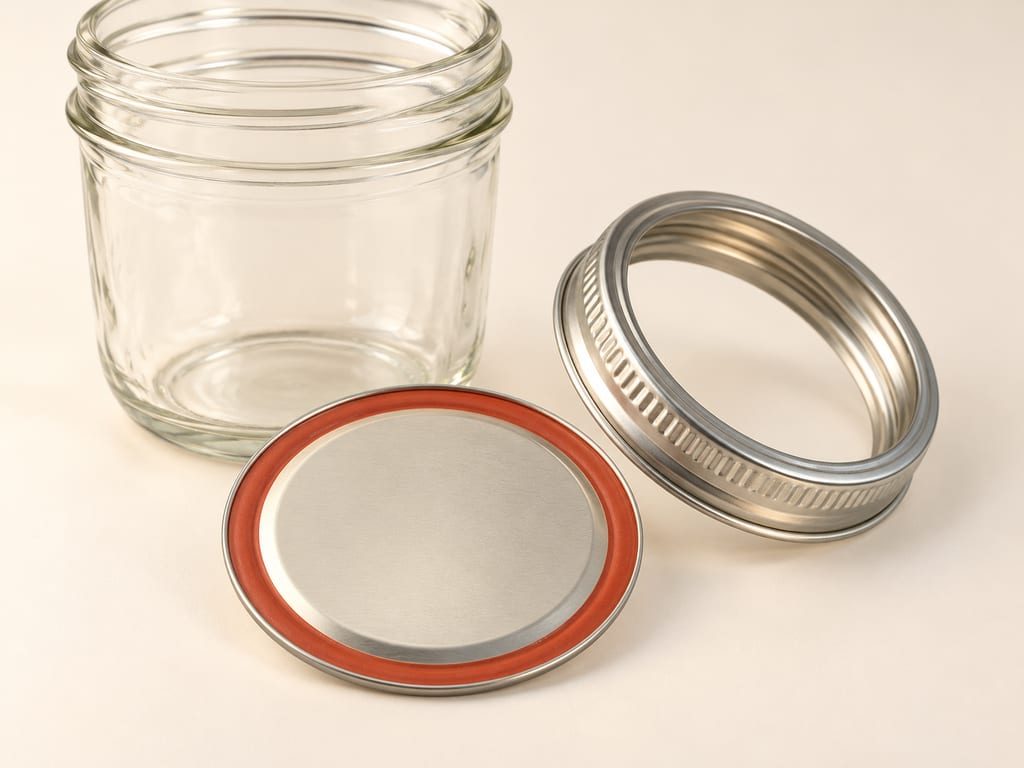
A two-piece canning lid pairs a flat metal disk, whose edge carries sealing compound, with a separate threaded screw band. The band holds the disk during processing; the disk seals against a compatible jar as it cools.
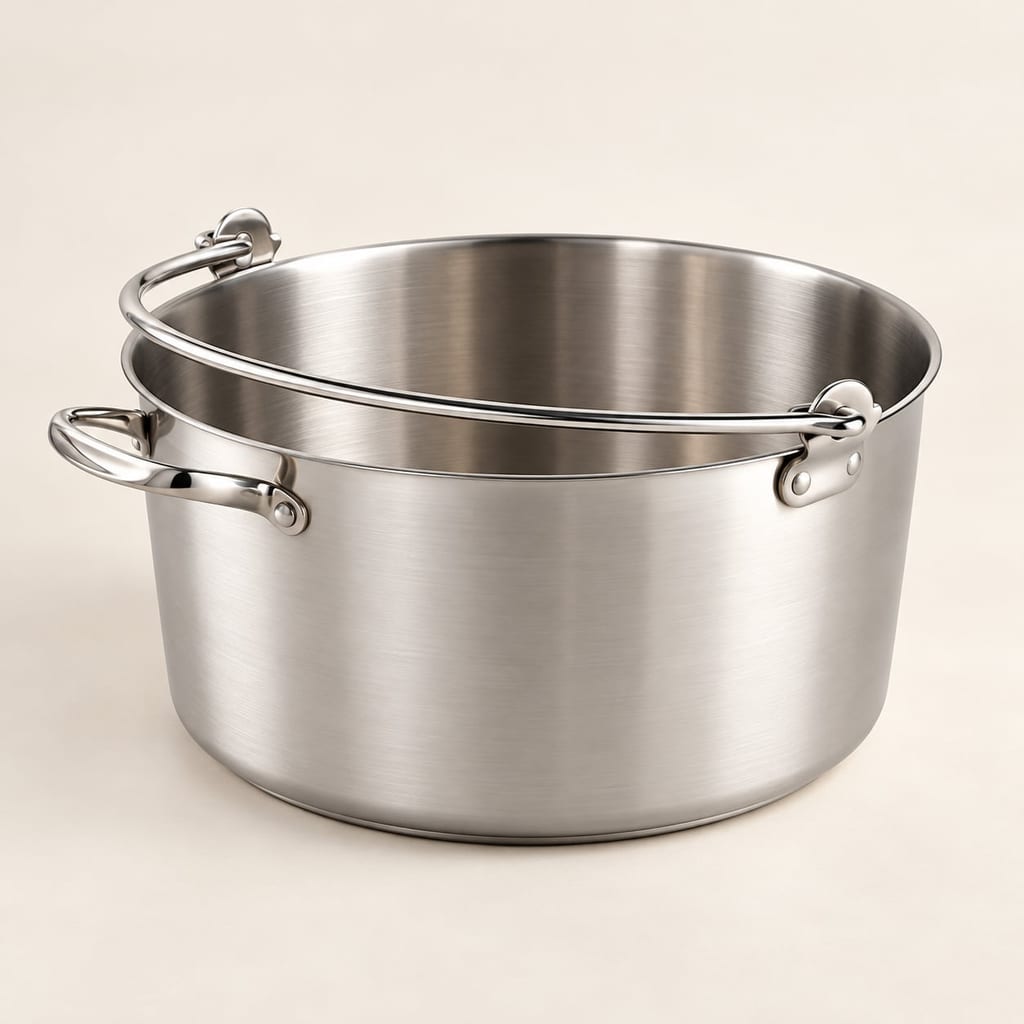
A contemporary, wide-mouthed stainless-steel pan for heating fruit mixtures into jams, marmalades, chutneys and other preserves. Its open surface supports evaporation, while base thickness, capacity and handles vary by model.
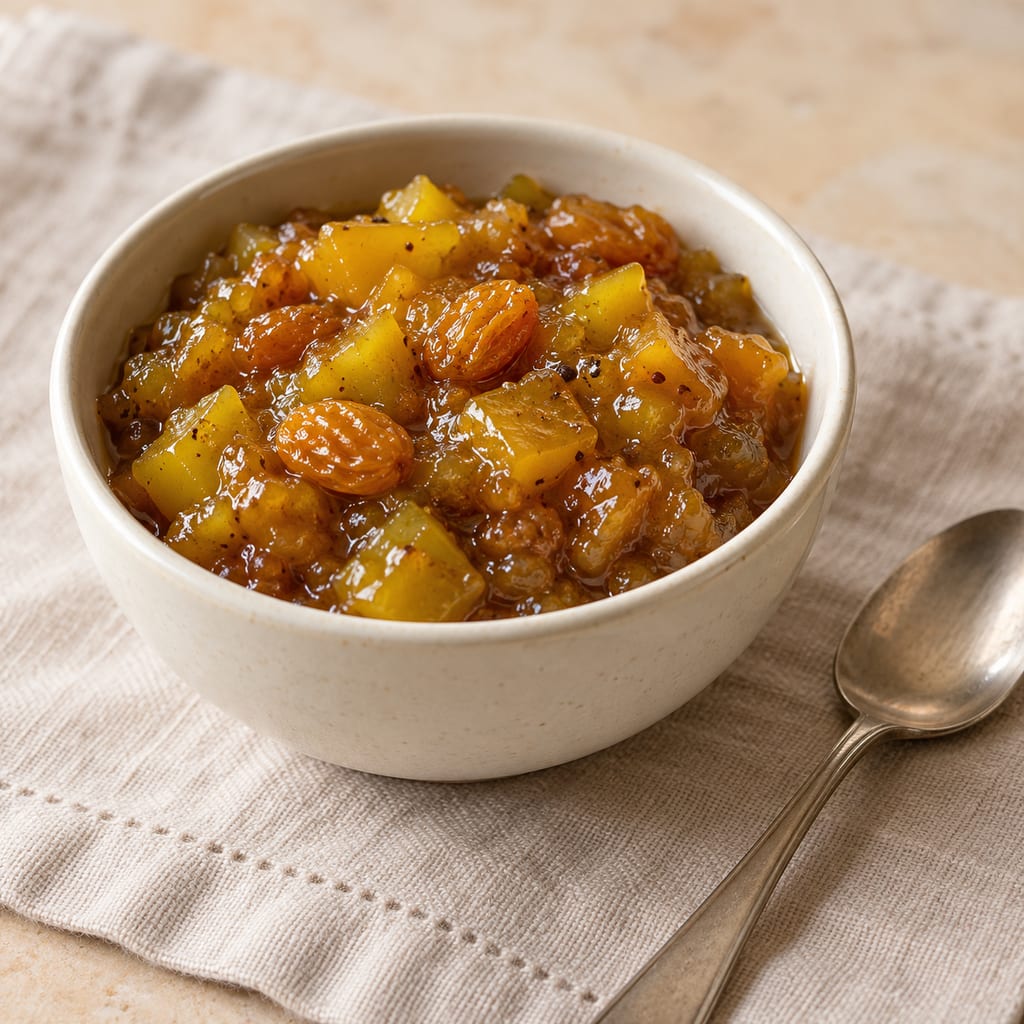
Hard green mango is cooked with vinegar, sugar, raisins, ginger, garlic and chilli in this tested US home-canning recipe.
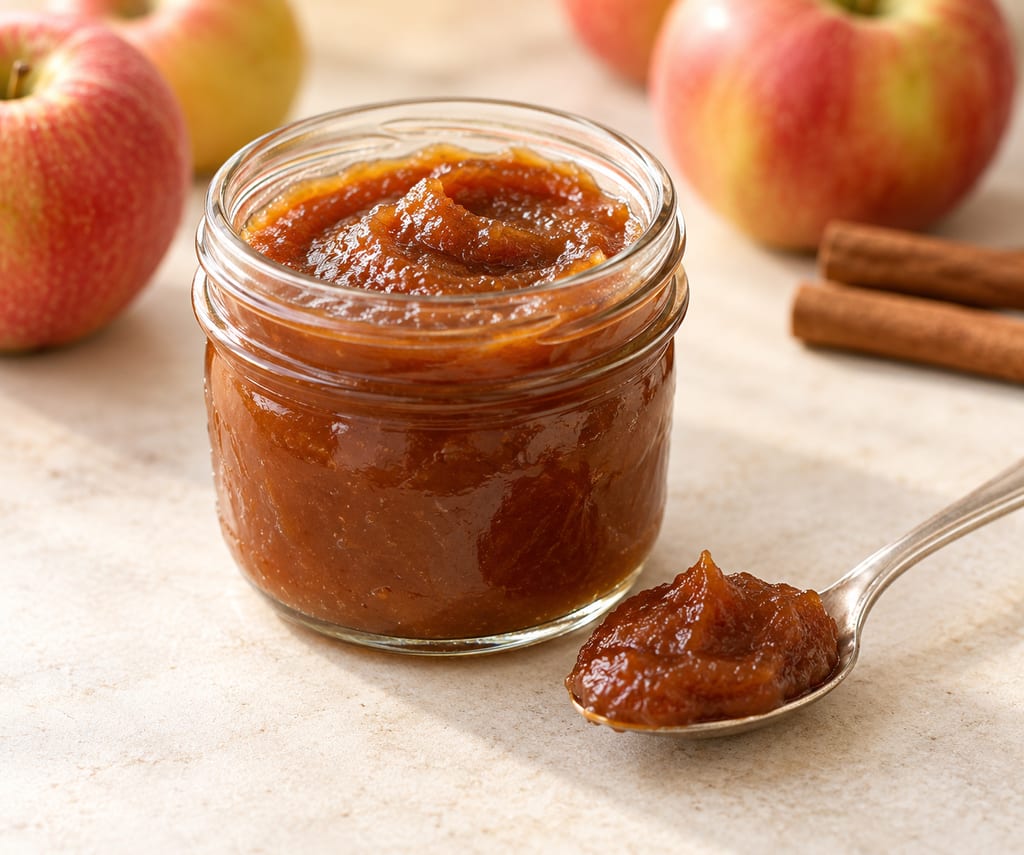
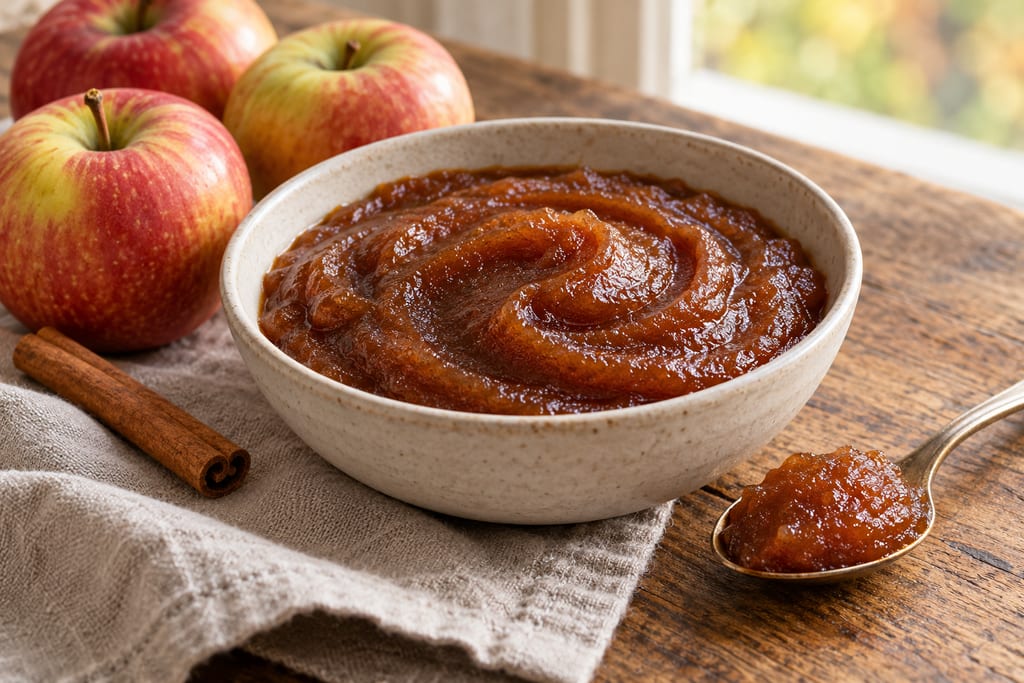
Apple butter is a smooth, concentrated apple preserve cooked with cider, vinegar, two sugars and spices, then hot-filled and processed in a boiling-water canner using the published jar-size and elevation schedule.
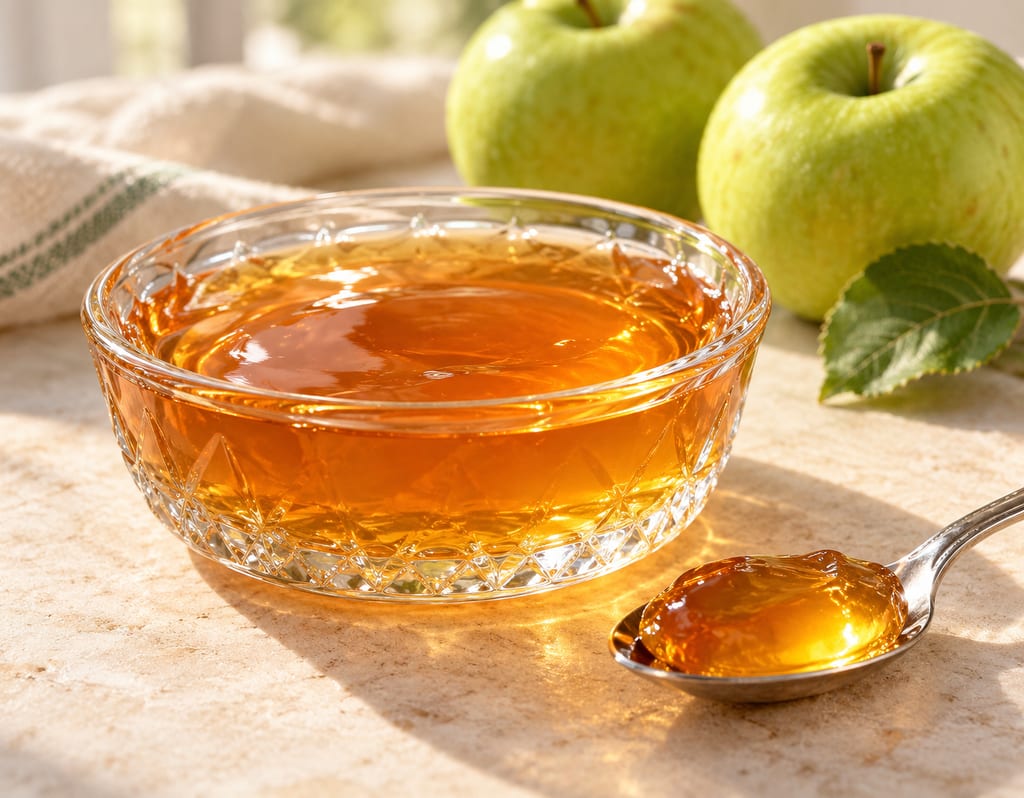
A clear jelly made from tart-apple juice, sugar and optional strained lemon juice. This batch uses a stated fruit-to-water preparation, gel endpoint, hot fill and altitude-adjusted boiling-water process.
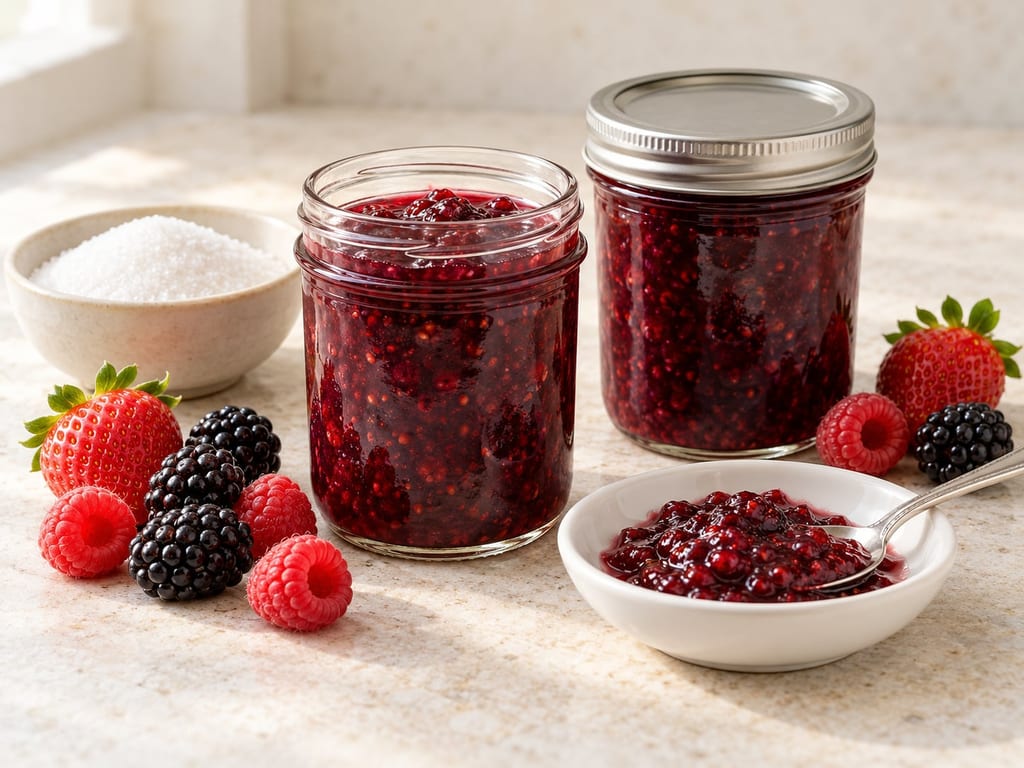
A NCHFP berry jam made without added pectin: crushed berries and sugar are cooked to the desired gel point, hot-filled into sterile half-pint or pint jars, and processed in a boiling-water canner.
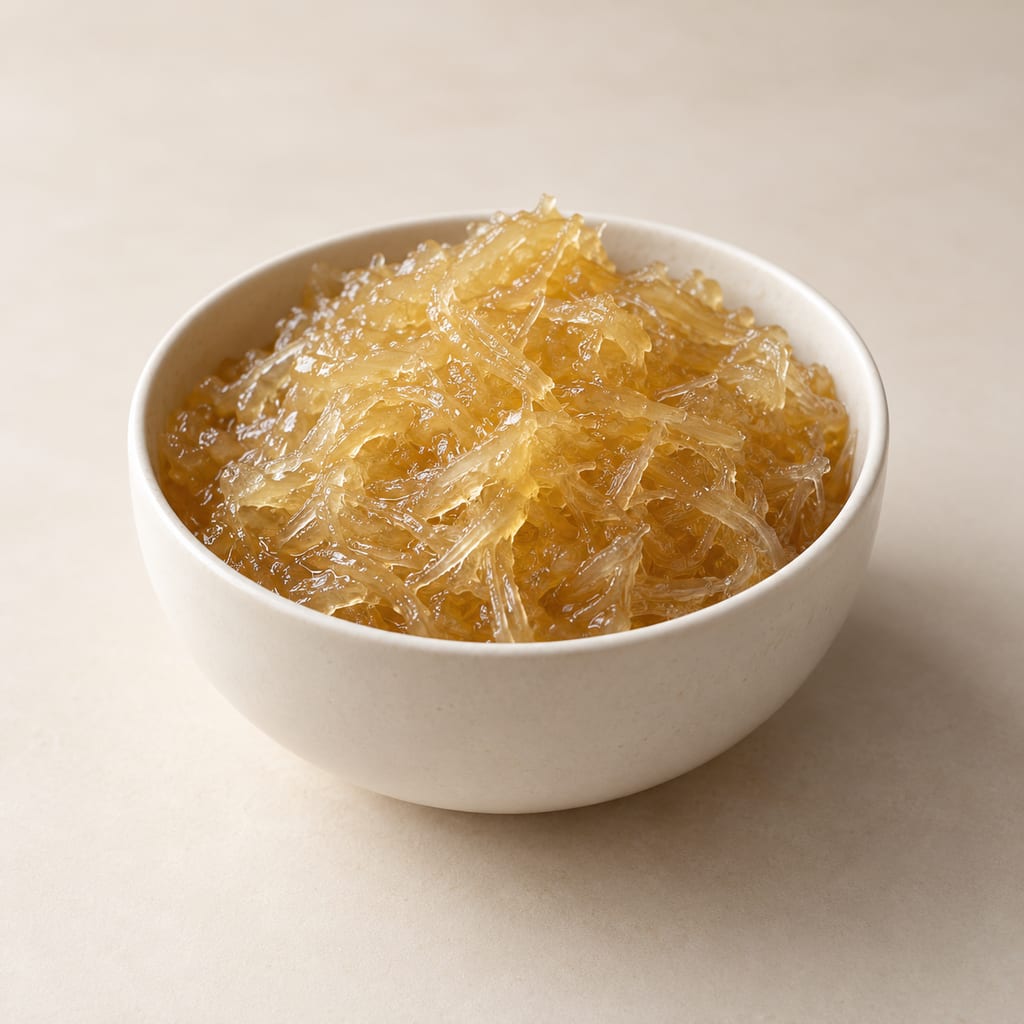
Fine strands of Cucurbita ficifolia cooked in an equal weight of sugar, then portioned for refrigerator or freezer storage. Ordinary orange pumpkin does not give the same fibres.
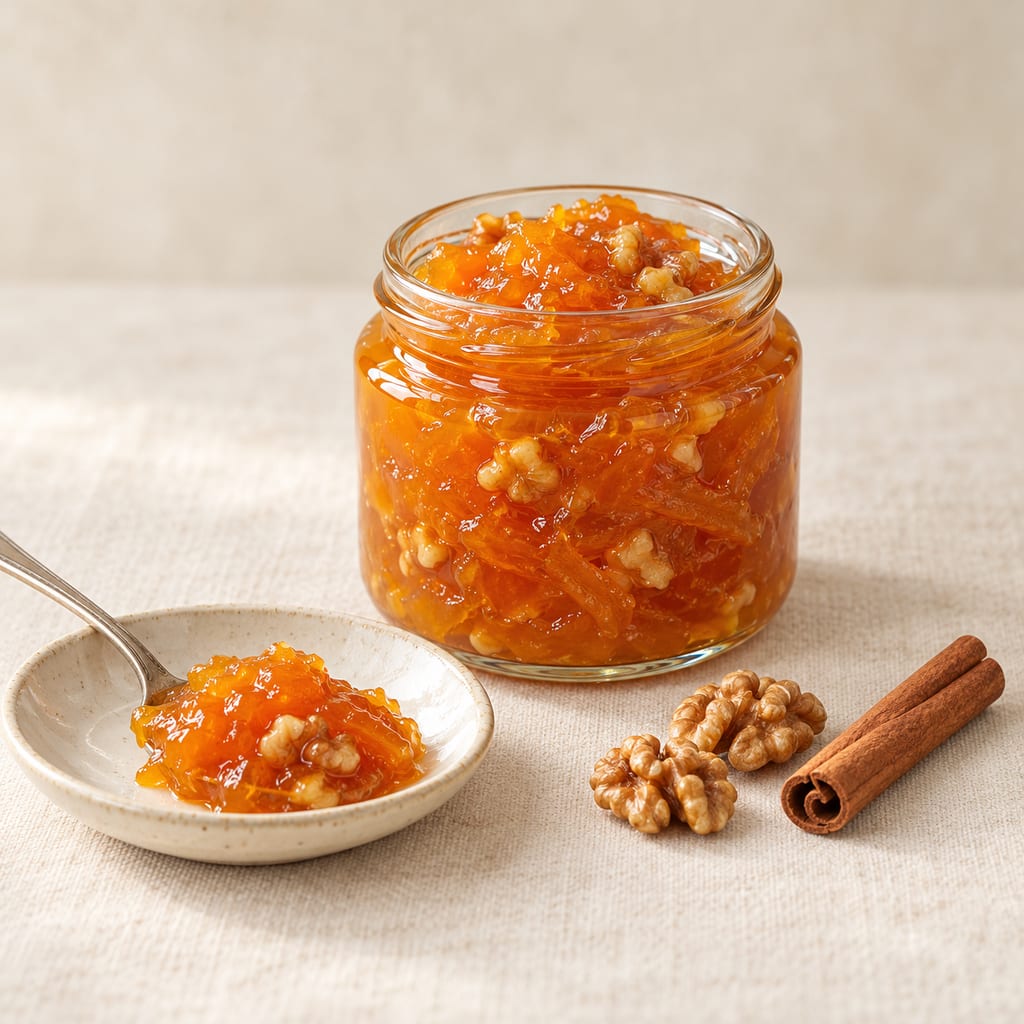
Portuguese pumpkin jam cooked with cinnamon and optional walnuts. A sweet spread to refrigerate or freeze, rather than a home-canned preserve.
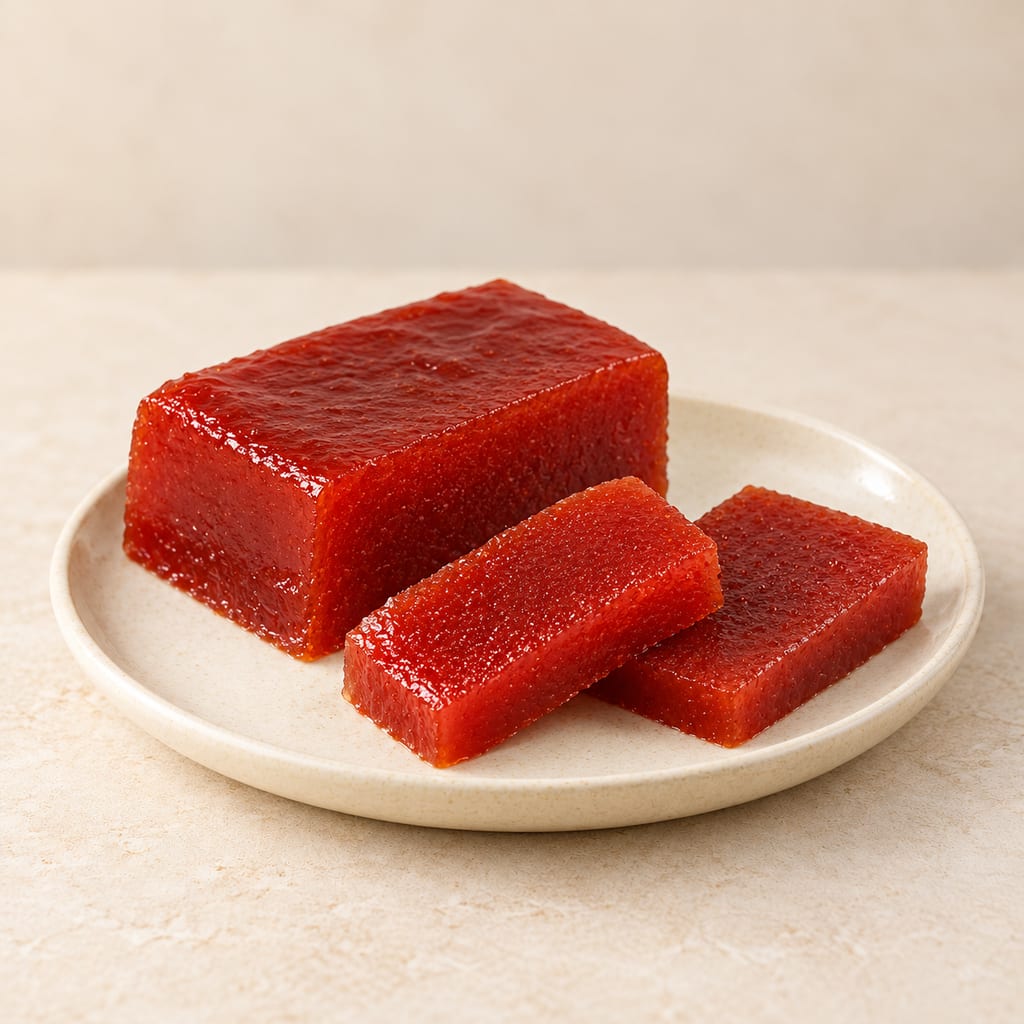
Dulce de membrillo is quince cooked with sugar into a firm paste for slicing. This family method softens the fruit in a pressure cooker, then blends it and leaves it to set.
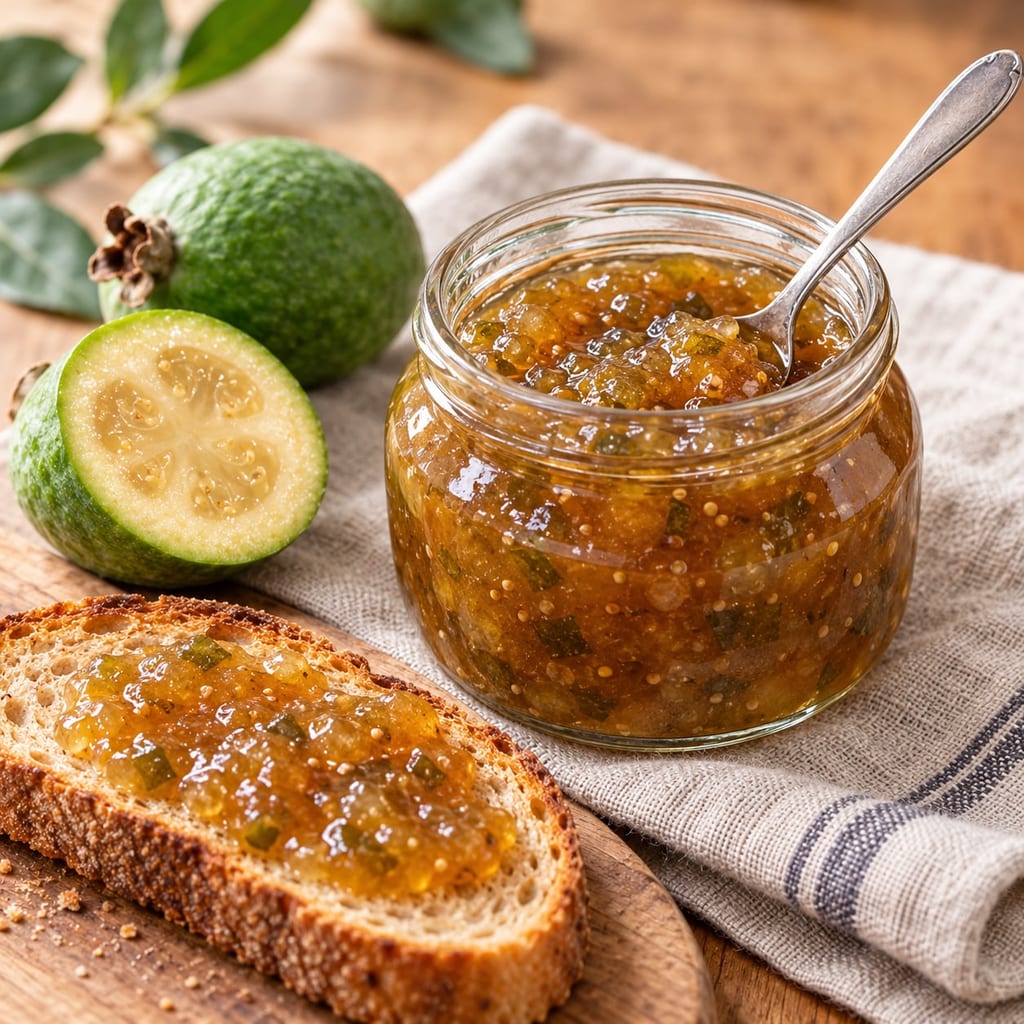
Blended whole feijoas simmer into a skin-on jam with lemon, sugar and vanilla. The skins remain for a more textured finish; keep this batch refrigerated or frozen because its method has no validated shelf-stable canning process.
A smooth fruit pulp cooked down with sugar and spice until it holds its shape on a spoon, made by three documented routes in a slow cooker, a microwave or an electric multicooker.

A gelling polysaccharide extracted from red seaweeds, sold as kanten strips or powder; it sets firm at a low concentration and stays solid until about 85 °C.

A Dominican table and seasoning condiment of sour orange juice, mixed with lime and salt and bottled raw; garlic, oregano or a hot pepper may be added for meat or a spicier bottle.

Cicerbita alpina is an alpine perennial whose tender shoots and leaves have been eaten raw or cooked. Sámi milk preparations and modern Carnian dishes are distinct uses, with serious identification and preservation limits.

Japanese skipjack tuna cooked, then repeatedly smoked and dried over a wood fire by the hand-fired tebiyama method into a hard block for shaving into dashi: the first stage of katsuobushi.

A Swedish-style spirit vinegar made by fermenting neutral alcohol with live vinegar bacteria, with a separate guide to commercial ättika strengths.

A yeast-raised wheat ring shaped from a firm dough, briefly boiled and baked. This source-batch formula gives a gently malted crust and a chewy crumb.

A warm dip of garlic, anchovy and olive oil, often enriched with butter, that Piedmont serves over a flame with raw and cooked vegetables and bread.

Bechamel is a white sauce of milk thickened with a butter and flour roux, one of the French mother sauces, and the base from which Mornay and other cheese and cream sauces are made.
No community contributions have been published for this entry yet.
Sign in to contribute. Published comments and photos are free to read.
National Center for Home Food Preservation, University of GeorgiaInspiration
Orange MarmaladeRecipe, ingredients and hot-washed-jar process; notes 2–4.
Cited in: What this batch calls marmalade; Why citrus, sugar and water set into a gel; A two-stage cook, followed by a separate preservation process; A family of orange marmalades, not one universal method; At breakfast and beyond; Reading the result and respecting the limits
University of Georgia Cooperative Extension, hosted by National Center for Home Food PreservationSafety
Using Boiling Water Canners (C 1344-01, May 2025)Hot-pack water level, start/restart, cooling and storage.
Cited in: A two-stage cook, followed by a separate preservation process; Reading the result and respecting the limits
National Center for Home Food Preservation, University of GeorgiaProcess
Testing Jelly without Added PectinLinked spoon/sheet test.
Cited in: A two-stage cook, followed by a separate preservation process; Reading the result and respecting the limits
Abertay Historical SocietyHistory
Keiller’s of Dundee: The Rise of the Marmalade Dynasty 1800–18971998 institutional historical study, printed pp.5–6: quince antecedents, seventeenth-century orange preserves including Markham in a 1661 edition, boxed sliceable orange marmalade, later peel-and-jelly style and Keiller commercialization. Does not establish a global first attestation or the origin of the NCHFP formula.
Cited in: From quince confection to orange breakfast preserve; A family of orange marmalades, not one universal method; At breakfast and beyond
University of Minnesota ExtensionScience · Method · Safety
Preserving food at home: Fruit spreadsExplains marmalade as a jelly with pieces of fruit, citrus peel and juice; explains the pectin-acid-sugar interaction, sugar's effect on water activity, the role of acid in water-bath canning, and why tested recipes and ingredient proportions matter.
Cited in: Why citrus, sugar and water set into a gel; Reading the result and respecting the limits
National Center for Home Food Preservation, University of GeorgiaScience · Process · Safety
General Information on Canning Jams, Jellies, and MarmaladesDefines marmalades as soft fruit jellies with pieces of fruit or citrus peel suspended in jelly; explains the functions of fruit, pectin, acid and sugar in gel formation and preservation; cautions against changing tested sugar proportions and notes that overcooking can break down pectin.
Cited in: What this batch calls marmalade; Why citrus, sugar and water set into a gel