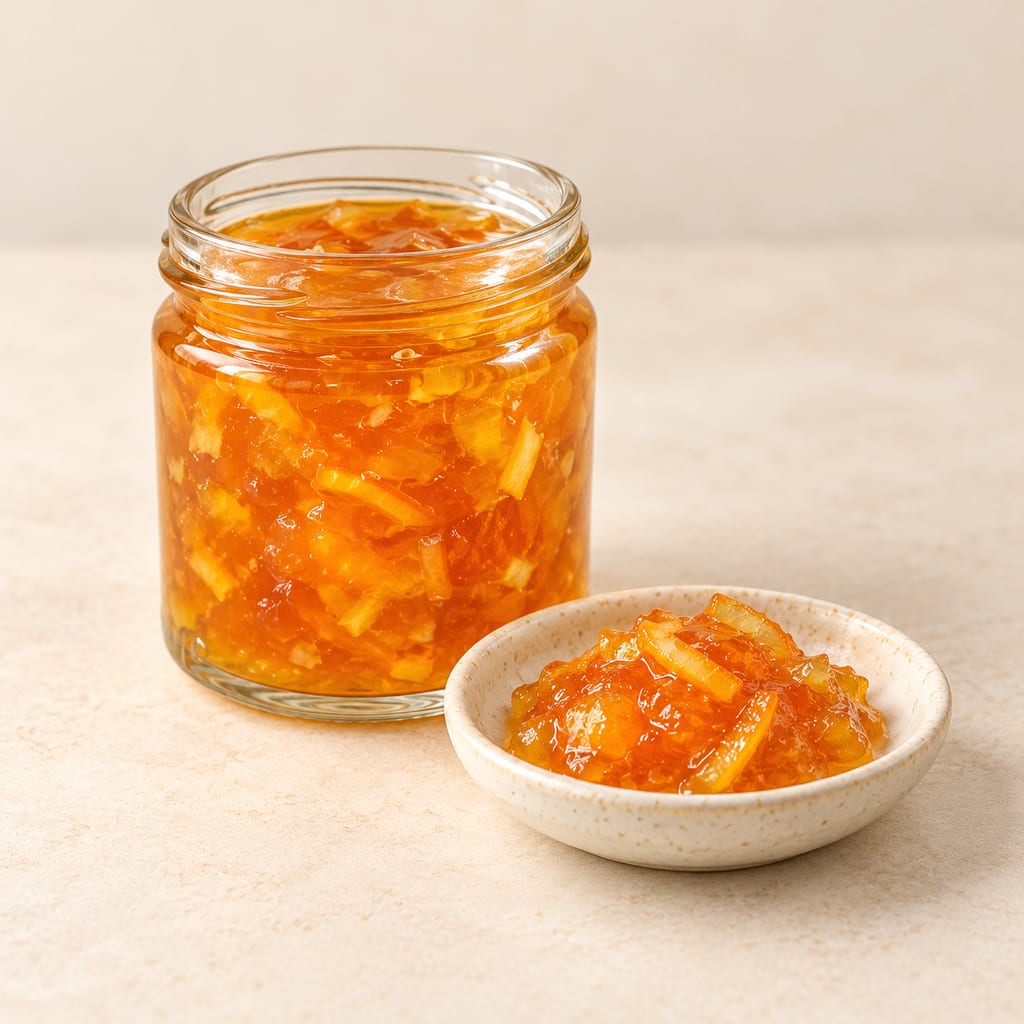
Orange marmalade
Orange marmalade suspends thin strips of citrus peel in a sweet gel. This navel-orange batch includes pulp and lemon and is preserved in a boiling-water canner.
 FermenteaWhere food goes to change
Equipment · Kettles, coppers and boilers
A deep, flat-bottomed household pot gives jam and jelly more room to foam than a shallow preserving pan; capacity, material and heat response vary by model.
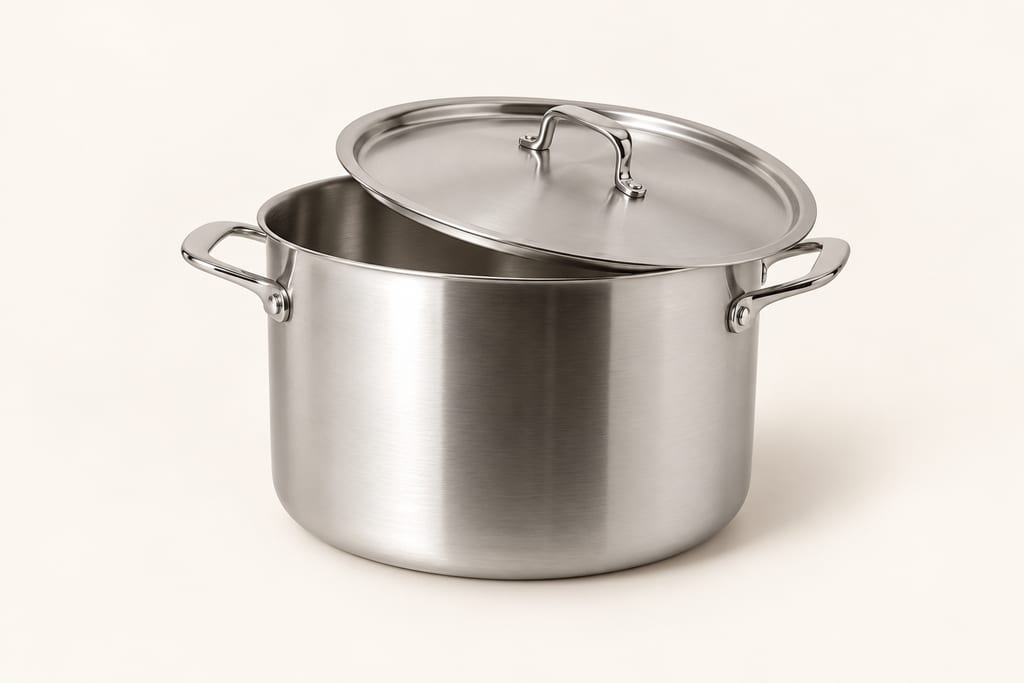
Here, “large kettle” means the deep, portable household pot that can hold a bubbling batch of jam or jelly. It is a broad equipment category, not one historic design or named model. University of Wisconsin Extension recommends a flat-bottomed saucepan or kettle of 8 to 10 quarts for its home-preserving guidance. The description “large” is relative to a small saucepan: the vessel needs space above the cooking fruit, not just enough room for the cold ingredients.
That difference is visible in Fermentea’s existing heavy stainless-steel saucepan page, which covers a small, long-handled stovetop pan. The Misen 8-quart stockpot shown as one contemporary example has a deeper body and two loop handles; this is a specific model, not a rule for every large kettle. The deeper body provides more headroom than a shallow preserving pan, while exact handles and dimensions vary.
The exact form and material remain a choice of vessel. The extension publication recommends a heavy metal container because it heats evenly and helps prevent scorching, but it does not prescribe stainless steel, a particular cladding, or one construction. A current 8-quart Misen stainless-steel stockpot is one identifiable example of the deep, handled contemporary form. Its product specifications describe that model only.
The 8–10-quart figure is a recommendation in a particular home-preservation guide, not the measured size of every kettle. The same guide says to choose a kettle with four times the capacity of the quantity of juice being cooked because jam and jelly tend to boil over. In practical terms, a fruit mixture that seems modest while cool can swell into a much more active boil. The extra space is working headroom, not a target fill line.
A deeper kettle behaves differently from a broad shallow pan. A wide surface lets more liquid evaporate at once; a deeper vessel exposes less surface relative to its volume. The Exploratorium's explanation of pan shape and reduction describes how that exposed area changes evaporation. That is why the cooking time from a shallow-pan method should not be assumed for a deeper kettle, or vice versa. Recipe size, batch depth, heating rate and stirring also matter; the source does not supply a conversion formula.
One published orange-marmalade preparation illustrates the pot's cooking role: its method puts the fruit and water in a 10-quart pot, then cooks the mixture before filling jars. The extension recommendation and recipe are compatible examples of a larger pot used for fruit, but they are separate instructions. Neither means every marmalade or jam recipe requires a 10-quart vessel.
The distinction is not merely vocabulary. In a 1922 account of Devon farm-house utensils, Charles H. Laycock describes a very large, deep open dish-kettle or cheese-kettle, sometimes made of iron, brass or copper. Its principal stated use was to heat milk for cheesemaking; the account also describes it being used for washing. Laycock separately describes a shallower circular preserving pan, often copper or brass, and says the largest size in common use could cook about 24 pounds of jam at one boiling. The historical cheese-kettle and preserving-pan are not interchangeable evidence for one standardized jam vessel.
Nor does “kettle” here mean a factory processing system. Canada's Department of Agriculture prepared its 1962 commercial-jam guide for manufacturers and separated open-kettle cooking from vacuum processing. Its equipment chapter describes kettle arrangements at several scales of plant. A domestic pot sits on an independent heat source and is moved by hand; a steam-jacketed or vacuum process vessel belongs to a larger engineered line, with separate equipment and operating controls.
The related Fermentea page on household preserving pans collects the historic open pans documented for jam-making. This kettle entry covers the deeper household pot used in modern extension and recipe guidance. A common word does not erase the difference in shape, capacity, heating system or historical evidence.
Choose a flat-bottomed kettle that fits the cooktop and allows room above the batch, then use the capacity and method specified by the recipe. Heavy metal is the extension guide's general advice for even heating; it does not establish that every material, lining or antique vessel is suitable for present-day cooking. Follow the instructions for the particular pot. Misen lists dishwasher care for its own stainless-steel 8-quart model, but that instruction should not be carried over to other cookware.
The kettle cooks the fruit mixture; it does not can the finished jars. In the linked orange-marmalade process, the filled jars go into a separate boiling-water canner for the stated process. Keep the cooking and jar-processing steps distinct, and do not use the vessel size alone as a reason to scale a tested recipe. The cited sources do not establish a first invention date, one original material, or a global history for the large household kettle.
The available sources do not establish when the large household kettle form first appeared. A 2020 University of Wisconsin Extension publication describes a current home-preservation recommendation; that publication date is not an invention date. Earlier household sources distinguish deep kettles used for other cooking from purpose-described preserving pans, so the modern jam-cooking guidance should not be projected onto one historic vessel type.
Hot jam and jelly can foam and boil over; the recommended headroom is a vessel-capacity consideration, not a safety process.
A kettle cooks the fruit mixture but does not process sealed jars or establish that a preserve is shelf-stable. Follow a tested recipe and its separate canning instructions.
The 8–10-quart recommendation is from one extension publication and is not a universal kettle size or a guarantee that any recipe can be scaled.
Source →An ordinary household kettle is not an industrial steam-jacketed or vacuum kettle; commercial systems use separate equipment and process controls.
Source →A kettle is not a shallow preserving pan: surface area and depth change evaporation rate, so cooking time and result do not transfer automatically between shapes.
Source →This row records where the extension recommendation is documented; it does not identify Wisconsin as the kettle's origin.
Orange marmalade suspends thin strips of citrus peel in a sweet gel. This navel-orange batch includes pulp and lemon and is preserved in a boiling-water canner.
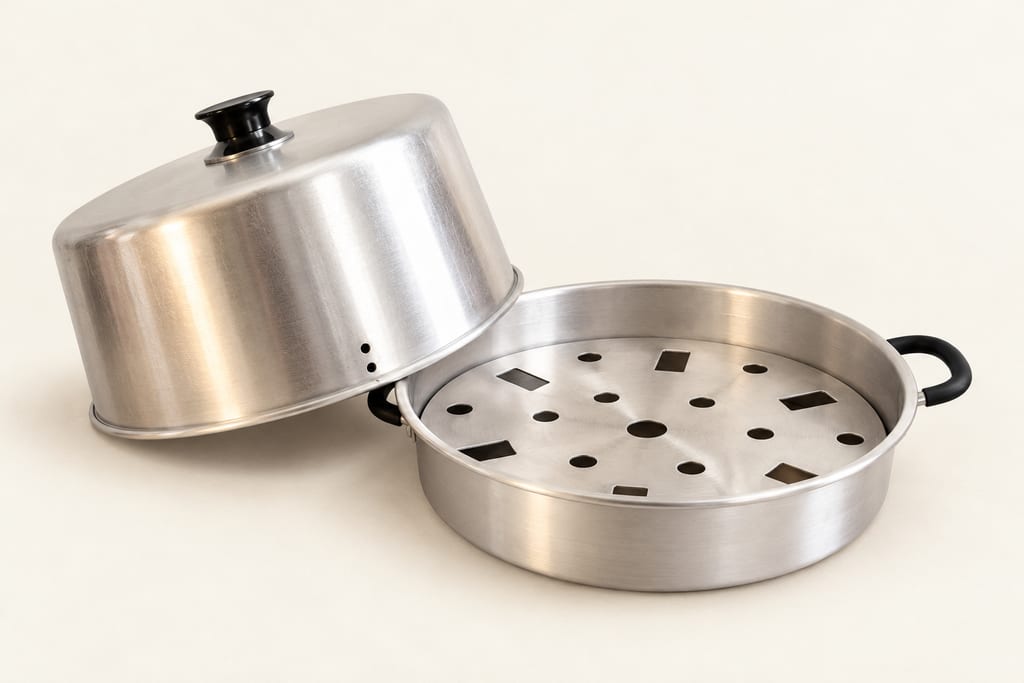
A shallow rack base and tall vented cover process jars in atmospheric steam. NCHFP limits the method to tested high-acid or acidified recipes requiring no more than 45 minutes, including altitude adjustment; this is not pressure canning.
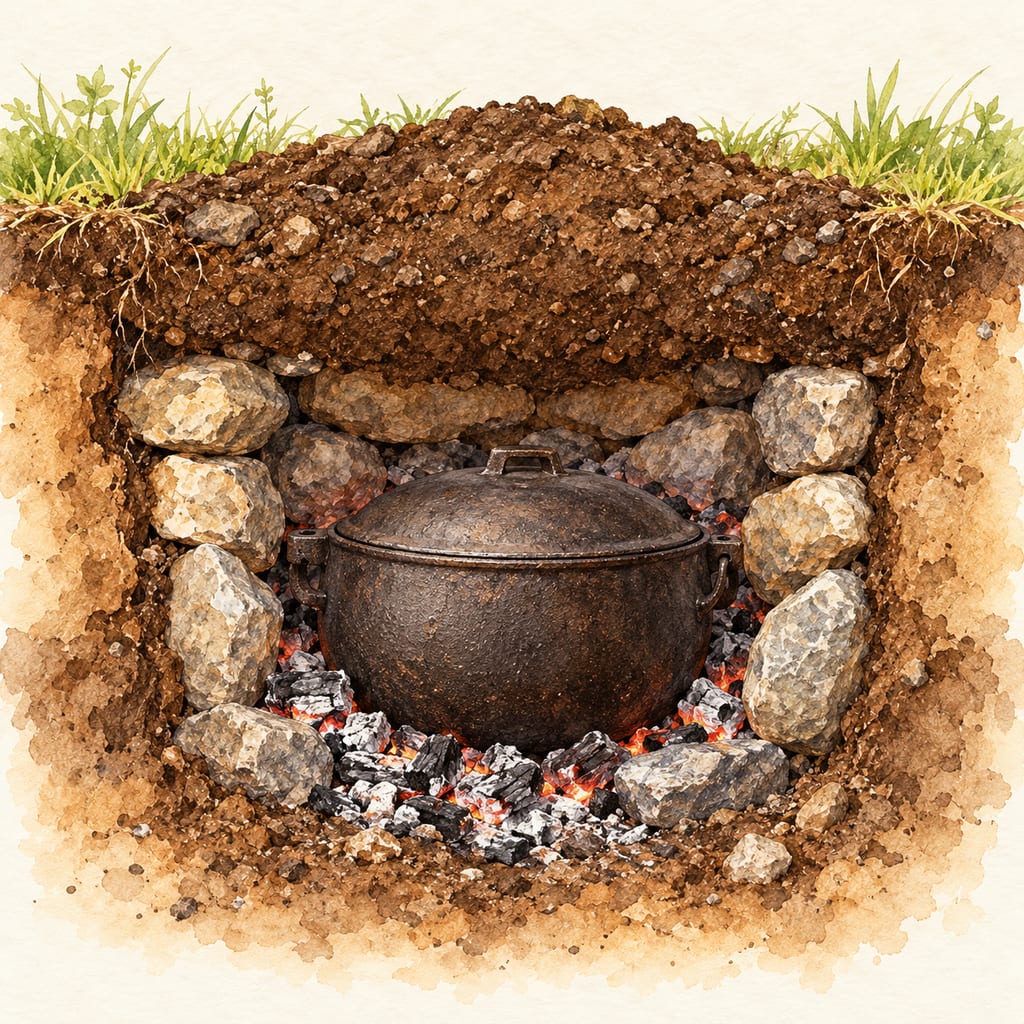
A covered iron vessel used in Maine bean-hole cooking, set into a preheated stone-lined pit and buried for a slow cook.
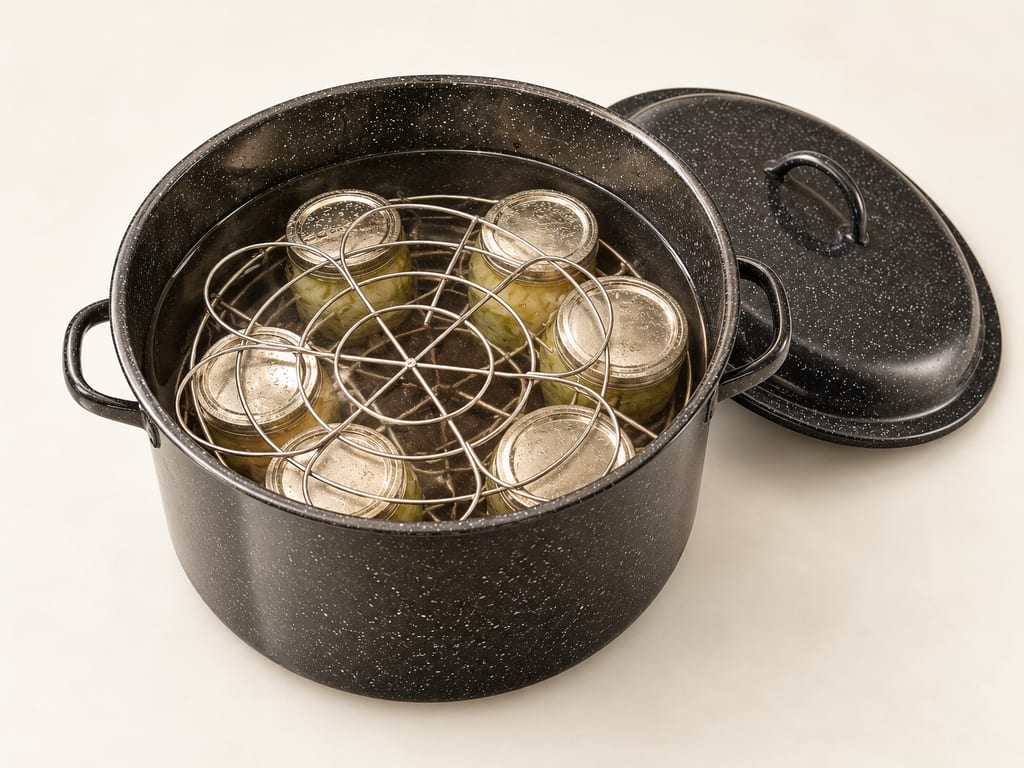
A deep, lidded pot with a removable rack processes jars beneath boiling water. It is intended for foods with tested boiling-water processes; low-acid foods require pressure canning.
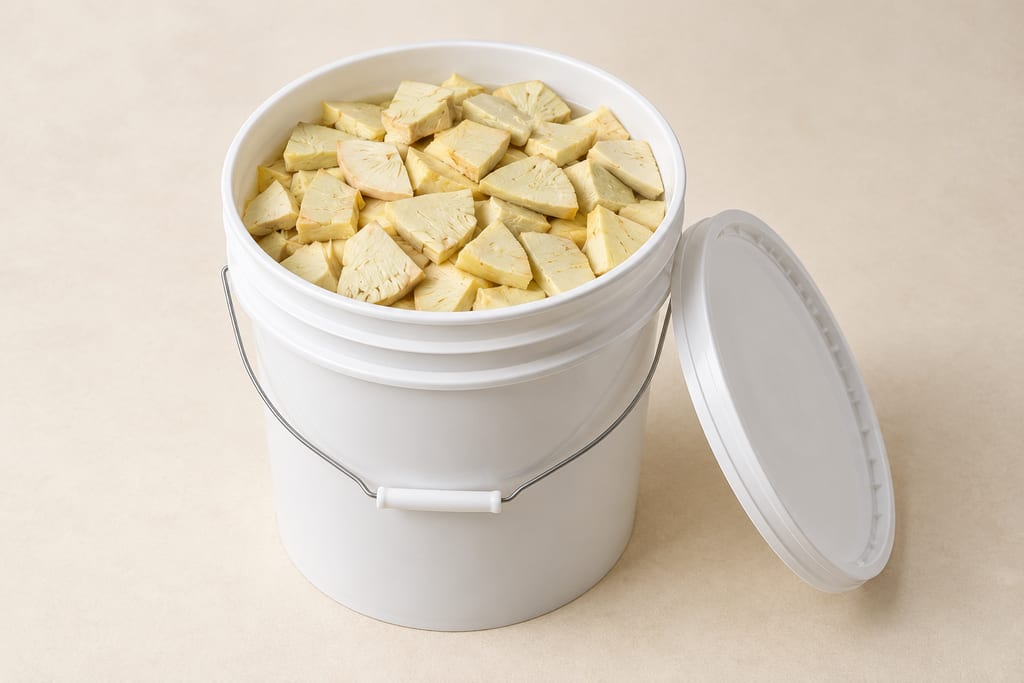
A contemporary household enclosure for preparing mā, fermented breadfruit, documented in Hawai‘i using food-safe buckets, coolers or large sealable bags in place of a pit.
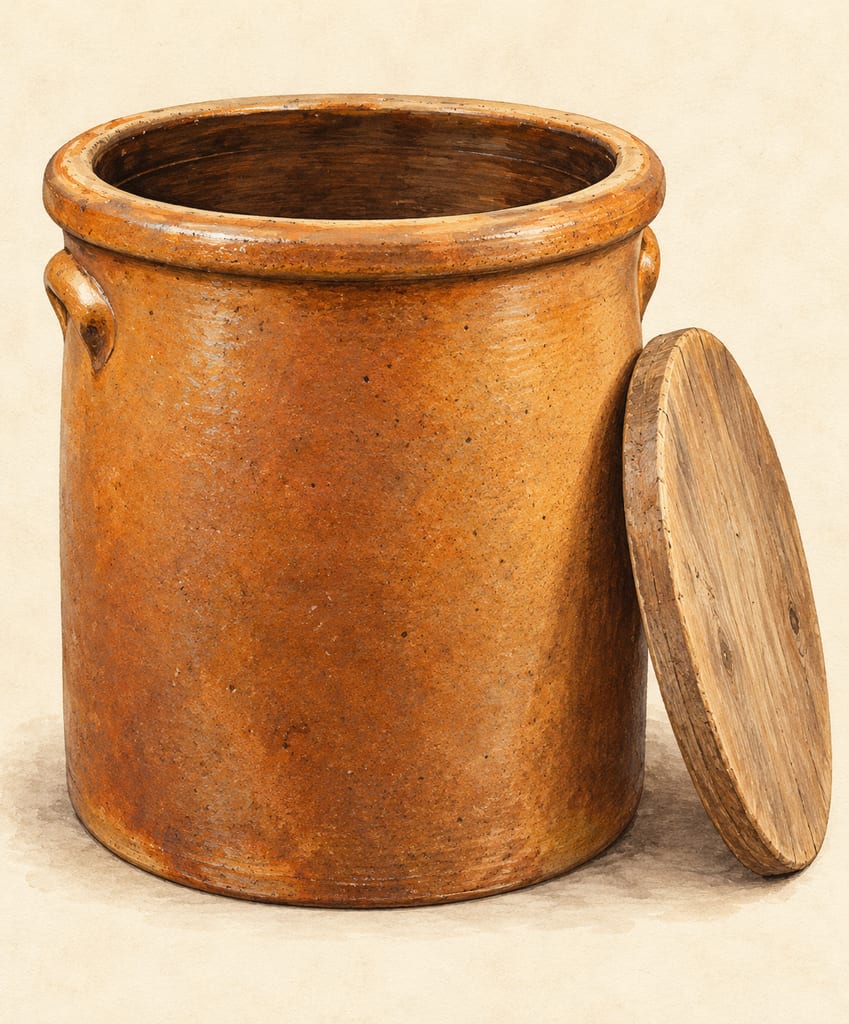
Containers for salt-curing fish and meat range from broad-mouthed stoneware crocks to tubs, cut-down barrels and chests. Their material, depth, cover and ability to retain or drain liquid shape how the food sits in salt or brine.
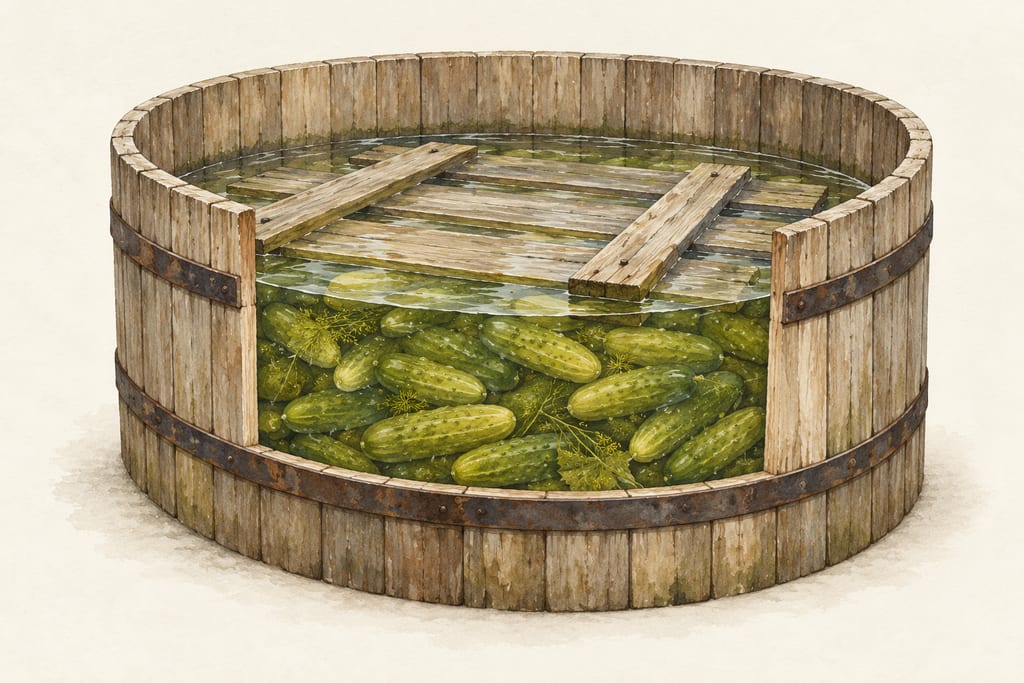
A bulk brining vat holds cucumbers and other vegetables under cover brine for fermentation and storage. North Carolina sources document a mid-century wooden tank yard and later outdoor fiberglass systems.
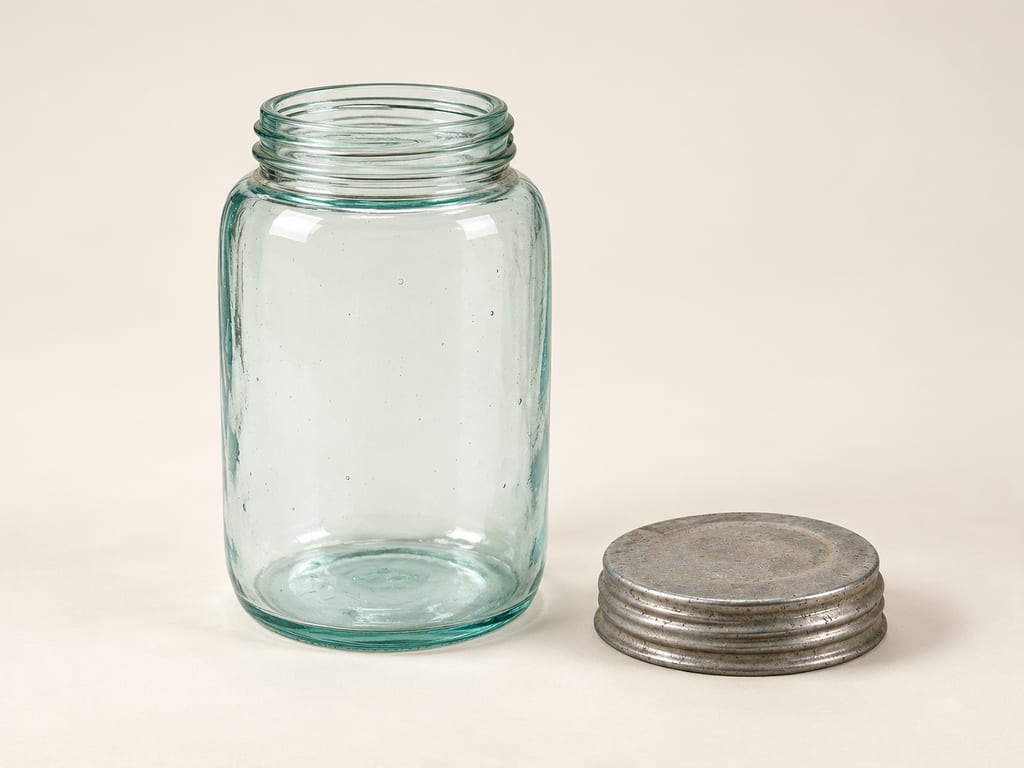
Threaded, heat-processing jars hold food and a fitted lid during a tested canning process; jar size and process belong to the specific recipe.
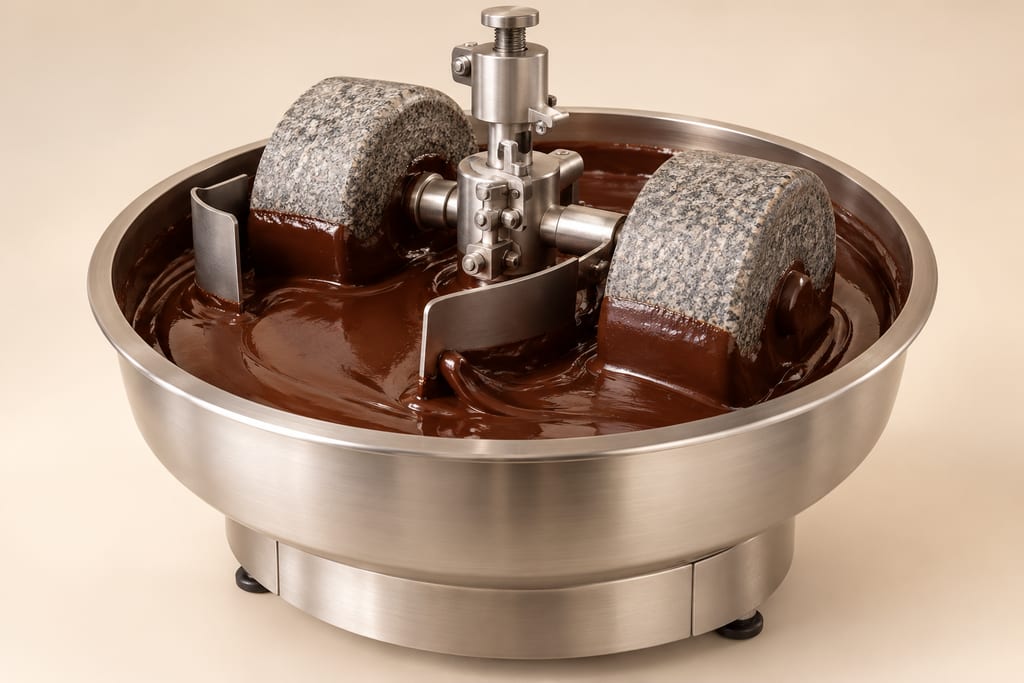
A chocolate refiner or melanger uses powered rotation and stone rollers to refine cocoa mass. Some models also process nut and seed pastes; design, material and operating limits vary.
No community contributions have been published for this entry yet.
Sign in to contribute. Published comments and photos are free to read.
University of Wisconsin-Extension Cooperative ExtensionHome preserving equipment · Capacity · Heating
Making Jams, Jellies & Fruit Preserves (B2909)Recommends an 8–10-quart flat-bottomed saucepan or kettle for cooking jam and jelly.
Says heavy metal helps heat evenly and prevent scorching, and kettle capacity should be four times the juice quantity because jams and jellies tend to boil over.
Cited in: A large household kettle for fruit cooking; Capacity, headroom and the shape of the boil; Use, care and limits
MisenContemporary example · Materials · Care
8-Qt Stainless Steel Stock PotDocuments one contemporary 8-quart stainless-steel stockpot with tall sides, lid and two handles; its care page lists dishwasher use. This single model does not define the category.
Cited in: A large household kettle for fruit cooking; Use, care and limits
National Center for Home Food Preservation, University of GeorgiaRecipe example · Equipment link
Orange MarmaladeThe published preparation combines fruit and water in a 10-quart pot for cooking, then processes filled jars separately in a boiling-water canner.
Cited in: Capacity, headroom and the shape of the boil; Use, care and limits
ExploratoriumPan geometry · Evaporation
Science of Cooking: Ask the Inquisitive Cooks!Explains that a wider, shallow pan exposes more surface area and speeds evaporation during reductions; pan geometry changes cooking behavior.
Cited in: Capacity, headroom and the shape of the boil
Devonshire AssociationHistorical distinction · Geography
The Old Devon Farm-House. Part II. Its Interior Arrangements and Domestic EconomyA 1922 account distinguishes a very large deep dish- or cheese-kettle from preserving pans, and says the shallow side-handled circular copper or brass pan was used for preserves; the largest commonly used preserving pan made about 24 pounds of jam at one boiling. The cheese kettle's main use was heating milk for cheese, not jam.
Cited in: Not the shallow preserving pan or the factory kettle
Canada Department of AgricultureIndustrial equipment contrast
Making Jam Commercially: Principles, Methods, Equipment, Formulas (Publication 1144)A 1962 report for small manufacturers treats open-kettle and vacuum-kettle processing and separately describes equipment for small, manually operated and mechanized plants; these are industrial process systems, not domestic cookware.
Cited in: Not the shallow preserving pan or the factory kettle