A household tool for the preserving season
A preserving pan is a portable open vessel in which cooks heat fruit mixtures for jam, jelly, marmalade and other sweet preserves. It belongs to the kitchen equipment that could move from the hearth or range to storage between batches. Its history is visible in household inventories and museum collections as well as in recipes: the pan was a practical tool for converting seasonal fruit into food that could be kept in jars.
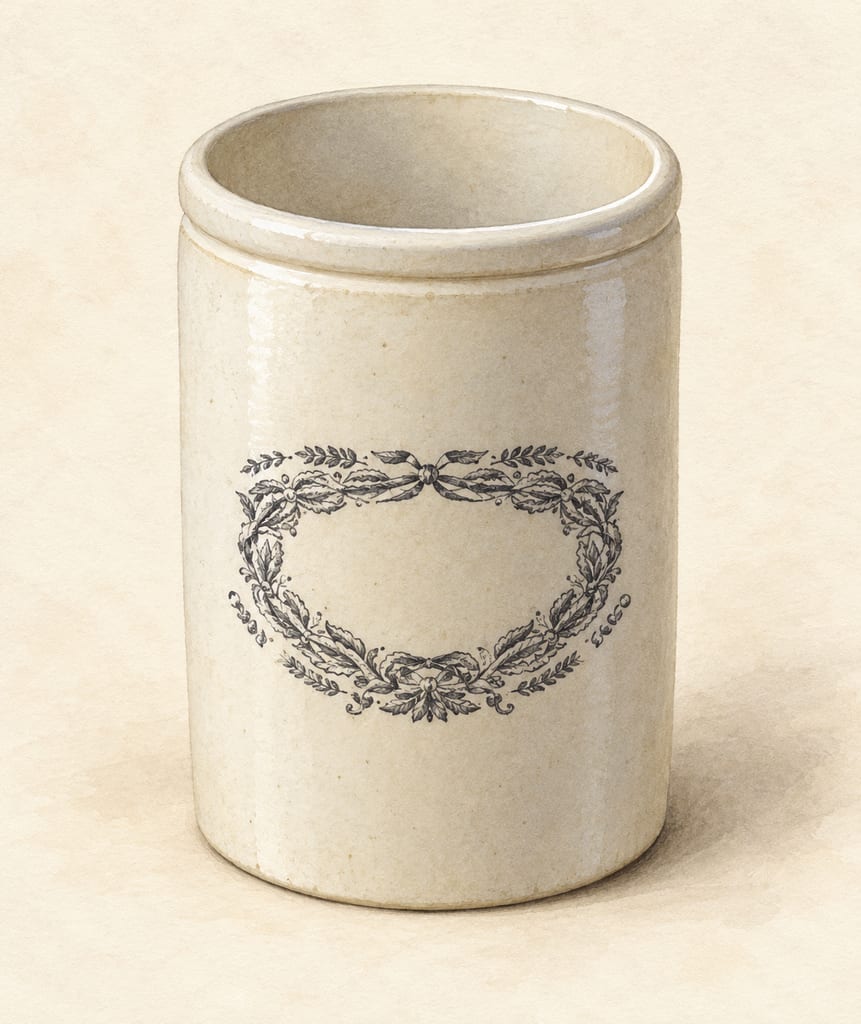
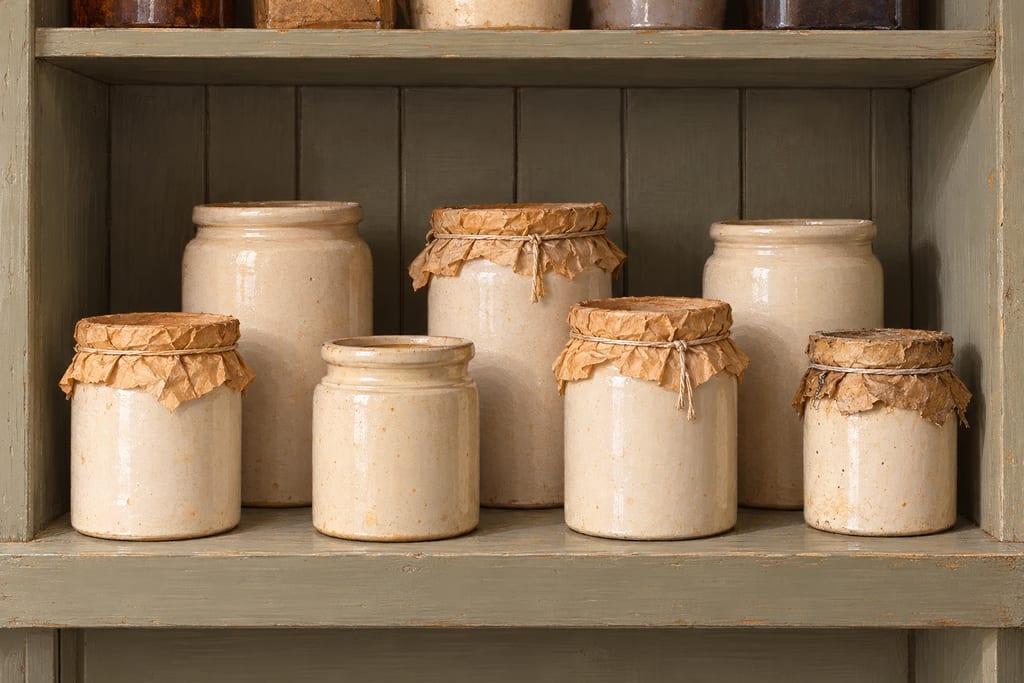
National Trust for Scotland curator Emma Inglis describes jam pans in the kitchens of historic Trust houses. Larger kitchens such as Brodie Castle could have several, consistent with estate and garden produce being processed in quantity; smaller houses show a single household pan beside upright stoneware jars. The Glasgow Tenement House preserves jars labelled with fruit and years from 1947, 1961 and 1963. These surviving objects make home preserving concrete, but they do not show that every household made its own jam.
The pan also sits within a wider economic history. Inglis connects Scotland's imported sugar and commercial preserve manufacturers to Caribbean plantations worked by enslaved people, and notes wartime rationing and encouragement of household jam making from 1941 to 1953. Domestic pans and commercial boiling vats belonged to different scales of production; the rise of factory preserves changed what a household needed to cook for itself.
Sources for this section
Different pans, materials and sizes
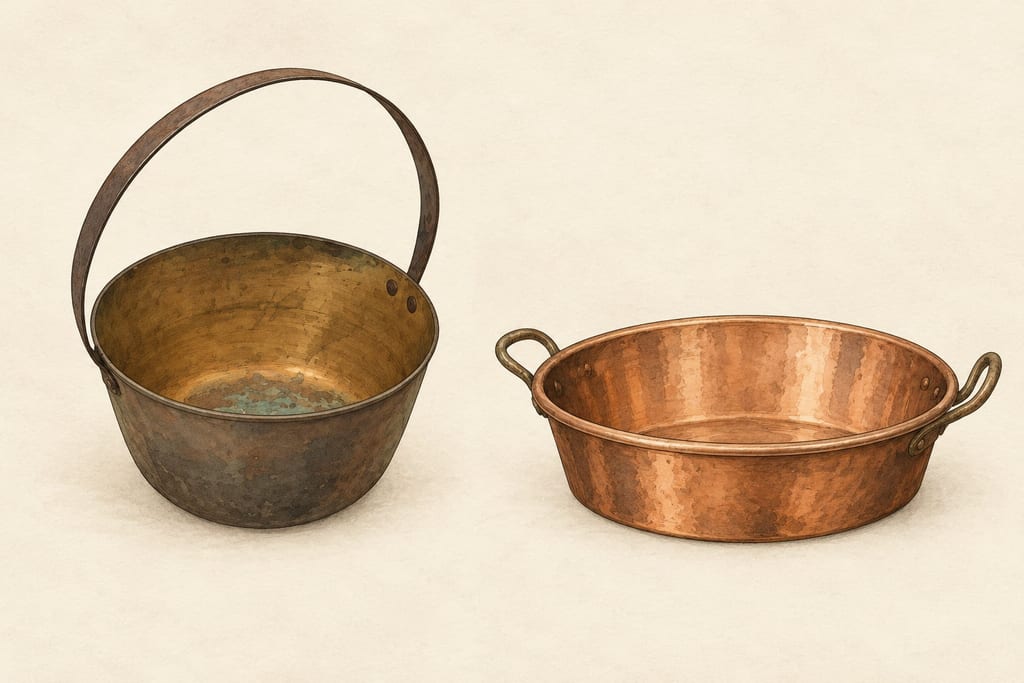
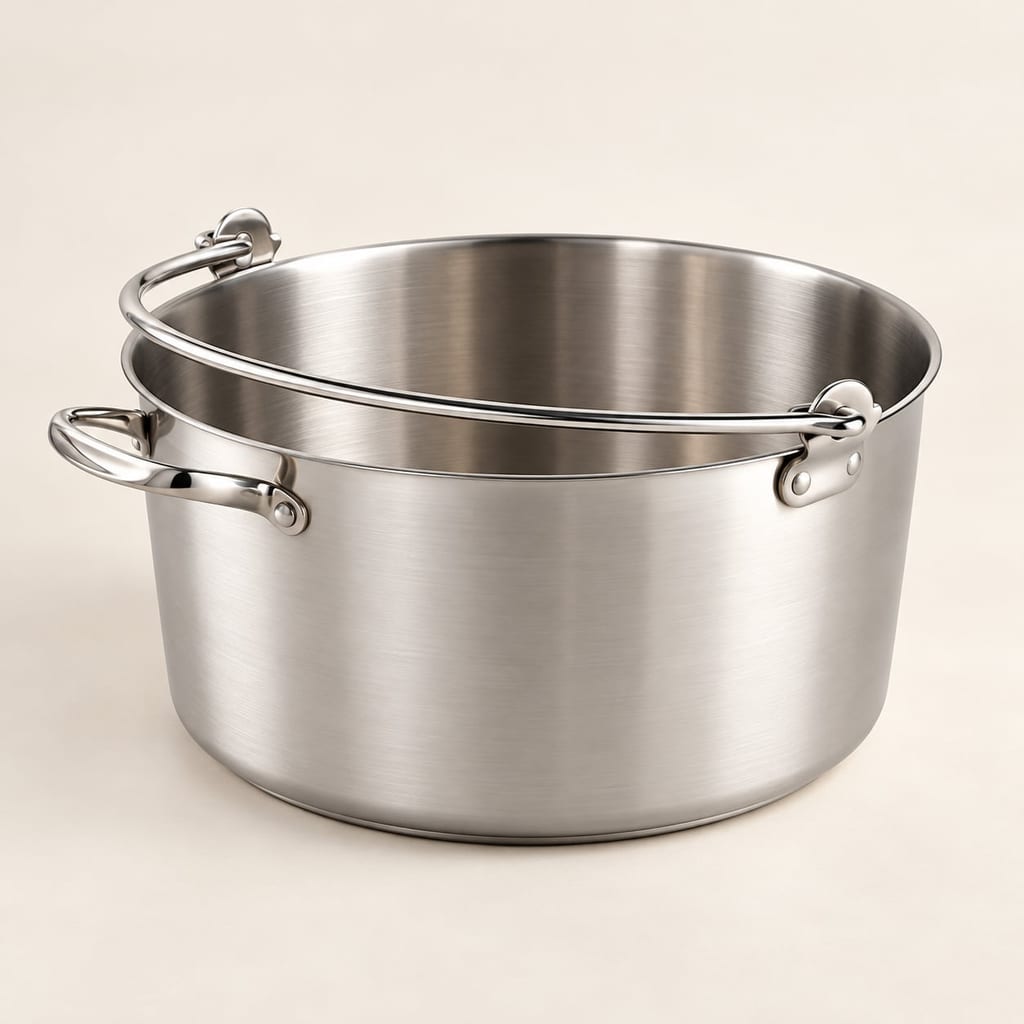
There is no single shape in the evidence. A 1907 edition of Mrs Beeton's household manual calls for preserving pans in making jams, jellies, marmalades and preserves. It lists copper pans from 11 to 18 inches in diameter and 5 to 21 quarts capacity, and also lists enamelled cast iron. The same edition's utensil plate labels a copper preserving pan among familiar kitchen equipment. These are period catalogue dimensions and prices, not a modern specification or a universal standard.
A separate Science Museum Group object gives a more particular form: a bronze cauldron pan with an iron handle, estimated to 1860–1910 and catalogued as British (?) . Its recorded overall dimensions are 350 by 315 by 285 millimetres and its mass is 3.615 kilograms. The question mark matters: the record does not identify a maker or settle where this specimen was made. In another 1904 metalworking manual, copper preserving pans are described as a formed sheet-metal vessel with a strengthened rim and fitted handles; this illustrates craft construction rather than proving that every household pan used that exact design.
Broad open pans expose a relatively large surface of fruit mixture to heat and give the cook room to stir and watch the boil. In use, heat softens fruit, water and juice escape as vapour, and sugar dissolves into the liquid; how the finished preserve sets also depends on the fruit and recipe. The pan helps manage cooking, but it does not by itself define a safe storage method or guarantee a gel.
Sources for this section
Use, storage and what the records cannot tell us
The historical manuals treat cleanliness and inspection as part of preparing a pan for work. Mrs Beeton's 1907 list says pans should be kept scrupulously clean and examined before use. It does not offer a present-day assessment of a specific old pan's lining or condition, and the surviving bronze example's catalogue entry does not describe a cleaning or maintenance routine. A museum object should therefore be understood as evidence of form and use, not as an endorsement for cooking in every antique vessel.
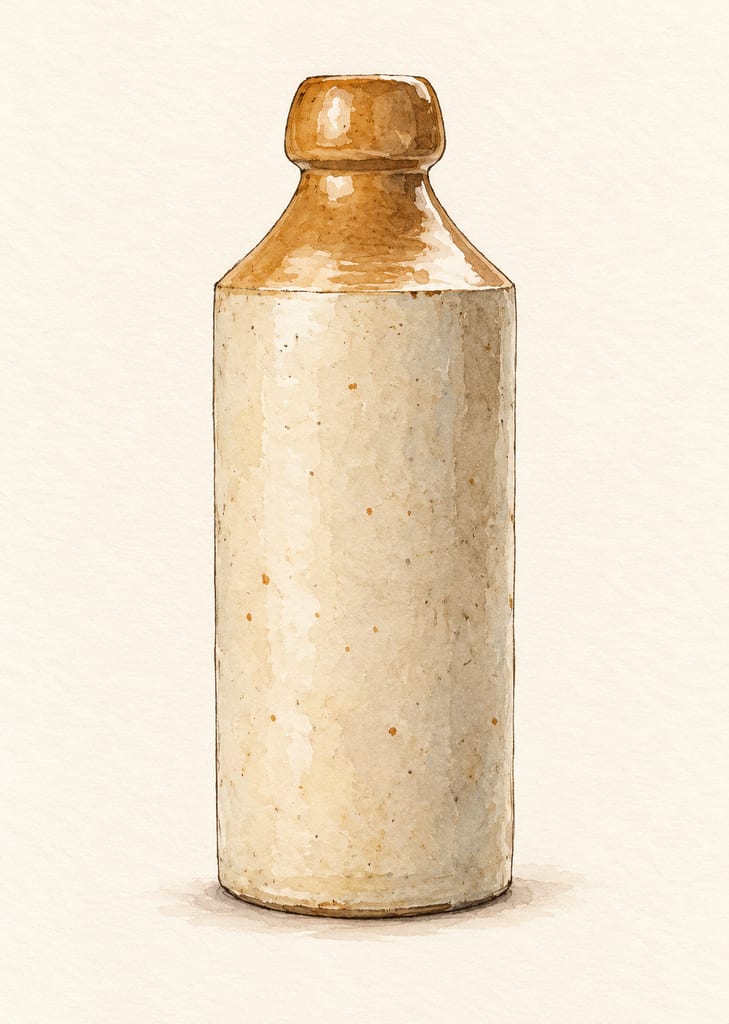
Pans appear alongside jars because they serve different stages: the open vessel heats and reduces fruit, while jars receive the preserve after cooking. The National Trust describes small stoneware jam jars with grooves for securing a paper cover; the broader record of labelled Glasgow jars shows that households kept some preserves for years, though the curator notes uncertainty about why the jars were left uneaten. A pan is not a jar, a water-bath canner, or a full food-preservation system.
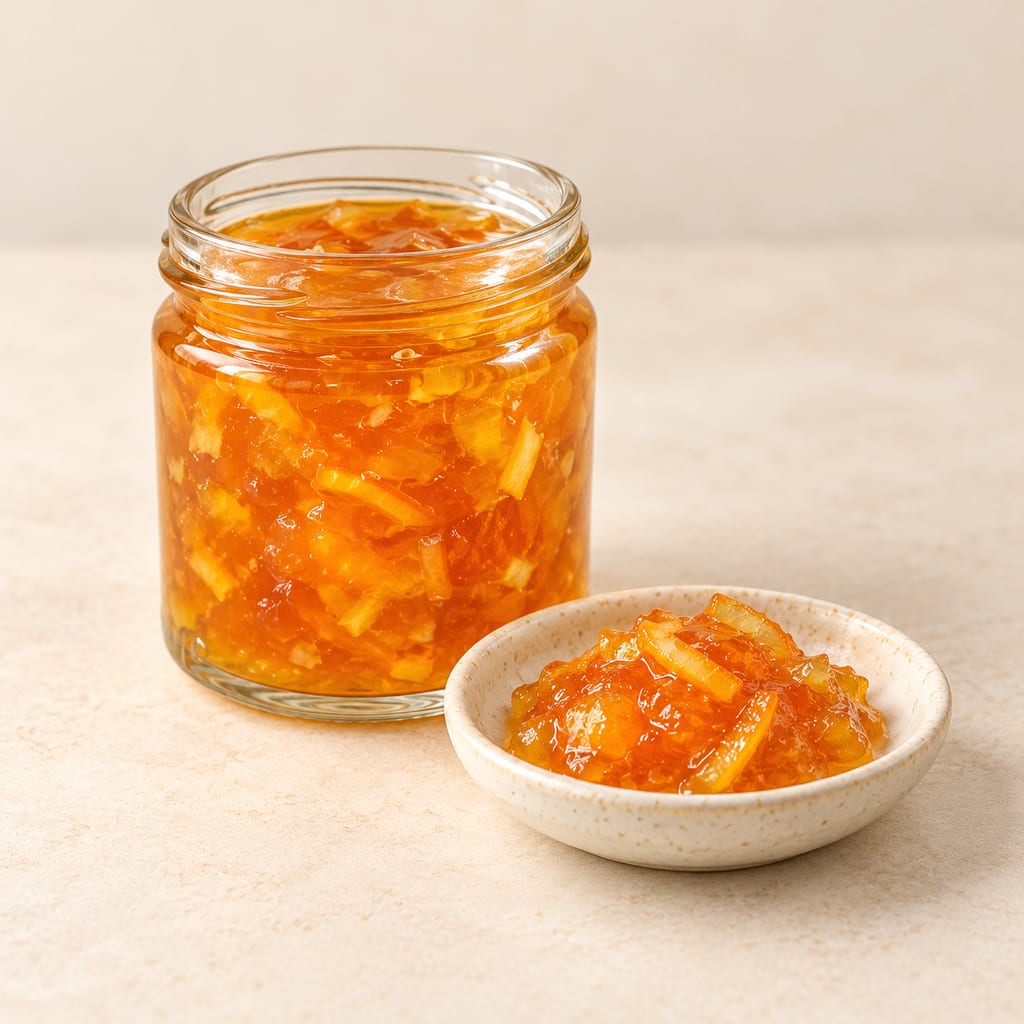
The evidence here is strongest for Britain and Scotland. It does not establish a single origin, a complete chronology, a standard household capacity, or one material used by all makers. Historical accounts also do not establish whether any particular antique pan remains suitable for modern food contact. The page links the pan with an existing orange marmalade preparation and with a documented stoneware preserve jar, while leaving recipes and storage guidance to their own records.
Sources for this section
History
The National Trust for Scotland describes jam pans in the kitchens of both large houses and smaller homes, where a single pan could sit with stoneware jam jars. A 1907 household manual identifies preserving pans as utensils for jam, jelly, marmalade and preserves, listing copper and enamelled cast iron. One museum object is a bronze cauldron pan with an iron handle, catalogued as British (?) and dated 1860–1910; it is a documented example, not evidence of the first preserving pan.
Equipment details
CapacityNo single capacity applies to this family. A 1907 household manual lists copper examples at 5–21 quarts, without identifying the quart standard.
SizeNo single dimensions apply. The 1907 manual gives 11–18 inches diameter for copper examples; a separate museum pan has its own recorded overall measurements.
PowerNo power The pan itself is unpowered and depends on a separate hearth, range or hotplate; the cited sources do not identify the heat source for every surviving example.
How you get oneNot established The cited sources document museum examples and historical trade descriptions, not a current maker or supplier for this historical household form.
CareThe 1907 household manual advises keeping a preserving pan scrupulously clean and examining it before use. That historical instruction is not a modern food-contact or conservation specification.
Made of
- Copper — Household preserving pan
The 1907 household manual lists copper pans; an accompanying utensil illustration labels one as a copper preserving pan. - Enamelled cast iron — Alternative preserving pan
Listed as a sold alternative in the 1907 manual; no specific object or lining composition is identified there. - Bronze (copper-tin alloy) and iron — Dated cauldron-pan example
Science Museum Group describes a British (?) jam-making pan, estimated 1860–1910, with bronze vessel and iron handle.
Limits
The museum catalogue marks the example's national attribution as British (?) and dates it only to 1860–1910; it does not identify its maker, original household, recipe or heating arrangement.
Source →Historical descriptions do not establish a single pan size, material or construction for all household preserving pans.
Source →Places
Scotland
Historical attestation · Region evidenceNTS describes jam pans in Scottish Trust houses, including Brodie Castle and Glasgow household context.
Britain
Historical attestation · Country evidenceThe catalogue includes a question mark after British; this is a qualified national attribution, not a precise place of manufacture.