
Jam
Jam is fruit cooked with enough sugar and concentration to reduce the water available to microbes. Jelly uses clarified juice and firmer fruit pastes lose still more moisture.
 FermenteaWhere food goes to change
Historical object · Jars, pots and crocks
Three dated jam labels at Glasgow’s Tenement House record household preserves: Victoria plum (1947), strawberry (1961), and rhubarb and ginger (1963). They document storage and domestic history, not a recoverable recipe.
At the National Trust for Scotland’s Tenement House in Glasgow, handwritten labels identify Victoria plum jam from September 1947, strawberry jam from 1961, and rhubarb and ginger jam from 1963. Together they preserve a small, unusually legible sequence: named fruit, dates and domestic containers. They do not provide recipes, quantities, or a complete account of how any batch was made. The source calls the first example Victoria plum; it does not identify a cultivar for the later strawberry or rhubarb-and-ginger jars.
The dates also need to be read against rationing. The National Trust for Scotland notes that jam was rationed from 1941 to 1953 and that women were encouraged to make their own during the Second World War. The September 1947 label falls inside that stated period; the 1961 and 1963 labels are later household records, not wartime examples. The labels document keeping and remembering preserves, but do not establish one continuous practice or a shared method.
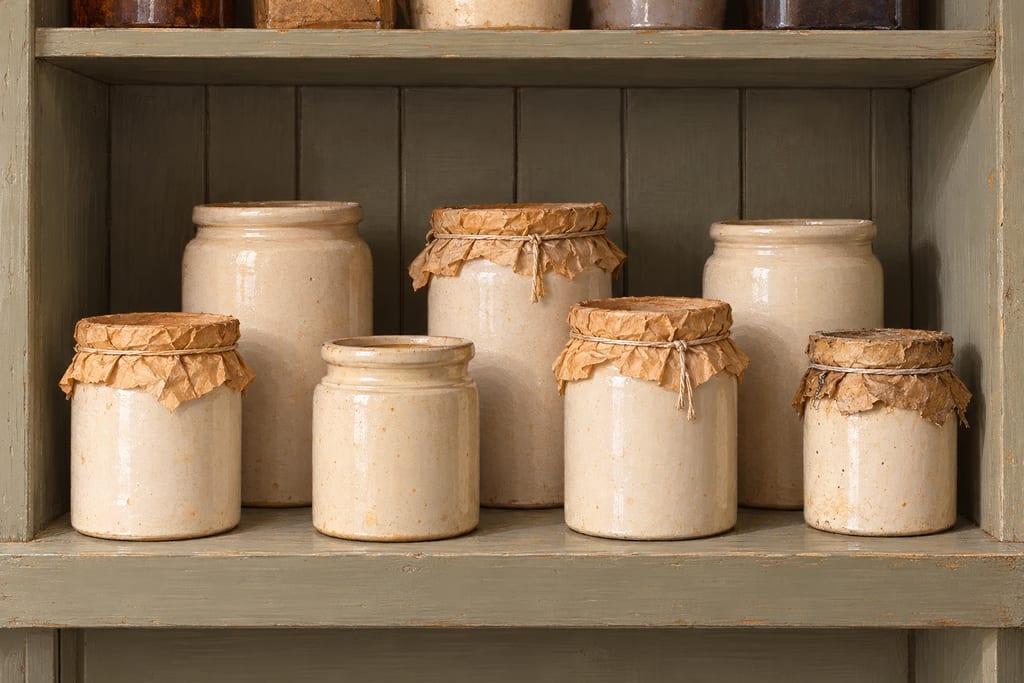
Curator Emma Inglis describes small upright stoneware jam jars as a form found in smaller houses. A neat groove below the rim could hold string securing a waxed-paper cover. This provides a useful account of period storage form: a modest upright jar and a tied paper cover, rather than a modern pressure-rated canning jar. The account does not say that each of the three dated jars is stoneware or that each used that closure.
A separate National Trust for Scotland photograph of the Tenement House cupboard shows a mixed collection, including pale ceramic jars, glass jars and bottles. It is visual context for the collection, not an identification photograph of the three dated objects. Other jars at the house have different dates: a plum label from 1929 and a marmalade jar from 1941. They must not be conflated with the 1947, 1961 and 1963 examples.
Agnes Toward lived in the Tenement House flat from 1911 to 1965, and the National Trust for Scotland describes much of the house’s surviving contents as hers. The jam jars belong to this preserved domestic setting. Their value is documentary: labels connect food storage with named fruit, dates and a particular Glasgow home.
That museum context sets a firm limit on practical advice. Old contents retained in the Tenement House are historical collection material and are not for eating. Sources do not specify these jars’ capacities, exact materials, whether they were reused, how their labels were attached, or whether the coverings were airtight. Those unknowns should remain unknown: this record is not a tested recipe, a preservation protocol, or a recommendation to reuse historic vessels.
Sources give no dimensions, capacity, maker, or preparation method for the three dated jars.
SourceThe National Trust for Scotland places the labelled jars in the Tenement House, Glasgow. This is collection location, not manufacturing origin.
Jam is fruit cooked with enough sugar and concentration to reduce the water available to microbes. Jelly uses clarified juice and firmer fruit pastes lose still more moisture.
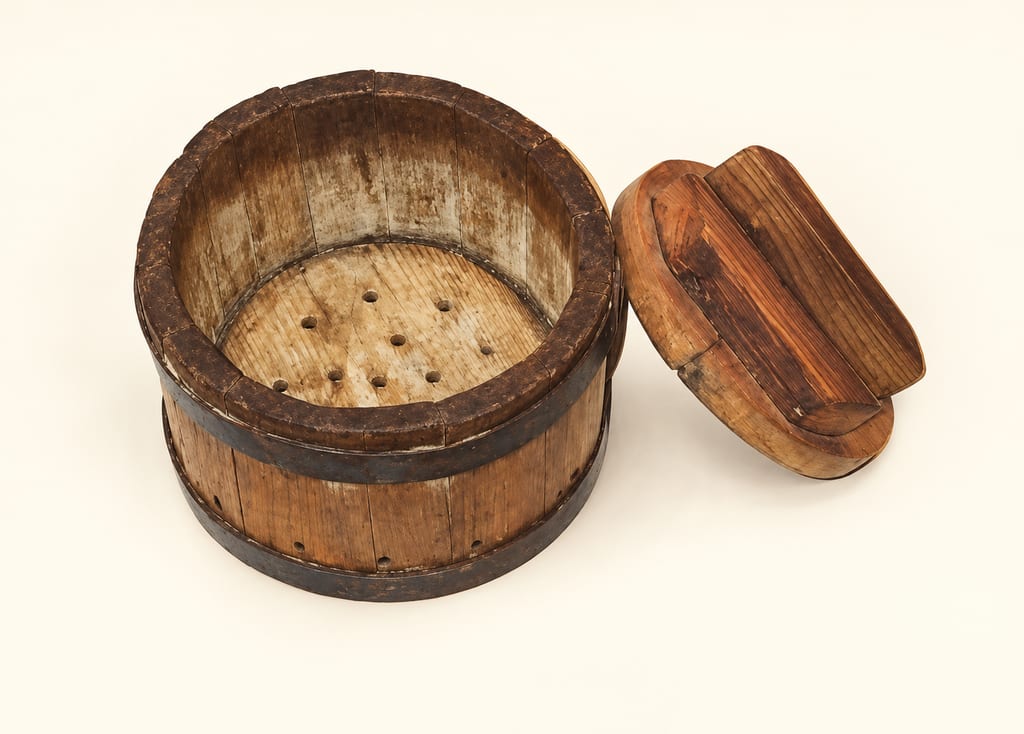
A cheese press applies weight or mechanical force to curds in a draining vat or mould. Tiree’s wooden fiodhan, stone weights, screw presses and a documented New Zealand lever press show distinct forms, not one standard design.
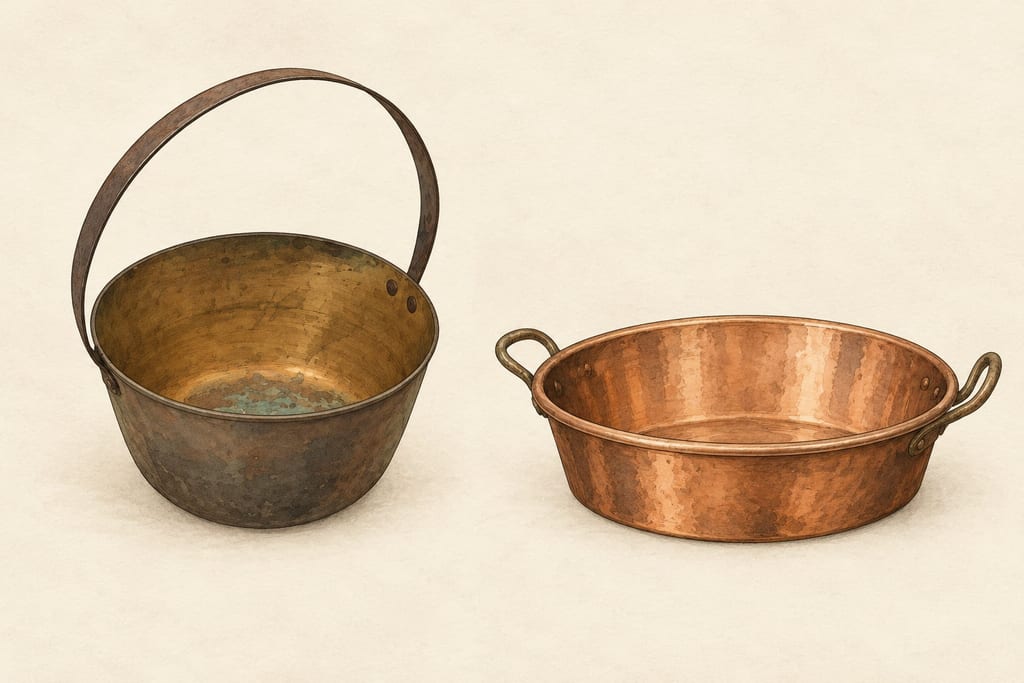
Open, heated pans cooked fruit into preserves before transfer to jars. Historical records document copper and enamelled cast-iron forms, while museum objects show variation in material and shape.
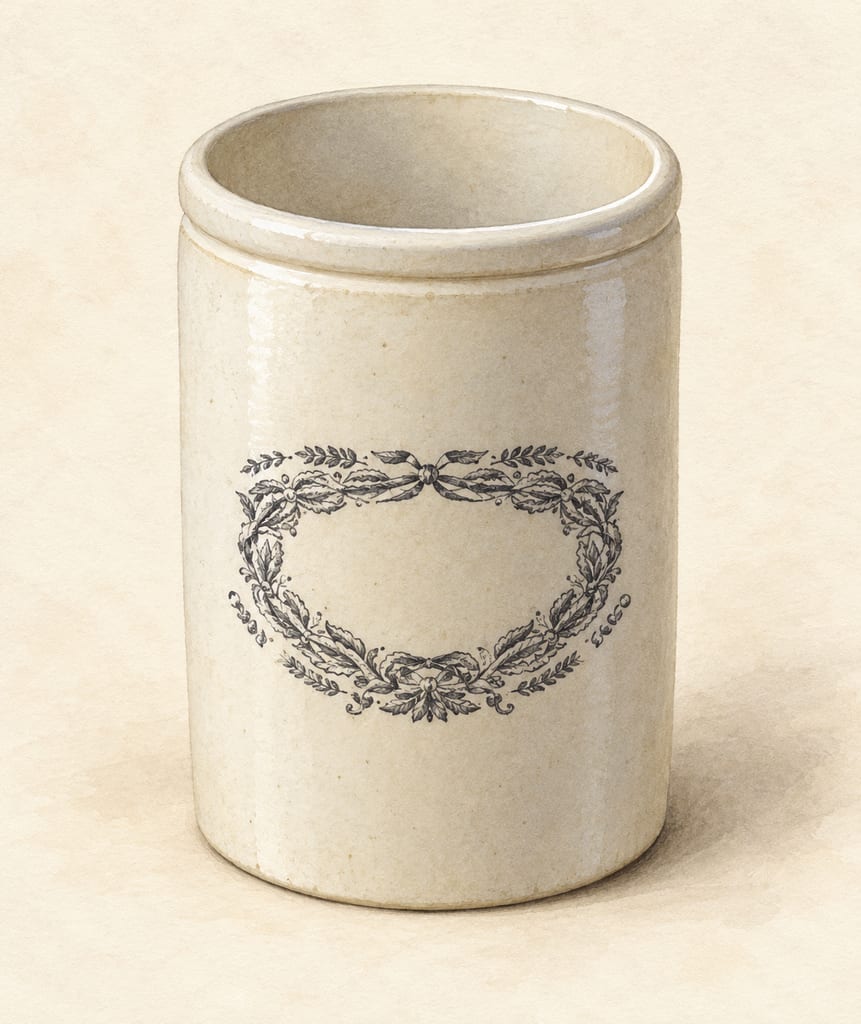
Keiller-branded stoneware jars were commercial packages for Dundee marmalade. Collections show cylindrical forms with printed marks; sources distinguish the Dundee brand from documented Maling manufacture in Newcastle.
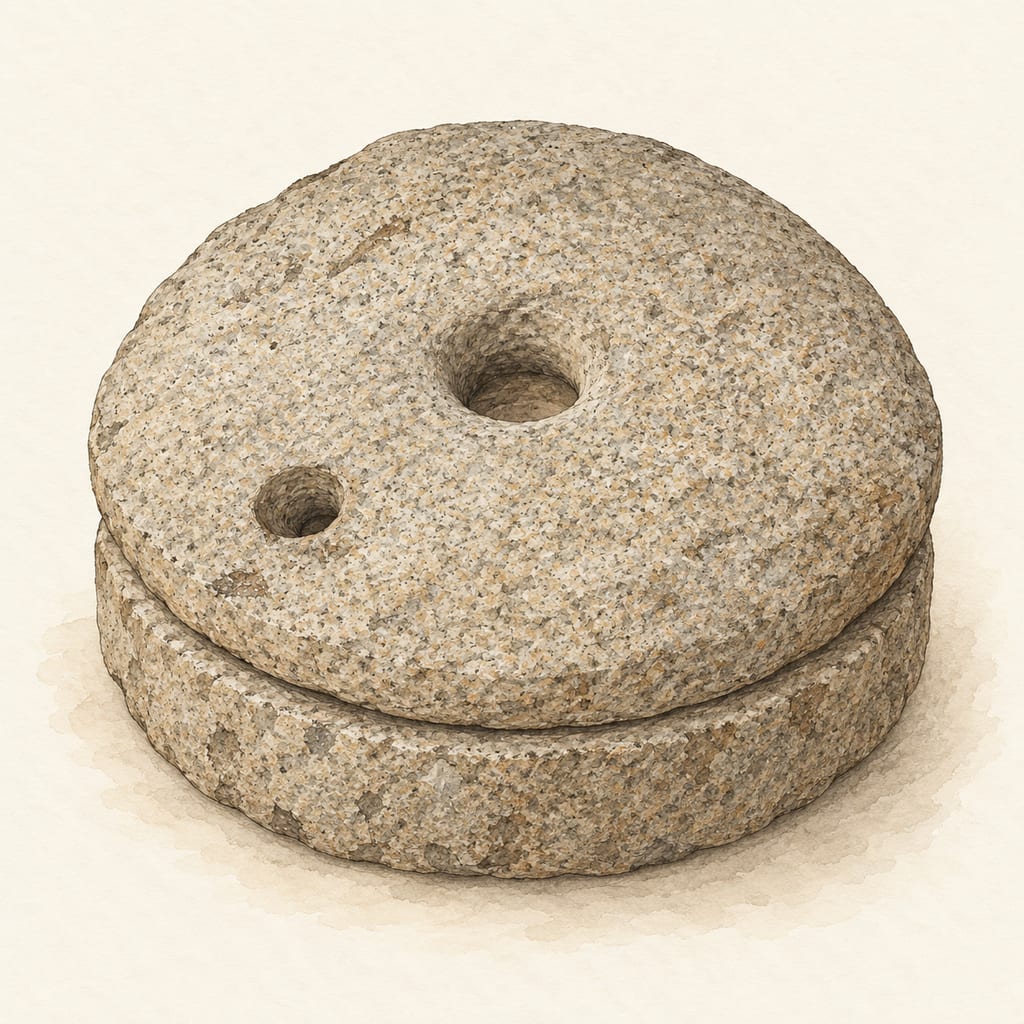
A rotary quern is a hand-operated mill with a runner turning over a fixed bedstone to grind grain. Scandinavian household use of rotary querns increased around the beginning of the Viking Age.
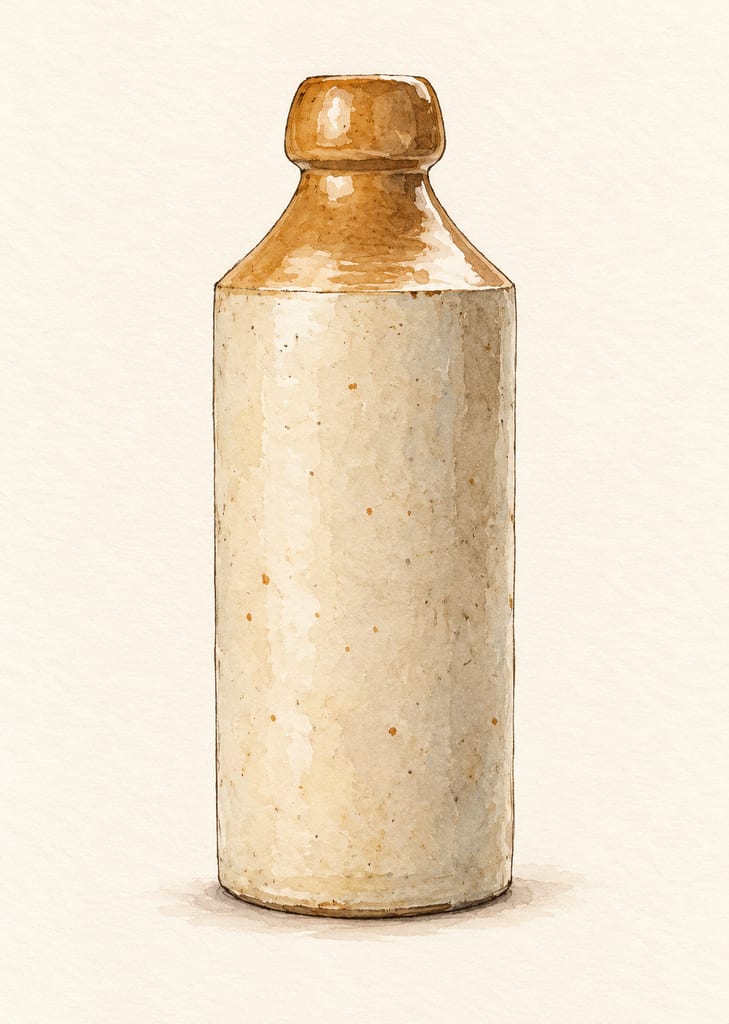
A late nineteenth-century stoneware bottle for ginger beer, represented by an Aberdeen museum object dated 1850–1899. It documents beverage packaging, not a fermentation vessel or a universal bottle design.

Soft, spreadable Calabrian pork sausage made with a great deal of red chilli and fatty pork, stuffed into natural casings, sometimes smoked and matured while staying soft.

A way to add independent temperature logging to an existing food dehydrator without changing its built-in controls or protections. It is a monitoring method, not a rewiring plan.

Pleurotus cystidiosus is the abalone mushroom, a cultivated oyster-type fungus with dark brown caps that grows more slowly and is more demanding than other Pleurotus species.

A dark, balanced vinegar from Emilia-Romagna made by combining cooked or concentrated grape must with wine vinegar, then acetifying and refining it in wood under a protected specification.

A living dairy inoculum that starts controlled cream fermentation, developing acidity and aroma before sour cream or cultured butter is finished.

A small electric incubator holds jars at a selected temperature for yogurt and other documented warm food preparations. Controls, capacity and vessel arrangement vary by model.

Adygean salt is a seasoned table salt associated with Adygea and the wider North Caucasian culinary tradition. Salt is blended with garlic and a variable selection of herbs and spices; the exact mix depends on the named style and maker.

The African Caesar-group mushroom, Amanita masasiensis, is a wild ectomycorrhizal species of central and southern African woodlands, eaten locally. The genus contains deadly poisonous species, so identification needs care.
No community contributions have been published for this entry yet.
Sign in to contribute. Published comments and photos are free to read.
National Trust for ScotlandHistory · Form
Jam, jelly or preservesTenement House jars labelled Victoria plum jam (September 1947), strawberry (1961), and rhubarb and ginger (1963).
Smaller houses could use small upright stoneware jars with a groove beneath the rim for string securing waxed paper.
Jam rationing dates 1941–1953 and wartime encouragement to make jam.
Cited in: Three labels, three household dates; A domestic jar form
National Trust for ScotlandCollection · Image
A curious collectionTenement House cupboard context and its preserved collection of jam jars.
Cited in: A domestic jar form; Collection objects, not reuse advice
National Trust for ScotlandHistory · Collection
‘Waste not, want not’: exploring food and cooking in a 20th-century Glasgow tenementAgnes Toward lived in the flat from 1911 to 1965; the collection includes separately dated 1929 plum jam and 1941 marmalade jars.
Cited in: A domestic jar form; Collection objects, not reuse advice