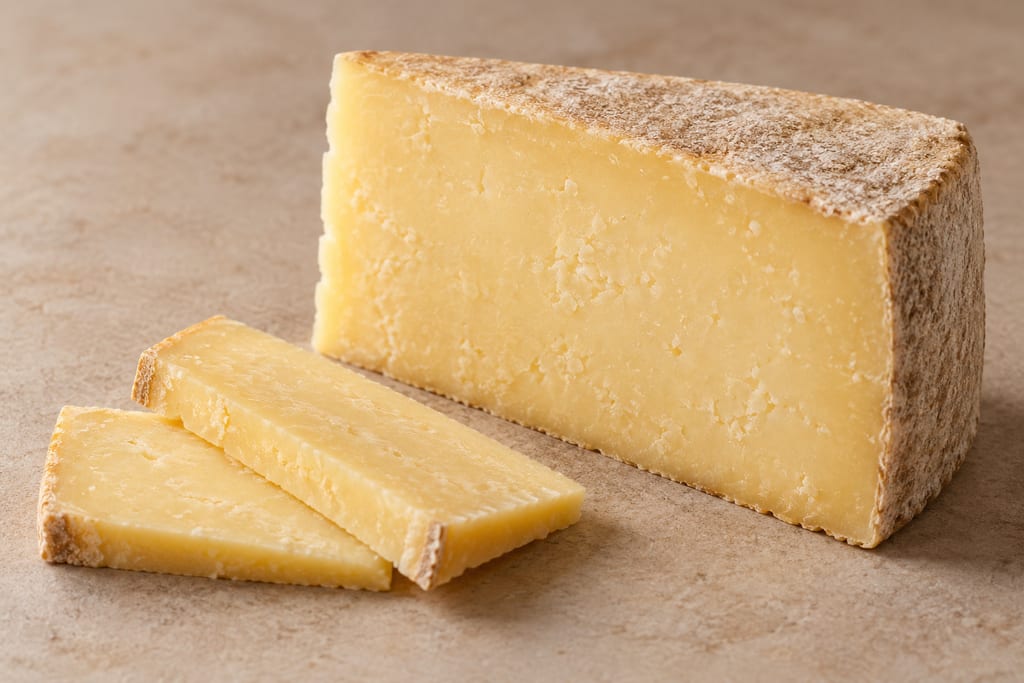
Cheddar-style cheese
A pressed cheese whose curd is cooked slowly, then cheddared: kept warm in slabs that are turned and stacked for hours before milling, salting and pressing.
 FermenteaWhere food goes to change
Equipment · Presses and weights
fiodhan · fiughan · cheese-curd press
A cheese press applies weight or mechanical force to curds in a draining vat or mould. Tiree’s wooden fiodhan, stone weights, screw presses and a documented New Zealand lever press show distinct forms, not one standard design.
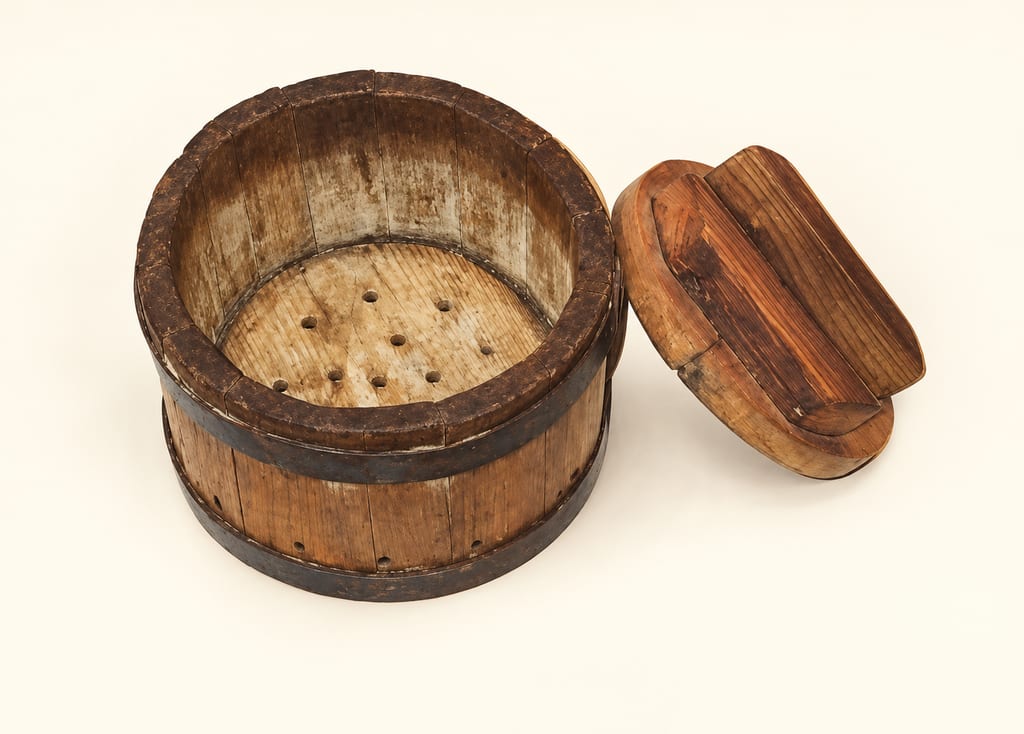
A cheese press applies weight or mechanical force to curds in a draining vat or mould. The curd is already formed; pressure holds it together while whey leaves through cloth, perforations or a mould. Sources document several mechanisms—heaped stones, an iron screw and a lever—but no universal frame, vessel, load or schedule.
Pressing follows preparation of the curd for moulding. Penn State Extension’s Cheddar sequence puts salted curd into hoops and presses it after cheddaring, the earlier operation of stacking and turning curd mats. A press does not perform cheddaring; that is a separate handling stage.
An Iodhlann records a Tiree wooden cheese vessel called a fiodhan. The photographed artifact is specifically a small round staved vat: two iron hoops hold the sides, while holes in the sides and base allow whey to drain. Its catalog gives a height of 165 mm and diameter of 250 mm. It was probably made at the end of the nineteenth century by Donald MacLean of Whitehouse, Cornaigbeg, and was used until the 1950s.
Muslin-wrapped curds went into the fiodhan beneath a wooden lid; the lid could be weighted with stones or screwed down in a separate cheese press. The 100 Objects account describes progressively heavier stones and says screw-operated presses became popular in the nineteenth century. So a fiodhan can name the curd-holding vat, while a separate frame or screw supplies force; local descriptions may use the word across these related parts.
A separate An Iodhlann photograph shows Isabella MacLean of Kilmoluaig using a cheese press in the 1940s. Its iron screw passes through a hoop set in a large stone and tightens on a wooden vat. The record describes curds squeezed by hand, wrapped in muslin and pressed; after two to three days, the screw was tightened another turn. This is one documented Tiree mechanism, not a specification for every fiodhan.
The Science Museum Group’s hand-type wooden press is another form. Its catalog identifies four large stone weights and lists wood, stone, ferrous metal and leather. The 1930 × 700 × 1000 mm measurements describe that collection object; they should not be transferred to the much smaller Tiree vat or treated as standard dimensions.
Tony Hamblyn’s 2020 New Zealand update shows a working homemade lever press in a multipurpose cheese room. He describes two pin positions: one multiplies the applied load by nine and the other by five. This is a documented example of mechanical advantage, but the account gives no press dimensions, load limit or universal pressing schedule. Hamblyn’s apparatus is his own setup, not a template for the Tiree fiodhan or the museum’s stone-weight press.
Modern cheesemaking also uses presses, but the available source records one person’s build rather than a standardized design. Press, follower, mould, pressure and duration must match the specific cheese method and equipment. A press applies force and permits drainage; it does not determine culture, curd treatment, salting or ripening conditions.
The sources show different scales and construction. The Tiree fiodhan is a compact perforated wooden vat with iron hoops; the Science Museum Group object is a large hand press loaded with four stones; Hamblyn describes a home-built lever system without dimensions. These examples have different roles and should not be treated as interchangeable.
The sources do not state a general buying route, cleaning regimen, safe load or standard capacity. Identify whether a description means the curd vat or mould, the follower, the weights or the press frame, then follow instructions for that equipment and cheese. This page links to Cheddar because Penn State explicitly describes salted Cheddar curd being pressed in hoops.
An Iodhlann records a Tiree fiodhan probably made at the end of the nineteenth century and used until the 1950s, plus a separate screw press in a 1940s photograph. The Science Museum Group catalogs a hand press with four stone weights. Tony Hamblyn describes a homemade lever press in a 2020 New Zealand update.
Pressing is distinct from cheddaring. Penn State describes pressing salted curd in hoops after the curd mats have been stacked and turned.
Source →The Tiree fiodhan is a small perforated curd vat; a separate Tiree record shows a screw press bearing on a wooden vat. They are distinct components and forms.
Source →Specimen dimensions do not establish a standard size, capacity or safe load.
Source →These are specific Tiree artifacts and accounts, not evidence that presses originated there.
Tony Hamblyn documents his individual setup, not a national design.
A pressed cheese whose curd is cooked slowly, then cheddared: kept warm in slabs that are turned and stacked for hours before milling, salting and pressing.
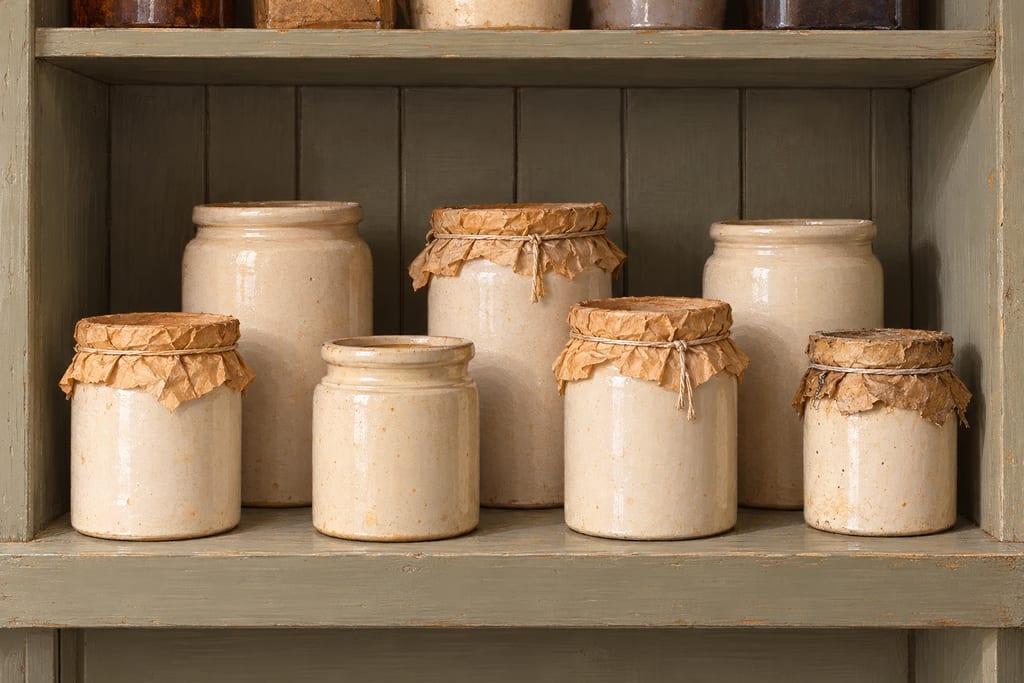
Three dated jam labels at Glasgow’s Tenement House record household preserves: Victoria plum (1947), strawberry (1961), and rhubarb and ginger (1963). They document storage and domestic history, not a recoverable recipe.
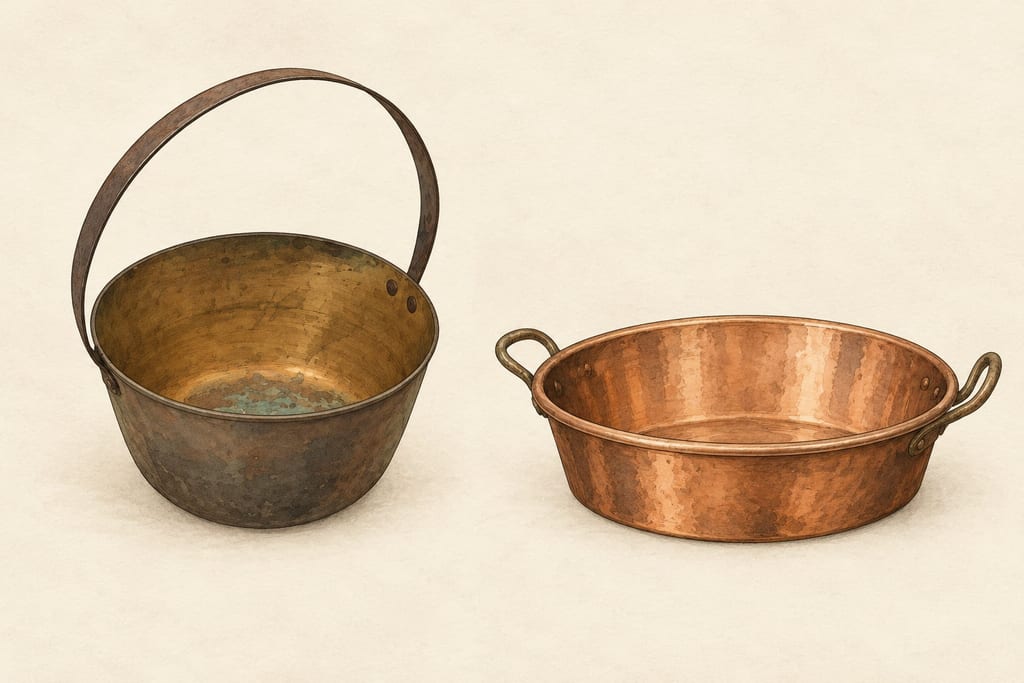
Open, heated pans cooked fruit into preserves before transfer to jars. Historical records document copper and enamelled cast-iron forms, while museum objects show variation in material and shape.
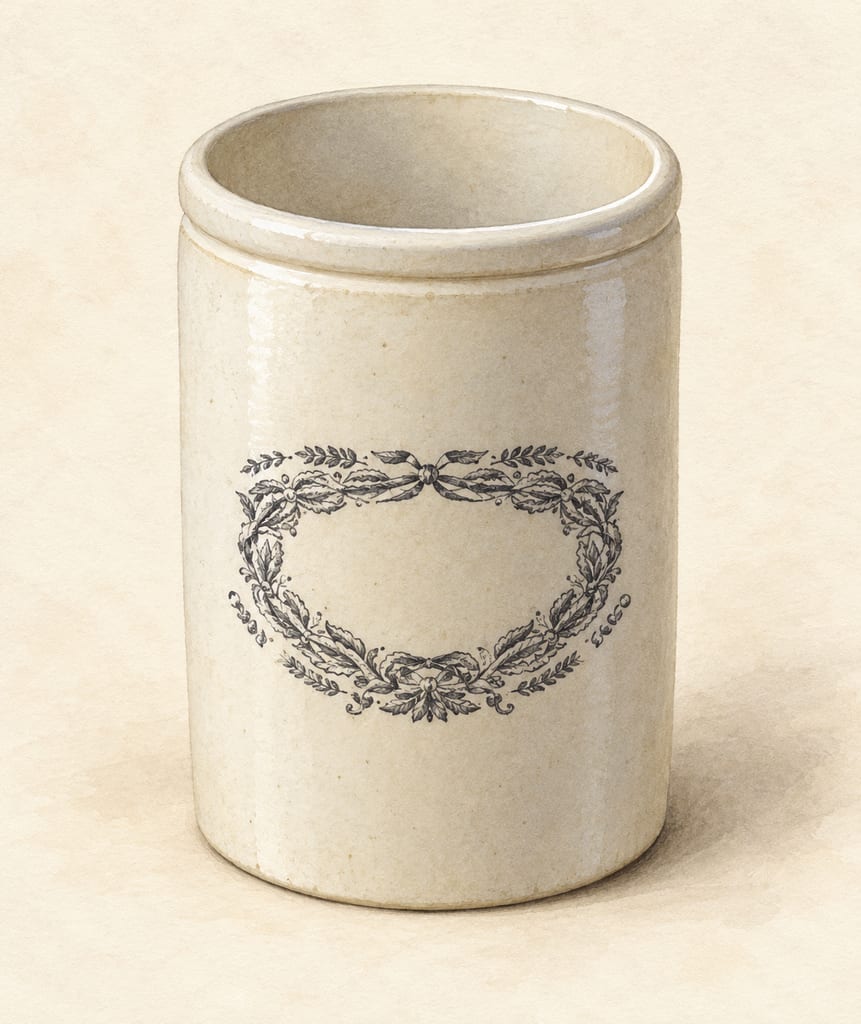
Keiller-branded stoneware jars were commercial packages for Dundee marmalade. Collections show cylindrical forms with printed marks; sources distinguish the Dundee brand from documented Maling manufacture in Newcastle.
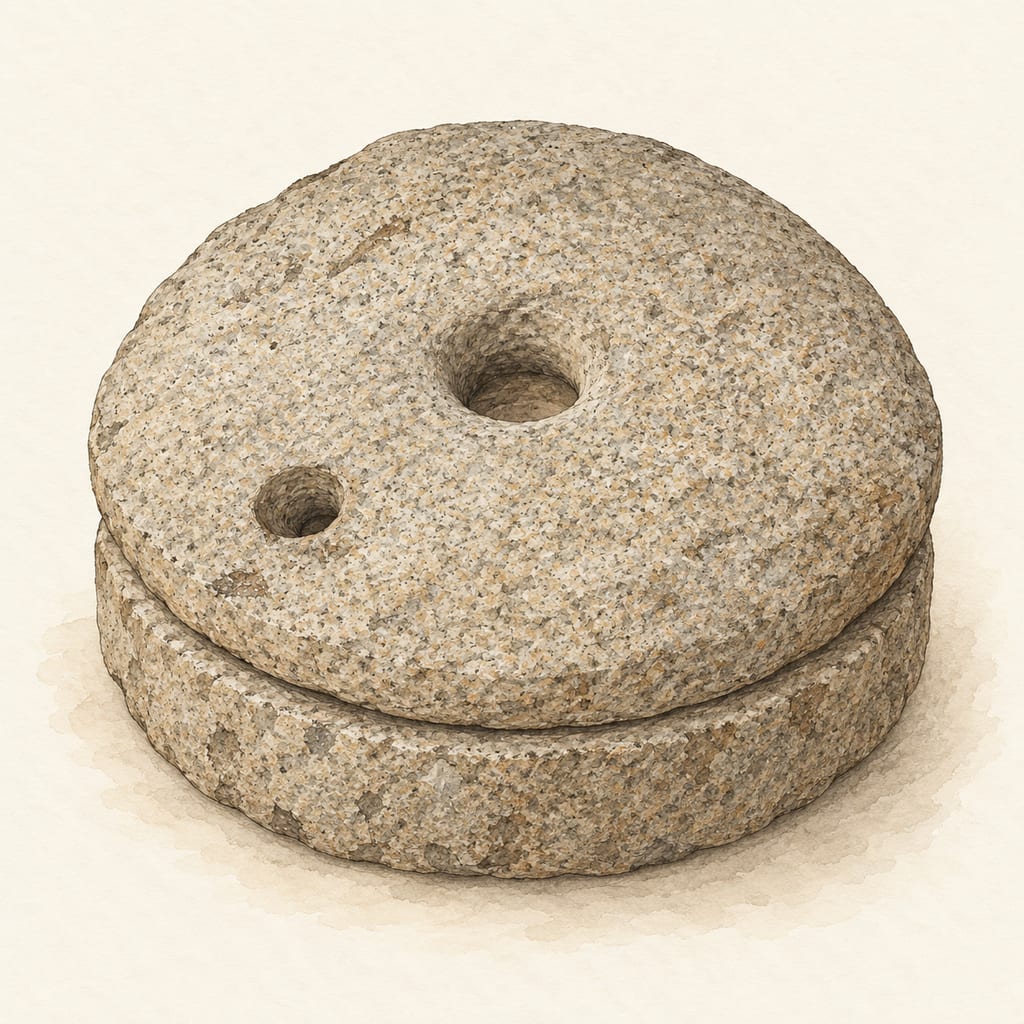
A rotary quern is a hand-operated mill with a runner turning over a fixed bedstone to grind grain. Scandinavian household use of rotary querns increased around the beginning of the Viking Age.
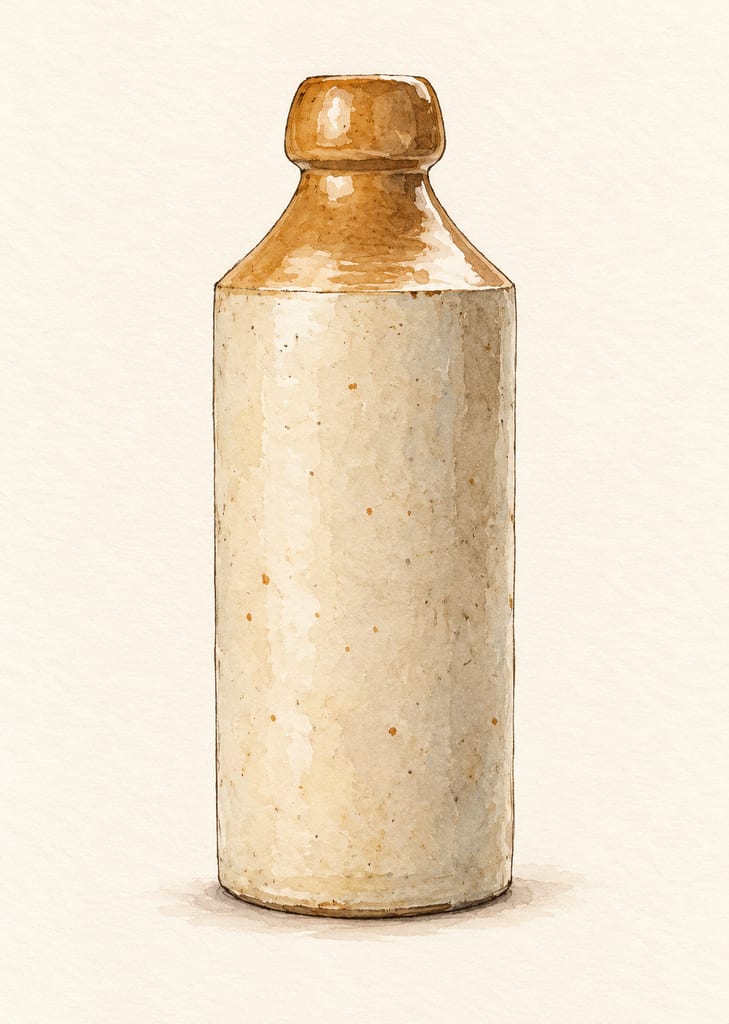
A late nineteenth-century stoneware bottle for ginger beer, represented by an Aberdeen museum object dated 1850–1899. It documents beverage packaging, not a fermentation vessel or a universal bottle design.

A Cap-Pelé boucanière is an Acadian herring-smoking building. The documented Willie Niles example is a one-storey wood-frame structure with a ridge smoke vent and interior bays for hanging fish-bearing cannes.

Achcharu is a family of Sri Lankan vinegar pickles made with mixed vegetables or seasonal fruit and a piquant spice dressing. This version is a quick, refrigerated, non-fermented mixed-vegetable pickle.

The acocote is a long, hollowed and dried gourd used to draw aguamiel from a mature maguey. It is a harvesting tool: the sap is transferred to a separate vessel before it ferments into pulque.

Adrak murabba preserves young ginger in sugar syrup, a sweet South Asian preparation recorded in Indian cookery and food-processing sources.

Parkia biglobosa seeds are fermented into regional West African seasonings, including nététou, iru, dawadawa and soumbala. The yellow fruit pulp is a separate food, and names and methods vary by place.

Japanese reddish-brown vinegar from sake lees matured about three years, turned to vinegar by acetic bacteria; the vinegar of Handa and Edomae sushi rice.

A refined common-wheat flour blended for a broad range of baking; its protein and behavior vary with wheat, milling and market.

The almond mushroom, Agaricus subrufescens, was cultivated in eastern North America in the 1800s, lost its market, and returned as a cultivated mushroom from Brazil, where it is grown under several names.
No community contributions have been published for this entry yet.
Sign in to contribute. Published comments and photos are free to read.
An Iodhlann, Tiree's Historical CentreEquipment · Form · Dimensions · Historical attestation
Cheese press or fiodhan (object 1997.202.1)The wooden fiodhan is probably late nineteenth-century work by Donald MacLean of Whitehouse, Cornaigbeg, and was used until the 1950s.
It is 165 mm high and 250 mm across, with two iron hoops and drilled holes in sides and base.
Muslin-wrapped curds were placed inside beneath a lid weighted with stones or screwed down in a press.
Cited in: The Tiree fiodhan: vat and press are not always one object; Dimensions, materials and limits
An Iodhlann, Tiree's Historical CentreHistorical context · Method
The History of Tiree in 100 Objects — no. 37: Fiodhan or Cheese PressTiree curds in a muslin bag were progressively squeezed under heavier stones; screw-operated presses became popular during the nineteenth century.
The account describes Tiree dairy work, not a single universal design.
Cited in: A tool for controlled drainage; The Tiree fiodhan: vat and press are not always one object
An Iodhlann, Tiree's Historical CentreEquipment · Method · Historical attestation · Image
Cheese press in use (object 1997.179.10; photograph X34)A 1940s photo shows a local-smithy press whose iron screw passes through a hoop in a large stone and tightens on a wooden vat.
The record says the screw was tightened again after two to three days.
Cited in: A local screw press and other weighted forms
Science Museum Group CollectionEquipment · Form · Materials · Dimensions · Image
Old wooden cheese press, 1927-986The hand press has four large stone weights; listed materials are wood, stone, ferrous metal and leather.
Its measurements are 1930 × 700 × 1000 mm and refer to this specimen only.
Collection text is CC BY 4.0; its photo is separately offered for licensing.
Cited in: A local screw press and other weighted forms; Dimensions, materials and limits
New England Cheesemaking Supply Company; Tony HamblynEquipment · Documented use · Modern adaptation · Image
Tony Hamblyn in New Zealand UpdateThe 2020 update shows Hamblyn's homemade lever press in a working cheesemaking room; two pin settings multiply load by nine or five.
This is an individual setup, with no universal dimensions, load or pressing schedule stated.
Cited in: A contemporary lever example; Dimensions, materials and limits
Penn State Extension; Food Safety CTS, LLCFunction · Process
Introduction to Making CheeseCheddar curds are salted, put in cheese hoops and pressed.
Cheddaring is the earlier stage of stacking and turning curd mats, separate from pressing.
Cited in: A tool for controlled drainage; A contemporary lever example; Dimensions, materials and limits