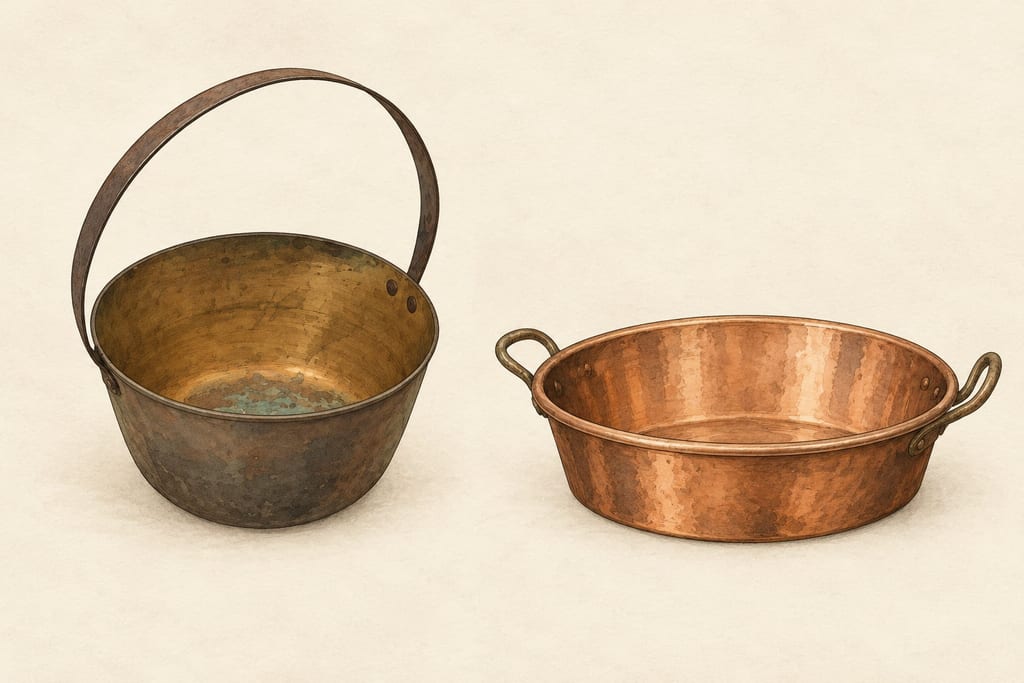
Household preserving pans
Open, heated pans cooked fruit into preserves before transfer to jars. Historical records document copper and enamelled cast-iron forms, while museum objects show variation in material and shape.
 FermenteaWhere food goes to change
Equipment · stovetop-cookware
A contemporary, wide-mouthed stainless-steel pan for heating fruit mixtures into jams, marmalades, chutneys and other preserves. Its open surface supports evaporation, while base thickness, capacity and handles vary by model.
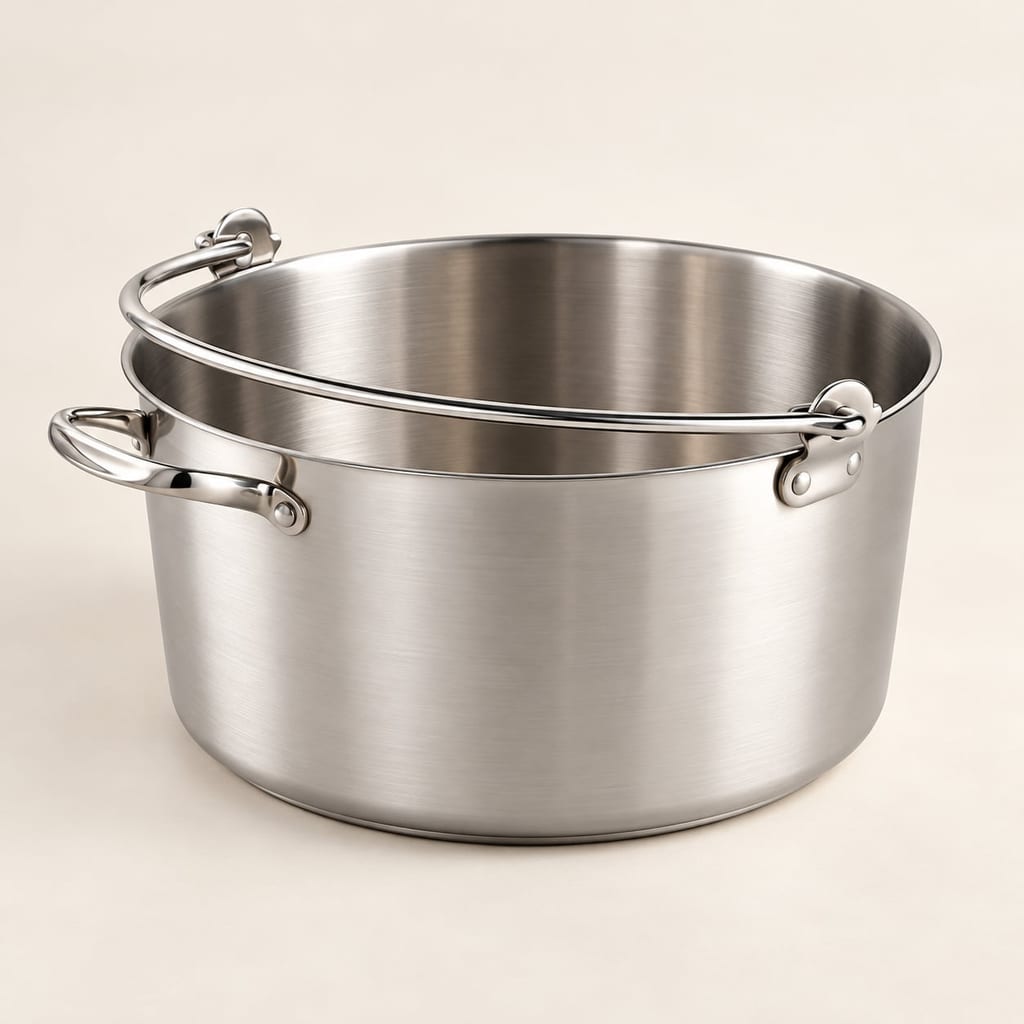
This entry covers a contemporary stainless-steel preserving pan: a broad-mouthed, open cooking vessel used to heat fruit mixtures for jams, marmalades, chutneys and similar preserves. Its wide opening exposes a larger surface of liquid than a deep, narrow pot of comparable batch volume, so water can evaporate at a different rate. ProCook makes the same design claim for one current model, describing its wide neck as increasing the exposed area and evaporation. The claim concerns that product's intended use; it is not a guaranteed setting time.
The supplied global preserves atlas lists a wide, heavy stainless pan among the core equipment for small trials, alongside scales, a heatproof spatula, thermometer and clean jars. It gives no universal diameter, weight or gauge. The pan is one part of a recorded trial: fruit variety and prepared mass, added sugar and liquid, pan size, start and finish weights, time, endpoint, cooled texture and storage route all affect what the cook observes.
A wide stainless preserving pan is a modern, manufactured variation within the broader family of preserving pans. The separate household-preserving-pans record covers historical forms documented in copper and enamelled cast iron, including British and Scottish household evidence. This entry focuses on contemporary stainless cookware and its open, wide-rimmed form; it does not imply that one material replaced another everywhere or that the modern product has an unbroken local tradition.
It is also distinct from the deeper saucepan. A saucepan commonly has one long handle and sides proportioned to hold liquids for simmering and stirring. The preserving-pan examples here have a broad mouth and paired handling features, and are marketed for preserves. These are useful tendencies rather than universal shapes: manufacturers vary their handles, wall depth, base and capacity.
Current product specifications show why “heavy stainless” should not be treated as one technical standard. ProCook lists one 30 cm, 9 L model with an 18/10 stainless body, a 0.8 mm wall, a 7 mm impact-bonded base and a stated weight of 1,745 g. Dexam's 30 cm, 9 L Supreme example has volume markings, a bucket-style carry handle and helper handle; Borough Kitchen describes its thermal-encapsulated base as 7 mm thick. Kilner Australia's listing documents another stainless design at 8 L with an encapsulated base, carry handle and pouring spout.
These figures belong to named retail models, not every pan in this category. The supplied atlas does not prescribe a 30 cm diameter or a 9 L capacity for small trials. Choose capacity with headspace for stirring and bubbling in mind, and check the actual maker's base, handles and compatible heat source rather than inferring them from the words “stainless steel.”
The broad surface can make a pan useful when a preserve is reduced, but pan geometry does not preserve a fixed cook time when a batch is scaled. A small trial in a shallow pan and a larger batch in a deep kettle lose water at different rates. Record pan dimensions and batch weights, and compare cooled results rather than borrowing timing from a different vessel. A published orange marmalade recipe is linked as a concrete preserve example; its tested ingredients and processing instructions remain the authority for that preparation.
The research atlas treats its small-trial formulations as refrigerated or frozen products, not validated room-temperature canning instructions. A pan cannot validate a recipe, establish a safe storage life or replace the tested processing method. Follow the care and heat-source guidance for the actual model: ProCook, for example, lists its cited model as dishwasher-safe and oven-safe to 260°C, but those ratings do not transfer to the Dexam or Kilner examples.
The supplied research atlas recommends a wide heavy stainless pan as small-trial equipment. Current UK and Australian product listings document related stainless-steel preserving pans, but the sources do not date the first appearance of this form or establish a place of origin.
A pan's material, size and evaporation rate do not validate a preserve for room-temperature storage; follow the tested recipe and its processing directions.
Use the pan only on a heat source listed as compatible by its maker, and handle it according to the maker's guidance when full and hot.
Current UK-market listings document contemporary products. They do not establish where this pan form originated or where every model is made.
This current retailer listing documents a marketed stainless jam pan; it does not establish a local tradition, origin or exclusive use.
Open, heated pans cooked fruit into preserves before transfer to jars. Historical records document copper and enamelled cast-iron forms, while museum objects show variation in material and shape.
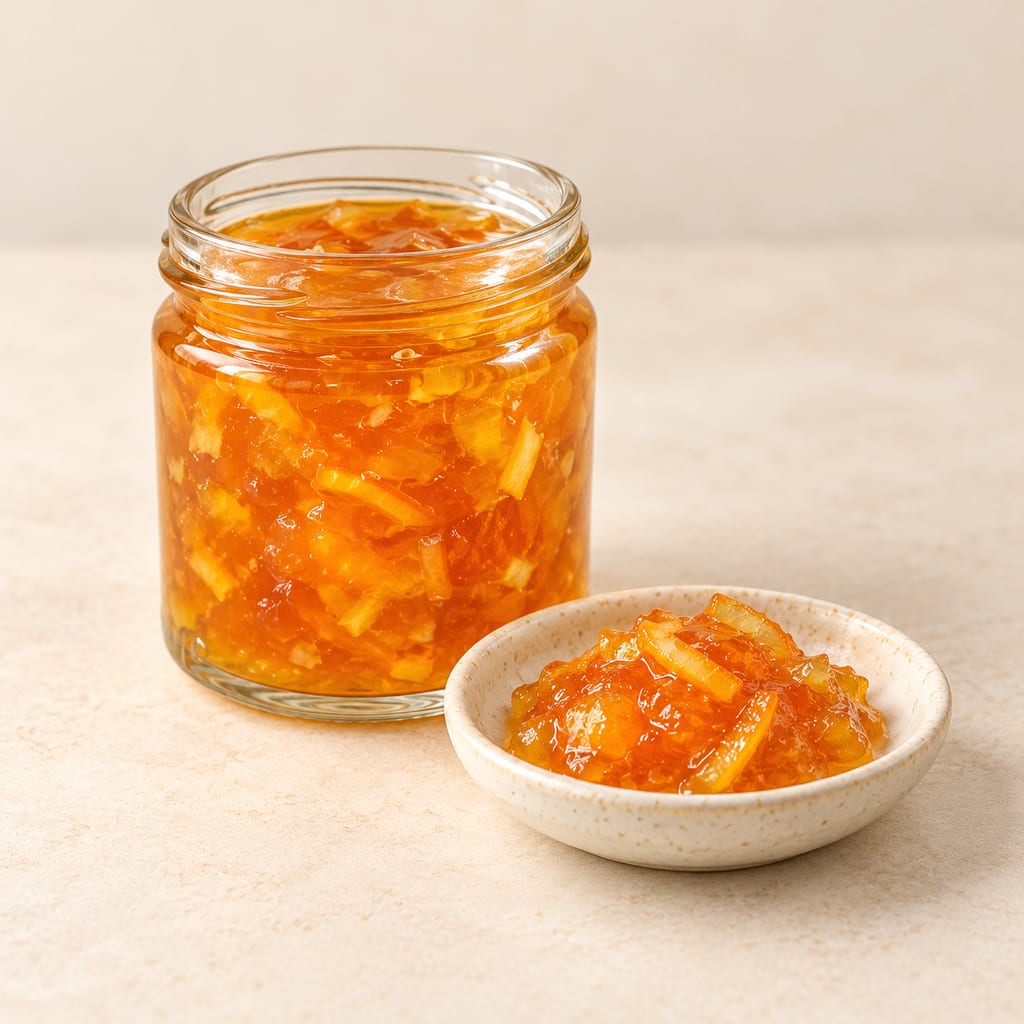
Orange marmalade suspends thin strips of citrus peel in a sweet gel. This navel-orange batch includes pulp and lemon and is preserved in a boiling-water canner.
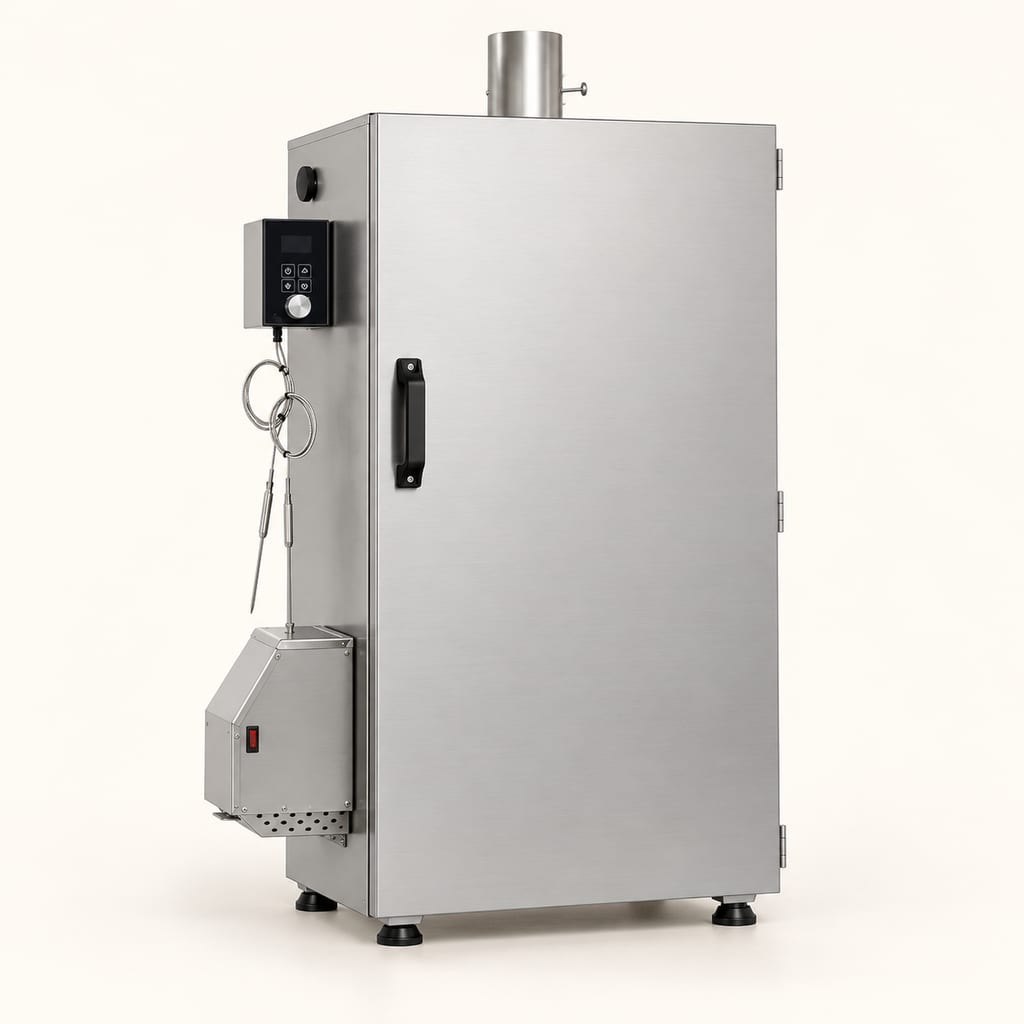
A 150-litre Wi-Fi electric smoking cabinet with a brushed stainless-steel exterior, automatic wood-chip smoke generator and 150°C maximum. Exact model BS150IWUK.
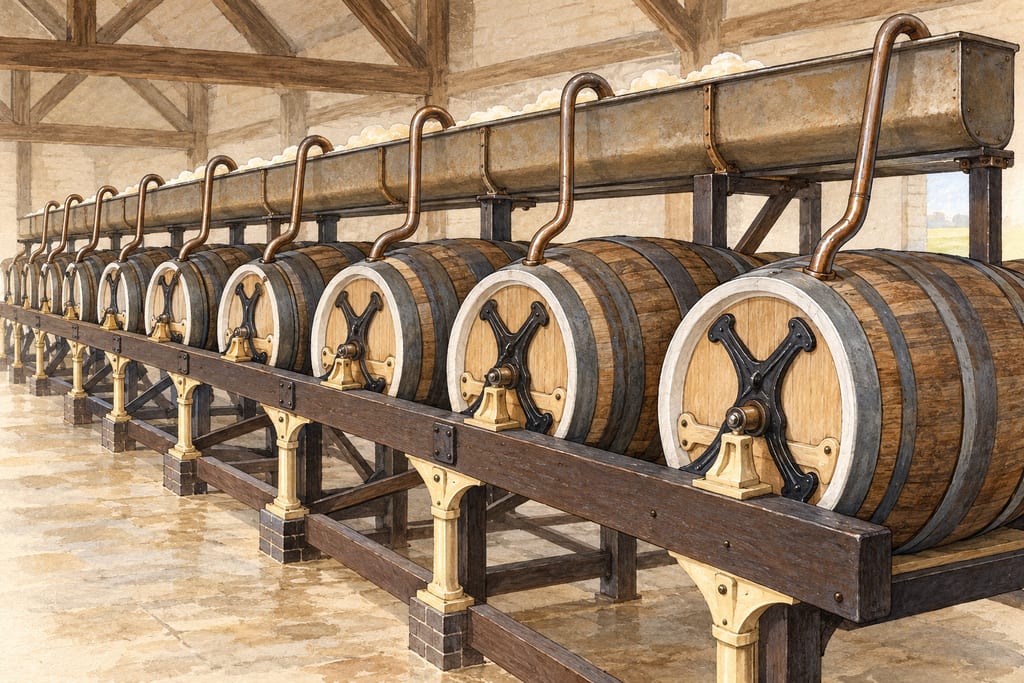
A Burton Union is a connected set of horizontal wooden beer casks, swan-neck pipes and shared troughs. Fermentation lifts yeast-rich foam into the trough; beer drains back to the casks, leaving yeast behind.
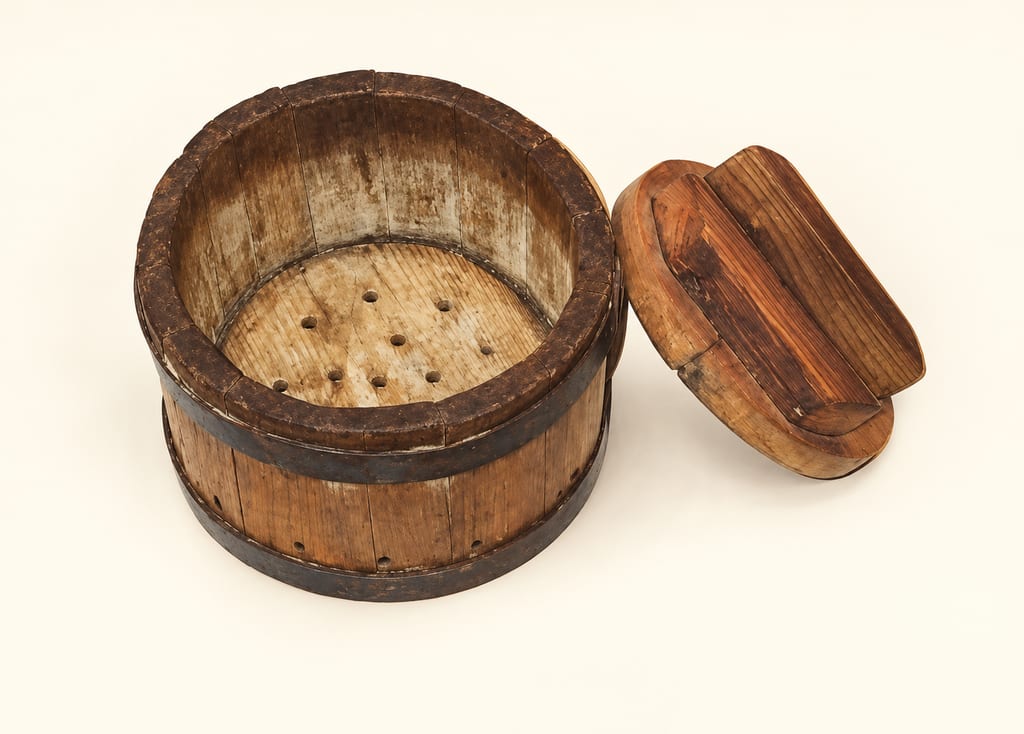
A cheese press applies weight or mechanical force to curds in a draining vat or mould. Tiree’s wooden fiodhan, stone weights, screw presses and a documented New Zealand lever press show distinct forms, not one standard design.
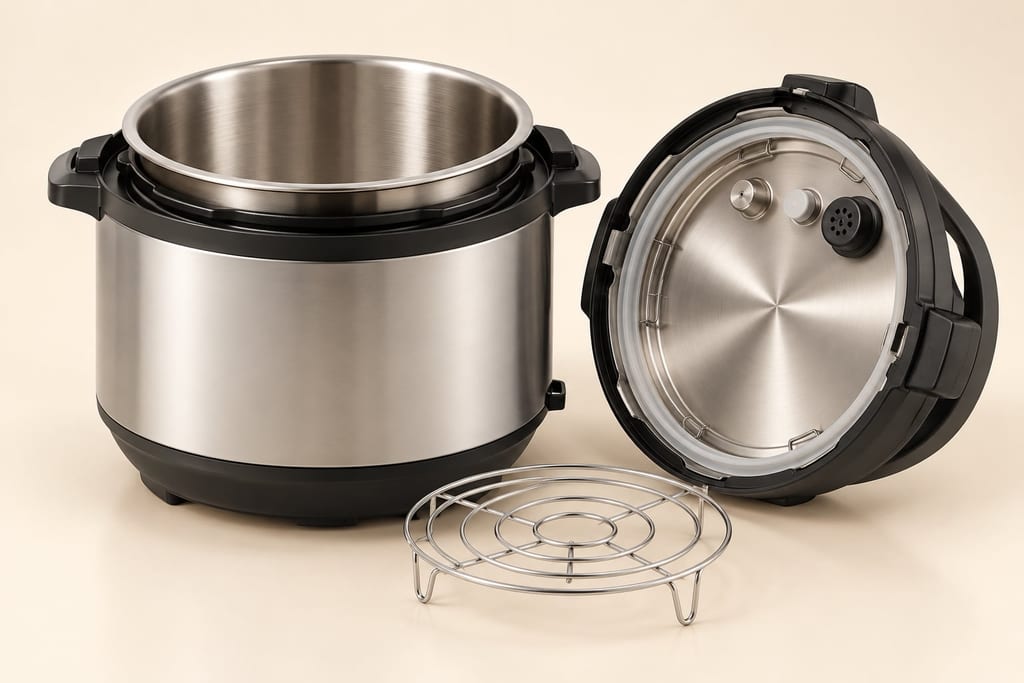
A countertop electric cooker combines pressure cooking with model-specific functions such as sautéing, slow cooking, rice cooking and low-temperature programs. Settings do not transfer to pressure canning.
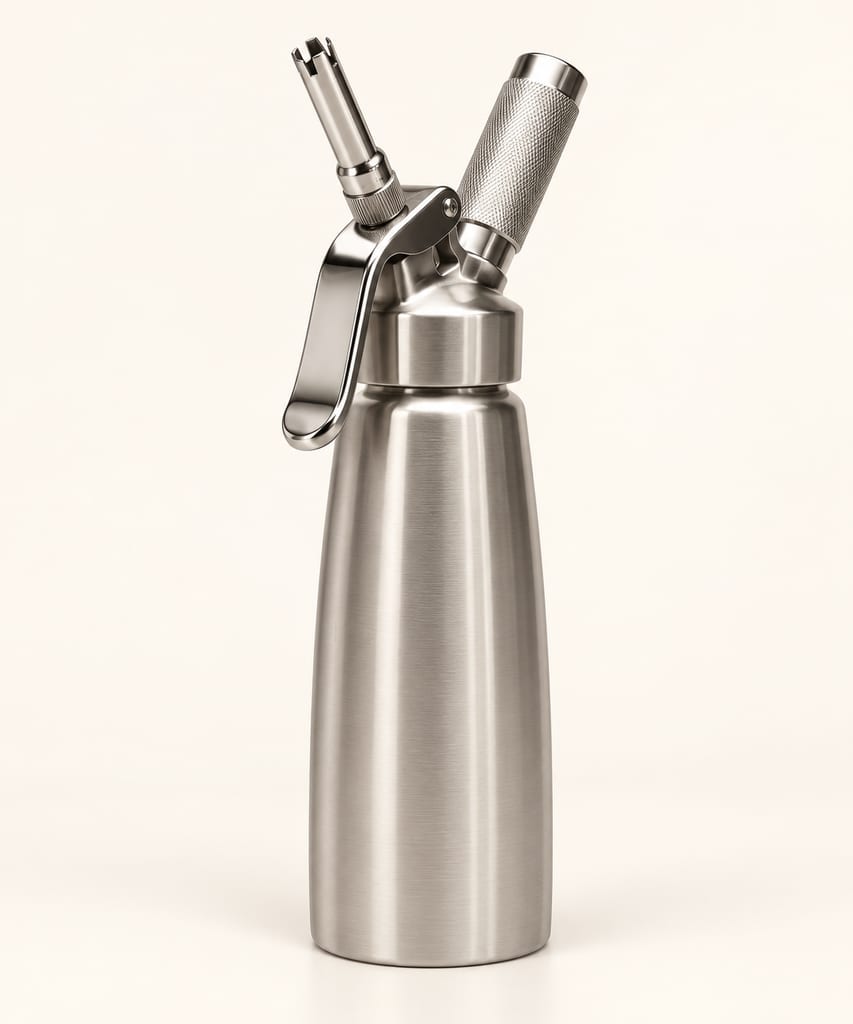
A food-rated pressure canister with a dispensing head and gas-cartridge holder. Cream whippers aerate or dispense foods and, with a compatible rapid-infusion attachment, can speed botanical flavour extraction into liquid.
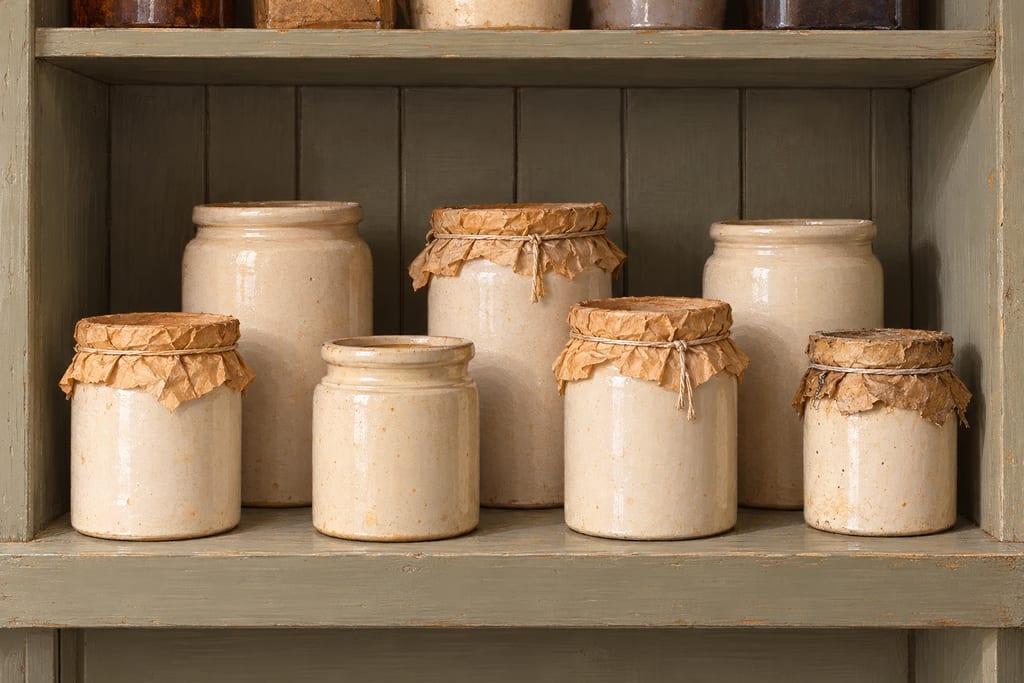
Three dated jam labels at Glasgow’s Tenement House record household preserves: Victoria plum (1947), strawberry (1961), and rhubarb and ginger (1963). They document storage and domestic history, not a recoverable recipe.
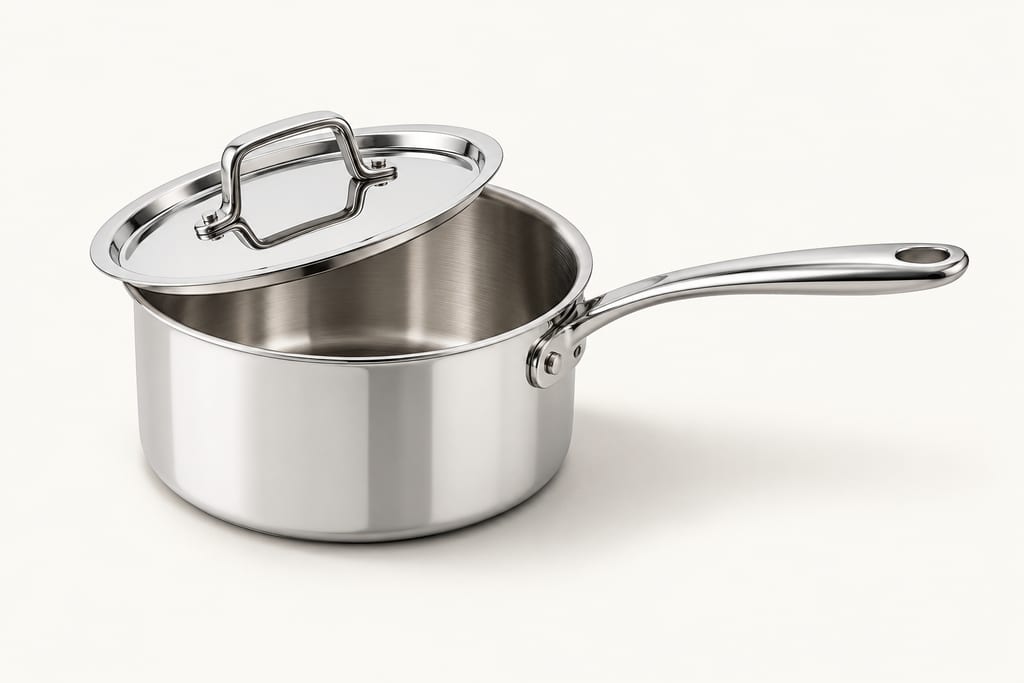
A modern, portable stovetop pan with a stainless-steel cooking surface for sauces and other small simmering jobs. Size, cladding, lid, compatibility and care vary by model.
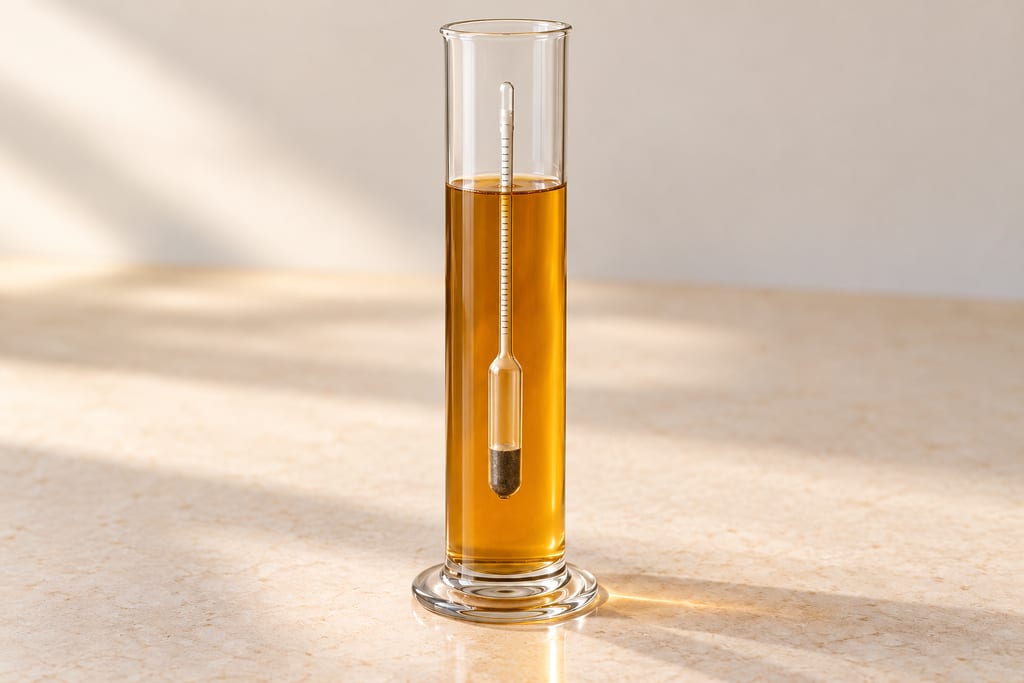
A hydrometer floats in liquid and uses its weighted body's depth to indicate density. In brewing, readings track changing gravity, not every dissolved substance or kombucha alcohol.

Soft, spreadable Calabrian pork sausage made with a great deal of red chilli and fatty pork, stuffed into natural casings, sometimes smoked and matured while staying soft.

A way to add independent temperature logging to an existing food dehydrator without changing its built-in controls or protections. It is a monitoring method, not a rewiring plan.

Pleurotus cystidiosus is the abalone mushroom, a cultivated oyster-type fungus with dark brown caps that grows more slowly and is more demanding than other Pleurotus species.

A dark, balanced vinegar from Emilia-Romagna made by combining cooked or concentrated grape must with wine vinegar, then acetifying and refining it in wood under a protected specification.

A living dairy inoculum that starts controlled cream fermentation, developing acidity and aroma before sour cream or cultured butter is finished.

A small electric incubator holds jars at a selected temperature for yogurt and other documented warm food preparations. Controls, capacity and vessel arrangement vary by model.

Adygean salt is a seasoned table salt associated with Adygea and the wider North Caucasian culinary tradition. Salt is blended with garlic and a variable selection of herbs and spices; the exact mix depends on the named style and maker.

The African Caesar-group mushroom, Amanita masasiensis, is a wild ectomycorrhizal species of central and southern African woodlands, eaten locally. The genus contains deadly poisonous species, so identification needs care.
No community contributions have been published for this entry yet.
Sign in to contribute. Published comments and photos are free to read.
ProCookContemporary product example · Construction · Dimensions · Capacity · Evaporation · Care
Professional Stainless Steel Preserving Pan 30cm / 9LThe maker lists a 30 cm, 9 L stainless preserving pan with 0.8 mm body, 7 mm impact-bonded base, internal measurements and carry/support handles.
The maker says the broad opening increases exposed surface area and evaporation; this is a product-specific description, not a universal timing promise.
This particular listing gives a 1,745 g weight, lists induction/electric/gas/solid/ceramic hob suitability, dishwasher safety and oven use to 260°C.
Cited in: A wide open pan for preserve trials; A modern stainless variation; Construction varies by product; Use, measurement and storage limits
Borough KitchenContemporary product example · Visual reference · Construction
Dexam Supreme Jam/Preserving Pan / 30cmThe retailer describes a Dexam 30 cm, 9 L stainless pan with a 7 mm thermal-encapsulated base, interior volume markings, a bucket-style carry handle and a helper handle.
This specific pan is shown empty in the linked product photograph; the listing does not grant a separate image-reuse licence.
Cited in: A modern stainless variation; Construction varies by product
Kilner AustraliaInternational product example · Capacity · Construction
Original Stainless Steel Jam Pan, 8 Litre / 30 x 16 x 34cmThe Australian retail listing describes a current stainless-steel pan with 8 L capacity, internal markings, a carry handle and pouring spout, and an encapsulated base; it does not establish a local historical tradition.
Cited in: Construction varies by product; Use, measurement and storage limits
National Trust for ScotlandHistorical comparison
Jam, jelly or preservesThe Trust describes historic household jam pans and stoneware jars in Scottish kitchens; the separate equipment record details the copper and enamelled-cast-iron historical examples.
Cited in: A modern stainless variation
National Center for Home Food Preservation, University of GeorgiaPreserve preparation · Tested process context
Orange MarmaladeThis published marmalade preparation provides a relevant preserve example; its tested recipe and processing steps, rather than cookware choice, govern safe preservation.
Cited in: Use, measurement and storage limits
ExploratoriumPan geometry · Evaporation
Science of Cooking: Ask the Inquisitive Cooks!A wide, shallow pan provides more exposed surface for a reduction than a deeper vessel; the source does not prescribe a preserving-pan model or fixed cooking time.
Cited in: A wide open pan for preserve trials