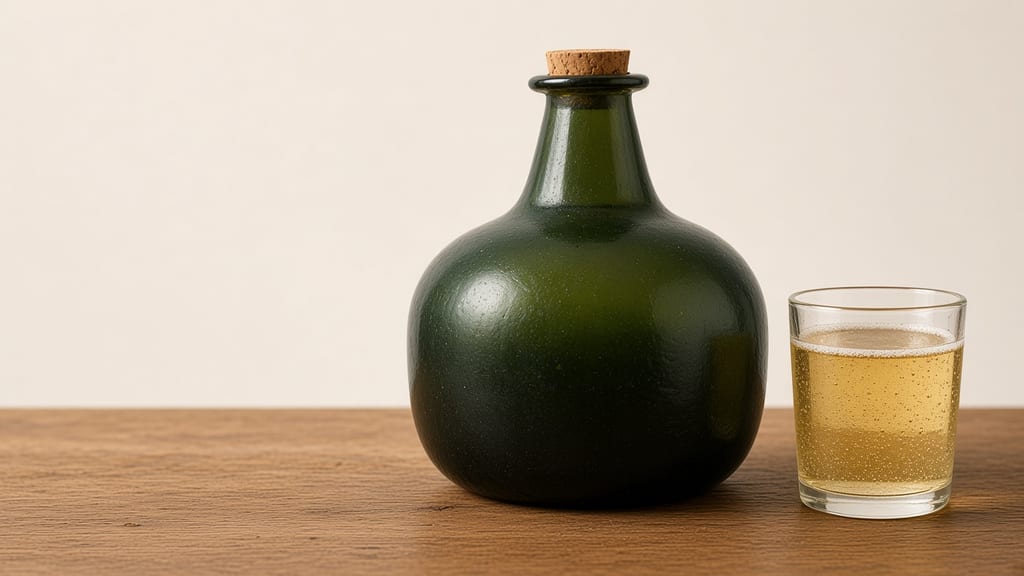
Seventeenth-century English bottled cider
A lightly sparkling cider bottled before it had finished fermenting, as Sir Paul Neile described it in 1664, with a measured modern method for safe bottle conditioning.
 FermenteaWhere food goes to change
Equipment · Instruments
A hydrometer floats in liquid and uses its weighted body's depth to indicate density. In brewing, readings track changing gravity, not every dissolved substance or kombucha alcohol.
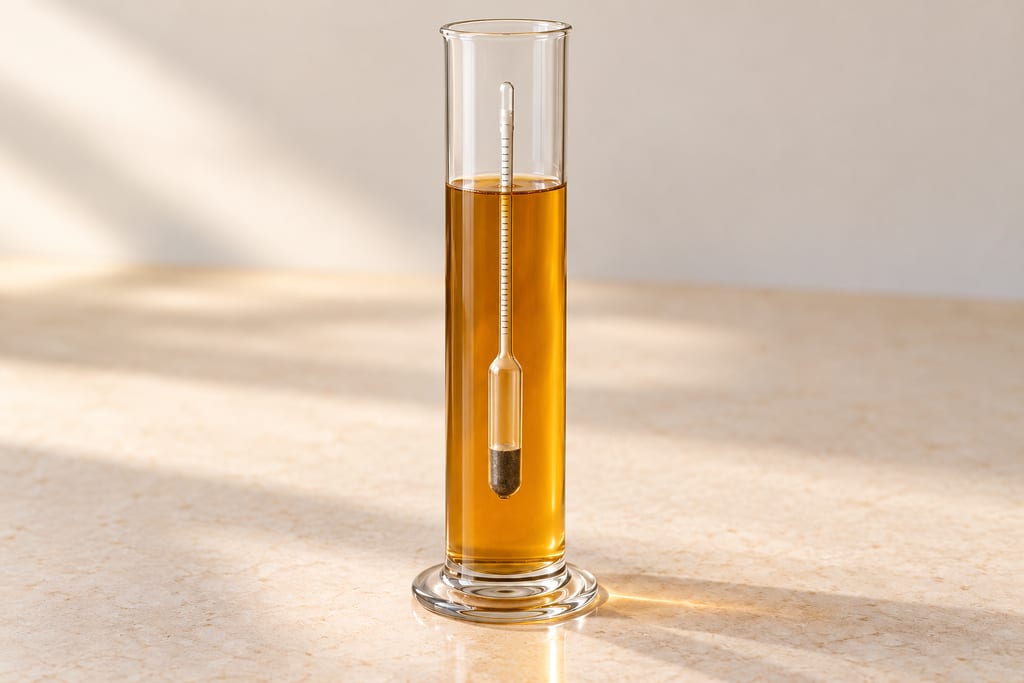
A hydrometer is an unpowered instrument that indicates a liquid's density by floating in it. In a common brewing form, a slender graduated stem rises from a sealed bulb weighted at its lower end. The weight makes the instrument stand upright. In denser liquid it floats higher; in less-dense liquid it sinks farther, because the amount of liquid displaced must balance the instrument's weight. The point where the liquid surface meets the stem is read on its scale.
The familiar glass stem is only one branch of a long instrument history. Contemporary guidance also describes plastic bodies, and museums preserve forms with differently shaped floats, stems, weights and attached pans. A hydrometer is therefore best understood by its measuring principle, not by one universal shape or material.
A hydrometer's stem may be marked in density, specific gravity or another scale calibrated for a particular liquid and purpose. Specific gravity compares the sample's density with water at stated reference temperatures; other scales translate density into conventions used for solutions such as sugar, salt or alcohol. The scale is not a label for the substance in the sample. A sugar-scale reading, for example, is meaningful only within the assumptions and calibration of that scale.
NIST's calibration work shows why temperature and instrument calibration belong in the result. Calibration is performed at marked points in liquids of known density, and the report accounts for corrections including surface tension. For repeatable work, check the instrument's printed reference temperature, use a compatible scale and follow the relevant method rather than treating decimal marks as self-explanatory.
Brewers use density readings to compare a batch at different stages. In a sugar-rich wort, an initial reading and later readings can show density changing as fermentation proceeds. That trend is useful when the same instrument, scale and sampling approach are used consistently. It is still a measurement of the sampled liquid's bulk density, not a direct count of sugar molecules, yeast activity or alcohol.
Sampling conditions matter. Temperature changes density; bubbles clinging to the float can alter its apparent position; a hydrometer that touches the side of a jar is not freely floating. Brannan's instructions call for a suitable clean jar, a settled reading and an appropriate temperature correction. For a transparent sample, the manufacturer's reading convention should be followed consistently. Record the instrument scale and the sample conditions alongside any trend.
Kombucha changes in several ways at once: sugars are consumed, ethanol and organic acids are produced, microbial biomass and cellulose form, and water can evaporate. A density change cannot by itself separate these contributions. A raw hydrometer reading can be kept as a process observation for a fixed recipe and method, but it does not establish a dependable low-level alcohol percentage.
For kombucha alcohol analysis, the U.S. Alcohol and Tobacco Tax and Trade Bureau describes distillation followed by specific-gravity measurement with a densitometer among its laboratory methods. The separation step matters: measuring density after distillation is a different analytical procedure from floating a homebrew hydrometer in untreated kombucha. A hydrometer does not validate a process, certify a beverage's alcohol level or establish safety.
Museo Galileo identifies the oldest description of a hydrometer in a letter of about 400 CE from Synesios of Cyrene to his teacher Hypatia. It also notes that older accounts attributed invention to Archimedes or Hypatia, but those attributions are not established by that earliest description. The instrument's forms multiplied as measurement entered new trades and laboratory work.
A Sikes hydrometer made by Robert Brettell Bate in London is recorded by the NIST Digital Archives as an instrument for measuring liquor proof and supporting UK excise in the nineteenth century. The Smithsonian records a different example: a silver instrument James Adams made for New York distillers in 1851, with its own scale and temperature correction. These records show particular instruments in particular places, not a single origin for the whole class.
Hydrometers require care because a glass stem is easily damaged and residue can interfere with a reading. Brannan recommends cleaning the instrument and jar, drying with a lint-free cloth, holding the stem above the scale, and shielding the instrument from impact. Its guidance is specific to its products; the instructions supplied with a different model take precedence. Keep the instrument's calibration temperature and scale legible, and replace a damaged unit rather than relying on an uncertain reading.
Museo Galileo identifies the oldest description as a letter of about 400 CE from Synesios of Cyrene to Hypatia. Earlier attributions to Archimedes or Hypatia are reported as former attributions, not established invention. Later sources document distinct instruments in London and New York.
A hydrometer responds to the combined density of the sample. Its reading alone does not identify which dissolved materials produced that density or directly give their concentration unless the scale and liquid are appropriate.
Source →Untreated kombucha gravity readings are not a validated stand-alone measurement of low alcohol content. TTB describes a distillation-specific-gravity method that separates the alcohol before density is measured with a densitometer.
Source →Temperature and surface tension affect readings; calibration and the instrument's specified reference temperature matter.
Source →The NIST digital archive records a particular Sikes hydrometer made by Robert Brettell Bate of London; this is one documented example, not a class origin.
The Smithsonian records James Adams making a silver hydrometer for New York distillers in 1851; this does not establish a general origin.
A lightly sparkling cider bottled before it had finished fermenting, as Sir Paul Neile described it in 1664, with a measured modern method for safe bottle conditioning.
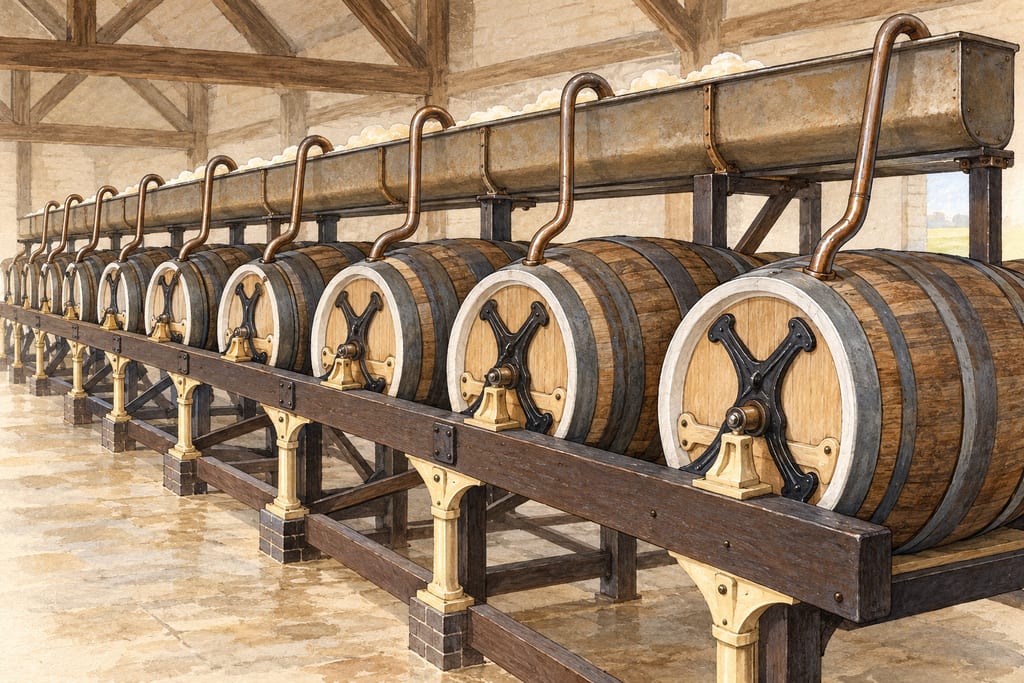
A Burton Union is a connected set of horizontal wooden beer casks, swan-neck pipes and shared troughs. Fermentation lifts yeast-rich foam into the trough; beer drains back to the casks, leaving yeast behind.
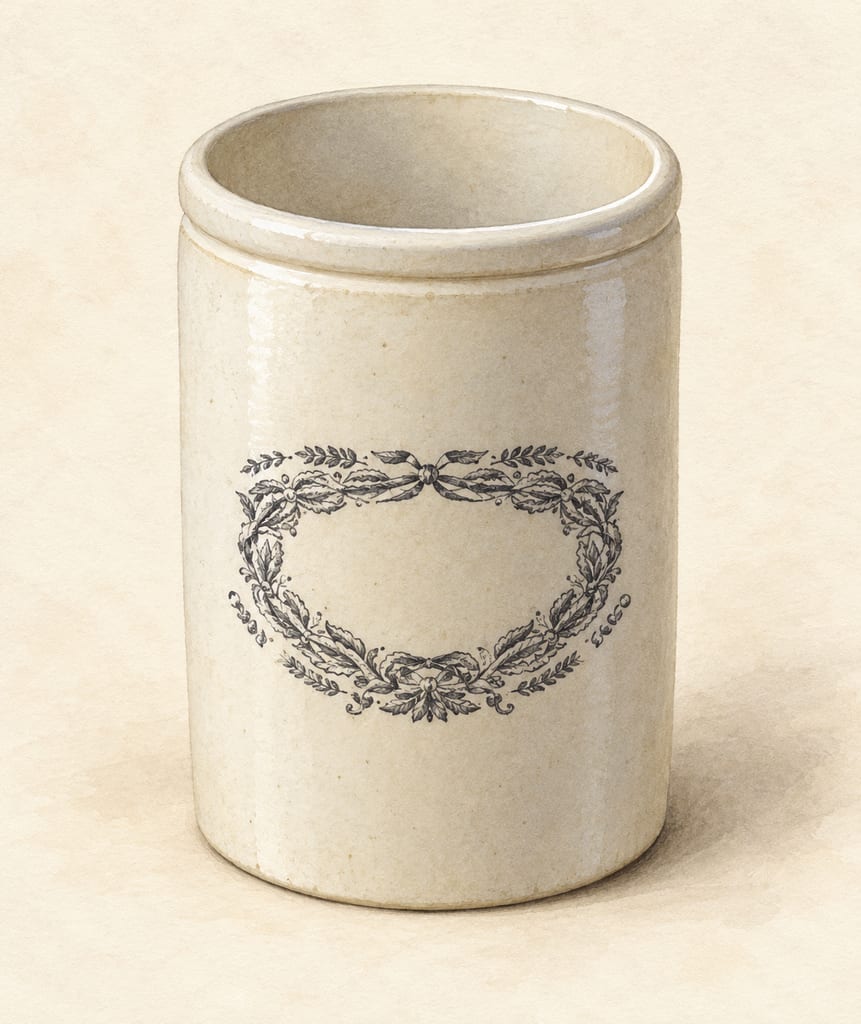
Keiller-branded stoneware jars were commercial packages for Dundee marmalade. Collections show cylindrical forms with printed marks; sources distinguish the Dundee brand from documented Maling manufacture in Newcastle.
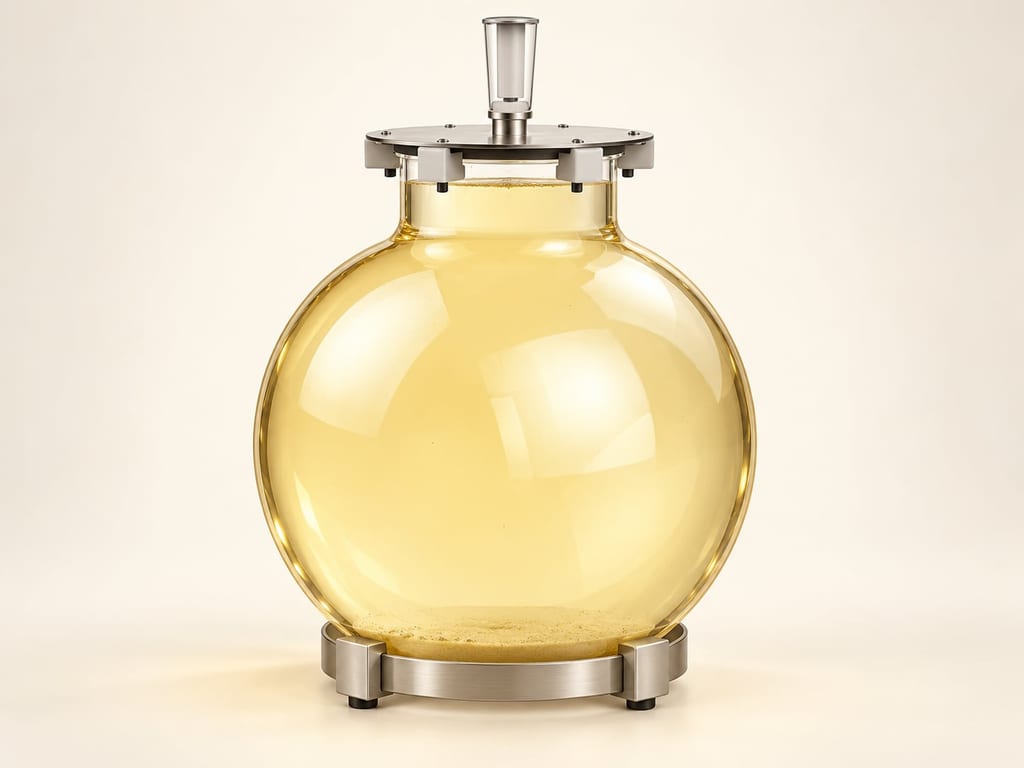
A large, transparent, spherical borosilicate-glass vat designed for modern wine fermentation and maturation. The 220-litre Wineglobe model has a wide neck, fitted lid and support; its use and fittings vary by model.
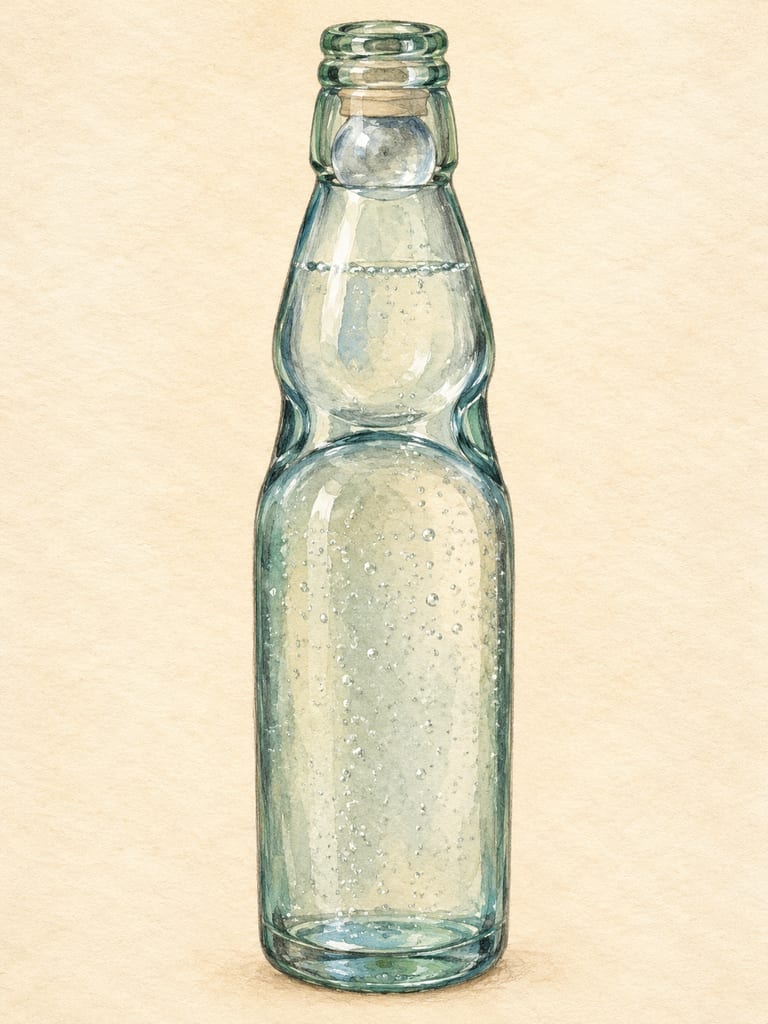
A marble-stoppered bottle is a glass carbonated-drink bottle sealed by a glass marble pressed against a rubber washer. Its Codd neck holds the marble at the mouth when sealed and gives it a side pinch after opening.
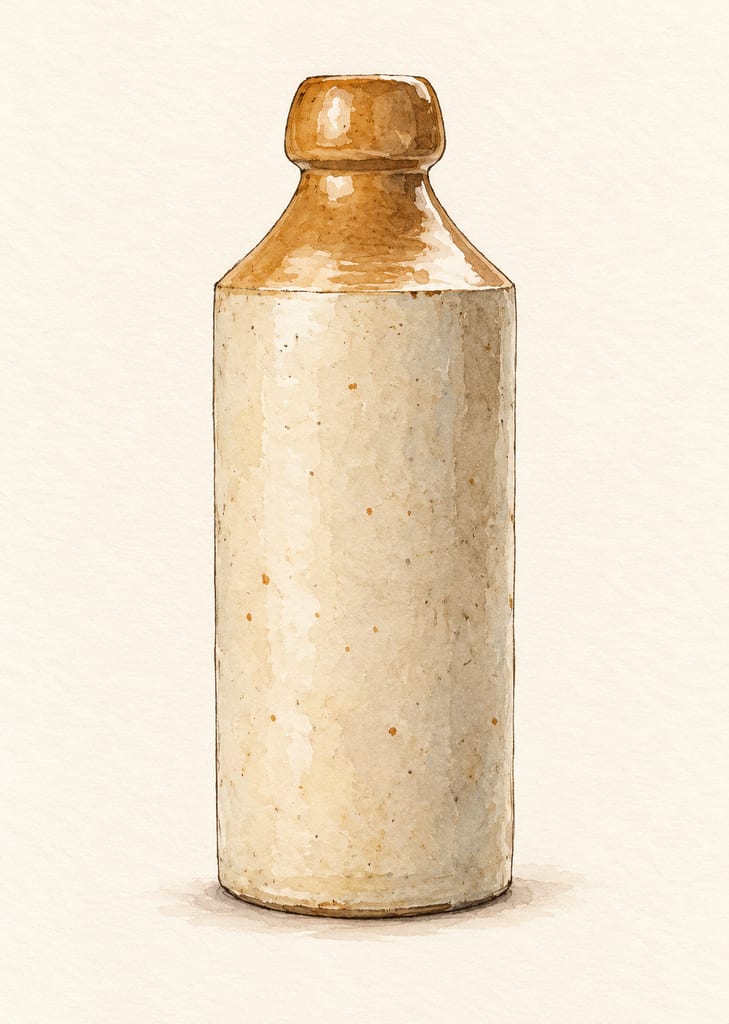
A late nineteenth-century stoneware bottle for ginger beer, represented by an Aberdeen museum object dated 1850–1899. It documents beverage packaging, not a fermentation vessel or a universal bottle design.
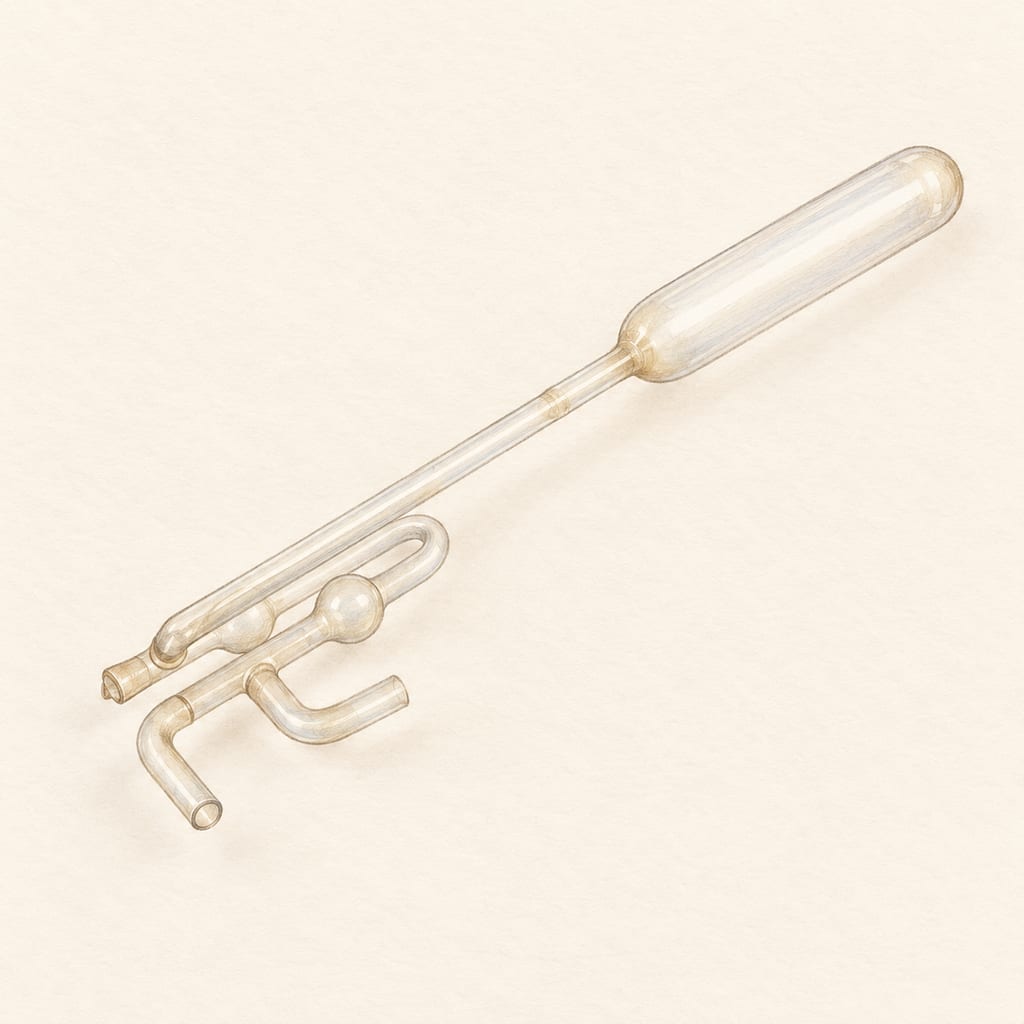
A thermostat senses temperature and regulates heating or cooling to a chosen condition. It may be built into an appliance or supplied as a separate controller; a sensor reading describes its measured point, not every part of a batch.

At North Abydos in Egypt, a fixed early Dynastic brewery comprised parallel semi-subterranean installations with rows of ceramic mash vats; excavation reports revise their number, scale and estimated batch capacity.

Ají amarillo is the orange-yellow Peruvian chilli cultivar group of Capsicum baccatum, used to colour and season huancaína sauce and ají de gallina. Published heat estimates do not establish one range for the named cultivar.

Toasted almonds are whole sweet almond kernels dry-roasted until golden to brown. Heat replaces their marzipan note with a roasted, nutty one; they thicken and flavour romesco.

Kodiak salmon, halibut and cod cut as seg'aq and hung on an initaq rack to become tamuuq, with kac'amaasaq and kupcuunaq named as different results.

Aniseed is the dried ripe fruit of Pimpinella anisum, an aromatic Apiaceae spice commonly called a seed. It adds a sweet, warm aroma to breads such as Moroccan krachel and South African mosbolletjies, and is distinct from star anise.

A fixed Late Chalcolithic installation in Areni-1 cave combined a shallow clay pressing basin with a large jar set into the cave floor and storage vessels nearby.

Ripe avocado flesh is the soft, buttery, fat-rich pulp of Persea americana, eaten raw. It is low in acid, so it is a fresh ingredient that needs care in chilled dishes.

A portable dome and pan used over a hearth, with embers on the lid and heat from below. Regional peka and saç forms share this principle while differing in materials, pan shape and how the food is cooked.
No community contributions have been published for this entry yet.
Sign in to contribute. Published comments and photos are free to read.
Museo Galileo — Institute and Museum of the History of ScienceForm · History · Variation
HydrometerDefines the float-and-scale principle and describes multiple historical forms.
Identifies a letter of about 400 CE from Synesios to Hypatia as the oldest description; notes earlier attributions to Archimedes or Hypatia as former attributions.
Documents later varieties and eighteenth- and nineteenth-century industrial models.
Cited in: A float, a scale and a liquid; A long record, without a single inventor
National Institute of Standards and Technology, U.S. Department of CommerceMeasurement principle · Calibration · Temperature · Limitations
NIST Calibration Services for Hydrometers (Special Publication 250-78r1)Describes density and specific-gravity hydrometer scales and NIST calibration against liquids of known density.
Explains calibration points and the effects of surface tension and temperature on readings.
Treats the instrument as a calibrated measure of liquid density, not a universal direct composition assay.
Cited in: The scale determines the question; Following fermentation; Why kombucha is a limit case
Alcohol and Tobacco Tax and Trade Bureau (TTB), U.S. Department of the TreasuryKombucha limit · Measurement
Testing Methods to Measure Kombucha Alcohol ContentTTB says its laboratory generally uses distillation followed by specific-gravity measurement with a densitometer for kombucha.
TTB accepts other scientifically valid methods when accurate, precise and specific to the intended purpose.
Cited in: Why kombucha is a limit case
BrannanForm · Use · Scale · Care · Handling
Hydrometers — user informationDescribes glass or plastic sealed floats, ballast, stem scales, buoyancy and task-specific scales.
Explains sample-jar use, free floating, bubbles, reading, temperature and scale selection.
Gives cleanliness, handling, storage and breakage guidance for its instruments.
Cited in: A float, a scale and a liquid; The scale determines the question; Following fermentation; Handling and storage
NIST Digital Archives, National Institute of Standards and TechnologyHistorical attestation · Form · Geography
Sikes HydrometerRecords an early nineteenth-century Sikes hydrometer made by Robert Brettell Bate in London.
Explains its use as a UK liquor-proof and excise instrument in the mid-nineteenth century and describes the float, stems, weights and glass sample vial.
States that NIST Digital Archives image use is unrestricted with attribution.
Cited in: A long record, without a single inventor
National Museum of American History, Smithsonian InstitutionHistorical attestation · Geography · Variation
Hydrometer (object NMAH_1184515)Records a silver hydrometer made by James Adams in 1851 in response to New York distillers' needs.
Describes its weighted flotation bulb, alcohol-proof scale and calibration temperature; this is a specific historical instrument, not a universal model.
Cited in: A long record, without a single inventor
Wikimedia CommonsImage reference
Hydrometer in action.jpgThe inspected photo shows a glass hydrometer floating in a homebrew beer sample during a specific-gravity check; the file is licensed CC BY 2.0.
Cited in: A float, a scale and a liquid