
Rice koji
Rice koji is steamed white rice through which koji mold has grown. It carries the enzymes that turn rice starch into sugar, and it is the starting point of sake, sweet miso, amazake and shio koji.
 FermenteaWhere food goes to change
Equipment · Instruments
A thermostat senses temperature and regulates heating or cooling to a chosen condition. It may be built into an appliance or supplied as a separate controller; a sensor reading describes its measured point, not every part of a batch.
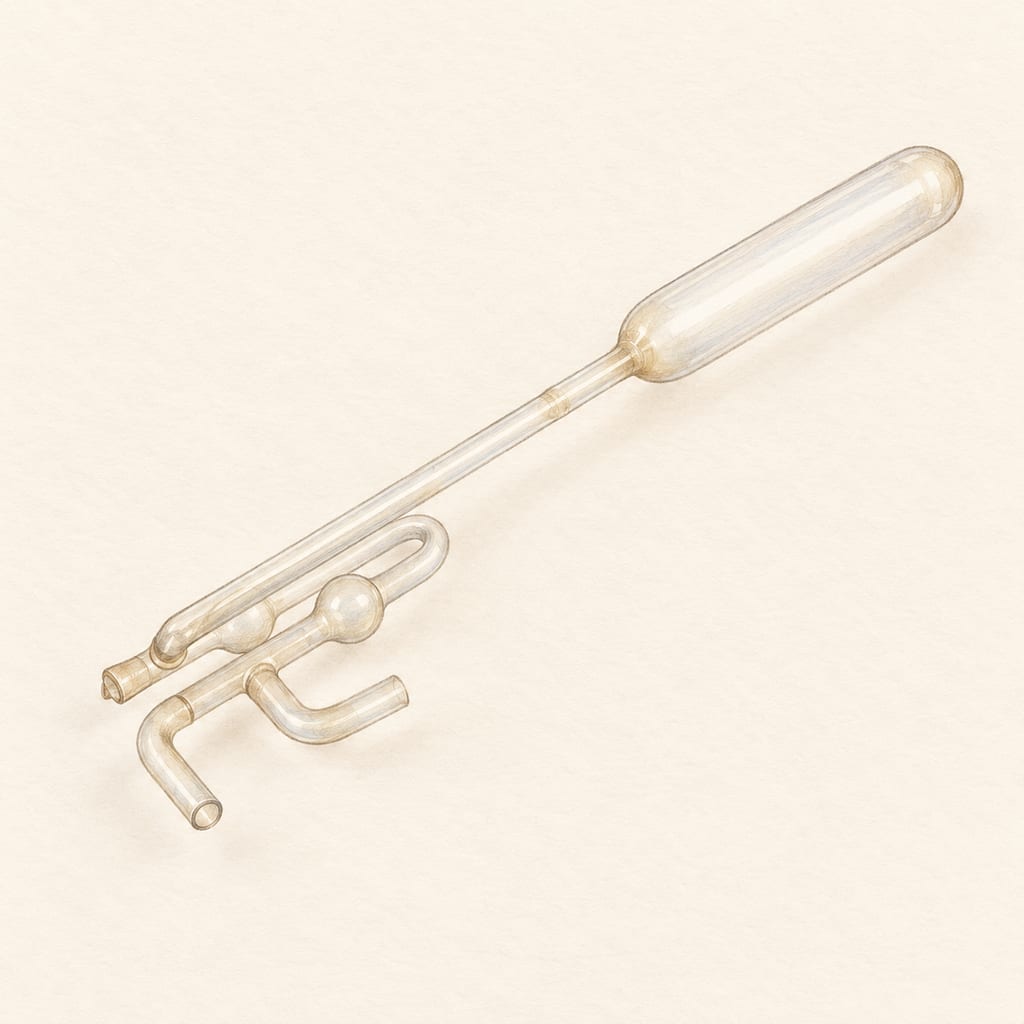
A thermostat is a device or control function that senses temperature and changes heating or cooling in response to a chosen condition. The sensor supplies a measurement; a controller compares that measurement with a set value and directs the relevant heating or cooling hardware. The thermostat is therefore distinct from the chamber or vessel whose temperature is being managed.
That function can be built into an appliance or packaged as a separate instrument. The Heratherm incubator manual describes a sensor in the chamber feeding its built-in controller, which compares the reading with the user's set value and adjusts the heaters. This is one manufacturer's design example, not a universal layout.
A plug-in temperature controller is a particular external arrangement: its own wired probe senses temperature, and relay outputs switch compatible appliances. The controller sits in the power path between a supply and external equipment. An integrated thermostat, by contrast, belongs to the appliance's internal control system. Both use temperature feedback, but their wiring, sensor location, switching hardware and relationship to the heated or cooled space differ.
This distinction matters in a fermentation room or cabinet. A thermostat does not itself supply warmth, refrigeration, insulation or circulation. It acts through compatible equipment, and the exact model determines what it can sense and control. A control box should not be treated as interchangeable with an appliance's built-in thermostat simply because both display a target temperature.
The reading belongs to the sensor's location. In the cited incubator family, the manufacturer positions a temperature sensor inside the work space and describes it as an input to the built-in controller. A separate calibration procedure compares the displayed control reading with a measuring instrument positioned in the chamber. The design and procedure are model-specific, but they illustrate why sensor position and calibration matter.
A controlled air reading does not prove that a solid or liquid elsewhere has the same temperature. Materials, geometry, movement of air and heat entering or leaving the surroundings can produce differences between the sensor point and the object being managed. When a process depends on the temperature of the food itself, the control display alone cannot establish that condition. This page describes equipment, not a validated food process.
The Science Museum Group records Jago's thermoregulator as a thermostat and temperature regulator made in London in 1888 by J. Orme and Co. and W. Jago. The collection lists the object as glass and preserves it under object number 1888-127. That entry gives a specific historical example and place association; it does not establish that Jago invented the thermostat or that the general class began in London.
The object's glass construction should not be generalized to modern controls. Thermostats describe a role performed through varied mechanisms and may be a discrete historical apparatus or an integrated part of larger equipment. The museum image in this page's gallery documents the named 1888 object, while the generated hero is an editorial illustration of a thermostat form rather than a photograph of a real working device.
A thermostat can report and regulate only through the components and measurement points provided by its particular design. It does not establish uniform conditions throughout a chamber, measure an entire batch from one remote point, or certify that a food process is safe or complete. For an incubator, the maker's operating manual remains specific to the model; for an external controller, the product manual remains specific to its probe, relays and connected appliances.
The available sources do not set one material, power source, size, cleaning method or acquisition route for thermostats as a whole. Those details belong to a named model and its documentation. The historical London association and glass material recorded here apply to the museum's 1888 specimen.
The Science Museum Group documents Jago's thermoregulator as a thermostat and temperature regulator made in London in 1888. The cited sources do not establish when thermostats as a class were first invented.
A thermostat's reading or setpoint does not by itself validate a fermentation or food-safety process.
A thermostat responds to the sensor and control architecture documented for its particular model; it does not make a separate appliance, chamber or food mass uniformly match the sensor reading.
Source →An external plug-in controller switches compatible appliances and is distinct from an integrated thermostat; the controller's measured probe point is not a measurement of every location.
Source →The Science Museum Group records Jago's specific thermoregulator as made in London; this is not a general origin claim for thermostats.
Rice koji is steamed white rice through which koji mold has grown. It carries the enzymes that turn rice starch into sugar, and it is the starting point of sake, sweet miso, amazake and shio koji.
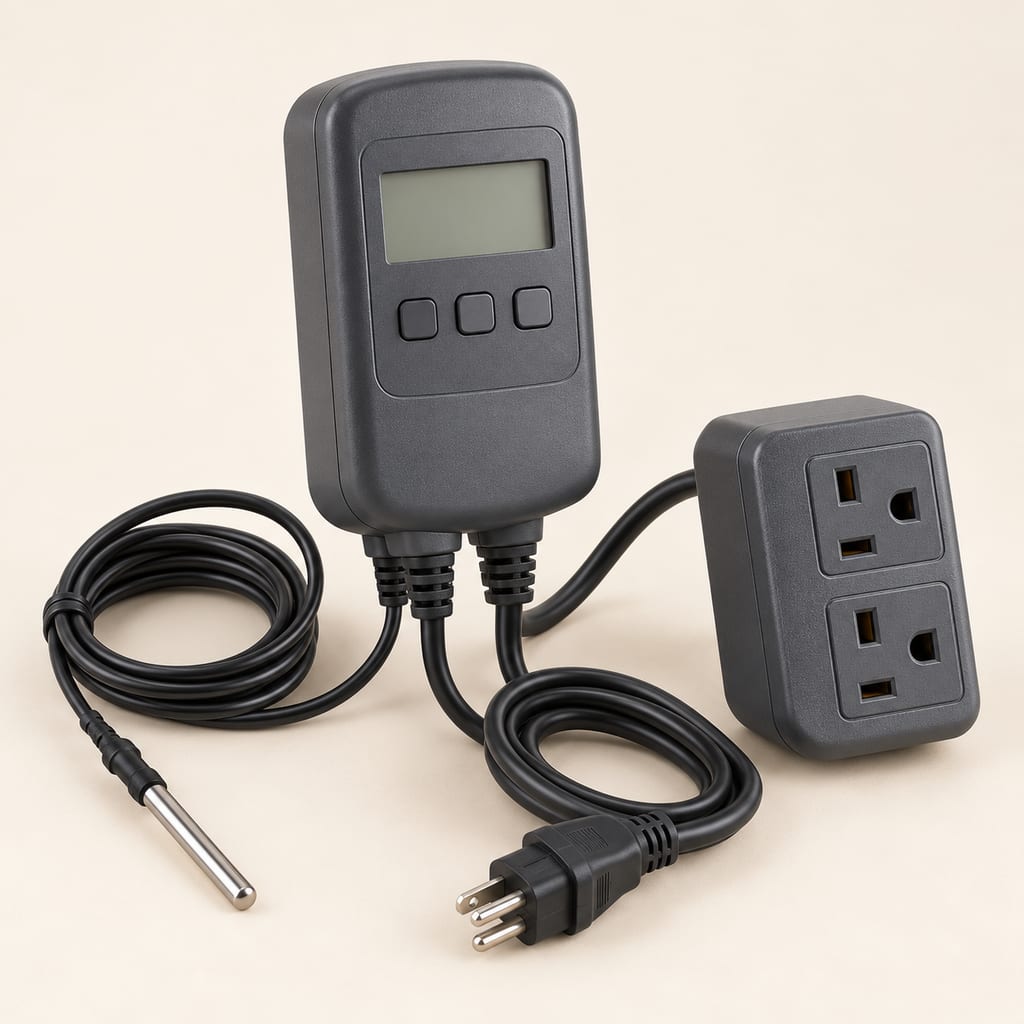
A plug-in controller reads a wired probe and switches compatible heating or cooling appliances around a setpoint. It adds feedback; it is not itself a heater, cooler or validated food process.
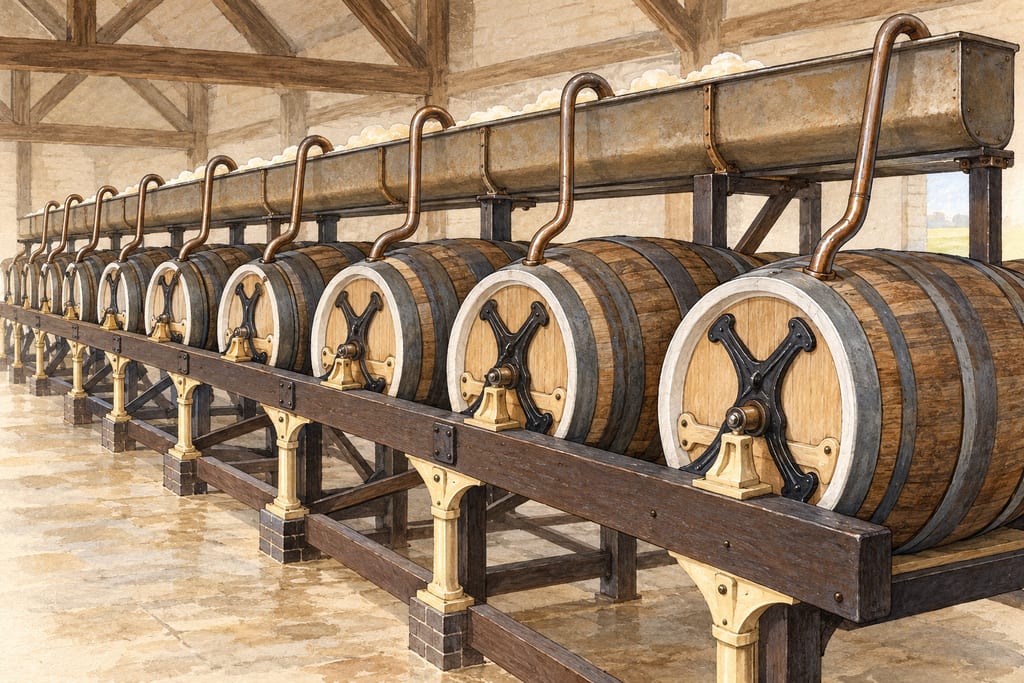
A Burton Union is a connected set of horizontal wooden beer casks, swan-neck pipes and shared troughs. Fermentation lifts yeast-rich foam into the trough; beer drains back to the casks, leaving yeast behind.
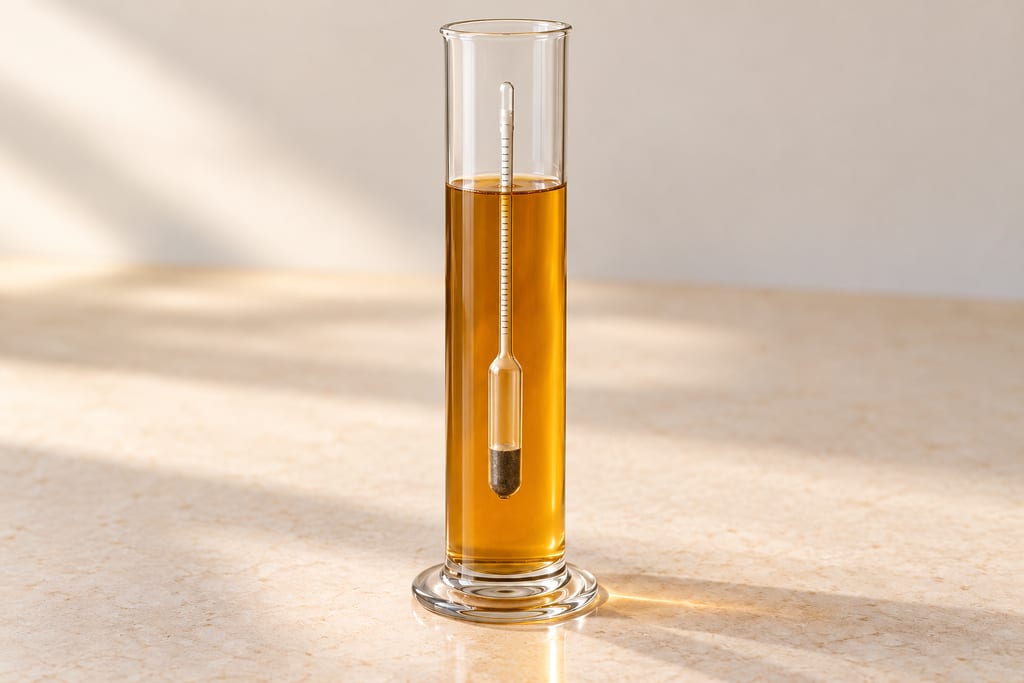
A hydrometer floats in liquid and uses its weighted body's depth to indicate density. In brewing, readings track changing gravity, not every dissolved substance or kombucha alcohol.
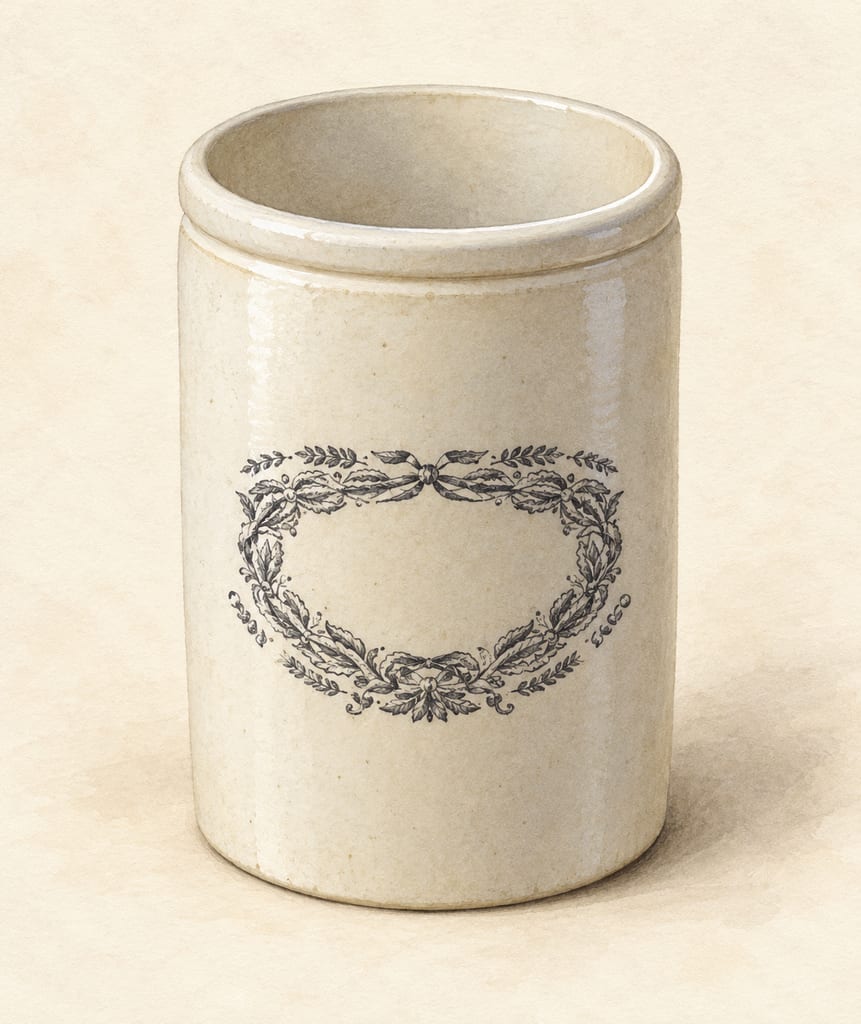
Keiller-branded stoneware jars were commercial packages for Dundee marmalade. Collections show cylindrical forms with printed marks; sources distinguish the Dundee brand from documented Maling manufacture in Newcastle.
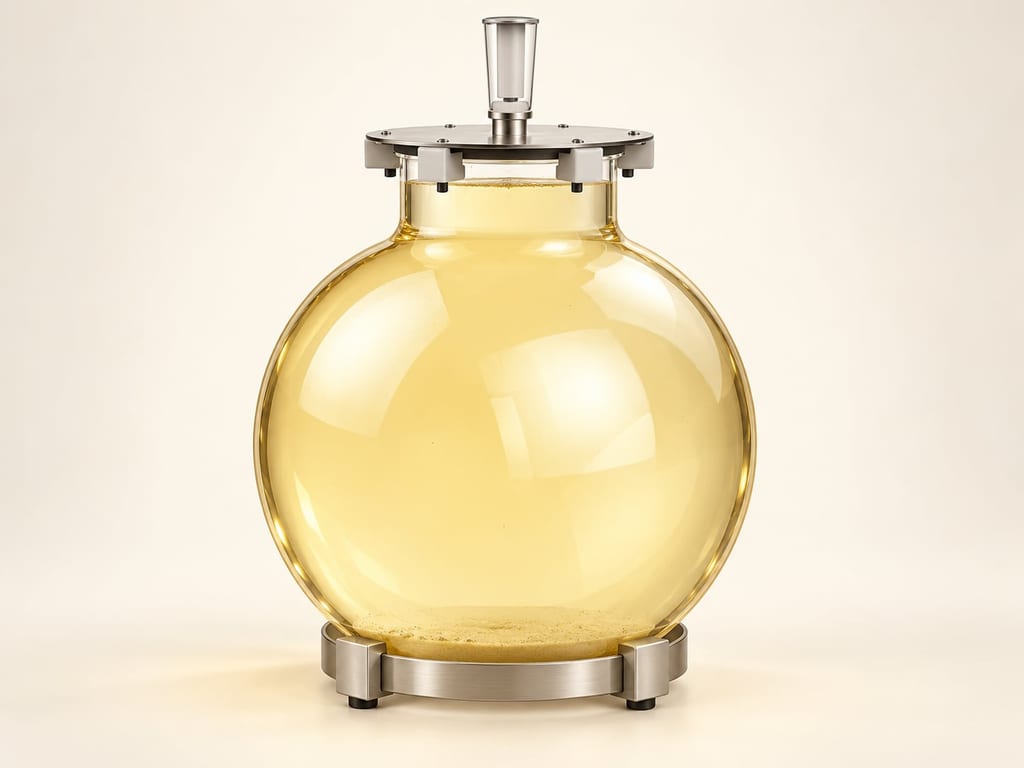
A large, transparent, spherical borosilicate-glass vat designed for modern wine fermentation and maturation. The 220-litre Wineglobe model has a wide neck, fitted lid and support; its use and fittings vary by model.
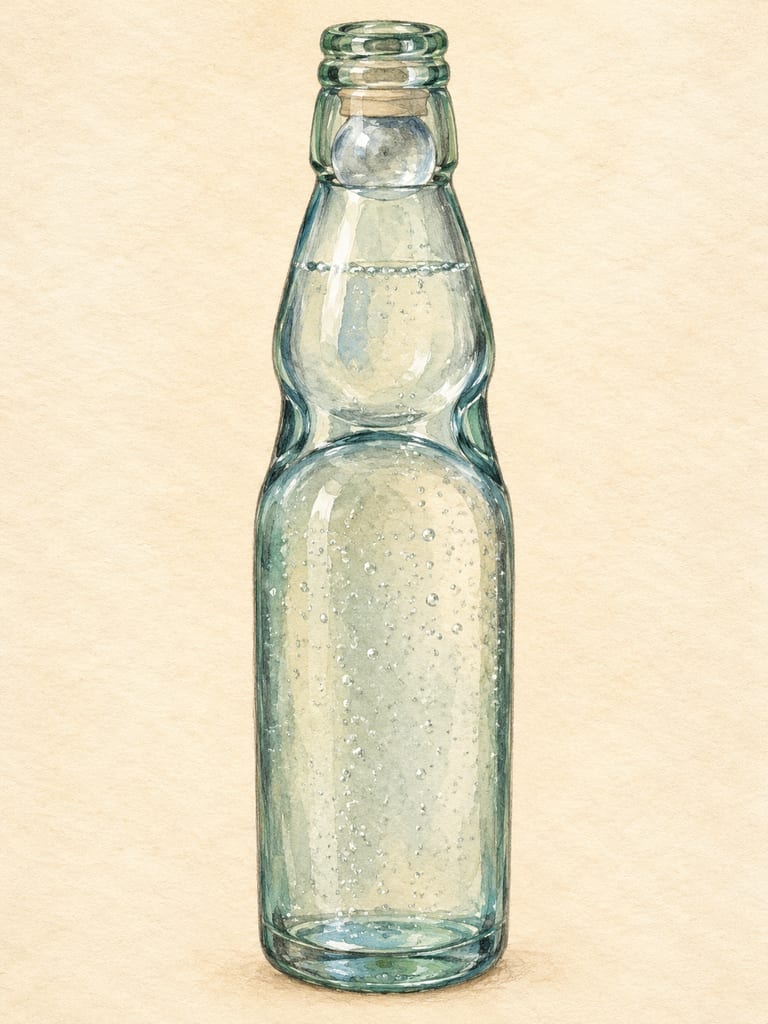
A marble-stoppered bottle is a glass carbonated-drink bottle sealed by a glass marble pressed against a rubber washer. Its Codd neck holds the marble at the mouth when sealed and gives it a side pinch after opening.
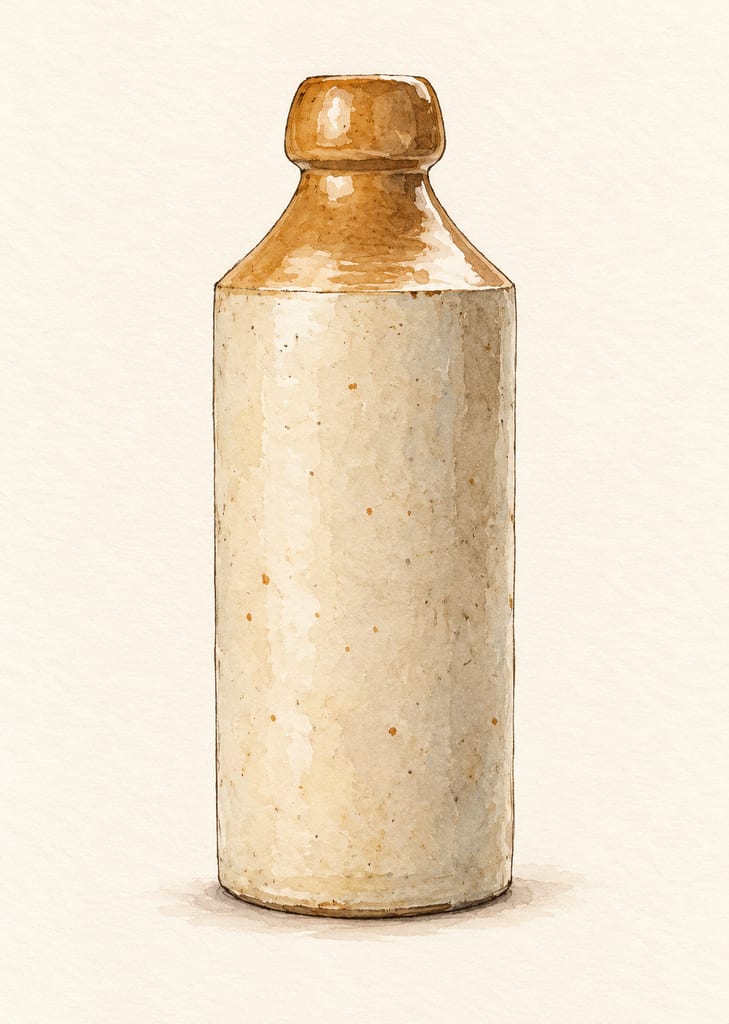
A late nineteenth-century stoneware bottle for ginger beer, represented by an Aberdeen museum object dated 1850–1899. It documents beverage packaging, not a fermentation vessel or a universal bottle design.

A Cap-Pelé boucanière is an Acadian herring-smoking building. The documented Willie Niles example is a one-storey wood-frame structure with a ridge smoke vent and interior bays for hanging fish-bearing cannes.

Achcharu is a family of Sri Lankan vinegar pickles made with mixed vegetables or seasonal fruit and a piquant spice dressing. This version is a quick, refrigerated, non-fermented mixed-vegetable pickle.

The acocote is a long, hollowed and dried gourd used to draw aguamiel from a mature maguey. It is a harvesting tool: the sap is transferred to a separate vessel before it ferments into pulque.

Adrak murabba preserves young ginger in sugar syrup, a sweet South Asian preparation recorded in Indian cookery and food-processing sources.

Parkia biglobosa seeds are fermented into regional West African seasonings, including nététou, iru, dawadawa and soumbala. The yellow fruit pulp is a separate food, and names and methods vary by place.

Japanese reddish-brown vinegar from sake lees matured about three years, turned to vinegar by acetic bacteria; the vinegar of Handa and Edomae sushi rice.

A refined common-wheat flour blended for a broad range of baking; its protein and behavior vary with wheat, milling and market.

The almond mushroom, Agaricus subrufescens, was cultivated in eastern North America in the 1800s, lost its market, and returned as a cultivated mushroom from Brazil, where it is grown under several names.
No community contributions have been published for this entry yet.
Sign in to contribute. Published comments and photos are free to read.
Science Museum GroupHistorical example · Identity · Materials · Geography
Jago's Thermoregulator (Temperature Controller), 1888The Science Museum Group records a thermostat/temperature regulator made in London in 1888 by J. Orme and Co. and W. Jago.
The object record lists glass as its material; this is a documented example, not a universal thermostat material or an invention date.
Cited in: An early documented example; What a thermostat cannot establish
Thermo Fisher ScientificIntegrated temperature control · Sensor placement · Limits
Heratherm Advanced Protocol and Advanced Protocol Security Microbiological Incubators, Operating InstructionsA model-specific sensor supplies temperature readings to the incubator's built-in controller, which compares readings with the user set value and adjusts heaters.
The manual locates sensors within the chamber and distinguishes a separate thermal-protection function; these details describe those incubator models, not every thermostat.
Cited in: A control loop, in more than one form; How it differs from a plug-in controller; The sensor measures a place; What a thermostat cannot establish
INKBIRDComparison · External control example
Temperature Controller ITC-308 SeriesThe manufacturer's controller uses a separate wired probe and relay outputs to switch compatible external heating or cooling appliances; this is one external implementation, not a definition of all thermostats.
Cited in: How it differs from a plug-in controller; What a thermostat cannot establish