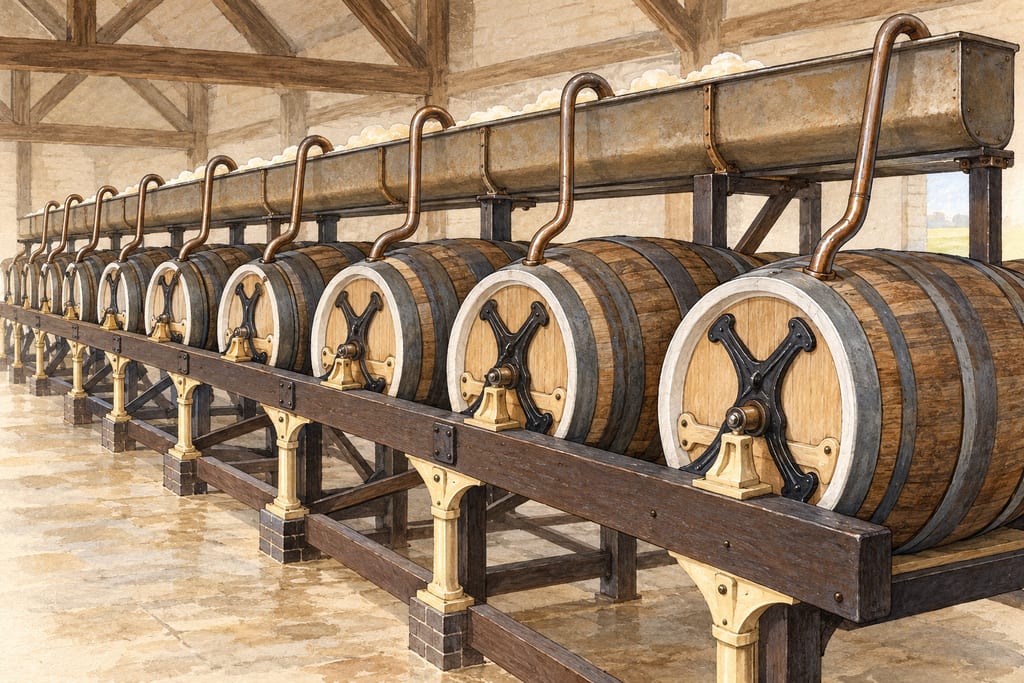
Burton Union
A Burton Union is a connected set of horizontal wooden beer casks, swan-neck pipes and shared troughs. Fermentation lifts yeast-rich foam into the trough; beer drains back to the casks, leaving yeast behind.
 FermenteaWhere food goes to change
Equipment · Tanks and vats
Wineglobe · Wineglobe · Large glass wine vat
A large, transparent, spherical borosilicate-glass vat designed for modern wine fermentation and maturation. The 220-litre Wineglobe model has a wide neck, fitted lid and support; its use and fittings vary by model.
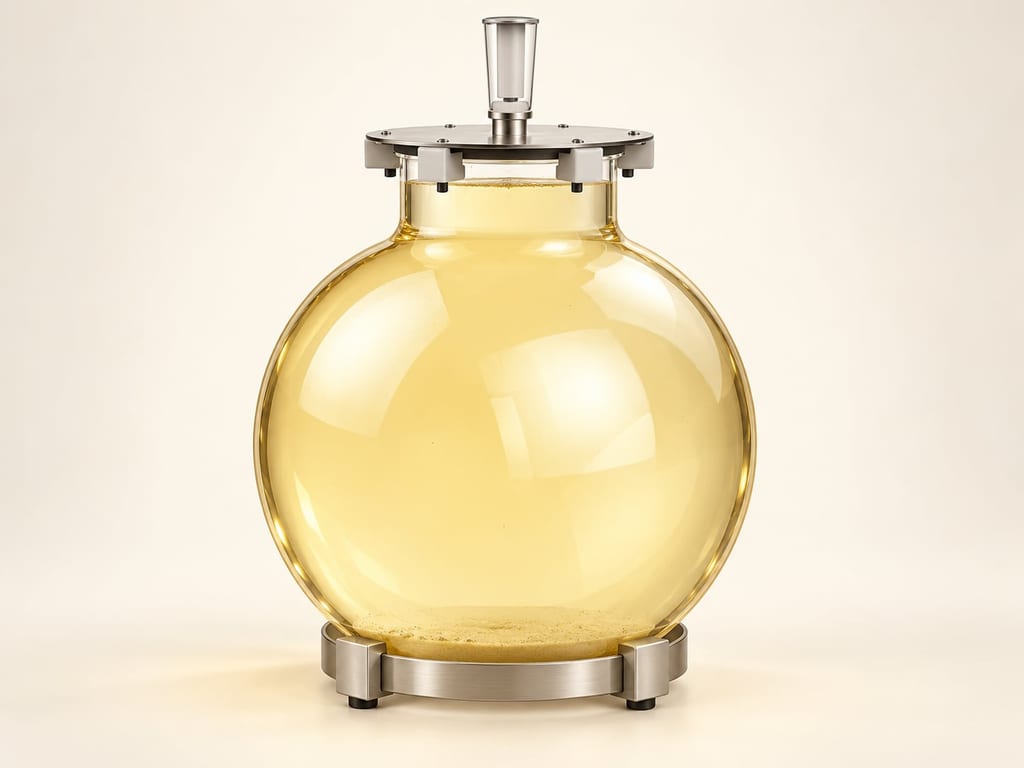
The large glass wine globe is a modern cellar vat: a transparent spherical vessel with a short broad neck, fitted closure and a cradle or stand that carries the vessel rather than leaving it unsupported on its curved wall. It belongs to the glass-vessel family, but its industrial scale and cellar fittings distinguish it from a small demijohn used to hold a few litres. Famille Paetzold dates the Wineglobe’s creation to 2015; Decanter says the project followed a 2014 request from Burgundy winemaker Arnaud Ente and that the family produced its globes in Bordeaux from 2015. This dates this named modern vat, not the first use of glass in winemaking.
The manufacturer’s specification gives its 220-litre model a capacity of 220 litres at the brim, a height of 920 millimetres, a diameter of 750 millimetres and a 300-millimetre neck opening. The listed glass is 7 millimetres thick and the empty vessel weighs 33.8 kilograms. These figures describe this model; the same product line also includes other sizes, so they should not be applied to every glass globe. The photographed vessel has a fitted metal lid and bubbler. The appropriate stand, closure and handling equipment depend on the selected model and whether it is empty or full.
Famille Paetzold recommends its Wineglobe for fermenting and ageing white and rosé wines and for ageing red wines. The manufacturer says it has not yet developed equipment to make red-wine fermentation solids easier to run off, a practical limit when the vessel contains skins and other solids. Its FAQ describes a full-to-the-brim fill, with a lid, bung and bubbler that regulates variations in pressure. The maker explicitly warns that the bubbler must be correctly filled to avoid excessive pressure and a possible explosion. Decanter documents a Wineglobe at Hambledon Wine Estate in Hampshire, showing the contemporary vessel in a working winery.
Borosilicate glass forms a smooth, transparent wall. Unlike wood, glass contributes no wood-derived flavour and has very low porosity; the closure and fittings remain part of the vessel system, so “airtight” should not be inferred from the wall alone. The maker presents that near-impermeability and visibility as reasons to use glass for maturation and to observe lees sedimentation and wine clarity. These are manufacturer explanations, not proof that every wine benefits from the same vessel. Transparency also means cellar light needs attention: the maker advises working away from natural light and offers covers. Its care instructions caution against abrasive pads or unprotected tools that could scratch glass, and recommend removing the lid for washing. Use the exact maker’s handling and cleaning directions for the chosen globe and stand.
Famille Paetzold dates the Wineglobe's creation to 2015. Decanter reports that Burgundy winemaker Arnaud Ente requested a large glass vessel in 2014 and that the Paetzold family produced Wineglobes in Bordeaux from 2015. This is a modern vat design; it is distinct from much smaller glass demijohns and historic glass bottles.
The manufacturer warns that an improperly filled bubbler can allow excessive pressure and a possible explosion.
Hazard sourceThe filled globe requires a maker-specified stand for forklift movement; the empty 220-litre model alone weighs 33.8 kg.
Hazard sourceKeep the bubbler filled as directed by the manufacturer and use the model-specific closure.
Control sourceUse the manufacturer’s specified support and handling method when the vessel is full; avoid abrasive cleaning tools that can scratch the glass.
Control sourceDecanter reports the Paetzold family's Wineglobes have been produced in Bordeaux from 2015; the maker records the product's 2015 creation.
Decanter's caption identifies a Wineglobe in use at Hambledon Wine Estate in Hampshire; this is an example of use, not the origin of the vessel.
A Burton Union is a connected set of horizontal wooden beer casks, swan-neck pipes and shared troughs. Fermentation lifts yeast-rich foam into the trough; beer drains back to the casks, leaving yeast behind.
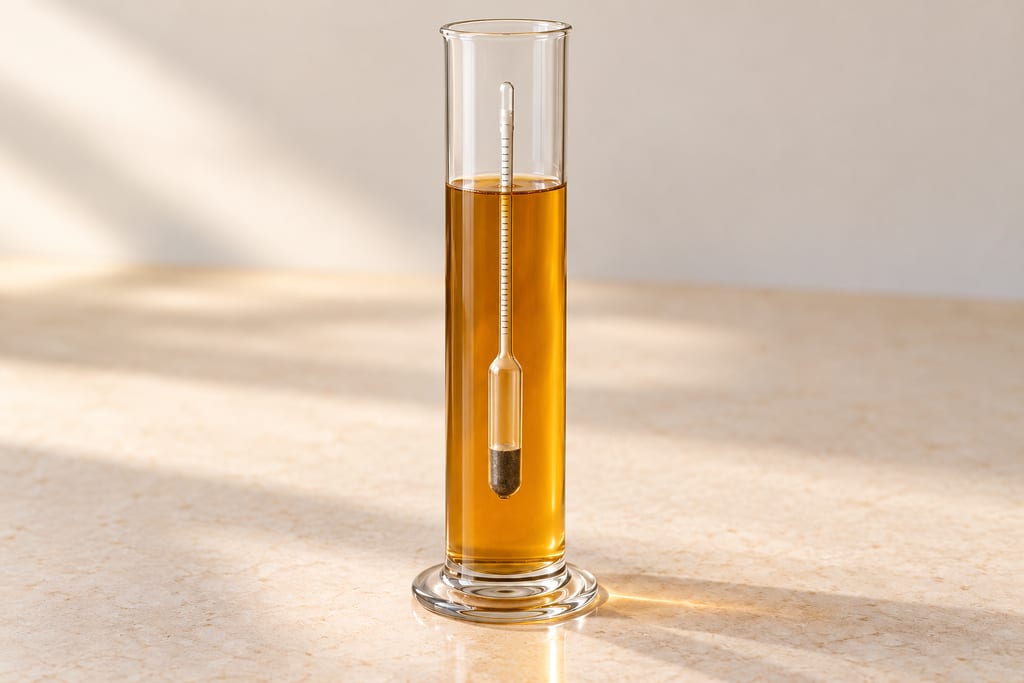
A hydrometer floats in liquid and uses its weighted body's depth to indicate density. In brewing, readings track changing gravity, not every dissolved substance or kombucha alcohol.
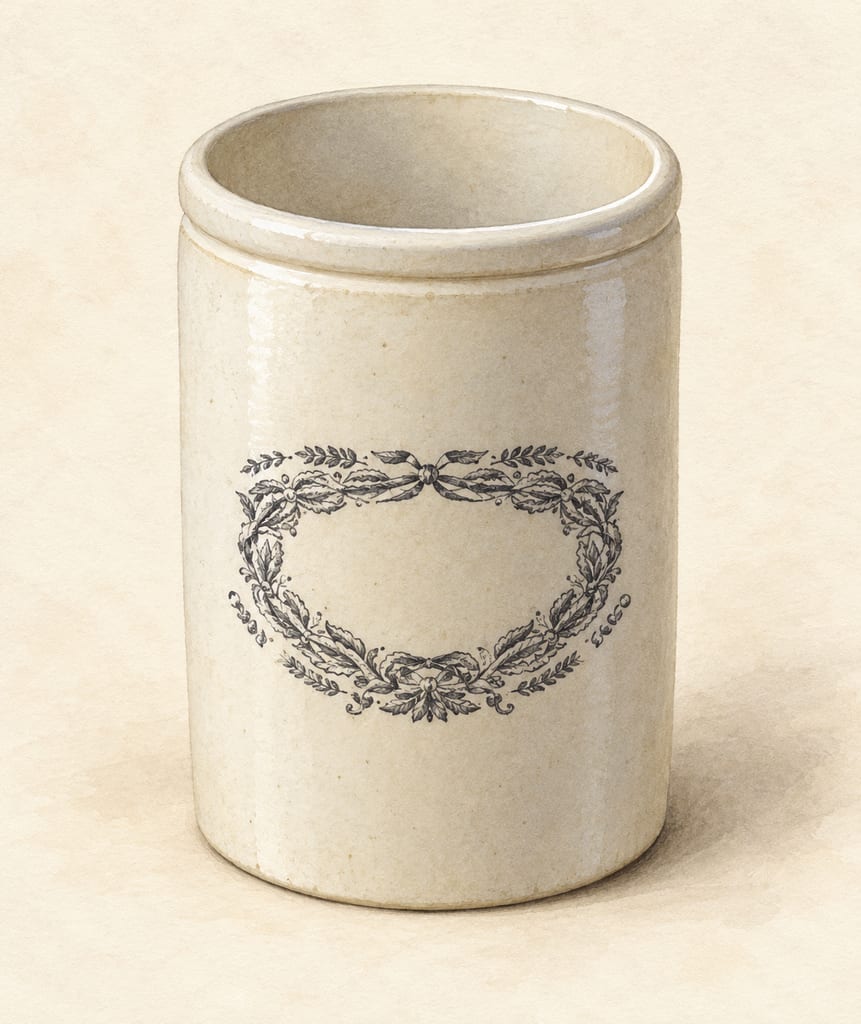
Keiller-branded stoneware jars were commercial packages for Dundee marmalade. Collections show cylindrical forms with printed marks; sources distinguish the Dundee brand from documented Maling manufacture in Newcastle.
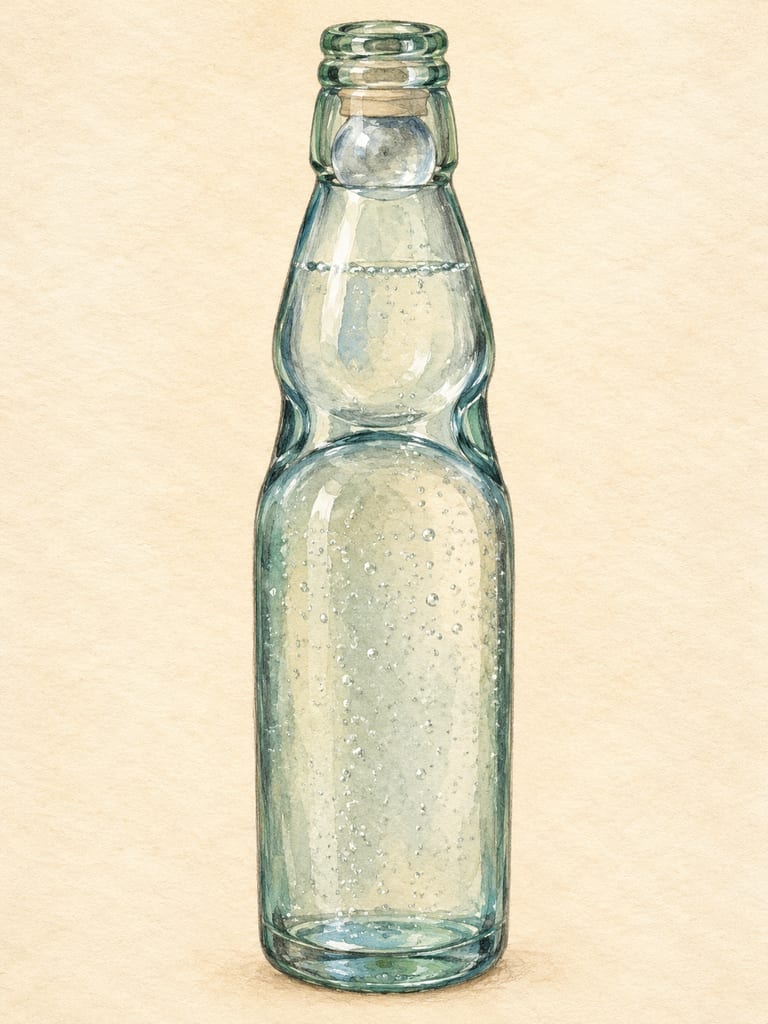
A marble-stoppered bottle is a glass carbonated-drink bottle sealed by a glass marble pressed against a rubber washer. Its Codd neck holds the marble at the mouth when sealed and gives it a side pinch after opening.
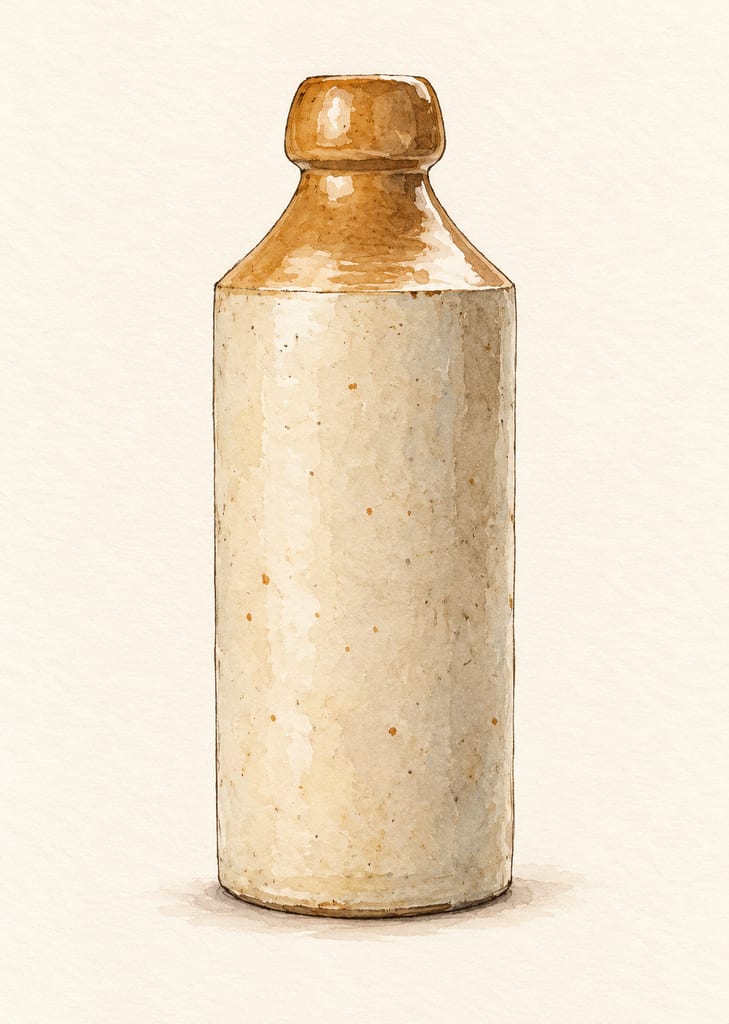
A late nineteenth-century stoneware bottle for ginger beer, represented by an Aberdeen museum object dated 1850–1899. It documents beverage packaging, not a fermentation vessel or a universal bottle design.
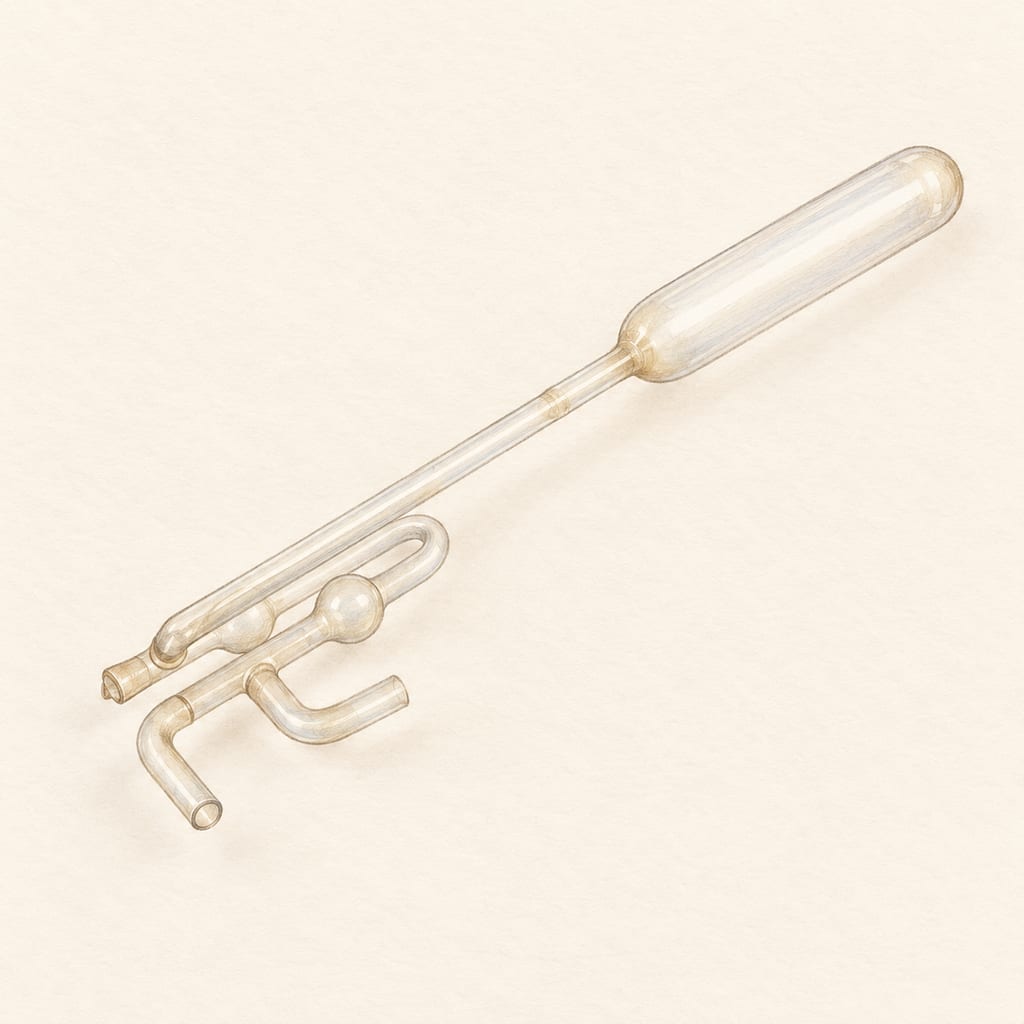
A thermostat senses temperature and regulates heating or cooling to a chosen condition. It may be built into an appliance or supplied as a separate controller; a sensor reading describes its measured point, not every part of a batch.

Soft, spreadable Calabrian pork sausage made with a great deal of red chilli and fatty pork, stuffed into natural casings, sometimes smoked and matured while staying soft.

A way to add independent temperature logging to an existing food dehydrator without changing its built-in controls or protections. It is a monitoring method, not a rewiring plan.

Pleurotus cystidiosus is the abalone mushroom, a cultivated oyster-type fungus with dark brown caps that grows more slowly and is more demanding than other Pleurotus species.

A dark, balanced vinegar from Emilia-Romagna made by combining cooked or concentrated grape must with wine vinegar, then acetifying and refining it in wood under a protected specification.

A living dairy inoculum that starts controlled cream fermentation, developing acidity and aroma before sour cream or cultured butter is finished.

A small electric incubator holds jars at a selected temperature for yogurt and other documented warm food preparations. Controls, capacity and vessel arrangement vary by model.

Adygean salt is a seasoned table salt associated with Adygea and the wider North Caucasian culinary tradition. Salt is blended with garlic and a variable selection of herbs and spices; the exact mix depends on the named style and maker.

The African Caesar-group mushroom, Amanita masasiensis, is a wild ectomycorrhizal species of central and southern African woodlands, eaten locally. The genus contains deadly poisonous species, so identification needs care.
No community contributions have been published for this entry yet.
Sign in to contribute. Published comments and photos are free to read.
Wineglobe / Famille PaetzoldModel specification · Form
Wineglobe 220 L and 115 L technical specificationsThe 220 L model is listed at 220 L brim capacity, 920 mm high, 750 mm diameter, with a 300 mm opening, 7 mm glass, and 33.8 kg empty weight.
The 220 L model’s listed lid and bubbler fittings are model-specific.
Cited in: One documented 220-litre model
Wineglobe / Famille PaetzoldHistory · Manufacturer
Our HistoryThe maker's product chronology dates creation of the Wineglobe to 2015 and identifies a 2014 discussion stage.
The chronology separates the modern product from the older glass demijohn practice described by the maker.
Cited in: A modern glass vat
Wineglobe / Famille PaetzoldDocumented uses · Care · Safety · Manufacturer explanation
FAQThe maker recommends fermenting and ageing white and rosé wines and ageing red wine; its FAQ states that it has not yet provided the tool for red-wine fermentation solids handling.
The FAQ describes a full-to-brim vessel, fitted lid, bung and bubbler, and warns the bubbler must be filled to avoid excessive pressure and possible explosion.
The FAQ gives cleaning and handling guidance and recommends protection from light.
Cited in: One documented 220-litre model; Winemaking uses and limits; Glass, observation and care
Wineglobe / Famille PaetzoldMaterial · Maker's design rationale
Why glass?The manufacturer identifies borosilicate glass and describes the vessel as smooth and non-porous.
The maker presents glass transparency and low porosity as enabling observation and low wall-mediated exchange; these are manufacturer claims.
Cited in: Glass, observation and care
DecanterHistory · Documented manufacture · Documented use · Reference photograph
Inert vessels: The path to unadulterated wine nirvana?Reports a 2014 request from Burgundy producer Arnaud Ente and Bordeaux production of Paetzold 220-litre Wineglobes from 2015.
Its image caption identifies a Wineglobe in action at Hambledon Wine Estate in Hampshire.
Cited in: A modern glass vat; Winemaking uses and limits