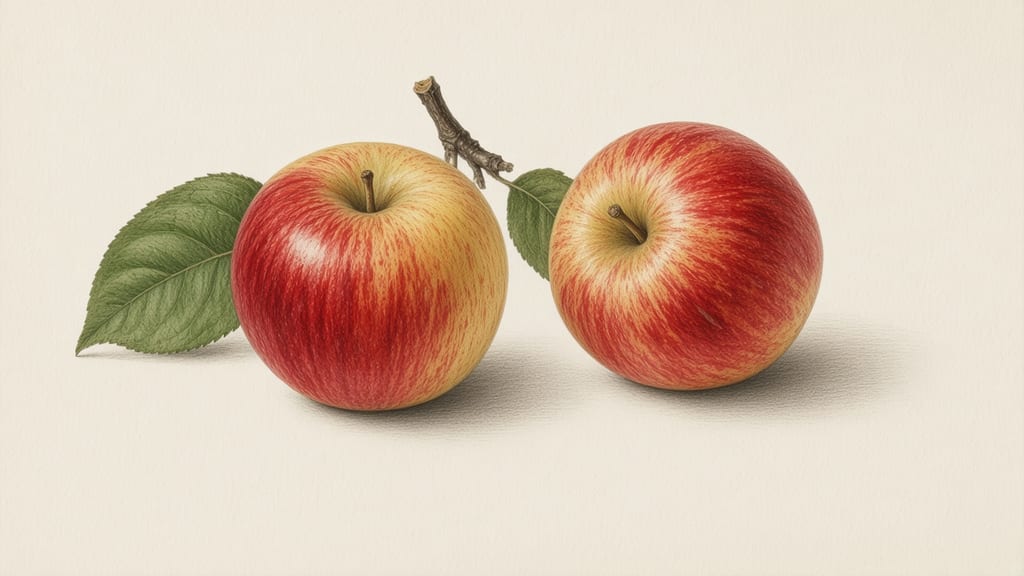
Redstreak apple
The Redstreak was the famous seventeenth-century cider apple of Herefordshire, linked with Lord Scudamore. A yellow apple streaked with red, it was lost as a distinct variety by the 1880s.
 FermenteaWhere food goes to change
Historical attestation
Bottle-Cider · Sir Paul Neile's bottled cider · Mantling cider · Bottle cider
A lightly sparkling cider bottled before it had finished fermenting, as Sir Paul Neile described it in 1664, with a measured modern method for safe bottle conditioning.
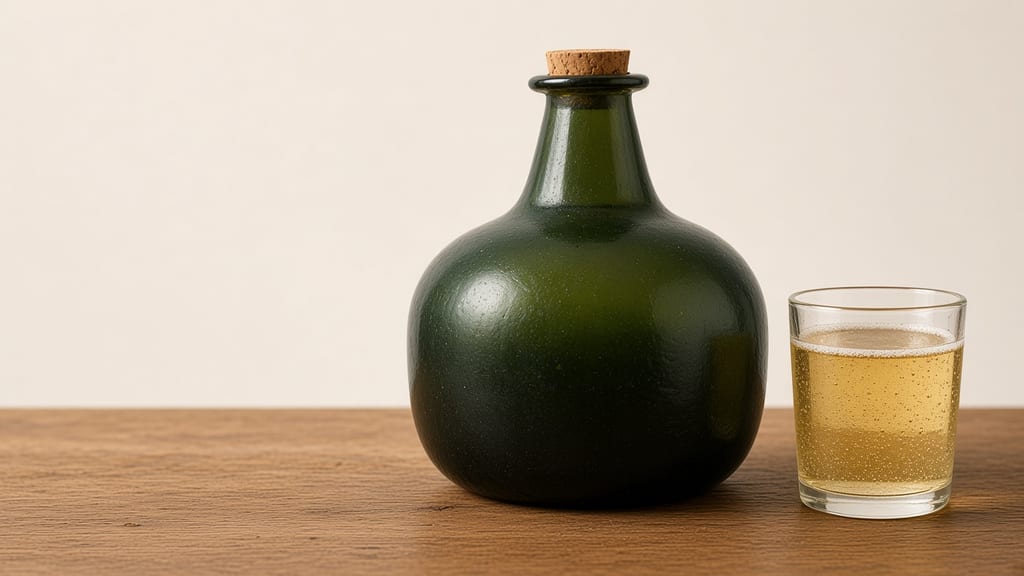
This is the sparkling cider of Restoration England, made by putting apple cider into glass before it had quite finished fermenting. Sir Paul Neile described it in a discourse printed by John Evelyn in 1664. He wanted cider that would "mantle and sparkle in the glass" as it was poured, with a light head that settled quickly.
Neile was clear about the limits. If the cider frothed and flew out of the glass, it had been bottled too soon. If the corks blew out or the bottles burst, it had been bottled much too soon. The drink he aimed for sat between still cider and the potgun-drink that sprayed about the room. A version of his method also appears in The Closet of Sir Kenelm Digby, printed in 1669 under the heading Sir Paul Neale's way of making cider.
There is no added yeast in the old method and no measured sugar. The sparkle comes from the yeast already working in the cider, closed into a strong bottle with a little sugar left to ferment.
The Closet text names the Redstreak as the best apple for cider that has to keep, with the Gennet Moyle next and pippins after them. Evelyn called the Redstreak the famous apple of Herefordshire and said it had been raised from a wilding within living memory and nicknamed the Scudamores Crab.
The Herefordshire Pomona describes it as a yellow apple streaked with red, firm and crisp, with juice of specific gravity 1079. By the 1880s its authors wrote that the Redstreak no longer existed as a distinct variety. A modern maker has to choose a substitute, and the old texts point to fruit with rich juice, since Worlidge observed that poor cider broke more bottles than rich cider.
Neile also made cider from pippins. He gathered them, let them lie in the loft about three weeks and made the cider at the start of November. The Closet version gives the same three-week rest for all the apples.
Neile's whole method rests on one idea. Cider that works hard and often grows harder and sharper each time, and the solid matter of the apple is what sets it working again with every change of weather. So the juice was cleared before fermentation could take hold.
The Closet text runs the stamped and strained juice into a wooden vat with a spigot three or four fingers above the bottom, covered with hair cloth or sackcloth. After twelve hours the juice is drawn off into a barrel left about two fingers short of full, with the bung open. After a day it is drawn off again above the dregs, and if it is still not clear it goes into a smaller vessel for another day. In Evelyn's print Neile fills the vessel all but about a gallon, leaves it twenty-four hours and draws it off by a tap two or three inches from the bottom.
This repeated racking takes away much of the yeast and apple solids. The cider that goes into bottle still has sugar and some live yeast, but not so much that it races away.
Neile admitted there was no certain rule. He bored a small hole in the cask with a piercer, fitted a peg and drew a little out two or three times a day to watch how it changed.
His target was cider that was "not perfectly fine" when bottled, with a little haze still in it. That haze meant yeast enough to fret in the bottle and give "a fine quickness". Bottled too thick, it might drive out the corks, break the bottles or fly about the house when opened. Bottled too fine, it would stay flat.
He preferred to err on the early side. He filled his bottles in the order they came from the cask, because the cider at the top of a hogshead differed from the cider near the bottom, and he tested one bottle at each end of the row and one in the middle. The last bottles drawn, near the lees, he let settle three or four days and poured off clear before stopping them.
Within about a week Neile could see how a batch was behaving. If it was fermenting too hard, he opened all the bottles and let them stand open two or three minutes before closing them again. The Closet version visits the bottles after two or three days and leaves the stopples out for half a quarter of an hour. Worlidge advised opening the corks two or three days after bottling, to save the bottles from breaking when the wind next turned to the south.
The bottles lived in a close, cool cellar. In frost Neile covered them with straw. From about the beginning of April he set them into sand up to their necks. He used cool sand to hold back a cider bottled early and a thick covering of straw to hurry one that was slow.
Worlidge laid his bottles on their sides on the ground. Frames and shelves were worse, he wrote, because the air higher up in a cellar changes more. He doubted that sand did much beyond softening sudden changes of temperature, and thought a cistern of spring water was the best store of all.
Neile wanted the juice of the apple and nothing else. Sugar was his fix for a batch bottled too late. After about a week he put into each bottle a little piece of white sugar about the size of a nutmeg, which started a small fermentation and gave the cider its briskness.
Others used sugar as a matter of habit. An aphorism printed with Neile's discourse mentions two or three raisins in every bottle, and in Somerset as much sugar as a walnut. Worlidge wrote that cider bottled early needed no addition, while poor or flat cider could be given "a new life" with a small quantity of loaf sugar.
Those lumps were never weighed. In the modern method below the sugar is measured, because the amount of sugar left in a closed bottle decides the pressure it reaches.
The cider went into dark English glass. The bottles of the middle of the century had a round body and a long neck, and by the end of the century they were squat onion shapes with a pushed-up base. Worlidge preferred glass to stoneware, which leaked, tainted and could not be seen into.
He steeped corks in scalding water before use so they fitted well. He also described glass stopples ground to each bottle with emery. These sealed so well that no gas could escape, and he warned that such bottles were apt to burst where corked ones rarely did. Cork that could give a little was the safer seal.
Some makers tied corks down. Worlidge did not recommend it. He thought it better for the liquor to fly the cork than to break the bottle.
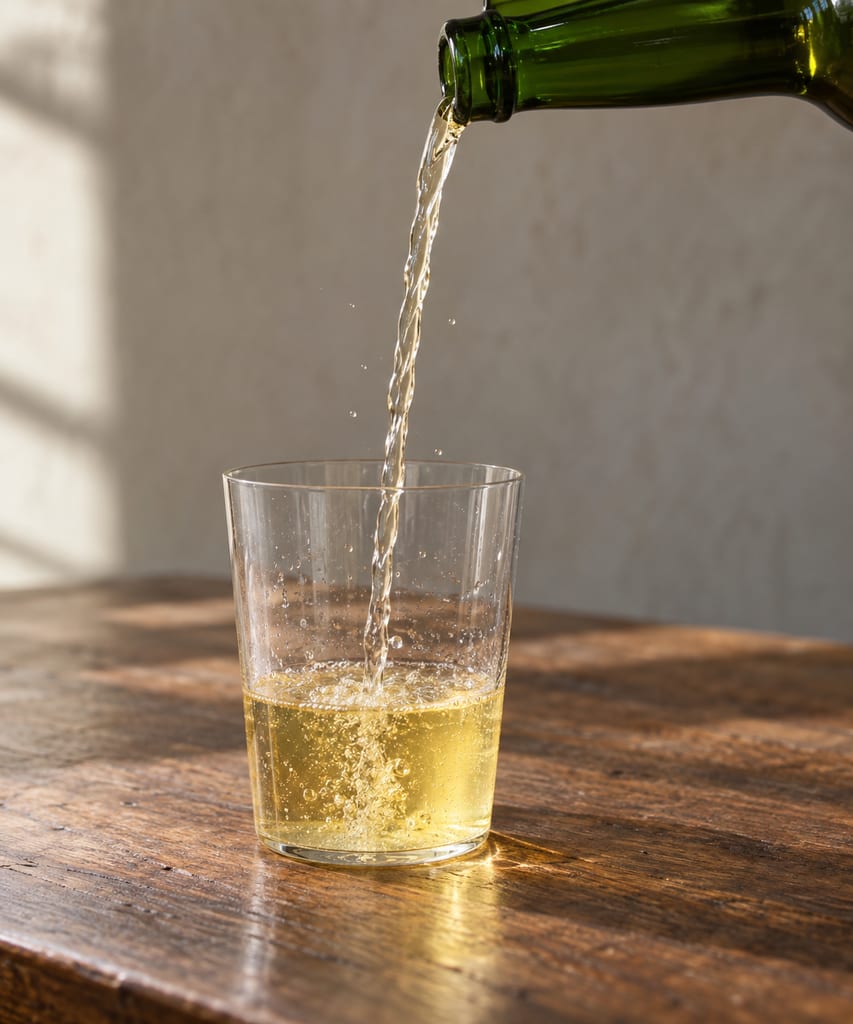
Neile judged the finished drink in the glass. The right bottle cider mantled a little and sparkled when poured out, then settled. If it frothed and flew, the batch had gone into bottle too early.
Good bottle cider could keep for years. An aphorism printed beside Neile's discourse says that Lord Scudamore seldom failed of three or four years with his bottles and calls the dark bottles "the nappy Wine". The Closet version is more modest about pippin cider, which it says lasts until the summer grows hot.
The historical method uses only apples. Neile named the Redstreak, the Gennet Moyle and pippins, and added a nutmeg-sized piece of white sugar only to a batch that had gone flat.
The modern version uses fresh juice from sound cider apples, a cultured cider or wine yeast and a measured weight of white sugar for priming. Loaf sugar broken and weighed works the same as granulated sugar. The quantities are for one batch of about 4.5 litres. Washington State University's guide uses one gram of dry yeast for about a US gallon of juice, which is about 3.8 litres, so this batch takes about 1.2 grams.
As Neile wrote it, the apples rest three weeks, are stamped and pressed, and the juice is settled and racked off its dregs over one to three days. It goes into a cask short of full with the bung open and is watched through a small peg-hole. It is bottled while slightly hazy, vented after a few days if it works too hard, and kept cool in a cellar. Nobody today should follow that method as written, because there is no way of knowing how much sugar is left in each bottle.
The modern method reaches the same light mantle with numbers. Ferment the juice with a cultured yeast at 16 °C or below until the hydrometer reads 1.000 or lower, which Washington State University's guide treats as the end of fermentation. Rack it off the yeast. Add about 4 grams of sugar per litre and bottle at once in bottles built for pressure. The guide says this gives about one bar, a gentle sparkle well below the six bars a Champagne bottle is rated for.
Andrew Lea gives a second natural route. The cider goes into bottles early, at a gravity of about 1.003, and finishes fermenting there. That is nearer to Neile's way, but every point of gravity left is a guess about the final pressure, and a dry cider primed by weight is easier to control.
Yeast turns sugar into alcohol and carbon dioxide. In an open vessel the gas escapes. In a sealed bottle it has nowhere to go, so pressure builds in the headspace and the gas dissolves into the cider. When the bottle is opened the pressure drops and the gas comes out as bubbles.
The amount of gas depends on the amount of sugar the yeast can still reach. That is why Neile's timing mattered so much, and why the modern method starts from a dry cider and adds a known weight of sugar. The yeast left in the cider ferments the priming sugar, then settles as a fine layer at the bottom of the bottle. Lea notes that this deposit will always cloud the last of the bottle a little when it is poured.
The guide also warns against adding sulfite after fermentation in bottle-conditioned cider, because the priming needs live yeast.
The main danger is the bottle. Sugar and live yeast in a sealed bottle keep making gas, and a bottle that is not built for the pressure can burst. Lea calls an over-sweet sealed bottle a bottle bomb and advises goggles when handling fermenting bottles. Use Champagne bottles, crown-cap beer bottles or PET bottles made for carbonated drinks. Never seal sweet juice or a cider that is still fermenting, and never use ground glass stoppers or tied-down corks on a fermenting bottle.
Fresh juice carries its own risks. The FDA juice guidance lists harmful bacteria from the fruit and patulin, a toxin produced by moulds on damaged or rotten apples. Sort out mouldy and rotten fruit and work with clean equipment. Bubbles, smell or taste do not show that a cider is safe or that fermentation has finished.
Once the bottles have conditioned, keep them cool and out of sun and heat. The old makers stored theirs in cellars, in sand or under straw. The cited sources set no shelf life for a bottle-conditioned cider.
Sir Paul Neile's discourse of cider, printed in Evelyn's Pomona in 1664 and in The Closet of Sir Kenelm Digby in 1669, describes bottling cider before it is fine so that it mantles and sparkles; Worlidge's Vinetum Britannicum of 1678 adds loaf sugar and venting.
Yield 4.5 l, about six 750 ml bottles · Scaling: linear
Sugar and live yeast in a sealed bottle keep making carbon dioxide. Over-priming, bottling before fermentation ends or using weak bottles can make bottles burst.
Hazard sourceA bursting glass bottle can injure; Lea describes the bottle bomb and advises goggles.
Hazard sourceFermentable sugar and live yeast left in a package can over-pressurise it.
Hazard sourceMouldy or damaged apples can carry patulin, and fresh juice can carry harmful microorganisms.
Hazard sourceConfirm fermentation is complete with a hydrometer before priming.
Control sourcePrime with a measured weight of sugar and do not over-prime.
Control sourceUse bottles designed for the pressure, such as Champagne bottles, crown-cap beer bottles or PET bottles for carbonated drinks, and do not exceed the bottle's rating.
Control sourceWear goggles when handling fermenting bottles.
Control sourceReject mouldy and rotten apples and use clean equipment.
Control sourceThe seventeenth-century method of bottling a partly fermented cider by eye is not a safe home method and is given for history only.
Never seal sweet juice or actively fermenting cider in glass.
Do not use ground glass stoppers or tied corks on fermenting bottles.
Bubbles, smell or taste do not show that fermentation has finished or that a cider is safe.
Evelyn ties the Redstreak to Herefordshire; Neile's discourse names no single farm.
An aphorism printed with Neile's discourse records sugar added to bottled country cider in Somerset.
The Redstreak was the famous seventeenth-century cider apple of Herefordshire, linked with Lord Scudamore. A yellow apple streaked with red, it was lost as a distinct variety by the 1880s.
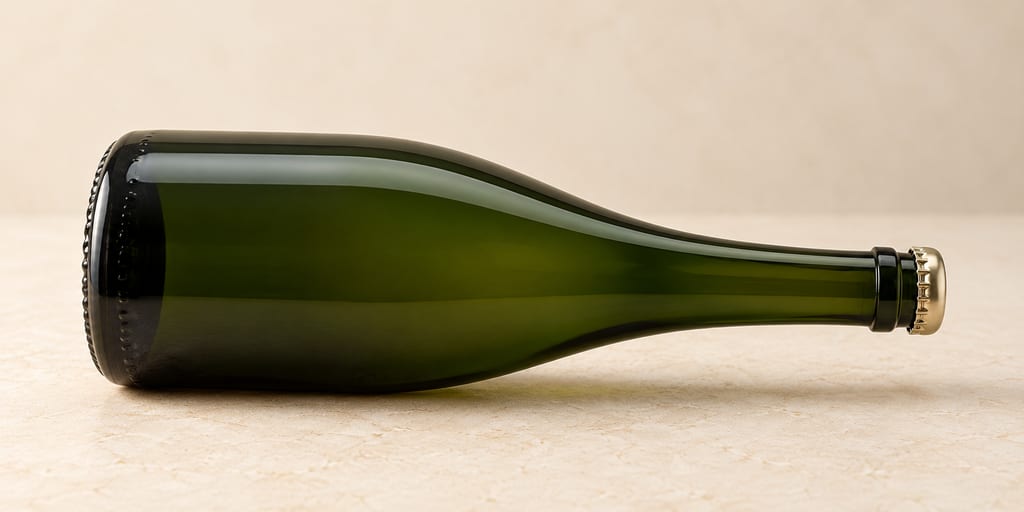
Champagne’s traditional-method bottle holds wine through its second fermentation and subsequent maturation on lees. At tirage it has a crown cap and internal insert; bottle formats and specifications vary.
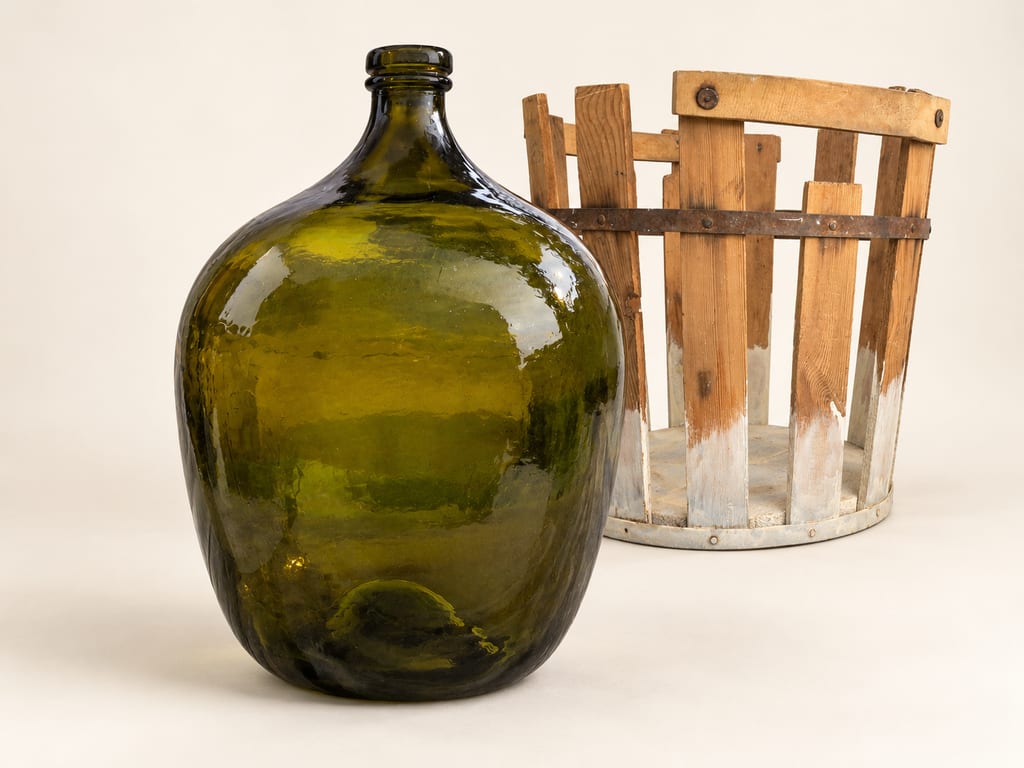
A glass demijohn or carboy is a stout, usually rounded bottle with a narrow neck, used for beverage fermentation, maturation, storage or transport. Its glass body, closure and any protective carrier are distinct parts of the vessel system.
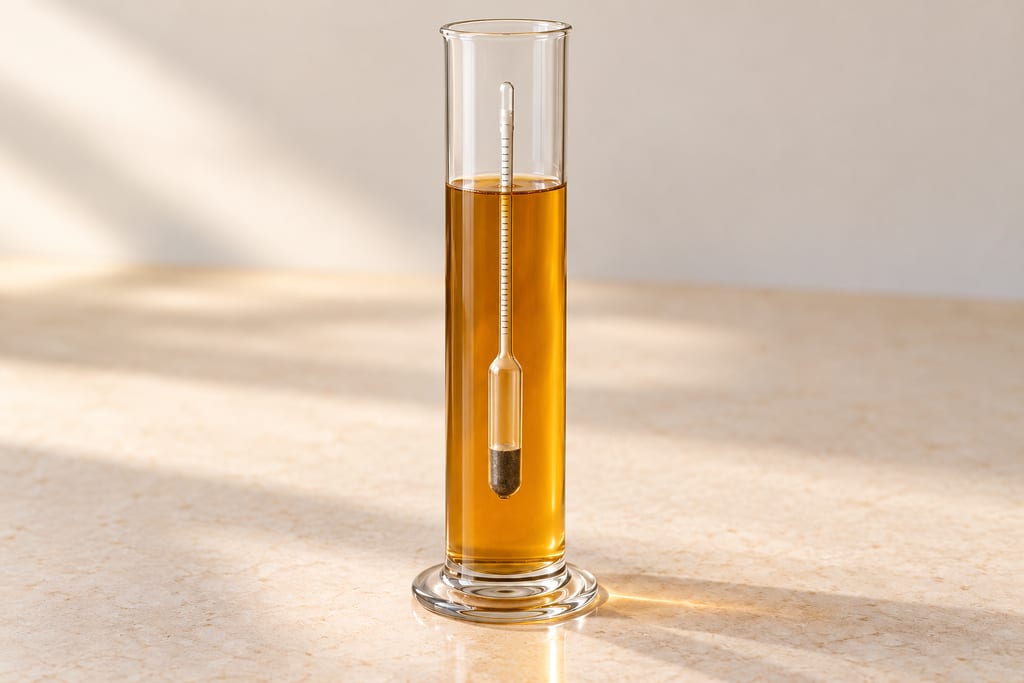
A hydrometer floats in liquid and uses its weighted body's depth to indicate density. In brewing, readings track changing gravity, not every dissolved substance or kombucha alcohol.
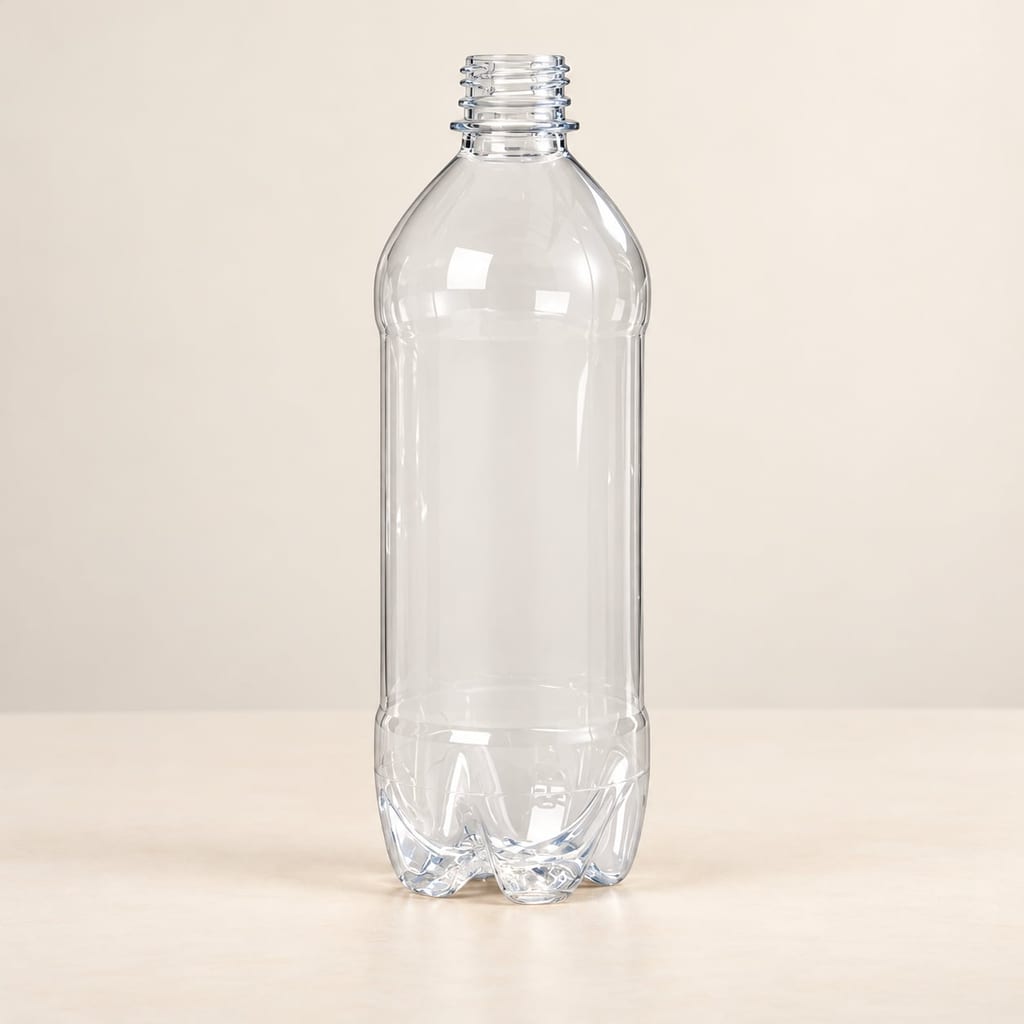
Bottles and other packages made and specified to contain carbonated or actively fermenting drinks. A package rating belongs to its exact design and use; it does not make ordinary jars or bottles suitable for pressure.
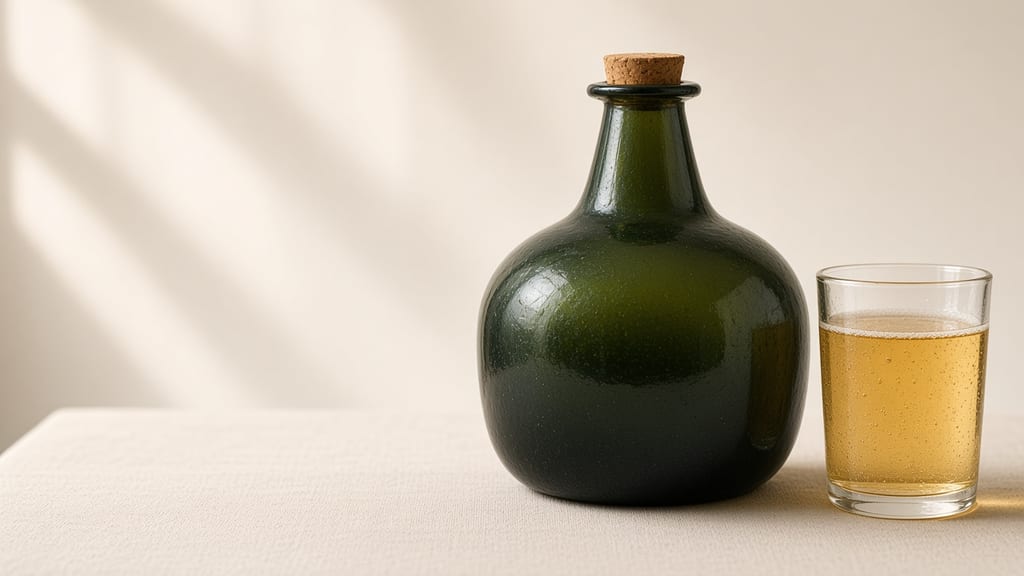
In the 1650s and 1660s English cider makers bottled cider with a little life left in it, sometimes with a lump of sugar, so it would mantle and sparkle in the glass, decades before Champagne sparkled on purpose.
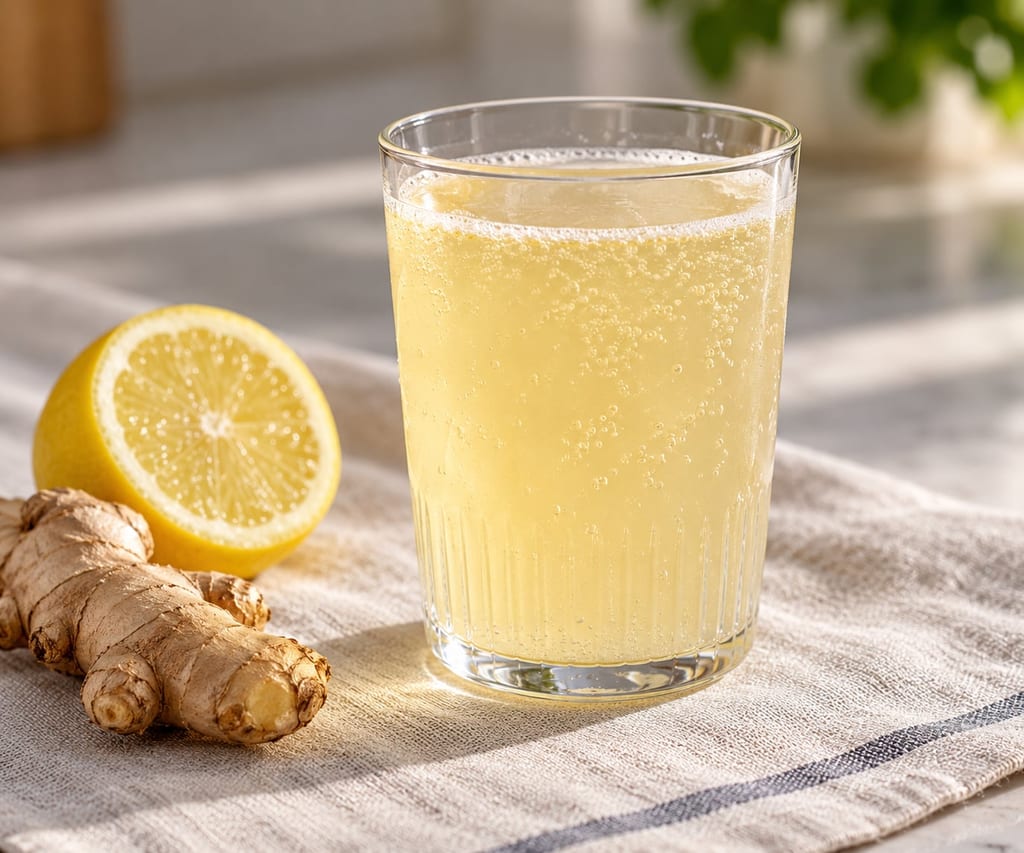
A one-liter teaching recipe ferments bruised ginger, lemon, sugar and cream of tartar with measured baker’s or ale yeast, then conditions the drink briefly in PET bottles before refrigeration.
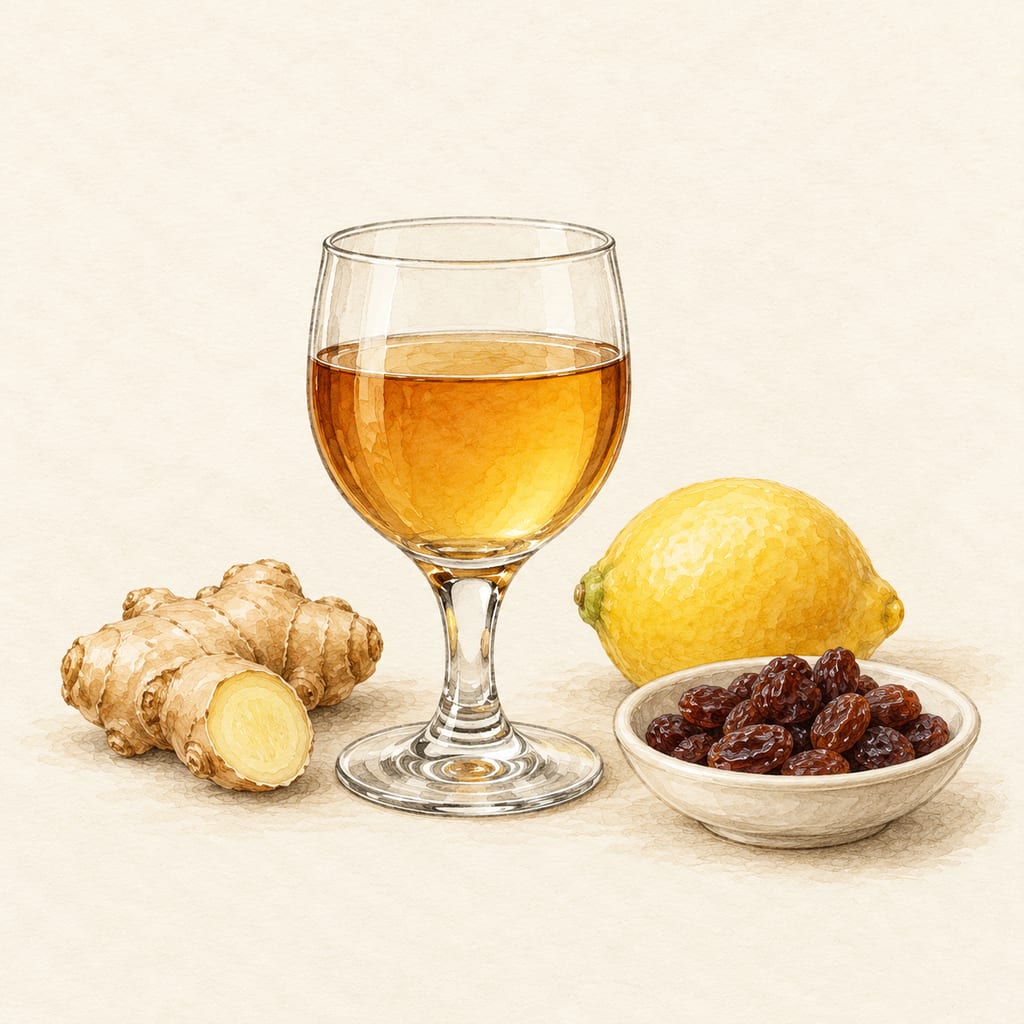
A Victorian household wine of boiled sugar, lemon and bruised ginger, worked on raisins in a cask for a fortnight and finished with brandy, made nine gallons at a time.
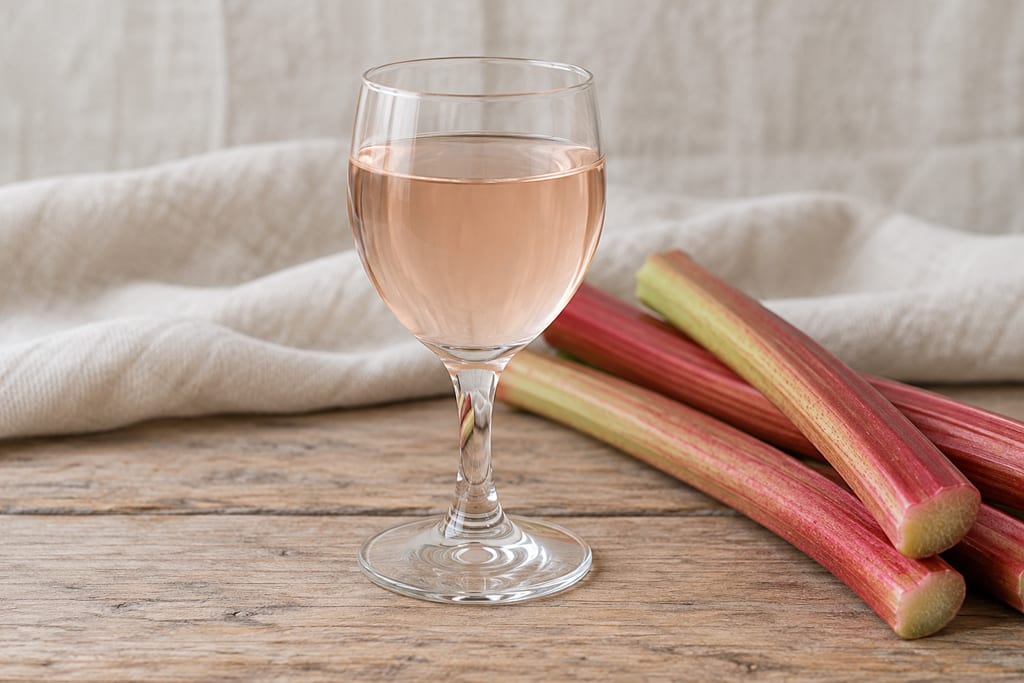
S. O. Beeton’s 1861 household book records rhubarb wine made with rhubarb pulp, water, loaf sugar, lemon rind and isinglass; its historical directions do not establish a safe modern fermentation endpoint.
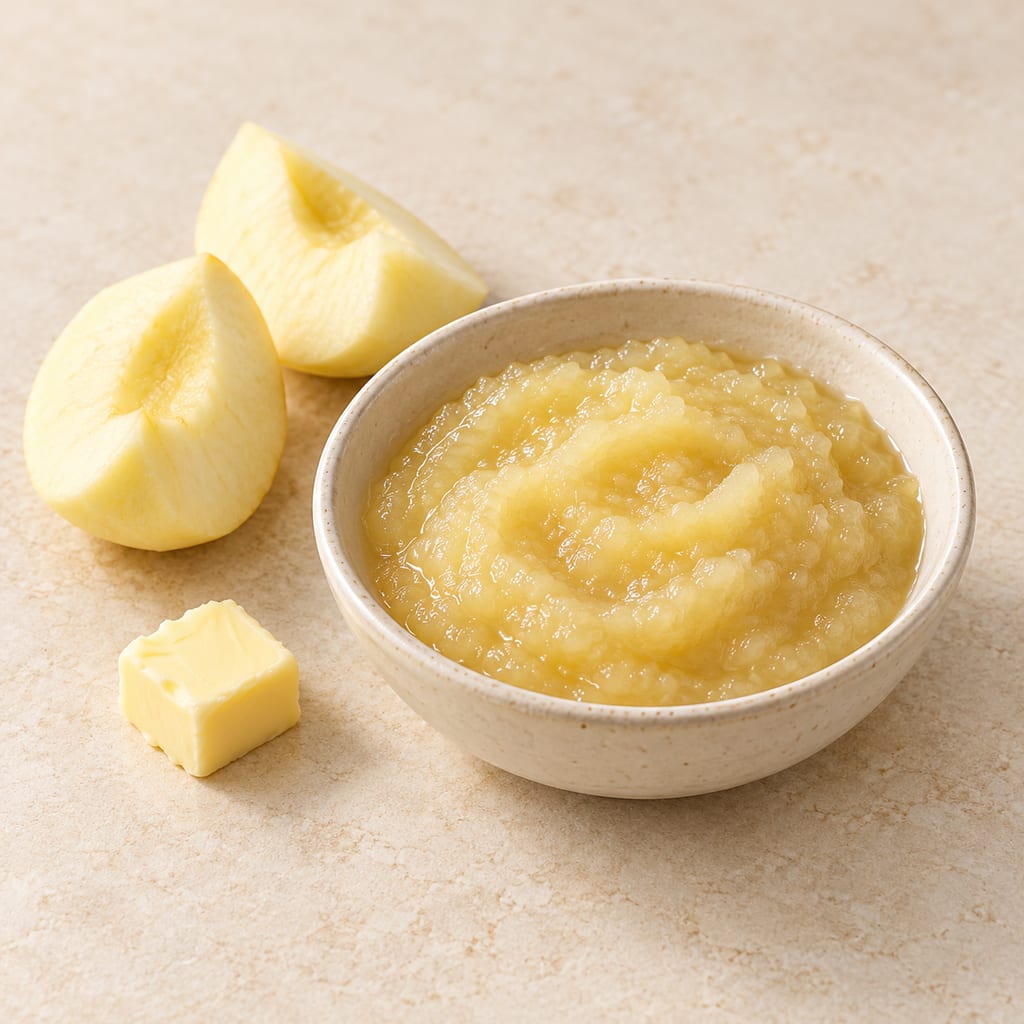
Apple sauce for goose and pork is a plain English accompaniment: cooked apples pulped with water, then sweetened with sugar and finished with a little butter.
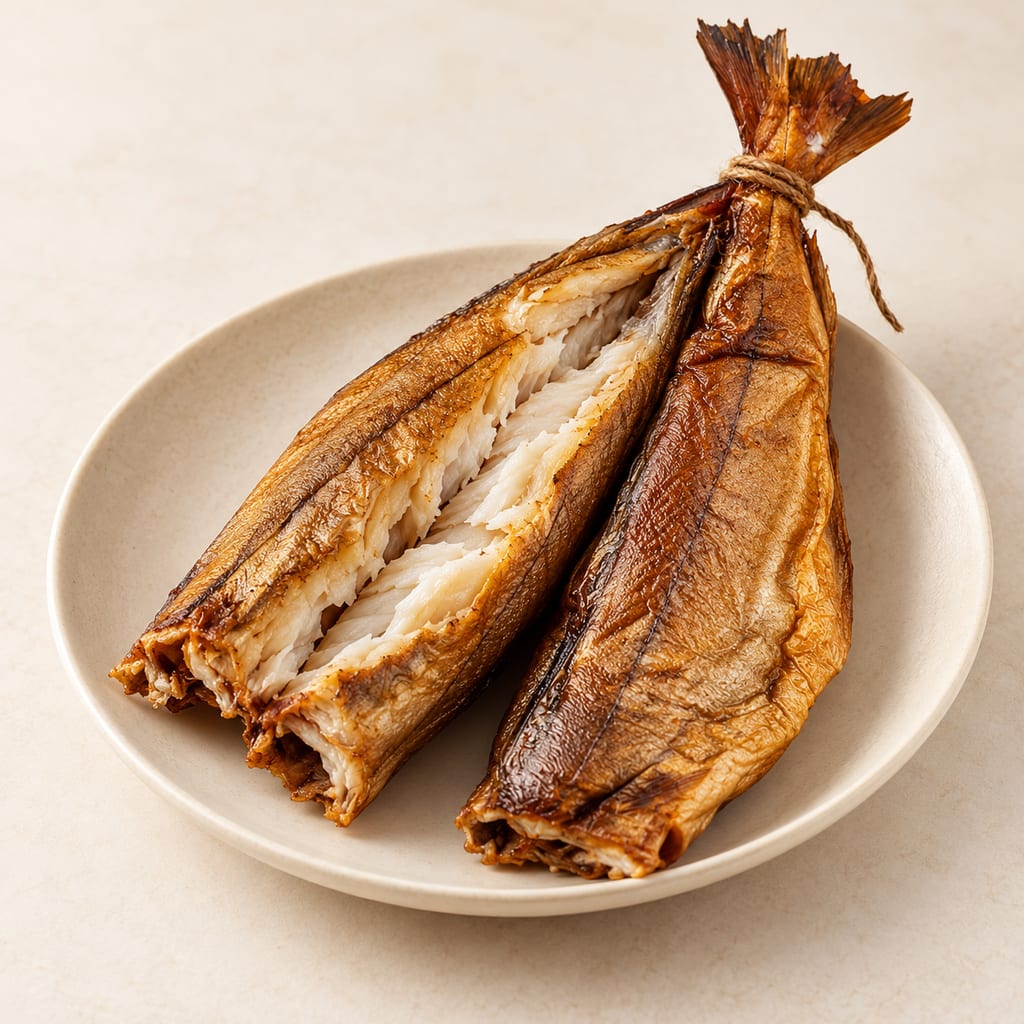
Arbroath smokies are whole haddock dry-salted, paired by the tail and hot-smoked in a protected coastal area. Their recorded history links Auchmithie and Arbroath, though the exact origin is unsettled.
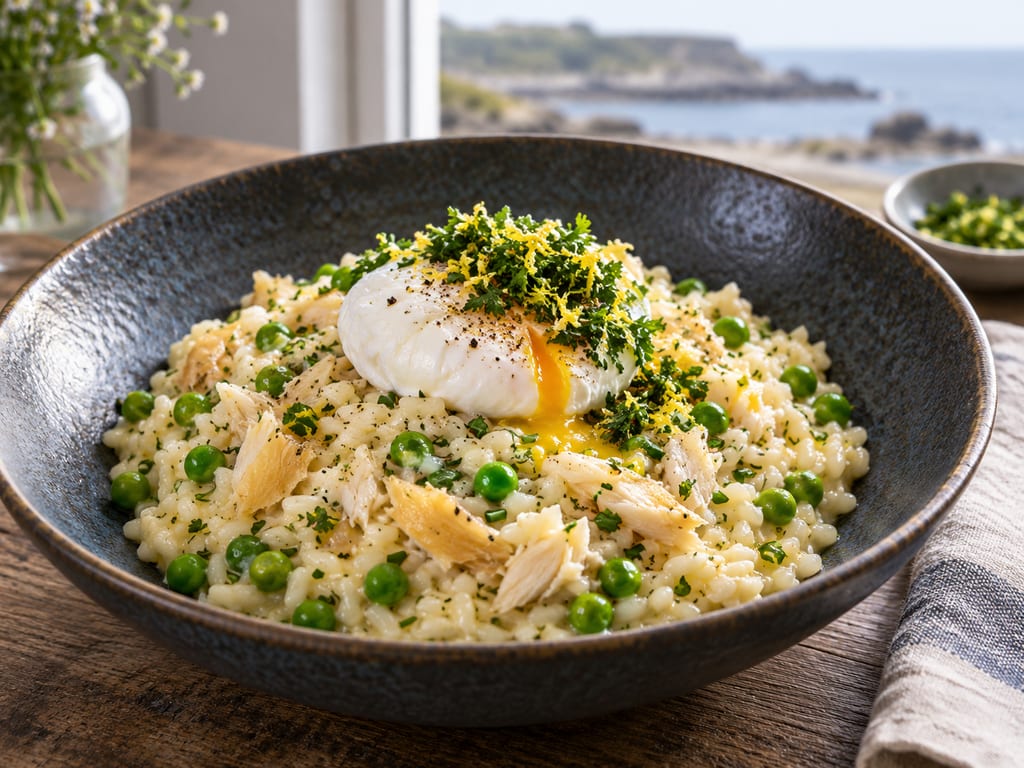
A four-serving risotto published in the 2014 Arbroath Smokie Trail booklet and credited to Hayley Wilkes. It cooks with finished Arbroath smokies; it does not describe smoking fish.
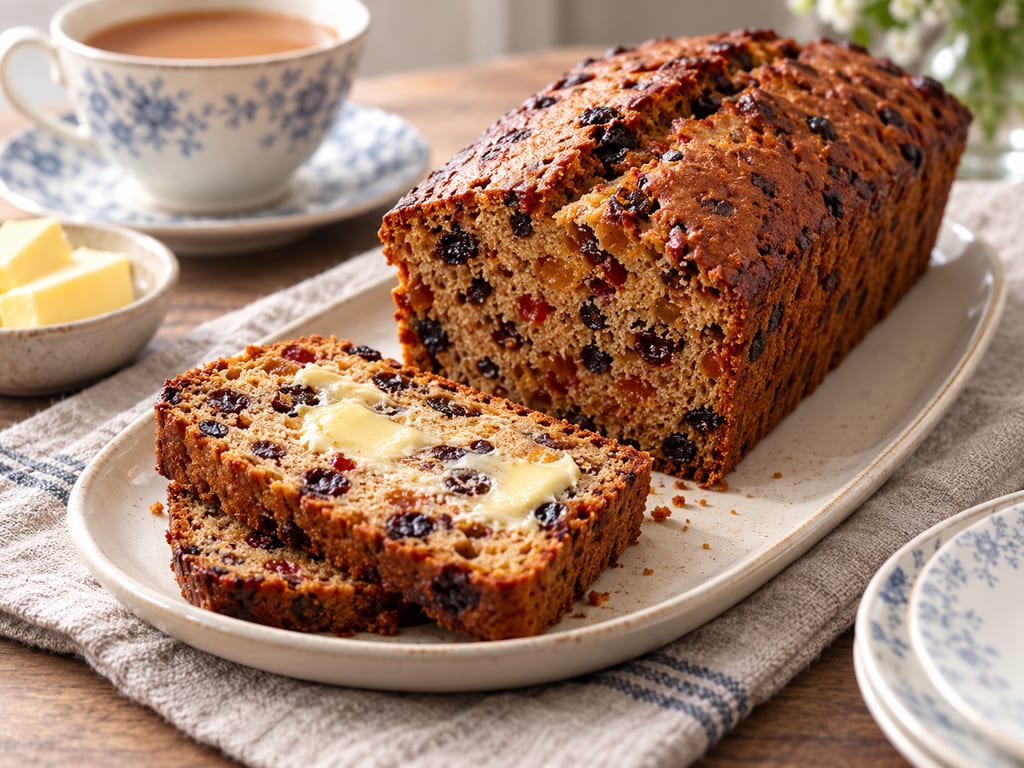
Bara brith is Wales’s speckled fruit loaf, made in both yeasted bread forms and the widely served modern tea-loaf style. This version soaks dried fruit in strong tea before mixing it with self-raising flour, spice, sugar and egg.
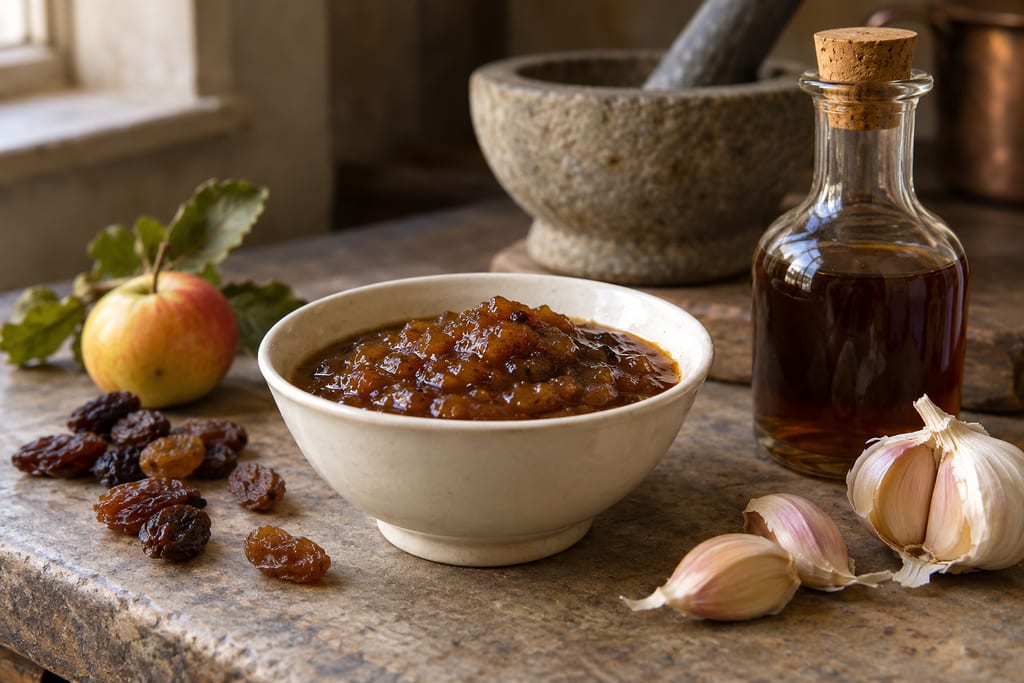
Eliza Acton's Bengal receipt for chetney sauce: stoned raisins and a hard acid fruit pounded with brown sugar, ginger, salt, cayenne and garlic, then thinned with vinegar to the consistence of thick cream.
The Rwandan urwina is a conical, leaf-lined earth pit that warms green brewing bananas before they are peeled, crushed for juice and fermented separately.
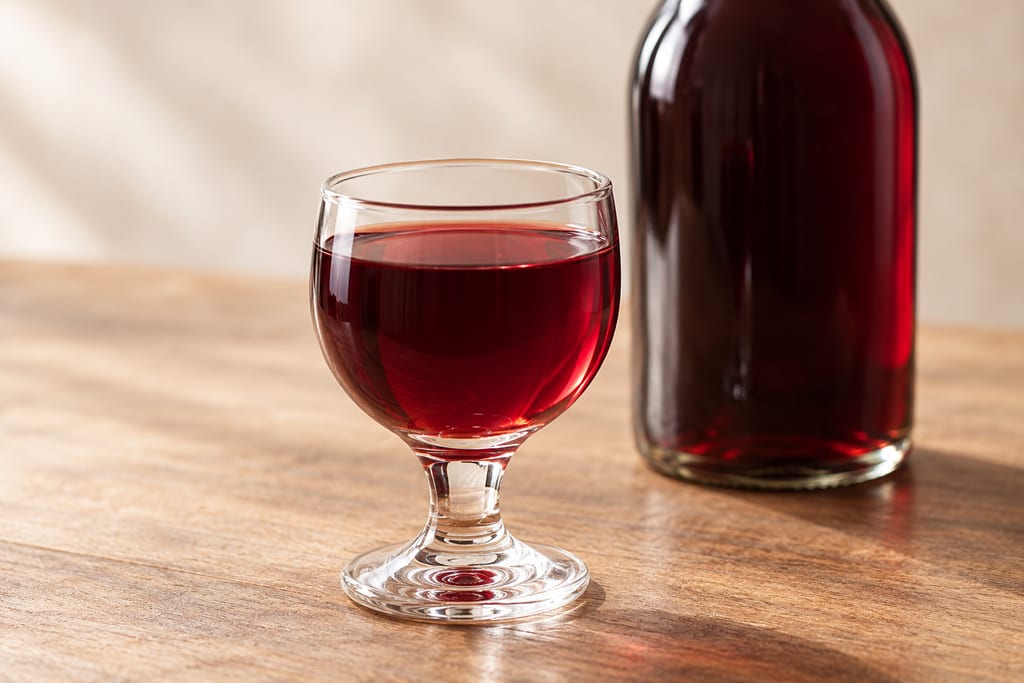
Korean black raspberry wine: crushed bokbunja berries with their seeds, sweetened to 20 °Brix, fermented 15 days at 25 °C with wine yeast, filtered and matured three months.
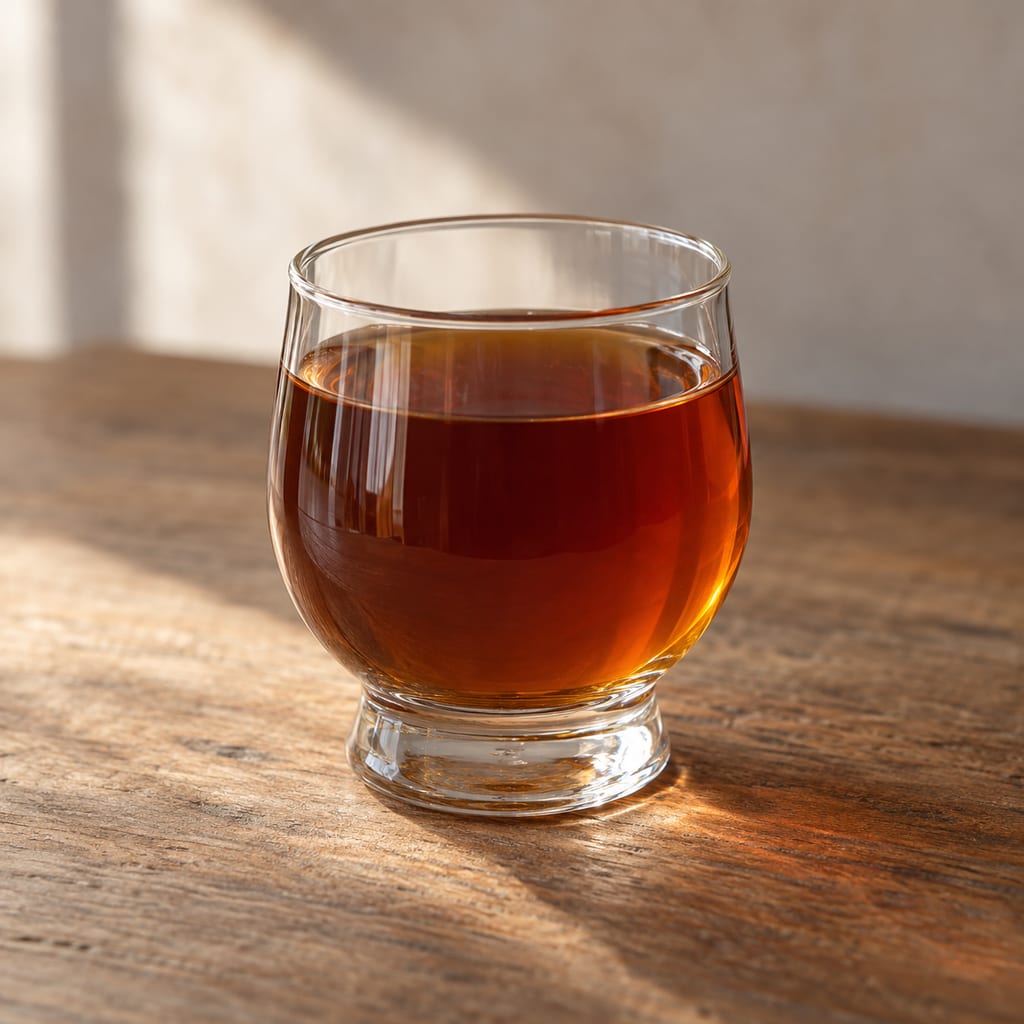
Musalais is a fermented grape drink documented among Uyghur producers in A’wati, southern Xinjiang. A studied process combines grape juice and heated pomace extract before spontaneous fermentation.
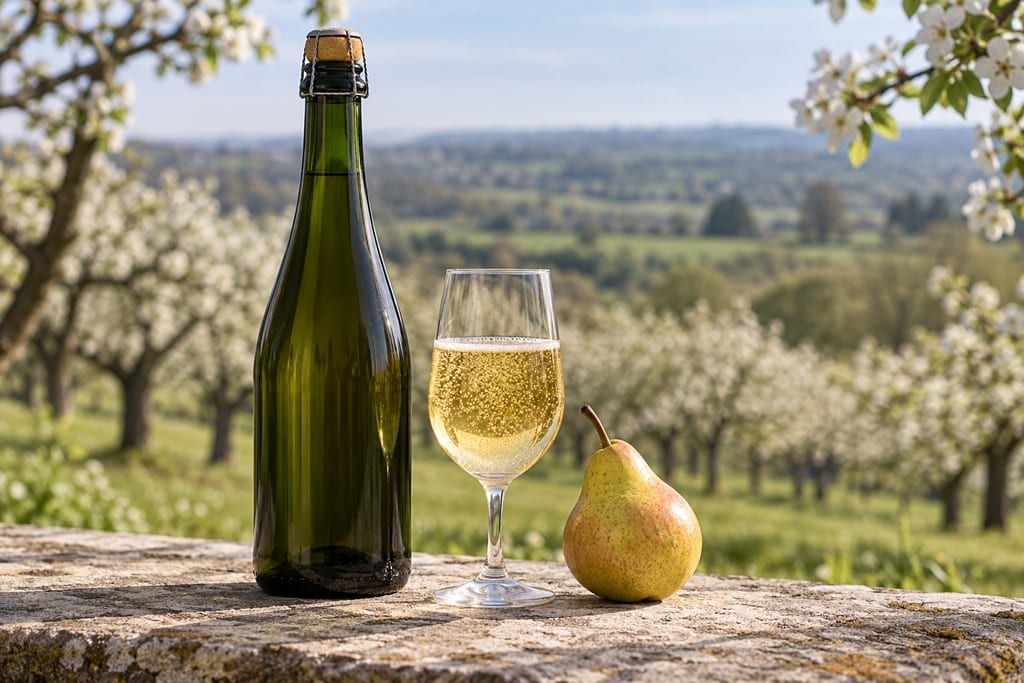
Naturally sparkling perry from the Bas Domfrontais in Normandy, pressed from high-stem orchard pears with at least 40% Plant de Blanc and carbonated by fermentation in the bottle.
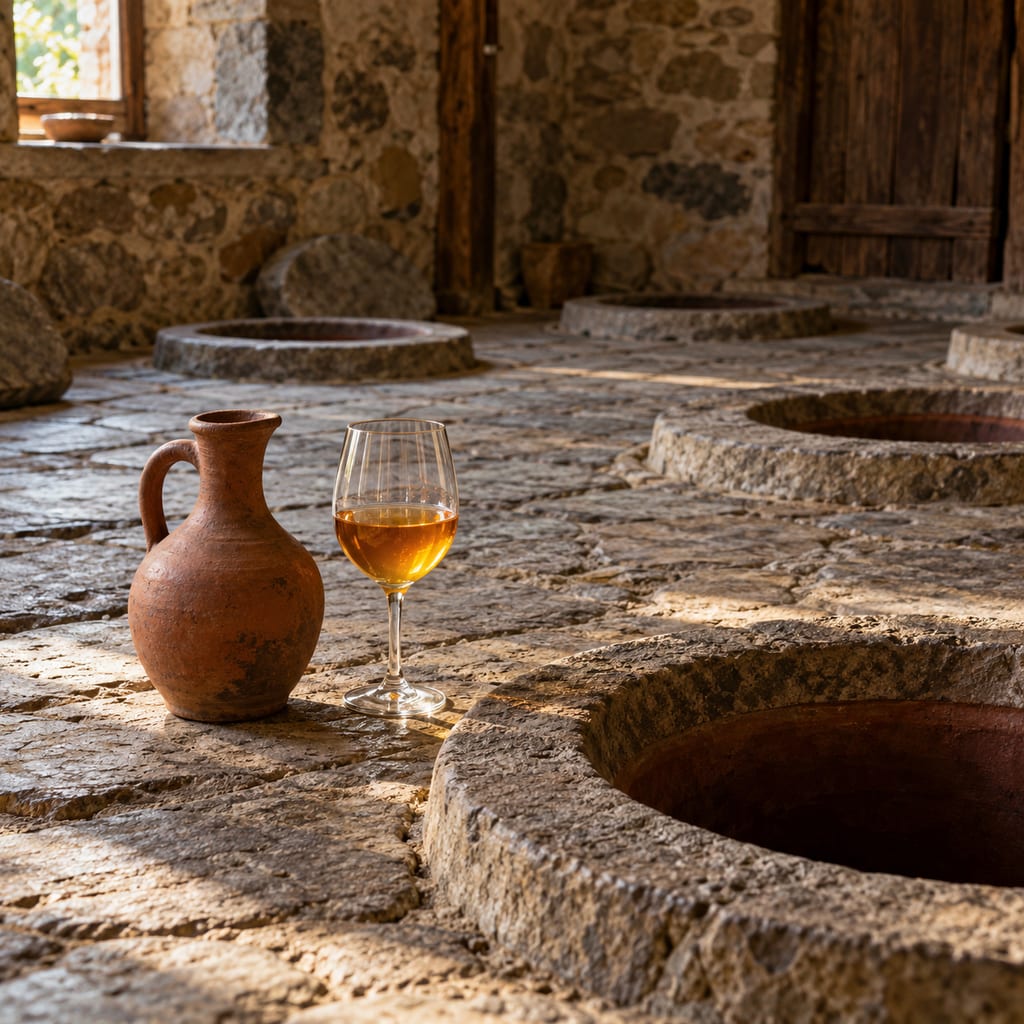
Georgian wine fermented and matured in buried clay vessels called qvevri, usually with grape skins, pips and sometimes stems, in styles from amber to red that differ by region.
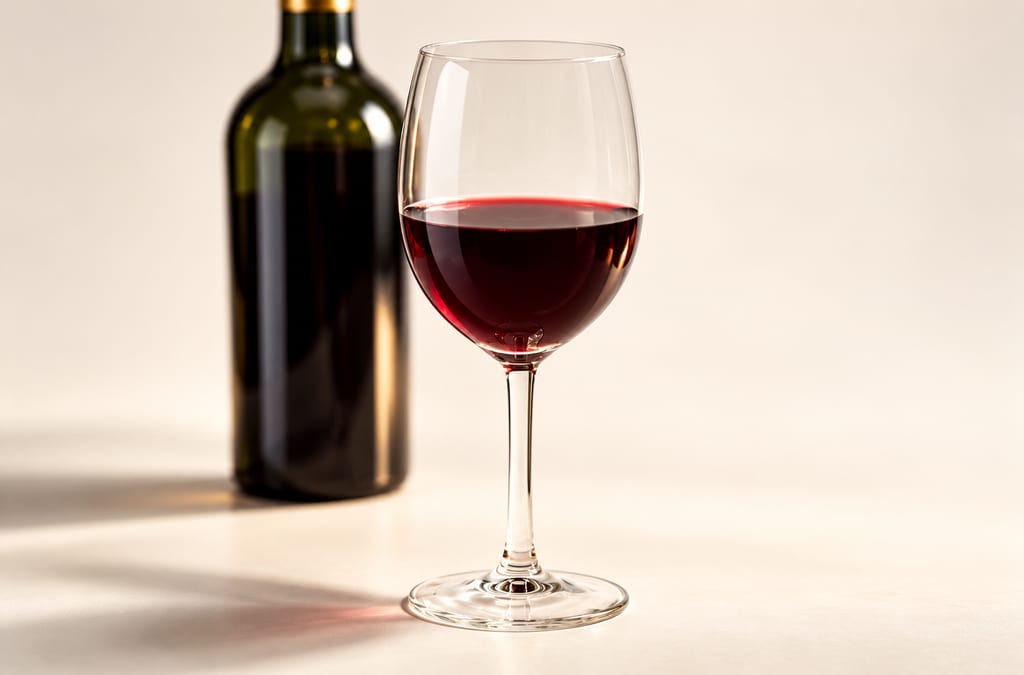
Red wine is grape must fermented with the skins and other solids, then separated from the pomace. Grape, cellar and regional choices shape its colour, structure and style.
Dry, lightly sparkling cider from Asturias in northern Spain, pressed from cider apples, fermented without added sugar, matured through the winter and poured from a height.

A gelling polysaccharide extracted from red seaweeds, sold as kanten strips or powder; it sets firm at a low concentration and stays solid until about 85 °C.

A Dominican table and seasoning condiment of sour orange juice, mixed with lime and salt and bottled raw; garlic, oregano or a hot pepper may be added for meat or a spicier bottle.

Cicerbita alpina is an alpine perennial whose tender shoots and leaves have been eaten raw or cooked. Sámi milk preparations and modern Carnian dishes are distinct uses, with serious identification and preservation limits.

Japanese skipjack tuna cooked, then repeatedly smoked and dried over a wood fire by the hand-fired tebiyama method into a hard block for shaving into dashi: the first stage of katsuobushi.

A Swedish-style spirit vinegar made by fermenting neutral alcohol with live vinegar bacteria, with a separate guide to commercial ättika strengths.

A yeast-raised wheat ring shaped from a firm dough, briefly boiled and baked. This source-batch formula gives a gently malted crust and a chewy crumb.

A warm dip of garlic, anchovy and olive oil, often enriched with butter, that Piedmont serves over a flame with raw and cooked vegetables and bread.

Bechamel is a white sauce of milk thickened with a butter and flour roux, one of the French mother sauces, and the base from which Mornay and other cheese and cream sauces are made.
No community contributions have been published for this entry yet.
Sign in to contribute. Published comments and photos are free to read.
John Evelyn, digitised by the Internet ArchiveHistory · Method
Sylva, with Pomona and Aphorisms concerning Cider, 1664Sir Paul Neile's discourse of cider: settling, bottling while not perfectly fine, venting, cellar storage in straw and sand
The Redstreak as a Herefordshire wilding called the Scudamores Crab
Aphorism on raisins and a walnut of sugar in Somerset bottles
Cited in: What is seventeenth-century bottled cider?; Which apples went in?; Why the juice was settled before it fermented; Choosing the moment to bottle; Venting, cellars, straw and sand; Sugar as a remedy; How it was drunk and kept; Method
Project GutenbergHistory · Method
The Closet of Sir Kenelm Digby Knight Opened, 1669Sir Paul Neale's way of making cider: Redstreak best, apples rest three weeks, twelve-hour settling, barrel two fingers short, bottles filled within two fingers, venting after two or three days, hay, ground and sand
Cited in: What is seventeenth-century bottled cider?; Which apples went in?; Why the juice was settled before it fermented; Venting, cellars, straw and sand; How it was drunk and kept; Ingredients; Method
John Worlidge, digitised by the Internet ArchiveHistory · Method
Vinetum Britannicum, or A Treatise of Cider, second edition, 1678Bottling as a great improver of cider
Loaf sugar for poor or flat cider
Opening corks two or three days after bottling
Corks steeped in scalding water, bottles laid on their sides
Glass stopples could force bottles, corks rarely did
Cited in: Venting, cellars, straw and sand; Sugar as a remedy; Bottles and corks
Robert Hogg and Henry Graves Bull, digitised by the Internet ArchiveHistory · Reference
The Herefordshire Pomona, 1876–1885Redstreak description and juice gravity 1079
The Redstreak had ceased to exist as a distinct variety
Cited in: Which apples went in?
David Dungworth, Industrial Archaeology ReviewHistory · Context
Three and a half centuries of bottle manufactureShaft-and-globe bottles of the mid seventeenth century and onion bottles of the late seventeenth century
Cited in: Bottles and corks
Washington State University ExtensionMethod · Safety
Hard Cider Production and Orchard Management in the Pacific Northwest, PNW 621Ferment at 16 °C or lower for 10 days to 4 weeks
Fermentation complete at SG 1.0 or lower
Priming about 4.0 g/l gives about 1 bar
Champagne bottles rated for 6 bar; do not over-prime
No sulfite after fermentation when bottle conditioning
Cited in: Ingredients; Method; How the bottle makes the sparkle; Food safety and storage
Andrew LeaMethod · Safety
The Science of Cidermaking, part 4: customising your ciderNatural conditioning by bottling at SG 1.003 or by priming a dry cider
Bottles must withstand the pressure; crown-cap beer bottles or PET
Bottle bombs; goggles
Cited in: Ingredients; Method; How the bottle makes the sparkle; Food safety and storage
U.S. Food and Drug AdministrationSafety
Guidance for Industry: Juice HACCP Hazards and Controls GuidancePatulin from mouldy apples and pathogens in fresh juice; fruit sorting controls
Cited in: Food safety and storage
Brewers AssociationSafety
Preventing Package Over-PressurizationFermentable sugar and live yeast after packaging can over-pressurise packages
Cited in: Food safety and storage