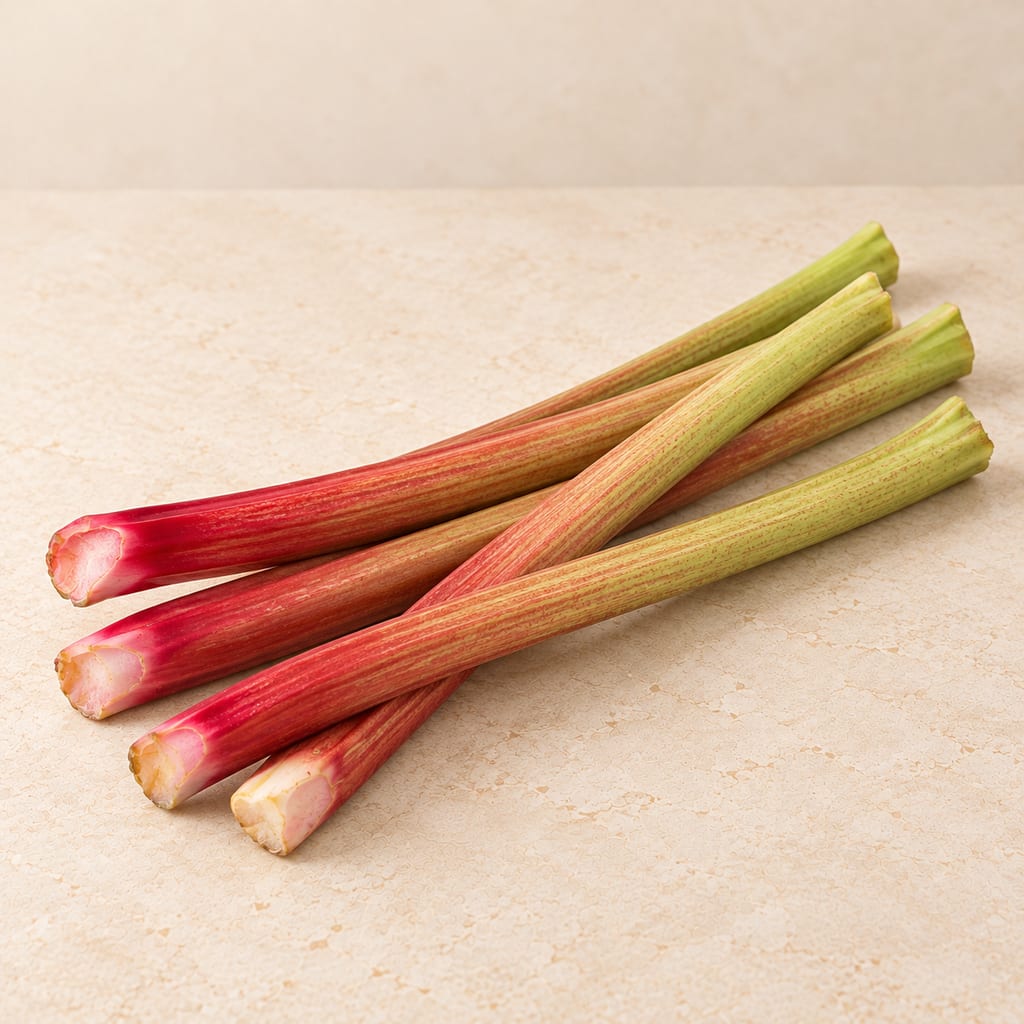
Rhubarb stalk
Rhubarb stalks are the tart leaf petioles of garden rhubarb, eaten as a vegetable and used in sweet dishes and wines; they lend a must sharpness and aroma but little sugar.
 FermenteaWhere food goes to change
Beeton rhubarb wine
S. O. Beeton’s 1861 household book records rhubarb wine made with rhubarb pulp, water, loaf sugar, lemon rind and isinglass; its historical directions do not establish a safe modern fermentation endpoint.
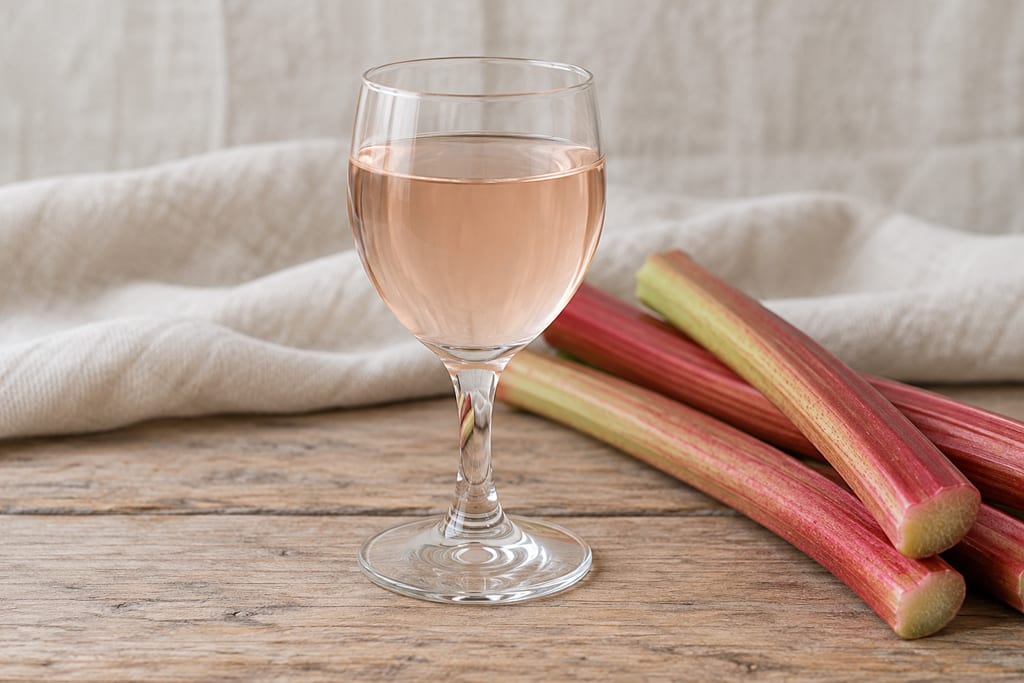
The 1861 bound edition of Isabella Beeton's The Book of Household Management includes recipe 1829, “Rhubarb Wine.” The source identifies an industrial-era publication, not the drink's origin. The inspected scan is a 1968 facsimile of the 1861 edition; the original physical copy was not collated.
Beeton calls for rhubarb pulp and added loaf sugar. It is not a method for fermenting rhubarb's native sugar alone. Its recipe names no species, cultivar, plant part or yeast. The instruction to gather in mid-May belongs to Beeton's British household text and is not a universal harvest calendar.
Recipe 1829 gives 5 lb of rhubarb pulp to 1 gallon of cold spring water. For each gallon of liquor it gives 3 lb of loaf sugar, 1/2 oz of isinglass and the rind of one lemon. It directs bruising the fruit, steeping it for three days with stirring three or four times daily, pressing it through a hair sieve on the fourth day and dissolving in the sugar.
The text describes fermentation beginning to subside after four, five or six days, a crust or head, transfer to a cask, possible racking if fermentation continues, and bottling in February or March. It supplies no inoculation, controlled temperature, measured endpoint, pressure test or validated storage condition. These directions are evidence of a historical recipe, not a safe modern process.
North Dakota State University Extension's modern rhubarb-wine method is a separate formulation. It includes grape concentrate, sugar, tannin, yeast nutrient, water, a Campden tablet and wine yeast, with monitored specific gravity and temperature. Its rhubarb method gives inconsistent starting-gravity figures (1.085–1.09 in the ingredient table and 1.095 in the method); its terminal figure also conflicts with the guide's general discussion. Those unresolved values are not imported into Beeton's recipe or presented as controls here.
Beeton's wine recipe says “rhubarb pulp” and does not specify the plant part. University of Minnesota Extension states that rhubarb leaves are toxic and identifies the leaf petioles as edible. Keep leaf blades out of food preparation.
The historical method does not establish a safe fermentation endpoint or bottling date. NDSU's bottle-pressure warning belongs to its separate modern guide. Neither the historical crust, a calendar date, bubbles, taste nor smell is a safety test. No validated home process, pressure control, shelf life or difficulty rating is established for Beeton's method.
The inspected sources do not establish the plant species or cultivar used in Beeton's recipe, a named starter or spontaneous-fermentation conditions, temperature, a measurable endpoint, stable bottle condition, safe storage duration or a source-validated modern adaptation. The historical batch and NDSU modern method remain separate. No alcohol strength or birthplace is claimed.
The source gives proportions against two different denominators. The water is measured against the weight of pulp: 1 gallon for each 5 lb of pulp. Sugar, isinglass and lemon rind are measured against each gallon of liquor after pressing. The text does not say how much liquor is recovered, so the second set of amounts cannot be calculated from the first without an unreported yield. The ingredient lines preserve that distinction instead of implying that the original 1 gallon of water is also exactly 1 gallon of finished liquor.
The measures belong to the historical source. This page does not convert the old recipe into a standardized modern batch or supply a substitute for its unknown yield. It does not specify the rhubarb type, ripeness, stalk-to-water extraction, vessel headspace, or whether the pulp was pressed firmly. Those differences could change the recovered liquor. The actual quantities must remain tied to the source's wording, and not be rounded into a new formula.
Beeton's optional currant juice is described as a way to obtain a very brilliant colour. That statement is a source-specific appearance suggestion, not a required ingredient or evidence about fermentation strength. It is left out of the core ingredient list. No amount is supplied in the inspected text, and no colour target belongs in a recipe without one.
The digital source dossier identifies the scanned book as a 1968 Jonathan Cape facsimile of the London edition dated 1861. The recipe appears on printed pages 887–888, corresponding to digital pages 0299–0300. The recipe is headed number 1829. An independent Project Gutenberg transcription names the book and states that a bound edition was first published in 1861. The facsimile scan and the transcription are two witnesses to the printed text, but neither is a collation of an original physical copy from 1861.
The initial dossier misread one numeral in an enlarged crop, then visually checked both quantity locations on the scan and compared them with Gutenberg. Both read 5 lb. There is no 5 lb/6 lb disagreement between the inspected witnesses. This page therefore records the corrected 5 lb ratio and does not repeat the superseded reading. The audit history is not part of the recipe directions.
Beeton's book states that it was originally published in monthly parts from 1859 to 1861, and that the bound edition first appeared in 1861. The recipe can be described as an industrial-era printed household attestation. The supplied sources do not identify who first made rhubarb wine, how long the recipe had circulated, or where it originated.
Beeton names a wet cloth for wiping, a mallet and a large wooden tub or another convenient means for bruising the stalks, a hair sieve for pressing the pulp, another tub for the sweetened liquor, casks for fermentation or racking, and bottles. These are descriptions from an 1861 household text. They do not state modern material grades, vessel volume, lid or airlock design, cleaning or sanitation methods, or which alternatives perform equivalently.
The word 'cask' describes a storage vessel in the source; it does not provide a complete specification for a modern fermenter. In particular, the directions to 'stop it down' after a fortnight do not explain how gas pressure was monitored, whether fermentation had ended, or how the vessel was closed. This entry does not turn that phrase into a modern sealing instruction.
The separate North Dakota State University Extension method asks for a primary fermenter, nylon straining bag, hydrometer, thermometer, secondary fermenter or carboy, siphon, airlock and bottles. Those tools belong to that modern formulation. They are not proof that Beeton used equivalent equipment, and they are not a source-validated retrofit for the historical method.
NDSU Extension's FN1638 includes a one-gallon-plus rhubarb-wine recipe with 3 lb rhubarb, 1/4 pint white grape concentrate, 2 1/2 lb sugar adjusted to a stated gravity, tannin, yeast nutrient, water, a crushed Campden tablet and a packet of winemaking yeast. The instructions freeze cut rhubarb for several days, thaw and mash it in a nylon bag, hold the must for 24 hours before adding yeast, use a primary fermenter, measure gravity, rack to a carboy and attach an airlock. This is a different source-specific modern preparation.
The quantities and equipment cannot fill gaps in Beeton's directions. NDSU uses grape concentrate and a named commercial yeast, whereas Beeton names neither and includes lemon rind and isinglass. NDSU also adds its own gravity checks and temperature range. Combining those elements would create a hybrid recipe that no one of the cited sources documents.
FN1638 contains internal discrepancies within the rhubarb method. Its ingredient table targets starting specific gravity 1.085–1.09, but the method says 1.095. The rhubarb instructions give a terminal value of .95–.98, while the general section describes dry wine as low as .990. The dossier has not reconciled those figures. None is adopted as a canonical control in this historical recipe.
FN1638's general discussion advises temperature management and monitoring and notes that a fruit wine can need additional racking and clearing time. Those details may help readers recognize that modern home-winemaking sources describe separate controlled methods. They do not show the temperature, elapsed fermentation or clearing time for Beeton's batch. This entry keeps the modern method as a comparison and does not transfer its safety claims.
Beeton says to gather rhubarb around the middle of May. That is the timing specified for this British recipe. Harvest dates vary with climate, cultivar and cultivation method; the single instruction does not establish a general season across regions. It also does not show that the wine was first made in Britain.
The recipe is evidence in a British household cookbook, so the location row is a publication and documented-preparation association. The source does not name a household, county, grower or birthplace. The modern NDSU recipe belongs to an American university extension publication and is kept as a separate comparison rather than used to broaden the historic entry's location.
Neither the Beeton recipe nor the two modern sources establish a continuous British regional tradition. The fact that a recipe appeared in a nationally circulated household book cannot show how often it was made or whether it persisted unchanged. The page records the specific dated printed witness and leaves wider claims open.
The recipe's ingredient wording is 'rhubarb pulp.' The separate Rhubarb entry in Beeton's book identifies the leaf footstalk as the part used for culinary purposes, but the wine recipe does not explicitly say 'stalk' or name a species. The live ingredient record for Rhubarb stalk is therefore a source-backed raw-material association, not proof that this particular printed batch specified a particular cultivated variety.
University of Minnesota Extension states that the leaf blades are toxic and identifies only the long, thick leaf petioles as edible. Keep leaf blades out of food preparation. The historical wine text is not a plant-safety guide, and its silence about the plant part is not permission to use leaves. The extension source supports a clear ingredient boundary, but it does not supply a wine-specific quantity, oxalate measurement or process limit.
Garden rhubarb is grown as a food plant, but neither Beeton's recipe nor the modern NDSU recipe names the cultivar used. Colour is not a reliable way to infer a cultivar or to calculate acidity, fermentable sugar or alcohol. No botanical species is assigned to the wine.
The historical recipe provides observable directions such as a three-day steep and the appearance of a crust, but it gives no measurement showing when fermentation was complete. A visible crust cracking or separating is not a validated stability test. The February or March bottling instruction and the prediction that it may be fit to drink in summer do not establish that a particular batch has stopped fermenting or can be stored safely.
No source in this dossier supplies a validated contemporary process for Beeton's exact ingredients and method. The evidence does not establish inoculation, temperature, microbial identity, pH, gravity endpoint, pressure control, shelf life, finished alcohol strength or safe batch scaling. Those fields remain unscored or unknown rather than filled from the modern NDSU preparation.
The NDSU guide separately discusses bottle safety and warns that fermentation that restarts after bottling can cause bottles to explode. That warning belongs to a modern home-winemaking context, not to a validation of Beeton's method. It reinforces why this historical recipe cannot be presented as an executable safety recommendation. No critical limit or sensory safety test is invented here.
Recipe 1829 in Isabella Beeton's The Book of Household Management records rhubarb wine and says to gather rhubarb around mid-May. The recipe uses added loaf sugar; it is not evidence that rhubarb's native sugars alone made the wine. The inspected witness was a 1968 facsimile of the 1861 edition, and the original 1861 physical copy was not collated.
Scaling: source batch only
The wine recipe says only 'rhubarb pulp' and does not identify a plant part. University of Minnesota Extension says rhubarb leaves are toxic and only the leaf petioles are edible.
Hazard sourceBeeton gives no inoculation, measured endpoint or stability test. A separate NDSU modern method warns that fermentation restarting in bottles can cause explosions; that warning does not validate or complete Beeton's historical method.
Hazard sourceKeep rhubarb leaf blades out of the preparation; use only the leaf petioles identified as edible by the extension source.
Control sourceThis is a source transcription, not a validated recipe for making or storing wine today.
The historical source does not name a yeast, give a measured fermentation endpoint, or establish a safe bottling date.
Do not treat taste, smell, a crust, visible activity or the stated historical calendar as proof of safety.
Beeton's household cookbook records the preparation in a British publication; this does not locate an origin or a particular household.
Rhubarb stalks are the tart leaf petioles of garden rhubarb, eaten as a vegetable and used in sweet dishes and wines; they lend a must sharpness and aroma but little sugar.
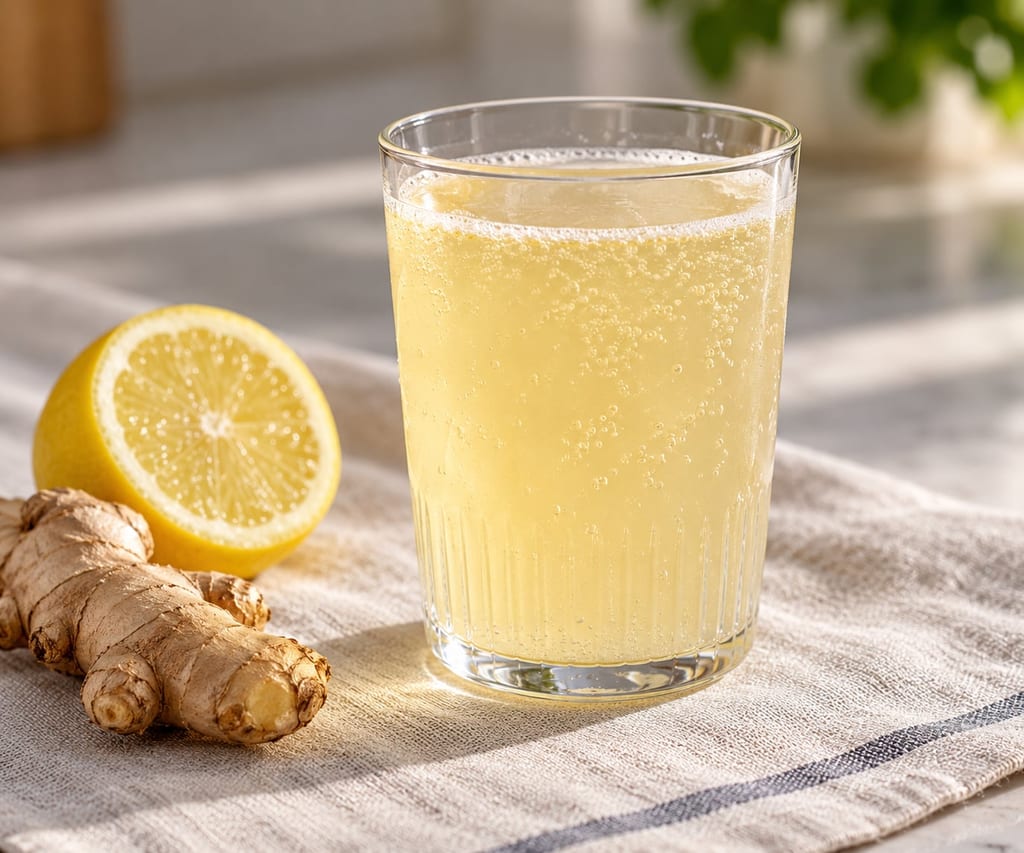
A one-liter teaching recipe ferments bruised ginger, lemon, sugar and cream of tartar with measured baker’s or ale yeast, then conditions the drink briefly in PET bottles before refrigeration.
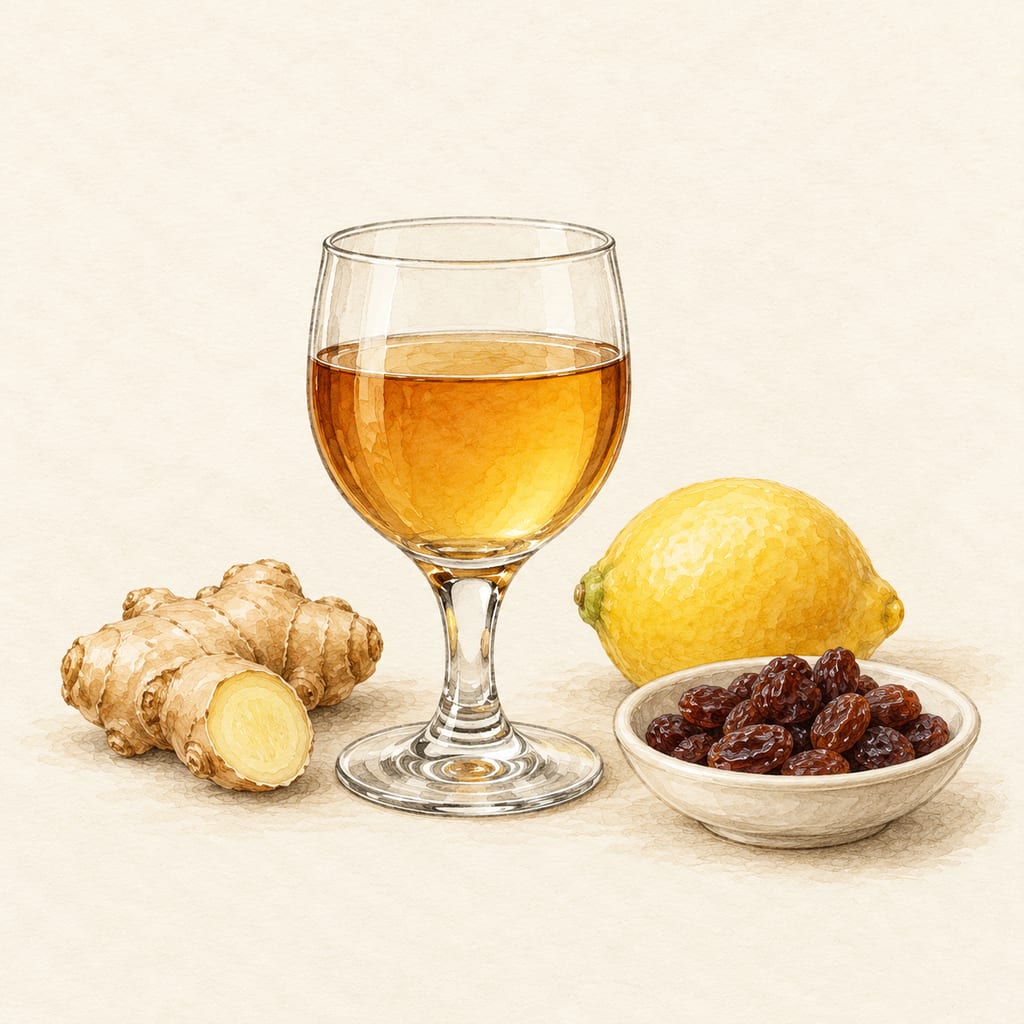
A Victorian household wine of boiled sugar, lemon and bruised ginger, worked on raisins in a cask for a fortnight and finished with brandy, made nine gallons at a time.
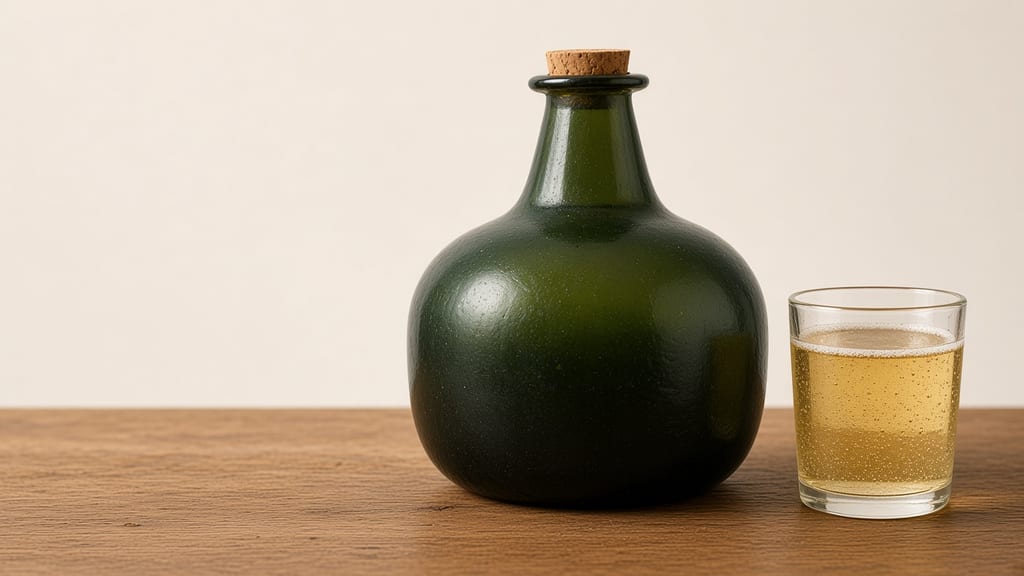
A lightly sparkling cider bottled before it had finished fermenting, as Sir Paul Neile described it in 1664, with a measured modern method for safe bottle conditioning.

Apple sauce for goose and pork is a plain English accompaniment: cooked apples pulped with water, then sweetened with sugar and finished with a little butter.
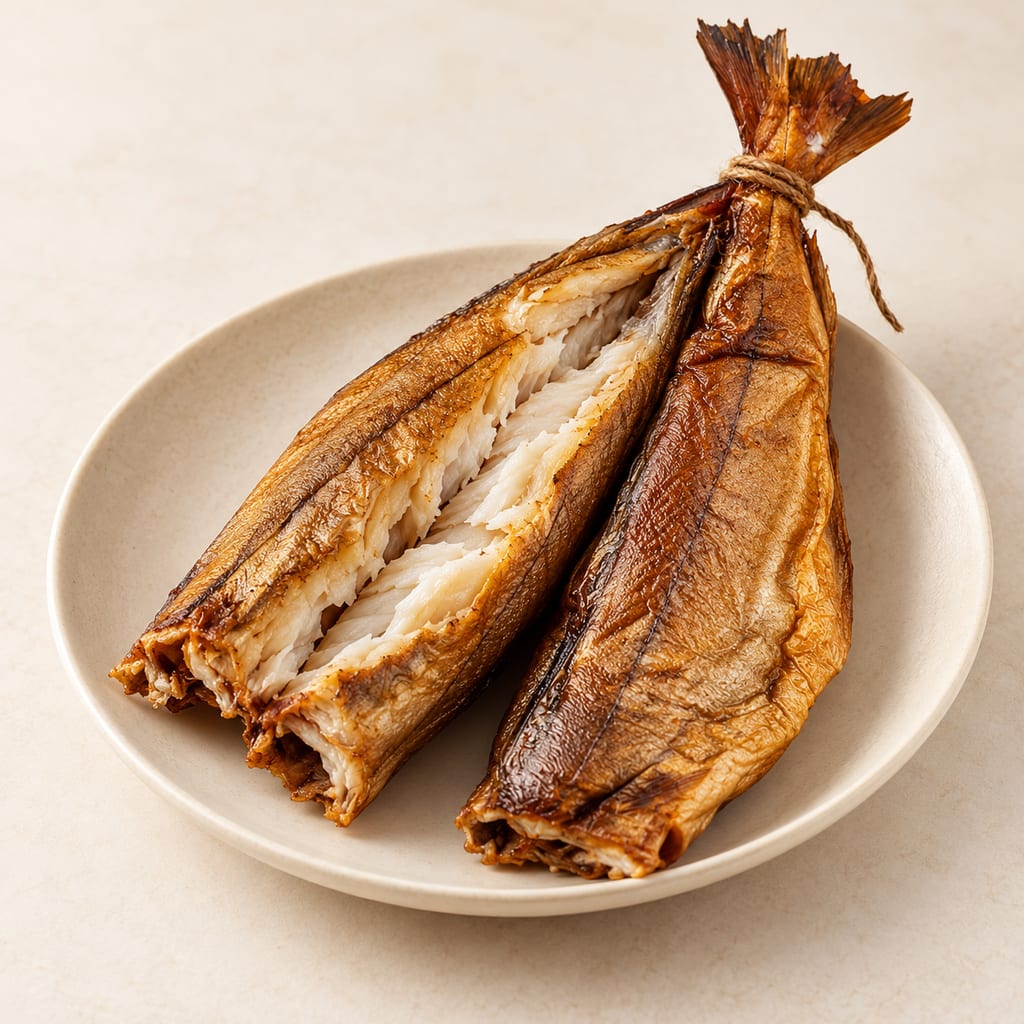
Arbroath smokies are whole haddock dry-salted, paired by the tail and hot-smoked in a protected coastal area. Their recorded history links Auchmithie and Arbroath, though the exact origin is unsettled.
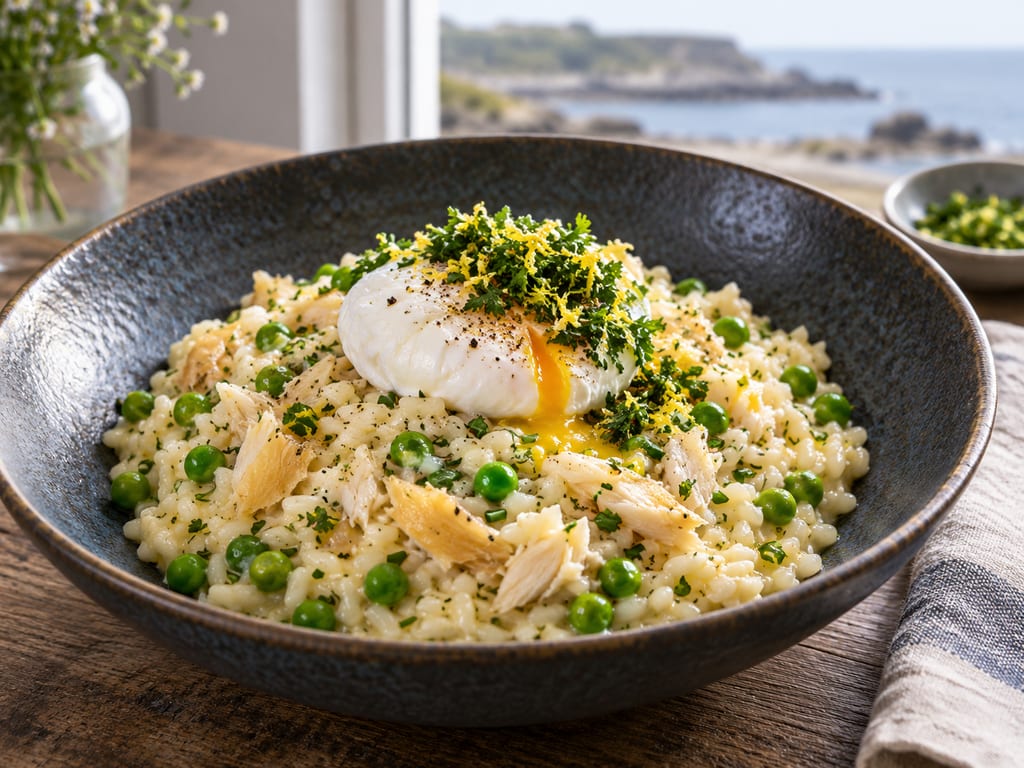
A four-serving risotto published in the 2014 Arbroath Smokie Trail booklet and credited to Hayley Wilkes. It cooks with finished Arbroath smokies; it does not describe smoking fish.
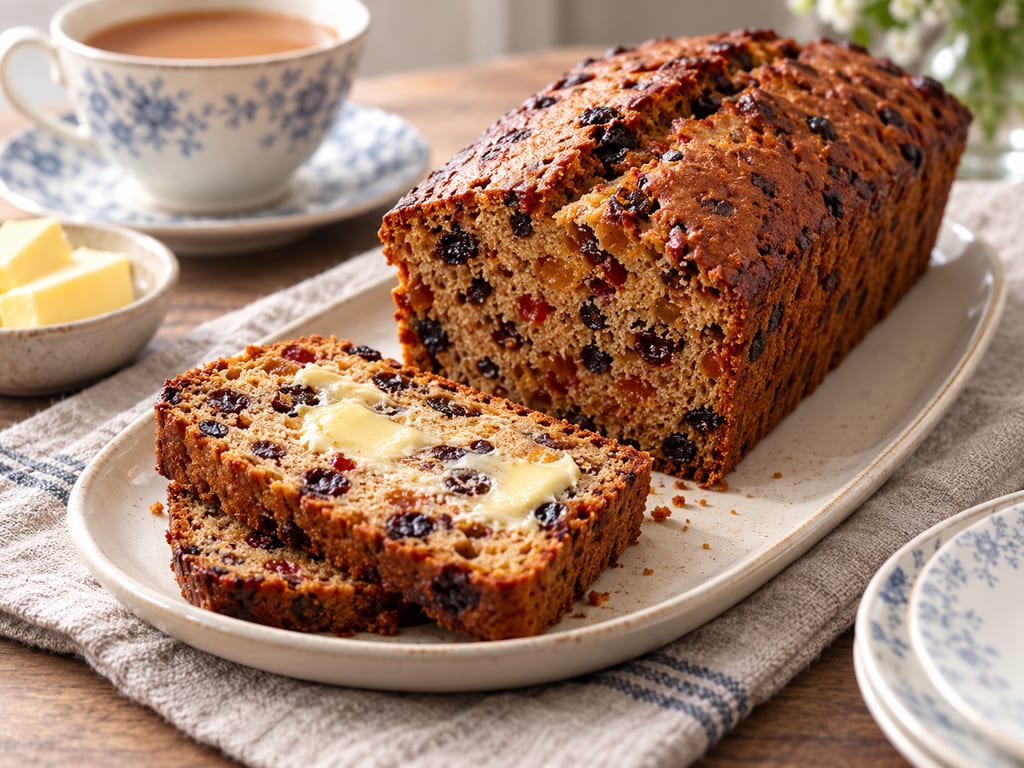
Bara brith is Wales’s speckled fruit loaf, made in both yeasted bread forms and the widely served modern tea-loaf style. This version soaks dried fruit in strong tea before mixing it with self-raising flour, spice, sugar and egg.
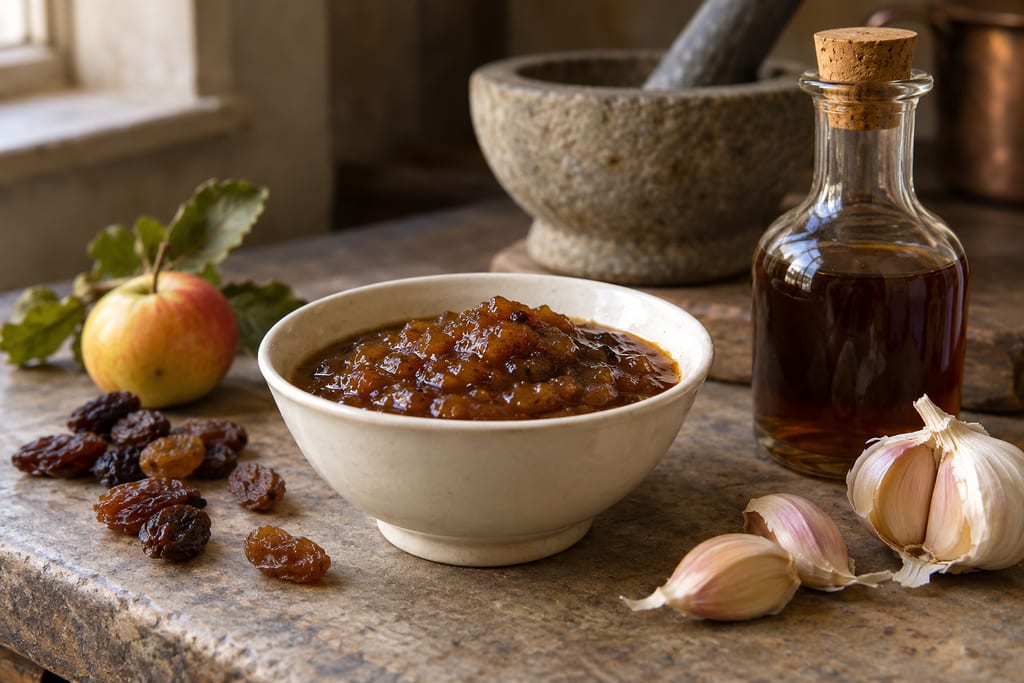
Eliza Acton's Bengal receipt for chetney sauce: stoned raisins and a hard acid fruit pounded with brown sugar, ginger, salt, cayenne and garlic, then thinned with vinegar to the consistence of thick cream.
The Rwandan urwina is a conical, leaf-lined earth pit that warms green brewing bananas before they are peeled, crushed for juice and fermented separately.
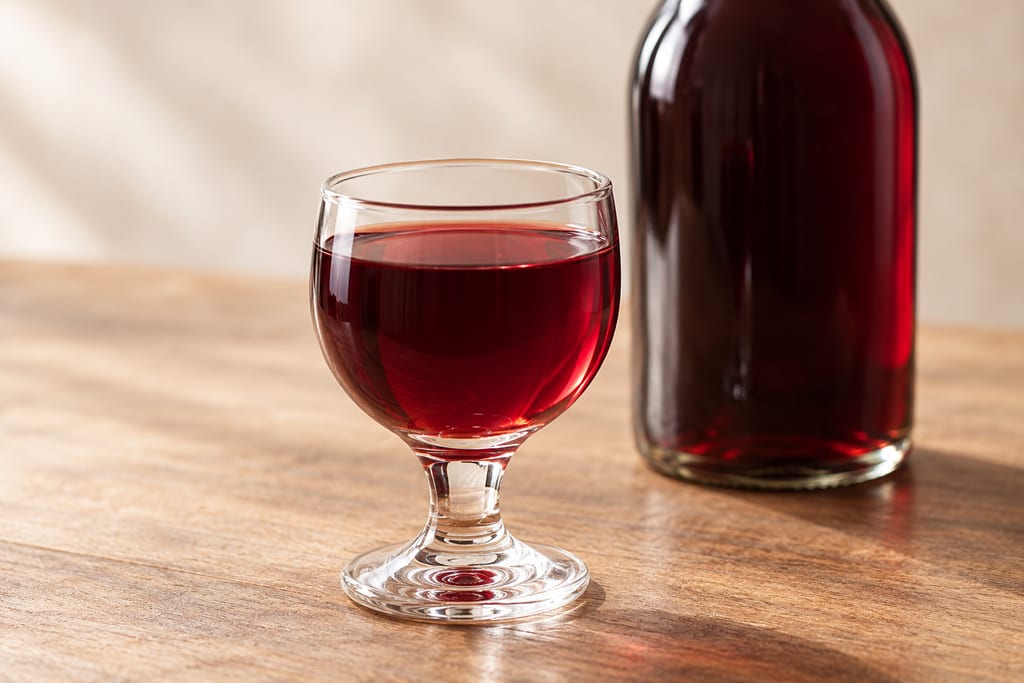
Korean black raspberry wine: crushed bokbunja berries with their seeds, sweetened to 20 °Brix, fermented 15 days at 25 °C with wine yeast, filtered and matured three months.
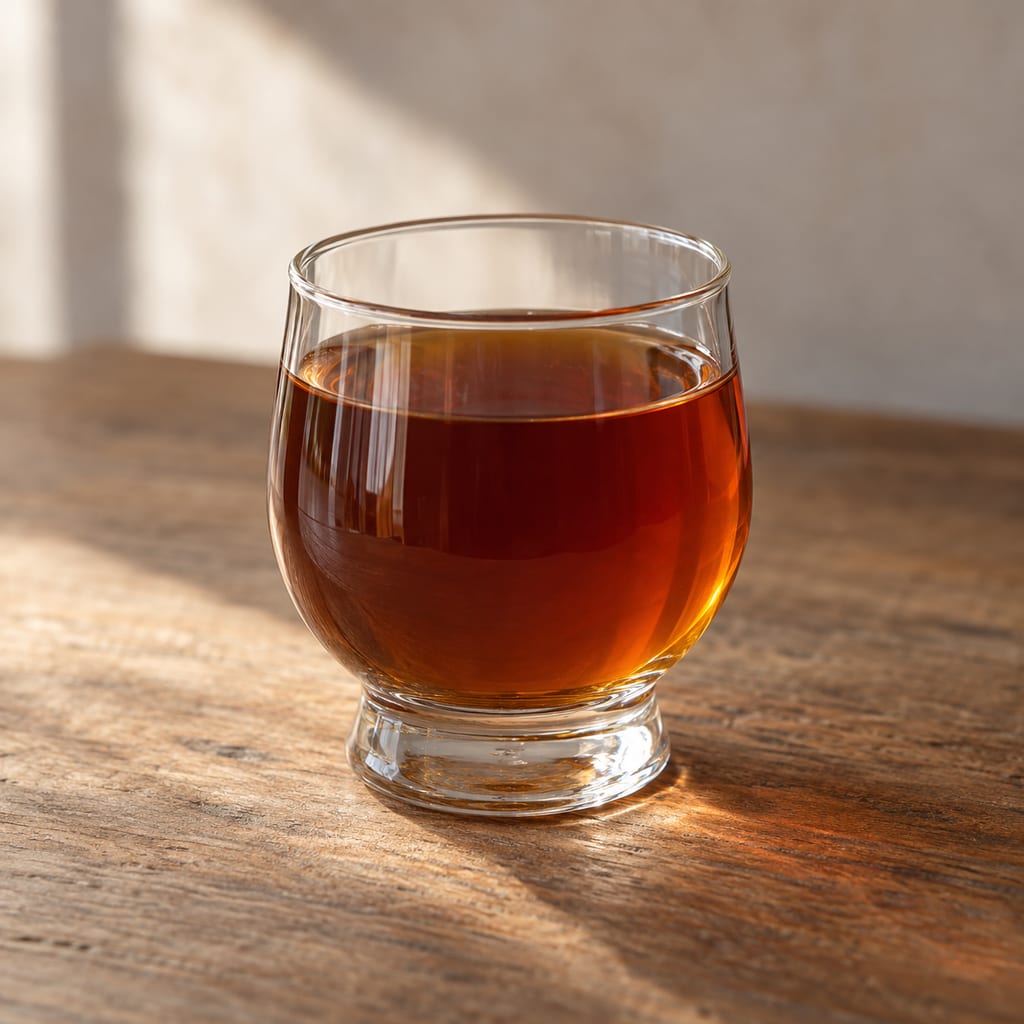
Musalais is a fermented grape drink documented among Uyghur producers in A’wati, southern Xinjiang. A studied process combines grape juice and heated pomace extract before spontaneous fermentation.
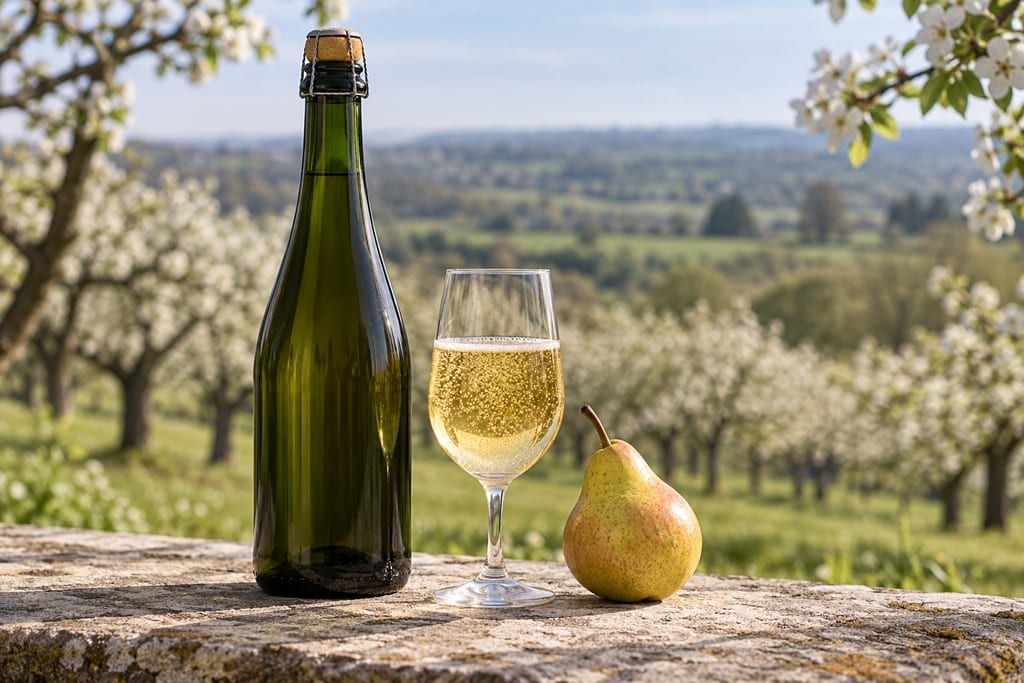
Naturally sparkling perry from the Bas Domfrontais in Normandy, pressed from high-stem orchard pears with at least 40% Plant de Blanc and carbonated by fermentation in the bottle.
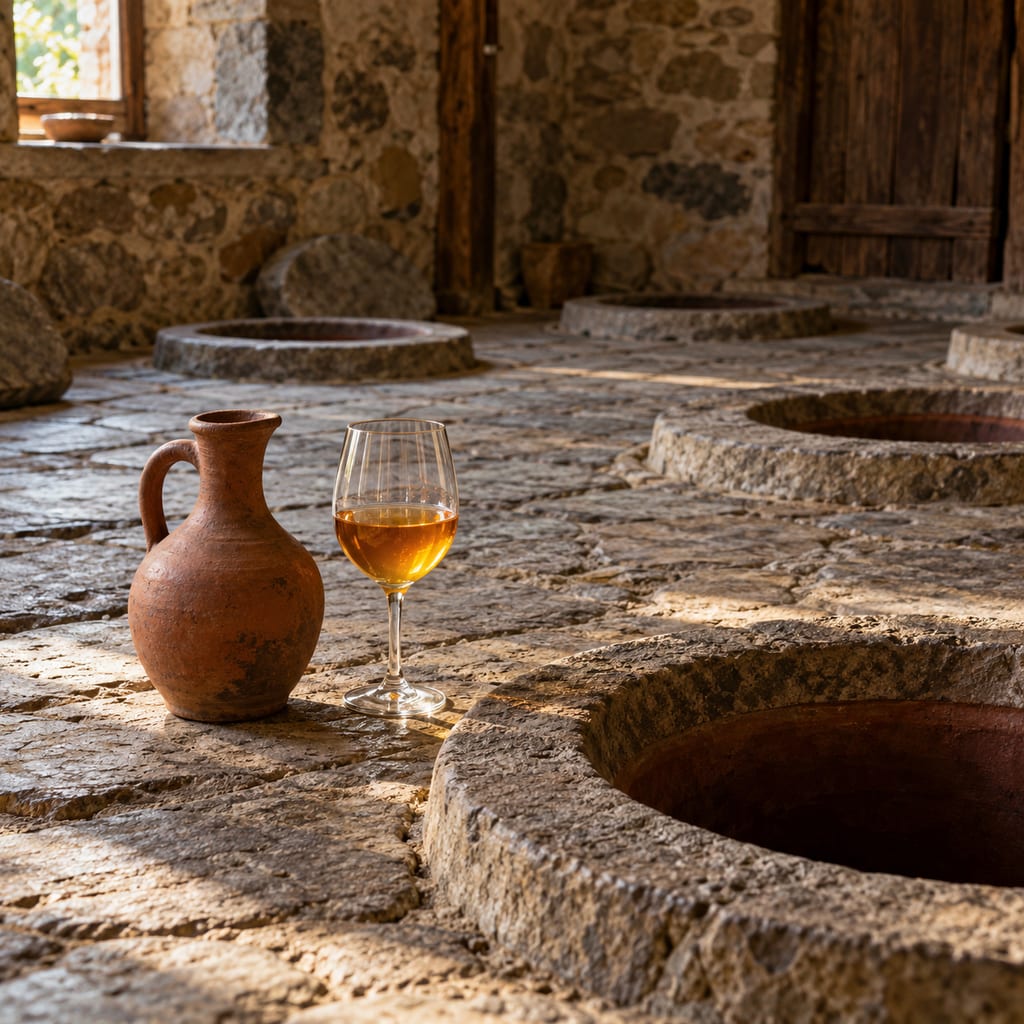
Georgian wine fermented and matured in buried clay vessels called qvevri, usually with grape skins, pips and sometimes stems, in styles from amber to red that differ by region.
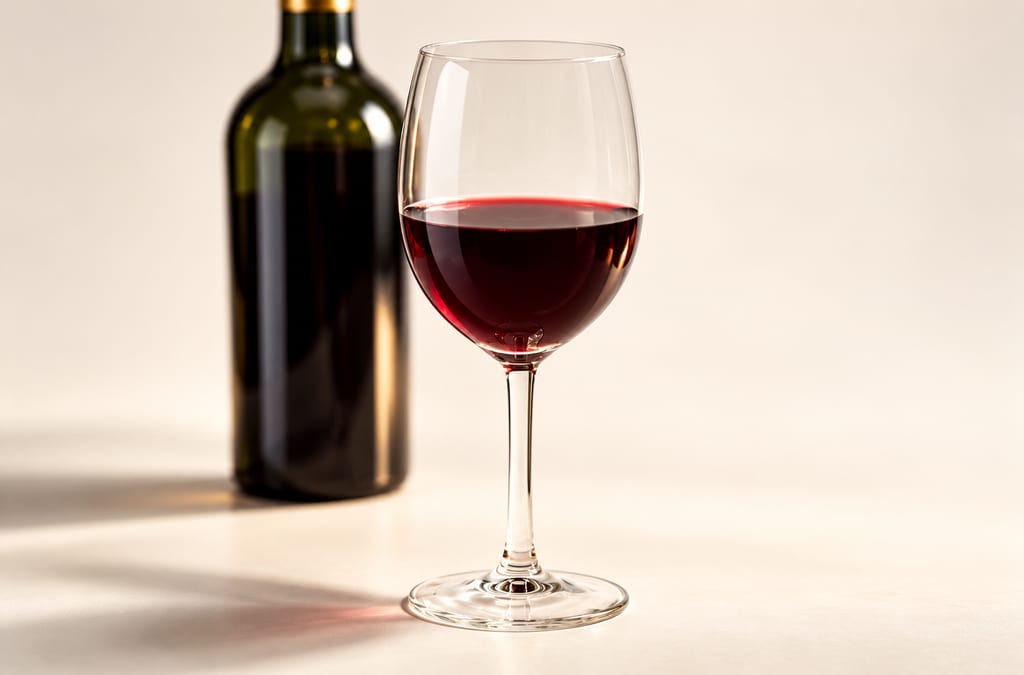
Red wine is grape must fermented with the skins and other solids, then separated from the pomace. Grape, cellar and regional choices shape its colour, structure and style.
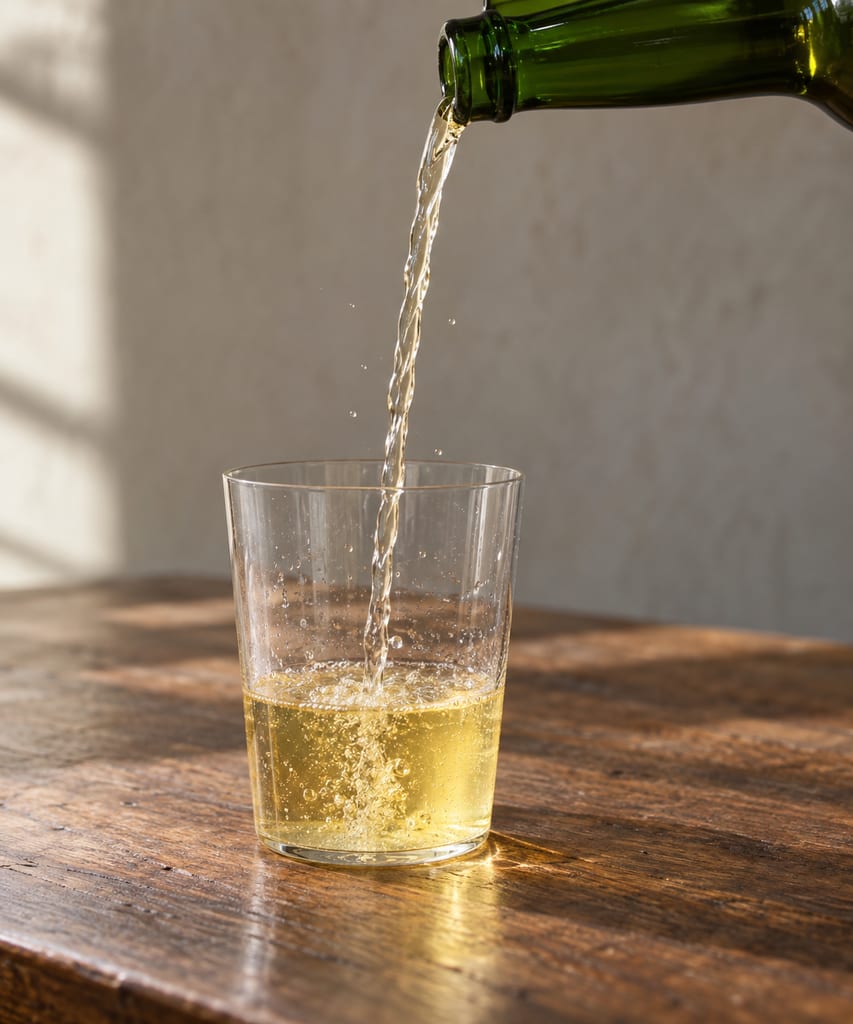
Dry, lightly sparkling cider from Asturias in northern Spain, pressed from cider apples, fermented without added sugar, matured through the winter and poured from a height.

A Cap-Pelé boucanière is an Acadian herring-smoking building. The documented Willie Niles example is a one-storey wood-frame structure with a ridge smoke vent and interior bays for hanging fish-bearing cannes.

Achcharu is a family of Sri Lankan vinegar pickles made with mixed vegetables or seasonal fruit and a piquant spice dressing. This version is a quick, refrigerated, non-fermented mixed-vegetable pickle.

The acocote is a long, hollowed and dried gourd used to draw aguamiel from a mature maguey. It is a harvesting tool: the sap is transferred to a separate vessel before it ferments into pulque.

Adrak murabba preserves young ginger in sugar syrup, a sweet South Asian preparation recorded in Indian cookery and food-processing sources.

Parkia biglobosa seeds are fermented into regional West African seasonings, including nététou, iru, dawadawa and soumbala. The yellow fruit pulp is a separate food, and names and methods vary by place.

Japanese reddish-brown vinegar from sake lees matured about three years, turned to vinegar by acetic bacteria; the vinegar of Handa and Edomae sushi rice.

A refined common-wheat flour blended for a broad range of baking; its protein and behavior vary with wheat, milling and market.

The almond mushroom, Agaricus subrufescens, was cultivated in eastern North America in the 1800s, lost its market, and returned as a cultivated mushroom from Brazil, where it is grown under several names.
No community contributions have been published for this entry yet.
Sign in to contribute. Published comments and photos are free to read.
Internet Archive; Jonathan Cape facsimile (1968)Method · History
The Book of Household Management: scanned later facsimile of the 1861 London editionSelected scan pages 887–888 contain recipe 1829; the edition is a 1968 facsimile, not the original 1861 physical copy.
Beeton gives 5 lb rhubarb pulp to 1 gallon cold spring water; per gallon liquor, 3 lb loaf sugar, 1/2 oz isinglass and the rind of one lemon.
The method says three days with stirring three or four times daily; fermentation subsiding after four to six days; cask transfer and possible racking; bottle in February or March.
Beeton says gather around the middle of May.
Cited in: A British household recipe; Evidence gaps; The inspected witness and its limits; Season and place are source contexts
Project GutenbergMethod · History
The Book of Household ManagementRecipe 1829 independently transcribes the 5 lb pulp to 1 gallon water ratio and the remaining ingredients and historical method.
The eBook states the work was first published in a bound edition in 1861.
Cited in: A British household recipe; Historical directions, kept source-specific; Plant-part and process-safety limits; Evidence gaps; What Beeton's quantities establish; The inspected witness and its limits; Tools named or implied by the historical directions; Season and place are source contexts; Plant identity and the edible part; What is still not established
North Dakota State University ExtensionVariation · Safety
From the Garden or Orchard to the Table: Getting Started With Home Winemaking (FN1638)The separate modern rhubarb method includes white grape concentrate, sugar, tannin, yeast nutrient, water, a Campden tablet and wine yeast, plus specific-gravity and temperature instructions.
The rhubarb table gives starting SG 1.085–1.09 while its method says 1.095; the guide's terminal .95–.98 conflicts with its general discussion of dry wine around .990.
The method is a distinct modern preparation and is not a correction or validation of Beeton.
Cited in: A distinct modern comparison; Plant-part and process-safety limits; Evidence gaps; Tools named or implied by the historical directions; A separate modern household preparation; Season and place are source contexts; What is still not established
University of Minnesota ExtensionSafety
Growing rhubarb in home gardensThe leaves are toxic; only the long, thick leaf petioles are edible.
Cited in: Plant-part and process-safety limits; Plant identity and the edible part