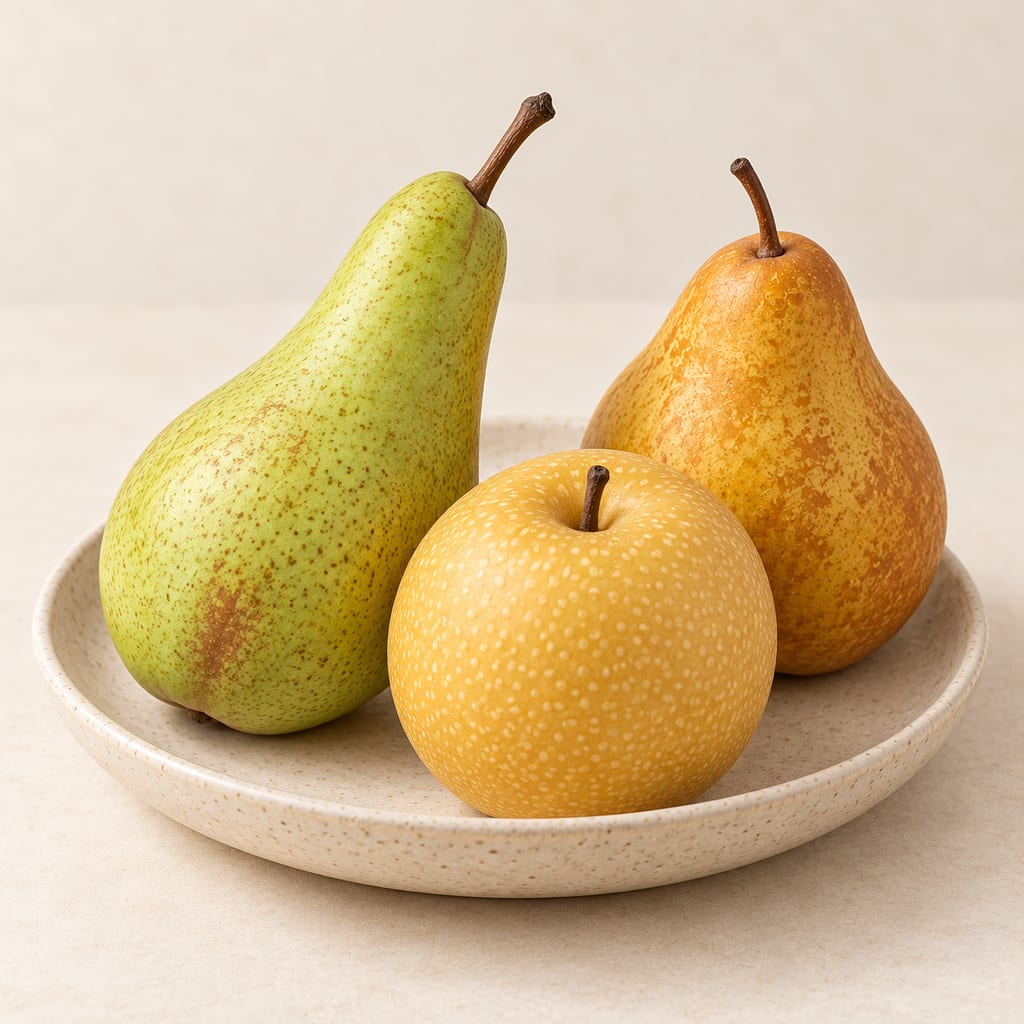
Pear
Pears are Pyrus fruits used fresh, pressed for perry, or crushed for fruit spirits; cultivar, species and ripening stage shape each preparation.
 FermenteaWhere food goes to change
Traditional method
Poiré Domfront · Domfront · Domfront AOP · Poiré Domfront AOP · Poiré de Domfront AOC · Poiré bouché de Domfront · Poiré bouché · Domfront perry · Norman perry · Sparkling Domfront perry
Naturally sparkling perry from the Bas Domfrontais in Normandy, pressed from high-stem orchard pears with at least 40% Plant de Blanc and carbonated by fermentation in the bottle.
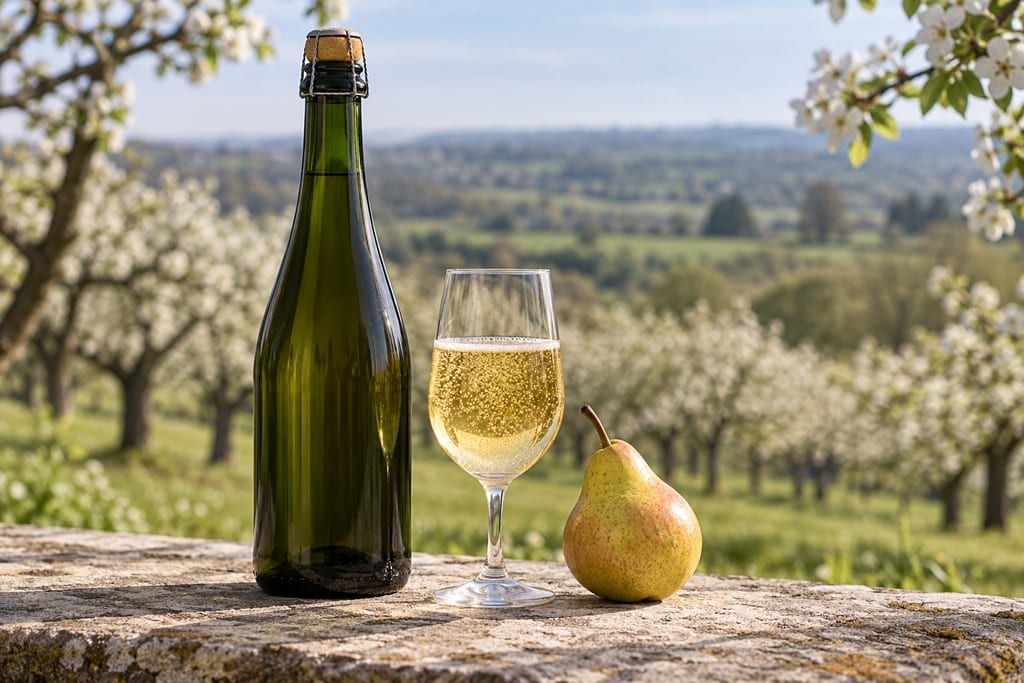
Poiré de Domfront is a naturally sparkling perry from the Bas Domfrontais, a farming region in southern Normandy and northern Mayenne in western France. The protected name is simply Domfront. It is made from the fresh juice of perry pears, which are bitter and astringent and not pleasant to eat raw. The drink is unpasteurised, pale yellow to golden, and gets its bubbles from fermentation in the bottle, not from added gas.
The main variety is Plant de Blanc, a perry pear of the European species Pyrus communis. The appellation requires it to make up at least 40% of the blend. Other local varieties supply the rest, each capped at a share of its own. Plant de Blanc is valued for a balance of sugar, acidity and phenolic compounds and for a juice that clears relatively well. The other varieties add aroma, structure and a longer harvest season.
In the glass, natural sweetness is held in check by acidity and a light drying grip from the pear phenolics. Producers describe citrus, peach, pear blossom and other fruit and flower notes, sometimes pastry or brioche. These describe aroma; none of them is an ingredient. The rules set a minimum of 3% actual alcohol by volume and 5.5% total potential alcohol. The second figure counts the alcohol that the sugar still in the perry could produce, so it is higher than the alcohol in the glass.
The method rests on slow fermentation. The pressed juice ferments without additions meant to speed up or slow down the yeast, and is bottled while enough natural sugar remains to carry a second fermentation. Added sugar, added water, pasteurisation and carbonation from outside are all prohibited. Selected active dry yeast is allowed for the bottle stage. Domfront is not pear juice mixed with alcohol or gas.
The drink cannot be separated from its orchards. The pear trees are tall, grown on grass and often shared with grazing livestock, and some live for centuries. INAO describes Domfront as the only French protected designation granted specifically to a perry. The fruit varieties, the landscape, the orchard work and the bottle fermentation together make up its identity.
Perry-making grew up in the landscape known as the Passais, or Bas Domfrontais. France's intangible heritage inventory dates the spread of high-stem pear orchards there to the sixteenth century, when cider was made from both apples and pears, and says pear cider was prized at royal courts in the seventeenth. No recipe from that time survives to show that the bottle-fermented method of today is the same.
The orchards grew up beside livestock farming. Farmers planted widely spaced fruit trees in pastures that cattle grazed, a system called the pré-verger. Perry production expanded considerably in the nineteenth century, and distilling grew alongside it. The 1793 Tableaux du Maximum list cider and perry spirits on the Domfront market, and an 1823 trade account describes distilling cider and perry in the Orne. Both records concern spirits, not necessarily sparkling perry.
Until the late nineteenth century much of the region's perry was still or only lightly sparkling, drunk on the farm and sometimes diluted with water. A separate pure-juice sparkling perry, poiré bouché, was made for celebrations, with its fizz formed in the bottle. In the first half of the twentieth century, fruit for distilling gained commercial weight beside drinking perry. The same orchards supplied Calvados Domfrontais, a spirit with its own rules.
One farm shows how the trade changed. The Pacory family has worked the Ferme des Grimaux in Mantilly since 1939, began bottling commercially in 1959 and later added cider, perry and Calvados. Producers began working towards an appellation in 1989, combining orchard identification, technical improvements and regional promotion at a time when farming was restructuring and old trees were disappearing. Domfront became an AOC by decree of 20 December 2002 and a European AOP in 2006.
The 2019 intangible heritage inventory records the whole craft: orchard care, fruit collection, pressing, slow fermentation and bottle conditioning, and the people who do the work. The rules were revised by a French order of 7 October 2025, published on 11 October 2025, and a European amendment published on 27 April 2026. These dates mark the legal protection of the drink, not its invention, and today's rules should not be read back into every historical farmhouse perry.
Domfront is an alcoholic fermentation of pear sugars. Fresh pear juice holds fructose, glucose and smaller amounts of other sugars, together with organic acids, sorbitol, nitrogen nutrients and phenolic compounds. Yeasts break the fermentable sugars down by glycolysis to pyruvate and then to ethanol and carbon dioxide, which regenerates NAD+. How much alcohol forms depends on the sugar available and how far fermentation runs. Domfront keeps some natural sweetness because the yeast is not required to use every sugar before bottling, and the sugar left over drives the second fermentation in the bottle.
Traditional Norman cider and perry fermentations can pass through several yeast populations. Work on French cider describes early activity by non-Saccharomyces yeasts such as Metschnikowia and Hanseniaspora, followed by more alcohol-tolerant Saccharomyces, notably Saccharomyces uvarum in the French fermentations studied. Saccharomyces cerevisiae also features in pear fermentation research. These findings show possible pathways. No single culture has been shown to be common to all Domfront producers, and the appellation defines ingredients and process, not a yeast strain.
Pear juice also contains sorbitol, a sugar alcohol. Many common yeasts leave much of it unused, so it contributes to the unfermented part of pear extract. A 2021 study of experimental pear beverages found two Saccharomyces uvarum strains that consumed it, so sorbitol cannot be called universally unfermentable. Whether it is used depends on the strain, and that has not been established for Domfront fermentations.
Phenolic chemistry matters most for the character of perry. Perry pears are strongly astringent because of their tannins and other phenolics. The Domfront rules explain that macerating the crushed pulp before pressing makes some of this material insoluble, so it stays with the solids instead of passing into the juice. That lowers astringency and the deposits that form during maturation. Studies of European pear juices show how much cultivars differ in phenolics and organic acids, and microscopy of the perry pear De Cloche shows where procyanidins sit in the flesh and how that shifts as the fruit ripens. Plant de Blanc is prized partly for a juice with a good balance of acidity, sugar and phenolics.
Bottle fermentation is the last defining step. Living yeast uses part of the remaining sugar, and the carbon dioxide it makes dissolves under pressure and forms bubbles when the bottle is opened. In pear fermentations, the choice of yeast changes the glycerol, higher alcohols, esters and other aroma compounds. Juice treatment and yeast strain also affect indole, an unwelcome aroma. Malolactic fermentation can occur in cider and perry, but it is not a required separate stage of the Domfront method.
Production starts in identified orchards inside the appellation area. The trees are high-stem and grow on grass, often with livestock. The 2025 rules allow at most 150 trees per hectare, with at least 6 metres between trees, and require Plant de Blanc to make up at least 20% of the trees in an identified orchard. That is a different rule from the 40% Plant de Blanc minimum in the perry itself: one governs the orchard, the other the fruit that is fermented.
Pears are picked in several passes as each variety ripens, and the rules prohibit shaking the trees mechanically. Fallen ripe pears can be gathered from the ground, which makes fruit condition and cleanliness a concern. Plant de Blanc is stored apart from the other varieties so the blend proportions can be kept, and the fruit must be sheltered from rain or held in containers that drain. No fruit weight or picking date is prescribed.
The pears are grated or milled to pulp, and the pulp is left to macerate before pressing. This is cuvage. The pears are rich in phenolics, and maceration lets some of them become insoluble. Its length is not fixed in the public rules. Pressing then separates juice from solids. The must has to reach a density of at least 1.047 at 20 °C under the revised rules. That figure checks the starting material and says nothing about the finished drink.
The juice ferments slowly in suitable vessels. Nothing may be added to speed up or slow down the yeast, and adding sugar, water, flavourings or colourings is prohibited, as is pasteurisation. The maker may manage sediment, filtration and conditions. Timing at bottling is critical because enough natural sugar must remain to make bubbles. Bottling cannot happen sooner than six weeks after pressing and must be finished by 30 September of the year after the harvest.
The blend must hold at least 40% Plant de Blanc and no more than 25% of any one listed complementary variety. The 2025 rules also allow a limited share of locally established varieties outside the main list. After bottling, the remaining pear sugars ferment again and make carbon dioxide. This bottle stage lasts at least six weeks. Selected active dry yeast may be added then, but sugar and injected gas may not. The maker has to manage fermentation and pressure so the perry gets a fine sparkle without excess pressure in the bottle.
The appellation covers a defined area across parts of Orne and Manche in Normandy and Mayenne in Pays de la Loire. The core is the Bas Domfrontais, also called the Passais. Domfront en Poiraie, Mantilly, Céaucé, Passais Villages, Barenton and Le Teilleul lie in the wider area. Not all of Normandy qualifies, and perry made elsewhere in France is not Domfront just because it uses similar pears or methods.
Plant de Blanc is the principal variety, but many others are permitted. They include Rouge Vigné, Blot, De Cloche, Gaubert, Fausset, Pommera, Blanc de Mantilly and varieties known locally as Plant Roux or B'zi. They differ in ripening season, acidity, tannin, sugar and juice character. A maker may blend several or use a high share of Plant de Blanc. The 40% minimum does not mean every perry contains exactly 40%, and one producer's proportions say nothing about another's.
The region once made both still and sparkling perry. Still perry was an everyday farm drink and could be watered down. Sparkling pure-juice perry, poiré bouché, belonged to special occasions. The modern appellation protects the naturally sparkling form and prohibits dilution, so it preserves one important kind of perry, not everything once made on Domfrontais farms.
Perry also sits inside a wider fruit economy. Some pears and orchard harvests have gone into Calvados Domfrontais, a separately protected spirit with its own requirements that may also include apple cider. It should not be confused with bottled sparkling Domfront. The same farm may make apple cider, unprotected farm perry and Calvados, but each has its own methods and rules.
Producers differ in pressing, fermentation and blending. The Ferme des Grimaux in Mantilly, for example, makes several Domfront-labelled perries with different characters, sold in 37.5, 75 and 150 cl bottles. All remain within the appellation as long as the production and analytical rules are met.
Poiré de Domfront is served as a sparkling drink with meals, at celebrations or as an aperitif. Its modest alcohol, pear aroma and fine bubbles set it apart from the spirits of the same landscape. The Pacory farm recommends serving its Domfront perry very cold, to bring out fruit and floral aromas and refreshing acidity. That is a producer's advice, not a rule: the appellation sets no serving temperature.
The drink is pale yellow to golden, with small bubbles and a balance of sweetness and acidity. Producers describe pear, citrus, peach and flowers, sometimes pastry or brioche. These are sensory impressions, not signs that the drink contains those fruits or baked goods. The light drying feel comes from pear phenolics, and the balance changes with the harvest and the producer.
Historically, still perry was the ordinary farmhouse drink and sparkling bottled perry was kept for festivities. The heritage inventory ties it to gatherings and local hospitality, with bottles shared among family and neighbours. Glass bottles and better-controlled natural carbonation helped turn sparkling perry into a recognised regional speciality, and bottling let it travel beyond the farm to restaurants, drinks merchants and export markets.
Today producers offer Domfront as an alternative to sparkling wine for receptions and celebratory meals, and Pacory names weddings, aperitifs and gatherings with friends. Its sweetness and acidity can go with cheese, poultry, lighter dishes and desserts, though the right match depends on the particular perry. Unlike Calvados Domfrontais, Poiré de Domfront is not distilled and is much weaker.
The orchards and the work around them are part of the drink's culture. Families and local groups keep knowledge of pear varieties, grafting, tree care, harvest, pressing and fermentation. The heritage inventory records the contribution of farmers, press makers, coopers, basket makers and other trades. Domfront is a drink, and its continued production is tied to the care of old pear trees and their landscape.
A good Domfront has balanced natural fizz, fruit and flower aroma, some residual sweetness, acidity and restrained astringency. The 2026 European document requires at least 3% actual alcohol, at least 5.5% total potential alcohol and a pressure above 1.4 bar at 20 °C. The French specification approved in 2025 says at least 1.4 bar, a small difference worth checking with the certifier. These are criteria for the protected product, not a full microbiological safety standard.
Fruit selection and processing shape both flavour and safety. Perry pears are naturally astringent, and maceration before pressing makes some phenolics insoluble. Too little control can leave excessive astringency or a juice that behaves differently in fermentation and clarification. No maceration time or tannin endpoint is fixed. The starting must density, at least 1.047 at 20 °C, is regulated more precisely. It helps establish fruit maturity and composition, but it does not guarantee safe fermentation.
Slow fermentation needs watching because the maker deliberately keeps natural sugar for the bottle stage. If too little sugar is left, the fizz is weak. If too much fermentable material remains, or the yeast is unusually active, pressure can climb too high. The heritage inventory stresses judging when to bottle and records producers checking fermentation to keep corks from being pushed out. Six weeks in the bottle is a production minimum, not proof that a bottle has reached a safe, stable pressure.
Microbial variability is another concern. Natural pear fermentation can involve different yeasts depending on the fruit, vessels and cellar. Studies of pear fermentation show that the yeast chosen changes the chemistry and sensory profile, but they do not identify the organisms in Domfront. In a case study of contaminated perry in Argentina, Brettanomyces and Zygosaccharomyces yeasts made unwanted volatile phenols and, in some isolates, raised methanol. A sour taste or visible fermentation does not prove unwanted organisms are under control. Unpasteurised perry needs monitoring and hygienic equipment.
Oxidation and spoilage change colour, aroma and acidity. Pear phenolics can brown through oxidation, and unwanted microbes can raise volatile acidity or change texture. Pears from grassed orchards can meet soil, livestock waste and damaged fruit, so washing, sorting and rejecting poor fruit matter. The specification controls orchards and processing but gives no universal pathogen-reduction treatment, and because pasteurisation is prohibited, the remaining controls carry more weight.
A good production record therefore tracks orchard origin, pear varieties, must density, fermentation progress and bottle conditioning separately, and does not rely on how the finished drink looks.
France's intangible heritage inventory places the spread of high-stem perry-pear orchards and pear cider in the Bas Domfrontais in the sixteenth century, and says pear cider was prized at royal courts in the seventeenth. No recipe of that time survives to show the present bottle-fermented method. The 2002 and 2006 dates mark legal protection, not invention.
Fresh fruit and unpasteurised juice can carry microorganisms from soil, water, animals, picking equipment, presses or hands. Domfront excludes pasteurisation, so contamination has to be controlled earlier. Published juice-safety guidance covers these hazards for fruit juice, though its detailed examples are for apple juice.
Hazard sourceRotten, damaged or mouldy fruit brings in unwanted microorganisms and possibly harmful fungal metabolites. The risk has to be assessed for the actual fruit supply. FDA patulin guidance is mainly about apples and apple juice and sets no limit for Domfront perry.
Hazard sourcePears from grassed orchards with grazing animals can pick up microbes from soil, manure, standing water or dirty equipment.
Hazard sourceThe yeast population of a slow, traditional perry fermentation changes over time, and the Domfront rules set no starter, fermentation temperature or pathogen-control schedule. Alcohol being produced does not show the whole process was microbiologically safe.
Hazard sourceA 2023 study of contaminated commercial perry in Argentina isolated Brettanomyces custersianus, Brettanomyces bruxellensis and Zygosaccharomyces parabailii. Some isolates made unwanted volatile phenols or raised methanol under experimental conditions. These are known perry spoilage organisms, not organisms shown to occur in Domfront.
Hazard sourceDomfront ferments leftover sugar inside sealed bottles. If too much fermentable sugar remains, the yeast is misjudged or the bottles are not rated for it, carbon dioxide pressure can exceed what the bottle holds and the glass can break.
Hazard sourceThe perry is unpasteurised and can keep living microorganisms and residual sugar, so it can go on changing after bottle fermentation. The six-week minimum does not guarantee microbiological stability.
Hazard sourceCareless exposure to oxygen oxidises pear phenolics and, where the right microbes are present, can raise volatile acidity. Colour, aroma and drinking quality suffer.
Hazard sourceWorn mill parts, damaged presses, container fragments or broken glass can end up in the juice.
Hazard sourceTake pears only from eligible, traceable orchards, and keep separate records for Plant de Blanc and each other variety.
Control sourceHarvest in successive passes by ripeness, do not shake the trees mechanically, and store the fruit so liquid drains away or rain cannot reach it.
Control sourceReject mouldy, rotten and otherwise unsuitable pears, and assess the contamination risks of collecting and storing fruit from the orchard.
Control sourceUse clean, food-contact-safe mills, presses, vessels and bottling equipment, and potable water for cleaning.
Control sourceMeasure the density of the must at 20 °C before fermentation. This is a product requirement of the appellation, not a pathogen control.
Control sourceAdd no water, sugar, flavourings or colourings, and nothing that changes the natural sugar concentration. Do not pasteurise or add carbon dioxide.
Control sourceFollow primary fermentation, acidity and remaining extract before deciding when to bottle. Use measurements and batch records, not elapsed time or taste alone.
Control sourceUse pressure-rated bottles and closures, with a process that can handle the actual residual sugar and the gas it will produce.
Control sourceDo not release a batch just because six weeks of bottle fermentation have passed. Check fermentation, pressure and composition, and complete the required certification checks.
Control sourceKeep to the blend rules of the appellation.
Control sourceConfirm that the finished perry meets the analytical criteria for actual alcohol, total potential alcohol and bottle pressure. These are product requirements, not a full microbiological safety validation.
Control sourceThis follows the Domfront AOP production method. It is not a quantified, microbiologically validated home recipe.
The perry is unpasteurised. Safety rests on fruit selection, hygiene and fermentation control, and needs independent assessment.
No pear weight, juice yield, maceration time, fermentation temperature or yeast dose is given.
The 40% Plant de Blanc minimum applies to the blend. The 20% minimum applies to the trees in the orchard. They are separate rules.
The minimum must density of 1.047 at 20 °C is not a finished-perry gravity, a sweetness target or proof of safety.
The six-week wait before bottling is not a validated end of primary fermentation, and the six weeks in the bottle do not guarantee safe, stable carbonation.
The 1.4 bar in the rules is the pressure the finished perry must reach, not the most a bottle can safely hold. No maximum safe pressure, shelf life or storage temperature is established.
The French 2025 specification says at least 1.4 bar at 20 °C. The European single document of April 2026 says more than 1.4 bar. Check which reading your certifier applies.
Research on pear fermentation from other countries gives context but does not show which microbes live in Domfront cellars.
Poiré de Domfront contains alcohol, and the actual strength can be above the 3% minimum.
The home of the high-stem pear orchards and of the protected Domfront perry.
A commune in the production area.
Home of the Ferme des Grimaux, a producer of Domfront AOP perry.
A commune in the production area.
A commune in the production area.
A commune in the production area.
A commune in the production area.
A commune in the Mayenne part of the production area.
The part of the appellation area that lies outside Normandy.
Pears are Pyrus fruits used fresh, pressed for perry, or crushed for fruit spirits; cultivar, species and ripening stage shape each preparation.
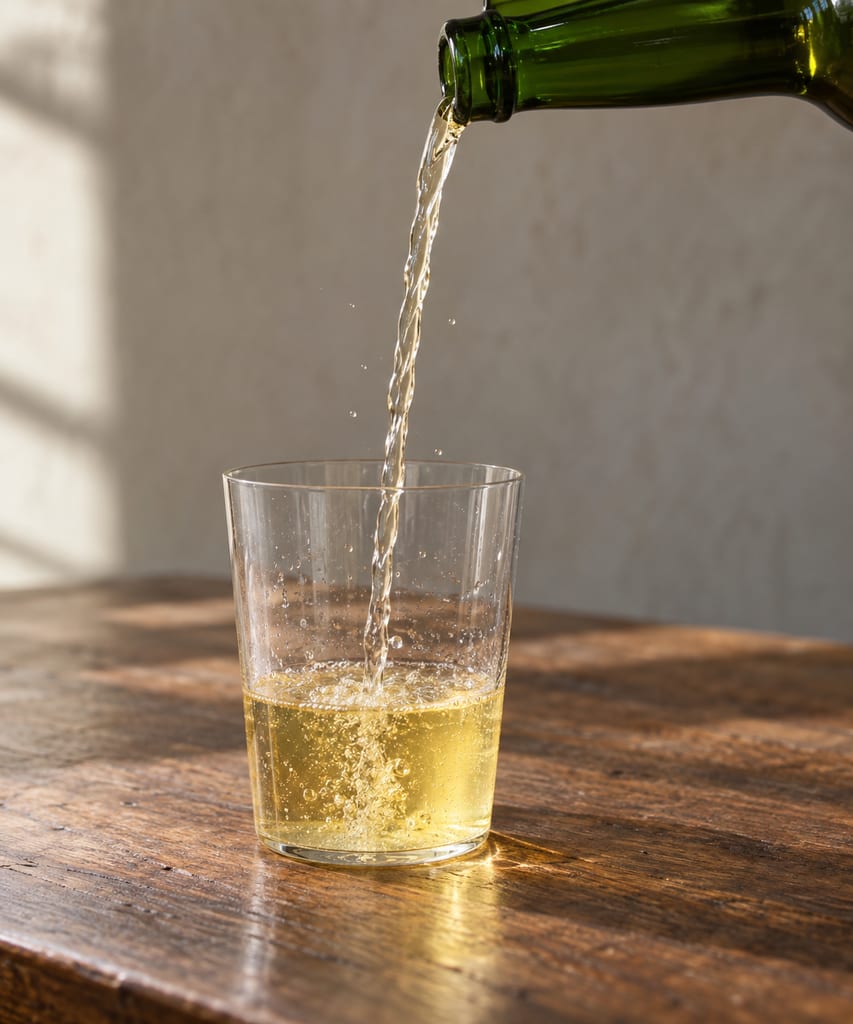
Dry, lightly sparkling cider from Asturias in northern Spain, pressed from cider apples, fermented without added sugar, matured through the winter and poured from a height.
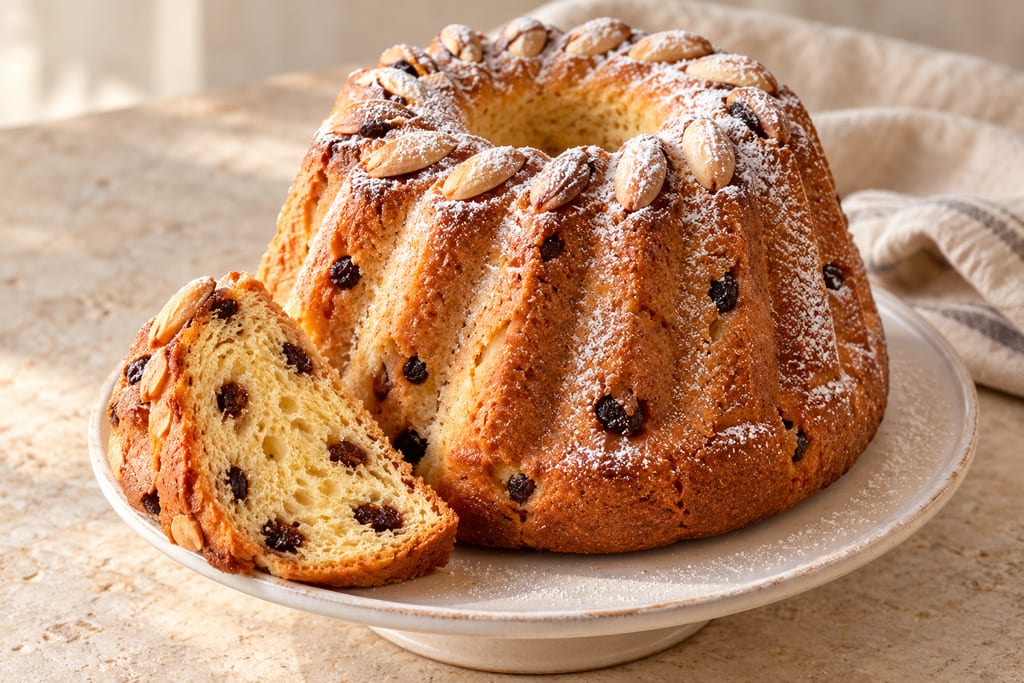
An enriched Alsatian yeast ring with raisins and almonds, kneaded with butter, proofed in a fluted mould and baked until browned.
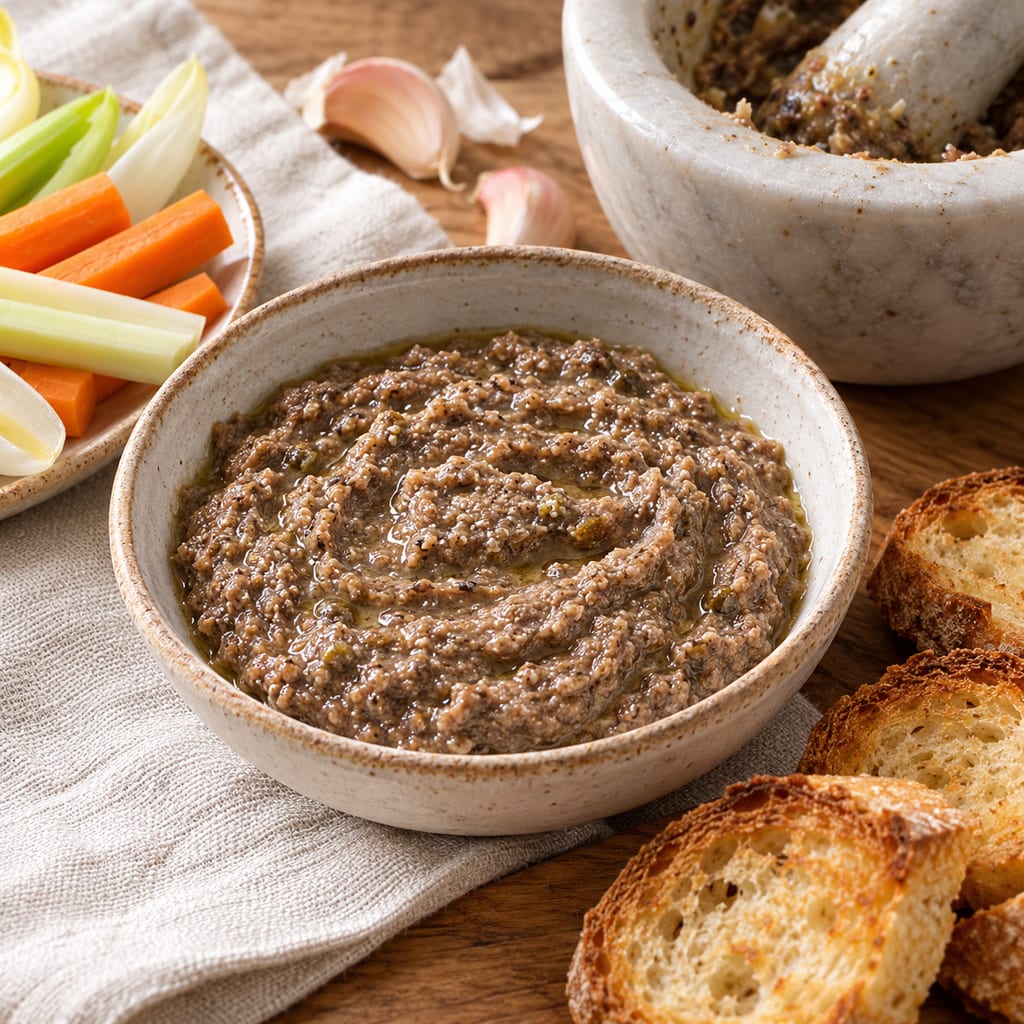
A Provencal dip of anchovies, garlic, capers and olive oil, pounded or blended to a creamy paste and served with raw vegetables, bread and eggs.

A warm dip of garlic, anchovy and olive oil, often enriched with butter, that Piedmont serves over a flame with raw and cooked vegetables and bread.
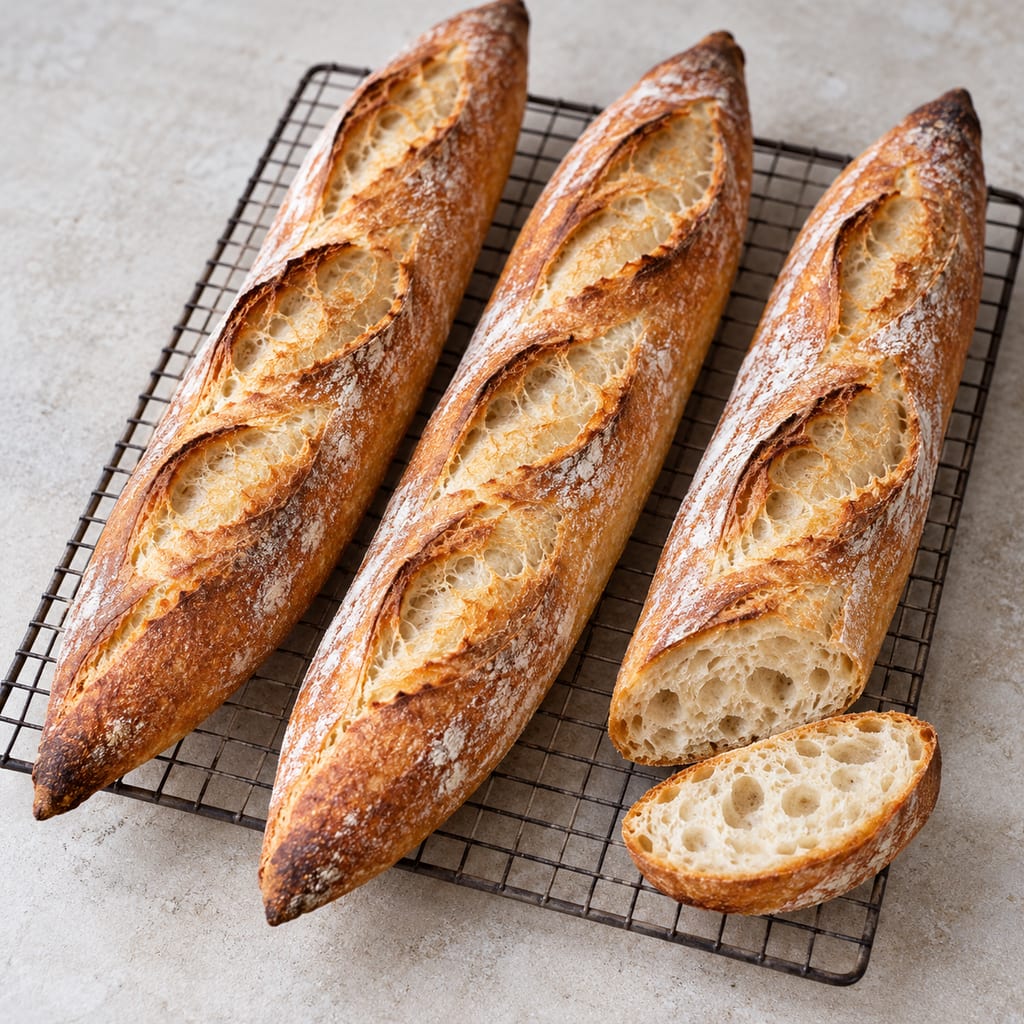
Three long, crusty wheat loaves made with an overnight yeast poolish, shaped by hand and baked with steam for a crisp crust.

Bechamel is a white sauce of milk thickened with a butter and flour roux, one of the French mother sauces, and the base from which Mornay and other cheese and cream sauces are made.
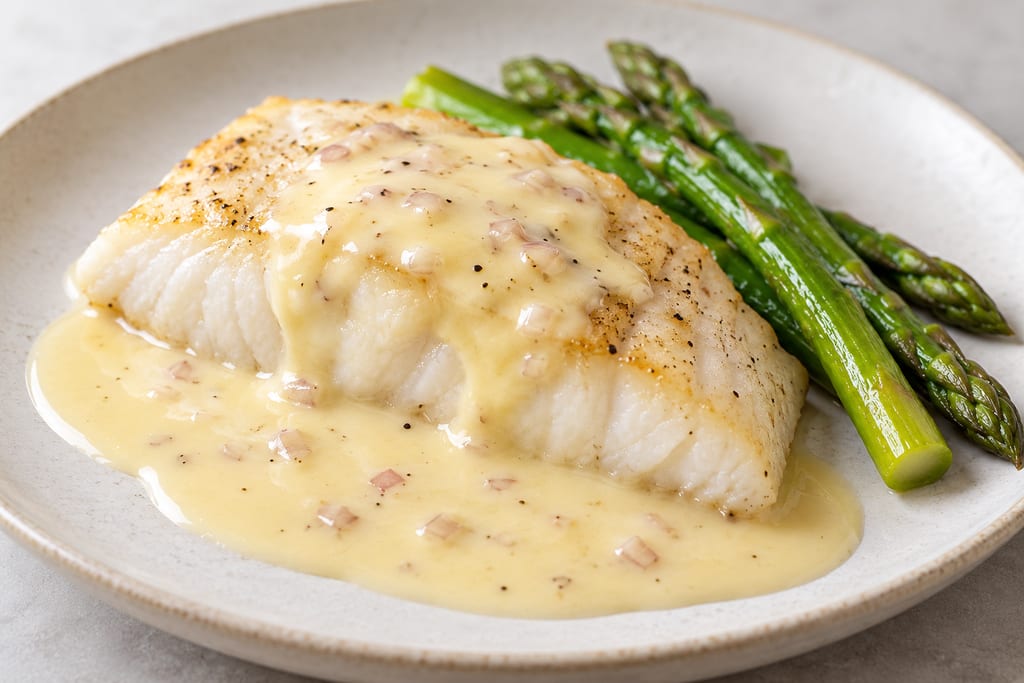
Beurre blanc is a warm emulsion of cold butter whisked into a reduction of white wine, vinegar or lemon juice and shallot, a sauce from the Loire Valley and its red-wine version, beurre rouge.
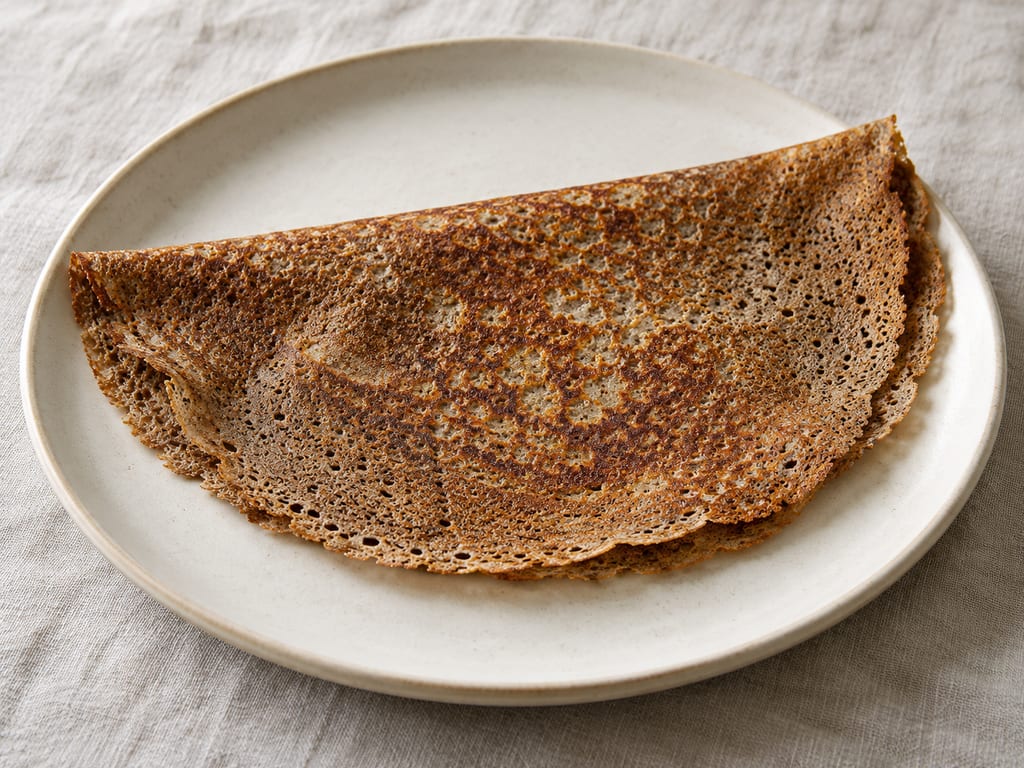
A thin Brittany galette made from buckwheat flour, water and Guérande salt. This Atelier de la Crêpe method rests the batter in a refrigerator before cooking it on a hot crêpière.
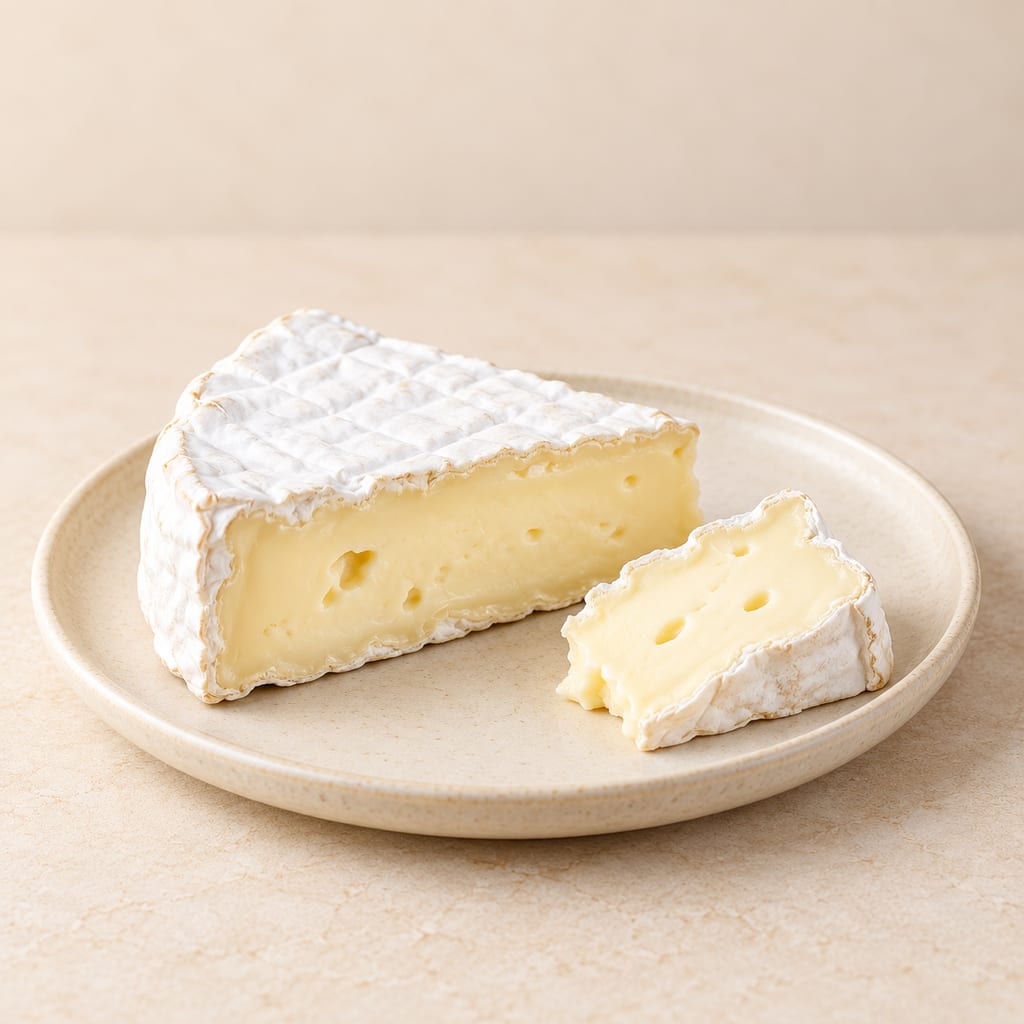
A cream-enriched Brie with a white bloomy rind and a softening center, made from pasteurized milk with lactic and surface cultures.
The Rwandan urwina is a conical, leaf-lined earth pit that warms green brewing bananas before they are peeled, crushed for juice and fermented separately.
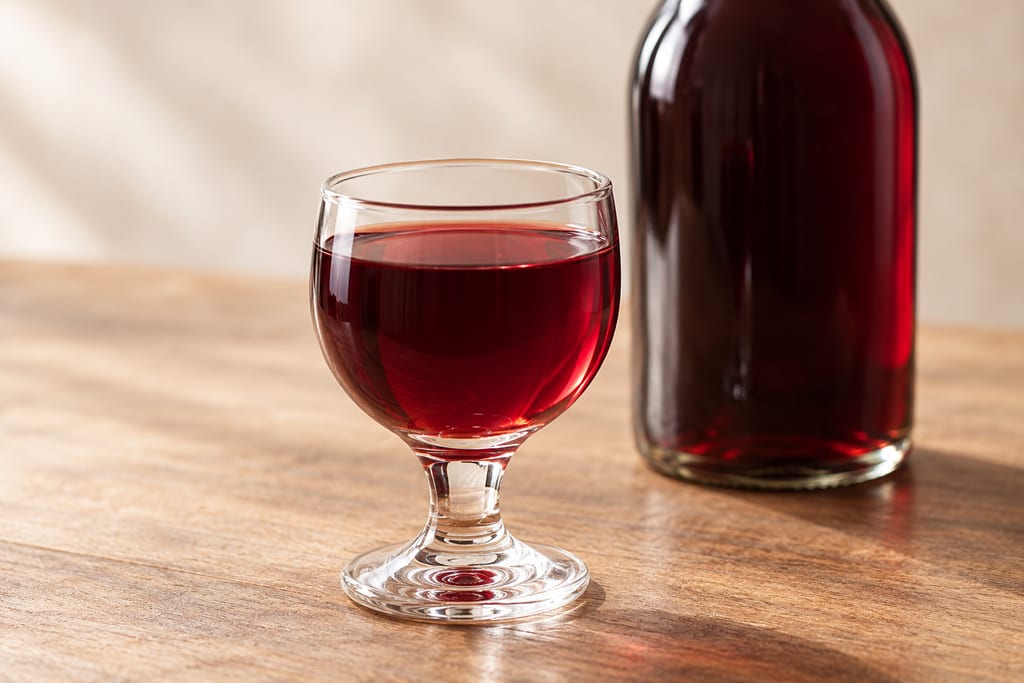
Korean black raspberry wine: crushed bokbunja berries with their seeds, sweetened to 20 °Brix, fermented 15 days at 25 °C with wine yeast, filtered and matured three months.
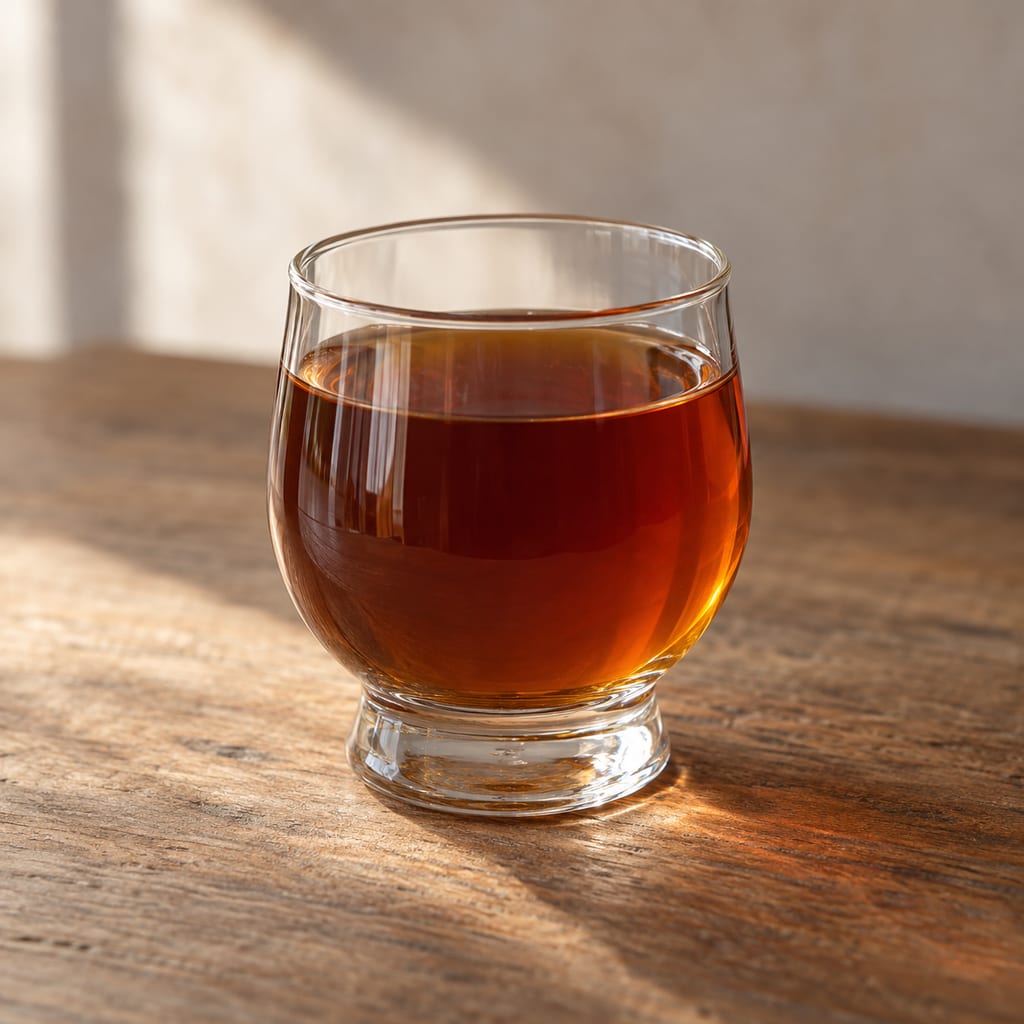
Musalais is a fermented grape drink documented among Uyghur producers in A’wati, southern Xinjiang. A studied process combines grape juice and heated pomace extract before spontaneous fermentation.
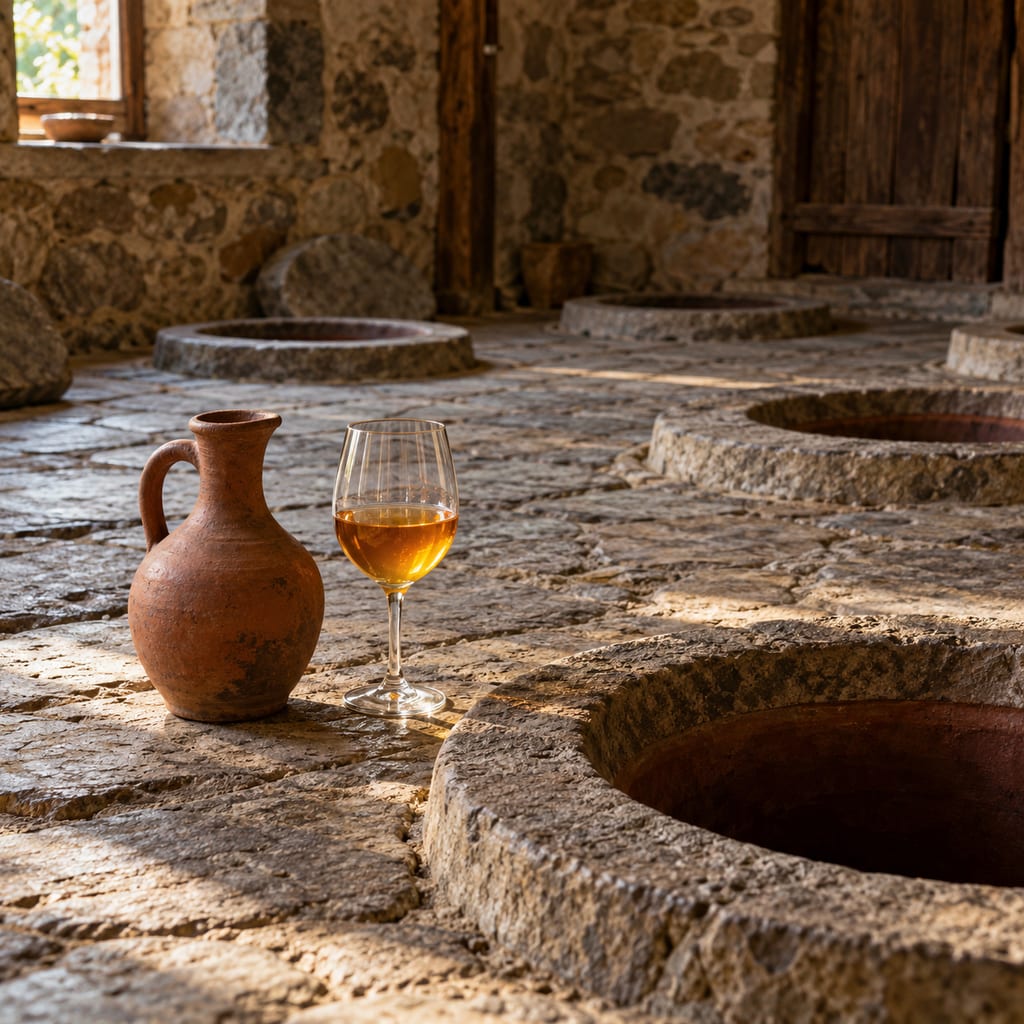
Georgian wine fermented and matured in buried clay vessels called qvevri, usually with grape skins, pips and sometimes stems, in styles from amber to red that differ by region.
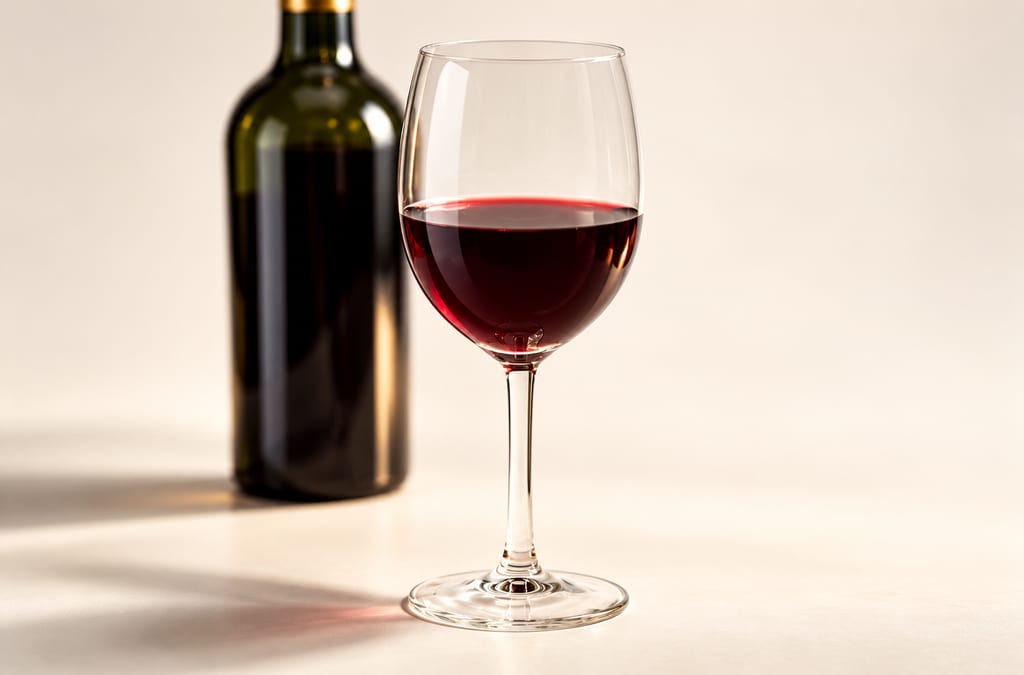
Red wine is grape must fermented with the skins and other solids, then separated from the pomace. Grape, cellar and regional choices shape its colour, structure and style.
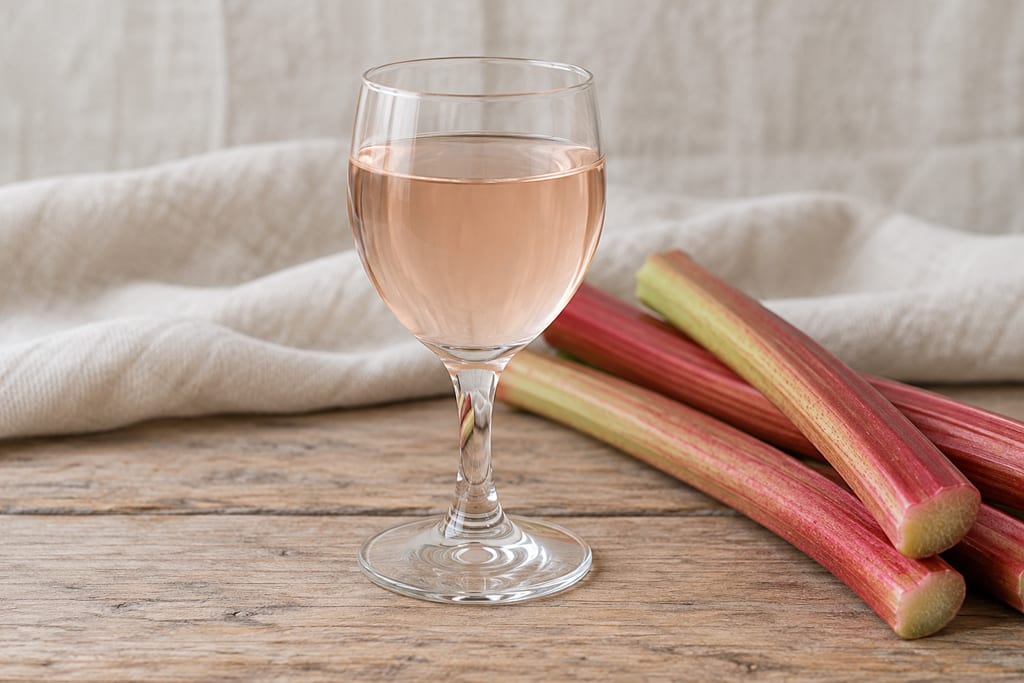
S. O. Beeton’s 1861 household book records rhubarb wine made with rhubarb pulp, water, loaf sugar, lemon rind and isinglass; its historical directions do not establish a safe modern fermentation endpoint.
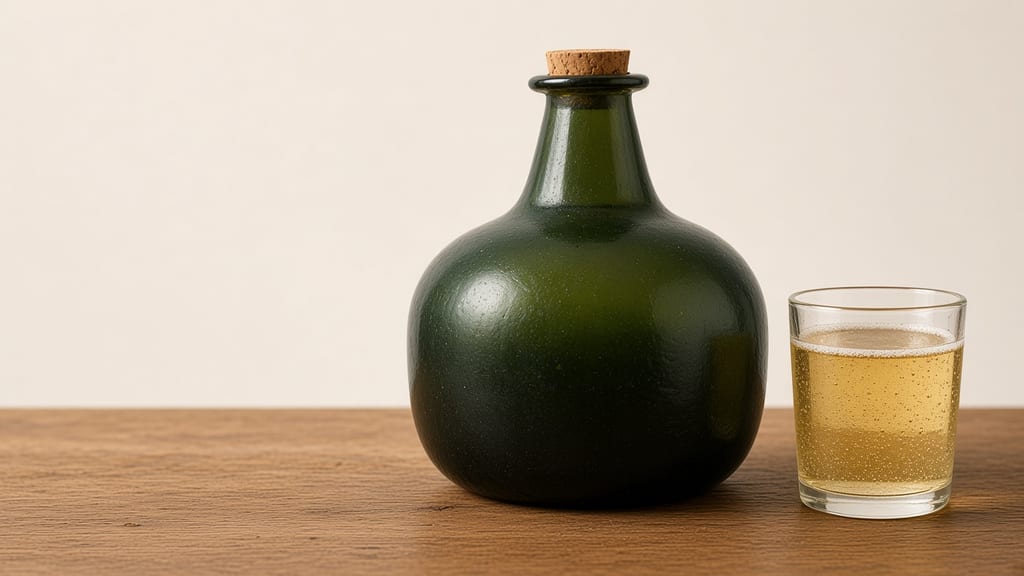
A lightly sparkling cider bottled before it had finished fermenting, as Sir Paul Neile described it in 1664, with a measured modern method for safe bottle conditioning.

A gelling polysaccharide extracted from red seaweeds, sold as kanten strips or powder; it sets firm at a low concentration and stays solid until about 85 °C.

A Dominican table and seasoning condiment of sour orange juice, mixed with lime and salt and bottled raw; garlic, oregano or a hot pepper may be added for meat or a spicier bottle.

Cicerbita alpina is an alpine perennial whose tender shoots and leaves have been eaten raw or cooked. Sámi milk preparations and modern Carnian dishes are distinct uses, with serious identification and preservation limits.

Japanese skipjack tuna cooked, then repeatedly smoked and dried over a wood fire by the hand-fired tebiyama method into a hard block for shaving into dashi: the first stage of katsuobushi.

A Swedish-style spirit vinegar made by fermenting neutral alcohol with live vinegar bacteria, with a separate guide to commercial ättika strengths.

A yeast-raised wheat ring shaped from a firm dough, briefly boiled and baked. This source-batch formula gives a gently malted crust and a chewy crumb.
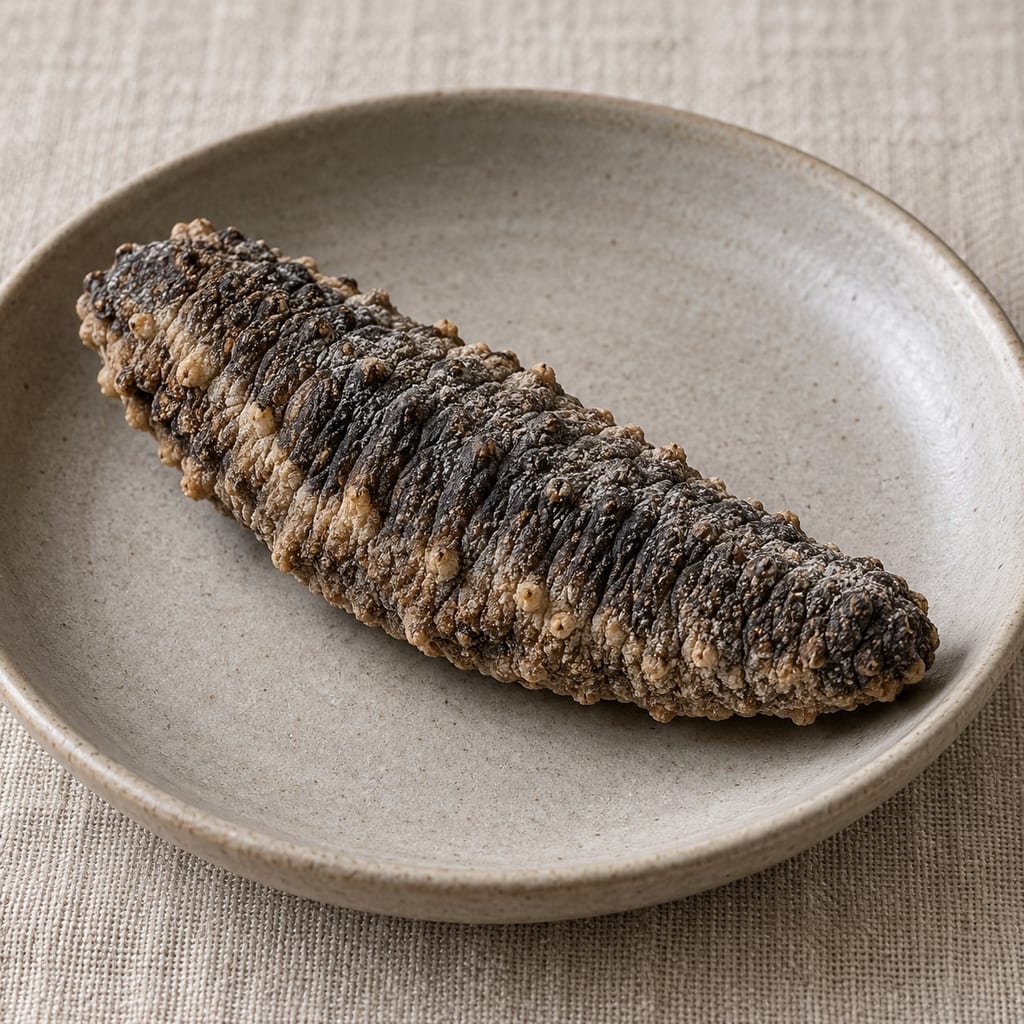
Sea cucumber cleaned, boiled and dried, sometimes with smoke, into a long-keeping trade product; Makassan processing in Arnhem Land is documented from at least the eighteenth century.
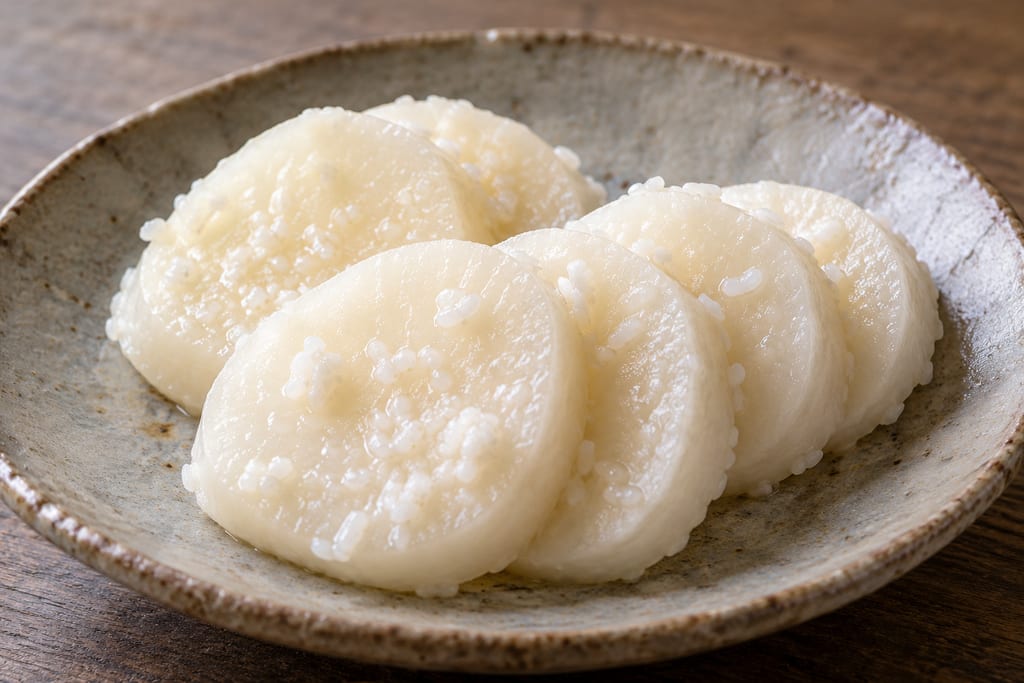
A sweet, crisp Japanese daikon pickle from Tokyo's Nihonbashi district, made by salting fresh radish and dressing it in rice koji, sugar or koji amazake without the heavy drying used for takuan.
No community contributions have been published for this entry yet.
Sign in to contribute. Published comments and photos are free to read.
Ministère de l'Agriculture, Bulletin officiel No. 42-2025, 16 October 2025Method · Definition · Safety · Variation
Cahier des charges de l'appellation d'origine protégée « Domfront »Perry made only from pure juice of perry pears from identified orchards; unpasteurised and naturally sparkling by bottle fermentation.
At least 3% actual and 5.5% total potential alcohol by volume; bottle pressure of at least 1.4 bar at 20 °C.
Orchard rules: at least 20% Plant de Blanc trees, up to 20% unlisted varieties, at most 150 trees per hectare, at least 6 m between trees, grass cover.
Harvest by variety in successive passes, no mechanical shaking, Plant de Blanc stored separately, storage that drains or shelters from rain.
Pears grated or milled to pulp, macerated (cuvage) before pressing; must density at least 1.047 at 20 °C.
Slow fermentation with no additions to stimulate or suppress yeast; no water, flavourings, colourings or pasteurisation; natural sugar concentration unchanged.
Blend from one harvest: Plant de Blanc at least 40%, each complementary variety at most 25%, unlisted varieties at most 10% together.
Bottling at least six weeks after pressing and by 30 September of the following year; at least six weeks of bottle fermentation; optional active dry yeast, no added sugar or carbon dioxide.
Origin, production and bottling records; analytical and sensory checks before sale.
Cited in: What it is; How it works; How it's made and why each ingredient and step matters; Regional and historical variations; Reading results and problems
Official Journal of the European Union, C/2026/2421, 27 April 2026Definition · Reference
Publication of the Communication of an Approved Standard Amendment to the Product Specification of DomfrontDomfront described as unpasteurised, not artificially carbonated sparkling perry made from pure juice of local perry pears.
At least 3% actual and 5.5% total potential alcohol; bottle pressure more than 1.4 bar at 20 °C.
Pale yellow to golden, fine bubbles, fruit and floral aromas, balance of residual sweetness, acidity and slight astringency.
Larger production area; revised orchard identification, traceability and variety conditions; minimum juice density replaces the older minimum-sugar wording.
Cited in: What it is; History; How it works; How it's made and why each ingredient and step matters; How it's drunk and used; Reading results and problems
Institut National de l'Origine et de la Qualité, FranceDefinition · Identity · Context
Domfront — Appellation d'Origine ProtégéeDomfront is the only French protected designation granted specifically to a perry.
Plant de Blanc is the characteristic variety; pure fresh pear juice; natural bottle fermentation.
Pale yellow to golden colour, fine bubbles, fruit and floral aromas, balance of acidity, sweetness and astringency.
Located in the Bas Domfrontais, with deep soils that hold moisture and high-stem orchards; trees can live up to about three centuries.
Cited in: What it is; History; How it's made and why each ingredient and step matters; Regional and historical variations; How it's drunk and used; Reading results and problems
Journal officiel de la République française, No. 0239, 11 October 2025Reference · History
Arrêté du 7 octobre 2025 relatif à l'appellation d'origine protégée « Domfront »Order of 7 October 2025 approving the revised Domfront specification, published 11 October 2025.
The detailed specification is published in the Agriculture Ministry's official bulletin.
Cited in: History
Journal officiel de la République française, 2002Reference · History
Décret du 20 décembre 2002 portant reconnaissance de l'appellation d'origine contrôlée « Domfront »French AOC recognition of Domfront by decree of 20 December 2002.
Earlier protected-name rules, replaced by the 2025 specification.
Cited in: History
Inventaire national du patrimoine culturel immatériel, Ministère de la Culture, France; PCI LabHistory · Context · Use
La fabrication du poiré en DomfrontaisEthnographic record of perry-making in the Domfrontais, published 2019.
High-stem pear orchards linked to grassland and livestock farming; spread of the orchards in the sixteenth century; perry prized at royal courts in the seventeenth.
Still farmhouse perry for the household against sparkling bottled perry for celebrations.
Orchard, harvest, pressing and fermentation knowledge; producers judging when to bottle so corks are not pushed out.
Perry at local gatherings; related trades such as press makers, coopers and basket makers.
Cited in: History; How it works; How it's made and why each ingredient and step matters; Regional and historical variations; How it's drunk and used; Reading results and problems
Pacory — Ferme des Grimaux, Mantilly, NormandyUse · Variation
Poiré Domfront AOPFruit from high-stem Norman pear orchards; old Plant de Blanc trees; fine natural bubbles; light body and fairly low alcohol.
Fruit and floral aromas; recommendation to serve well chilled.
Several named Domfront AOP cuvées in 37.5, 75 and 150 cl bottles, apart from the producer's non-AOP pear products.
Uses named by the producer: weddings, aperitifs, gatherings with friends.
Cited in: What it is; Regional and historical variations; How it's drunk and used
Pacory — Ferme des Grimaux, Mantilly, NormandyHistory · Context
Présentation — Un savoir-faire depuis 1939Family farm in the Domfrontais, run as the Ferme des Grimaux since 1939.
Commercial bottling from 1959; later cider, perry and Calvados.
About 100 hectares, with about 700 high-stem pear trees and 400 high-stem apple trees, by the producer's account.
Cited in: History; Regional and historical variations
Produits NormandieContext · History · Use
Poiré de Domfront AOPRegional description of Poiré de Domfront, its local pear varieties and orchards.
Naturally fermented pear juice, pale colour, natural carbonation and fruit character.
Domfront presented as a Norman regional speciality.
Cited in: What it is; History; How it's made and why each ingredient and step matters; Regional and historical variations; How it's drunk and used; Reading results and problems
International Journal of Food Microbiology, 2021, Volume 345, article 109129Microbiology · Science
Evaluation of Cryotolerant Yeasts for the Elaboration of a Fermented Pear Beverage in Patagonia: Physicochemical and Sensory AttributesTwo Saccharomyces uvarum strains fermented pear juice in laboratory and pilot-scale trials.
Both strains consumed sorbitol, so sorbitol fermentation depends on the strain.
Yeast choice changed the chemical and sensory character of the pear beverage.
Cited in: How it works; Reading results and problems
International Journal of Food Microbiology, 2023Safety · Microbiology
Contaminated Perry in Patagonia Argentina: A Case StudySpoiled commercial perry yielded Brettanomyces custersianus, Brettanomyces bruxellensis and Zygosaccharomyces parabailii.
Some isolates made unwanted volatile phenols or raised methanol in experiments.
Cited in: Reading results and problems
Journal of the Science of Food and Agriculture, 2019, Volume 99, Issue 13, pages 5792–5798Science · Chemistry
Impacts of Depectinization of Pear Juice on Alcoholic Fermentation and Indole FormationJuice treatment and yeast strain affect indole formation, an unwanted aroma, during pear fermentation.
General research on pear fermentation, not a description of the Domfront process.
Cited in: How it works; Reading results and problems
Journal of Agricultural and Food Chemistry, 2022, Volume 70, Issue 16, pages 5137–5150Chemistry · Science
Chemical Composition of Juices Made from Cultivars and Breeding Selections of European Pear (Pyrus communis L.)Juices of seventeen European pear cultivars and selections differ in phenolics, organic acids and other compounds.
Cultivar choice changes the chemistry of the juice; the study did not analyse Plant de Blanc or finished Domfront.
Cited in: How it works
Journal of Agricultural and Food Chemistry, 2020Chemistry · Science
Multiscale Localization of Procyanidins in Ripe and Overripe Perry Pears by Light and Transmission Electron MicroscopyMicroscopy of procyanidins in the perry pear De Cloche.
Where the procyanidins sit in the flesh and how that changes as the fruit ripens, relevant to astringency and pressing.
Cited in: How it works
Brewers Association, 1 February 2026Safety
Preventing Package Over-PressurizationLeftover fermentable carbohydrate makes carbon dioxide after packaging.
Bottles and closures have pressure limits; fermentation stability and pressure need to be measured.
General packaging guidance, not a Domfront rule.
United States Food and Drug Administration, 2004Safety
Guidance for Industry: Juice Hazard Analysis Critical Control Point Hazards and Controls Guidance, First EditionMicrobial contamination from fruit and pressing equipment; spoiled or damaged fruit.
Physical contamination from metal or glass fragments.
Fruit selection, equipment hygiene and documented controls. Its apple-juice patulin requirements do not carry over directly to French pear perry.
World Health OrganizationSafety
Promoting Safe Food Handling: Five Keys to Safer FoodSafe water and sound raw materials.
Clean food-contact equipment and prevention of contamination during preparation.