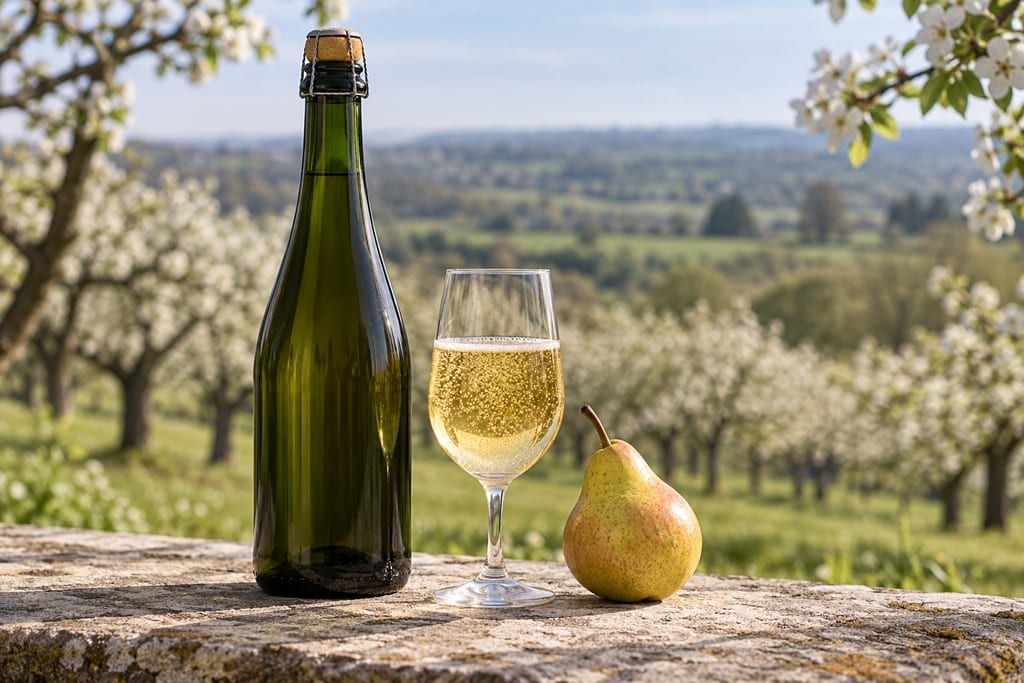
Poiré de Domfront
Naturally sparkling perry from the Bas Domfrontais in Normandy, pressed from high-stem orchard pears with at least 40% Plant de Blanc and carbonated by fermentation in the bottle.
 FermenteaWhere food goes to change
Substrates
Pears are Pyrus fruits used fresh, pressed for perry, or crushed for fruit spirits; cultivar, species and ripening stage shape each preparation.
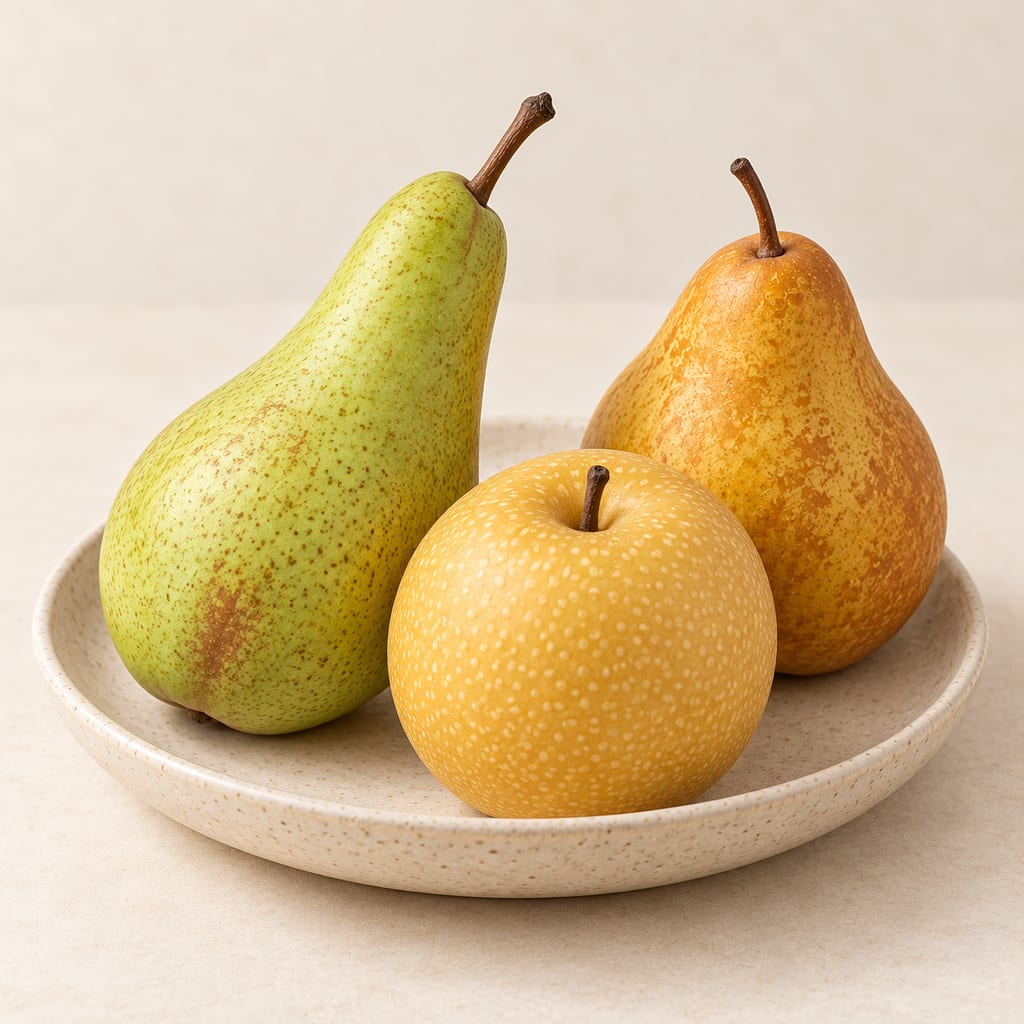
Pear is the fruit of trees in the genus Pyrus, a group that includes several cultivated species and their wild relatives. The common European pear is Pyrus communis L.; Asian pears include other species and hybrids, so the word “pear” alone does not settle the botanical identity. European dessert pears such as Bartlett and Anjou and the cultivars used for perry can differ in shape, flesh, ripening behaviour and composition. A specific cultivar or local name should stay attached to the evidence that describes it.
Most cultivated pears are pome fruits. The fleshy part develops around a core containing seeds, and its texture can change markedly as the fruit ripens. European pears are often harvested firm and allowed to soften off the tree. Asian pears are usually crisp when mature and do not soften in the same way after harvest. Pears can be eaten fresh, pressed for juice, crushed into a mash, cooked, dried or stored; the intended use determines which maturity and fruit form matter.
Kew recognizes Pyrus communis as an accepted species and summarizes its native range as Europe to northern Iraq. That botanical range is not a complete history of pear cultivation, and it does not describe every species sold as a pear. The common English fruit name covers cultivated and wild Pyrus material across several regions. This page keeps species-specific evidence visible rather than treating every pear as one interchangeable fruit.
Pear cultivation has a long history in Europe and Asia, but the exact origin of the European pear remains uncertain. A genetic study of ancient Italian pear landraces describes P. communis as economically important and widespread while stating that its precise origin is still unknown. Kew’s range summary and the many cultivated groups show why a single modern region should not be named as the species’ birthplace.
A review of pear domestication and dispersal surveys ancient writers’ descriptions of cultivated and wild pears, propagation and named varieties. It discusses Greek and Roman horticultural writing, including Theophrastus, Cato and Pliny. These texts show that growers observed differences among pear trees and passed on orchard practices; they are not proof of one domestication event or an unbroken modern recipe. Pear varieties have continued to be selected and moved, and a cultivar’s familiar name can refer to fruit with a particular use rather than to one species-wide standard.
Different growing traditions have selected fruit for different jobs. Dessert pears are prized for eating texture and flavour. Perry varieties have also been selected for juice, acidity, tannin or aromatic character, though the boundary between a perry pear and a general-use pear is not always fixed. In England’s traditional perry districts, older varieties and large trees are part of the orchard inheritance; modern collections conserve named perry types and document how market pears sometimes entered perry orchards when commercial markets changed.
Those histories should not be flattened into one “pear culture.” A French appellation perry made from local varieties, an English perry orchard, a Hungarian wild-pear spirit and a North American pear eau-de-vie use different fruit populations and processing routes. The name pear tells the reader what broad fruit family is involved; location, cultivar and product name supply the next layer of identity.
Pear texture and harvest stage depend on species and cultivar. California guidance for European pears recommends picking mature fruit while it is still firm, then allowing it to ripen in cool conditions; fruit left on the tree does not develop the same flavour and texture. Asian pears are treated differently: they are generally allowed to ripen on the tree and remain crisp. These are regional horticultural recommendations, not universal tests for every orchard or named cultivar.
Ripening changes more than softness. Ontario’s commercial guidance describes starch changing to sugar as pears soften, accompanied by increased respiration and ethylene production. Such changes affect the fruit’s eating quality and its behaviour during storage. Pear harvest schedules also reflect transport and processing: a firm fruit is easier to handle, while a fruit intended for immediate eating or processing may be managed differently. The sources do not give one maturity reading that can be applied to every pear.
An experiment examining sugar composition across 142 pear accessions found fructose, sorbitol, glucose and sucrose among the principal soluble sugars. Sugar profiles varied among the sampled germplasm and geographical groups. Those measurements help explain why two pear cultivars can taste and process differently, but they are not a standard composition for a generic market pear or a prediction of fermentation yield.
Fruit condition matters when pears are crushed or pressed. The Vasi wild-pear specification requires mature fruit of good or excellent quality and describes checking sampled fruit for condition, extraneous material, mould and rot as part of its protected production system. The Domfront specification likewise names local varieties and a staged fruit-to-juice process. These are particular quality and production rules; they should not be turned into a universal home acceptance protocol.
Pears provide water, soluble sugars, acids, aroma compounds and, depending on the cultivar and process, tannins and other phenolics. Yeasts use some of the sugars during alcoholic fermentation, producing ethanol and carbon dioxide along with compounds that shape aroma. Sorbitol is a sugar alcohol and does not ferment like the principal sugars; in perry it can remain and contribute a gentle sweetness even after other sugars have been consumed. Research and producer accounts describe fruit and yeast as interacting inputs, not as one fixed pear recipe.
An English perry pear may be selected for tannin, acidity or aroma rather than for soft dessert texture. The juice pressed from such pears can yield a different balance from juice made with a table cultivar. Pear pulp can also be unusually watery, and perry guidance describes resting crushed fruit before pressing in some processes. These are reasons to preserve the named cultivar and source-specific handling steps; they are not instructions to change a recipe or to substitute one variety without evidence.
Pear spirits generally use a different physical base from perry. A fruit spirit can begin with crushed pear mash, where juice and some fruit solids are fermented before distillation, or with a pressed juice preparation. A bottle labelled pear does not alone show whether the alcohol came from fermented pears or from neutral spirit that was later flavoured. Product descriptions and appellation specifications are therefore needed to identify the actual route.
Fruit mash also carries microorganisms from the fruit and its handling environment. A study of spontaneous plum mash found different yeast populations at different fermentation stages, but that study is about plums, not pears. It should not be used to name the microbes in a pear ferment. The sources cited here do not establish one universal pear yeast, bacterial community or starter culture; each reported organism or culture belongs to the specific experiment or product specification that tested it.
Perry is fermented pear juice. In the protected Domfront product from Normandy, the current specification names a defined local area and perry-pear varieties. It describes fruit being grated into pulp, rested and pressed to obtain juice, which then undergoes slow fermentation; bottle fermentation supplies the finished drink’s sparkle. The specification makes clear that the fruit is the source of the fermented juice. This is a product-specific appellation route, not a universal account of all perry.
English perry uses a wider set of named orchard varieties. Some are grown primarily for perry, while others have also been sold or cooked as market fruit. Old trees and regional collections matter because perry pears can be slow-growing and a variety may survive in only a small number of orchards. Some source accounts describe fruit pulp as more watery than apple pulp and recommend a rest after crushing before pressing. No single cultivar blend or press schedule describes every perry region.
Pear juice can be fermented into perry without being distilled. That distinction matters because a fermented beverage and a spirit made by distilling fermented fruit are different products. A perry may undergo an additional bottle fermentation, as in the Domfront specification, while a clear pear eau-de-vie derives its alcohol from a fermented fruit preparation that is later distilled. A pear-flavoured neutral spirit is a third route and should not be presented as a fruit ferment unless its production evidence supports that claim.
Nor should a finished pear-wine or perry ingredient be catalogued as raw fruit. Pears belong on the ingredient page; fermented pear juice belongs on a preparation page. This page connects them through the site's existing recipe links, so the reader can follow the transition from orchard fruit to each documented drink without treating different products as aliases.
Pear is also the named substrate in several fruit-spirit traditions. A producer interview from Oregon describes ripe Bartlett pears being managed in cold storage and crushed into pulp for pear eau-de-vie. The pulp, rather than an intact whole fruit, is the material that ferments. The account notes that the yeast strain was not disclosed, so it cannot support a strain name or a general culture recommendation.
A Canadian producer describes ripe pears being fermented and distilled into eau-de-vie; its product page identifies Bartlett, Anjou and Clara Frijs. Such producer evidence can establish the fruit and the intended production route while leaving the method, fermentation conditions and microbiology unknown. It should not be converted into a home formula by filling those gaps with common practice from another fruit spirit.
The Vasi wild-pear pálinka protected specification is more exact but applies only to that named regional product. It identifies a mash made from low-sugar wild pears, with a specified sugar range and fermentation requirements, and allows more than one distillation system. The source links the fruit to a particular product tradition and formal specification. Its temperature, acidity, duration, storage and distillation conditions belong to that specification; they are not universal pear safety limits or a general household method.
Domfront perry and Vasi wild-pear pálinka show why the fruit’s physical form and sugar supply matter. The first uses pressed pear juice for a sparkling fermented beverage; the second ferments a low-sugar wild-pear mash before distillation. They differ in fruit type, process and product. Adding sugar, changing from mash to juice, or borrowing an endpoint from one specification would change the evidence base and may change the product identity.
Choose pears according to their species, cultivar and intended use. A pear sold for fresh eating may be selected for soft, juicy flesh, while a perry pear may be selected for acidity, tannin or aroma, and a fruit-spirit producer may need ripe pears that can be crushed into pulp. Keep a named cultivar name where a source provides one. “Pear” is too broad to explain the fruit’s maturity or composition by itself.
Fresh-fruit storage recommendations are not fermentation controls. UC guidance describes storing mature European pears while firm and allowing them to ripen after cold storage; Asian pears are managed differently and may be stored cold after ripening on the tree. Ontario’s commercial guidance gives cultivar- and system-specific handling information. These sources concern fresh produce quality and do not establish the safe storage of pear mash or fermented juice.
Processing sources name several physical forms: whole fruit may be collected, fruit can be grated or crushed into pulp, pulp can rest before pressing, and the extracted juice can then ferment. A mash keeps more fruit tissue in contact with the ferment; pressed juice begins with the extracted liquid. The record should name which form the source actually uses. “Whole fruit” in a producer description may mean skins and flesh remain in the pulp, not that intact pears float in a vat.
Use an exact recipe or protected specification for quantities and process conditions. This ingredient account does not create a universal pear wash, perry recipe, fermentation time or storage interval. No smell, taste, bubbling or single home measurement proves that a pear ferment or spirit is safe. The source records for each linked preparation determine which practical instructions are supported.
Pear has close neighbours in the catalogue, but they are not interchangeable names. Apples and pears can appear together in a recipe or food history, yet the individual fruits remain distinct substrates. Bartlett pear is a named type linked to the broad Pear item. Korean pear is a separate regional and botanical subject. Quince and apple have their own fruit chemistry, harvest behaviour and fermentations. A combined apples-and-pears candidate therefore remains a record for that combined scope rather than a replacement for the individual Pear page.
Perry is fermented pear juice; pear eau-de-vie and wild-pear pálinka are distilled products made from pear ferment. These relationships do not collapse the products into one recipe. A reader can learn from the fruit page what the pear contributes, then follow each preparation for its own variety, geography, processing stage and source limits. The published Poiré de Domfront page represents one protected pear-juice tradition; broader English perry and generic pear spirit remain separate subjects.
The evidence leaves important questions open. No single history establishes the origin of all cultivated pears, and one sugar study cannot describe all cultivars. A specific fruit-spirit specification does not describe every pear mash; a producer's page may leave yeast and fermentation conditions undisclosed. Fresh-pear storage recommendations do not establish mash storage controls. The linked sources should be read within those limits rather than combined into a convenient but unsupported universal process.
Pear fruit is versatile because growers selected different kinds for eating, pressing, cooking and fermentation. Its central contribution to an alcoholic preparation is the fermentable material in the fruit or juice; cultivar and processing shape what reaches the ferment and the finished drink. Keeping species, named varieties and process forms visible gives the reader a more accurate starting point than a single generic pear formula.
Pear juice perry under the Domfront AOP; this identifies a named preparation area, not the origin of pears generally.
The protected specification concerns wild-pear pálinka from this region; it does not characterize every pear or pear spirit.
The centre documents perry pear varieties and collection work in the Three Counties; this is a regional use association, not a species origin claim.
A producer identifies Bartlett, Anjou and Clara Frijs pears in its eau-de-vie; evidence for one current product, not a province-wide tradition.
The interview describes ripe Bartlett pears crushed for one producer's eau-de-vie; the production location and method are not generalized to all pear spirits.
Naturally sparkling perry from the Bas Domfrontais in Normandy, pressed from high-stem orchard pears with at least 40% Plant de Blanc and carbonated by fermentation in the bottle.
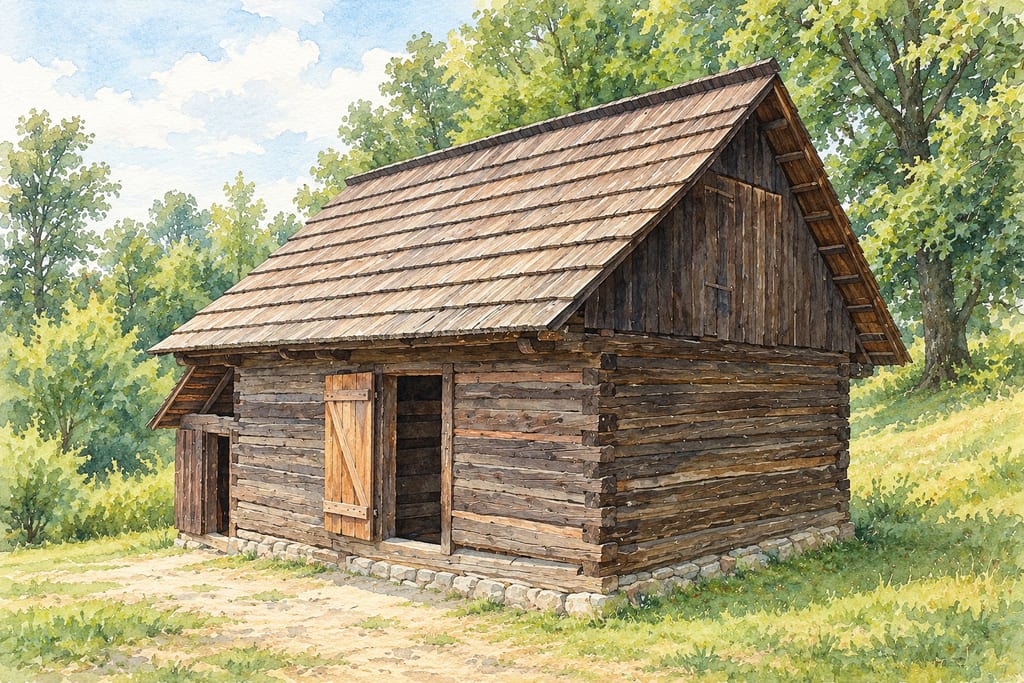
A late-19th-century log-built fruit-drying house from Seninka, south of Vsetín. Its documented interior had a firebox, oven body and a section for inserting wooden fruit racks.
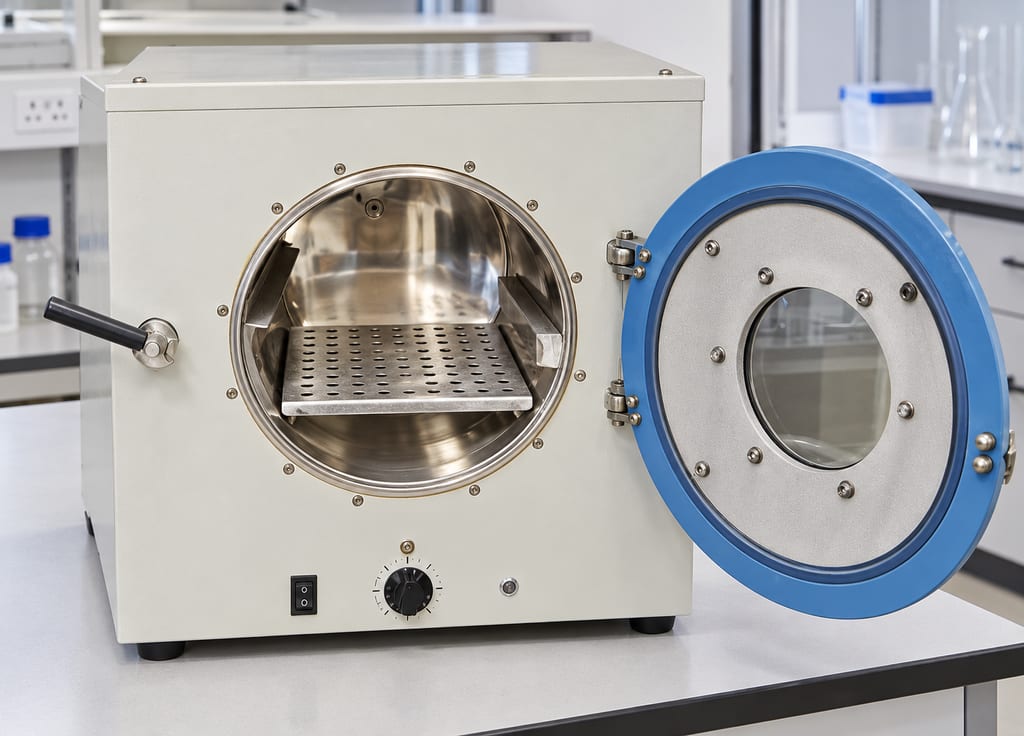
Vacuum dryers remove food moisture under reduced pressure, allowing evaporation at lower temperatures. Shelf, belt and drum designs handle different feeds; ordinary vacuum drying is distinct from freeze-drying.
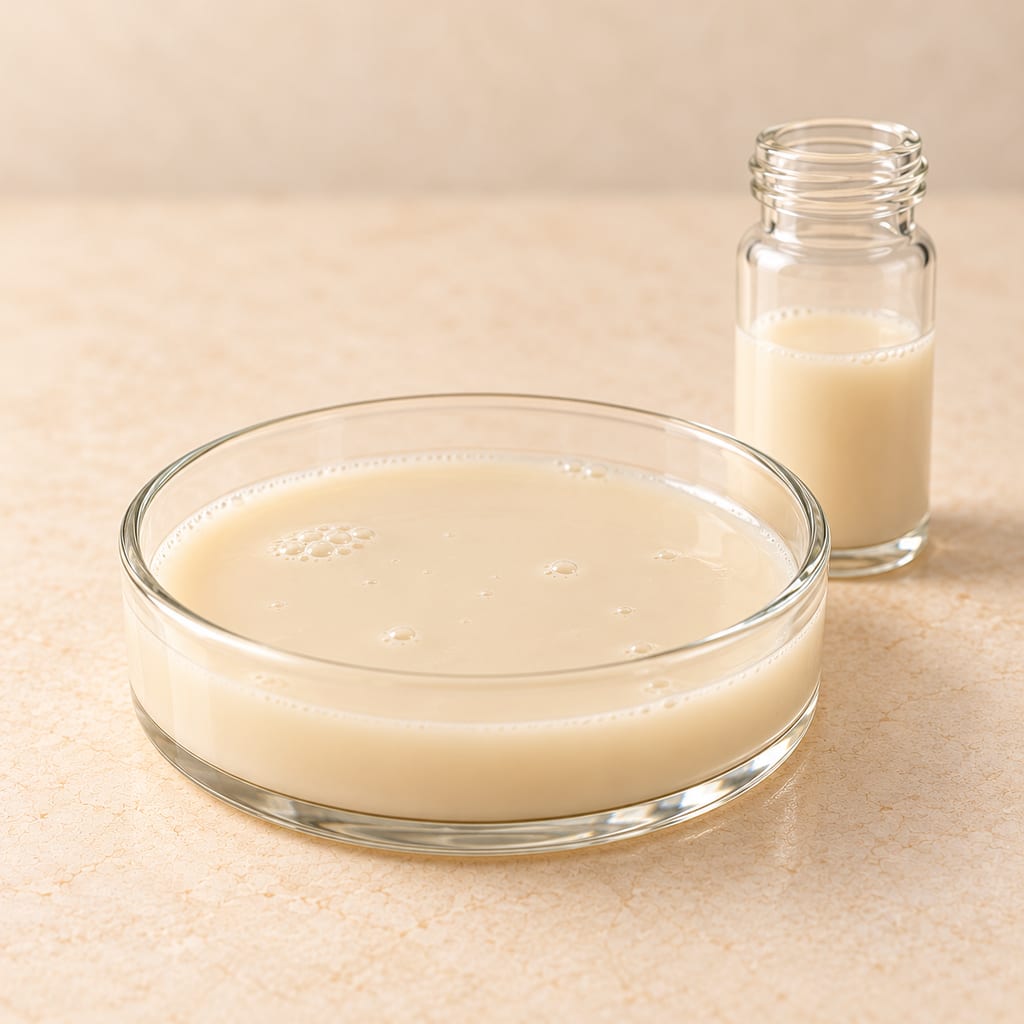
Brewer’s yeast is a working name for living cultures selected for brewing, not one strain or always one species. Ale and lager cultures differ, and older household books may use the term for foam or sediment from brewery beer.
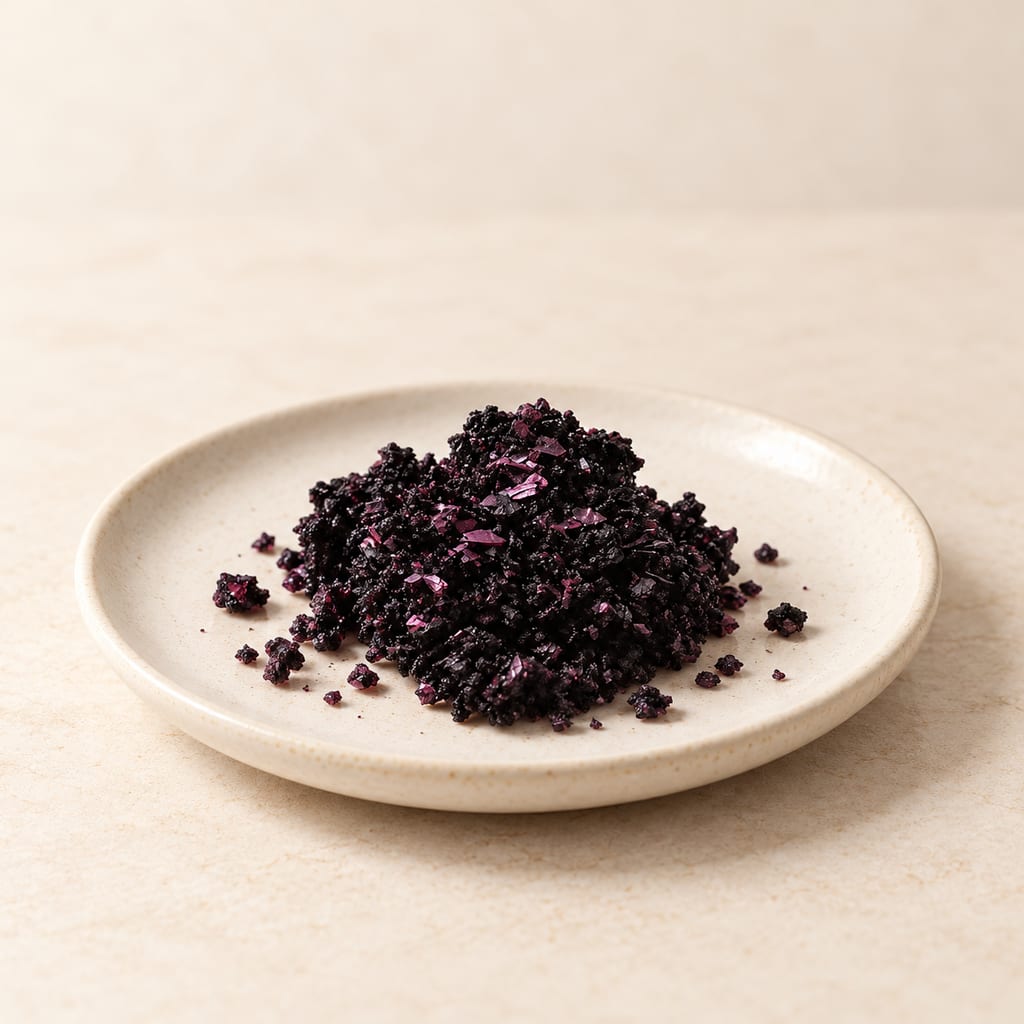
A mixed crystalline wine-vessel deposit, chiefly potassium hydrogen tartrate, used historically in wine recipes and recovered for refining into purer products.
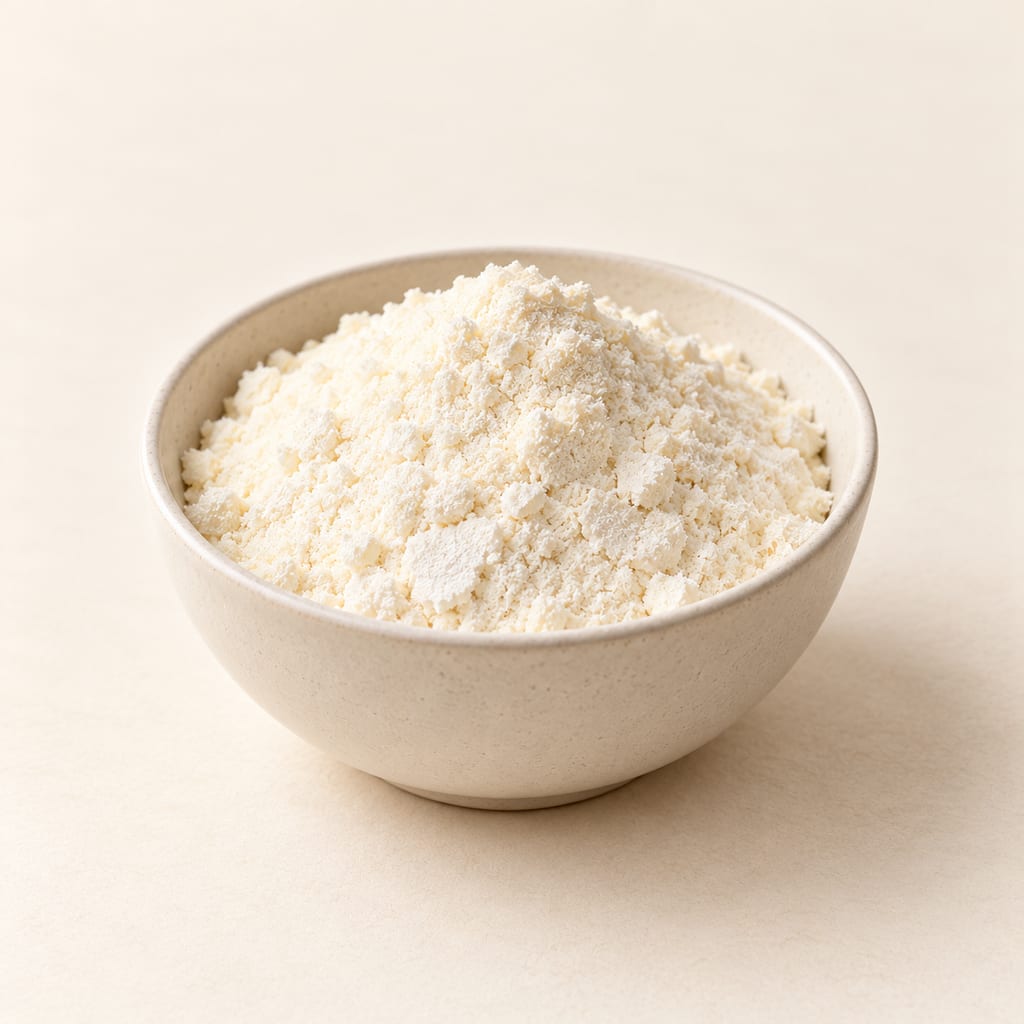
Dry milk is a family of dairy ingredients made by removing most water from milk or cream. The name includes distinct whole, partly skimmed and nonfat powders; fat level, heat treatment and particle form determine handling and use.
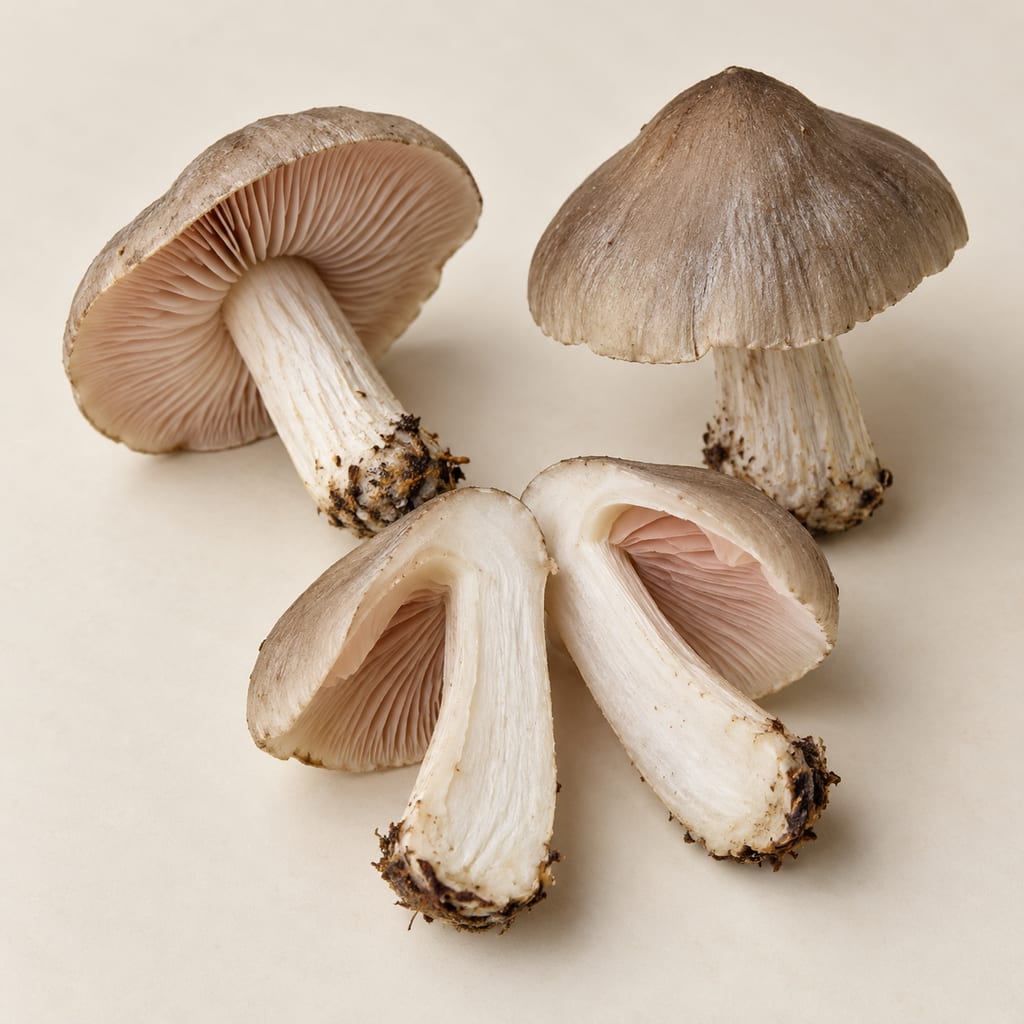
A woodland pinkgill reported as local food in Sikkim and parts of Italy, but difficult to identify and subject to strong regional warnings about confusion with toxic Entoloma species.
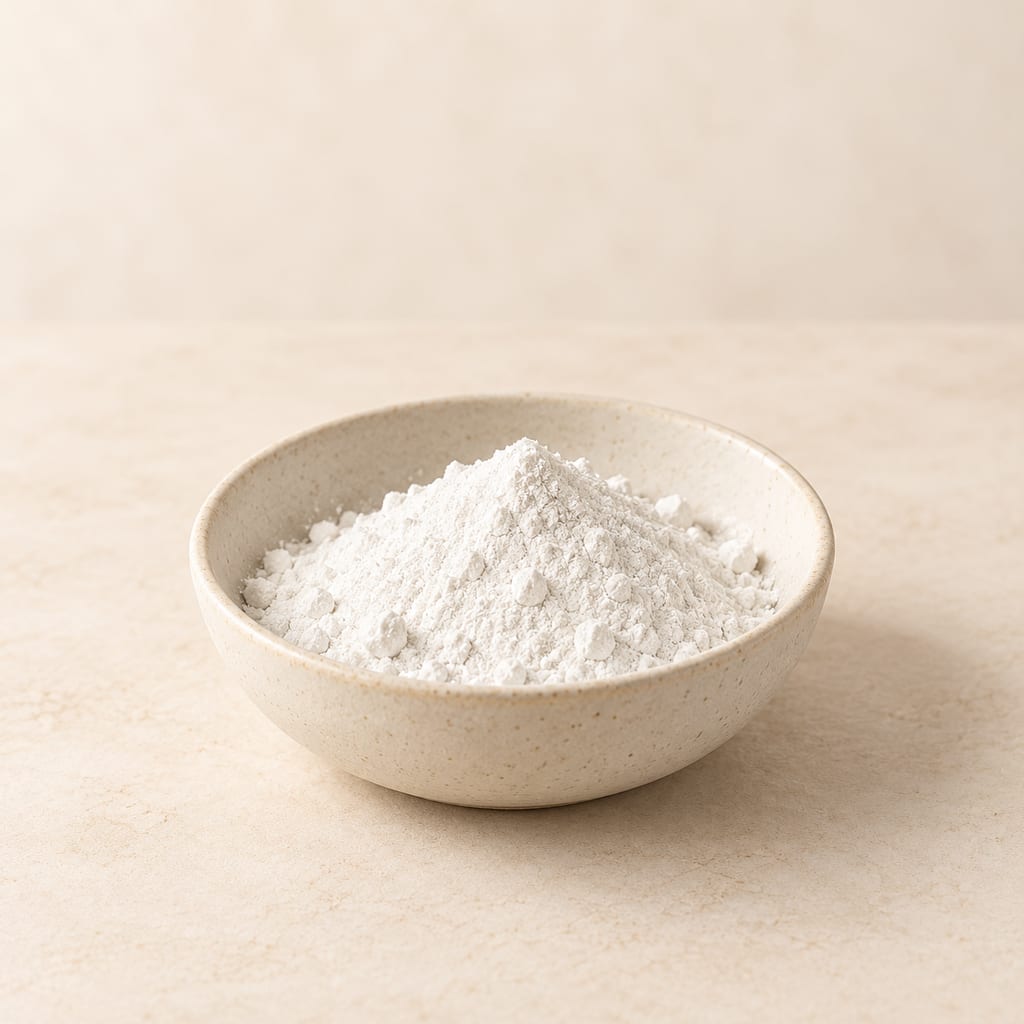
Gypsum is calcium sulfate dihydrate, a mineral salt that brewers dissolve in water for its calcium and sulfate and that tofu makers use to set soy curd.
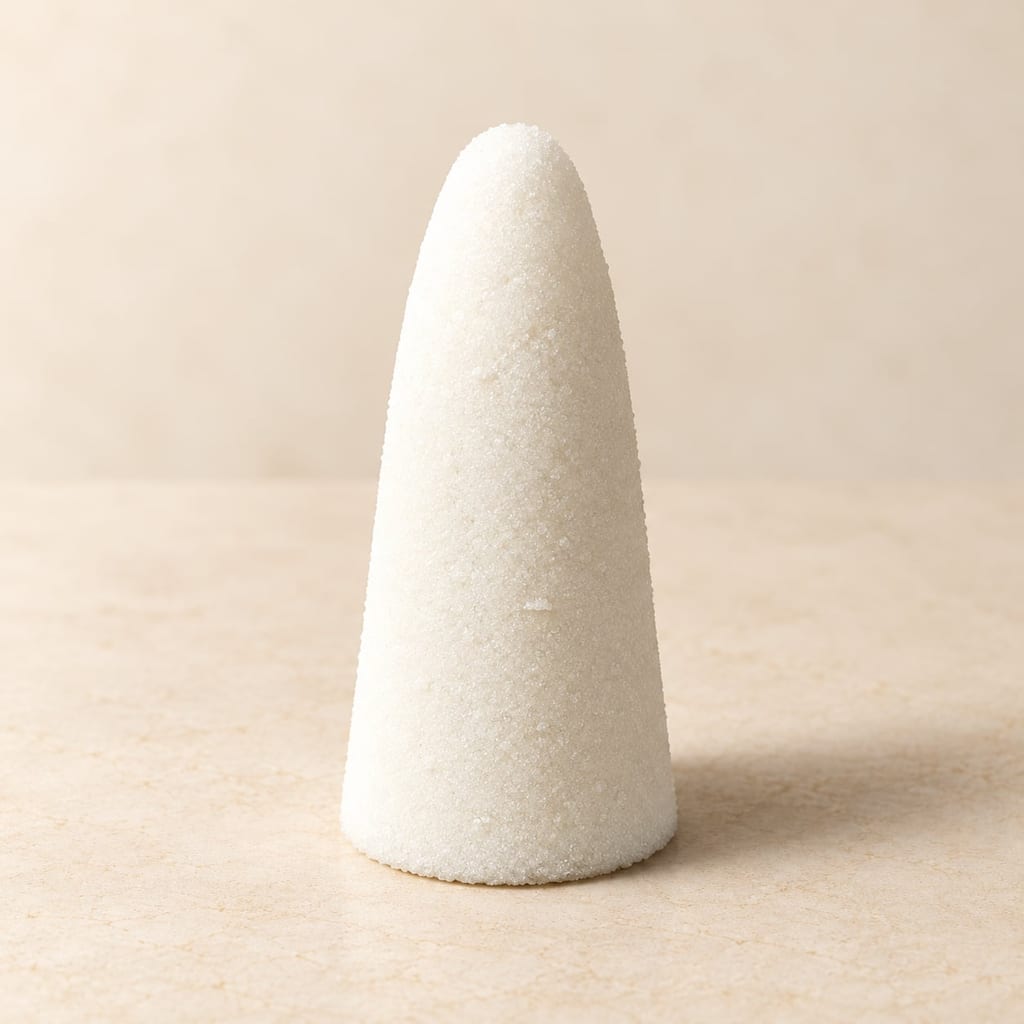
Refined sugar formed into a solid cone, historically cut or powdered for kitchen use and dissolved into wine liquor.
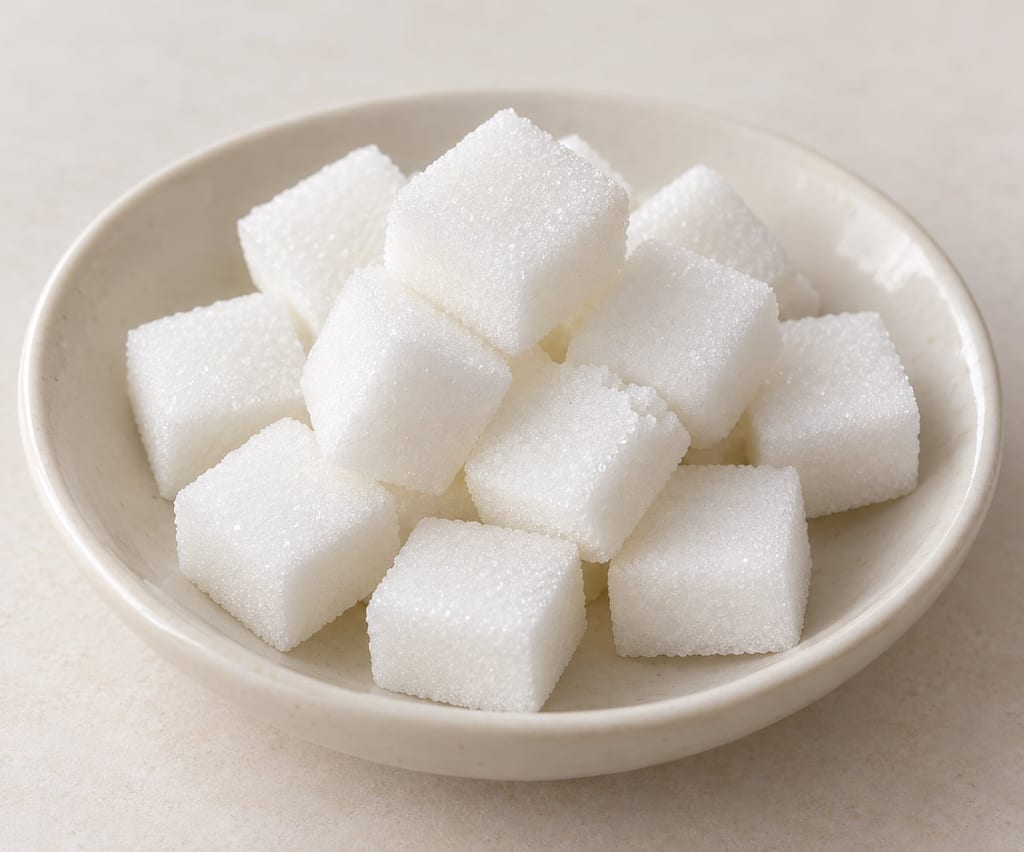
A historical refined-sugar form whose name has covered truncated cones and, in later usage, smaller pressed or cast pieces.
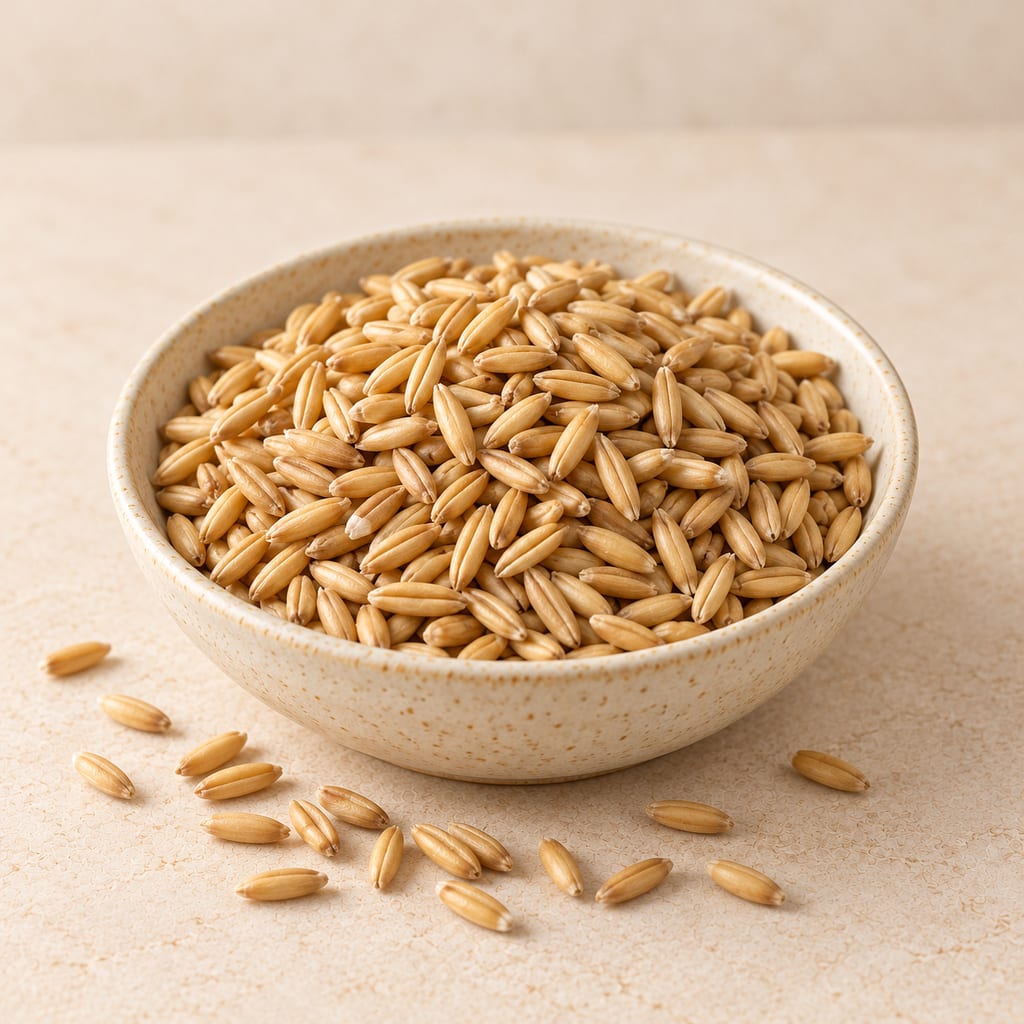
A cereal grain sold as groats, cut pieces, flakes, flour and malt. Oats shape porridge, bread and brewing differently as processing changes hydration, texture, starch, beta-glucan, protein and oil.
No community contributions have been published for this entry yet.
Sign in to contribute. Published comments and photos are free to read.
Royal Botanic Gardens, Kew, Plants of the World OnlineTaxonomy · Geography
Pyrus communis L.Kew accepts Pyrus communis L. and summarizes its native range as Europe to northern Iraq. This species-level botanical range does not establish a single domestication centre for all pears.
Cited in: Pears are a family of fruits
University of California Small Farms NetworkTaxonomy · Cultivars
Asian PearsUC Davis pomology guidance distinguishes crisp Asian pears from European pears that are commonly served soft and juicy; the 1989 page describes selection and naming of Asian pear cultivars.
Cited in: Pears are a family of fruits
Frontiers in Plant ScienceHistory · Taxonomy
Characterization and Phylogenetic Analysis of Ancient Italian Landraces of PearThe study states the exact origin of European pear is unknown and characterizes ancient Italian landraces; it supports retaining uncertainty rather than assigning a precise birthplace.
Cited in: Orchards, named types and a long history; What pears contribute to fermentation; Related fruits and the limits of generalization
Advances in AgricultureHistory
Origin, Domestication, and Dispersing of Pear (Pyrus spp.)Review surveys pear cultivation, propagation and named pear observations in Greek and Roman horticultural writings; used as secondary historical synthesis, not proof of one origin date.
Cited in: Orchards, named types and a long history
National Perry Pear CentreCultivars · History
How it all startedThe centre documents the recovery and conservation of historic perry-pear varieties in the Three Counties and records collection dates, locations and variety counts for its own collection.
Cited in: Orchards, named types and a long history
National Perry Pear CentreFermentation · Cultivars
Market PearsThe centre describes mixed-purpose and dedicated perry varieties, named market cultivars and historical orchard selection; the distinction between perry and non-perry types is not absolute.
Cited in: Orchards, named types and a long history; What pears contribute to fermentation; Perry: juice fermented as a drink; Related fruits and the limits of generalization
Journal of Food Composition and AnalysisFlavour · Fermentation
Profiling of soluble sugar compositions in mature fruits of a diverse pear (Pyrus spp.) germplasm by UPLCAnalysis of 142 pear accessions found fructose, sorbitol, glucose and sucrose among primary soluble sugars and variation by germplasm and geography. This is a sampled-accession result, not a universal composition.
Cited in: Ripening changes the fruit; Related fruits and the limits of generalization
Official Journal of the European Union, EUR-LexFermentation · Geography
Vasi vadkörte pálinka: GI single documentProtected regional specification describes low-sugar wild-pear mash, fermentation criteria and subsequent distillation for Vasi vadkörte pálinka. These conditions belong to the named GI and are not generalized as home instructions or universal safety limits.
Cited in: Ripening changes the fruit; Pear spirits from mash and juice; Choosing and storing pears
Ministère de l'Agriculture et de la Souveraineté alimentaireFermentation · Geography · Cultivars
Domfront: cahier des charges de l'appellation d'origine protégéeCurrent French product specification describes local perry pears, fruit grated to pulp, a rest, pressing, pure pear juice and slow fermentation followed by bottle fermentation. The rules are specific to the Domfront AOP.
Cited in: Ripening changes the fruit; Perry: juice fermented as a drink; Pear spirits from mash and juice; Choosing and storing pears; Related fruits and the limits of generalization
University of California Statewide Integrated Pest Management ProgramHarvest · Storage
Harvesting and Storing PearsGuidance distinguishes off-tree ripening for European pears from tree ripening and cold storage for Asian pears; recommendations are cultivar/system-specific fresh produce advice, not mash storage controls.
Cited in: Ripening changes the fruit; Choosing and storing pears
Ontario Ministry of Agriculture, Food and AgribusinessHarvest · Storage
Recommendations for harvest and storage of pearsCommercial guidance discusses maturity, starch-to-sugar changes during ripening, ethylene and storage; values are specific to Ontario commercial handling and are not fermentation controls.
Cited in: Ripening changes the fruit; Choosing and storing pears
Beer Judge Certification ProgramFermentation · Flavour
Cider Apples and Perry PearsEducational cider-judge reference describes perry as fermented pear juice and notes sorbitol may remain unfermented, along with perry pear tannin and fruit-pulp handling distinctions.
Cited in: What pears contribute to fermentation; Perry: juice fermented as a drink
Spirits & DistillingFermentation · Handling
Distilling the Harvest: Managing Fresh Fruit from Farm to StillFirsthand producer interview describes ripe Bartlett pears managed and crushed as pulp for pear eau-de-vie; producer yeast strain is not disclosed.
Cited in: What pears contribute to fermentation; Pear spirits from mash and juice
Ironworks DistilleryFermentation · Cultivars
Pear Eau-de-VieProducer identifies pear eau-de-vie made from ripe Bartlett, Anjou and Clara Frijs pears in Nova Scotia; source supports fruit/product identity, not a universal method or yeast strain.
Cited in: Pear spirits from mash and juice