
Red wine
Red wine is grape must fermented with the skins and other solids, then separated from the pomace. Grape, cellar and regional choices shape its colour, structure and style.
 FermenteaWhere food goes to change
Liquamen de piris castimoniale · Liquamen ex piris · Pear liquamen · Palladius pear sauce
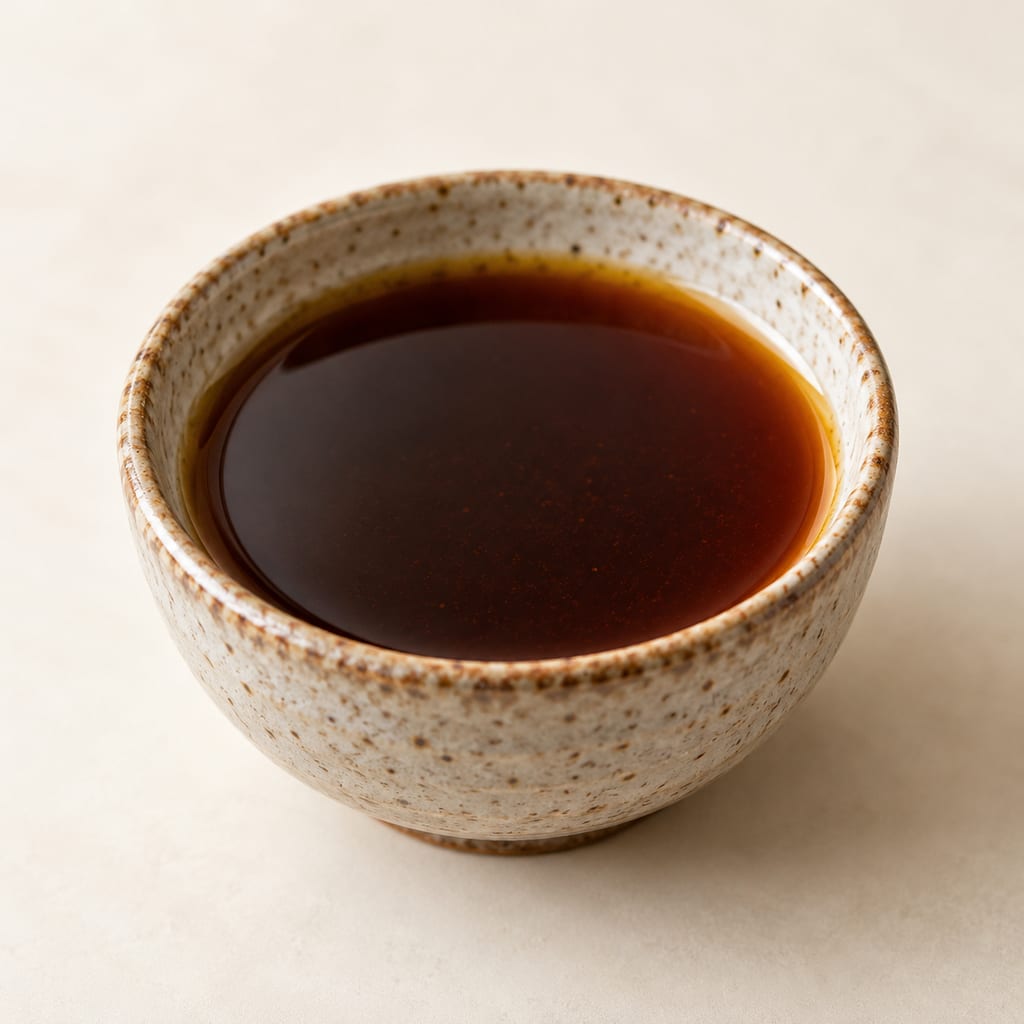
A late-antique Roman recipe in which very ripe pears are crushed with salt, matured for three months and drained, giving a pale liquid called liquamen.
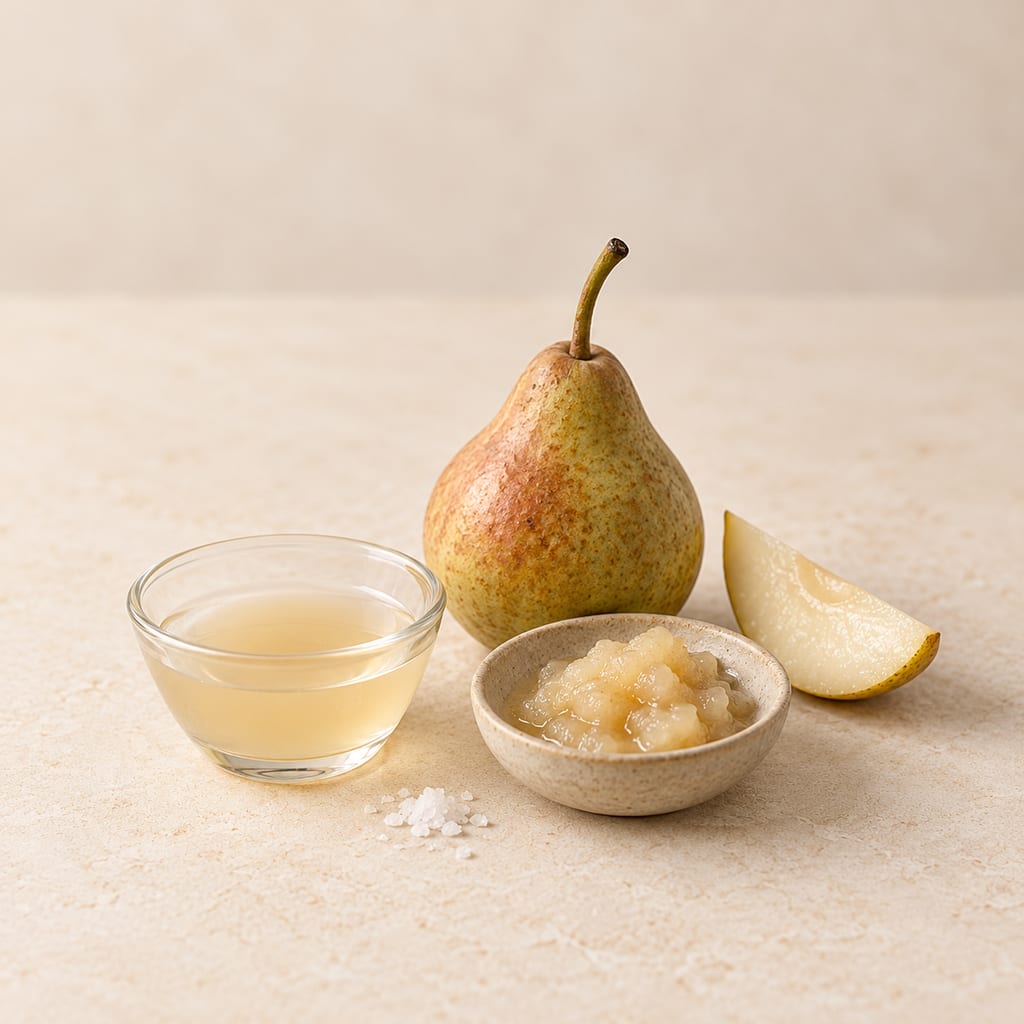
Palladius, a Roman writer generally dated to the late fourth or early fifth century CE, has a short passage on liquamen made from pears. Its opening line, Liquamen de piris castimoniale sic fiet, is usually rendered as how pear liquamen is made in a pure, ritual manner. Liquamen is the word used for the common whole-fish sauce of the Roman kitchen; here it names a product made without fish.
The passage shows that by late antiquity the name of a fish sauce could be applied to a plant preparation that follows the same logic of salt, time and draining. It does not show that the pear product replaced fish sauce, or that the two were the same food.
Very ripe pears are crushed whole with salt. Once the flesh has broken down, the mixture goes into small casks or earthenware vessels lined with pitch. After the third month the contents are hung so that the liquid drains from them. The liquid tastes pleasant but is pale, and the recipe advises adding some dark wine while the pears are salted to correct the colour.
A second, popular source gives a similar sequence: ripe pears are grated, mixed with salt into a pulp and left covered in a dish, and after three months the flesh is separated from the liquid. It calls the product garum, a name the Latin does not use.
The raw material is pear, not a protein-rich fish, and the sources give no reason to think the pear breaks down as fish does. The chemistry is expected to differ, but no source read here measures it. What the recipe shares with fish liquamen is the sequence of salting, a period of maturation and draining the liquid; the name follows the process and the finished liquid, not the animal.
The word castimoniale is the hard point. One writer links it to castimonia and castus, pure or chaste, and notes a view that it refers to religious strictures; he leaves open whether the whole preparation was a ritual. Another reading is that the product is simply made in a pure state. Neither is settled.
The Latin gives no weight of pears and no salt ratio, and the dark wine is only some part. It does not say how long the pears were salted before the third month, how long the drip lasted, or the yield. The 25 to 50 per cent salt range quoted on one page is a modern writer's, not Palladius's.
This is one recipe in one text. It is good evidence that liquamen could name a salted, drained fruit product, and weak evidence about how common the practice was or whether anyone used it in place of fish sauce. The Latin was read as quoted on a single page; a critical edition was not checked.
One recipe in one late-antique agricultural text; how common the practice was is not known.
Scaling: source batch only
The sources give no food-safety guidance for this historical product; descriptions of its taste and colour do not show that it is safe to eat.
Hazard sourceThis is a historical record, not a validated method. Taste and colour do not establish safety.
A single agricultural text by Palladius; the sources do not say where it was made or how widely.
Red wine is grape must fermented with the skins and other solids, then separated from the pomace. Grape, cellar and regional choices shape its colour, structure and style.
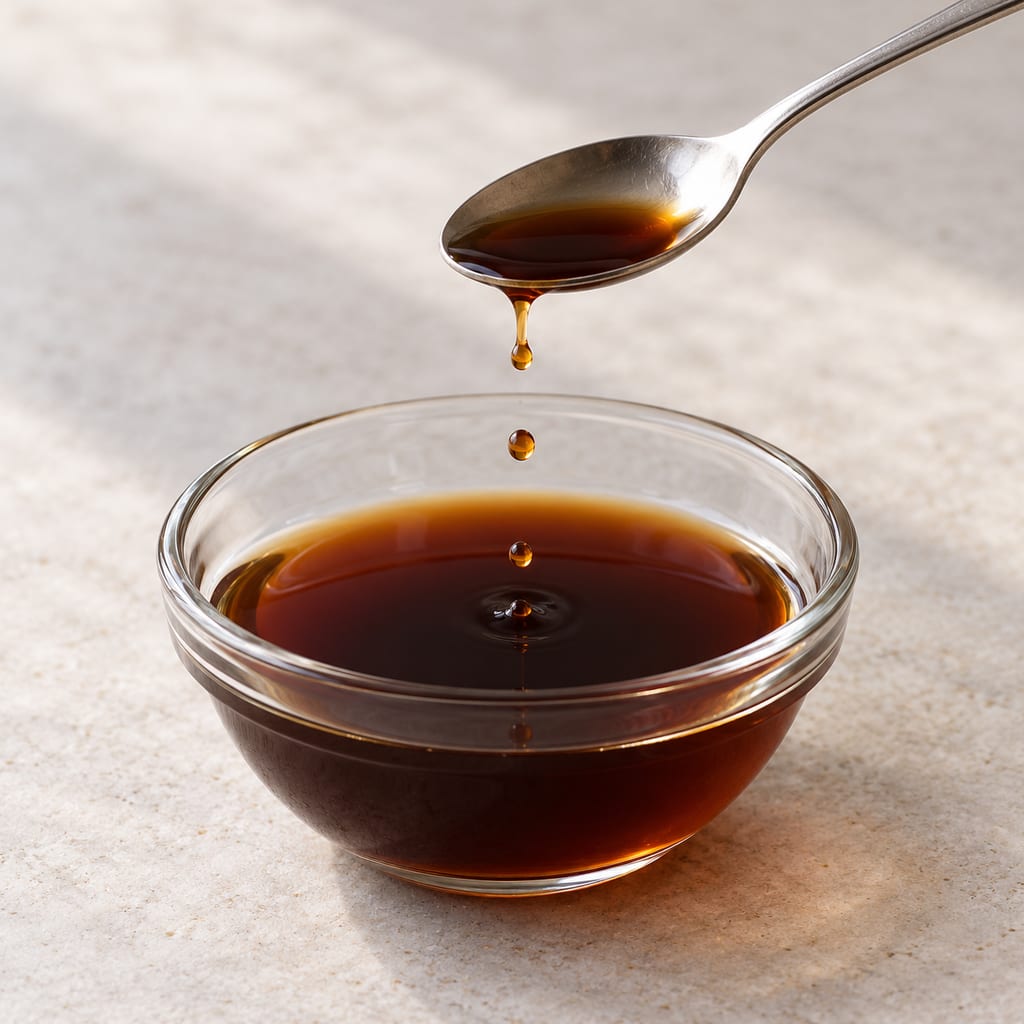
Cooked-bean koji garum is a dark liquid seasoning made from soft-cooked beans, rice koji, salt and water. A long warm hold lets koji enzymes break down the mash.
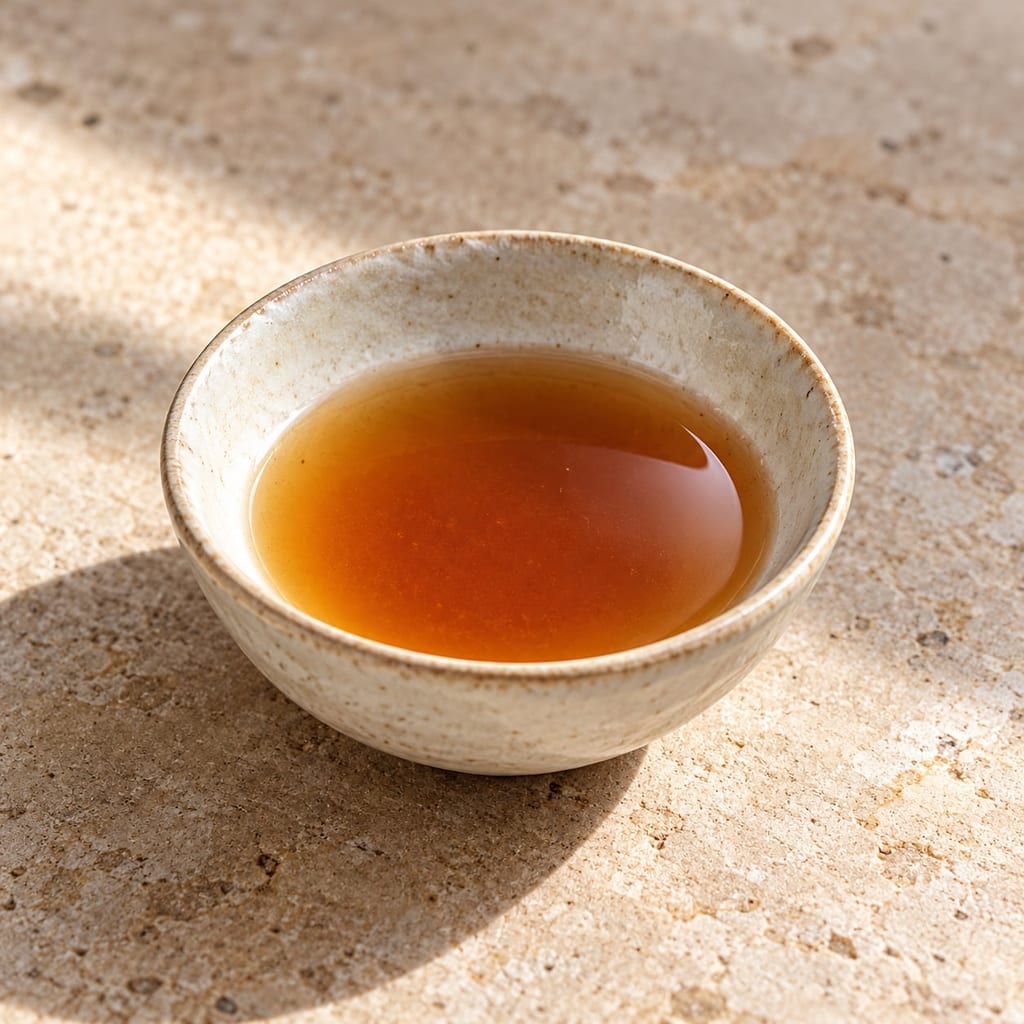
Chef Alex Perry makes this modern shrimp garum from Gulf white shrimp heads and shells, koji, water and salt. He holds the mash at 60°C for two months, then strains the liquid for use as a seasoning.
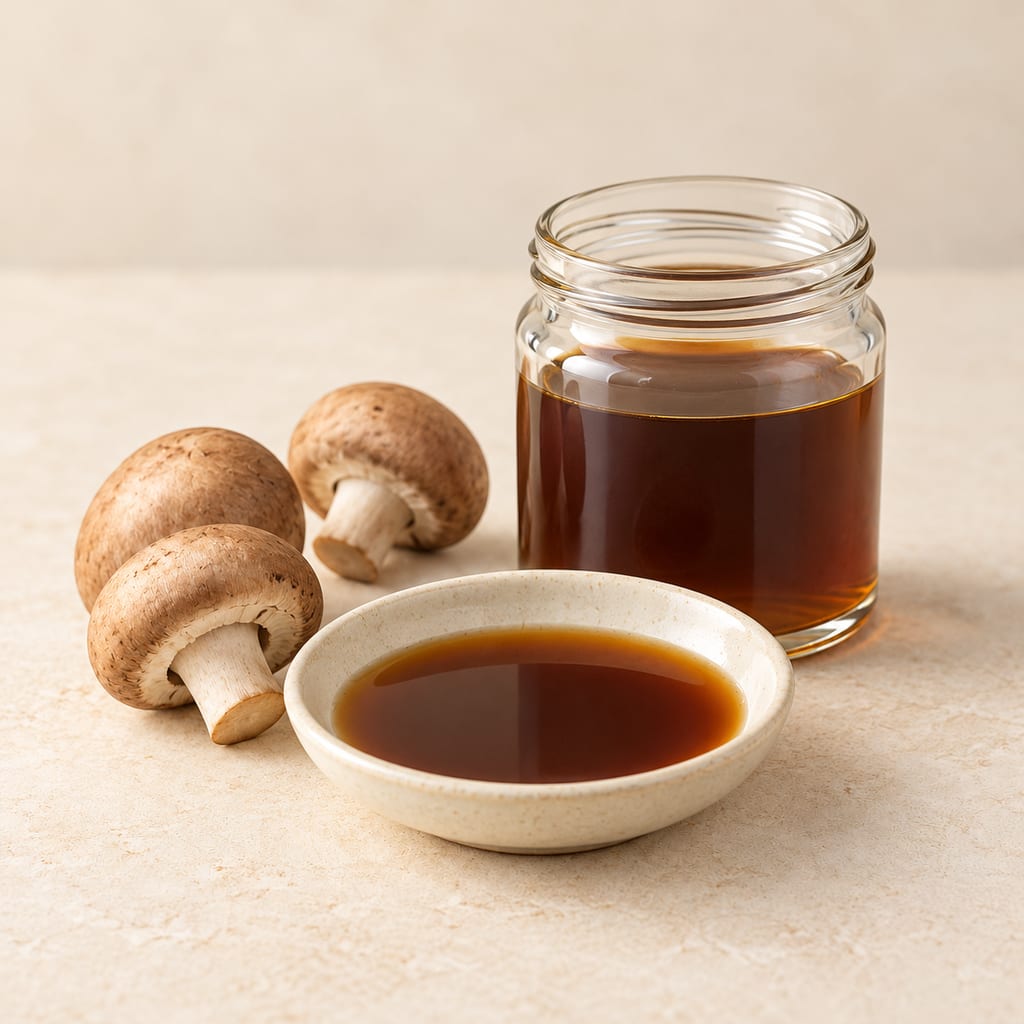
Mushroom garum turns mushrooms, rice koji, salt and water into a dark savoury seasoning. A sustained warm hold lets koji enzymes break down the mixture before straining.

Meat-trim koji garum is a savoury liquid seasoning made by holding meat scraps with rice koji, salt and water at steady warmth before straining the mash.
Mushroom garum is a savoury, smoked sauce made by crushing mushrooms with salt and rice koji and letting the mixture brew for months, a modern use of the garum method without fish.

Yellow-pea koji garum is a dark liquid seasoning made by holding cooked split peas with rice koji, salt and water while the koji enzymes break down the mash.

At North Abydos in Egypt, a fixed early Dynastic brewery comprised parallel semi-subterranean installations with rows of ceramic mash vats; excavation reports revise their number, scale and estimated batch capacity.

Ají amarillo is the orange-yellow Peruvian chilli cultivar group of Capsicum baccatum, used to colour and season huancaína sauce and ají de gallina. Published heat estimates do not establish one range for the named cultivar.

Toasted almonds are whole sweet almond kernels dry-roasted until golden to brown. Heat replaces their marzipan note with a roasted, nutty one; they thicken and flavour romesco.

Kodiak salmon, halibut and cod cut as seg'aq and hung on an initaq rack to become tamuuq, with kac'amaasaq and kupcuunaq named as different results.

Aniseed is the dried ripe fruit of Pimpinella anisum, an aromatic Apiaceae spice commonly called a seed. It adds a sweet, warm aroma to breads such as Moroccan krachel and South African mosbolletjies, and is distinct from star anise.

A fixed Late Chalcolithic installation in Areni-1 cave combined a shallow clay pressing basin with a large jar set into the cave floor and storage vessels nearby.

Ripe avocado flesh is the soft, buttery, fat-rich pulp of Persea americana, eaten raw. It is low in acid, so it is a fresh ingredient that needs care in chilled dishes.

A portable dome and pan used over a hearth, with embers on the lid and heat from below. Regional peka and saç forms share this principle while differing in materials, pan shape and how the food is cooked.
No community contributions have been published for this entry yet.
Sign in to contribute. Published comments and photos are free to read.
Orchard NotesMethod · History
Palladius recipe: liquamen ex piris (Opus Agriculturae 3.25.12)Latin opening line Liquamen de piris castimoniale sic fiet
Very ripe pears crushed with salt; small casks or pitch-lined earthenware; hung to drain after the third month
Pleasant taste, pale colour; some dark wine added to correct colour
Castimoniale linked to purity or ritual, reading unsettled
Modern salt range of 25 to 50 per cent of pear weight is Edith Evans's, not Palladius's
Cited in: A fish-sauce name on a fruit; The method; What it shares with fish liquamen, and what it does not; Limits of the evidence
Imperium RomanumMethod
Pears in Roman cuisineRipe pears grated with salt into a pulp, left covered; after three months flesh separated from liquid
Calls the product garum rather than liquamen
Cited in: The method; Limits of the evidence