
Rice koji
Rice koji is steamed white rice through which koji mold has grown. It carries the enzymes that turn rice starch into sugar, and it is the starting point of sake, sweet miso, amazake and shio koji.
 FermenteaWhere food goes to change
Modern method
Meat-trim koji garum is a savoury liquid seasoning made by holding meat scraps with rice koji, salt and water at steady warmth before straining the mash.

Meat-trim koji garum is an intensely savoury liquid seasoning produced by breaking down meat proteins using the enzymes present in prepared koji.
The meat is combined with koji, salt and water, held under controlled warm conditions, and eventually strained to separate the amino-rich liquid from residual solids.
Its purpose is to concentrate meat-derived flavour into a liquid that can be used in small quantities in other dishes.
The base formula does not specify an animal species. Beef, chicken and other meats are documented in contemporary garum practice, but they differ materially in fat, connective tissue, moisture content and food-safety hazards.
For this reason, the generic formula must not be represented as a validated recipe for every species.
The name garum comes from the ancient Mediterranean fish-sauce tradition. The use of terrestrial meat in this manner is a modern reinterpretation rather than an established Roman meat-garum recipe.
The enzyme source is rice koji, or kome-kōji (米麹), made using the mould Aspergillus oryzae. This food-grade organism is widely associated with the production of Japanese miso, sake and soy sauce.
The process is distinguished from ordinary meat ageing by the deliberate introduction of externally produced protein-degrading enzymes. It is also distinct from cured sausages, charcuterie and conventional lactic acid meat fermentations.
The finished product is intended to be a liquid seasoning, not a preserved portion of meat.
Garum was historically associated with salted fish. Its manufacture and consumption were widespread around the Mediterranean during the Roman period, and related fish-sauce traditions continued in various regions.
The historical starting point is therefore a category of protein-derived seasoning rather than an ancient recipe for fermenting beef or poultry with rice koji.
Traditional Asian food cultures provide important background for the broader use of mould enzymes to transform protein-rich ingredients. Koji and related grain starters have long been used in condiments and alcoholic fermentation.
Nevertheless, a modern warm-held meat garum should not automatically be attributed to a particular Japanese, Chinese or Korean tradition simply because it contains koji.
Contemporary restaurant experimentation developed a wider conception of garum. The fermentation laboratory associated with Noma in Copenhagen began exploring protein substrates other than fish, including meat and insects.
By 2014, meat garums were part of the laboratory's documented work. The subsequent development of koji-assisted versions made it possible to produce amino sauces from a wide variety of animal and plant ingredients.
This was a conceptual expansion of the ancient fish-sauce family rather than an archaeological reconstruction.
The contemporary approach was especially attractive to kitchens interested in reducing waste. Offcuts, trimmings and materials with limited use as conventional portions could potentially be transformed into valuable seasonings.
However, the terms trim and waste must not be confused. A useful food ingredient still has to meet appropriate standards for freshness and handling.
A documented British meat-trim garum associated with chef Marguerite Keogh uses barley koji rather than rice koji. It is matured at 60°C for three to four months.
Czech producer Goodlok also markets beef garum and describes beef-trim preparations matured for approximately three months. Other documented Goodlok versions use chicken.
These examples establish the modern diversity of meat garum. They do not provide evidence that the quicker generic rice-koji method has the same chemical endpoint, flavour or safety profile.
The central mechanism is enzymatic hydrolysis of protein.
Meat contains muscle proteins, connective-tissue proteins and varying amounts of fat and other components. The relative proportions depend on species and cut.
Koji enzymes act on proteins, breaking peptide bonds and gradually converting large protein molecules into smaller peptides and amino acids.
Proteases initiate cleavage of larger proteins. Peptidases further break down peptides, releasing smaller flavour-active compounds.
Free glutamate is particularly important for umami. Other amino acids can contribute sweetness, bitterness and depth, while peptide combinations help establish a more complex taste than salt alone.
Not every component of the meat is hydrolysed equally. Collagen-rich tissue can behave differently from ordinary muscle, and significant fat may separate as the mixture ages.
Prepared koji also contains carbohydrate-degrading enzymes. These act principally on the starch present in the grain substrate. They are not responsible for the breakdown of meat protein itself.
The process temperature of 55–60°C accelerates enzymatic changes and alters the structure of muscle proteins. As proteins denature, their physical properties change and some become more accessible to hydrolytic enzymes.
Over time, the mixture becomes less like ground meat and more like a thick liquid containing suspended solids.
Warm maturation can also encourage non-enzymatic browning reactions. Amino compounds and reducing sugars can participate in Maillard reactions, creating darker pigments and compounds associated with cooked and roasted flavours.
This helps explain why some meat garums develop brothy, roasted or browned-meat characteristics even without the meat being roasted before processing.
The degree of reaction depends on the substrate, temperature and duration. One should not expect every formulation to taste of roasted meat.
An important terminological distinction remains: the warm process is commonly called fermentation in culinary writing, but the main activity at the specified temperature is enzymatic, not active growth of the koji mould.
The mould cultivated the enzymes earlier. Those enzymes subsequently transform the meat under conditions where the original mould is not actively growing.
The finished sauce is not intentionally acidified. The quick-garum reference describes the family as remaining above pH 4.6, so the preparation cannot depend on lactic acid preservation.
Ingredient — Quantity — Purpose
Meat trim — 400 g — Main protein source
Rice koji — 250 g — Protease, peptidase and amylase source
Water — 250 g — Provides a medium for enzyme activity
Salt — 11–12% of final mash weight — Salinity and partial microbial inhibition
This formula preserves the existing generic rice-koji recipe.
The source does not specify whether the meat should be beef, lamb, pork, poultry or a mixture. It also does not specify a proportion of lean meat to fat or connective tissue.
These omissions are important because a mixture containing substantial fat will separate differently from a lean preparation. Fat can form a layer above the aqueous phase and may complicate straining.
Collagen-rich material may contribute different peptides and different texture compared with lean muscle.
The rice koji provides a consistent type of enzyme source, but the recipe does not identify a particular producer, moisture content or laboratory-measured enzyme activity.
That means its 250 g addition is a recipe quantity, not an objectively defined enzyme dose.
Salt is calculated against final mash weight.
The general quick-garum formula supplies a 100 g salt example for mushroom and cooked-legume substrates. Its higher recommendation for raw meat is 11–12%.
The latter is the appropriate documented band to retain in this meat-trim record.
There is no separately published, measured raw-meat gram quantity for the exact starting mixture. The adjusted salt amount should therefore remain recorded as a calculation requirement rather than an invented tested ingredient weight.
The source's general yield estimate of 700–800 ml also does not establish a measured meat-specific yield.
Accurate weighing is important because salt concentration is expressed relative to the entire mash.
A food-grade blender or mincer is needed to distribute the meat and koji. A heat-resistant fermentation vessel and controlled-temperature apparatus are required for the extended warm incubation.
The original method mentions loosely covered jars and suitable bags. Neither approach establishes an independently verified safe oxygen condition for the specific meat substrate.
A calibrated temperature measurement system is essential to distinguish actual product conditions from a heating chamber's nominal setting.
Sanitation is especially important where the equipment has previously contacted raw meat.
A cloth or fine filtration medium is needed to separate the liquid from solids after maturation. The exact filtration grade is unspecified.
The preparation also requires suitable refrigerated storage after straining.
This sequence retains the supplied quick-garum formulation. It is not a validated food-safety protocol for home production of warm-held meat.
1\. Select the substrate. Weigh 400 g meat trim. Establish the species and handling history. The original recipe leaves these unspecified, so a production specification must be developed before manufacturing the sauce for consumption.
2\. Prepare the koji and water. Weigh 250 g rice koji and 250 g water. Confirm that the koji is intended for food preparation rather than decorative or non-food cultivation.
3\. Calculate salt. Use the 11–12% final-mash band specified for raw animal protein. The generic 100 g example must not be substituted without acknowledging its different intended substrate.
4\. Blend the ingredients. Combine meat, koji, salt and water and reduce them to an evenly distributed, pourable slurry. The source supplies no particle-size specification.
5\. Fill the vessel. Transfer the slurry to the selected food-grade container. The recorded options are a loose-lidded jar or a bag. The packaging method remains part of the unvalidated process.
6\. Maintain warmth. Hold the mixture at 55–60°C for the documented two-to-six-week period. This range is intended to facilitate enzymatic breakdown; it is not an established pathogen-control schedule.
7\. Redistribute periodically. The method calls for stirring or massaging every couple of days. This helps bring liquid, enzyme-rich material and remaining solids into contact.
8\. Observe breakdown. The mixture progressively liquefies. A layer of fat may appear with fatty substrates. No numerical endpoint for protein breakdown, acidity or microbial safety is provided.
9\. Strain. At the end of the documented incubation, separate liquid from residual solids through cloth. The source does not establish a minimum recovery volume.
10\. Store chilled. Refrigerate the strained liquid at 2–4°C or freeze. Do not can. No validated shelf life is available.
The method's broad two-to-six-week range means the recipe itself does not prescribe a single maturity point.
A fixed time cannot be assumed equivalent for different meat cuts, enzyme preparations or vessel geometries.
A distinct, documented British approach uses:
Ingredient — Quantity
Meat trim — 1 kg
Barley koji — 225 g
Water — 800 g
Salt — 240 g
This variation calls for grinding the meat and barley koji, mixing with salt and water, and distributing the mixture between jars.
It specifies stirring once a week, releasing accumulated gas daily, and holding at 60°C for three to four months while skimming surface fat.
The distinction from the rice-koji method is substantial enough to matter, but the result belongs on the same conceptual recipe page as a clearly identified variation.
It should not become an unrelated duplicate article describing a fundamentally different dish.
The different grain substrate, proportions, salt concentration and maturation duration must all remain attached to their own formulation.
A temperature of 60°C does not establish that the process has been validated for all meat pathogens or container configurations.
Beef garums may produce a pronounced cooked-beef or broth-like character. Chicken garums can develop lighter poultry-like notes, although roasting or other substrate treatment may change them significantly.
Some contemporary preparations use roasted protein ingredients rather than raw trim. Others vary the enzyme substrate by using barley koji.
Different salt concentrations and maturation times appear in published recipes, reflecting the fact that modern culinary garum has no universal standard formula.
These variants should be compared as independent methods rather than combined into a supposedly authoritative average recipe.
The Czech beef garum associated with Goodlok is particularly relevant as evidence of contemporary production. Its product descriptions identify beef, koji, water and salt and a roughly three-month period.
That is a producer-specific maturation practice, not confirmation of the exact rice-koji quick method.
The intended finished flavour is intense umami, supported by salt and meat-derived peptides and amino acids.
It may be described as broth-like, meaty, savoury or roasted, but those descriptions are not guaranteed sensory endpoints.
The liquid often has a dark amber or brown appearance. A fatty substrate may produce a separate oil layer, particularly during maturation.
Depending on filtration, some suspended particles may remain. The original recipe does not require laboratory clarification or sterilising filtration.
Meat garum is used primarily as a seasoning in small amounts.
It can add depth to braised vegetables, mushroom dishes, lentils, soups, broths and pan sauces. It can also reinforce the flavour of meat preparations without requiring a large quantity of additional meat.
A particularly useful culinary role is strengthening vegetable dishes with a savoury character commonly associated with meat stock.
It can be incorporated into reductions, blended with cooking liquids or used to season finished preparations.
Because it is already salty, the rest of the dish must be seasoned accordingly.
No universally appropriate serving dose exists in the cited recipe, and no salt concentration is provided for every commercial product.
Progressive softening and liquefaction are expected effects of proteolysis.
Changes in colour and savoury aroma may accompany the process, but they do not prove the finished product is safe.
The quick-garum method gives ammonia-like odours, putrid smells, swelling bags and pink or black surface growth as reasons for rejection.
A visible fat layer is not necessarily evidence of spoilage. It can reflect the original composition of the meat.
However, neither absence of abnormal odours nor successful fat separation establishes the absence of pathogens or toxins.
The process is especially difficult to judge through sensory observation because its defining appearance is itself a breakdown of animal material.
This creates a situation in which normal enzymatic change and hazardous microbial activity cannot reliably be distinguished by appearance alone.
A pleasant taste cannot establish safety either.
Raw animal material can introduce pathogens whose behaviour depends on temperature, salt concentration, water activity, oxygen conditions and the broader processing environment.
The quick method is a low-acid preparation with no established acidification endpoint.
Salt and heat contribute inhibitory effects, but neither has been shown in the provided sources to deliver a validated control programme for every possible meat substrate.
Refrigeration after straining is required by the documented recipe, but does not remedy hazards formed during incubation.
The recipe must not be treated as suitable for shelf-stable storage or home canning.
For public-facing recipe publication, the distinction between describing an existing experimental preparation and recommending a safe repeatable food process is essential.
A professionally manufactured product requires substrate-specific hazard assessment, verified temperature control, appropriate microbiological validation and established packaging and storage conditions.
The absence of these controls cannot be filled with invented limits or generalized assurances that the salt and warmth make the sauce safe.
The safety status of the animal-protein version is unresolved until the relevant process has been validated.
Garum was historically made from fish. Contemporary kitchens have extended its savoury liquid form to meat, using koji to speed protein breakdown. Noma described its own move from fish and insects to meat garums, while chef Marguerite Keogh documented a different, longer barley-koji meat-trim method. This rice-koji version uses a separate, warmer quick process. The source does not identify a meat species or a place of origin for this particular formula; the strained liquid is used as a seasoning.
Scaling: source batch only
Animal-protein garum is low acid, and this warm enzymatic method has not been validated as a botulism control.
Hazard sourceDo not can the finished sauce; refrigerate at 2–4°C or freeze it after straining.
Control sourceFor raw meat trim, use the quick-garum source higher 11–12% final-mash salt band rather than its mushroom/legume example.
Control sourceThis low-acid meat sauce has no validated botulism control in the recipe. Do not can it, and refrigerate or freeze the strained liquid. The 100 g salt example is the mushroom/legume default, not the raw-meat recommendation.
No humidity limit is supplied by source.
The exact quick meat-trim method is described without a place of origin.
A Czech producer markets beef-trim garum matured for about three months; this records that documented commercial preparation, not an origin for this rice-koji formula.
Rice koji is steamed white rice through which koji mold has grown. It carries the enzymes that turn rice starch into sugar, and it is the starting point of sake, sweet miso, amazake and shio koji.
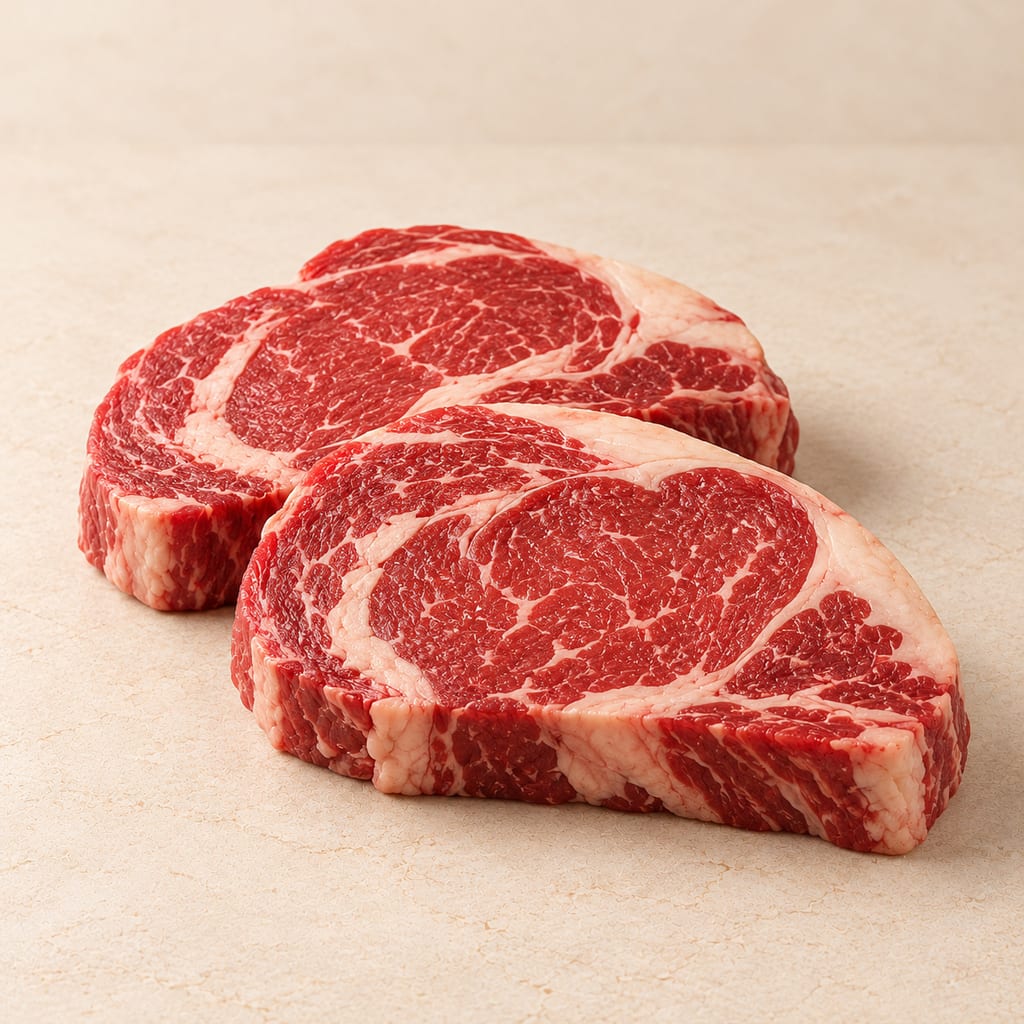
Beef is the meat of domestic cattle, Bos taurus and Bos indicus, sold as steaks, roasts, ground meat and cured products, and used in broths, salami and koji seasonings.
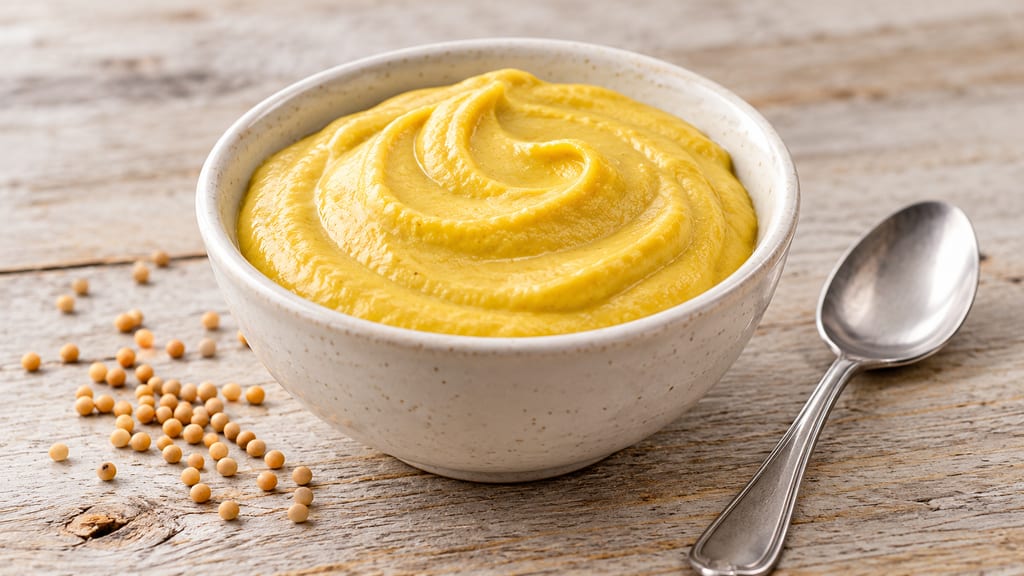
A mild, creamy Czech-style table mustard made from ground seed, vinegar, water, salt and a little sweetness. This home version follows a Czech Television formula and is not a copy of SPAK’s proprietary product.
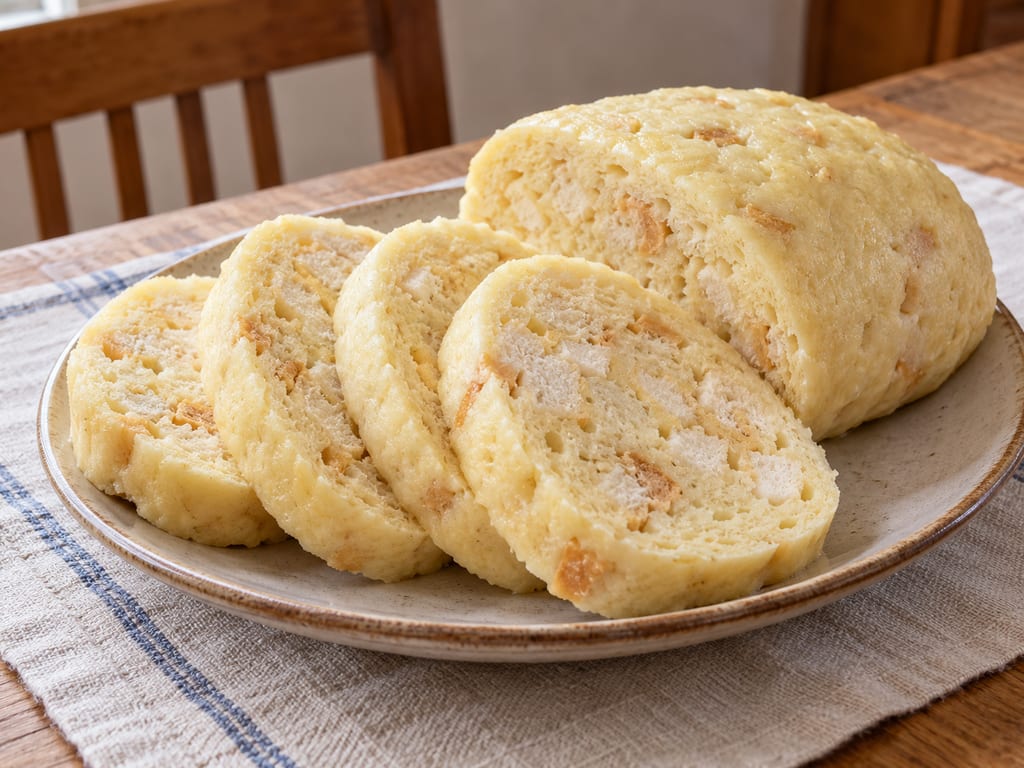
Czech houskové knedlíky are yeast-raised flour dumplings studded with stale white roll cubes, shaped as logs and steamed until tender for serving with sauce.
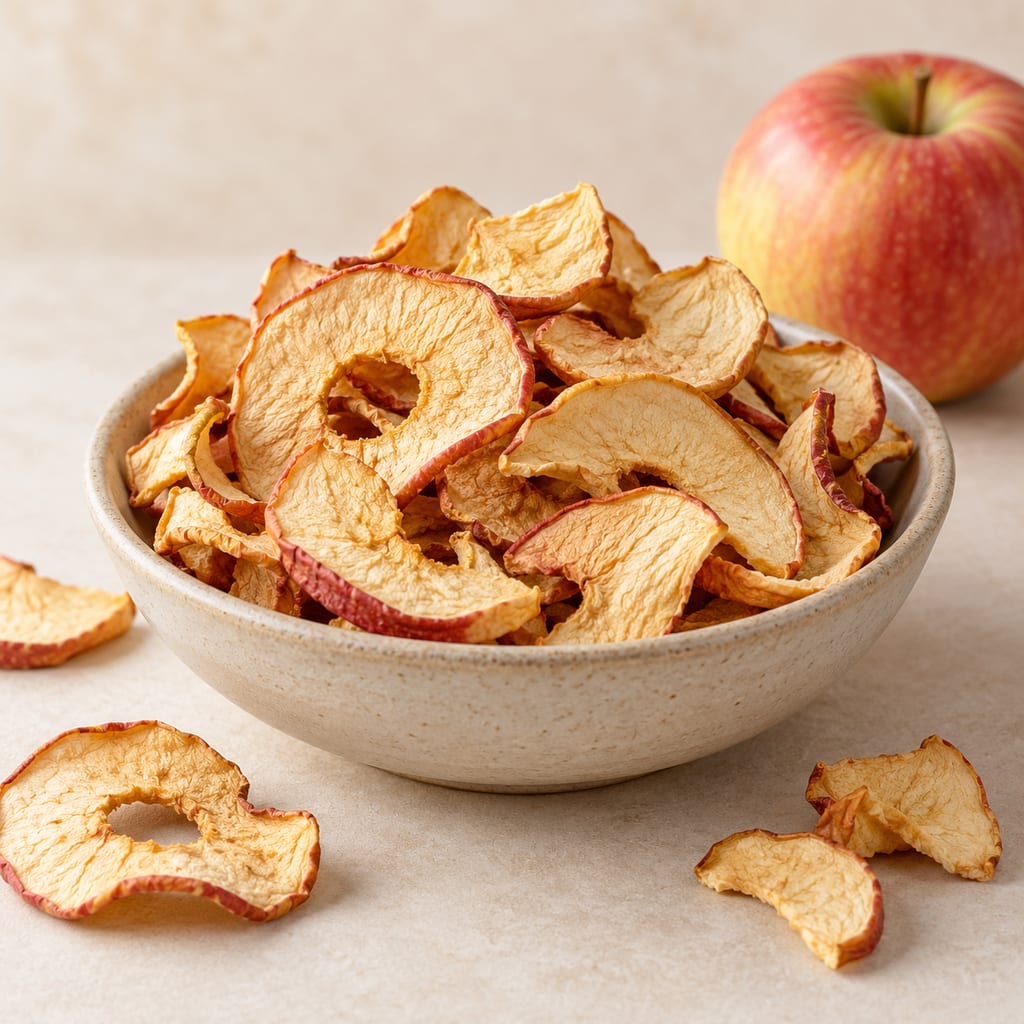
Křížaly are Czech dried apple or pear pieces. The name has regional meanings beyond apple slices, and drying practice varies by place and dryer.
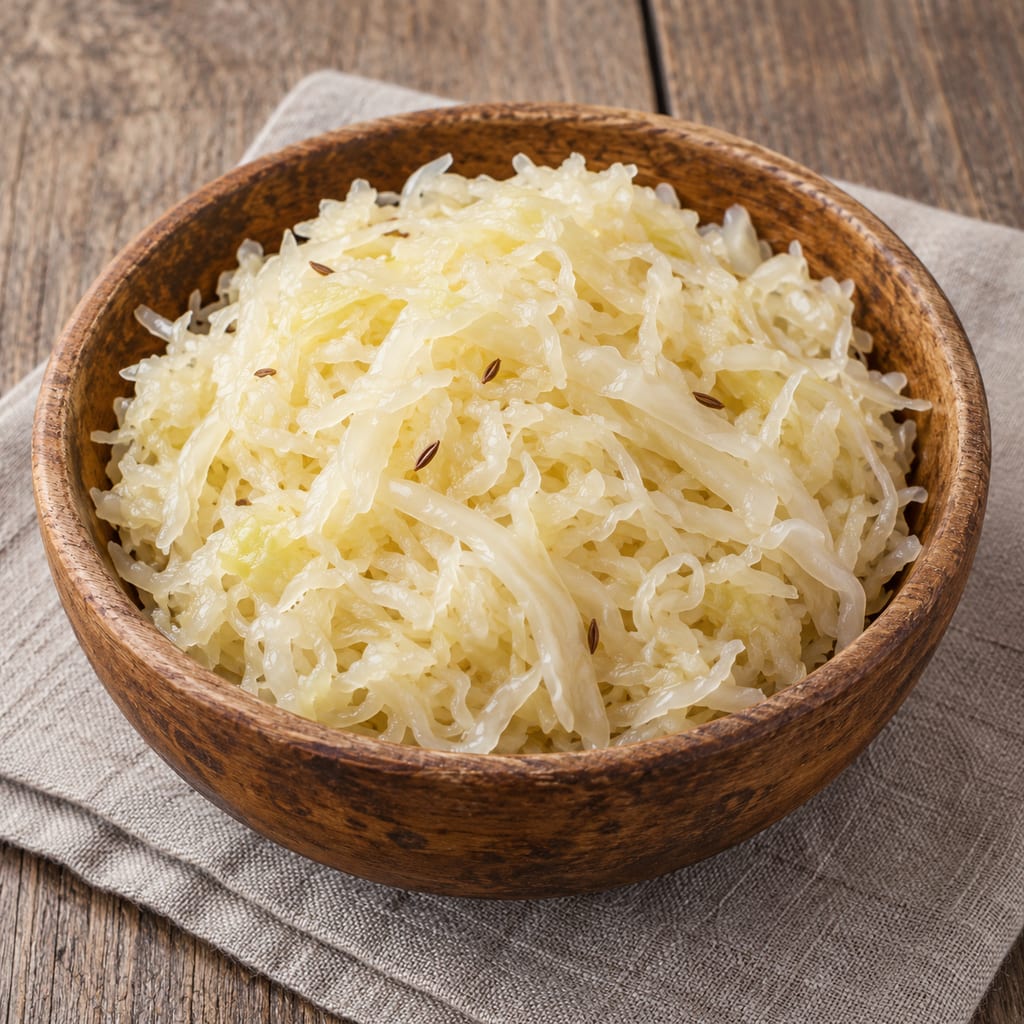
Kysané zeľí is Czech sour cabbage: shredded cabbage layered with salt and caraway and pressed in a wooden barrel. The regional account is descriptive and gives no validated salt ratio or endpoint.
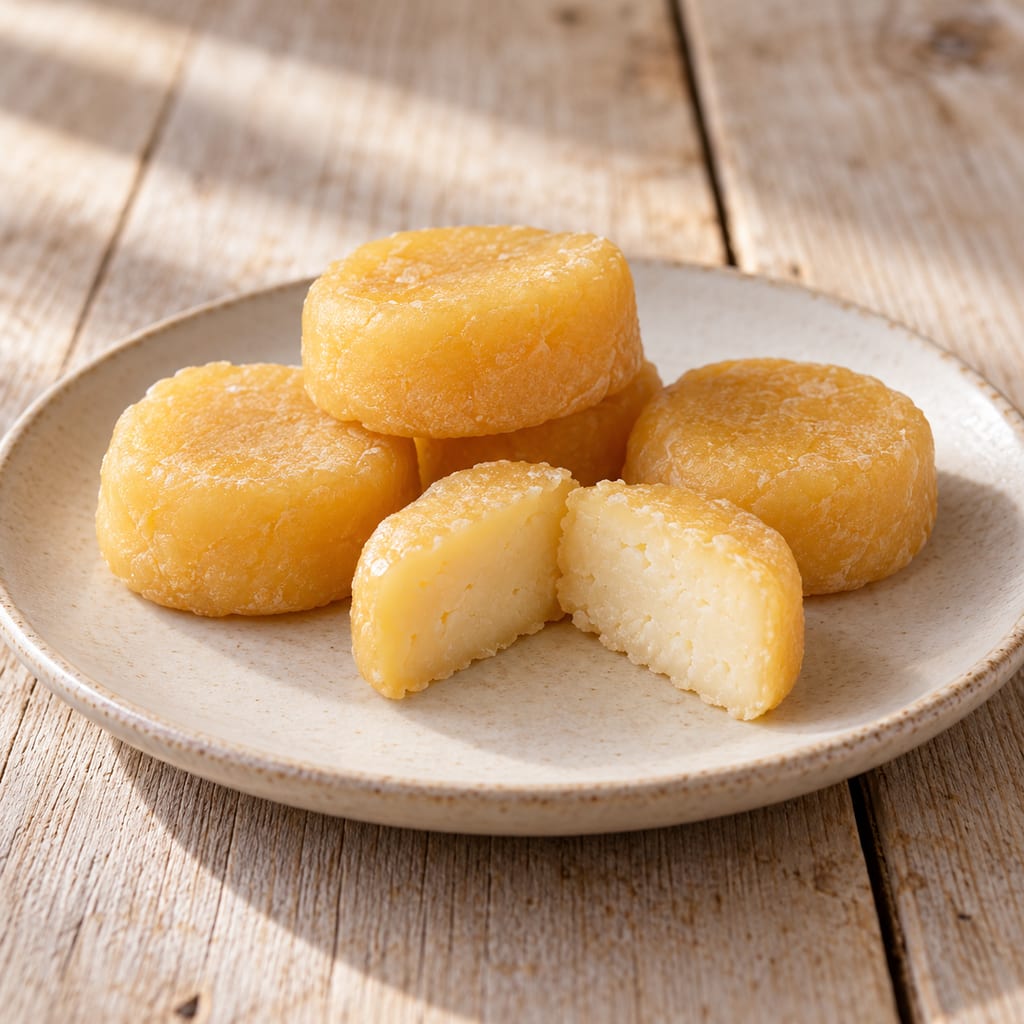
A ripened Czech table cheese made from skimmed acid-set curd, salted, cultured and ripened from the surface inward, with a golden smear and a paler centre.
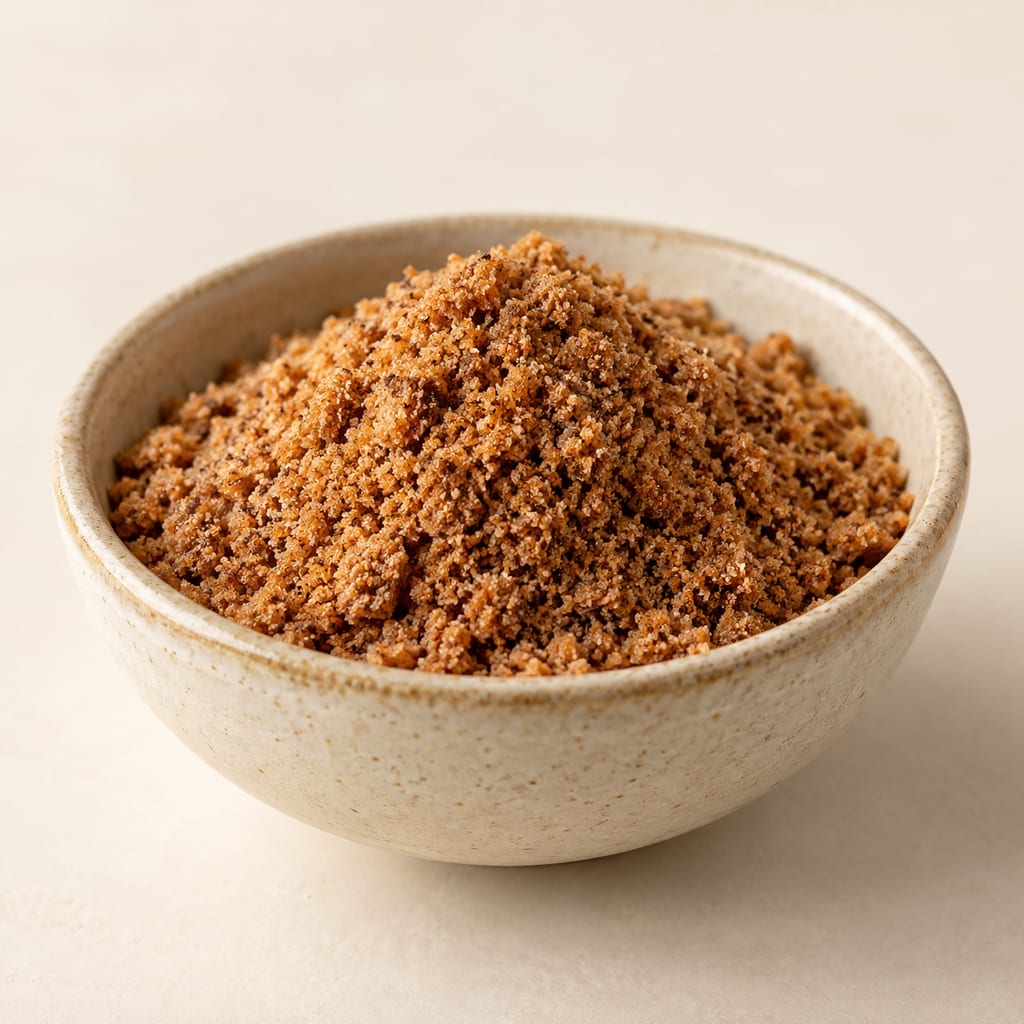
Pracharanda is finely reduced dried pear used as a topping on porridge, dumplings and cakes in Czech sources. Accounts of its preparation differ.
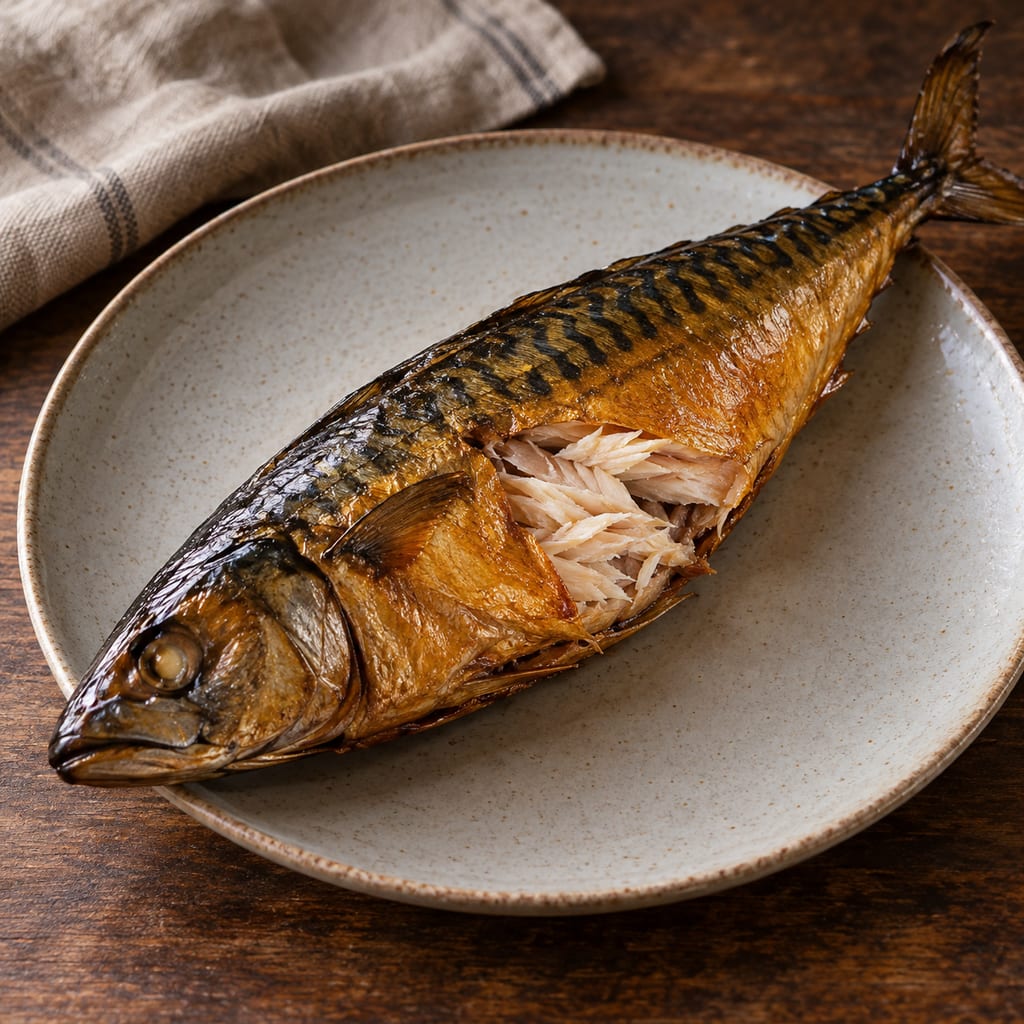
Whole mackerel brined for up to a day, then hot-smoked over beech and alder until the oily flesh takes colour and smoke, in a Czech smokehouse recipe.
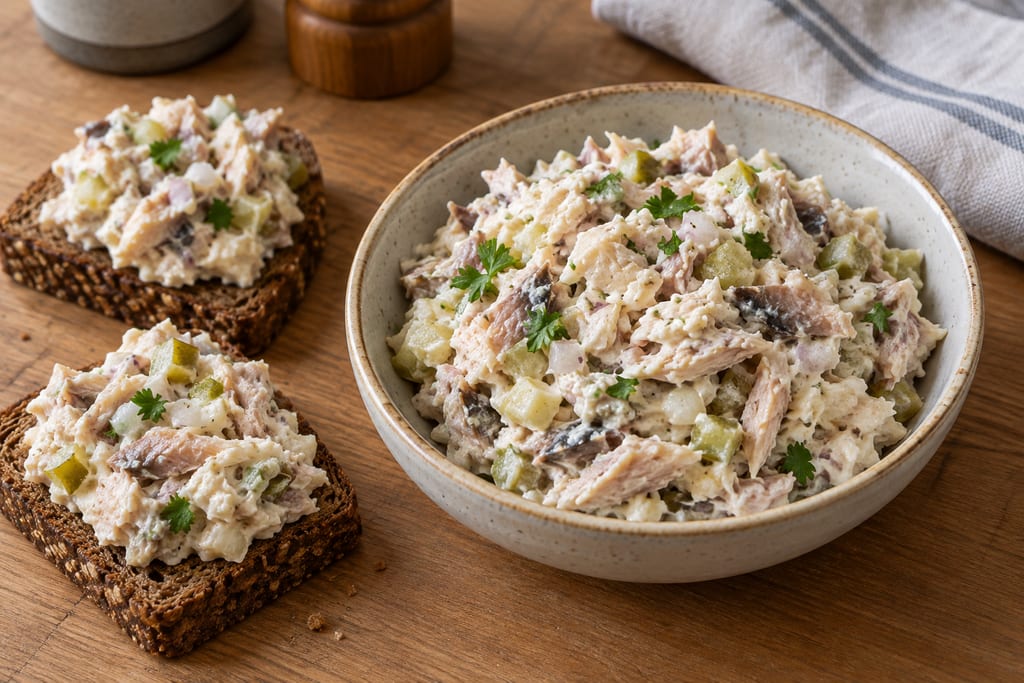
A quick Czech spread folds ready-smoked mackerel into quark, pickles, onion, mustard and lemon for serving with bread.
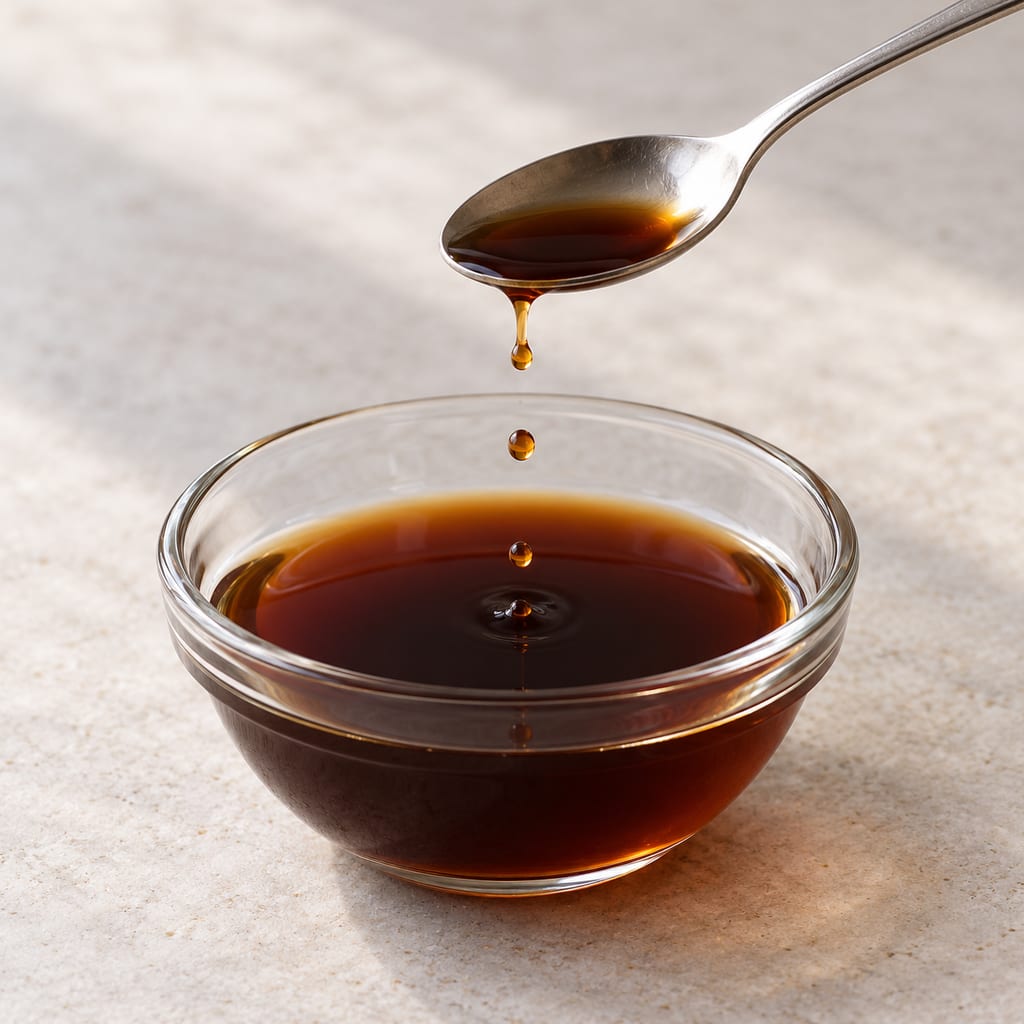
Cooked-bean koji garum is a dark liquid seasoning made from soft-cooked beans, rice koji, salt and water. A long warm hold lets koji enzymes break down the mash.
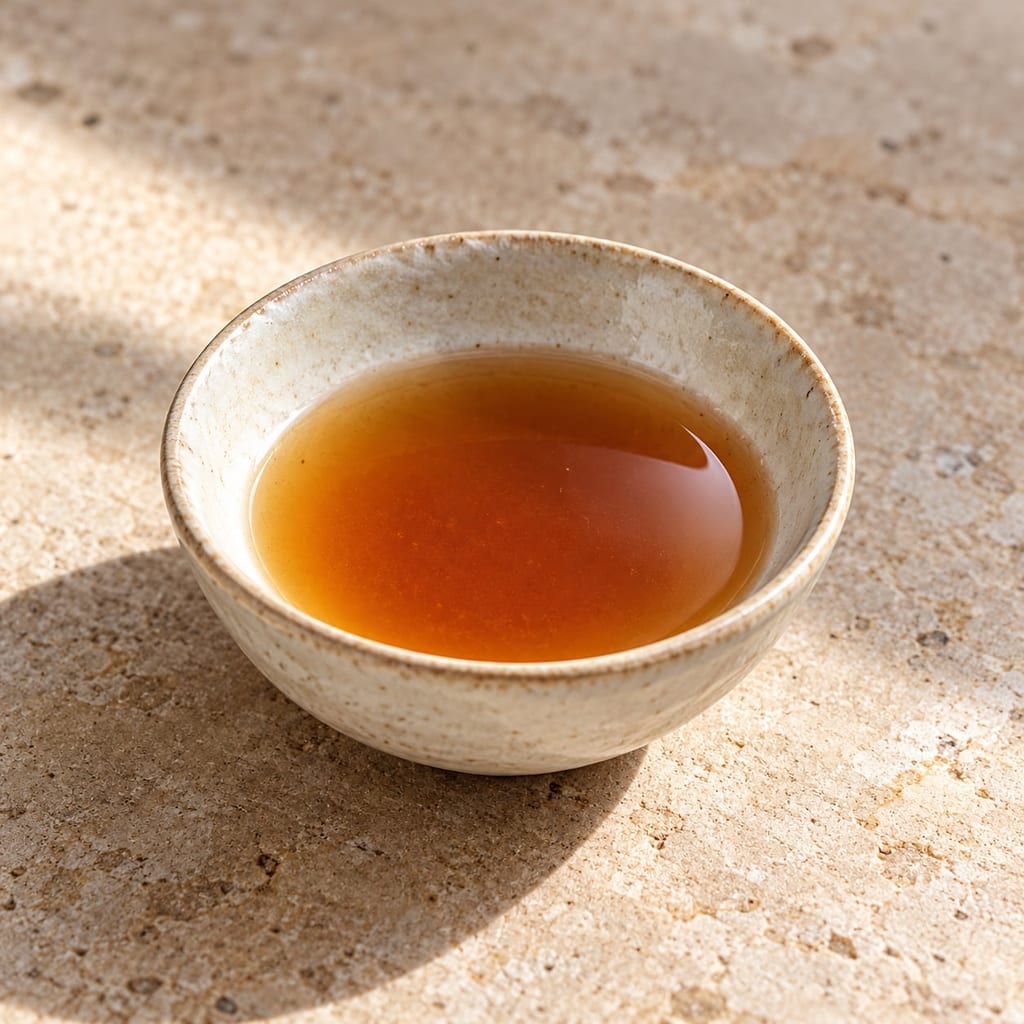
Chef Alex Perry makes this modern shrimp garum from Gulf white shrimp heads and shells, koji, water and salt. He holds the mash at 60°C for two months, then strains the liquid for use as a seasoning.
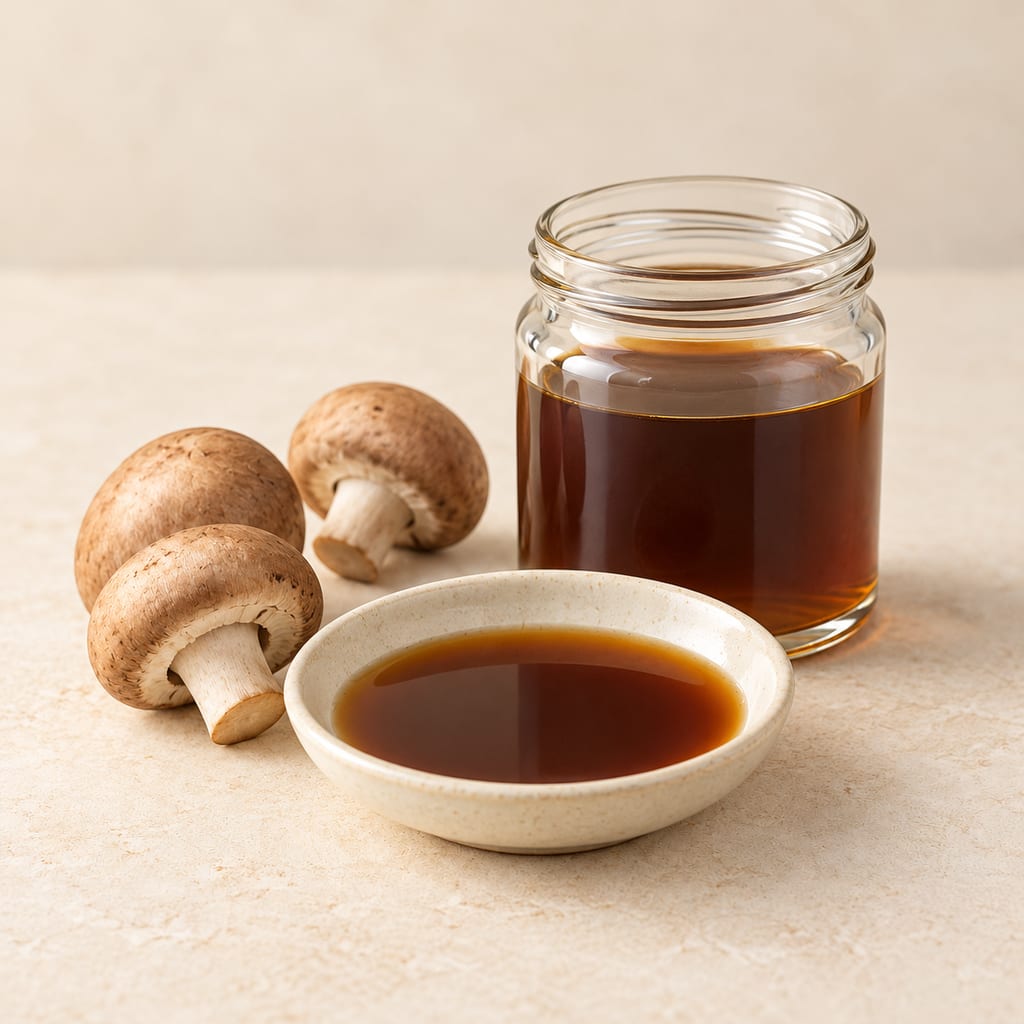
Mushroom garum turns mushrooms, rice koji, salt and water into a dark savoury seasoning. A sustained warm hold lets koji enzymes break down the mixture before straining.
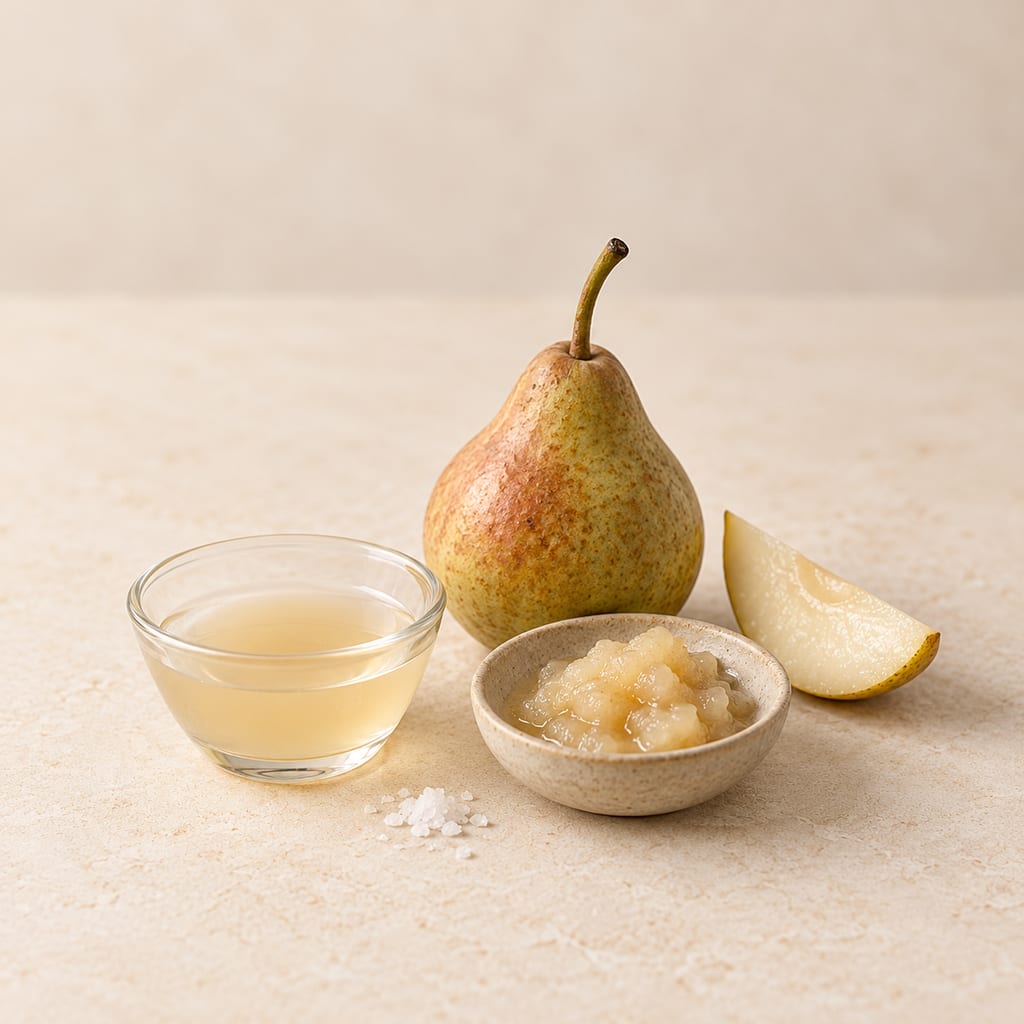
A late-antique Roman recipe in which very ripe pears are crushed with salt, matured for three months and drained, giving a pale liquid called liquamen.
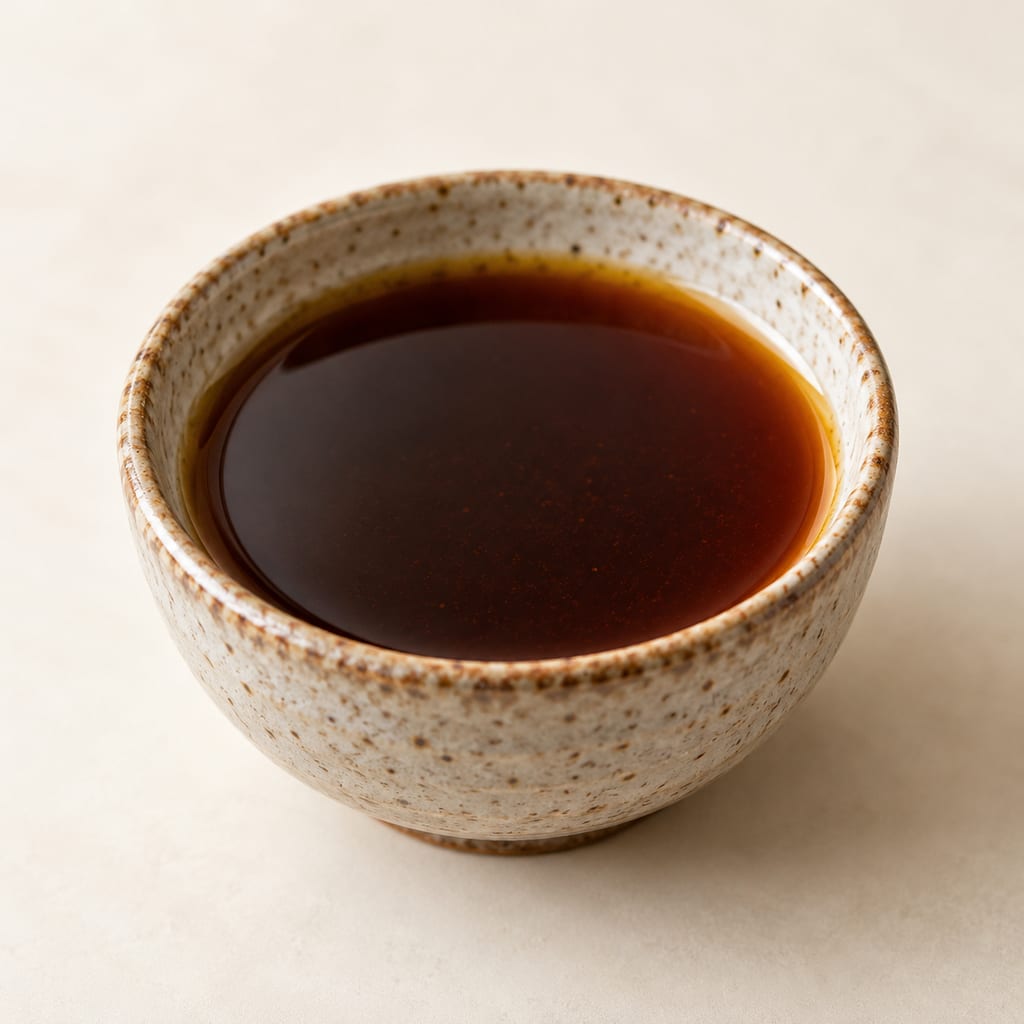
Mushroom garum is a savoury, smoked sauce made by crushing mushrooms with salt and rice koji and letting the mixture brew for months, a modern use of the garum method without fish.

Yellow-pea koji garum is a dark liquid seasoning made by holding cooked split peas with rice koji, salt and water while the koji enzymes break down the mash.

Soft, spreadable Calabrian pork sausage made with a great deal of red chilli and fatty pork, stuffed into natural casings, sometimes smoked and matured while staying soft.

A way to add independent temperature logging to an existing food dehydrator without changing its built-in controls or protections. It is a monitoring method, not a rewiring plan.

Pleurotus cystidiosus is the abalone mushroom, a cultivated oyster-type fungus with dark brown caps that grows more slowly and is more demanding than other Pleurotus species.

A dark, balanced vinegar from Emilia-Romagna made by combining cooked or concentrated grape must with wine vinegar, then acetifying and refining it in wood under a protected specification.

A living dairy inoculum that starts controlled cream fermentation, developing acidity and aroma before sour cream or cultured butter is finished.

A small electric incubator holds jars at a selected temperature for yogurt and other documented warm food preparations. Controls, capacity and vessel arrangement vary by model.

Adygean salt is a seasoned table salt associated with Adygea and the wider North Caucasian culinary tradition. Salt is blended with garlic and a variable selection of herbs and spices; the exact mix depends on the named style and maker.

The African Caesar-group mushroom, Amanita masasiensis, is a wild ectomycorrhizal species of central and southern African woodlands, eaten locally. The genus contains deadly poisonous species, so identification needs care.
No community contributions have been published for this entry yet.
Sign in to contribute. Published comments and photos are free to read.
Modernist Food | FermentedInspiration · Process
Quick Garum (Koji-Driven)1 kg jar formula and substrate examples.
Cited in: What it is; Ingredients and their functions; Equipment and process requirements; Documented method; Recognising problems
Modernist Food | FermentedProcess · Safety
Amino Pastes (Quick Miso, Peaso & Garum)Warm method is enzyme-assisted and source says animal protein is not validated for botulism control.
Cited in: The microbiology and enzymatic chemistry; Ingredients and their functions; Equipment and process requirements; Recognising problems; Food safety
U.S. Food and Drug AdministrationContext
Fish and Fishery Products Hazards and ControlsSeafood-specific guidance; it does not validate a meat sauce.
BC Centre for Disease ControlContext
Safety of Fermented Foods: Section 3.5 FesikhFesikh is a distinct salted-fish product; no meat-sauce claim is drawn from it.
Noma ProjectsHistory · Use
The Lab Dispatch: GarumNoma describes its modern turn from fish to meat garums.
Garum is used as a small-quantity savoury seasoning.
Cited in: What it is; Historical background; Other contemporary variations; Taste, appearance and practical uses
Tomorrow's KitchenHistory · Comparison
Meat Trim GarumA distinct barley-koji meat-trim recipe uses 1 kg trim, 225 g barley koji, 800 g water and 240 g salt, aged at 60°C for 3–4 months.
Cited in: Longer barley-koji meat-trim variation
U.S. Centers for Disease Control and PreventionSafety
Home-Canned FoodsLow-acid meat products need tested preservation methods to avoid botulism; this page does not validate the garum method.
GoodlokResearch intake · Producer description
Goodlok Play — Smoked beef garumProducer describes a smoky beef-based liquid seasoning; no smoking method or basic ingredient list is given. Do not infer whether beef or sauce was smoked.
Producer declares gluten1.
Producer's smoked-beef product is an uncertain lead within the existing meat-garum preparation. No smoking method, basic ingredient list or separate actual process is supplied; do not define a maker/smoke variant from this page.
GoodlokResearch intake · Producer description
Goodlok Play — Beef garumProducer describes beef,komekoji,water and salt, matured about3months in a fermentation box. No proportions or fermentation temperature are given.
Beef is a producer-specific substrate lead for the existing meat-trim koji-garum subject; the canonical formula leaves species unspecified. Do not transfer Goodlok's approximately three months to that method or create a maker-only clone.
Noma ProjectsInspiration
Garum: Got to Have the FunkKoji enzymes and warm maturation
Cited in: Historical background; The microbiology and enzymatic chemistry; Taste, appearance and practical uses
Goodlok product catalogueInspiration
Beef GarumCzech commercial variation
Cited in: Other contemporary variations; Taste, appearance and practical uses
Naše masoInspiration
Náš garumSpecific beef-derived garum prepared by Goodlok
Cited in: Other contemporary variations