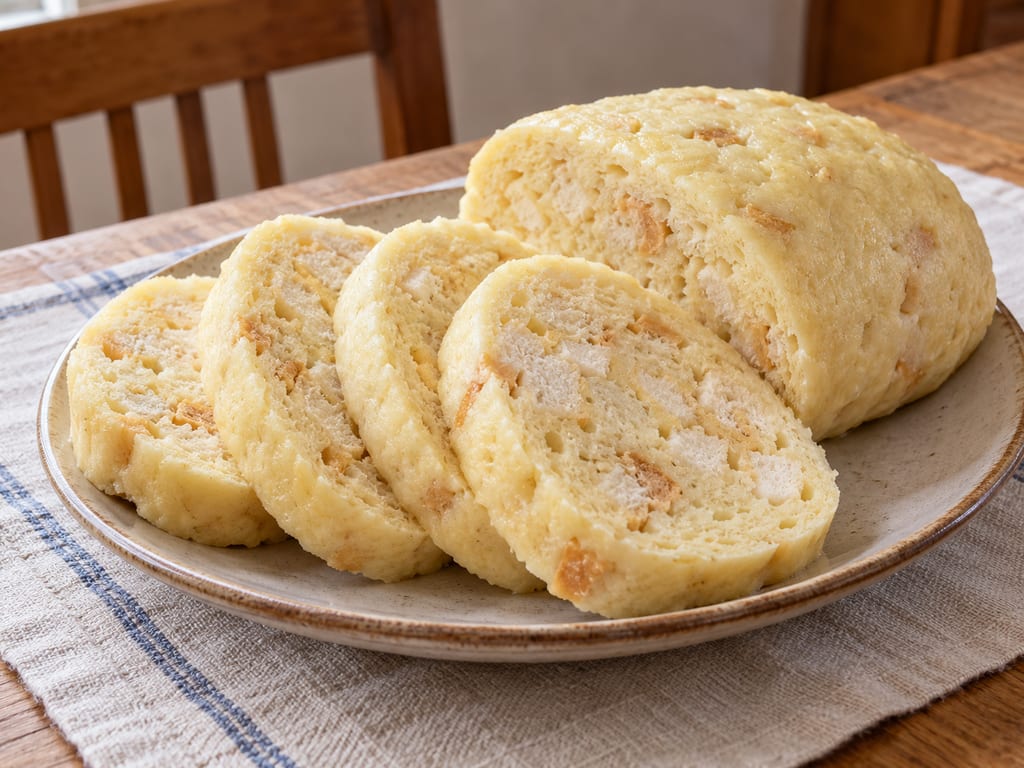
Houskové knedlíky
Czech houskové knedlíky are yeast-raised flour dumplings studded with stale white roll cubes, shaped as logs and steamed until tender for serving with sauce.
 FermenteaWhere food goes to change
Czech mustard · Klasická hořčice
A mild, creamy Czech-style table mustard made from ground seed, vinegar, water, salt and a little sweetness. This home version follows a Czech Television formula and is not a copy of SPAK’s proprietary product.
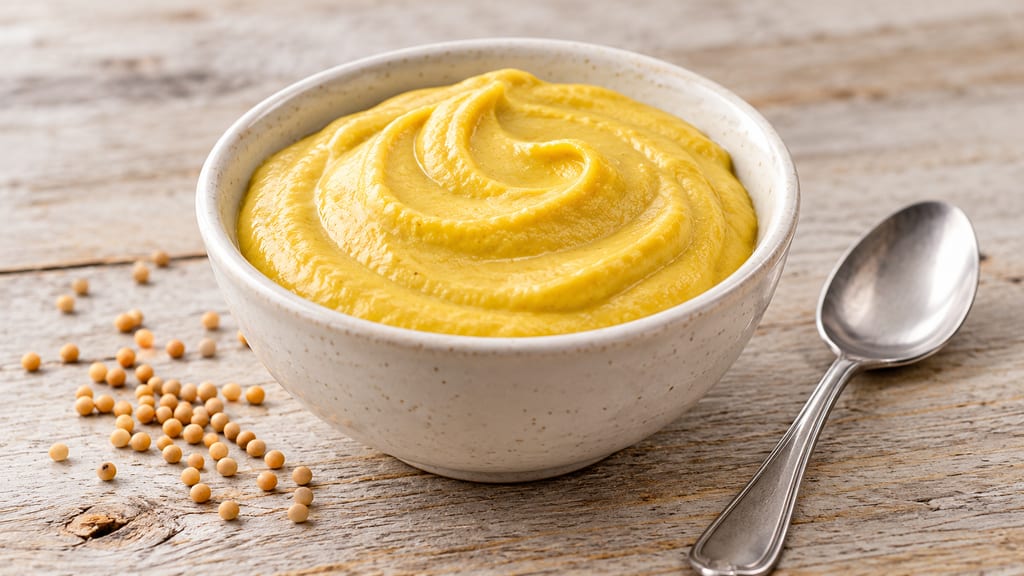
Classic Czech prepared mustard is a mild, creamy table condiment, the kind set beside a sausage or spooned into potato salad. The word hořčice covers a large range of pastes, from coarse mustard grains to smooth, sharply pungent sauces. In Czech cooking, plnotučná hořčice—literally full-fat mustard, though that name does not mean the recipe is necessarily high in fat—usually signals a smooth, everyday mustard with round acidity and restrained sweetness.
This entry records a home-scale seed mustard published by Czech Television. Its measured base is mostly white mustard seed, with a small amount of black seed, wine or cider vinegar and salt; honey, olive oil and horseradish are optional finishing ingredients. The method is useful because it shows how a Czech household recipe turns seed into paste. It is not a copy of SPAK’s Klasická hořčice: the manufacturer lists water, spirit vinegar, sugar, salt, riboflavin and spices, and does not publish the proportions or production method. The two are related examples, not interchangeable formulas.
Prepared mustard is not fermented. Its sharpness comes from reactions inside crushed seed, while vinegar supplies acidity and the mixture’s water allows enzymes to work. It is closer to a freshly made sauce than to a jarred fermented pickle. The resting stage changes the paste’s flavour, but it is not a microbial fermentation.
Mustard pastes have a long culinary history, but no single modern product can claim the invention of prepared mustard. A Masaryk University overview describes Roman practice of pounding mustard seeds with young wine, a pairing echoed in the Latin expression mustum ardens, often translated as ‘burning must’. The Apicius collection, compiled in late antiquity, includes a mustard preparation. Those examples establish an old family of seed-and-liquid sauces; they do not make the Roman paste the ancestor of a particular Czech formulation.
The Czech agricultural record is narrower and more useful. Teaching material from the University of Veterinary Sciences Brno says mustard production in the Czech lands dates to the beginning of the nineteenth century and identifies white mustard as the country’s principal cultivated type. That is an attestation of cultivation and industry, not a date for the invention of full-fat mustard. SPAK’s company history begins in 1935, while its current product page documents one modern thick, creamy Czech mustard. Neither point should be stretched into a claim that the brand or its formula defines the whole country.
Mustard also became ordinary table food because it travels well as a concentrated condiment and brings contrast to rich, salty dishes. Czech Radio’s food history notes the familiar place of full-fat mustard beside grilled sausages, in potato salad and in dressings. Those uses make sense of its balanced profile: a sharp spoonful cuts through pork fat, while a mild, smooth paste blends into a dressing without leaving whole seeds.
Whole mustard seed smells mild because its flavour chemistry is largely stored in separate components. Grinding breaks the seed’s structure and lets the enzyme myrosinase meet compounds called glucosinolates. With water present, myrosinase helps turn those precursors into pungent isothiocyanates. Brown and black mustard are associated with sinigrin and allyl isothiocyanate, a volatile compound with a penetrating aroma; white mustard has a different dominant glucosinolate, sinalbin, and tends toward a milder, less persistent heat.
This explains why the recipe asks for white seed as the bulk and uses only a little black seed. The choice is not merely colour: seed species change the character of the finished mustard. The white seed gives body and a rounded, lower heat, while black seed adds a sharper edge. Different cultivars, growing conditions and storage can also influence strength, so the listed ratio is a source formula rather than a guarantee of identical heat in every batch.
Water is a working ingredient, not just a diluent. The Czech Television method adds hot vinegar to ground seed. In the research literature, mustard processing commonly involves cracking or milling seed, soaking it in vinegar, then milling and sometimes sieving for a smooth condiment. Heat can reduce myrosinase activity, and the timing of grinding, wetting and heating influences pungency. This household recipe uses its own sequence; do not rewrite it as if every mustard style follows the same temperature or mixing order.
Vinegar contributes sourness and preserves the bright, sharp character of the paste, while salt rounds the taste. Honey softens the edge with sweetness; olive oil adds a fuller mouthfeel; horseradish changes the aromatic heat rather than simply making the mustard hotter in the same way. The Czech commercial product’s published label lists sugar instead of honey and adds riboflavin and spices, a reminder that a similar colour and texture can come from different ingredients.
Measure 90 g white mustard seed and 10 g black mustard seed. Grind the white seed with a hand mill, choosing a coarse or fine setting according to the texture you want. The source allows coarse grinding for a more rustic result and finer grinding for smoother paste. The black seed can remain whole or be cracked lightly; retaining visible seed gives the condiment speckles and a little textural contrast.
Bring 280 ml wine vinegar or apple-cider vinegar to a boil. Add the ground white mustard, black seed and half a teaspoon of salt, stir, then take the pan off the heat. Leave the mixture for at least two hours; an overnight rest is also given as an option. The pause lets the milled seed hydrate and its flavour develop. The paste may seem especially forceful immediately after mixing, and its pungency can feel different after standing.
Stir the mustard again or blend it, then taste. Add one tablespoon of honey and two tablespoons of extra-virgin olive oil if you want the documented sweeter, richer variation; freshly grated horseradish is another optional addition. These are finishing choices rather than mandatory parts of the seed-vinegar base. Spoon the mustard into clean small jars and close them. The source does not give a tested storage duration or a canning schedule, so this is a fresh condiment, not a shelf-stable preserving method.
The quantities are presented as ingredient proportions, not a guaranteed jar yield. Seed fineness and optional additions alter the final texture and volume. Do not assume that a similarly thick mustard made with a different vinegar strength, seed type or heat treatment will taste the same.
Czech full-fat mustard is one point on a wider map of mustard styles. White mustard tends to be mild; brown and black seeds can bring more pronounced pungency. Smoothness is another choice: a fine mill and blending make a more uniform paste, while cracked seed keeps a grainy texture. Other European products bring their own balance of sweetness, acidity and spices. SPAK’s Czech classic lists a little sugar and a spice mix; Kremser mustard is coarser and sweeter; Polish sarepska commonly mixes seed types. The names describe particular traditions and products, not recipes that can be collapsed into one universal mustard.
For a Czech-style table, serve the mustard in small spoonfuls with grilled sausages, cold meats or roast pork. Its acid and mustard heat contrast with fat, while its creamy consistency clings to a cut surface. A small amount also folds into potato salad or a vinaigrette, where it contributes seasoning and helps keep the dressing cohesive. It can be spread into a sandwich or stirred into a pan sauce, though prolonged cooking will change the fresh pungency.
Use the seed’s character to choose a variation. More white seed moves the paste toward a softer, milder style; a greater share of brown or black seed makes a more forceful mustard. Keep the seed whole or lightly cracked for a grainier texture, or grind and blend for a smoother one. Honey shifts it toward sweetness, while horseradish adds its own nasal heat. These variations are culinary choices, not replacements for SPAK’s unpublished commercial formula.
Mustard is a major food allergen in European ingredient disclosure, so make the seed explicit when serving. The household recipe gives no validated shelf life. Its closed jars should not be treated as canned preserves, and smell, taste or appearance cannot establish a storage period the source never tested.
Mustard can be smooth, coarse or somewhere between. Grinding the whole seed more finely breaks more seed cells and produces a more uniform paste; leaving some of the black seed intact gives visible flecks and occasional bursts of sharper flavour. The hand mill in the Czech Television method is a practical control over texture rather than specialist equipment. If the seed is ground to powder, it hydrates rapidly and gives a close, creamy body; a coarse grind leaves a more rustic, grainy condiment.
The recipe uses white seed as the main ingredient. The University of Veterinary Sciences Brno describes white mustard as the main kind grown in the Czech Republic and notes that it makes milder mustards, while black mustard is sharper. The 90:10 proportion in this home formula is consistent with that choice, but the source does not claim it is a standard commercial ratio. A cook who changes the proportion changes the flavour and texture, so tasting and recording the chosen seed is more useful than calling every mustard seed interchangeable.
Colour is a weak guide to mustard identity. SPAK's Klasická hořčice lists riboflavin as a colour ingredient, while many home formulas may use turmeric or rely on the seed's own pale colour. These choices do not duplicate one another: a colouring ingredient can change the appearance without reproducing a maker's spice blend or flavour. This recipe does not add turmeric, because it is not in the cited Czech Television formula.
Mustard seed contains oils and proteins as well as its flavour precursors. Its ground particles absorb liquid and thicken the paste; finer milling makes that suspension feel smoother. A prepared mustard's body therefore comes from the seed and its processing, not just from adding oil. The optional olive oil in the household formula enriches the mouthfeel, but the commercial Czech mustard page does not disclose whether it uses oil as a separate ingredient.
At the table, a little mustard can do several jobs. A spoonful alongside sausage brings acidity and pungency to a rich bite; a small amount stirred into potato salad seasons the dressing throughout rather than leaving a sharp streak. In a vinaigrette, the hydrated seed solids help give the liquid a more cohesive texture. In a sandwich or cold-meat plate, the paste acts as a direct condiment, so its degree of heat is more apparent than it is when mixed into a sauce.
To steer this version, begin with the source proportions and change one feature at a time. Grinding more finely changes texture; altering the balance of white and black seed changes pungency; adding honey moves the taste toward sweetness; leaving out oil keeps the finish lighter; horseradish adds another pungent aroma. The recipe author does not prescribe a final taste target, so these are tasting choices, not corrections to a defective batch. They should not be represented as the undisclosed production steps of SPAK or any other maker.
Mustard heat can soften or shift while a paste rests because the compounds that carry the aroma are formed after seed is broken and can change over time. This is why a just-mixed spoonful may seem more forceful or raw than the same paste later. It is a quality change, not evidence of fermentation or safety. No smell, taste, bubbling or colour test can supply the missing storage duration.
The method ends by spooning the mustard into clean small jars and closing them, but no shelf life, refrigeration schedule or canning process is validated. Keep those limits attached to the method: the recipe is a fresh condiment for prompt use, and the closed jar is not a substitute for a tested preserving schedule. The ingredient list also makes the allergen obvious: mustard seed must be disclosed when the condiment is served to others.
Czech agronomy teaching material says mustard production in the Czech lands dates to the beginning of the nineteenth century and identifies white mustard as the principal locally cultivated type. SPAK describes its own classic mustard as a thick, creamy Czech-made commercial condiment; this does not date the exact product formula. The home method below is documented by Czech Television, but its page does not establish when that formulation began.
Scaling: source batch only
Mustard is an EU-listed allergen; disclose it when serving.
Do not infer a shelf life or a safe canning process from the recipe; neither is supplied by its source.
The recipe is a Czech-published household formula. SPAK’s product page documents a Czech commercial product, but neither source establishes a single birthplace for prepared mustard.
Czech houskové knedlíky are yeast-raised flour dumplings studded with stale white roll cubes, shaped as logs and steamed until tender for serving with sauce.
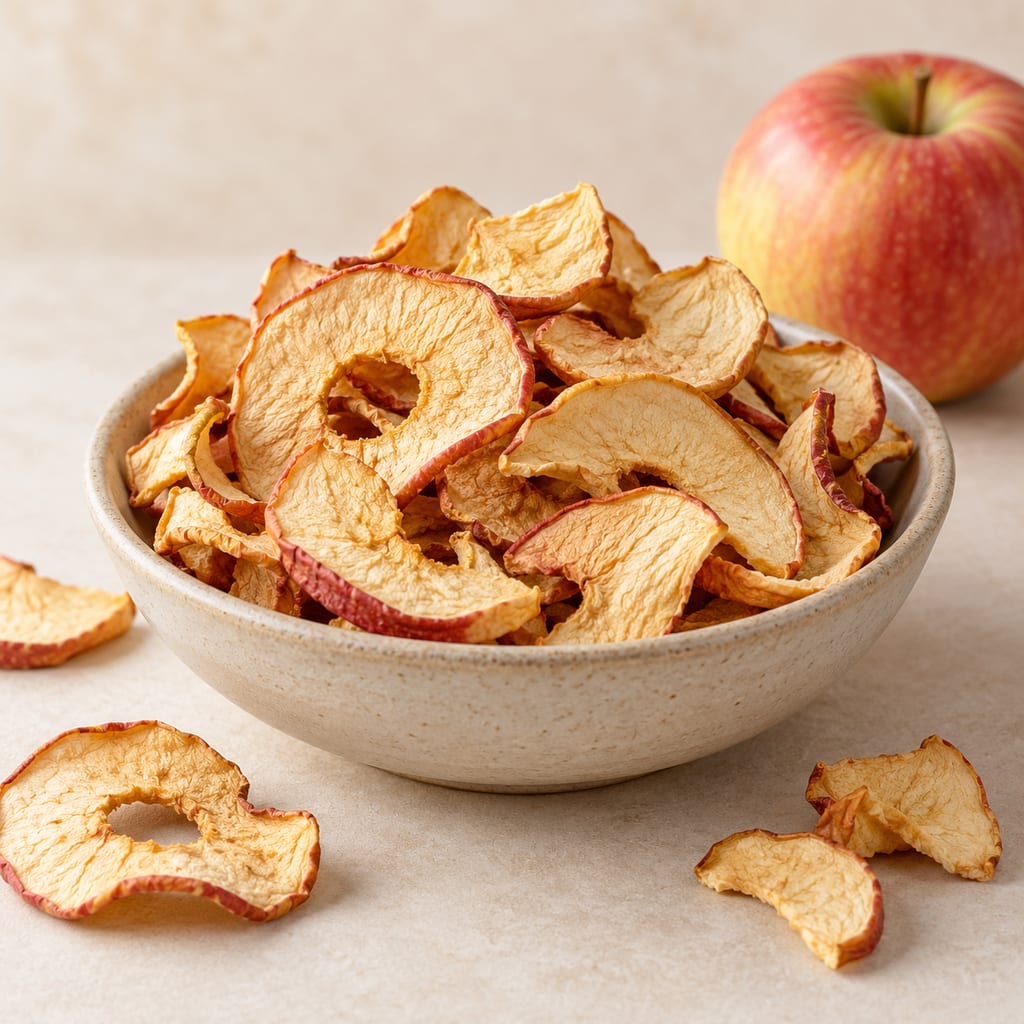
Křížaly are Czech dried apple or pear pieces. The name has regional meanings beyond apple slices, and drying practice varies by place and dryer.
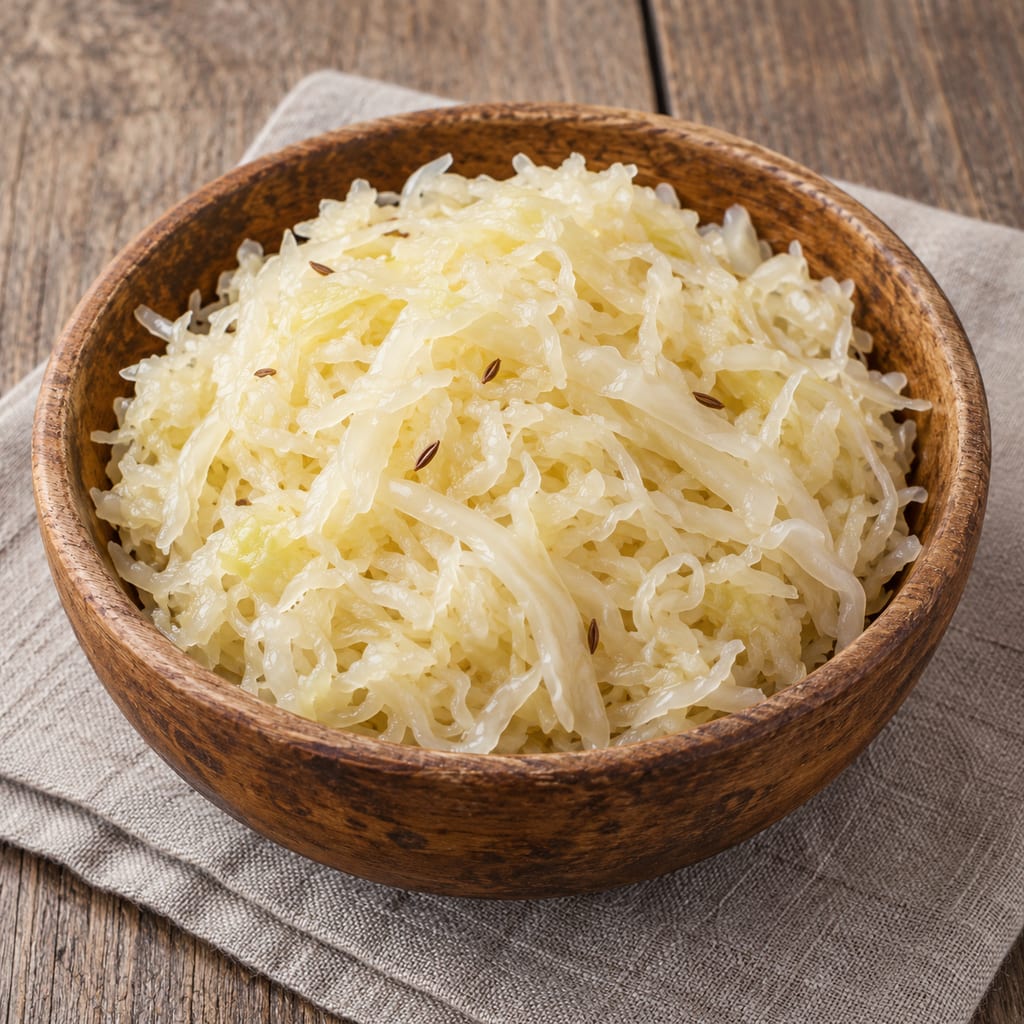
Kysané zeľí is Czech sour cabbage: shredded cabbage layered with salt and caraway and pressed in a wooden barrel. The regional account is descriptive and gives no validated salt ratio or endpoint.

Meat-trim koji garum is a savoury liquid seasoning made by holding meat scraps with rice koji, salt and water at steady warmth before straining the mash.
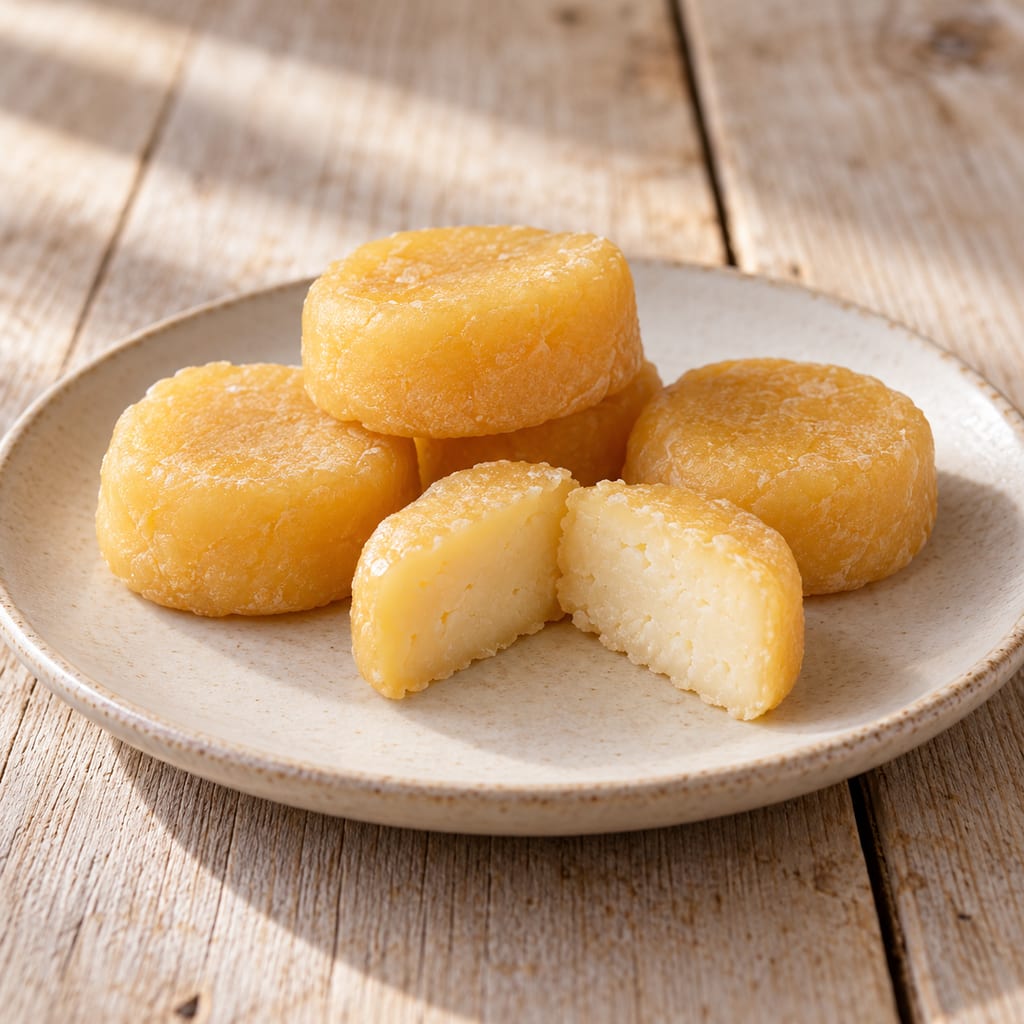
A ripened Czech table cheese made from skimmed acid-set curd, salted, cultured and ripened from the surface inward, with a golden smear and a paler centre.
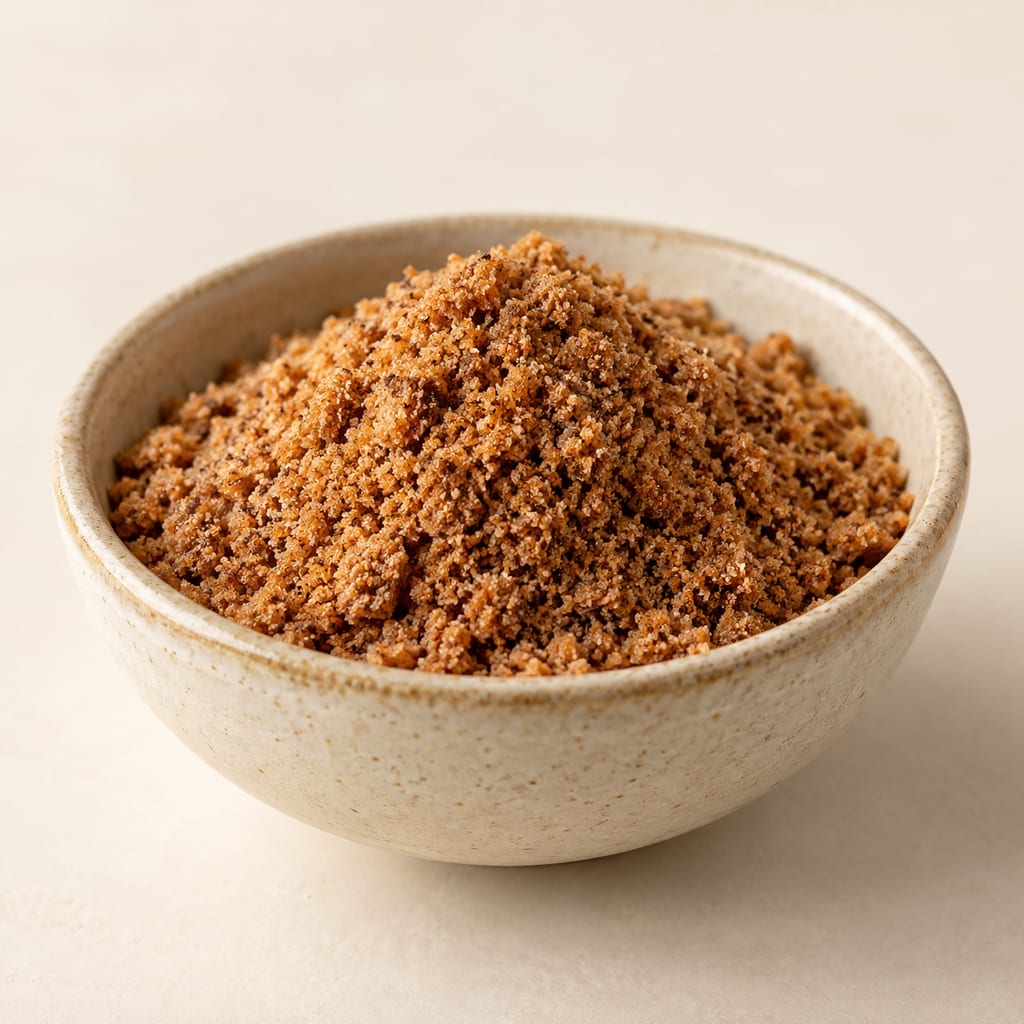
Pracharanda is finely reduced dried pear used as a topping on porridge, dumplings and cakes in Czech sources. Accounts of its preparation differ.
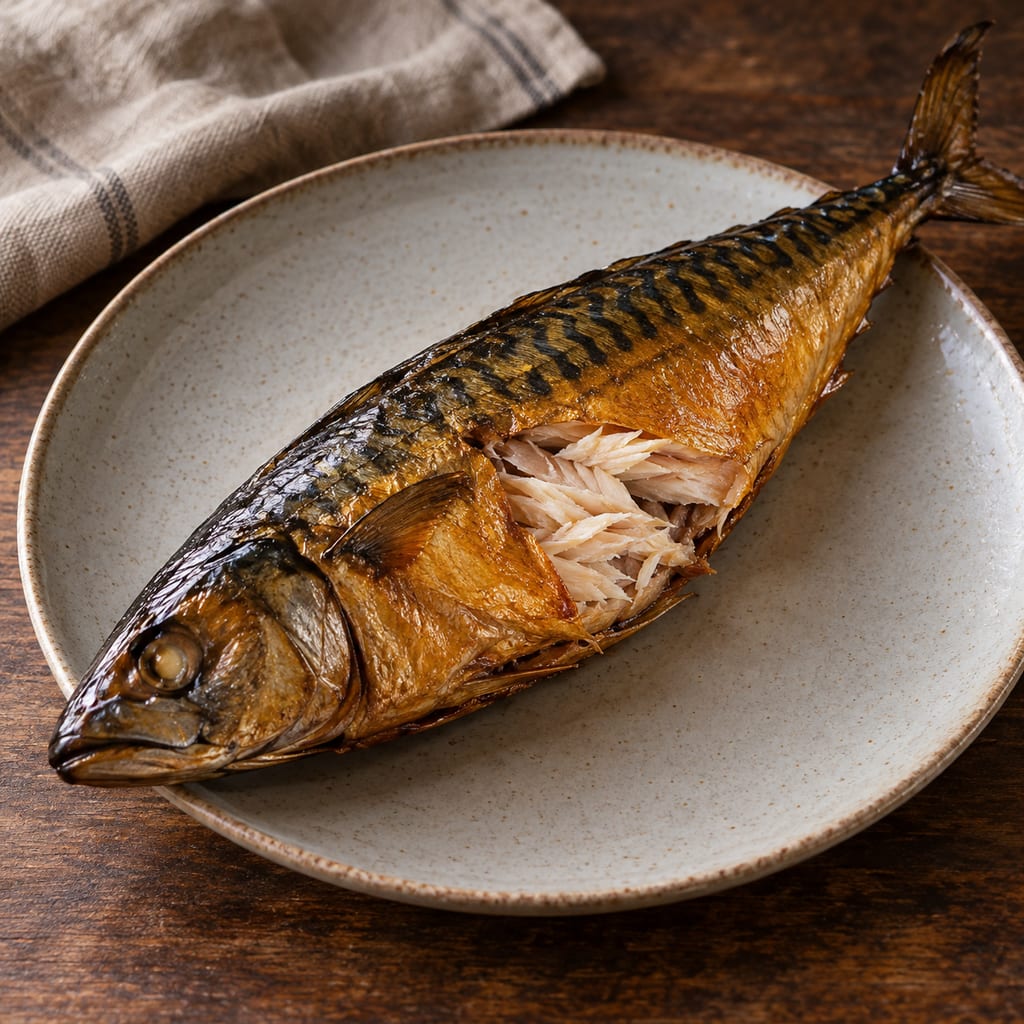
Whole mackerel brined for up to a day, then hot-smoked over beech and alder until the oily flesh takes colour and smoke, in a Czech smokehouse recipe.
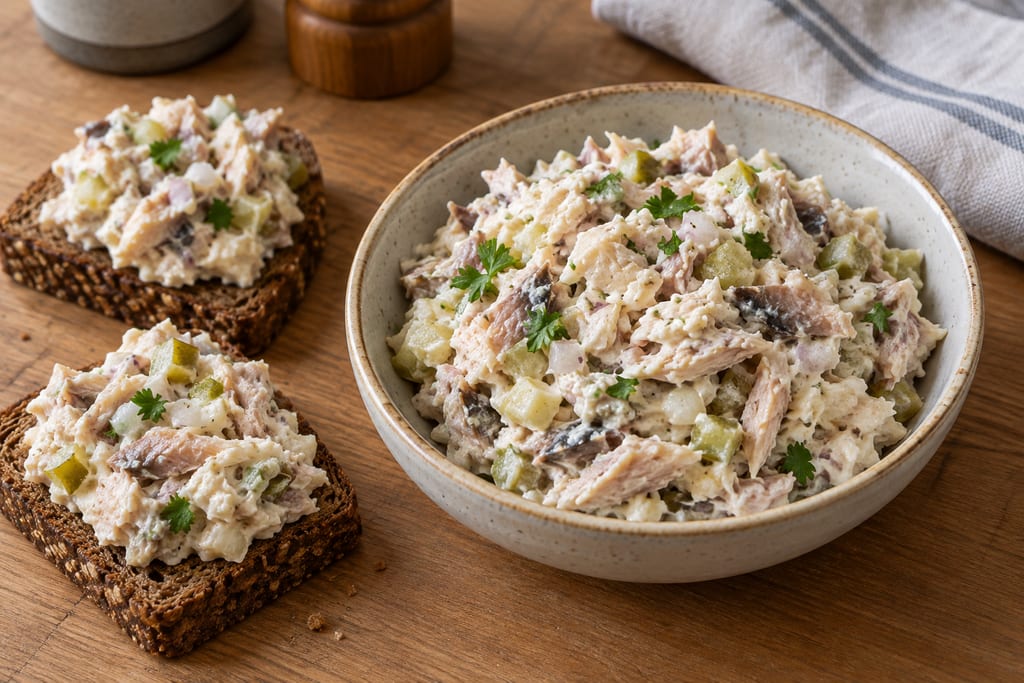
A quick Czech spread folds ready-smoked mackerel into quark, pickles, onion, mustard and lemon for serving with bread.
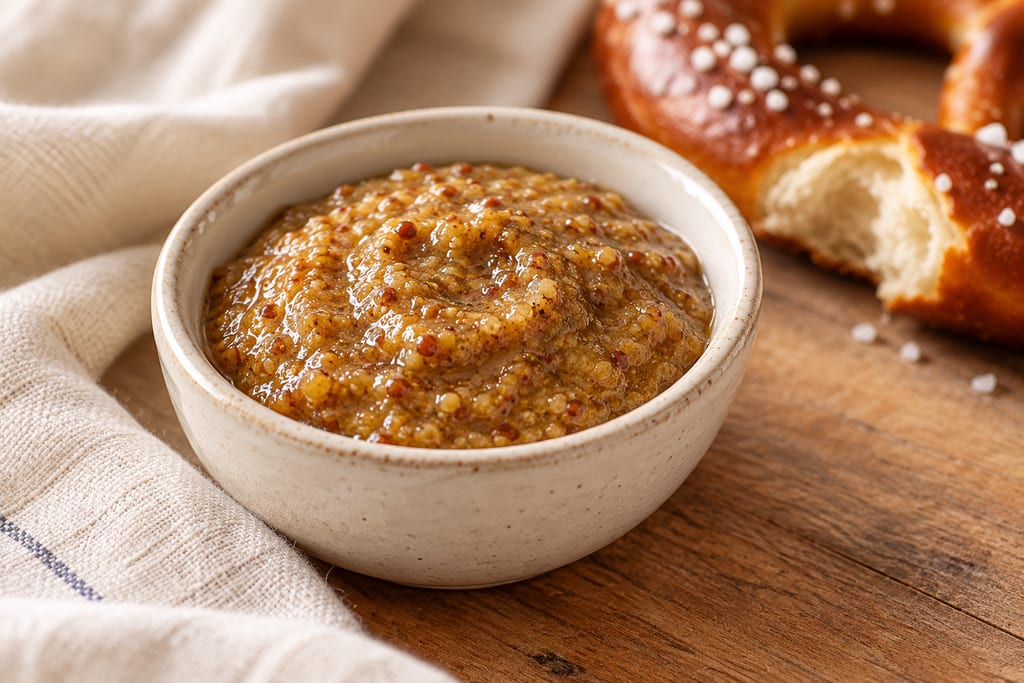
A coarse, sweet Bavarian-style mustard of yellow and brown seed in a cooked brown-sugar and vinegar base, made to eat with Weisswurst; an original refrigerated formula.
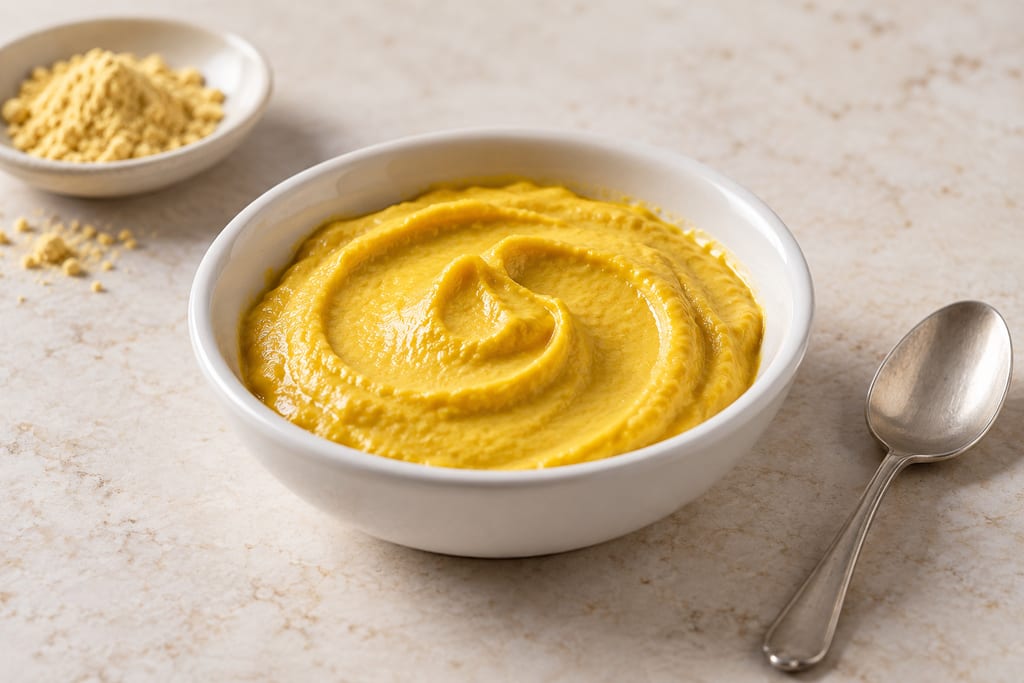
Ten grams of English mustard powder stirred with cool water into a thick cream: the plainest, sharpest mustard there is, mixed just before the meal.
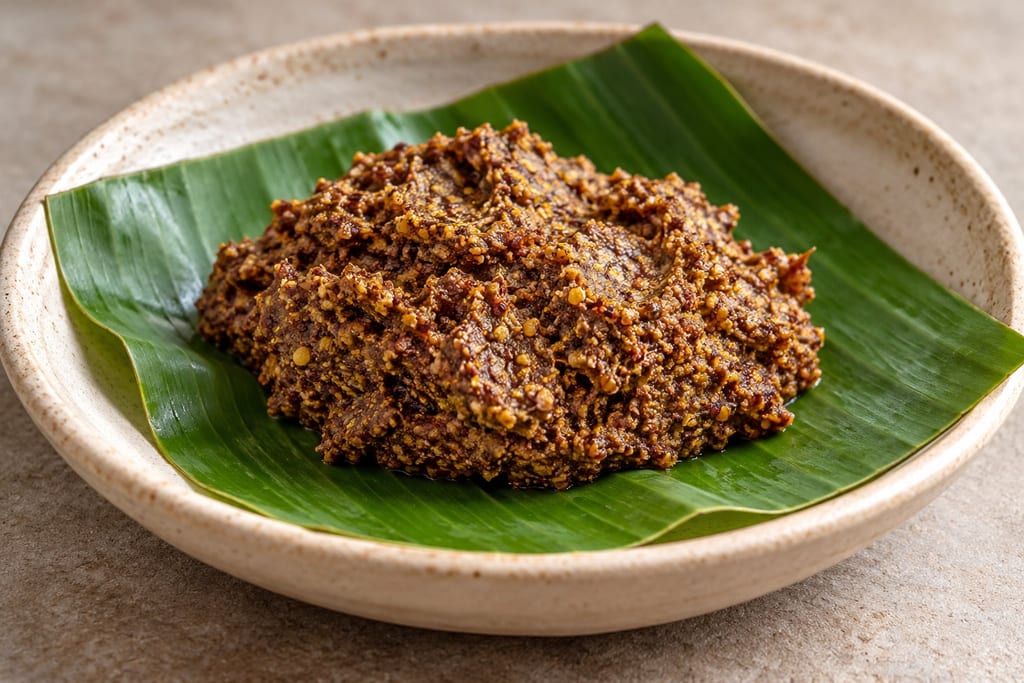
Kahudi is an Assamese mustard-seed condiment fermented with sour Thekera fruit into a strong mash; household methods and study results differ, and no validated home schedule exists.
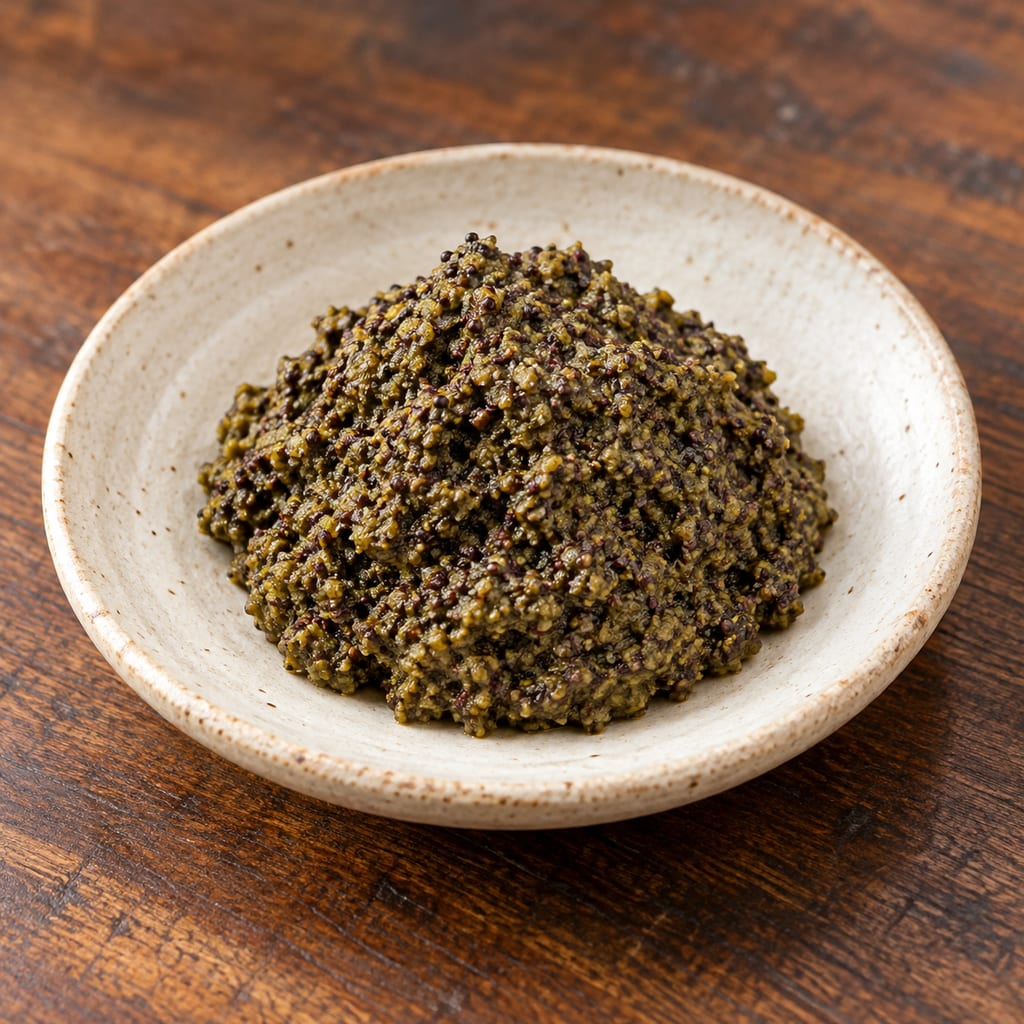
A strong Assamese condiment of mustard seed mixed with khar, an alkaline banana-ash filtrate, wrapped in leaves and fermented in bamboo over a fire or in a kitchen pot.
No community contributions have been published for this entry yet.
Sign in to contribute. Published comments and photos are free to read.
Česká televizeMethod · Ingredients · Technique
Domácí hořčiceThe home formula gives 90 g white and 10 g black mustard seed, 280 ml wine or apple-cider vinegar, salt, honey, olive oil and optional horseradish.
It says to boil the vinegar, add ground seed and salt, rest for at least two hours or overnight, then blend or stir and season.
Cited in: A Czech table condiment and a home version; Making the documented household version; Texture, colour and choosing the seeds; Serving, keeping and adapting the paste
SPAKIdentity · Comparison · Modern product
Klasická hořčice 500 gThe manufacturer lists drinking water, mustard seed, spirit vinegar, sugar, salt, riboflavin colouring and spices.
The page describes the product as thick and creamy and lists 6.8 g sugars and 2.8 g salt per 100 g.
Cited in: A Czech table condiment and a home version; Mustard’s long history, and the Czech record; Why crushed seed becomes pungent; Styles and ways to use it; Texture, colour and choosing the seeds
University of Veterinary Sciences BrnoHistory · Geography · Ingredient variation
White Mustard (Sinapis alba L.)The teaching page says mustard production in Czech lands dates to the beginning of the nineteenth century and identifies white mustard as the main mustard cultivated in the country.
It distinguishes milder white mustard from sharper black and brown types and notes their differing culinary uses.
Cited in: Mustard’s long history, and the Czech record; Styles and ways to use it; Texture, colour and choosing the seeds
Mustard21Science
Antimicrobial Bioactives in MustardMustard glucosinolates and their isothiocyanate breakdown products contribute to pungency.
The factsheet describes myrosinase acting on glucosinolates in the presence of water and says heating can inactivate the enzyme.
Cited in: Why crushed seed becomes pungent; Serving, keeping and adapting the paste
Food Chemistry / Cranfield University repositoryScience · Technique · Variation
Effect of processing on the glucosinolate profile of mustard seedThe article describes crushing or milling seeds, soaking them in vinegar, then milling and sieving for smooth mustard; wholegrain mustard keeps cracked seed.
It distinguishes commonly milder white mustard from more pungent brown, oriental or black mustards.
Cited in: Why crushed seed becomes pungent; Making the documented household version
Český rozhlasHistory · Cultural use
Hořčice jako potravina, lék proti uštknutí a moruThe article discusses mustard’s long culinary history and early Roman practice of grinding seed and mixing it with wine or vinegar.
It describes Czech full-fat mustard as an everyday accompaniment for grilled sausages, potato salad and salad dressings.
Cited in: Mustard’s long history, and the Czech record; Styles and ways to use it; Serving, keeping and adapting the paste
Masaryk UniversityHistory · Variation
Mustard: IntroductionThe university page describes Roman mustard paste made by pounding seeds with young wine and notes a mustard recipe in the 4th–5th century Apicius cookbook.
It distinguishes the three commonly used mustard species and notes their different seed flavours.
Cited in: Mustard’s long history, and the Czech record