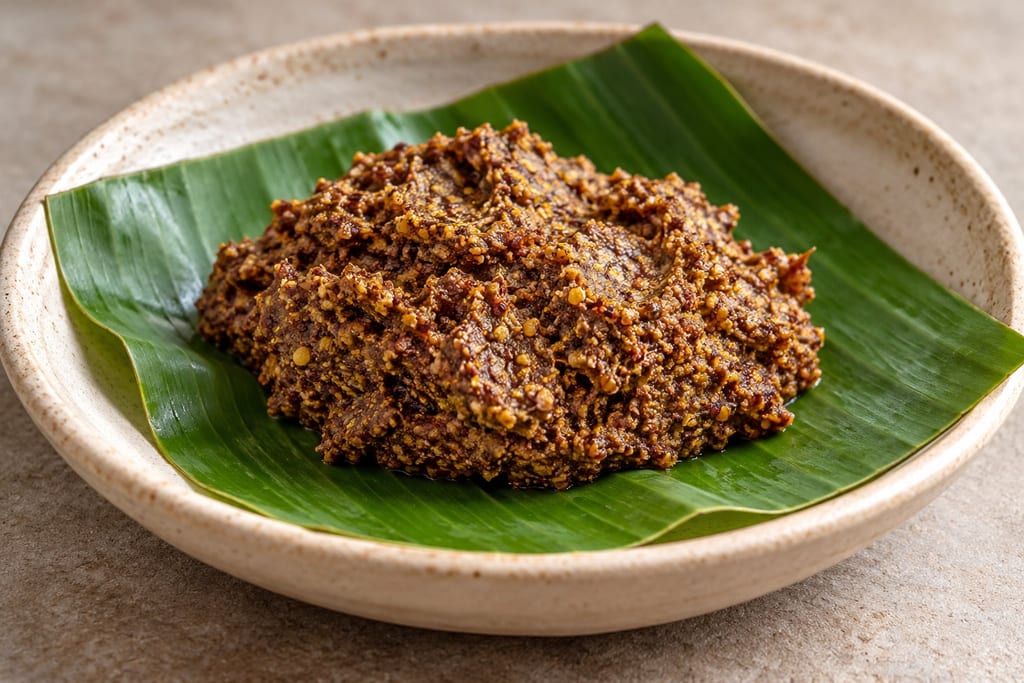
Kahudi
Kahudi is an Assamese mustard-seed condiment fermented with sour Thekera fruit into a strong mash; household methods and study results differ, and no validated home schedule exists.
 FermenteaWhere food goes to change
Khar-oli · Behua (a local name in one account)
A strong Assamese condiment of mustard seed mixed with khar, an alkaline banana-ash filtrate, wrapped in leaves and fermented in bamboo over a fire or in a kitchen pot.
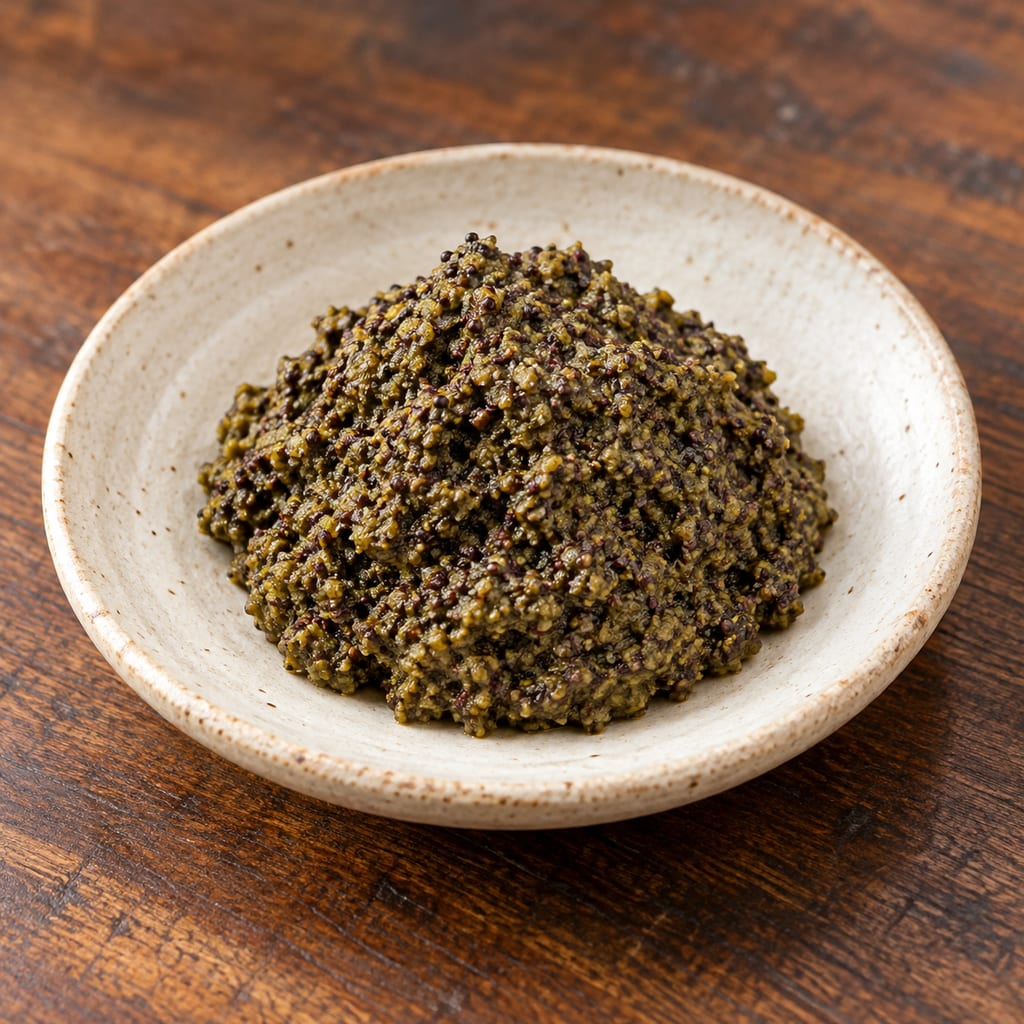
Kharoli is a mustard-seed condiment from Assam. Its character comes from khar, an alkaline filtrate of banana ash, which is why the atlas records it as an alkaline ferment and not an acid one.
Sources describe it as a pungent condiment or a side dish eaten with rice, served with an Assamese meal.
The Jorhat households' method washes and drains the seed, pan-fries it and pounds it, sometimes with mustard oil. The paste is mixed with oil, khar and salt, shaped into balls, wrapped in softened banana leaves and fermented in bamboo cylinders over a fireplace.
The Kokrajhar survey describes a kitchen earthen-pot method for fifteen days. A separate account uses three days of sun exposure. These are kept as separate variants.
The Jorhat study reports a mildly alkaline sampled product at pH 7.6. Its 16S amplicon sequencing found Firmicutes and Proteobacteria, with Lysinibacillus prominent in the sampled Kharoli. These are results for the sampled material and do not define a starter.
The Jorhat study places the process in Jorhat district and the Kokrajhar survey places Kharoli in Kokrajhar district. One blogger's account calls a locally named Behua another name for Kharoli, but the source does not establish that.
Scaling: source batch only
The Jorhat households judged readiness by local sensory and visual inspection. The sources give no objective limit.
Hazard sourceDo not treat the sensory signs or elapsed days as proof that a batch is safe. The sources give no limit.
Control sourceNo validated safety limit or endpoint is given for Kharoli. The three published methods differ and should not be combined.
Khar is an alkaline ash filtrate. The sources give no concentration or handling advice for it.
The 2022 study commissioned the process from three households in Jorhat West. The study site is not the origin of the food.
The 2016 survey documents Kharoli in Kokrajhar district. It does not establish a wider distribution.
Kahudi is an Assamese mustard-seed condiment fermented with sour Thekera fruit into a strong mash; household methods and study results differ, and no validated home schedule exists.
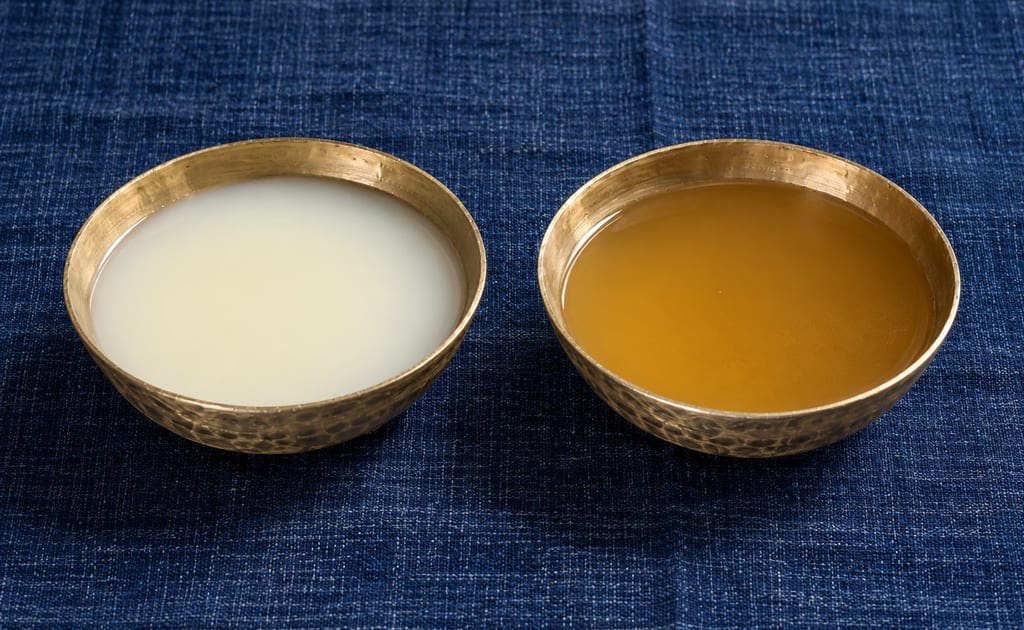
Apong names Mising rice beverages in Assam, including pale Nogin and ash-associated Po:ro. Sources describe distinct preparations and do not establish one unified household recipe or validated safety endpoint.
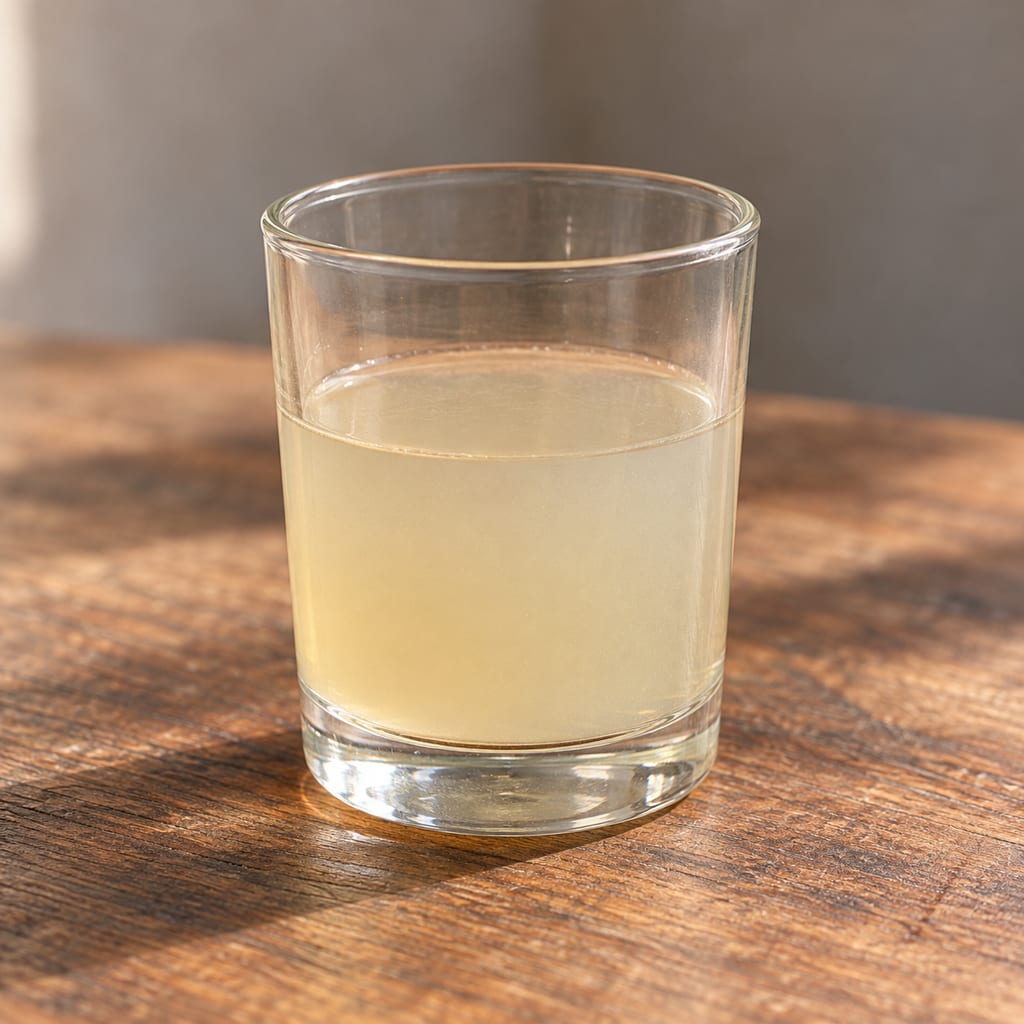
Judima is a Dimasa fermented rice drink from Assam. A 2022 Dhansiri account describes humao starter and rice fermentation, but sources disagree on the thembra bark species and do not provide a complete or validated home batch.
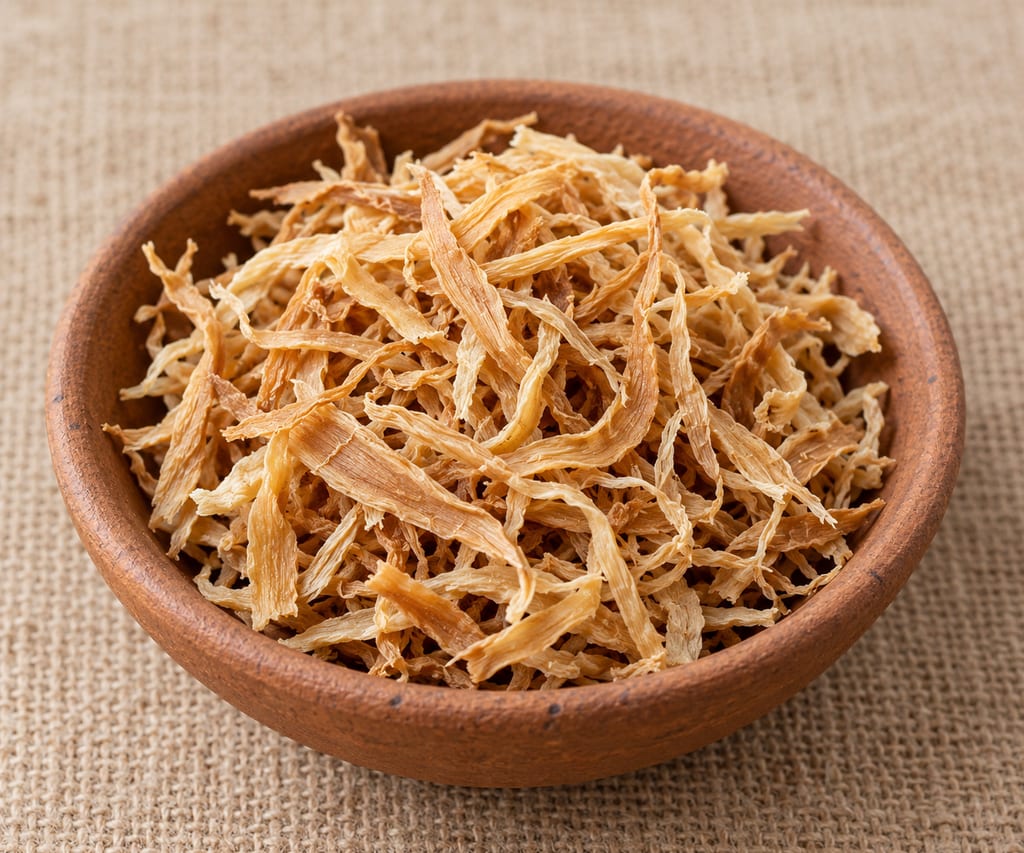
Khorisa is an Assamese fermented bamboo-shoot food. This page records cultural and lab accounts, not a validated home method. FSANZ says shoots must be fully cooked before eating; it does not validate Khorisa or set its cooking time.
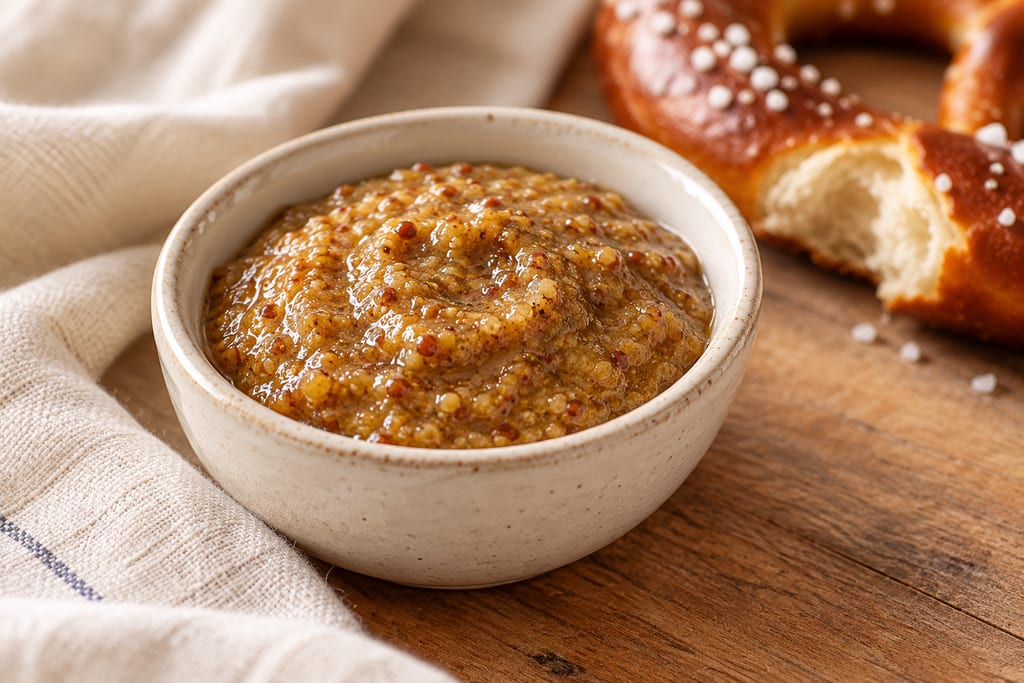
A coarse, sweet Bavarian-style mustard of yellow and brown seed in a cooked brown-sugar and vinegar base, made to eat with Weisswurst; an original refrigerated formula.
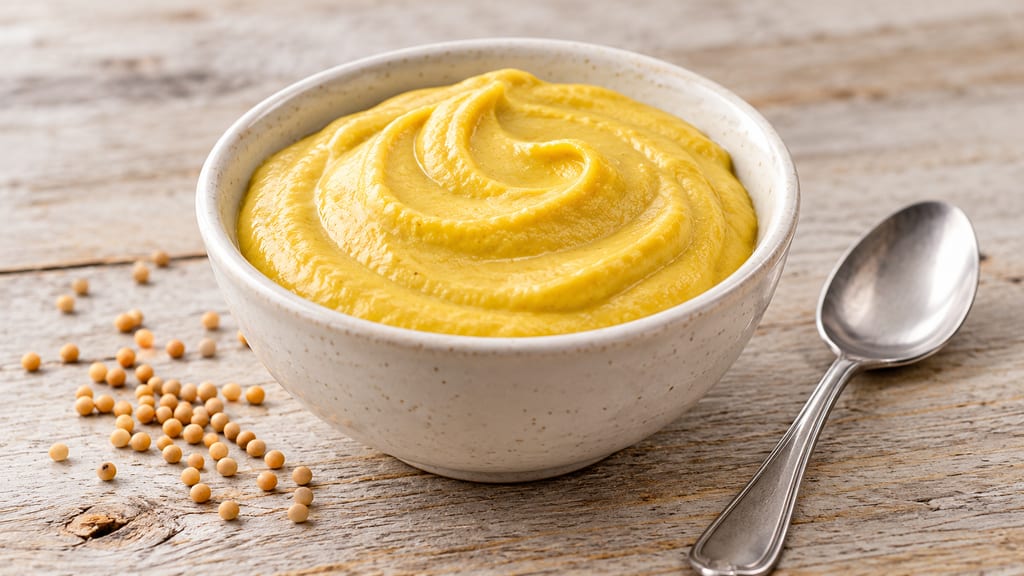
A mild, creamy Czech-style table mustard made from ground seed, vinegar, water, salt and a little sweetness. This home version follows a Czech Television formula and is not a copy of SPAK’s proprietary product.
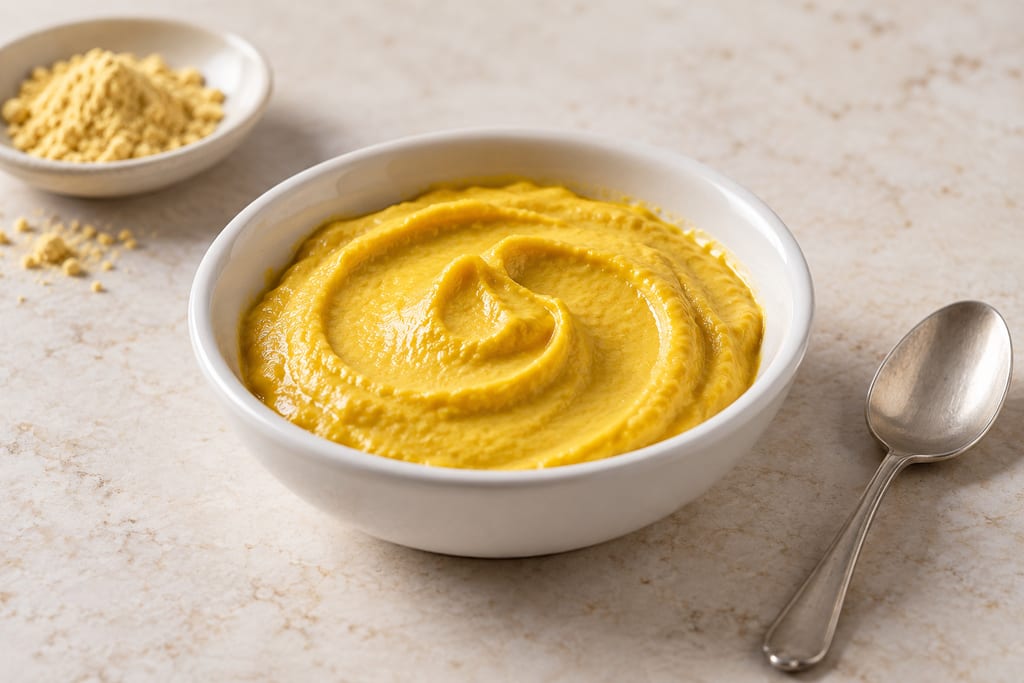
Ten grams of English mustard powder stirred with cool water into a thick cream: the plainest, sharpest mustard there is, mixed just before the meal.
No community contributions have been published for this entry yet.
Sign in to contribute. Published comments and photos are free to read.
Frontiers in Sustainable Food Systems 6, article 1006573; Assam Agricultural University affiliationsResearch
Additive-induced pH determines bacterial community composition and metabolome in traditional mustard seed fermented productsCited in: Overview; Methods; Microbiology
Journal of Ethnic Foods 3(4), 284–291; Elsevier/Korea Food Research Institute; full-text copy hosted by ResearchGateResearch
A study on indigenous fermented foods and beverages of Kokrajhar, Assam, IndiaCited in: Overview; Methods
Xobdo.org community dictionaryResearch
খাৰলি — Xobdo.org Dictionary Entry