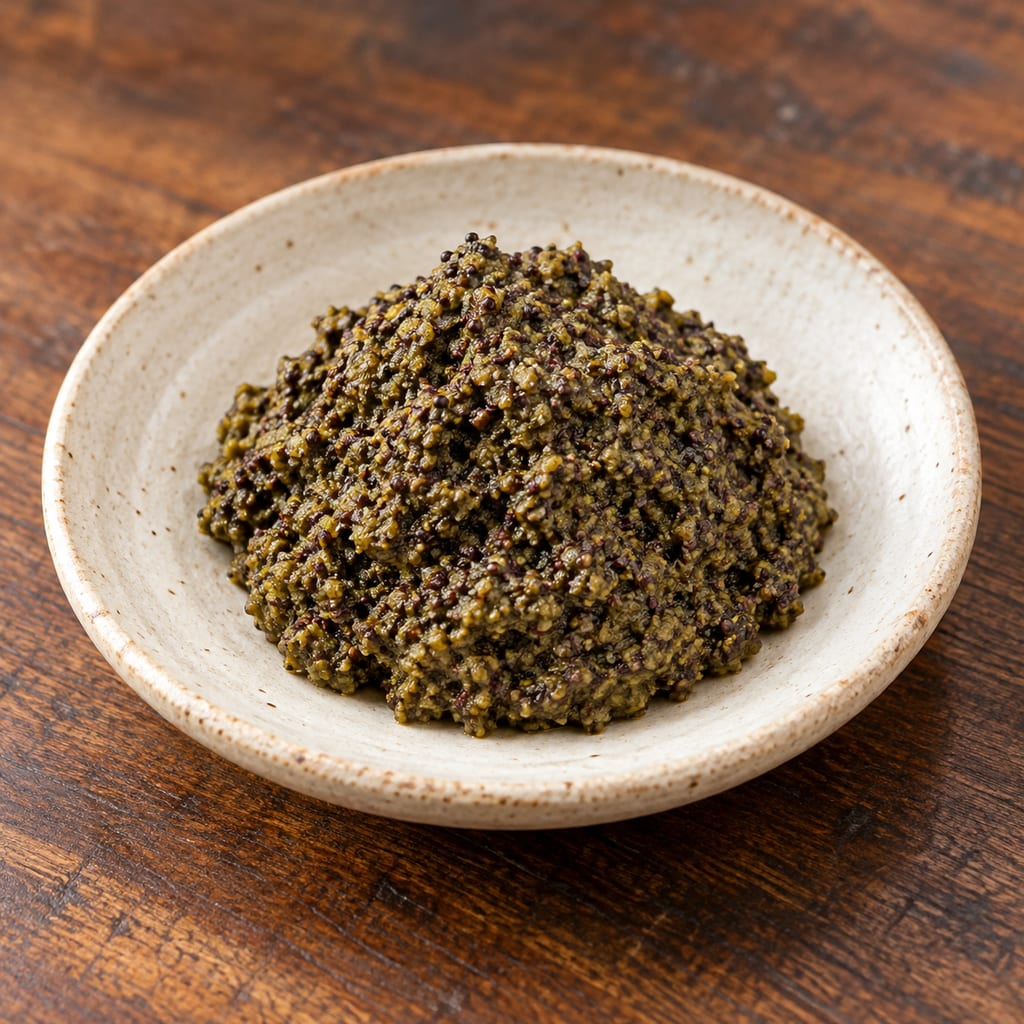
Kharoli
A strong Assamese condiment of mustard seed mixed with khar, an alkaline banana-ash filtrate, wrapped in leaves and fermented in bamboo over a fire or in a kitchen pot.
 FermenteaWhere food goes to change
Pani tenga · Panitenga
Kahudi is an Assamese mustard-seed condiment fermented with sour Thekera fruit into a strong mash; household methods and study results differ, and no validated home schedule exists.
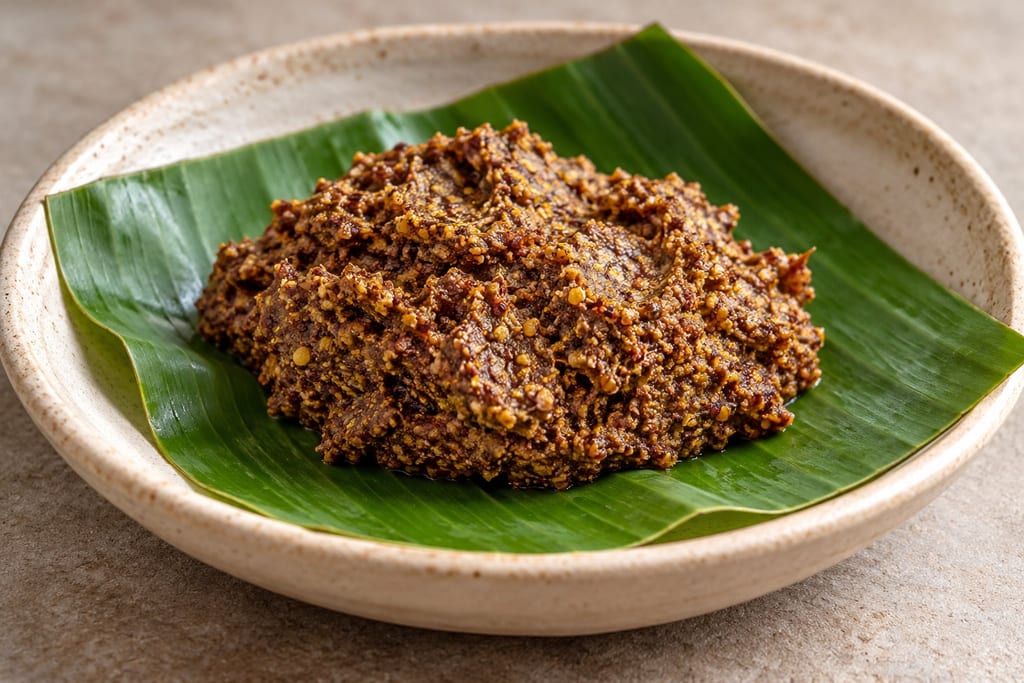
Kahudi is an Assam-associated mustard-seed condiment. In the 2022 study it is made with sour Thekera (Garcinia pedunculata), which the paper distinguishes from Garcinia mangostana, also called mangosteen. Kahudi is recorded as a solid-state spontaneous preparation related to Kharoli, with sour Thekera replacing alkaline khar.
Some sources also call it Pani tenga or Panitenga. The reviewed sources do not establish how these names vary between communities.
The 2022 study commissioned preparation from three rural households in Jorhat West. A local resource person reported five to seven days in summer and nine to eleven days in winter, and the researchers sampled on day seven after inspection. This sampling choice does not establish day seven as a safe endpoint.
A 2017 study describes leaf-wrapped mustard portions fermenting over a fireplace for seven to fourteen days. A 2016 home-recipe account describes black mustard mixed with Thekera pulp in a closed container for three to four days. These are different methods and conditions, not one combined formula.
The 2017 paper reports a pH decline from 6.8 on day one to 3.95 on day eleven and describes culturable lactic acid bacteria. The 2022 paper reports a pH of 5.92 ± 0.02 in its Kahudi table and a sequencing profile in which Bacillus was the most abundant reported genus. The two studies used different samples and methods, so their results do not define one microbial pathway, starter culture or safe pH target.
Neither study validates a household safety endpoint or storage period. The reported times, sensory checks, microbial findings and pH values are observations from particular sources, not instructions.
The mustard species used across the documented methods is not established, and no origin, complete distribution or harvest season is given. The household methods differ in ingredients and duration, and no validated, controlled process or storage limit is established in the reviewed sources. Local practitioners would need to clarify the spelling and naming of the condiment.
The 2022 study sampled Kahudi made by three rural households in Jorhat West. The sources associate Kahudi with Assam but do not establish an origin.
A strong Assamese condiment of mustard seed mixed with khar, an alkaline banana-ash filtrate, wrapped in leaves and fermented in bamboo over a fire or in a kitchen pot.
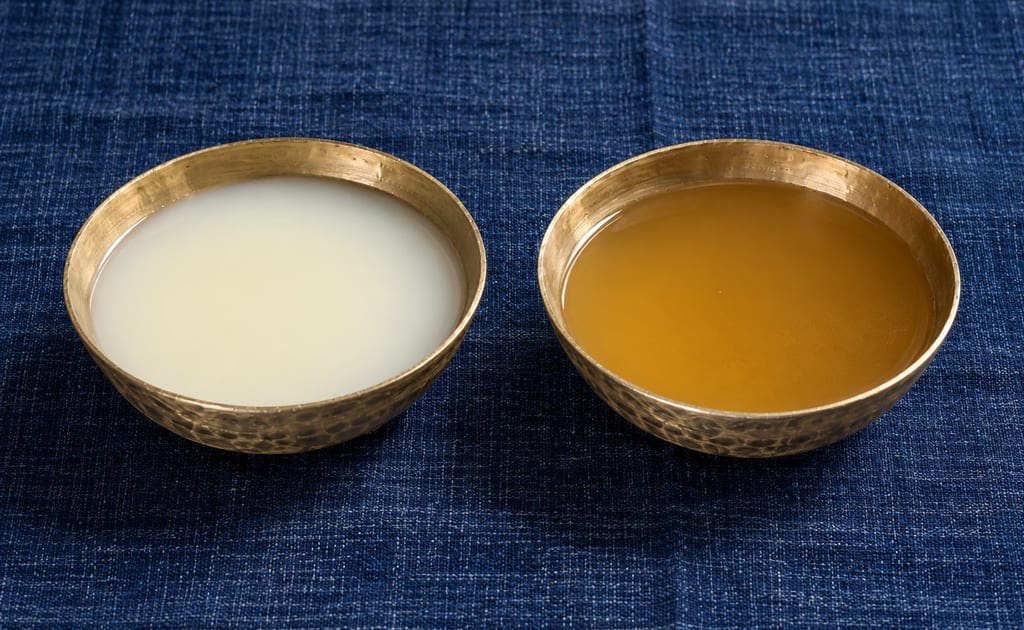
Apong names Mising rice beverages in Assam, including pale Nogin and ash-associated Po:ro. Sources describe distinct preparations and do not establish one unified household recipe or validated safety endpoint.
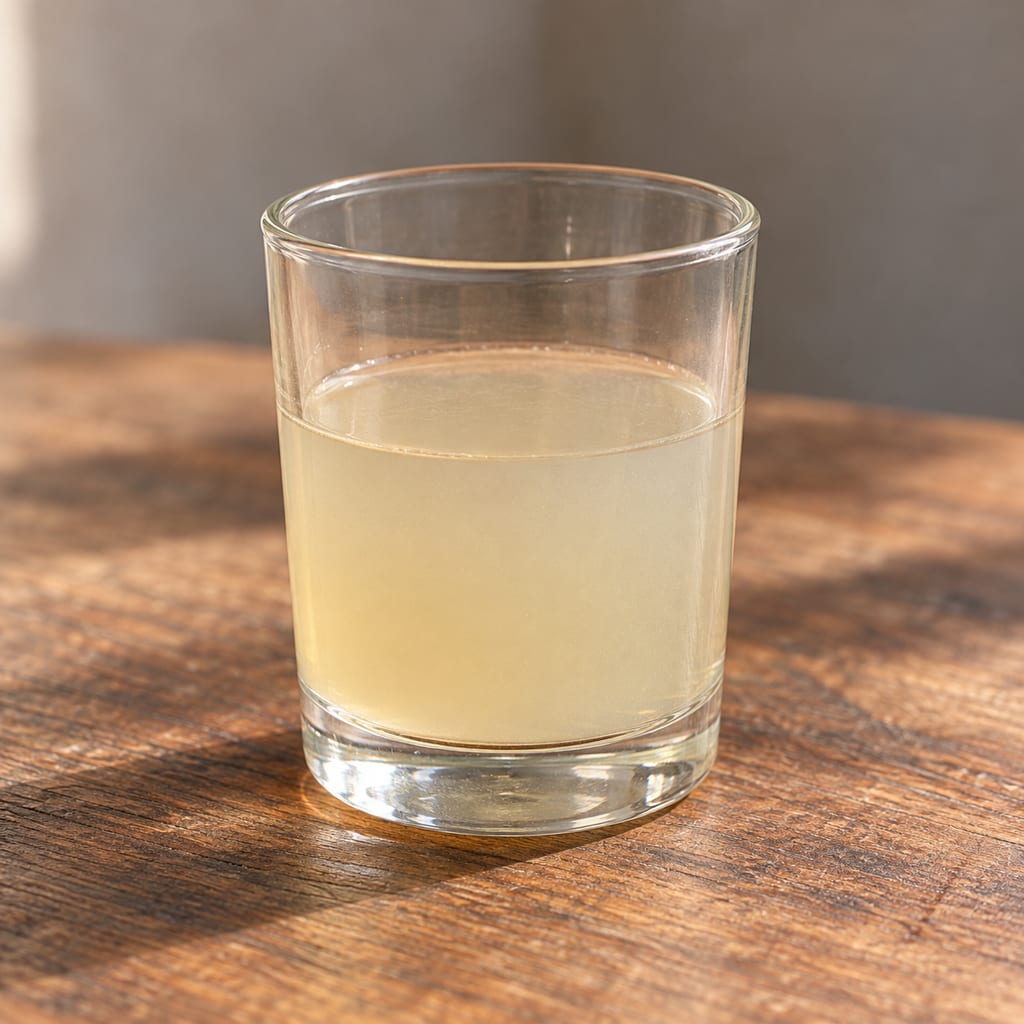
Judima is a Dimasa fermented rice drink from Assam. A 2022 Dhansiri account describes humao starter and rice fermentation, but sources disagree on the thembra bark species and do not provide a complete or validated home batch.
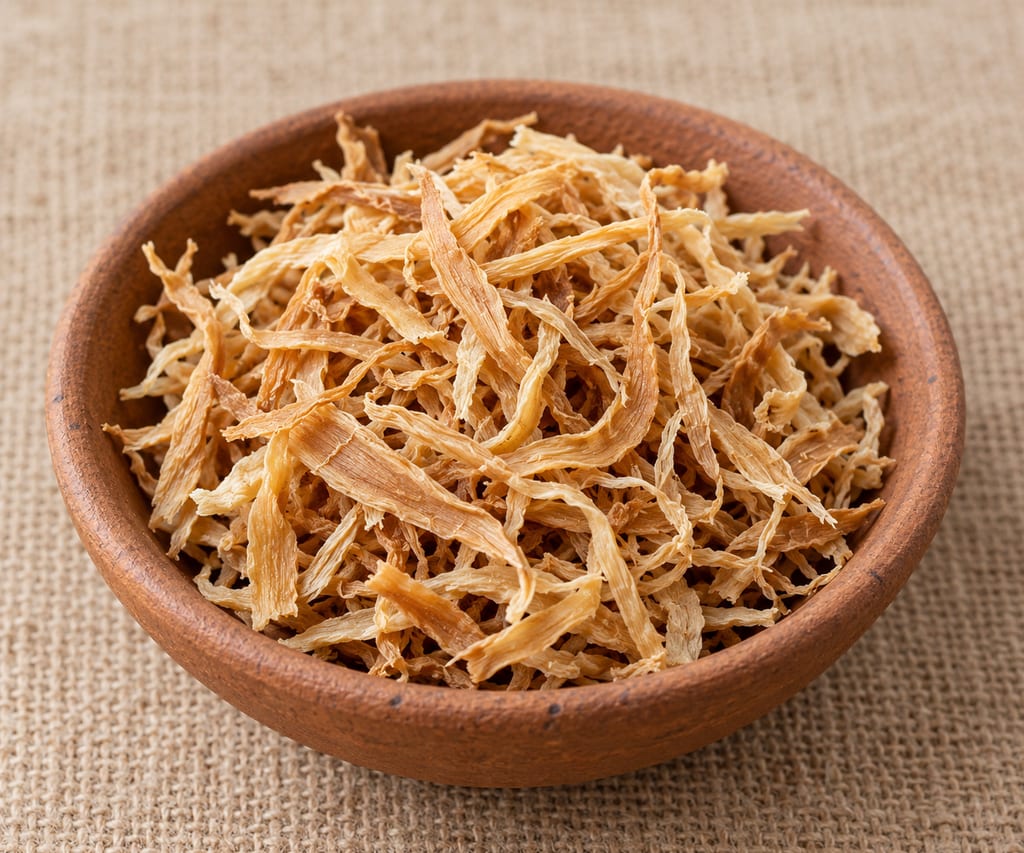
Khorisa is an Assamese fermented bamboo-shoot food. This page records cultural and lab accounts, not a validated home method. FSANZ says shoots must be fully cooked before eating; it does not validate Khorisa or set its cooking time.
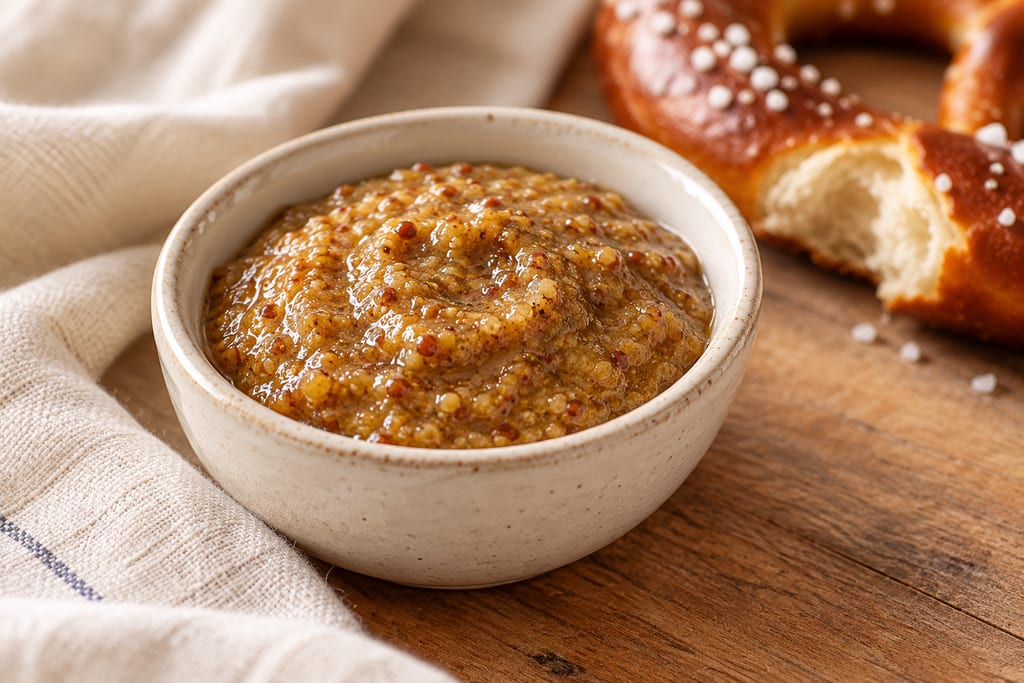
A coarse, sweet Bavarian-style mustard of yellow and brown seed in a cooked brown-sugar and vinegar base, made to eat with Weisswurst; an original refrigerated formula.
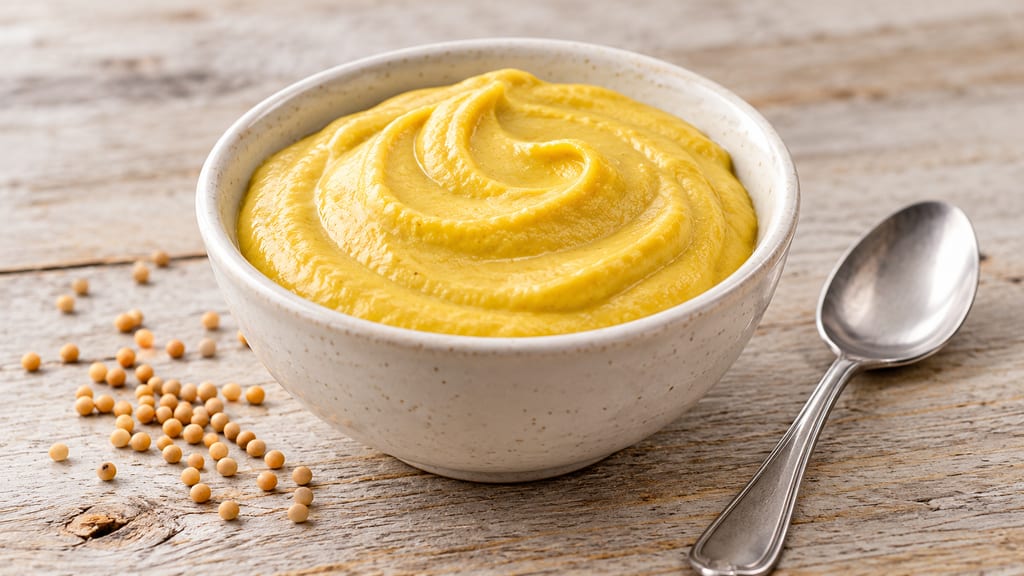
A mild, creamy Czech-style table mustard made from ground seed, vinegar, water, salt and a little sweetness. This home version follows a Czech Television formula and is not a copy of SPAK’s proprietary product.
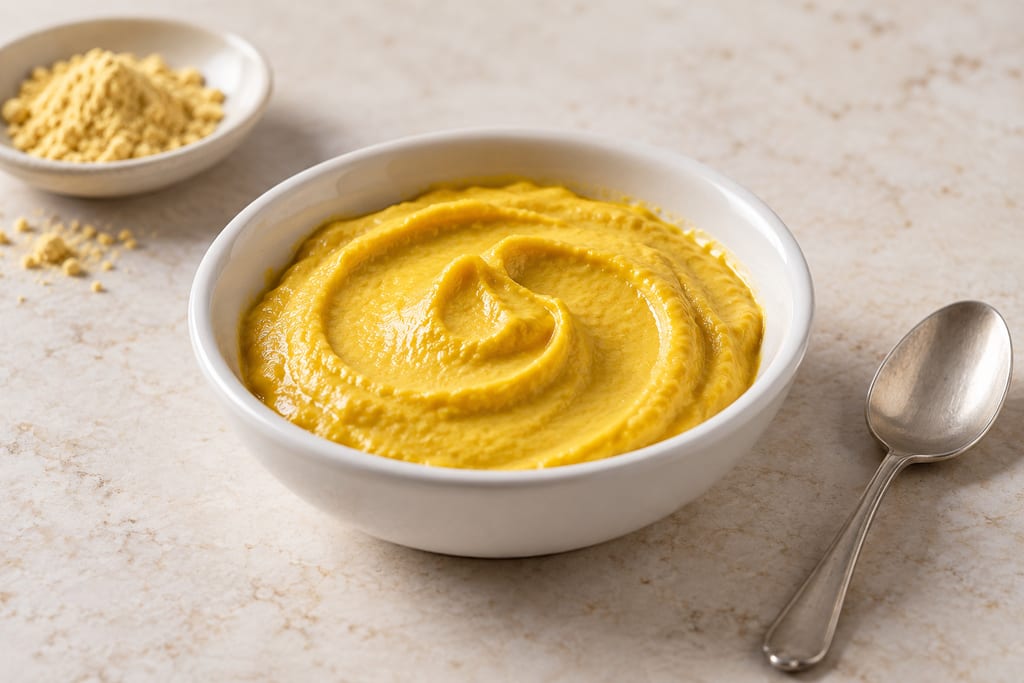
Ten grams of English mustard powder stirred with cool water into a thick cream: the plainest, sharpest mustard there is, mixed just before the meal.
No community contributions have been published for this entry yet.
Sign in to contribute. Published comments and photos are free to read.
Frontiers in Sustainable Food SystemsMethod · Safety
Additive-induced pH determines bacterial community composition and metabolome in traditional mustard seed fermented productsSolid-state spontaneous Kahudi with sour Thekera; household durations of five to seven days (summer) and nine to eleven days (winter); pH 5.92 ± 0.02 in Kahudi table
Cited in: Overview; Household accounts; Study findings; What remains open
Journal of Ethnic FoodsMethod · Safety
Identification and functional properties of dominant lactic acid bacteria isolated from Kahudi, a traditional rapeseed fermented food product of Assam, IndiaLeaf-wrapped mustard portions, seven to fourteen days over a fire; pH 6.8 to 3.95 over eleven days
Cited in: Household accounts; Study findings
RumiCooks Assamese cuisines and recipesMethod
Black Mustard Chutney (Panitenga and Kharoli)Black mustard mixed with Thekera pulp, closed container, three to four days
Cited in: Overview; Household accounts