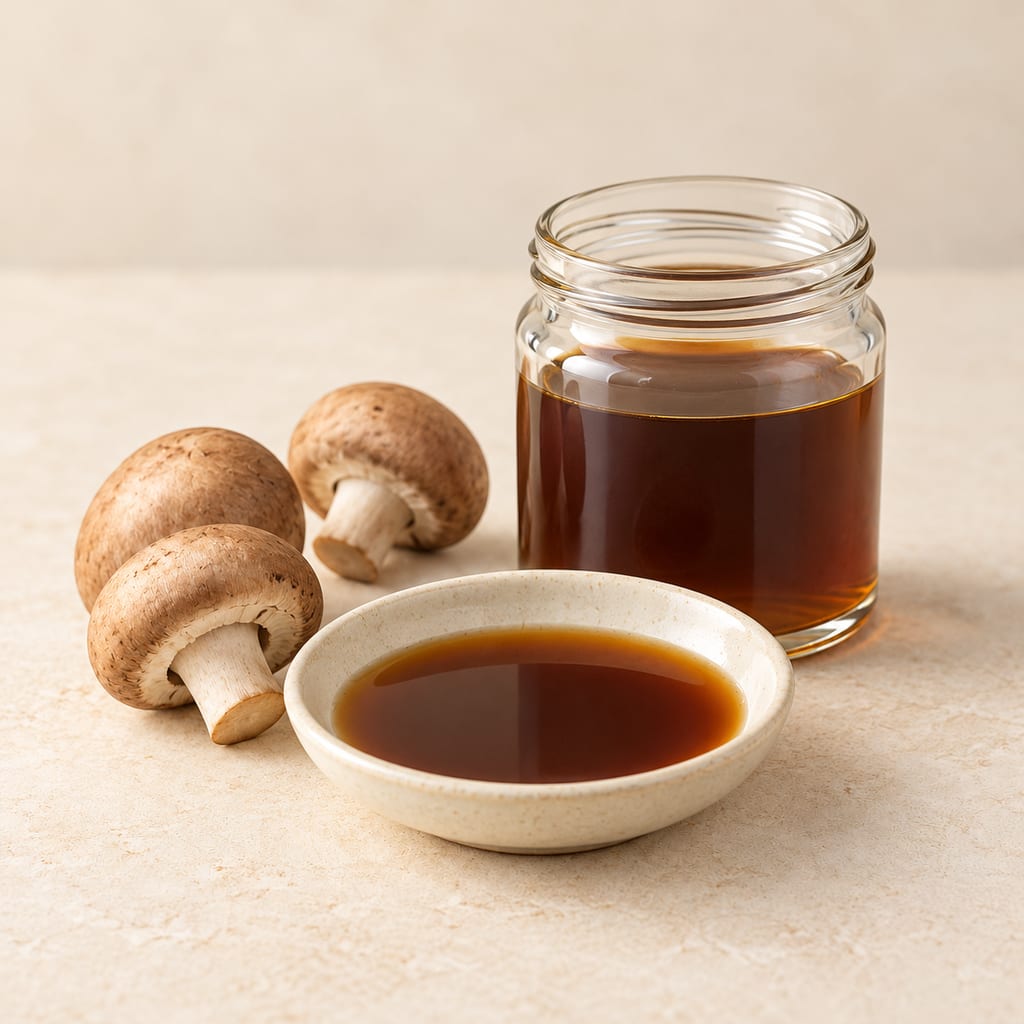
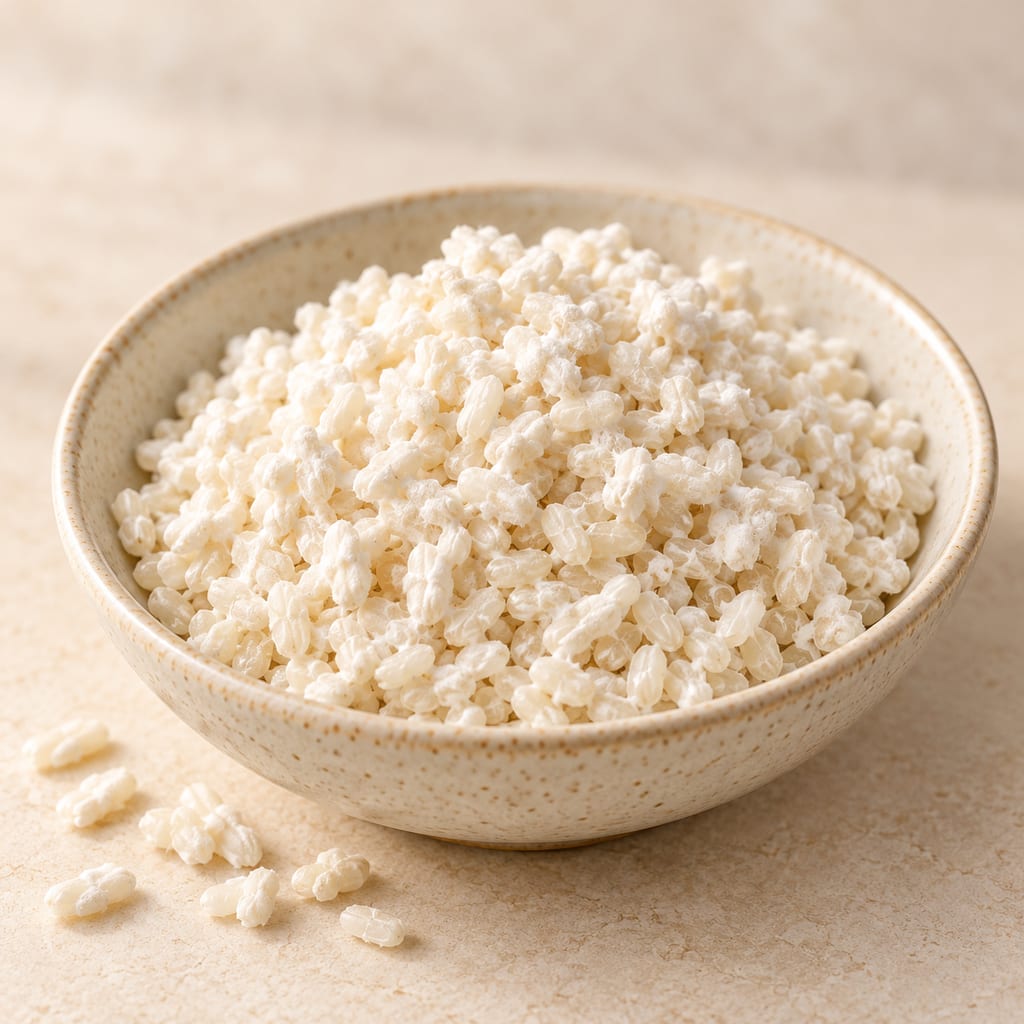
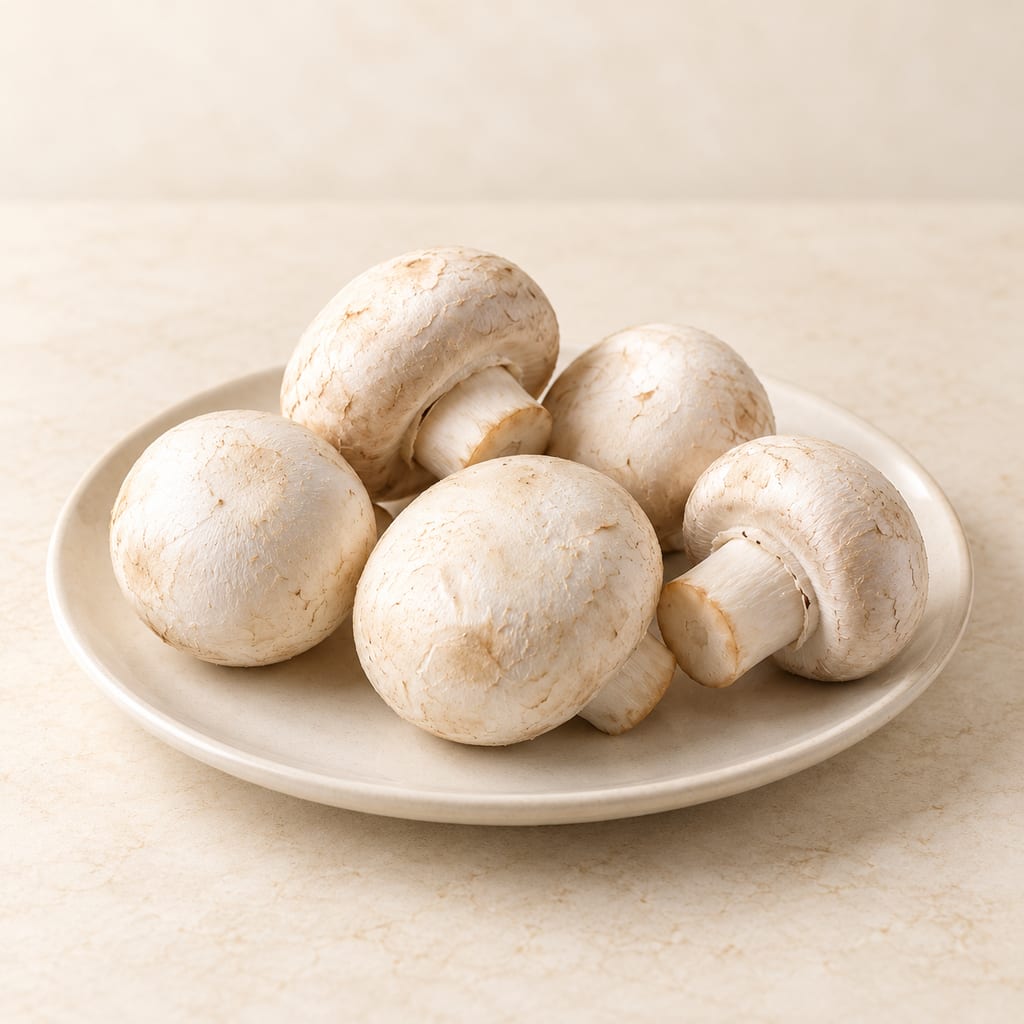
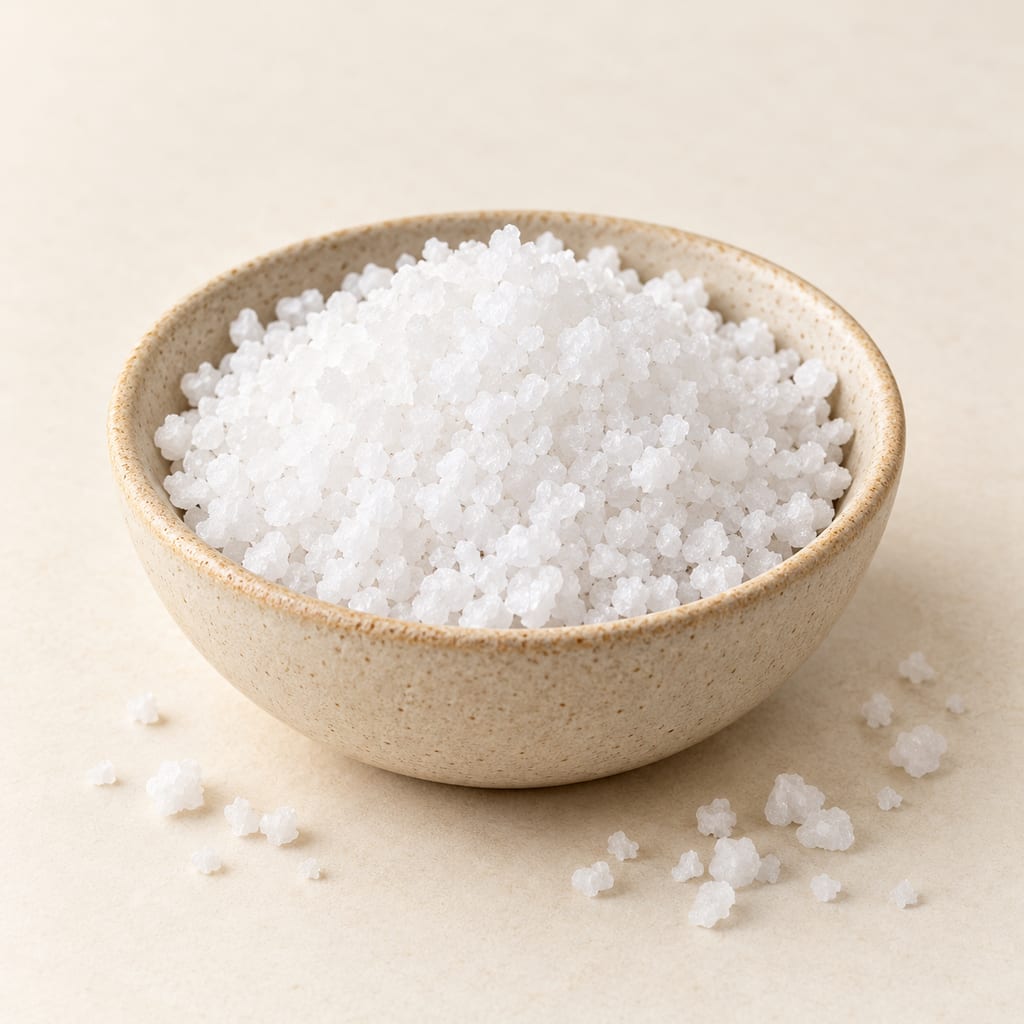
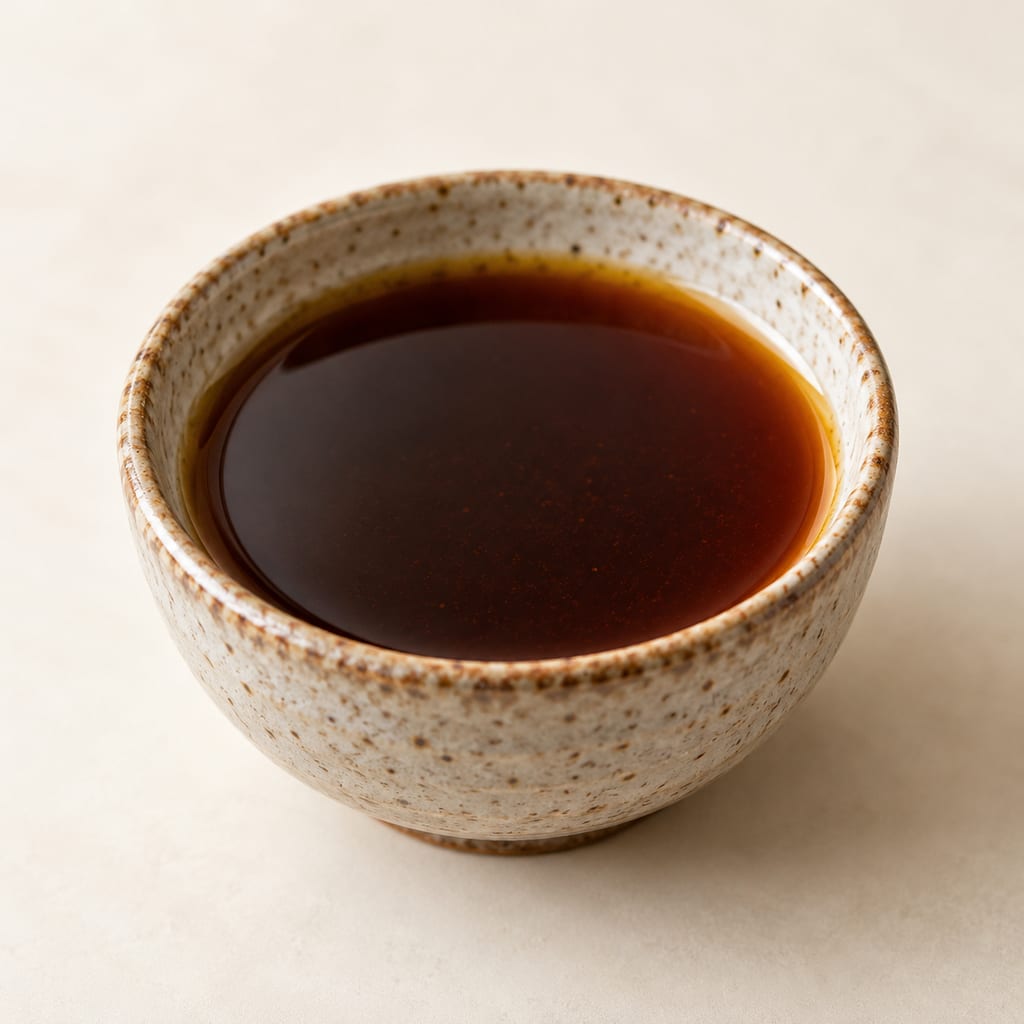
Mushroom garum turns mushrooms, rice koji, salt and water into a dark savoury seasoning. A sustained warm hold lets koji enzymes break down the mixture before straining.
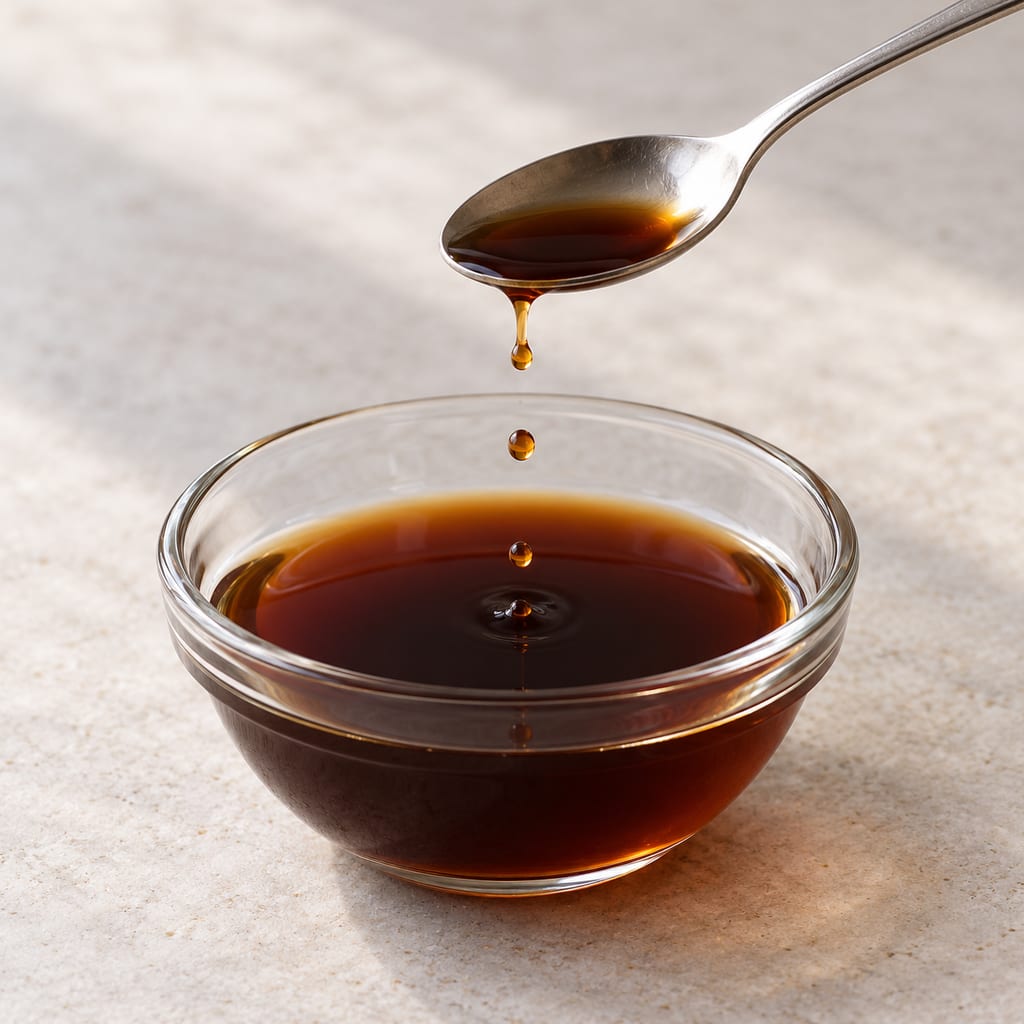
Mushroom garum is a liquid seasoning made by breaking down a salted mixture of mushrooms and rice koji. Enzyme action releases smaller flavour-active compounds into a mash that can be strained into a savoury sauce. A small addition becomes part of a filling, cooking fat or finished dish. It belongs among modern uses of koji, the cultured grain that supplies enzymes to foods such as miso and soy sauce. The preparation here uses warmth to help those enzymes work.
Its brown colour and liquid form can suggest soy sauce, but those similarities do not make the two preparations interchangeable. Soy sauce has its own raw materials, microbial stages and ageing practices. Nor is mushroom garum simply mushroom stock. Stock draws soluble material into cooking water; this process also depends on enzymes acting on the ingredients over time. Extraction, chemical breakdown and the final removal of solids all contribute to the result.
Mushrooms already have savoury compounds before they enter the vessel. Shiitake, shimeji and common cultivated mushrooms differ in their glutamate and nucleotide profiles, and drying changes the balance further. The mushroom is therefore an active flavour choice, rather than a neutral material waiting for koji to give it an identity. Its existing taste and aroma join the effects of enzymatic breakdown and salt in the sauce.
Ancient garum was a family of fish preparations. Salted fish, preserved whole or in pieces, differed from sauces made through the breakdown of fish material. In the sauces, the fish's own digestive enzymes participated in that breakdown. Salted fish and a liquid fish sauce could therefore use some of the same raw materials while producing quite different foods. Fish remains and processing installations help recover those differences alongside the surviving written accounts.
That distinction helps explain the modern borrowing of the name. A garum is recognisable as a seasoning produced by taking a substantial food apart, then recovering its savoury liquid. In a mushroom-and-koji version, an added enzyme source replaces the digestive material associated with historical fish preparations. The resemblance concerns a processing idea and a culinary function. It supplies no evidence that ancient makers produced this mushroom formula, or that the two foods share an uninterrupted history.
Even fish garum was not a single fixed recipe. The archaeological account discusses different fish, small whole fish as well as blood and entrails, and production at different scales. Evidence surviving in a large installation also differs from evidence for a household vessel. A modern recipe should therefore resist an attractive but misleading story in which one ancient sauce had a universal formula and all later garums are direct copies of it.
Contemporary restaurant experimentation broadened the word beyond fish. At Noma, experiments moved through grasshoppers and other animal ingredients before the use of koji with mushrooms. The practical question was whether enzymatic breakdown could turn other ingredients into useful savoury seasonings. The mushroom preparation emerged within that modern kitchen work, without requiring a claim that one restaurant invented every sauce now carrying the name.
Noma Projects' commercial history also makes clear that a product name can cover changes in formulation. Its first release was Smoked Mushroom Garum in 2022. The current Mushroom Garum combines mushroom garum with oat garum; its ingredient list includes water, mushrooms, oats, rice koji and salt. The oats matter to the identity of that product. It is not the same mixture as the mushroom-only substrate in this recipe.
The resulting family offers makers two routes to variation: change the ingredients that undergo breakdown, or blend distinct preparations afterwards. Noma's current product illustrates the second route. A mushroom-only mash illustrates the first kind of choice. Both can serve a similar culinary purpose while retaining different grain, mushroom and processing histories.
Koji is an ingredient made through fungal cultivation; its later use in a mash is another stage. In soy-sauce research, koji made with Aspergillus oryzae supplies enzymes that break large food molecules into smaller ones. Protein-degrading enzymes act at different points: some cut within protein chains, producing peptides, while others release smaller fragments and amino acids. Glutaminase can convert glutamine into glutamate, an amino acid associated with umami taste. Amylases act on starch rather than protein.
This explains why the words “koji enzymes” describe several activities, rather than a single substance with one effect. Rice is a carrier and a food material as well as the substrate on which the koji was grown. The mushrooms contribute their own compounds and material available for breakdown. Water brings the mixture into a form in which the enzyme-rich grain and the mushroom material can be dispersed together.
The distinction between a protein and its breakdown products matters to taste. Proteins are chains of amino acids; cutting them makes smaller peptides and releases free amino acids, while glutaminase performs a further conversion. Those products need not all taste alike. Soy-sauce research distinguishes amino acids associated with umami, sweetness and bitterness, and compares them with sensory results. Enzymatic digestion therefore changes a mixture of tastes rather than simply turning a single “umami” control upwards.
Growing the mould and using the enzymes it has produced are also separate stages. The warm garum mash is designed for enzymatic digestion; a new covering of mould is not its intended sign of progress. Koji's earlier cultivation supplies tools for the later transformation.
A mushroom's condition changes what enters the vessel. Fresh and dried mushrooms contain different proportions of water and dry material; drying can also change savoury compounds. Shiitake provides a familiar example: its dried form is valued both for the rehydrated mushroom and for the soaking liquid used in dashi. That is a reason to distinguish ingredients carefully, rather than evidence that dried shiitake can replace an unspecified mushroom weight without altering a formula.
Roasting introduces another distinction. A roasted-mushroom version begins with a different ingredient from the sliced mushrooms in this method. Roasting and warm enzyme ageing are separate operations with different effects. The former changes an ingredient before mixing; the latter acts on the combined slurry. Calling both “fermentation” would conceal that difference and make it harder to understand why two mushroom garums might taste unlike one another.
Koji contributes more than a grain weight. Cultivation determines the enzymes available for the later mash, while the rice contributes its own material for those enzymes to act on. A fungal culture that produces the ingredient, an enzyme-rich prepared grain and a bacterial starter for souring vegetables have different functions. The recipe begins with rice koji already made; it does not ask the maker to grow the mould in the mushroom slurry.
Warm ageing requires attention to the whole vessel
Blending changes the starting conditions for the enzymes. Slicing creates pieces; blending disperses those pieces with koji, water and salt into a slurry, bringing enzyme-rich grain into contact with mushroom material. This physical preparation helps explain why the method begins differently from a jar of whole fermented vegetables. A well-distributed mash offers a different contact pattern from layers of grain and intact mushroom pieces.
The warm hold is a further deliberate choice. Enzyme behaviour depends on its surroundings, including temperature and salt, and different enzymes need not respond alike. In soy-sauce systems, changes in these conditions can change enzyme activity and the resulting flavour compounds. There is no single optimum that can simply be carried between all koji preparations. Hotter conditions do not invariably produce a better or faster sauce.
Periodic stirring or massaging serves the same practical goal as blending: maintain a distributed mixture as the contents change. It also creates a monitoring commitment over weeks, which makes the method more demanding than its short ingredient list suggests. A larger vessel changes the amount of material that must be heated and mixed. Doubling ingredient weights alone does not establish that an appliance or container will maintain equivalent conditions throughout the batch.
During ageing, solids soften and the mixture becomes more liquid and darker. Protein breakdown helps explain why a preparation built from solid ingredients can move toward a seasoning liquid. Not every component becomes soluble, however, and the colour alone cannot measure the extent of protein breakdown. Insoluble material can remain after the ingredients have undergone substantial change.
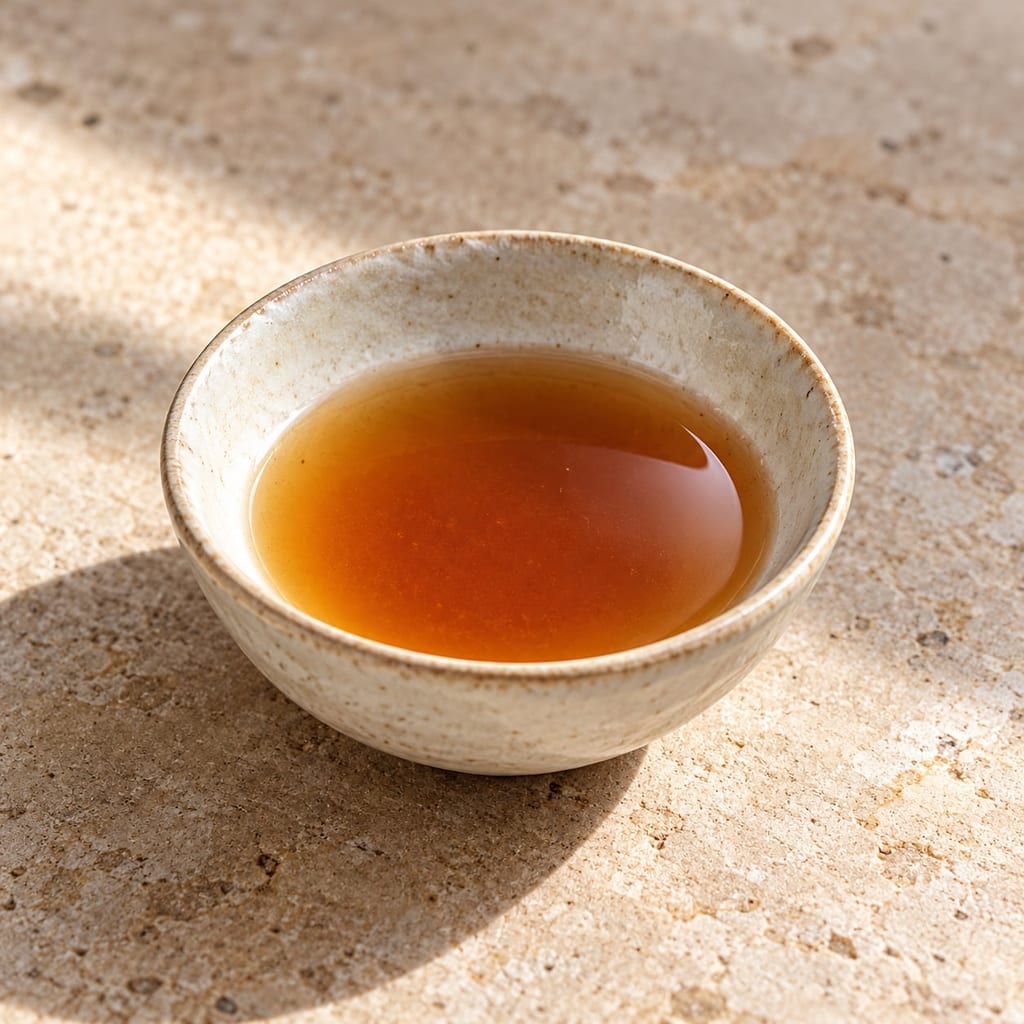
Straining gives that change a culinary form. Cloth retains larger solids while liquid passes through. The amount recovered depends on material retained in the cloth and solids as well as the starting mixture. A wet mass left in the cloth holds liquid that is no longer in the bottle; differences in handling can therefore affect yield as well as clarity. Separation gives the cook a different physical ingredient from the original coarse mash.
The resulting sauce is intended to season another food. A pourable liquid distributes flavour differently from coarse mushroom pieces and can be incorporated into fillings and cooking fats. Its culinary value is not that it disappears: it lets the cook bring mushroom-derived savouriness into a dish without adding another layer of pieces or a separately recognisable mushroom texture.
Noma Projects uses its commercial mushroom garum in two places in a spinach-and-ricotta ravioli dish. Some goes into the filling with dairy ingredients, vegetables and lemon zest; another addition joins the butter sauce that coats the cooked pasta. These are distinct uses of the same seasoning. The filling distributes savouriness within the pasta, while the sauce carries it across the surface. Neither use requires the sauce to dominate the dish as a separate pour at the table.
Its roast-chicken recipe demonstrates a different vehicle. Garum is worked into softened butter with lemon zest and pepper, and that butter is spread under and over the skin. Here the seasoning becomes part of a fat-based preparation applied before roasting. The example is useful for understanding function, but its separate cooking schedule is not a garum-making instruction or a substitute for appropriate poultry controls.
Together these examples show how a liquid mushroom seasoning can belong with both vegetables and animal foods. In the ravioli it accompanies fresh dairy, spinach and pasta; in the chicken it joins butter, citrus and meat juices. The same basic role—distributing savoury flavour through another preparation—works across very different dishes.
Pea, mushroom, meat and fish preparations appear alongside one another in modern garum guides because koji offers a shared processing tool. Their ingredients, composition and hazards remain different. A pea version begins with cooked legumes; fish or meat versions introduce animal material; the commercial mushroom-and-oat blend adds another grain preparation. These are meaningful variants, not interchangeable flavours added to one validated base.
General amino-paste guides give different salt and time ranges from the quick-garum formula used here. The mushroom species, koji strain and enzyme activity are not specified, and the commercial mushroom-and-oat sauce discussed above is a different preparation.
Keep the strained sauce refrigerated or frozen; it is a perishable seasoning with no supported storage life for this batch. Do not can it or store it on the shelf. Straining removes coarse solids without sterilising the liquid. The warm mushroom mash has no established microbiological endpoint or measured water activity to support a stronger preservation claim.
Mushroom garum extends the garum family beyond fish by using enzymes supplied by rice koji. Noma Projects’ commercial mushroom garum combines mushrooms, oats and rice koji; its formula differs from this mushroom-only preparation. In the warm method here, enzyme activity does the work rather than a living mould growing through the jar.
Fresh mushrooms can carry Clostridium botulinum spores. The warm, sealed garum method has no established botulism-control endpoint.
Hazard source
Do not can this sauce or store it as a shelf-stable product; refrigerate or freeze the finished sauce.
Control source
Mushrooms can carry Clostridium botulinum spores. Do not can the sauce or store it at room temperature; keep the finished sauce refrigerated or frozen.
Slice the mushrooms and weigh them with the rice koji, water and salt.
Blend the ingredients into a loose, pourable mixture.
Transfer to a jar with a loose-fitting lid, or seal in a vacuum bag.
Hold steadily at 55–60°C (131–140°F) for 2–6 weeks in a temperature-controlled water bath, yogurt maker or proofer. Stir the jar or massage the bag every couple of days.
Pass the mixture through cloth and collect the liquid. Refrigerate at 2–4°C (36–39°F), or freeze.
Conditions
Fermentation14–42 days
Temperature55–60°C
Temperature controlIncubated
Places
Unknown
Modern adaptation · Place not established
The formula does not establish where this preparation originated. Noma’s commercial production location is not assigned to this distinct method.
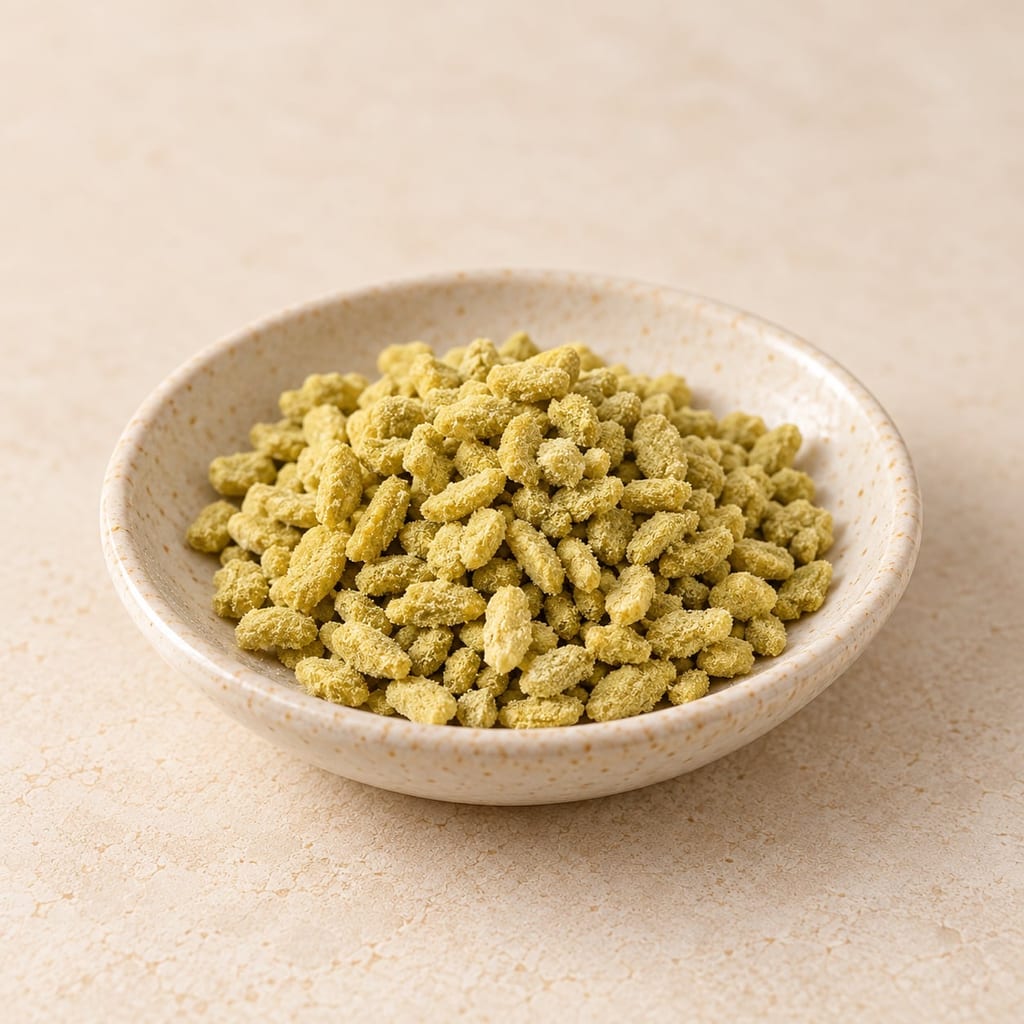
Koji is steamed grain — rice, barley, soybean or wheat — grown out with a food-grade Aspergillus mold until the kernels carry working enzymes. It is bought or cultivated, and it converts starch and protein for the foods that follow.
Mushrooms are the edible fruiting bodies of fungi, cultivated or gathered, and each species has its own texture, aroma and handling needs. Fresh, dried and roasted forms differ in water and in flavour compounds.
Water carries dissolved ingredients, transfers heat and forms the liquid environment of many ferments; its minerals and treatment influence how it behaves.
Yellow-koji starter is the spore inoculum of the yellow koji mold — Aspergillus oryzae and the related A. sojae — sold by specialist tane-kōji houses to grow koji for sake, miso and soy sauce.
Yellow-pea koji garum is a dark liquid seasoning made by holding cooked split peas with rice koji, salt and water while the koji enzymes break down the mash.
Garum, nước mắm, nam pla and patis share ways of turning fish into a savoury liquid, yet each belongs to its own food culture. This account follows ancient sauces, Asian and Japanese fish sauces, colatura and koji garums.
Cooked-bean koji garum is a dark liquid seasoning made from soft-cooked beans, rice koji, salt and water. A long warm hold lets koji enzymes break down the mash.
Chef Alex Perry makes this modern shrimp garum from Gulf white shrimp heads and shells, koji, water and salt. He holds the mash at 60°C for two months, then strains the liquid for use as a seasoning.
A late-antique Roman recipe in which very ripe pears are crushed with salt, matured for three months and drained, giving a pale liquid called liquamen.
Meat-trim koji garum is a savoury liquid seasoning made by holding meat scraps with rice koji, salt and water at steady warmth before straining the mash.
Mushroom garum is a savoury, smoked sauce made by crushing mushrooms with salt and rice koji and letting the mixture brew for months, a modern use of the garum method without fish.
Community
No community contributions have been published for this entry yet.
Share what you made
Sign in to contribute. Published comments and photos are free to read.
Ingredients; Method; Variations; Caution: Exact mushroom formula and warm method; intended changes, blending, mixing, straining; source itself says not validated as botulism control.
Cited in: A mushroom seasoning with a borrowed name; Koji supplies a set of tools; Ingredients determine more than flavour; Warm ageing requires attention to the whole vessel; From slurry to seasoning; Different formulas need different explanations
Fresh mushrooms can carry Clostridium botulinum spores; low-oxygen packaging can allow toxin formation before visible spoilage. This guidance concerns fresh mushrooms and does not validate the warm garum method or establish its storage limits.
Nature of the Hazard: Fresh mushrooms and sealed-pack botulism hazard; toxin may precede visible spoilage. Scope is fresh packaging, not garum validation.
Cited in: Different formulas need different explanations
Modern commercial mushroom garum uses rice koji and is combined with oat garum; its ingredient list and formulation differ from this home formula.
Product description; Ingredients; first release account: Current product combines mushroom and oat garums, with distinct formula; first Smoked Mushroom Garum release 2022.
Cited in: A mushroom seasoning with a borrowed name; How mushrooms entered the modern garum kitchen; From slurry to seasoning; Different formulas need different explanations
Printed p.74, Salaisons and Sauces: Salted fish versus sauces, fish digestive enzyme autolysis, varied raw materials and production scales. Historical synthesis, not ancient primary recipe.
Accessible opening preview; only claims in that preview used: Noma experiments with grasshoppers and other animal material before koji/mushrooms. Contemporary reporting, not proof of first invention.
Cited in: How mushrooms entered the modern garum kitchen
Accessed 2026-10-26
Journal of Food Science and Technology / Springer NatureProcess
Introduction; Abstract; Results and Discussion, free amino acids and sensory evaluation: Koji enzymes, protein/peptide/amino acid breakdown, glutaminase/glutamate, starch; process-specific influence of salt/temperature in soy sauce. No mushroom-batch transfer.
Cited in: Koji supplies a set of tools; Warm ageing requires attention to the whole vessel
Producer describes brown mushrooms,komekoji,water and salt, matured about3months in a fermentation box. No proportions or fermentation temperature are given.
Producer declares gluten1; do not override from an assumed rice-koji composition.
Same mushroom/rice-koji seasoning subject; Goodlok brown-mushroom and longer maturation details are product-specific leads, not replacements for the existing warm formula.