
Rice koji
Rice koji is steamed white rice through which koji mold has grown. It carries the enzymes that turn rice starch into sugar, and it is the starting point of sake, sweet miso, amazake and shio koji.
 FermenteaWhere food goes to change
Modern method
Yellow-pea koji garum is a dark liquid seasoning made by holding cooked split peas with rice koji, salt and water while the koji enzymes break down the mash.
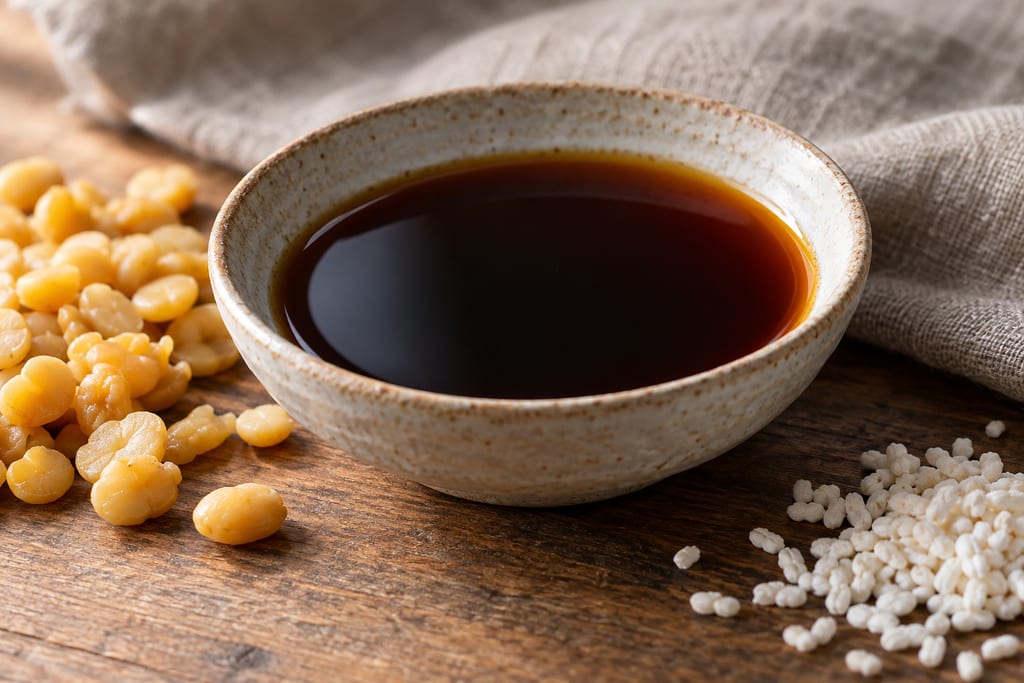
Yellow-pea koji garum is a dark, salty liquid seasoning made from yellow split peas. Cooked peas are blended with rice koji, salt and water into a pourable mash, which is held warm so that the koji enzymes can break down its proteins and starches. The liquid is strained off and used by the spoonful, as a seasoning, in the way fish sauce is used.
The name places it in the garum family, the fermented fish sauces of the ancient Mediterranean. Its plant substrate is what separates it from those sauces, and the source describes it as a modern adaptation rather than a documented historical preparation.
Koji is rice grown with the mould Aspergillus oryzae. In this recipe the koji is used for its enzymes, not for any growth of its own, and the mash is not an acid ferment. The enzymes that matter here are proteases, which cut pea protein into smaller peptides and amino acids, and amylases, which break down starch into sugars. These are general biochemical roles, not measurements from this recipe.
The amino acids and sugars released in the mash are part of what gives the finished sauce its savoury depth. The source records the process as enzymatic and warns that its holding temperature has not been validated as a safety control.
The quick-garum method holds the slurry at 55–60°C for two to six weeks, stirring or massaging it every couple of days, until the solids break down. The jar is strained through cloth afterwards, and the liquid is refrigerated or frozen.
A 2017 Nordic Food Lab study, which the Mouritsen et al. paper reports as a garum revisited, documented a barley-koji yellow-pea sauce held at a lower temperature for much longer. This rice-koji version is a separate, faster warm method, and the sources give no evidence that the two can be exchanged. The 2017 paper is cited here from its listing; its full text was not read for this revision.
The finished liquid is perishable. The method says it must not be canned, and that it should be refrigerated at 2–4°C or frozen after straining. The warm hold itself is not validated as a control against botulism, because the mash is low in acid and is held at a temperature the sources do not test for safety.
The page does not give a shelf life for the strained liquid. Smell, taste and appearance do not show whether it is safe, and a cook who cannot control the hold should use a method with a validated process.
Garum was historically a fish sauce. Modern cooks have extended the idea to plant proteins, using koji enzymes to turn a salted mash into a savoury liquid. A 2017 Nordic Food Lab study documented a barley-koji yellow-pea sauce held at a lower temperature for much longer. This rice-koji version is a separate, faster warm method. Its finished liquid is used as a concentrated seasoning rather than as a drink or a preserved whole food.
Scaling: source batch only
The finished sauce is not an acid ferment, and the warm enzymatic process has not been validated as a botulism control.
Hazard sourceDo not can the sauce; refrigerate at 2–4°C or freeze after straining.
Control sourceThis low-acid sauce is perishable. The warm hold has not been validated as a botulism control; do not can the sauce, and refrigerate or freeze it after straining.
No humidity limit is supplied by source.
The quick-garum page gives this yellow-pea adaptation without a geographic origin.
Rice koji is steamed white rice through which koji mold has grown. It carries the enzymes that turn rice starch into sugar, and it is the starting point of sake, sweet miso, amazake and shio koji.
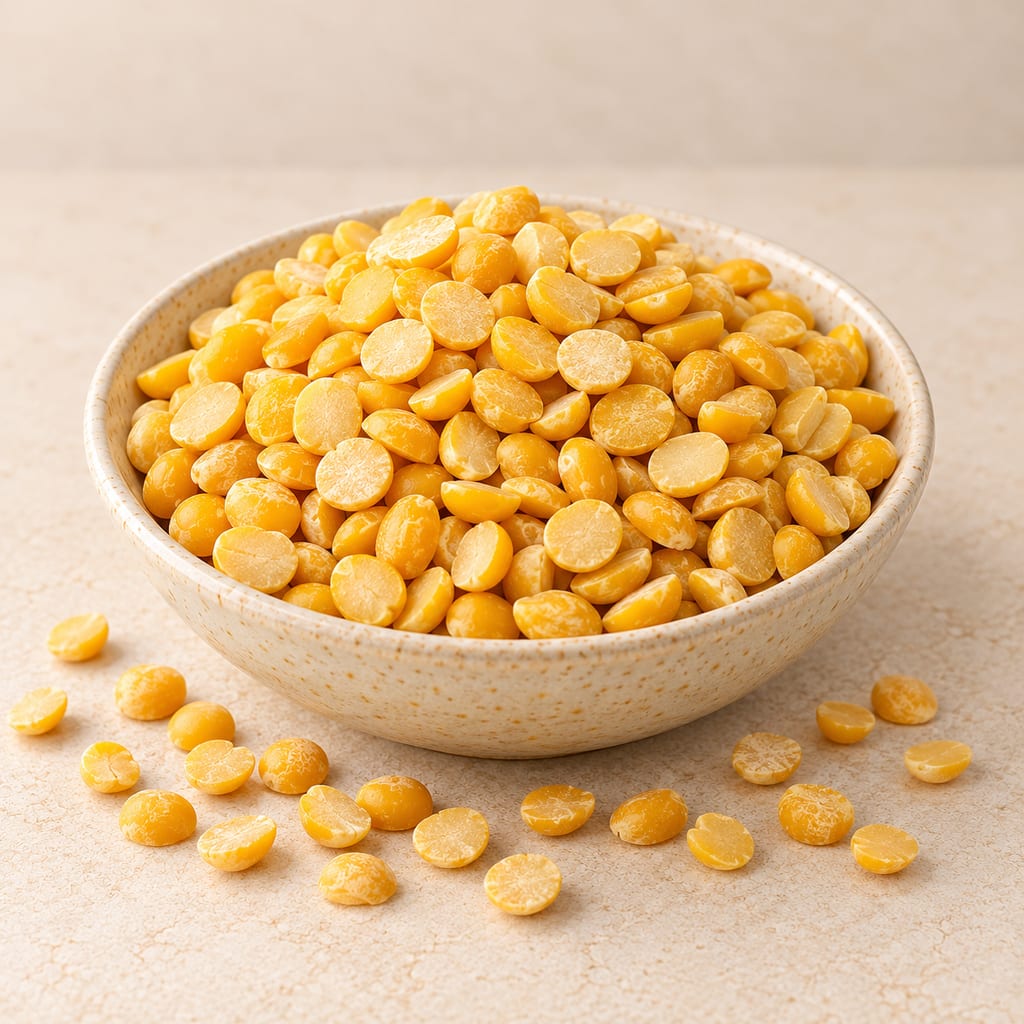
Yellow split peas are dried field peas with the seed coat removed and the two halves separated. They cook to a soft, starchy, protein-rich paste for soups, puddings, sweets and one modern peaso garum.
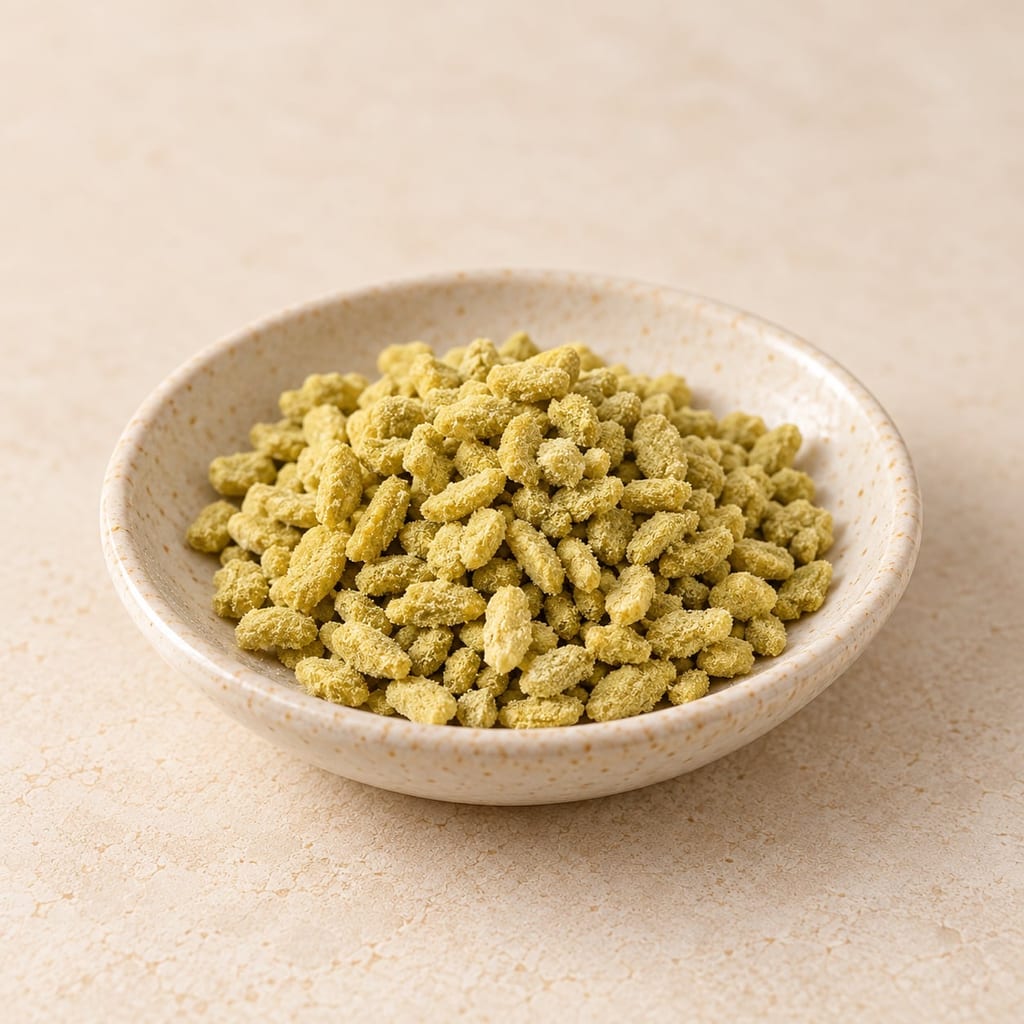
Yellow-koji starter is the spore inoculum of the yellow koji mold — Aspergillus oryzae and the related A. sojae — sold by specialist tane-kōji houses to grow koji for sake, miso and soy sauce.
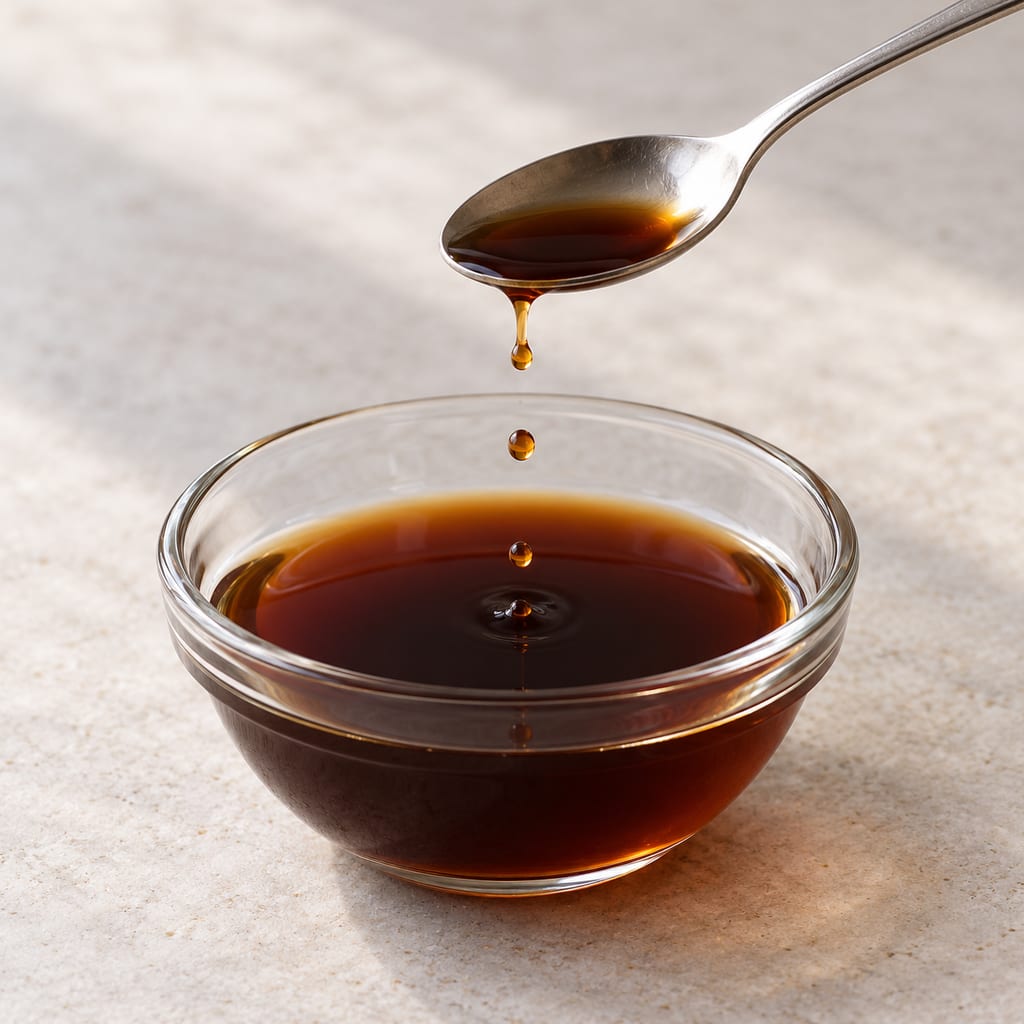
Cooked-bean koji garum is a dark liquid seasoning made from soft-cooked beans, rice koji, salt and water. A long warm hold lets koji enzymes break down the mash.
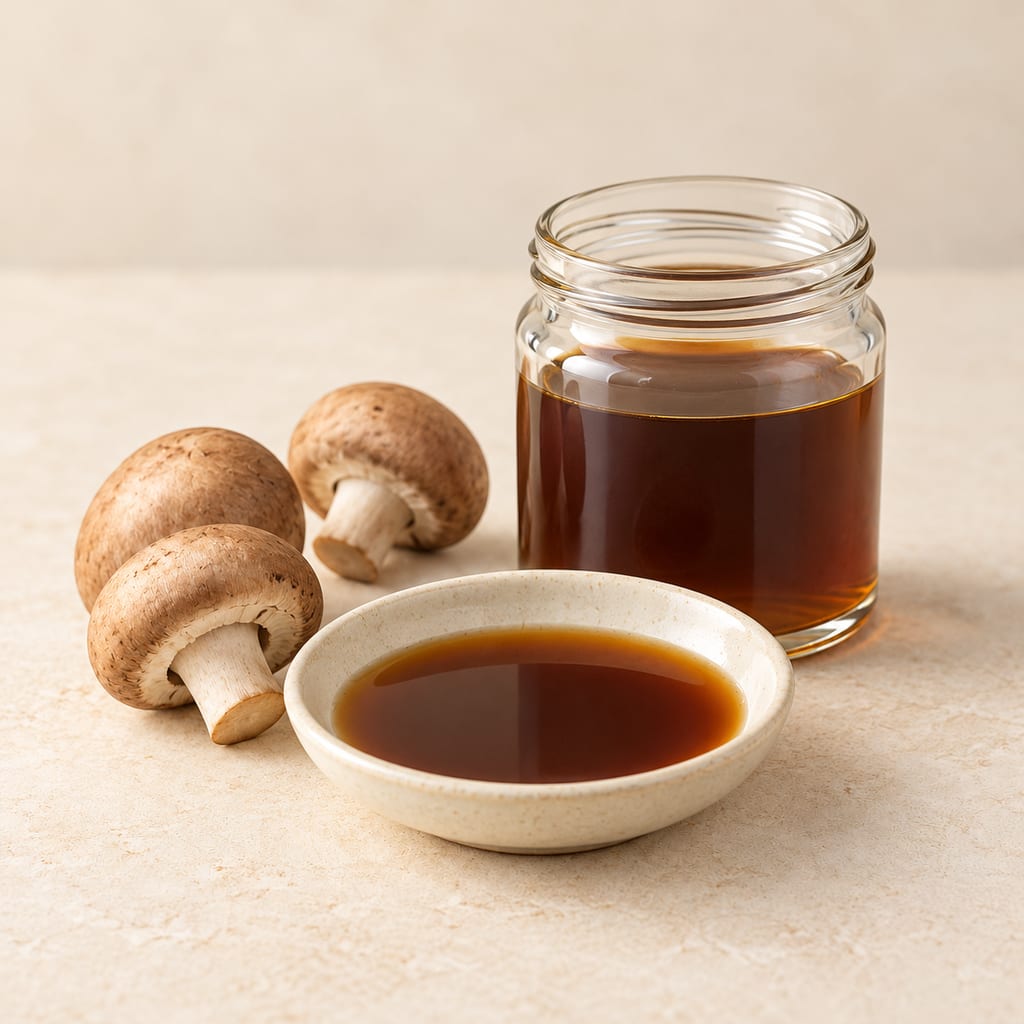
Mushroom garum turns mushrooms, rice koji, salt and water into a dark savoury seasoning. A sustained warm hold lets koji enzymes break down the mixture before straining.
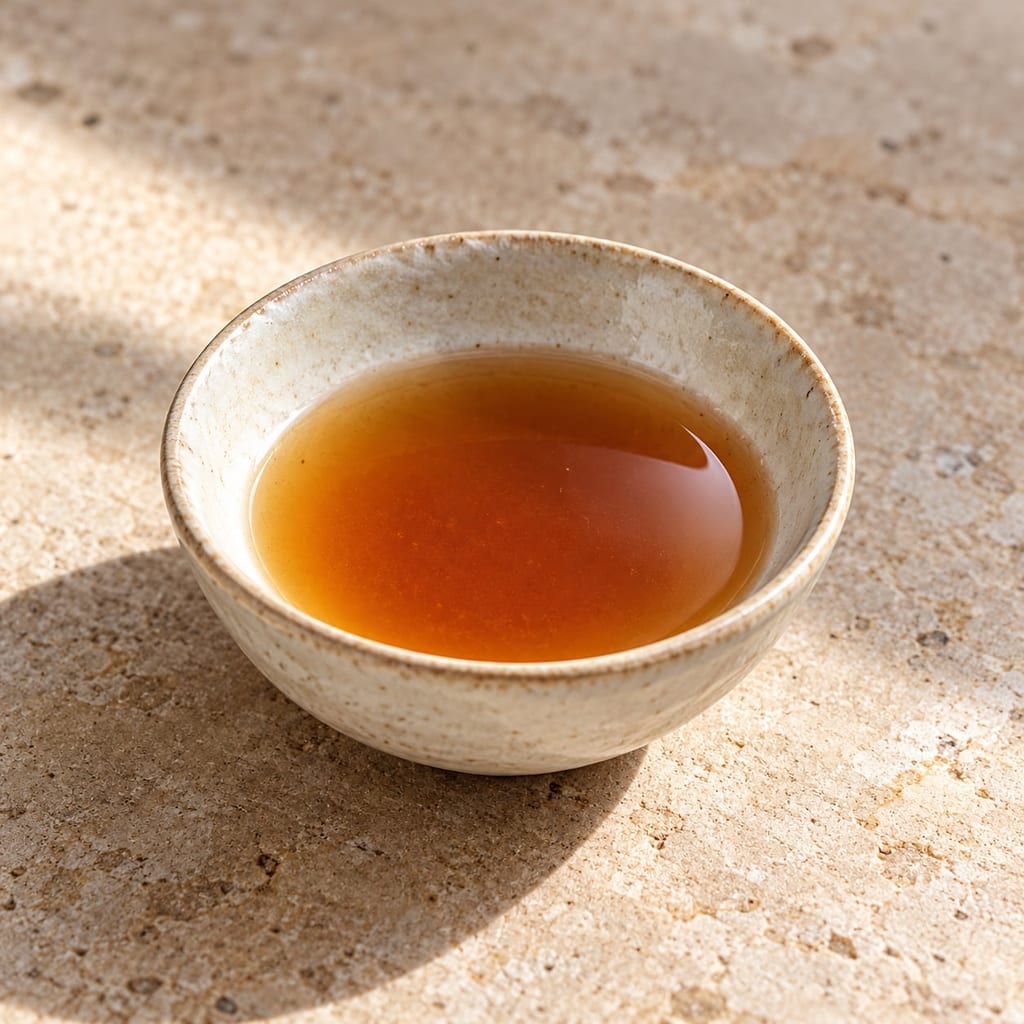
Chef Alex Perry makes this modern shrimp garum from Gulf white shrimp heads and shells, koji, water and salt. He holds the mash at 60°C for two months, then strains the liquid for use as a seasoning.
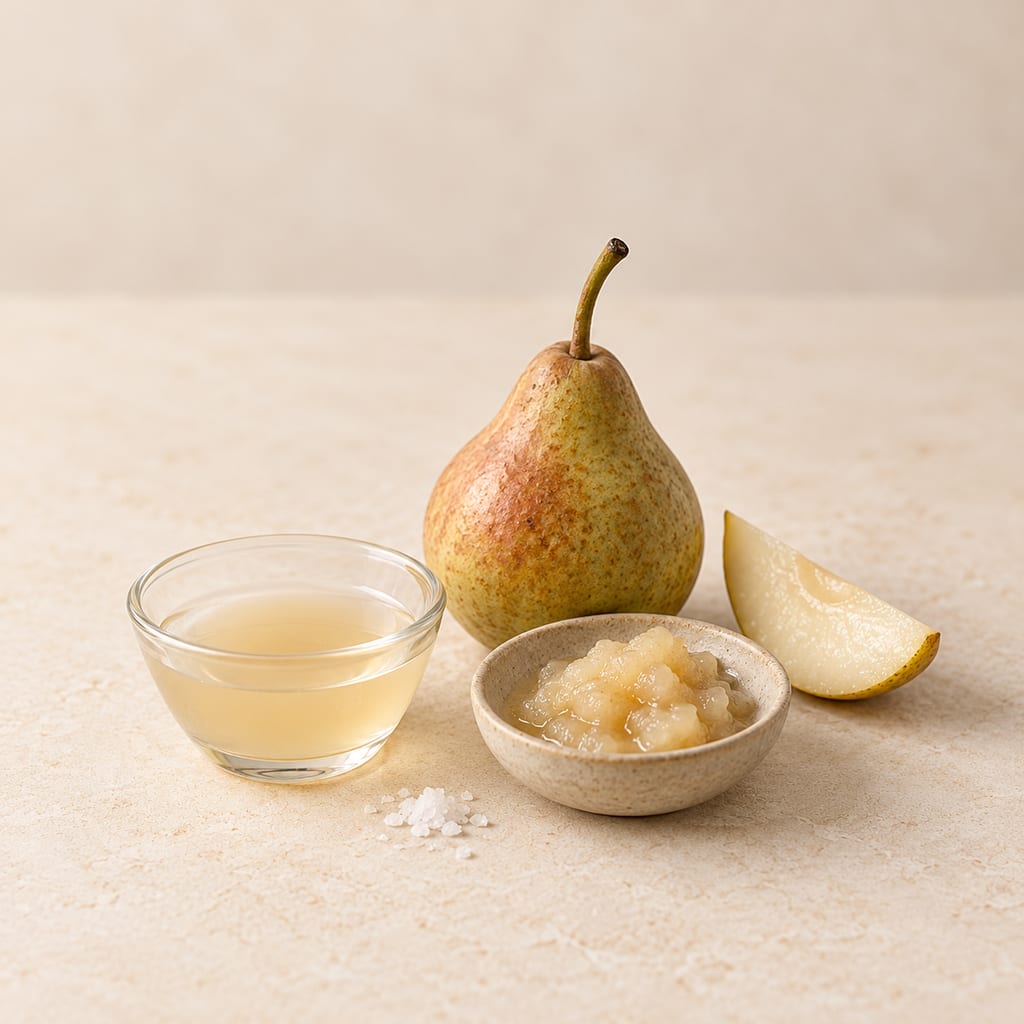
A late-antique Roman recipe in which very ripe pears are crushed with salt, matured for three months and drained, giving a pale liquid called liquamen.

Meat-trim koji garum is a savoury liquid seasoning made by holding meat scraps with rice koji, salt and water at steady warmth before straining the mash.
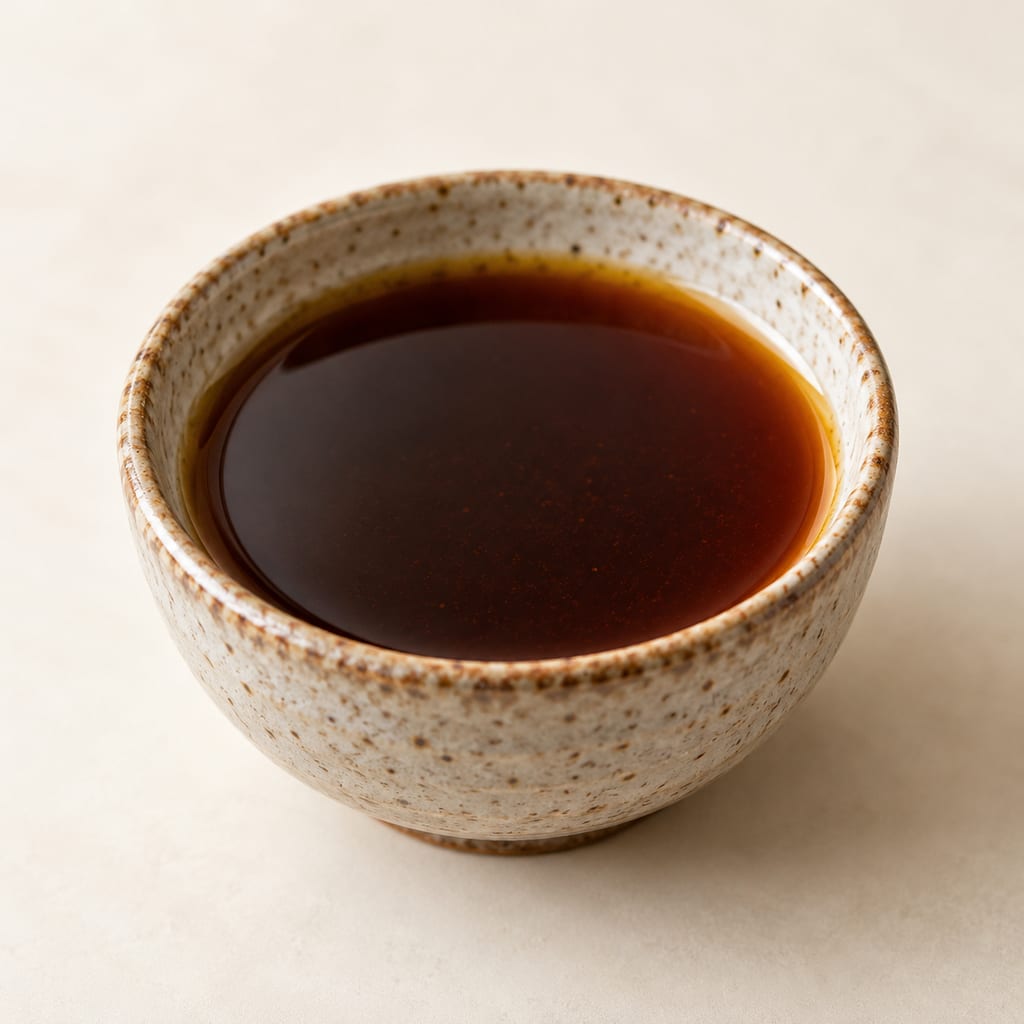
Mushroom garum is a savoury, smoked sauce made by crushing mushrooms with salt and rice koji and letting the mixture brew for months, a modern use of the garum method without fish.

Soft, spreadable Calabrian pork sausage made with a great deal of red chilli and fatty pork, stuffed into natural casings, sometimes smoked and matured while staying soft.

A way to add independent temperature logging to an existing food dehydrator without changing its built-in controls or protections. It is a monitoring method, not a rewiring plan.

Pleurotus cystidiosus is the abalone mushroom, a cultivated oyster-type fungus with dark brown caps that grows more slowly and is more demanding than other Pleurotus species.

A dark, balanced vinegar from Emilia-Romagna made by combining cooked or concentrated grape must with wine vinegar, then acetifying and refining it in wood under a protected specification.

A living dairy inoculum that starts controlled cream fermentation, developing acidity and aroma before sour cream or cultured butter is finished.

A small electric incubator holds jars at a selected temperature for yogurt and other documented warm food preparations. Controls, capacity and vessel arrangement vary by model.

Adygean salt is a seasoned table salt associated with Adygea and the wider North Caucasian culinary tradition. Salt is blended with garlic and a variable selection of herbs and spices; the exact mix depends on the named style and maker.

The African Caesar-group mushroom, Amanita masasiensis, is a wild ectomycorrhizal species of central and southern African woodlands, eaten locally. The genus contains deadly poisonous species, so identification needs care.
No community contributions have been published for this entry yet.
Sign in to contribute. Published comments and photos are free to read.
Modernist Food | FermentedInspiration · Process
Quick Garum (Koji-Driven)1 kg jar formula and substrate examples.
Cited in: What the sauce is; What the koji does; Holding time and temperature; Keeping and safety
Modernist Food | FermentedProcess · Safety
Amino Pastes (Quick Miso, Peaso & Garum)Warm method is enzyme-assisted and source says animal protein is not validated for botulism control.
Cited in: What the sauce is; What the koji does; Keeping and safety
U.S. Food and Drug AdministrationContext
Fish and Fishery Products Hazards and ControlsSeafood-specific hazard guidance; it does not validate a pea sauce.
BC Centre for Disease ControlContext
Safety of Fermented Foods: Section 3.5 FesikhFish-specific guidance retained from the archive; no pea-sauce claim is drawn from it.
International Journal of Gastronomy and Food Science (full text reproduced by Selo de Mar)History · Comparison
Flavour of fermented fish, insect, game, and pea sauces: Garum revisitedNordic Food Lab made a distinct yellow-pea and barley-koji garum at 40°C for at least 10 weeks.
The study distinguishes ancient fish garum from modern experimental pea sauces.
Cited in: Holding time and temperature