
Yellow-pea koji garum
Yellow-pea koji garum is a dark liquid seasoning made by holding cooked split peas with rice koji, salt and water while the koji enzymes break down the mash.
 FermenteaWhere food goes to change
Substrates
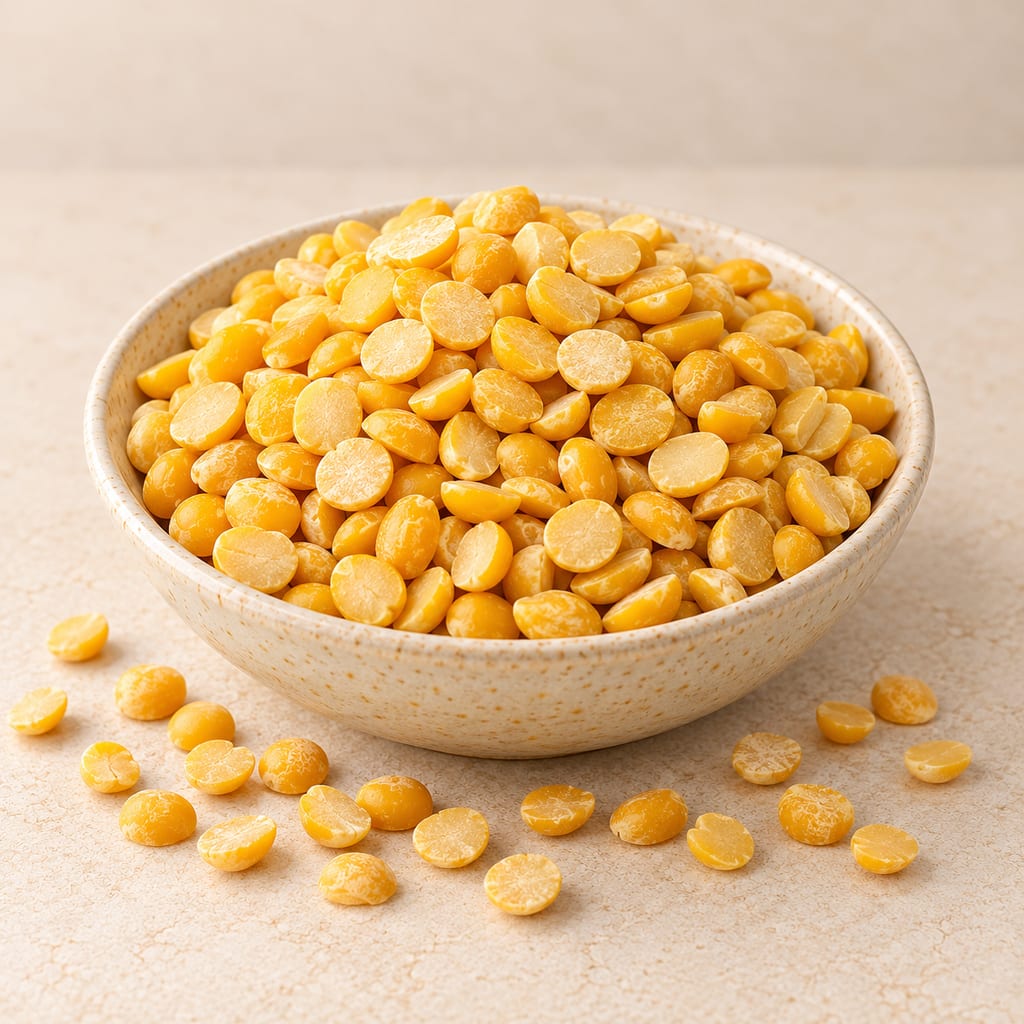
Yellow split peas are dried field peas with the seed coat removed and the two halves separated. They cook to a soft, starchy, protein-rich paste for soups, puddings, sweets and one modern peaso garum.
The pea (Pisum sativum L.) is native to Southwest Asia and was among the first crops people cultivated. Wild peas still grow in Afghanistan, Iran and Ethiopia according to a Wisconsin and Minnesota crop guide, and the wild subspecies P. sativum subsp. elatius ranges across the Mediterranean basin from Spain to the Middle East. A 2018 genetic study places archaeological evidence for cultivated pea around 10,000 BC in the Near East and Central Asia. The same study lists the traits that farmers selected: pods that do not burst open, seeds without dormancy, and a thin, smooth seed coat. All three suit a crop that is harvested in bulk and stored dry.
From the Fertile Crescent the pea travelled with farming. Archaeological and linguistic evidence suggests it moved west through the Danube valley, Greece and Rome into Europe, and east to Persia, India and China. Charred peas have turned up in Swiss lake dwellings and Neolithic farming villages. The Ethiopian pea, Pisum abyssinicum, is a separate case: genetic work indicates a separate domestication from a different wild gene pool, with its earliest known remains, from present-day Eritrea, dating to about 400 AD.
In medieval Europe the pea was above all a dried food. Dried peas could be stored almost indefinitely and were boiled into pease porridge, pottage or pudding, a daily staple on peasant hearths. By the fifteenth century gardeners had developed peas meant to be eaten fresh and green, and these quickly became the choice of upper-class diners, a passion that reached the court of Louis XIV. Robert May's pease pottage of 1660 began, "Take the best old pease you can get", and boiled them with bacon and a bundle of mint. In New France the same dried pea fed soldiers: in the 1750s the French garrison at Fort Chambly in Quebec drew a ration of bread, lard and dried peas, and Parks Canada deduces that their usual meal resembled pea soup.
Yellow split peas are the modern form of that old staple. When the coat was first taken off and the seed halved is not recorded; the result is now a standard commodity.
A yellow split pea is the dried, mature seed of a yellow-seeded field pea with its seed coat removed and its two halves, the cotyledons, separated. The halves are the food store of the embryo, mostly starch and protein. Smooth green- and yellow-seeded varieties are the ones used for dry split peas for human food, according to the crop guide; green types have been less favoured by buyers because the seed bleaches in the field at harvest if pods sit on wet ground. The word split describes the prepared form, and yellow or green describes the seed-colour class.
Splitting and dehulling are usually one operation. Dehulling removes the seed coat and splits the cotyledons, and a split pea is one of the familiar examples of a dehulled grain legume. The seed is first dried, ideally below 14% moisture and often to about 12%, then abraded or milled, and usually cleaned, sieved and colour-sorted. The hull is about 90% insoluble fibre, so the dehulled product has a higher protein content than the whole seed, although the cotyledons still carry plenty of dietary fibre. Dehulling usually takes a small portion of the cotyledons with the hull, and that dust-sized fraction is a low-value by-product. The market is not perfectly tidy: Canadian grading rules recognise splits in which cotyledons are still loosely held by seed coat.
Yellow split peas are not yellow lentils, chana dal or chickpeas. Health Canada lists split peas, chickpeas and lentils as separate foods, and they come from different plants. Pea flour, pea protein and pea starch are different materials made from the seed, not other names for split peas.
The field pea likes cool weather. The Wisconsin and Minnesota guide gives an optimum mean temperature of roughly 55 to 65 degrees Fahrenheit and warns that hot weather during flowering makes flowers blast and cuts seed set. It is a spring annual, seeded as early as the soil allows, and in the Upper Midwest it matures in 95 to 100 days. Soils should be well drained, with a pH of about 5.5 to 6.5. The plants are vines, which makes harvest awkward; harvest usually comes with the wheat harvest or as soon as the seed is hard, and a delay or wet pods lying on the ground brings shattering losses and bleached seed. The guide recommends keeping dry field pea at 14% moisture for safe storage.
Yellow peas are a major crop on the Canadian Prairies. Manitoba Agriculture reports that peas grow mainly in the western part of the province, where soils are well drained; in 2022 more than 188,600 acres were planted and 255,558 tonnes of dry peas were harvested. Most are yellow, and they supply both food and animal-feed markets. In 2022 the province exported dried, shelled or split peas worth $58.7 million. These figures describe one modern supply chain, not the origin of split-pea cooking.
Pea seed is rich in protein. Manitoba puts dry peas at 22.7% protein, and Minnesota trials in the 1980s measured 23 to 27%. The Wisconsin guide notes that peas are high in lysine and tryptophan two amino acids that cereal grains are typically short of, so peas can supplement cereal-based diets. Figures from different cultivars and methods are not directly comparable, but they explain why the pea is both a bulk starch and a real protein source.
A whole dry pea presents its seed coat to the water first, and the coat slows water uptake. A dehulled seed cooks faster, and a dehulled split pea can collapse into a purée, whereas a whole dehulled seed keeps its shape. In a pot of simmering water the starch granules swell and gelatinize and the cell walls loosen, so the halves soften into a thick, smooth mass. That is why split peas thicken soup without a roux and fall apart into pease pudding.
Cooking also changes how digestible the starch is. In a study of red kidney beans and yellow and green peas, the raw legumes held more than 30% resistant starch on a dry basis. Cooking, soaked or unsoaked, gelatinized the starch and opened its structure to digestive amylase, shrinking the resistant fraction and raising the digestible fractions; pressure cooking did this more strongly. Splitting had a marked effect on starch digestibility in raw and cooked seed, and the authors conclude that the seed coat plays a key role. Soaking reduced the starch fractions, possibly because soluble components leached out.
Soaking is optional. Health Canada states that dry lentils and split peas do not need an overnight soak, and the Alaska extension service reports that split peas are tender about 30 minutes after boiling starts. Cooks who do soak, as in the Fort Chambly soup, which prefers peas soaked overnight and then simmers them for about two hours with salted lard, are choosing texture and time, not meeting a requirement.
The Fort Chambly soup is the clearest picture of the pea as a soldier's food. Parks Canada's reenactment recipe uses 500 g of yellow or green dried split peas with 1.5 litres of water, a large chopped onion, 250 g of diced salted lard, 5 g of salt and 10 g of pepper. The lard is rendered first, the onion cooked in it, the peas stirred in and the water added; the pot simmers covered for a good two hours, and about 30 minutes before serving dried parsley, thyme, chervil, savoury, sage and sorrel go in. Parks Canada is plain that the soup is a deduction from the ration lists rather than a preserved original recipe.
In south Wales the same peas become a solid. Museum Wales records a Gower pease pudding: half a pound of split peas, washed and soaked overnight, are tied loosely in a muslin bag and boiled briskly for about two hours until soft. The peas are pressed through a fine sieve and beaten with an egg, a little butter and sugar, salt and pepper, shaped on a floured cloth, rolled up and boiled for a further half hour. The pudding is turned out hot, sliced and served with salt beef or pork. The museum gives no date for the recipe.
In Beijing the peeled yellow pea becomes a sweet. Wandouhuang, literally pea yellow, began as a Han folk snack, a coarse cake with small red dates sold at temple fairs from wheelbarrows, and was refined in the Qing imperial kitchen into a finer, smoother form. Beijing custom calls for eating it on the third day of the third lunar month. A story holds that the Empress Dowager Cixi heard a vendor's gong near Beihai, summoned him and kept him in the palace to make it; the story is a tale, not dated history. The published recipe takes 230 g peeled dried yellow peas, 2 g baking soda and 65 g sugar. The peas soak 5 to 6 hours with the soda, are rinsed four or five times, boiled until most burst, strained into a smooth paste, simmered with the sugar until thick and chilled for more than four hours before cutting. Soda and sugar belong to that dessert, not to every pea dish.
Home soups appear in extension-service pamphlets as well. The University of Alaska Fairbanks gives a split-pea soup with onion, carrot, celery, broth and optional ham, and uses split peas in a many-bean soup, where the split peas join the pot late. Between them, the soup, the pudding and the sweet show the same cotyledons as a thickener, a sliceable solid and a smooth paste.
Peaso garum is a vegetarian garum made with cooked yellow split peas as its protein. For one jar of about 1 kg of mash, 400 g of cooked peas are blended with 250 g of rice koji, 250 g of water and 100 g of salt, which is 10% of the mash; a larger crock doubles every amount. The slurry is sealed with a loose lid or in a vacuum bag and held at 55 to 60 degrees Celsius for 2 to 6 weeks, stirred or massaged every couple of days. Liquefaction starts in the first week, and the finished liquid is strained through cloth, yielding 700 to 800 ml from a jar.
The pea supplies the substrate and the koji supplies the enzymes. Proteolysis by microbial proteases produces the free amino acids and short peptides behind the savoury taste of the family of seasonings that runs from African legume ferments to Asian soy pastes, and in this mash the pea's protein, roughly a quarter of the dry seed, is what the enzymes work on.
The mash is low in acid. Its finished pH is about 5.0 to 5.8, above the 4.6 line, so it is not an acid ferment: salt and the warm hold are the only barriers. Peaso garum is a perishable fridge or freezer seasoning and is not shelf stable. Salt should not fall below about 8%, the garum must not be canned, and the warm enzymatic process is not validated as a botulism control. A batch that smells of ammonia or rot, bloats a sealed bag or grows pink or black surface growth is discarded.
The date when yellow split peas were first dehulled and halved is not recorded. The Wisconsin crop guide dates from 1991, so its yields and protein values describe older cultivars. For peaso garum the pea cultivar, the cooking time, the dry-to-cooked weight and the target mash texture are not fixed, and the dehulling description comes from a source on pulses in general, with faba bean as its worked example.
The pea is native to this broad region; no single site is claimed.
Contemporary yellow dry-pea production; no origin claim.
Parks Canada reenactment soup is a modern reconstruction from documented rations, not an attested original formula.
Museum Wales pease pudding specifies split peas without a colour and gives no date.
Peeled yellow peas in wandouhuang; the source does not say every maker uses market split peas.
Yellow-pea koji garum is a dark liquid seasoning made by holding cooked split peas with rice koji, salt and water while the koji enzymes break down the mash.

A living dairy inoculum that starts controlled cream fermentation, developing acidity and aroma before sour cream or cultured butter is finished.
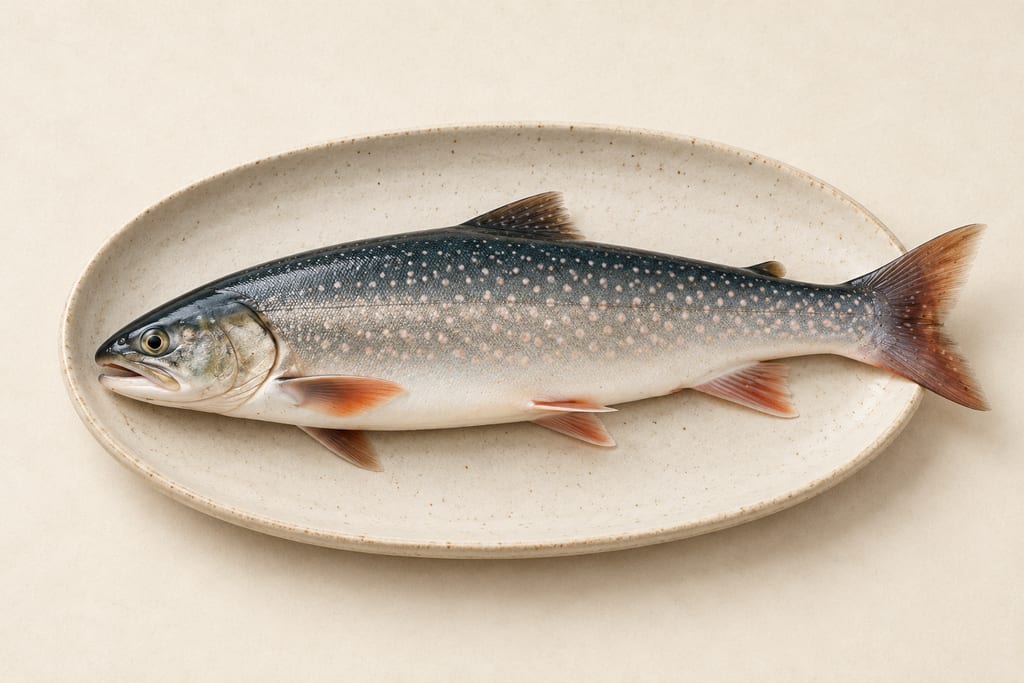
Arctic char (Salvelinus alpinus) is a circumpolar salmonid eaten fresh and preserved in northern communities. Its local forms and food traditions vary; dried or smoked fish and fermented char are distinct from the raw ingredient.

Beef is the meat of domestic cattle, Bos taurus and Bos indicus, sold as steaks, roasts, ground meat and cured products, and used in broths, salami and koji seasonings.
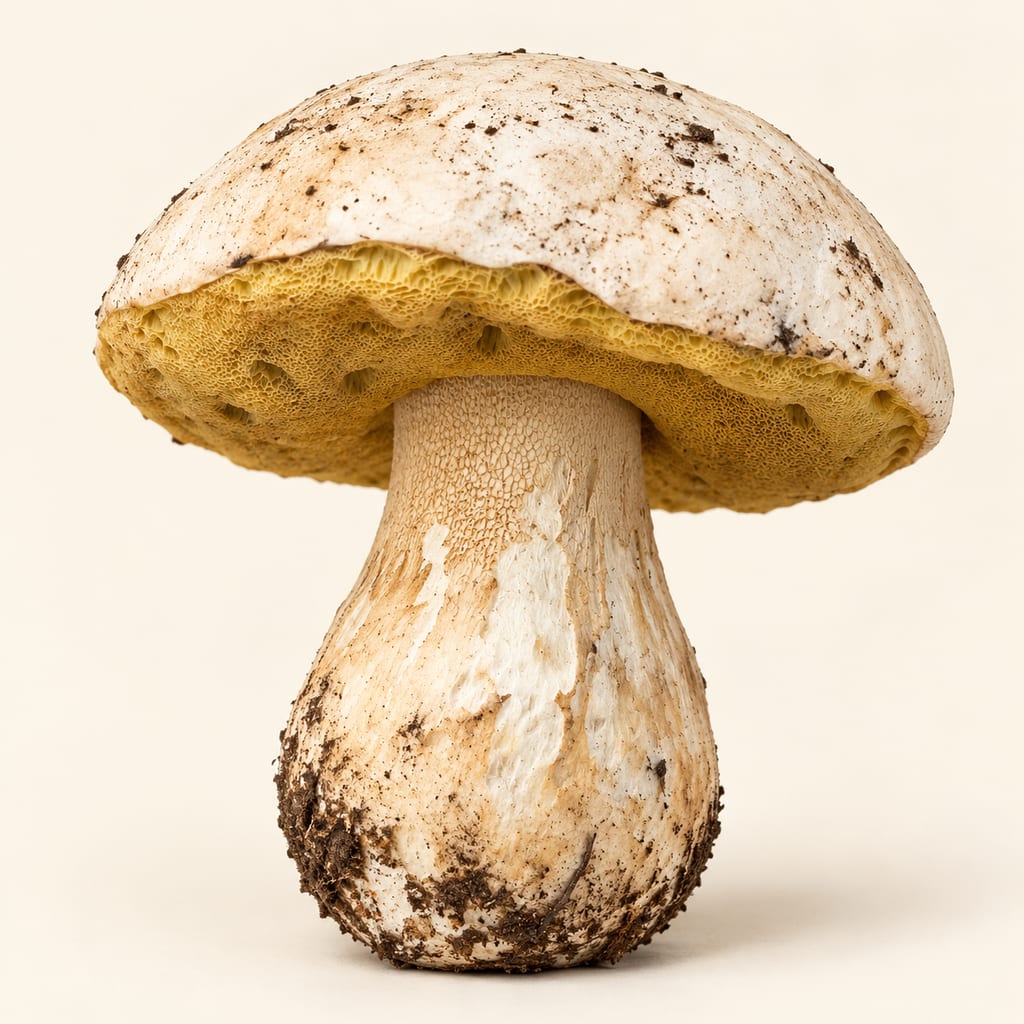
Boletus barrowsii, the white king bolete, is a western porcini relative with documented local food use in Mexico. Its pale cap and netted stem are not enough for field identification.
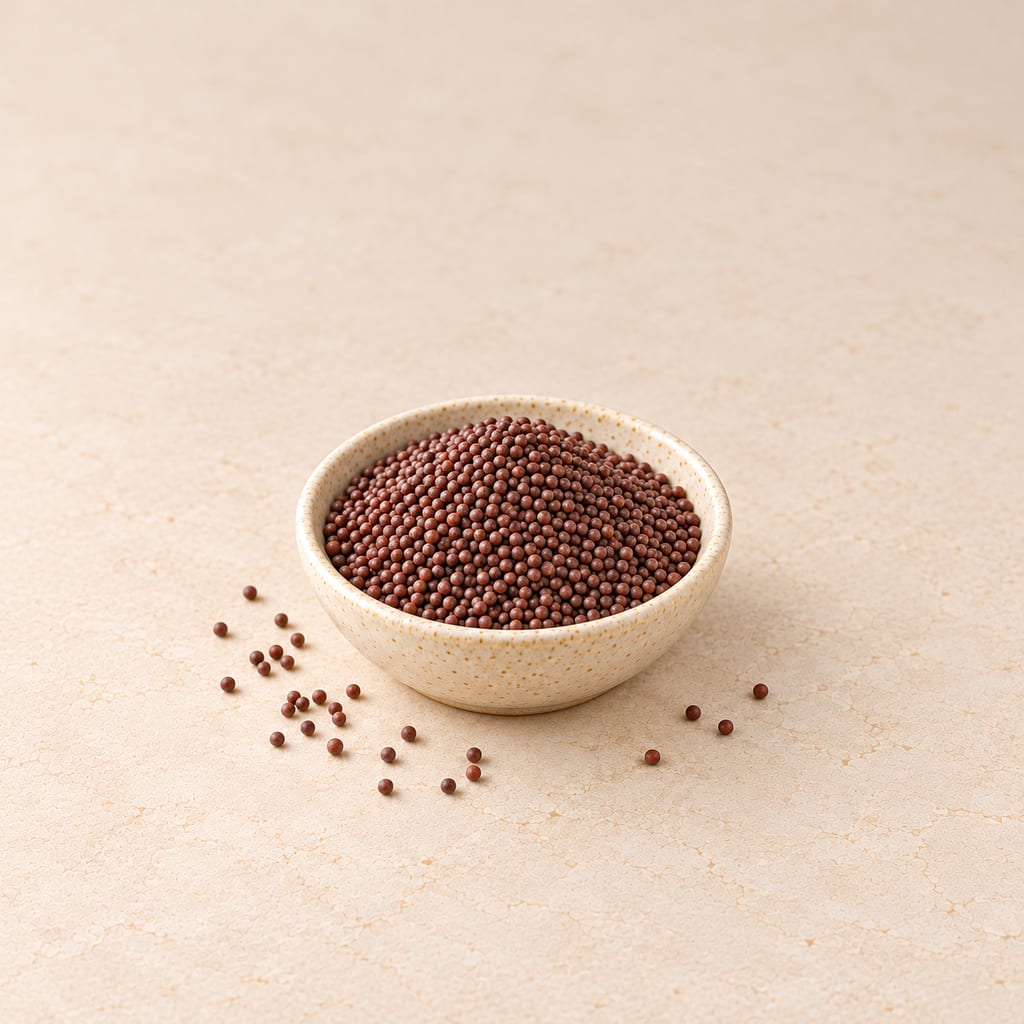
Brown or oriental mustard seed comes from Brassica juncea, a hybrid of black mustard and turnip rape. It is the hot, easily harvested seed behind Dijon, spicy brown mustards and much of the mustard oil of the Indian subcontinent.
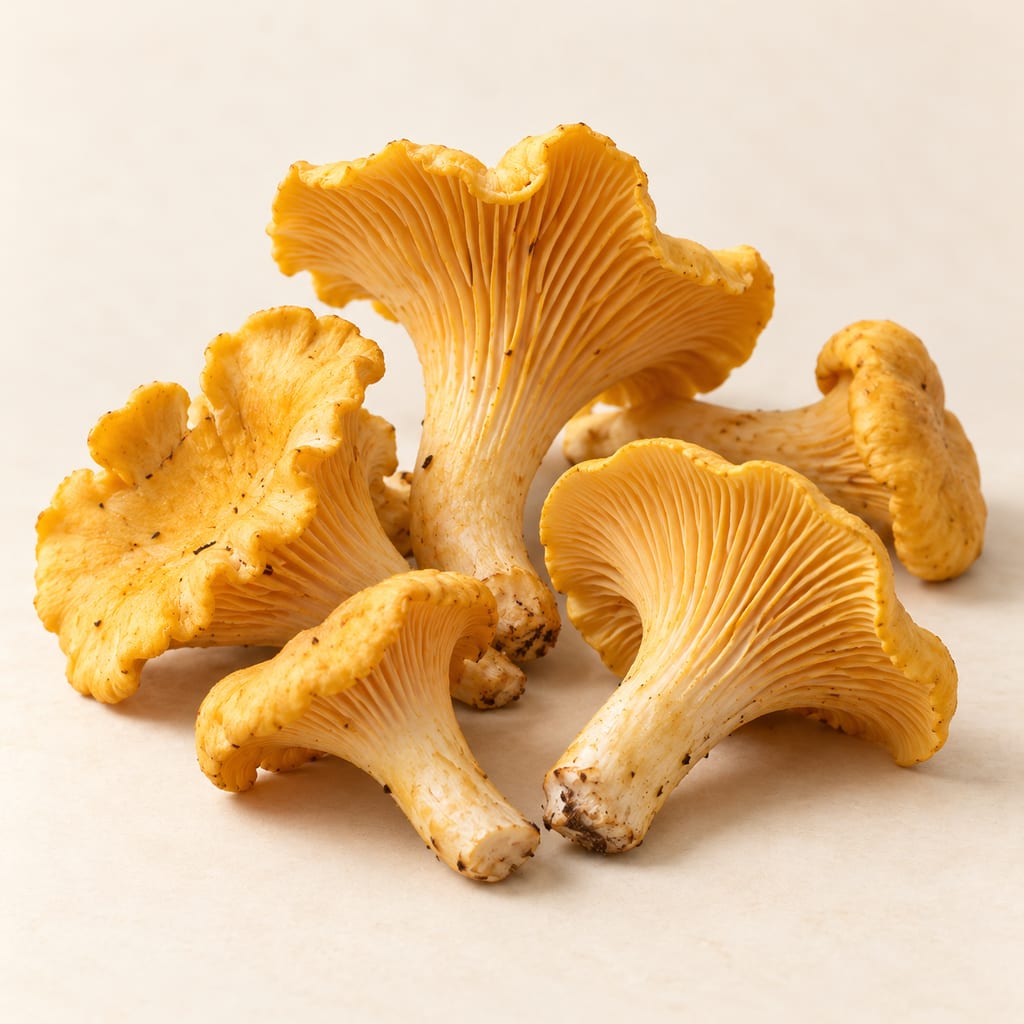
Chanterelles are wild, tree-associated edible mushrooms, particularly the European golden chanterelle Cantharellus cibarius, prized for their firm flesh, fruity aroma and use fresh, frozen, dried or pickled.
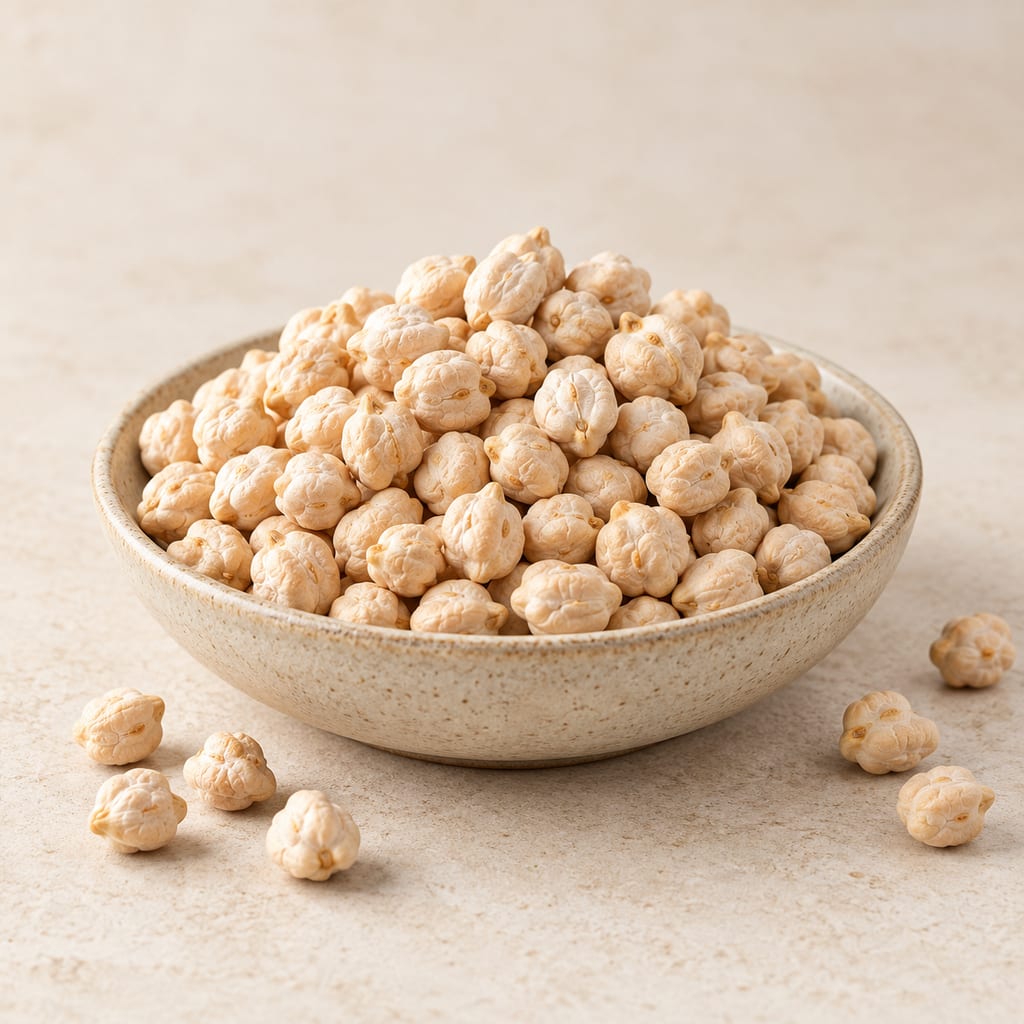
Chickpeas (Cicer arietinum) are dry pulses eaten whole or milled into flour, which gives socca, farinata and other breads a dense, nutty batter or dough.
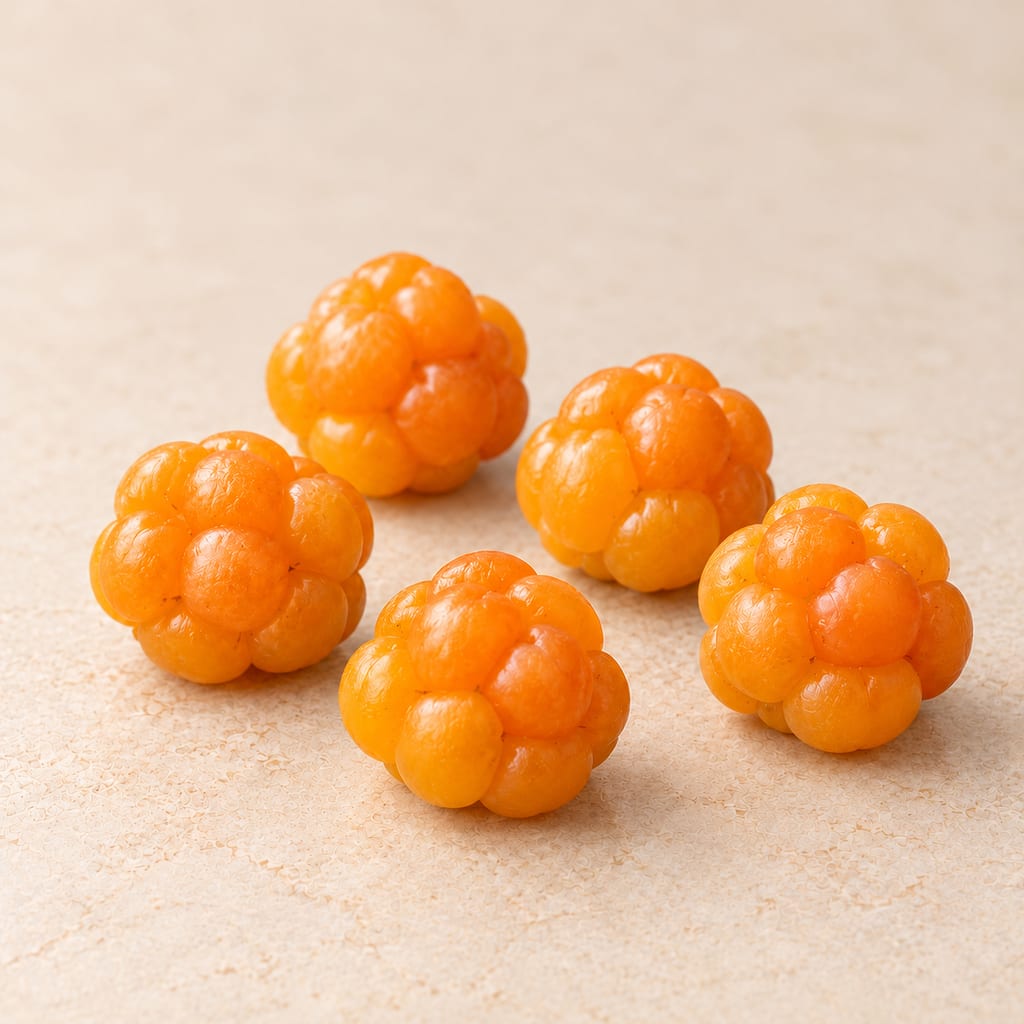
Cloudberry has distinct Gwich’in, Nunatsiavut, NunatuKavut-area and Québec records. A 2009 cutover-peatland trial reports site-specific rhizome establishment results, not a household pot or fruit-yield method.
No community contributions have been published for this entry yet.
Sign in to contribute. Published comments and photos are free to read.
University of Wisconsin-Madison and University of MinnesotaCrop identity · History · Agronomy
Field PeaPisum sativum native to Southwest Asia and among the first cultivated crops; wild peas in Afghanistan, Iran and Ethiopia
Green and yellow seed classes for dry split peas
Cool-season crop; harvest and bleaching risk; 14% moisture for safe storage; protein 23-27% in Minnesota trials; lysine and tryptophan content
Cited in: A seed that fed the first farmers; What a yellow split pea is; Growing and drying the crop; The pea in a koji garum
Genes (MDPI), Trneny and colleagues, 2018History · Botany
Molecular Evidence for Two Domestication Events in the Pea CropArchaeological evidence for cultivated pea about 10,000 BC in the Near East and Central Asia; spread west via the Danube valley, Greece and Rome and east to Persia, India and China
Domesticated traits: non-dehiscing pods, no seed dormancy, thin smooth seed coat
Ethiopian pea (P. abyssinicum) a separate lineage, earliest remains about 400 AD
Cited in: A seed that fed the first farmers; Notes and open questions
National GeographicHistory
Princesses, Pottage, Posterity, and PeasPeas eaten for at least 10,000 years; charred remains in Neolithic villages
Dried peas stored for long periods and boiled into pease porridge, pottage or pudding in medieval Europe
Garden peas for eating fresh developed by the 15th century; Robert May 1660 pease pottage with bacon and mint
Cited in: A seed that fed the first farmers; Soup, pudding and sweet
Manitoba AgricultureGeography · Composition
The Manitoba Advantage in Pea ProteinMore than 188,600 acres planted and 255,558 tonnes of dry peas harvested in 2022; most Manitoba peas yellow; 22.7% protein; food and feed markets; 2022 exports of dried, shelled or split peas worth $58.7 million
Cited in: Growing and drying the crop
Canadian Grain CommissionCommodity form
Peas: Grading factorsSplit grading can include cotyledons loosely held by seed coat
Cited in: What a yellow split pea is
Legume HubProcessing
Dehulled grain legumes for foodSplit pea a familiar dehulled grain legume; dehulling removes the seed coat and splits the cotyledons; seed dried below 14% moisture first; a dehulled seed cooks faster; hull about 90% insoluble fibre; losses and dust
Cited in: What a yellow split pea is; Growing and drying the crop; What happens in the pot; Notes and open questions
Health CanadaIdentity · Preparation
Cooking with plant-based protein foodsSplit peas, chickpeas and lentils named as separate foods; dry lentils and split peas need no overnight soak
Cited in: What a yellow split pea is; What happens in the pot
Western Sydney University / Food Research InternationalScience
Effect of various processing techniques on digestibility of starch in red kidney bean and two varieties of peasRaw legumes carried more than 30% resistant starch; cooking gelatinized starch and made it more digestible; splitting and the seed coat strongly affected starch digestibility
Cited in: What happens in the pot
Parks CanadaDocumented preparation
Fort Chambly Pea Soup1750s French colonial ration of bread, lard and dried peas; modern reenactment soup of 500 g split peas, 250 g salted lard, onion, herbs, simmered about two hours; peas preferably soaked overnight
Cited in: A seed that fed the first farmers; What happens in the pot; Soup, pudding and sweet
Amgueddfa Cymru / Museum WalesDocumented preparation
Pease PuddingGower pease pudding: half a pound of split peas soaked overnight, boiled in muslin about two hours, sieved, mixed with egg, butter, sugar, salt and pepper, boiled half an hour in a floured cloth, sliced with salt beef or pork; no date given
Cited in: Soup, pudding and sweet
Beijing Municipal Culture and TourismDocumented preparation
Old Beijing snacks: wandouhuangFolk and Qing court versions; eaten on the third day of the third lunar month; Cixi anecdote; 230 g peeled yellow peas, 2 g baking soda, 65 g sugar; 5-6 hour soak; chilled more than 4 hours
Cited in: Soup, pudding and sweet
Beijing Municipal GovernmentCultural use
Thirteen Traditional Cold Foods in BeijingWandouhuang as a Beijing snack tied to the lunar calendar
Cited in: Soup, pudding and sweet
University of Alaska Fairbanks Cooperative ExtensionPreparation
Cooking Dried Beans, Peas & LentilsSplit peas and lentils need no pre-soak and are tender about 30 minutes after boiling begins; split-pea soup and many-bean soup formulas
Cited in: What happens in the pot; Soup, pudding and sweet
Modernist FoodModern peaso recipe · Safety
Quick Garum (Koji-Driven)Peaso garum with cooked yellow split peas; 400 g protein, 250 g rice koji, 250 g water, 100 g salt per jar; 55-60 C for 2-6 weeks; finished pH about 5.0-5.8; not validated as a botulism control; do not can
Cited in: The pea in a koji garum; Notes and open questions
Comprehensive Reviews in Food Science and Food Safety, 2026Science
From Heritage to Innovation: A Review of the Safety and Production of Aminopeptide SeasoningsProteolysis by endogenous and microbial proteases yields the free amino acids and short peptides behind the taste of aminopeptide seasonings, including legume ferments
Cited in: The pea in a koji garum