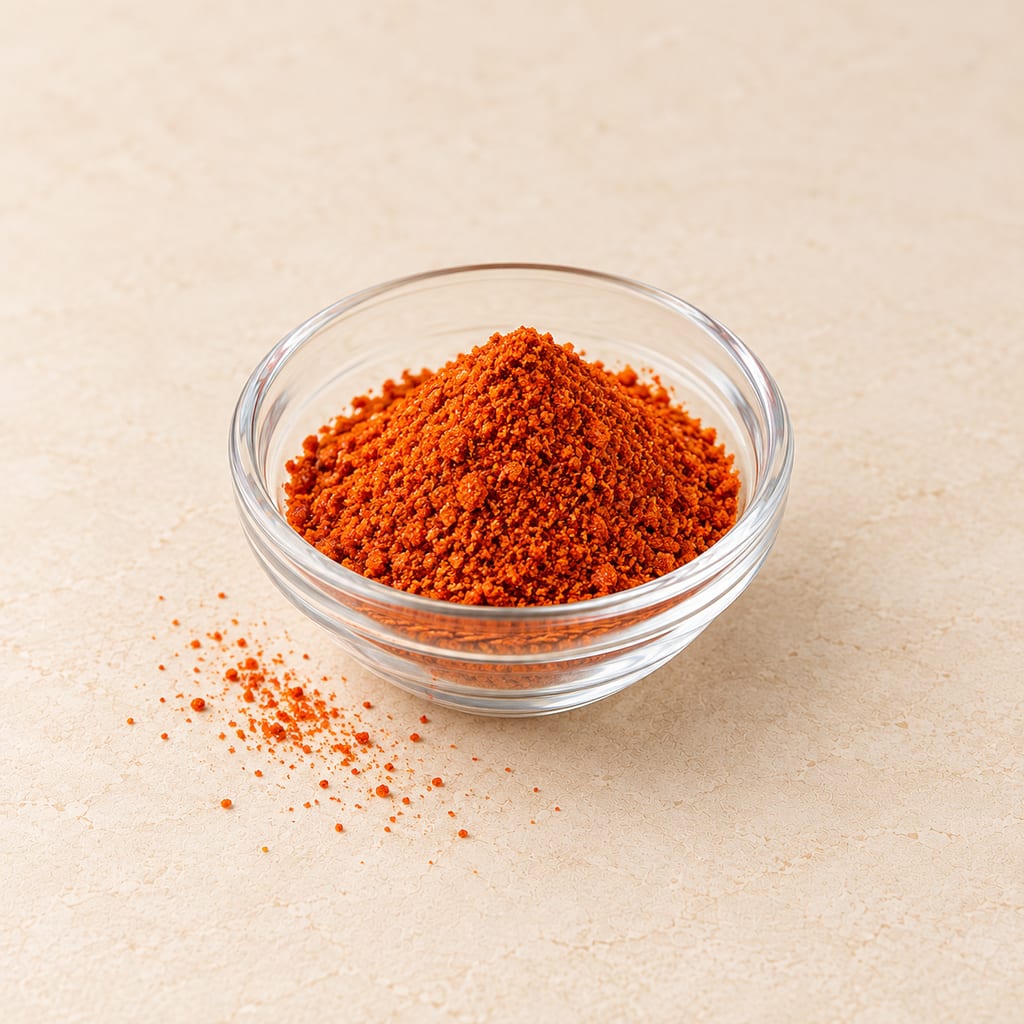
Cayenne
Cayenne is a very pungent red powder from dried, ground hot chilli pods, mostly Capsicum annuum, and the name of the long red peppers it comes from.
 FermenteaWhere food goes to change
Mushrooms
Boletus barrowsii, the white king bolete, is a western porcini relative with documented local food use in Mexico. Its pale cap and netted stem are not enough for field identification.
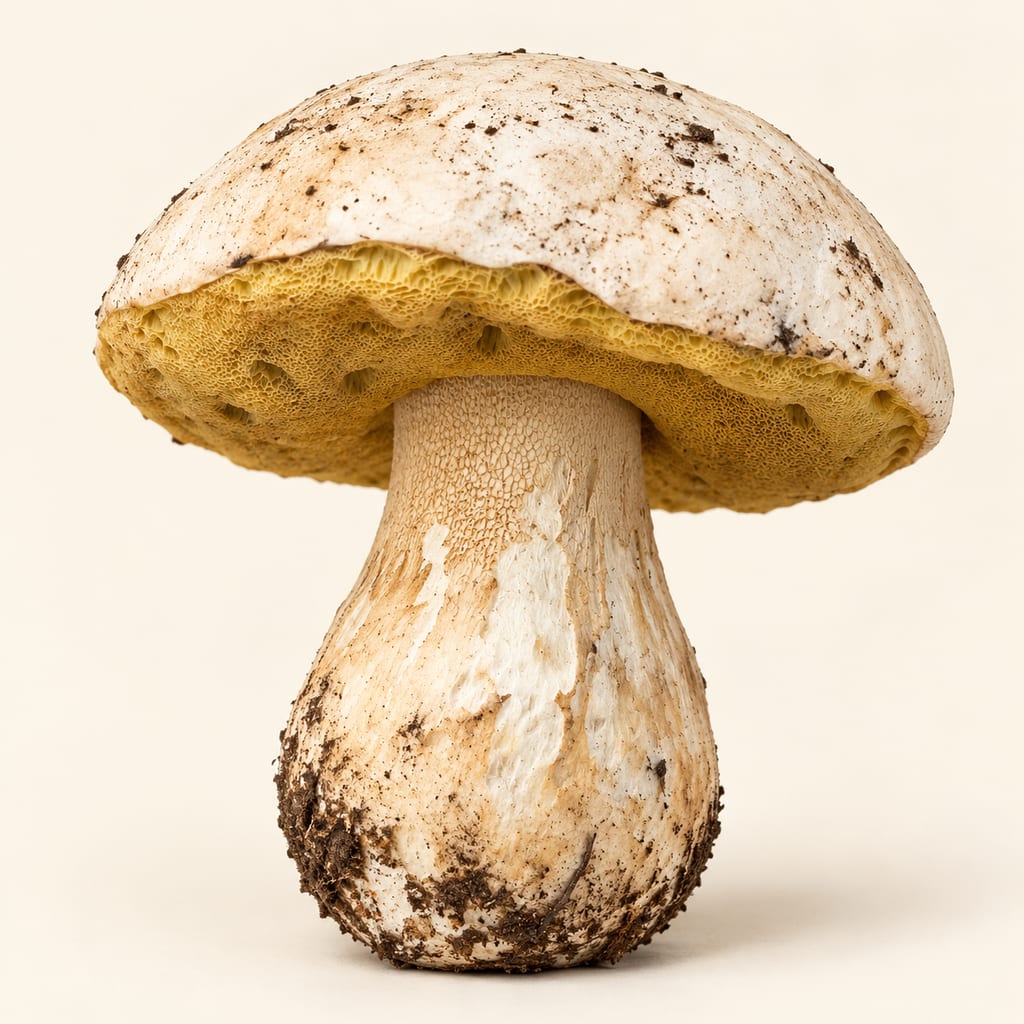
Boletus barrowsii is a large bolete in Boletaceae, usually called the white king bolete or Barrows’ bolete in English. Harry Thiers and Alexander H. Smith formally described it in 1976 from collections made during field trips through the Southwestern United States. The name recalls Charles “Chuck” Barrows, a New Mexico mushroom collector whose specimens and field observations helped mycologists distinguish the pale bolete from other porcini relatives.
The type specimen came from near Jacob Lake on the Kaibab Plateau in northern Arizona. It was collected on 21 August 1971 in the Kaibab National Forest and is held at San Francisco State University. That preserved specimen is the name-bearing reference for the species. Its scientific name remains accepted in current taxonomic listings. Common names such as white king bolete and white porcini connect it with the better-known king bolete, but the name refers to a distinct western North American taxon, not merely a pale form of Boletus edulis.
The cap is broad and fleshy, convex when young and flattening as it matures. Its dry, dull surface ranges from white and cream to grayish or pinkish buff. The original description gives a width around 9 to 20 centimetres; later field guides describe occasional larger caps. Age, weather and handling can shift its colour, so the pale cap is a clue to investigate rather than a standalone identification.
Under the cap, tubes end in small pores that appear pale or stuffed when young and become yellowish, then olive-yellow, as spores mature. The thick white flesh generally stays white when cut or bruised. A sturdy, pale stem often starts club-shaped and bears fine net-like reticulation, especially near the top. The spore deposit is olive brown. These features place the mushroom among porcini-like boletes, but they overlap with lookalikes and can change over the life of a fruit body.
Porcini forms can be difficult to separate. The pale cap and non-blue flesh do not prove a specimen is this species, and some west-coast records may include closely related taxa. A photograph or short field description cannot resolve those distinctions. This page describes a named food subject; it is not an identification key or a recommendation to harvest wild mushrooms.
Boletus barrowsii fruits from soil in a mycorrhizal relationship with living trees. Its strongest documented core is the inland Southwest, especially under ponderosa pine. Thiers also noted firs close to some specimens and mixed conifer and hardwood stands, particularly oaks, in New Mexico. This is not a shelf fungus growing from dead wood, nor is it cultivated like button or oyster mushrooms.
Arizona and New Mexico form the best-established regional core. The holotype pins the name to northern Arizona, and New Mexico collections tie it to the collector for whom it was named. The original paper also reports examined material from Idaho and Mexico. Later Mexican work records a collection near Tepoztlán in Morelos from mountain forest with oaks, while food-use studies document the species in central Mexican communities.
Other reports reach California, Colorado, Washington and British Columbia. A 2008 account describes coastal California records with oaks after warm rains and Vancouver Island reports that fruit in summer, but it also notes that west-coast herbarium vouchers were few. Pacific Northwest field sources caution that some populations assigned to this name may include very close taxa. It is more accurate to describe these as reported records than to imply a single fully resolved population stretching continuously across the West.
A Pacific Forestry Centre voucher from Winchelsea Island near Nanoose records a mapped May 1995 collection; another from Victoria records a mapped September 2000 collection and notes sporocarps in spring and fall. These are named, vouchered collection localities, not evidence of local food use.
Fruiting responds to local rain and forest conditions. The Arizona type was found in August. Thiers noted that the overall variety and number of fleshy mushrooms in the Southwest increased after late-July and August thunderstorms, but this observation covered the regional bolete flora rather than a measured season for this species alone.
A 2017 field study in San Francisco Oxtotilpan records collection from June through September. MushroomExpert places Southwest fruiting in summer and fall during monsoon rains. Coastal California sources instead describe fall or winter fruiting after warm rains; British Columbia reports are from summer. These are local windows, not one fixed calendar. Elevation, rain and host trees shape when fruit bodies appear, and a season documented in one community is not a forecast elsewhere.
The Mexican field study names San Francisco Oxtotilpan; another study locates the settlement at approximately 19°10′ N, 99°54′ W. These community coordinates do not identify the individual mushroom patches.
The supplied research index traces its historical edible claim to Mexico. In the FAO country records, Boletus barrowsii appears under Mexico in a list built from published sources; the cited source is Villarreal and Pérez-Moreno (1989). The companion global list classifies it as edible. FAO cautions that these historical labels do not always establish actual consumption, so they are a starting point rather than a complete food history.
More detailed use is recorded in San Francisco Oxtotilpan, a Matlatzinca community in Temascaltepec, State of Mexico. Fieldwork published in 2017 calls it Chopari, locally glossed as “horse mushroom,” and records Spanish names pancita and hongo de caballo. Recollectors gathered it at Monte Grande/Mapinú and near homes during June to September. The study lists quesadillas, tamales, tacos, fried and roasted dishes, comal cooking with garlic, green and red salsa, broth, and guajillo chile. These details belong to the community and study, not to every region or household in Mexico.
A 2013 survey in an Otomí community also records the species under hongo de encino or cemita. A separate 2014 Mexican park-use table lists it among collected boletes. Together with the FAO records, these accounts show more than one kind of evidence, but they do not make the local names interchangeable or establish one national recipe.
In New Mexico, herbalist Marija Helt describes a contemporary personal adaptation: thin, dry-roasted bolete chips served on their own or ground to season soups, stews, risotto, sauces, gravy and vegetables. This modern account differs from the community practices documented in Mexico. Helt cautions against treating wild boletes as frequent staple food and advises avoiding collections near active or abandoned mines; these are her specific recommendations, not a substitute for local environmental guidance.
This bolete is classified as edible in a Mexican synthesis and as food in specific field accounts. That documents use; it does not guarantee that a mushroom found in an unknown place is safe. Wild boletes can resemble one another, and pale colour alone does not identify the white king. A photograph, common name or checklist entry cannot establish that an individual specimen is safe to eat.
The Mexican field study emphasizes the knowledge held by experienced local collectors, including how they distinguish species and where they find them. The knowledge belongs with its documented communities and places. This ingredient account is not a foraging guide and does not provide a universal preparation method, raw-consumption advice or a preservation protocol. The most detailed cooking records are the named community dishes and Helt’s contemporary dry-roasted adaptation.
The sources reviewed do not establish a validated storage interval, measured preservation method, fermentation use, cultivation method or broad commercial supply for this species. Rather than filling those gaps with assumptions based on other porcini, the page keeps them open. That distinction matters for an ingredient whose wild specimens are collected from specific tree-associated habitats and whose identity can be difficult to verify.
The FAO entry does not identify a locality; community evidence is separate.
Coordinates locate the named settlement, not individual collection patches. Documented Matlatzinca community use does not imply that all Mexicans prepare it this way.
Known type locality documents the name-bearing collection; no exact collection coordinates are asserted, and this row does not claim food use.
One author's dry-roasted bolete preparation; not a claim of a traditional or widespread regional dish.
Taxonomic thesis reports examined specimens in mountain forest; occurrence only, with no supported food-use claim.
Published reports associate the name with warm-rain fruiting under oaks, but the paper notes sparse West Coast herbarium vouchers and identification uncertainty.
Mapped herbarium voucher supports occurrence with Quercus garryana; not food use or a general regional season.
Mapped herbarium voucher supports occurrence under Garry oak and once Linden; not food-use evidence.
Cayenne is a very pungent red powder from dried, ground hot chilli pods, mostly Capsicum annuum, and the name of the long red peppers it comes from.
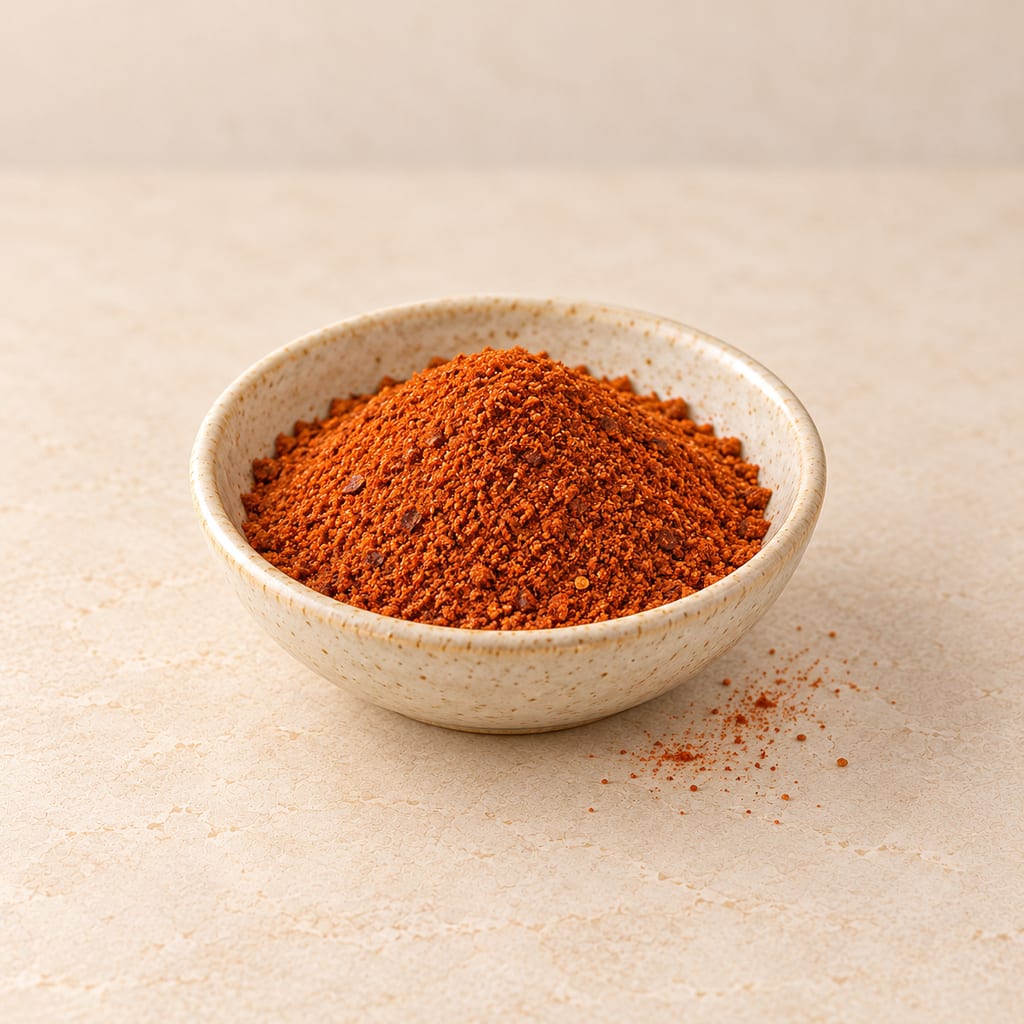
Chilli powder is dried chilli fruit ground fine, sold either as plain ground chillies or, in the United States, as a seasoning blend with salt, garlic and cumin.
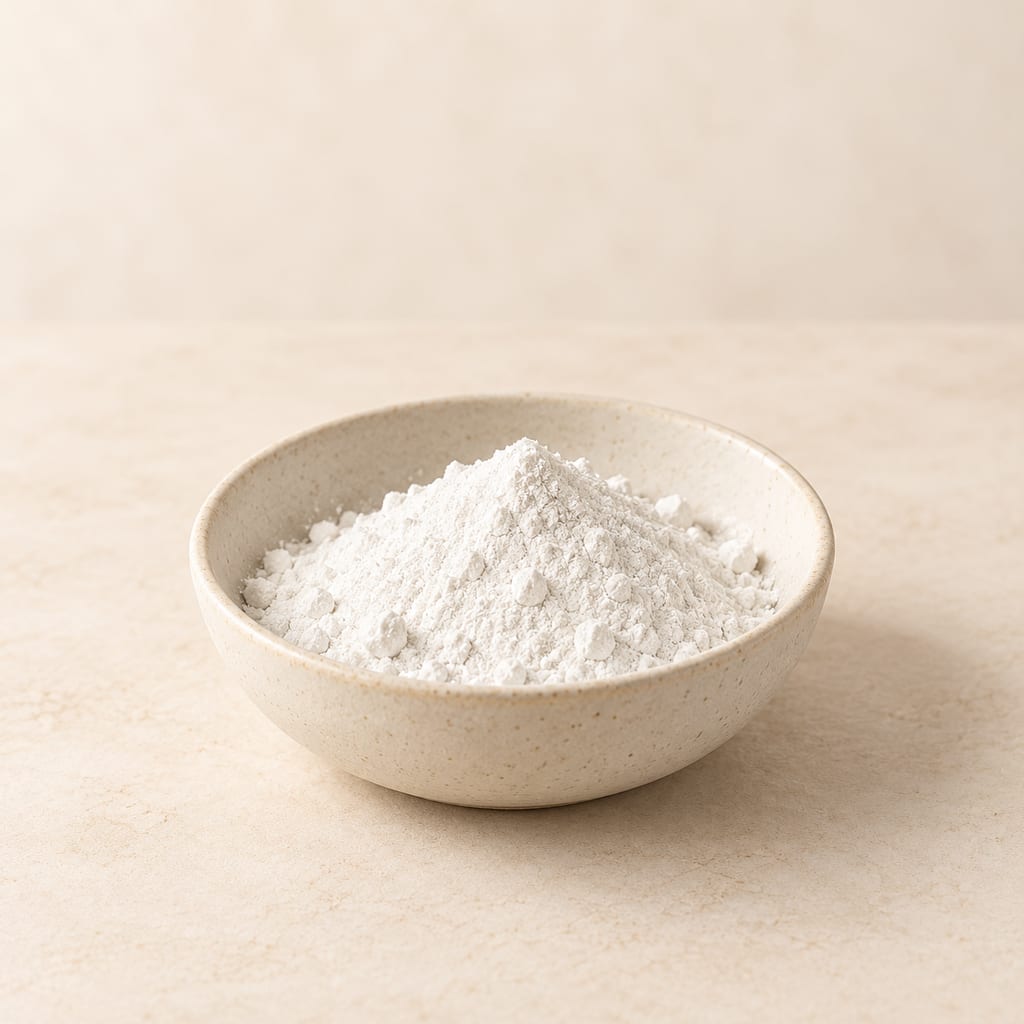
Gypsum is calcium sulfate dihydrate, a mineral salt that brewers dissolve in water for its calcium and sulfate and that tofu makers use to set soy curd.

Soft, spreadable Calabrian pork sausage made with a great deal of red chilli and fatty pork, stuffed into natural casings, sometimes smoked and matured while staying soft.

A way to add independent temperature logging to an existing food dehydrator without changing its built-in controls or protections. It is a monitoring method, not a rewiring plan.

Pleurotus cystidiosus is the abalone mushroom, a cultivated oyster-type fungus with dark brown caps that grows more slowly and is more demanding than other Pleurotus species.

A dark, balanced vinegar from Emilia-Romagna made by combining cooked or concentrated grape must with wine vinegar, then acetifying and refining it in wood under a protected specification.

A living dairy inoculum that starts controlled cream fermentation, developing acidity and aroma before sour cream or cultured butter is finished.

A small electric incubator holds jars at a selected temperature for yogurt and other documented warm food preparations. Controls, capacity and vessel arrangement vary by model.

Adygean salt is a seasoned table salt associated with Adygea and the wider North Caucasian culinary tradition. Salt is blended with garlic and a variable selection of herbs and spices; the exact mix depends on the named style and maker.

The African Caesar-group mushroom, Amanita masasiensis, is a wild ectomycorrhizal species of central and southern African woodlands, eaten locally. The genus contains deadly poisonous species, so identification needs care.
No community contributions have been published for this entry yet.
Sign in to contribute. Published comments and photos are free to read.
Mycotaxon / MykoWebReference
Boletes of the Southwestern United States (protologue for Boletus barrowsii)Description, type collection near Jacob Lake, Arizona, 21 August 1971, examined material, morphology and initial host/range evidence.
Cited in: A white-capped bolete with a Southwest name; The cap, pores and stout stem; Roots, trees and a range that needs qualification; Summer rain and changing local seasons
Food and Agriculture Organization of the United NationsReference
Wild edible fungi: a global overview of their use and importance to people, Annex 2Mexico table lists Boletus barrowsii as edible under source 7, Villarreal and Pérez-Moreno 1989; Annex 2 describes the limits of historical use labels.
Cited in: Food use in Mexico and modern New Mexico; What the sources can and cannot say about eating it
Food and Agriculture Organization of the United NationsReference
Wild edible fungi: a global overview of their use and importance to people, Annex 3Global list classifies Boletus barrowsii as edible and explains that edible entries do not always document consumption.
Cited in: Food use in Mexico and modern New Mexico
Universidad Autónoma del Estado de MéxicoReference
Conocimiento ecológico tradicional como capital cultural incorporado y su reproducción a través del turismo micológico en una zona forestal del Estado de MéxicoFieldwork in San Francisco Oxtotilpan documents names, June–September season, collection sites, and uses in quesadillas, tamales, tacos, fried/roasted dishes, comal cooking, salsa, broth and guajillo chile.
Cited in: Summer rain and changing local seasons; Food use in Mexico and modern New Mexico; What the sources can and cannot say about eating it
Agricultura, Sociedad y DesarrolloReference
Conocimiento tradicional sobre los hongos silvestres en una comunidad Otomí del Estado de MéxicoAn Otomí community list records Boletus barrowsii as hongo de encino (cemita).
Cited in: Food use in Mexico and modern New Mexico
Economic BotanyReference
California Porcini: Three New Taxa, Observations on Their Harvest, and the Tragedy of No CommonsReports coastal California oak-associated warm-rain records and Vancouver Island summer reports, noting few west-coast herbarium vouchers.
Cited in: Roots, trees and a range that needs qualification; Summer rain and changing local seasons
MushroomExpert.comReference
Boletus barrowsiiIdentification, tree associations and distinct regional fruiting windows.
Cited in: The cap, pores and stout stem; Roots, trees and a range that needs qualification; Summer rain and changing local seasons
New York Botanical Garden, BoletineaeReference
Taxon details: Boletus barrowsii Thiers & A.H.Sm.Current checklist accepts Boletus barrowsii.
Cited in: A white-capped bolete with a Southwest name
National Center for Biotechnology InformationReference
NCBI Taxonomy Browser: Boletus barrowsiiCurrent NCBI taxon name and lineage; NCBI notes its taxonomy is not a nomenclatural authority.
Universidad Nacional Autónoma de MéxicoReference
Hongos comestibles de México: Boletus edulis sensu latoIdentifies B. barrowsii among North American porcini-like taxa and notes complexity in the B. edulis sensu lato group.
Cited in: The cap, pores and stout stem
Albuquerque HerbalismReference
A Very Tasty New Mexican MushroomPersonal dry-roasted bolete chips and seasoning adaptation, plus author’s mining-site and frequency cautions.
Cited in: Food use in Mexico and modern New Mexico; What the sources can and cannot say about eating it
Universidad Nacional Autónoma de MéxicoReference
Los hongos de la familia Boletaceae sensu stricto (Fungi, Basidiomycotina, Agaricales) de MorelosTaxonomic thesis records Boletus barrowsii examined material near Tepoztlán, Morelos, in mountain forest with Quercus.
Tom Volk's FungiReference
Boletus barrowsii, the white king boleteDescribes the white king bolete, apparent ponderosa-pine association in the Southwest and reported edible status.
Cited in: A white-capped bolete with a Southwest name
University of British ColumbiaReference
E-Flora BC: Boletus barrowsiiRegional occurrences and taxonomic caveat for British Columbia.
Cited in: Roots, trees and a range that needs qualification
Natural Resources CanadaReference
Pacific Forestry Centre Forest Pathology Herbarium, DAVFP 25139Voucher identified as Boletus barrowsii; collected 18 May 1995 at Winchelsea Island near Nanoose, Vancouver Island, map coordinates 49.2909°N, 124.0777°W, with Quercus garryana.
Cited in: Roots, trees and a range that needs qualification; Summer rain and changing local seasons
Natural Resources CanadaReference
Pacific Forestry Centre Forest Pathology Herbarium, DAVFP 25728Voucher identified as Boletus barrowsii; collected 5 September 2000 in Victoria, Vancouver Island, map coordinates 48.5270°N, 123.3659°W; notes spring and fall sporocarps under Garry oak and once Linden.
Cited in: Roots, trees and a range that needs qualification; Summer rain and changing local seasons
Universidad Autónoma del Estado de MéxicoReference
La Construcción Social de los Productos Turísticos Alternativos del Nevado de Toluca, MéxicoLocates the San Francisco Oxtotilpan settlement at 19°10′ N, 99°54′ W; coordinates locate the community, not individual mushroom collection patches.
Cited in: Summer rain and changing local seasons