
Barley and oat porridge (Viking Age)
Crushed or milled barley cooked in water until the starch softens and the mixture thickens, the plainest way a northern household turned stored grain into a meal, here with apple and hazelnut.
 FermenteaWhere food goes to change
Substrates
A cereal grain sold as groats, cut pieces, flakes, flour and malt. Oats shape porridge, bread and brewing differently as processing changes hydration, texture, starch, beta-glucan, protein and oil.
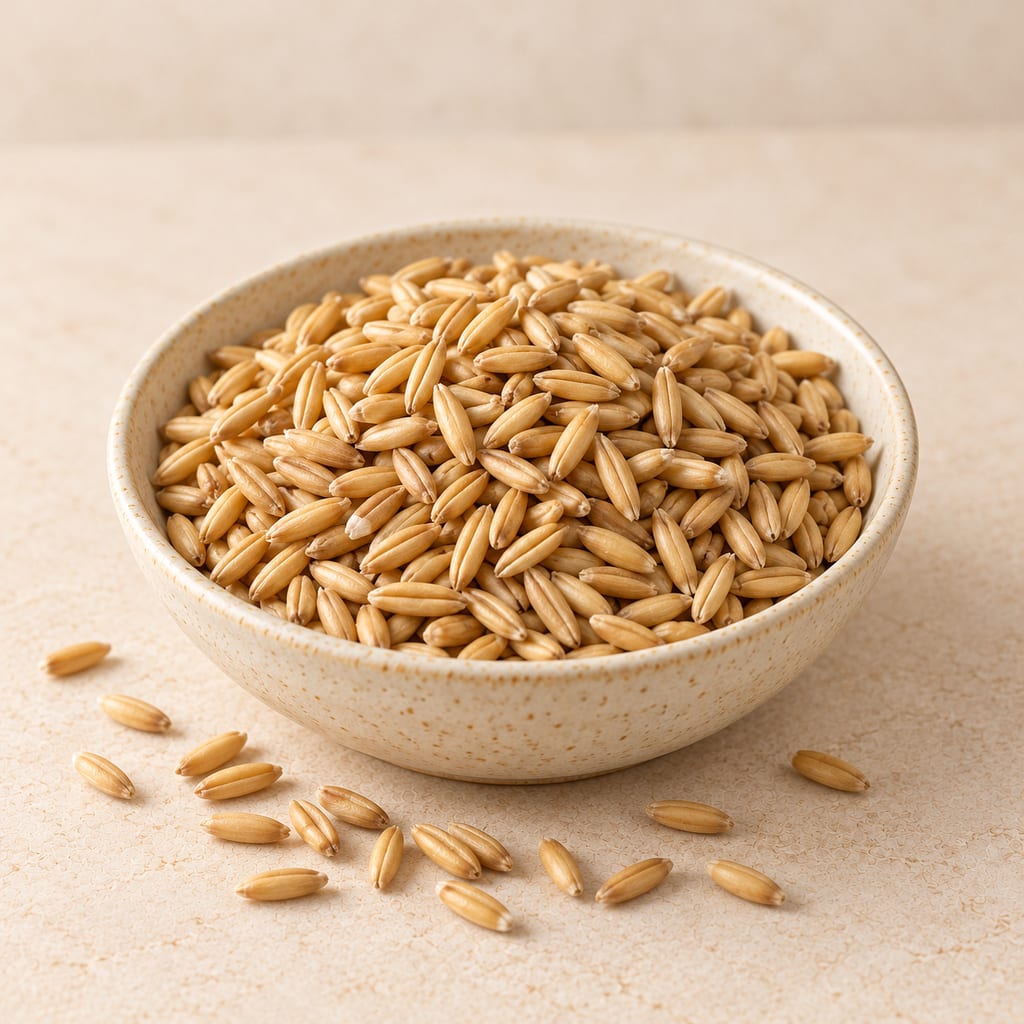
Oats reach the kitchen and brewery as groats, cut pieces, flakes, flour and malt. All begin with a cereal grain, but processing changes how readily water enters it, how quickly it cooks and what it contributes to a preparation. A bowl of rolled flakes and a handful of whole groats therefore represent different choices, even when both packages simply belong to the oat shelf.
Common cultivated oat is Avena sativa, an annual grass in the family Poaceae. The wider genus includes wild relatives, and names within that closely related group have changed as botanical and genetic understanding developed. A food recipe that gives only the English name oats does not necessarily identify a cultivar, species analysis or particular processed form.
This breadth is useful to understand before brewing with the grain. Oats can supply starch, protein, oil and soluble fibre, while the treatment they have already received determines how they enter the process. Their identity involves both the crop and the material in the bag. The word oats begins that description; groat, rolled, cut or malted makes it more informative.
Oat history involves several different activities: gathering wild grain, storing it, possibly cultivating it and eventually selecting a domesticated crop. Those activities need not have begun together. Archaeological finds can demonstrate that people valued and stored wild oats without establishing that the plants were already domesticated.
At Gilgal I in the southern Levant, a substantial store of wild oat grains has prompted discussion of possible early cultivation. The interpretation remains debated: collection from wild stands is another explanation considered in the literature. A later review treats cultivation as possible and calls for further evidence to clarify the material's status. It places the much later domestication of oats in Europe, during the Bronze or Iron Ages, rather than treating the stored wild grain as proof of an already domesticated oat crop.
Domestication also has a physical dimension. Wild oats readily release mature grains, aiding dispersal, while cultivated forms retain grain for harvesting. Selection changes the relationship between the plant and the person collecting it. That is a more useful distinction than attaching one invention date to every packet of oats now sold for food.
One account of oats' spread begins with them growing among wheat and barley. As those crops moved into cooler and wetter European conditions, oats could persist as field weeds and later become a crop in their own right. That history helps explain why the grain's rise need not follow the same route as the better-known early cultivated cereals.
The crop has served both people and livestock. Food use, feed use and the demands of a miller give growers different reasons to select a variety. Oats may also be sown as a companion crop while a legume stand becomes established. In that setting, traits such as early maturity, short stature and resistance to lodging matter for the companion crop's purpose.
For milling grain, buyers look beyond a large harvest. Clean, plump kernels and a good proportion of groat affect the amount of useful food material recovered after the hull is removed. Weather damage, kernel condition and composition can change the crop's value. These agricultural choices sit behind the familiar retail forms, even when the consumer never sees an intact harvested kernel.
The harvested grain includes an outer hull around the groat. Food processing removes that covering and separates the resulting materials. Cleaning, dehulling and air separation help remove debris, hulls and small broken particles. A groat is the edible grain remaining after that work, rather than another cereal species.
Mechanical treatment then creates several familiar forms. Cutting groats produces steel-cut oats. Rolling flattens groats or cut pieces into flakes, usually after steaming makes the material more workable. Grinding produces flour or meal, while bran-rich fractions can be separated for particular food uses. The same crop can thus enter a recipe with substantially different particle sizes and structures.
Those differences are visible and practical. An intact groat presents a different route for water to penetrate from a thin flake. Smaller pieces and thinner flakes generally cook more quickly. Quick oats receive processing intended for faster preparation, and some products are precooked. A recipe's texture and timing therefore depend on more than whether the starting cereal is oats.
The terms also need their culinary setting. Oatmeal may describe a milled product or the porridge made from it. Reading the product and method together prevents those meanings from being mistaken for a precise form specification.
Oats contain oil and enzymes capable of acting on it. Within an intact grain, physical separation limits contact between some of those components. Milling disrupts that organisation. Lipase can release free fatty acids from lipids, while oxidation and further breakdown can produce compounds associated with rancid aromas or other unwanted flavours.
Commercial processing commonly includes steaming and kilning to reduce the activity of these enzymes. Heat treatment helps stabilise the grain before it becomes a stored food ingredient. Drying and cooling are also part of the process, because adding steam changes moisture as well as temperature. The finished product's condition depends on the sequence, rather than on a simple claim that oats have been heated once.
Food-oat kilning and malting have different aims. Stabilisation controls enzymes that can damage flavour during storage. Malting deliberately permits controlled germination and changes enzyme activity and the grain's internal structure before drying. A steamed oat flake is not necessarily oat malt, and a recipe that requires malted oats should identify them.
This manufacturing history is useful when selecting a product. It connects freshness, form and intended use, without requiring the cook to recreate a commercial heat treatment from an incomplete home schedule.
Flavour also varies with the oat material and its handling. A sensory study of suspensions made from flour from 20 Finnish pure-cultivar batches described the overall flavour as mild; a trained panel distinguished oat, bitter and green notes among batches. After six months of storage, panelists distinguished stronger aroma and flavour, with bitterness associated with oxidation. These are study-specific observations about oat-flour suspensions and their storage conditions; whole groats and other products may differ.
Oats contain starch that can become part of a brewing extract. Brewing yeast uses fermentable sugars, so the starch must first become accessible and be broken down through the mash's enzyme system. In a barley-malt grist containing oats, the malt supplies a substantial part of that system. Alpha- and beta-amylase help create a mixture of smaller carbohydrates, including sugars that can support fermentation.
Malted and unmalted oats make different contributions. Germination during malting modifies the grain, while an unmalted adjunct does not arrive with the same developed activity. Replacing malt with an adjunct also changes the concentration of malt-derived enzymes and nitrogen-containing material in the mash. The full grist and process determine the consequence.
Experiments comparing oat malt, barley malt and mixtures with unmalted oats found differences in extract, soluble nitrogen, viscosity and haze. Those results demonstrate that the form and proportion can matter. They remain findings from defined experimental formulations, rather than a promise that every oat-containing beer will behave in the same way.
A named oat form is therefore valuable brewing information. It helps distinguish the grain's potential contribution from any preparation still required before it can participate in the intended mash.
Oat beta-glucan is a carbohydrate associated with the endosperm cell walls. Its long molecules can contribute viscosity when extracted into liquid. Concentration and molecular size matter, as do the conditions that govern extraction and breakdown. Particle size, temperature and pH can change how much of it becomes available in an aqueous system.
In brewing, thicker liquid can complicate wort separation and filtration. Enzymes that break down cell-wall material affect that behaviour, while replacing part of a malt grist with unmalted grain can change the amount of those enzymes available. This creates a process question as well as an ingredient question: the amount extracted and the amount degraded need to be considered together.
The same material can help explain interest in oats for mouthfeel, but it does not guarantee a particular sensory result. A stout's body also reflects its other grains, mash conversion, fermentation and remaining extract. Calling every oat beer creamy or silky would turn a conditional contribution into a fixed property.
Protein adds another set of interactions. Soluble nitrogen can support yeast, while proteins and other grain constituents influence haze and the physical character of beer. More of one component is not automatically better. Their useful balance depends on what the brewer is trying to make.
Oats' food uses follow their different forms. Whole groats and cut pieces provide distinct textures in cooked grain dishes; flakes offer quicker preparation for porridge and cereals. Flour, meal and bran enter breads, baking mixtures, snack products and other foods. These are different ways of using the same crop's structure and composition.
Texture is often the most immediate distinction for a cook. Cutting retains recognisable pieces, while rolling produces a thin, broad surface that softens differently in water. Grinding disperses the grain through a mixture instead of preserving separate kernels. Choosing among them changes how an ingredient integrates with the rest of a dish.
Plain oats and flavoured instant mixtures also deserve separate attention. A mixture may bring added sugar, salt, fruit or other ingredients, which become part of the formulation if it is used elsewhere. The name on the front of a packet cannot replace its ingredient declaration. A preparation calling for plain oats should retain that distinction rather than acquiring the additional components of a breakfast mixture unnoticed.
These uses explain why oats belong to a broad ingredient account, with particular preparations carrying their own methods and measurements.
Oatmeal appears in several breads whose names and methods should stay distinct. Scottish oatcakes are often made as thin, fragile cakes from oatmeal with fat and water, then cooked on a girdle or griddle; some accounts describe a toasting stone as a second stage. A National Trust for Scotland feature revisits an older method with vague measures and presents a modern adaptation. In that writer's trials, medium oatmeal held together better than pinhead meal. That observation describes those batches, not a rule for every oatcake.
Staffordshire oatcakes are a different preparation: soft, yeast-raised pancakes made with fine oatmeal and wheat flour. A modern BBC Good Food version uses milk and yeast, rests the batter, then cooks it in a pan. Its ingredient card omits water and sugar that appear in the method, so those details should be checked against the page rather than silently reconciled. These cakes are commonly served folded around a filling in the modern recipe.
Bannock is a broader family of round flatbreads associated by the Rowett Institute with Scotland, Ireland and northern England. Its Orkney example offers either oatmeal or oat flour, or beremeal or barley flour, with wheat flour in both versions. That source distinguishes the Orkney bread from the fruit-rich Selkirk bannock. It does not support treating every bannock as oat bread or equating bannocks with Scottish oatcakes.
Choose the form named by the preparation. Where a method leaves the form unstated, preserve that limitation rather than assigning one without evidence. In a brewing formulation, flaked oats, oat malt and whole groats should not silently become synonyms, because prior heat treatment and physical structure affect the work still required.
Keep dry oats in a cool, dark storage place and follow the product's packaging and storage directions. Freshness matters partly because oat lipids can develop unwanted flavours when they deteriorate. A stated shelf life belongs with its conditions and product; a manufacturing description is not itself a universal storage guarantee.
Gluten information also needs the actual supply. Oats are botanically distinct from wheat, barley and rye, but contact with those cereals can occur in fields, harvesting and transport equipment, silos and shared processing facilities. A gluten-free label therefore concerns the product and its production controls, rather than simply the name of the crop.
A beer containing barley malt does not become gluten-free because oats are included. For FDA-regulated foods bearing a gluten-free claim in the United States, the rules also require records about the food before fermentation and controls against gluten cross-contact. Keep those questions separate from claims about body, flavour or the grain's general food value.
Dark Cellar imperial stout uses 1 lb of oats alongside a larger barley-based grain bill. The recipe names oats without specifying a processed form, cultivar or supplier. Its quantity is part of that stout's formulation, while the missing form remains a limit on how precisely its preparation can be described.
The oats enter the mash with the other grains. That documented instruction does not identify them as flaked, malted or whole, nor supply a separate cereal-cooking procedure. General oat-processing and brewing science helps explain why the distinction matters, but cannot fill it in for this particular recipe.
Their contribution also belongs within the full stout. Pale malt, roasted grains, mash conditions and yeast all help shape the eventual drink. Oats are one material within that system, bringing their own grain components while interacting with the rest. Knowing the crop and its processed forms makes the ingredient easier to understand without changing the recipe's recorded identity.
Oats; gluten cross-contact depends on the product.
The source lists one pound of oats in this stout grist but leaves their processed form, cultivar and place of growth unspecified.
A storage context at Gilgal I contained many wild Avena sterilis grains. Scholars differ over deliberate cultivation versus gathering; the find records wild oat use and does not locate the origin of modern cultivated oats.
A review reports wild oat translocation with other cereals to Cyprus; this is an attested movement, not proof of domestication there.
Institutional and archaeological syntheses place later oat domestication in Europe; the evidence does not identify one precise birthplace.
The National Trust for Scotland feature documents a modern oatcake adaptation and discusses an older method with imprecise measures; it does not date the beginning of Scottish oatcakes.
The recipe documents a yeast-raised oatmeal pancake associated with Staffordshire; its ingredient card and method differ on water and sugar.
The Rowett Institute gives an oatmeal or oat-flour version alongside a beremeal or barley-flour version, with wheat flour in both; oats do not define every bannock.
Crushed or milled barley cooked in water until the starch softens and the mixture thickens, the plainest way a northern household turned stored grain into a meal, here with apple and hazelnut.
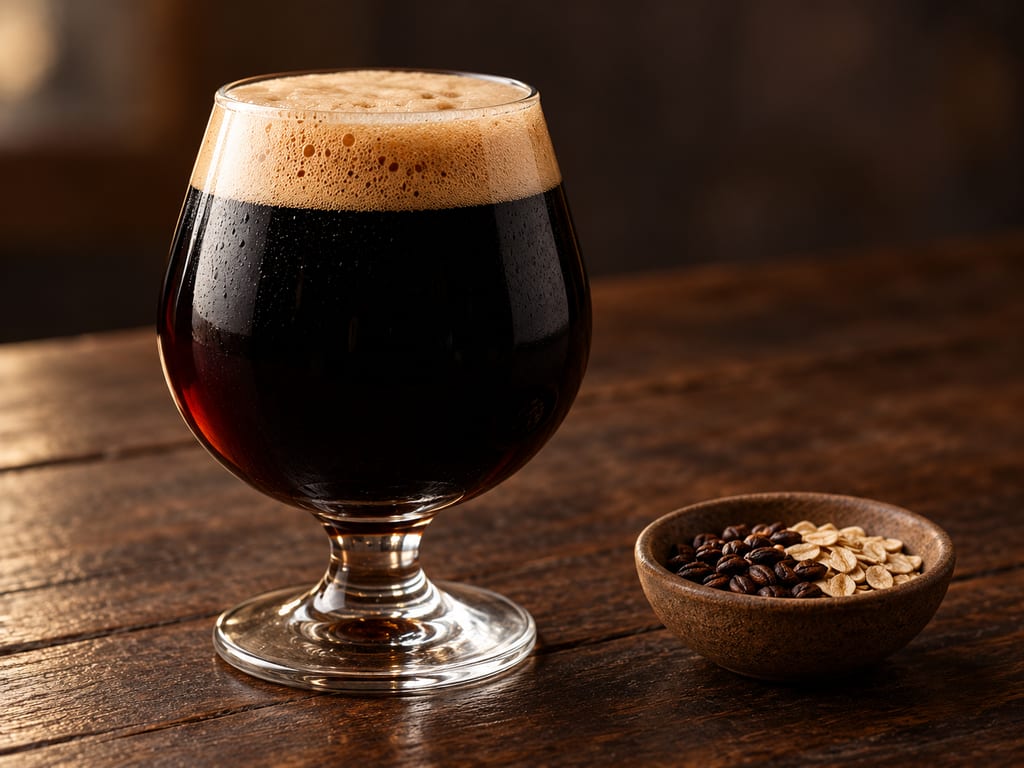
An all-grain imperial stout with pale malt, roasted barley, dark malts and oats, fermented with an American ale-yeast starter.
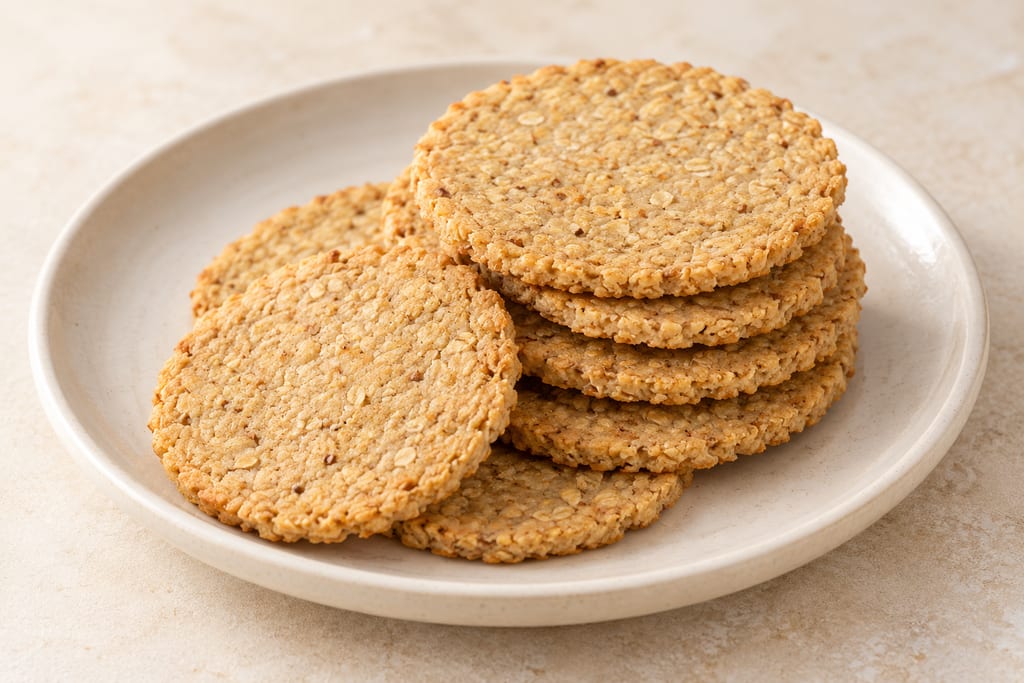
A thin Scottish oatcake of medium oatmeal, butter, salt, bicarbonate of soda and boiling water. This measured oven adaptation differs from older girdle methods and soft, yeasted Staffordshire oatcakes.
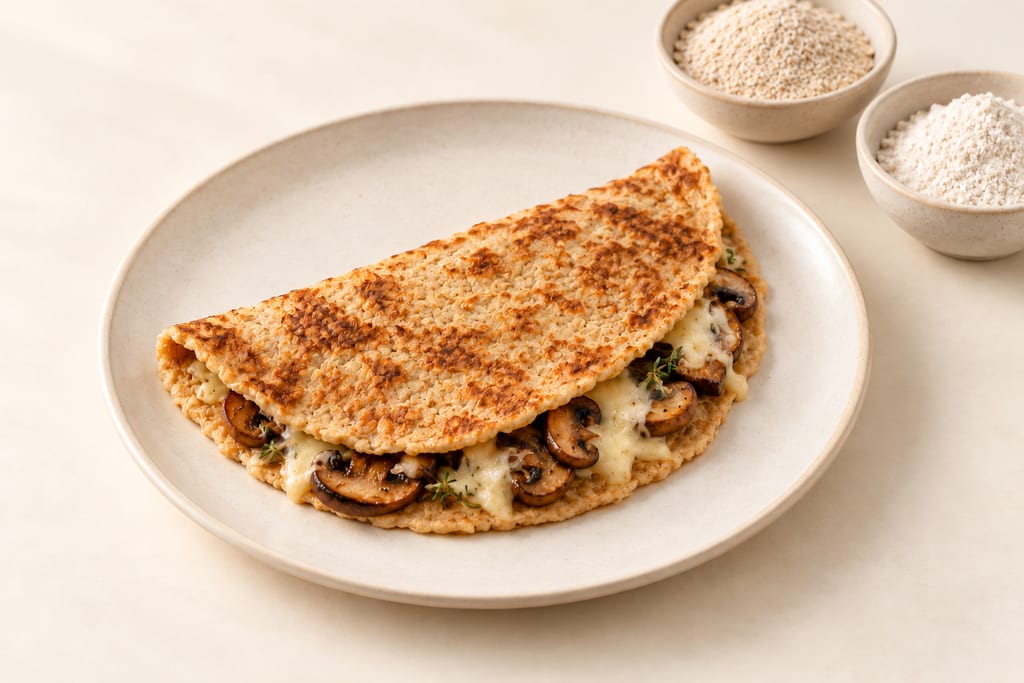
A North Staffordshire speciality, this soft yeast-raised oat-and-wheat pancake is cooked on a pan or griddle and folded around a savoury filling.
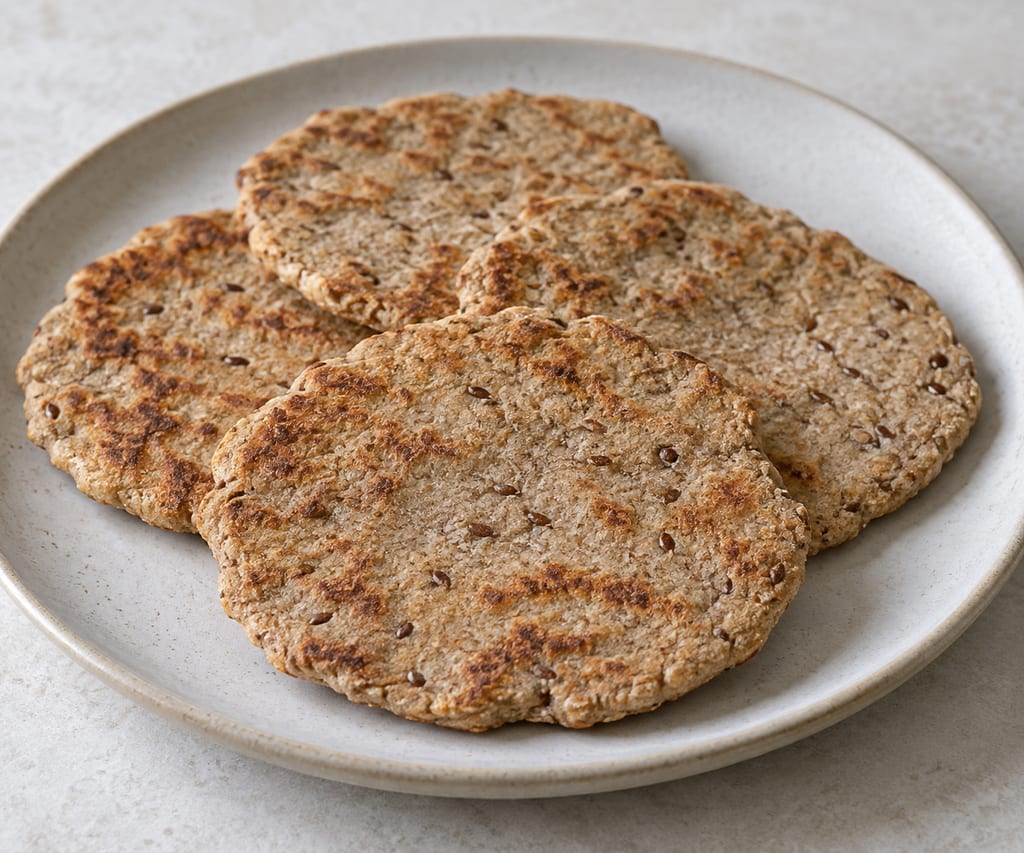
A small, dense cake of ground barley mixed with liquid and cooked against a hot surface, the form a low-gluten northern cereal takes when a household turns stored grain into bread.
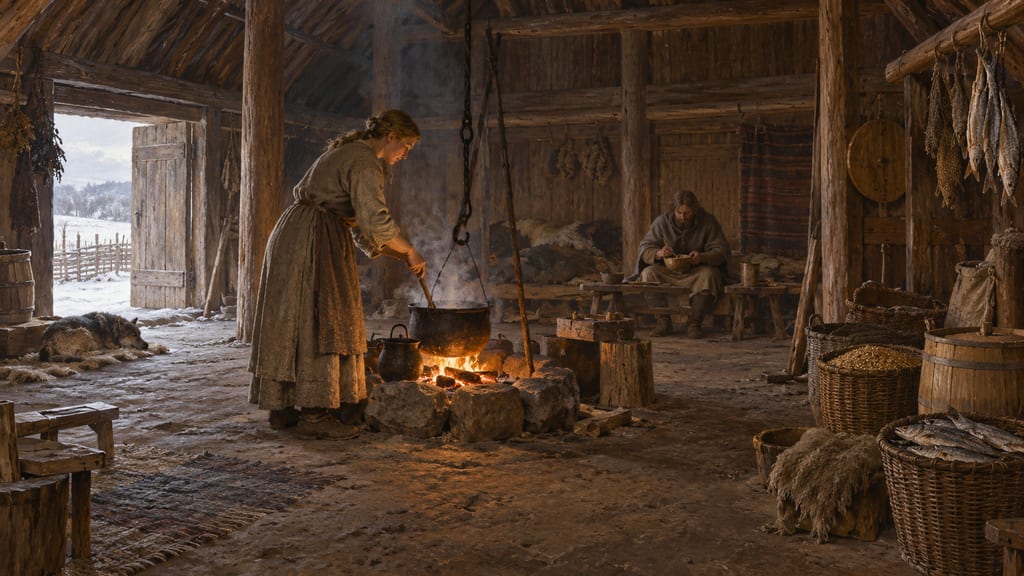
How ordinary Viking-Age households grew, dried, smoked, salted and cooked their food through the northern year, and how to cook their dishes today with supermarket ingredients.
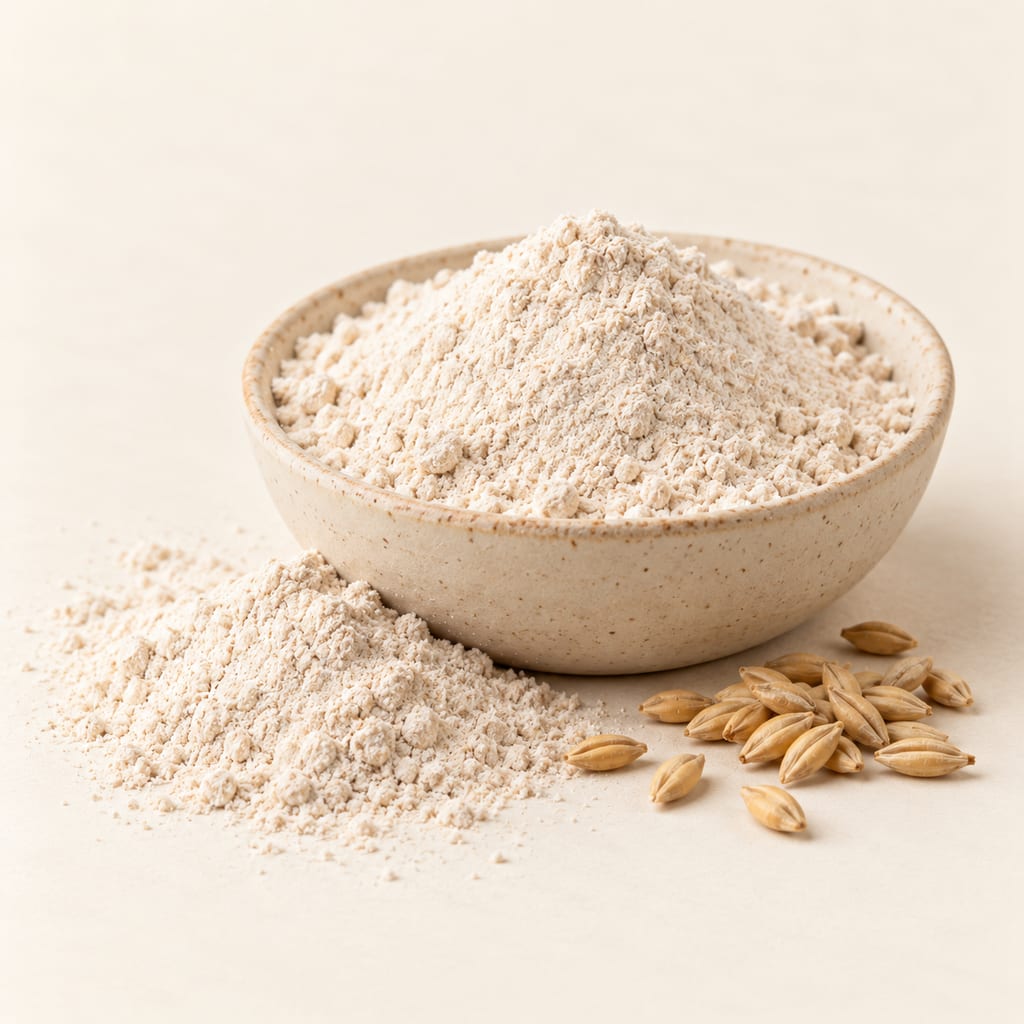
Barley flour is ground barley grain; whether it comes from pearled or hulless kernels, its milling and limited wheat-like gluten-forming ability shape the doughs and foods it can make.
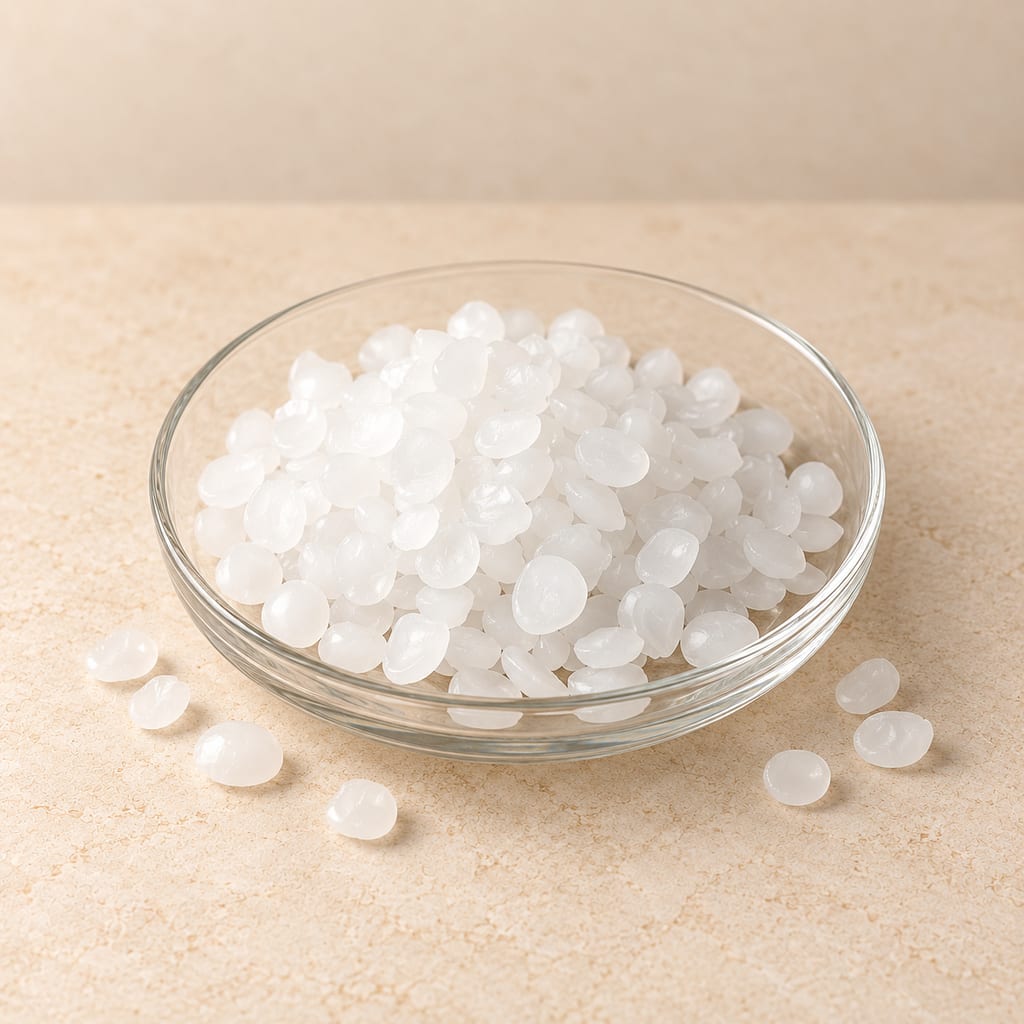
Paraffin wax is a solid mixture of hydrocarbons that cheesemakers melt and dip cheese in to slow moisture loss and keep surface mould off. Modern cheese waxes are usually blends.
No community contributions have been published for this entry yet.
Sign in to contribute. Published comments and photos are free to read.
American Homebrewers AssociationIngredient use · Processing
2026 Official Big Brew Recipes: Dark Cellar Imperial StoutThe Dark Cellar ingredient table specifies 1 lb oats, mashed with the other grains. It does not identify the oats’ form, cultivar or supplier.
Cited in: Oats in Dark Cellar
Royal Botanic Gardens, KewIngredient identity · Regional use
Avena sativa L. | Plants of the World OnlineAccepted Avena sativa L., annual grass; general crop taxonomy, not a species analysis of the recipe ingredient.
Cited in: One grain, several familiar forms
University of Oxford, Department of Biology / HerbariaIngredient identity · Regional use
Oxford University Plants 400: Avena sativaCommon oat identity, later domestication and weed-to-crop account; grain retention and dispersal differences; crop context. Institutional historical synthesis, not a precise birthplace or primary ancient text.
Cited in: One grain, several familiar forms; Wild grains and the later crop; A crop within other cereal fields
Vegetation History and Archaeobotany / Springer NatureIngredient identity · Regional use
Revisiting the concept of the ‘Neolithic Founder Crops’ in southwest AsiaWild oat storage at Gilgal I and possible cultivation distinguished from later European domestication; additional evidence needed for early cultivar status. Review synthesises archaeological evidence, no new original excavation claimed.
Cited in: Wild grains and the later crop
University of Illinois ExtensionIngredient use · Processing
Know your oats this Oatmeal MonthGroats, cut oats, rolled/quick forms, cooking differences, plain versus flavoured products and cool/dark storage. No source cooking times or universal shelf life imported.
Cited in: One grain, several familiar forms; Removing the hull reveals the groat; Porridge, flour and other food uses; Choosing and storing the actual product
University of Minnesota ExtensionIngredient use · Processing
Understanding grain qualityOat milling quality, clean/plump kernels and groat proportion; composition and weather damage; feed/milling and companion-crop purposes. Oats subsection only; barley limits not transferred.
Cited in: A crop within other cereal fields
British Journal of Nutrition / Cambridge University PressIngredient use · Processing
Processing of oats and the impact of processing operations on nutrition and health benefitsGrain/hull/groat structure, dehulling, cutting/rolling/grinding and food uses; lipids and physical compartmentalisation; heat stabilisation and processing. No universal manufacturing values or storage guarantees used.
Cited in: Removing the hull reveals the groat; Why millers use heat as well as machinery; Porridge, flour and other food uses; Choosing and storing the actual product
North Dakota State University Extension and Ag Research NewsIngredient use · Processing
Prairie Fare: Before licking the spoon, consider facts about flour and oatmealCommercial oats are cleaned, dehulled and heated before rolling/cutting; scope differs from raw flour. No general safety guarantee transferred to every oat product.
Cited in: Removing the hull reveals the groat; Why millers use heat as well as machinery
Journal of the Institute of Brewing / WileyIngredient use · Processing
Brewing with up to 40% unmalted oats (Avena sativa) and sorghum (Sorghum bicolor): a reviewOat starch and beta-glucan, molecular size/extraction/viscosity, malt/adjunct enzyme balance and brewing consequences. General review, not a process instruction for Dark Cellar.
Cited in: Starch needs conversion before alcoholic fermentation; Soluble fibre changes the flow; Oats in Dark Cellar
Journal of the Institute of Brewing / WileyIngredient use · Processing
Malted and unmalted oats in brewingAn experimental comparison of barley malt, oat malt and mixtures with unmalted oats reports differences in extract, soluble nitrogen, viscosity and haze. Its materials and conditions do not establish the outcome of the Dark Cellar formulation.
Cited in: Why millers use heat as well as machinery; Starch needs conversion before alcoholic fermentation; Soluble fibre changes the flow; Oats in Dark Cellar
U.S. FDAIngredient use · Processing
Questions and Answers on the Gluten-Free Food Labeling Final RuleUS FDA gluten-free labelling scope: oat cross-contact through crop/equipment/storage/manufacturing; product-specific claims; records on the food before fermentation and cross-contact controls for covered fermented foods bearing a gluten-free claim. No claim that oats make barley beer gluten-free.
Cited in: Choosing and storing the actual product
Journal of Experimental Botany / Oxford University PressIngredient identity · Regional use
On the ‘lost’ crops of the neolithic Near EastThe Wild oat subsection argues that gathering from wild populations could explain the stored Gilgal I grain, and that cultivation is not the only or most likely explanation. This is a counterinterpretation of the archaeological evidence, not a settled origin claim.
Cited in: Wild grains and the later crop
National Trust for ScotlandBread use · Preparation · Geography
Mairi Sawyer’s oatcakesThe page reproduces an older oatmeal oatcake method but notes that measures are vague; the author presents a modern measured adaptation, not a definitive historical formula.
The modern adaptation uses medium oatmeal, butter, salt, bicarbonate of soda and boiling water. It describes a traditional iron girdle followed by a toasting stone, and its modern oven/pizza-stone adaptation.
In this author's batches, pinhead oatmeal produced fragile cakes that did not hold together, while medium oatmeal worked better; this is an observation about those batches, not a universal rule.
Cited in: Oats in regional breads
BBC Good Food / Immediate MediaBread use · Preparation · Geography
Staffordshire oatcakesA modern Staffordshire oatcake is described as a speciality pancake made from oatmeal, flour and yeast.
The ingredient card lists fine oatmeal, wholemeal flour, plain flour, milk and yeast; the method also calls for water and sugar omitted from that card, so the page should not be treated as a fully reconciled formulation without checking the source.
Cited in: Oats in regional breads
University of Aberdeen, Rowett InstituteBread use · Preparation · Geography
BannocksThe Rowett Institute describes bannock as a varied flatbread associated with Scotland, Ireland and northern England, and distinguishes Orkney bere bannock and Selkirk bannock.
Its Orkney recipe from Anne Johnson offers separate barley/beremeal and oatmeal/oat-flour versions, with wheat flour also included. It does not make all bannocks oat-based.
Cited in: Oats in regional breads
Food Chemistry / ElsevierIngredient use · Processing
Volatile compounds and sensory profile of suspensions of fresh and stored oat flour from batches of pure Finnish cultivarsTwenty Finnish pure-cultivar oat-flour batches formed the samples; overall flavor was described as mild and panelists distinguished oat, bitter and green notes among batches.
After six months of storage, panelists distinguished increased odor and flavor intensity; bitter flavor was associated with oxidation.
Study observations concern oat-flour suspensions under the reported cultivar and storage conditions.
Cited in: Why millers use heat as well as machinery