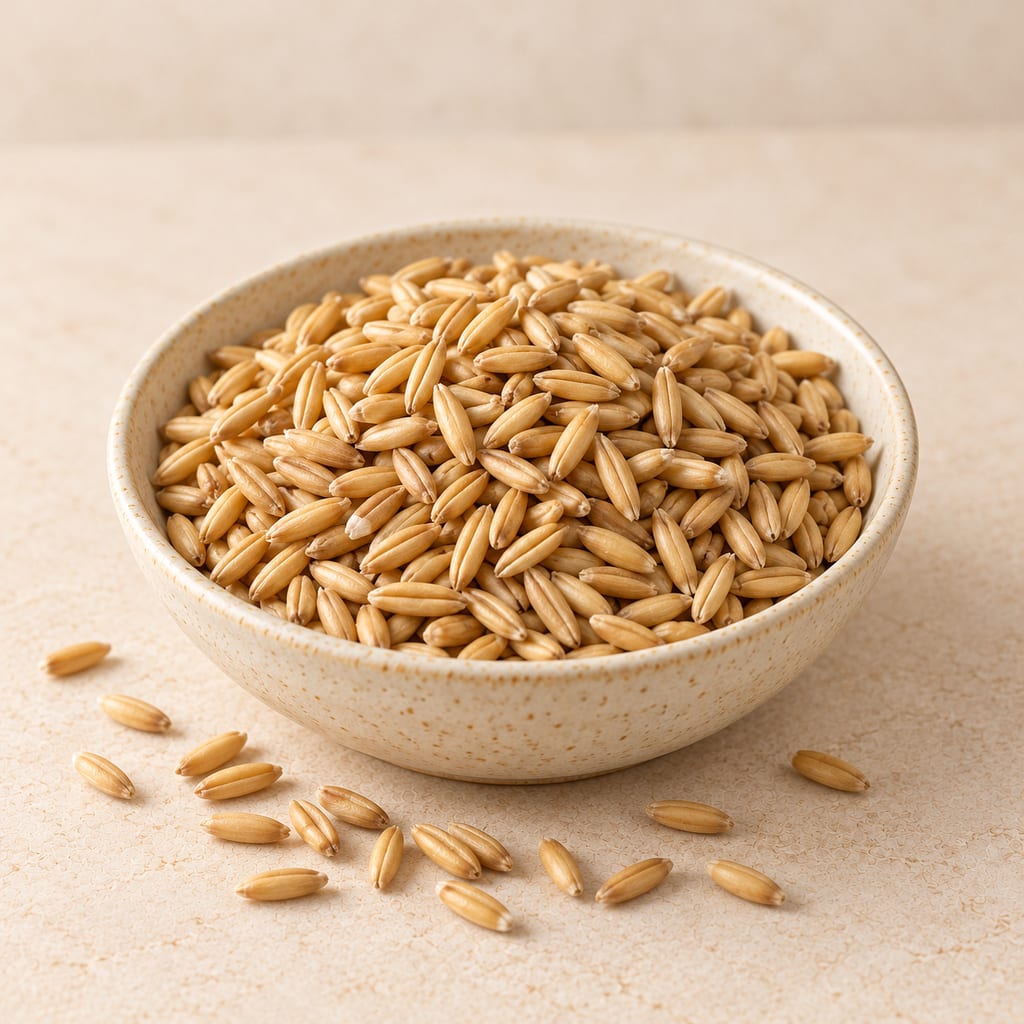
Oats
A cereal grain sold as groats, cut pieces, flakes, flour and malt. Oats shape porridge, bread and brewing differently as processing changes hydration, texture, starch, beta-glucan, protein and oil.
 FermenteaWhere food goes to change
Modern method
Staffordshire oatcakes
A North Staffordshire speciality, this soft yeast-raised oat-and-wheat pancake is cooked on a pan or griddle and folded around a savoury filling.
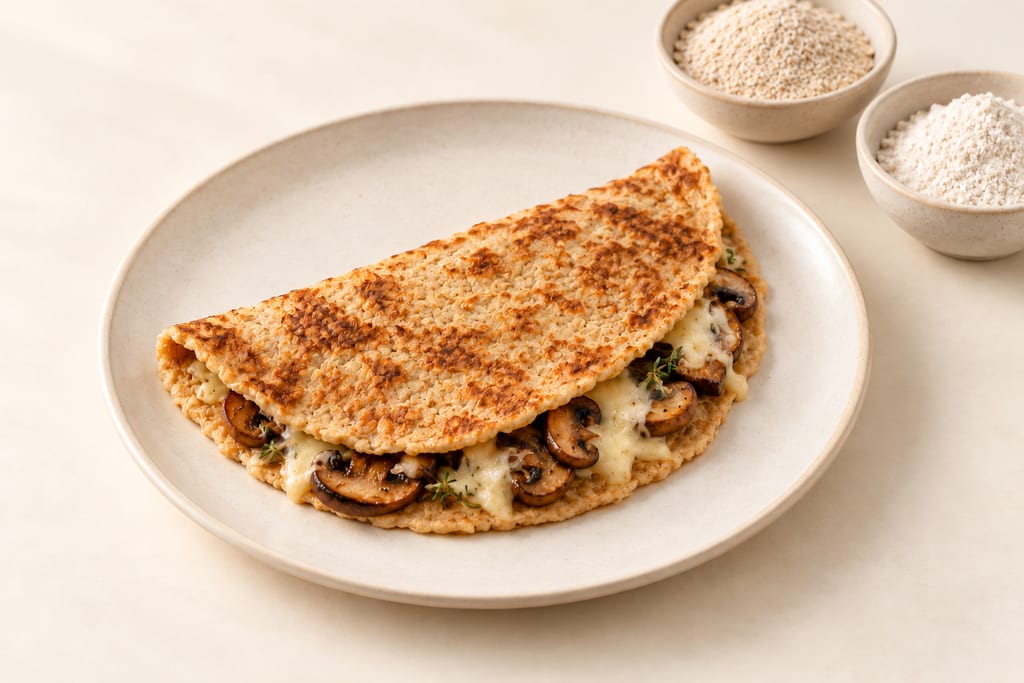
Staffordshire oatcakes are soft, round, pan-cooked pancakes made with oatmeal, wheat flour and yeast. They are usually eaten warm, plain or folded around a filling. In Stoke-on-Trent, people often call them simply oatcakes; the wider name distinguishes this regional food from the dry, crisp oatcakes associated with Scotland. The shared word can hide two quite different things: a soft, flexible batter cake made to be reheated or filled, and a dry biscuit-like oat product made to keep. This recipe belongs to the first family.
The recipe here is one particular modern version by Ailsa Burt for BBC Good Food. It makes six and adds mushrooms, thyme, garlic and Gruyère. The pancake itself is the regional subject; that filling is the publisher's serving choice, not a defining historic filling or a claim that all Staffordshire oatcakes use cheese and mushrooms. The recipe is described as vegetarian and egg-free. Its measured base combines fine oatmeal with wholemeal and plain wheat flour, yeast, milk and water. The ingredients produce a batter rather than a kneaded bread dough, and the rounds cook directly in a frying pan.
The regional form is more specific than the word oatcake alone. The Buxton Museum account describes a north and east Midlands pancake made with oatmeal, wheat flour and yeast, often served as breakfast or a light meal with savoury foods. It contrasts that flexible form with the dry Scottish cake. The BBC recipe shares those broad traits while its additional sugar, dairy and filling make it a contemporary household preparation. It does not claim to reproduce a particular baker's formula, the earliest known formula, or an unchanged traditional recipe.
Visit Stoke describes the Staffordshire oatcake as a local speciality around Stoke-on-Trent and dates it to the eighteenth century. Its account connects the cake with pottery workers in the nineteenth century, for whom it served as a staple food that could fuel a shift. The same source describes the later spread of shops and home bakers: some sold oatcakes through a street-facing window, and present-day shops continue to sell them plain or filled. These points explain why the food is strongly identified with the Potteries, but they do not prove that it began in one town or on one date.
The wider history is shared and contested. The Buxton Museum account notes seventeenth-century Derbyshire references and a description from 1817 of fermented batter at Pilsbury. It also reports that food historian Pamela Sambrook found seventeenth-century Staffordshire Moorlands probate inventories listing oatcake equipment. This evidence places oatcake making in the surrounding region, but it does not recover this recipe or settle whether Staffordshire or Derbyshire made the earliest version. The museum author explicitly treats the border provenance as disputed. A separate story attributing the oatcake to soldiers returning from India is not supported by the evidence presented here and is not used as an origin claim.
An object in the Staffordshire Museum Service collection gives a more concrete glimpse of the equipment. Staffordshire Past Track dates an iron oatcake toasting rack to about 1800–1899. The blacksmith-made rack has a semicircular holder that swings to heat its contents, and the catalogue records its purchase at a farm sale near Uttoxeter. It shows that a dedicated toaster existed in the county during the nineteenth century. The catalogue does not identify its original maker, whether it was used for a soft or crisp oatcake, or how a particular batter was prepared; those questions remain open.
The local history is best told as a food of a region with neighboring forms, recorded household equipment, a strong association with workers and a durable shop culture. The modern BBC recipe belongs to that living family without being mistaken for a transcription of an eighteenth-century or nineteenth-century household formula.
The 1941 New Zealand Listener archive preserves a useful comparison. In a letter headed “Genuine Staffordshire Oatcakes,” a correspondent signing J. Y. R. from Oamaru responds to earlier discussion of soft oatcakes and recalls having lived in Leek as a boy. The writer says that the writer's mother had possessed the recipe for more than eighty years. That is a family recollection printed in 1941, not a dated recipe manuscript, so it cannot by itself establish when the formula was written or how widely it was used.
The digitized letter describes a leaner mixture of oatmeal, flour, salt and hot water with yeast. It is left covered in a warm place for several hours or overnight; baking soda is stirred in after the rise, and the batter is cooked on a hot girdle. The correspondent recommends stacking the cakes under cloth so they stay soft, warming them again in a frying pan, and serving them with butter and seasoning, bacon, or a sweet topping of butter and syrup. This is a different formula and serving account from the milk-based BBC recipe, whose batter includes wheat flour in two forms and whose cooked rounds receive a separate mushroom-and-cheese filling.
The yeast and baking-soda amounts are not legible enough in the archive's machine-readable transcription to give safely, so they are not stated. The comparison still shows a long rise, a hot griddle, and ways to keep or reheat the cooked oatcakes. Nothing here establishes the 1941 method as the sole authentic one.
These two records should not be blended into a composite recipe. The 1941 letter uses its own ingredients, timings and post-rise addition; BBC Good Food gives a distinct modern formula with mushrooms and Gruyère. The structured ingredients and steps retain the latter in full. The archive is used to explain documented variation and reported practice, not to add baking soda, change the liquid, or prescribe the earlier method without resolving its quantities.
The modern formula calls for 100 g fine oatmeal, 75 g wholemeal flour and 25 g plain flour. Oatmeal gives the batter its characteristic grain and flavour; wholemeal and plain flour supply the wheat component found in descriptions of the regional pancake. The recipe specifies fine oatmeal but does not name a milling grade for the wheat flours beyond wholemeal and plain. It also does not say to grind oats at home, sift them or soak them separately. Using the named forms keeps the preparation close to the source.
Harvard's Nutrition Source notes that oat flour lacks gluten, the protein network that contributes structure and volume in baked foods. That is useful general context, not a guarantee about this exact batter's texture: the recipe also contains wheat flour, and the oat ingredient is fine oatmeal rather than a specified oat flour. Since oatmeal is the largest single flour component, the batter is not a conventional wheat bread dough. It is mixed until thick enough to pour and swirl across a pan. No kneading or shaping on a board appears in the method.
The liquid is 225 ml milk plus 200 ml water. The water is an unusual editorial detail because it appears in the method but not the ingredient card. The same mismatch applies to 2 tsp sugar. Both amounts are kept in the structured ingredient list with notes about their location in the source, so a cook can follow the full published method without assuming those items were added by an editor here. Yeast and the small quantity of sugar are whisked with the dry ingredients before the liquids are stirred in.
Salt is listed as ¼ tsp fine sea salt. Vegetable oil is not mixed into the batter; 1 tsp is provided for brushing the pan. These distinctions affect how a reader interprets the recipe: oil is a cooking aid, not a shortening in the batter, and the sugar is part of the published yeast mixture even though its ingredient card omits it. The source offers no substitutions or adjustment table, so changing the flour ratio or liquid would produce an adaptation rather than the stated formula.
The method gives the mixed batter one to two hours in a warm place, until it has grown and looks bubbly. Those are the recipe's visual signs for the end of the prove. Yale National Initiative's teaching material explains, in general terms, that yeast uses sugars and releases carbon dioxide and alcohol during fermentation. Gas in this fluid batter accounts for its rise and bubbles; the source does not measure gas, acidity or alcohol, and none of those observations is presented as a safety test.
Fast-action dried yeast is used here as a convenient named form. The recipe does not ask for a sourdough starter, a saved piece of yesterday's batter or a particular local strain. The 1941 letter mentions compressed yeast or brewer's yeast and a much longer rise. Those records describe different approaches, and there is not enough evidence to say that they are interchangeable in exact timing or flavour. This version uses the sachet quantity printed by BBC Good Food and its own one-to-two-hour instruction.
The recipe's timing has an internal discrepancy worth keeping visible. The header says “plus 1 hr proving,” while the method says one to two hours. The method's range is retained because it is the more detailed direction, and the batch notes preserve both statements. Neither is converted into an exact endpoint. A cool kitchen or warmer one may change how quickly the batter appears increased and bubbly, but the source gives no measured temperature or validated timing formula. The reader should follow the source's stated cues without treating bubbles as proof that a food is safe.
Because oatcakes are cooked after the batter ferments, this is not an extended storage fermentation. The method moves from mixing and proving to cooking the cakes; no aging, brining or preservation stage is described. The recipe gives no pH target or other process-validation data. The science paragraph explains why yeast changes the batter, while this remains a documented modern preparation rather than a validated fermentation protocol.
First warm the milk and water gently until steaming but not hot. In a bowl, whisk together the yeast, sugar, fine oatmeal, wholemeal flour, plain flour and salt; then add the warmed liquid and stir to a thick batter. Cover the bowl and leave it in a warm place for one to two hours, using the method's signs of increased volume and bubbles. The publisher's header gives one hour, so this record preserves the difference instead of pretending that one exact proving time is unambiguous.
While the batter proves, prepare the filling. Cook the 300 g finely sliced mushrooms in a dry non-stick pan over medium heat for eight minutes, stirring now and then until browned. Add leaves from a few thyme sprigs and two crushed garlic cloves, then continue for two minutes until fragrant. Season to taste; the publisher gives no quantity or seasoning blend, so none is specified here. Set the cooked mixture aside while the oatcakes are made.
Brush a little of the measured vegetable oil over a non-stick frying pan over medium heat. Pour in a ladleful of batter and turn the pan so a thin layer covers its base. Cook for two to three minutes, until the underside is set and browned, then flip and cook the second side. The publisher warns that these thin cakes can break during flipping. That warning fits the form: each round is a soft, flexible pancake rather than a thick, kneaded loaf. Repeat with the remaining batter to make six.
The historic toaster recorded by Staffordshire Past Track has a moving semicircular rack for warming oatcakes; the BBC method instead names a modern non-stick frying pan. These pieces of equipment share a heating function but are not equivalent evidence of one historical method. No exact pan diameter, ladle volume or batter portion is provided, so the source leaves some variation in the size and thickness of each cake. Swirling spreads the batter, and the browned underside gives the cook the source's cue to turn it.
The publisher gives ten minutes of preparation and thirty minutes of cooking in its header, plus a one-hour prove. It does not define whether that preparation time includes making the filling or cooking all six oatcakes, and the method itself gives a one-to-two-hour prove. The structured timing records those bounds and does not treat the combined work time as an exact promise.
The BBC filling uses browned mushrooms, thyme, garlic and 75 g grated Gruyère. Return one cooked oatcake to the medium pan, spoon mushrooms over one half and add some cheese. Fold it into a half-moon so the filling sits inside, then warm it gently for one to two minutes until the cheese has melted. Repeat with the remaining cakes and filling, and serve straight away. The source does not specify a fixed amount of filling per cake, so the batch is divided by eye across six rounds.
Filled oatcakes suit the folded, pliable form, but the filling is not what defines the cake. Visit Stoke lists shops selling fillings including cheese, bacon, mushrooms, sausage and egg, and also describes batches of plain oatcakes sold for people to take home and cook. The Buxton Museum account similarly mentions breakfast and light-meal accompaniments. The archive letter from 1941 has a different domestic picture: butter and seasoning, bacon, or butter and syrup, with the cakes stacked and warmed again. These sources document several uses without making one combination mandatory.
The BBC version is vegetarian as written. It contains dairy in the batter and cheese, wheat flour and yeast, oats, mushrooms, garlic and thyme. Those ingredients matter to anyone choosing or adapting a meal, but the recipe does not make medical or allergen-control claims. In particular, the presence of oats does not make this version gluten-free because the measured formula includes wheat flour. A different filling or flour blend changes the dish from the particular version documented here.
Local descriptions often emphasize the oatcake's role as a portable, filling food and the persistence of shops that make and sell it. That social history helps explain why it appears in several formats: a plain cake to reheat at home, a freshly filled meal, or an accompaniment to other breakfast foods. The modern publisher's mushroom-and-Gruyère fold is one way to serve six cooked cakes; it is not evidence that nineteenth-century pottery workers used this exact filling.
BBC Good Food says plain oatcakes can be frozen flat with baking parchment between them. It gives no freezer temperature, storage duration or thawing instruction, so none is added. The recipe says to serve filled cakes straight away; it does not direct the reader to freeze or store the mushroom-and-cheese filling inside them. The 1941 letter offers a separate historical note about stacking cakes under cloth and warming them in a frying pan, but that observation is not an assessed storage limit or a present-day safety recommendation.
The batch yields six oatcakes. It calls for 225 ml milk, 200 ml water, 7 g fast-action dried yeast, 2 tsp sugar, 100 g fine oatmeal, 75 g wholemeal flour, 25 g plain flour, ¼ tsp fine sea salt and 1 tsp oil for the pan. The filling uses 300 g mushrooms, a few sprigs of thyme, two garlic cloves and 75 g Gruyère. The method, rather than the ingredient card, is the source for the water and sugar. The record does not scale the batch because no source scaling rule is given.
This is an accessible account of a modern household formula and the regional food around it. The available sources do not establish an exact birthplace, an earliest surviving Staffordshire recipe, or the date when Ailsa Burt's version first appeared. The local and museum accounts describe the broad oatcake family and its working and shop culture; the 1941 newspaper archive offers a separate family recipe with some uncertain OCR; the BBC page supplies the quantities and method transcribed in the recipe fields. Keeping these kinds of evidence distinct lets the reader see what belongs to this method and what belongs to its broader history.
Staffordshire oatcakes are soft yeast-raised pancakes associated with North Staffordshire, especially Stoke-on-Trent and the Potteries. Visit Stoke dates the local speciality to at least the eighteenth century and describes its role as food for nineteenth-century pottery workers. The precise birthplace and first formula remain unsettled: the Buxton Museum account discusses related Derbyshire evidence, a contested border tradition and older Staffordshire household equipment, while Staffordshire Past Track preserves a nineteenth-century oatcake toaster. This record follows Ailsa Burt's modern BBC Good Food version, not a recovered historic formula. A 1941 New Zealand Listener letter prints a distinct family recipe and says it came from the writer's mother; that family claim is not a verified date for the recipe in this record.
Yield 6 oatcakes · Scaling: source batch only
The source says plain oatcakes may be frozen between parchment layers but gives no storage duration or thawing method.
BBC Good Food calls these Staffordshire specialty pancakes; Visit Stoke lists current oatcake shops in Stoke-on-Trent. These sources support a regional association, not an origin date.
A cereal grain sold as groats, cut pieces, flakes, flour and malt. Oats shape porridge, bread and brewing differently as processing changes hydration, texture, starch, beta-glucan, protein and oil.
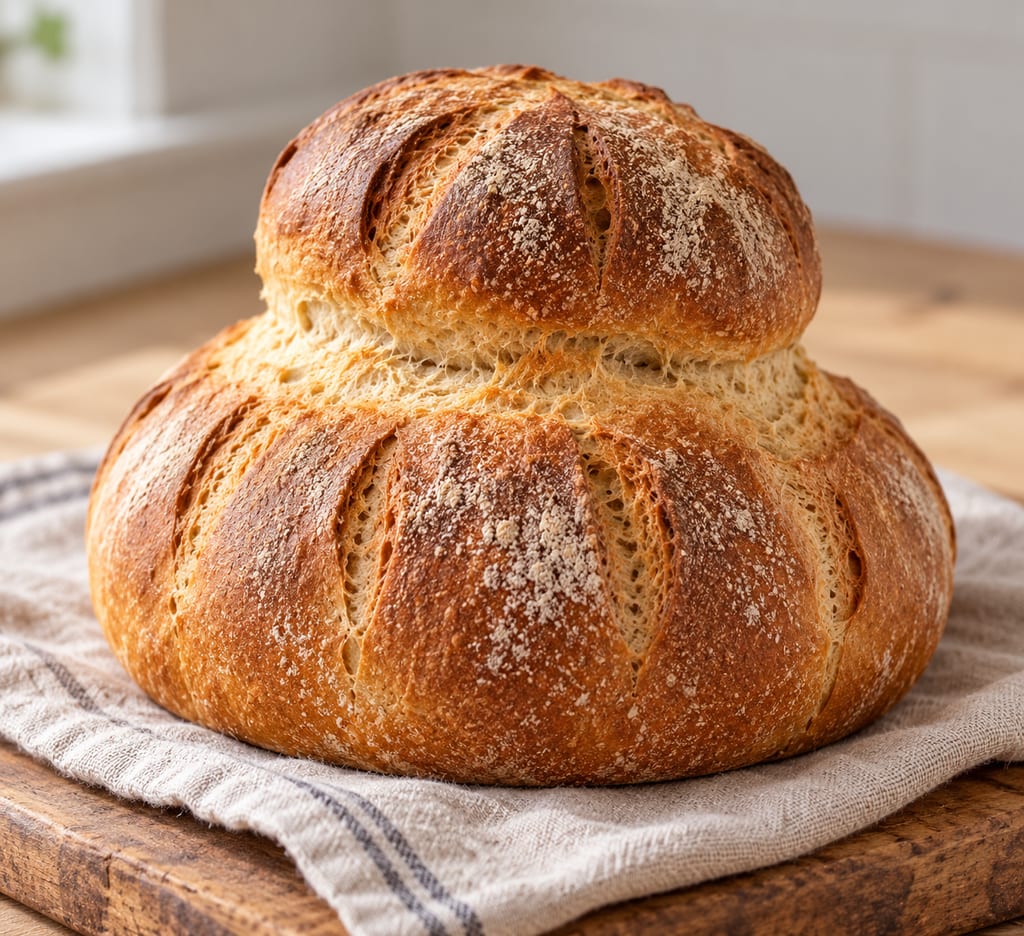
A large English cottage loaf with a smaller round joined atop a larger one. This slow-rise version uses white wheat flour with small portions of wholemeal wheat and rye, and bakes on a hot stone or tray.
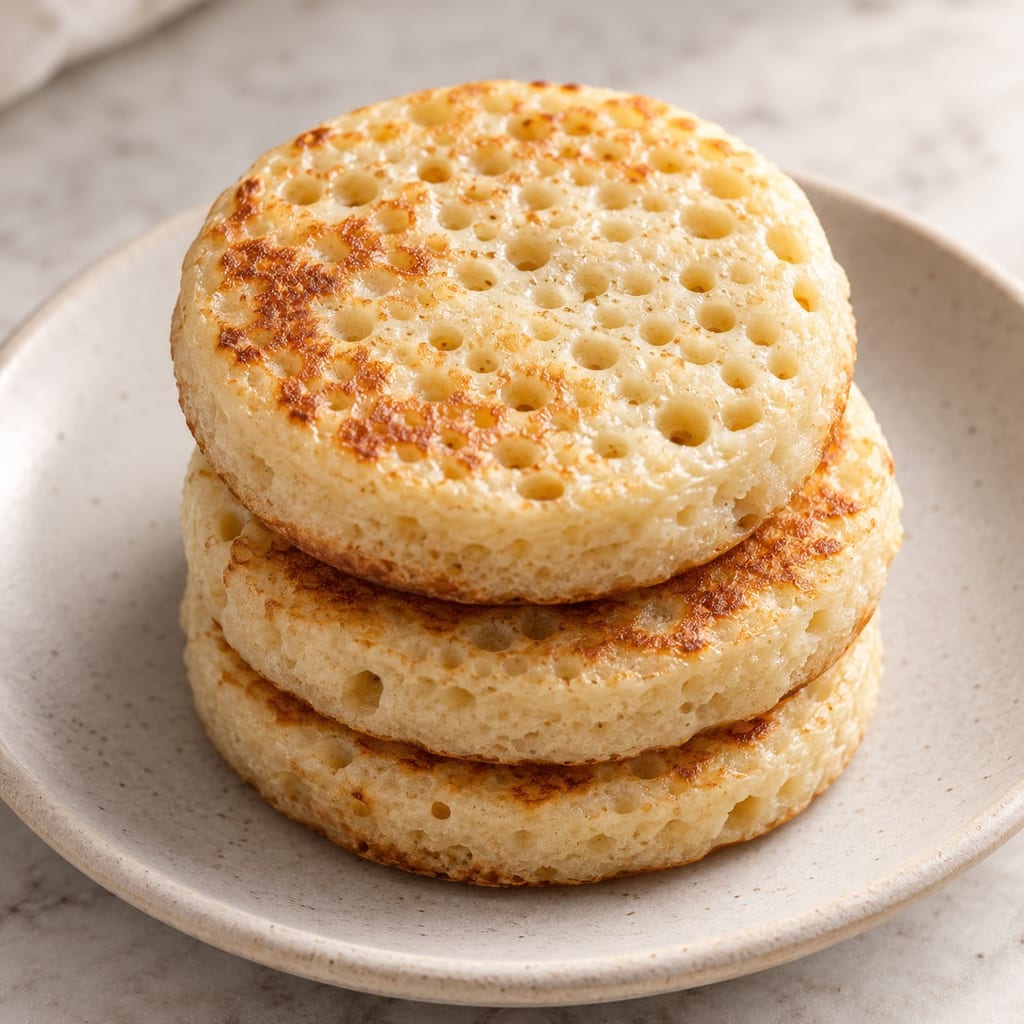
A yeasted milk-and-water batter cooked in greased rings, then turned to finish. This modern formula also includes baking powder.
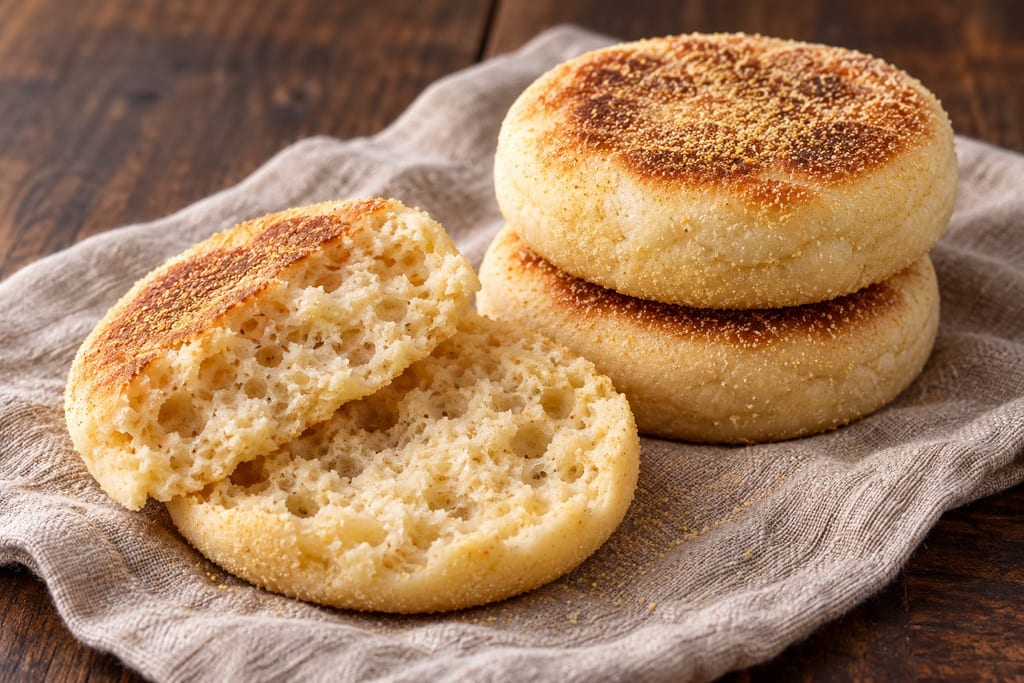
King Arthur’s six-piece English muffin batch uses a yeast preferment, two folds and a skillet or electric griddle; it is distinct from the sourdough-and-yeast version already catalogued.
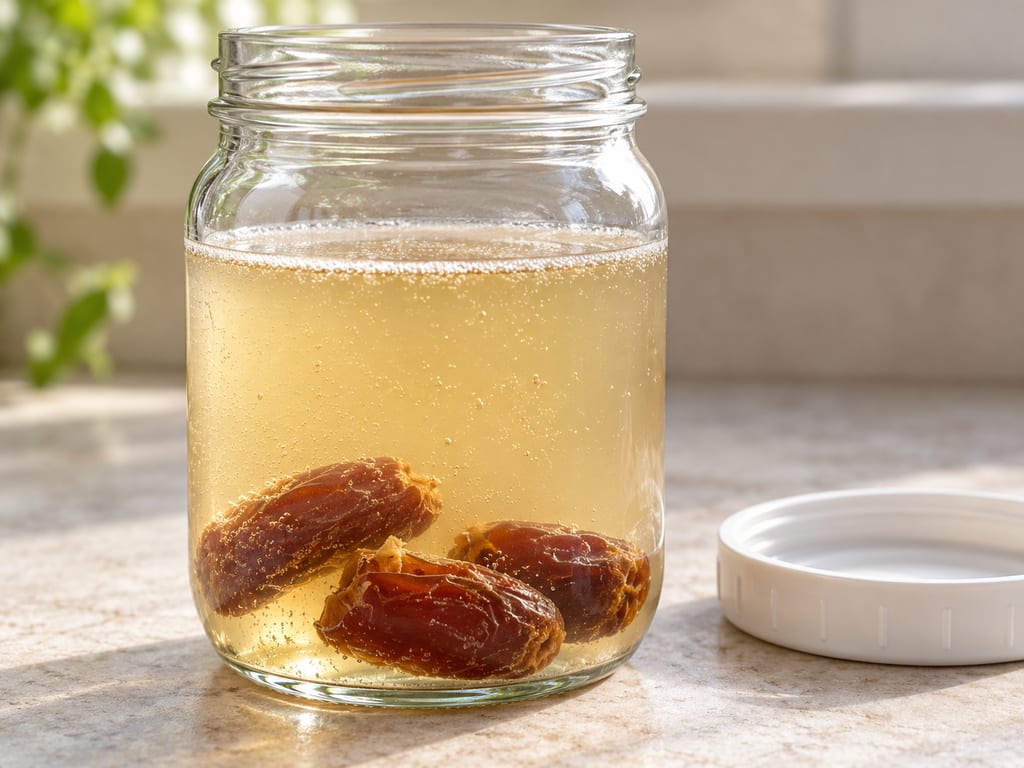
Fruit yeast water is a spontaneously fermented liquid made by soaking fruit in water, with or without sugar, to grow yeast for starting bread dough or a separate flour starter.
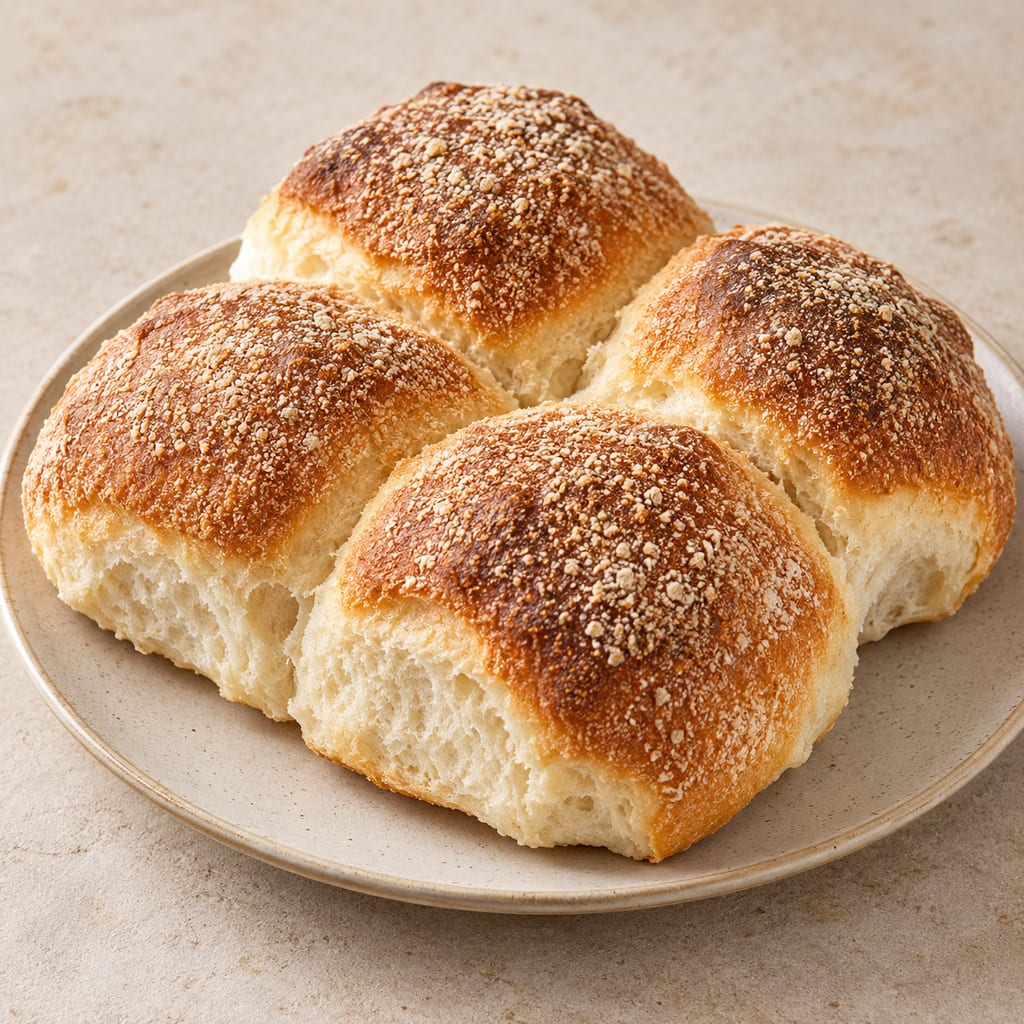
A wet, cold-fermented wheat dough is coated in rice flour and baked close together at high heat for Glasgow-style rolls with a crisp, dark crust and light interior.
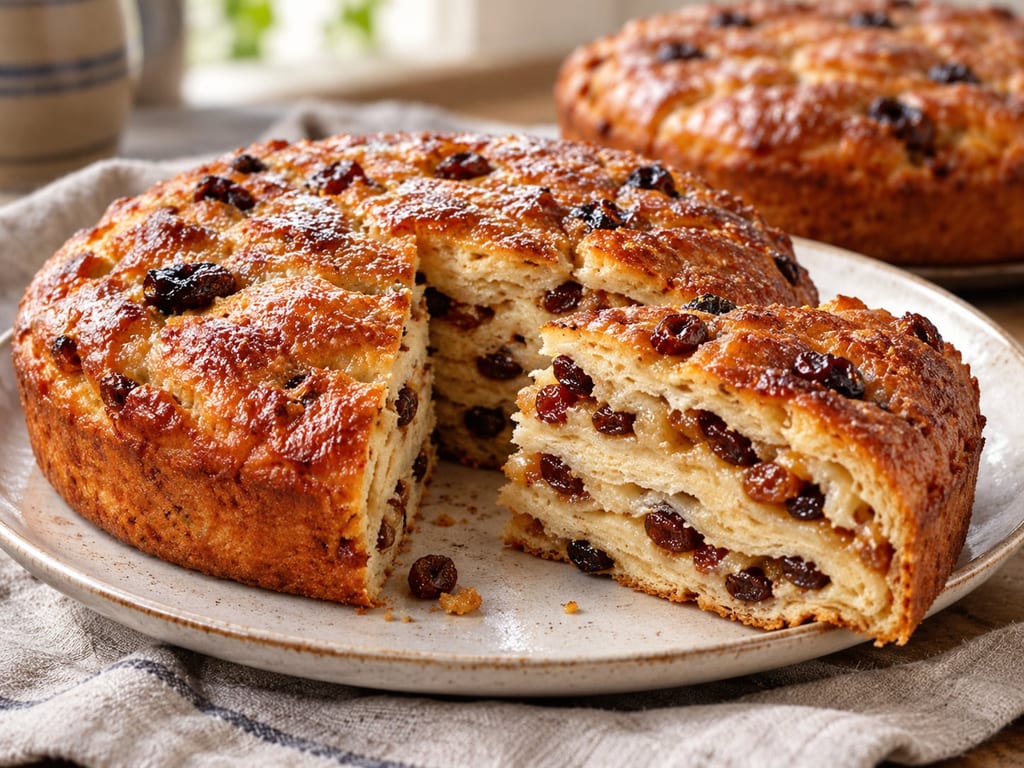
A yeast dough is folded around sweetened lard and dried fruit, then baked in tins until the bottom caramelizes.
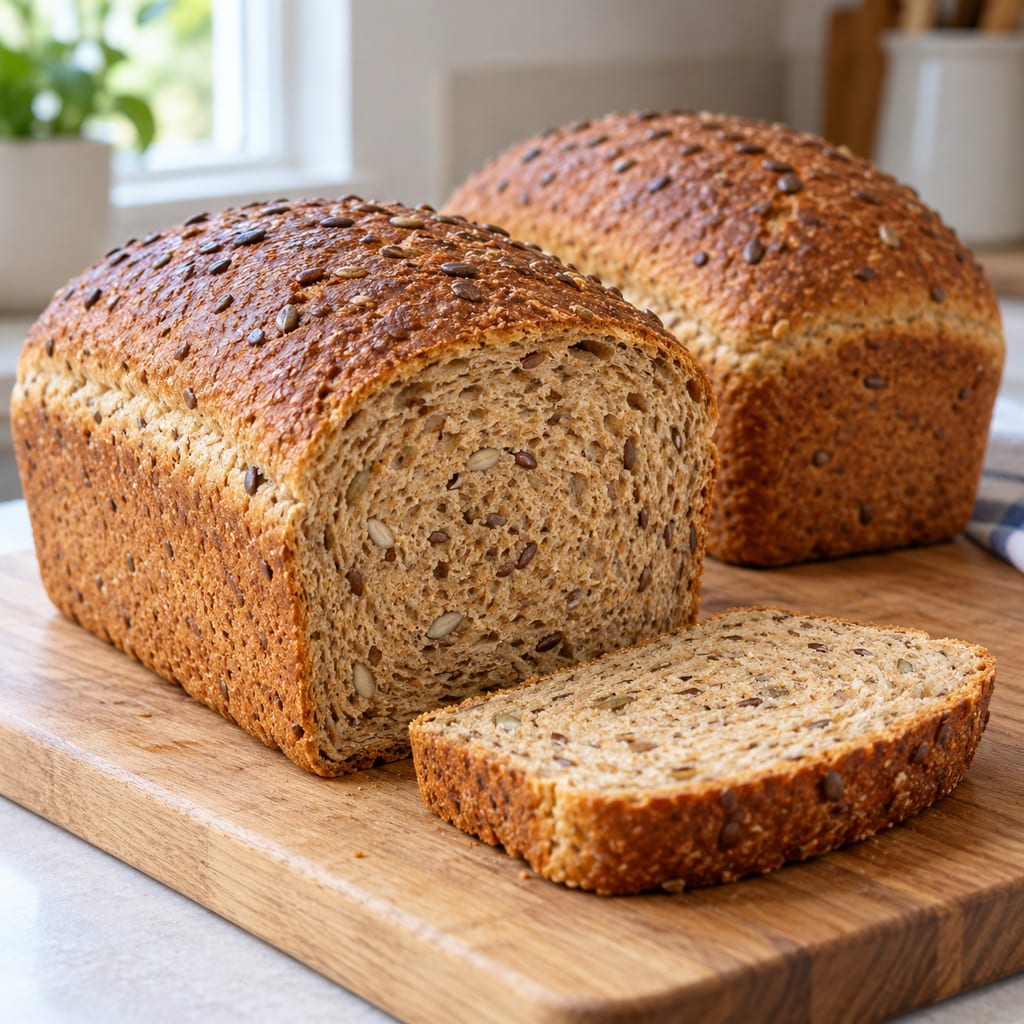
Two soft, savoury-sweet wheat loaves with malted flour, mixed seeds, butter and honey.
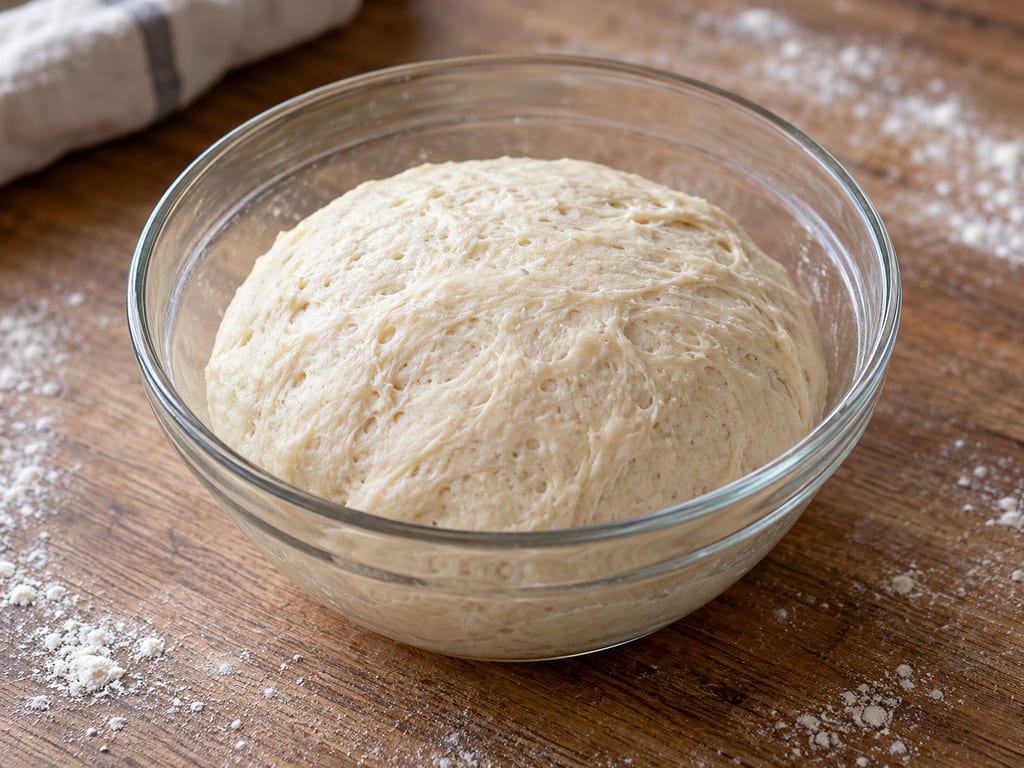
Pâte fermentée is a bread preferment made from salted, yeasted dough set aside to ferment and mixed into a later batch, carrying developed dough and fermentation products with it.
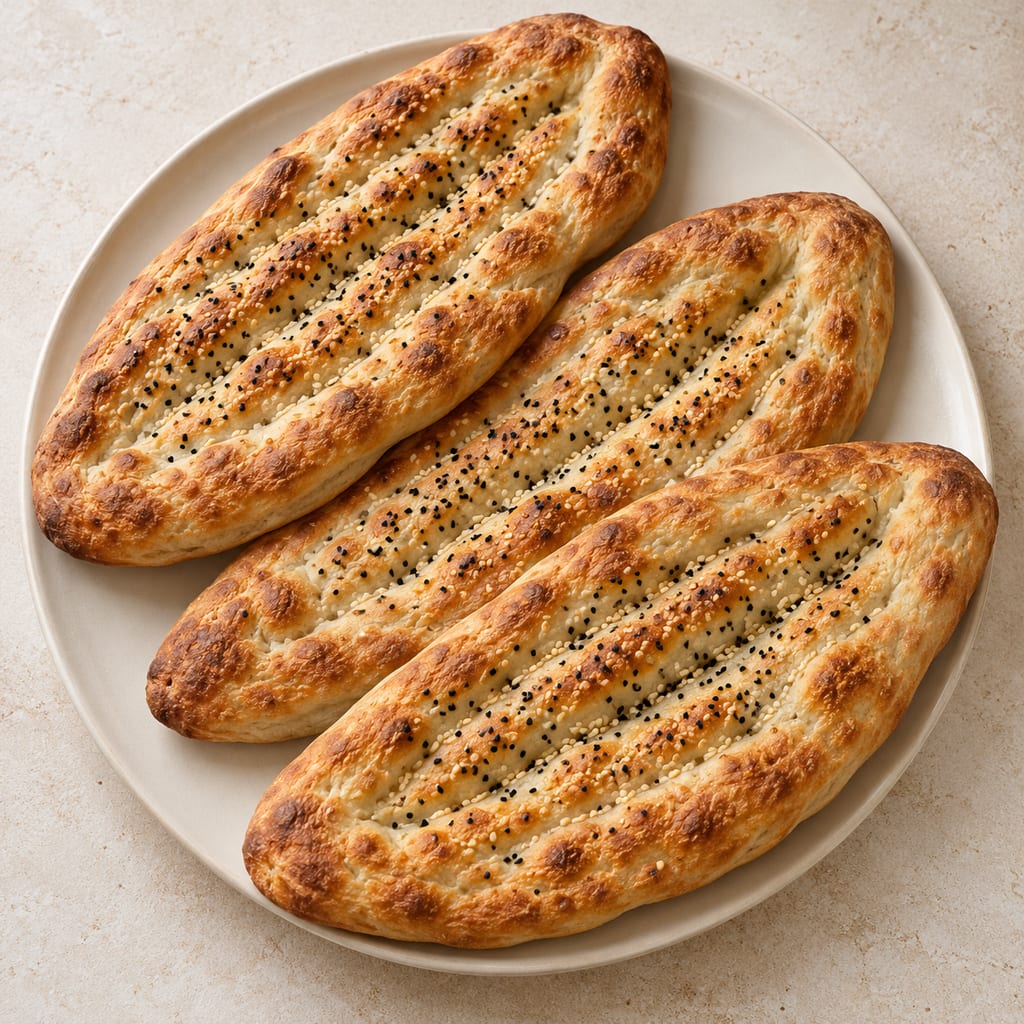
A long oval Afghan wheat bread, leavened with yeast, grooved along its length and baked until crisp outside and chewy within.
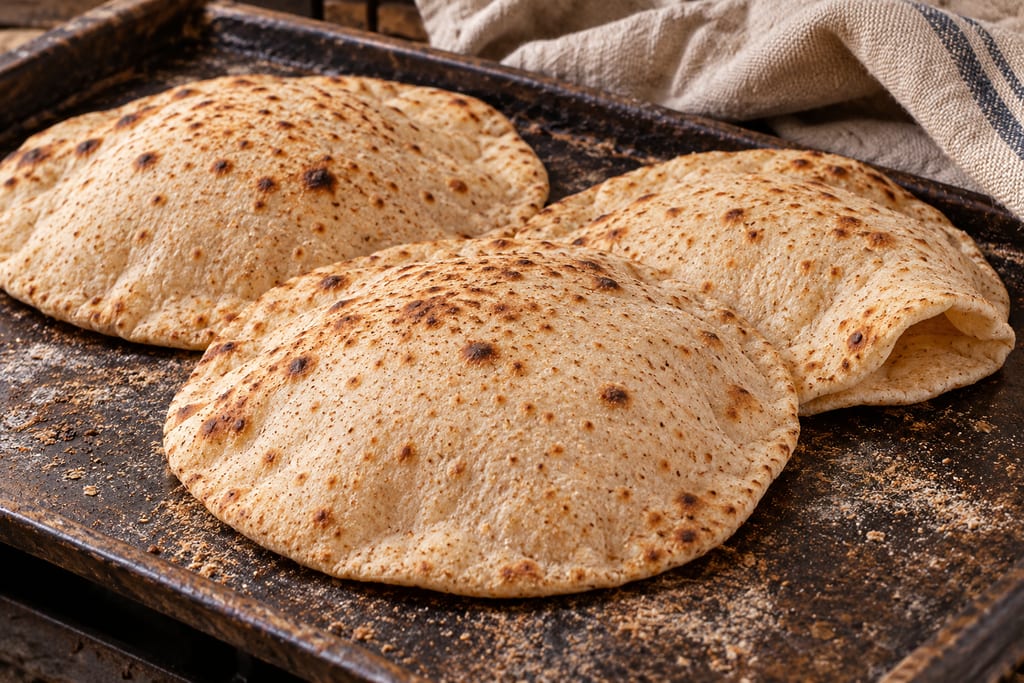
This home adaptation of Egyptian aish baladi uses a refrigerated yeast biga, whole-wheat dough, bran dusting and a very hot baking surface to make 16 pocketed rounds.
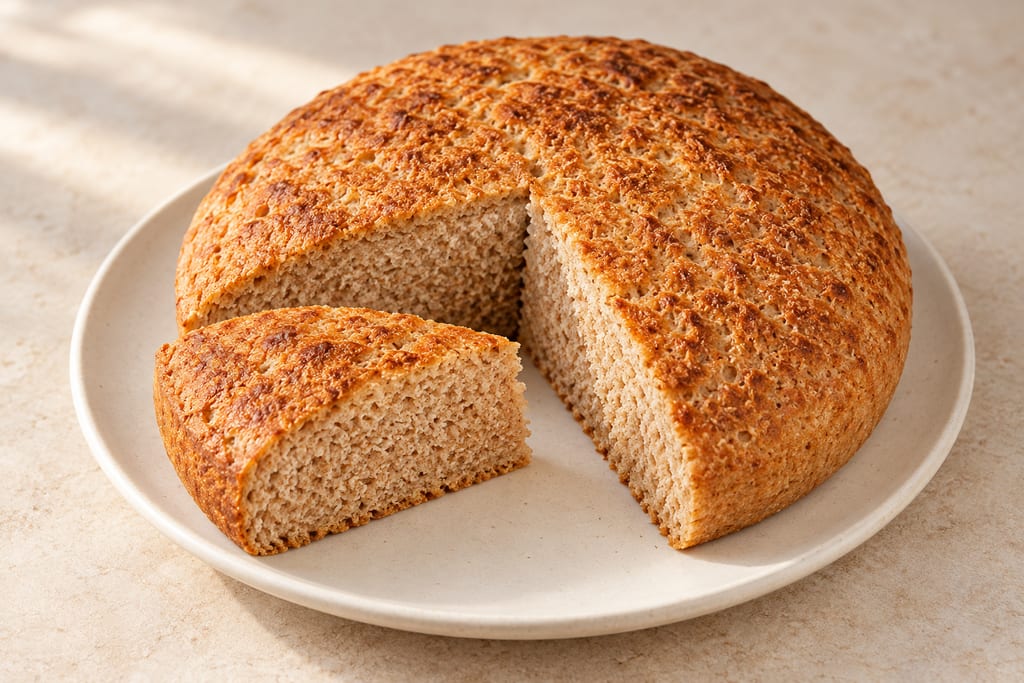
This oven-baked Amdo balep uses yeast, whole-wheat and white flour, a long covered rise and a two-sided bake in a heavy oven-safe pot.
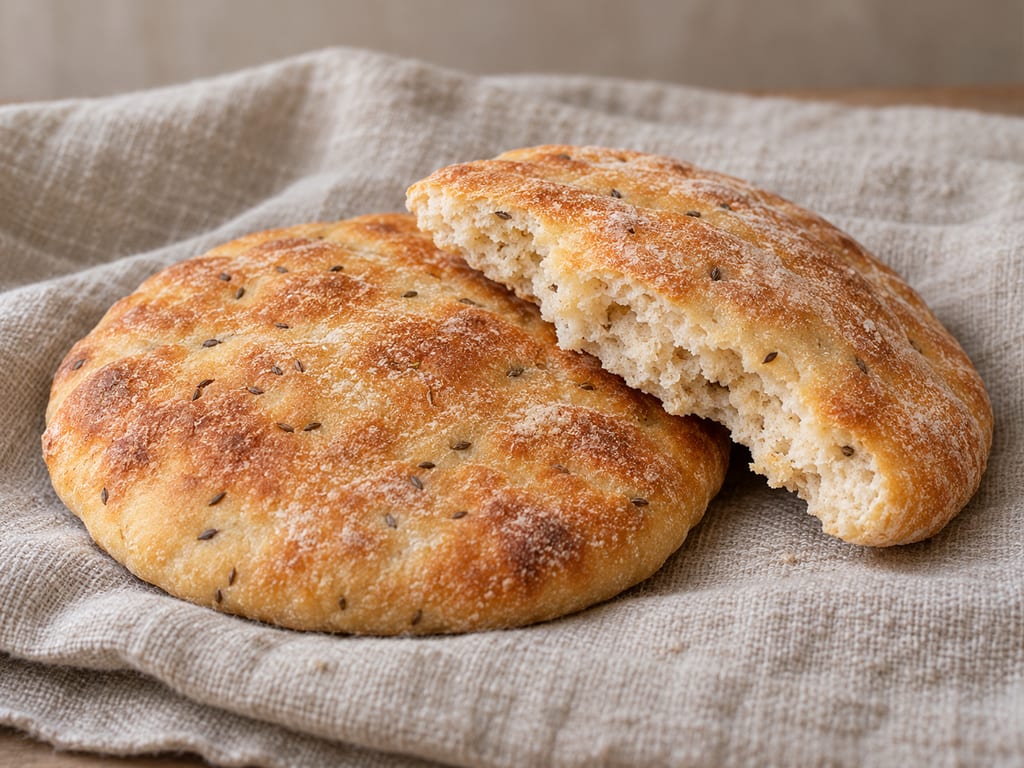
A measured, yeast-raised Ayacucho chapla home method shared by Thermomix Peru presenter Roxanna Salaverry. It makes thin, anise-scented rounds baked at 240°C; the historic qunchu-leavened form is documented separately.
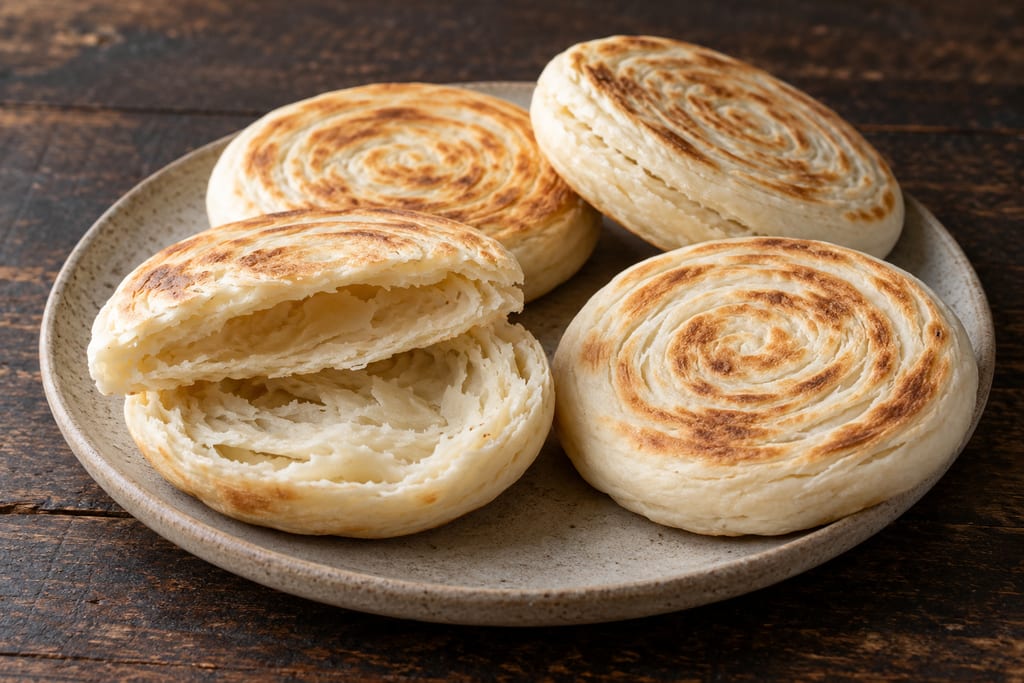
This Shaanxi-associated yeast flatbread uses a simple water dough, coiled shaping and a skillet bake. It is the bread used in roujiamo, not the filled meat dish.
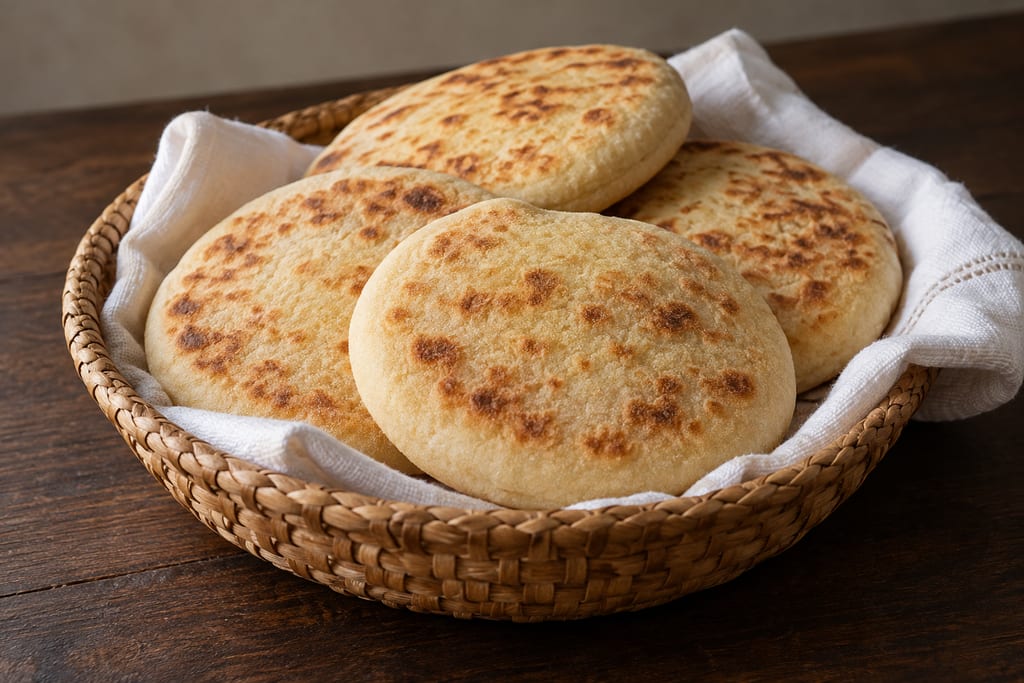
A Moroccan yeast-raised semolina pocket bread cooked on a dry pan or griddle; this measured batch makes about twenty 4-inch rounds.
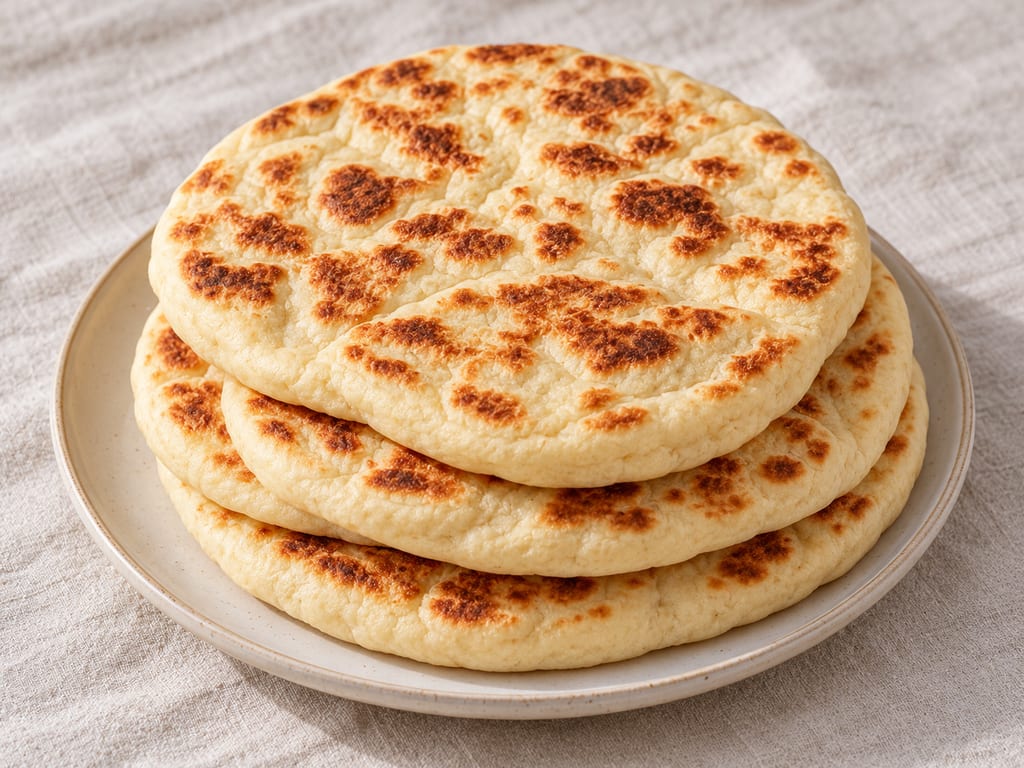
This Turkish bazlama uses yeast, plain yogurt and olive oil for a soft dough cooked in a skillet. Shape it into twelve small or six larger rounds, flip as bubbles appear, and wrap the breads to keep them soft.
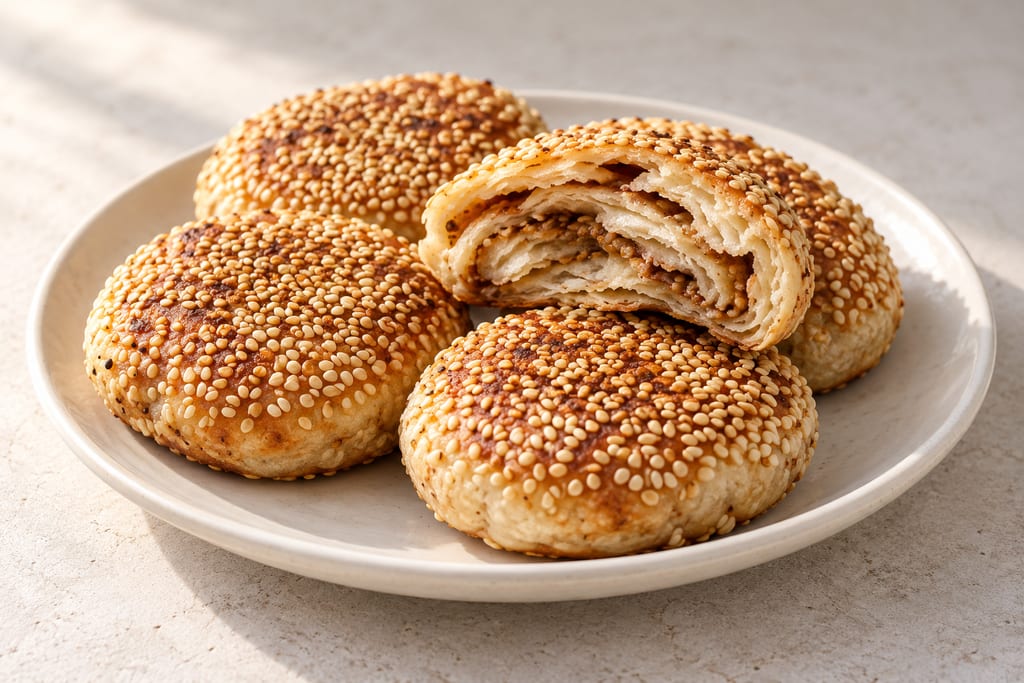
A Beijing-style yeast dough is layered with seasoned sesame paste, sealed into small buns, briefly pan-fried, seeded, and baked.
No community contributions have been published for this entry yet.
Sign in to contribute. Published comments and photos are free to read.
BBC Good Food / Immediate MediaRecipe · Modern use
Staffordshire oatcakesHeader lines 5-25 says the recipe makes six, with 10 minutes prep, 30 minutes cooking and plus one hour proving.
Ingredient card lines 60-95 lists milk 225 ml, yeast 7 g, oatmeal 100 g, wholemeal flour 75 g, plain flour 25 g, salt 1/4 tsp, oil 1 tsp and filling ingredients.
Method line 123 explicitly adds 200 ml water and 2 tsp sugar absent from the ingredient card, and gives 1-2 hours proving with increased-size/bubbly cues.
Steps 2-4 lines 126-132 describe filling, 8+2-minute mushroom cooking, 2-3-minute pan cakes and 1-2-minute filled-cake warming; line 135 says parchment may separate cakes for freezing.
Cited in: A soft oatcake from the Potteries; Two written recipes, a century apart; Oatmeal, wheat flour and the shape of the batter; What the yeast is doing; From bowl to thin pan cake; Mushrooms, cheese and ways to eat them; Keeping the cakes and reading the record
Visit StokeCurrent geography · Current use
Oatcake ShopsThe inspected directory lists current oatcake shops and filled/breakfast availability in Stoke-on-Trent; it does not date the food or establish an origin.
Cited in: A local food with a disputed beginning; Mushrooms, cheese and ways to eat them; Keeping the cakes and reading the record
New Zealand Listener, Volume 5, Issue 126, p. 46Historical recipe · Method · History
Genuine Staffordshire OatcakesA letter published 21 November 1941 says the writer's mother had kept the recipe for over eighty years; this is the writer's family claim, not an independently dated manuscript.
The letter's digital transcription describes oatmeal, flour, salt, hot water and yeast, a long warm rise, bicarbonate of soda, cooking on a hot girdle, stacking under cloth and serving hot with butter or bacon, or cold with butter and syrup.
The online transcription has ambiguous OCR symbols in the yeast and soda quantities; those amounts are not normalized or used as exact values.
Cited in: Two written recipes, a century apart; Mushrooms, cheese and ways to eat them; Keeping the cakes and reading the record
Buxton Museum and Art GalleryHistory · Identity · Method
The Provenance of the OatcakeThe museum distinguishes soft yeasted oatmeal-and-wheat batter pancakes in the north and east Midlands from dry Scottish oatcakes, and describes their use as breakfast or a light meal with savoury fillings.
The museum recounts Derbyshire evidence from the 1600s and a 1817 description of acid fermentation at Pilsbury; it relays Pamela Sambrook's report of seventeenth-century Staffordshire Moorlands probate inventories listing oatcake equipment. This is regional context, not a dated Staffordshire formula.
The museum describes North Staffordshire home production in batches sold from house windows, regional differences in thickness, and present-day oatcake shops.
Cited in: A soft oatcake from the Potteries; A local food with a disputed beginning; Mushrooms, cheese and ways to eat them
Staffordshire Past Track / Staffordshire Museum ServiceHistory · Equipment
Oatcake toasting rackThe Staffordshire Museum Service dates a blacksmith-made iron oatcake toaster to approximately 1800–1899; it has a semicircular holder that can be moved to heat food.
The record says it was purchased at a farm sale at Caverswall Farm, Loxley, near Uttoxeter; it does not identify the toaster's original maker or specific oatcake method.
Cited in: A local food with a disputed beginning; From bowl to thin pan cake
Harvard T.H. Chan School of Public Health, The Nutrition SourceIngredient context
OatsExplains the common forms of oats and states that oat flour lacks gluten, which contributes structure and volume in baked foods; used to explain why the BBC formula includes wheat flour, not to make a health or allergy claim about this recipe.
Cited in: Oatmeal, wheat flour and the shape of the batter
Yale National InitiativeProcess science
The Chemical Reaction of Yeast in DoughExplains yeast fermentation of sugars as producing carbon dioxide and alcohol; applied here only as general context for the source's yeast-raised oatcake batter, not as a measured endpoint or food-safety test.
Cited in: What the yeast is doing
