Shipton Mill’s recipe specifies 500 g of its “Malted Flour” and no separate malt powder. Its related light malthouse flour is a blend containing wheat flour, malted wheat flakes and malted barley flour. The exact recipe flour’s composition and enzyme activity are not stated.
Active diastatic malt powder is a separate ingredient whose enzymes can speed yeast activity. Adding it would change this formula and may alter the rise. Use a malted bread flour without an extra diastatic-malt addition.
A British miller’s loaf
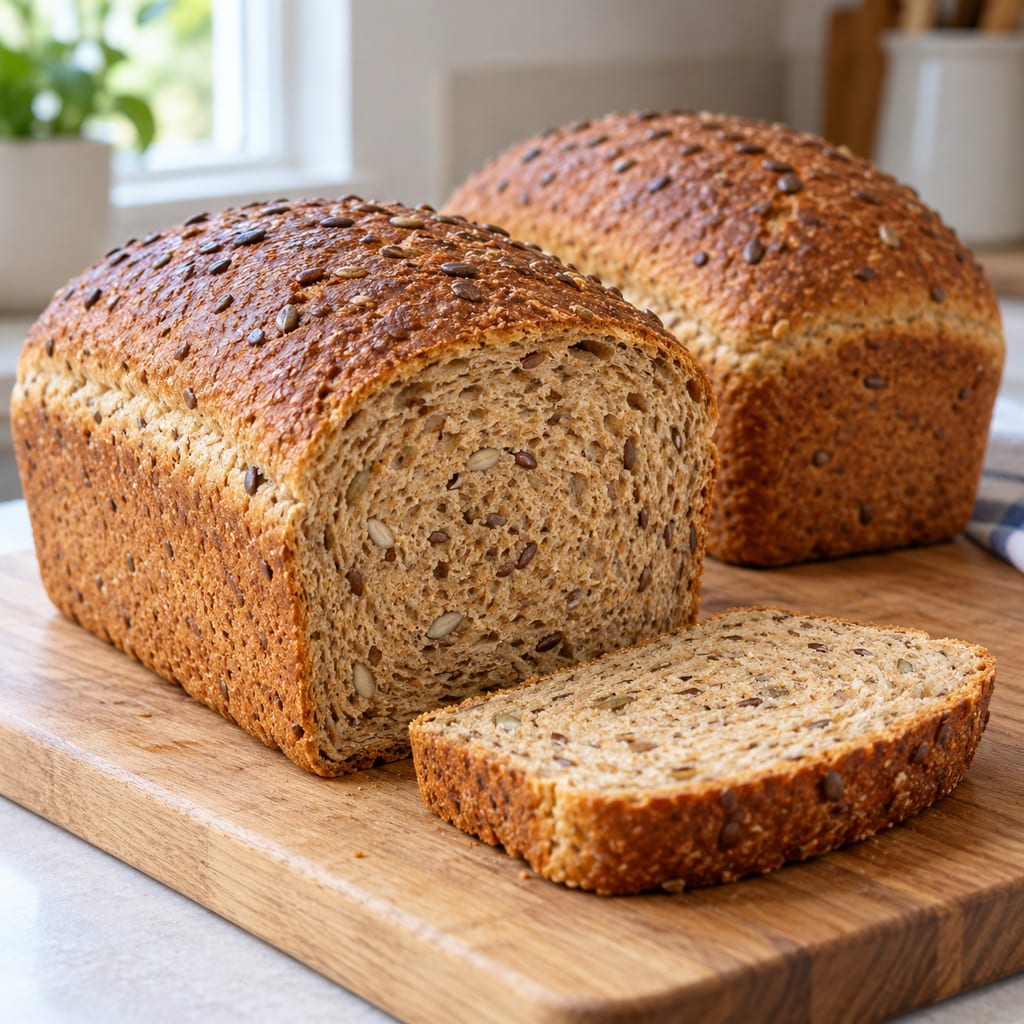
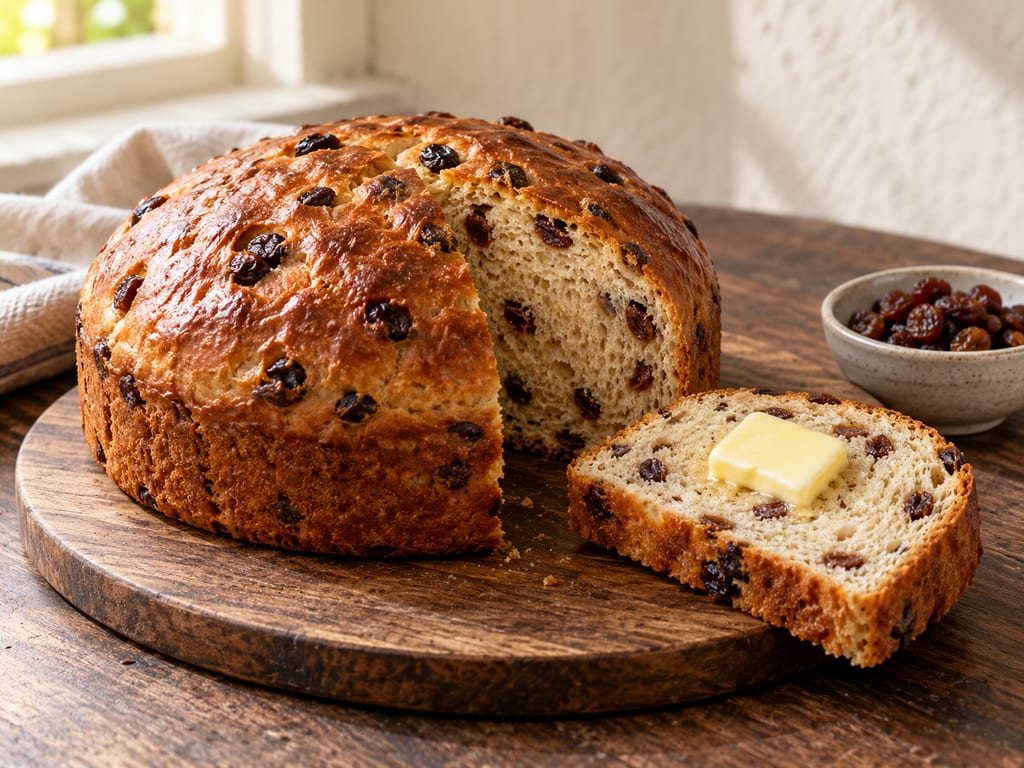
The archive describes malted wheat and seeded loaves as an everyday British bread for toast and sandwiches. Shipton Mill’s formula uses mixed seeds, honey and butter and gives two medium loaves. The source allows tins or a free-form shape; this adaptation uses two tins for a manageable shape.
The mill’s site history dates a mill at its site to 1086, but that does not establish the age or origin of this bread.
History
The inspected sources document a contemporary miller’s recipe and describe malted seeded bread as a British everyday loaf. They do not date the bread family’s first appearance.
Ingredients
Yield 2 medium loaves, about 540 g each · Scaling: source batch only
Malted flour (Shipton Mill)
500 g
The source names malted flour. A related Shipton Mill malthouse flour contains wheat flour, malted wheat flakes and malted barley flour. The recipe gives no separate diastatic malt; do not add it.
Mixed seeds (Shipton Mill)
50 g
Instant dried yeast
8 g
Fermipan red in the source.
Sea salt or table salt
8 g
Unsalted butter
30 g
Clear honey
8 g
WaterWarm.
300 g
Method
Risks and precautions · Standard risk
Raw flour and dough
Uncooked flour may carry pathogens; raw dough should not be tasted or eaten.
Hazard source
Bake the dough as directed before eating. Wash hands, utensils, bowls and work surfaces after handling raw flour or dough.
Control source
Do not taste the raw dough. Pour boiling water into the hot steam tray carefully and keep clear of rising steam.
Combine all ingredients, keeping the yeast apart from the salt as mixing begins. Mix in a stand mixer for 10 minutes or knead by hand for 15 minutes, until a dough forms.
Place the dough in a lightly greased bowl. Cover and leave at room temperature for about 1–2 hours, until nearly doubled; the time varies with the room.
Turn the dough onto a lightly floured surface. Knead briefly to release large air pockets, then fold and rotate it into a taut ball.
Lightly grease two loaf tins, or a baking tray for free-form loaves. Divide the dough in two, shape each piece and cover so the surface does not dry or stick.
Leave the shaped loaves for about 1 hour, until nearly doubled. Near the end, heat the oven to 220°C and put an oven-safe metal tray on a lower shelf.
Slash the tops with a sharp serrated knife or baker’s lame. Set the loaves on the upper shelf. Carefully pour boiling water into the hot lower tray to create steam, keeping clear of the rising steam. Bake at 220°C for 30 minutes.
Tap the base of a loaf. If it sounds hollow, remove it from its tin if needed, turn it upside down and bake for 5 more minutes. Remove any remaining water tray first. Cool on a wire rack before slicing.
Conditions
Yield2 medium loaves, about 540 g each
Fermentation2–3 h
Temperature220°C
Temperature controlMulti-stage
Places
United Kingdom
Documented preparation · Country evidence
A British miller publishes this formula. This is recipe context, not a claim of origin.
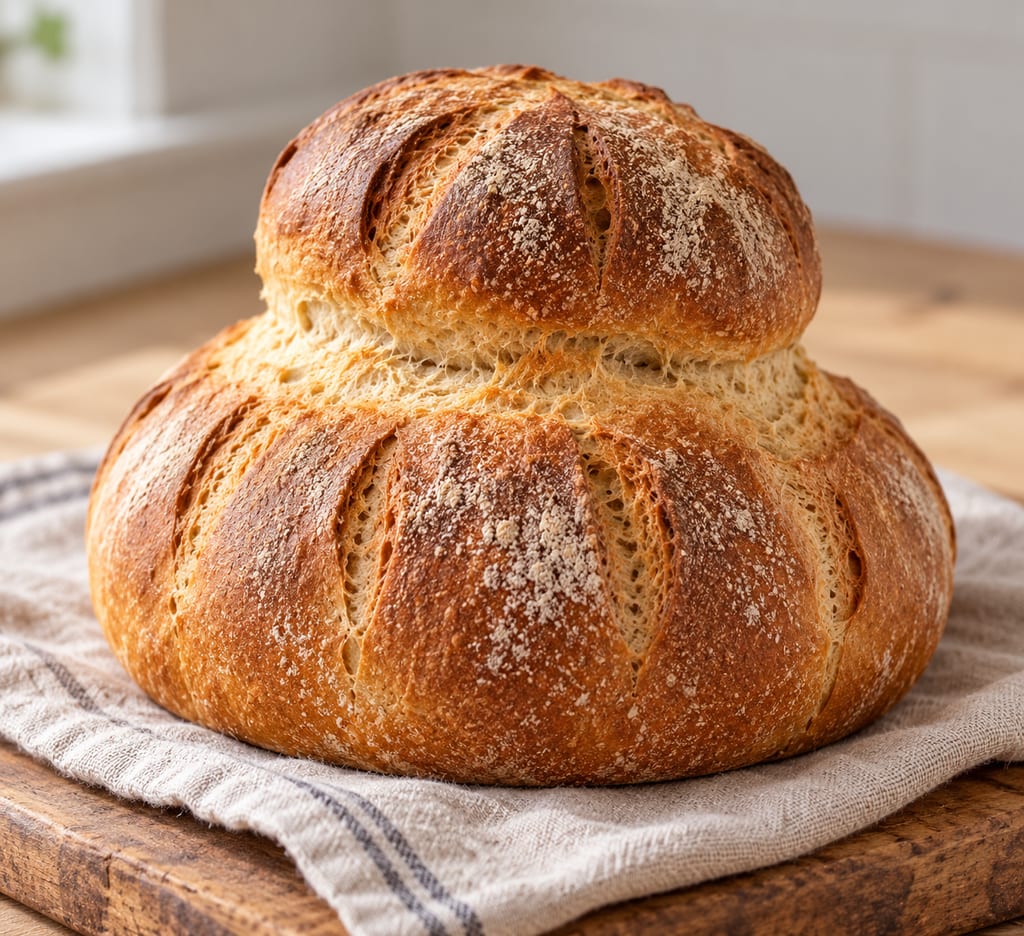
A large English cottage loaf with a smaller round joined atop a larger one. This slow-rise version uses white wheat flour with small portions of wholemeal wheat and rye, and bakes on a hot stone or tray.
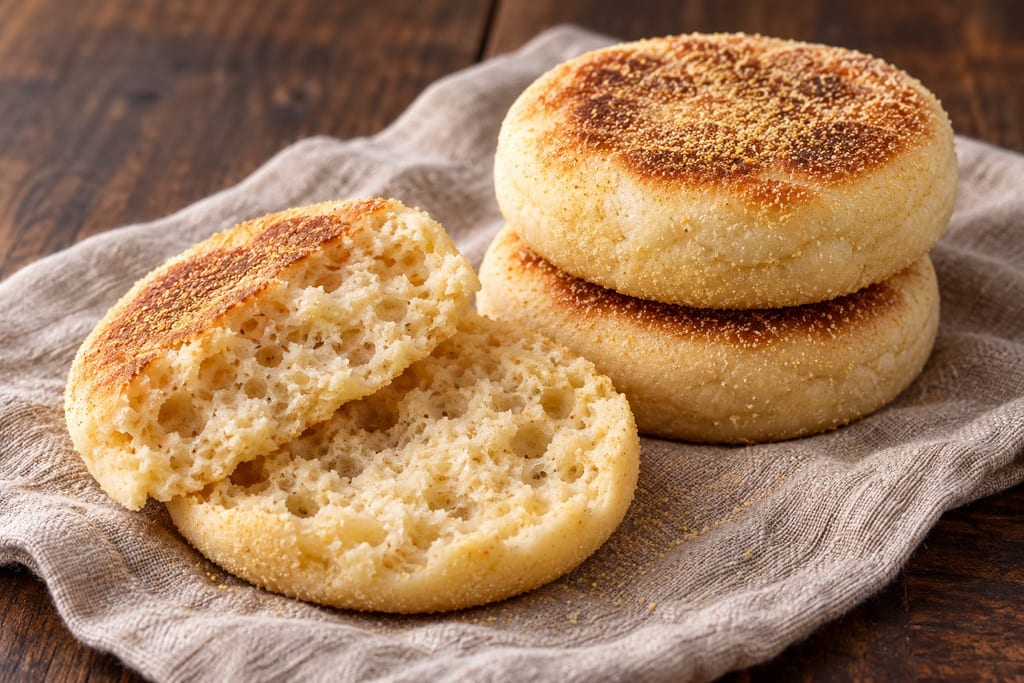
King Arthur’s six-piece English muffin batch uses a yeast preferment, two folds and a skillet or electric griddle; it is distinct from the sourdough-and-yeast version already catalogued.
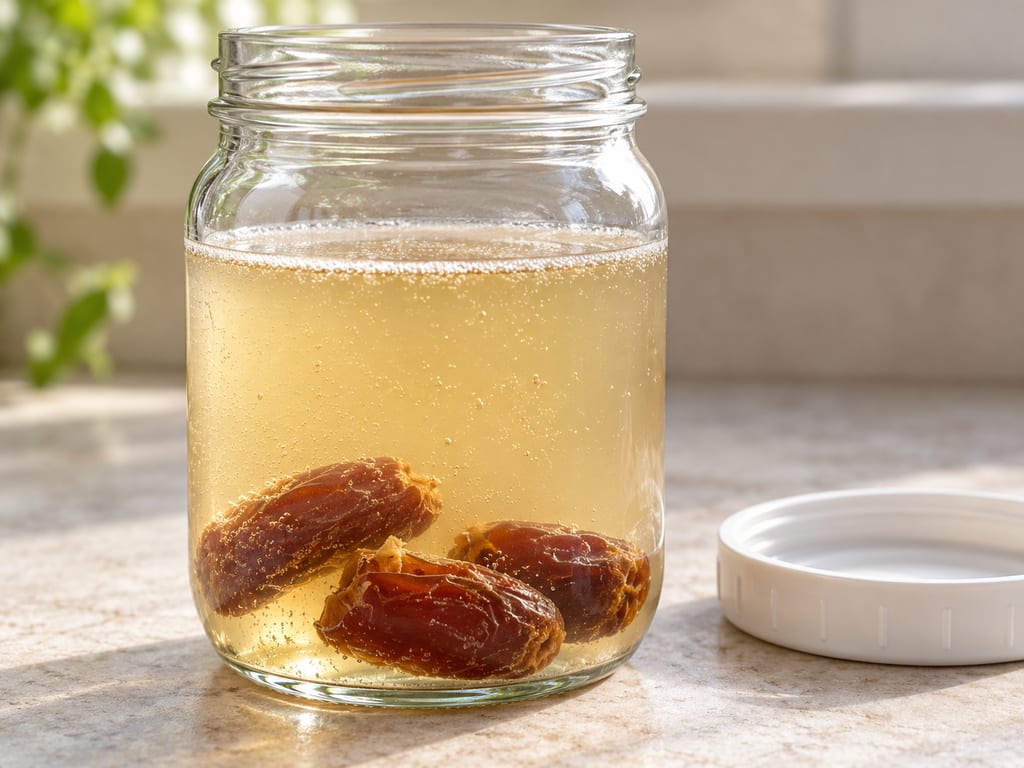
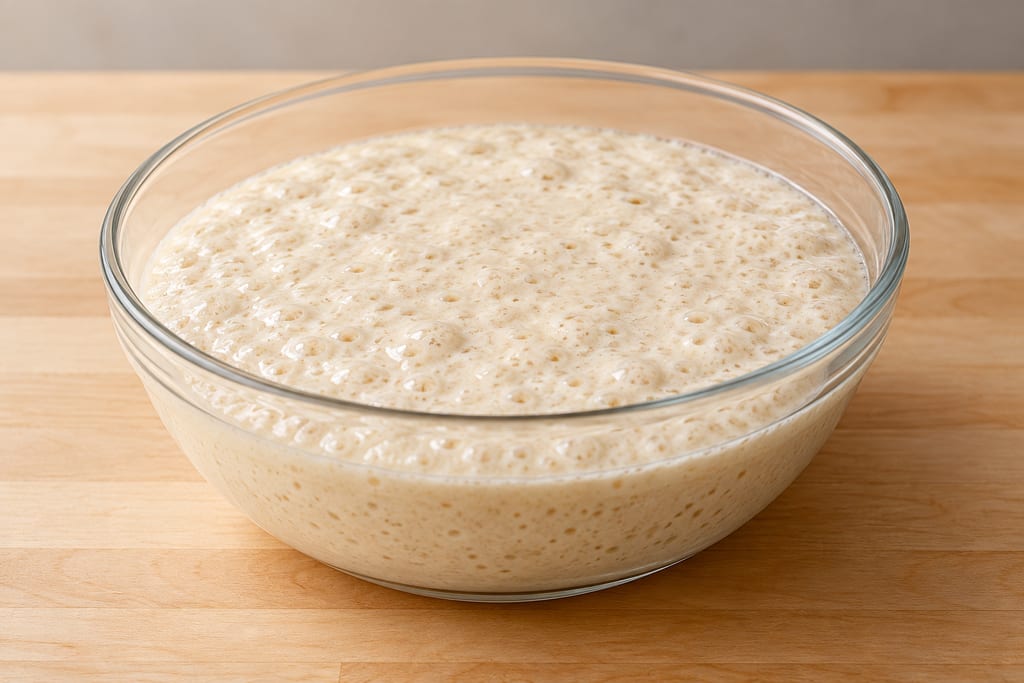
Fruit yeast water is a spontaneously fermented liquid made by soaking fruit in water, with or without sugar, to grow yeast for starting bread dough or a separate flour starter.
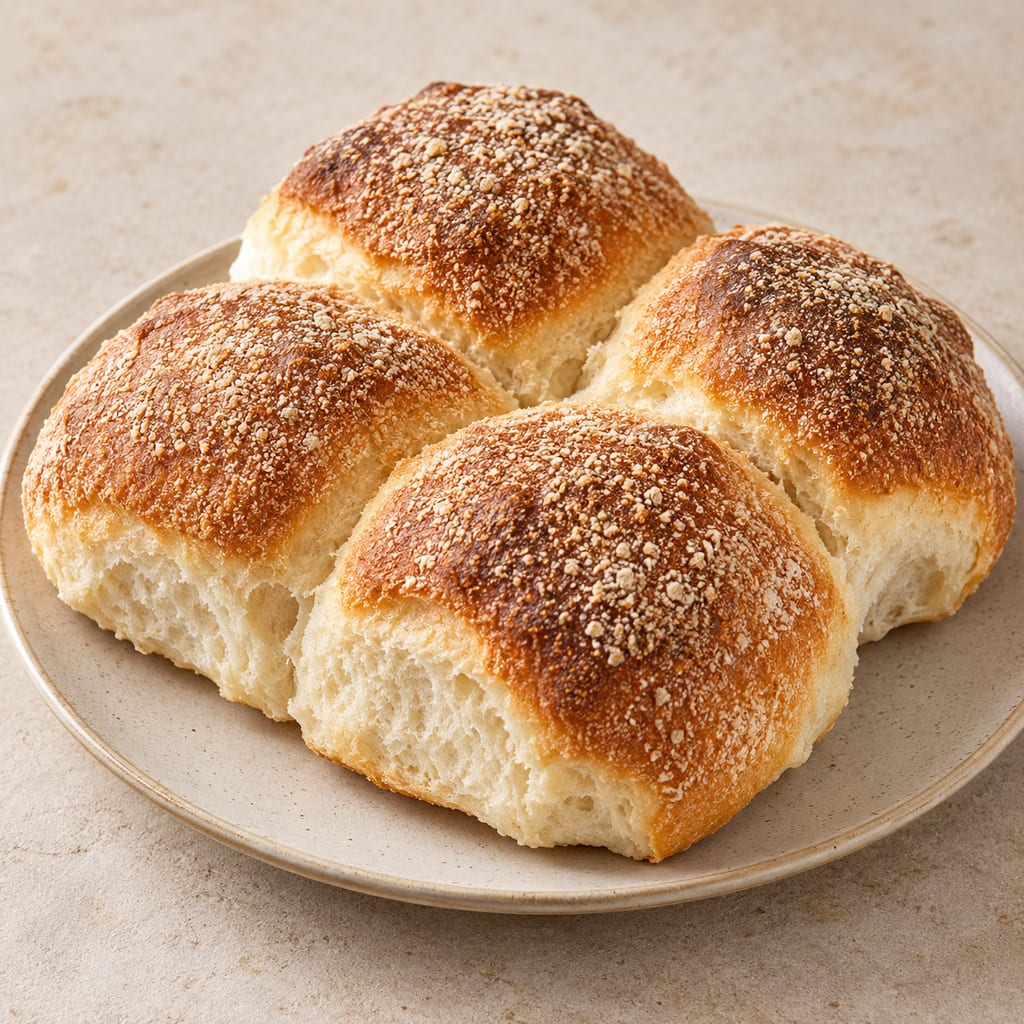
A wet, cold-fermented wheat dough is coated in rice flour and baked close together at high heat for Glasgow-style rolls with a crisp, dark crust and light interior.
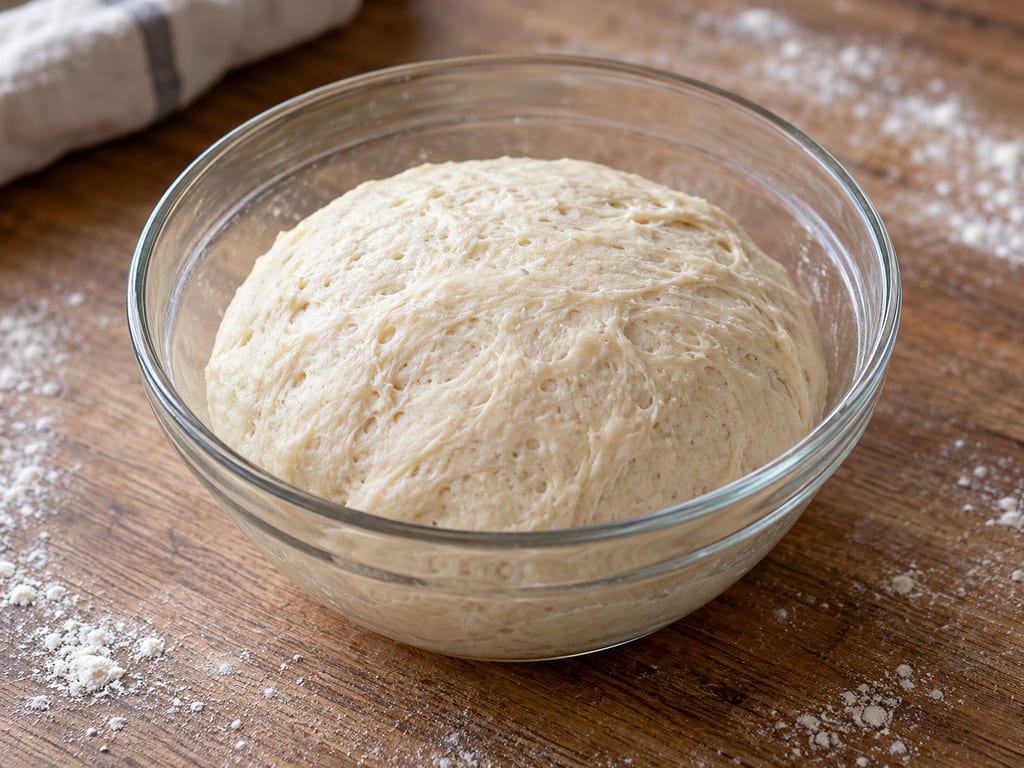
Pâte fermentée is a bread preferment made from salted, yeasted dough set aside to ferment and mixed into a later batch, carrying developed dough and fermentation products with it.
Poolish is a loose, unsalted bread preferment of roughly equal weights of wheat flour and water with a pinch of baker's yeast, left to ripen before it goes into the final dough.
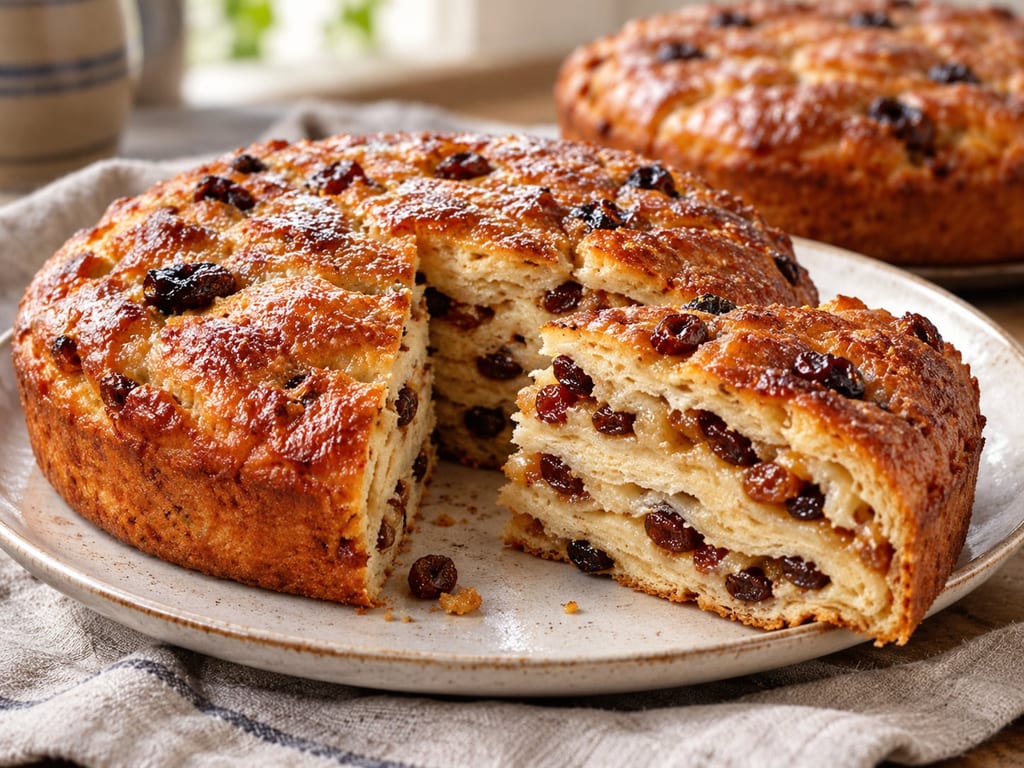
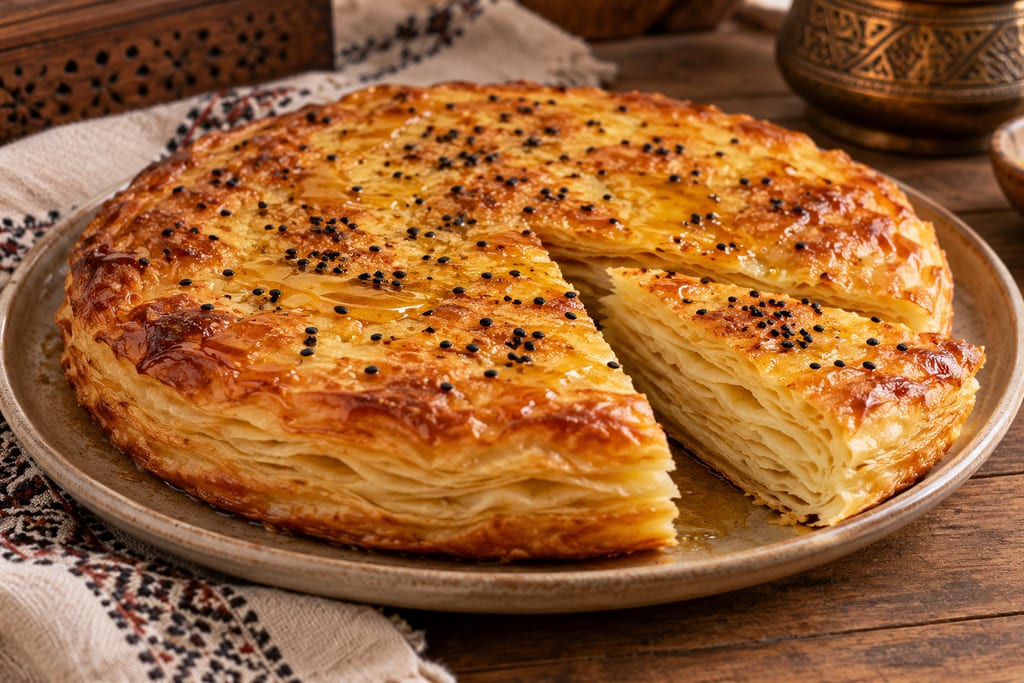
Bint al-sahn is a Yemeni celebration and home bread built from thin, egg-rich yeast dough layers brushed with ghee or butter. This source-specific version makes one round cake, baked until golden and served warm with honey.
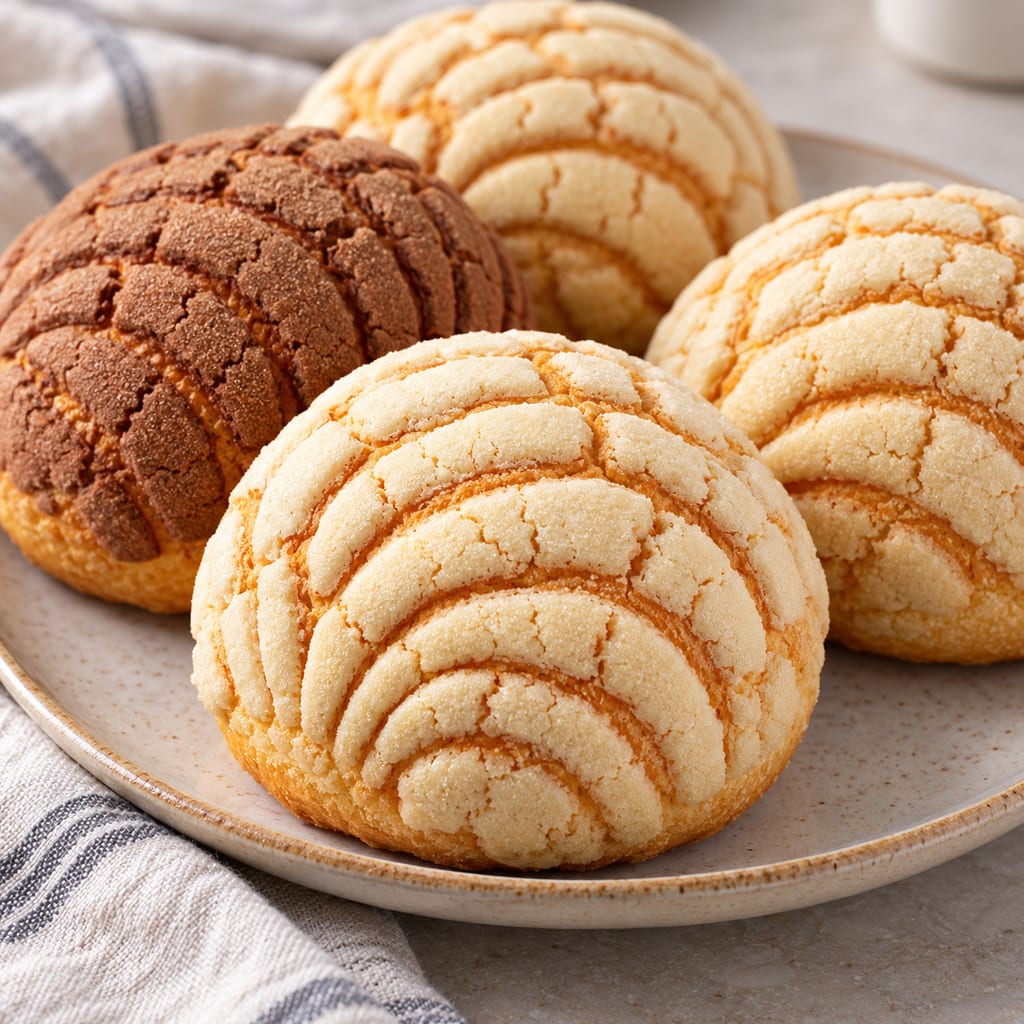
Mexican sweet rolls with a soft enriched yeast dough and a separate scored sugar-flour topping shaped like a shell. This version makes 15 rolls and uses a chilled dough rest before final proofing.
Community
No community contributions have been published for this entry yet.
Share what you made
Sign in to contribute. Published comments and photos are free to read.
A related malthouse flour contains wheat flour, malted wheat flakes and malted barley flour; it does not establish the exact formula flour’s composition or enzyme activity.