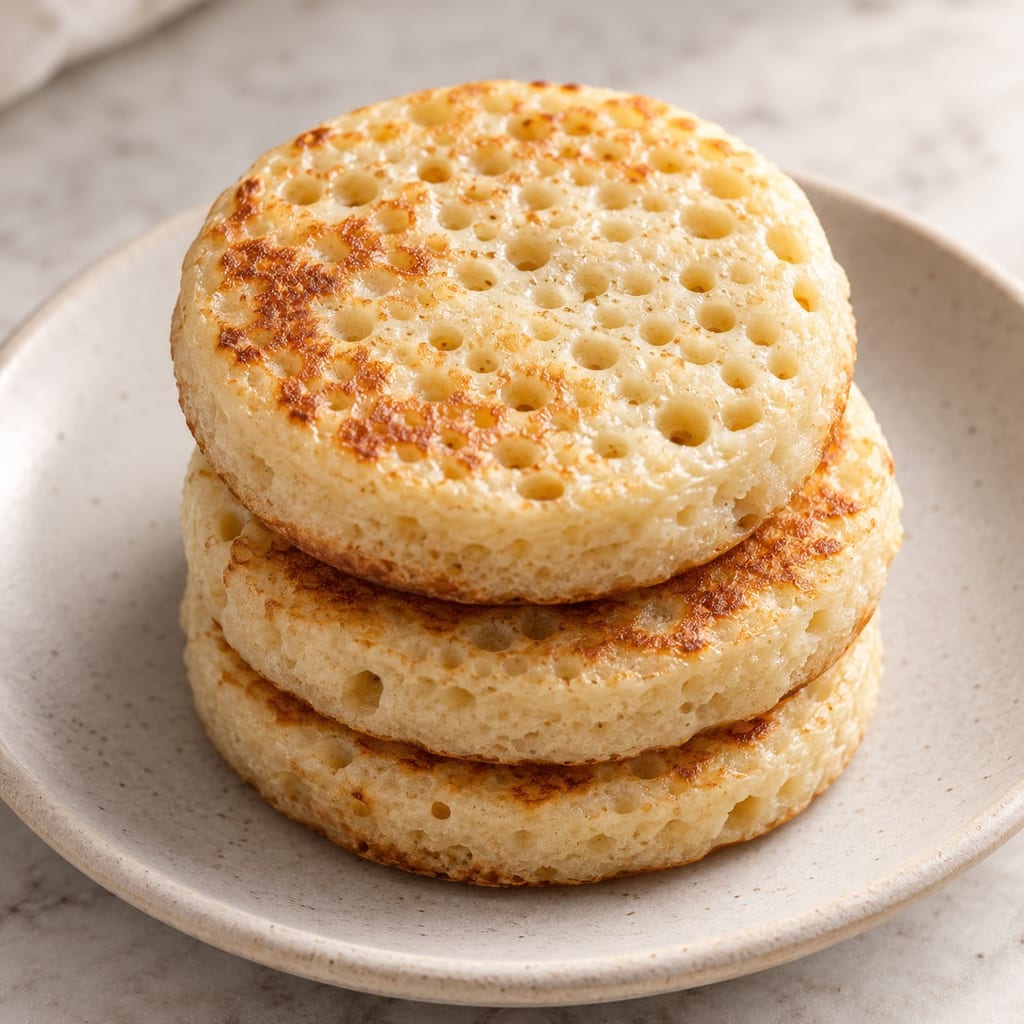
Crumpets: King Arthur version
A yeasted milk-and-water batter cooked in greased rings, then turned to finish. This modern formula also includes baking powder.
 FermenteaWhere food goes to change
Cottage loaf · English cottage loaf
A large English cottage loaf with a smaller round joined atop a larger one. This slow-rise version uses white wheat flour with small portions of wholemeal wheat and rye, and bakes on a hot stone or tray.
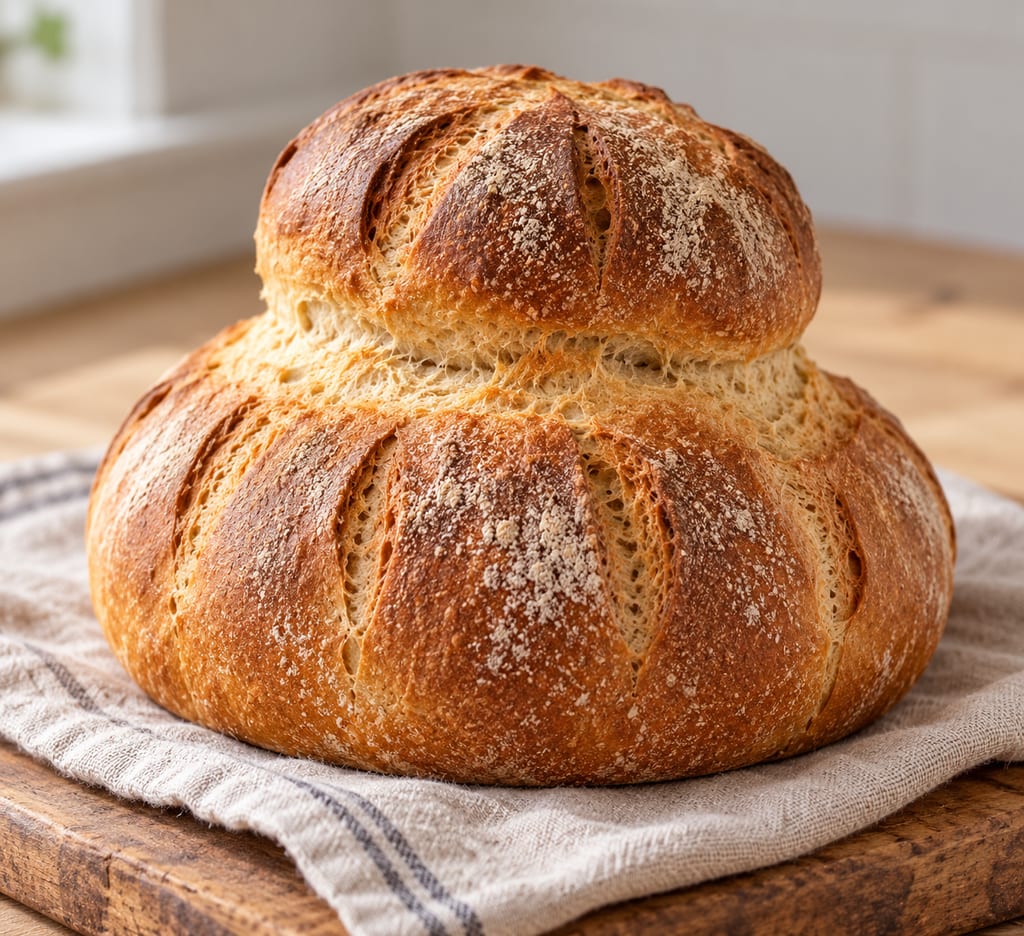
This formula by English baker Sonya Hundal makes one very large loaf. It combines white bread flour with smaller quantities of wholemeal wheat and dark rye. The dough is firm, and the stacked shape depends on shaping the two portions tightly and pressing a deep dimple through their join.
The recipe gives a cool first rise, followed by several rests and a two-stage bake. It does not specify a total dough weight, a scale-up formula or a validated internal temperature. The article's possible explanations for the loaf's name remain possibilities, not established history.
Work the yeast into the mixed flours before adding salt and most of the water. Knead until the stiff dough is cohesive, adding the remaining water only as needed. After the first two-hour rise at 15–18°C, fold the dough once and leave it covered for another 45–60 minutes.
Shape the dough into a ball and rest it for an hour. Divide it into a large portion and a smaller piece of about 360–370 g. Press gas out of both pieces and shape them tightly into balls; leave them covered for 45–60 minutes.
Heat a stone or baking sheet in the oven at 220°C (200°C fan), allowing enough room above it for the loaf. Flatten the two balls slightly, place the smaller on the larger, then press a deep dimple through the centre of both. Cover for 10 minutes; slash the surface if desired.
Transfer the loaf on a floured peel. Bake for 10–15 minutes at the higher setting, then lower the oven to 180°C (160°C fan) and bake for 20–30 minutes, until well browned. Cool on a rack before cutting.
Raw flour can carry harmful bacteria. Do not taste the dough before baking and clean hands and tools after handling flour. Protect hands when moving dough onto or off the preheated stone or sheet.
The consulted recipe presents a current cottage loaf by an English baker but gives no dated first attestation or reliable account of the loaf's origin. The history period remains unknown.
Yield 1 large loaf · Scaling: source batch only
The dough contains uncooked wheat and rye flour; raw flour should not be tasted.
Hazard sourceThe recipe transfers the loaf onto a preheated stone or baking sheet and bakes in a hot oven.
Hazard sourceDo not taste uncooked dough; wash hands and utensils after handling raw flour.
Control sourceUse a floured peel and heat-resistant protection when handling the hot stone or baking sheet.
Control sourceDo not taste raw dough.
Use care when moving dough to or from the preheated oven surface.
Contains wheat and rye gluten.
The cited recipe is presented as a cottage loaf by English baker Sonya Hundal in Lincolnshire; this supports an English association, not a precise origin.
A yeasted milk-and-water batter cooked in greased rings, then turned to finish. This modern formula also includes baking powder.
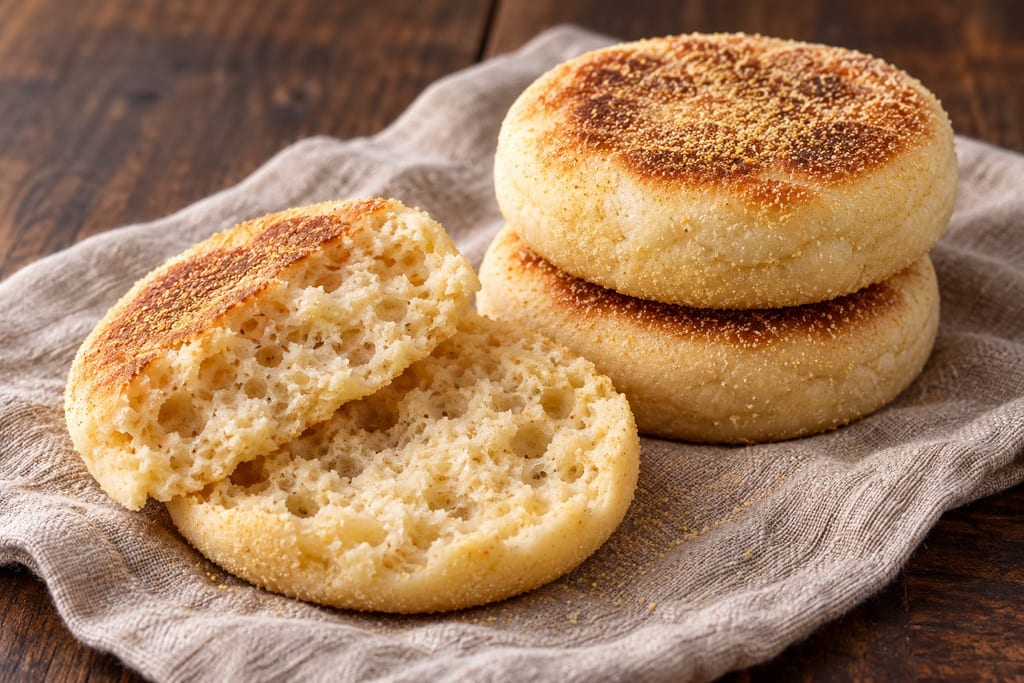
King Arthur’s six-piece English muffin batch uses a yeast preferment, two folds and a skillet or electric griddle; it is distinct from the sourdough-and-yeast version already catalogued.
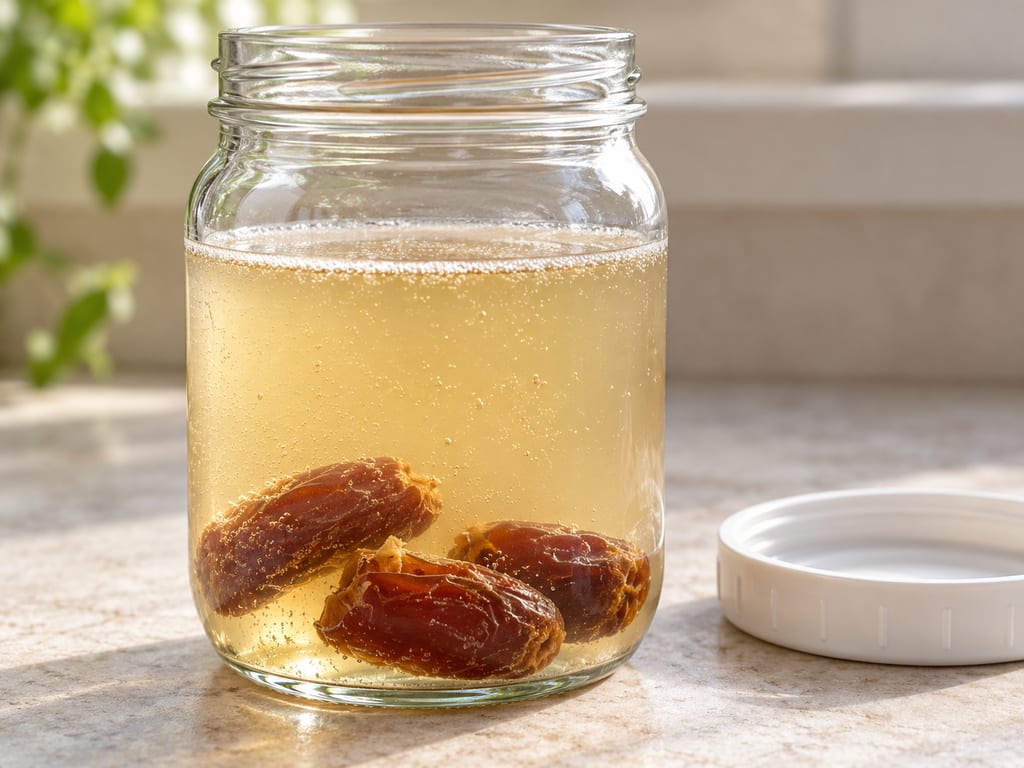
Fruit yeast water is a spontaneously fermented liquid made by soaking fruit in water, with or without sugar, to grow yeast for starting bread dough or a separate flour starter.
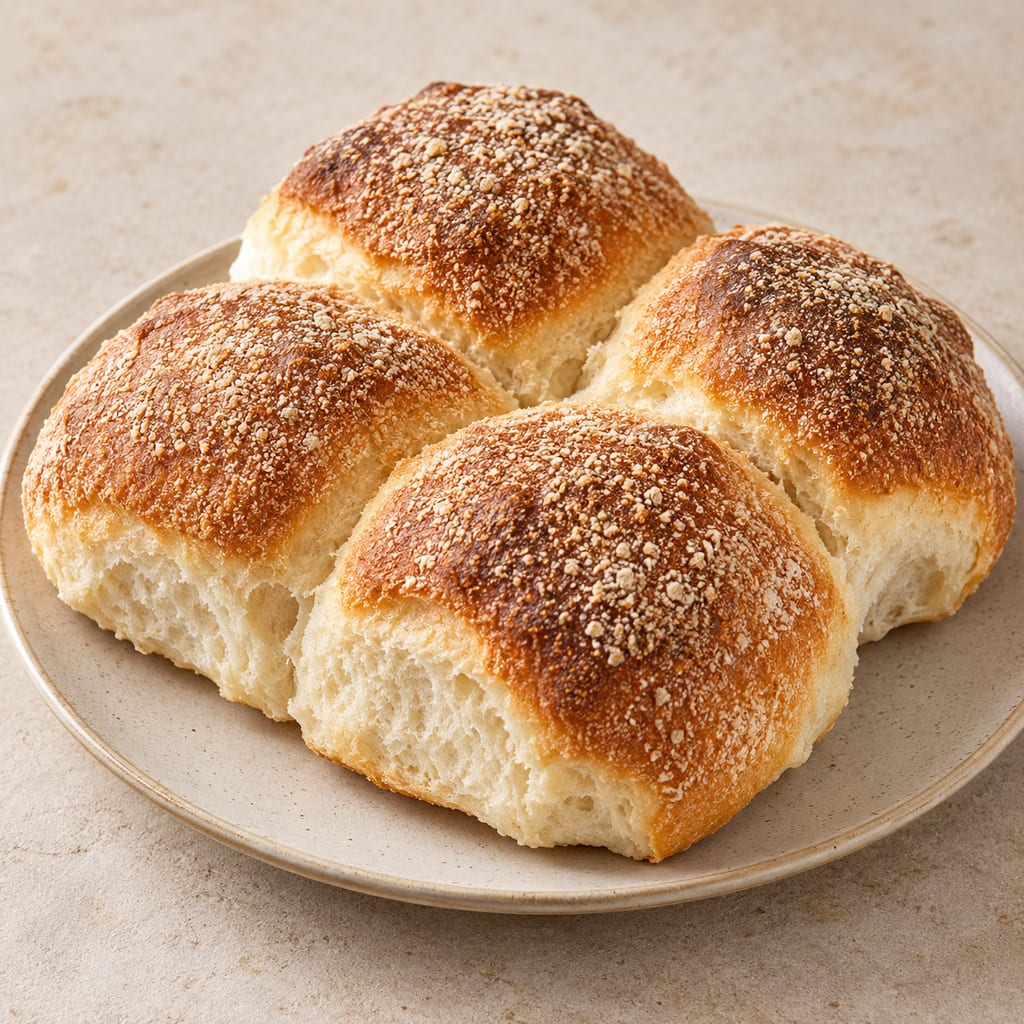
A wet, cold-fermented wheat dough is coated in rice flour and baked close together at high heat for Glasgow-style rolls with a crisp, dark crust and light interior.
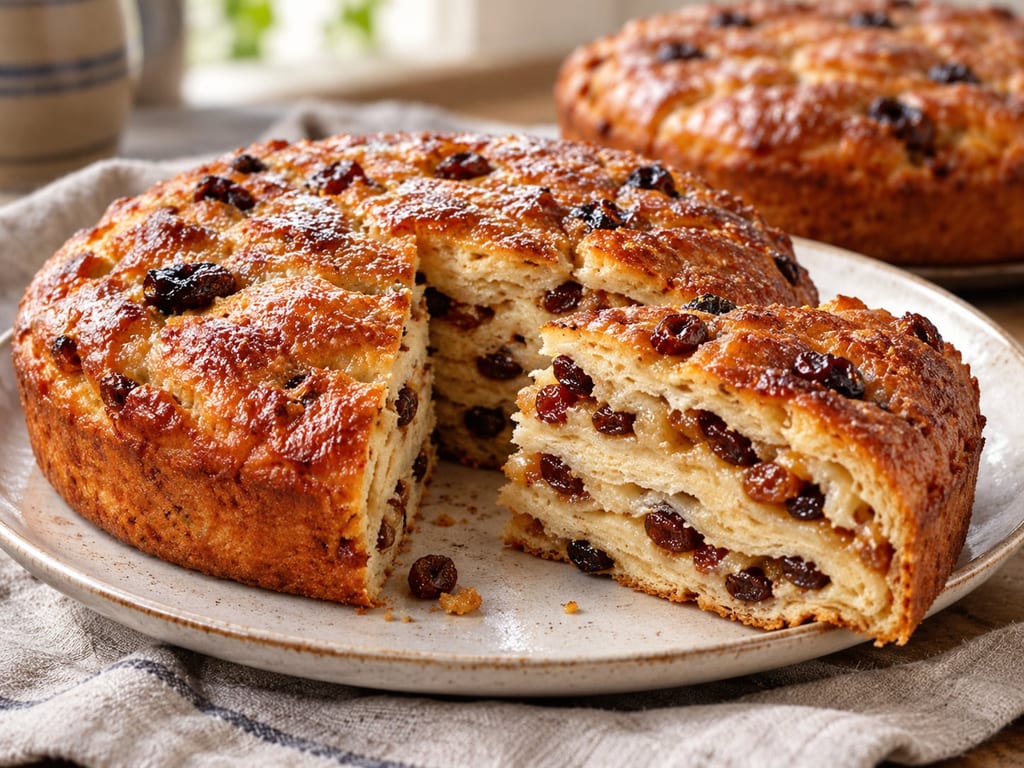
A yeast dough is folded around sweetened lard and dried fruit, then baked in tins until the bottom caramelizes.
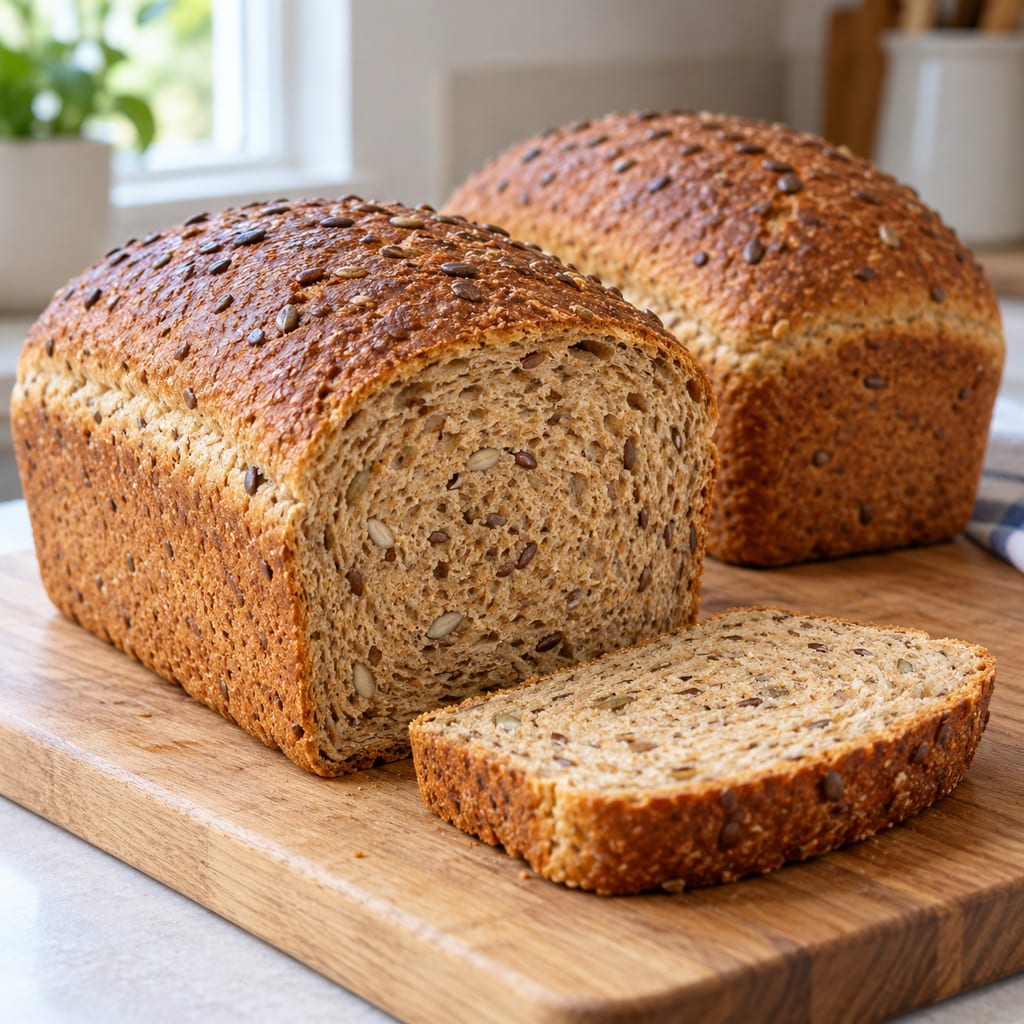
Two soft, savoury-sweet wheat loaves with malted flour, mixed seeds, butter and honey.
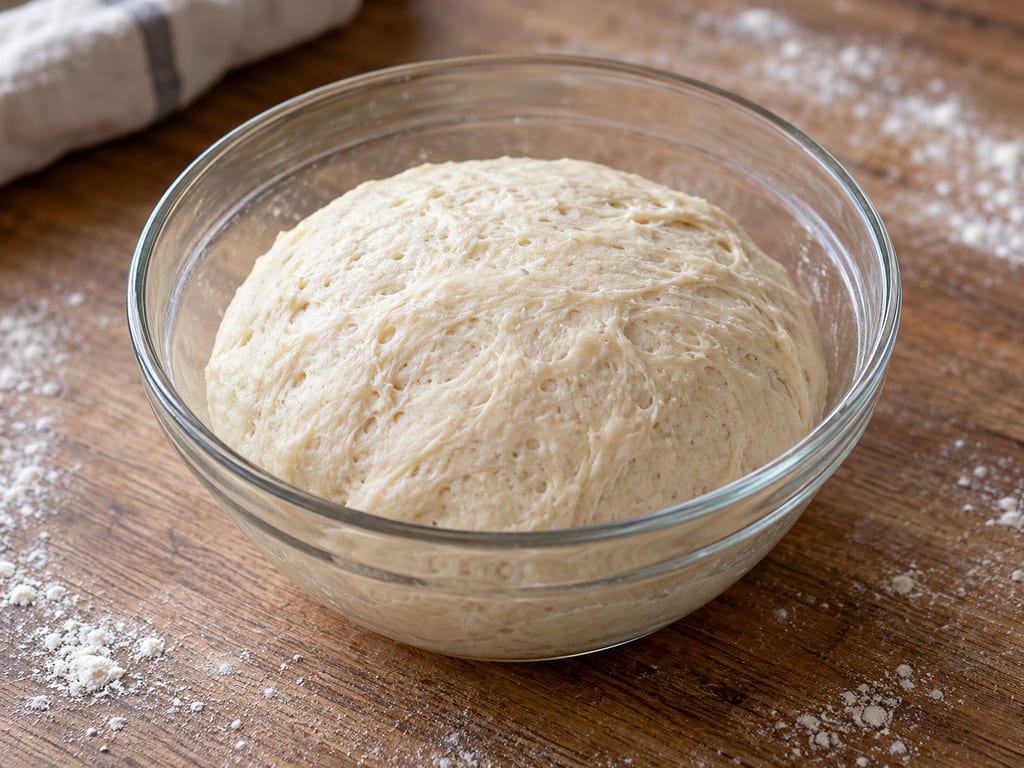
Pâte fermentée is a bread preferment made from salted, yeasted dough set aside to ferment and mixed into a later batch, carrying developed dough and fermentation products with it.
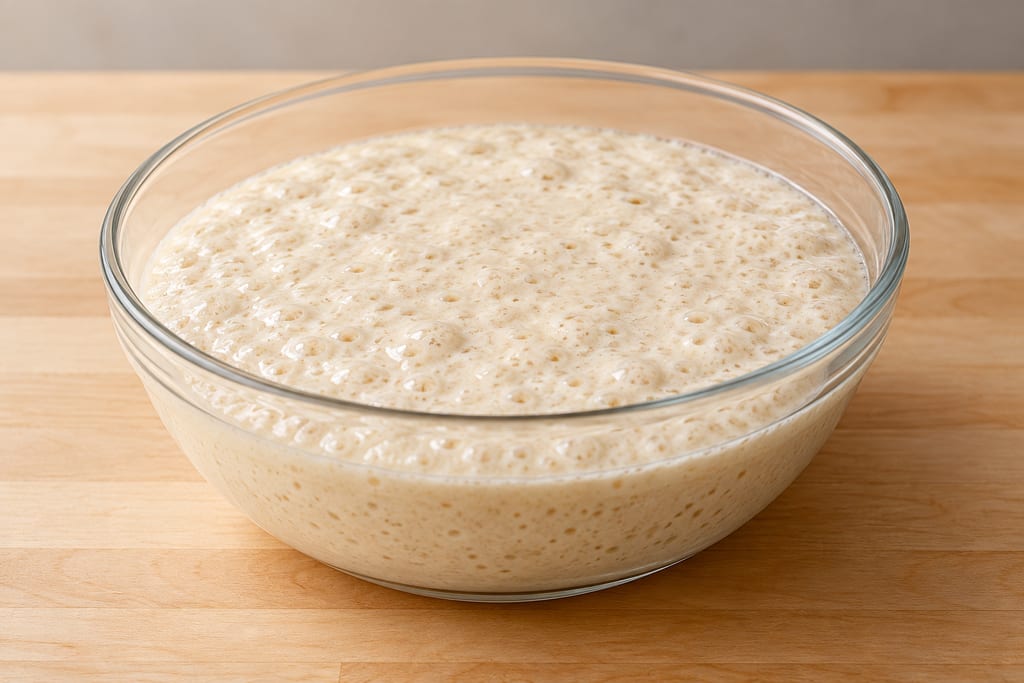
Poolish is a loose, unsalted bread preferment of roughly equal weights of wheat flour and water with a pinch of baker's yeast, left to ripen before it goes into the final dough.
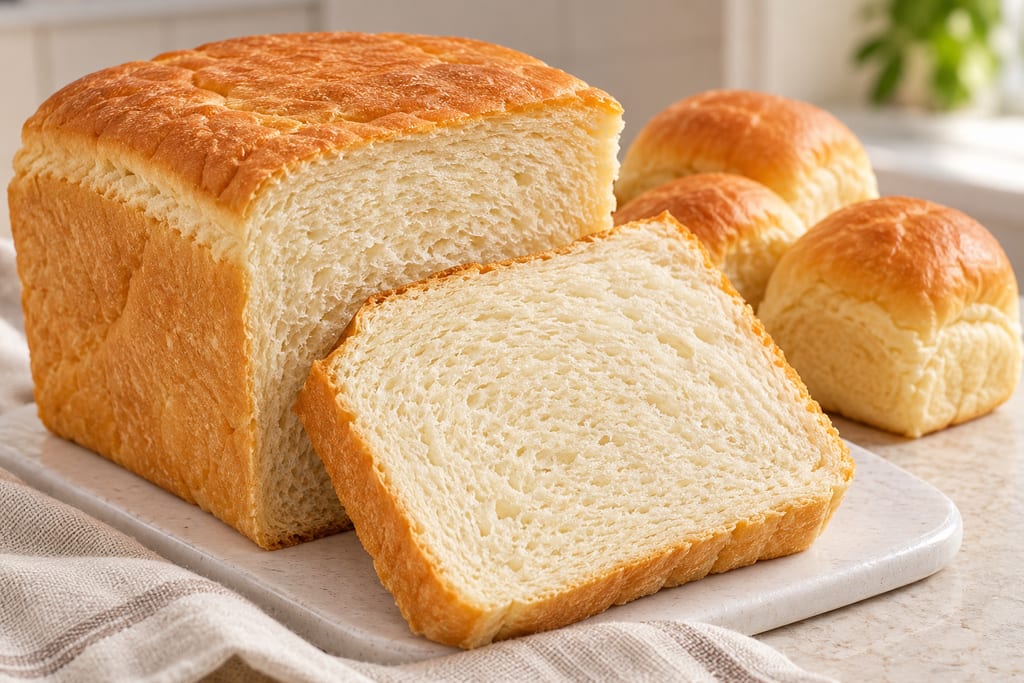
This softer home-style Agege bread uses a scalded flour paste, an enriched yeast dough and a 9×5-inch loaf pan, with rolls from the extra dough.
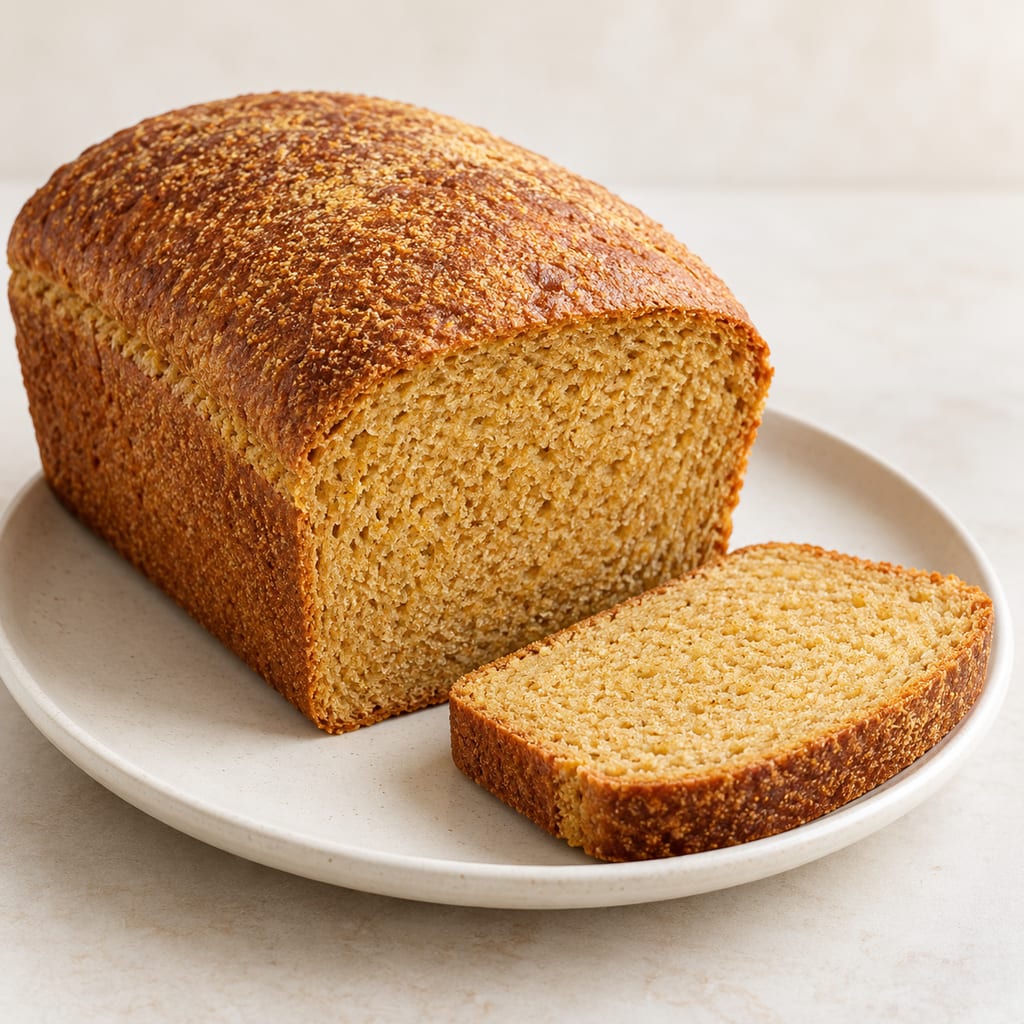
Anadama is a New England yeast loaf made with wheat flour, cornmeal and molasses. Scalded cornmeal enriches the dough, while molasses lends sweetness and a dark crust; it is especially good toasted or beside soup and baked beans.

A yeast-raised wheat ring shaped from a firm dough, briefly boiled and baked. This source-batch formula gives a gently malted crust and a chewy crumb.

Three long, crusty wheat loaves made with an overnight yeast poolish, shaped by hand and baked with steam for a crisp crust.
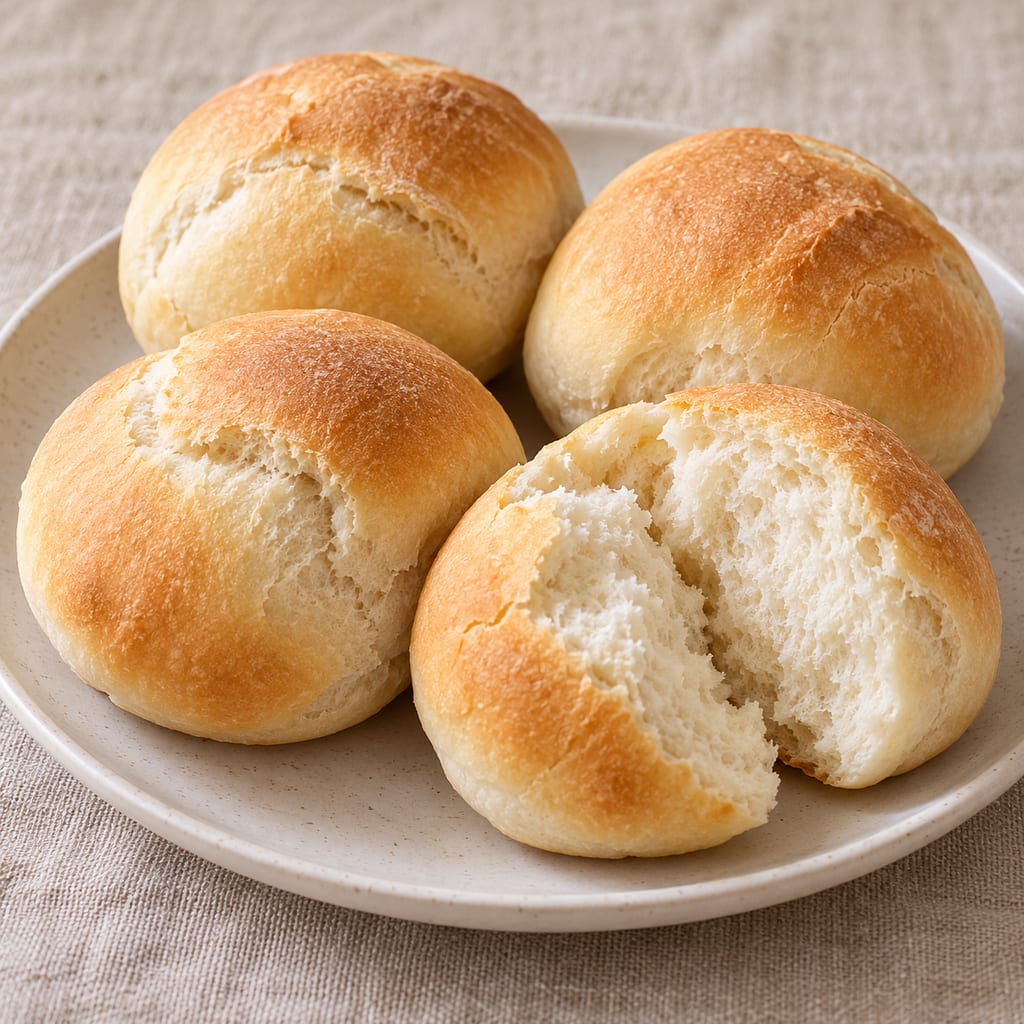
A lightly salted, yeast-raised Barbadian roll, baked in a dozen-roll home batch and often split for cutters.
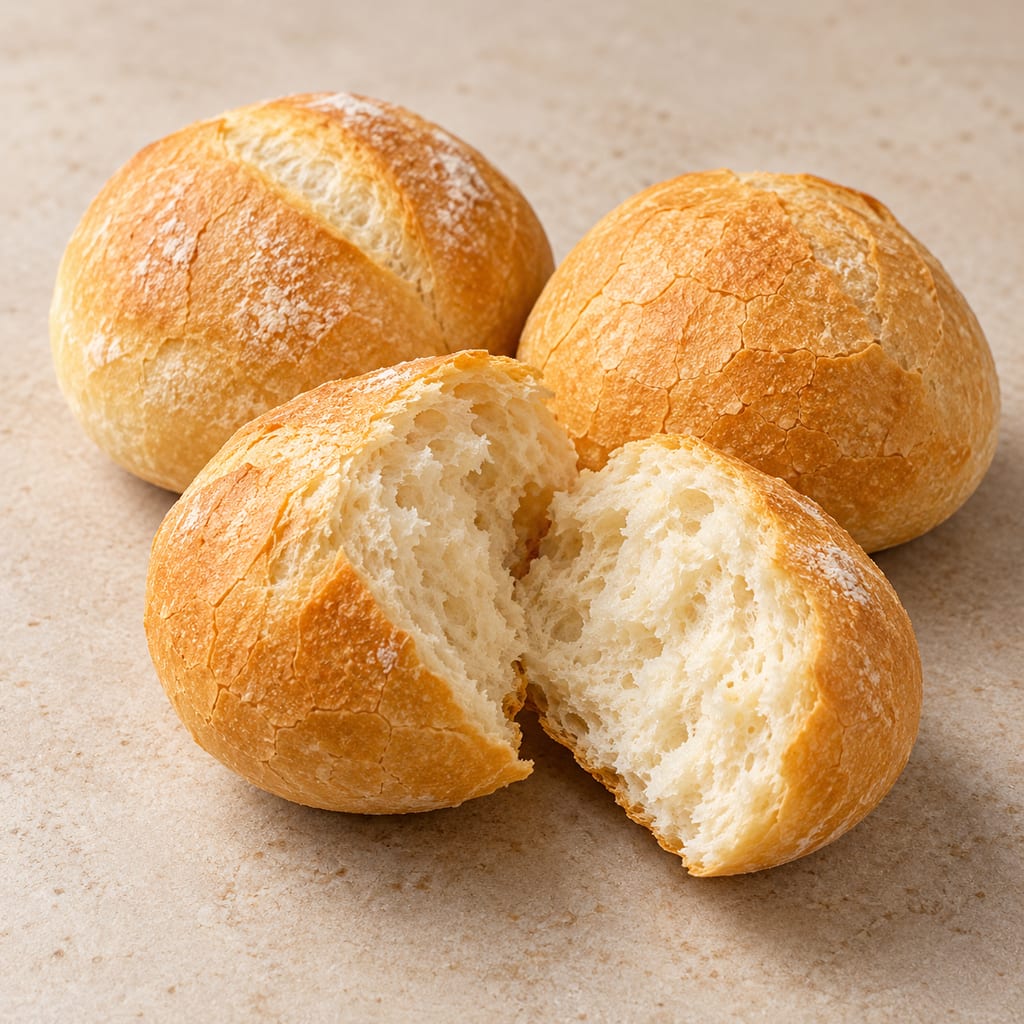
A crisp Belgian roll made from a supplier’s Croc-flour dough, mixed by hand or machine, proofed in rounds and baked with steam.
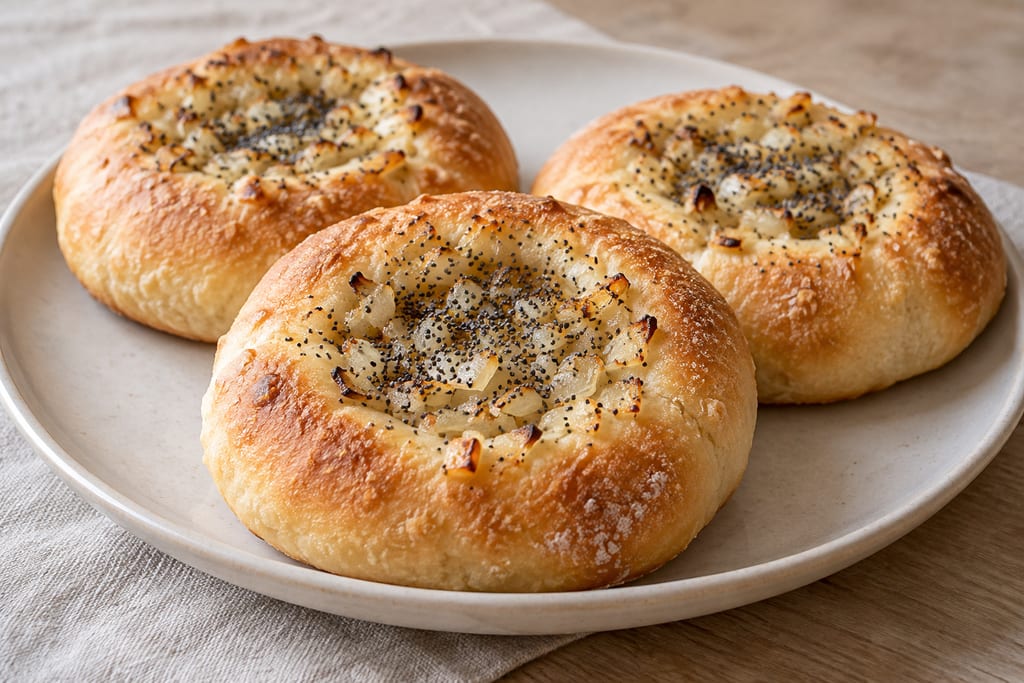
Bialys are soft, yeasted wheat rolls baked without boiling, each shaped with an onion-filled central depression instead of a hole.
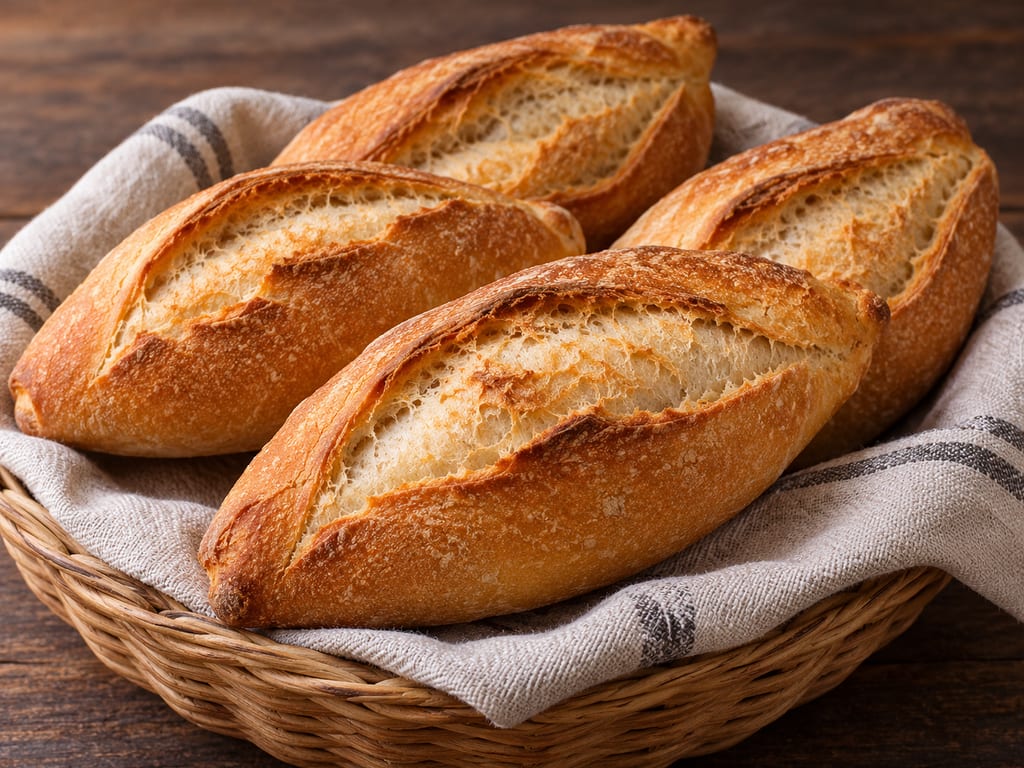
A measured, commercial-yeast home method for Guadalajara-style birote salado, with a six-hour preferment, shaped rolls and a two-temperature steam bake. This formula contains no egg.
No community contributions have been published for this entry yet.
Sign in to contribute. Published comments and photos are free to read.
Real Bread Campaign / SustainInspiration · Method · Geography
Sonya Hundal's cottage loafThe formula uses 625 g white bread flour, 40 g wholemeal bread flour, 25 g wholemeal rye flour, 10 g fresh yeast (or 4 g above 20°C room temperature), 9 g salt and 450 g water at 18–20°C.
The dough rises for 2 hours at 15–18°C, is folded, rises for 45–60 minutes, rests another hour after shaping, then gets a 45–60 minute rise after division and shaping.
The smaller tier weighs about 360–370 g; a deep dimple joins the stacked rounds. The loaf bakes 10–15 minutes at 220°C/200°C fan and another 20–30 minutes at 180°C/160°C fan.
Sonya Hundal bakes in Lincolnshire; this supports English context without establishing a precise birthplace.
Cited in: A large slow-rise loaf; Mix and build the dough; Stack and bake; Handle flour and hot equipment safely
Great British Food AwardsHistory
Whatever happened to the cottage loaf?The article describes cottage loaf origins as uncertain; it offers possible explanations for the name and stacked form but does not establish either as proven.
Cited in: A large slow-rise loaf
U.S. Food and Drug AdministrationSafety
Handling Flour Safely: What You Need to KnowRaw flour can carry harmful bacteria; do not taste uncooked dough and clean hands and utensils after handling flour.
Cited in: Handle flour and hot equipment safely