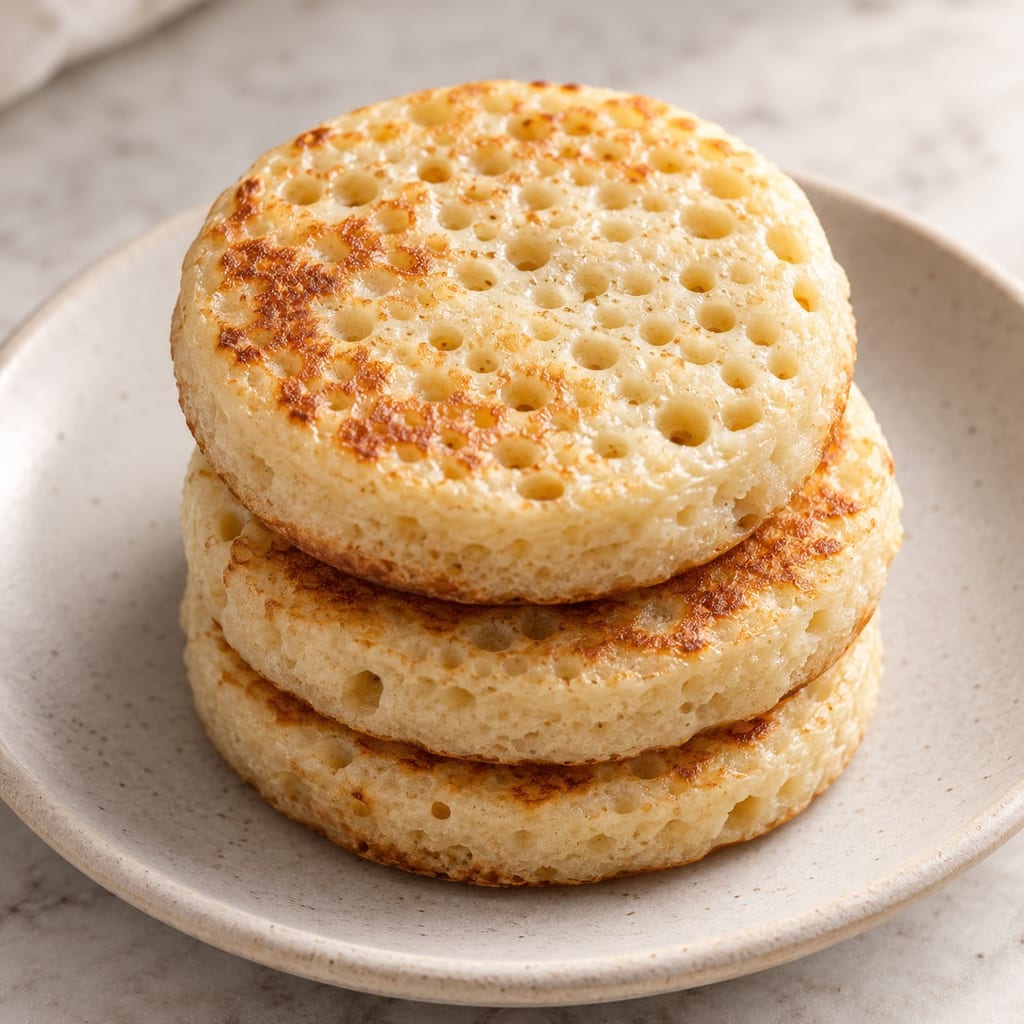
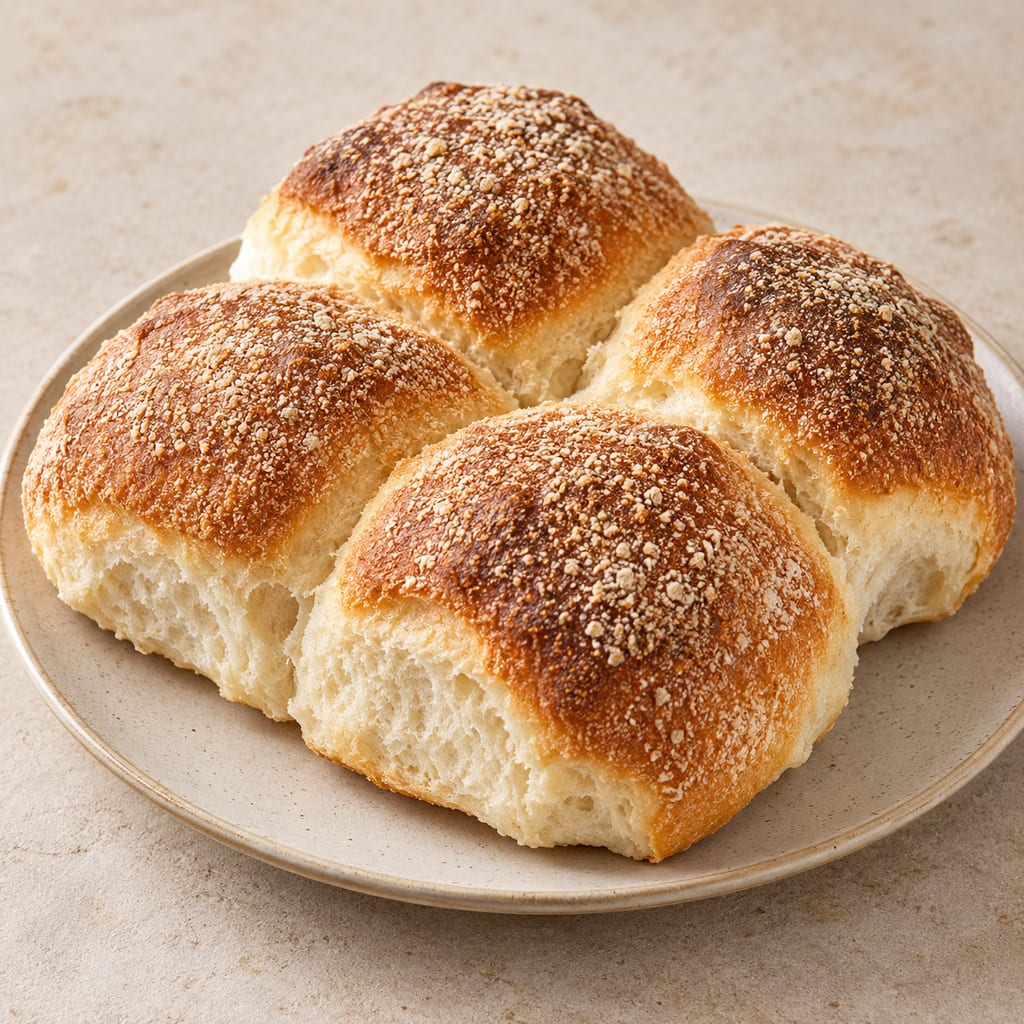
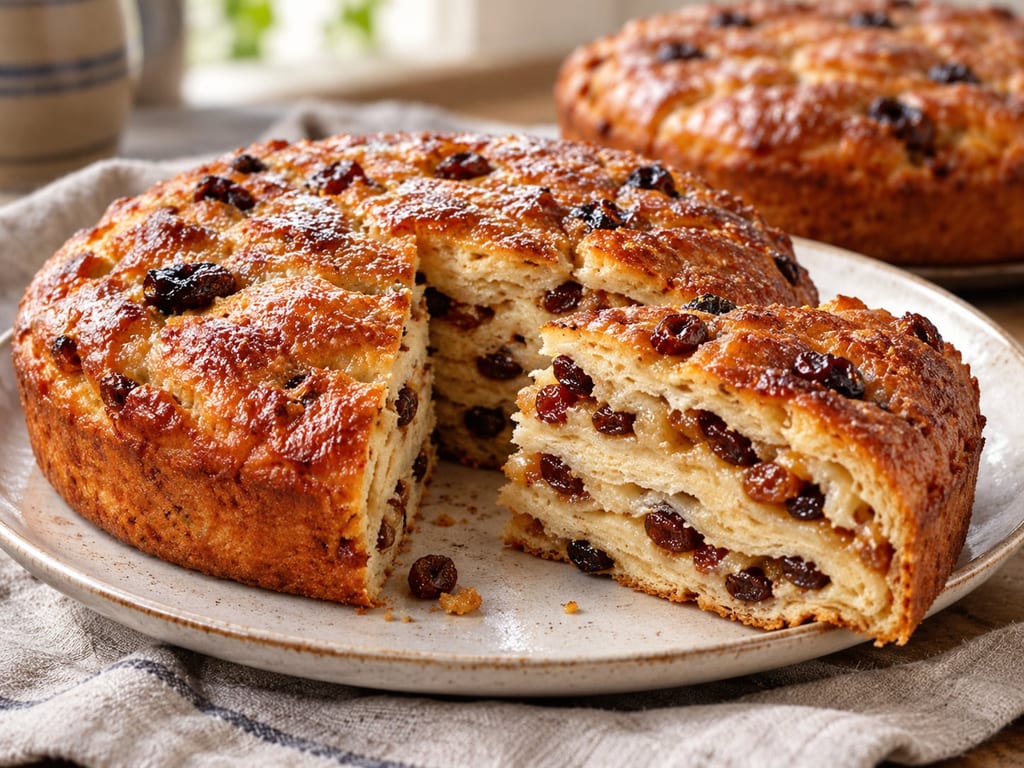
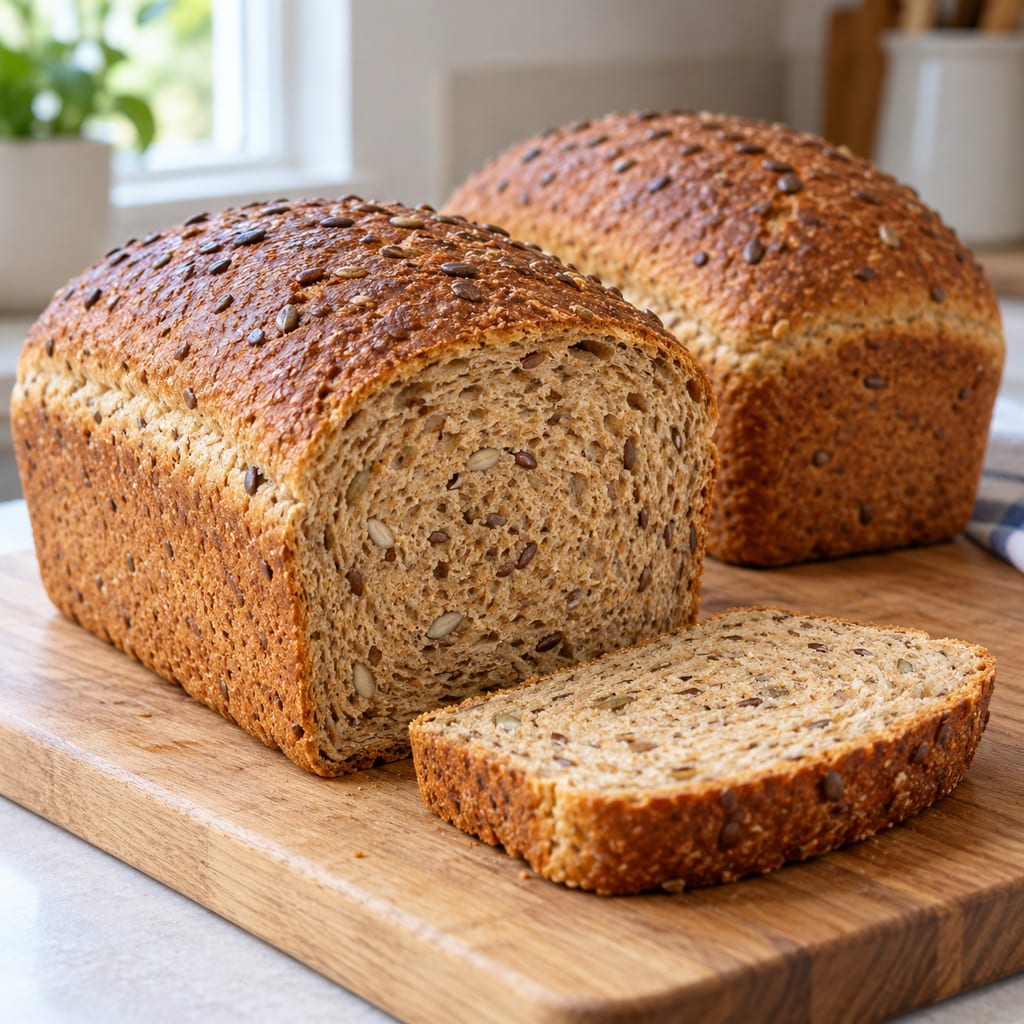
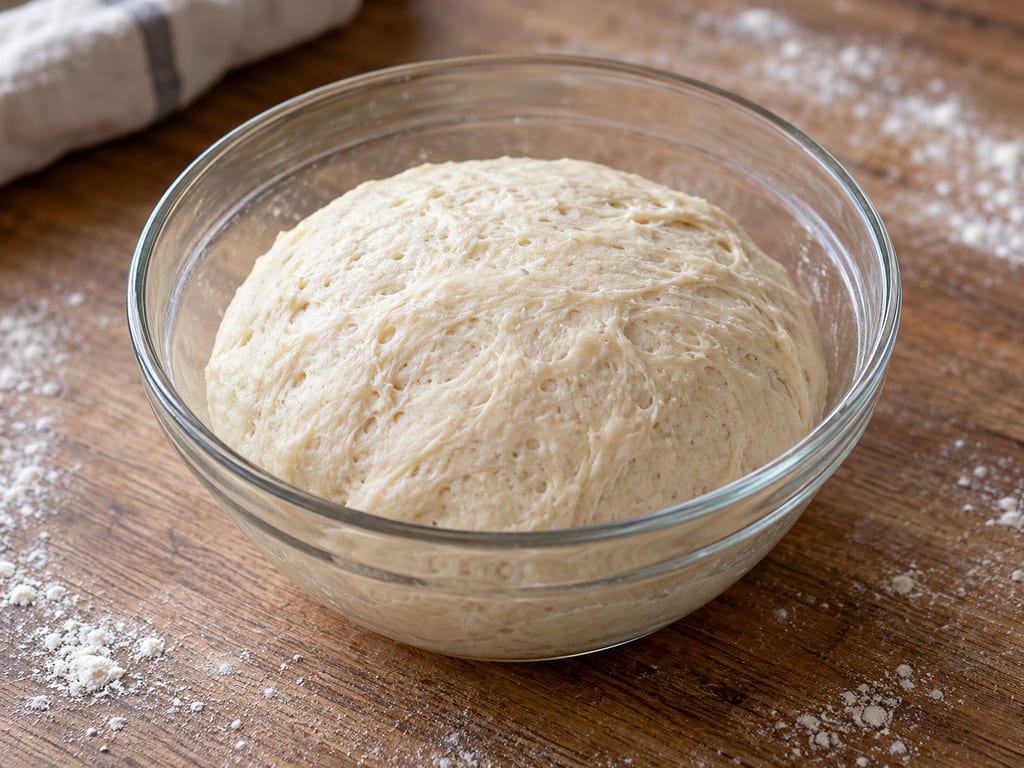
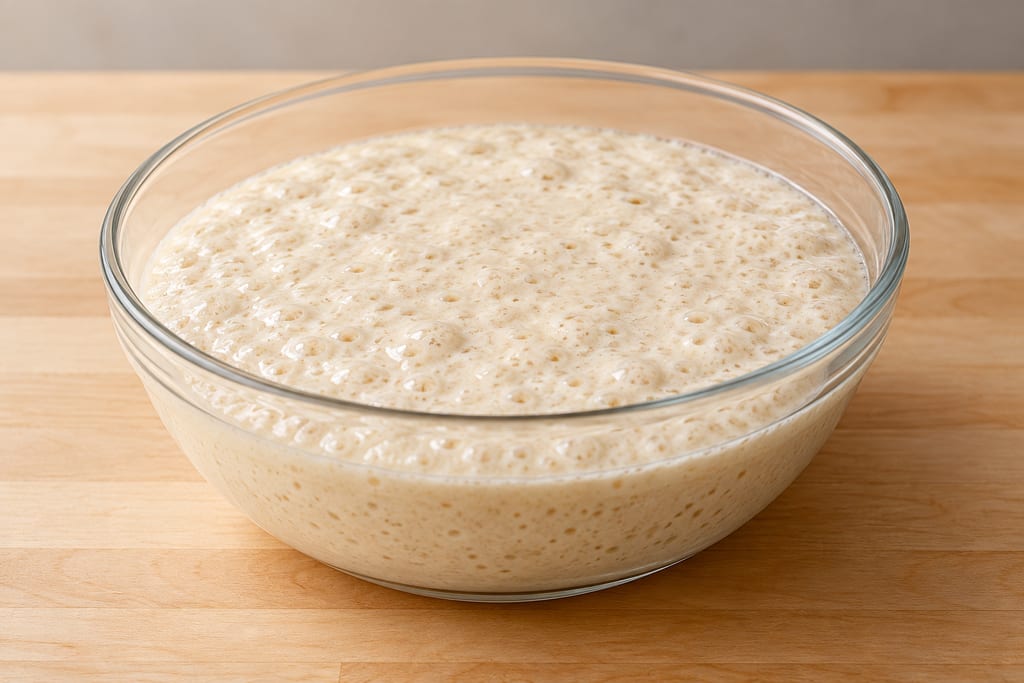
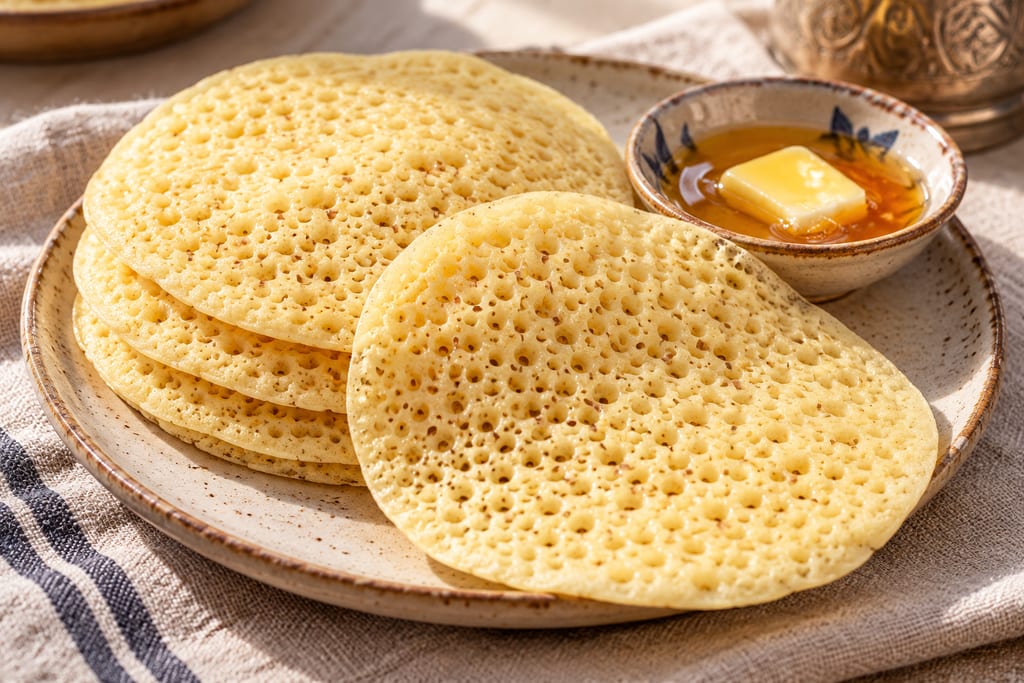
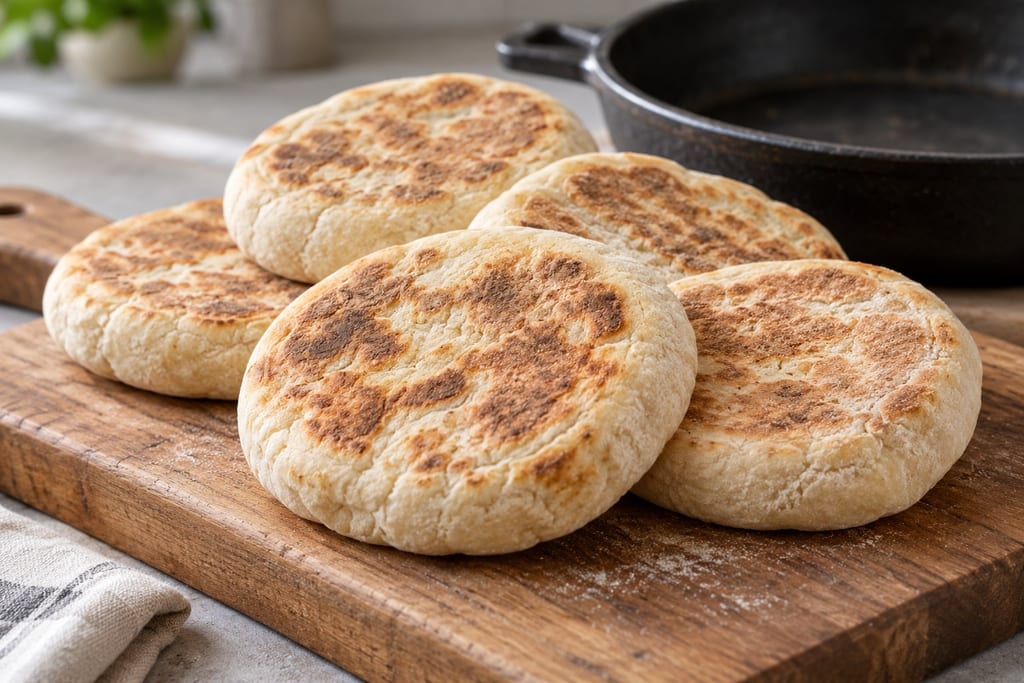
Crumpets are cooked from batter rather than shaped as bread rolls. Their open tops take butter without splitting. This version turns them for a lightly coloured top; it distinguishes that choice from the paler traditional finish.
Fat for greasingLightly grease pan; grease rings well. Amount/type unspecified.
Amount not stated
Method
Risks and precautions · Standard risk
Raw flour
Raw grain flour can carry harmful bacteria.
Hazard source
Do not taste raw dough. Keep flour away from ready-to-eat foods and clean hands, utensils and surfaces after handling.
Control source
Holes, bubbles and colour are quality cues, not proof of safety. Cooking times describe this formula, not a validated internal-temperature endpoint. No storage duration is established.
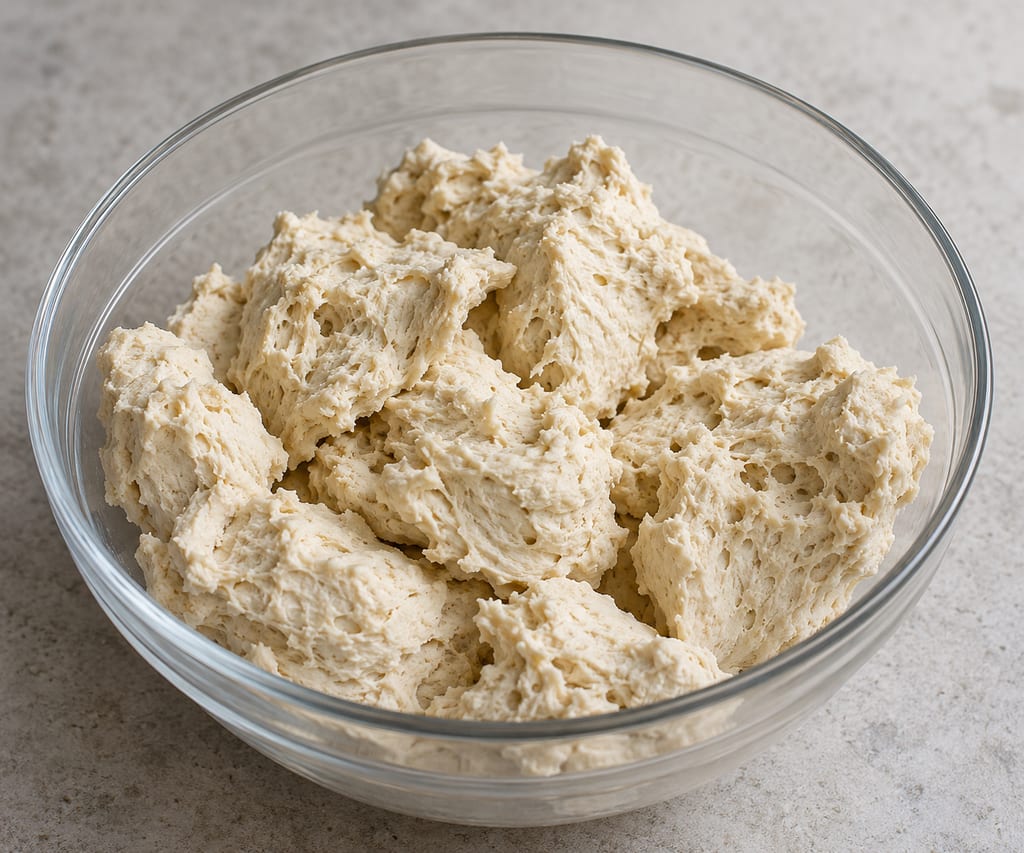
Beat all batter ingredients vigorously for 2 minutes with a hand or stand mixer.
Cover; rest at room temperature for 1 hour. Heat a griddle to medium-low, about 325°F, or use a frying pan at gentler heat than for pancakes.
Lightly grease the pan and grease 3¾-inch rings well. Fill each with a scant ¼ cup batter.
Remove rings with tongs after about 4 minutes. Continue cooking the first face for about 10 minutes total, until holes open, edges start drying and bases are lightly mottled golden.
Turn and cook another 5 minutes. Repeat with remaining batter; serve warm or toast after cooling.
Conditions
Yield20 crumpets
Active time15 min
Fermentation1 h
Temperature controlAmbient, monitored
Places
Britain
Documented preparation · Region evidence
British food association, not a precise origin claim.
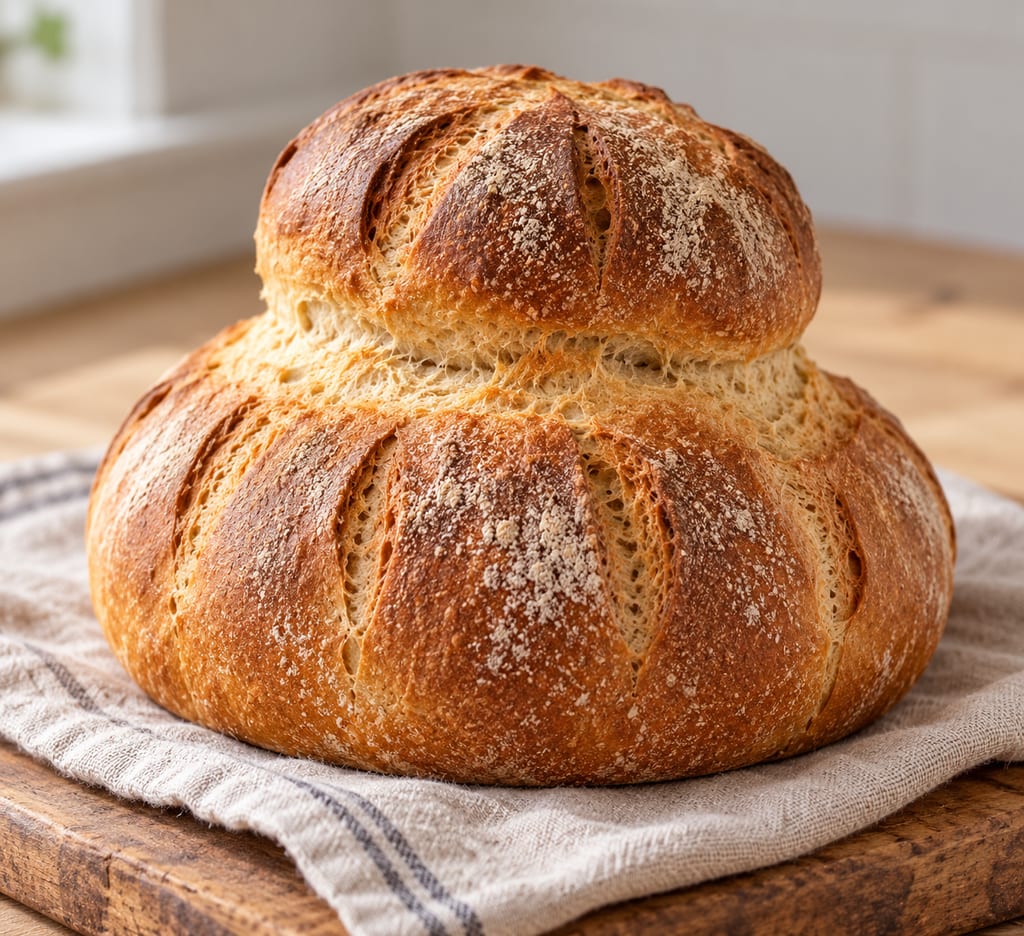
A large English cottage loaf with a smaller round joined atop a larger one. This slow-rise version uses white wheat flour with small portions of wholemeal wheat and rye, and bakes on a hot stone or tray.
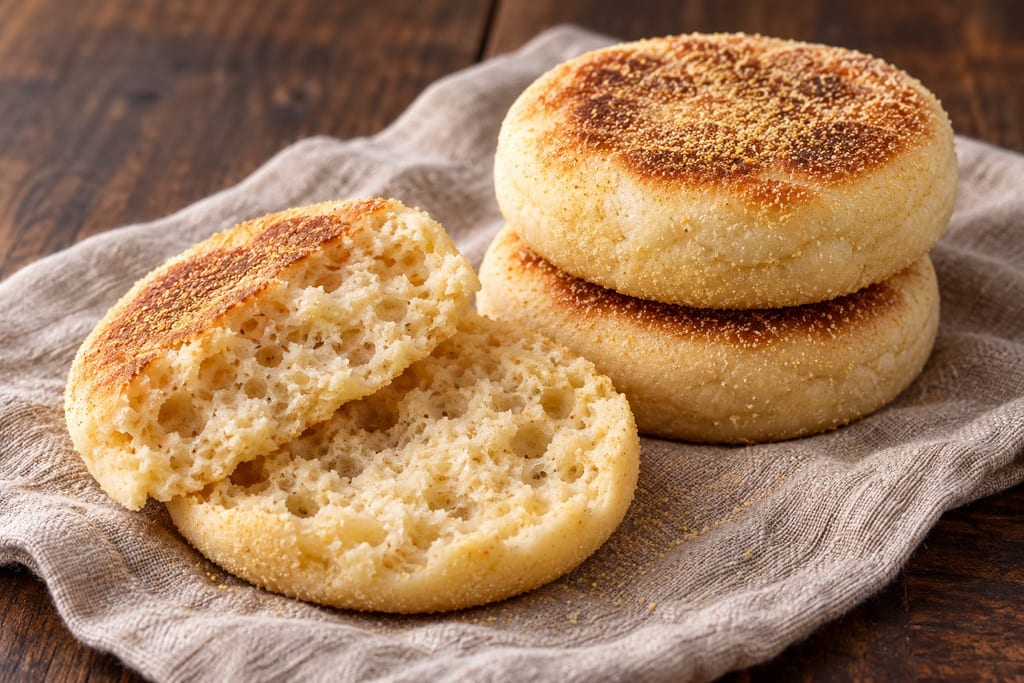
King Arthur’s six-piece English muffin batch uses a yeast preferment, two folds and a skillet or electric griddle; it is distinct from the sourdough-and-yeast version already catalogued.
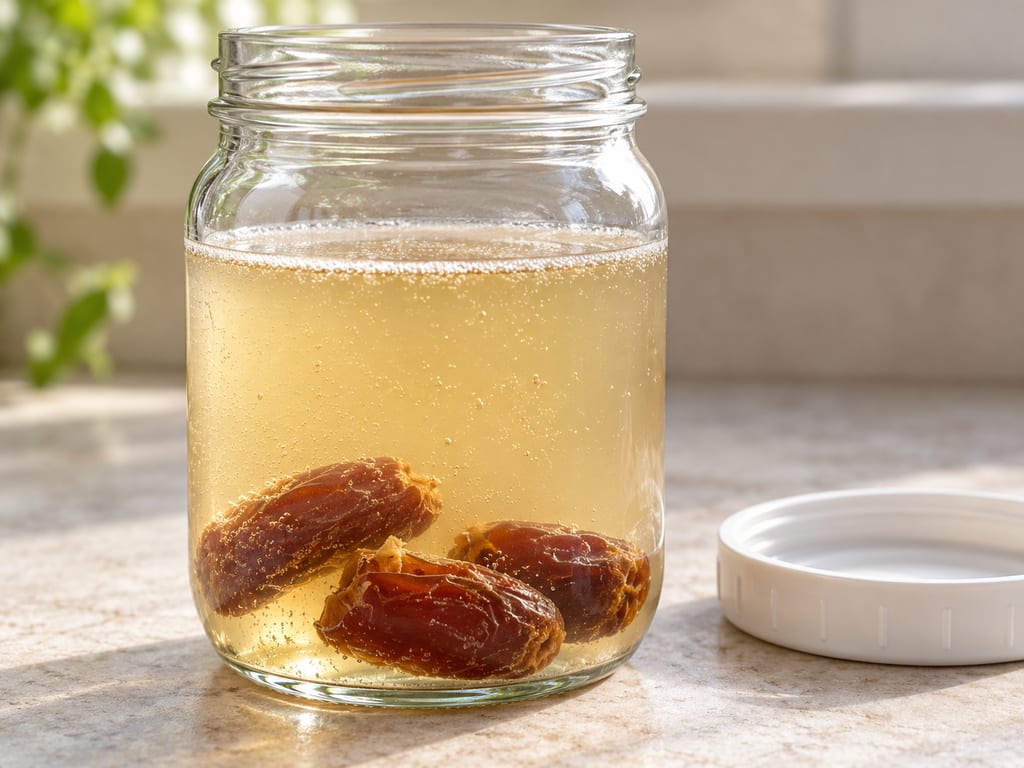
Fruit yeast water is a spontaneously fermented liquid made by soaking fruit in water, with or without sugar, to grow yeast for starting bread dough or a separate flour starter.
A wet, cold-fermented wheat dough is coated in rice flour and baked close together at high heat for Glasgow-style rolls with a crisp, dark crust and light interior.
Pâte fermentée is a bread preferment made from salted, yeasted dough set aside to ferment and mixed into a later batch, carrying developed dough and fermentation products with it.
Poolish is a loose, unsalted bread preferment of roughly equal weights of wheat flour and water with a pinch of baker's yeast, left to ripen before it goes into the final dough.
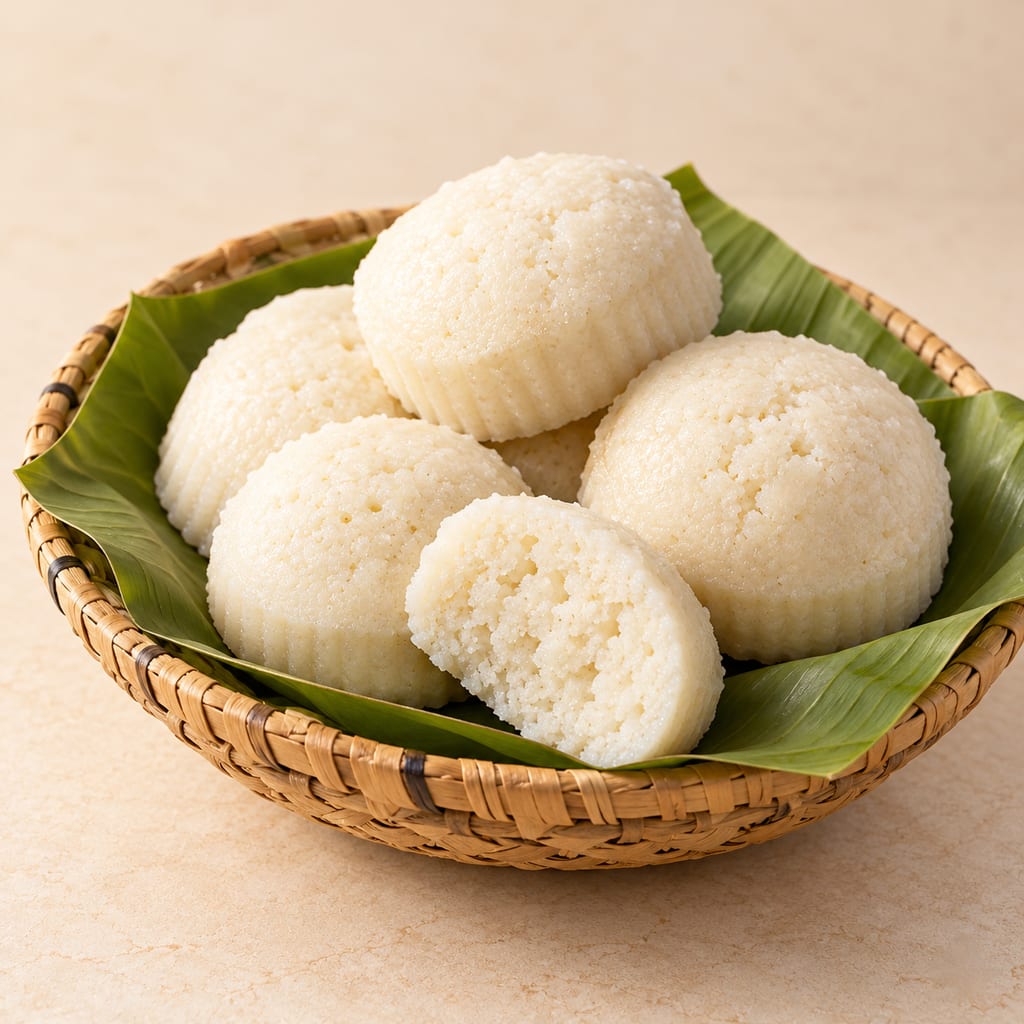
Soft, lightly tangy steamed cereal bread documented across Benin and Togo. This page gives one measured rice-flour research method; maize-based Ablo and mixed-grain versions remain distinct traditions.
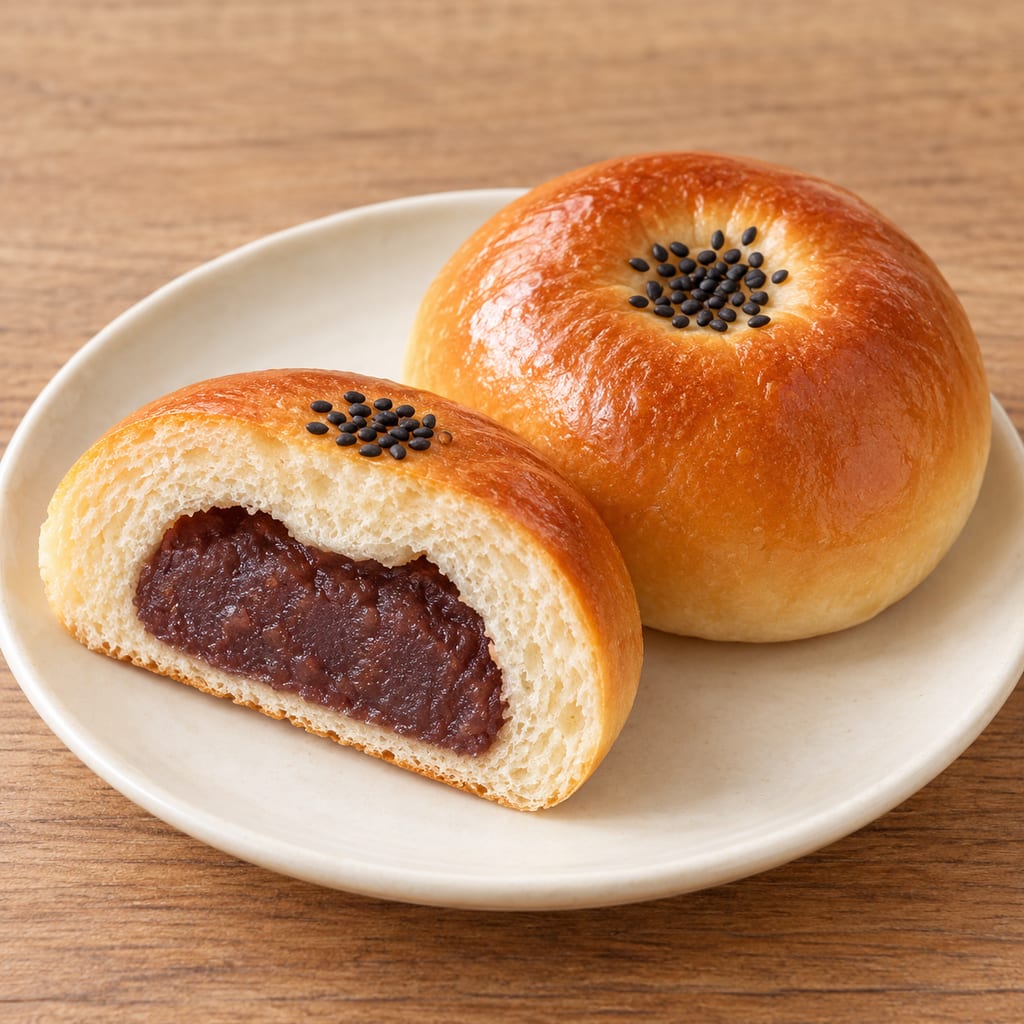
Anpan is a soft wheat bun filled with sweet red-bean paste and finished with egg wash and black sesame. This dough rises with commercial instant yeast.
Moroccan semolina pancakes made from a thin yeast batter, rested until foamy and cooked on one side until the surface sets with a honeycomb of holes. This source-specific batch makes sixteen 5-inch pancakes.
Biga is an Italian bread preferment of flour, water and a little yeast, usually a stiff unsalted mass of about 45 per cent water, fermented ahead and then mixed into the final dough.
Sweet-potato wheat breads with fresh yeast, browned in a pan and finished in the oven. This is the bread component of Teleculinária's scrambled-egg dish.
Community
No community contributions have been published for this entry yet.
Share what you made
Sign in to contribute. Published comments and photos are free to read.