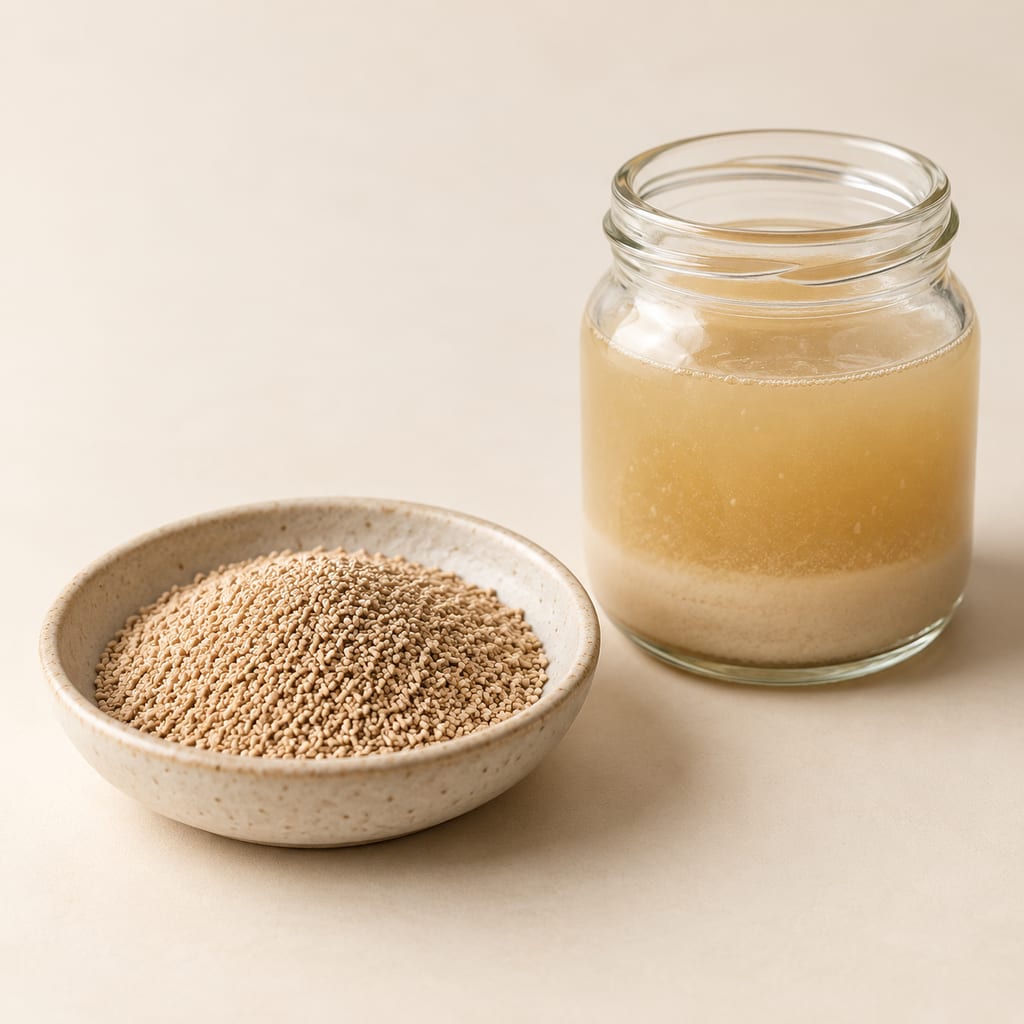
Ale brewing yeast
Ale yeast is a broad group of Saccharomyces cerevisiae brewing cultures, not one strain. Style labels such as English, American, Belgian or wheat beer do not identify an interchangeable culture.
 FermenteaWhere food goes to change
Brewer’s yeast is a working name for living cultures selected for brewing, not one strain or always one species. Ale and lager cultures differ, and older household books may use the term for foam or sediment from brewery beer.
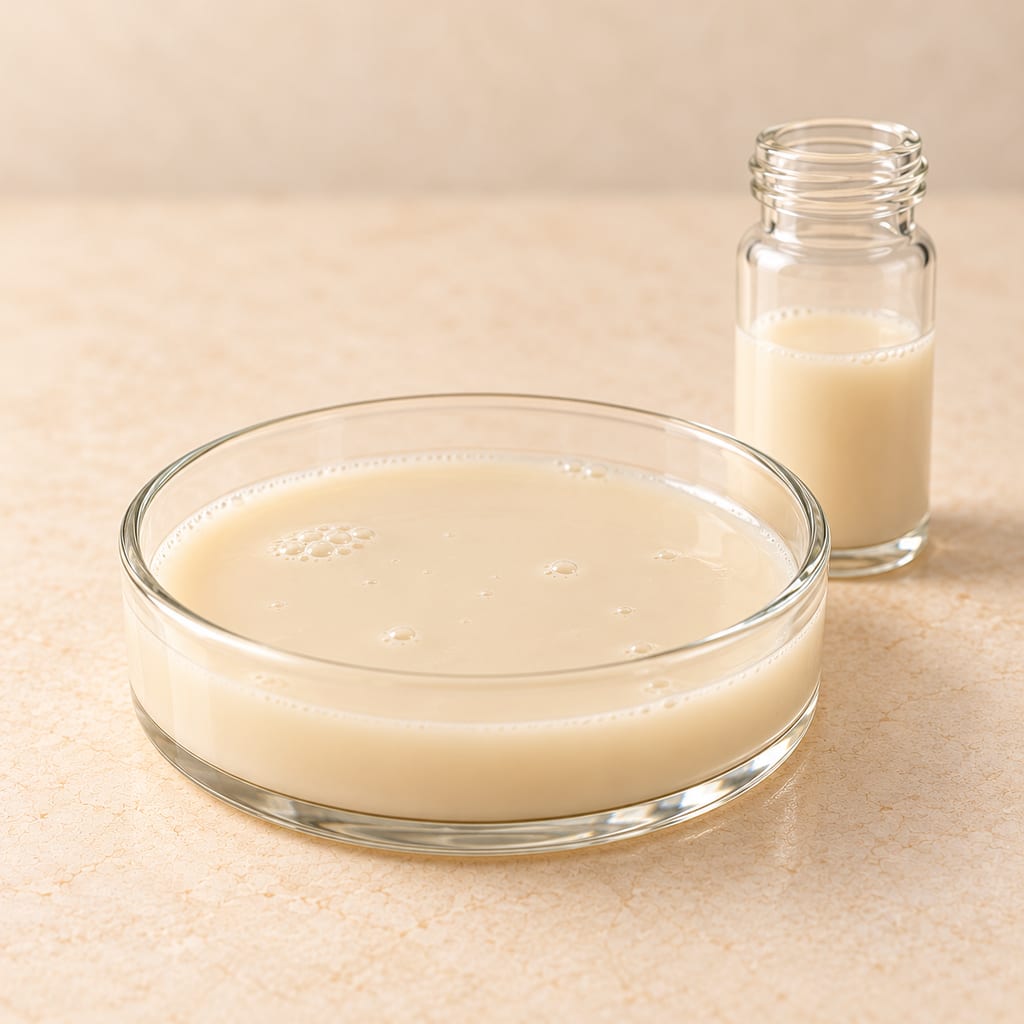
Brewer’s yeast is not a grain, powder or recipe by itself. It is the living culture that a brewer pitches into fermentable liquid, or harvests after a batch to use again. In a brewing vessel it is usually carried as a thick suspension or slurry of cells and liquid; in contemporary supply it may arrive as a liquid culture, a pressed mass, or a dried preparation. What the label means depends on its setting. A brewing strain is selected for how it ferments a specific wort and for the aroma, flavour, attenuation, cell behaviour and handling the brewer wants. “Brewer’s yeast” therefore names a use, not a single organism with one predictable flavour or performance.
Two visual scales belong to this subject and should not be confused. A yeast culture can appear creamy, beige or tan in a vessel or on a plate, but individual yeast cells are microscopic. The pale foam that forms during active fermentation is wort, gas and yeast-rich material together, not a solid layer of pure yeast. Historical “barm” refers to foam skimmed from ale; it carried yeast, but also belonged to that batch’s beer. The grey-brown material at the bottom of a fermenter is a different harvest location and may contain other sediment. These are observable forms, not interchangeable measures of living cells or quality.
The name also crosses food categories. Brewery yeast has been pitched into alcoholic drinks, while yeast taken from brewing was historically used to raise bread. Beeton’s 1861 household book labels one bread formula “solid brewer’s yeast” and contrasts it with fresh German yeast. Its wine section uses brewer’s yeast by name in elder wine and ginger beer, while ginger wine recipe 1819 simply says “yeast.” Those distinctions matter: the source supports a named brewer’s yeast in some recipes, but not a specific strain, species, strength, culture condition or quantity conversion that could be applied to the recipe with unspecified yeast.
The common ale yeast is *Saccharomyces cerevisiae*, a budding yeast. NCBI lists it as a species and gives brewer’s yeast as a GenBank common name. CAMRA’s introduction likewise describes *S. cerevisiae* as ale yeast, and says it ferments the sugars available in wort into ethanol, carbon dioxide and other flavour-active compounds. Ale cultures may form a visible, buoyant cap during a vigorous fermentation, but “top-fermenting” describes a brewing tendency, not a rule that cells stay only at the top. Beer fermentation occurs through the liquid.
Lager yeast is not just an ale strain used cold. *Saccharomyces pastorianus* is a distinct hybrid species associated with bottom-fermented lager. Research describes its ancestry as *S. cerevisiae* and the cold-tolerant *S. eubayanus*, while ale strains are generally *S. cerevisiae*. The two groups vary in fermentation behaviour, temperature adaptation, sugar use, flocculation and flavour output. The ingredient record uses “brewer’s yeast” as a broad brewing culture category so it can explain this division; it does not assert that one sachet, brewery slurry or species works for both ale and lager. The cultures remain distinct in use and should be named at strain level when a recipe or source identifies them.
Brewing strains are more varied still. Genomic research finds diversity within *S. cerevisiae* brewing populations and a history of distinct domestication trajectories for ale and wine strains. Two products may share a species name without being interchangeable: their strain traits, preparation, viability and intended wort differ. “Wine yeast” is therefore a separate record; a wine strain does not become brewer’s yeast because both can ferment sugar. The candidate’s historical aliases “barm” and “ale yeast” are retained as context, not universal synonyms. “Baker’s yeast” is also a separate catalogue entry. Brewing and baking strains may share a species and historical supply routes, but current product labels and process aims are not the same.
“Wild yeast” has a different boundary again. It can mean an uncultured organism, a set of organisms from an environment, or a colloquial contrast with a purchased starter. A spontaneous fermentation does not establish a single wild species. The lambic dossier records studies of changing yeasts and bacteria through sampled batches and casks; it explicitly warns that this is not one wild yeast. The source archive makes the same distinction across multiple traditions. For that reason, this item covers named brewing cultures, not an invented universal “wild yeast” ingredient. Lambic’s coolship and barrel ecology, kveik traditions, and other mixed fermentations remain attached to their own products and evidence.
Brewers first make wort from a substrate whose starch has been made accessible as fermentable sugars. In a barley beer, malting and mashing prepare sugars from grain before yeast enters the process. Yeast is added only after the wort has been boiled and cooled. It takes up fermentable sugars and nutrients, grows, and produces ethanol and carbon dioxide as major fermentation products. The cells also create secondary metabolites—among them esters, higher alcohols, aldehydes, ketones and sulphur compounds—that can shape fruit, floral, spicy, solvent-like, buttery or other notes. Which compounds appear, and at what level, depends on strain and the full conditions of the fermentation; the species name alone cannot predict a finished beer.
Yeast also changes the feel and clarity of a beer. Carbon dioxide leaves as gas or remains dissolved; yeast growth and later flocculation change how much cell material is suspended or settles. A brewer may skim top-cropping ale yeast from an open fermenter, or collect yeast from a cone at the bottom of a closed vessel. After the main fermentation, living cells may continue to consume residual fermentable material in conditioning tanks, casks or bottles. This can add carbon dioxide and further flavour development. Other beers are filtered or pasteurised and carbonated by another route. Cask-conditioned ale is a beer category that uses live yeast at the final conditioning stage; it is not a universal description of all beer, all brewers’ yeast, or one second-fermentation schedule.
Older brewing depended on recovered culture and whatever a brewery could supply. Civitello’s historical account of British bread records ale foam as “barm” and brewery dregs as “emptins,” both used for leavening. The same account describes how American households without nearby commercial breweries made their own yeast or used brewing residues. This records a supply relationship, not the identity of every historical culture: house-made yeast varied, and recipes used different names and amounts. Beeton’s 1861 directions likewise call for “solid brewer’s yeast” in one bread recipe and separate “fresh brewer’s yeast” quantities in elder wine. The forms were wet and perishable; the word “solid” in the recipe reflects settling and removal of liquid, not a modern compressed commercial block.
Modern brewing yeast is produced from maintained stocks through controlled propagation. The microbiology literature describes successively larger culture volumes, harvesting after fermentation, and brewery repitching from one batch to another. Reuse is not unlimited or uniform: population age, genetic drift, contamination and selection of variants can change performance. Breweries differ in how often they return to a master culture. Some use liquid propagation; manufacturers also sell active dried strains. Drying is a distinct production method, not a different species. Lallemand’s technical guidance, for its own dry products, reports that a typical sample contains both viable and non-viable cells; its package storage directions and viable-cell data belong to the supplier’s named product, not to all dried yeast.
Commercial cultures may be supplied as liquid, slurry, pressed yeast or dried granules. The form affects transport, measurement, rehydration or direct pitching, and expected storage. A sealed dry sachet and a brewery cone harvest are not the same product. Even if both labels identify *S. cerevisiae*, they may differ in cell count, strain, age and viability. Follow the supplier’s instructions for a purchased culture; do not transfer a package-specific dose, storage temperature or expiry period to another maker’s culture. For a harvested slurry, the brewery’s own quality and sanitation controls apply. None of the inspected sources establishes a general household recipe for propagating or storing an unidentified brewer’s yeast.
Yeast does more than remove sweetness. Its sugar metabolism produces alcohol and carbon dioxide; growth and later settling change body and clarity; its secondary metabolites contribute aroma and taste. Strain choice is one of the brewer’s strongest ways to shape beer. A relatively neutral culture can let malt and hops lead, while a more expressive strain may produce noticeable fruity or spicy notes. Such terms describe possible sensory results, not fixed properties of every yeast in a named species. Fermentation temperature, wort composition, nutrient availability, pitching condition and vessel behaviour also influence the outcome. Because those factors interact, a yeast profile from one beer cannot be promised in another.
The culture is not itself the fermentable substrate. Yeast does not turn raw barley starch straight into beer alcohol. Grain enzymes and the mash stage release sugars into wort; yeast then metabolises the sugars it can use. The distinction explains why brewers separately select malt or other grain inputs, mashing conditions and culture. It also prevents a simple “yeast ferments grain” phrase from hiding the work done before pitching. Lager cultures and ale cultures can differ in the sugars and conditions they handle, so recipe-specific descriptions matter. This page does not give a mash, pitching, fermentation or conditioning schedule.
In beer, yeast is the culture that transforms wort into an alcoholic drink. The initial fermentation produces alcohol and carbon dioxide, and some beer styles retain active yeast for conditioning in a package. A brewery may reuse the harvested culture if its quality controls permit. None of those choices makes one brewer’s yeast strain a universal beer starter. A recipe that names ale yeast, lager yeast, a strain or a regional culture should preserve that identity instead of replacing it with this umbrella label.
In historical household wine, the name “brewer’s yeast” often records a locally available fermentation culture. Beeton gives fresh brewer’s yeast in elder wine and ginger beer; the ginger-wine recipe simply names yeast, and does not settle whether that culture was brewer’s, baker’s or another type. Moxon’s 1764 ginger wine uses a yeast-covered toast. These are different source phrases and different recipes. They show that household writers could use brewing-associated yeast in wine; they do not establish a strain, modern wine-making equivalent, recipe conversion, or validated home method. The term may carry a flavour contribution from its prior brewing supply, but the evidence reviewed does not justify a fixed “beer-like” taste in each historical wine.
Baking provides another historical use. British bakers used foam or sediment from ale to raise bread before widely available factory yeast. It could impart a more bitter or beer-associated character than other leaveners, and historical cookbooks distinguished brewer’s, distiller’s and homemade yeast. Later compressed commercial baking yeast brought a different product form and supply chain. That history explains why these names overlap; it does not make every brewer’s yeast a suitable baking substitute or every baking yeast a brewing culture. In present-day catalogue use, the separate ingredient records let a recipe state which one it means.
The sources do not identify a single birthplace for brewer’s yeast as a general ingredient. Fermentation predates the ability to see or name microscopic organisms, and a history of a culture cannot be reduced to a modern species label. The reviewed history supports a medieval British brewing-and-baking relationship through barm and emptins; Beeton provides a securely dated English-language household record in 1861. CAMRA’s present brewing guides document *S. cerevisiae* as ale yeast in British ale. These British associations are not evidence that brewing yeast originated in Britain. Modern commercial yeast supply is international, and this review did not map particular strain origins or production sites.
Louis Pasteur’s 1860 *Mémoire sur la fermentation alcoolique* made brewer’s yeast central to the scientific explanation of alcoholic fermentation. The accessible English text used here is a modern Google translation and identifies the original French work; it is useful for the framing but not treated as a verbatim critical translation. Later brewery pure-culture practice selected and maintained cultures more deliberately. The source archive and modern research show that this refinement did not erase strain diversity or make all brewery cultures identical.
Choose a culture by the recipe and the product form the supplier identifies. “Ale,” “lager,” “wine,” “baker’s,” “wild,” “barm” and a named commercial strain answer different questions. For modern packaged yeast, use the producer’s specific product name and current directions. For a brewery harvest, the responsible brewery controls the culture’s age, identity, storage, cleanliness and suitability for reuse. A visually creamy, foamy or settled sample does not tell a reader its cell count, strain, contamination state or fermentation capacity. Smell, taste, bubbling and appearance cannot establish food safety or completion.
The historical recipes cited here are sources for culture terminology, not validated modern procedures. Their time descriptions and sensory judgments do not establish an endpoint or safe storage. This ingredient page therefore gives no household yeast-propagation directions, universal pitching amount, temperature, pH, alcohol tolerance, shelf life or safety threshold. It also does not say that yeast alone makes a beverage safe; the safety of a fermented drink depends on its complete, product-specific process. When the source leaves yeast unnamed—as in Beeton’s ginger wine—this page preserves that uncertainty instead of guessing which culture was used.
Beeton’s English household manual, published in 1861, documents brewer’s yeast in bread and drinks. This is an attestation, not an origin claim.
Civitello describes British use of ale foam and brewery dregs for bread leavening. This association does not establish the origin of brewing yeast.
Ale yeast is a broad group of Saccharomyces cerevisiae brewing cultures, not one strain. Style labels such as English, American, Belgian or wheat beer do not identify an interchangeable culture.
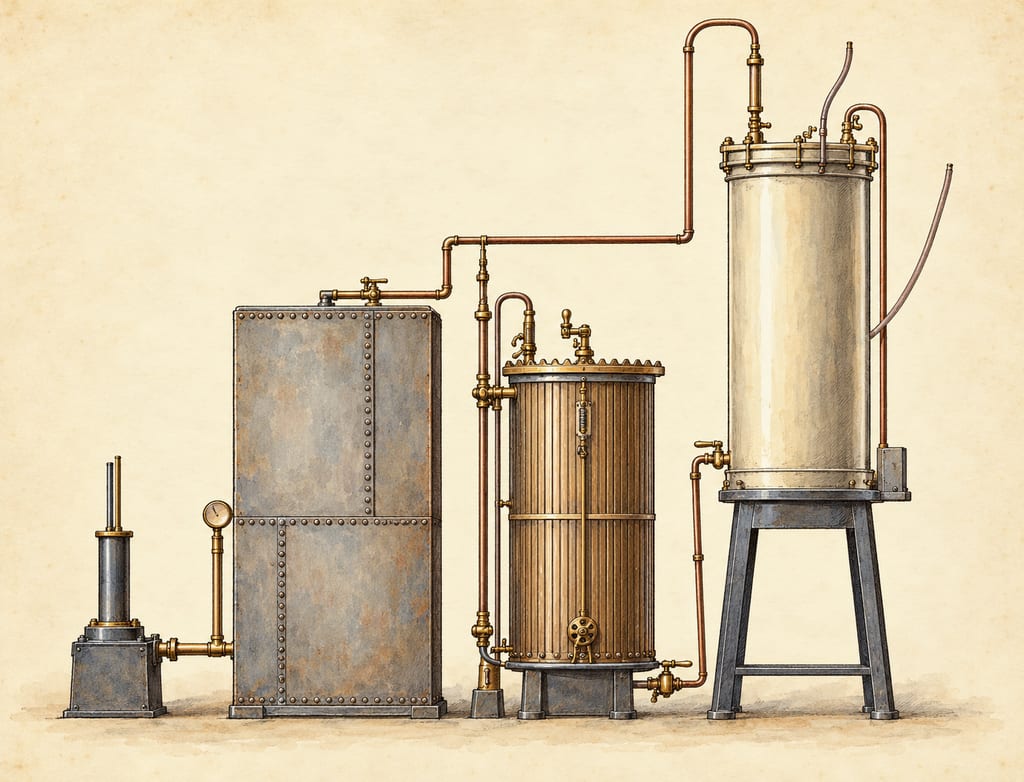
The Hansen–Kühle apparatus was late-nineteenth-century brewery plant for scaling up selected yeast cultures, distinct from Emil Christian Hansen’s method of isolating yeast from a single cell.
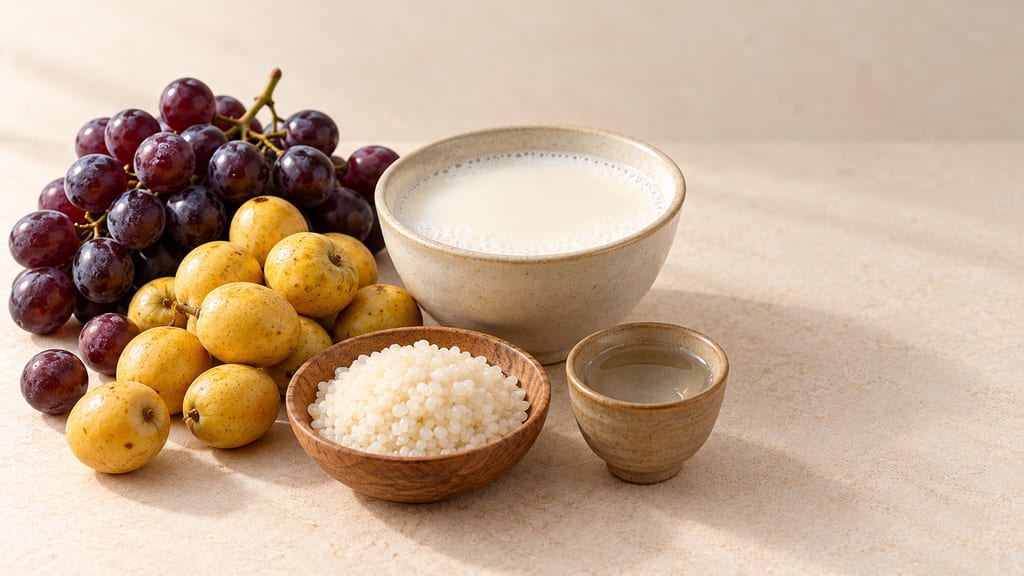
A marula harvest, a rice mash and a bowl of fermented mare’s milk reveal different ways to make alcohol, and different kinds of knowledge behind the drink.
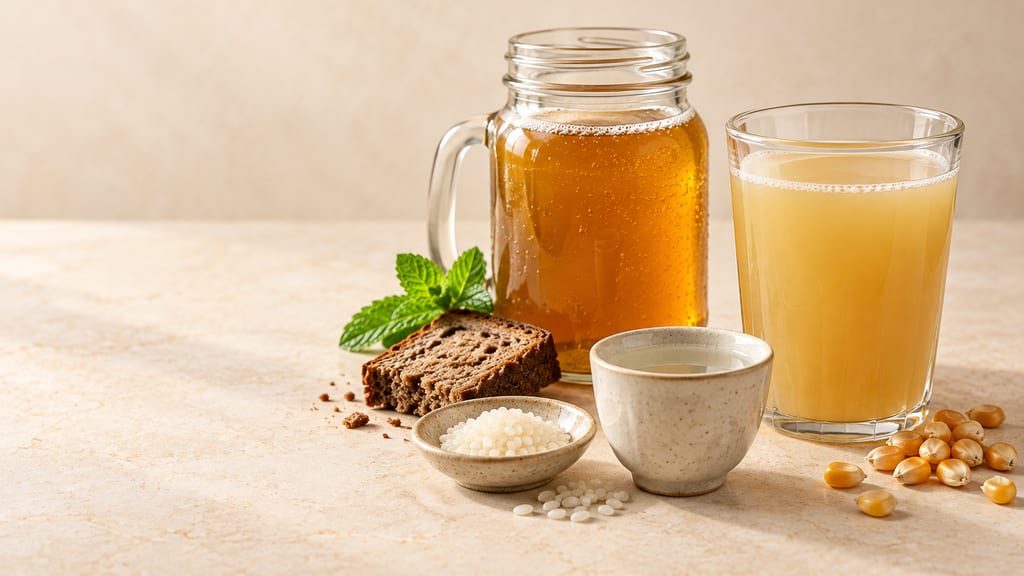
People kept, traded and steered living ferments for thousands of years before anyone saw a yeast cell. This is that history, region by region, and a guide to what a yeast strain is today.
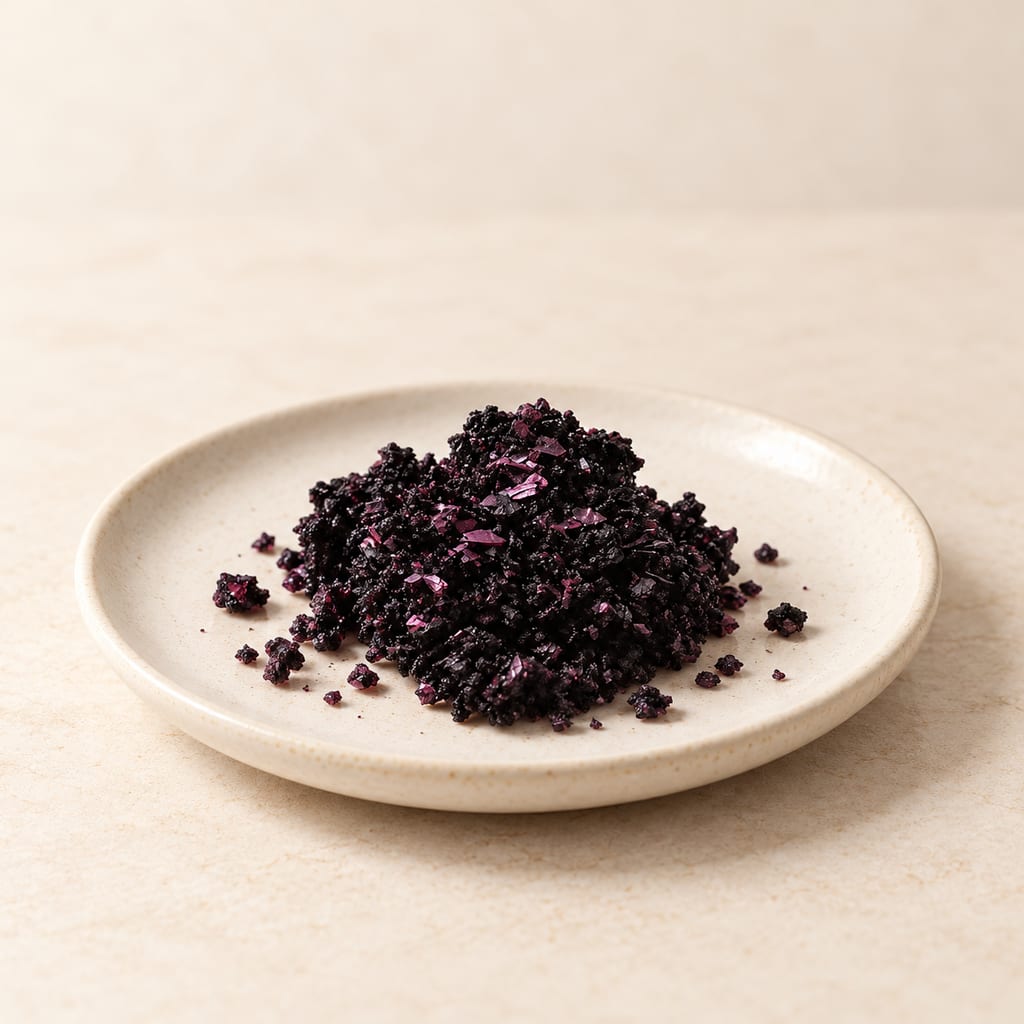
A mixed crystalline wine-vessel deposit, chiefly potassium hydrogen tartrate, used historically in wine recipes and recovered for refining into purer products.
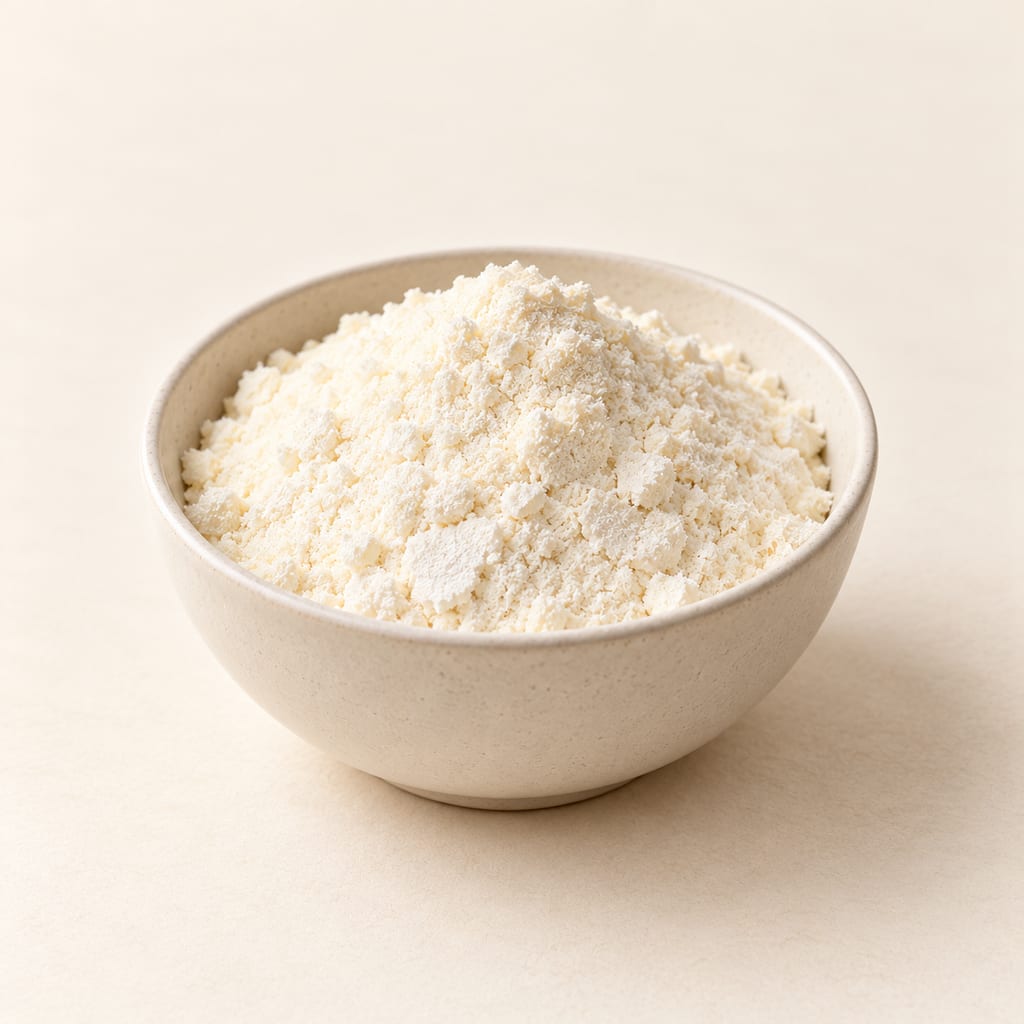
Dry milk is a family of dairy ingredients made by removing most water from milk or cream. The name includes distinct whole, partly skimmed and nonfat powders; fat level, heat treatment and particle form determine handling and use.
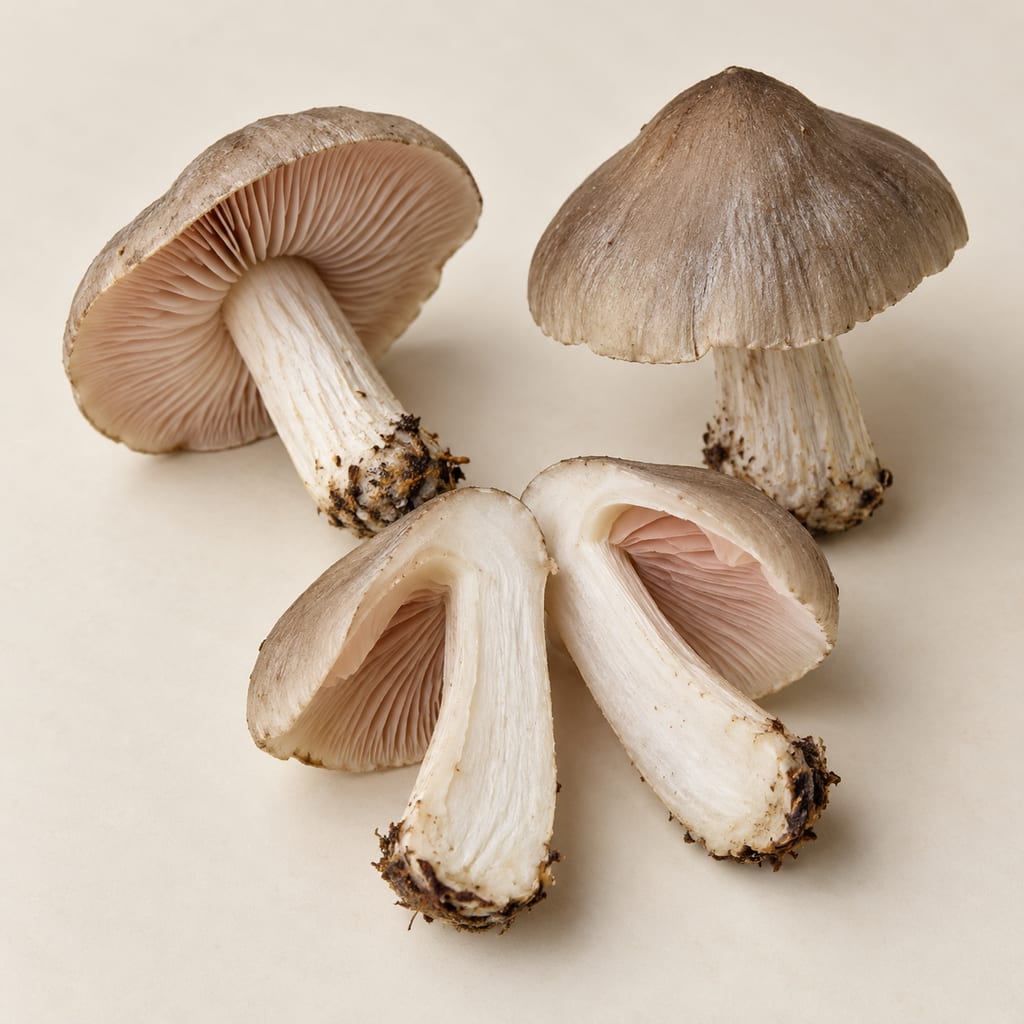
A woodland pinkgill reported as local food in Sikkim and parts of Italy, but difficult to identify and subject to strong regional warnings about confusion with toxic Entoloma species.
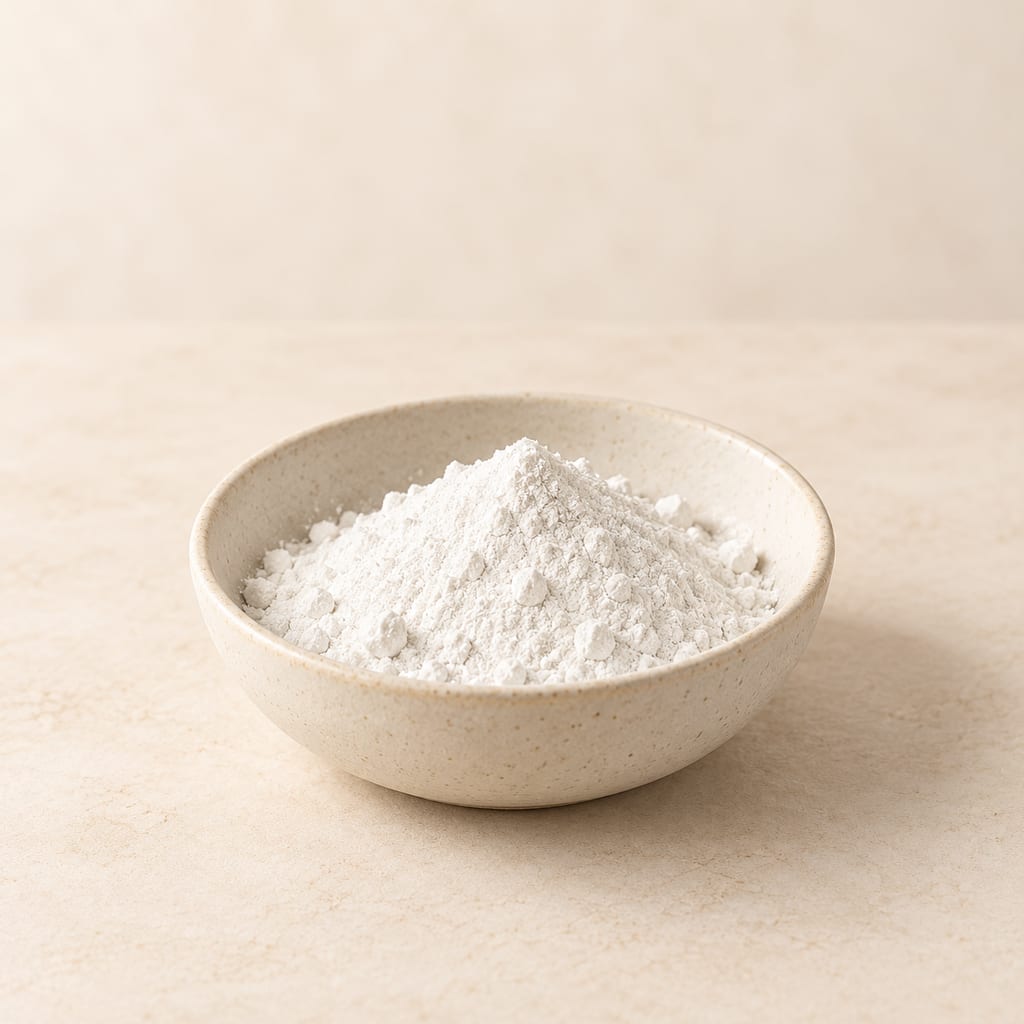
Gypsum is calcium sulfate dihydrate, a mineral salt that brewers dissolve in water for its calcium and sulfate and that tofu makers use to set soy curd.
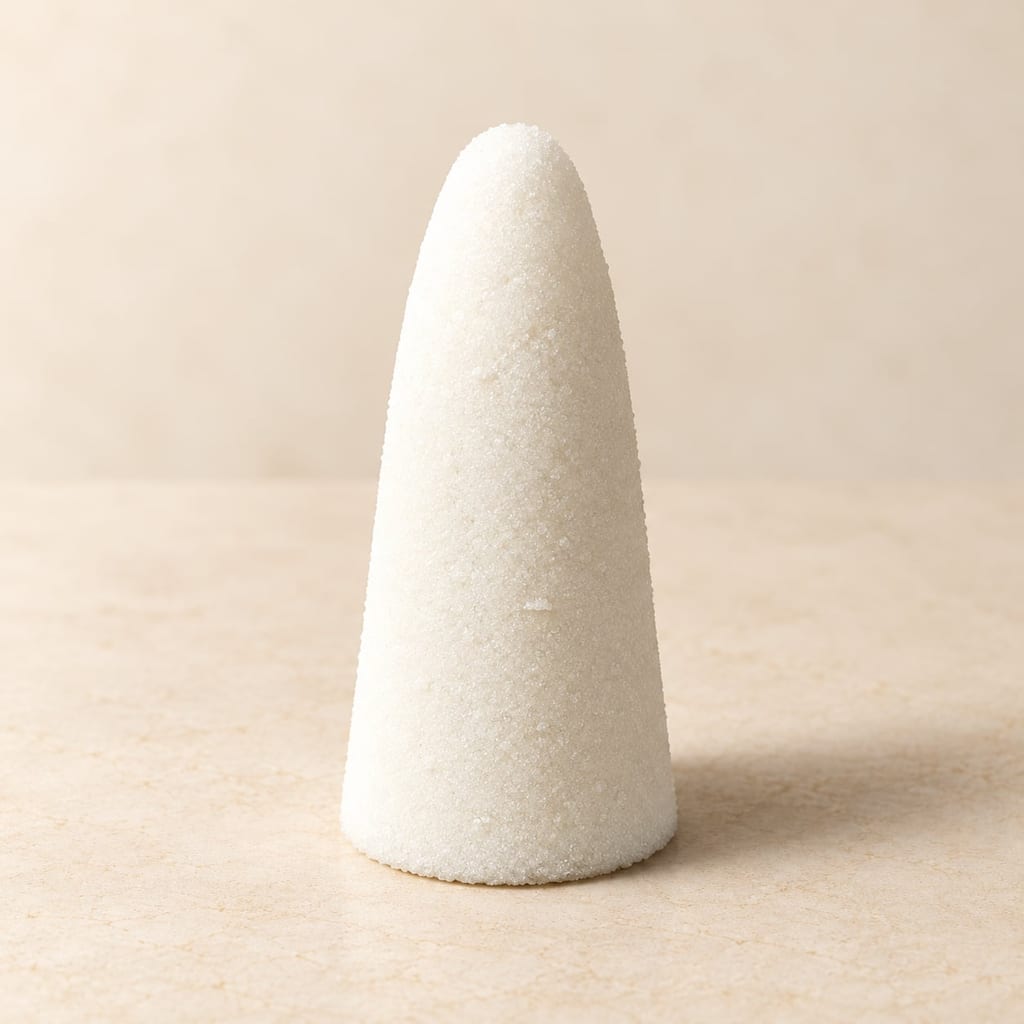
Refined sugar formed into a solid cone, historically cut or powdered for kitchen use and dissolved into wine liquor.
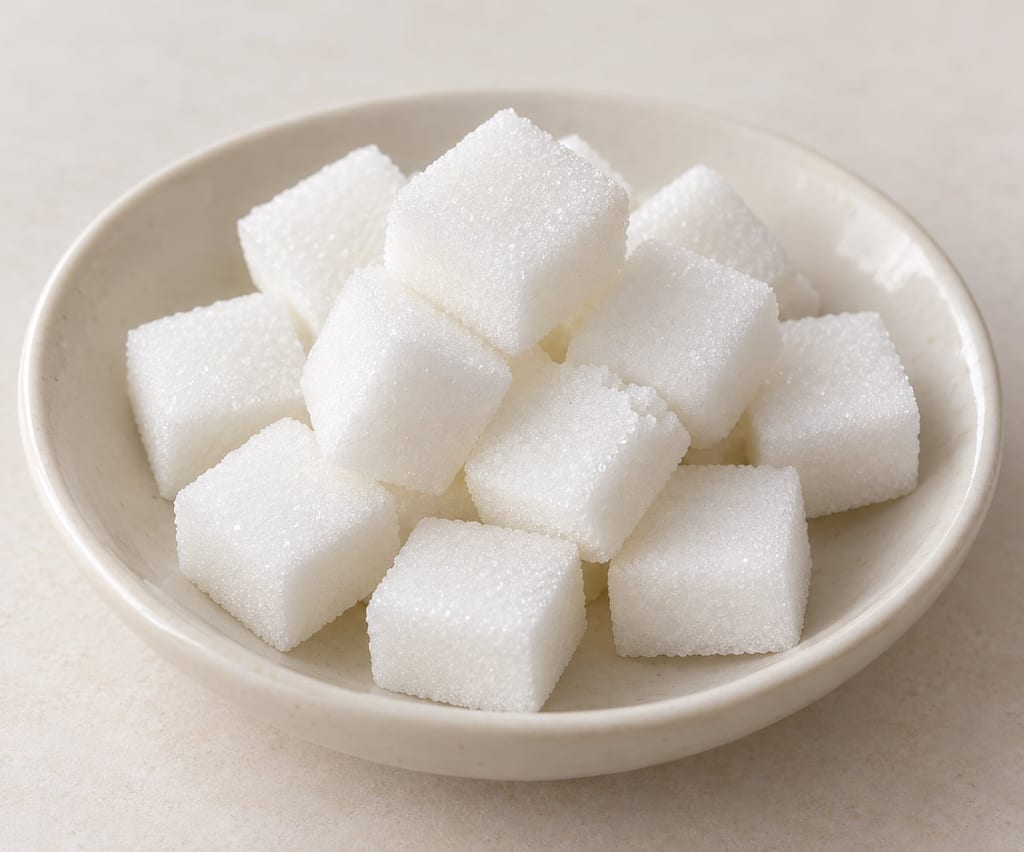
A historical refined-sugar form whose name has covered truncated cones and, in later usage, smaller pressed or cast pieces.
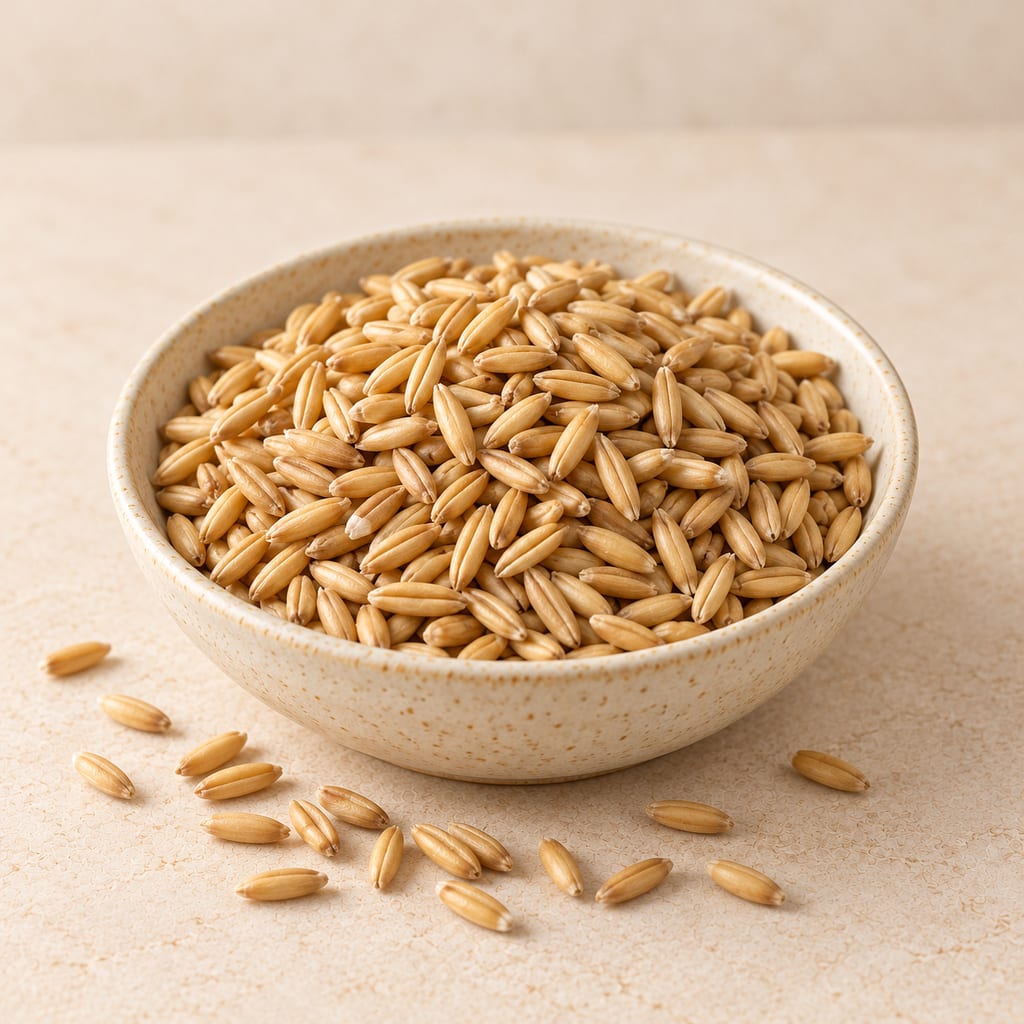
A cereal grain sold as groats, cut pieces, flakes, flour and malt. Oats shape porridge, bread and brewing differently as processing changes hydration, texture, starch, beta-glucan, protein and oil.
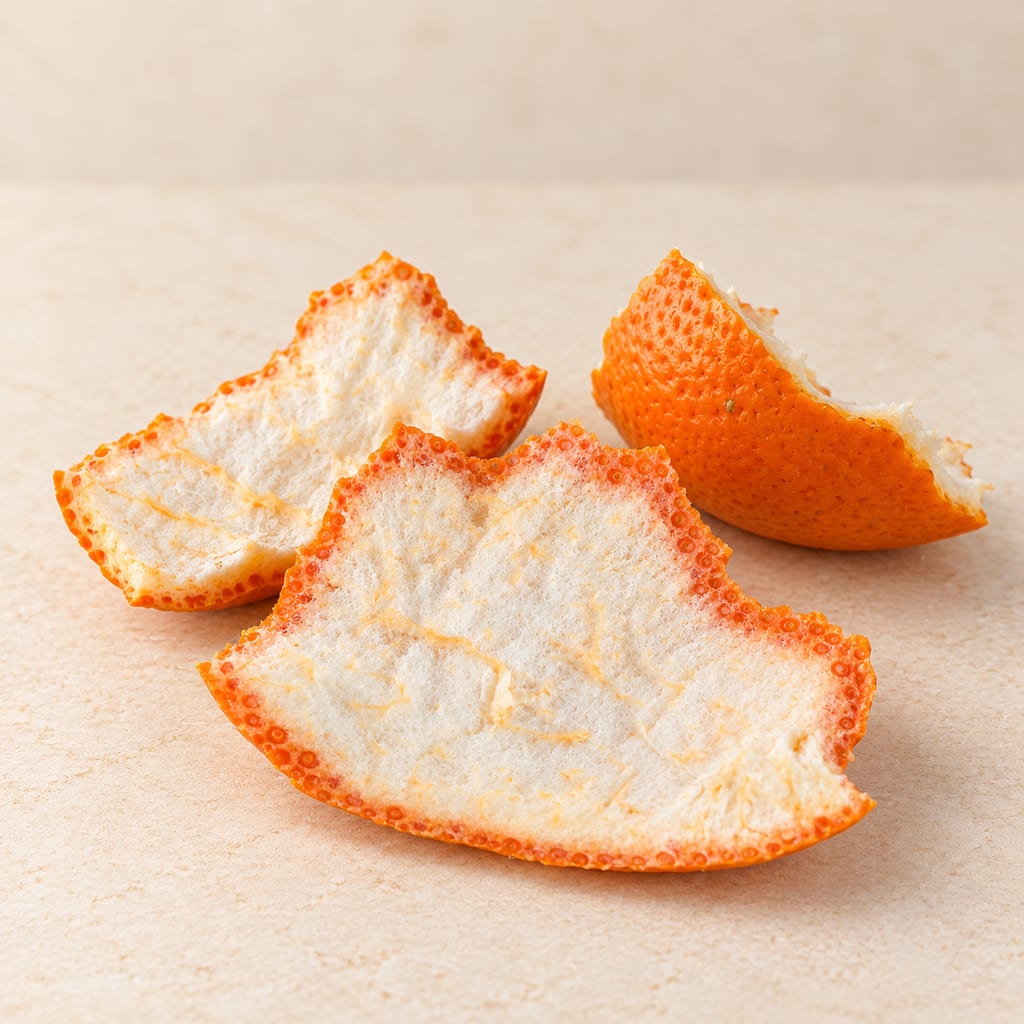
Orange rind retaining its white inner pith, combining aromatic outer peel with the body and pectin used in marmalade and other citrus preparations.
No community contributions have been published for this entry yet.
Sign in to contribute. Published comments and photos are free to read.
NCBI TaxonomyIdentity · Taxonomy
Saccharomyces cerevisiae taxonomic recordNCBI records Saccharomyces cerevisiae as a species and lists brewer’s yeast as a common name.
Cited in: The culture behind the name; Species, strains and nearby names
CAMRAIdentity · Species · Flavour
YeastCAMRA describes brewers’ yeast in beer, ale and lager yeast categories, fermentation behaviours and flavour contributions.
Cited in: The culture behind the name; Species, strains and nearby names; What it contributes to flavour and body; Places and historical record
CAMRAProcess · Uses
The Brewing ProcessYeast is added to cooled wort; fermentable sugars are converted principally to alcohol and carbon dioxide; fermentation affects the liquid, not only surface foam.
Cited in: How yeast turns wort into beer; What it contributes to flavour and body; Beer, wine and bread uses
CAMRAConditioning · Use
Beer dispense containersLive yeast may condition beer in casks and other containers; cask conditioning is not universal to beer.
Cited in: Beer, wine and bread uses
Gorter de Vries, Pronk and DaranTaxonomy · History · Process
Lager yeast domestication and evolutionSaccharomyces pastorianus is a hybrid involving S. cerevisiae and S. eubayanus; lager yeast has a separate evolutionary and brewing history.
Cited in: Species, strains and nearby names; How yeast turns wort into beer; Places and historical record
Microbiology and Molecular Biology ReviewsProcess · Propagation · Flavour
The Microbiology of Malting and BrewingReview discusses brewing yeast propagation, harvesting, reuse, storage physiology and brewing microbiology.
Cited in: How yeast turns wort into beer; Harvest, propagation and commercial forms; What it contributes to flavour and body; Choosing, handling and limits
Current BiologyHistory · Taxonomy · Strain diversity
Domestication and Divergence of Saccharomyces cerevisiae Beer YeastsBeer yeast domestication trajectories differ from wine yeast; brewing strains are diverse and do not form one uniform culture.
Cited in: Species, strains and nearby names; What it contributes to flavour and body
University of California eScholarshipHistory · Uses
Baking Powder WarsHistorical account describes British use of ale foam as barm and brewery dregs as emptins for bread leavening, with variable household supply.
Cited in: The culture behind the name; Harvest, propagation and commercial forms; Beer, wine and bread uses; Places and historical record
Project GutenbergPrimary source · History · Uses
The Book of Household ManagementBeeton’s 1861 bread directions specify solid brewer’s yeast; elder wine and ginger beer specify brewer’s yeast; ginger wine specifies yeast without naming its kind.
Cited in: The culture behind the name; Harvest, propagation and commercial forms; Beer, wine and bread uses; Places and historical record; Choosing, handling and limits
History of BiologyHistory · Science
Mémoire sur la fermentation alcoolique (modern English translation)The webpage presents a modern Google translation of Pasteur’s 1860 memoir and identifies the original French work; translation limitations are noted.
Cited in: Places and historical record
Lallemand BrewingCommercial forms · Handling
Best practices: dry yeast viability and pitching ratesSupplier gives product-specific dry yeast viability and pitching guidance; figures apply to its products and sample, not all yeast.
Cited in: Harvest, propagation and commercial forms; Choosing, handling and limits
Lallemand BrewingCommercial forms · Handling
Rehydration and qualitySupplier-specific dry yeast rehydration and storage guidance is not generalized to other makers or forms.
Cited in: Harvest, propagation and commercial forms; Choosing, handling and limits