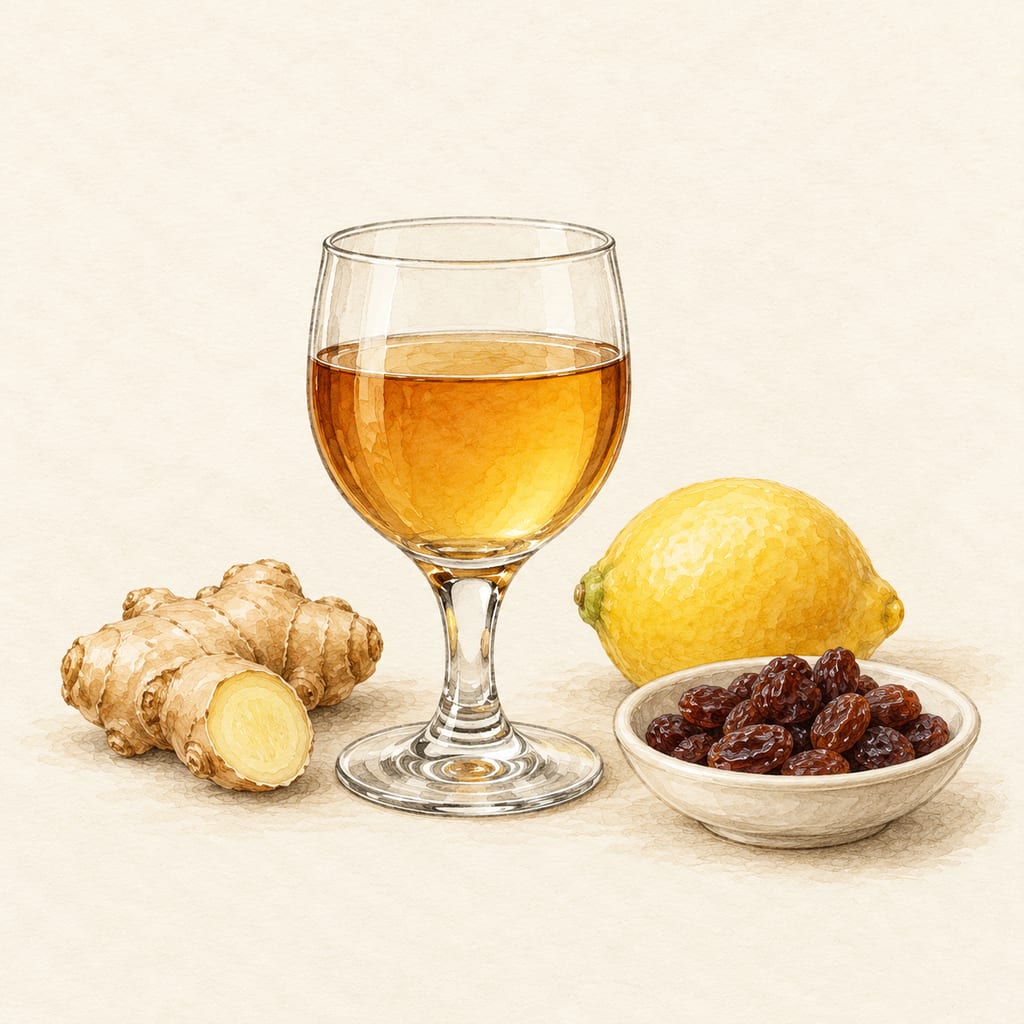
Ginger wine, cask-matured on raisins
A Victorian household wine of boiled sugar, lemon and bruised ginger, worked on raisins in a cask for a fortnight and finished with brandy, made nine gallons at a time.
 FermenteaWhere food goes to change
Sugar sources
Refined sugar formed into a solid cone, historically cut or powdered for kitchen use and dissolved into wine liquor.
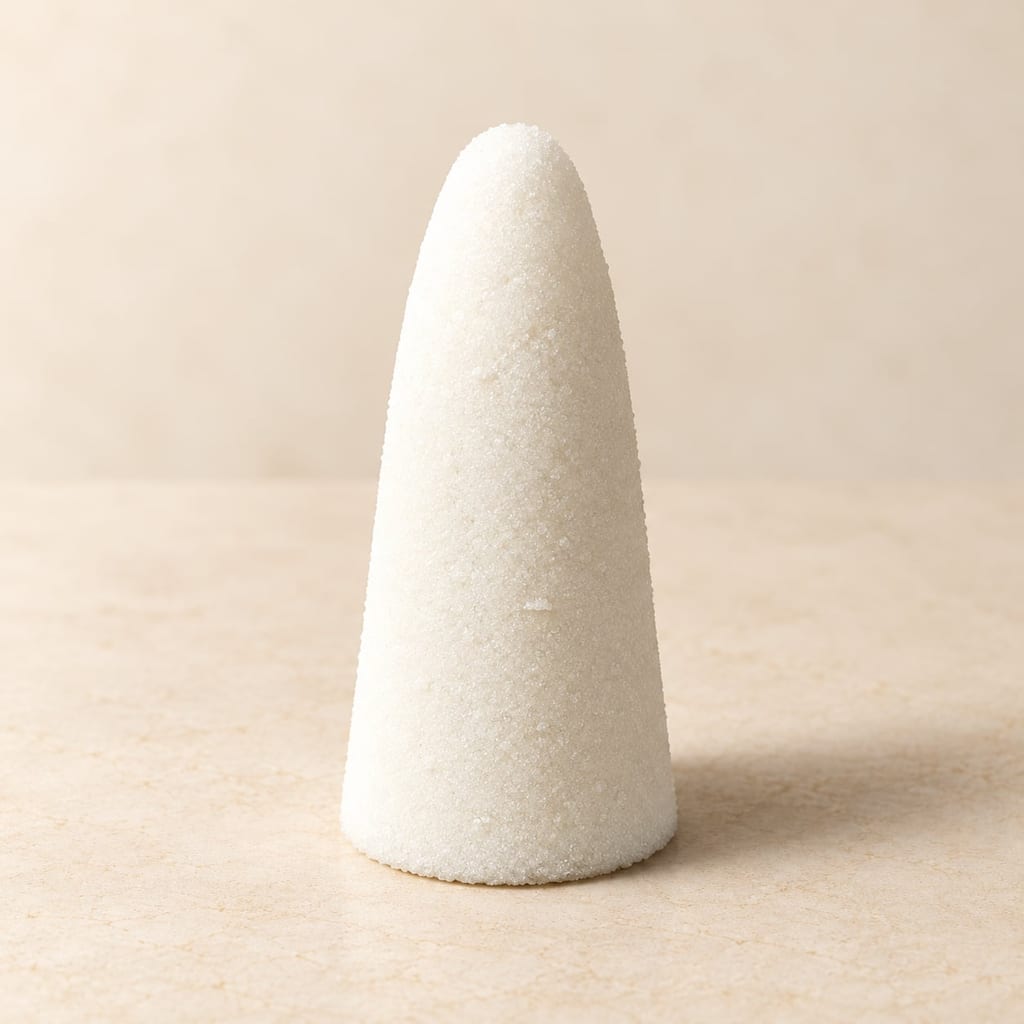
Loaf sugar is refined sugar formed into a solid cone. It belongs to a world in which a cook might begin with a large piece of sugar, cut off what was needed and reduce it further before using it. The cone is a commercial form of the ingredient, rather than the shape of a plant or a distinct species of sugar.
A loaf has a mass of small crystals held together in a compact but porous body. It can look smooth from a distance while its broken surface reveals the grains. A surviving museum example from Bristol shows the familiar white, tapering form with a broad flat base and rounded tip. Its shape gives the name loaf a physical meaning quite different from a loaf of bread.
The sweetness belongs to the sugar. Conical form affects how the solid is handled, divided and dissolved; it does not make sucrose a different compound. That distinction becomes especially useful in a wine recipe, where the solid shape eventually disappears into the liquid.
Jonathan Pereira described the shop forms in his 1843 Treatise on Food and Diet. Refined sugar appeared in conical loaves or in truncated cones called lumps. Both came in different sizes and degrees of purity. Small lumps were called titlers. These were distinctions within a trade in refined sugar, rather than names for unrelated sweeteners.
His description makes colour part of the comparison. Double-refined sugar was white, while single-refined sugar retained a slight yellowish colour. Both forms were compact, porous and friable, made of small crystalline grains. A solid loaf was therefore not a single enormous crystal. Its ability to break into pieces belonged to its construction from many smaller ones.
The terminology matters when reading household instructions. Loaf and lump could identify particular commercial forms in a nineteenth-century account, while a modern speaker may use lump for a small serving of sugar. Neither the modern word nor the old cone should be made to stand for every period's usage. A recipe that explicitly names loaf sugar retains that choice even when its next operation is to dissolve it.
Sugar refining left objects as well as written descriptions. A conical earthenware mould in the London Museum collection dates from 1650–1680. It is a piece of production equipment, not a preserved sugar loaf. Its form belongs to the system that gave the finished sugar its shape.
The cone had a practical role in separating sugar crystals from syrup. Moulds had an opening at the narrow end, and a collecting vessel below received the liquid that drained out. Archaeological finds of these moulds and jars can therefore identify parts of a refinery's working equipment even after the sugar itself has gone.
This is a useful connection between appearance and manufacture. The broad end and tapering point were not merely a decorative choice for the grocer's counter. They belonged to a vessel in which a mass of crystals and liquid could be handled and drained. The final loaf carried the outline of that equipment into the household, where the problem changed from separating syrup to dividing a hard solid into useful quantities.
Refiners had to deal with sugar crystals and the syrup surrounding them. In 1879, Augustus Hermann Seyferth patented a process and apparatus for refining and moulding sugar. His description began with the separation of syrup from newly formed crystals after impurities had been removed and the sugar recrystallized. Getting sugar into a marketable form required more than pouring a sweet liquid into a cone.
Washing posed a material problem. A liquid intended to carry away syrup could also dissolve some of the sugar the refiner wanted to retain. Seyferth discussed the use of concentrated sugar solutions and proposed a route involving alcohol, followed by its recovery. The patent describes a particular industrial proposal, not a household method or evidence that every loaf was made that way.
His apparatus also shows that refining and shaping could be designed together. Division plates formed multiple prismatic spaces and conducted heat through the sugar. Smaller sections addressed a different handling problem from a large loaf whose interior was difficult to reach. A familiar grocery ingredient stood at the end of equipment choices about washing, drainage, heat transfer and the recovery of processing liquids.
A cone could not be measured into every dish without preparation. Sugar cutters broke pieces from the loaf, bringing a separate tool into the work of sweetening food. A pair in the Dumfries and Galloway collection was made by A. Timmin and Sons. The metal implement survives as evidence of a task that is easy to overlook when sugar is imagined only as loose grains poured from a packet.
Pereira's description of a friable, crystalline mass helps explain what the tool was dealing with. The cook needed portions from a larger body. Those pieces could then be dissolved or reduced further, depending on the recipe. Dividing the solid and transforming it in a liquid were successive operations with different purposes.
The words in a recipe can therefore describe either the purchased form or a prepared form. Loaf sugar identifies the original product, while powdered or broken sugar can describe work done to it. Cutting does not create a new sweetening substance. It makes the same material easier to portion and exposes more of it to the liquid or mixture that will receive it.
Anne Cobbett's English Housekeeper of 1851 gives loaf sugar a substantial role in the second of its two parsnip wines. The roots are washed, peeled and boiled until tender, then drained without bruising. The cook measures the liquor that has actually been recovered before adding the sugar and crude tartar.
The ratio is three pounds of loaf sugar to each gallon of drained liquor. That wording ties the addition to the liquid after cooking and straining, rather than to the quantity of water that first entered the pot. A gallon left in the roots or lost during cooking is not automatically a gallon of liquor available for sweetening.
Sugar enters after the root extraction, so the method separates two sources of dissolved material: what cooking draws from parsnips and what the cook subsequently adds. The loaf is not left as an intact cone for the yeast to work through. Its place is in the liquor, where dissolved sugar becomes part of the medium that will ferment. The physical history of the cone ends before the biological transformation of the drink is complete.
Dissolution disperses sugar into the liquid. Yeast metabolism then changes available sugars into other compounds. Those are separate events, even though a wine method may pass from one to the other in a short sequence. A solid disappearing from view shows that it has dissolved; it does not show how much fermentation has occurred.
Sucrose use by yeast involves more than one possible route. Invertase can split sucrose into glucose and fructose outside the cell, making those simpler sugars available for uptake. Experiments with a sucrose-adapted Saccharomyces cerevisiae culture also provided evidence for direct sucrose uptake during active growth. The transport and enzyme behaviour of the organism matter alongside the chemical identity of the sweetener.
That laboratory finding should not be turned into a named strain for Cobbett's wine. Her recipe says yeast without identifying it more closely. The useful explanation is that the sugar supplies fermentable material once it is in solution, while the actual organism and conditions determine how it is used. The cone's shape belongs to handling; cellular uptake and metabolism belong to fermentation.
Loaf sugar was one member of a much larger family of sugar preparations. Pereira described rock candy as crystals grown from a concentrated solution, including growth on suspended strings. That construction differs from a porous loaf made of small crystals: a transparent piece of candy and a white cone can have related material origins while presenting very different structures.
Boiled sugar introduced another set of changes. Period confectionery included barley sugar, acidulated drops, toffee and pulled sugar. Butter could enter one preparation, while acids or further working belonged to others. These were deliberate preparations of the sweetener, with ingredients and handling that changed the finished confection.
Caramel added colour and bitterness through heating. It was not simply another name for white sugar that happened to be broken into a smaller piece. The range of products illustrates why an old instruction's verbs deserve as much attention as its ingredient name. Dissolving, crystallizing, boiling and pulling do different work. A cone is a useful starting material for several of them, but it does not already embody every result a confectioner can make from sugar.
Sugar also surrounded fruit in forms that kept its presence visible. Pereira included preserved ginger and candied peel among the preparations of sugar used for food. A syrup could carry the sweetener as a liquid, while a coating of crystals gave the finished surface another texture. The ingredient moved between solution and solid form as the preparation required.
These examples widen the meaning of a kitchen supply of loaf sugar. It could be divided for a drink, dissolved for a syrup or taken into confectionery with fruit. The same starting material did not give all of those foods the same composition or keeping properties. The recipe's further ingredients and operations still mattered. A historical list of preserves documents culinary uses; it does not establish a present-day preservation schedule for a new mixture.
A grocer's form and grade tell part of the story of sugar, rather than all of it. Pereira's distinction between white and slightly yellowish refined products describes what could be sold. Seyferth's later patent describes a problem within industrial processing. Neither identifies the plantation, crop shipment or refinery behind the loaf used in a particular household wine.
The history of refining is also a history of separating material. Crystals are retained while surrounding syrup and impurities are removed to varying degrees. A finished loaf is the result of those operations, and its appearance is connected with them, but appearance alone cannot reconstruct every treatment it received.
For a historical recipe, the named form should therefore be preserved without inventing a manufacturer's specification. Loaf sugar is more precise than sugar, yet it does not disclose the exact composition of every loaf sold under that name. A modern product offered as a substitute needs its own identity and description. The old recipe supplies the starting question, not an automatic equivalence between every white sweetener on a shop shelf.
Solid refined sugar needs protection from moisture and contamination. Modern cargo guidance also notes its sensitivity to foreign odours and damage during handling. These are useful material concerns, rather than a universal household shelf life or proof that a historical loaf meets a present-day product specification.
In the kitchen, begin with what the preparation actually asks the sugar to do. A solid form matters when the cook must cut, crush or present it. When a method dissolves it into a measured liquor, the amount of sugar and the amount of recovered liquid become central. Those are different questions from whether a cone looks historically convincing.
Cobbett's parsnip wine preserves that distinction particularly clearly. The reader encounters a named grocery material, then a ratio applied after the roots have been drained, and later a fermentation. Understanding all three parts makes the old instruction more legible: the loaf explains the material supplied to the kitchen, the measured liquor explains the addition, and the yeast explains the subsequent transformation.
The historical sugar has no product-specific allergen or processing-aid declaration.
Printed commercial description and culinary use, not the origin of sugar refining or the crop.
The source crop, supplier and refinery behind the historical recipe ingredient are unidentified.
A Victorian household wine of boiled sugar, lemon and bruised ginger, worked on raisins in a cask for a fortnight and finished with brandy, made nine gallons at a time.
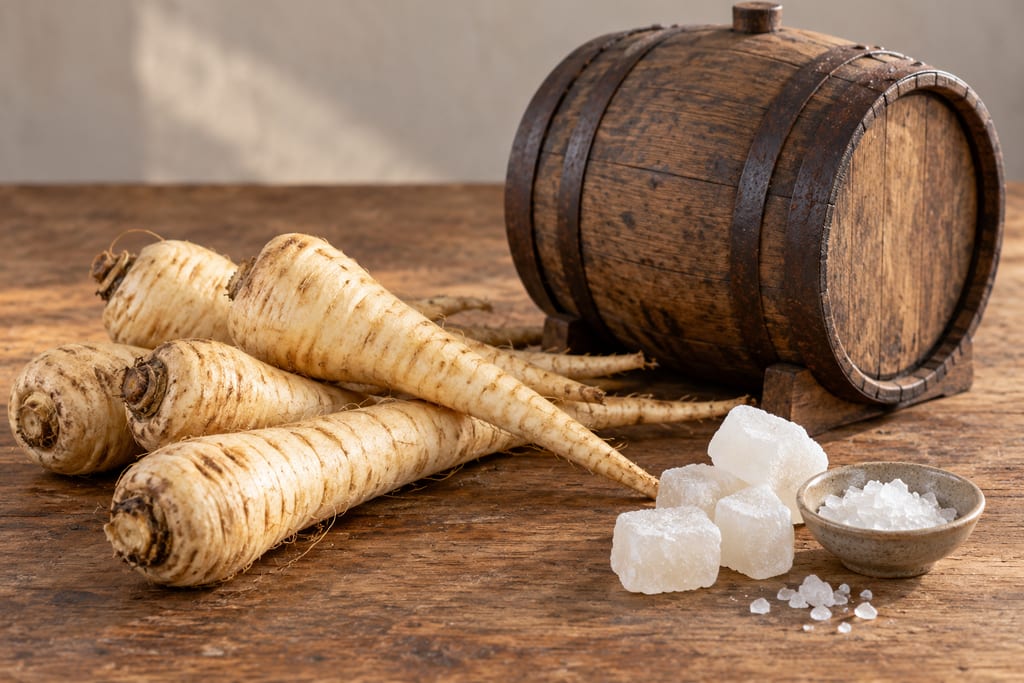
Parsnip liquor ferments with loaf sugar, crude tartar and fresh yeast, then matures in a cask for twelve months before bottling.
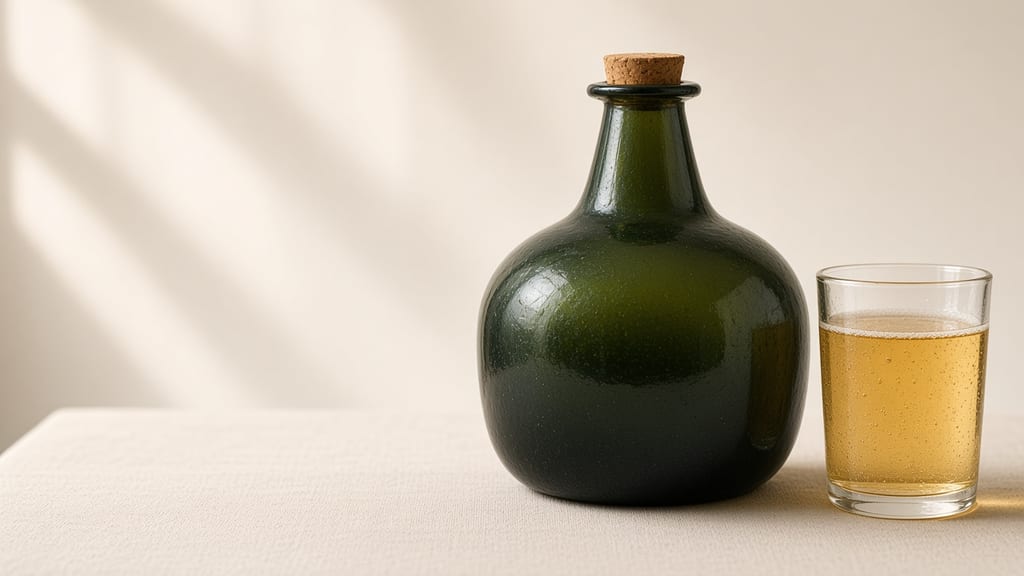
In the 1650s and 1660s English cider makers bottled cider with a little life left in it, sometimes with a lump of sugar, so it would mantle and sparkle in the glass, decades before Champagne sparkled on purpose.
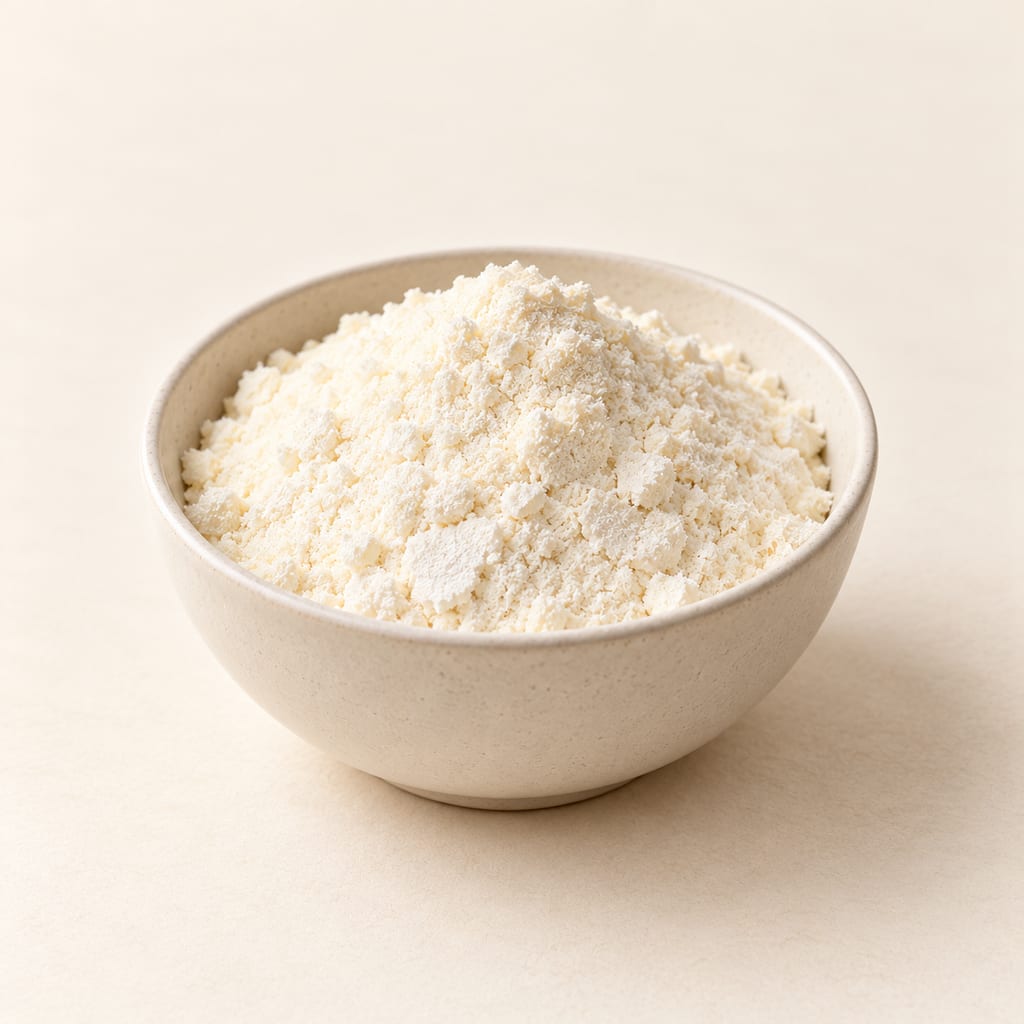
Brewer’s yeast is a working name for living cultures selected for brewing, not one strain or always one species. Ale and lager cultures differ, and older household books may use the term for foam or sediment from brewery beer.
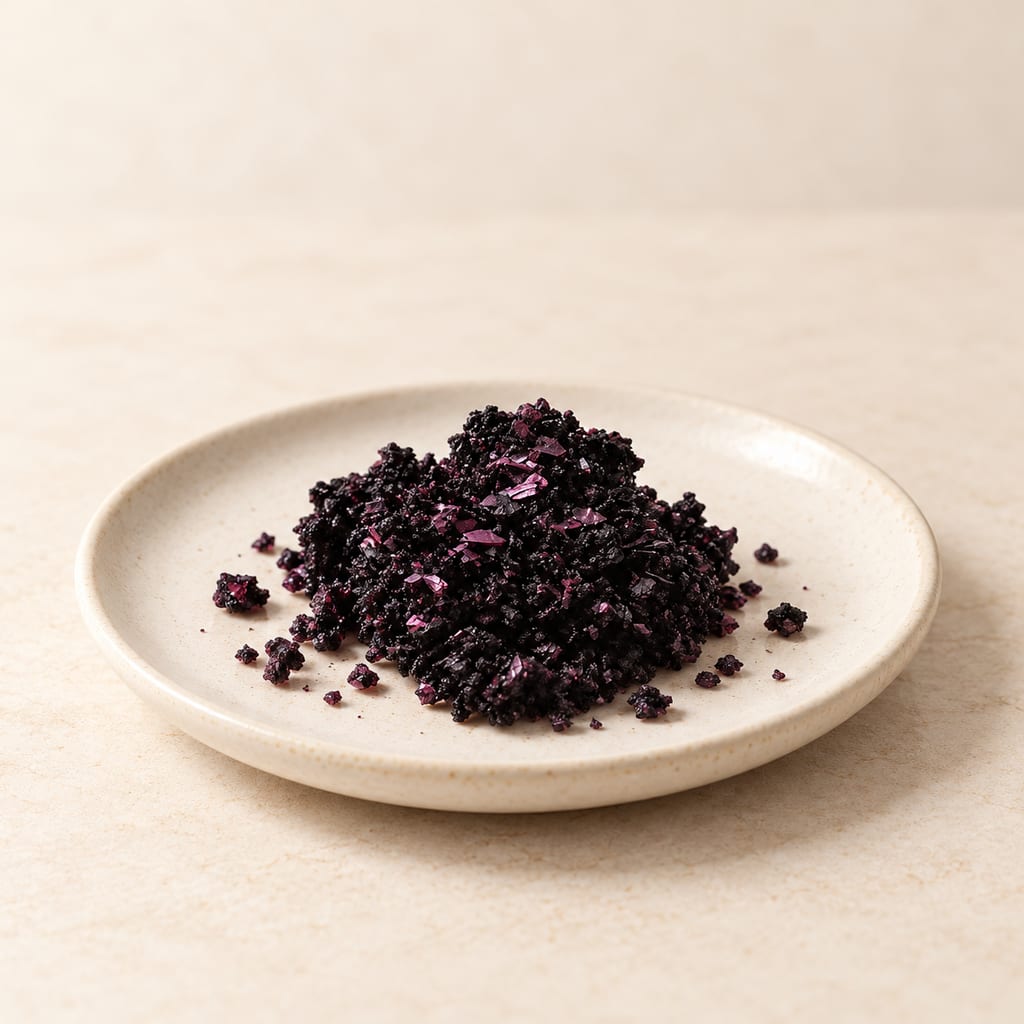
A mixed crystalline wine-vessel deposit, chiefly potassium hydrogen tartrate, used historically in wine recipes and recovered for refining into purer products.
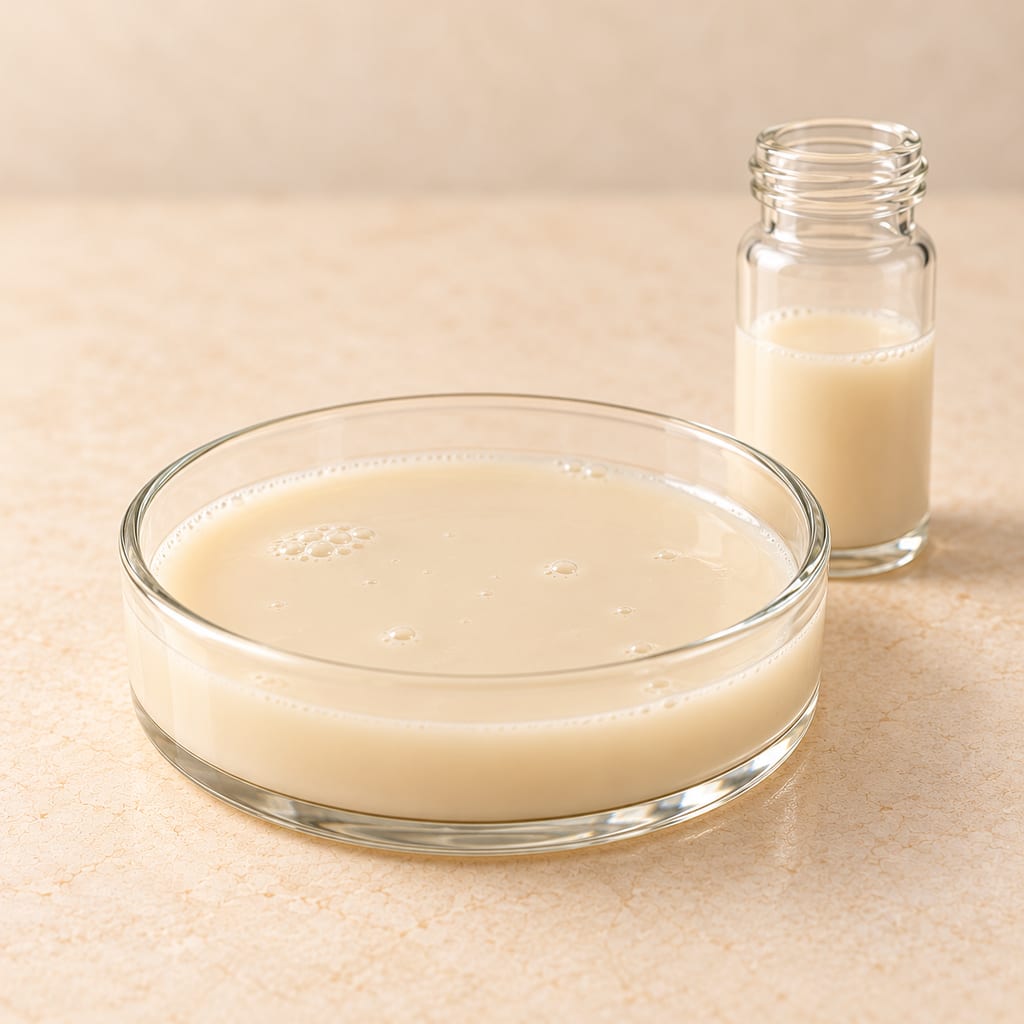
Dry milk is a family of dairy ingredients made by removing most water from milk or cream. The name includes distinct whole, partly skimmed and nonfat powders; fat level, heat treatment and particle form determine handling and use.
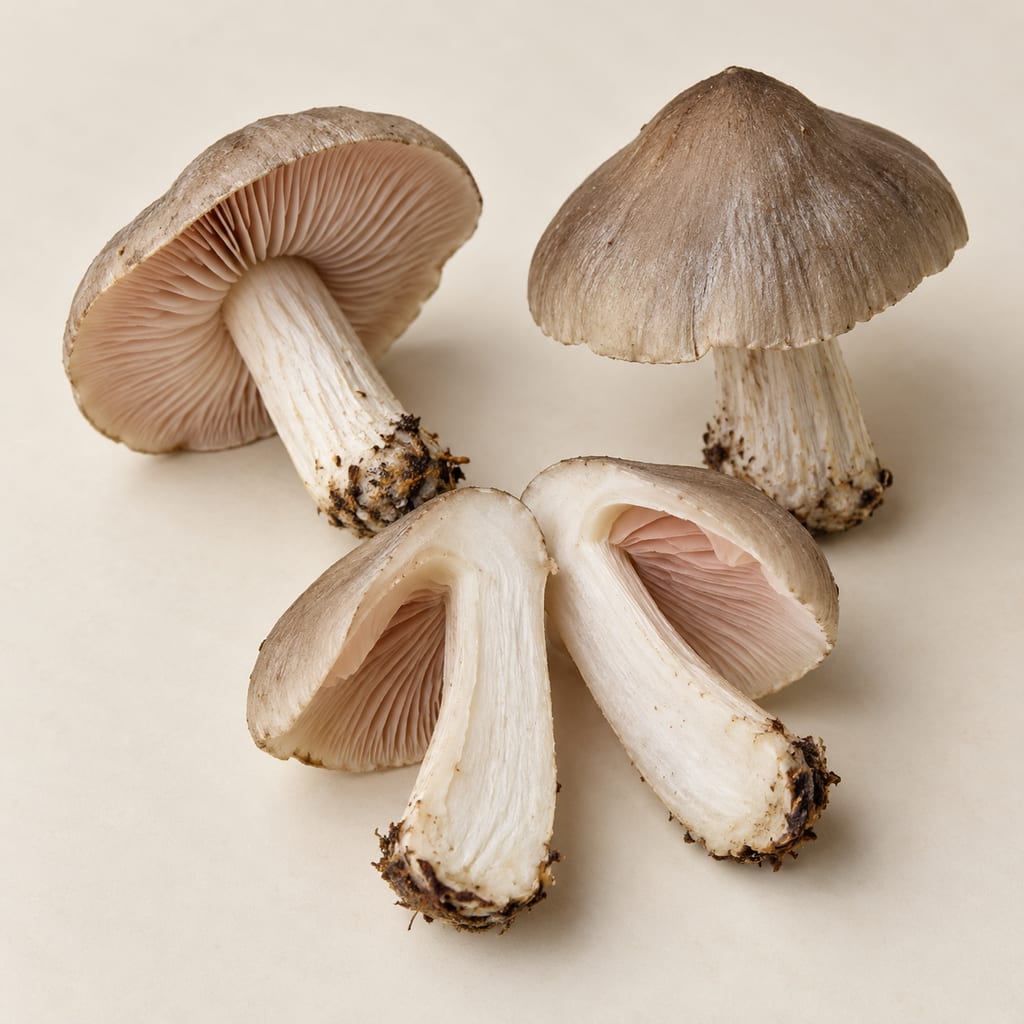
A woodland pinkgill reported as local food in Sikkim and parts of Italy, but difficult to identify and subject to strong regional warnings about confusion with toxic Entoloma species.
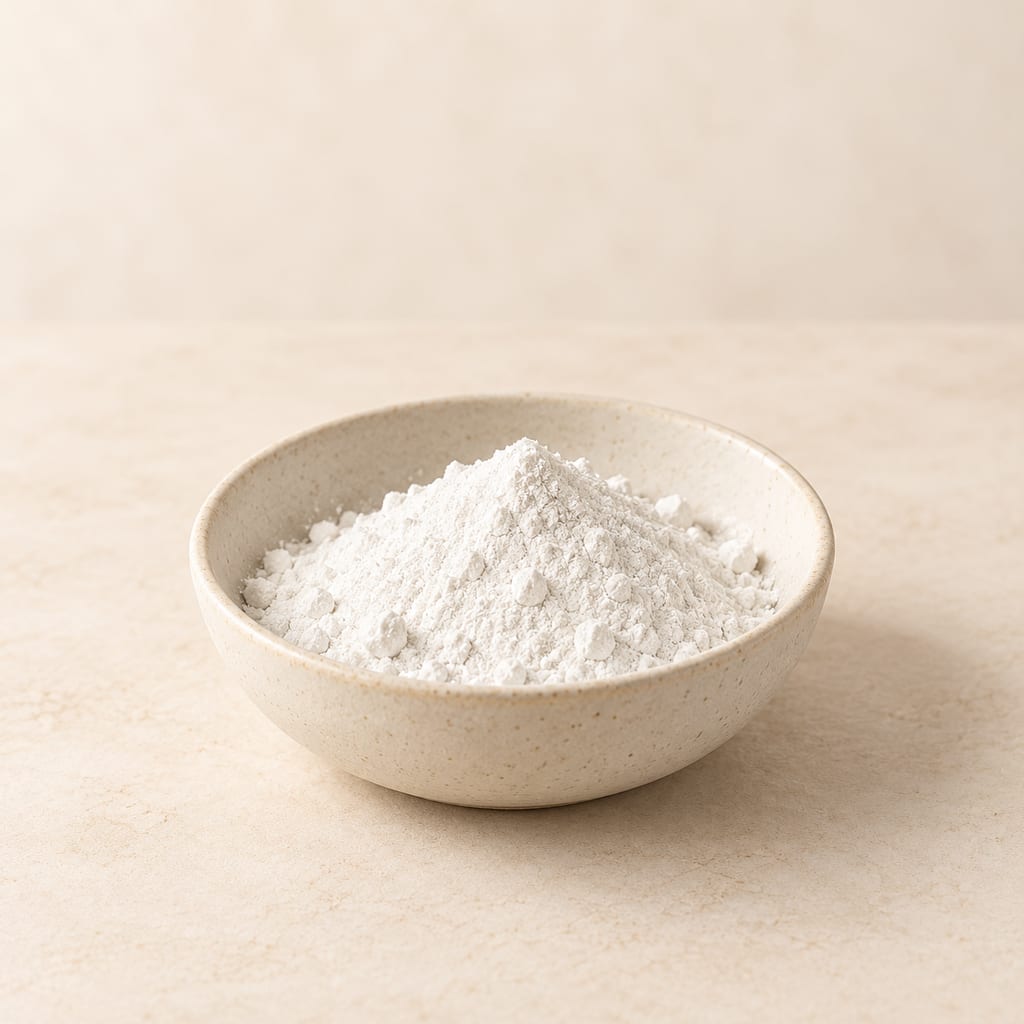
Gypsum is calcium sulfate dihydrate, a mineral salt that brewers dissolve in water for its calcium and sulfate and that tofu makers use to set soy curd.
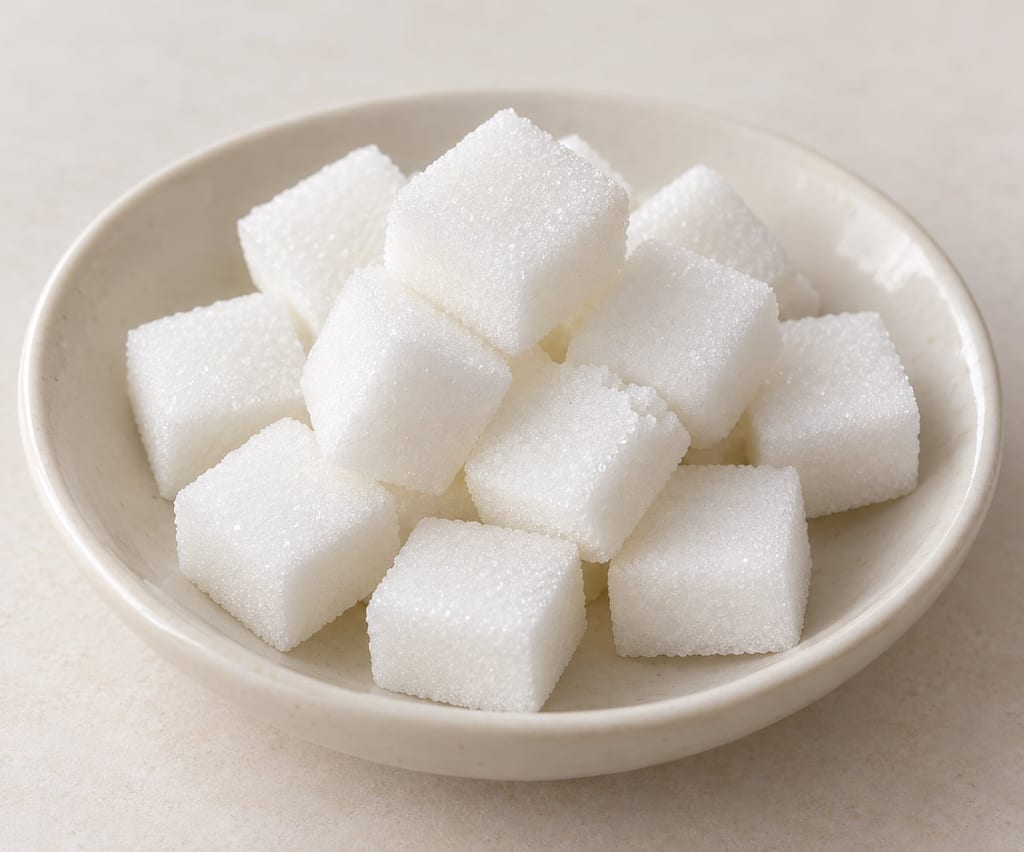
A historical refined-sugar form whose name has covered truncated cones and, in later usage, smaller pressed or cast pieces.
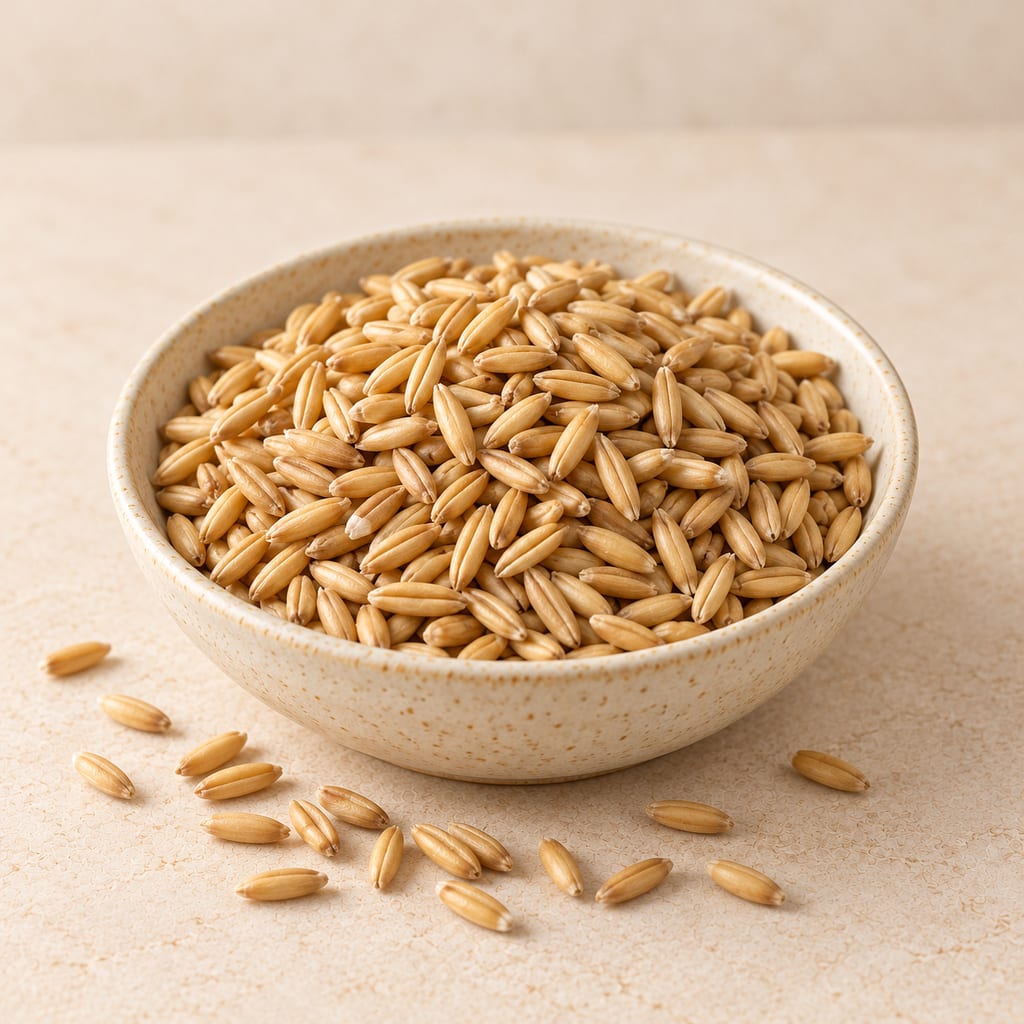
A cereal grain sold as groats, cut pieces, flakes, flour and malt. Oats shape porridge, bread and brewing differently as processing changes hydration, texture, starch, beta-glucan, protein and oil.
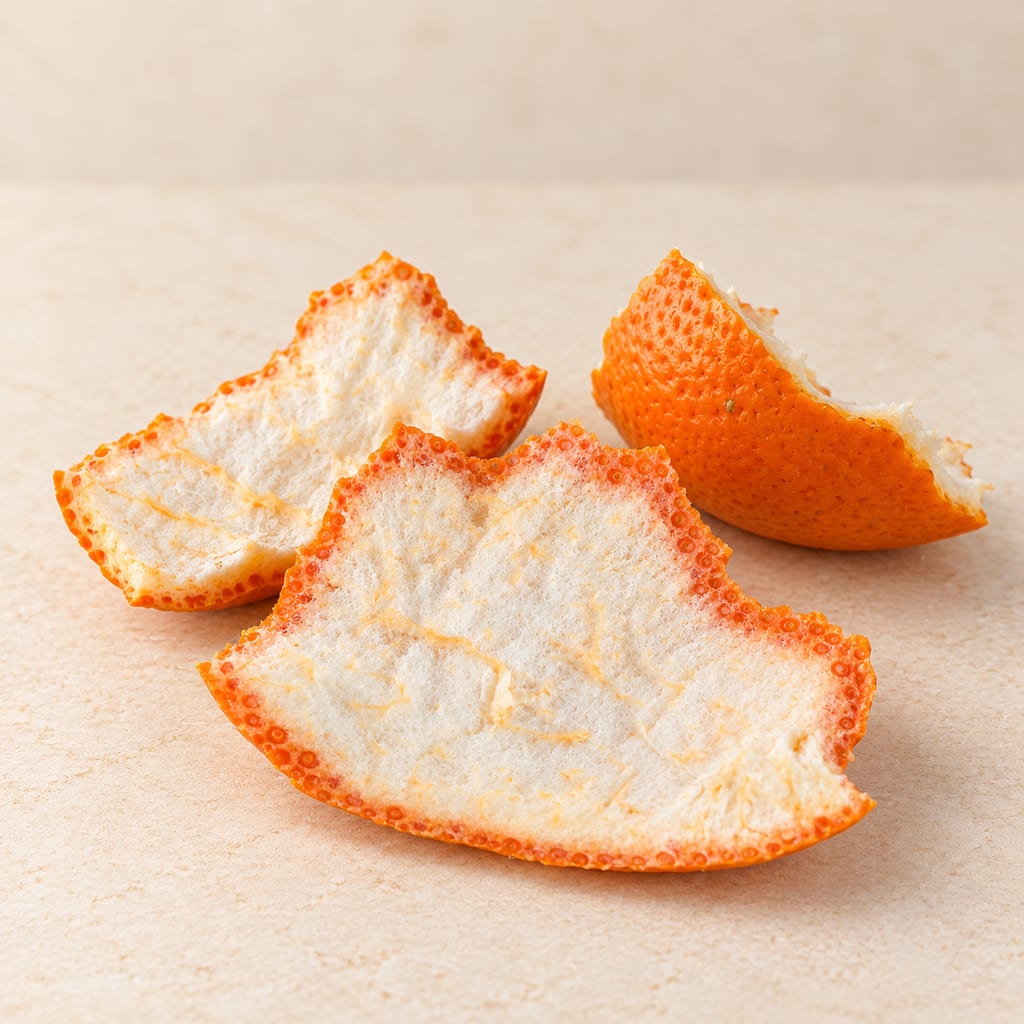
Orange rind retaining its white inner pith, combining aromatic outer peel with the body and pectin used in marmalade and other citrus preparations.
No community contributions have been published for this entry yet.
Sign in to contribute. Published comments and photos are free to read.
Longman, Brown, Green, and Longmans, London
A Treatise on Food and DietPrinted116: conical loaves versus truncated-cone lumps/titlers, refinements, crystalline texture. Printed118–121: rock candy, syrups, boiled confectionery, caramel, preserved ginger/candied peel. Historical chemistry and medical claims not used as current guidance.
Cited in: A cone of refined sugar; Loaves, lumps and the grocer's vocabulary; Cutting the loaf changed the kitchen work; Sugar takes other forms at the confectioner's bench; Fruit, syrup and candied peel; A recipe name does not identify the whole supply chain
A. Cobbett, London
The English Housekeeper, sixth editionTwo separate parsnip wines341–342, exact sugar names and quantity bases; historical kitchen handling and sweet/savoury uses. No old curing or storage schedule recommended.
Cited in: A measured addition to parsnip wine; Dissolving sugar and feeding yeast are different changes; Keeping the form and reading the recipe
United States Patent Office
Improvement in processes and apparatus for refining and molding sugar, US211797Crystal/syrup separation, washing proposal, division plates/conduction and prismatic sections suitable for subdivision into lumps. Patent proposal, not universal practice.
Cited in: Refining is more than giving sugar a shape; A recipe name does not identify the whole supply chain
Journal of General and Applied Microbiology39,389–394
Further Evidence of Direct Uptake of Sucrose by Saccharomyces cerevisiae in Batch CultureExtracellular sucrose hydrolysis and evidence of direct uptake in adapted culture; no laboratory rate/dose/time transferred to historical wine.
Cited in: Dissolving sugar and feeding yeast are different changes
Transport Information Service, German Insurance Association
Lump sugarThe cargo-handling guide describes modern pressed or cast sugar forms and protection from moisture, contamination and odours. Its transport guidance does not establish a household shelf life for historical loaf sugar.
Cited in: Keeping the form and reading the recipe
PortCities Bristol / Bristol City Council Museum Outreach
Sugar loafMuseum photograph and caption identify crystallised sugar loaf; white bare tapering form visually inspected.
Cited in: A cone of refined sugar
London Museum
Sugar loaf mouldActual conical earthenware mould, dated1650–1680; equipment, not finished sugar.
Cited in: The mould leaves a history of its own
Museum of London Archaeology
Sugar refinery wasteArchaeological sugar-refining equipment includes conical moulds with perforated tips and vessels that collected the draining syrup.
Cited in: The mould leaves a history of its own
Future Museum / Dumfries and Galloway Council
Sugar cuttersThe museum identifies sugar cutters made by A. Timmin and Sons. The object illustrates household division of solid sugar loaves into smaller pieces.
Cited in: Cutting the loaf changed the kitchen work