
Alcoholic fermentation
Before Champagne: how English cider learned to sparkle
In the 1650s and 1660s English cider makers bottled cider with a little life left in it, sometimes with a lump of sugar, so it would mantle and sparkle in the glass, decades before Champagne sparkled on purpose.
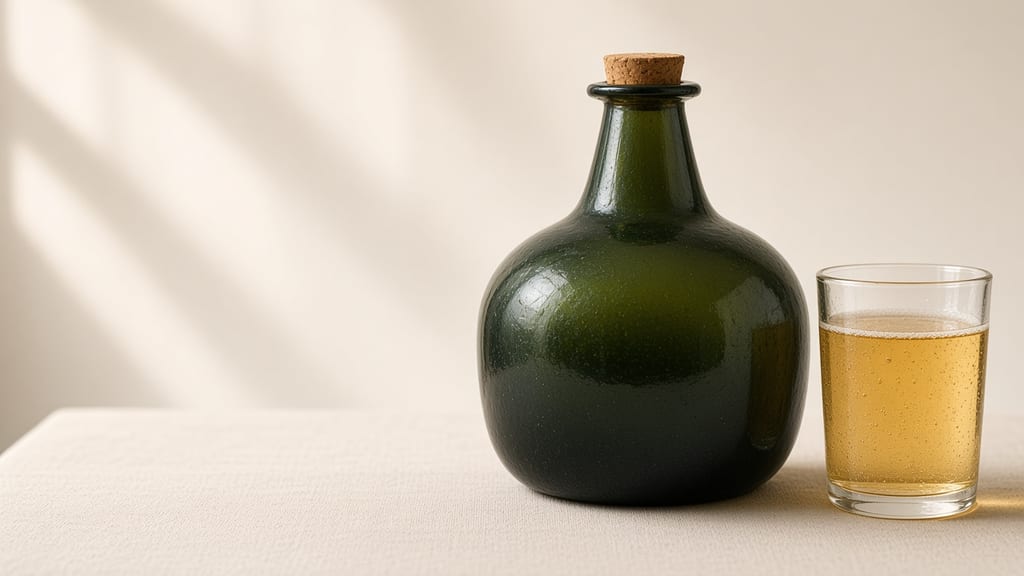
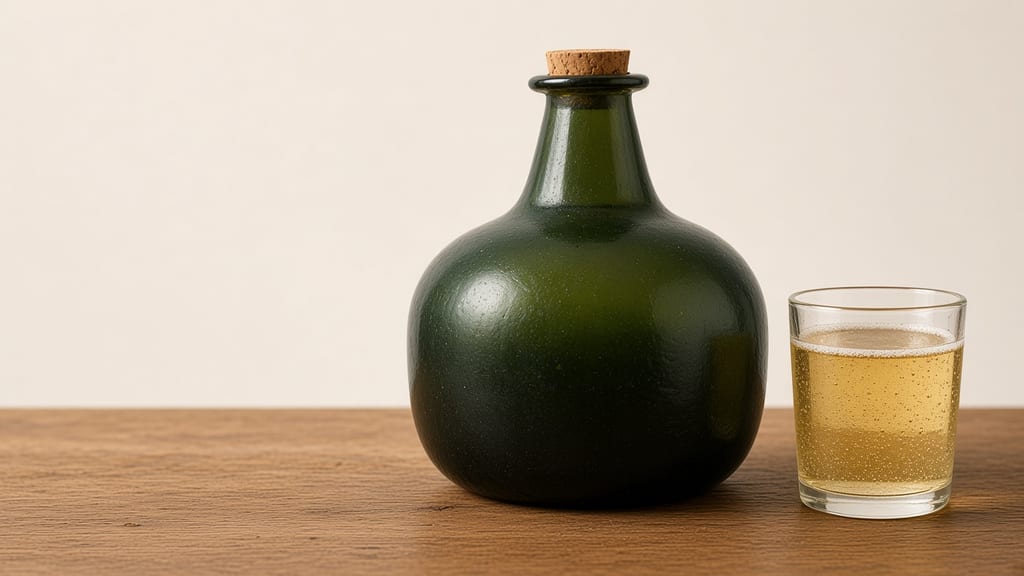
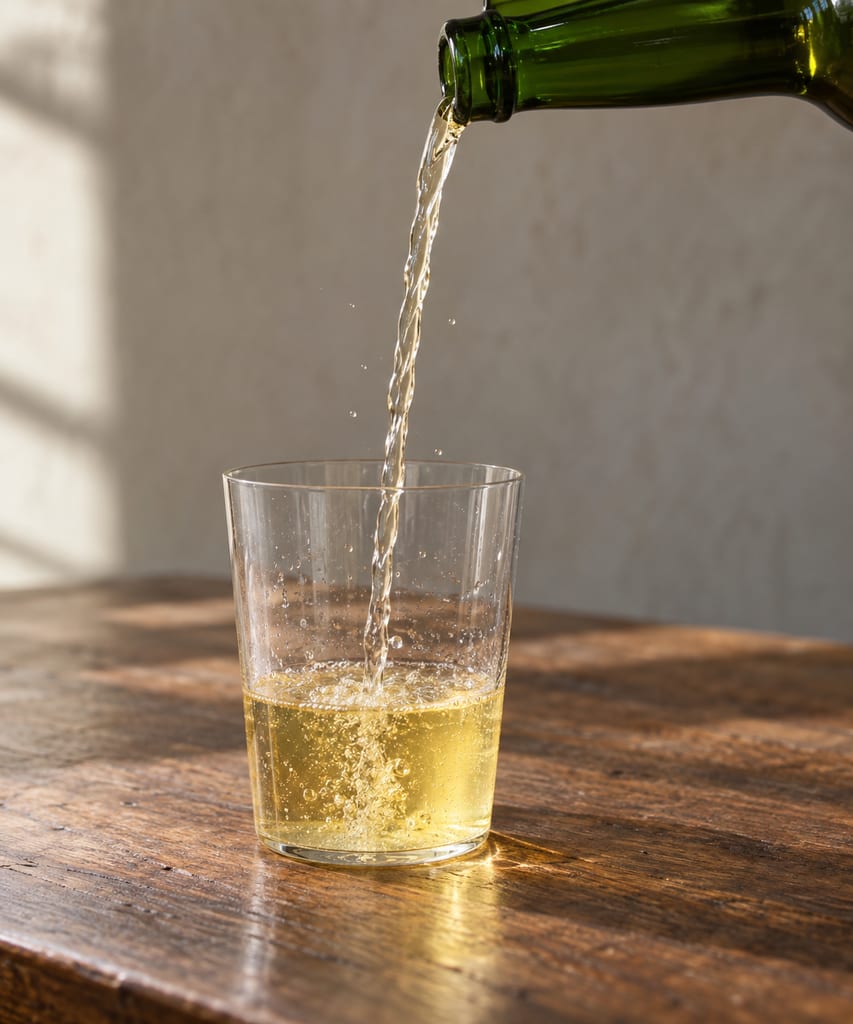
A 1660s-style English bottle and a glass of bottled cider.
One week in December 1662
On 10 December 1662 Henry Oldenburg read a set of aphorisms for cider to the Royal Society in London. They had come to him in a letter from John Beale, who had written about the orchards of Herefordshire and was then living in Somerset, and the Society ordered them to be entered in its register. Number 25 began, "Bottling is the next improver, and proper for cider."
At the same meeting Christopher Merret, a physician, handed in his observations on the ordering of wines. There was no time to hear them. The register says the reading was put off to the next meeting, and on 17 December Merret's paper was read and ordered to be registered too.
So in one week the Society heard two papers that between them describe sparkling drink made on purpose. One was about cider in bottles. The other was about London coopers putting sugar into wine to make it brisk. Wine historians such as Tom Stevenson treat Merret's paper as the first written account of a deliberate sparkle. Beale's aphorisms, and the cider writing that grew around them, explain how to get it into a bottle and keep the bottle whole.
Two years later John Evelyn printed Beale's aphorisms and several other cider papers as Pomona, bound with his book on timber trees. In a note to the reader he called them occasional papers entered into the Society's register. Those papers, with a few books on either side of them, are the record of how English cider learned to sparkle.
If it froth and fly
"If it froth and fly it was bottled too soon." Sir Paul Neile wrote that line about cider, and Evelyn printed it in Pomona in 1664. Neile wanted a drink that would "mantle and sparkle in the glass" when poured. He did not want the kind some called potgun-drink, which flew about the house when the bottle was opened and was too windy to drink with comfort.
That sentence sums up English bottled cider in the 1660s. The maker put cider into glass while a little life was still in it. The yeast finished its work behind the cork and the gas had nowhere to go but into the drink. Too much life and the corks blew or the bottles broke. Too little and the cider came out flat.
All of this was being written down in England years before anyone in Champagne set out to make wine sparkle on purpose. The story rests on a handful of books from the 1650s to the 1670s, on a change in English glassmaking, and on one short paper about wine that is often mistaken for a paper about cider.
Cider as an English wine
Pomona was a plan for the countryside. Evelyn wrote of "relieving the want of Wine, by a Succedaneum of Cider", a substitute for the French wine England bought abroad. He called the improved cider of his day "a kind of Modern Invention".
Beale had said much the same eight years earlier. In a letter dated 2 May 1656, later printed as Herefordshire Orchards, he wrote that "the credit of Cyder" had in a few years been much advanced among the best gentry, "who have sought out the right Method of ripening and hoarding the choicest Fruits, and of finding the right Season of drawing it, and some also of bottling it." The same letter reports that he found cider much amended by putting it on the fresh lees of a butt of sack.
The fruit that carried the plan was the Redstreak of Herefordshire. Evelyn called it "a pure Wilding", a tree raised from seed without grafting, and said that within living memory it had been surnamed "the Scudamores Crab". Lord Scudamore kept cider in bottle for years. One of the papers in Pomona notes that he "seldome fails of three or four years" and calls such bottles "the nappy Wine".
Beale himself changed his mind about the best apple more than once. In the 1656 letter he wrote that the Gennet Moyle "makes the best Cyder in my judgment, and such as I do prefer before the much commended Red-streak'd." By the aphorisms of 1662 he had gone the other way. He said he had once preferred Gennet Moyle cider but had only the ladies on his side, and that he saw cause to recant and confess that the Redstreak warmed and whetted the stomach.
The Herefordshire Pomona, written two centuries later by Robert Hogg and Henry Graves Bull, dates the Redstreak to about the start of the seventeenth century. It names Evelyn as the first writer to notice it and says the variety had ceased to exist by the time they wrote. The apple behind the first English sparkling cider is lost.
Sir Paul Neile's method
Neile's discourse is the fullest early account of how to make cider sparkle in the bottle. A shorter version, headed Sir Paul Neale's way of making cider, appears in The Closet of Sir Kenelm Digby, printed in 1669. The two texts agree on the order of work.
The apples come first. The Closet text ranks the Redstreak as the best for cider to keep, the Gennet Moyle next and pippins after that. The fruit lay about three weeks after gathering. Neile made his pippin cider at the start of November, after the apples had sweated in the loft for three weeks or more.
The apples were stamped or milled and the juice strained into a wooden vat with a spigot a few fingers above the bottom. A cloth of hair or sackcloth kept dust out. After twelve hours the juice was drawn off above the sediment into a barrel left about two fingers short of full, with the bung open. After a further day the clear part was drawn again. If it was still thick it went into a smaller vessel to settle for another day.
Neile's aim was to separate the gross lees before fermentation took hold. He believed that the solid matter of the apple made cider work again with every change of weather and grow harder each time. He wanted a cider that worked as little as possible in the cask. The bottle did the rest.
The difficult judgement was when to bottle. Neile bored a small hole in the cask, fitted a peg and drew a little two or three times a day to look at it. When bottled, he wrote, the cider "must not be perfectly fine". A little haze meant enough yeast to "fret in the bottle", which gave "a fine quickness". Too thick, and it might drive out the corks or break the bottles.
Opening bottles to save them
Neile admitted that nobody could tell at bottling which way a batch would go. He could tell within about a week. If the cider had started to work hard in the bottle he opened every bottle and let it stand open for two or three minutes to let the gas out. The Closet version says to visit the bottles after two or three days and leave the stopples out for half a quarter of an hour.
He would rather bottle too early than too late. An early bottling could be vented, while a late one would not fret at all and would lack the briskness he wanted. He also filled his bottles in order from the cask, because the cider changed from top to bottom of the same hogshead. Testing one bottle from each end and one from the middle told him the state of the whole run.
John Worlidge gave the same advice in Vinetum Britannicum. If cider was new and not quite pure when bottled, he wrote, let the bottles stand a while before stopping them close, or open the corks two or three days later. That would prevent breakage "against the next turning of the wind into the South". If a bottle did break, the rest should be opened and stopped again a little later.
Worlidge also noticed that poor cider broke more bottles than rich cider. In his words the meaner sort was "of a more eager nature", its spirits more apt to fly, without a solid body to hold them. Neither writer had a way to measure sugar or pressure. They judged by eye and by taste, and learned from the bottles that broke in the cellar.
An Oxford treatise and a lump of hard sugar
The earliest printed bottling method in this story comes from Oxford, nine years before Beale's aphorisms were read. Ralph Austen's Treatise of Fruit-Trees, printed there in 1653, gives a short paragraph on how to keep cider. If the cider has settled, he wrote, it may be kept good many years if "drawn out into Bottles, and well stopt with Corks and hard wax melted thereon, and bound down with a Packthred". The bottles were then sunk into a well or pool, buried in the ground or laid in sand in a cellar.
Austen's making method is brief. The apples are ground in a mill or pounded in troughs, the juice strained and tunned at once. He put in a small quantity of mustard "to make it worke the better" and stopped the vessel close once it had done working. He warned that too much air in drawing the cider would deaden it.
The second edition of 1657 repeats the paragraph and adds a note in the margin against the word bottles. "Put into each Bottle a lump or two of hard Sugar, or Sugar bruised." Austen gives no reason for it and no warning about broken glass. It is the earliest instruction in this story to sugar each bottle of cider, printed five years before Merret's paper on wine.
Raisins, mustard and a walnut of sugar
Neile wanted nothing in his cider but the juice of the apple. If a batch had been bottled too late and would not sparkle, he gave a remedy he tried to avoid. After about a week, open each bottle and drop in a little piece of white sugar about the size of a nutmeg. That would set it into a little fermentation and give it the briskness it lacked.
Beale's aphorisms show what other makers did. The full text of number 25, as the Royal Society registered it, reads: "Bottling is the next improver, and proper for cider. Some put two or three raisins into every bottle, which is to seek aid from the vine. Here in Somersetshire, I have seen as much as a walnut of sugar, not without need for this country cider."
The aphorism before it names mustard as "the most infallible and undiscerned improver", a pint to each hogshead, bruised as for sauce and put in when the vessel is closed after fermenting. Another reports a single trial of juniper berries. Beale drank the cider before Christmas and found that the berries "did hasten the clarification, and increased the briskness to an endless sparkling."
Beale also wrote about keeping. Redstreak cider in a good cellar improved in hogsheads in its second year, and "In bottles and sandy cellars, keeps the records of late revolutions and old mayoralties." He had kept some bottles a whole summer in the bottom of a fountain and preferred that way where it could be had.
The last aphorism turns to taste. When the late king came to Hereford in his distress, Beale wrote, the king and the gentry with him preferred the local cider to the best wines those parts afforded. To his knowledge that cider had no kind of mixture, and the gentry of Herefordshire generally abhorred all mixtures. The same paper reports sugar in Somerset and pure cider in Herefordshire.
Worlidge, writing in 1678, called bottling "a great improver of Cider". Cider bottled early needed no addition, since it had body and spirit enough. Cider that had fermented too far and become "poor, flat, and eager" was another matter. A small quantity of loaf sugar at bottling, he wrote, "will give a new life to the Cider". For cider that had turned sharp his surest remedy was "bottling it with a Knob of Sugar".
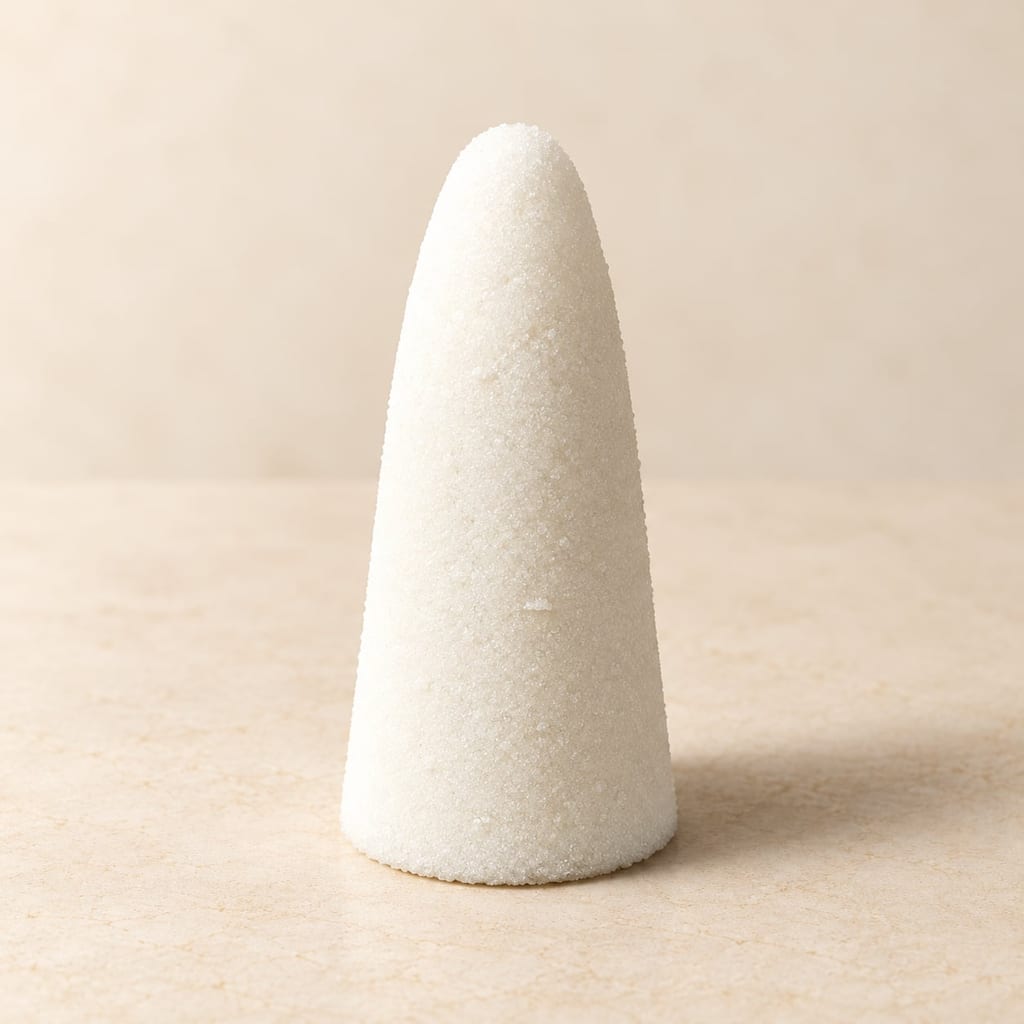
Loaf sugar was refined sugar sold in hard cones and broken into lumps at home. A lump, a knob, a walnut or a nutmeg of it were the measures these writers used. None of them gave a weight per bottle.
Glass that could hold it
None of this works in a weak bottle. Worlidge preferred glass to stoneware. Stone bottles leaked, were rough at the mouth and hard to uncork, and could not be seen through to check that they were clean. Glass bottles were "of a more compact metal or substance".
The glass behind those bottles came out of a change in fuel. In 1615 James I issued a Proclamation touching Glasses to save the woods needed for shipping. It stated that glass could now be made with sea-coal, pit-coal and other fuel, without wood, and it banned imported glass. Sir Robert Mansell built up a monopoly of coal-fired glassmaking and held a patent for it from 1623 until 1642.
Stevenson gives Mansell the main credit for stronger English glass. As Treasurer of the Navy, he writes, Mansell feared that charcoal burners would strip the forests that shipbuilding needed, and persuaded the king to ban wood and charcoal in glassmaking in 1615. Stevenson calls him "the prime motivator in English glass becoming a vastly stronger product" and adds that the iron and manganese Mansell used to colour the glass also toughened it.
David Dungworth's study of English bottle making traces the bottles that followed. The earliest English wine bottles had a globular body and a long neck, the type collectors call shaft-and-globe, dated to the middle of the seventeenth century. By the late seventeenth century the necks were shorter and the bodies squat, the onion bottle. The base was pushed up into a kick. The glass of the first phase was a high-lime, low-alkali glass made from sand and plant ash.
Who made the first strong bottle
Dungworth's paper opens the question plainly. The origins of the English bottle "are uncertain and were contested even in the 17th century." Two dates have their supporters.
The later date is about 1650. Seals on bottles show that the English bottle existed by then, and Dungworth notes that large excavations at Pontefract Castle and Sandal Castle, both Civil War sites, produced none of them. Many writers have assumed the bottle was invented at about the time it first appears.
The earlier date rests on a quarrel over a patent. A draft Act of Parliament of 10 April 1661 granted a patent for making glass bottles to John Colnett. Glassmakers petitioned against it and the Attorney General investigated. His report of 1662, as Dungworth quotes it, concluded that "Sir Kenelm Digby first invented the glass bottles nearly 30 years since, and employed Colnett and others to make them for him". That points to about 1632, and the London Port Books list English bottles as exports from 1634.
Stevenson does not accept the report as proof. The witnesses were former employees of Digby who said he had invented bottle glass "near 30 years hence", and Stevenson calls their evidence "no more than hearsay". He thinks both that claim and the French dating of the first sparkling Champagne are probably true, but says that statements made twenty and thirty years after the events do not represent proof. He also points out that Digby was a child when the coal-fired furnace was perfected.
The question came back into print in 2012, when Hugh Johnson wrote to Decanter naming Digby the hero of the sparkling revolution, and Stevenson answered him. In 2021 Stephen Skelton published The Knight who Invented Champagne, a book that makes the case for Digby. Reviewing it, the cider writer James Crowden wrote that "there is no hard proof" and pointed instead to Herefordshire cider makers such as Lord Scudamore.
Digby himself was close to the cider papers. He was elected to the Royal Society in December 1660, two years before Beale's aphorisms were read there, and Neile's method was printed in The Closet of Sir Kenelm Digby. What is certain is narrower than any of these claims. Dark, thick, free-blown bottles were in English use by the 1660s, when Neile and Worlidge wrote about filling them with cider.
Corks, stopples and string
The closure mattered as much as the glass. Worlidge described glass stopples ground with emery to fit each bottle so well that no liquor or spirit could pass. Each stopple had a button on top and was kept with its own bottle by a piece of packthread. He gave one objection. Because the stopple let no gas pass, the liquor was apt to force the bottle, which in bottles stopped with cork rarely happened.
Cork, then, was the safer choice. Worlidge steeped corks in scalding water before use so they fitted the mouth better and held the spirits. He laid the bottles on their sides to keep the cork moist, and preferred the ground to shelves because air near the floor changed temperature less.
On tying corks down he was clear. Binding down the corks "is not so much to be commended" as fitting them well, because "the Liquor were better fly the Cork than break the Bottle". Austen had done the opposite in 1653. He sealed his corks with hard wax and tied them with packthread. The Closet shows the same habit. Its recipe for Dr Harvey's water-cider, sweetened with brown sugar and fermented with ale yeast, says to stop the bottles "and tye them, or else it will drive out the Corks".
Cellars, sand and spring water
Temperature was the other control. Neile kept bottles in a close, cool cellar on the ground or on shelves. In frost he covered them with straw. From about the beginning of April, when the cold east winds stopped, he set the bottles into sand up to the neck. To slow a cider bottled too early he kept it as cool as he could. To speed one that worked too little he covered the bottles well with straw.
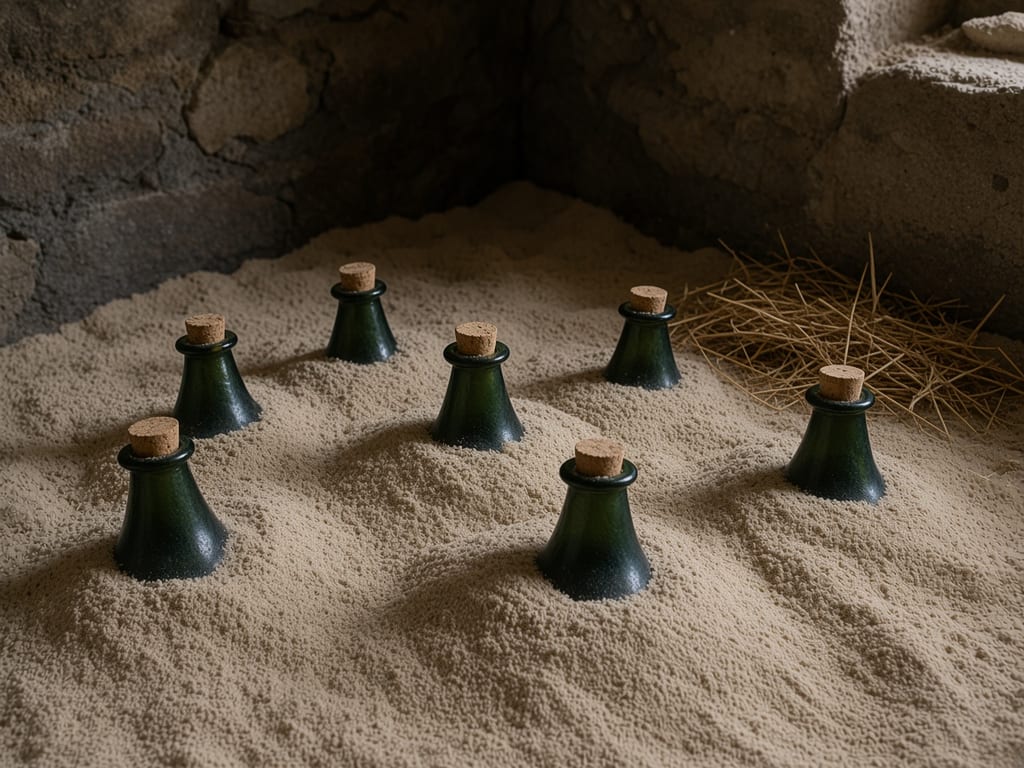
The Closet text gives the same seasons in short form. In freezing weather the bottles stood on hay, covered with hay or straw. In open winter weather they went on the bare ground or pavement. In hot weather they went into sand.
Worlidge thought sand was used "without cause" by many people. It only protected bottles from sudden swings of heat and cold. His best store was a cistern of running or often changed spring water, close to Beale's fountain and Austen's well. Bottles kept like that, he claimed, would hold cider until it reached the strength of Canary wine. For quick ripening he moved bottles to a sunny room upstairs, with the warning that such cider would not keep long.
What Merret actually wrote
Merret's paper was printed in 1669 as Some Observations concerning the Ordering of Wines, alongside Walter Charleton's Mysterie of Vintners. The famous passage sits in a list of the tricks used by London wine coopers. "Our Wine-Coopers of latter times use vast quantities of Sugar and Melosses to all sorts of Wines, to make them drink brisk and sparkling, and to give them Spirits, as also to mend their bad tastes, all which Raisins and Cute and Stum perform."
A note beside it says that flat wines were recovered with spirit of wine, raisins and sugar or molasses, and by drawing them on fresh lees. The next paragraph says that country vintners fed their fretting wines with raw beef.
The paper is about wine. It does not mention cider, and the printed passage does not say that the sugar went into bottles. The Royal College of Physicians reads it as sugar added to wine in the bottle for a second fermentation. Stevenson puts the weight on the last words. Cute, he explains, was concentrated must, and he quotes Merret's own line that a little stum put to decayed wine makes it ferment afresh. On his reading the sentence lists ways to make a wine ferment again. The words on the page are shorter. Coopers added sugar to make wines brisk and sparkling.
Put next to Austen, Beale, Neile and Worlidge, Merret's line shows that London's wine trade and the cider makers of Herefordshire and Somerset worked from the same idea. Sugar plus a living drink in a closed vessel gives sparkle. The cider writers are the ones who explain how to do it in a bottle and how to keep the bottle whole.
Champagne comes later
The Union des Maisons de Champagne dates sparkling Champagne in France to about 1695. Its evidence is Canon Godinot, who wrote in 1718 that the French taste for sparkling wine had been established for more than twenty years. Account books in Champagne began to list wines for sparkling around 1710. The adjective mousseux entered a French dictionary in 1724.
The same history points out a paradox. Champagne wine was popping its corks in England before it did so in France. The English bought it by the barrel and bottled it at home. An account book at Woburn Abbey records Champagne wine bought on 25 March 1664 together with two dozen glass bottles and corks. George Etherege's play The Man of Mode, staged in 1676, praises sparkling Champagne in song.
Champagne makers took a different road on sugar. The Union's history of the first sparkling wines notes that sugar was used in England but not in eighteenth-century Champagne, where it became systematic only in the nineteenth century. Breakage was the great cost. Losses often reached half the bottles, and one cellar of 6,000 bottles in 1746 was left with 120. A royal decree of 8 March 1735 fixed the bottle size and required the cork to be held by string tied in a cross. Wire came in around 1760.
The Redstreak and the end of the old cider
Hogg and Bull trace the Redstreak's decline from the middle of the eighteenth century. They quote William Marshall writing in 1796 that "The Redstreak Apple is given up". The tree was short-lived and rugged. The last tree they could find at King's Capel blew down in the spring of 1878, and one was said to remain at Kempley.
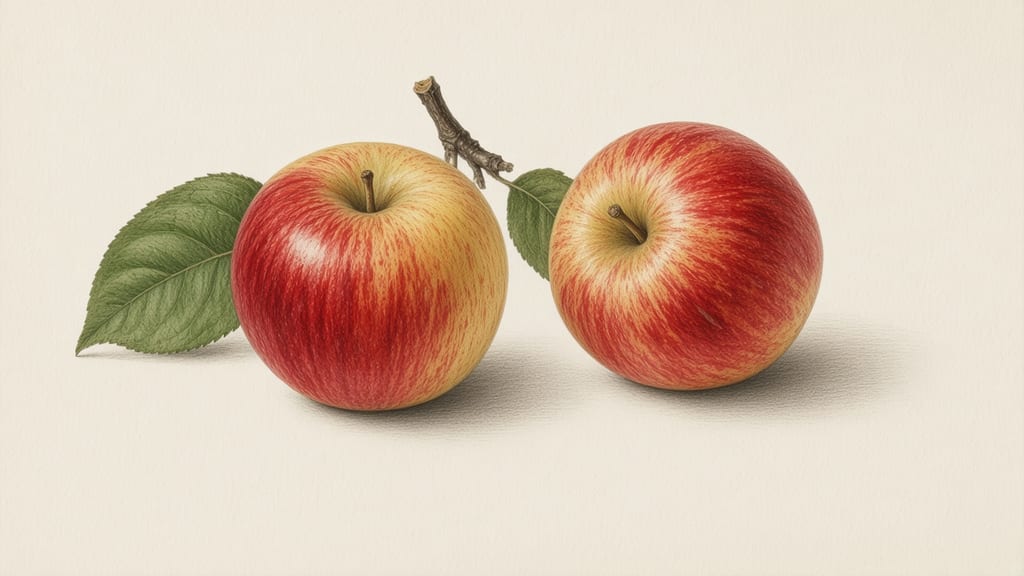
Their description gives a fruit of middle size, about two and three quarter inches wide, deep clear yellow streaked with red on the shaded side and red streaked with deeper red on the side to the sun. The flesh was yellow, firm, crisp and rather dry. They recorded the specific gravity of its juice as 1079.
Their verdict on the cider itself was mixed. They report that Redstreak cider was sweet and pleasant but lacked strength and did not keep well. Lord Scudamore's bottles that lasted three or four years tell another story. Dunster suggested in 1791 that the true way of managing the apple had been lost.
From the old texts to a modern bottle
The seventeenth-century writers never gave a sugar weight, a gravity reading or a pressure. They managed risk by venting, by cool storage and by losing bottles. Modern cider science treats a sealed bottle of fermenting juice as a hazard. Andrew Lea warns that sweet juice with live yeast in a sealed bottle can become a bottle bomb, and he advises bottles designed for the pressure and eye protection.
The companion recipe keeps the two worlds apart. It sets out Neile's method as he wrote it, then gives a modern way to reach the same light mantle with a measured dose of sugar in a dry cider and pressure-rated bottles. Beale's walnut of sugar and Austen's lump of hard sugar stay in the history section.
Related
Discussed in this article
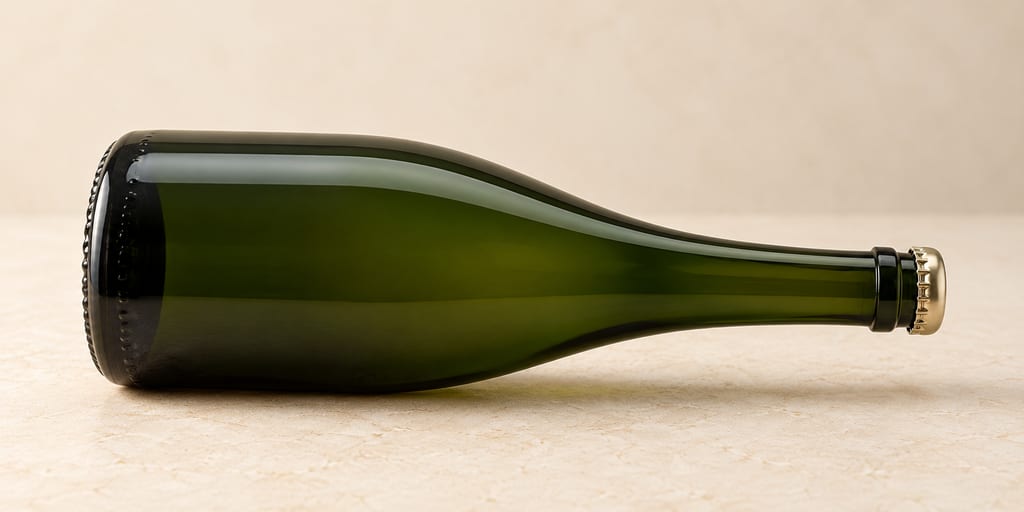
Bottle for secondary fermentation
Champagne’s traditional-method bottle holds wine through its second fermentation and subsequent maturation on lees. At tirage it has a crown cap and internal insert; bottle formats and specifications vary.
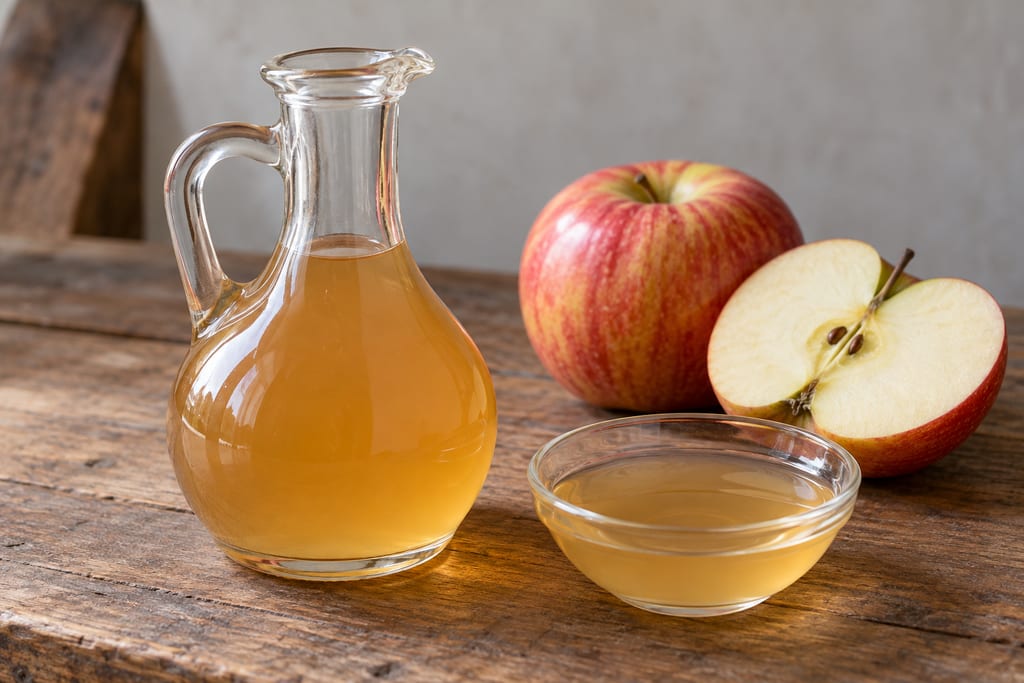
Cider vinegar
Cider vinegar is made when acetic-acid bacteria use oxygen to turn the alcohol in dry apple cider into acetic acid. This historical cask method begins with fermented cider and differs from apple-scrap vinegar made with sugar and water.
Loaf sugar
Refined sugar formed into a solid cone, historically cut or powdered for kitchen use and dissolved into wine liquor.
Pressure-rated beverage packaging
Bottles and other packages made and specified to contain carbonated or actively fermenting drinks. A package rating belongs to its exact design and use; it does not make ordinary jars or bottles suitable for pressure.
Redstreak apple
The Redstreak was the famous seventeenth-century cider apple of Herefordshire, linked with Lord Scudamore. A yellow apple streaked with red, it was lost as a distinct variety by the 1880s.
Seventeenth-century English bottled cider
A lightly sparkling cider bottled before it had finished fermenting, as Sir Paul Neile described it in 1664, with a measured modern method for safe bottle conditioning.
Sidra natural
Dry, lightly sparkling cider from Asturias in northern Spain, pressed from cider apples, fermented without added sugar, matured through the winter and poured from a height.
Community
No community contributions have been published for this entry yet.
Share what you made
Sign in to contribute. Published comments and photos are free to read.
Sources
John Evelyn for the Royal Society, digitised by the Internet Archive
Sylva, or A Discourse of Forest-Trees, with Pomona and Aphorisms concerning Cider, 1664Cited in: One week in December 1662; If it froth and fly; Cider as an English wine; Sir Paul Neile's method; Opening bottles to save them; Raisins, mustard and a walnut of sugar; Cellars, sand and spring water; The Redstreak and the end of the old cider
John Worlidge, digitised by the Internet Archive
Vinetum Britannicum, or A Treatise of Cider, second edition, 1678Cited in: Opening bottles to save them; Raisins, mustard and a walnut of sugar; Glass that could hold it; Corks, stopples and string; Cellars, sand and spring water
Project Gutenberg
The Closet of Sir Kenelm Digby Knight Opened, 1669Cited in: Sir Paul Neile's method; Opening bottles to save them; Corks, stopples and string; Cellars, sand and spring water
Walter Charleton and Christopher Merret, digitised by the Internet Archive
Two Discourses, with Christopher Merret's Some Observations concerning the Ordering of Wines, 1669Cited in: What Merret actually wrote
Royal College of Physicians Museum
Christopher Merrett and the beginnings of champagneCited in: What Merret actually wrote
David Dungworth, Industrial Archaeology Review, 2012
Three and a half centuries of bottle manufactureCited in: Glass that could hold it; Who made the first strong bottle
The Power of Petitioning in Seventeenth-Century England
1619, Paul Vinion asks for permission to make glass despite a new royal prohibitionCited in: Glass that could hold it
Robert Hogg and Henry Graves Bull for the Woolhope Naturalists' Field Club, digitised by the Internet Archive
The Herefordshire Pomona, 1876–1885Cited in: Cider as an English wine; The Redstreak and the end of the old cider
Andrew Lea
The Science of Cidermaking, part 4: making the ciderCited in: From the old texts to a modern bottle
Thomas Birch, digitised by the Internet Archive
The History of the Royal Society of London, volume 1, 1756Cited in: One week in December 1662; Raisins, mustard and a walnut of sugar; Who made the first strong bottle
John Beale, digitised by the Internet Archive
Herefordshire Orchards, a Pattern for all England, letter of 2 May 1656, 1724 editionCited in: Cider as an English wine
Ralph Austen, digitised by the Internet Archive
A Treatise of Fruit-Trees, Oxford, 1653Cited in: An Oxford treatise and a lump of hard sugar; Corks, stopples and string
Ralph Austen, digitised by the Internet Archive
A Treatise of Fruit-Trees, second edition, Oxford, 1657Cited in: An Oxford treatise and a lump of hard sugar
Tom Stevenson, Wine-pages
No Merret in Digby: taking issue with an eminence grise, 1 September 2012Cited in: One week in December 1662; Glass that could hold it; Who made the first strong bottle
Tom Stevenson, The World of Fine Wine 38
On Merret: the original English method, 2012Cited in: What Merret actually wrote
James Crowden, Petits Propos Culinaires 120
Review of Stephen Skelton, The Knight who Invented Champagne, 2021Cited in: Who made the first strong bottle
Gaps
- Who first made the thick English wine bottle is disputed; the 1662 report crediting Sir Kenelm Digby rests on the word of his former workmen.
- No seventeenth-century source gives the weight of sugar, the gravity at bottling or the pressure reached in a bottle of cider.
- Austen gives no reason for his marginal note on sugar, so it is unclear whether he meant it to sweeten the cider or to make it sparkle.
Updated 2026-10-31