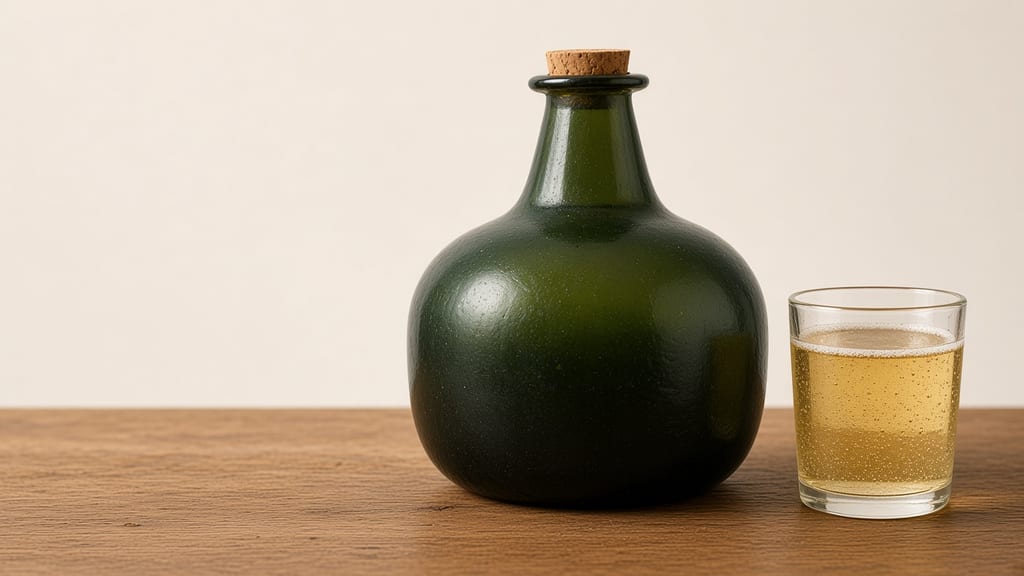
Seventeenth-century English bottled cider
A lightly sparkling cider bottled before it had finished fermenting, as Sir Paul Neile described it in 1664, with a measured modern method for safe bottle conditioning.
 FermenteaWhere food goes to change
Substrates
The Redstreak was the famous seventeenth-century cider apple of Herefordshire, linked with Lord Scudamore. A yellow apple streaked with red, it was lost as a distinct variety by the 1880s.
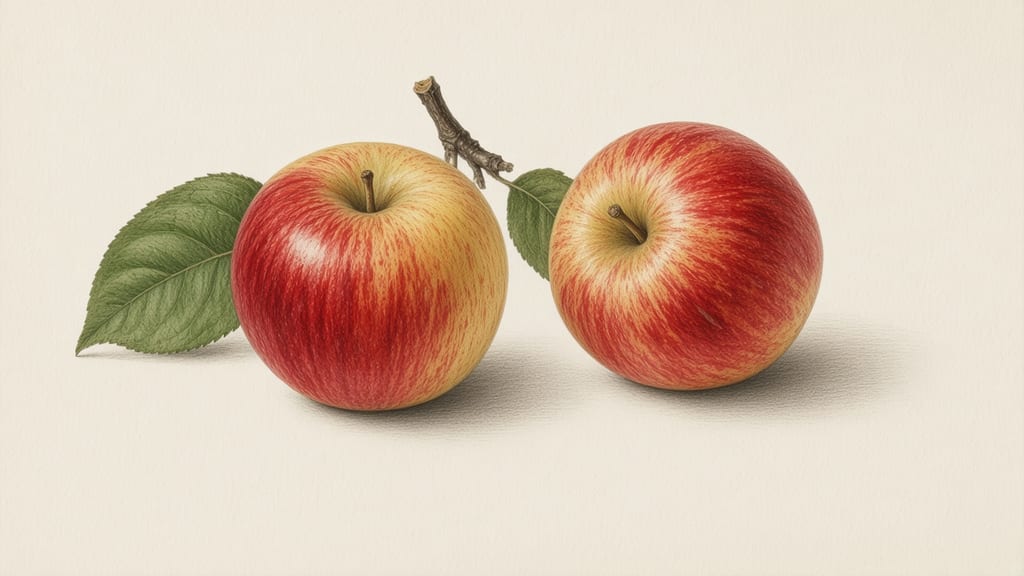
The Redstreak was a cider apple of Herefordshire, the most praised English cider fruit of the seventeenth century. John Evelyn called it a pure wilding, a tree grown from seed without grafting, and said that within living memory people had called it the Scudamores Crab. Like every orchard apple, it was a variety of Malus domestica.
Thomas Andrew Knight, writing in 1811, called it the first fine cider apple cultivated in Herefordshire. He said the credit for raising it from seed early in the seventeenth century was generally given to Lord Scudamore, and that Scudamore at least first showed its quality to Herefordshire planters.
The name was written Redstrake by older writers. Robert Hogg and Henry Graves Bull list Scudamore's Crab, Herefordshire Redstreak and Redstrake of King's Caple among its other names.
The Herefordshire Pomona describes a medium apple about two and three quarter inches wide and two and a quarter inches high, roundish and narrowing towards the eye end. The skin was a deep clear yellow, streaked with red on the shaded side and red streaked with deeper red on the side facing the sun. The flesh was yellow, firm, crisp and rather dry.
Knight measured the specific gravity of freshly pressed Redstreak juice at 1079, and Hogg and Bull give the same figure. The tree was low, shrubby and rugged, and they thought it naturally short-lived.
Knight took his reading from a chosen sample of ripe fruit that was not yet mellow. He ground the apples to a fine pulp and left it open to the air for twenty minutes before pressing. He believed that grinding let the pulp take up air and turn sweeter, so that the juice of harsh apples gained weight in the mill. That was his own explanation, and he used the same routine for every apple in his book so the figures could be compared.
Evelyn admired the way the tree spent little of its strength on wood. He compared it to the best vines, which carry heavy crops of rich fruit without wasting growth on long branches.
The Closet of Sir Kenelm Digby, printed in 1669, ranks the Redstreak as the best apple for cider that has to keep, ahead of the Gennet Moyle and pippins. That recipe is the source of Fermentea's seventeenth-century bottled cider. An aphorism in Evelyn's Pomona says Lord Scudamore seldom failed to keep his bottled cider three or four years.
Hogg and Bull write that the Redstreak drove out the Gennet Moyle, the earlier favourite, and they quote a manuscript of 1714 by Abel Wantner praising the Redstrake cider of Dymock and Kempley as hardly inferior to the best French wines. Not everyone agreed. John Beale wrote in 1656 that he preferred Gennet Moyle cider to the much praised Redstreak, and later writers found its cider sweet but weak and poor at keeping.
Wantner's note shows how thick the orchards were around Dymock and Kempley. He wrote that old Master Wyniat of the Grainge had one apple picked from each tree on his land and still made a whole hogshead of cider from them. Hogg and Bull add that the cider was thought a fitting present for princes.
On 10 December 1662 Henry Oldenburg read to the Royal Society a set of aphorisms on cider sent to him by John Beale, and the society ordered them to be registered. Thomas Birch printed them in full in 1756. Many of them are about the Redstreak.
Beale held that the choice of fruit counted for so much "that the red-streak cider will every where excel the common cider", as the Frontignac and Canary grapes excelled the common French grape. Other growers had praised pearmains, pippins and other apples, he wrote, but after many years of trials the Redstreak had won the common fame and most of their admirers.
He also changed his mind in public. He had once preferred Gennet Moyle cider, "but had only the ladies on my side", and he "saw cause to recant". The Redstreak, he now said, warmed and whetted the stomach for meat or more drink. Later in the same paper he ruled the Gennet Moyle out as a true cider fruit, because it was dry and easily hurt by spring frosts, and called it a baking apple.
His description does not match the later one. Beale wrote that in Herefordshire the name belonged to one kind, fair and large, of a high purple colour, never aromatic in smell. The tree was a mere shrub that soon bore a full crop and seldom failed until it decayed, which happened much sooner than with other apple trees. He added that it had lately spread all over Herefordshire. The Herefordshire Pomona, two centuries later, describes a yellow apple streaked with red.
Beale gave planting figures too. Redstreaks could stand fifteen or twenty feet apart, where other cider trees had been set at thirty or thirty-two. In good tilled land an orchard of grafted Redstreaks would bear well within ten or twelve years and would last sixty or eighty years, "which is a man's age". He claimed a Redstreak orchard was as full of fruit at ten years as other cider fruit at twenty, or pippins and pearmains at thirty.
On very dry, thin and shallow land, Beale noted, the Redstreak and other cider fruit, the Gennet Moyle above all, tended to bear a full crop only every other year.
In the same paper he repeated reasons he had once set out against Ralph Austen of Oxford for preferring cider fruit to table fruit such as pippins and pearmains. The cider fruit he meant were the Herefordshire apples called musts, red-streaked musts among them. Their liquor, he wrote, was more sprightful, brisk and winy, a bushel gave twice or three times as much juice, the trees grew faster and bore more, and they escaped spring frosts better. As a test he had sent many bottles to London, "that did me no discredit".
Beale also separated the famous Redstreak from a red-streak must, a much smaller and somewhat oblong apple full of a very good winy liquor, first shown to him by John Nash of Ashperton in Herefordshire. Some places, he wrote, had for some years singled out a Redstreak that gave a richer and ruddier cider, but he thought this was only better-ripened fruit from the south side of the tree or from richer soil. Mr Whingate of the Grainge in Democ, and some at King's Chapel, knew these differences best, he wrote, and he listed streaked must, right red-streakt and red red-streakt.
He warned that the name was easy to misuse. Mr Philips of Mountague in Somerset showed him a large fair apple that looked and smelt like the best Redstreak, but when Beale and a Herefordshire companion cut and tasted it, they both denied it was right. Philips made cider from it anyway and invited Beale to taste it, and Beale reported that Philips claimed it already beat all high country wine. Of the true kind, he wrote that Lord Scudamore's was safely of the best sort.
No other English cider apple was praised so often in print. John Philips gave it a long passage in his poem Cyder, where he called on every garden to own the Redstreak as supreme and saw its pulpy fruit shine with gold and vermilion. Knight opened his own account of the apple with those lines.
The poet William Shenstone, quoted at the head of the Herefordshire Pomona entry, asked the farmers of the district whether the Redstreak's future juice was not the real reason for their pleasure in a good harvest. The verses tell us more about the apple's fame than about its cider, which Hogg and Bull judged less kindly.
The opinions split early. Knight thought it doubtful whether excellent cider had been made anywhere before this apple existed, and he wrote that a cask of genuine Redstreak cider could still earn all the praise given to it. Hogg and Bull record that Herefordshire growers had thought its cider weaker and poorer than that of many other apples from the start.
Nourse, quoted in the Herefordshire Pomona, described the liquor as noble in colour and smell but very luscious and fulsome, and said it palled the stomach sooner than it warmed it. Evelyn and other writers in his Pomona spoke as highly of the Woodcock, the Hagloe Crab, the Bromsborrow Crab and several other apples.
In 1791 Dunster, writing notes to Philips's poems, thought the right way of handling Redstreak cider had been lost. Out of ten or twelve casks, he wrote, seldom more than two or three turned out good, and the cider was by then seldom made from the apple alone.
The decline began around the middle of the eighteenth century. William Marshall wrote in 1796 that the Redstreak apple had been given up. Knight said in 1811 that it could no longer be propagated and that the fruit had outlived the qualities that made its name, though in a blend it still gave a fine flavour.
Hogg and Bull searched for the true variety. They found one tree at King's Capel, which blew down in the spring of 1878, and were told of one more at Kempley. They concluded that the Redstreak had ceased to exist as a distinct variety. Many red-striped apples in Herefordshire were still called redstreaks for their colour, and Evelyn had already noticed that the name covered a great variety of fruit.
No grower can supply the historical Redstreak. The National Fruit Collection holds an apple called Improved Redstreak, a cider apple of unknown origin that is a different variety and should not be taken for Scudamore's apple. A cook following an old Herefordshire recipe has to use another cider apple and say so.
Old cider makers did not press their apples straight from the tree. The bottled cider method in Digby's Closet lets the gathered fruit lie for about three weeks before it is stamped and strained.
Evelyn and Knight name Herefordshire.
The last tree Hogg and Bull found stood here until spring 1878.
Wantner's manuscript of 1714, quoted by Hogg and Bull, praises the Redstrake cider of these parishes.
A lightly sparkling cider bottled before it had finished fermenting, as Sir Paul Neile described it in 1664, with a measured modern method for safe bottle conditioning.
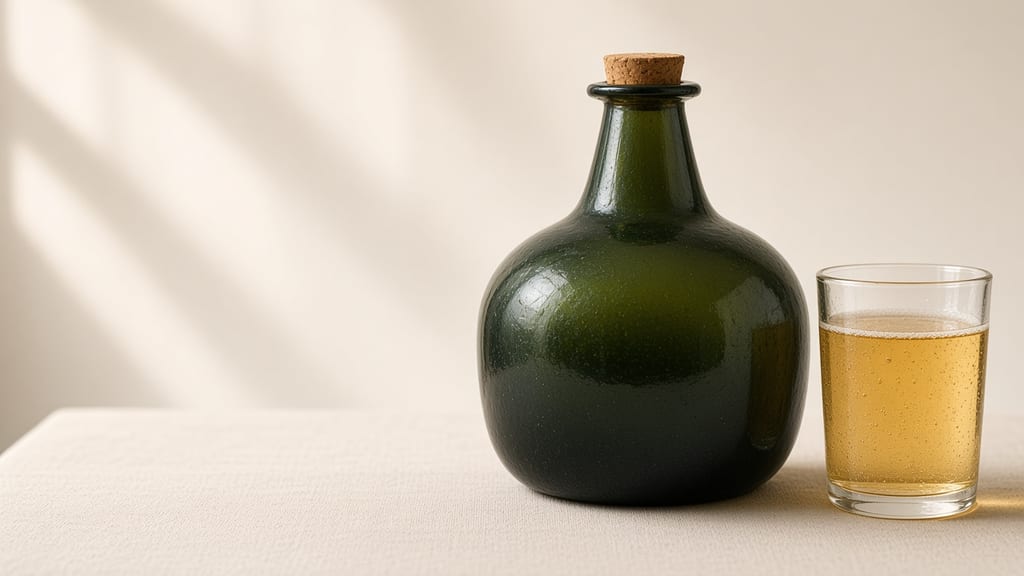
In the 1650s and 1660s English cider makers bottled cider with a little life left in it, sometimes with a lump of sugar, so it would mantle and sparkle in the glass, decades before Champagne sparkled on purpose.
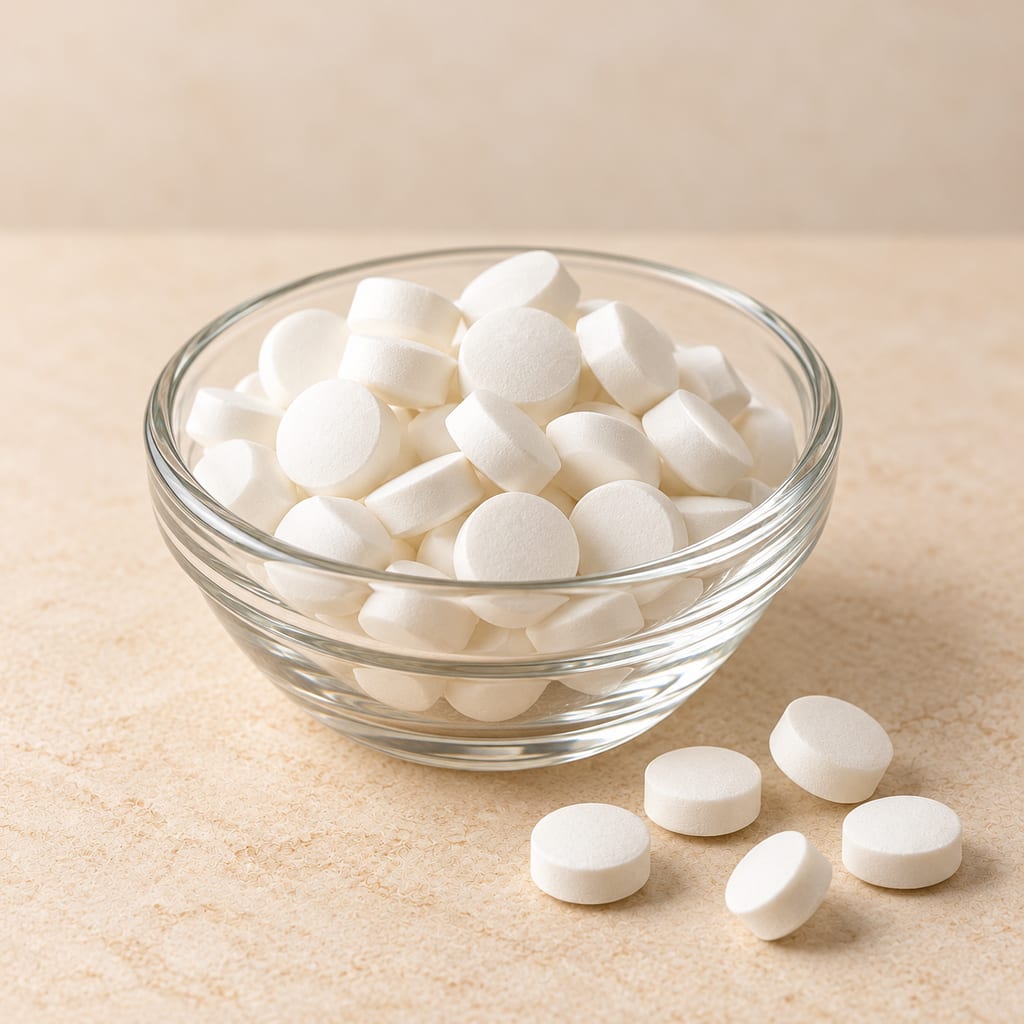
Campden tablets portion a metabisulfite salt for particular wine, cider or other fermentation uses. Tablet strength and the resulting free sulfur dioxide depend on the product and liquid.

A gelling polysaccharide extracted from red seaweeds, sold as kanten strips or powder; it sets firm at a low concentration and stays solid until about 85 °C.

A Dominican table and seasoning condiment of sour orange juice, mixed with lime and salt and bottled raw; garlic, oregano or a hot pepper may be added for meat or a spicier bottle.

Cicerbita alpina is an alpine perennial whose tender shoots and leaves have been eaten raw or cooked. Sámi milk preparations and modern Carnian dishes are distinct uses, with serious identification and preservation limits.

Japanese skipjack tuna cooked, then repeatedly smoked and dried over a wood fire by the hand-fired tebiyama method into a hard block for shaving into dashi: the first stage of katsuobushi.

A Swedish-style spirit vinegar made by fermenting neutral alcohol with live vinegar bacteria, with a separate guide to commercial ättika strengths.

A yeast-raised wheat ring shaped from a firm dough, briefly boiled and baked. This source-batch formula gives a gently malted crust and a chewy crumb.

A warm dip of garlic, anchovy and olive oil, often enriched with butter, that Piedmont serves over a flame with raw and cooked vegetables and bread.

Bechamel is a white sauce of milk thickened with a butter and flour roux, one of the French mother sauces, and the base from which Mornay and other cheese and cream sauces are made.
No community contributions have been published for this entry yet.
Sign in to contribute. Published comments and photos are free to read.
Internet Archive
Sylva, with Pomona and Aphorisms concerning Cider, 1664The famous Red-strake of Herefordshire is a pure wilding, surnamed within living memory the Scudamores Crab
Lord Scudamore kept bottled cider three or four years
Cited in: What was the Redstreak?; What the fruit looked like; Its place in English cider
Internet Archive
Pomona HerefordiensisFirst fine cider apple cultivated in Herefordshire, raised from seed early in the 17th century and credited to Lord Scudamore
Could no longer be propagated by 1811; juice specific gravity 1079 after pulp exposed twenty minutes to air
Doubt that excellent cider was made before it; genuine casks still deserve praise; good in blends
Cited in: What was the Redstreak?; What the fruit looked like; In verse; What its cider was like; How it was lost
Woolhope Naturalists' Field Club, via Internet Archive
The Herefordshire PomonaSynonyms Scudamore's Crab, Herefordshire Redstreak, Redstrake of King's Caple
Fruit description and juice gravity 1079
Supplanted the Gennet Moyle; decline from the mid eighteenth century; Marshall 1796 says given up
Philips and Shenstone verses; Nourse on its luscious liquor; Dunster 1791 on two or three good casks in ten or twelve; Evelyn on the tree and on other apples as good
Last tree at King's Capel blew down in spring 1878, one said to remain at Kempley; ceased to exist as a distinct variety
Wantner 1714 on Redstrake cider of Dymock and Kempley
Cited in: What was the Redstreak?; What the fruit looked like; Its place in English cider; In verse; What its cider was like; How it was lost; Using it today
Project Gutenberg
The Closet of Sir Kenelm Digby Knight OpenedRed streaks are the best for cider to keep; Gennet Moyles next, then pippins
Cited in: Its place in English cider; Using it today
Internet Archive
The History of the Royal Society of London, volume 1Beale's cider aphorisms read by Oldenburg on 10 December 1662 and ordered to be registered
Redstreak cider excels common cider; Beale recants his preference for Gennet Moyle; Gennet Moyle excluded as a cider fruit
Beale's description of the Herefordshire Redstreak, its spacing, bearing and lifespan
Mr Philips's Somerset Redstreak
Cited in: Beale's report to the Royal Society
National Fruit Collection
Improved RedstreakImproved Redstreak is a separate cider apple of unknown origin, not the historical variety
Cited in: What was the Redstreak?; Using it today