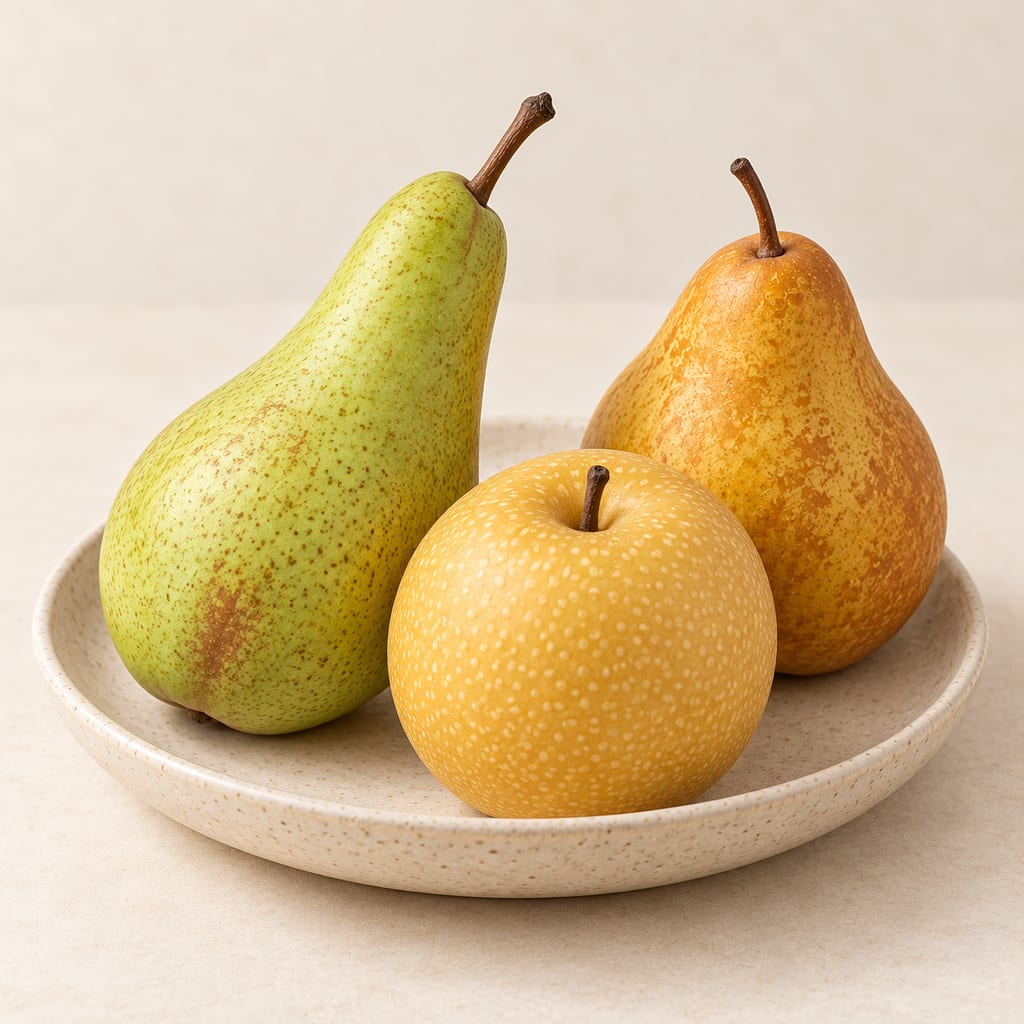
Pear
Pears are Pyrus fruits used fresh, pressed for perry, or crushed for fruit spirits; cultivar, species and ripening stage shape each preparation.
 FermenteaWhere food goes to change
Equipment · Industrial and laboratory plant
Vacuum dryers remove food moisture under reduced pressure, allowing evaporation at lower temperatures. Shelf, belt and drum designs handle different feeds; ordinary vacuum drying is distinct from freeze-drying.
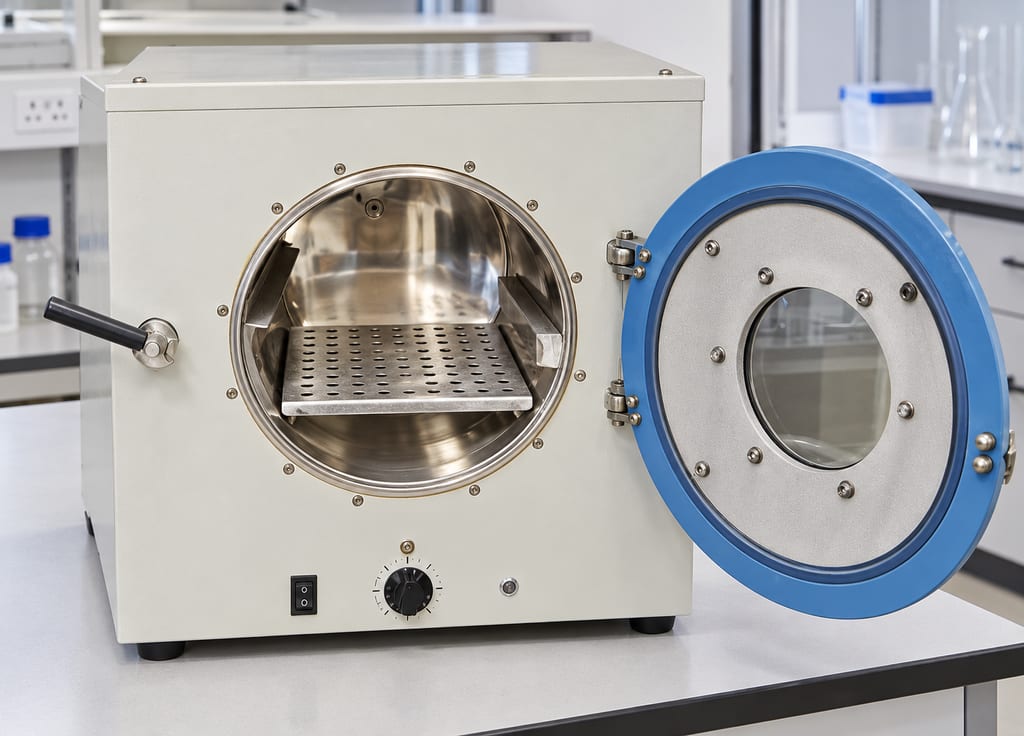
A vacuum dryer removes water while food is held in a chamber at pressure below the surrounding atmosphere. Reduced pressure lowers the temperature at which water boils, so a heated system can evaporate moisture while the product is cooler than it would be at the same drying rate in an atmospheric chamber. Heat still has to reach the food and water vapour still has to leave it: vacuum changes the conditions for evaporation; it does not make drying a cold or effortless operation.
That combination can matter for materials sensitive to heat. The advantage is conditional, not a promise that every vacuum-dried product retains its original colour, flavour or nutrients. A dryer must be chosen around the material, its physical form, the desired finished texture, operating conditions and cost. A reduced-pressure chamber is one tool in food processing, not a universal preservation method.
Vacuum dryer names a family of equipment rather than one vessel shape. In a vacuum shelf dryer, pieces, purées or liquids can be placed on shelves or trays inside the chamber. Vacuum belt dryers carry pumpable purées or liquids through a continuous process, while vacuum drum dryers dry purées and liquids on a heated drum surface inside a reduced-pressure system. These configurations expose different feed forms to heat and provide different paths for loading and removing product; their capacities and details are specific to each model.
FAO identifies vacuum dehydration as useful for certain low-moisture, high-sugar fruits, including peaches, pears and apricots. That is an application category, not a statement that every fruit or fruit preparation suits the same machine. The feed composition and form, target product and process conditions all influence selection. A related link below opens the site’s Pear ingredient entry; it does not imply that a particular pear tradition used vacuum equipment.
Freeze-drying also operates under reduced pressure, but follows a different physical route. The food is first frozen; the process then removes water from ice as vapour by sublimation, without first melting it into liquid water. In ordinary vacuum drying, liquid water evaporates under reduced pressure, often with heat supplied to the food. The shared vacuum pump does not make the processes interchangeable, and their equipment and product outcomes differ.
Freeze-drying has its own handling and safety limits. The University of Minnesota Extension notes that it is not a microbial kill step and that safe preparation and packaging remain necessary. That advice is specific to freeze-drying, but it underlines a broader point: a dry-looking product alone does not validate food safety or shelf stability. This page covers vacuum drying as equipment and process, not a validated recipe.
The Carasso FoodTech Innovation Center at Technion in Haifa lists a laboratory vacuum oven made by Tuttnauer, Model 11900, with a stated capacity of 10 litres. The facility describes it for gentle drying and degassing of heat-sensitive materials under reduced pressure and lists temperature control and reduced oxidation among its features. Those details identify one installed example; they are not specifications for every industrial shelf, belt or drum dryer.
The Center's page gives a present-day institutional use in Israel, not a historical origin for the technology. The broader history of vacuum drying is not dated by the sources used here, so no invention year or first place is assigned. The listing also does not establish the unit's electrical rating, chamber dimensions, exact construction materials or cleaning method.
Vacuum systems are specialised process equipment, often selected for a particular feed and production goal. The named Technion model is a small laboratory oven; belt and drum systems serve different continuous or pumpable-material applications. There is no single capacity, power supply, chamber shape or material specification for the whole class, and no general home operating procedure follows from the facility listing.
Removing water can contribute to preservation, but this equipment record does not establish a safe final moisture level, water activity, storage period or kill step for any food. Those results depend on a tested product and process. Equipment instructions and validated food-safety guidance remain necessary when designing or operating a real process.
The most suitable dryer depends on the food form, desired dried texture, operating conditions and cost; vacuum processing is not automatically best for every product.
Source →Vacuum drying alone does not establish a final food's shelf stability or safety. Product-specific moisture removal, handling and any required safety controls must be evaluated separately.
Source →The Technion Carasso FoodTech Innovation Center lists a laboratory vacuum oven; the faculty page locates the Center in Haifa. This is a country-level documented-use association, not a place of invention.
Pears are Pyrus fruits used fresh, pressed for perry, or crushed for fruit spirits; cultivar, species and ripening stage shape each preparation.
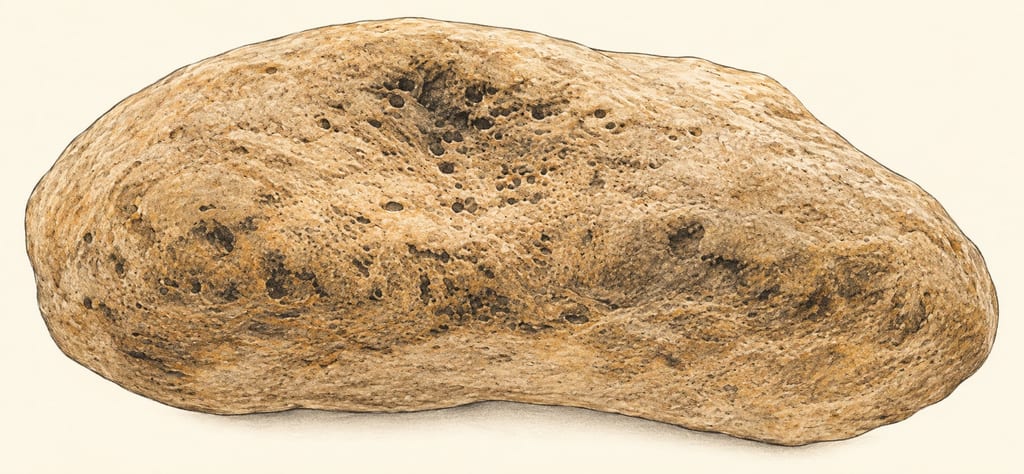
A pitted stone is a percussive artifact with one or more impact depressions. At Gesher Benot Ya‘aqov, nut cracking is a supported but not specimen-by-specimen proven interpretation; newer residue work confirms broader plant-food processing.
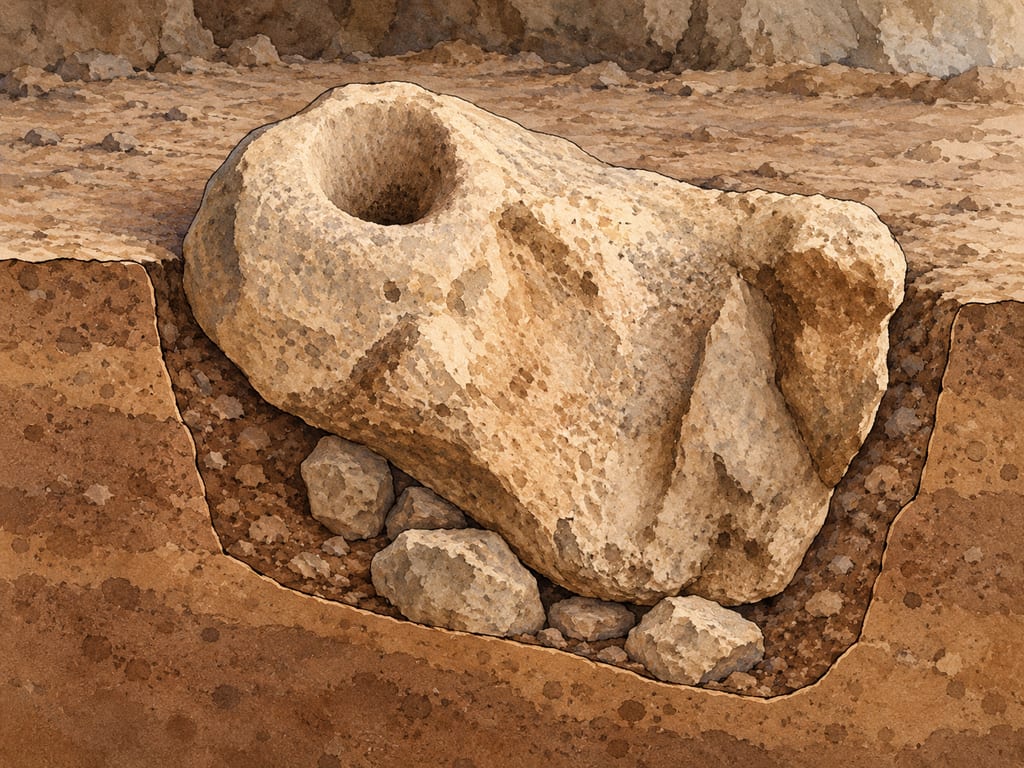
Three Natufian stone mortars at Raqefet Cave, Mount Carmel, include two portable boulder forms and a hollow cut into the cave bedrock.
No community contributions have been published for this entry yet.
Sign in to contribute. Published comments and photos are free to read.
Food and Agriculture Organization of the United NationsDrying principles · Equipment types · Food applications
Fruit and vegetable processing: Chapter 5, General procedures for fruit and vegetable preservation (cont.)In a heated vacuum chamber, moisture can be removed at a lower temperature than without vacuum; under vacuum the water removal rate is greater at a given temperature.
Sub-atmospheric drying includes vacuum shelf, belt and drum dryers as well as freeze dryers; equipment choice depends on feed form, desired product, operating conditions and costs.
FAO describes vacuum dehydration as useful for low-moisture, high-sugar fruits such as peaches, pears and apricots.
FAO distinguishes vacuum shelf dryers for pieces, purées and liquids; vacuum belt dryers for purées and liquids; vacuum drum dryers for purées and liquids; and freeze dryers for pieces and liquids.
Cited in: Drying below atmospheric pressure; Shelf, belt and drum designs; Not the same as freeze-drying; What the machine can and cannot tell you
Carasso FoodTech Innovation Center, TechnionCurrent model example · Equipment form · Geography
Food Vacuum OvenThe Center lists a Tuttnauer Model 11900 laboratory vacuum oven with 10 L capacity for gentle drying and degassing of heat-sensitive materials under reduced pressure.
The listed features include vacuum drying, temperature control and reduced oxidation; these describe this specific unit, not every vacuum dryer.
Cited in: A current laboratory example in Haifa
Faculty of Biotechnology and Food Engineering, Technion – Israel Institute of TechnologyGeography
Carasso FoodTech Innovation CenterThe faculty page gives the Center's address at Technion – Israel Institute of Technology in Haifa, Israel.
Cited in: A current laboratory example in Haifa
University of Minnesota ExtensionComparison · Food safety limits
Preserving food at home: Freeze-dryingFreeze-drying first freezes food and removes ice as water vapour by sublimation under vacuum, distinct from ordinary vacuum drying of liquid water.
The page says freeze-drying is not a microbial kill step and stresses proper handling; it does not validate ordinary vacuum-dried foods.
Cited in: Not the same as freeze-drying; What the machine can and cannot tell you