Yeast and the world's fermented drinks
People kept, traded and steered living ferments for thousands of years before anyone saw a yeast cell. This is that history, region by region, and a guide to what a yeast strain is today.
 FermenteaWhere food goes to change
Equipment · Historical object · Mills, mortars and crushers
Three Natufian stone mortars at Raqefet Cave, Mount Carmel, include two portable boulder forms and a hollow cut into the cave bedrock.
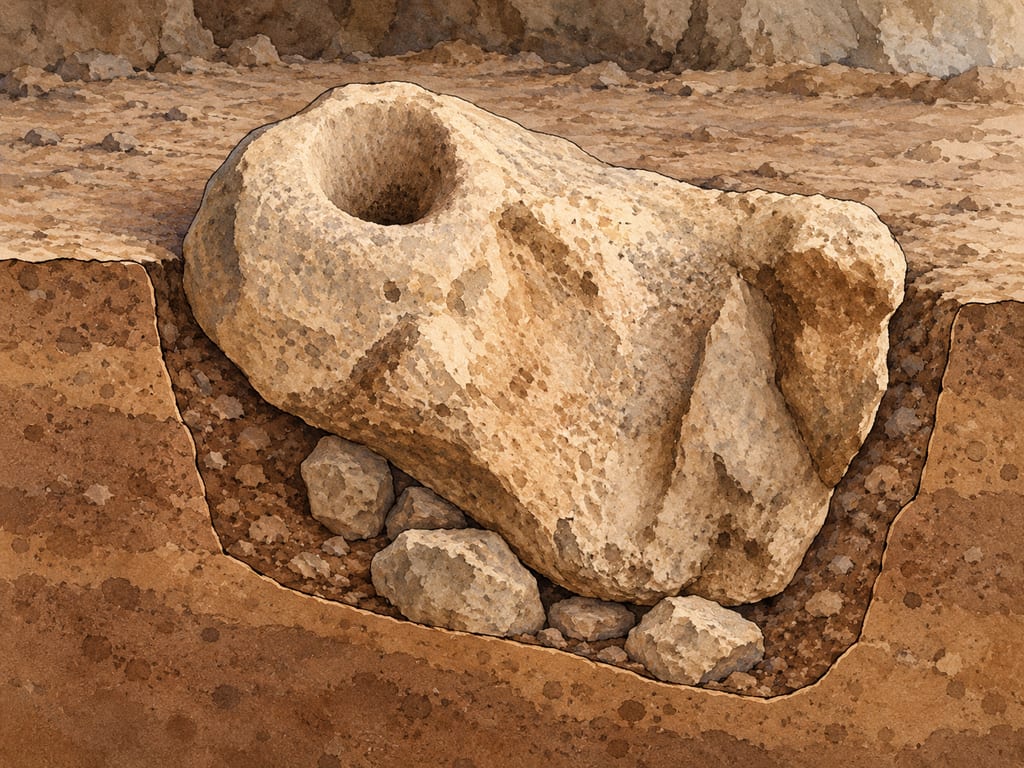
The name refers to three studied features at Raqefet Cave, not to one standard vessel. BM1 and BM2 are deep, narrow mortars hollowed into boulders; BM3 is a bowl-like hollow cut into the cave floor. The 2018 study describes BM1's cylindrical shaft as about 33 cm deep, with a hole at its base. BM2 has a funnel-shaped shaft about 35 cm deep. BM3 is a bedrock mortar about 18 cm deep and 27 cm across the rim. These measurements describe the cited examples, not a general size for Natufian mortars.
Their settings differ. The 2018 authors report that BM1 was removed after the 2006 excavation and is held by the University of Haifa's ground-stone research laboratory; BM2 remains in Raqefet Cave. BM3 belongs to a cluster of hollows in the cave floor. A movable boulder mortar and a fixed bedrock hollow should not be treated as the same construction.
The 2006 excavation report describes two boulder mortars in Locus 2. Its excavation descriptions and photographs show a boulder mortar set into a deep cut or pit, supported by small stones and surrounded by backfill; only its upper portion remained exposed, near the cave-floor level. This records an excavated placement. It does not establish that every Raqefet mortar was buried this way, or that burial itself was a brewing feature.
In a cutaway, soil and stone supports belong around the documented boulder mortar, while the working hollow is within the boulder. BM3 is instead carved into bedrock and has no separate vessel beneath the floor. These are site observations, not a construction plan for a reproducible home mortar.
Liu and colleagues combined archaeological context, wear traces, plant residues and experimental comparisons to argue that the boulder mortars stored plant foods, including malted cereals, and that the bedrock mortar was used to pound and cook plants in a proposed beer-making sequence. This is a reconstruction from several lines of evidence, not a surviving recipe or direct record of fermentation.
David Eitam's 2019 commentary challenged whether the evidence supports beer-making and offered cereal-food processing as an alternative explanation. Liu and colleagues answered in a published response and defended their interpretation. The disagreement means this page presents brewing as a proposal, not a settled identification. No complete recipe or verified fermentation procedure follows from the mortar evidence alone.
For these named objects, the relevant use is archaeological study. They are not equipment to purchase or copy from the papers' dimensions. The available sources give no cleaning or maintenance protocol, do not specify the stone type of the studied examples, and do not establish a modern food-safety method. The evidence supports describing these stone forms and excavated placements, but not recommending a substitute or claiming that a replica would reproduce Natufian processing. This entry records specific archaeological equipment and does not imply that its proposed use has been settled.
The archaeological context dates to roughly 13,700–11,700 calibrated years BP. The exact roles of the mortars, especially the proposed brewing role, remain disputed.
The studies do not establish a settled function for all three mortars; the proposed brewing use is disputed.
Source →Excavation reports locate the cave on Mount Carmel in present-day Israel. Coordinates are not asserted.
People kept, traded and steered living ferments for thousands of years before anyone saw a yeast cell. This is that history, region by region, and a guide to what a yeast strain is today.
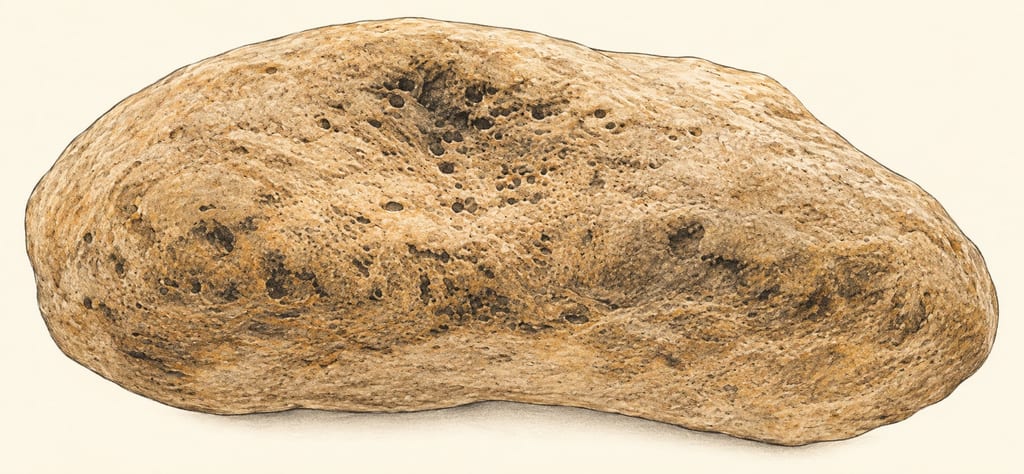
A pitted stone is a percussive artifact with one or more impact depressions. At Gesher Benot Ya‘aqov, nut cracking is a supported but not specimen-by-specimen proven interpretation; newer residue work confirms broader plant-food processing.
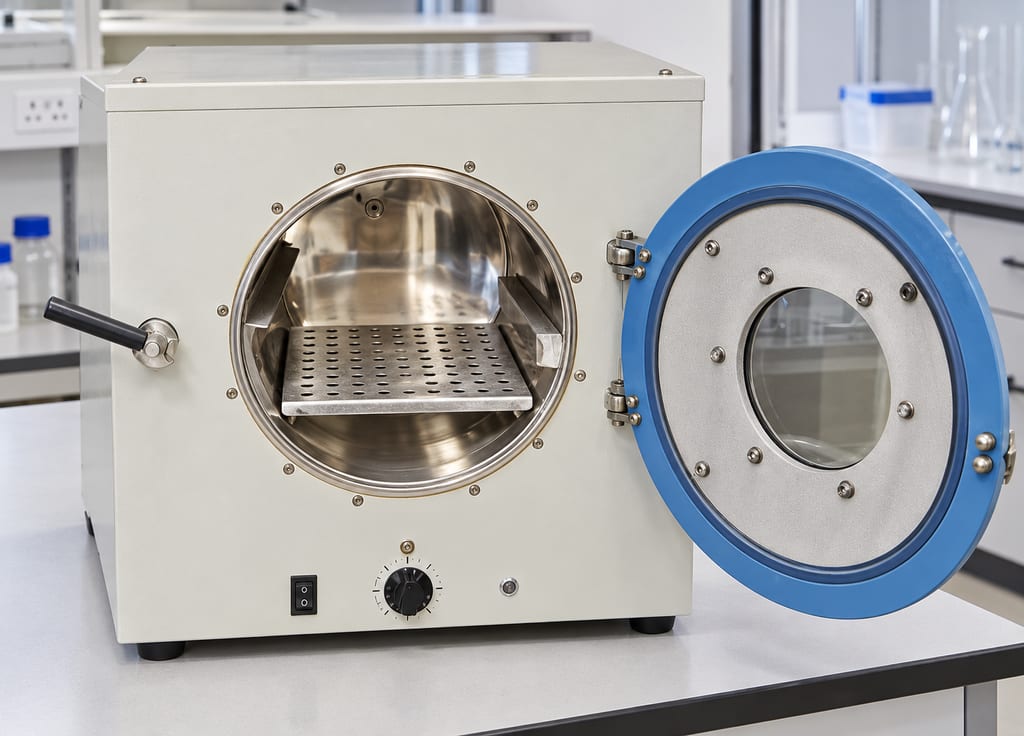
Vacuum dryers remove food moisture under reduced pressure, allowing evaporation at lower temperatures. Shelf, belt and drum designs handle different feeds; ordinary vacuum drying is distinct from freeze-drying.

At North Abydos in Egypt, a fixed early Dynastic brewery comprised parallel semi-subterranean installations with rows of ceramic mash vats; excavation reports revise their number, scale and estimated batch capacity.

Ají amarillo is the orange-yellow Peruvian chilli cultivar group of Capsicum baccatum, used to colour and season huancaína sauce and ají de gallina. Published heat estimates do not establish one range for the named cultivar.

Toasted almonds are whole sweet almond kernels dry-roasted until golden to brown. Heat replaces their marzipan note with a roasted, nutty one; they thicken and flavour romesco.

Kodiak salmon, halibut and cod cut as seg'aq and hung on an initaq rack to become tamuuq, with kac'amaasaq and kupcuunaq named as different results.

Aniseed is the dried ripe fruit of Pimpinella anisum, an aromatic Apiaceae spice commonly called a seed. It adds a sweet, warm aroma to breads such as Moroccan krachel and South African mosbolletjies, and is distinct from star anise.

A fixed Late Chalcolithic installation in Areni-1 cave combined a shallow clay pressing basin with a large jar set into the cave floor and storage vessels nearby.

Ripe avocado flesh is the soft, buttery, fat-rich pulp of Persea americana, eaten raw. It is low in acid, so it is a fresh ingredient that needs care in chilled dishes.

A portable dome and pan used over a hearth, with embers on the lid and heat from below. Regional peka and saç forms share this principle while differing in materials, pan shape and how the food is cooked.
No community contributions have been published for this entry yet.
Sign in to contribute. Published comments and photos are free to read.
Journal of Archaeological Science: ReportsArchaeology · Form · Dimensions · Interpretation
Fermented beverage and food storage in 13,000 y-old stone mortars at Raqefet Cave, Israel: Investigating Natufian ritual feastingDescription and measurements of BM1, BM2 and BM3; context dating; use-wear and residue argument; proposed storage and brewing interpretations.
Cited in: Three forms at one cave; A debated brewing interpretation; Use and acquisition
Journal of the Israel Prehistoric SocietyArchaeology · Context · Burial
The Late Natufian at Raqefet Cave: The 2006 Excavation SeasonLocation on Mount Carmel; two boulder mortars in Locus 2; excavation descriptions and photographs of a boulder mortar supported with small stones and backfill, with only its upper portion exposed near cave-floor level.
Cited in: What the excavation shows; Use and acquisition
Journal of Archaeological Science: ReportsInterpretation · Critique
‘... Yo-ho-ho, and a bottle of [beer]!’ no beer but rather cereal-Food. Commentary: Liu et al. 2018Published challenge to the proposed beer interpretation and an alternative cereal-food explanation.
Cited in: A debated brewing interpretation
Journal of Archaeological Science: ReportsInterpretation · Response
Response to comments on archaeological reconstruction of 13,000-y old Natufian beer making at Raqefet Cave, IsraelPublished response by the study authors defending their interpretation.
Cited in: A debated brewing interpretation