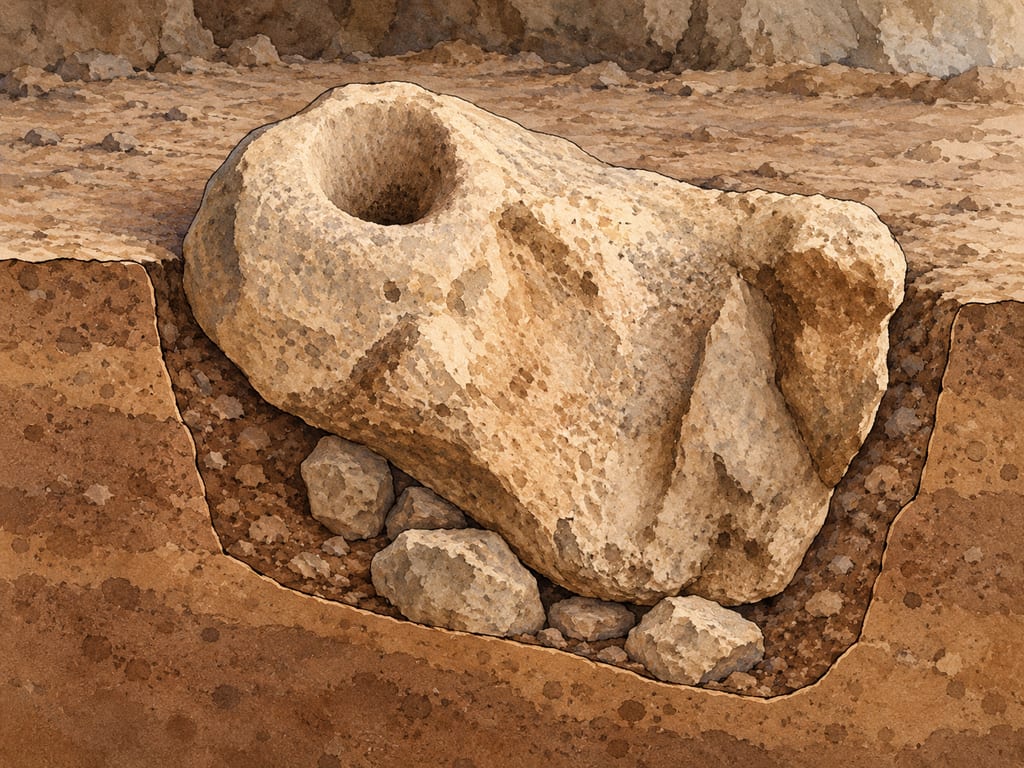
Raqefet stone mortars
Three Natufian stone mortars at Raqefet Cave, Mount Carmel, include two portable boulder forms and a hollow cut into the cave bedrock.
 FermenteaWhere food goes to change
Equipment · Mills, mortars and crushers
A pitted stone is a percussive artifact with one or more impact depressions. At Gesher Benot Ya‘aqov, nut cracking is a supported but not specimen-by-specimen proven interpretation; newer residue work confirms broader plant-food processing.
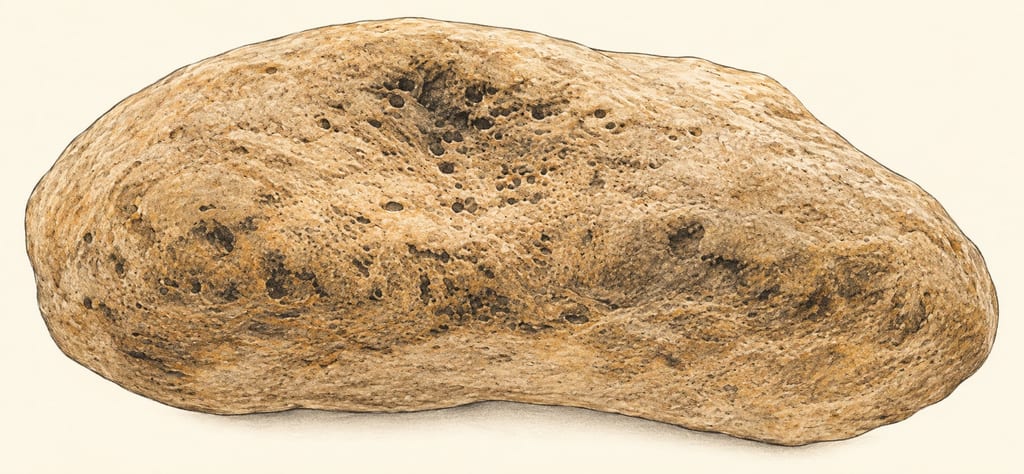
A pitted stone is a stone tool whose surface bears one or more depressions made by repeated blows. At Gesher Benot Ya‘aqov in northern Israel, the excavated assemblage includes both mobile percussors and anvils: the hammer is struck against material resting on a more stable surface, while an anvil receives the blows. The name describes a class of artifacts, not one standard shape or a matched set.
The published assemblage includes basalt and limestone artifacts. Pits vary: some are shallow and rough, others deeper, rounder and smoother inside; some tools carry one depression and others several. The researchers found that rapid experimental knapping could also leave shallow, battered pits on basalt, so a depression alone does not identify a tool’s task. Form and wear have to be considered together.
The 2002 study brought together pitted stones and edible nuts found in the same archaeological horizons. It reported seven species of hard-shelled nuts, including terrestrial and aquatic plants, and noted that some kernels—among them almonds, some acorns and Euryale seeds—would have needed hard tools to open. The shared setting and the morphology of many pits make nut cracking a plausible explanation for at least part of the assemblage.
That conclusion is an archaeological inference rather than a direct observation. The authors distinguish smoother, rounded pits from damage their knapping experiments produced, and argue that more than one activity probably occurred. They also state that residue analysis would be needed to demonstrate a particular function conclusively. The safest reading is therefore that nut cracking is supported for some artifacts, while the function of each individual stone remains uncertain.
A later study sampled eight basalt percussive tools from two archaeological horizons at the same site. Researchers recovered more than 650 starch grains, classified across 23 morphological groups. Identifications included acorns, grass grains, water chestnut, yellow water lily rhizomes and legumes. The concentration of residues embedded in tool surfaces, together with the much smaller amount found in control sediment samples, supports plant-food processing rather than a random reflection of local vegetation.
These results strengthen the interpretation of pitted stones as part of a varied plant-processing toolkit, but they do not turn every pit into a nut cracker. Nor do they establish a single operation: shelling, pounding and grinding could involve different plants and routines. The artifact should be understood as a percussive implement whose precise task depends on the specimen and evidence associated with it.
Gesher Benot Ya‘aqov lies in the Dead Sea rift near the Hula Valley, in present-day Israel. The archaeological evidence belongs to the Early–Middle Pleistocene; the later residue study describes the plant processing as at least 780,000 years old. These are site attestations, not a claim that this tool type originated there or was used only in the Levant. Similar hammer-and-anvil techniques are also documented ethnographically, but analogy does not prove uninterrupted continuity.
The publications do not give a standard capacity, dimensions, cleaning regime or modern acquisition route for this archaeological specimen. Its scale, exact raw material and damage pattern should be read from the individual artifact record, not filled in from a generic illustration. A pitted stone is neither a fermentation vessel nor evidence of fermentation: it belongs here as equipment for mechanical preparation of edible plants, with the nut-cracking association kept qualified.
Pitted stones occur with edible nuts in the same GBY horizons. The authors interpret nut cracking as plausible for some specimens but note that individual function cannot be proven without direct residue evidence. Later starch-residue analysis on basalt percussive tools from the site supports a broader plant-food-processing role.
Archaeological site attestation; not claimed as the origin or exclusive distribution of pitted stones.
Three Natufian stone mortars at Raqefet Cave, Mount Carmel, include two portable boulder forms and a hollow cut into the cave bedrock.
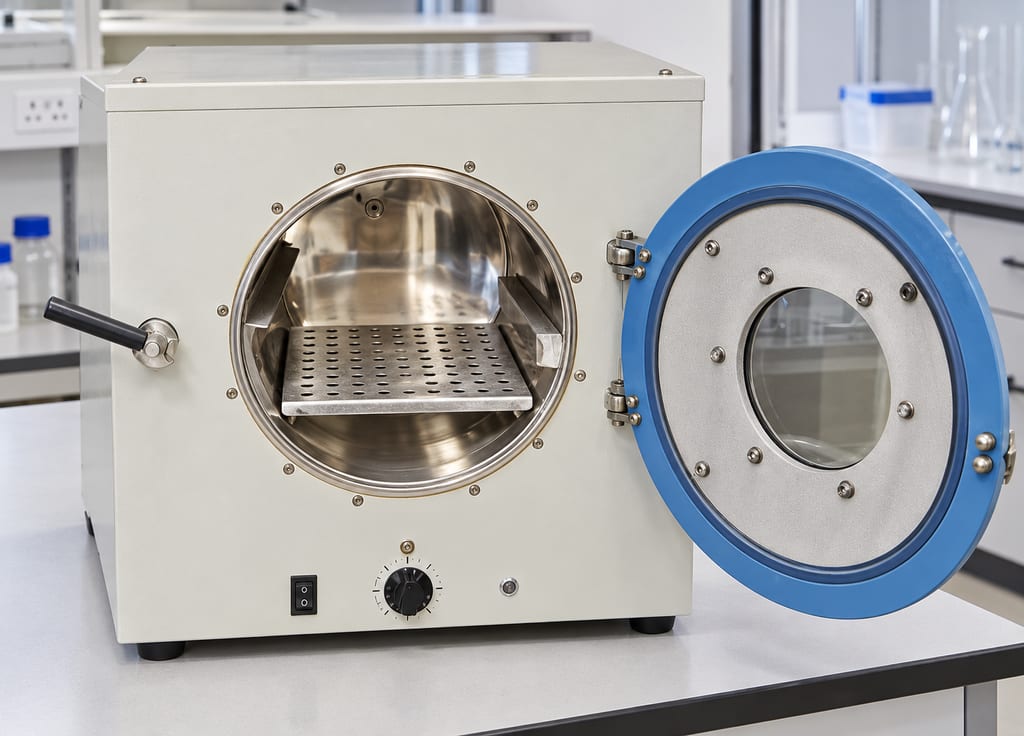
Vacuum dryers remove food moisture under reduced pressure, allowing evaporation at lower temperatures. Shelf, belt and drum designs handle different feeds; ordinary vacuum drying is distinct from freeze-drying.
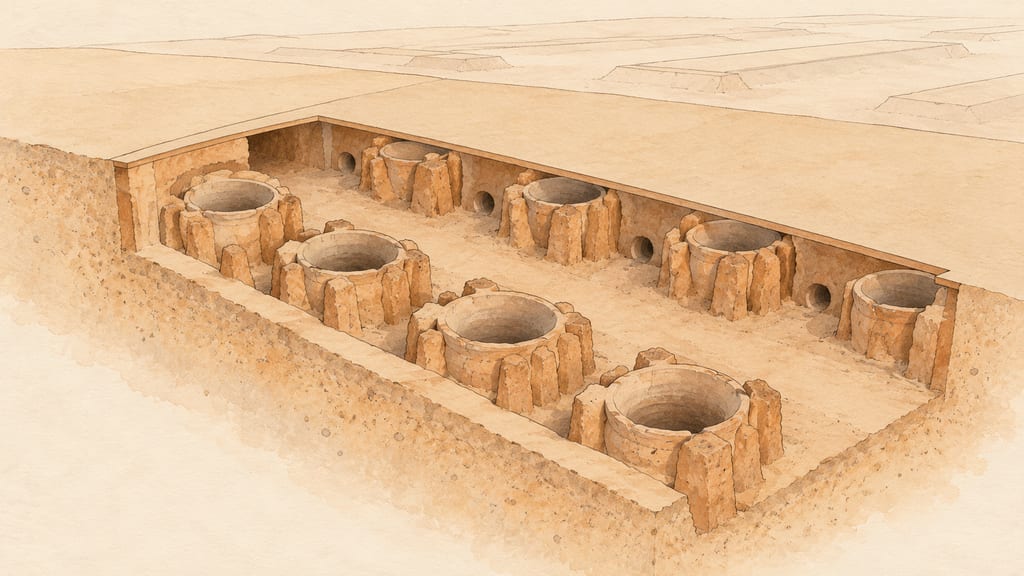
At North Abydos in Egypt, a fixed early Dynastic brewery comprised parallel semi-subterranean installations with rows of ceramic mash vats; excavation reports revise their number, scale and estimated batch capacity.
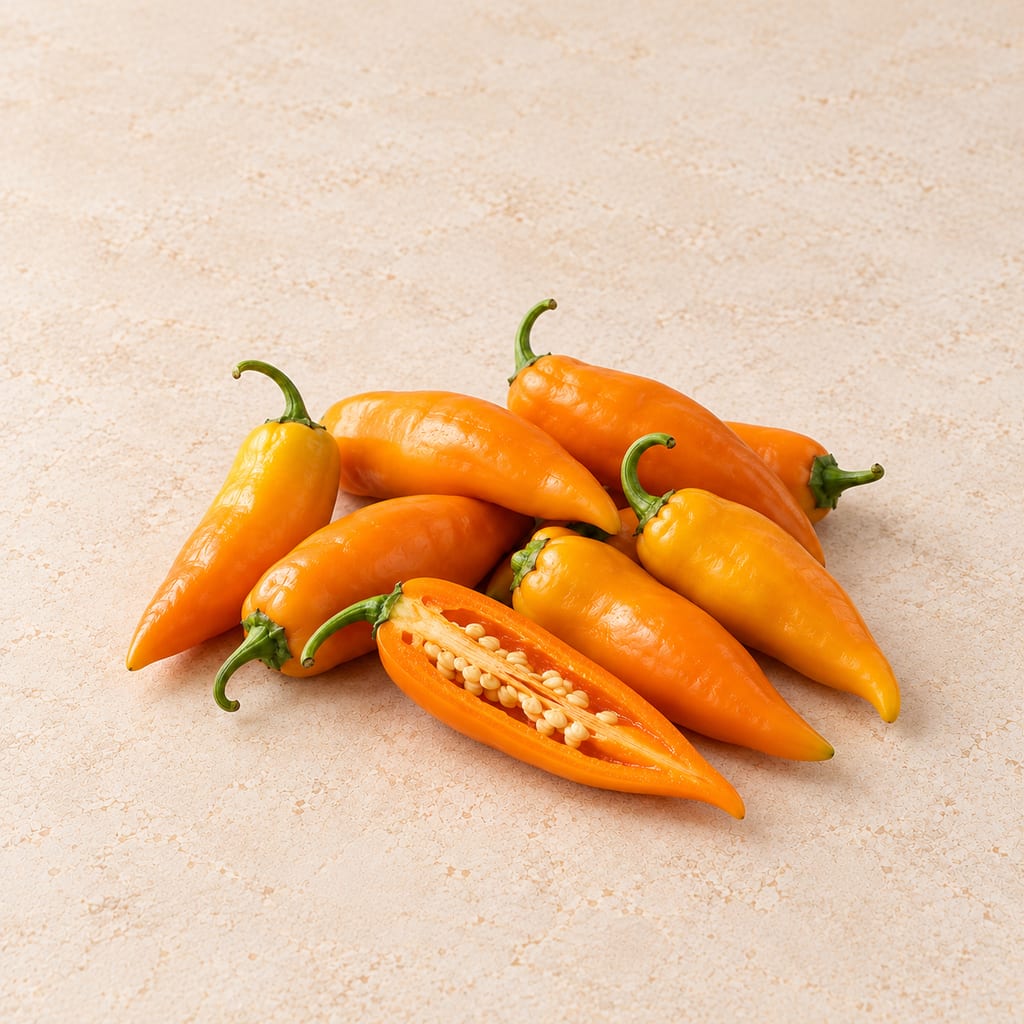
Ají amarillo is the orange-yellow Peruvian chilli cultivar group of Capsicum baccatum, used to colour and season huancaína sauce and ají de gallina. Published heat estimates do not establish one range for the named cultivar.

Toasted almonds are whole sweet almond kernels dry-roasted until golden to brown. Heat replaces their marzipan note with a roasted, nutty one; they thicken and flavour romesco.

Kodiak salmon, halibut and cod cut as seg'aq and hung on an initaq rack to become tamuuq, with kac'amaasaq and kupcuunaq named as different results.
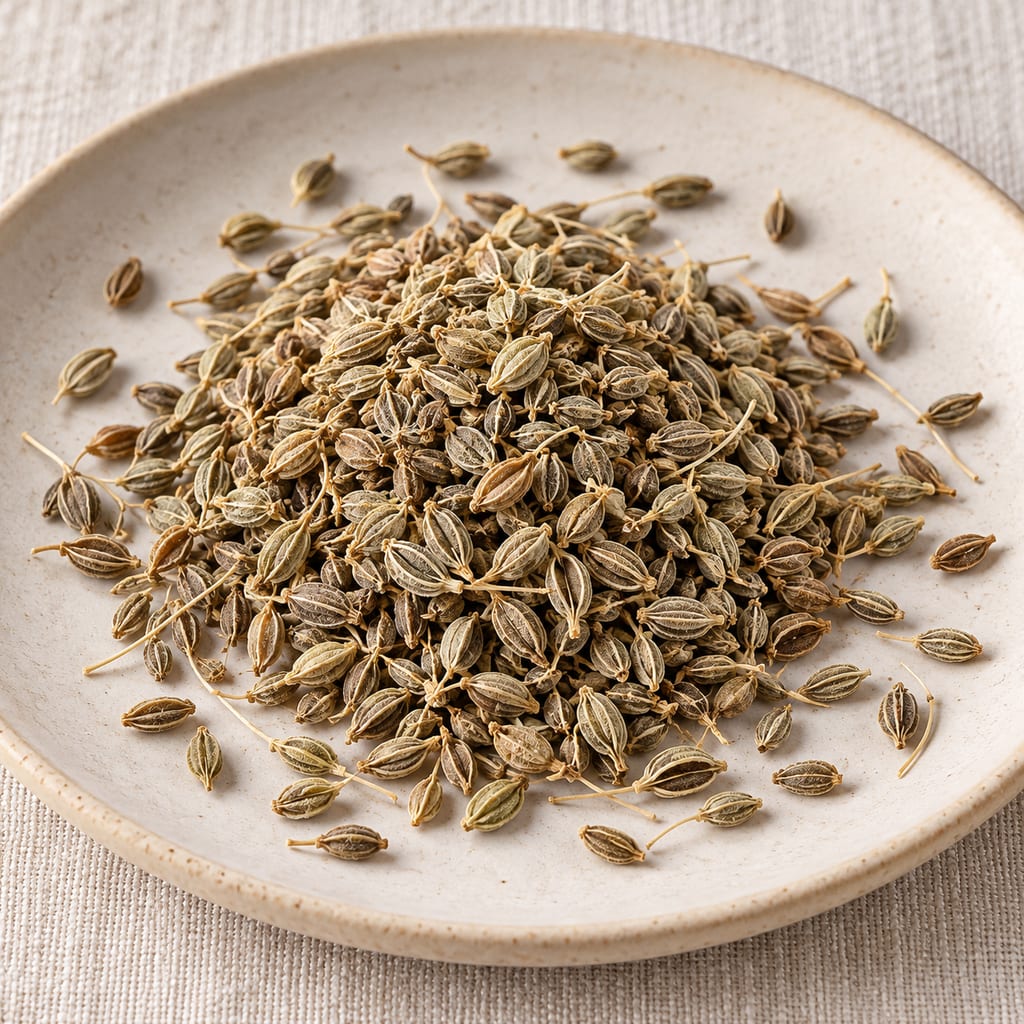
Aniseed is the dried ripe fruit of Pimpinella anisum, an aromatic Apiaceae spice commonly called a seed. It adds a sweet, warm aroma to breads such as Moroccan krachel and South African mosbolletjies, and is distinct from star anise.
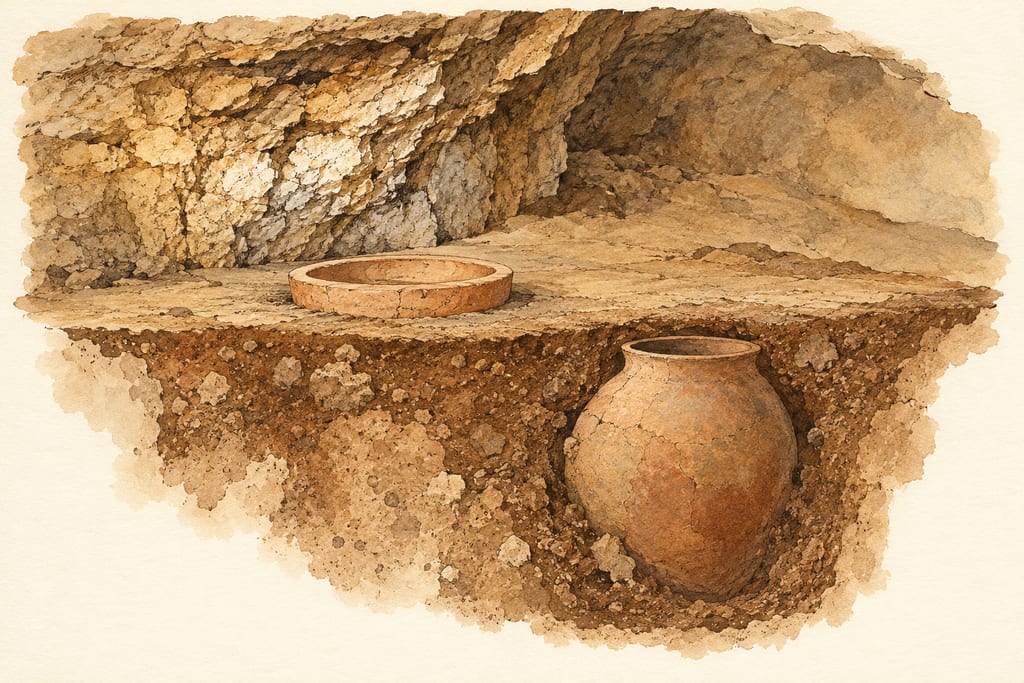
A fixed Late Chalcolithic installation in Areni-1 cave combined a shallow clay pressing basin with a large jar set into the cave floor and storage vessels nearby.

Ripe avocado flesh is the soft, buttery, fat-rich pulp of Persea americana, eaten raw. It is low in acid, so it is a fresh ingredient that needs care in chilled dishes.
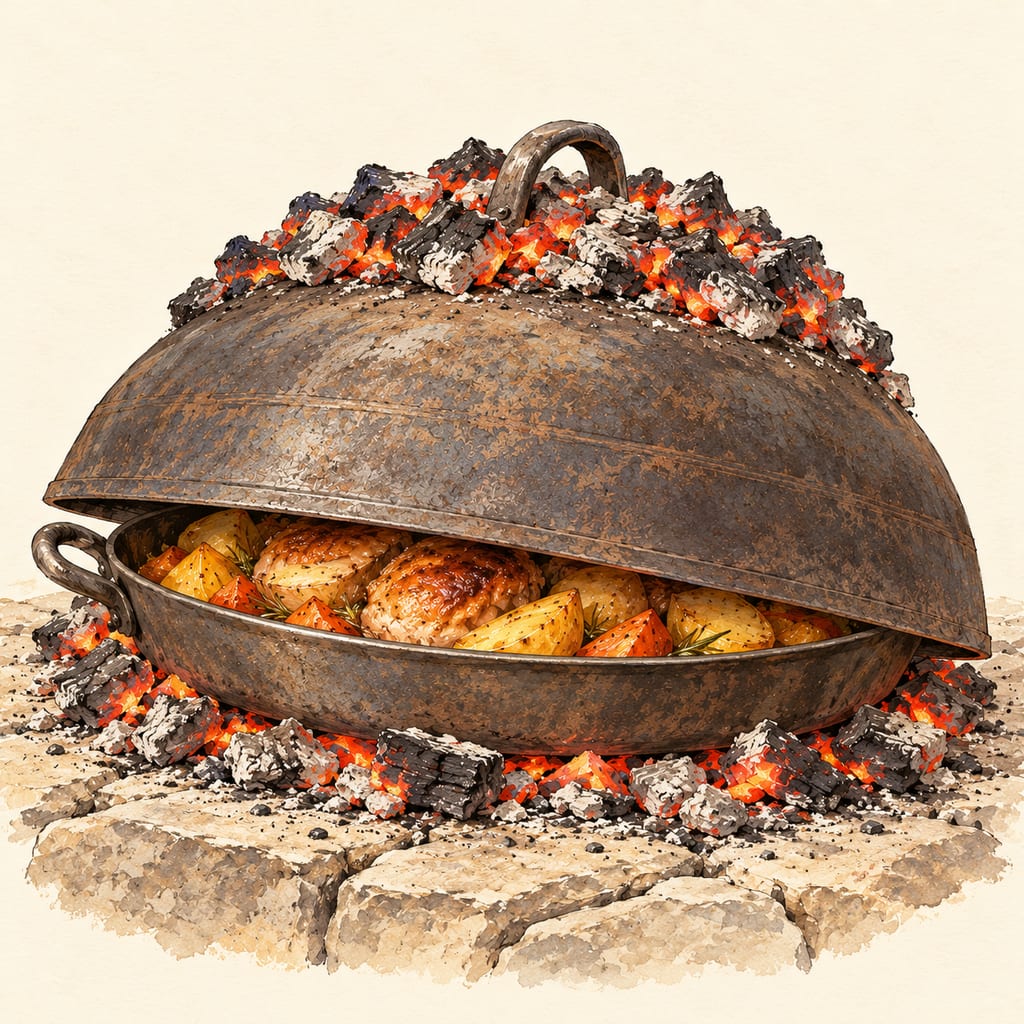
A portable dome and pan used over a hearth, with embers on the lid and heat from below. Regional peka and saç forms share this principle while differing in materials, pan shape and how the food is cooked.
No community contributions have been published for this entry yet.
Sign in to contribute. Published comments and photos are free to read.
Proceedings of the National Academy of SciencesHistory · Morphology · Interpretation · Geography
Nuts, nut cracking, and pitted stones at Gesher Benot Ya‘aqov, IsraelSite location and Early–Middle Pleistocene attribution; basalt and limestone assemblage; pitted hammer/anvil terminology; variation in pit morphology and the experimental distinction between knapping damage and smoother, deeper pits; same-horizon nuts and stones; nut-cracking interpretation and its limits.
Cited in: A stone with repeated impacts; Why nut cracking is a careful interpretation; Evidence for a broader food-processing role; Place, period and limits of the record
Proceedings of the National Academy of SciencesProcess · History · Geography
Starch-rich plant foods 780,000 y ago: Evidence from Acheulian percussive stone toolsStarch residues from basalt anvils and percussors at Gesher Benot Ya‘aqov; more than 650 grains classified into 23 groups from eight tools; plant taxa and conclusion that residues support plant-food processing.
Cited in: Evidence for a broader food-processing role; Place, period and limits of the record
Archaeology Magazine / Archaeological Institute of AmericaImage attribution
Hominids Go NutsPhotograph of a pitted stone credited to Heidi Gleit; used only as a linked visual reference, with rights retained by the credited photographer and publisher.