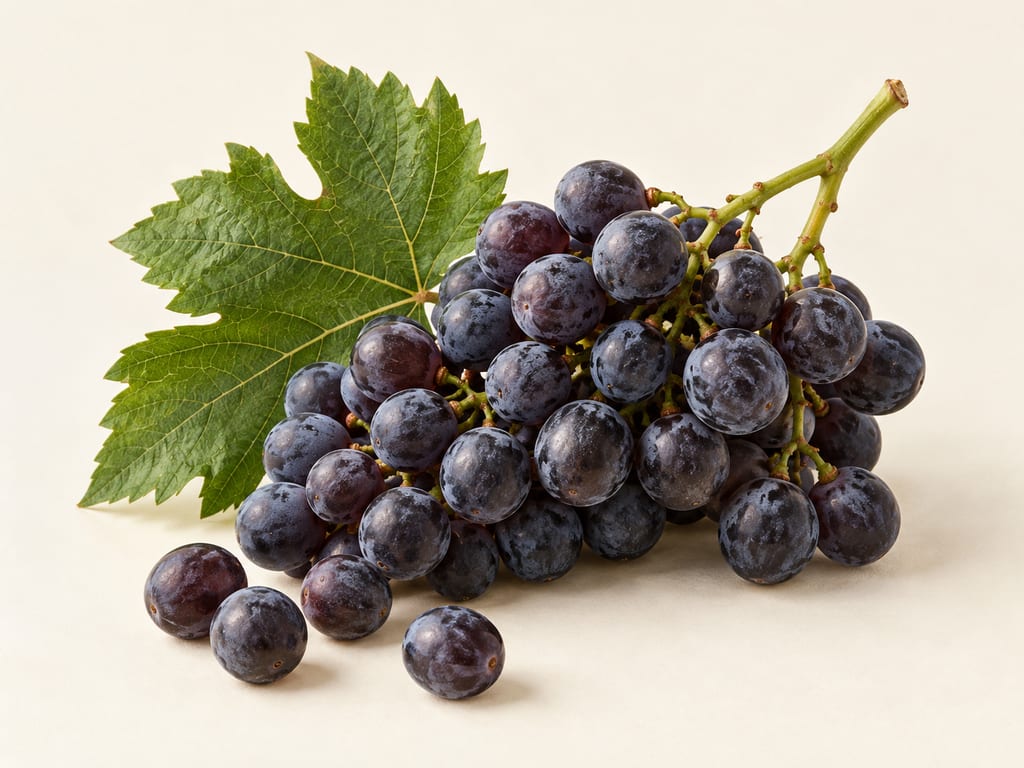
Grape
Wine grapes are fresh berries selected for vinification; their sugars fuel alcoholic fermentation, while cultivar, ripeness and handling shape the fruit and the wine it can become.
 FermenteaWhere food goes to change
慕萨莱思 · Msalais · Musalais wine · Msalais wine · Musalais grape wine · Uyghur Musalais · Awati Musalais · A'wati Musalais · Daolang Musalais · Dolan Musalais · 慕萨莱斯 · 穆萨莱思 · 穆赛莱斯
Musalais is a fermented grape drink documented among Uyghur producers in A’wati, southern Xinjiang. A studied process combines grape juice and heated pomace extract before spontaneous fermentation.
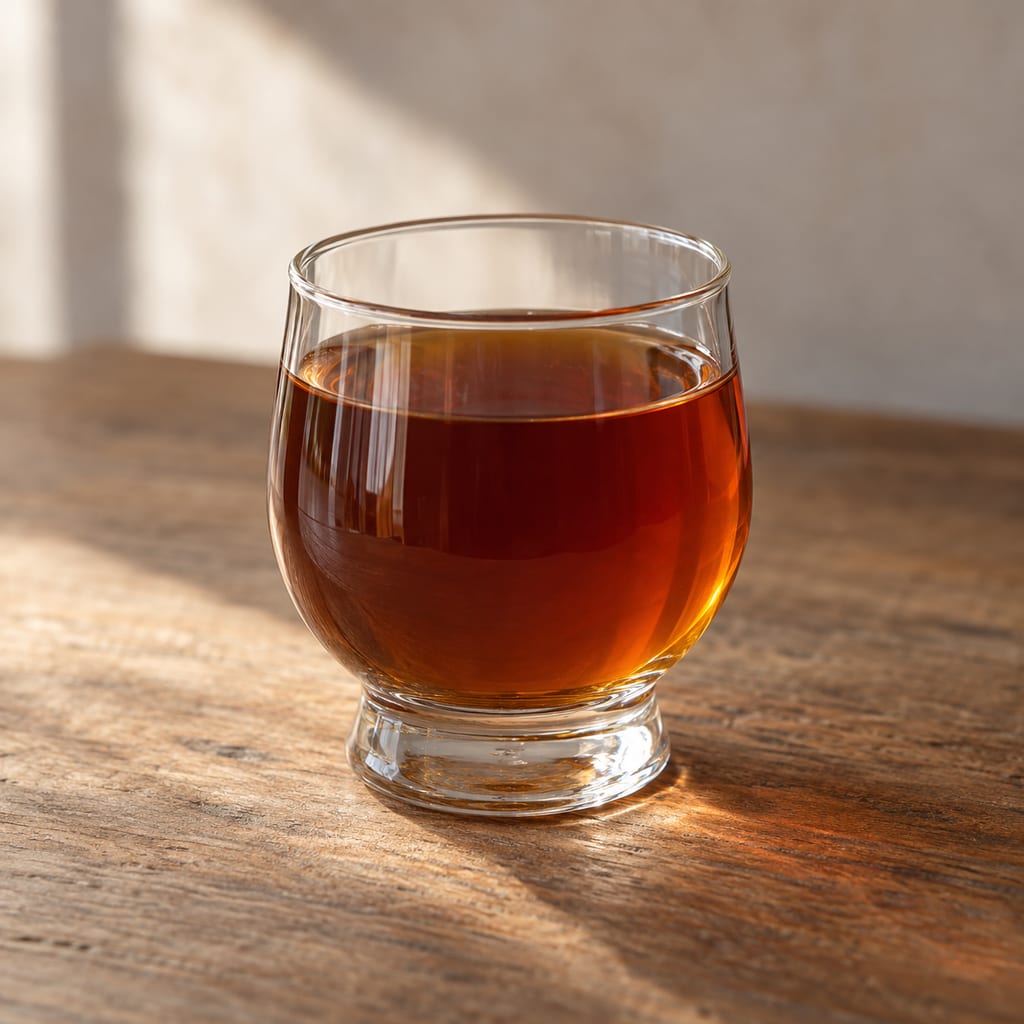
Musalais, also written Msalais in research titles, is a fermented grape beverage documented among Uyghur producers in A’wati/Awat, Aksu Prefecture, southern Xinjiang. The studies identify local Hetianhong grapes (Vitis vinifera) and describe a process in which pressed juice is combined with an extract made from water and grape pomace. The extract is heated before fermentation; the mixture then cools and ferments spontaneously in earthenware vessels. This distinguishes the studied product from an unfermented boiled-grape syrup and from ordinary fresh-juice wine fermentation.
The Chinese-script form 慕萨莱思 appears in the inspected research and local reporting. Musalais and Msalais are English transliterations. The supplied atlas also lists musallas and musalaisi; the records consulted here do not establish that these are separate beverages. Additional Chinese spellings occur in existing catalog text, but their status as regional variants has not been settled. No authoritative Uyghur Arabic-script spelling was recovered. The current title names the research transliteration, and this record does not infer an original Uyghur-script form.
This entry concerns the specific A’wati process documented in the research, not a single recipe for all Uyghur communities, Xinjiang producers or Central Asian grape wines. Local reports describe production outside A’wati and other wines under separate local names; that evidence is insufficient to fold those products into one uniform Musalais method. Workshop and factory products also differ: some factories omit pomace extraction or use industrial heating, selected cultures, clarification or pasteurisation. A product name by itself does not prove an identical process.
The body intentionally has no structured ingredients, quantities or steps. The sources provide observational process descriptions, including a large workshop fermentation, rather than a validated small household batch. They do not establish safe gas management, a reliable fermentation endpoint, storage limits or evidence-based scale conversion. This is a research record, not an executable wine recipe.
The 2012 process and aroma study describes pressing grapes and keeping the juice apart from the skins, seeds and pulp. Water is used to extract material from the pomace; the heated extract is filtered and combined with the reserved juice. The combined liquid is heated again, cooled and transferred to earthenware jars for spontaneous fermentation. The account records more than 15 hours for each of two heating periods and an approximate 92 °C condition. Those figures describe the studied process. They do not form a household specification because the report does not provide a complete ingredient ratio, batch yield, concentration endpoint, domestic equipment design or validated safety controls.
A separate yeast-community investigation sampled one spontaneous fermentation described at approximately 1,000 L scale. The account records very low yeast counts after the heating sequence and microbial growth later in the sampled process. A particular sampled fermentation cannot establish the organisms that will start every batch, a reliable spontaneous inoculation route or a suitable starter substitution. The papers also disagree in publication metadata: the issue information in one PDF identifies 2012, while its current journal landing page displays a 2016 publication date. That discrepancy remains unresolved.
Some process descriptions say the cooled liquid was placed in sealed earthenware vessels, while other passages report ambient handling and sample conditions with wording that is difficult to distinguish from the ferment itself. This text does not translate the word sealed into a home closure procedure. The source does not give vessel geometry, headspace, venting, pressure measurements or an emergency plan. Carbon dioxide is produced in alcoholic fermentation; absent a supported safe vessel method, the historical wording cannot be used as a domestic instruction.
The available method studies do not report a transferable household yield or reliable ratios for grapes, pomace and water. A separate local report gives a one-third reduction explanation for the name and describes different modern methods. That account does not establish a concentration endpoint for the two-stage research process. Process details from an optimized 2024 red-grape experiment and a 2025 thermal study are experimental variants, not replacements for the traditional sequence or household directions.
The studied local process uses Hetianhong grapes and water. The literature gives no complete grape mass or water-to-pomace ratio for a reproducible household batch. The wine is classified as a fermented fruit beverage. Heating is a pre-fermentation transformation; it contributes to concentration and cooked-fruit or caramel-like aroma but is not itself fermentation. Fermentation occurs after the heated liquid cools, with organisms introduced from the particular environment or materials in the observed spontaneous process.
The process account names grape pressing, an iron pan, a clay oven, gauze filtration and earthenware fermentation jugs. It does not specify capacities or validated modern substitutes. The yeast study’s approximate 1,000 L scale is not an instruction to scale down. An abstract-only or model-system study of nonenzymatic browning describes chemical changes during heating, but it does not validate a safe domestic heating schedule or establish a finished-product limit for every compound.
The research reports a starting temperature and measurements for a particular sampled batch. It also includes ambiguous storage and sample-temperature wording. These observations are not a general fermentation setpoint. No source here establishes a suitable household temperature range, pH endpoint, sugar endpoint, alcohol endpoint, pressure control, clarification method or storage duration. The studies of sensory variation and product ageing characterize their samples; they do not establish a universal style standard or safe keeping period.
The studies report differences between workshop and plant products and between samples from A’wati producers. Heating sequence, vessel, microbial entry, grape material and later processing can affect the beverage. A broad statement that Musalais has one stable flavour, alcohol strength or microbiome would overstate the evidence. The reported alcohol table gives percentages without stating the measurement basis. Those figures must not be relabelled ABV. Separate percentages from experimental or commercial studies also must not be combined into a tradition-wide range.
Measurements from separate studies must remain separate. The 2012 aroma work follows one processing sequence, while another investigation follows yeast succession in a separate fermentation reported at roughly 1,000 L. Their data do not form a standardized batch. An 18–20 °C statement in the materials discussion is ambiguous about whether it describes sample handling or fermentation, so it does not provide a general setpoint. Commercial measurements and modern experiments may concern production variants that omit or alter the pomace step. A local explanation linking the name to one-third concentration is an attributed etymology, not a demonstrated endpoint for the studied sequence. This distinction keeps each observation tied to its setting and prevents an analytical result from becoming a household instruction.
The inspected papers repeat claims that the drink has a history of more than 1,000 or 2,000 years. The materials examined for this record do not identify a dated manuscript, archaeological find or other independently datable evidence specific to Musalais. Long histories of grapes and wine in Central Asia cannot by themselves date this particular cooked-pomace and spontaneous-fermentation sequence.
A 2014 newspaper report recalls Musalais shops in A’wati during the 1940s and 1950s. It is a retrospective account, not a contemporaneous record from those shops. Later milestones provide modern institutional documentation: reporting describes an association founded in 2004 and regional intangible-heritage recognition in 2007. These facts support a living regional practice but do not prove the age or uninterrupted transmission of a recipe.
A’wati is supported as the best-documented production locality in the process studies. Southern Xinjiang is the wider regional association. Neither statement establishes a unique birthplace, a boundary for all producers or a pan-Uyghur distribution. A’Wati and Awat are transliteration variants used in sources. Claims linking a name to an Arabic word for one third are reported local etymology, not a verified linguistic derivation; no etymology is adopted here.
The evidence also does not establish a fixed harvest calendar, festival-brewing season, ritual schedule, medical benefit or universal serving custom. A 2019 cultural event and sensory studies document particular public and research contexts, not everyday practice across all communities. Statements about one named family’s inherited process remain attributed claims unless independent historical evidence is found.
Mould-damaged grapes are a relevant hazard. International vine and wine guidance describes ochratoxin A risk associated with black Aspergillus mould on grapes and advises excluding extensively contaminated fruit from juice, concentrated must and wine. The Musalais process described in the studies includes pomace extraction and long heating; no inspected source demonstrates that this heating removes ochratoxin A. This record does not turn that guidance into a full Musalais safety plan.
The spontaneous process presents additional unknowns. The yeast paper describes one process in which viable yeast was scarce after boiling and growth followed later. That finding does not tell a household maker how to distinguish a successful fermentation from contamination, what microbial limits apply, or how long a stalled sugary liquid can be kept. Research observations about mould growth or changing sugar levels are not validated consumer endpoints.
No validated endpoint, critical pH, safe fermentation time, temperature limit, alcohol threshold, storage limit, gas-release arrangement or safe small-scale equipment plan was found. The presence of bubbles, an aroma, a taste, a change in colour or the passing of several weeks cannot demonstrate microbiological safety. Sealed-jar wording does not establish a safe pressure-rated vessel. Long heating of liquids also presents scald, burn, fire and scorching hazards; the studies do not assess domestic heat sources.
Studies of commercial samples and storage describe quality changes, not a household preservation method. A report of mould losses by producers confirms that keeping quality can be a problem, but does not quantify a safe shelf life. Analytical alcohol values from particular samples cannot be generalized to a home batch, especially when the table’s percentage basis is unstated. No universal strength, quality or safety specification is assigned.
A 2013 sensory investigation compared ten A’wati wines and reported differences among producers. Its profile observations are sample-specific and do not define a required sweetness, acidity, bitterness, colour or aroma. Later analyses compare workshop and industrial products and investigate microbial or volatile compounds. They help explain variation but do not establish one standardized process.
A 2024 red-grape optimization and a 2025 study varying heating or fermentation conditions are separate experimental work. Their selected conditions are not historic household standards. A patent application describing other fruit additions and commercial yeast is another proposed industrial route, not proof that those ingredients belong in the traditional A’wati process. Product labels or aliases cannot settle process identity.
Useful next evidence would include a qualified Uyghur-language source for the name and community scope; independent dated history; the full text and date metadata for the yeast paper; a documented household process with complete ratios and yield; validated gas and contamination controls; and reliable storage or endpoint evidence. Until then, the source-backed facts should remain separate from unresolved details. No generated hero is justified by contextual festival or product-packaging images.
A sensory analysis of ten wines from A’wati found differences in colour, aroma and taste among producers. Descriptors reported for those samples are observations from that study, not required qualities or a grading specification for every wine called Musalais. The study associated method differences with important variation, but it does not tell how to reproduce a particular sensory profile safely. This record therefore preserves the locality and variation while leaving universal taste and quality criteria open.
Research papers repeat claims that Musalais has been made for more than 1,000 or 2,000 years, but the inspected accounts provide no dated material record specific to the drink. A 2014 newspaper recollection describes shops in A’wati in the 1940s and 1950s. Dated institutional milestones include an association founded in 2004, inclusion of the brewing technique on a regional intangible-heritage list in 2007, and A’wati being named a Musalais centre that year. These support a documented living regional practice, not an origin date or uninterrupted continuity.
No reproducible ingredient list is recorded.
The OIV guidance identifies ochratoxin A risk from black Aspergillus on grapes and advises excluding extensively mould-contaminated fruit from juice, concentrated must and wine. The Musalais process described in research retains heated pomace extract, and no evidence here establishes that long boiling removes this hazard.
Hazard sourceA yeast study describes very low viable yeast counts after boiling and a later rise during one approximately 1,000 L fermentation. It does not give a validated household inoculation, contamination-management or stalled-ferment control.
Hazard sourceThe research describes earthenware vessels and one account uses wording translated as sealed. No validated gas-release arrangement or pressure limit was identified. That wording is not a safe household closure instruction.
Hazard sourceThe reported process includes prolonged heating of grape and pomace liquids. The papers do not evaluate domestic pan, fire, burn or hot-liquid handling controls.
Hazard sourceOne analytical table reports alcohol percentages without specifying whether they are volume or mass basis. Studies of sampled products and storage do not establish a universal strength, safe endpoint or home shelf life.
Hazard sourceNo home method or batch is supplied. Field observations and laboratory measurements do not establish safe household controls.
The primary study’s table labels its alcohol values “Alcohol (%)” without stating the basis; they must not be presented as ABV.
Do not treat vessel wording, elapsed fermentation time, visible activity, taste or smell as a validated endpoint or pressure-control method.
The Uyghur Arabic-script spelling and the relationship between several transliterations remain unverified.
The sources do not give enough detail for preparation directions.
The primary process and yeast studies describe an A’wati-area practice among Uyghur producers. This does not establish that all Uyghur communities make Musalais or identify an origin point.
A broader regional association in research and reporting; not a distribution map or proof that every local grape wine is the same product.
Wine grapes are fresh berries selected for vinification; their sugars fuel alcoholic fermentation, while cultivar, ripeness and handling shape the fruit and the wine it can become.
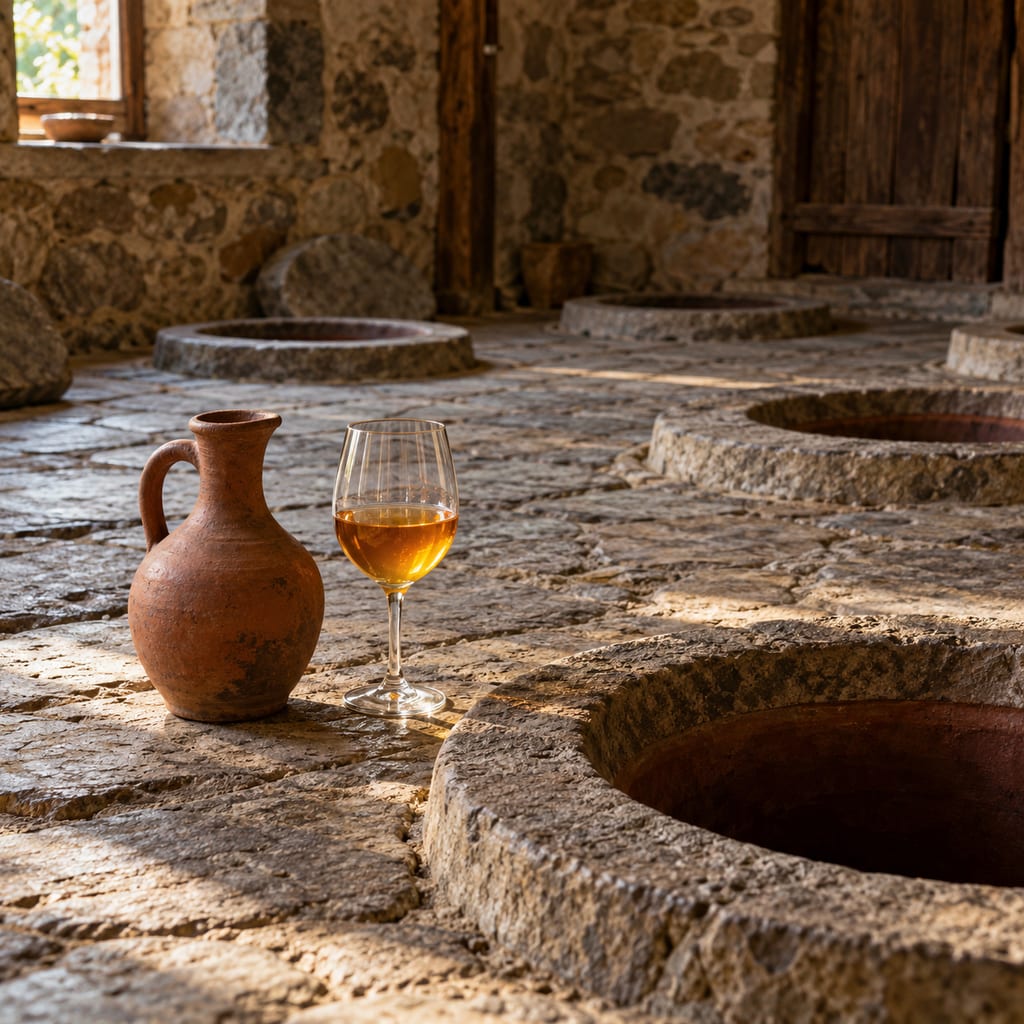
Georgian wine fermented and matured in buried clay vessels called qvevri, usually with grape skins, pips and sometimes stems, in styles from amber to red that differ by region.
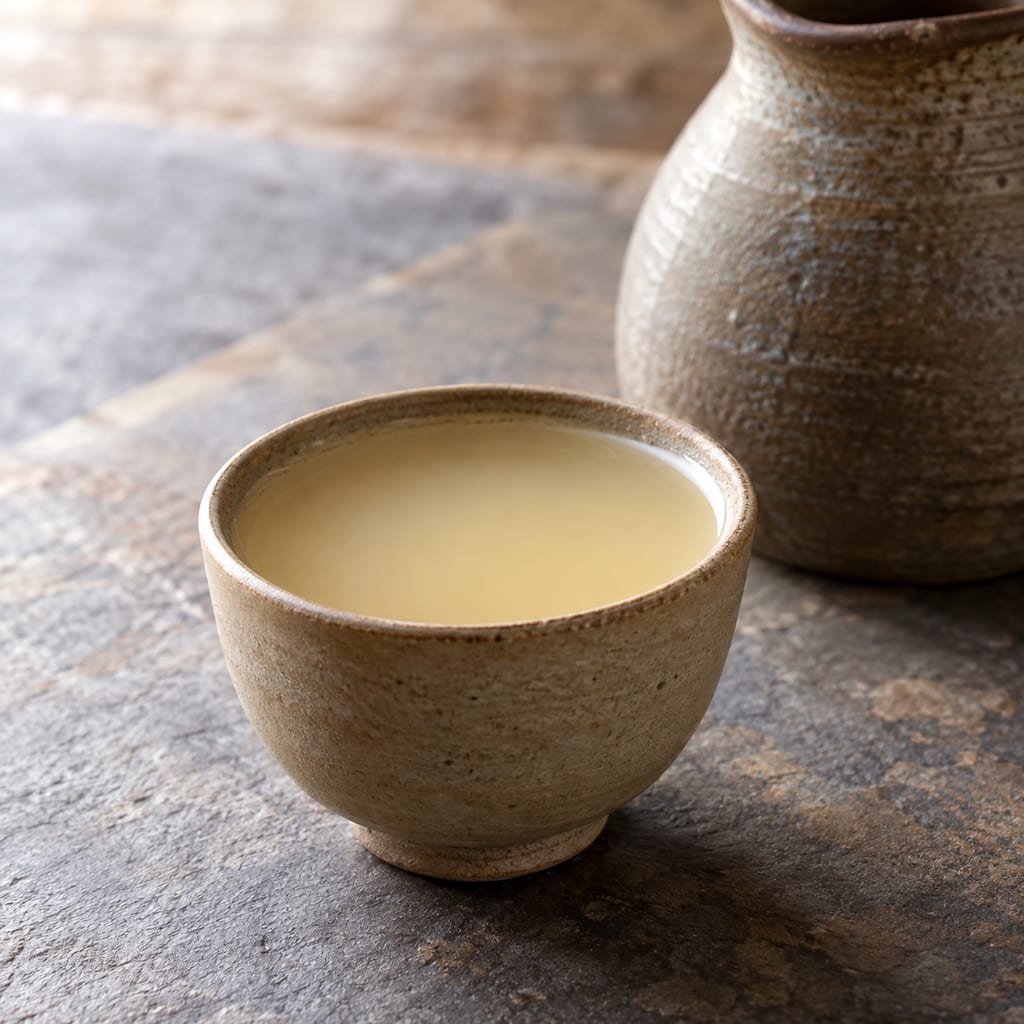
A 2005 Tibetan account describes cooked barley mixed with changdzi, fermented as moist grain, then steeped in water for an alcoholic drink. Grain and water amounts, starter dose and a verified safety endpoint are absent.
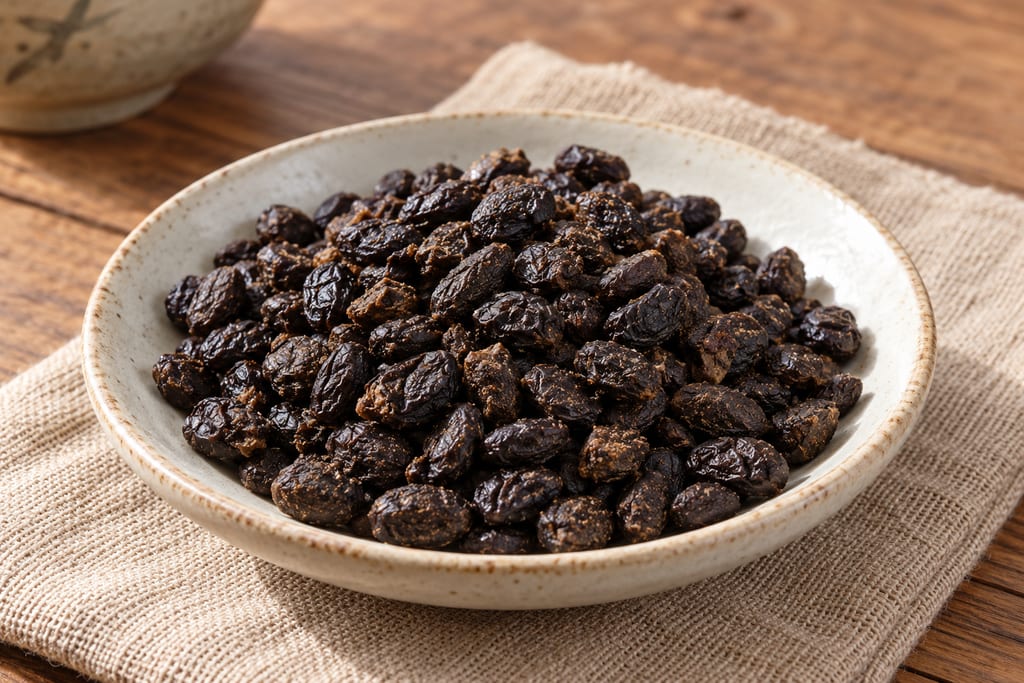
A Chinese fermented soybean condiment in which Bacillus-led bacteria, not moulds, drive the fermentation. Documented in Zunyi, Guizhou, and kept separate from mould-led douchi.
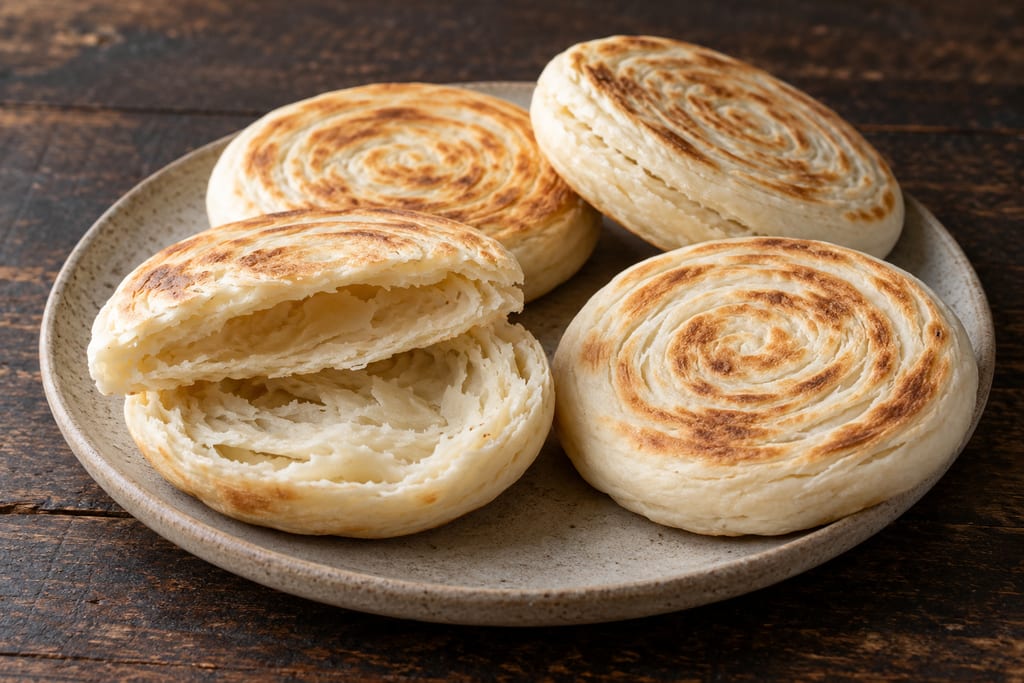
This Shaanxi-associated yeast flatbread uses a simple water dough, coiled shaping and a skillet bake. It is the bread used in roujiamo, not the filled meat dish.
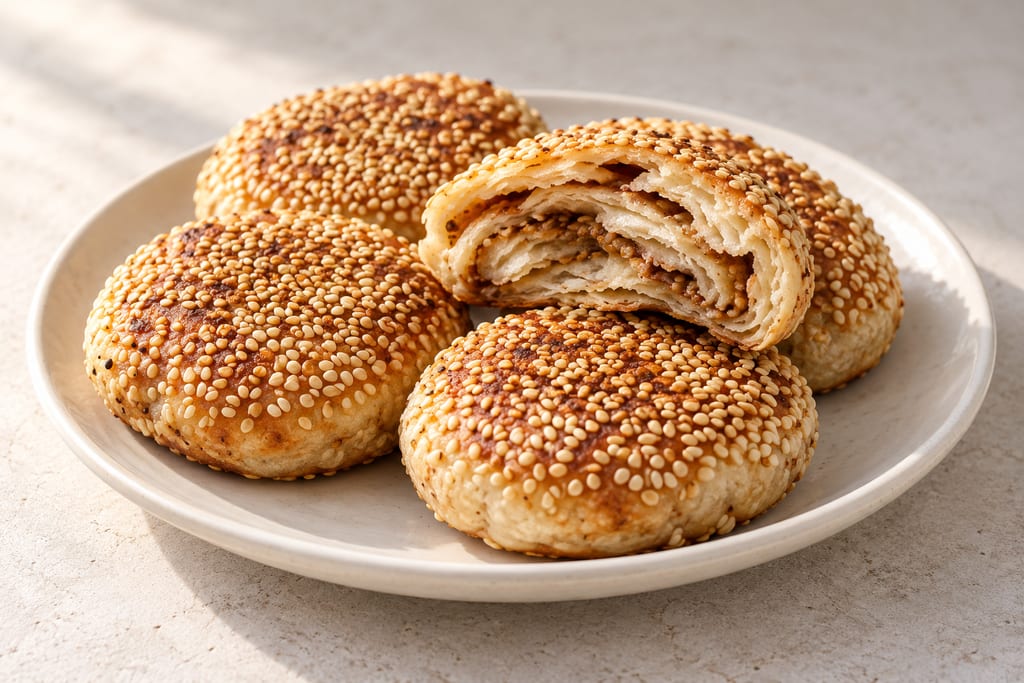
A Beijing-style yeast dough is layered with seasoned sesame paste, sealed into small buns, briefly pan-fried, seeded, and baked.
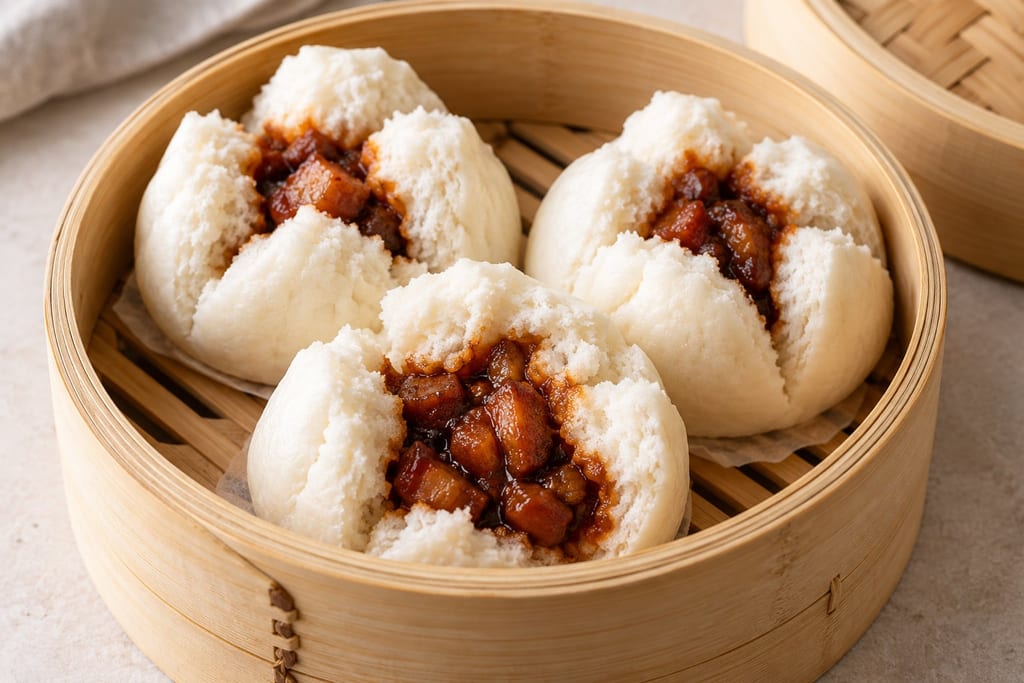
Fourteen fluffy steamed buns filled with cooked char siu and a thickened oyster-soy sauce.
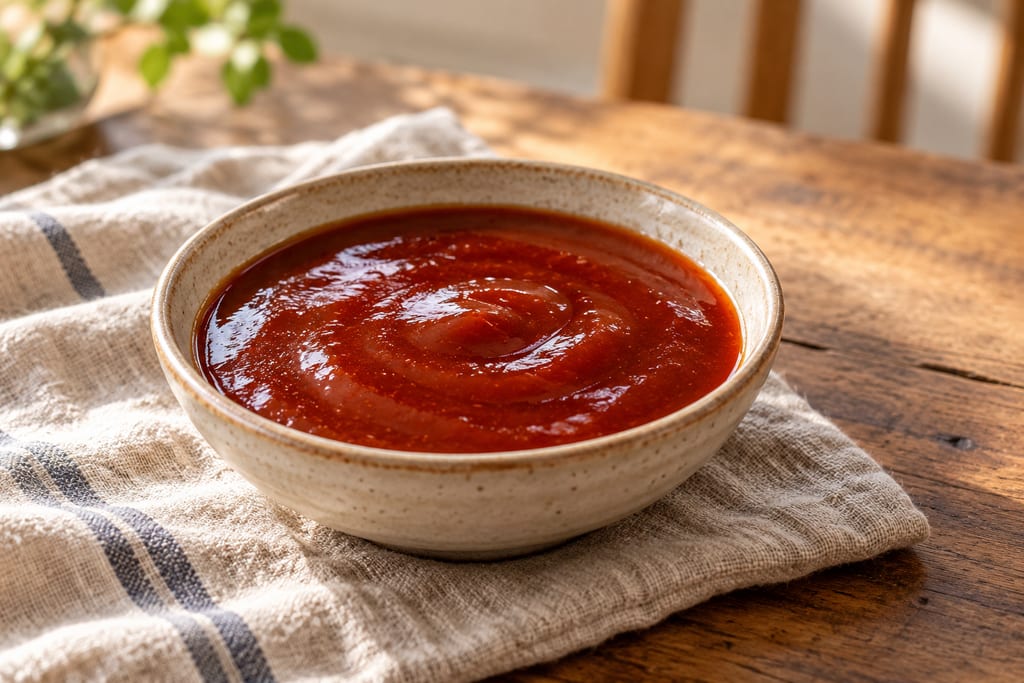
A smooth, tomato-based sweet-and-sour sauce of sugar, vinegar, tomato paste and soy sauce, thickened with starch for dipping or coating; it is not the sauce on Hangzhou's sweet-and-sour ribs.
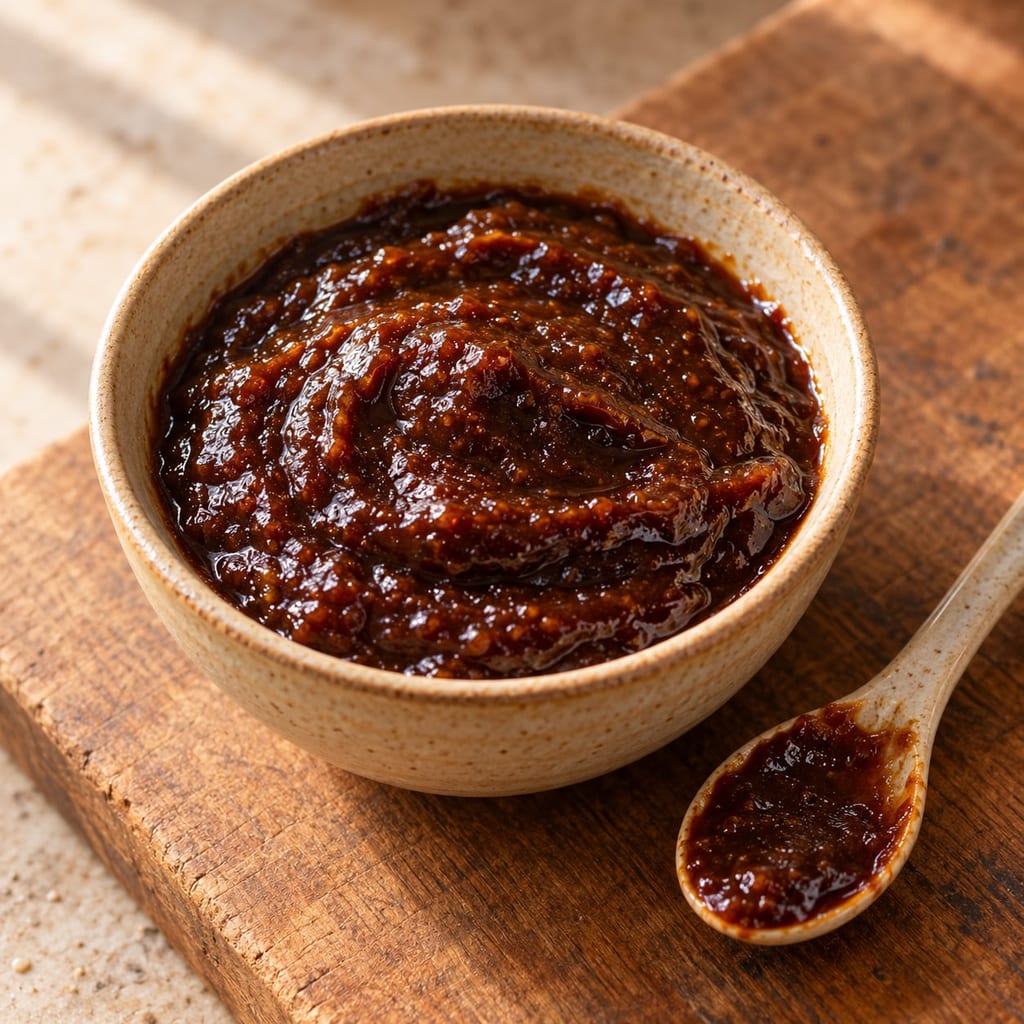
Chu hou is a sweet, savoury Cantonese paste of fermented soybeans, fermented bean curd, garlic, ginger and sesame, used mainly to braise meat.
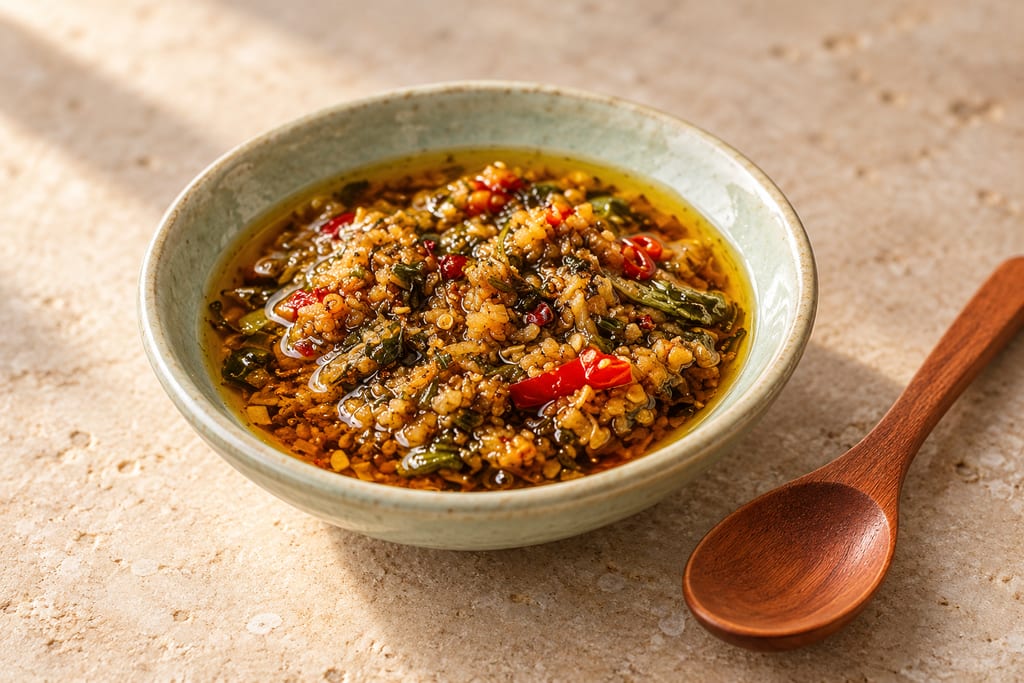
A Cantonese condiment of ginger, garlic, scallion and fresh chilli fried slowly in oil and seasoned with soy sauce, sugar, wine and salt, served over roast meats and poached chicken.
The Rwandan urwina is a conical, leaf-lined earth pit that warms green brewing bananas before they are peeled, crushed for juice and fermented separately.
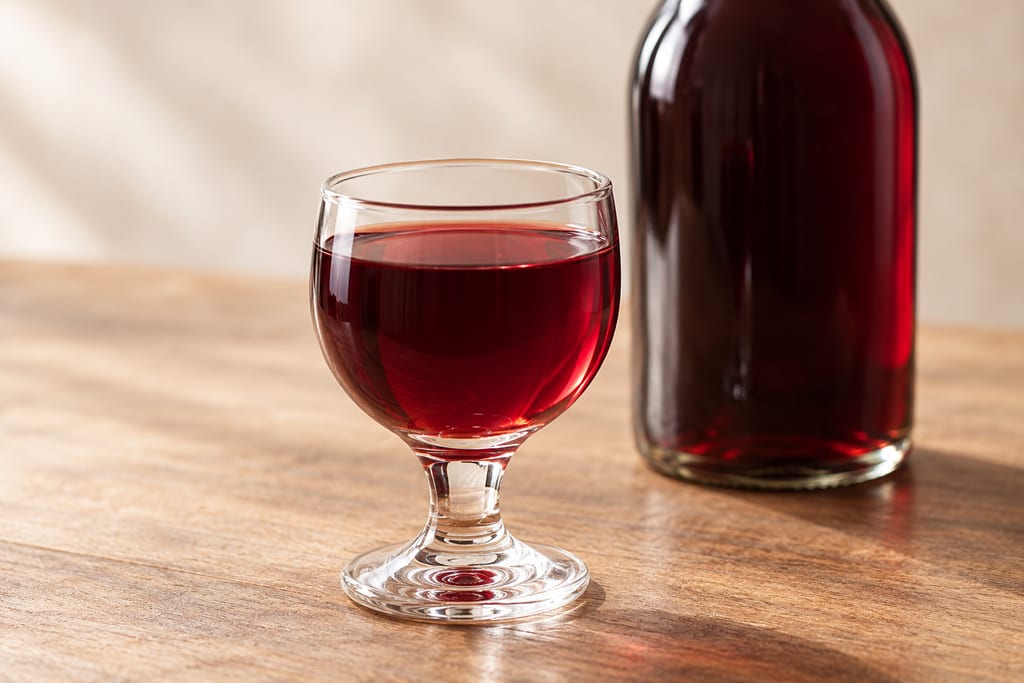
Korean black raspberry wine: crushed bokbunja berries with their seeds, sweetened to 20 °Brix, fermented 15 days at 25 °C with wine yeast, filtered and matured three months.
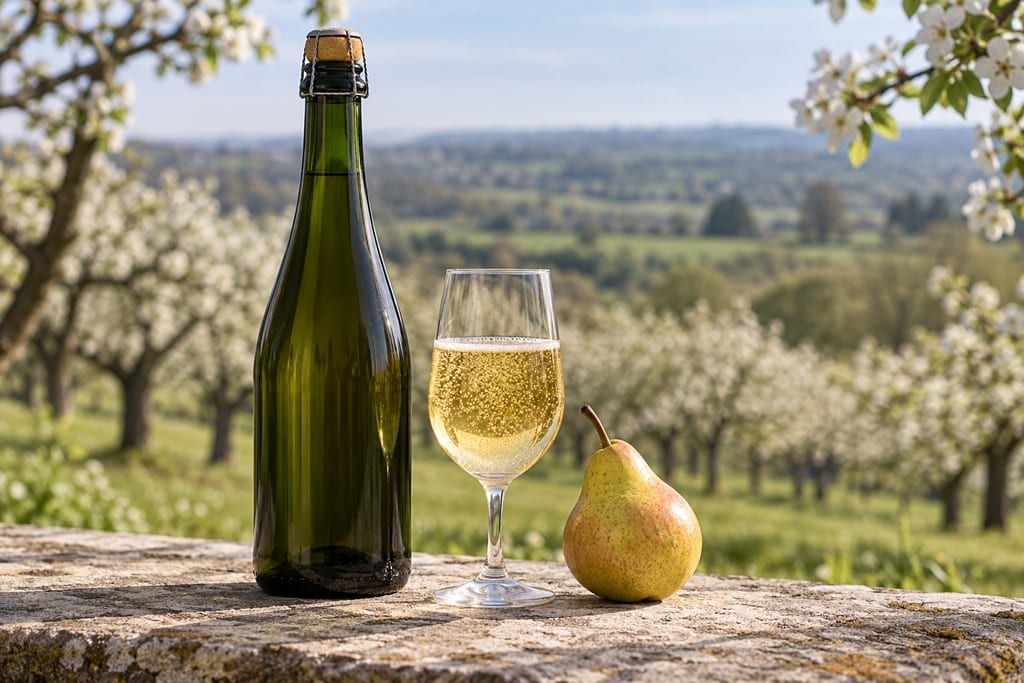
Naturally sparkling perry from the Bas Domfrontais in Normandy, pressed from high-stem orchard pears with at least 40% Plant de Blanc and carbonated by fermentation in the bottle.
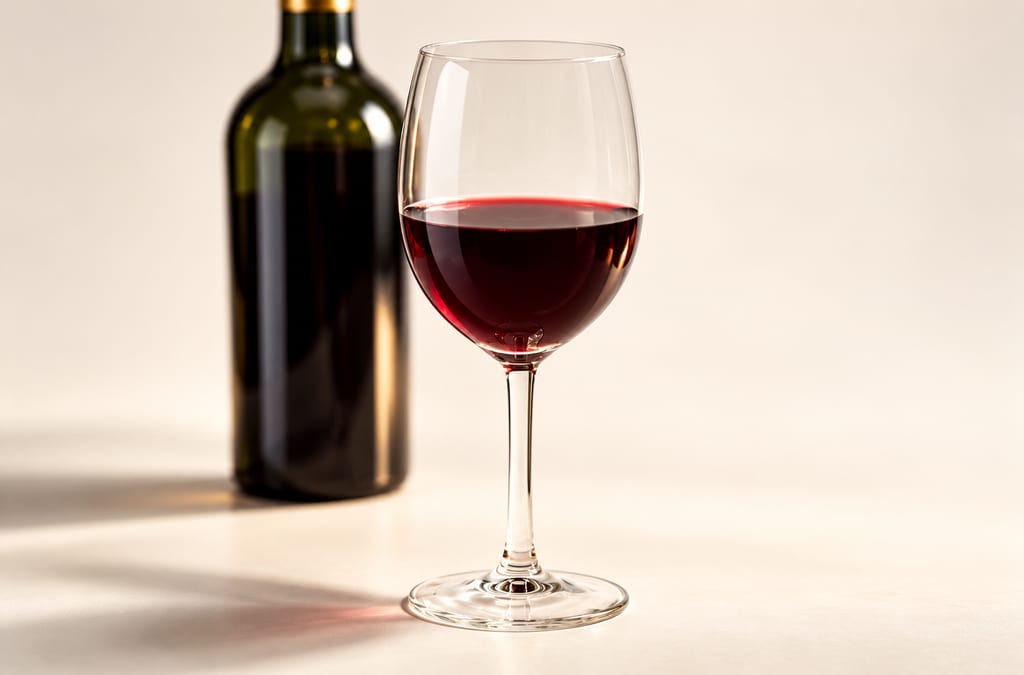
Red wine is grape must fermented with the skins and other solids, then separated from the pomace. Grape, cellar and regional choices shape its colour, structure and style.
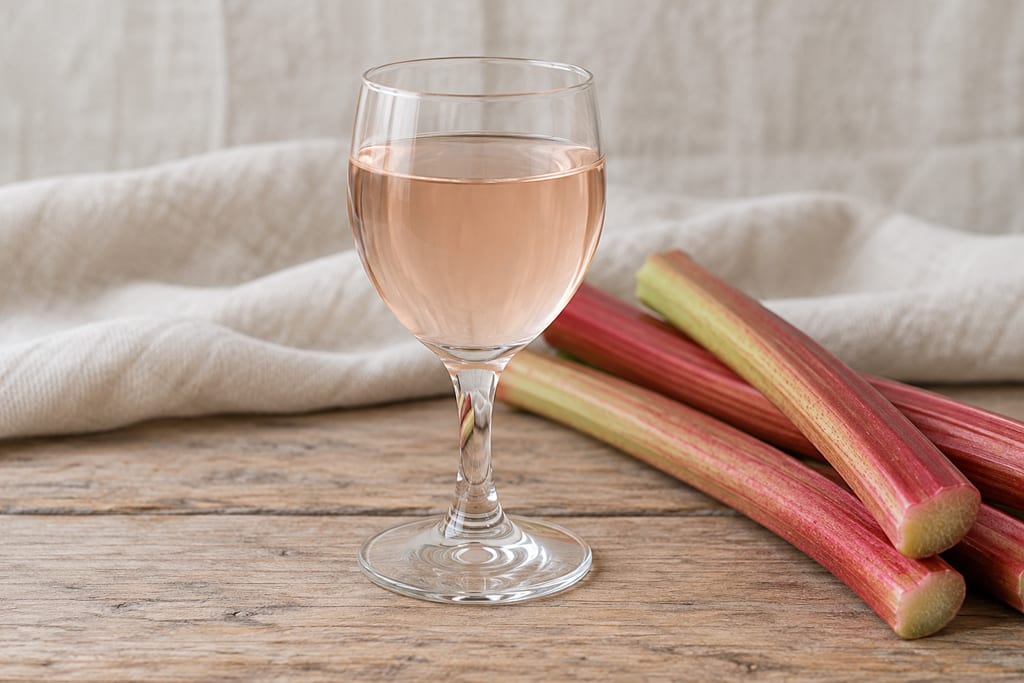
S. O. Beeton’s 1861 household book records rhubarb wine made with rhubarb pulp, water, loaf sugar, lemon rind and isinglass; its historical directions do not establish a safe modern fermentation endpoint.
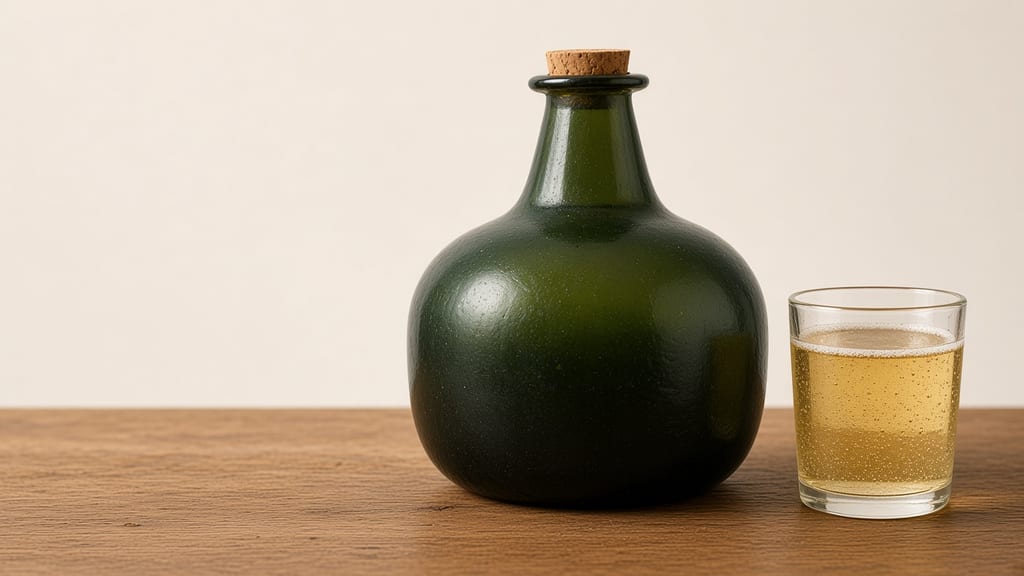
A lightly sparkling cider bottled before it had finished fermenting, as Sir Paul Neile described it in 1664, with a measured modern method for safe bottle conditioning.
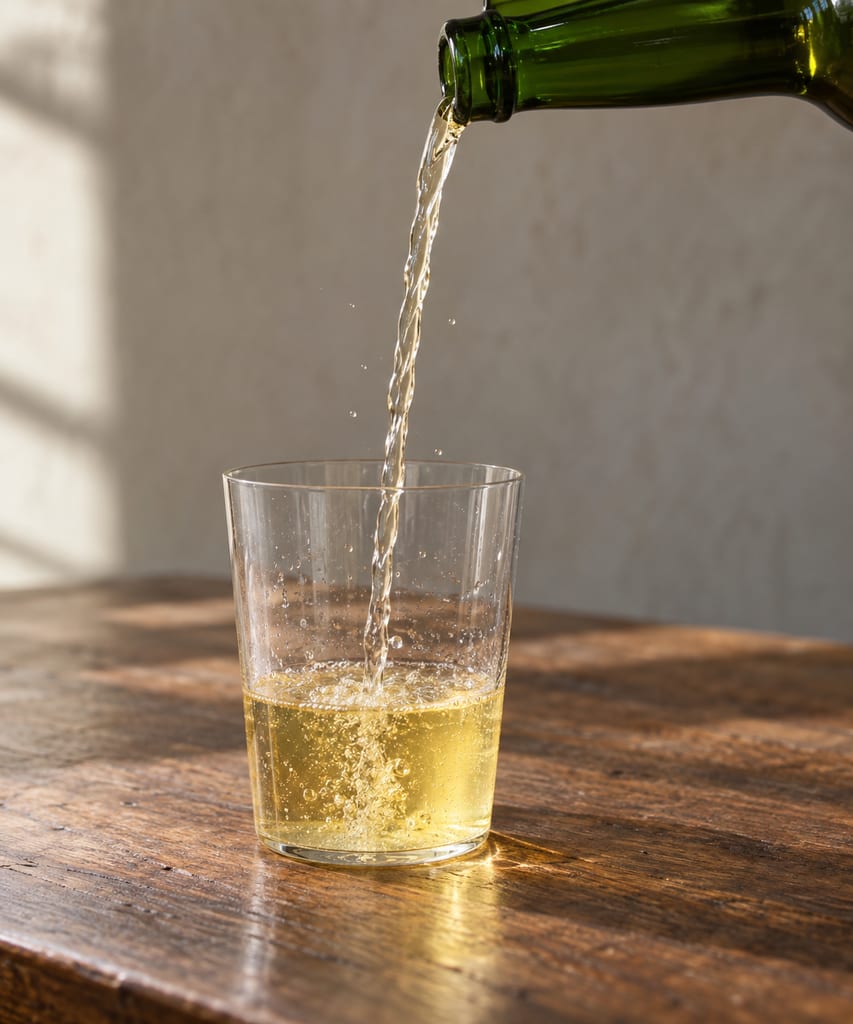
Dry, lightly sparkling cider from Asturias in northern Spain, pressed from cider apples, fermented without added sugar, matured through the winter and poured from a height.
No community contributions have been published for this entry yet.
Sign in to contribute. Published comments and photos are free to read.
Journal of the Institute of Brewing, 2012Method · Science · Safety
Qualitative Analysis of the Main Aroma Compounds Associated with Traditional Musalais Processing in Xinjiang, ChinaTraditional sequence: press, boil residue in water more than 15 hours, filter, combine with juice, boil again, cool overnight, ferment in earthenware jars about 45 days.
Samples at days 6, 12, 29 and 40 and after 5, 8 and 12 months of ageing; reducing sugar reported from 235.6 g/L to 28.24 g/L. Alcohol figures including 6.77, 10.3 and 13.42 appear in a table labelled 'Alcohol (%)' without a stated mass or volume basis; they are not ABV values or home targets.
Furan compounds formed during heating, aromatic alcohols during fermentation, more esters during ageing.
Cited in: Product identity and the scope of this record; Process observations and their limits; Ingredients, equipment and fermentation; Safety evidence and unresolved controls
South African Journal of Enology and Viticulture, 33(1), 2012Method · Science · History · Safety
Preliminary Analysis of Yeast Communities Associated with the Spontaneous Fermentation of Musalais, a Traditional Alcoholic Beverage of Southern Xinjiang, ChinaMade by the Uyghur people for what the authors call more than 2,000 years; tied to the Daolang culture; main area A'wati with more than 200 traditional producers.
Hetianhong grapes pressed; residue and water boiled over 15 hours in an iron pan on a clay oven at about 92 C; filtered, combined with juice and boiled again; cooled overnight; earthenware jugs, sealed, about 45 days.
Starting liquid 28 C, reducing sugar 211.6 g/L, total acid 7.01 g/L, pH 3.66.
242 isolates from 18 samples, eight genera among 50 identified; Hanseniaspora dominant before boiling; Saccharomyces cerevisiae appeared only in the cooled boiled liquid and then dominated.
Yeast count 45 CFU/mL in the cooled liquid against 3.81 x 10^7 in pressed juice; a mycelial mat in the first four days; no sulphur dioxide added.
Cited in: Product identity and the scope of this record; Process observations and their limits; Ingredients, equipment and fermentation; History, geography and naming; Safety evidence and unresolved controls; Variation and open research
Peer-reviewed journal indexed in PubMed, 2017Science · Variation
Direct Stamp of Technology or Origin on the Genotypic and Phenotypic Variation of Indigenous Saccharomyces cerevisiae Population in a Natural Model of Boiled Grape Juice Fermentation into Traditional Msalais Wine in China436 indigenous S. cerevisiae strains; strains from traditional workshops were more diverse than those from modern plants.
Workshop strains tolerated high alcohol (16 per cent) and low temperature (13 C); tank strains tolerated high temperature.
Cited in: Variation and open research
Food Science & Nutrition, 2022Science · Safety
Evolution of Nonenzymatic Browning during the Simulated Msalais-Production Process in Models of Grape JuiceMaillard reaction the main contributor to browning in model grape juice; proline the most important amino acid.
5-hydroxymethylfurfural, browning index and absorbance at 420 nm rose during heating and fell during fermentation.
Cited in: Variation and open research
Journal of Food Composition and Analysis, 116, 2023Variation · Science · Safety
Aromatic and Chemical Differences between Msalais Wines Produced at Traditional Craft Workshops and Modern PlantsTraditional workshops boil grape pomace in water; some modern plants omit it and use sulphur dioxide, clarification and pasteurisation.
Earthenware versus steel tanks, differing oxygen and temperature; workshop wines richer in fruity esters, fatty acids and lactones, plant wines in furans.
Cited in: Ingredients, equipment and fermentation; Safety evidence and unresolved controls; Variation and open research
Food Chemistry: X, 2023Science
Identification of Dominant Functional Microbes that Contribute to the Characteristic Aroma of Msalais, Traditional Wine Fermented from Boiled Local Grape Juice in ChinaSaccharomyces cerevisiae, Kazachstania humilis, Lactobacillus plantarum and Lactobacillus farraginis are the dominant functional species making furaneol and 5-methylfurfural; K. humilis and L. farraginis are rare in ordinary wine fermentation.
Cited in: Variation and open research
Foods (MDPI), 2025Science · Variation
Microbial Dynamics in a Musalais Wine Fermentation: A Metagenomic Study2,894 microbial species found; Saccharomyces cerevisiae 97.35 to 99.38 per cent; 24 non-Saccharomyces yeasts including Hanseniaspora uvarum, Lachancea thermotolerans and Torulaspora delbrueckii.
82 volatile compounds in the final product, mostly higher alcohols and esters.
Cited in: Variation and open research
Food Chemistry, 2021Science · Use
Aromatic Characterization of Traditional Chinese Wine Msalais by Partial Least-Square Regression Analysis Based on Sensory Quantitative Descriptive and Odor Active Values, Aroma Extract Dilution Analysis, and Aroma Recombination and Omission TestsStrong dried-fruit, jam and fruity odours, intermediate caramel and baked odours; 24 key aroma compounds.
Furaneol, methionol and 5-methylfurfural drive dried-fruit, jam and caramel notes; phenylethyl alcohol adds jam, beta-damascenone and esters add fruit and floral.
Cited in: Variation and open research
Molecules, 2023Science · Use
Effect of Winemaking on Phenolic Compounds and Antioxidant Activities of Msalais Wine38 compounds identified, catechin the most abundant phenol; phenols and antioxidant activity highest in the condensed juice and falling during fermentation.
Antioxidant assays measure chemistry, not health effects.
Cited in: Variation and open research
International Journal of Food Properties, 2016Variation · Use
Physicochemical Data Mining of Msalais, a Traditional Local Wine in Southern Xinjiang of ChinaPhysicochemical survey of commercial Msalais products, reporting practices of adding other ingredients in some workshops.
Cited in: Variation and open research
Food Science, 34(1), 2013Variation · Use
Quantitative Descriptive Analysis of Sensory Characteristics of Musalais from A'wati, XinjiangTen Awati wines: brown, good sweet-sour balance, light bitterness, caramel and alcoholic aromas; production procedure the main factor in colour, body and typical aroma.
Storage of 1 to 2 years softened the harsh bitter taste of fresh wine but weakened the fragrant aroma.
Cited in: Ingredients, equipment and fermentation; History, geography and naming; Safety evidence and unresolved controls
China Brewing, 43(12), 2024Variation
Fermentation process optimization and quality analysis of red grape Musalais in XinjiangRed grapes brewed by traditional techniques; best at skin residue to water 1.0:1.3, 25 Brix, pH 3.7; 11.36 per cent alcohol, 17.15 g/L residual sugar.
Cited in: Process observations and their limits; Ingredients, equipment and fermentation; Variation and open research
Foods (MDPI), 2025Variation
Thermal Modulation of Musalais Wine Characteristics: Volatile Profiles and Chemical Composition at Different Brix LevelsFermentation at 22, 25 and 28 C and musts at 26, 29 and 32 Brix; ethanol peaked at 25 C with 29 Brix must; 22 C gave the most complex fruity profile.
Cited in: Process observations and their limits; Ingredients, equipment and fermentation; Variation and open research
Hubei University of Technology and Tarim University, filed 2016Variation
一种新疆穆萨莱思传统酒饮品的酿造工艺 (patent CN106350364A)A patent application for a base wine from grape juice, pomegranate peel pulp and wolfberry pulp with commercial yeasts; the application was rejected in 2020.
Cited in: Variation and open research
Xinjiang Agricultural University, 2021History · Variation · Safety
深耕科技沃土 酝酿芬芳美酒——新疆农业大学科研团队助力阿瓦提县“慕萨莱思”产业提质增效Brewing technique listed in Xinjiang's first regional intangible cultural heritage list in February 2007; Awati named China's Musalais hometown in October 2007.
Over 20 producers and more than 300 household workshops; output above 2,000 tonnes a year.
A producer lacking clarification and preservation methods lost unsold wine to mould; university work on yeast, clarity, fusel oil and shelf life.
Cited in: Product identity and the scope of this record; History, geography and naming; Safety evidence and unresolved controls; Variation and open research
Xinjiang Economic Daily, republished by Winesinfo, 2014History · Use · Variation
南疆慕萨莱思葡萄酒实现华丽转身Five Musalais shops in Awati in the 1940s and 1950s; association founded August 2004.
Name explained locally as the Arabic word for one third, from boiling three parts of juice to one; modern methods with three boilings and three pressings.
Production along the Yarkand River basin: Awati, Moyu (known there as maizhafu), a Dolang village; stainless steel tanks and pasteurisation in factories.
Festival where performers carry jars of the wine; gift sale in gourds; Daolang cultural industry.
Cited in: Product identity and the scope of this record; Process observations and their limits; History, geography and naming; Variation and open research
International Organisation of Vine and Wine (OIV), Resolution VITI-OENO 1/2005Safety
Code of Sound Vitivinicultural Practices in Order to Minimise Levels of Ochratoxin A in Vine-Based ProductsOchratoxin A from black Aspergillus moulds on grapes; exclude extensively mould-contaminated grapes from juice, concentrated must and wine; sort and keep equipment clean.
Cited in: Safety evidence and unresolved controls; Variation and open research
International Organisation of Vine and Wine (OIV), Resolution CST 1/2002Safety
Reduction of Ochratoxin in WinesReference maximum of 2 micrograms per litre of ochratoxin A in wine.
Cited in: Variation and open research
International Journal of Food Microbiology, 2007Safety
Fungi and mycotoxins in vineyards and grape productsBlack Aspergilli (A. carbonarius, A. niger) make ochratoxin A that can contaminate grapes, juice, wine and dried fruit; damaged berries are the main risk.
Cited in: Variation and open research
Penn State ExtensionSafety
Volatile Acidity in WineAcetic acid and ethyl acetate as volatile acidity; oxygen, sanitation and stalled fermentations as contributing factors.
Cited in: Variation and open research